 English (United States)
  Spanish
  Portuguese
  English (UK)
  German
  French
  Italian
  Japanese
  Chinese (China)
  Korean
  Arabic
  Indonesian
  Thai
Thai  Chinese (Hong Kong)
Naia
| Trip dates | Trip dates | Itinerary | Days/Nights | Start Place | End Place |
|---|
| Cabins | Preview | Name | Available Cabins | Price/Persons | ||||||||||||||||||||||||||||||||||||||||||||||||||||||||||||||||||||||||||||||||||||||||||||||||||||||||||||||||||||||||||||||||||||||||||||||||||||||||||||||||||||||||||||||||||||||||||||||||||||||||||||||||||||||||||||||||||||||||||||||||||||||||||||||||||||||||||||||||||||||
|---|---|---|---|---|---|---|---|---|---|---|---|---|---|---|---|---|---|---|---|---|---|---|---|---|---|---|---|---|---|---|---|---|---|---|---|---|---|---|---|---|---|---|---|---|---|---|---|---|---|---|---|---|---|---|---|---|---|---|---|---|---|---|---|---|---|---|---|---|---|---|---|---|---|---|---|---|---|---|---|---|---|---|---|---|---|---|---|---|---|---|---|---|---|---|---|---|---|---|---|---|---|---|---|---|---|---|---|---|---|---|---|---|---|---|---|---|---|---|---|---|---|---|---|---|---|---|---|---|---|---|---|---|---|---|---|---|---|---|---|---|---|---|---|---|---|---|---|---|---|---|---|---|---|---|---|---|---|---|---|---|---|---|---|---|---|---|---|---|---|---|---|---|---|---|---|---|---|---|---|---|---|---|---|---|---|---|---|---|---|---|---|---|---|---|---|---|---|---|---|---|---|---|---|---|---|---|---|---|---|---|---|---|---|---|---|---|---|---|---|---|---|---|---|---|---|---|---|---|---|---|---|---|---|---|---|---|---|---|---|---|---|---|---|---|---|---|---|---|---|---|---|---|---|---|---|---|---|---|---|---|---|---|---|---|---|---|---|---|---|---|---|---|---|---|---|---|---|---|---|---|---|---|
 | Stateroom Lower Deck | Select Trip | 2 Cabins 4 Availability | 5 Cabins 10 Availability | 4 Cabins 8 Availability | 8 Cabins 16 Availability | FULL | 6 Cabins 11 Availability | FULL | FULL | FULL | 3 Cabins 6 Availability | 2 Cabins 3 Availability | FULL | 6 Cabins 11 Availability | 7 Cabins 14 Availability | FULL | 5 Cabins 9 Availability | 2 Cabins 4 Availability | FULL | FULL | 1 Cabins 1 Availability | 7 Cabins 14 Availability | 7 Cabins 13 Availability | 5 Cabins 9 Availability | 8 Cabins 16 Availability | FULL | FULL | 6 Cabins 11 Availability | 8 Cabins 15 Availability | FULL | FULL | 6 Cabins 11 Availability | 8 Cabins 16 Availability | 5 Cabins 10 Availability | FULL | FULL | FULL | 1 Cabins 2 Availability | FULL | 2 Cabins 3 Availability | FULL | 3 Cabins 5 Availability | FULL | FULL | 2 Cabins 3 Availability | FULL | 4 Cabins 7 Availability | 8 Cabins 16 Availability | 1 Cabins 2 Availability | FULL | 2 Cabins 4 Availability | FULL | 5 Cabins 9 Availability | 3 Cabins 5 Availability | 1 Cabins 1 Availability | FULL | 8 Cabins 16 Availability | 4 Cabins 8 Availability | 4 Cabins 7 Availability | FULL | FULL | 3 Cabins 5 Availability | FULL | FULL | 1 Cabins 2 Availability | FULL | FULL | FULL | 8 Cabins 16 Availability | FULL | 7 Cabins 14 Availability | 7 Cabins 14 Availability | FULL | FULL | 8 Cabins 16 Availability | 8 Cabins 16 Availability | 8 Cabins 16 Availability | 5 Cabins 10 Availability | 8 Cabins 16 Availability | 8 Cabins 16 Availability | FULL | 8 Cabins 16 Availability | 8 Cabins 16 Availability | FULL | FULL | 8 Cabins 16 Availability | 8 Cabins 16 Availability | 8 Cabins 16 Availability | 8 Cabins 16 Availability | FULL | FULL | 7 Cabins 14 Availability | FULL | FULL | 8 Cabins 16 Availability | FULL | 4 Cabins 8 Availability | FULL | 2 Cabins 4 Availability | FULL | 8 Cabins 15 Availability | 8 Cabins 16 Availability | FULL | FULL | 2 Cabins 4 Availability | FULL | 8 Cabins 16 Availability | 8 Cabins 16 Availability | 8 Cabins 16 Availability | 8 Cabins 16 Availability | 8 Cabins 16 Availability | FULL | 8 Cabins 16 Availability | 8 Cabins 16 Availability | 8 Cabins 16 Availability | 8 Cabins 16 Availability | 8 Cabins 16 Availability | 8 Cabins 16 Availability | 8 Cabins 16 Availability | 8 Cabins 16 Availability | 8 Cabins 16 Availability | 8 Cabins 16 Availability | 8 Cabins 16 Availability | 8 Cabins 16 Availability | 8 Cabins 16 Availability | 8 Cabins 16 Availability | 8 Cabins 16 Availability | 8 Cabins 16 Availability | 8 Cabins 16 Availability | 8 Cabins 16 Availability | FULL | 8 Cabins 16 Availability | 8 Cabins 16 Availability | 8 Cabins 16 Availability | FULL | FULL | 2 Cabins 3 Availability | FULL | 8 Cabins 16 Availability | 8 Cabins 16 Availability | 8 Cabins 16 Availability | FULL | FULL | Select Trip | $4,778.00 | $3,347.00 | $3,347.00 | $3,347.00 | $4,778.00 | $3,347.00 | $4,778.00 | $3,347.00 | $3,347.00 | $3,347.00 | $4,778.00 | $3,347.00 | $3,347.00 | $3,766.00 | $5,375.00 | $3,766.00 | $3,766.00 | $3,766.00 | $5,375.00 | $3,766.00 | $5,375.00 | $3,766.00 | $3,766.00 | $3,766.00 | $5,375.00 | $5,375.00 | $3,766.00 | $3,766.00 | $5,375.00 | $5,375.00 | $3,766.00 | $3,766.00 | $3,766.00 | $5,375.00 | $4,412.00 | $3,766.00 | $5,375.00 | $3,766.00 | $3,766.00 | $5,375.00 | $5,375.00 | $3,766.00 | $3,862.00 | $3,862.00 | $3,862.00 | $3,862.00 | $5,514.00 | $3,862.00 | $3,862.00 | $5,514.00 | $3,862.00 | $3,862.00 | $5,514.00 | $3,862.00 | $5,514.00 | $5,514.00 | $3,862.00 | $5,514.00 | $6,868.00 | $3,862.00 | $3,862.00 | $5,514.00 | $3,862.00 | $3,862.00 | $6,694.00 | $5,514.00 | $5,514.00 | $3,862.00 | $3,963.00 | $5,658.00 | $3,963.00 | $5,658.00 | $5,658.00 | $3,963.00 | $3,963.00 | $5,658.00 | $3,963.00 | $3,963.00 | $5,658.00 | $3,963.00 | $3,963.00 | $5,658.00 | $3,963.00 | $3,963.00 | $5,658.00 | $3,963.00 | $3,963.00 | $5,160.00 | $5,658.00 | $3,963.00 | $3,963.00 | $5,658.00 | $3,963.00 | $3,963.00 | $5,658.00 | $3,347.00 | $3,862.00 | $3,862.00 | $3,963.00 | $3,766.00 | $3,682.00 | $2,275.00 | $5,514.00 | $3,862.00 | $4,066.00 | $4,066.00 | $5,805.00 | $4,066.00 | $4,066.00 | $4,066.00 | $5,805.00 | $4,066.00 | $4,066.00 | $5,805.00 | $4,066.00 | $4,066.00 | $5,805.00 | $4,066.00 | $5,805.00 | $4,066.00 | $5,805.00 | $4,066.00 | $4,066.00 | $4,066.00 | $5,805.00 | $4,066.00 | $4,066.00 | $4,066.00 | $5,805.00 | $4,066.00 | $4,066.00 | $5,805.00 | $6,390.00 | $3,766.00 | $7,926.00 | $3,963.00 |
Message
×
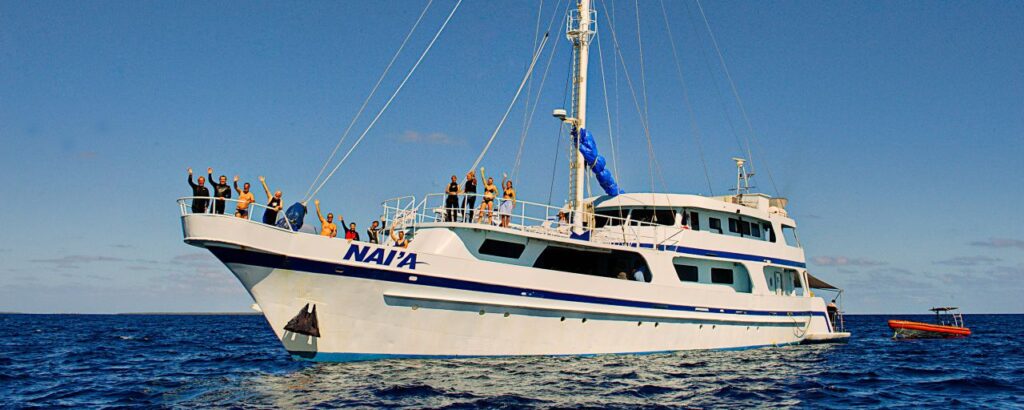
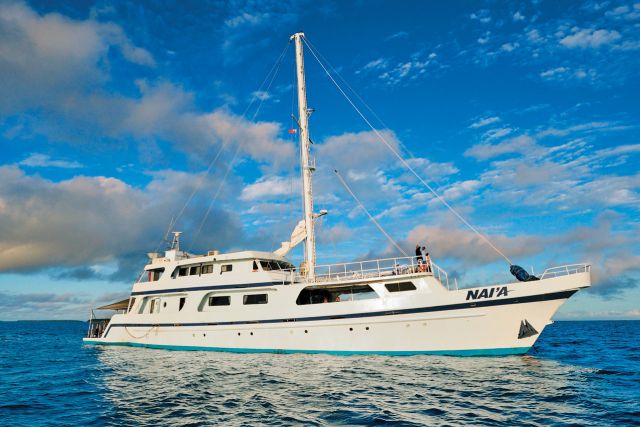
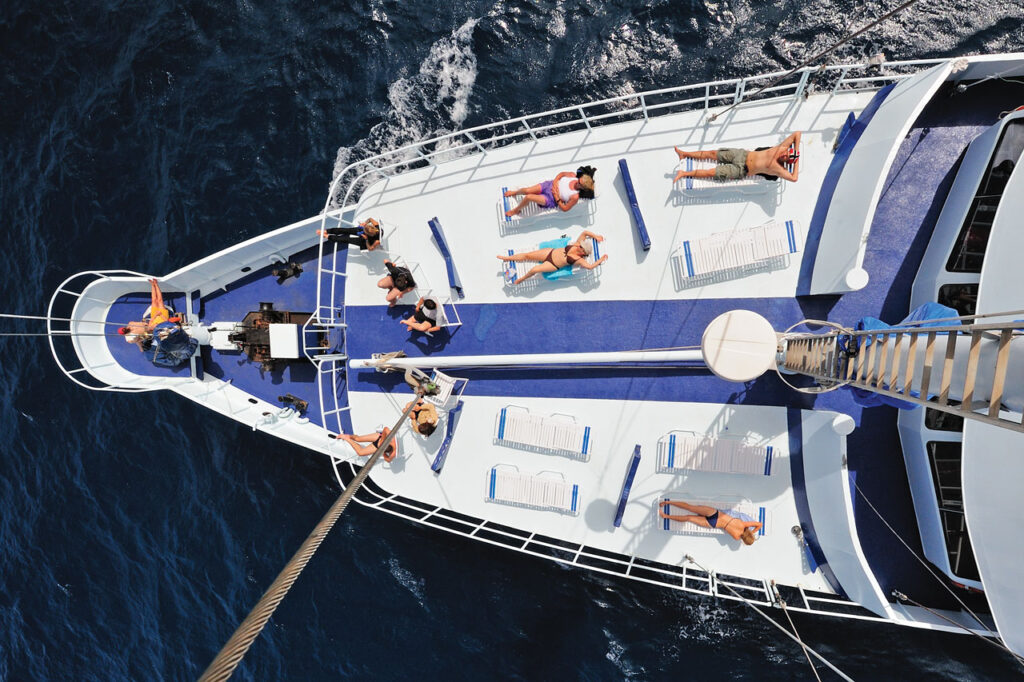
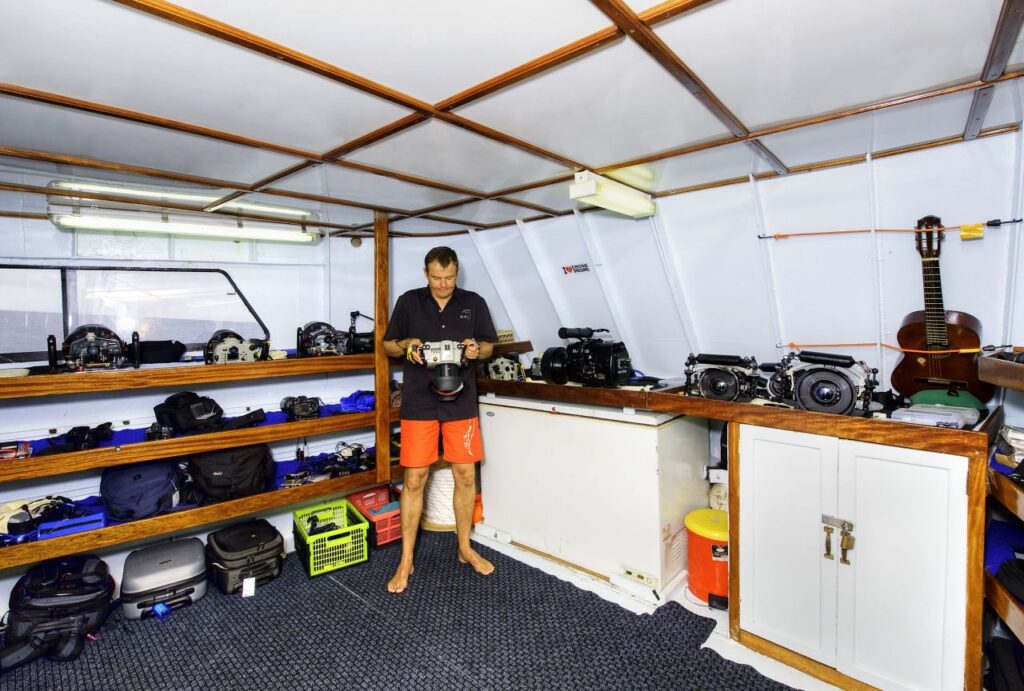
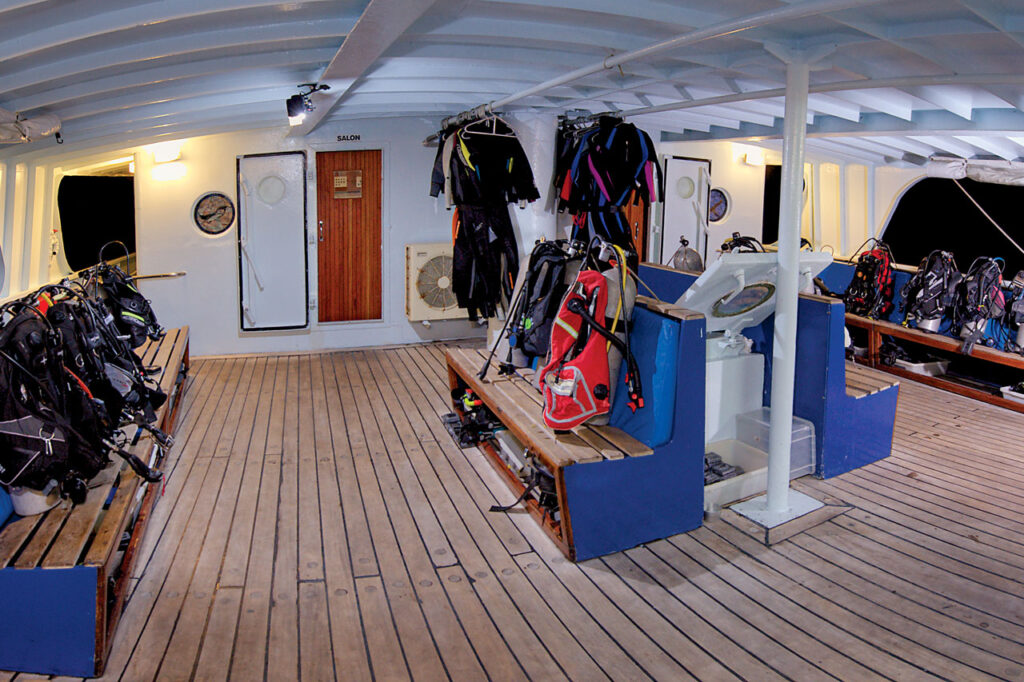
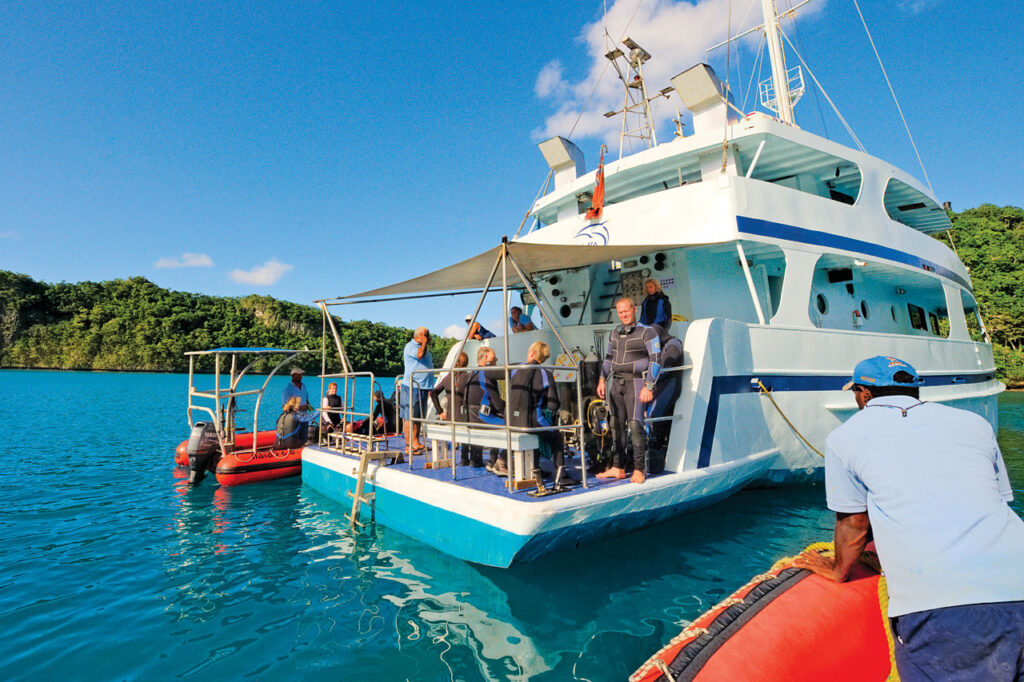
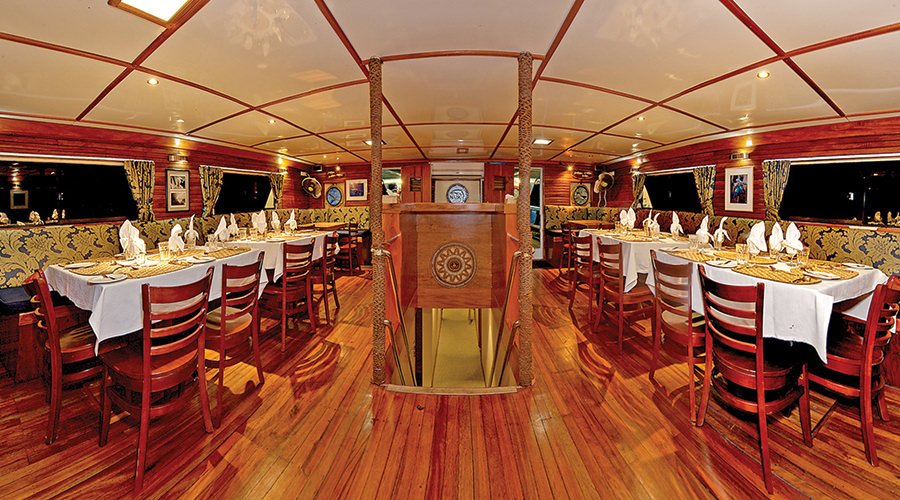
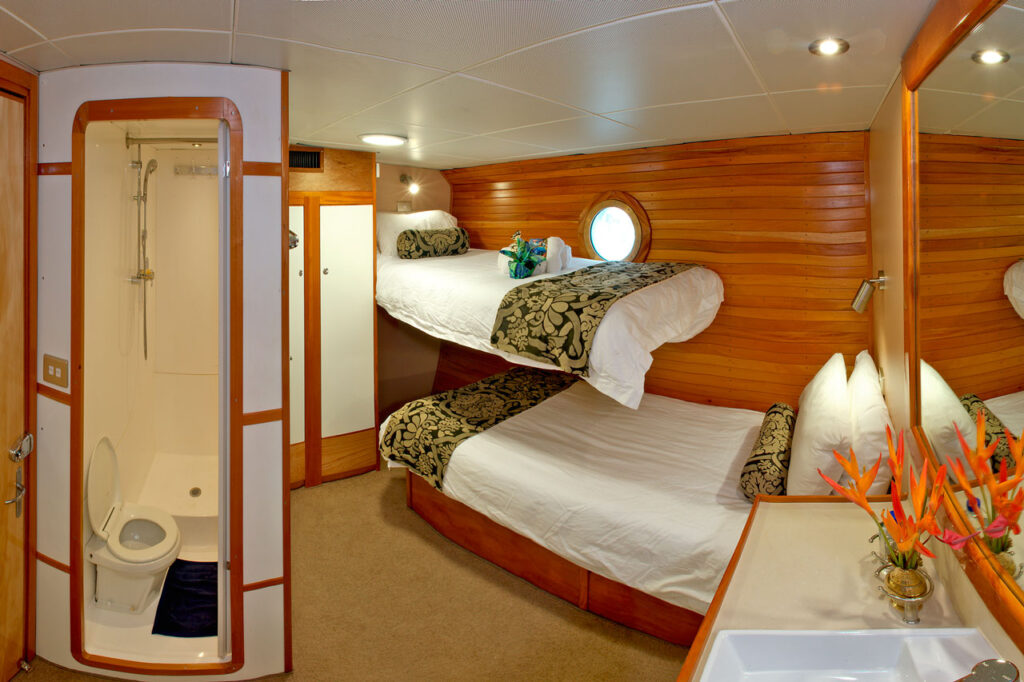
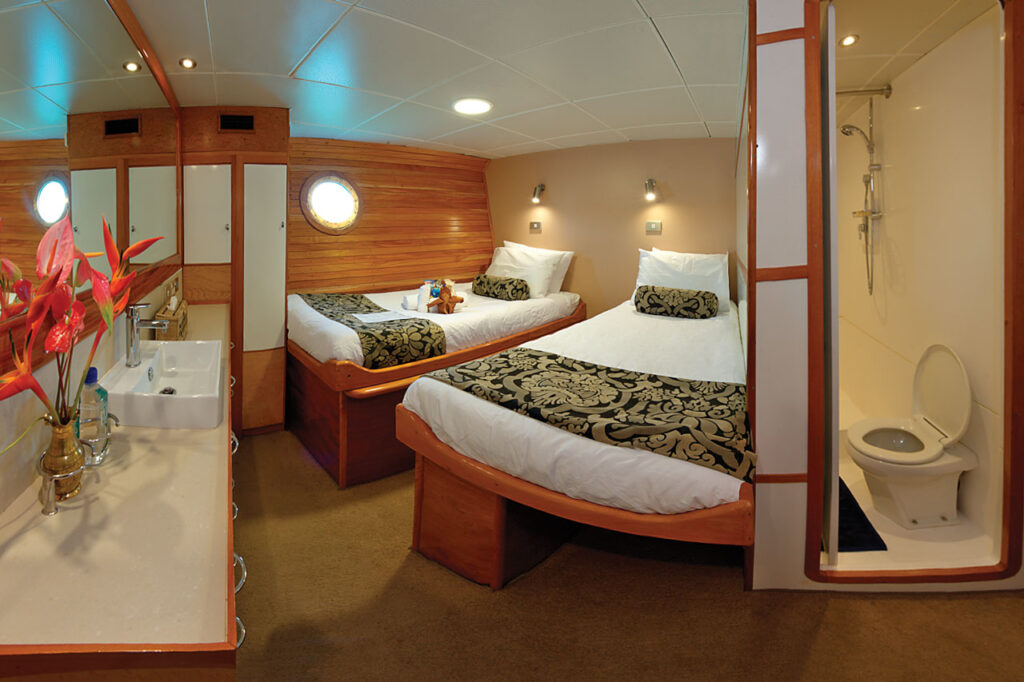
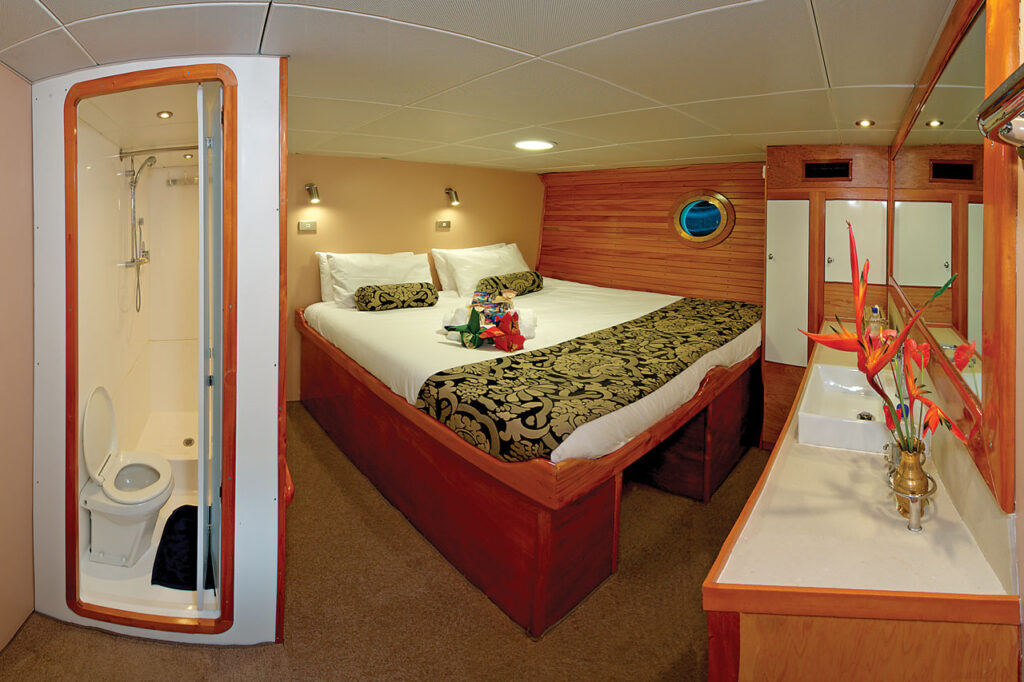
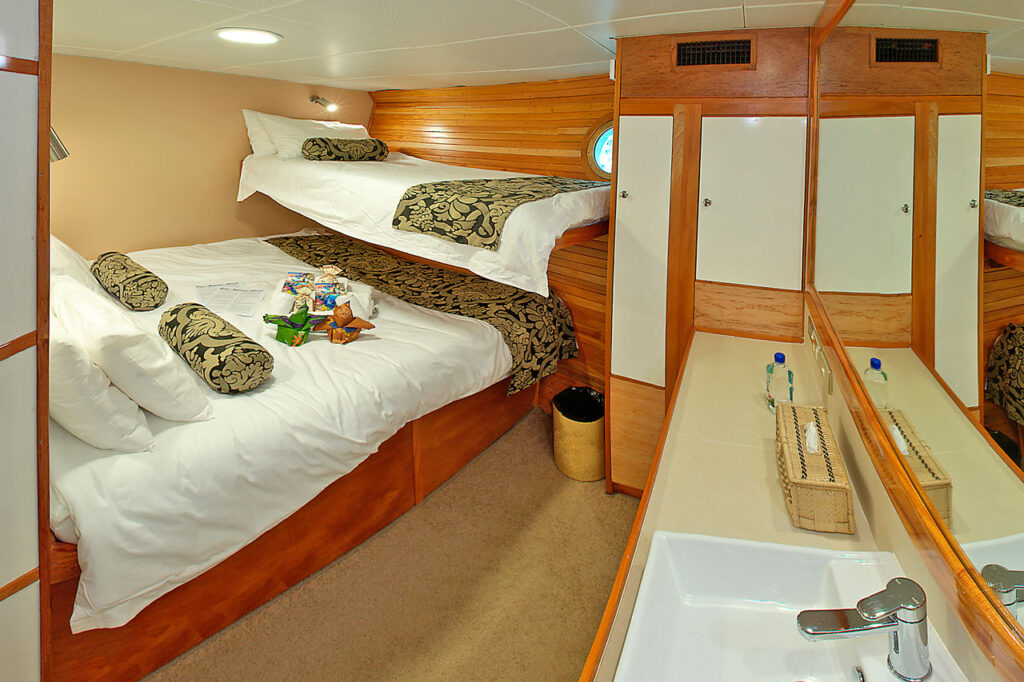
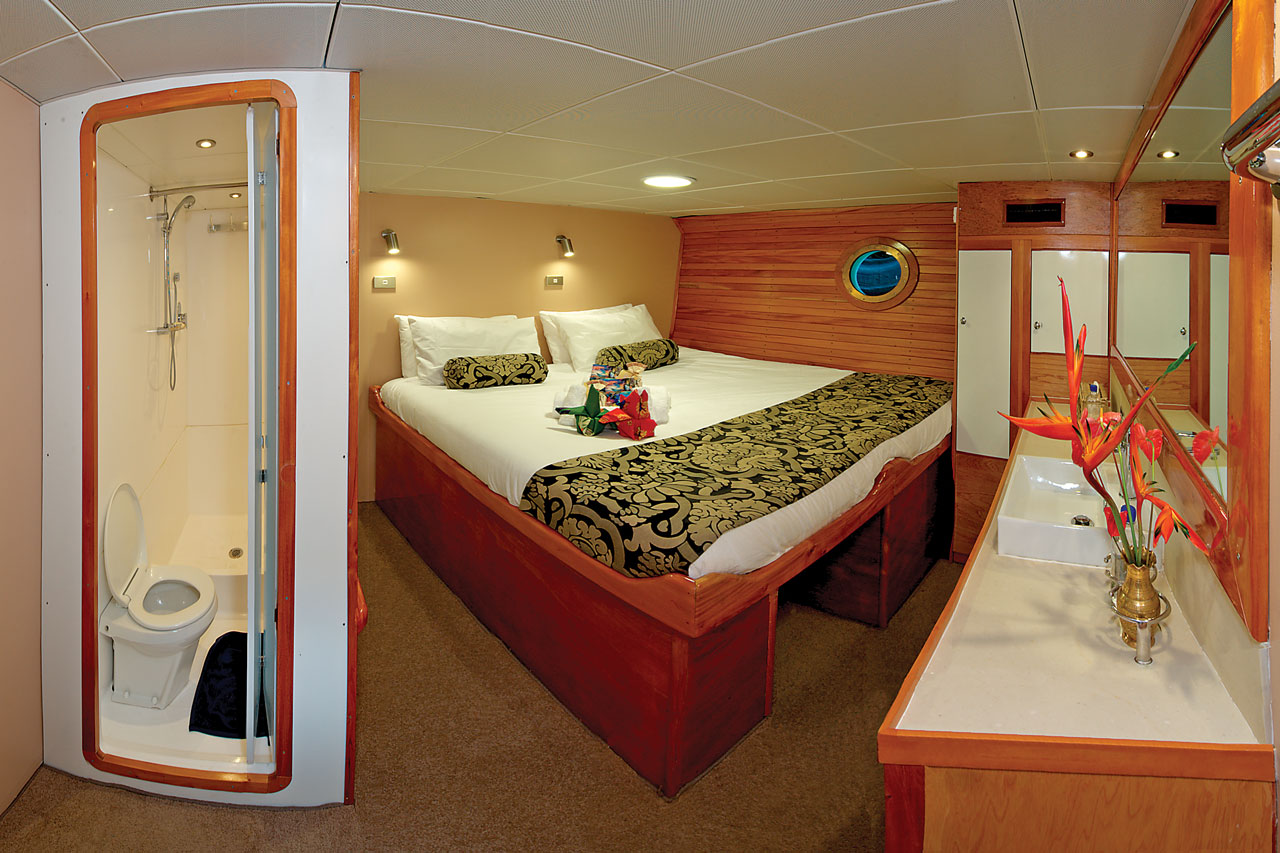
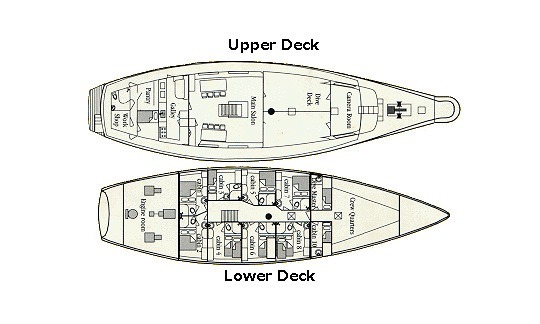
NAI’A has set new standards of live-aboard luxury since her launch in 1993 and completely refit in 2010 with the latest technology and generous use of space. NAI’A has accommodation for 18 passengers in 9 air-conditioned staterooms with private ensuite heads, a massive main salon, dive deck, sun deck, dedicated camera room and stern dive platform.
The core of the NAI’A family is her Fijian crew. On each charter, you’ll be cared for by fourteen of the friendliest and most able sailors anywhere. A week or ten days aboard the luxury liveaboard dive boat NAI’A is the simplest and most fulfilling holiday a diver could hope for.
The NAI’A itinerary appeals to both experienced and beginning divers. Explore pristine corals, sharks, pelagic fish, and more in the Coral Triangle.
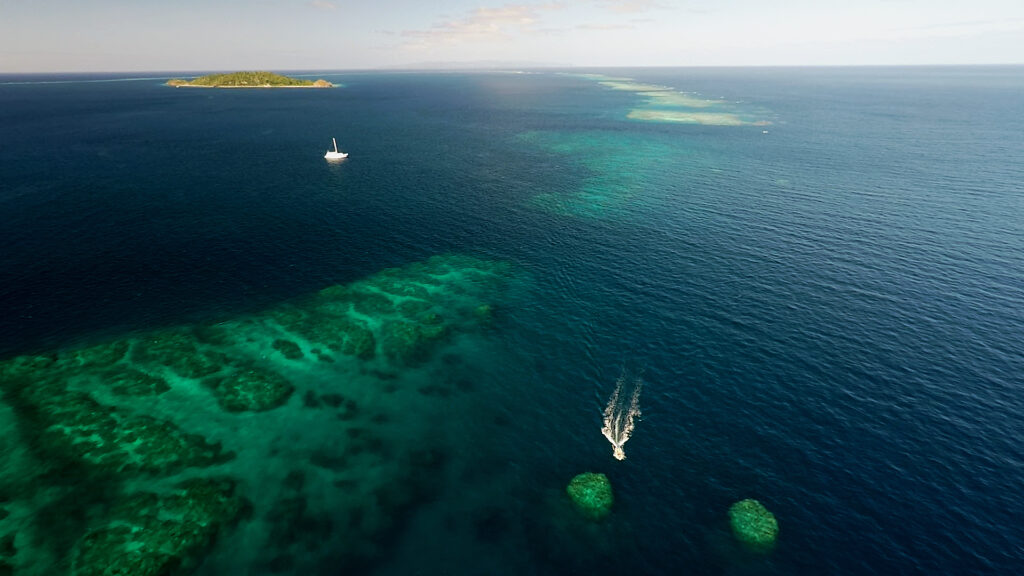
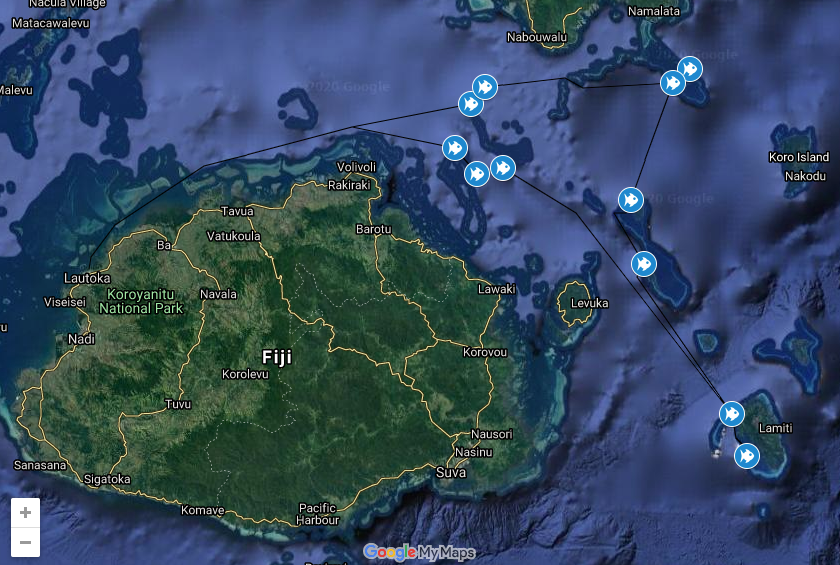
The itinerary for seven-day charters starts and ends in Lautoka, just north of Nadi, where the international airport is located. After an initial “checkout” dive on the afternoon of boarding, NAI’A heads north and east around the flank of the main island of Viti Levu to reach Bligh Water.
Several different dive sites in Bligh Water are available including Vatu-i-ra, E6, Mt. Mutiny, and Cat’s Meow, depending on localized weather conditions. From there we choose the sites according to weather, tides, and passengers’ inclinations. But generally, we visit the islands and barrier reefs of Namena, Wakaya, and Gau.
An ‘average’ day runs like this:
– 05.30 onwards: continental breakfast available
– 07.00: dive 1
– 08.30: breakfast
– 10.00: dive 2
– 11.30: lunch
– 13.00: dive 3
– 15.00: snacks
– 16.00: dive 4
– 18.00: dinner
– Plus after dinner night dives 4 times
Dive Sites:
Bligh Water
UndeNAI’Able
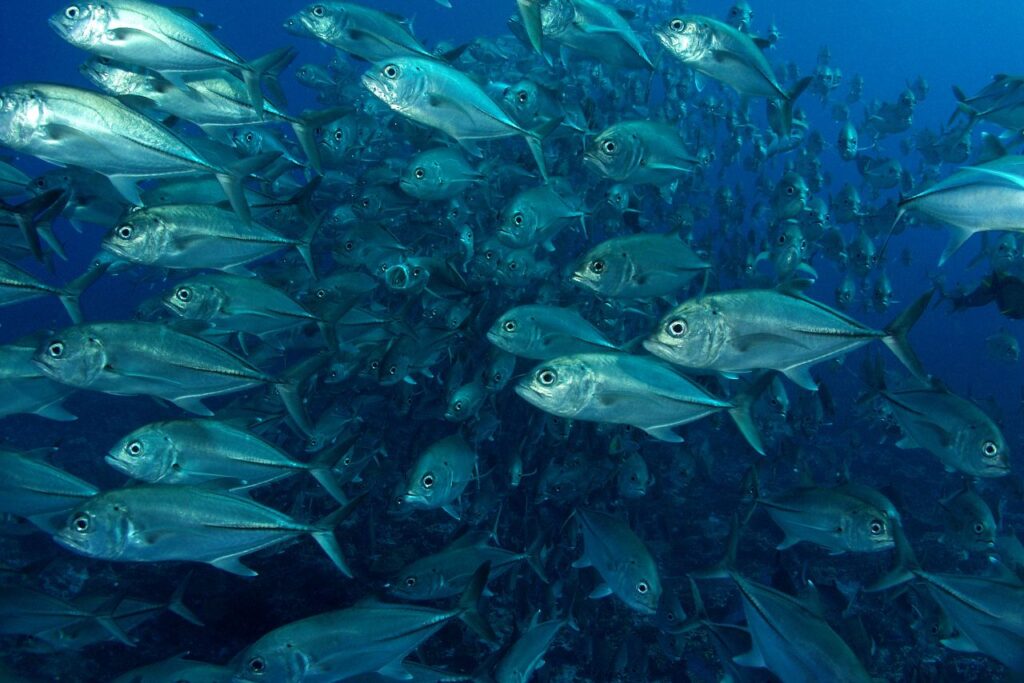
One of several reefs on the northern side of Bligh Water, UndeNAI’Able consists of one large and two smaller sloping pinnacles that top out just below the surface. They concentrate schools of trevally and barracuda and the hard coral supports all the usual suspects including several of Fiji’s endemics: the Fiji anemone fish, flasher wrasse and Terry’s dwarfgobie.
Cat’s Meow
This dive site lies in deep water but is protected from the swell by the Vuya barrier reef. The name says it all: Rob named it for his wife, Cat Holloway, because it was the best dive site he’d ever seen. Much of the gorgeous soft coral featured in the IMAX film Coral Reef Adventure was shot here.
Vatu-i-ra
There are seven very distinct dives on the Vatu-i-ra barrier reef, several of which are among the best coral reef dives in the world. The barrier reef protrudes north from Viti Levu into the Vatu-i-ra Channel, narrowing the channel to only 4.5 miles across. This is the same body of water that supports E-6 and Mt. Mutiny.
The area is regularly flushed by currents, which is why the reefs are so healthy. But our intimate experience in Vatu-i-ra over many years has taught us how and when to dive there so that we can tour the glorious reefs without having to fight the currents that make them so rich.
Mt.Mutiny
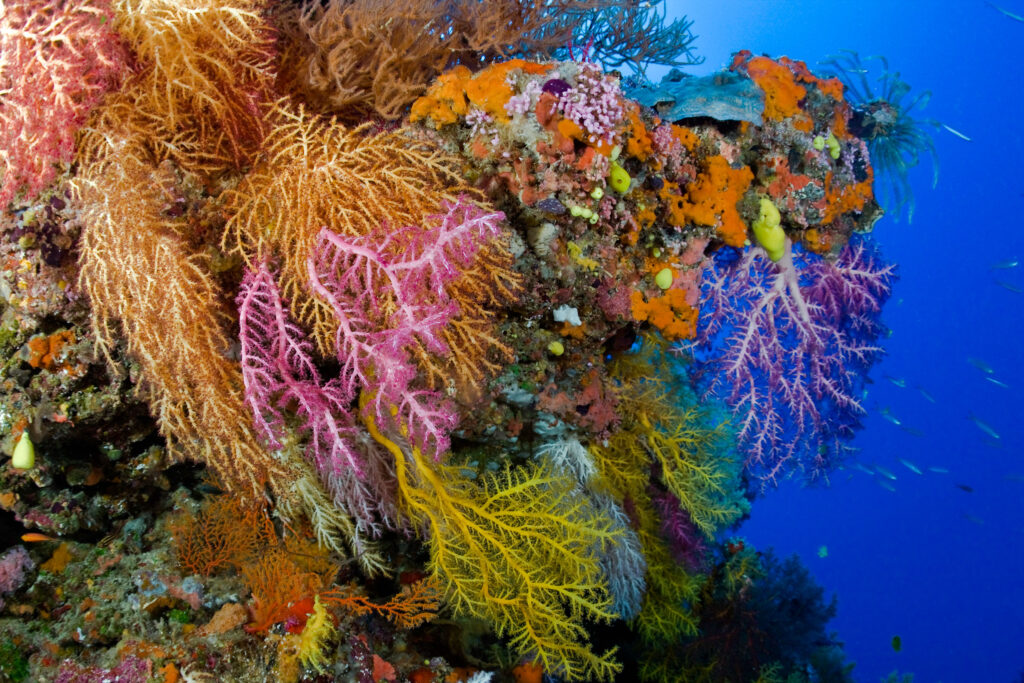
Mount Mutiny is a seamount similar in many ways to E-6, yet much smaller, located only four miles away. It’s named in honor of both Captain Bligh, who charted it as he passed nearby shortly after the mutiny on the Bounty, and the passengers on a NAI’A charter who threatened mutiny unless they were allowed to dive the seamount again and again. Diving is very much like E-6 in terms of pelagics and other fish life. A highlight is the wall of unusual thin-stalked Chironephthya soft coral in a broad range of colors which blankets the south flank of the pinnacle. This is one of the single prettiest soft coral dives anywhere.
E-6
A seamount rising sheer-sided from 3,000ft right in the center of the narrowest part of Bligh Water’s Vatu-i-ra channel, E-6 intercepts the flow of nutrients funneled between the two large islands of Viti Levu and Vanua Levu. Extraordinary diving! Pelagics are normally found on the two sides of the pinnacle flushed by currents, while delicate soft corals and fans decorate the protected lee side where NAI’A moors. Dives at E-6 feature schooling barracuda, trevally, and surgeonfish, occasional hammerhead sharks and eagle rays, and a plethora of reef fish including anthias, fusiliers, and leaf scorpionfish. Rob discovered both E-6 and Mount Mutiny from the air, having chartered a private plane to scout potentially good dive areas in waters not normally frequented.
Namena Marine Reserve
North Save-a-tack Passage
This dive site has it all: concentrated schools of big fish and beautiful soft coral bommies. Descend into the blue and level off at 95’ at an expansive sandy bottom alongside a sheer drop-off from which dogtooth tuna, grey reef sharks and the occasional scalloped hammerhead come in to upset things. The bottom camouflages a few large, over-fed grouper waiting to nail any fish staying low to hide from the grey reef sharks swimming among barracuda and trevally schools overhead. When your computer finally signals the end of your time on the plateau among the big guys, the current carries you deeper into the channel, where a line of bommies rise nearly to the surface. Two of the bommies are connected by an arch and all are alive with color: gorgonia fans, black coral, soft coral, and every reef fish imaginable. As if this weren’t enough, allow yourself to drift even further into the channel to Kansas, a small bommie covered with Sinularia soft coral which looks just like wheat fields swaying in the wind. This spot deserves at least two days of diving to appreciate fully.
Koro Sea
Gau: Jim’s Alley & Anthias Avenue
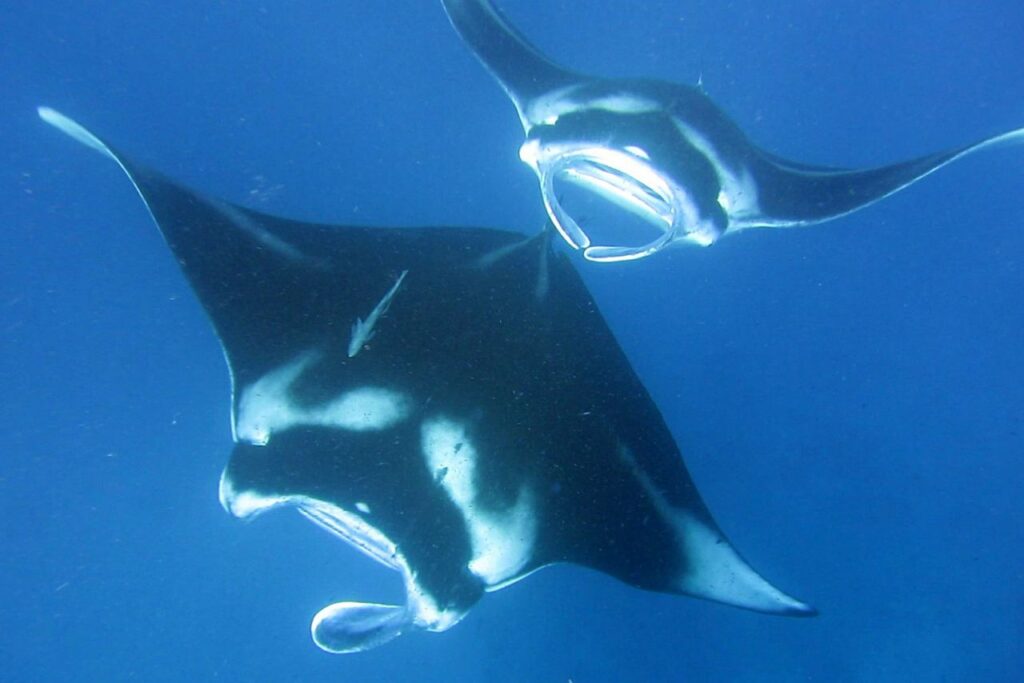
Jim’s and Anthias are soft coral gardens in shallow water, home to zillions of reef fish. They are prime examples of the kind of soft coral diving for which Fiji is famous. Cluttered with multihued soft coral and nearly every kind of reef fish known, they often leave divers in awe. As an added bonus, they are a regular stop for four or five mantas, who can frequently be found feeding in the adjacent channel during the waning tide. Macro photographers, too, love them because of the profusion of little creatures living among the hard corals, soft corals, and fans.
Gau: Nigali Passage
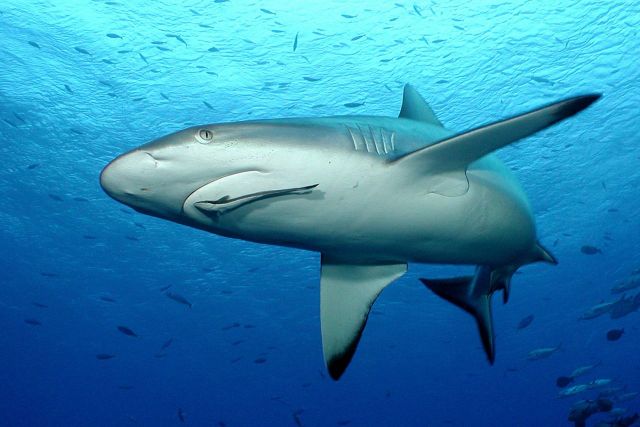
This narrow channel through the surrounding barrier reef concentrates pelagics from miles around. Home to 10-25 female grey reef sharks and their offspring, the passage also concentrates a huge school of trevally, three age-segregated schools of barracuda, several big Malabar grouper and an annoying concentration of fish we call snapass (one reference calls them snapper; one calls them bass). People tend not to notice because of all the big fish, but the edges of the passage and the bommies in the shallows are entirely lined in gorgeous soft coral. The incoming current in Nigali does not coincide with rising tide as one might expect, but with two decades of experience diving there, we have become expert at diving the channel during its optimum four hour window of opportunity.
Wakaya
Our dive sites are along the edge of the barrier reef bordering a 3,000ft deep channel that leads to the Vatu-i-ra Passage and through which pass humpback, sperm and pilot whales. During dives we often see resident manta rays at cleaning stations and hammerhead sharks frequently come up to check us out. Grey reef and whitetip sharks are resident along the drop-off but it is the healthy coral and the critters that live in it that often excite divers the most: blue-ribbon eels, leaf scorpionfish and posing lionfish. The shelf just above the deep drop-off is home to the very rare Helfrich’s dartfish.
Makogai
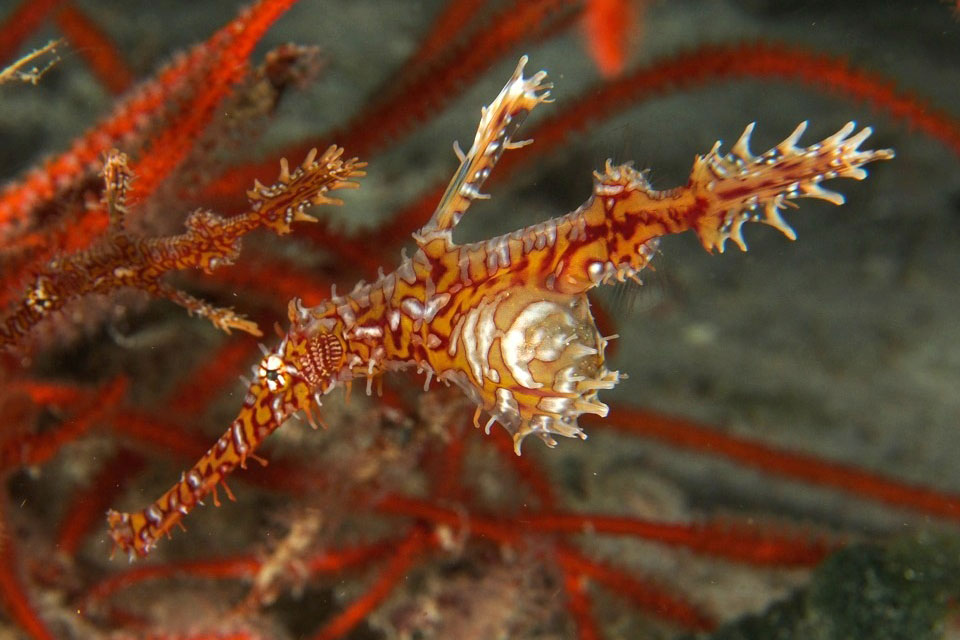
This is serious critter diving: several small bommies rise close to the surface from a rubble bottom in 30-40ft. The quality rubble is home to ghost pipefish, dragonets, all manner of nudibranchs and, frequently, octopus. In crevices and caves in the bommies live scorpionfish while pygmy seahorses decorate gorgonian coral.
Inclusions
Exclusions
- Tax: 555.00 USD
The closest international airport is Nadi Intl (NAN). Re-confirm your flights 72-hours prior to departure and double-check flight times and numbers. • Check-in three hours prior to your flight. International airport security can be slow and online check-in is not always possible. You may be denied boarding if checking in less than one hour before departure.
Your passport must be valid for at least six months beyond the date you plan to return home from your trip. Citizens of most countries do not require a visa to enter Fiji. Please check with your travel agent or let us know so we can tell you if you need a visa or not.
Pack carefully to avoid excess luggage fees, which are very costly. Please check the luggage restrictions of your airline.
Yes, we arrange the transfer from the airport in Nadi to Naia. Your cruise aboard NAI’A begins at the Lautoka Wharf at 2:00 pm on Saturday. We will provide transport from Nadi-area hotels and the airport at about 1:00 pm. If you plan to arrive in Fiji one or more days prior to the charter, you should book Friday night in a Nadi hotel or arrive at the Nadi airport from the outer islands the day before your charter starts. If you arrive in Fiji on Saturday morning, you will probably want to book a day room in Nadi in which to rest until pick-up time at about 1:00 pm. Please make sure to notify our office of your pick-up location well in advance.
Everyone will need to catch the arranged transport. It is not possible to go to the boat directly because the security guards at the entrance to the wharf will not let you through.
After your trip:
The boat docks back in Lautoka early in the morning on the last day. Check out and disembarkation is around 08:00 on the last day. Hotel drop-off time is around 09:00 at hotels within the Nadi area. Airport drop-off time is around 09:00. If your flight home departs in the evening, we recommend you book a day room where you can store your luggage while you tour for the day and relax and shower before the flight.
The currency used in Fiji is the Fiji dollar. This may be exchanged at the airport at the bank in the international terminal and in towns, plus withdrawn from ATMs. Please note that handicraft merchants, taxi drivers, etc. do not accept credit cards. Check xe.com for the most up to date exchange rate.
For purchases made while onboard, we accept US dollars, Fijian dollars, Visa, MasterCard and American Express. Please be aware that there is an additional charge of 2.5% on Visa and MasterCard and 3% for American Express.
Weather conditions vary widely throughout the year and throughout the years. We strongly recommend you visit our webpage for up-to-date air and water temperature information.
If you get cold easily, plan on bringing extra layers. We offer 4-5 dives a day, which can quickly cool your core temperature. Warm divers stay under longer and manage more dives per day so don’t skimp on protection.
We require all divers to carry dive computers. If you do not have one, you can rent one on board. If you bring your own, please be sure to read and understand the manual before your trip and bring the manual with you. Remember that your dive computer is a lifesaving device.
Pack a warm sweater and pants – life at sea is cooler than in shore-based resorts, especially after multiple dives each day. We want you to enjoy the starry night sky and the fresh air!
If you are prone to ear infections or swimmers’ ear, bring a small spray or dropper bottle containing a mixture of two parts medical-grade alcohol to one part vinegar. Spray or drop this into your ears following every dive and snorkel.
We cannot offer laundry services for guests, so please bring enough clothes or laundry soap to wash clothes in your sink.
A wide-angle lens for Fiji’s famous soft coral reefs is a must, but you will also find plenty of fish and tiny critters to warrant a macro lens.
Bring a laptop so you can review, store and share your photos during the trip. We have a large TV in the salon for showing photos and videos via HDMI, VGA, Thunderbolt or USB.
While we offer a selection of wine, beer and spirits onboard, we cannot promise every type of alcoholic beverage. If there is a certain type of beverage that you want onboard, we encourage you to bring it from home or duty-free.
Save some weight! We have lovely locally made Pure Fiji shampoo, cream rinse, shower gel and body lotion for your use while onboard.
Please limit plastic waste! Bring your own water bottle to refill from our onboard carbon filter.
Feel free to bring your choice of music, books or videos for your entertainment. NAI’A has a limited collection of paperback books and a very large collection of eBooks, music, and movies that you are welcome to use.
Don’t forget your diving (and) nitrox certification card(s)!
All cabins, the salon and camera room are equipped with US (110V) and Australian (240V) Standard electrical outlets. If your devices are of another type, you should bring your own power adapters.
Our crew would greatly appreciate current news, nature, science, or other magazines, as they are hard to come by here.
The ship is equipped with cell phones that work in most areas during the charter. Guests can be contacted onboard at +679-779-7789 and atsea@naia.com.fj • We also have a satellite telephone that allows us to maintain contact at all times. The phone number is 8816-316-13518. Please note there is a charge of $US4.50 per minute to make or receive satellite phone calls.
There are Wi-Fi devices available onboard that you can hire for US$30 for the week and you can purchase recharge cards which are also available onboard to download data. The recharge card costs FJ$10.00 (for 8GB). WIFI will only work at certain places and the Cruise Directors can let you know the best time to use them. Cell phones are also only working at certain places.
If you would like to bring a donation to the village, we would suggest the following:
– Sports Equipment: soccer, rugby, football or tennis balls
– Clothing: second-hand clothing for adults and children
– Household Supplies: sewing kits, guitar strings, solar-powered flashlights, lanterns and radios
– Toiletries: soap, toothbrushes, toothpaste, dental floss, deodorant, talcum or zinc oxide powder
– What NOT to bring: candy/sweets, fragile plastic and rubber items or toys, excessive packaging and electrical items
We carry a wide variety of NAI’A souvenirs onboard, including t-shirts, shorts, hats, sweatshirts, fleeces, rash guards and beautiful handmade jewellery. There are no handicrafts for sale in the villages we visit, but you may find time to go to the market before or after your trip.
Dive accident insurance (to include medical evacuation) is mandatory for everyone who dives: it’s your responsibility to have adequate cover in place and to bring your certificate as proof.
Yes, we do. There is an additional charge for Nitrox (enriched air) of $150 per week or $210 per 10-day trip, with a $30 reduction when taking the Nitrox certification course on board.
We offer a range of PADI scuba diving courses on board including Open Water, Nitrox, Rescue and many Specialty Courses. Please enquire in advance if you are interested, as our instructors need to pre-order the necessary materials before your charter.
Diving in Fiji can be challenging due to strong currents and deep drop-offs. If you have not been diving in a while or have difficulty maintaining good neutral buoyancy, we suggest taking a refresher course before your trip. You will enjoy the diving more, take better pictures and, of course, avoid damaging Fiji’s precious coral reefs.
After you return home, our Cruise Directors will send you the dive log, guest & crew photos, contact information and a link to our blog so you can remember your wonderful trip!
- Year built: 1979
- Year renovated: 2010
- Length: 36,5 m
- Max guests: 16
- Number of cabins: 9
- Number of bathrooms: 9
NAI’A has set new standards of live-aboard luxury since her launch in 1993 and completely refit in 2010 with the latest technology and generous use of space. NAI’A has accommodation for 18 passengers in 9 air-conditioned staterooms with private ensuite heads, a massive main salon, dive deck, sun deck, dedicated camera room and stern dive platform.
The core of the NAI’A family is her Fijian crew. On each charter, you’ll be cared for by fourteen of the friendliest and most able sailors anywhere. A week or ten days aboard the luxury liveaboard dive boat NAI’A is the simplest and most fulfilling holiday a diver could hope for.
The NAI’A itinerary appeals to both experienced and beginning divers. Explore pristine corals, sharks, pelagic fish, and more in the Coral Triangle.
The itinerary for seven-day charters starts and ends in Lautoka, just north of Nadi, where the international airport is located. After an initial “checkout” dive on the afternoon of boarding, NAI’A heads north and east around the flank of the main island of Viti Levu to reach Bligh Water.
Several different dive sites in Bligh Water are available including Vatu-i-ra, E6, Mt. Mutiny, and Cat’s Meow, depending on localized weather conditions. From there we choose the sites according to weather, tides, and passengers’ inclinations. But generally, we visit the islands and barrier reefs of Namena, Wakaya, and Gau.
An ‘average’ day runs like this:
– 05.30 onwards: continental breakfast available
– 07.00: dive 1
– 08.30: breakfast
– 10.00: dive 2
– 11.30: lunch
– 13.00: dive 3
– 15.00: snacks
– 16.00: dive 4
– 18.00: dinner
– Plus after dinner night dives 4 times
Dive Sites:
Bligh Water
UndeNAI’Able
One of several reefs on the northern side of Bligh Water, UndeNAI’Able consists of one large and two smaller sloping pinnacles that top out just below the surface. They concentrate schools of trevally and barracuda and the hard coral supports all the usual suspects including several of Fiji’s endemics: the Fiji anemone fish, flasher wrasse and Terry’s dwarfgobie.
Cat’s Meow
This dive site lies in deep water but is protected from the swell by the Vuya barrier reef. The name says it all: Rob named it for his wife, Cat Holloway, because it was the best dive site he’d ever seen. Much of the gorgeous soft coral featured in the IMAX film Coral Reef Adventure was shot here.
Vatu-i-ra
There are seven very distinct dives on the Vatu-i-ra barrier reef, several of which are among the best coral reef dives in the world. The barrier reef protrudes north from Viti Levu into the Vatu-i-ra Channel, narrowing the channel to only 4.5 miles across. This is the same body of water that supports E-6 and Mt. Mutiny.
The area is regularly flushed by currents, which is why the reefs are so healthy. But our intimate experience in Vatu-i-ra over many years has taught us how and when to dive there so that we can tour the glorious reefs without having to fight the currents that make them so rich.
Mt.Mutiny
Mount Mutiny is a seamount similar in many ways to E-6, yet much smaller, located only four miles away. It’s named in honor of both Captain Bligh, who charted it as he passed nearby shortly after the mutiny on the Bounty, and the passengers on a NAI’A charter who threatened mutiny unless they were allowed to dive the seamount again and again. Diving is very much like E-6 in terms of pelagics and other fish life. A highlight is the wall of unusual thin-stalked Chironephthya soft coral in a broad range of colors which blankets the south flank of the pinnacle. This is one of the single prettiest soft coral dives anywhere.
E-6
A seamount rising sheer-sided from 3,000ft right in the center of the narrowest part of Bligh Water’s Vatu-i-ra channel, E-6 intercepts the flow of nutrients funneled between the two large islands of Viti Levu and Vanua Levu. Extraordinary diving! Pelagics are normally found on the two sides of the pinnacle flushed by currents, while delicate soft corals and fans decorate the protected lee side where NAI’A moors. Dives at E-6 feature schooling barracuda, trevally, and surgeonfish, occasional hammerhead sharks and eagle rays, and a plethora of reef fish including anthias, fusiliers, and leaf scorpionfish. Rob discovered both E-6 and Mount Mutiny from the air, having chartered a private plane to scout potentially good dive areas in waters not normally frequented.
Namena Marine Reserve
North Save-a-tack Passage
This dive site has it all: concentrated schools of big fish and beautiful soft coral bommies. Descend into the blue and level off at 95’ at an expansive sandy bottom alongside a sheer drop-off from which dogtooth tuna, grey reef sharks and the occasional scalloped hammerhead come in to upset things. The bottom camouflages a few large, over-fed grouper waiting to nail any fish staying low to hide from the grey reef sharks swimming among barracuda and trevally schools overhead. When your computer finally signals the end of your time on the plateau among the big guys, the current carries you deeper into the channel, where a line of bommies rise nearly to the surface. Two of the bommies are connected by an arch and all are alive with color: gorgonia fans, black coral, soft coral, and every reef fish imaginable. As if this weren’t enough, allow yourself to drift even further into the channel to Kansas, a small bommie covered with Sinularia soft coral which looks just like wheat fields swaying in the wind. This spot deserves at least two days of diving to appreciate fully.
Koro Sea
Gau: Jim’s Alley & Anthias Avenue
Jim’s and Anthias are soft coral gardens in shallow water, home to zillions of reef fish. They are prime examples of the kind of soft coral diving for which Fiji is famous. Cluttered with multihued soft coral and nearly every kind of reef fish known, they often leave divers in awe. As an added bonus, they are a regular stop for four or five mantas, who can frequently be found feeding in the adjacent channel during the waning tide. Macro photographers, too, love them because of the profusion of little creatures living among the hard corals, soft corals, and fans.
Gau: Nigali Passage
This narrow channel through the surrounding barrier reef concentrates pelagics from miles around. Home to 10-25 female grey reef sharks and their offspring, the passage also concentrates a huge school of trevally, three age-segregated schools of barracuda, several big Malabar grouper and an annoying concentration of fish we call snapass (one reference calls them snapper; one calls them bass). People tend not to notice because of all the big fish, but the edges of the passage and the bommies in the shallows are entirely lined in gorgeous soft coral. The incoming current in Nigali does not coincide with rising tide as one might expect, but with two decades of experience diving there, we have become expert at diving the channel during its optimum four hour window of opportunity.
Wakaya
Our dive sites are along the edge of the barrier reef bordering a 3,000ft deep channel that leads to the Vatu-i-ra Passage and through which pass humpback, sperm and pilot whales. During dives we often see resident manta rays at cleaning stations and hammerhead sharks frequently come up to check us out. Grey reef and whitetip sharks are resident along the drop-off but it is the healthy coral and the critters that live in it that often excite divers the most: blue-ribbon eels, leaf scorpionfish and posing lionfish. The shelf just above the deep drop-off is home to the very rare Helfrich’s dartfish.
Makogai
This is serious critter diving: several small bommies rise close to the surface from a rubble bottom in 30-40ft. The quality rubble is home to ghost pipefish, dragonets, all manner of nudibranchs and, frequently, octopus. In crevices and caves in the bommies live scorpionfish while pygmy seahorses decorate gorgonian coral.
Inclusions
Exclusions
- Tax: 527.00 USD
The closest international airport is Nadi Intl (NAN). Re-confirm your flights 72-hours prior to departure and double-check flight times and numbers. • Check-in three hours prior to your flight. International airport security can be slow and online check-in is not always possible. You may be denied boarding if checking in less than one hour before departure.
Your passport must be valid for at least six months beyond the date you plan to return home from your trip. Citizens of most countries do not require a visa to enter Fiji. Please check with your travel agent or let us know so we can tell you if you need a visa or not.
Pack carefully to avoid excess luggage fees, which are very costly. Please check the luggage restrictions of your airline.
Yes, we arrange the transfer from the airport in Nadi to Naia. Your cruise aboard NAI’A begins at the Lautoka Wharf at 2:00 pm on Saturday. We will provide transport from Nadi-area hotels and the airport at about 1:00 pm. If you plan to arrive in Fiji one or more days prior to the charter, you should book Friday night in a Nadi hotel or arrive at the Nadi airport from the outer islands the day before your charter starts. If you arrive in Fiji on Saturday morning, you will probably want to book a day room in Nadi in which to rest until pick-up time at about 1:00 pm. Please make sure to notify our office of your pick-up location well in advance.
Everyone will need to catch the arranged transport. It is not possible to go to the boat directly because the security guards at the entrance to the wharf will not let you through.
After your trip:
The boat docks back in Lautoka early in the morning on the last day. Check out and disembarkation is around 08:00 on the last day. Hotel drop-off time is around 09:00 at hotels within the Nadi area. Airport drop-off time is around 09:00. If your flight home departs in the evening, we recommend you book a day room where you can store your luggage while you tour for the day and relax and shower before the flight.
The currency used in Fiji is the Fiji dollar. This may be exchanged at the airport at the bank in the international terminal and in towns, plus withdrawn from ATMs. Please note that handicraft merchants, taxi drivers, etc. do not accept credit cards. Check xe.com for the most up to date exchange rate.
For purchases made while onboard, we accept US dollars, Fijian dollars, Visa, MasterCard and American Express. Please be aware that there is an additional charge of 2.5% on Visa and MasterCard and 3% for American Express.
Weather conditions vary widely throughout the year and throughout the years. We strongly recommend you visit our webpage for up-to-date air and water temperature information.
If you get cold easily, plan on bringing extra layers. We offer 4-5 dives a day, which can quickly cool your core temperature. Warm divers stay under longer and manage more dives per day so don’t skimp on protection.
We require all divers to carry dive computers. If you do not have one, you can rent one on board. If you bring your own, please be sure to read and understand the manual before your trip and bring the manual with you. Remember that your dive computer is a lifesaving device.
Pack a warm sweater and pants – life at sea is cooler than in shore-based resorts, especially after multiple dives each day. We want you to enjoy the starry night sky and the fresh air!
If you are prone to ear infections or swimmers’ ear, bring a small spray or dropper bottle containing a mixture of two parts medical-grade alcohol to one part vinegar. Spray or drop this into your ears following every dive and snorkel.
We cannot offer laundry services for guests, so please bring enough clothes or laundry soap to wash clothes in your sink.
A wide-angle lens for Fiji’s famous soft coral reefs is a must, but you will also find plenty of fish and tiny critters to warrant a macro lens.
Bring a laptop so you can review, store and share your photos during the trip. We have a large TV in the salon for showing photos and videos via HDMI, VGA, Thunderbolt or USB.
While we offer a selection of wine, beer and spirits onboard, we cannot promise every type of alcoholic beverage. If there is a certain type of beverage that you want onboard, we encourage you to bring it from home or duty-free.
Save some weight! We have lovely locally made Pure Fiji shampoo, cream rinse, shower gel and body lotion for your use while onboard.
Please limit plastic waste! Bring your own water bottle to refill from our onboard carbon filter.
Feel free to bring your choice of music, books or videos for your entertainment. NAI’A has a limited collection of paperback books and a very large collection of eBooks, music, and movies that you are welcome to use.
Don’t forget your diving (and) nitrox certification card(s)!
All cabins, the salon and camera room are equipped with US (110V) and Australian (240V) Standard electrical outlets. If your devices are of another type, you should bring your own power adapters.
Our crew would greatly appreciate current news, nature, science, or other magazines, as they are hard to come by here.
The ship is equipped with cell phones that work in most areas during the charter. Guests can be contacted onboard at +679-779-7789 and atsea@naia.com.fj • We also have a satellite telephone that allows us to maintain contact at all times. The phone number is 8816-316-13518. Please note there is a charge of $US4.50 per minute to make or receive satellite phone calls.
There are Wi-Fi devices available onboard that you can hire for US$30 for the week and you can purchase recharge cards which are also available onboard to download data. The recharge card costs FJ$10.00 (for 8GB). WIFI will only work at certain places and the Cruise Directors can let you know the best time to use them. Cell phones are also only working at certain places.
If you would like to bring a donation to the village, we would suggest the following:
– Sports Equipment: soccer, rugby, football or tennis balls
– Clothing: second-hand clothing for adults and children
– Household Supplies: sewing kits, guitar strings, solar-powered flashlights, lanterns and radios
– Toiletries: soap, toothbrushes, toothpaste, dental floss, deodorant, talcum or zinc oxide powder
– What NOT to bring: candy/sweets, fragile plastic and rubber items or toys, excessive packaging and electrical items
We carry a wide variety of NAI’A souvenirs onboard, including t-shirts, shorts, hats, sweatshirts, fleeces, rash guards and beautiful handmade jewellery. There are no handicrafts for sale in the villages we visit, but you may find time to go to the market before or after your trip.
Dive accident insurance (to include medical evacuation) is mandatory for everyone who dives: it’s your responsibility to have adequate cover in place and to bring your certificate as proof.
Yes, we do. There is an additional charge for Nitrox (enriched air) of $150 per week or $210 per 10-day trip, with a $30 reduction when taking the Nitrox certification course on board.
We offer a range of PADI scuba diving courses on board including Open Water, Nitrox, Rescue and many Specialty Courses. Please enquire in advance if you are interested, as our instructors need to pre-order the necessary materials before your charter.
Diving in Fiji can be challenging due to strong currents and deep drop-offs. If you have not been diving in a while or have difficulty maintaining good neutral buoyancy, we suggest taking a refresher course before your trip. You will enjoy the diving more, take better pictures and, of course, avoid damaging Fiji’s precious coral reefs.
After you return home, our Cruise Directors will send you the dive log, guest & crew photos, contact information and a link to our blog so you can remember your wonderful trip!
- Year built: 1979
- Year renovated: 2010
- Length: 36,5 m
- Max guests: 16
- Number of cabins: 9
- Number of bathrooms: 9
NAI’A has set new standards of live-aboard luxury since her launch in 1993 and completely refit in 2010 with the latest technology and generous use of space. NAI’A has accommodation for 18 passengers in 9 air-conditioned staterooms with private ensuite heads, a massive main salon, dive deck, sun deck, dedicated camera room and stern dive platform.
The core of the NAI’A family is her Fijian crew. On each charter, you’ll be cared for by fourteen of the friendliest and most able sailors anywhere. A week or ten days aboard the luxury liveaboard dive boat NAI’A is the simplest and most fulfilling holiday a diver could hope for.
The NAI’A itinerary appeals to both experienced and beginning divers. Explore pristine corals, sharks, pelagic fish, and more in the Coral Triangle.
The itinerary for seven-day charters starts and ends in Lautoka, just north of Nadi, where the international airport is located. After an initial “checkout” dive on the afternoon of boarding, NAI’A heads north and east around the flank of the main island of Viti Levu to reach Bligh Water.
Several different dive sites in Bligh Water are available including Vatu-i-ra, E6, Mt. Mutiny, and Cat’s Meow, depending on localized weather conditions. From there we choose the sites according to weather, tides, and passengers’ inclinations. But generally, we visit the islands and barrier reefs of Namena, Wakaya, and Gau.
An ‘average’ day runs like this:
– 05.30 onwards: continental breakfast available
– 07.00: dive 1
– 08.30: breakfast
– 10.00: dive 2
– 11.30: lunch
– 13.00: dive 3
– 15.00: snacks
– 16.00: dive 4
– 18.00: dinner
– Plus after dinner night dives 4 times
Dive Sites:
Bligh Water
UndeNAI’Able
One of several reefs on the northern side of Bligh Water, UndeNAI’Able consists of one large and two smaller sloping pinnacles that top out just below the surface. They concentrate schools of trevally and barracuda and the hard coral supports all the usual suspects including several of Fiji’s endemics: the Fiji anemone fish, flasher wrasse and Terry’s dwarfgobie.
Cat’s Meow
This dive site lies in deep water but is protected from the swell by the Vuya barrier reef. The name says it all: Rob named it for his wife, Cat Holloway, because it was the best dive site he’d ever seen. Much of the gorgeous soft coral featured in the IMAX film Coral Reef Adventure was shot here.
Vatu-i-ra
There are seven very distinct dives on the Vatu-i-ra barrier reef, several of which are among the best coral reef dives in the world. The barrier reef protrudes north from Viti Levu into the Vatu-i-ra Channel, narrowing the channel to only 4.5 miles across. This is the same body of water that supports E-6 and Mt. Mutiny.
The area is regularly flushed by currents, which is why the reefs are so healthy. But our intimate experience in Vatu-i-ra over many years has taught us how and when to dive there so that we can tour the glorious reefs without having to fight the currents that make them so rich.
Mt.Mutiny
Mount Mutiny is a seamount similar in many ways to E-6, yet much smaller, located only four miles away. It’s named in honor of both Captain Bligh, who charted it as he passed nearby shortly after the mutiny on the Bounty, and the passengers on a NAI’A charter who threatened mutiny unless they were allowed to dive the seamount again and again. Diving is very much like E-6 in terms of pelagics and other fish life. A highlight is the wall of unusual thin-stalked Chironephthya soft coral in a broad range of colors which blankets the south flank of the pinnacle. This is one of the single prettiest soft coral dives anywhere.
E-6
A seamount rising sheer-sided from 3,000ft right in the center of the narrowest part of Bligh Water’s Vatu-i-ra channel, E-6 intercepts the flow of nutrients funneled between the two large islands of Viti Levu and Vanua Levu. Extraordinary diving! Pelagics are normally found on the two sides of the pinnacle flushed by currents, while delicate soft corals and fans decorate the protected lee side where NAI’A moors. Dives at E-6 feature schooling barracuda, trevally, and surgeonfish, occasional hammerhead sharks and eagle rays, and a plethora of reef fish including anthias, fusiliers, and leaf scorpionfish. Rob discovered both E-6 and Mount Mutiny from the air, having chartered a private plane to scout potentially good dive areas in waters not normally frequented.
Namena Marine Reserve
North Save-a-tack Passage
This dive site has it all: concentrated schools of big fish and beautiful soft coral bommies. Descend into the blue and level off at 95’ at an expansive sandy bottom alongside a sheer drop-off from which dogtooth tuna, grey reef sharks and the occasional scalloped hammerhead come in to upset things. The bottom camouflages a few large, over-fed grouper waiting to nail any fish staying low to hide from the grey reef sharks swimming among barracuda and trevally schools overhead. When your computer finally signals the end of your time on the plateau among the big guys, the current carries you deeper into the channel, where a line of bommies rise nearly to the surface. Two of the bommies are connected by an arch and all are alive with color: gorgonia fans, black coral, soft coral, and every reef fish imaginable. As if this weren’t enough, allow yourself to drift even further into the channel to Kansas, a small bommie covered with Sinularia soft coral which looks just like wheat fields swaying in the wind. This spot deserves at least two days of diving to appreciate fully.
Koro Sea
Gau: Jim’s Alley & Anthias Avenue
Jim’s and Anthias are soft coral gardens in shallow water, home to zillions of reef fish. They are prime examples of the kind of soft coral diving for which Fiji is famous. Cluttered with multihued soft coral and nearly every kind of reef fish known, they often leave divers in awe. As an added bonus, they are a regular stop for four or five mantas, who can frequently be found feeding in the adjacent channel during the waning tide. Macro photographers, too, love them because of the profusion of little creatures living among the hard corals, soft corals, and fans.
Gau: Nigali Passage
This narrow channel through the surrounding barrier reef concentrates pelagics from miles around. Home to 10-25 female grey reef sharks and their offspring, the passage also concentrates a huge school of trevally, three age-segregated schools of barracuda, several big Malabar grouper and an annoying concentration of fish we call snapass (one reference calls them snapper; one calls them bass). People tend not to notice because of all the big fish, but the edges of the passage and the bommies in the shallows are entirely lined in gorgeous soft coral. The incoming current in Nigali does not coincide with rising tide as one might expect, but with two decades of experience diving there, we have become expert at diving the channel during its optimum four hour window of opportunity.
Wakaya
Our dive sites are along the edge of the barrier reef bordering a 3,000ft deep channel that leads to the Vatu-i-ra Passage and through which pass humpback, sperm and pilot whales. During dives we often see resident manta rays at cleaning stations and hammerhead sharks frequently come up to check us out. Grey reef and whitetip sharks are resident along the drop-off but it is the healthy coral and the critters that live in it that often excite divers the most: blue-ribbon eels, leaf scorpionfish and posing lionfish. The shelf just above the deep drop-off is home to the very rare Helfrich’s dartfish.
Makogai
This is serious critter diving: several small bommies rise close to the surface from a rubble bottom in 30-40ft. The quality rubble is home to ghost pipefish, dragonets, all manner of nudibranchs and, frequently, octopus. In crevices and caves in the bommies live scorpionfish while pygmy seahorses decorate gorgonian coral.
Inclusions
Exclusions
- Tax: 527.00 USD
The closest international airport is Nadi Intl (NAN). Re-confirm your flights 72-hours prior to departure and double-check flight times and numbers. • Check-in three hours prior to your flight. International airport security can be slow and online check-in is not always possible. You may be denied boarding if checking in less than one hour before departure.
Your passport must be valid for at least six months beyond the date you plan to return home from your trip. Citizens of most countries do not require a visa to enter Fiji. Please check with your travel agent or let us know so we can tell you if you need a visa or not.
Pack carefully to avoid excess luggage fees, which are very costly. Please check the luggage restrictions of your airline.
Yes, we arrange the transfer from the airport in Nadi to Naia. Your cruise aboard NAI’A begins at the Lautoka Wharf at 2:00 pm on Saturday. We will provide transport from Nadi-area hotels and the airport at about 1:00 pm. If you plan to arrive in Fiji one or more days prior to the charter, you should book Friday night in a Nadi hotel or arrive at the Nadi airport from the outer islands the day before your charter starts. If you arrive in Fiji on Saturday morning, you will probably want to book a day room in Nadi in which to rest until pick-up time at about 1:00 pm. Please make sure to notify our office of your pick-up location well in advance.
Everyone will need to catch the arranged transport. It is not possible to go to the boat directly because the security guards at the entrance to the wharf will not let you through.
After your trip:
The boat docks back in Lautoka early in the morning on the last day. Check out and disembarkation is around 08:00 on the last day. Hotel drop-off time is around 09:00 at hotels within the Nadi area. Airport drop-off time is around 09:00. If your flight home departs in the evening, we recommend you book a day room where you can store your luggage while you tour for the day and relax and shower before the flight.
The currency used in Fiji is the Fiji dollar. This may be exchanged at the airport at the bank in the international terminal and in towns, plus withdrawn from ATMs. Please note that handicraft merchants, taxi drivers, etc. do not accept credit cards. Check xe.com for the most up to date exchange rate.
For purchases made while onboard, we accept US dollars, Fijian dollars, Visa, MasterCard and American Express. Please be aware that there is an additional charge of 2.5% on Visa and MasterCard and 3% for American Express.
Weather conditions vary widely throughout the year and throughout the years. We strongly recommend you visit our webpage for up-to-date air and water temperature information.
If you get cold easily, plan on bringing extra layers. We offer 4-5 dives a day, which can quickly cool your core temperature. Warm divers stay under longer and manage more dives per day so don’t skimp on protection.
We require all divers to carry dive computers. If you do not have one, you can rent one on board. If you bring your own, please be sure to read and understand the manual before your trip and bring the manual with you. Remember that your dive computer is a lifesaving device.
Pack a warm sweater and pants – life at sea is cooler than in shore-based resorts, especially after multiple dives each day. We want you to enjoy the starry night sky and the fresh air!
If you are prone to ear infections or swimmers’ ear, bring a small spray or dropper bottle containing a mixture of two parts medical-grade alcohol to one part vinegar. Spray or drop this into your ears following every dive and snorkel.
We cannot offer laundry services for guests, so please bring enough clothes or laundry soap to wash clothes in your sink.
A wide-angle lens for Fiji’s famous soft coral reefs is a must, but you will also find plenty of fish and tiny critters to warrant a macro lens.
Bring a laptop so you can review, store and share your photos during the trip. We have a large TV in the salon for showing photos and videos via HDMI, VGA, Thunderbolt or USB.
While we offer a selection of wine, beer and spirits onboard, we cannot promise every type of alcoholic beverage. If there is a certain type of beverage that you want onboard, we encourage you to bring it from home or duty-free.
Save some weight! We have lovely locally made Pure Fiji shampoo, cream rinse, shower gel and body lotion for your use while onboard.
Please limit plastic waste! Bring your own water bottle to refill from our onboard carbon filter.
Feel free to bring your choice of music, books or videos for your entertainment. NAI’A has a limited collection of paperback books and a very large collection of eBooks, music, and movies that you are welcome to use.
Don’t forget your diving (and) nitrox certification card(s)!
All cabins, the salon and camera room are equipped with US (110V) and Australian (240V) Standard electrical outlets. If your devices are of another type, you should bring your own power adapters.
Our crew would greatly appreciate current news, nature, science, or other magazines, as they are hard to come by here.
The ship is equipped with cell phones that work in most areas during the charter. Guests can be contacted onboard at +679-779-7789 and atsea@naia.com.fj • We also have a satellite telephone that allows us to maintain contact at all times. The phone number is 8816-316-13518. Please note there is a charge of $US4.50 per minute to make or receive satellite phone calls.
There are Wi-Fi devices available onboard that you can hire for US$30 for the week and you can purchase recharge cards which are also available onboard to download data. The recharge card costs FJ$10.00 (for 8GB). WIFI will only work at certain places and the Cruise Directors can let you know the best time to use them. Cell phones are also only working at certain places.
If you would like to bring a donation to the village, we would suggest the following:
– Sports Equipment: soccer, rugby, football or tennis balls
– Clothing: second-hand clothing for adults and children
– Household Supplies: sewing kits, guitar strings, solar-powered flashlights, lanterns and radios
– Toiletries: soap, toothbrushes, toothpaste, dental floss, deodorant, talcum or zinc oxide powder
– What NOT to bring: candy/sweets, fragile plastic and rubber items or toys, excessive packaging and electrical items
We carry a wide variety of NAI’A souvenirs onboard, including t-shirts, shorts, hats, sweatshirts, fleeces, rash guards and beautiful handmade jewellery. There are no handicrafts for sale in the villages we visit, but you may find time to go to the market before or after your trip.
Dive accident insurance (to include medical evacuation) is mandatory for everyone who dives: it’s your responsibility to have adequate cover in place and to bring your certificate as proof.
Yes, we do. There is an additional charge for Nitrox (enriched air) of $150 per week or $210 per 10-day trip, with a $30 reduction when taking the Nitrox certification course on board.
We offer a range of PADI scuba diving courses on board including Open Water, Nitrox, Rescue and many Specialty Courses. Please enquire in advance if you are interested, as our instructors need to pre-order the necessary materials before your charter.
Diving in Fiji can be challenging due to strong currents and deep drop-offs. If you have not been diving in a while or have difficulty maintaining good neutral buoyancy, we suggest taking a refresher course before your trip. You will enjoy the diving more, take better pictures and, of course, avoid damaging Fiji’s precious coral reefs.
After you return home, our Cruise Directors will send you the dive log, guest & crew photos, contact information and a link to our blog so you can remember your wonderful trip!
- Year built: 1979
- Year renovated: 2010
- Length: 36,5 m
- Max guests: 16
- Number of cabins: 9
- Number of bathrooms: 9
NAI’A has set new standards of live-aboard luxury since her launch in 1993 and completely refit in 2010 with the latest technology and generous use of space. NAI’A has accommodation for 18 passengers in 9 air-conditioned staterooms with private ensuite heads, a massive main salon, dive deck, sun deck, dedicated camera room and stern dive platform.
The core of the NAI’A family is her Fijian crew. On each charter, you’ll be cared for by fourteen of the friendliest and most able sailors anywhere. A week or ten days aboard the luxury liveaboard dive boat NAI’A is the simplest and most fulfilling holiday a diver could hope for.
The NAI’A itinerary appeals to both experienced and beginning divers. Explore pristine corals, sharks, pelagic fish, and more in the Coral Triangle.
The itinerary for seven-day charters starts and ends in Lautoka, just north of Nadi, where the international airport is located. After an initial “checkout” dive on the afternoon of boarding, NAI’A heads north and east around the flank of the main island of Viti Levu to reach Bligh Water.
Several different dive sites in Bligh Water are available including Vatu-i-ra, E6, Mt. Mutiny, and Cat’s Meow, depending on localized weather conditions. From there we choose the sites according to weather, tides, and passengers’ inclinations. But generally, we visit the islands and barrier reefs of Namena, Wakaya, and Gau.
An ‘average’ day runs like this:
– 05.30 onwards: continental breakfast available
– 07.00: dive 1
– 08.30: breakfast
– 10.00: dive 2
– 11.30: lunch
– 13.00: dive 3
– 15.00: snacks
– 16.00: dive 4
– 18.00: dinner
– Plus after dinner night dives 4 times
Dive Sites:
Bligh Water
UndeNAI’Able
One of several reefs on the northern side of Bligh Water, UndeNAI’Able consists of one large and two smaller sloping pinnacles that top out just below the surface. They concentrate schools of trevally and barracuda and the hard coral supports all the usual suspects including several of Fiji’s endemics: the Fiji anemone fish, flasher wrasse and Terry’s dwarfgobie.
Cat’s Meow
This dive site lies in deep water but is protected from the swell by the Vuya barrier reef. The name says it all: Rob named it for his wife, Cat Holloway, because it was the best dive site he’d ever seen. Much of the gorgeous soft coral featured in the IMAX film Coral Reef Adventure was shot here.
Vatu-i-ra
There are seven very distinct dives on the Vatu-i-ra barrier reef, several of which are among the best coral reef dives in the world. The barrier reef protrudes north from Viti Levu into the Vatu-i-ra Channel, narrowing the channel to only 4.5 miles across. This is the same body of water that supports E-6 and Mt. Mutiny.
The area is regularly flushed by currents, which is why the reefs are so healthy. But our intimate experience in Vatu-i-ra over many years has taught us how and when to dive there so that we can tour the glorious reefs without having to fight the currents that make them so rich.
Mt.Mutiny
Mount Mutiny is a seamount similar in many ways to E-6, yet much smaller, located only four miles away. It’s named in honor of both Captain Bligh, who charted it as he passed nearby shortly after the mutiny on the Bounty, and the passengers on a NAI’A charter who threatened mutiny unless they were allowed to dive the seamount again and again. Diving is very much like E-6 in terms of pelagics and other fish life. A highlight is the wall of unusual thin-stalked Chironephthya soft coral in a broad range of colors which blankets the south flank of the pinnacle. This is one of the single prettiest soft coral dives anywhere.
E-6
A seamount rising sheer-sided from 3,000ft right in the center of the narrowest part of Bligh Water’s Vatu-i-ra channel, E-6 intercepts the flow of nutrients funneled between the two large islands of Viti Levu and Vanua Levu. Extraordinary diving! Pelagics are normally found on the two sides of the pinnacle flushed by currents, while delicate soft corals and fans decorate the protected lee side where NAI’A moors. Dives at E-6 feature schooling barracuda, trevally, and surgeonfish, occasional hammerhead sharks and eagle rays, and a plethora of reef fish including anthias, fusiliers, and leaf scorpionfish. Rob discovered both E-6 and Mount Mutiny from the air, having chartered a private plane to scout potentially good dive areas in waters not normally frequented.
Namena Marine Reserve
North Save-a-tack Passage
This dive site has it all: concentrated schools of big fish and beautiful soft coral bommies. Descend into the blue and level off at 95’ at an expansive sandy bottom alongside a sheer drop-off from which dogtooth tuna, grey reef sharks and the occasional scalloped hammerhead come in to upset things. The bottom camouflages a few large, over-fed grouper waiting to nail any fish staying low to hide from the grey reef sharks swimming among barracuda and trevally schools overhead. When your computer finally signals the end of your time on the plateau among the big guys, the current carries you deeper into the channel, where a line of bommies rise nearly to the surface. Two of the bommies are connected by an arch and all are alive with color: gorgonia fans, black coral, soft coral, and every reef fish imaginable. As if this weren’t enough, allow yourself to drift even further into the channel to Kansas, a small bommie covered with Sinularia soft coral which looks just like wheat fields swaying in the wind. This spot deserves at least two days of diving to appreciate fully.
Koro Sea
Gau: Jim’s Alley & Anthias Avenue
Jim’s and Anthias are soft coral gardens in shallow water, home to zillions of reef fish. They are prime examples of the kind of soft coral diving for which Fiji is famous. Cluttered with multihued soft coral and nearly every kind of reef fish known, they often leave divers in awe. As an added bonus, they are a regular stop for four or five mantas, who can frequently be found feeding in the adjacent channel during the waning tide. Macro photographers, too, love them because of the profusion of little creatures living among the hard corals, soft corals, and fans.
Gau: Nigali Passage
This narrow channel through the surrounding barrier reef concentrates pelagics from miles around. Home to 10-25 female grey reef sharks and their offspring, the passage also concentrates a huge school of trevally, three age-segregated schools of barracuda, several big Malabar grouper and an annoying concentration of fish we call snapass (one reference calls them snapper; one calls them bass). People tend not to notice because of all the big fish, but the edges of the passage and the bommies in the shallows are entirely lined in gorgeous soft coral. The incoming current in Nigali does not coincide with rising tide as one might expect, but with two decades of experience diving there, we have become expert at diving the channel during its optimum four hour window of opportunity.
Wakaya
Our dive sites are along the edge of the barrier reef bordering a 3,000ft deep channel that leads to the Vatu-i-ra Passage and through which pass humpback, sperm and pilot whales. During dives we often see resident manta rays at cleaning stations and hammerhead sharks frequently come up to check us out. Grey reef and whitetip sharks are resident along the drop-off but it is the healthy coral and the critters that live in it that often excite divers the most: blue-ribbon eels, leaf scorpionfish and posing lionfish. The shelf just above the deep drop-off is home to the very rare Helfrich’s dartfish.
Makogai
This is serious critter diving: several small bommies rise close to the surface from a rubble bottom in 30-40ft. The quality rubble is home to ghost pipefish, dragonets, all manner of nudibranchs and, frequently, octopus. In crevices and caves in the bommies live scorpionfish while pygmy seahorses decorate gorgonian coral.
Inclusions
Exclusions
- Tax: 541.00 USD
The closest international airport is Nadi Intl (NAN). Re-confirm your flights 72-hours prior to departure and double-check flight times and numbers. • Check-in three hours prior to your flight. International airport security can be slow and online check-in is not always possible. You may be denied boarding if checking in less than one hour before departure.
Your passport must be valid for at least six months beyond the date you plan to return home from your trip. Citizens of most countries do not require a visa to enter Fiji. Please check with your travel agent or let us know so we can tell you if you need a visa or not.
Pack carefully to avoid excess luggage fees, which are very costly. Please check the luggage restrictions of your airline.
Yes, we arrange the transfer from the airport in Nadi to Naia. Your cruise aboard NAI’A begins at the Lautoka Wharf at 2:00 pm on Saturday. We will provide transport from Nadi-area hotels and the airport at about 1:00 pm. If you plan to arrive in Fiji one or more days prior to the charter, you should book Friday night in a Nadi hotel or arrive at the Nadi airport from the outer islands the day before your charter starts. If you arrive in Fiji on Saturday morning, you will probably want to book a day room in Nadi in which to rest until pick-up time at about 1:00 pm. Please make sure to notify our office of your pick-up location well in advance.
Everyone will need to catch the arranged transport. It is not possible to go to the boat directly because the security guards at the entrance to the wharf will not let you through.
After your trip:
The boat docks back in Lautoka early in the morning on the last day. Check out and disembarkation is around 08:00 on the last day. Hotel drop-off time is around 09:00 at hotels within the Nadi area. Airport drop-off time is around 09:00. If your flight home departs in the evening, we recommend you book a day room where you can store your luggage while you tour for the day and relax and shower before the flight.
The currency used in Fiji is the Fiji dollar. This may be exchanged at the airport at the bank in the international terminal and in towns, plus withdrawn from ATMs. Please note that handicraft merchants, taxi drivers, etc. do not accept credit cards. Check xe.com for the most up to date exchange rate.
For purchases made while onboard, we accept US dollars, Fijian dollars, Visa, MasterCard and American Express. Please be aware that there is an additional charge of 2.5% on Visa and MasterCard and 3% for American Express.
Weather conditions vary widely throughout the year and throughout the years. We strongly recommend you visit our webpage for up-to-date air and water temperature information.
If you get cold easily, plan on bringing extra layers. We offer 4-5 dives a day, which can quickly cool your core temperature. Warm divers stay under longer and manage more dives per day so don’t skimp on protection.
We require all divers to carry dive computers. If you do not have one, you can rent one on board. If you bring your own, please be sure to read and understand the manual before your trip and bring the manual with you. Remember that your dive computer is a lifesaving device.
Pack a warm sweater and pants – life at sea is cooler than in shore-based resorts, especially after multiple dives each day. We want you to enjoy the starry night sky and the fresh air!
If you are prone to ear infections or swimmers’ ear, bring a small spray or dropper bottle containing a mixture of two parts medical-grade alcohol to one part vinegar. Spray or drop this into your ears following every dive and snorkel.
We cannot offer laundry services for guests, so please bring enough clothes or laundry soap to wash clothes in your sink.
A wide-angle lens for Fiji’s famous soft coral reefs is a must, but you will also find plenty of fish and tiny critters to warrant a macro lens.
Bring a laptop so you can review, store and share your photos during the trip. We have a large TV in the salon for showing photos and videos via HDMI, VGA, Thunderbolt or USB.
While we offer a selection of wine, beer and spirits onboard, we cannot promise every type of alcoholic beverage. If there is a certain type of beverage that you want onboard, we encourage you to bring it from home or duty-free.
Save some weight! We have lovely locally made Pure Fiji shampoo, cream rinse, shower gel and body lotion for your use while onboard.
Please limit plastic waste! Bring your own water bottle to refill from our onboard carbon filter.
Feel free to bring your choice of music, books or videos for your entertainment. NAI’A has a limited collection of paperback books and a very large collection of eBooks, music, and movies that you are welcome to use.
Don’t forget your diving (and) nitrox certification card(s)!
All cabins, the salon and camera room are equipped with US (110V) and Australian (240V) Standard electrical outlets. If your devices are of another type, you should bring your own power adapters.
Our crew would greatly appreciate current news, nature, science, or other magazines, as they are hard to come by here.
The ship is equipped with cell phones that work in most areas during the charter. Guests can be contacted onboard at +679-779-7789 and atsea@naia.com.fj • We also have a satellite telephone that allows us to maintain contact at all times. The phone number is 8816-316-13518. Please note there is a charge of $US4.50 per minute to make or receive satellite phone calls.
There are Wi-Fi devices available onboard that you can hire for US$30 for the week and you can purchase recharge cards which are also available onboard to download data. The recharge card costs FJ$10.00 (for 8GB). WIFI will only work at certain places and the Cruise Directors can let you know the best time to use them. Cell phones are also only working at certain places.
If you would like to bring a donation to the village, we would suggest the following:
– Sports Equipment: soccer, rugby, football or tennis balls
– Clothing: second-hand clothing for adults and children
– Household Supplies: sewing kits, guitar strings, solar-powered flashlights, lanterns and radios
– Toiletries: soap, toothbrushes, toothpaste, dental floss, deodorant, talcum or zinc oxide powder
– What NOT to bring: candy/sweets, fragile plastic and rubber items or toys, excessive packaging and electrical items
We carry a wide variety of NAI’A souvenirs onboard, including t-shirts, shorts, hats, sweatshirts, fleeces, rash guards and beautiful handmade jewellery. There are no handicrafts for sale in the villages we visit, but you may find time to go to the market before or after your trip.
Dive accident insurance (to include medical evacuation) is mandatory for everyone who dives: it’s your responsibility to have adequate cover in place and to bring your certificate as proof.
Yes, we do. There is an additional charge for Nitrox (enriched air) of $150 per week or $210 per 10-day trip, with a $30 reduction when taking the Nitrox certification course on board.
We offer a range of PADI scuba diving courses on board including Open Water, Nitrox, Rescue and many Specialty Courses. Please enquire in advance if you are interested, as our instructors need to pre-order the necessary materials before your charter.
Diving in Fiji can be challenging due to strong currents and deep drop-offs. If you have not been diving in a while or have difficulty maintaining good neutral buoyancy, we suggest taking a refresher course before your trip. You will enjoy the diving more, take better pictures and, of course, avoid damaging Fiji’s precious coral reefs.
After you return home, our Cruise Directors will send you the dive log, guest & crew photos, contact information and a link to our blog so you can remember your wonderful trip!
- Year built: 1979
- Year renovated: 2010
- Length: 36,5 m
- Max guests: 16
- Number of cabins: 9
- Number of bathrooms: 9
NAI’A has set new standards of live-aboard luxury since her launch in 1993 and completely refit in 2010 with the latest technology and generous use of space. NAI’A has accommodation for 18 passengers in 9 air-conditioned staterooms with private ensuite heads, a massive main salon, dive deck, sun deck, dedicated camera room and stern dive platform.
The core of the NAI’A family is her Fijian crew. On each charter, you’ll be cared for by fourteen of the friendliest and most able sailors anywhere. A week or ten days aboard the luxury liveaboard dive boat NAI’A is the simplest and most fulfilling holiday a diver could hope for.
The NAI’A itinerary appeals to both experienced and beginning divers. Explore pristine corals, sharks, pelagic fish, and more in the Coral Triangle.
The itinerary for seven-day charters starts and ends in Lautoka, just north of Nadi, where the international airport is located. After an initial “checkout” dive on the afternoon of boarding, NAI’A heads north and east around the flank of the main island of Viti Levu to reach Bligh Water.
Several different dive sites in Bligh Water are available including Vatu-i-ra, E6, Mt. Mutiny, and Cat’s Meow, depending on localized weather conditions. From there we choose the sites according to weather, tides, and passengers’ inclinations. But generally, we visit the islands and barrier reefs of Namena, Wakaya, and Gau.
An ‘average’ day runs like this:
– 05.30 onwards: continental breakfast available
– 07.00: dive 1
– 08.30: breakfast
– 10.00: dive 2
– 11.30: lunch
– 13.00: dive 3
– 15.00: snacks
– 16.00: dive 4
– 18.00: dinner
– Plus after dinner night dives 4 times
Dive Sites:
Bligh Water
UndeNAI’Able
One of several reefs on the northern side of Bligh Water, UndeNAI’Able consists of one large and two smaller sloping pinnacles that top out just below the surface. They concentrate schools of trevally and barracuda and the hard coral supports all the usual suspects including several of Fiji’s endemics: the Fiji anemone fish, flasher wrasse and Terry’s dwarfgobie.
Cat’s Meow
This dive site lies in deep water but is protected from the swell by the Vuya barrier reef. The name says it all: Rob named it for his wife, Cat Holloway, because it was the best dive site he’d ever seen. Much of the gorgeous soft coral featured in the IMAX film Coral Reef Adventure was shot here.
Vatu-i-ra
There are seven very distinct dives on the Vatu-i-ra barrier reef, several of which are among the best coral reef dives in the world. The barrier reef protrudes north from Viti Levu into the Vatu-i-ra Channel, narrowing the channel to only 4.5 miles across. This is the same body of water that supports E-6 and Mt. Mutiny.
The area is regularly flushed by currents, which is why the reefs are so healthy. But our intimate experience in Vatu-i-ra over many years has taught us how and when to dive there so that we can tour the glorious reefs without having to fight the currents that make them so rich.
Mt.Mutiny
Mount Mutiny is a seamount similar in many ways to E-6, yet much smaller, located only four miles away. It’s named in honor of both Captain Bligh, who charted it as he passed nearby shortly after the mutiny on the Bounty, and the passengers on a NAI’A charter who threatened mutiny unless they were allowed to dive the seamount again and again. Diving is very much like E-6 in terms of pelagics and other fish life. A highlight is the wall of unusual thin-stalked Chironephthya soft coral in a broad range of colors which blankets the south flank of the pinnacle. This is one of the single prettiest soft coral dives anywhere.
E-6
A seamount rising sheer-sided from 3,000ft right in the center of the narrowest part of Bligh Water’s Vatu-i-ra channel, E-6 intercepts the flow of nutrients funneled between the two large islands of Viti Levu and Vanua Levu. Extraordinary diving! Pelagics are normally found on the two sides of the pinnacle flushed by currents, while delicate soft corals and fans decorate the protected lee side where NAI’A moors. Dives at E-6 feature schooling barracuda, trevally, and surgeonfish, occasional hammerhead sharks and eagle rays, and a plethora of reef fish including anthias, fusiliers, and leaf scorpionfish. Rob discovered both E-6 and Mount Mutiny from the air, having chartered a private plane to scout potentially good dive areas in waters not normally frequented.
Namena Marine Reserve
North Save-a-tack Passage
This dive site has it all: concentrated schools of big fish and beautiful soft coral bommies. Descend into the blue and level off at 95’ at an expansive sandy bottom alongside a sheer drop-off from which dogtooth tuna, grey reef sharks and the occasional scalloped hammerhead come in to upset things. The bottom camouflages a few large, over-fed grouper waiting to nail any fish staying low to hide from the grey reef sharks swimming among barracuda and trevally schools overhead. When your computer finally signals the end of your time on the plateau among the big guys, the current carries you deeper into the channel, where a line of bommies rise nearly to the surface. Two of the bommies are connected by an arch and all are alive with color: gorgonia fans, black coral, soft coral, and every reef fish imaginable. As if this weren’t enough, allow yourself to drift even further into the channel to Kansas, a small bommie covered with Sinularia soft coral which looks just like wheat fields swaying in the wind. This spot deserves at least two days of diving to appreciate fully.
Koro Sea
Gau: Jim’s Alley & Anthias Avenue
Jim’s and Anthias are soft coral gardens in shallow water, home to zillions of reef fish. They are prime examples of the kind of soft coral diving for which Fiji is famous. Cluttered with multihued soft coral and nearly every kind of reef fish known, they often leave divers in awe. As an added bonus, they are a regular stop for four or five mantas, who can frequently be found feeding in the adjacent channel during the waning tide. Macro photographers, too, love them because of the profusion of little creatures living among the hard corals, soft corals, and fans.
Gau: Nigali Passage
This narrow channel through the surrounding barrier reef concentrates pelagics from miles around. Home to 10-25 female grey reef sharks and their offspring, the passage also concentrates a huge school of trevally, three age-segregated schools of barracuda, several big Malabar grouper and an annoying concentration of fish we call snapass (one reference calls them snapper; one calls them bass). People tend not to notice because of all the big fish, but the edges of the passage and the bommies in the shallows are entirely lined in gorgeous soft coral. The incoming current in Nigali does not coincide with rising tide as one might expect, but with two decades of experience diving there, we have become expert at diving the channel during its optimum four hour window of opportunity.
Wakaya
Our dive sites are along the edge of the barrier reef bordering a 3,000ft deep channel that leads to the Vatu-i-ra Passage and through which pass humpback, sperm and pilot whales. During dives we often see resident manta rays at cleaning stations and hammerhead sharks frequently come up to check us out. Grey reef and whitetip sharks are resident along the drop-off but it is the healthy coral and the critters that live in it that often excite divers the most: blue-ribbon eels, leaf scorpionfish and posing lionfish. The shelf just above the deep drop-off is home to the very rare Helfrich’s dartfish.
Makogai
This is serious critter diving: several small bommies rise close to the surface from a rubble bottom in 30-40ft. The quality rubble is home to ghost pipefish, dragonets, all manner of nudibranchs and, frequently, octopus. In crevices and caves in the bommies live scorpionfish while pygmy seahorses decorate gorgonian coral.
Inclusions
Exclusions
- Tax: 541.00 USD
The closest international airport is Nadi Intl (NAN). Re-confirm your flights 72-hours prior to departure and double-check flight times and numbers. • Check-in three hours prior to your flight. International airport security can be slow and online check-in is not always possible. You may be denied boarding if checking in less than one hour before departure.
Your passport must be valid for at least six months beyond the date you plan to return home from your trip. Citizens of most countries do not require a visa to enter Fiji. Please check with your travel agent or let us know so we can tell you if you need a visa or not.
Pack carefully to avoid excess luggage fees, which are very costly. Please check the luggage restrictions of your airline.
Yes, we arrange the transfer from the airport in Nadi to Naia. Your cruise aboard NAI’A begins at the Lautoka Wharf at 2:00 pm on Saturday. We will provide transport from Nadi-area hotels and the airport at about 1:00 pm. If you plan to arrive in Fiji one or more days prior to the charter, you should book Friday night in a Nadi hotel or arrive at the Nadi airport from the outer islands the day before your charter starts. If you arrive in Fiji on Saturday morning, you will probably want to book a day room in Nadi in which to rest until pick-up time at about 1:00 pm. Please make sure to notify our office of your pick-up location well in advance.
Everyone will need to catch the arranged transport. It is not possible to go to the boat directly because the security guards at the entrance to the wharf will not let you through.
After your trip:
The boat docks back in Lautoka early in the morning on the last day. Check out and disembarkation is around 08:00 on the last day. Hotel drop-off time is around 09:00 at hotels within the Nadi area. Airport drop-off time is around 09:00. If your flight home departs in the evening, we recommend you book a day room where you can store your luggage while you tour for the day and relax and shower before the flight.
The currency used in Fiji is the Fiji dollar. This may be exchanged at the airport at the bank in the international terminal and in towns, plus withdrawn from ATMs. Please note that handicraft merchants, taxi drivers, etc. do not accept credit cards. Check xe.com for the most up to date exchange rate.
For purchases made while onboard, we accept US dollars, Fijian dollars, Visa, MasterCard and American Express. Please be aware that there is an additional charge of 2.5% on Visa and MasterCard and 3% for American Express.
Weather conditions vary widely throughout the year and throughout the years. We strongly recommend you visit our webpage for up-to-date air and water temperature information.
If you get cold easily, plan on bringing extra layers. We offer 4-5 dives a day, which can quickly cool your core temperature. Warm divers stay under longer and manage more dives per day so don’t skimp on protection.
We require all divers to carry dive computers. If you do not have one, you can rent one on board. If you bring your own, please be sure to read and understand the manual before your trip and bring the manual with you. Remember that your dive computer is a lifesaving device.
Pack a warm sweater and pants – life at sea is cooler than in shore-based resorts, especially after multiple dives each day. We want you to enjoy the starry night sky and the fresh air!
If you are prone to ear infections or swimmers’ ear, bring a small spray or dropper bottle containing a mixture of two parts medical-grade alcohol to one part vinegar. Spray or drop this into your ears following every dive and snorkel.
We cannot offer laundry services for guests, so please bring enough clothes or laundry soap to wash clothes in your sink.
A wide-angle lens for Fiji’s famous soft coral reefs is a must, but you will also find plenty of fish and tiny critters to warrant a macro lens.
Bring a laptop so you can review, store and share your photos during the trip. We have a large TV in the salon for showing photos and videos via HDMI, VGA, Thunderbolt or USB.
While we offer a selection of wine, beer and spirits onboard, we cannot promise every type of alcoholic beverage. If there is a certain type of beverage that you want onboard, we encourage you to bring it from home or duty-free.
Save some weight! We have lovely locally made Pure Fiji shampoo, cream rinse, shower gel and body lotion for your use while onboard.
Please limit plastic waste! Bring your own water bottle to refill from our onboard carbon filter.
Feel free to bring your choice of music, books or videos for your entertainment. NAI’A has a limited collection of paperback books and a very large collection of eBooks, music, and movies that you are welcome to use.
Don’t forget your diving (and) nitrox certification card(s)!
All cabins, the salon and camera room are equipped with US (110V) and Australian (240V) Standard electrical outlets. If your devices are of another type, you should bring your own power adapters.
Our crew would greatly appreciate current news, nature, science, or other magazines, as they are hard to come by here.
The ship is equipped with cell phones that work in most areas during the charter. Guests can be contacted onboard at +679-779-7789 and atsea@naia.com.fj • We also have a satellite telephone that allows us to maintain contact at all times. The phone number is 8816-316-13518. Please note there is a charge of $US4.50 per minute to make or receive satellite phone calls.
There are Wi-Fi devices available onboard that you can hire for US$30 for the week and you can purchase recharge cards which are also available onboard to download data. The recharge card costs FJ$10.00 (for 8GB). WIFI will only work at certain places and the Cruise Directors can let you know the best time to use them. Cell phones are also only working at certain places.
If you would like to bring a donation to the village, we would suggest the following:
– Sports Equipment: soccer, rugby, football or tennis balls
– Clothing: second-hand clothing for adults and children
– Household Supplies: sewing kits, guitar strings, solar-powered flashlights, lanterns and radios
– Toiletries: soap, toothbrushes, toothpaste, dental floss, deodorant, talcum or zinc oxide powder
– What NOT to bring: candy/sweets, fragile plastic and rubber items or toys, excessive packaging and electrical items
We carry a wide variety of NAI’A souvenirs onboard, including t-shirts, shorts, hats, sweatshirts, fleeces, rash guards and beautiful handmade jewellery. There are no handicrafts for sale in the villages we visit, but you may find time to go to the market before or after your trip.
Dive accident insurance (to include medical evacuation) is mandatory for everyone who dives: it’s your responsibility to have adequate cover in place and to bring your certificate as proof.
Yes, we do. There is an additional charge for Nitrox (enriched air) of $150 per week or $210 per 10-day trip, with a $30 reduction when taking the Nitrox certification course on board.
We offer a range of PADI scuba diving courses on board including Open Water, Nitrox, Rescue and many Specialty Courses. Please enquire in advance if you are interested, as our instructors need to pre-order the necessary materials before your charter.
Diving in Fiji can be challenging due to strong currents and deep drop-offs. If you have not been diving in a while or have difficulty maintaining good neutral buoyancy, we suggest taking a refresher course before your trip. You will enjoy the diving more, take better pictures and, of course, avoid damaging Fiji’s precious coral reefs.
After you return home, our Cruise Directors will send you the dive log, guest & crew photos, contact information and a link to our blog so you can remember your wonderful trip!
- Year built: 1979
- Year renovated: 2010
- Length: 36,5 m
- Max guests: 16
- Number of cabins: 9
- Number of bathrooms: 9
NAI’A has set new standards of live-aboard luxury since her launch in 1993 and completely refit in 2010 with the latest technology and generous use of space. NAI’A has accommodation for 18 passengers in 9 air-conditioned staterooms with private ensuite heads, a massive main salon, dive deck, sun deck, dedicated camera room and stern dive platform.
The core of the NAI’A family is her Fijian crew. On each charter, you’ll be cared for by fourteen of the friendliest and most able sailors anywhere. A week or ten days aboard the luxury liveaboard dive boat NAI’A is the simplest and most fulfilling holiday a diver could hope for.
The NAI’A itinerary appeals to both experienced and beginning divers. Explore pristine corals, sharks, pelagic fish, and more in the Coral Triangle.
The itinerary for ten-night charters starts and ends in Lautoka, just north of Nadi, where the international airport is located. After an initial “checkout” dive on the afternoon of boarding, NAI’A heads north and east around the flank of the main island of Viti Levu to reach Bligh Water.
Several different dive sites in Bligh Water are available including Vatu-i-ra, E6, Mt. Mutiny, and Cat’s Meow, depending on localized weather conditions. From there we choose the sites according to weather, tides, and passengers’ inclinations. But generally, we visit the islands and barrier reefs of Namena, Wakaya, and Gau.
On ten-night charters, there is more time available to dive the various reefs in the Koro Sea, some of them near Namena and others near nowhere!
Day 1: Arrive at Lautoka.
Day 2: Explore/dive Vatu-i-ra.
Day 3: Explore/dive Namena.
Day 4: Dive Rainbow Reef, circumnavigate Rabi; evening at Texas Reef.
Day 5: Dive channel in morning; explore large lagoon, go to Nukubasaga.
Day 6: Explore/dive Duff Reef to Wailagilala.
Day 7: Stay an extra night at Duff Reef.
Day 8: Explore from Wailagilala to Vanubalavu.
Day 9: Explore from Vanubalavu to Mago.
Day 10: Explore/dive Makogai to Vatu-i-ra.
Day 11: Depart at Lautoka.
Itinerary may change depending on the weather conditions, tides and moon.
Dive Sites:
Bligh Water
UndeNAI’Able
One of several reefs on the northern side of Bligh Water, UndeNAI’Able consists of one large and two smaller sloping pinnacles that top out just below the surface. They concentrate schools of trevally and barracuda and the hard coral supports all the usual suspects including several of Fiji’s endemics: the Fiji anemone fish, flasher wrasse and Terry’s dwarfgobie.
Cat’s Meow
This dive site lies in deep water but is protected from the swell by the Vuya barrier reef. The name says it all: Rob named it for his wife, Cat Holloway, because it was the best dive site he’d ever seen. Much of the gorgeous soft coral featured in the IMAX film Coral Reef Adventure was shot here.
Vatu-i-ra
There are seven very distinct dives on the Vatu-i-ra barrier reef, several of which are among the best coral reef dives in the world. The barrier reef protrudes north from Viti Levu into the Vatu-i-ra Channel, narrowing the channel to only 4.5 miles across. This is the same body of water that supports E-6 and Mt. Mutiny.
The area is regularly flushed by currents, which is why the reefs are so healthy. But our intimate experience in Vatu-i-ra over many years has taught us how and when to dive there so that we can tour the glorious reefs without having to fight the currents that make them so rich.
Mt.Mutiny
Mount Mutiny is a seamount similar in many ways to E-6, yet much smaller, located only four miles away. It’s named in honor of both Captain Bligh, who charted it as he passed nearby shortly after the mutiny on the Bounty, and the passengers on a NAI’A charter who threatened mutiny unless they were allowed to dive the seamount again and again. Diving is very much like E-6 in terms of pelagics and other fish life. A highlight is the wall of unusual thin-stalked Chironephthya soft coral in a broad range of colors which blankets the south flank of the pinnacle. This is one of the single prettiest soft coral dives anywhere.
E-6
A seamount rising sheer-sided from 3,000ft right in the center of the narrowest part of Bligh Water’s Vatu-i-ra channel, E-6 intercepts the flow of nutrients funneled between the two large islands of Viti Levu and Vanua Levu. Extraordinary diving! Pelagics are normally found on the two sides of the pinnacle flushed by currents, while delicate soft corals and fans decorate the protected lee side where NAI’A moors. Dives at E-6 feature schooling barracuda, trevally, and surgeonfish, occasional hammerhead sharks and eagle rays, and a plethora of reef fish including anthias, fusiliers, and leaf scorpionfish. Rob discovered both E-6 and Mount Mutiny from the air, having chartered a private plane to scout potentially good dive areas in waters not normally frequented.
Namena Marine Reserve
North Save-a-tack Passage
This dive site has it all: concentrated schools of big fish and beautiful soft coral bommies. Descend into the blue and level off at 95’ at an expansive sandy bottom alongside a sheer drop-off from which dogtooth tuna, grey reef sharks and the occasional scalloped hammerhead come in to upset things. The bottom camouflages a few large, over-fed grouper waiting to nail any fish staying low to hide from the grey reef sharks swimming among barracuda and trevally schools overhead. When your computer finally signals the end of your time on the plateau among the big guys, the current carries you deeper into the channel, where a line of bommies rise nearly to the surface. Two of the bommies are connected by an arch and all are alive with color: gorgonia fans, black coral, soft coral, and every reef fish imaginable. As if this weren’t enough, allow yourself to drift even further into the channel to Kansas, a small bommie covered with Sinularia soft coral which looks just like wheat fields swaying in the wind. This spot deserves at least two days of diving to appreciate fully.
Koro Sea
Gau: Jim’s Alley & Anthias Avenue
Jim’s and Anthias are soft coral gardens in shallow water, home to zillions of reef fish. They are prime examples of the kind of soft coral diving for which Fiji is famous. Cluttered with multihued soft coral and nearly every kind of reef fish known, they often leave divers in awe. As an added bonus, they are a regular stop for four or five mantas, who can frequently be found feeding in the adjacent channel during the waning tide. Macro photographers, too, love them because of the profusion of little creatures living among the hard corals, soft corals, and fans.
Gau: Nigali Passage
This narrow channel through the surrounding barrier reef concentrates pelagics from miles around. Home to 10-25 female grey reef sharks and their offspring, the passage also concentrates a huge school of trevally, three age-segregated schools of barracuda, several big Malabar grouper and an annoying concentration of fish we call snapass (one reference calls them snapper; one calls them bass). People tend not to notice because of all the big fish, but the edges of the passage and the bommies in the shallows are entirely lined in gorgeous soft coral. The incoming current in Nigali does not coincide with rising tide as one might expect, but with two decades of experience diving there, we have become expert at diving the channel during its optimum four hour window of opportunity.
Wakaya
Our dive sites are along the edge of the barrier reef bordering a 3,000ft deep channel that leads to the Vatu-i-ra Passage and through which pass humpback, sperm and pilot whales. During dives we often see resident manta rays at cleaning stations and hammerhead sharks frequently come up to check us out. Grey reef and whitetip sharks are resident along the drop-off but it is the healthy coral and the critters that live in it that often excite divers the most: blue-ribbon eels, leaf scorpionfish and posing lionfish. The shelf just above the deep drop-off is home to the very rare Helfrich’s dartfish.
Makogai
This is serious critter diving: several small bommies rise close to the surface from a rubble bottom in 30-40ft. The quality rubble is home to ghost pipefish, dragonets, all manner of nudibranchs and, frequently, octopus. In crevices and caves in the bommies live scorpionfish while pygmy seahorses decorate gorgonian coral.
Inclusions
Exclusions
- Tax: 772.00 USD
The closest international airport is Nadi Intl (NAN). Re-confirm your flights 72-hours prior to departure and double-check flight times and numbers. • Check-in three hours prior to your flight. International airport security can be slow and online check-in is not always possible. You may be denied boarding if checking in less than one hour before departure.
Your passport must be valid for at least six months beyond the date you plan to return home from your trip. Citizens of most countries do not require a visa to enter Fiji. Please check with your travel agent or let us know so we can tell you if you need a visa or not.
Pack carefully to avoid excess luggage fees, which are very costly. Please check the luggage restrictions of your airline.
Yes, we arrange the transfer from the airport in Nadi to Naia. Your cruise aboard NAI’A begins at the Lautoka Wharf at 2:00 pm on Saturday. We will provide transport from Nadi-area hotels and the airport at about 1:00 pm. If you plan to arrive in Fiji one or more days prior to the charter, you should book Friday night in a Nadi hotel or arrive at the Nadi airport from the outer islands the day before your charter starts. If you arrive in Fiji on Saturday morning, you will probably want to book a day room in Nadi in which to rest until pick-up time at about 1:00 pm. Please make sure to notify our office of your pick-up location well in advance.
Everyone will need to catch the arranged transport. It is not possible to go to the boat directly because the security guards at the entrance to the wharf will not let you through.
After your trip:
The boat docks back in Lautoka early in the morning on the last day. Check out and disembarkation is around 08:00 on the last day. Hotel drop-off time is around 09:00 at hotels within the Nadi area. Airport drop-off time is around 09:00. If your flight home departs in the evening, we recommend you book a day room where you can store your luggage while you tour for the day and relax and shower before the flight.
The currency used in Fiji is the Fiji dollar. This may be exchanged at the airport at the bank in the international terminal and in towns, plus withdrawn from ATMs. Please note that handicraft merchants, taxi drivers, etc. do not accept credit cards. Check xe.com for the most up to date exchange rate.
For purchases made while onboard, we accept US dollars, Fijian dollars, Visa, MasterCard and American Express. Please be aware that there is an additional charge of 2.5% on Visa and MasterCard and 3% for American Express.
Weather conditions vary widely throughout the year and throughout the years. We strongly recommend you visit our webpage for up-to-date air and water temperature information.
If you get cold easily, plan on bringing extra layers. We offer 4-5 dives a day, which can quickly cool your core temperature. Warm divers stay under longer and manage more dives per day so don’t skimp on protection.
We require all divers to carry dive computers. If you do not have one, you can rent one on board. If you bring your own, please be sure to read and understand the manual before your trip and bring the manual with you. Remember that your dive computer is a lifesaving device.
Pack a warm sweater and pants – life at sea is cooler than in shore-based resorts, especially after multiple dives each day. We want you to enjoy the starry night sky and the fresh air!
If you are prone to ear infections or swimmers’ ear, bring a small spray or dropper bottle containing a mixture of two parts medical-grade alcohol to one part vinegar. Spray or drop this into your ears following every dive and snorkel.
We cannot offer laundry services for guests, so please bring enough clothes or laundry soap to wash clothes in your sink.
A wide-angle lens for Fiji’s famous soft coral reefs is a must, but you will also find plenty of fish and tiny critters to warrant a macro lens.
Bring a laptop so you can review, store and share your photos during the trip. We have a large TV in the salon for showing photos and videos via HDMI, VGA, Thunderbolt or USB.
While we offer a selection of wine, beer and spirits onboard, we cannot promise every type of alcoholic beverage. If there is a certain type of beverage that you want onboard, we encourage you to bring it from home or duty-free.
Save some weight! We have lovely locally made Pure Fiji shampoo, cream rinse, shower gel and body lotion for your use while onboard.
Please limit plastic waste! Bring your own water bottle to refill from our onboard carbon filter.
Feel free to bring your choice of music, books or videos for your entertainment. NAI’A has a limited collection of paperback books and a very large collection of eBooks, music, and movies that you are welcome to use.
Don’t forget your diving (and) nitrox certification card(s)!
All cabins, the salon and camera room are equipped with US (110V) and Australian (240V) Standard electrical outlets. If your devices are of another type, you should bring your own power adapters.
Our crew would greatly appreciate current news, nature, science, or other magazines, as they are hard to come by here.
The ship is equipped with cell phones that work in most areas during the charter. Guests can be contacted onboard at +679-779-7789 and atsea@naia.com.fj • We also have a satellite telephone that allows us to maintain contact at all times. The phone number is 8816-316-13518. Please note there is a charge of $US4.50 per minute to make or receive satellite phone calls.
There are Wi-Fi devices available onboard that you can hire for US$30 for the week and you can purchase recharge cards which are also available onboard to download data. The recharge card costs FJ$10.00 (for 8GB). WIFI will only work at certain places and the Cruise Directors can let you know the best time to use them. Cell phones are also only working at certain places.
If you would like to bring a donation to the village, we would suggest the following:
– Sports Equipment: soccer, rugby, football or tennis balls
– Clothing: second-hand clothing for adults and children
– Household Supplies: sewing kits, guitar strings, solar-powered flashlights, lanterns and radios
– Toiletries: soap, toothbrushes, toothpaste, dental floss, deodorant, talcum or zinc oxide powder
– What NOT to bring: candy/sweets, fragile plastic and rubber items or toys, excessive packaging and electrical items
We carry a wide variety of NAI’A souvenirs onboard, including t-shirts, shorts, hats, sweatshirts, fleeces, rash guards and beautiful handmade jewellery. There are no handicrafts for sale in the villages we visit, but you may find time to go to the market before or after your trip.
Dive accident insurance (to include medical evacuation) is mandatory for everyone who dives: it’s your responsibility to have adequate cover in place and to bring your certificate as proof.
Yes, we do. There is an additional charge for Nitrox (enriched air) of $150 per week or $210 per 10-day trip, with a $30 reduction when taking the Nitrox certification course on board.
We offer a range of PADI scuba diving courses on board including Open Water, Nitrox, Rescue and many Specialty Courses. Please enquire in advance if you are interested, as our instructors need to pre-order the necessary materials before your charter.
Diving in Fiji can be challenging due to strong currents and deep drop-offs. If you have not been diving in a while or have difficulty maintaining good neutral buoyancy, we suggest taking a refresher course before your trip. You will enjoy the diving more, take better pictures and, of course, avoid damaging Fiji’s precious coral reefs.
After you return home, our Cruise Directors will send you the dive log, guest & crew photos, contact information and a link to our blog so you can remember your wonderful trip!
- Year built: 1979
- Year renovated: 2010
- Length: 36,5 m
- Max guests: 16
- Number of cabins: 9
- Number of bathrooms: 9
NAI’A has set new standards of live-aboard luxury since her launch in 1993 and completely refit in 2010 with the latest technology and generous use of space. NAI’A has accommodation for 18 passengers in 9 air-conditioned staterooms with private ensuite heads, a massive main salon, dive deck, sun deck, dedicated camera room and stern dive platform.
The core of the NAI’A family is her Fijian crew. On each charter, you’ll be cared for by fourteen of the friendliest and most able sailors anywhere. A week or ten days aboard the luxury liveaboard dive boat NAI’A is the simplest and most fulfilling holiday a diver could hope for.
The NAI’A itinerary appeals to both experienced and beginning divers. Explore pristine corals, sharks, pelagic fish, and more in the Coral Triangle.
Inclusions
Exclusions
- Tax: 225.00 USD
The closest international airport is Nadi Intl (NAN). Re-confirm your flights 72-hours prior to departure and double-check flight times and numbers. • Check-in three hours prior to your flight. International airport security can be slow and online check-in is not always possible. You may be denied boarding if checking in less than one hour before departure.
Your passport must be valid for at least six months beyond the date you plan to return home from your trip. Citizens of most countries do not require a visa to enter Fiji. Please check with your travel agent or let us know so we can tell you if you need a visa or not.
Pack carefully to avoid excess luggage fees, which are very costly. Please check the luggage restrictions of your airline.
Yes, we arrange the transfer from the airport in Nadi to Naia. Your cruise aboard NAI’A begins at the Lautoka Wharf at 2:00 pm on Saturday. We will provide transport from Nadi-area hotels and the airport at about 1:00 pm. If you plan to arrive in Fiji one or more days prior to the charter, you should book Friday night in a Nadi hotel or arrive at the Nadi airport from the outer islands the day before your charter starts. If you arrive in Fiji on Saturday morning, you will probably want to book a day room in Nadi in which to rest until pick-up time at about 1:00 pm. Please make sure to notify our office of your pick-up location well in advance.
Everyone will need to catch the arranged transport. It is not possible to go to the boat directly because the security guards at the entrance to the wharf will not let you through.
After your trip:
The boat docks back in Lautoka early in the morning on the last day. Check out and disembarkation is around 08:00 on the last day. Hotel drop-off time is around 09:00 at hotels within the Nadi area. Airport drop-off time is around 09:00. If your flight home departs in the evening, we recommend you book a day room where you can store your luggage while you tour for the day and relax and shower before the flight.
The currency used in Fiji is the Fiji dollar. This may be exchanged at the airport at the bank in the international terminal and in towns, plus withdrawn from ATMs. Please note that handicraft merchants, taxi drivers, etc. do not accept credit cards. Check xe.com for the most up to date exchange rate.
For purchases made while onboard, we accept US dollars, Fijian dollars, Visa, MasterCard and American Express. Please be aware that there is an additional charge of 2.5% on Visa and MasterCard and 3% for American Express.
Weather conditions vary widely throughout the year and throughout the years. We strongly recommend you visit our webpage for up-to-date air and water temperature information.
If you get cold easily, plan on bringing extra layers. We offer 4-5 dives a day, which can quickly cool your core temperature. Warm divers stay under longer and manage more dives per day so don’t skimp on protection.
We require all divers to carry dive computers. If you do not have one, you can rent one on board. If you bring your own, please be sure to read and understand the manual before your trip and bring the manual with you. Remember that your dive computer is a lifesaving device.
Pack a warm sweater and pants – life at sea is cooler than in shore-based resorts, especially after multiple dives each day. We want you to enjoy the starry night sky and the fresh air!
If you are prone to ear infections or swimmers’ ear, bring a small spray or dropper bottle containing a mixture of two parts medical-grade alcohol to one part vinegar. Spray or drop this into your ears following every dive and snorkel.
We cannot offer laundry services for guests, so please bring enough clothes or laundry soap to wash clothes in your sink.
A wide-angle lens for Fiji’s famous soft coral reefs is a must, but you will also find plenty of fish and tiny critters to warrant a macro lens.
Bring a laptop so you can review, store and share your photos during the trip. We have a large TV in the salon for showing photos and videos via HDMI, VGA, Thunderbolt or USB.
While we offer a selection of wine, beer and spirits onboard, we cannot promise every type of alcoholic beverage. If there is a certain type of beverage that you want onboard, we encourage you to bring it from home or duty-free.
Save some weight! We have lovely locally made Pure Fiji shampoo, cream rinse, shower gel and body lotion for your use while onboard.
Please limit plastic waste! Bring your own water bottle to refill from our onboard carbon filter.
Feel free to bring your choice of music, books or videos for your entertainment. NAI’A has a limited collection of paperback books and a very large collection of eBooks, music, and movies that you are welcome to use.
Don’t forget your diving (and) nitrox certification card(s)!
All cabins, the salon and camera room are equipped with US (110V) and Australian (240V) Standard electrical outlets. If your devices are of another type, you should bring your own power adapters.
Our crew would greatly appreciate current news, nature, science, or other magazines, as they are hard to come by here.
The ship is equipped with cell phones that work in most areas during the charter. Guests can be contacted onboard at +679-779-7789 and atsea@naia.com.fj • We also have a satellite telephone that allows us to maintain contact at all times. The phone number is 8816-316-13518. Please note there is a charge of $US4.50 per minute to make or receive satellite phone calls.
There are Wi-Fi devices available onboard that you can hire for US$30 for the week and you can purchase recharge cards which are also available onboard to download data. The recharge card costs FJ$10.00 (for 8GB). WIFI will only work at certain places and the Cruise Directors can let you know the best time to use them. Cell phones are also only working at certain places.
If you would like to bring a donation to the village, we would suggest the following:
– Sports Equipment: soccer, rugby, football or tennis balls
– Clothing: second-hand clothing for adults and children
– Household Supplies: sewing kits, guitar strings, solar-powered flashlights, lanterns and radios
– Toiletries: soap, toothbrushes, toothpaste, dental floss, deodorant, talcum or zinc oxide powder
– What NOT to bring: candy/sweets, fragile plastic and rubber items or toys, excessive packaging and electrical items
We carry a wide variety of NAI’A souvenirs onboard, including t-shirts, shorts, hats, sweatshirts, fleeces, rash guards and beautiful handmade jewellery. There are no handicrafts for sale in the villages we visit, but you may find time to go to the market before or after your trip.
Dive accident insurance (to include medical evacuation) is mandatory for everyone who dives: it’s your responsibility to have adequate cover in place and to bring your certificate as proof.
Yes, we do. There is an additional charge for Nitrox (enriched air) of $150 per week or $210 per 10-day trip, with a $30 reduction when taking the Nitrox certification course on board.
We offer a range of PADI scuba diving courses on board including Open Water, Nitrox, Rescue and many Specialty Courses. Please enquire in advance if you are interested, as our instructors need to pre-order the necessary materials before your charter.
Diving in Fiji can be challenging due to strong currents and deep drop-offs. If you have not been diving in a while or have difficulty maintaining good neutral buoyancy, we suggest taking a refresher course before your trip. You will enjoy the diving more, take better pictures and, of course, avoid damaging Fiji’s precious coral reefs.
After you return home, our Cruise Directors will send you the dive log, guest & crew photos, contact information and a link to our blog so you can remember your wonderful trip!
- Year built: 1979
- Year renovated: 2010
- Length: 36,5 m
- Max guests: 16
- Number of cabins: 9
- Number of bathrooms: 9
NAI’A has set new standards of live-aboard luxury since her launch in 1993 and completely refit in 2010 with the latest technology and generous use of space. NAI’A has accommodation for 18 passengers in 9 air-conditioned staterooms with private ensuite heads, a massive main salon, dive deck, sun deck, dedicated camera room and stern dive platform.
The core of the NAI’A family is her Fijian crew. On each charter, you’ll be cared for by fourteen of the friendliest and most able sailors anywhere. A week or ten days aboard the luxury liveaboard dive boat NAI’A is the simplest and most fulfilling holiday a diver could hope for.
The NAI’A itinerary appeals to both experienced and beginning divers. Explore pristine corals, sharks, pelagic fish, and more in the Coral Triangle.
Inclusions
Exclusions
- Tax: 225.00 USD
The closest international airport is Nadi Intl (NAN). Re-confirm your flights 72-hours prior to departure and double-check flight times and numbers. • Check-in three hours prior to your flight. International airport security can be slow and online check-in is not always possible. You may be denied boarding if checking in less than one hour before departure.
Your passport must be valid for at least six months beyond the date you plan to return home from your trip. Citizens of most countries do not require a visa to enter Fiji. Please check with your travel agent or let us know so we can tell you if you need a visa or not.
Pack carefully to avoid excess luggage fees, which are very costly. Please check the luggage restrictions of your airline.
Yes, we arrange the transfer from the airport in Nadi to Naia. Your cruise aboard NAI’A begins at the Lautoka Wharf at 2:00 pm on Saturday. We will provide transport from Nadi-area hotels and the airport at about 1:00 pm. If you plan to arrive in Fiji one or more days prior to the charter, you should book Friday night in a Nadi hotel or arrive at the Nadi airport from the outer islands the day before your charter starts. If you arrive in Fiji on Saturday morning, you will probably want to book a day room in Nadi in which to rest until pick-up time at about 1:00 pm. Please make sure to notify our office of your pick-up location well in advance.
Everyone will need to catch the arranged transport. It is not possible to go to the boat directly because the security guards at the entrance to the wharf will not let you through.
After your trip:
The boat docks back in Lautoka early in the morning on the last day. Check out and disembarkation is around 08:00 on the last day. Hotel drop-off time is around 09:00 at hotels within the Nadi area. Airport drop-off time is around 09:00. If your flight home departs in the evening, we recommend you book a day room where you can store your luggage while you tour for the day and relax and shower before the flight.
The currency used in Fiji is the Fiji dollar. This may be exchanged at the airport at the bank in the international terminal and in towns, plus withdrawn from ATMs. Please note that handicraft merchants, taxi drivers, etc. do not accept credit cards. Check xe.com for the most up to date exchange rate.
For purchases made while onboard, we accept US dollars, Fijian dollars, Visa, MasterCard and American Express. Please be aware that there is an additional charge of 2.5% on Visa and MasterCard and 3% for American Express.
Weather conditions vary widely throughout the year and throughout the years. We strongly recommend you visit our webpage for up-to-date air and water temperature information.
If you get cold easily, plan on bringing extra layers. We offer 4-5 dives a day, which can quickly cool your core temperature. Warm divers stay under longer and manage more dives per day so don’t skimp on protection.
We require all divers to carry dive computers. If you do not have one, you can rent one on board. If you bring your own, please be sure to read and understand the manual before your trip and bring the manual with you. Remember that your dive computer is a lifesaving device.
Pack a warm sweater and pants – life at sea is cooler than in shore-based resorts, especially after multiple dives each day. We want you to enjoy the starry night sky and the fresh air!
If you are prone to ear infections or swimmers’ ear, bring a small spray or dropper bottle containing a mixture of two parts medical-grade alcohol to one part vinegar. Spray or drop this into your ears following every dive and snorkel.
We cannot offer laundry services for guests, so please bring enough clothes or laundry soap to wash clothes in your sink.
A wide-angle lens for Fiji’s famous soft coral reefs is a must, but you will also find plenty of fish and tiny critters to warrant a macro lens.
Bring a laptop so you can review, store and share your photos during the trip. We have a large TV in the salon for showing photos and videos via HDMI, VGA, Thunderbolt or USB.
While we offer a selection of wine, beer and spirits onboard, we cannot promise every type of alcoholic beverage. If there is a certain type of beverage that you want onboard, we encourage you to bring it from home or duty-free.
Save some weight! We have lovely locally made Pure Fiji shampoo, cream rinse, shower gel and body lotion for your use while onboard.
Please limit plastic waste! Bring your own water bottle to refill from our onboard carbon filter.
Feel free to bring your choice of music, books or videos for your entertainment. NAI’A has a limited collection of paperback books and a very large collection of eBooks, music, and movies that you are welcome to use.
Don’t forget your diving (and) nitrox certification card(s)!
All cabins, the salon and camera room are equipped with US (110V) and Australian (240V) Standard electrical outlets. If your devices are of another type, you should bring your own power adapters.
Our crew would greatly appreciate current news, nature, science, or other magazines, as they are hard to come by here.
The ship is equipped with cell phones that work in most areas during the charter. Guests can be contacted onboard at +679-779-7789 and atsea@naia.com.fj • We also have a satellite telephone that allows us to maintain contact at all times. The phone number is 8816-316-13518. Please note there is a charge of $US4.50 per minute to make or receive satellite phone calls.
There are Wi-Fi devices available onboard that you can hire for US$30 for the week and you can purchase recharge cards which are also available onboard to download data. The recharge card costs FJ$10.00 (for 8GB). WIFI will only work at certain places and the Cruise Directors can let you know the best time to use them. Cell phones are also only working at certain places.
If you would like to bring a donation to the village, we would suggest the following:
– Sports Equipment: soccer, rugby, football or tennis balls
– Clothing: second-hand clothing for adults and children
– Household Supplies: sewing kits, guitar strings, solar-powered flashlights, lanterns and radios
– Toiletries: soap, toothbrushes, toothpaste, dental floss, deodorant, talcum or zinc oxide powder
– What NOT to bring: candy/sweets, fragile plastic and rubber items or toys, excessive packaging and electrical items
We carry a wide variety of NAI’A souvenirs onboard, including t-shirts, shorts, hats, sweatshirts, fleeces, rash guards and beautiful handmade jewellery. There are no handicrafts for sale in the villages we visit, but you may find time to go to the market before or after your trip.
Dive accident insurance (to include medical evacuation) is mandatory for everyone who dives: it’s your responsibility to have adequate cover in place and to bring your certificate as proof.
Yes, we do. There is an additional charge for Nitrox (enriched air) of $150 per week or $210 per 10-day trip, with a $30 reduction when taking the Nitrox certification course on board.
We offer a range of PADI scuba diving courses on board including Open Water, Nitrox, Rescue and many Specialty Courses. Please enquire in advance if you are interested, as our instructors need to pre-order the necessary materials before your charter.
Diving in Fiji can be challenging due to strong currents and deep drop-offs. If you have not been diving in a while or have difficulty maintaining good neutral buoyancy, we suggest taking a refresher course before your trip. You will enjoy the diving more, take better pictures and, of course, avoid damaging Fiji’s precious coral reefs.
After you return home, our Cruise Directors will send you the dive log, guest & crew photos, contact information and a link to our blog so you can remember your wonderful trip!
- Year built: 1979
- Year renovated: 2010
- Length: 36,5 m
- Max guests: 16
- Number of cabins: 9
- Number of bathrooms: 9
NAI’A has set new standards of live-aboard luxury since her launch in 1993 and completely refit in 2010 with the latest technology and generous use of space. NAI’A has accommodation for 18 passengers in 9 air-conditioned staterooms with private ensuite heads, a massive main salon, dive deck, sun deck, dedicated camera room and stern dive platform.
The core of the NAI’A family is her Fijian crew. On each charter, you’ll be cared for by fourteen of the friendliest and most able sailors anywhere. A week or ten days aboard the luxury liveaboard dive boat NAI’A is the simplest and most fulfilling holiday a diver could hope for.
The NAI’A itinerary appeals to both experienced and beginning divers. Explore pristine corals, sharks, pelagic fish, and more in the Coral Triangle.
The itinerary for seven-day charters starts and ends in Lautoka, just north of Nadi, where the international airport is located. After an initial “checkout” dive on the afternoon of boarding, NAI’A heads north and east around the flank of the main island of Viti Levu to reach Bligh Water.
Several different dive sites in Bligh Water are available including Vatu-i-ra, E6, Mt. Mutiny, and Cat’s Meow, depending on localized weather conditions. From there we choose the sites according to weather, tides, and passengers’ inclinations. But generally, we visit the islands and barrier reefs of Namena, Wakaya, and Gau.
An ‘average’ day runs like this:
– 05.30 onwards: continental breakfast available
– 07.00: dive 1
– 08.30: breakfast
– 10.00: dive 2
– 11.30: lunch
– 13.00: dive 3
– 15.00: snacks
– 16.00: dive 4
– 18.00: dinner
– Plus after dinner night dives 4 times
Dive Sites:
Bligh Water
UndeNAI’Able
One of several reefs on the northern side of Bligh Water, UndeNAI’Able consists of one large and two smaller sloping pinnacles that top out just below the surface. They concentrate schools of trevally and barracuda and the hard coral supports all the usual suspects including several of Fiji’s endemics: the Fiji anemone fish, flasher wrasse and Terry’s dwarfgobie.
Cat’s Meow
This dive site lies in deep water but is protected from the swell by the Vuya barrier reef. The name says it all: Rob named it for his wife, Cat Holloway, because it was the best dive site he’d ever seen. Much of the gorgeous soft coral featured in the IMAX film Coral Reef Adventure was shot here.
Vatu-i-ra
There are seven very distinct dives on the Vatu-i-ra barrier reef, several of which are among the best coral reef dives in the world. The barrier reef protrudes north from Viti Levu into the Vatu-i-ra Channel, narrowing the channel to only 4.5 miles across. This is the same body of water that supports E-6 and Mt. Mutiny.
The area is regularly flushed by currents, which is why the reefs are so healthy. But our intimate experience in Vatu-i-ra over many years has taught us how and when to dive there so that we can tour the glorious reefs without having to fight the currents that make them so rich.
Mt.Mutiny
Mount Mutiny is a seamount similar in many ways to E-6, yet much smaller, located only four miles away. It’s named in honor of both Captain Bligh, who charted it as he passed nearby shortly after the mutiny on the Bounty, and the passengers on a NAI’A charter who threatened mutiny unless they were allowed to dive the seamount again and again. Diving is very much like E-6 in terms of pelagics and other fish life. A highlight is the wall of unusual thin-stalked Chironephthya soft coral in a broad range of colors which blankets the south flank of the pinnacle. This is one of the single prettiest soft coral dives anywhere.
E-6
A seamount rising sheer-sided from 3,000ft right in the center of the narrowest part of Bligh Water’s Vatu-i-ra channel, E-6 intercepts the flow of nutrients funneled between the two large islands of Viti Levu and Vanua Levu. Extraordinary diving! Pelagics are normally found on the two sides of the pinnacle flushed by currents, while delicate soft corals and fans decorate the protected lee side where NAI’A moors. Dives at E-6 feature schooling barracuda, trevally, and surgeonfish, occasional hammerhead sharks and eagle rays, and a plethora of reef fish including anthias, fusiliers, and leaf scorpionfish. Rob discovered both E-6 and Mount Mutiny from the air, having chartered a private plane to scout potentially good dive areas in waters not normally frequented.
Namena Marine Reserve
North Save-a-tack Passage
This dive site has it all: concentrated schools of big fish and beautiful soft coral bommies. Descend into the blue and level off at 95’ at an expansive sandy bottom alongside a sheer drop-off from which dogtooth tuna, grey reef sharks and the occasional scalloped hammerhead come in to upset things. The bottom camouflages a few large, over-fed grouper waiting to nail any fish staying low to hide from the grey reef sharks swimming among barracuda and trevally schools overhead. When your computer finally signals the end of your time on the plateau among the big guys, the current carries you deeper into the channel, where a line of bommies rise nearly to the surface. Two of the bommies are connected by an arch and all are alive with color: gorgonia fans, black coral, soft coral, and every reef fish imaginable. As if this weren’t enough, allow yourself to drift even further into the channel to Kansas, a small bommie covered with Sinularia soft coral which looks just like wheat fields swaying in the wind. This spot deserves at least two days of diving to appreciate fully.
Koro Sea
Gau: Jim’s Alley & Anthias Avenue
Jim’s and Anthias are soft coral gardens in shallow water, home to zillions of reef fish. They are prime examples of the kind of soft coral diving for which Fiji is famous. Cluttered with multihued soft coral and nearly every kind of reef fish known, they often leave divers in awe. As an added bonus, they are a regular stop for four or five mantas, who can frequently be found feeding in the adjacent channel during the waning tide. Macro photographers, too, love them because of the profusion of little creatures living among the hard corals, soft corals, and fans.
Gau: Nigali Passage
This narrow channel through the surrounding barrier reef concentrates pelagics from miles around. Home to 10-25 female grey reef sharks and their offspring, the passage also concentrates a huge school of trevally, three age-segregated schools of barracuda, several big Malabar grouper and an annoying concentration of fish we call snapass (one reference calls them snapper; one calls them bass). People tend not to notice because of all the big fish, but the edges of the passage and the bommies in the shallows are entirely lined in gorgeous soft coral. The incoming current in Nigali does not coincide with rising tide as one might expect, but with two decades of experience diving there, we have become expert at diving the channel during its optimum four hour window of opportunity.
Wakaya
Our dive sites are along the edge of the barrier reef bordering a 3,000ft deep channel that leads to the Vatu-i-ra Passage and through which pass humpback, sperm and pilot whales. During dives we often see resident manta rays at cleaning stations and hammerhead sharks frequently come up to check us out. Grey reef and whitetip sharks are resident along the drop-off but it is the healthy coral and the critters that live in it that often excite divers the most: blue-ribbon eels, leaf scorpionfish and posing lionfish. The shelf just above the deep drop-off is home to the very rare Helfrich’s dartfish.
Makogai
This is serious critter diving: several small bommies rise close to the surface from a rubble bottom in 30-40ft. The quality rubble is home to ghost pipefish, dragonets, all manner of nudibranchs and, frequently, octopus. In crevices and caves in the bommies live scorpionfish while pygmy seahorses decorate gorgonian coral.
Inclusions
Exclusions
- Tax: 541.00 USD
The closest international airport is Nadi Intl (NAN). Re-confirm your flights 72-hours prior to departure and double-check flight times and numbers. • Check-in three hours prior to your flight. International airport security can be slow and online check-in is not always possible. You may be denied boarding if checking in less than one hour before departure.
Your passport must be valid for at least six months beyond the date you plan to return home from your trip. Citizens of most countries do not require a visa to enter Fiji. Please check with your travel agent or let us know so we can tell you if you need a visa or not.
Pack carefully to avoid excess luggage fees, which are very costly. Please check the luggage restrictions of your airline.
Yes, we arrange the transfer from the airport in Nadi to Naia. Your cruise aboard NAI’A begins at the Lautoka Wharf at 2:00 pm on Saturday. We will provide transport from Nadi-area hotels and the airport at about 1:00 pm. If you plan to arrive in Fiji one or more days prior to the charter, you should book Friday night in a Nadi hotel or arrive at the Nadi airport from the outer islands the day before your charter starts. If you arrive in Fiji on Saturday morning, you will probably want to book a day room in Nadi in which to rest until pick-up time at about 1:00 pm. Please make sure to notify our office of your pick-up location well in advance.
Everyone will need to catch the arranged transport. It is not possible to go to the boat directly because the security guards at the entrance to the wharf will not let you through.
After your trip:
The boat docks back in Lautoka early in the morning on the last day. Check out and disembarkation is around 08:00 on the last day. Hotel drop-off time is around 09:00 at hotels within the Nadi area. Airport drop-off time is around 09:00. If your flight home departs in the evening, we recommend you book a day room where you can store your luggage while you tour for the day and relax and shower before the flight.
The currency used in Fiji is the Fiji dollar. This may be exchanged at the airport at the bank in the international terminal and in towns, plus withdrawn from ATMs. Please note that handicraft merchants, taxi drivers, etc. do not accept credit cards. Check xe.com for the most up to date exchange rate.
For purchases made while onboard, we accept US dollars, Fijian dollars, Visa, MasterCard and American Express. Please be aware that there is an additional charge of 2.5% on Visa and MasterCard and 3% for American Express.
Weather conditions vary widely throughout the year and throughout the years. We strongly recommend you visit our webpage for up-to-date air and water temperature information.
If you get cold easily, plan on bringing extra layers. We offer 4-5 dives a day, which can quickly cool your core temperature. Warm divers stay under longer and manage more dives per day so don’t skimp on protection.
We require all divers to carry dive computers. If you do not have one, you can rent one on board. If you bring your own, please be sure to read and understand the manual before your trip and bring the manual with you. Remember that your dive computer is a lifesaving device.
Pack a warm sweater and pants – life at sea is cooler than in shore-based resorts, especially after multiple dives each day. We want you to enjoy the starry night sky and the fresh air!
If you are prone to ear infections or swimmers’ ear, bring a small spray or dropper bottle containing a mixture of two parts medical-grade alcohol to one part vinegar. Spray or drop this into your ears following every dive and snorkel.
We cannot offer laundry services for guests, so please bring enough clothes or laundry soap to wash clothes in your sink.
A wide-angle lens for Fiji’s famous soft coral reefs is a must, but you will also find plenty of fish and tiny critters to warrant a macro lens.
Bring a laptop so you can review, store and share your photos during the trip. We have a large TV in the salon for showing photos and videos via HDMI, VGA, Thunderbolt or USB.
While we offer a selection of wine, beer and spirits onboard, we cannot promise every type of alcoholic beverage. If there is a certain type of beverage that you want onboard, we encourage you to bring it from home or duty-free.
Save some weight! We have lovely locally made Pure Fiji shampoo, cream rinse, shower gel and body lotion for your use while onboard.
Please limit plastic waste! Bring your own water bottle to refill from our onboard carbon filter.
Feel free to bring your choice of music, books or videos for your entertainment. NAI’A has a limited collection of paperback books and a very large collection of eBooks, music, and movies that you are welcome to use.
Don’t forget your diving (and) nitrox certification card(s)!
All cabins, the salon and camera room are equipped with US (110V) and Australian (240V) Standard electrical outlets. If your devices are of another type, you should bring your own power adapters.
Our crew would greatly appreciate current news, nature, science, or other magazines, as they are hard to come by here.
The ship is equipped with cell phones that work in most areas during the charter. Guests can be contacted onboard at +679-779-7789 and atsea@naia.com.fj • We also have a satellite telephone that allows us to maintain contact at all times. The phone number is 8816-316-13518. Please note there is a charge of $US4.50 per minute to make or receive satellite phone calls.
There are Wi-Fi devices available onboard that you can hire for US$30 for the week and you can purchase recharge cards which are also available onboard to download data. The recharge card costs FJ$10.00 (for 8GB). WIFI will only work at certain places and the Cruise Directors can let you know the best time to use them. Cell phones are also only working at certain places.
If you would like to bring a donation to the village, we would suggest the following:
– Sports Equipment: soccer, rugby, football or tennis balls
– Clothing: second-hand clothing for adults and children
– Household Supplies: sewing kits, guitar strings, solar-powered flashlights, lanterns and radios
– Toiletries: soap, toothbrushes, toothpaste, dental floss, deodorant, talcum or zinc oxide powder
– What NOT to bring: candy/sweets, fragile plastic and rubber items or toys, excessive packaging and electrical items
We carry a wide variety of NAI’A souvenirs onboard, including t-shirts, shorts, hats, sweatshirts, fleeces, rash guards and beautiful handmade jewellery. There are no handicrafts for sale in the villages we visit, but you may find time to go to the market before or after your trip.
Dive accident insurance (to include medical evacuation) is mandatory for everyone who dives: it’s your responsibility to have adequate cover in place and to bring your certificate as proof.
Yes, we do. There is an additional charge for Nitrox (enriched air) of $150 per week or $210 per 10-day trip, with a $30 reduction when taking the Nitrox certification course on board.
We offer a range of PADI scuba diving courses on board including Open Water, Nitrox, Rescue and many Specialty Courses. Please enquire in advance if you are interested, as our instructors need to pre-order the necessary materials before your charter.
Diving in Fiji can be challenging due to strong currents and deep drop-offs. If you have not been diving in a while or have difficulty maintaining good neutral buoyancy, we suggest taking a refresher course before your trip. You will enjoy the diving more, take better pictures and, of course, avoid damaging Fiji’s precious coral reefs.
After you return home, our Cruise Directors will send you the dive log, guest & crew photos, contact information and a link to our blog so you can remember your wonderful trip!
- Year built: 1979
- Year renovated: 2010
- Length: 36,5 m
- Max guests: 16
- Number of cabins: 9
- Number of bathrooms: 9
NAI’A has set new standards of live-aboard luxury since her launch in 1993 and completely refit in 2010 with the latest technology and generous use of space. NAI’A has accommodation for 18 passengers in 9 air-conditioned staterooms with private ensuite heads, a massive main salon, dive deck, sun deck, dedicated camera room and stern dive platform.
The core of the NAI’A family is her Fijian crew. On each charter, you’ll be cared for by fourteen of the friendliest and most able sailors anywhere. A week or ten days aboard the luxury liveaboard dive boat NAI’A is the simplest and most fulfilling holiday a diver could hope for.
The NAI’A itinerary appeals to both experienced and beginning divers. Explore pristine corals, sharks, pelagic fish, and more in the Coral Triangle.
Inclusions
Exclusions
- Tax: 569.00 USD
The closest international airport is Nadi Intl (NAN). Re-confirm your flights 72-hours prior to departure and double-check flight times and numbers. • Check-in three hours prior to your flight. International airport security can be slow and online check-in is not always possible. You may be denied boarding if checking in less than one hour before departure.
Your passport must be valid for at least six months beyond the date you plan to return home from your trip. Citizens of most countries do not require a visa to enter Fiji. Please check with your travel agent or let us know so we can tell you if you need a visa or not.
Pack carefully to avoid excess luggage fees, which are very costly. Please check the luggage restrictions of your airline.
Yes, we arrange the transfer from the airport in Nadi to Naia. Your cruise aboard NAI’A begins at the Lautoka Wharf at 2:00 pm on Saturday. We will provide transport from Nadi-area hotels and the airport at about 1:00 pm. If you plan to arrive in Fiji one or more days prior to the charter, you should book Friday night in a Nadi hotel or arrive at the Nadi airport from the outer islands the day before your charter starts. If you arrive in Fiji on Saturday morning, you will probably want to book a day room in Nadi in which to rest until pick-up time at about 1:00 pm. Please make sure to notify our office of your pick-up location well in advance.
Everyone will need to catch the arranged transport. It is not possible to go to the boat directly because the security guards at the entrance to the wharf will not let you through.
After your trip:
The boat docks back in Lautoka early in the morning on the last day. Check out and disembarkation is around 08:00 on the last day. Hotel drop-off time is around 09:00 at hotels within the Nadi area. Airport drop-off time is around 09:00. If your flight home departs in the evening, we recommend you book a day room where you can store your luggage while you tour for the day and relax and shower before the flight.
The currency used in Fiji is the Fiji dollar. This may be exchanged at the airport at the bank in the international terminal and in towns, plus withdrawn from ATMs. Please note that handicraft merchants, taxi drivers, etc. do not accept credit cards. Check xe.com for the most up to date exchange rate.
For purchases made while onboard, we accept US dollars, Fijian dollars, Visa, MasterCard and American Express. Please be aware that there is an additional charge of 2.5% on Visa and MasterCard and 3% for American Express.
Weather conditions vary widely throughout the year and throughout the years. We strongly recommend you visit our webpage for up-to-date air and water temperature information.
If you get cold easily, plan on bringing extra layers. We offer 4-5 dives a day, which can quickly cool your core temperature. Warm divers stay under longer and manage more dives per day so don’t skimp on protection.
We require all divers to carry dive computers. If you do not have one, you can rent one on board. If you bring your own, please be sure to read and understand the manual before your trip and bring the manual with you. Remember that your dive computer is a lifesaving device.
Pack a warm sweater and pants – life at sea is cooler than in shore-based resorts, especially after multiple dives each day. We want you to enjoy the starry night sky and the fresh air!
If you are prone to ear infections or swimmers’ ear, bring a small spray or dropper bottle containing a mixture of two parts medical-grade alcohol to one part vinegar. Spray or drop this into your ears following every dive and snorkel.
We cannot offer laundry services for guests, so please bring enough clothes or laundry soap to wash clothes in your sink.
A wide-angle lens for Fiji’s famous soft coral reefs is a must, but you will also find plenty of fish and tiny critters to warrant a macro lens.
Bring a laptop so you can review, store and share your photos during the trip. We have a large TV in the salon for showing photos and videos via HDMI, VGA, Thunderbolt or USB.
While we offer a selection of wine, beer and spirits onboard, we cannot promise every type of alcoholic beverage. If there is a certain type of beverage that you want onboard, we encourage you to bring it from home or duty-free.
Save some weight! We have lovely locally made Pure Fiji shampoo, cream rinse, shower gel and body lotion for your use while onboard.
Please limit plastic waste! Bring your own water bottle to refill from our onboard carbon filter.
Feel free to bring your choice of music, books or videos for your entertainment. NAI’A has a limited collection of paperback books and a very large collection of eBooks, music, and movies that you are welcome to use.
Don’t forget your diving (and) nitrox certification card(s)!
All cabins, the salon and camera room are equipped with US (110V) and Australian (240V) Standard electrical outlets. If your devices are of another type, you should bring your own power adapters.
Our crew would greatly appreciate current news, nature, science, or other magazines, as they are hard to come by here.
The ship is equipped with cell phones that work in most areas during the charter. Guests can be contacted onboard at +679-779-7789 and atsea@naia.com.fj • We also have a satellite telephone that allows us to maintain contact at all times. The phone number is 8816-316-13518. Please note there is a charge of $US4.50 per minute to make or receive satellite phone calls.
There are Wi-Fi devices available onboard that you can hire for US$30 for the week and you can purchase recharge cards which are also available onboard to download data. The recharge card costs FJ$10.00 (for 8GB). WIFI will only work at certain places and the Cruise Directors can let you know the best time to use them. Cell phones are also only working at certain places.
If you would like to bring a donation to the village, we would suggest the following:
– Sports Equipment: soccer, rugby, football or tennis balls
– Clothing: second-hand clothing for adults and children
– Household Supplies: sewing kits, guitar strings, solar-powered flashlights, lanterns and radios
– Toiletries: soap, toothbrushes, toothpaste, dental floss, deodorant, talcum or zinc oxide powder
– What NOT to bring: candy/sweets, fragile plastic and rubber items or toys, excessive packaging and electrical items
We carry a wide variety of NAI’A souvenirs onboard, including t-shirts, shorts, hats, sweatshirts, fleeces, rash guards and beautiful handmade jewellery. There are no handicrafts for sale in the villages we visit, but you may find time to go to the market before or after your trip.
Dive accident insurance (to include medical evacuation) is mandatory for everyone who dives: it’s your responsibility to have adequate cover in place and to bring your certificate as proof.
Yes, we do. There is an additional charge for Nitrox (enriched air) of $150 per week or $210 per 10-day trip, with a $30 reduction when taking the Nitrox certification course on board.
We offer a range of PADI scuba diving courses on board including Open Water, Nitrox, Rescue and many Specialty Courses. Please enquire in advance if you are interested, as our instructors need to pre-order the necessary materials before your charter.
Diving in Fiji can be challenging due to strong currents and deep drop-offs. If you have not been diving in a while or have difficulty maintaining good neutral buoyancy, we suggest taking a refresher course before your trip. You will enjoy the diving more, take better pictures and, of course, avoid damaging Fiji’s precious coral reefs.
After you return home, our Cruise Directors will send you the dive log, guest & crew photos, contact information and a link to our blog so you can remember your wonderful trip!
- Year built: 1979
- Year renovated: 2010
- Length: 36,5 m
- Max guests: 16
- Number of cabins: 9
- Number of bathrooms: 9
NAI’A has set new standards of live-aboard luxury since her launch in 1993 and completely refit in 2010 with the latest technology and generous use of space. NAI’A has accommodation for 18 passengers in 9 air-conditioned staterooms with private ensuite heads, a massive main salon, dive deck, sun deck, dedicated camera room and stern dive platform.
The core of the NAI’A family is her Fijian crew. On each charter, you’ll be cared for by fourteen of the friendliest and most able sailors anywhere. A week or ten days aboard the luxury liveaboard dive boat NAI’A is the simplest and most fulfilling holiday a diver could hope for.
The NAI’A itinerary appeals to both experienced and beginning divers. Explore pristine corals, sharks, pelagic fish, and more in the Coral Triangle.
Inclusions
Exclusions
- Tax: 569.00 USD
The closest international airport is Nadi Intl (NAN). Re-confirm your flights 72-hours prior to departure and double-check flight times and numbers. • Check-in three hours prior to your flight. International airport security can be slow and online check-in is not always possible. You may be denied boarding if checking in less than one hour before departure.
Your passport must be valid for at least six months beyond the date you plan to return home from your trip. Citizens of most countries do not require a visa to enter Fiji. Please check with your travel agent or let us know so we can tell you if you need a visa or not.
Pack carefully to avoid excess luggage fees, which are very costly. Please check the luggage restrictions of your airline.
Yes, we arrange the transfer from the airport in Nadi to Naia. Your cruise aboard NAI’A begins at the Lautoka Wharf at 2:00 pm on Saturday. We will provide transport from Nadi-area hotels and the airport at about 1:00 pm. If you plan to arrive in Fiji one or more days prior to the charter, you should book Friday night in a Nadi hotel or arrive at the Nadi airport from the outer islands the day before your charter starts. If you arrive in Fiji on Saturday morning, you will probably want to book a day room in Nadi in which to rest until pick-up time at about 1:00 pm. Please make sure to notify our office of your pick-up location well in advance.
Everyone will need to catch the arranged transport. It is not possible to go to the boat directly because the security guards at the entrance to the wharf will not let you through.
After your trip:
The boat docks back in Lautoka early in the morning on the last day. Check out and disembarkation is around 08:00 on the last day. Hotel drop-off time is around 09:00 at hotels within the Nadi area. Airport drop-off time is around 09:00. If your flight home departs in the evening, we recommend you book a day room where you can store your luggage while you tour for the day and relax and shower before the flight.
The currency used in Fiji is the Fiji dollar. This may be exchanged at the airport at the bank in the international terminal and in towns, plus withdrawn from ATMs. Please note that handicraft merchants, taxi drivers, etc. do not accept credit cards. Check xe.com for the most up to date exchange rate.
For purchases made while onboard, we accept US dollars, Fijian dollars, Visa, MasterCard and American Express. Please be aware that there is an additional charge of 2.5% on Visa and MasterCard and 3% for American Express.
Weather conditions vary widely throughout the year and throughout the years. We strongly recommend you visit our webpage for up-to-date air and water temperature information.
If you get cold easily, plan on bringing extra layers. We offer 4-5 dives a day, which can quickly cool your core temperature. Warm divers stay under longer and manage more dives per day so don’t skimp on protection.
We require all divers to carry dive computers. If you do not have one, you can rent one on board. If you bring your own, please be sure to read and understand the manual before your trip and bring the manual with you. Remember that your dive computer is a lifesaving device.
Pack a warm sweater and pants – life at sea is cooler than in shore-based resorts, especially after multiple dives each day. We want you to enjoy the starry night sky and the fresh air!
If you are prone to ear infections or swimmers’ ear, bring a small spray or dropper bottle containing a mixture of two parts medical-grade alcohol to one part vinegar. Spray or drop this into your ears following every dive and snorkel.
We cannot offer laundry services for guests, so please bring enough clothes or laundry soap to wash clothes in your sink.
A wide-angle lens for Fiji’s famous soft coral reefs is a must, but you will also find plenty of fish and tiny critters to warrant a macro lens.
Bring a laptop so you can review, store and share your photos during the trip. We have a large TV in the salon for showing photos and videos via HDMI, VGA, Thunderbolt or USB.
While we offer a selection of wine, beer and spirits onboard, we cannot promise every type of alcoholic beverage. If there is a certain type of beverage that you want onboard, we encourage you to bring it from home or duty-free.
Save some weight! We have lovely locally made Pure Fiji shampoo, cream rinse, shower gel and body lotion for your use while onboard.
Please limit plastic waste! Bring your own water bottle to refill from our onboard carbon filter.
Feel free to bring your choice of music, books or videos for your entertainment. NAI’A has a limited collection of paperback books and a very large collection of eBooks, music, and movies that you are welcome to use.
Don’t forget your diving (and) nitrox certification card(s)!
All cabins, the salon and camera room are equipped with US (110V) and Australian (240V) Standard electrical outlets. If your devices are of another type, you should bring your own power adapters.
Our crew would greatly appreciate current news, nature, science, or other magazines, as they are hard to come by here.
The ship is equipped with cell phones that work in most areas during the charter. Guests can be contacted onboard at +679-779-7789 and atsea@naia.com.fj • We also have a satellite telephone that allows us to maintain contact at all times. The phone number is 8816-316-13518. Please note there is a charge of $US4.50 per minute to make or receive satellite phone calls.
There are Wi-Fi devices available onboard that you can hire for US$30 for the week and you can purchase recharge cards which are also available onboard to download data. The recharge card costs FJ$10.00 (for 8GB). WIFI will only work at certain places and the Cruise Directors can let you know the best time to use them. Cell phones are also only working at certain places.
If you would like to bring a donation to the village, we would suggest the following:
– Sports Equipment: soccer, rugby, football or tennis balls
– Clothing: second-hand clothing for adults and children
– Household Supplies: sewing kits, guitar strings, solar-powered flashlights, lanterns and radios
– Toiletries: soap, toothbrushes, toothpaste, dental floss, deodorant, talcum or zinc oxide powder
– What NOT to bring: candy/sweets, fragile plastic and rubber items or toys, excessive packaging and electrical items
We carry a wide variety of NAI’A souvenirs onboard, including t-shirts, shorts, hats, sweatshirts, fleeces, rash guards and beautiful handmade jewellery. There are no handicrafts for sale in the villages we visit, but you may find time to go to the market before or after your trip.
Dive accident insurance (to include medical evacuation) is mandatory for everyone who dives: it’s your responsibility to have adequate cover in place and to bring your certificate as proof.
Yes, we do. There is an additional charge for Nitrox (enriched air) of $150 per week or $210 per 10-day trip, with a $30 reduction when taking the Nitrox certification course on board.
We offer a range of PADI scuba diving courses on board including Open Water, Nitrox, Rescue and many Specialty Courses. Please enquire in advance if you are interested, as our instructors need to pre-order the necessary materials before your charter.
Diving in Fiji can be challenging due to strong currents and deep drop-offs. If you have not been diving in a while or have difficulty maintaining good neutral buoyancy, we suggest taking a refresher course before your trip. You will enjoy the diving more, take better pictures and, of course, avoid damaging Fiji’s precious coral reefs.
After you return home, our Cruise Directors will send you the dive log, guest & crew photos, contact information and a link to our blog so you can remember your wonderful trip!
- Year built: 1979
- Year renovated: 2010
- Length: 36,5 m
- Max guests: 16
- Number of cabins: 9
- Number of bathrooms: 9
NAI’A has set new standards of live-aboard luxury since her launch in 1993 and completely refit in 2010 with the latest technology and generous use of space. NAI’A has accommodation for 18 passengers in 9 air-conditioned staterooms with private ensuite heads, a massive main salon, dive deck, sun deck, dedicated camera room and stern dive platform.
The core of the NAI’A family is her Fijian crew. On each charter, you’ll be cared for by fourteen of the friendliest and most able sailors anywhere. A week or ten days aboard the luxury liveaboard dive boat NAI’A is the simplest and most fulfilling holiday a diver could hope for.
The NAI’A itinerary appeals to both experienced and beginning divers. Explore pristine corals, sharks, pelagic fish, and more in the Coral Triangle.
Inclusions
Exclusions
- Tax: 813.00 USD
The closest international airport is Nadi Intl (NAN). Re-confirm your flights 72-hours prior to departure and double-check flight times and numbers. • Check-in three hours prior to your flight. International airport security can be slow and online check-in is not always possible. You may be denied boarding if checking in less than one hour before departure.
Your passport must be valid for at least six months beyond the date you plan to return home from your trip. Citizens of most countries do not require a visa to enter Fiji. Please check with your travel agent or let us know so we can tell you if you need a visa or not.
Pack carefully to avoid excess luggage fees, which are very costly. Please check the luggage restrictions of your airline.
Yes, we arrange the transfer from the airport in Nadi to Naia. Your cruise aboard NAI’A begins at the Lautoka Wharf at 2:00 pm on Saturday. We will provide transport from Nadi-area hotels and the airport at about 1:00 pm. If you plan to arrive in Fiji one or more days prior to the charter, you should book Friday night in a Nadi hotel or arrive at the Nadi airport from the outer islands the day before your charter starts. If you arrive in Fiji on Saturday morning, you will probably want to book a day room in Nadi in which to rest until pick-up time at about 1:00 pm. Please make sure to notify our office of your pick-up location well in advance.
Everyone will need to catch the arranged transport. It is not possible to go to the boat directly because the security guards at the entrance to the wharf will not let you through.
After your trip:
The boat docks back in Lautoka early in the morning on the last day. Check out and disembarkation is around 08:00 on the last day. Hotel drop-off time is around 09:00 at hotels within the Nadi area. Airport drop-off time is around 09:00. If your flight home departs in the evening, we recommend you book a day room where you can store your luggage while you tour for the day and relax and shower before the flight.
The currency used in Fiji is the Fiji dollar. This may be exchanged at the airport at the bank in the international terminal and in towns, plus withdrawn from ATMs. Please note that handicraft merchants, taxi drivers, etc. do not accept credit cards. Check xe.com for the most up to date exchange rate.
For purchases made while onboard, we accept US dollars, Fijian dollars, Visa, MasterCard and American Express. Please be aware that there is an additional charge of 2.5% on Visa and MasterCard and 3% for American Express.
Weather conditions vary widely throughout the year and throughout the years. We strongly recommend you visit our webpage for up-to-date air and water temperature information.
If you get cold easily, plan on bringing extra layers. We offer 4-5 dives a day, which can quickly cool your core temperature. Warm divers stay under longer and manage more dives per day so don’t skimp on protection.
We require all divers to carry dive computers. If you do not have one, you can rent one on board. If you bring your own, please be sure to read and understand the manual before your trip and bring the manual with you. Remember that your dive computer is a lifesaving device.
Pack a warm sweater and pants – life at sea is cooler than in shore-based resorts, especially after multiple dives each day. We want you to enjoy the starry night sky and the fresh air!
If you are prone to ear infections or swimmers’ ear, bring a small spray or dropper bottle containing a mixture of two parts medical-grade alcohol to one part vinegar. Spray or drop this into your ears following every dive and snorkel.
We cannot offer laundry services for guests, so please bring enough clothes or laundry soap to wash clothes in your sink.
A wide-angle lens for Fiji’s famous soft coral reefs is a must, but you will also find plenty of fish and tiny critters to warrant a macro lens.
Bring a laptop so you can review, store and share your photos during the trip. We have a large TV in the salon for showing photos and videos via HDMI, VGA, Thunderbolt or USB.
While we offer a selection of wine, beer and spirits onboard, we cannot promise every type of alcoholic beverage. If there is a certain type of beverage that you want onboard, we encourage you to bring it from home or duty-free.
Save some weight! We have lovely locally made Pure Fiji shampoo, cream rinse, shower gel and body lotion for your use while onboard.
Please limit plastic waste! Bring your own water bottle to refill from our onboard carbon filter.
Feel free to bring your choice of music, books or videos for your entertainment. NAI’A has a limited collection of paperback books and a very large collection of eBooks, music, and movies that you are welcome to use.
Don’t forget your diving (and) nitrox certification card(s)!
All cabins, the salon and camera room are equipped with US (110V) and Australian (240V) Standard electrical outlets. If your devices are of another type, you should bring your own power adapters.
Our crew would greatly appreciate current news, nature, science, or other magazines, as they are hard to come by here.
The ship is equipped with cell phones that work in most areas during the charter. Guests can be contacted onboard at +679-779-7789 and atsea@naia.com.fj • We also have a satellite telephone that allows us to maintain contact at all times. The phone number is 8816-316-13518. Please note there is a charge of $US4.50 per minute to make or receive satellite phone calls.
There are Wi-Fi devices available onboard that you can hire for US$30 for the week and you can purchase recharge cards which are also available onboard to download data. The recharge card costs FJ$10.00 (for 8GB). WIFI will only work at certain places and the Cruise Directors can let you know the best time to use them. Cell phones are also only working at certain places.
If you would like to bring a donation to the village, we would suggest the following:
– Sports Equipment: soccer, rugby, football or tennis balls
– Clothing: second-hand clothing for adults and children
– Household Supplies: sewing kits, guitar strings, solar-powered flashlights, lanterns and radios
– Toiletries: soap, toothbrushes, toothpaste, dental floss, deodorant, talcum or zinc oxide powder
– What NOT to bring: candy/sweets, fragile plastic and rubber items or toys, excessive packaging and electrical items
We carry a wide variety of NAI’A souvenirs onboard, including t-shirts, shorts, hats, sweatshirts, fleeces, rash guards and beautiful handmade jewellery. There are no handicrafts for sale in the villages we visit, but you may find time to go to the market before or after your trip.
Dive accident insurance (to include medical evacuation) is mandatory for everyone who dives: it’s your responsibility to have adequate cover in place and to bring your certificate as proof.
Yes, we do. There is an additional charge for Nitrox (enriched air) of $150 per week or $210 per 10-day trip, with a $30 reduction when taking the Nitrox certification course on board.
We offer a range of PADI scuba diving courses on board including Open Water, Nitrox, Rescue and many Specialty Courses. Please enquire in advance if you are interested, as our instructors need to pre-order the necessary materials before your charter.
Diving in Fiji can be challenging due to strong currents and deep drop-offs. If you have not been diving in a while or have difficulty maintaining good neutral buoyancy, we suggest taking a refresher course before your trip. You will enjoy the diving more, take better pictures and, of course, avoid damaging Fiji’s precious coral reefs.
After you return home, our Cruise Directors will send you the dive log, guest & crew photos, contact information and a link to our blog so you can remember your wonderful trip!
- Year built: 1979
- Year renovated: 2010
- Length: 36,5 m
- Max guests: 16
- Number of cabins: 9
- Number of bathrooms: 9
NAI’A has set new standards of live-aboard luxury since her launch in 1993 and completely refit in 2010 with the latest technology and generous use of space. NAI’A has accommodation for 18 passengers in 9 air-conditioned staterooms with private ensuite heads, a massive main salon, dive deck, sun deck, dedicated camera room and stern dive platform.
The core of the NAI’A family is her Fijian crew. On each charter, you’ll be cared for by fourteen of the friendliest and most able sailors anywhere. A week or ten days aboard the luxury liveaboard dive boat NAI’A is the simplest and most fulfilling holiday a diver could hope for.
The NAI’A itinerary appeals to both experienced and beginning divers. Explore pristine corals, sharks, pelagic fish, and more in the Coral Triangle.
Inclusions
Exclusions
- Tax: 569.00 USD
The closest international airport is Nadi Intl (NAN). Re-confirm your flights 72-hours prior to departure and double-check flight times and numbers. • Check-in three hours prior to your flight. International airport security can be slow and online check-in is not always possible. You may be denied boarding if checking in less than one hour before departure.
Your passport must be valid for at least six months beyond the date you plan to return home from your trip. Citizens of most countries do not require a visa to enter Fiji. Please check with your travel agent or let us know so we can tell you if you need a visa or not.
Pack carefully to avoid excess luggage fees, which are very costly. Please check the luggage restrictions of your airline.
Yes, we arrange the transfer from the airport in Nadi to Naia. Your cruise aboard NAI’A begins at the Lautoka Wharf at 2:00 pm on Saturday. We will provide transport from Nadi-area hotels and the airport at about 1:00 pm. If you plan to arrive in Fiji one or more days prior to the charter, you should book Friday night in a Nadi hotel or arrive at the Nadi airport from the outer islands the day before your charter starts. If you arrive in Fiji on Saturday morning, you will probably want to book a day room in Nadi in which to rest until pick-up time at about 1:00 pm. Please make sure to notify our office of your pick-up location well in advance.
Everyone will need to catch the arranged transport. It is not possible to go to the boat directly because the security guards at the entrance to the wharf will not let you through.
After your trip:
The boat docks back in Lautoka early in the morning on the last day. Check out and disembarkation is around 08:00 on the last day. Hotel drop-off time is around 09:00 at hotels within the Nadi area. Airport drop-off time is around 09:00. If your flight home departs in the evening, we recommend you book a day room where you can store your luggage while you tour for the day and relax and shower before the flight.
The currency used in Fiji is the Fiji dollar. This may be exchanged at the airport at the bank in the international terminal and in towns, plus withdrawn from ATMs. Please note that handicraft merchants, taxi drivers, etc. do not accept credit cards. Check xe.com for the most up to date exchange rate.
For purchases made while onboard, we accept US dollars, Fijian dollars, Visa, MasterCard and American Express. Please be aware that there is an additional charge of 2.5% on Visa and MasterCard and 3% for American Express.
Weather conditions vary widely throughout the year and throughout the years. We strongly recommend you visit our webpage for up-to-date air and water temperature information.
If you get cold easily, plan on bringing extra layers. We offer 4-5 dives a day, which can quickly cool your core temperature. Warm divers stay under longer and manage more dives per day so don’t skimp on protection.
We require all divers to carry dive computers. If you do not have one, you can rent one on board. If you bring your own, please be sure to read and understand the manual before your trip and bring the manual with you. Remember that your dive computer is a lifesaving device.
Pack a warm sweater and pants – life at sea is cooler than in shore-based resorts, especially after multiple dives each day. We want you to enjoy the starry night sky and the fresh air!
If you are prone to ear infections or swimmers’ ear, bring a small spray or dropper bottle containing a mixture of two parts medical-grade alcohol to one part vinegar. Spray or drop this into your ears following every dive and snorkel.
We cannot offer laundry services for guests, so please bring enough clothes or laundry soap to wash clothes in your sink.
A wide-angle lens for Fiji’s famous soft coral reefs is a must, but you will also find plenty of fish and tiny critters to warrant a macro lens.
Bring a laptop so you can review, store and share your photos during the trip. We have a large TV in the salon for showing photos and videos via HDMI, VGA, Thunderbolt or USB.
While we offer a selection of wine, beer and spirits onboard, we cannot promise every type of alcoholic beverage. If there is a certain type of beverage that you want onboard, we encourage you to bring it from home or duty-free.
Save some weight! We have lovely locally made Pure Fiji shampoo, cream rinse, shower gel and body lotion for your use while onboard.
Please limit plastic waste! Bring your own water bottle to refill from our onboard carbon filter.
Feel free to bring your choice of music, books or videos for your entertainment. NAI’A has a limited collection of paperback books and a very large collection of eBooks, music, and movies that you are welcome to use.
Don’t forget your diving (and) nitrox certification card(s)!
All cabins, the salon and camera room are equipped with US (110V) and Australian (240V) Standard electrical outlets. If your devices are of another type, you should bring your own power adapters.
Our crew would greatly appreciate current news, nature, science, or other magazines, as they are hard to come by here.
The ship is equipped with cell phones that work in most areas during the charter. Guests can be contacted onboard at +679-779-7789 and atsea@naia.com.fj • We also have a satellite telephone that allows us to maintain contact at all times. The phone number is 8816-316-13518. Please note there is a charge of $US4.50 per minute to make or receive satellite phone calls.
There are Wi-Fi devices available onboard that you can hire for US$30 for the week and you can purchase recharge cards which are also available onboard to download data. The recharge card costs FJ$10.00 (for 8GB). WIFI will only work at certain places and the Cruise Directors can let you know the best time to use them. Cell phones are also only working at certain places.
If you would like to bring a donation to the village, we would suggest the following:
– Sports Equipment: soccer, rugby, football or tennis balls
– Clothing: second-hand clothing for adults and children
– Household Supplies: sewing kits, guitar strings, solar-powered flashlights, lanterns and radios
– Toiletries: soap, toothbrushes, toothpaste, dental floss, deodorant, talcum or zinc oxide powder
– What NOT to bring: candy/sweets, fragile plastic and rubber items or toys, excessive packaging and electrical items
We carry a wide variety of NAI’A souvenirs onboard, including t-shirts, shorts, hats, sweatshirts, fleeces, rash guards and beautiful handmade jewellery. There are no handicrafts for sale in the villages we visit, but you may find time to go to the market before or after your trip.
Dive accident insurance (to include medical evacuation) is mandatory for everyone who dives: it’s your responsibility to have adequate cover in place and to bring your certificate as proof.
Yes, we do. There is an additional charge for Nitrox (enriched air) of $150 per week or $210 per 10-day trip, with a $30 reduction when taking the Nitrox certification course on board.
We offer a range of PADI scuba diving courses on board including Open Water, Nitrox, Rescue and many Specialty Courses. Please enquire in advance if you are interested, as our instructors need to pre-order the necessary materials before your charter.
Diving in Fiji can be challenging due to strong currents and deep drop-offs. If you have not been diving in a while or have difficulty maintaining good neutral buoyancy, we suggest taking a refresher course before your trip. You will enjoy the diving more, take better pictures and, of course, avoid damaging Fiji’s precious coral reefs.
After you return home, our Cruise Directors will send you the dive log, guest & crew photos, contact information and a link to our blog so you can remember your wonderful trip!
- Year built: 1979
- Year renovated: 2010
- Length: 36,5 m
- Max guests: 16
- Number of cabins: 9
- Number of bathrooms: 9
NAI’A has set new standards of live-aboard luxury since her launch in 1993 and completely refit in 2010 with the latest technology and generous use of space. NAI’A has accommodation for 18 passengers in 9 air-conditioned staterooms with private ensuite heads, a massive main salon, dive deck, sun deck, dedicated camera room and stern dive platform.
The core of the NAI’A family is her Fijian crew. On each charter, you’ll be cared for by fourteen of the friendliest and most able sailors anywhere. A week or ten days aboard the luxury liveaboard dive boat NAI’A is the simplest and most fulfilling holiday a diver could hope for.
The NAI’A itinerary appeals to both experienced and beginning divers. Explore pristine corals, sharks, pelagic fish, and more in the Coral Triangle.
Inclusions
Exclusions
- Tax: 569.00 USD
The closest international airport is Nadi Intl (NAN). Re-confirm your flights 72-hours prior to departure and double-check flight times and numbers. • Check-in three hours prior to your flight. International airport security can be slow and online check-in is not always possible. You may be denied boarding if checking in less than one hour before departure.
Your passport must be valid for at least six months beyond the date you plan to return home from your trip. Citizens of most countries do not require a visa to enter Fiji. Please check with your travel agent or let us know so we can tell you if you need a visa or not.
Pack carefully to avoid excess luggage fees, which are very costly. Please check the luggage restrictions of your airline.
Yes, we arrange the transfer from the airport in Nadi to Naia. Your cruise aboard NAI’A begins at the Lautoka Wharf at 2:00 pm on Saturday. We will provide transport from Nadi-area hotels and the airport at about 1:00 pm. If you plan to arrive in Fiji one or more days prior to the charter, you should book Friday night in a Nadi hotel or arrive at the Nadi airport from the outer islands the day before your charter starts. If you arrive in Fiji on Saturday morning, you will probably want to book a day room in Nadi in which to rest until pick-up time at about 1:00 pm. Please make sure to notify our office of your pick-up location well in advance.
Everyone will need to catch the arranged transport. It is not possible to go to the boat directly because the security guards at the entrance to the wharf will not let you through.
After your trip:
The boat docks back in Lautoka early in the morning on the last day. Check out and disembarkation is around 08:00 on the last day. Hotel drop-off time is around 09:00 at hotels within the Nadi area. Airport drop-off time is around 09:00. If your flight home departs in the evening, we recommend you book a day room where you can store your luggage while you tour for the day and relax and shower before the flight.
The currency used in Fiji is the Fiji dollar. This may be exchanged at the airport at the bank in the international terminal and in towns, plus withdrawn from ATMs. Please note that handicraft merchants, taxi drivers, etc. do not accept credit cards. Check xe.com for the most up to date exchange rate.
For purchases made while onboard, we accept US dollars, Fijian dollars, Visa, MasterCard and American Express. Please be aware that there is an additional charge of 2.5% on Visa and MasterCard and 3% for American Express.
Weather conditions vary widely throughout the year and throughout the years. We strongly recommend you visit our webpage for up-to-date air and water temperature information.
If you get cold easily, plan on bringing extra layers. We offer 4-5 dives a day, which can quickly cool your core temperature. Warm divers stay under longer and manage more dives per day so don’t skimp on protection.
We require all divers to carry dive computers. If you do not have one, you can rent one on board. If you bring your own, please be sure to read and understand the manual before your trip and bring the manual with you. Remember that your dive computer is a lifesaving device.
Pack a warm sweater and pants – life at sea is cooler than in shore-based resorts, especially after multiple dives each day. We want you to enjoy the starry night sky and the fresh air!
If you are prone to ear infections or swimmers’ ear, bring a small spray or dropper bottle containing a mixture of two parts medical-grade alcohol to one part vinegar. Spray or drop this into your ears following every dive and snorkel.
We cannot offer laundry services for guests, so please bring enough clothes or laundry soap to wash clothes in your sink.
A wide-angle lens for Fiji’s famous soft coral reefs is a must, but you will also find plenty of fish and tiny critters to warrant a macro lens.
Bring a laptop so you can review, store and share your photos during the trip. We have a large TV in the salon for showing photos and videos via HDMI, VGA, Thunderbolt or USB.
While we offer a selection of wine, beer and spirits onboard, we cannot promise every type of alcoholic beverage. If there is a certain type of beverage that you want onboard, we encourage you to bring it from home or duty-free.
Save some weight! We have lovely locally made Pure Fiji shampoo, cream rinse, shower gel and body lotion for your use while onboard.
Please limit plastic waste! Bring your own water bottle to refill from our onboard carbon filter.
Feel free to bring your choice of music, books or videos for your entertainment. NAI’A has a limited collection of paperback books and a very large collection of eBooks, music, and movies that you are welcome to use.
Don’t forget your diving (and) nitrox certification card(s)!
All cabins, the salon and camera room are equipped with US (110V) and Australian (240V) Standard electrical outlets. If your devices are of another type, you should bring your own power adapters.
Our crew would greatly appreciate current news, nature, science, or other magazines, as they are hard to come by here.
The ship is equipped with cell phones that work in most areas during the charter. Guests can be contacted onboard at +679-779-7789 and atsea@naia.com.fj • We also have a satellite telephone that allows us to maintain contact at all times. The phone number is 8816-316-13518. Please note there is a charge of $US4.50 per minute to make or receive satellite phone calls.
There are Wi-Fi devices available onboard that you can hire for US$30 for the week and you can purchase recharge cards which are also available onboard to download data. The recharge card costs FJ$10.00 (for 8GB). WIFI will only work at certain places and the Cruise Directors can let you know the best time to use them. Cell phones are also only working at certain places.
If you would like to bring a donation to the village, we would suggest the following:
– Sports Equipment: soccer, rugby, football or tennis balls
– Clothing: second-hand clothing for adults and children
– Household Supplies: sewing kits, guitar strings, solar-powered flashlights, lanterns and radios
– Toiletries: soap, toothbrushes, toothpaste, dental floss, deodorant, talcum or zinc oxide powder
– What NOT to bring: candy/sweets, fragile plastic and rubber items or toys, excessive packaging and electrical items
We carry a wide variety of NAI’A souvenirs onboard, including t-shirts, shorts, hats, sweatshirts, fleeces, rash guards and beautiful handmade jewellery. There are no handicrafts for sale in the villages we visit, but you may find time to go to the market before or after your trip.
Dive accident insurance (to include medical evacuation) is mandatory for everyone who dives: it’s your responsibility to have adequate cover in place and to bring your certificate as proof.
Yes, we do. There is an additional charge for Nitrox (enriched air) of $150 per week or $210 per 10-day trip, with a $30 reduction when taking the Nitrox certification course on board.
We offer a range of PADI scuba diving courses on board including Open Water, Nitrox, Rescue and many Specialty Courses. Please enquire in advance if you are interested, as our instructors need to pre-order the necessary materials before your charter.
Diving in Fiji can be challenging due to strong currents and deep drop-offs. If you have not been diving in a while or have difficulty maintaining good neutral buoyancy, we suggest taking a refresher course before your trip. You will enjoy the diving more, take better pictures and, of course, avoid damaging Fiji’s precious coral reefs.
After you return home, our Cruise Directors will send you the dive log, guest & crew photos, contact information and a link to our blog so you can remember your wonderful trip!
- Year built: 1979
- Year renovated: 2010
- Length: 36,5 m
- Max guests: 16
- Number of cabins: 9
- Number of bathrooms: 9
NAI’A has set new standards of live-aboard luxury since her launch in 1993 and completely refit in 2010 with the latest technology and generous use of space. NAI’A has accommodation for 18 passengers in 9 air-conditioned staterooms with private ensuite heads, a massive main salon, dive deck, sun deck, dedicated camera room and stern dive platform.
The core of the NAI’A family is her Fijian crew. On each charter, you’ll be cared for by fourteen of the friendliest and most able sailors anywhere. A week or ten days aboard the luxury liveaboard dive boat NAI’A is the simplest and most fulfilling holiday a diver could hope for.
The NAI’A itinerary appeals to both experienced and beginning divers. Explore pristine corals, sharks, pelagic fish, and more in the Coral Triangle.
Inclusions
Exclusions
- Tax: 569.00 USD
The closest international airport is Nadi Intl (NAN). Re-confirm your flights 72-hours prior to departure and double-check flight times and numbers. • Check-in three hours prior to your flight. International airport security can be slow and online check-in is not always possible. You may be denied boarding if checking in less than one hour before departure.
Your passport must be valid for at least six months beyond the date you plan to return home from your trip. Citizens of most countries do not require a visa to enter Fiji. Please check with your travel agent or let us know so we can tell you if you need a visa or not.
Pack carefully to avoid excess luggage fees, which are very costly. Please check the luggage restrictions of your airline.
Yes, we arrange the transfer from the airport in Nadi to Naia. Your cruise aboard NAI’A begins at the Lautoka Wharf at 2:00 pm on Saturday. We will provide transport from Nadi-area hotels and the airport at about 1:00 pm. If you plan to arrive in Fiji one or more days prior to the charter, you should book Friday night in a Nadi hotel or arrive at the Nadi airport from the outer islands the day before your charter starts. If you arrive in Fiji on Saturday morning, you will probably want to book a day room in Nadi in which to rest until pick-up time at about 1:00 pm. Please make sure to notify our office of your pick-up location well in advance.
Everyone will need to catch the arranged transport. It is not possible to go to the boat directly because the security guards at the entrance to the wharf will not let you through.
After your trip:
The boat docks back in Lautoka early in the morning on the last day. Check out and disembarkation is around 08:00 on the last day. Hotel drop-off time is around 09:00 at hotels within the Nadi area. Airport drop-off time is around 09:00. If your flight home departs in the evening, we recommend you book a day room where you can store your luggage while you tour for the day and relax and shower before the flight.
The currency used in Fiji is the Fiji dollar. This may be exchanged at the airport at the bank in the international terminal and in towns, plus withdrawn from ATMs. Please note that handicraft merchants, taxi drivers, etc. do not accept credit cards. Check xe.com for the most up to date exchange rate.
For purchases made while onboard, we accept US dollars, Fijian dollars, Visa, MasterCard and American Express. Please be aware that there is an additional charge of 2.5% on Visa and MasterCard and 3% for American Express.
Weather conditions vary widely throughout the year and throughout the years. We strongly recommend you visit our webpage for up-to-date air and water temperature information.
If you get cold easily, plan on bringing extra layers. We offer 4-5 dives a day, which can quickly cool your core temperature. Warm divers stay under longer and manage more dives per day so don’t skimp on protection.
We require all divers to carry dive computers. If you do not have one, you can rent one on board. If you bring your own, please be sure to read and understand the manual before your trip and bring the manual with you. Remember that your dive computer is a lifesaving device.
Pack a warm sweater and pants – life at sea is cooler than in shore-based resorts, especially after multiple dives each day. We want you to enjoy the starry night sky and the fresh air!
If you are prone to ear infections or swimmers’ ear, bring a small spray or dropper bottle containing a mixture of two parts medical-grade alcohol to one part vinegar. Spray or drop this into your ears following every dive and snorkel.
We cannot offer laundry services for guests, so please bring enough clothes or laundry soap to wash clothes in your sink.
A wide-angle lens for Fiji’s famous soft coral reefs is a must, but you will also find plenty of fish and tiny critters to warrant a macro lens.
Bring a laptop so you can review, store and share your photos during the trip. We have a large TV in the salon for showing photos and videos via HDMI, VGA, Thunderbolt or USB.
While we offer a selection of wine, beer and spirits onboard, we cannot promise every type of alcoholic beverage. If there is a certain type of beverage that you want onboard, we encourage you to bring it from home or duty-free.
Save some weight! We have lovely locally made Pure Fiji shampoo, cream rinse, shower gel and body lotion for your use while onboard.
Please limit plastic waste! Bring your own water bottle to refill from our onboard carbon filter.
Feel free to bring your choice of music, books or videos for your entertainment. NAI’A has a limited collection of paperback books and a very large collection of eBooks, music, and movies that you are welcome to use.
Don’t forget your diving (and) nitrox certification card(s)!
All cabins, the salon and camera room are equipped with US (110V) and Australian (240V) Standard electrical outlets. If your devices are of another type, you should bring your own power adapters.
Our crew would greatly appreciate current news, nature, science, or other magazines, as they are hard to come by here.
The ship is equipped with cell phones that work in most areas during the charter. Guests can be contacted onboard at +679-779-7789 and atsea@naia.com.fj • We also have a satellite telephone that allows us to maintain contact at all times. The phone number is 8816-316-13518. Please note there is a charge of $US4.50 per minute to make or receive satellite phone calls.
There are Wi-Fi devices available onboard that you can hire for US$30 for the week and you can purchase recharge cards which are also available onboard to download data. The recharge card costs FJ$10.00 (for 8GB). WIFI will only work at certain places and the Cruise Directors can let you know the best time to use them. Cell phones are also only working at certain places.
If you would like to bring a donation to the village, we would suggest the following:
– Sports Equipment: soccer, rugby, football or tennis balls
– Clothing: second-hand clothing for adults and children
– Household Supplies: sewing kits, guitar strings, solar-powered flashlights, lanterns and radios
– Toiletries: soap, toothbrushes, toothpaste, dental floss, deodorant, talcum or zinc oxide powder
– What NOT to bring: candy/sweets, fragile plastic and rubber items or toys, excessive packaging and electrical items
We carry a wide variety of NAI’A souvenirs onboard, including t-shirts, shorts, hats, sweatshirts, fleeces, rash guards and beautiful handmade jewellery. There are no handicrafts for sale in the villages we visit, but you may find time to go to the market before or after your trip.
Dive accident insurance (to include medical evacuation) is mandatory for everyone who dives: it’s your responsibility to have adequate cover in place and to bring your certificate as proof.
Yes, we do. There is an additional charge for Nitrox (enriched air) of $150 per week or $210 per 10-day trip, with a $30 reduction when taking the Nitrox certification course on board.
We offer a range of PADI scuba diving courses on board including Open Water, Nitrox, Rescue and many Specialty Courses. Please enquire in advance if you are interested, as our instructors need to pre-order the necessary materials before your charter.
Diving in Fiji can be challenging due to strong currents and deep drop-offs. If you have not been diving in a while or have difficulty maintaining good neutral buoyancy, we suggest taking a refresher course before your trip. You will enjoy the diving more, take better pictures and, of course, avoid damaging Fiji’s precious coral reefs.
After you return home, our Cruise Directors will send you the dive log, guest & crew photos, contact information and a link to our blog so you can remember your wonderful trip!
- Year built: 1979
- Year renovated: 2010
- Length: 36,5 m
- Max guests: 16
- Number of cabins: 9
- Number of bathrooms: 9
NAI’A has set new standards of live-aboard luxury since her launch in 1993 and completely refit in 2010 with the latest technology and generous use of space. NAI’A has accommodation for 18 passengers in 9 air-conditioned staterooms with private ensuite heads, a massive main salon, dive deck, sun deck, dedicated camera room and stern dive platform.
The core of the NAI’A family is her Fijian crew. On each charter, you’ll be cared for by fourteen of the friendliest and most able sailors anywhere. A week or ten days aboard the luxury liveaboard dive boat NAI’A is the simplest and most fulfilling holiday a diver could hope for.
The NAI’A itinerary appeals to both experienced and beginning divers. Explore pristine corals, sharks, pelagic fish, and more in the Coral Triangle.
Inclusions
Exclusions
- Tax: 813.00 USD
The closest international airport is Nadi Intl (NAN). Re-confirm your flights 72-hours prior to departure and double-check flight times and numbers. • Check-in three hours prior to your flight. International airport security can be slow and online check-in is not always possible. You may be denied boarding if checking in less than one hour before departure.
Your passport must be valid for at least six months beyond the date you plan to return home from your trip. Citizens of most countries do not require a visa to enter Fiji. Please check with your travel agent or let us know so we can tell you if you need a visa or not.
Pack carefully to avoid excess luggage fees, which are very costly. Please check the luggage restrictions of your airline.
Yes, we arrange the transfer from the airport in Nadi to Naia. Your cruise aboard NAI’A begins at the Lautoka Wharf at 2:00 pm on Saturday. We will provide transport from Nadi-area hotels and the airport at about 1:00 pm. If you plan to arrive in Fiji one or more days prior to the charter, you should book Friday night in a Nadi hotel or arrive at the Nadi airport from the outer islands the day before your charter starts. If you arrive in Fiji on Saturday morning, you will probably want to book a day room in Nadi in which to rest until pick-up time at about 1:00 pm. Please make sure to notify our office of your pick-up location well in advance.
Everyone will need to catch the arranged transport. It is not possible to go to the boat directly because the security guards at the entrance to the wharf will not let you through.
After your trip:
The boat docks back in Lautoka early in the morning on the last day. Check out and disembarkation is around 08:00 on the last day. Hotel drop-off time is around 09:00 at hotels within the Nadi area. Airport drop-off time is around 09:00. If your flight home departs in the evening, we recommend you book a day room where you can store your luggage while you tour for the day and relax and shower before the flight.
The currency used in Fiji is the Fiji dollar. This may be exchanged at the airport at the bank in the international terminal and in towns, plus withdrawn from ATMs. Please note that handicraft merchants, taxi drivers, etc. do not accept credit cards. Check xe.com for the most up to date exchange rate.
For purchases made while onboard, we accept US dollars, Fijian dollars, Visa, MasterCard and American Express. Please be aware that there is an additional charge of 2.5% on Visa and MasterCard and 3% for American Express.
Weather conditions vary widely throughout the year and throughout the years. We strongly recommend you visit our webpage for up-to-date air and water temperature information.
If you get cold easily, plan on bringing extra layers. We offer 4-5 dives a day, which can quickly cool your core temperature. Warm divers stay under longer and manage more dives per day so don’t skimp on protection.
We require all divers to carry dive computers. If you do not have one, you can rent one on board. If you bring your own, please be sure to read and understand the manual before your trip and bring the manual with you. Remember that your dive computer is a lifesaving device.
Pack a warm sweater and pants – life at sea is cooler than in shore-based resorts, especially after multiple dives each day. We want you to enjoy the starry night sky and the fresh air!
If you are prone to ear infections or swimmers’ ear, bring a small spray or dropper bottle containing a mixture of two parts medical-grade alcohol to one part vinegar. Spray or drop this into your ears following every dive and snorkel.
We cannot offer laundry services for guests, so please bring enough clothes or laundry soap to wash clothes in your sink.
A wide-angle lens for Fiji’s famous soft coral reefs is a must, but you will also find plenty of fish and tiny critters to warrant a macro lens.
Bring a laptop so you can review, store and share your photos during the trip. We have a large TV in the salon for showing photos and videos via HDMI, VGA, Thunderbolt or USB.
While we offer a selection of wine, beer and spirits onboard, we cannot promise every type of alcoholic beverage. If there is a certain type of beverage that you want onboard, we encourage you to bring it from home or duty-free.
Save some weight! We have lovely locally made Pure Fiji shampoo, cream rinse, shower gel and body lotion for your use while onboard.
Please limit plastic waste! Bring your own water bottle to refill from our onboard carbon filter.
Feel free to bring your choice of music, books or videos for your entertainment. NAI’A has a limited collection of paperback books and a very large collection of eBooks, music, and movies that you are welcome to use.
Don’t forget your diving (and) nitrox certification card(s)!
All cabins, the salon and camera room are equipped with US (110V) and Australian (240V) Standard electrical outlets. If your devices are of another type, you should bring your own power adapters.
Our crew would greatly appreciate current news, nature, science, or other magazines, as they are hard to come by here.
The ship is equipped with cell phones that work in most areas during the charter. Guests can be contacted onboard at +679-779-7789 and atsea@naia.com.fj • We also have a satellite telephone that allows us to maintain contact at all times. The phone number is 8816-316-13518. Please note there is a charge of $US4.50 per minute to make or receive satellite phone calls.
There are Wi-Fi devices available onboard that you can hire for US$30 for the week and you can purchase recharge cards which are also available onboard to download data. The recharge card costs FJ$10.00 (for 8GB). WIFI will only work at certain places and the Cruise Directors can let you know the best time to use them. Cell phones are also only working at certain places.
If you would like to bring a donation to the village, we would suggest the following:
– Sports Equipment: soccer, rugby, football or tennis balls
– Clothing: second-hand clothing for adults and children
– Household Supplies: sewing kits, guitar strings, solar-powered flashlights, lanterns and radios
– Toiletries: soap, toothbrushes, toothpaste, dental floss, deodorant, talcum or zinc oxide powder
– What NOT to bring: candy/sweets, fragile plastic and rubber items or toys, excessive packaging and electrical items
We carry a wide variety of NAI’A souvenirs onboard, including t-shirts, shorts, hats, sweatshirts, fleeces, rash guards and beautiful handmade jewellery. There are no handicrafts for sale in the villages we visit, but you may find time to go to the market before or after your trip.
Dive accident insurance (to include medical evacuation) is mandatory for everyone who dives: it’s your responsibility to have adequate cover in place and to bring your certificate as proof.
Yes, we do. There is an additional charge for Nitrox (enriched air) of $150 per week or $210 per 10-day trip, with a $30 reduction when taking the Nitrox certification course on board.
We offer a range of PADI scuba diving courses on board including Open Water, Nitrox, Rescue and many Specialty Courses. Please enquire in advance if you are interested, as our instructors need to pre-order the necessary materials before your charter.
Diving in Fiji can be challenging due to strong currents and deep drop-offs. If you have not been diving in a while or have difficulty maintaining good neutral buoyancy, we suggest taking a refresher course before your trip. You will enjoy the diving more, take better pictures and, of course, avoid damaging Fiji’s precious coral reefs.
After you return home, our Cruise Directors will send you the dive log, guest & crew photos, contact information and a link to our blog so you can remember your wonderful trip!
- Year built: 1979
- Year renovated: 2010
- Length: 36,5 m
- Max guests: 16
- Number of cabins: 9
- Number of bathrooms: 9
NAI’A has set new standards of live-aboard luxury since her launch in 1993 and completely refit in 2010 with the latest technology and generous use of space. NAI’A has accommodation for 18 passengers in 9 air-conditioned staterooms with private ensuite heads, a massive main salon, dive deck, sun deck, dedicated camera room and stern dive platform.
The core of the NAI’A family is her Fijian crew. On each charter, you’ll be cared for by fourteen of the friendliest and most able sailors anywhere. A week or ten days aboard the luxury liveaboard dive boat NAI’A is the simplest and most fulfilling holiday a diver could hope for.
The NAI’A itinerary appeals to both experienced and beginning divers. Explore pristine corals, sharks, pelagic fish, and more in the Coral Triangle.
Inclusions
Exclusions
- Tax: 569.00 USD
The closest international airport is Nadi Intl (NAN). Re-confirm your flights 72-hours prior to departure and double-check flight times and numbers. • Check-in three hours prior to your flight. International airport security can be slow and online check-in is not always possible. You may be denied boarding if checking in less than one hour before departure.
Your passport must be valid for at least six months beyond the date you plan to return home from your trip. Citizens of most countries do not require a visa to enter Fiji. Please check with your travel agent or let us know so we can tell you if you need a visa or not.
Pack carefully to avoid excess luggage fees, which are very costly. Please check the luggage restrictions of your airline.
Yes, we arrange the transfer from the airport in Nadi to Naia. Your cruise aboard NAI’A begins at the Lautoka Wharf at 2:00 pm on Saturday. We will provide transport from Nadi-area hotels and the airport at about 1:00 pm. If you plan to arrive in Fiji one or more days prior to the charter, you should book Friday night in a Nadi hotel or arrive at the Nadi airport from the outer islands the day before your charter starts. If you arrive in Fiji on Saturday morning, you will probably want to book a day room in Nadi in which to rest until pick-up time at about 1:00 pm. Please make sure to notify our office of your pick-up location well in advance.
Everyone will need to catch the arranged transport. It is not possible to go to the boat directly because the security guards at the entrance to the wharf will not let you through.
After your trip:
The boat docks back in Lautoka early in the morning on the last day. Check out and disembarkation is around 08:00 on the last day. Hotel drop-off time is around 09:00 at hotels within the Nadi area. Airport drop-off time is around 09:00. If your flight home departs in the evening, we recommend you book a day room where you can store your luggage while you tour for the day and relax and shower before the flight.
The currency used in Fiji is the Fiji dollar. This may be exchanged at the airport at the bank in the international terminal and in towns, plus withdrawn from ATMs. Please note that handicraft merchants, taxi drivers, etc. do not accept credit cards. Check xe.com for the most up to date exchange rate.
For purchases made while onboard, we accept US dollars, Fijian dollars, Visa, MasterCard and American Express. Please be aware that there is an additional charge of 2.5% on Visa and MasterCard and 3% for American Express.
Weather conditions vary widely throughout the year and throughout the years. We strongly recommend you visit our webpage for up-to-date air and water temperature information.
If you get cold easily, plan on bringing extra layers. We offer 4-5 dives a day, which can quickly cool your core temperature. Warm divers stay under longer and manage more dives per day so don’t skimp on protection.
We require all divers to carry dive computers. If you do not have one, you can rent one on board. If you bring your own, please be sure to read and understand the manual before your trip and bring the manual with you. Remember that your dive computer is a lifesaving device.
Pack a warm sweater and pants – life at sea is cooler than in shore-based resorts, especially after multiple dives each day. We want you to enjoy the starry night sky and the fresh air!
If you are prone to ear infections or swimmers’ ear, bring a small spray or dropper bottle containing a mixture of two parts medical-grade alcohol to one part vinegar. Spray or drop this into your ears following every dive and snorkel.
We cannot offer laundry services for guests, so please bring enough clothes or laundry soap to wash clothes in your sink.
A wide-angle lens for Fiji’s famous soft coral reefs is a must, but you will also find plenty of fish and tiny critters to warrant a macro lens.
Bring a laptop so you can review, store and share your photos during the trip. We have a large TV in the salon for showing photos and videos via HDMI, VGA, Thunderbolt or USB.
While we offer a selection of wine, beer and spirits onboard, we cannot promise every type of alcoholic beverage. If there is a certain type of beverage that you want onboard, we encourage you to bring it from home or duty-free.
Save some weight! We have lovely locally made Pure Fiji shampoo, cream rinse, shower gel and body lotion for your use while onboard.
Please limit plastic waste! Bring your own water bottle to refill from our onboard carbon filter.
Feel free to bring your choice of music, books or videos for your entertainment. NAI’A has a limited collection of paperback books and a very large collection of eBooks, music, and movies that you are welcome to use.
Don’t forget your diving (and) nitrox certification card(s)!
All cabins, the salon and camera room are equipped with US (110V) and Australian (240V) Standard electrical outlets. If your devices are of another type, you should bring your own power adapters.
Our crew would greatly appreciate current news, nature, science, or other magazines, as they are hard to come by here.
The ship is equipped with cell phones that work in most areas during the charter. Guests can be contacted onboard at +679-779-7789 and atsea@naia.com.fj • We also have a satellite telephone that allows us to maintain contact at all times. The phone number is 8816-316-13518. Please note there is a charge of $US4.50 per minute to make or receive satellite phone calls.
There are Wi-Fi devices available onboard that you can hire for US$30 for the week and you can purchase recharge cards which are also available onboard to download data. The recharge card costs FJ$10.00 (for 8GB). WIFI will only work at certain places and the Cruise Directors can let you know the best time to use them. Cell phones are also only working at certain places.
If you would like to bring a donation to the village, we would suggest the following:
– Sports Equipment: soccer, rugby, football or tennis balls
– Clothing: second-hand clothing for adults and children
– Household Supplies: sewing kits, guitar strings, solar-powered flashlights, lanterns and radios
– Toiletries: soap, toothbrushes, toothpaste, dental floss, deodorant, talcum or zinc oxide powder
– What NOT to bring: candy/sweets, fragile plastic and rubber items or toys, excessive packaging and electrical items
We carry a wide variety of NAI’A souvenirs onboard, including t-shirts, shorts, hats, sweatshirts, fleeces, rash guards and beautiful handmade jewellery. There are no handicrafts for sale in the villages we visit, but you may find time to go to the market before or after your trip.
Dive accident insurance (to include medical evacuation) is mandatory for everyone who dives: it’s your responsibility to have adequate cover in place and to bring your certificate as proof.
Yes, we do. There is an additional charge for Nitrox (enriched air) of $150 per week or $210 per 10-day trip, with a $30 reduction when taking the Nitrox certification course on board.
We offer a range of PADI scuba diving courses on board including Open Water, Nitrox, Rescue and many Specialty Courses. Please enquire in advance if you are interested, as our instructors need to pre-order the necessary materials before your charter.
Diving in Fiji can be challenging due to strong currents and deep drop-offs. If you have not been diving in a while or have difficulty maintaining good neutral buoyancy, we suggest taking a refresher course before your trip. You will enjoy the diving more, take better pictures and, of course, avoid damaging Fiji’s precious coral reefs.
After you return home, our Cruise Directors will send you the dive log, guest & crew photos, contact information and a link to our blog so you can remember your wonderful trip!
- Year built: 1979
- Year renovated: 2010
- Length: 36,5 m
- Max guests: 16
- Number of cabins: 9
- Number of bathrooms: 9
NAI’A has set new standards of live-aboard luxury since her launch in 1993 and completely refit in 2010 with the latest technology and generous use of space. NAI’A has accommodation for 18 passengers in 9 air-conditioned staterooms with private ensuite heads, a massive main salon, dive deck, sun deck, dedicated camera room and stern dive platform.
The core of the NAI’A family is her Fijian crew. On each charter, you’ll be cared for by fourteen of the friendliest and most able sailors anywhere. A week or ten days aboard the luxury liveaboard dive boat NAI’A is the simplest and most fulfilling holiday a diver could hope for.
The NAI’A itinerary appeals to both experienced and beginning divers. Explore pristine corals, sharks, pelagic fish, and more in the Coral Triangle.
Inclusions
Exclusions
- Tax: 569.00 USD
The closest international airport is Nadi Intl (NAN). Re-confirm your flights 72-hours prior to departure and double-check flight times and numbers. • Check-in three hours prior to your flight. International airport security can be slow and online check-in is not always possible. You may be denied boarding if checking in less than one hour before departure.
Your passport must be valid for at least six months beyond the date you plan to return home from your trip. Citizens of most countries do not require a visa to enter Fiji. Please check with your travel agent or let us know so we can tell you if you need a visa or not.
Pack carefully to avoid excess luggage fees, which are very costly. Please check the luggage restrictions of your airline.
Yes, we arrange the transfer from the airport in Nadi to Naia. Your cruise aboard NAI’A begins at the Lautoka Wharf at 2:00 pm on Saturday. We will provide transport from Nadi-area hotels and the airport at about 1:00 pm. If you plan to arrive in Fiji one or more days prior to the charter, you should book Friday night in a Nadi hotel or arrive at the Nadi airport from the outer islands the day before your charter starts. If you arrive in Fiji on Saturday morning, you will probably want to book a day room in Nadi in which to rest until pick-up time at about 1:00 pm. Please make sure to notify our office of your pick-up location well in advance.
Everyone will need to catch the arranged transport. It is not possible to go to the boat directly because the security guards at the entrance to the wharf will not let you through.
After your trip:
The boat docks back in Lautoka early in the morning on the last day. Check out and disembarkation is around 08:00 on the last day. Hotel drop-off time is around 09:00 at hotels within the Nadi area. Airport drop-off time is around 09:00. If your flight home departs in the evening, we recommend you book a day room where you can store your luggage while you tour for the day and relax and shower before the flight.
The currency used in Fiji is the Fiji dollar. This may be exchanged at the airport at the bank in the international terminal and in towns, plus withdrawn from ATMs. Please note that handicraft merchants, taxi drivers, etc. do not accept credit cards. Check xe.com for the most up to date exchange rate.
For purchases made while onboard, we accept US dollars, Fijian dollars, Visa, MasterCard and American Express. Please be aware that there is an additional charge of 2.5% on Visa and MasterCard and 3% for American Express.
Weather conditions vary widely throughout the year and throughout the years. We strongly recommend you visit our webpage for up-to-date air and water temperature information.
If you get cold easily, plan on bringing extra layers. We offer 4-5 dives a day, which can quickly cool your core temperature. Warm divers stay under longer and manage more dives per day so don’t skimp on protection.
We require all divers to carry dive computers. If you do not have one, you can rent one on board. If you bring your own, please be sure to read and understand the manual before your trip and bring the manual with you. Remember that your dive computer is a lifesaving device.
Pack a warm sweater and pants – life at sea is cooler than in shore-based resorts, especially after multiple dives each day. We want you to enjoy the starry night sky and the fresh air!
If you are prone to ear infections or swimmers’ ear, bring a small spray or dropper bottle containing a mixture of two parts medical-grade alcohol to one part vinegar. Spray or drop this into your ears following every dive and snorkel.
We cannot offer laundry services for guests, so please bring enough clothes or laundry soap to wash clothes in your sink.
A wide-angle lens for Fiji’s famous soft coral reefs is a must, but you will also find plenty of fish and tiny critters to warrant a macro lens.
Bring a laptop so you can review, store and share your photos during the trip. We have a large TV in the salon for showing photos and videos via HDMI, VGA, Thunderbolt or USB.
While we offer a selection of wine, beer and spirits onboard, we cannot promise every type of alcoholic beverage. If there is a certain type of beverage that you want onboard, we encourage you to bring it from home or duty-free.
Save some weight! We have lovely locally made Pure Fiji shampoo, cream rinse, shower gel and body lotion for your use while onboard.
Please limit plastic waste! Bring your own water bottle to refill from our onboard carbon filter.
Feel free to bring your choice of music, books or videos for your entertainment. NAI’A has a limited collection of paperback books and a very large collection of eBooks, music, and movies that you are welcome to use.
Don’t forget your diving (and) nitrox certification card(s)!
All cabins, the salon and camera room are equipped with US (110V) and Australian (240V) Standard electrical outlets. If your devices are of another type, you should bring your own power adapters.
Our crew would greatly appreciate current news, nature, science, or other magazines, as they are hard to come by here.
The ship is equipped with cell phones that work in most areas during the charter. Guests can be contacted onboard at +679-779-7789 and atsea@naia.com.fj • We also have a satellite telephone that allows us to maintain contact at all times. The phone number is 8816-316-13518. Please note there is a charge of $US4.50 per minute to make or receive satellite phone calls.
There are Wi-Fi devices available onboard that you can hire for US$30 for the week and you can purchase recharge cards which are also available onboard to download data. The recharge card costs FJ$10.00 (for 8GB). WIFI will only work at certain places and the Cruise Directors can let you know the best time to use them. Cell phones are also only working at certain places.
If you would like to bring a donation to the village, we would suggest the following:
– Sports Equipment: soccer, rugby, football or tennis balls
– Clothing: second-hand clothing for adults and children
– Household Supplies: sewing kits, guitar strings, solar-powered flashlights, lanterns and radios
– Toiletries: soap, toothbrushes, toothpaste, dental floss, deodorant, talcum or zinc oxide powder
– What NOT to bring: candy/sweets, fragile plastic and rubber items or toys, excessive packaging and electrical items
We carry a wide variety of NAI’A souvenirs onboard, including t-shirts, shorts, hats, sweatshirts, fleeces, rash guards and beautiful handmade jewellery. There are no handicrafts for sale in the villages we visit, but you may find time to go to the market before or after your trip.
Dive accident insurance (to include medical evacuation) is mandatory for everyone who dives: it’s your responsibility to have adequate cover in place and to bring your certificate as proof.
Yes, we do. There is an additional charge for Nitrox (enriched air) of $150 per week or $210 per 10-day trip, with a $30 reduction when taking the Nitrox certification course on board.
We offer a range of PADI scuba diving courses on board including Open Water, Nitrox, Rescue and many Specialty Courses. Please enquire in advance if you are interested, as our instructors need to pre-order the necessary materials before your charter.
Diving in Fiji can be challenging due to strong currents and deep drop-offs. If you have not been diving in a while or have difficulty maintaining good neutral buoyancy, we suggest taking a refresher course before your trip. You will enjoy the diving more, take better pictures and, of course, avoid damaging Fiji’s precious coral reefs.
After you return home, our Cruise Directors will send you the dive log, guest & crew photos, contact information and a link to our blog so you can remember your wonderful trip!
- Year built: 1979
- Year renovated: 2010
- Length: 36,5 m
- Max guests: 16
- Number of cabins: 9
- Number of bathrooms: 9
NAI’A has set new standards of live-aboard luxury since her launch in 1993 and completely refit in 2010 with the latest technology and generous use of space. NAI’A has accommodation for 18 passengers in 9 air-conditioned staterooms with private ensuite heads, a massive main salon, dive deck, sun deck, dedicated camera room and stern dive platform.
The core of the NAI’A family is her Fijian crew. On each charter, you’ll be cared for by fourteen of the friendliest and most able sailors anywhere. A week or ten days aboard the luxury liveaboard dive boat NAI’A is the simplest and most fulfilling holiday a diver could hope for.
The NAI’A itinerary appeals to both experienced and beginning divers. Explore pristine corals, sharks, pelagic fish, and more in the Coral Triangle.
Inclusions
Exclusions
- Tax: 813.00 USD
The closest international airport is Nadi Intl (NAN). Re-confirm your flights 72-hours prior to departure and double-check flight times and numbers. • Check-in three hours prior to your flight. International airport security can be slow and online check-in is not always possible. You may be denied boarding if checking in less than one hour before departure.
Your passport must be valid for at least six months beyond the date you plan to return home from your trip. Citizens of most countries do not require a visa to enter Fiji. Please check with your travel agent or let us know so we can tell you if you need a visa or not.
Pack carefully to avoid excess luggage fees, which are very costly. Please check the luggage restrictions of your airline.
Yes, we arrange the transfer from the airport in Nadi to Naia. Your cruise aboard NAI’A begins at the Lautoka Wharf at 2:00 pm on Saturday. We will provide transport from Nadi-area hotels and the airport at about 1:00 pm. If you plan to arrive in Fiji one or more days prior to the charter, you should book Friday night in a Nadi hotel or arrive at the Nadi airport from the outer islands the day before your charter starts. If you arrive in Fiji on Saturday morning, you will probably want to book a day room in Nadi in which to rest until pick-up time at about 1:00 pm. Please make sure to notify our office of your pick-up location well in advance.
Everyone will need to catch the arranged transport. It is not possible to go to the boat directly because the security guards at the entrance to the wharf will not let you through.
After your trip:
The boat docks back in Lautoka early in the morning on the last day. Check out and disembarkation is around 08:00 on the last day. Hotel drop-off time is around 09:00 at hotels within the Nadi area. Airport drop-off time is around 09:00. If your flight home departs in the evening, we recommend you book a day room where you can store your luggage while you tour for the day and relax and shower before the flight.
The currency used in Fiji is the Fiji dollar. This may be exchanged at the airport at the bank in the international terminal and in towns, plus withdrawn from ATMs. Please note that handicraft merchants, taxi drivers, etc. do not accept credit cards. Check xe.com for the most up to date exchange rate.
For purchases made while onboard, we accept US dollars, Fijian dollars, Visa, MasterCard and American Express. Please be aware that there is an additional charge of 2.5% on Visa and MasterCard and 3% for American Express.
Weather conditions vary widely throughout the year and throughout the years. We strongly recommend you visit our webpage for up-to-date air and water temperature information.
If you get cold easily, plan on bringing extra layers. We offer 4-5 dives a day, which can quickly cool your core temperature. Warm divers stay under longer and manage more dives per day so don’t skimp on protection.
We require all divers to carry dive computers. If you do not have one, you can rent one on board. If you bring your own, please be sure to read and understand the manual before your trip and bring the manual with you. Remember that your dive computer is a lifesaving device.
Pack a warm sweater and pants – life at sea is cooler than in shore-based resorts, especially after multiple dives each day. We want you to enjoy the starry night sky and the fresh air!
If you are prone to ear infections or swimmers’ ear, bring a small spray or dropper bottle containing a mixture of two parts medical-grade alcohol to one part vinegar. Spray or drop this into your ears following every dive and snorkel.
We cannot offer laundry services for guests, so please bring enough clothes or laundry soap to wash clothes in your sink.
A wide-angle lens for Fiji’s famous soft coral reefs is a must, but you will also find plenty of fish and tiny critters to warrant a macro lens.
Bring a laptop so you can review, store and share your photos during the trip. We have a large TV in the salon for showing photos and videos via HDMI, VGA, Thunderbolt or USB.
While we offer a selection of wine, beer and spirits onboard, we cannot promise every type of alcoholic beverage. If there is a certain type of beverage that you want onboard, we encourage you to bring it from home or duty-free.
Save some weight! We have lovely locally made Pure Fiji shampoo, cream rinse, shower gel and body lotion for your use while onboard.
Please limit plastic waste! Bring your own water bottle to refill from our onboard carbon filter.
Feel free to bring your choice of music, books or videos for your entertainment. NAI’A has a limited collection of paperback books and a very large collection of eBooks, music, and movies that you are welcome to use.
Don’t forget your diving (and) nitrox certification card(s)!
All cabins, the salon and camera room are equipped with US (110V) and Australian (240V) Standard electrical outlets. If your devices are of another type, you should bring your own power adapters.
Our crew would greatly appreciate current news, nature, science, or other magazines, as they are hard to come by here.
The ship is equipped with cell phones that work in most areas during the charter. Guests can be contacted onboard at +679-779-7789 and atsea@naia.com.fj • We also have a satellite telephone that allows us to maintain contact at all times. The phone number is 8816-316-13518. Please note there is a charge of $US4.50 per minute to make or receive satellite phone calls.
There are Wi-Fi devices available onboard that you can hire for US$30 for the week and you can purchase recharge cards which are also available onboard to download data. The recharge card costs FJ$10.00 (for 8GB). WIFI will only work at certain places and the Cruise Directors can let you know the best time to use them. Cell phones are also only working at certain places.
If you would like to bring a donation to the village, we would suggest the following:
– Sports Equipment: soccer, rugby, football or tennis balls
– Clothing: second-hand clothing for adults and children
– Household Supplies: sewing kits, guitar strings, solar-powered flashlights, lanterns and radios
– Toiletries: soap, toothbrushes, toothpaste, dental floss, deodorant, talcum or zinc oxide powder
– What NOT to bring: candy/sweets, fragile plastic and rubber items or toys, excessive packaging and electrical items
We carry a wide variety of NAI’A souvenirs onboard, including t-shirts, shorts, hats, sweatshirts, fleeces, rash guards and beautiful handmade jewellery. There are no handicrafts for sale in the villages we visit, but you may find time to go to the market before or after your trip.
Dive accident insurance (to include medical evacuation) is mandatory for everyone who dives: it’s your responsibility to have adequate cover in place and to bring your certificate as proof.
Yes, we do. There is an additional charge for Nitrox (enriched air) of $150 per week or $210 per 10-day trip, with a $30 reduction when taking the Nitrox certification course on board.
We offer a range of PADI scuba diving courses on board including Open Water, Nitrox, Rescue and many Specialty Courses. Please enquire in advance if you are interested, as our instructors need to pre-order the necessary materials before your charter.
Diving in Fiji can be challenging due to strong currents and deep drop-offs. If you have not been diving in a while or have difficulty maintaining good neutral buoyancy, we suggest taking a refresher course before your trip. You will enjoy the diving more, take better pictures and, of course, avoid damaging Fiji’s precious coral reefs.
After you return home, our Cruise Directors will send you the dive log, guest & crew photos, contact information and a link to our blog so you can remember your wonderful trip!
- Year built: 1979
- Year renovated: 2010
- Length: 36,5 m
- Max guests: 16
- Number of cabins: 9
- Number of bathrooms: 9
NAI’A has set new standards of live-aboard luxury since her launch in 1993 and completely refit in 2010 with the latest technology and generous use of space. NAI’A has accommodation for 18 passengers in 9 air-conditioned staterooms with private ensuite heads, a massive main salon, dive deck, sun deck, dedicated camera room and stern dive platform.
The core of the NAI’A family is her Fijian crew. On each charter, you’ll be cared for by fourteen of the friendliest and most able sailors anywhere. A week or ten days aboard the luxury liveaboard dive boat NAI’A is the simplest and most fulfilling holiday a diver could hope for.
The NAI’A itinerary appeals to both experienced and beginning divers. Explore pristine corals, sharks, pelagic fish, and more in the Coral Triangle.
Inclusions
Exclusions
- Tax: 569.00 USD
The closest international airport is Nadi Intl (NAN). Re-confirm your flights 72-hours prior to departure and double-check flight times and numbers. • Check-in three hours prior to your flight. International airport security can be slow and online check-in is not always possible. You may be denied boarding if checking in less than one hour before departure.
Your passport must be valid for at least six months beyond the date you plan to return home from your trip. Citizens of most countries do not require a visa to enter Fiji. Please check with your travel agent or let us know so we can tell you if you need a visa or not.
Pack carefully to avoid excess luggage fees, which are very costly. Please check the luggage restrictions of your airline.
Yes, we arrange the transfer from the airport in Nadi to Naia. Your cruise aboard NAI’A begins at the Lautoka Wharf at 2:00 pm on Saturday. We will provide transport from Nadi-area hotels and the airport at about 1:00 pm. If you plan to arrive in Fiji one or more days prior to the charter, you should book Friday night in a Nadi hotel or arrive at the Nadi airport from the outer islands the day before your charter starts. If you arrive in Fiji on Saturday morning, you will probably want to book a day room in Nadi in which to rest until pick-up time at about 1:00 pm. Please make sure to notify our office of your pick-up location well in advance.
Everyone will need to catch the arranged transport. It is not possible to go to the boat directly because the security guards at the entrance to the wharf will not let you through.
After your trip:
The boat docks back in Lautoka early in the morning on the last day. Check out and disembarkation is around 08:00 on the last day. Hotel drop-off time is around 09:00 at hotels within the Nadi area. Airport drop-off time is around 09:00. If your flight home departs in the evening, we recommend you book a day room where you can store your luggage while you tour for the day and relax and shower before the flight.
The currency used in Fiji is the Fiji dollar. This may be exchanged at the airport at the bank in the international terminal and in towns, plus withdrawn from ATMs. Please note that handicraft merchants, taxi drivers, etc. do not accept credit cards. Check xe.com for the most up to date exchange rate.
For purchases made while onboard, we accept US dollars, Fijian dollars, Visa, MasterCard and American Express. Please be aware that there is an additional charge of 2.5% on Visa and MasterCard and 3% for American Express.
Weather conditions vary widely throughout the year and throughout the years. We strongly recommend you visit our webpage for up-to-date air and water temperature information.
If you get cold easily, plan on bringing extra layers. We offer 4-5 dives a day, which can quickly cool your core temperature. Warm divers stay under longer and manage more dives per day so don’t skimp on protection.
We require all divers to carry dive computers. If you do not have one, you can rent one on board. If you bring your own, please be sure to read and understand the manual before your trip and bring the manual with you. Remember that your dive computer is a lifesaving device.
Pack a warm sweater and pants – life at sea is cooler than in shore-based resorts, especially after multiple dives each day. We want you to enjoy the starry night sky and the fresh air!
If you are prone to ear infections or swimmers’ ear, bring a small spray or dropper bottle containing a mixture of two parts medical-grade alcohol to one part vinegar. Spray or drop this into your ears following every dive and snorkel.
We cannot offer laundry services for guests, so please bring enough clothes or laundry soap to wash clothes in your sink.
A wide-angle lens for Fiji’s famous soft coral reefs is a must, but you will also find plenty of fish and tiny critters to warrant a macro lens.
Bring a laptop so you can review, store and share your photos during the trip. We have a large TV in the salon for showing photos and videos via HDMI, VGA, Thunderbolt or USB.
While we offer a selection of wine, beer and spirits onboard, we cannot promise every type of alcoholic beverage. If there is a certain type of beverage that you want onboard, we encourage you to bring it from home or duty-free.
Save some weight! We have lovely locally made Pure Fiji shampoo, cream rinse, shower gel and body lotion for your use while onboard.
Please limit plastic waste! Bring your own water bottle to refill from our onboard carbon filter.
Feel free to bring your choice of music, books or videos for your entertainment. NAI’A has a limited collection of paperback books and a very large collection of eBooks, music, and movies that you are welcome to use.
Don’t forget your diving (and) nitrox certification card(s)!
All cabins, the salon and camera room are equipped with US (110V) and Australian (240V) Standard electrical outlets. If your devices are of another type, you should bring your own power adapters.
Our crew would greatly appreciate current news, nature, science, or other magazines, as they are hard to come by here.
The ship is equipped with cell phones that work in most areas during the charter. Guests can be contacted onboard at +679-779-7789 and atsea@naia.com.fj • We also have a satellite telephone that allows us to maintain contact at all times. The phone number is 8816-316-13518. Please note there is a charge of $US4.50 per minute to make or receive satellite phone calls.
There are Wi-Fi devices available onboard that you can hire for US$30 for the week and you can purchase recharge cards which are also available onboard to download data. The recharge card costs FJ$10.00 (for 8GB). WIFI will only work at certain places and the Cruise Directors can let you know the best time to use them. Cell phones are also only working at certain places.
If you would like to bring a donation to the village, we would suggest the following:
– Sports Equipment: soccer, rugby, football or tennis balls
– Clothing: second-hand clothing for adults and children
– Household Supplies: sewing kits, guitar strings, solar-powered flashlights, lanterns and radios
– Toiletries: soap, toothbrushes, toothpaste, dental floss, deodorant, talcum or zinc oxide powder
– What NOT to bring: candy/sweets, fragile plastic and rubber items or toys, excessive packaging and electrical items
We carry a wide variety of NAI’A souvenirs onboard, including t-shirts, shorts, hats, sweatshirts, fleeces, rash guards and beautiful handmade jewellery. There are no handicrafts for sale in the villages we visit, but you may find time to go to the market before or after your trip.
Dive accident insurance (to include medical evacuation) is mandatory for everyone who dives: it’s your responsibility to have adequate cover in place and to bring your certificate as proof.
Yes, we do. There is an additional charge for Nitrox (enriched air) of $150 per week or $210 per 10-day trip, with a $30 reduction when taking the Nitrox certification course on board.
We offer a range of PADI scuba diving courses on board including Open Water, Nitrox, Rescue and many Specialty Courses. Please enquire in advance if you are interested, as our instructors need to pre-order the necessary materials before your charter.
Diving in Fiji can be challenging due to strong currents and deep drop-offs. If you have not been diving in a while or have difficulty maintaining good neutral buoyancy, we suggest taking a refresher course before your trip. You will enjoy the diving more, take better pictures and, of course, avoid damaging Fiji’s precious coral reefs.
After you return home, our Cruise Directors will send you the dive log, guest & crew photos, contact information and a link to our blog so you can remember your wonderful trip!
- Year built: 1979
- Year renovated: 2010
- Length: 36,5 m
- Max guests: 16
- Number of cabins: 9
- Number of bathrooms: 9
NAI’A has set new standards of live-aboard luxury since her launch in 1993 and completely refit in 2010 with the latest technology and generous use of space. NAI’A has accommodation for 18 passengers in 9 air-conditioned staterooms with private ensuite heads, a massive main salon, dive deck, sun deck, dedicated camera room and stern dive platform.
The core of the NAI’A family is her Fijian crew. On each charter, you’ll be cared for by fourteen of the friendliest and most able sailors anywhere. A week or ten days aboard the luxury liveaboard dive boat NAI’A is the simplest and most fulfilling holiday a diver could hope for.
The NAI’A itinerary appeals to both experienced and beginning divers. Explore pristine corals, sharks, pelagic fish, and more in the Coral Triangle.
Inclusions
Exclusions
- Tax: 569.00 USD
The closest international airport is Nadi Intl (NAN). Re-confirm your flights 72-hours prior to departure and double-check flight times and numbers. • Check-in three hours prior to your flight. International airport security can be slow and online check-in is not always possible. You may be denied boarding if checking in less than one hour before departure.
Your passport must be valid for at least six months beyond the date you plan to return home from your trip. Citizens of most countries do not require a visa to enter Fiji. Please check with your travel agent or let us know so we can tell you if you need a visa or not.
Pack carefully to avoid excess luggage fees, which are very costly. Please check the luggage restrictions of your airline.
Yes, we arrange the transfer from the airport in Nadi to Naia. Your cruise aboard NAI’A begins at the Lautoka Wharf at 2:00 pm on Saturday. We will provide transport from Nadi-area hotels and the airport at about 1:00 pm. If you plan to arrive in Fiji one or more days prior to the charter, you should book Friday night in a Nadi hotel or arrive at the Nadi airport from the outer islands the day before your charter starts. If you arrive in Fiji on Saturday morning, you will probably want to book a day room in Nadi in which to rest until pick-up time at about 1:00 pm. Please make sure to notify our office of your pick-up location well in advance.
Everyone will need to catch the arranged transport. It is not possible to go to the boat directly because the security guards at the entrance to the wharf will not let you through.
After your trip:
The boat docks back in Lautoka early in the morning on the last day. Check out and disembarkation is around 08:00 on the last day. Hotel drop-off time is around 09:00 at hotels within the Nadi area. Airport drop-off time is around 09:00. If your flight home departs in the evening, we recommend you book a day room where you can store your luggage while you tour for the day and relax and shower before the flight.
The currency used in Fiji is the Fiji dollar. This may be exchanged at the airport at the bank in the international terminal and in towns, plus withdrawn from ATMs. Please note that handicraft merchants, taxi drivers, etc. do not accept credit cards. Check xe.com for the most up to date exchange rate.
For purchases made while onboard, we accept US dollars, Fijian dollars, Visa, MasterCard and American Express. Please be aware that there is an additional charge of 2.5% on Visa and MasterCard and 3% for American Express.
Weather conditions vary widely throughout the year and throughout the years. We strongly recommend you visit our webpage for up-to-date air and water temperature information.
If you get cold easily, plan on bringing extra layers. We offer 4-5 dives a day, which can quickly cool your core temperature. Warm divers stay under longer and manage more dives per day so don’t skimp on protection.
We require all divers to carry dive computers. If you do not have one, you can rent one on board. If you bring your own, please be sure to read and understand the manual before your trip and bring the manual with you. Remember that your dive computer is a lifesaving device.
Pack a warm sweater and pants – life at sea is cooler than in shore-based resorts, especially after multiple dives each day. We want you to enjoy the starry night sky and the fresh air!
If you are prone to ear infections or swimmers’ ear, bring a small spray or dropper bottle containing a mixture of two parts medical-grade alcohol to one part vinegar. Spray or drop this into your ears following every dive and snorkel.
We cannot offer laundry services for guests, so please bring enough clothes or laundry soap to wash clothes in your sink.
A wide-angle lens for Fiji’s famous soft coral reefs is a must, but you will also find plenty of fish and tiny critters to warrant a macro lens.
Bring a laptop so you can review, store and share your photos during the trip. We have a large TV in the salon for showing photos and videos via HDMI, VGA, Thunderbolt or USB.
While we offer a selection of wine, beer and spirits onboard, we cannot promise every type of alcoholic beverage. If there is a certain type of beverage that you want onboard, we encourage you to bring it from home or duty-free.
Save some weight! We have lovely locally made Pure Fiji shampoo, cream rinse, shower gel and body lotion for your use while onboard.
Please limit plastic waste! Bring your own water bottle to refill from our onboard carbon filter.
Feel free to bring your choice of music, books or videos for your entertainment. NAI’A has a limited collection of paperback books and a very large collection of eBooks, music, and movies that you are welcome to use.
Don’t forget your diving (and) nitrox certification card(s)!
All cabins, the salon and camera room are equipped with US (110V) and Australian (240V) Standard electrical outlets. If your devices are of another type, you should bring your own power adapters.
Our crew would greatly appreciate current news, nature, science, or other magazines, as they are hard to come by here.
The ship is equipped with cell phones that work in most areas during the charter. Guests can be contacted onboard at +679-779-7789 and atsea@naia.com.fj • We also have a satellite telephone that allows us to maintain contact at all times. The phone number is 8816-316-13518. Please note there is a charge of $US4.50 per minute to make or receive satellite phone calls.
There are Wi-Fi devices available onboard that you can hire for US$30 for the week and you can purchase recharge cards which are also available onboard to download data. The recharge card costs FJ$10.00 (for 8GB). WIFI will only work at certain places and the Cruise Directors can let you know the best time to use them. Cell phones are also only working at certain places.
If you would like to bring a donation to the village, we would suggest the following:
– Sports Equipment: soccer, rugby, football or tennis balls
– Clothing: second-hand clothing for adults and children
– Household Supplies: sewing kits, guitar strings, solar-powered flashlights, lanterns and radios
– Toiletries: soap, toothbrushes, toothpaste, dental floss, deodorant, talcum or zinc oxide powder
– What NOT to bring: candy/sweets, fragile plastic and rubber items or toys, excessive packaging and electrical items
We carry a wide variety of NAI’A souvenirs onboard, including t-shirts, shorts, hats, sweatshirts, fleeces, rash guards and beautiful handmade jewellery. There are no handicrafts for sale in the villages we visit, but you may find time to go to the market before or after your trip.
Dive accident insurance (to include medical evacuation) is mandatory for everyone who dives: it’s your responsibility to have adequate cover in place and to bring your certificate as proof.
Yes, we do. There is an additional charge for Nitrox (enriched air) of $150 per week or $210 per 10-day trip, with a $30 reduction when taking the Nitrox certification course on board.
We offer a range of PADI scuba diving courses on board including Open Water, Nitrox, Rescue and many Specialty Courses. Please enquire in advance if you are interested, as our instructors need to pre-order the necessary materials before your charter.
Diving in Fiji can be challenging due to strong currents and deep drop-offs. If you have not been diving in a while or have difficulty maintaining good neutral buoyancy, we suggest taking a refresher course before your trip. You will enjoy the diving more, take better pictures and, of course, avoid damaging Fiji’s precious coral reefs.
After you return home, our Cruise Directors will send you the dive log, guest & crew photos, contact information and a link to our blog so you can remember your wonderful trip!
- Year built: 1979
- Year renovated: 2010
- Length: 36,5 m
- Max guests: 16
- Number of cabins: 9
- Number of bathrooms: 9
NAI’A has set new standards of live-aboard luxury since her launch in 1993 and completely refit in 2010 with the latest technology and generous use of space. NAI’A has accommodation for 18 passengers in 9 air-conditioned staterooms with private ensuite heads, a massive main salon, dive deck, sun deck, dedicated camera room and stern dive platform.
The core of the NAI’A family is her Fijian crew. On each charter, you’ll be cared for by fourteen of the friendliest and most able sailors anywhere. A week or ten days aboard the luxury liveaboard dive boat NAI’A is the simplest and most fulfilling holiday a diver could hope for.
The NAI’A itinerary appeals to both experienced and beginning divers. Explore pristine corals, sharks, pelagic fish, and more in the Coral Triangle.
Inclusions
Exclusions
- Tax: 813.00 USD
The closest international airport is Nadi Intl (NAN). Re-confirm your flights 72-hours prior to departure and double-check flight times and numbers. • Check-in three hours prior to your flight. International airport security can be slow and online check-in is not always possible. You may be denied boarding if checking in less than one hour before departure.
Your passport must be valid for at least six months beyond the date you plan to return home from your trip. Citizens of most countries do not require a visa to enter Fiji. Please check with your travel agent or let us know so we can tell you if you need a visa or not.
Pack carefully to avoid excess luggage fees, which are very costly. Please check the luggage restrictions of your airline.
Yes, we arrange the transfer from the airport in Nadi to Naia. Your cruise aboard NAI’A begins at the Lautoka Wharf at 2:00 pm on Saturday. We will provide transport from Nadi-area hotels and the airport at about 1:00 pm. If you plan to arrive in Fiji one or more days prior to the charter, you should book Friday night in a Nadi hotel or arrive at the Nadi airport from the outer islands the day before your charter starts. If you arrive in Fiji on Saturday morning, you will probably want to book a day room in Nadi in which to rest until pick-up time at about 1:00 pm. Please make sure to notify our office of your pick-up location well in advance.
Everyone will need to catch the arranged transport. It is not possible to go to the boat directly because the security guards at the entrance to the wharf will not let you through.
After your trip:
The boat docks back in Lautoka early in the morning on the last day. Check out and disembarkation is around 08:00 on the last day. Hotel drop-off time is around 09:00 at hotels within the Nadi area. Airport drop-off time is around 09:00. If your flight home departs in the evening, we recommend you book a day room where you can store your luggage while you tour for the day and relax and shower before the flight.
The currency used in Fiji is the Fiji dollar. This may be exchanged at the airport at the bank in the international terminal and in towns, plus withdrawn from ATMs. Please note that handicraft merchants, taxi drivers, etc. do not accept credit cards. Check xe.com for the most up to date exchange rate.
For purchases made while onboard, we accept US dollars, Fijian dollars, Visa, MasterCard and American Express. Please be aware that there is an additional charge of 2.5% on Visa and MasterCard and 3% for American Express.
Weather conditions vary widely throughout the year and throughout the years. We strongly recommend you visit our webpage for up-to-date air and water temperature information.
If you get cold easily, plan on bringing extra layers. We offer 4-5 dives a day, which can quickly cool your core temperature. Warm divers stay under longer and manage more dives per day so don’t skimp on protection.
We require all divers to carry dive computers. If you do not have one, you can rent one on board. If you bring your own, please be sure to read and understand the manual before your trip and bring the manual with you. Remember that your dive computer is a lifesaving device.
Pack a warm sweater and pants – life at sea is cooler than in shore-based resorts, especially after multiple dives each day. We want you to enjoy the starry night sky and the fresh air!
If you are prone to ear infections or swimmers’ ear, bring a small spray or dropper bottle containing a mixture of two parts medical-grade alcohol to one part vinegar. Spray or drop this into your ears following every dive and snorkel.
We cannot offer laundry services for guests, so please bring enough clothes or laundry soap to wash clothes in your sink.
A wide-angle lens for Fiji’s famous soft coral reefs is a must, but you will also find plenty of fish and tiny critters to warrant a macro lens.
Bring a laptop so you can review, store and share your photos during the trip. We have a large TV in the salon for showing photos and videos via HDMI, VGA, Thunderbolt or USB.
While we offer a selection of wine, beer and spirits onboard, we cannot promise every type of alcoholic beverage. If there is a certain type of beverage that you want onboard, we encourage you to bring it from home or duty-free.
Save some weight! We have lovely locally made Pure Fiji shampoo, cream rinse, shower gel and body lotion for your use while onboard.
Please limit plastic waste! Bring your own water bottle to refill from our onboard carbon filter.
Feel free to bring your choice of music, books or videos for your entertainment. NAI’A has a limited collection of paperback books and a very large collection of eBooks, music, and movies that you are welcome to use.
Don’t forget your diving (and) nitrox certification card(s)!
All cabins, the salon and camera room are equipped with US (110V) and Australian (240V) Standard electrical outlets. If your devices are of another type, you should bring your own power adapters.
Our crew would greatly appreciate current news, nature, science, or other magazines, as they are hard to come by here.
The ship is equipped with cell phones that work in most areas during the charter. Guests can be contacted onboard at +679-779-7789 and atsea@naia.com.fj • We also have a satellite telephone that allows us to maintain contact at all times. The phone number is 8816-316-13518. Please note there is a charge of $US4.50 per minute to make or receive satellite phone calls.
There are Wi-Fi devices available onboard that you can hire for US$30 for the week and you can purchase recharge cards which are also available onboard to download data. The recharge card costs FJ$10.00 (for 8GB). WIFI will only work at certain places and the Cruise Directors can let you know the best time to use them. Cell phones are also only working at certain places.
If you would like to bring a donation to the village, we would suggest the following:
– Sports Equipment: soccer, rugby, football or tennis balls
– Clothing: second-hand clothing for adults and children
– Household Supplies: sewing kits, guitar strings, solar-powered flashlights, lanterns and radios
– Toiletries: soap, toothbrushes, toothpaste, dental floss, deodorant, talcum or zinc oxide powder
– What NOT to bring: candy/sweets, fragile plastic and rubber items or toys, excessive packaging and electrical items
We carry a wide variety of NAI’A souvenirs onboard, including t-shirts, shorts, hats, sweatshirts, fleeces, rash guards and beautiful handmade jewellery. There are no handicrafts for sale in the villages we visit, but you may find time to go to the market before or after your trip.
Dive accident insurance (to include medical evacuation) is mandatory for everyone who dives: it’s your responsibility to have adequate cover in place and to bring your certificate as proof.
Yes, we do. There is an additional charge for Nitrox (enriched air) of $150 per week or $210 per 10-day trip, with a $30 reduction when taking the Nitrox certification course on board.
We offer a range of PADI scuba diving courses on board including Open Water, Nitrox, Rescue and many Specialty Courses. Please enquire in advance if you are interested, as our instructors need to pre-order the necessary materials before your charter.
Diving in Fiji can be challenging due to strong currents and deep drop-offs. If you have not been diving in a while or have difficulty maintaining good neutral buoyancy, we suggest taking a refresher course before your trip. You will enjoy the diving more, take better pictures and, of course, avoid damaging Fiji’s precious coral reefs.
After you return home, our Cruise Directors will send you the dive log, guest & crew photos, contact information and a link to our blog so you can remember your wonderful trip!
- Year built: 1979
- Year renovated: 2010
- Length: 36,5 m
- Max guests: 16
- Number of cabins: 9
- Number of bathrooms: 9
NAI’A has set new standards of live-aboard luxury since her launch in 1993 and completely refit in 2010 with the latest technology and generous use of space. NAI’A has accommodation for 18 passengers in 9 air-conditioned staterooms with private ensuite heads, a massive main salon, dive deck, sun deck, dedicated camera room and stern dive platform.
The core of the NAI’A family is her Fijian crew. On each charter, you’ll be cared for by fourteen of the friendliest and most able sailors anywhere. A week or ten days aboard the luxury liveaboard dive boat NAI’A is the simplest and most fulfilling holiday a diver could hope for.
The NAI’A itinerary appeals to both experienced and beginning divers. Explore pristine corals, sharks, pelagic fish, and more in the Coral Triangle.
Inclusions
Exclusions
- Tax: 569.00 USD
The closest international airport is Nadi Intl (NAN). Re-confirm your flights 72-hours prior to departure and double-check flight times and numbers. • Check-in three hours prior to your flight. International airport security can be slow and online check-in is not always possible. You may be denied boarding if checking in less than one hour before departure.
Your passport must be valid for at least six months beyond the date you plan to return home from your trip. Citizens of most countries do not require a visa to enter Fiji. Please check with your travel agent or let us know so we can tell you if you need a visa or not.
Pack carefully to avoid excess luggage fees, which are very costly. Please check the luggage restrictions of your airline.
Yes, we arrange the transfer from the airport in Nadi to Naia. Your cruise aboard NAI’A begins at the Lautoka Wharf at 2:00 pm on Saturday. We will provide transport from Nadi-area hotels and the airport at about 1:00 pm. If you plan to arrive in Fiji one or more days prior to the charter, you should book Friday night in a Nadi hotel or arrive at the Nadi airport from the outer islands the day before your charter starts. If you arrive in Fiji on Saturday morning, you will probably want to book a day room in Nadi in which to rest until pick-up time at about 1:00 pm. Please make sure to notify our office of your pick-up location well in advance.
Everyone will need to catch the arranged transport. It is not possible to go to the boat directly because the security guards at the entrance to the wharf will not let you through.
After your trip:
The boat docks back in Lautoka early in the morning on the last day. Check out and disembarkation is around 08:00 on the last day. Hotel drop-off time is around 09:00 at hotels within the Nadi area. Airport drop-off time is around 09:00. If your flight home departs in the evening, we recommend you book a day room where you can store your luggage while you tour for the day and relax and shower before the flight.
The currency used in Fiji is the Fiji dollar. This may be exchanged at the airport at the bank in the international terminal and in towns, plus withdrawn from ATMs. Please note that handicraft merchants, taxi drivers, etc. do not accept credit cards. Check xe.com for the most up to date exchange rate.
For purchases made while onboard, we accept US dollars, Fijian dollars, Visa, MasterCard and American Express. Please be aware that there is an additional charge of 2.5% on Visa and MasterCard and 3% for American Express.
Weather conditions vary widely throughout the year and throughout the years. We strongly recommend you visit our webpage for up-to-date air and water temperature information.
If you get cold easily, plan on bringing extra layers. We offer 4-5 dives a day, which can quickly cool your core temperature. Warm divers stay under longer and manage more dives per day so don’t skimp on protection.
We require all divers to carry dive computers. If you do not have one, you can rent one on board. If you bring your own, please be sure to read and understand the manual before your trip and bring the manual with you. Remember that your dive computer is a lifesaving device.
Pack a warm sweater and pants – life at sea is cooler than in shore-based resorts, especially after multiple dives each day. We want you to enjoy the starry night sky and the fresh air!
If you are prone to ear infections or swimmers’ ear, bring a small spray or dropper bottle containing a mixture of two parts medical-grade alcohol to one part vinegar. Spray or drop this into your ears following every dive and snorkel.
We cannot offer laundry services for guests, so please bring enough clothes or laundry soap to wash clothes in your sink.
A wide-angle lens for Fiji’s famous soft coral reefs is a must, but you will also find plenty of fish and tiny critters to warrant a macro lens.
Bring a laptop so you can review, store and share your photos during the trip. We have a large TV in the salon for showing photos and videos via HDMI, VGA, Thunderbolt or USB.
While we offer a selection of wine, beer and spirits onboard, we cannot promise every type of alcoholic beverage. If there is a certain type of beverage that you want onboard, we encourage you to bring it from home or duty-free.
Save some weight! We have lovely locally made Pure Fiji shampoo, cream rinse, shower gel and body lotion for your use while onboard.
Please limit plastic waste! Bring your own water bottle to refill from our onboard carbon filter.
Feel free to bring your choice of music, books or videos for your entertainment. NAI’A has a limited collection of paperback books and a very large collection of eBooks, music, and movies that you are welcome to use.
Don’t forget your diving (and) nitrox certification card(s)!
All cabins, the salon and camera room are equipped with US (110V) and Australian (240V) Standard electrical outlets. If your devices are of another type, you should bring your own power adapters.
Our crew would greatly appreciate current news, nature, science, or other magazines, as they are hard to come by here.
The ship is equipped with cell phones that work in most areas during the charter. Guests can be contacted onboard at +679-779-7789 and atsea@naia.com.fj • We also have a satellite telephone that allows us to maintain contact at all times. The phone number is 8816-316-13518. Please note there is a charge of $US4.50 per minute to make or receive satellite phone calls.
There are Wi-Fi devices available onboard that you can hire for US$30 for the week and you can purchase recharge cards which are also available onboard to download data. The recharge card costs FJ$10.00 (for 8GB). WIFI will only work at certain places and the Cruise Directors can let you know the best time to use them. Cell phones are also only working at certain places.
If you would like to bring a donation to the village, we would suggest the following:
– Sports Equipment: soccer, rugby, football or tennis balls
– Clothing: second-hand clothing for adults and children
– Household Supplies: sewing kits, guitar strings, solar-powered flashlights, lanterns and radios
– Toiletries: soap, toothbrushes, toothpaste, dental floss, deodorant, talcum or zinc oxide powder
– What NOT to bring: candy/sweets, fragile plastic and rubber items or toys, excessive packaging and electrical items
We carry a wide variety of NAI’A souvenirs onboard, including t-shirts, shorts, hats, sweatshirts, fleeces, rash guards and beautiful handmade jewellery. There are no handicrafts for sale in the villages we visit, but you may find time to go to the market before or after your trip.
Dive accident insurance (to include medical evacuation) is mandatory for everyone who dives: it’s your responsibility to have adequate cover in place and to bring your certificate as proof.
Yes, we do. There is an additional charge for Nitrox (enriched air) of $150 per week or $210 per 10-day trip, with a $30 reduction when taking the Nitrox certification course on board.
We offer a range of PADI scuba diving courses on board including Open Water, Nitrox, Rescue and many Specialty Courses. Please enquire in advance if you are interested, as our instructors need to pre-order the necessary materials before your charter.
Diving in Fiji can be challenging due to strong currents and deep drop-offs. If you have not been diving in a while or have difficulty maintaining good neutral buoyancy, we suggest taking a refresher course before your trip. You will enjoy the diving more, take better pictures and, of course, avoid damaging Fiji’s precious coral reefs.
After you return home, our Cruise Directors will send you the dive log, guest & crew photos, contact information and a link to our blog so you can remember your wonderful trip!
- Year built: 1979
- Year renovated: 2010
- Length: 36,5 m
- Max guests: 16
- Number of cabins: 9
- Number of bathrooms: 9
NAI’A has set new standards of live-aboard luxury since her launch in 1993 and completely refit in 2010 with the latest technology and generous use of space. NAI’A has accommodation for 18 passengers in 9 air-conditioned staterooms with private ensuite heads, a massive main salon, dive deck, sun deck, dedicated camera room and stern dive platform.
The core of the NAI’A family is her Fijian crew. On each charter, you’ll be cared for by fourteen of the friendliest and most able sailors anywhere. A week or ten days aboard the luxury liveaboard dive boat NAI’A is the simplest and most fulfilling holiday a diver could hope for.
The NAI’A itinerary appeals to both experienced and beginning divers. Explore pristine corals, sharks, pelagic fish, and more in the Coral Triangle.
Inclusions
Exclusions
- Tax: 813.00 USD
The closest international airport is Nadi Intl (NAN). Re-confirm your flights 72-hours prior to departure and double-check flight times and numbers. • Check-in three hours prior to your flight. International airport security can be slow and online check-in is not always possible. You may be denied boarding if checking in less than one hour before departure.
Your passport must be valid for at least six months beyond the date you plan to return home from your trip. Citizens of most countries do not require a visa to enter Fiji. Please check with your travel agent or let us know so we can tell you if you need a visa or not.
Pack carefully to avoid excess luggage fees, which are very costly. Please check the luggage restrictions of your airline.
Yes, we arrange the transfer from the airport in Nadi to Naia. Your cruise aboard NAI’A begins at the Lautoka Wharf at 2:00 pm on Saturday. We will provide transport from Nadi-area hotels and the airport at about 1:00 pm. If you plan to arrive in Fiji one or more days prior to the charter, you should book Friday night in a Nadi hotel or arrive at the Nadi airport from the outer islands the day before your charter starts. If you arrive in Fiji on Saturday morning, you will probably want to book a day room in Nadi in which to rest until pick-up time at about 1:00 pm. Please make sure to notify our office of your pick-up location well in advance.
Everyone will need to catch the arranged transport. It is not possible to go to the boat directly because the security guards at the entrance to the wharf will not let you through.
After your trip:
The boat docks back in Lautoka early in the morning on the last day. Check out and disembarkation is around 08:00 on the last day. Hotel drop-off time is around 09:00 at hotels within the Nadi area. Airport drop-off time is around 09:00. If your flight home departs in the evening, we recommend you book a day room where you can store your luggage while you tour for the day and relax and shower before the flight.
The currency used in Fiji is the Fiji dollar. This may be exchanged at the airport at the bank in the international terminal and in towns, plus withdrawn from ATMs. Please note that handicraft merchants, taxi drivers, etc. do not accept credit cards. Check xe.com for the most up to date exchange rate.
For purchases made while onboard, we accept US dollars, Fijian dollars, Visa, MasterCard and American Express. Please be aware that there is an additional charge of 2.5% on Visa and MasterCard and 3% for American Express.
Weather conditions vary widely throughout the year and throughout the years. We strongly recommend you visit our webpage for up-to-date air and water temperature information.
If you get cold easily, plan on bringing extra layers. We offer 4-5 dives a day, which can quickly cool your core temperature. Warm divers stay under longer and manage more dives per day so don’t skimp on protection.
We require all divers to carry dive computers. If you do not have one, you can rent one on board. If you bring your own, please be sure to read and understand the manual before your trip and bring the manual with you. Remember that your dive computer is a lifesaving device.
Pack a warm sweater and pants – life at sea is cooler than in shore-based resorts, especially after multiple dives each day. We want you to enjoy the starry night sky and the fresh air!
If you are prone to ear infections or swimmers’ ear, bring a small spray or dropper bottle containing a mixture of two parts medical-grade alcohol to one part vinegar. Spray or drop this into your ears following every dive and snorkel.
We cannot offer laundry services for guests, so please bring enough clothes or laundry soap to wash clothes in your sink.
A wide-angle lens for Fiji’s famous soft coral reefs is a must, but you will also find plenty of fish and tiny critters to warrant a macro lens.
Bring a laptop so you can review, store and share your photos during the trip. We have a large TV in the salon for showing photos and videos via HDMI, VGA, Thunderbolt or USB.
While we offer a selection of wine, beer and spirits onboard, we cannot promise every type of alcoholic beverage. If there is a certain type of beverage that you want onboard, we encourage you to bring it from home or duty-free.
Save some weight! We have lovely locally made Pure Fiji shampoo, cream rinse, shower gel and body lotion for your use while onboard.
Please limit plastic waste! Bring your own water bottle to refill from our onboard carbon filter.
Feel free to bring your choice of music, books or videos for your entertainment. NAI’A has a limited collection of paperback books and a very large collection of eBooks, music, and movies that you are welcome to use.
Don’t forget your diving (and) nitrox certification card(s)!
All cabins, the salon and camera room are equipped with US (110V) and Australian (240V) Standard electrical outlets. If your devices are of another type, you should bring your own power adapters.
Our crew would greatly appreciate current news, nature, science, or other magazines, as they are hard to come by here.
The ship is equipped with cell phones that work in most areas during the charter. Guests can be contacted onboard at +679-779-7789 and atsea@naia.com.fj • We also have a satellite telephone that allows us to maintain contact at all times. The phone number is 8816-316-13518. Please note there is a charge of $US4.50 per minute to make or receive satellite phone calls.
There are Wi-Fi devices available onboard that you can hire for US$30 for the week and you can purchase recharge cards which are also available onboard to download data. The recharge card costs FJ$10.00 (for 8GB). WIFI will only work at certain places and the Cruise Directors can let you know the best time to use them. Cell phones are also only working at certain places.
If you would like to bring a donation to the village, we would suggest the following:
– Sports Equipment: soccer, rugby, football or tennis balls
– Clothing: second-hand clothing for adults and children
– Household Supplies: sewing kits, guitar strings, solar-powered flashlights, lanterns and radios
– Toiletries: soap, toothbrushes, toothpaste, dental floss, deodorant, talcum or zinc oxide powder
– What NOT to bring: candy/sweets, fragile plastic and rubber items or toys, excessive packaging and electrical items
We carry a wide variety of NAI’A souvenirs onboard, including t-shirts, shorts, hats, sweatshirts, fleeces, rash guards and beautiful handmade jewellery. There are no handicrafts for sale in the villages we visit, but you may find time to go to the market before or after your trip.
Dive accident insurance (to include medical evacuation) is mandatory for everyone who dives: it’s your responsibility to have adequate cover in place and to bring your certificate as proof.
Yes, we do. There is an additional charge for Nitrox (enriched air) of $150 per week or $210 per 10-day trip, with a $30 reduction when taking the Nitrox certification course on board.
We offer a range of PADI scuba diving courses on board including Open Water, Nitrox, Rescue and many Specialty Courses. Please enquire in advance if you are interested, as our instructors need to pre-order the necessary materials before your charter.
Diving in Fiji can be challenging due to strong currents and deep drop-offs. If you have not been diving in a while or have difficulty maintaining good neutral buoyancy, we suggest taking a refresher course before your trip. You will enjoy the diving more, take better pictures and, of course, avoid damaging Fiji’s precious coral reefs.
After you return home, our Cruise Directors will send you the dive log, guest & crew photos, contact information and a link to our blog so you can remember your wonderful trip!
- Year built: 1979
- Year renovated: 2010
- Length: 36,5 m
- Max guests: 16
- Number of cabins: 9
- Number of bathrooms: 9
NAI’A has set new standards of live-aboard luxury since her launch in 1993 and completely refit in 2010 with the latest technology and generous use of space. NAI’A has accommodation for 18 passengers in 9 air-conditioned staterooms with private ensuite heads, a massive main salon, dive deck, sun deck, dedicated camera room and stern dive platform.
The core of the NAI’A family is her Fijian crew. On each charter, you’ll be cared for by fourteen of the friendliest and most able sailors anywhere. A week or ten days aboard the luxury liveaboard dive boat NAI’A is the simplest and most fulfilling holiday a diver could hope for.
The NAI’A itinerary appeals to both experienced and beginning divers. Explore pristine corals, sharks, pelagic fish, and more in the Coral Triangle.
Inclusions
Exclusions
- Tax: 569.00 USD
The closest international airport is Nadi Intl (NAN). Re-confirm your flights 72-hours prior to departure and double-check flight times and numbers. • Check-in three hours prior to your flight. International airport security can be slow and online check-in is not always possible. You may be denied boarding if checking in less than one hour before departure.
Your passport must be valid for at least six months beyond the date you plan to return home from your trip. Citizens of most countries do not require a visa to enter Fiji. Please check with your travel agent or let us know so we can tell you if you need a visa or not.
Pack carefully to avoid excess luggage fees, which are very costly. Please check the luggage restrictions of your airline.
Yes, we arrange the transfer from the airport in Nadi to Naia. Your cruise aboard NAI’A begins at the Lautoka Wharf at 2:00 pm on Saturday. We will provide transport from Nadi-area hotels and the airport at about 1:00 pm. If you plan to arrive in Fiji one or more days prior to the charter, you should book Friday night in a Nadi hotel or arrive at the Nadi airport from the outer islands the day before your charter starts. If you arrive in Fiji on Saturday morning, you will probably want to book a day room in Nadi in which to rest until pick-up time at about 1:00 pm. Please make sure to notify our office of your pick-up location well in advance.
Everyone will need to catch the arranged transport. It is not possible to go to the boat directly because the security guards at the entrance to the wharf will not let you through.
After your trip:
The boat docks back in Lautoka early in the morning on the last day. Check out and disembarkation is around 08:00 on the last day. Hotel drop-off time is around 09:00 at hotels within the Nadi area. Airport drop-off time is around 09:00. If your flight home departs in the evening, we recommend you book a day room where you can store your luggage while you tour for the day and relax and shower before the flight.
The currency used in Fiji is the Fiji dollar. This may be exchanged at the airport at the bank in the international terminal and in towns, plus withdrawn from ATMs. Please note that handicraft merchants, taxi drivers, etc. do not accept credit cards. Check xe.com for the most up to date exchange rate.
For purchases made while onboard, we accept US dollars, Fijian dollars, Visa, MasterCard and American Express. Please be aware that there is an additional charge of 2.5% on Visa and MasterCard and 3% for American Express.
Weather conditions vary widely throughout the year and throughout the years. We strongly recommend you visit our webpage for up-to-date air and water temperature information.
If you get cold easily, plan on bringing extra layers. We offer 4-5 dives a day, which can quickly cool your core temperature. Warm divers stay under longer and manage more dives per day so don’t skimp on protection.
We require all divers to carry dive computers. If you do not have one, you can rent one on board. If you bring your own, please be sure to read and understand the manual before your trip and bring the manual with you. Remember that your dive computer is a lifesaving device.
Pack a warm sweater and pants – life at sea is cooler than in shore-based resorts, especially after multiple dives each day. We want you to enjoy the starry night sky and the fresh air!
If you are prone to ear infections or swimmers’ ear, bring a small spray or dropper bottle containing a mixture of two parts medical-grade alcohol to one part vinegar. Spray or drop this into your ears following every dive and snorkel.
We cannot offer laundry services for guests, so please bring enough clothes or laundry soap to wash clothes in your sink.
A wide-angle lens for Fiji’s famous soft coral reefs is a must, but you will also find plenty of fish and tiny critters to warrant a macro lens.
Bring a laptop so you can review, store and share your photos during the trip. We have a large TV in the salon for showing photos and videos via HDMI, VGA, Thunderbolt or USB.
While we offer a selection of wine, beer and spirits onboard, we cannot promise every type of alcoholic beverage. If there is a certain type of beverage that you want onboard, we encourage you to bring it from home or duty-free.
Save some weight! We have lovely locally made Pure Fiji shampoo, cream rinse, shower gel and body lotion for your use while onboard.
Please limit plastic waste! Bring your own water bottle to refill from our onboard carbon filter.
Feel free to bring your choice of music, books or videos for your entertainment. NAI’A has a limited collection of paperback books and a very large collection of eBooks, music, and movies that you are welcome to use.
Don’t forget your diving (and) nitrox certification card(s)!
All cabins, the salon and camera room are equipped with US (110V) and Australian (240V) Standard electrical outlets. If your devices are of another type, you should bring your own power adapters.
Our crew would greatly appreciate current news, nature, science, or other magazines, as they are hard to come by here.
The ship is equipped with cell phones that work in most areas during the charter. Guests can be contacted onboard at +679-779-7789 and atsea@naia.com.fj • We also have a satellite telephone that allows us to maintain contact at all times. The phone number is 8816-316-13518. Please note there is a charge of $US4.50 per minute to make or receive satellite phone calls.
There are Wi-Fi devices available onboard that you can hire for US$30 for the week and you can purchase recharge cards which are also available onboard to download data. The recharge card costs FJ$10.00 (for 8GB). WIFI will only work at certain places and the Cruise Directors can let you know the best time to use them. Cell phones are also only working at certain places.
If you would like to bring a donation to the village, we would suggest the following:
– Sports Equipment: soccer, rugby, football or tennis balls
– Clothing: second-hand clothing for adults and children
– Household Supplies: sewing kits, guitar strings, solar-powered flashlights, lanterns and radios
– Toiletries: soap, toothbrushes, toothpaste, dental floss, deodorant, talcum or zinc oxide powder
– What NOT to bring: candy/sweets, fragile plastic and rubber items or toys, excessive packaging and electrical items
We carry a wide variety of NAI’A souvenirs onboard, including t-shirts, shorts, hats, sweatshirts, fleeces, rash guards and beautiful handmade jewellery. There are no handicrafts for sale in the villages we visit, but you may find time to go to the market before or after your trip.
Dive accident insurance (to include medical evacuation) is mandatory for everyone who dives: it’s your responsibility to have adequate cover in place and to bring your certificate as proof.
Yes, we do. There is an additional charge for Nitrox (enriched air) of $150 per week or $210 per 10-day trip, with a $30 reduction when taking the Nitrox certification course on board.
We offer a range of PADI scuba diving courses on board including Open Water, Nitrox, Rescue and many Specialty Courses. Please enquire in advance if you are interested, as our instructors need to pre-order the necessary materials before your charter.
Diving in Fiji can be challenging due to strong currents and deep drop-offs. If you have not been diving in a while or have difficulty maintaining good neutral buoyancy, we suggest taking a refresher course before your trip. You will enjoy the diving more, take better pictures and, of course, avoid damaging Fiji’s precious coral reefs.
After you return home, our Cruise Directors will send you the dive log, guest & crew photos, contact information and a link to our blog so you can remember your wonderful trip!
- Year built: 1979
- Year renovated: 2010
- Length: 36,5 m
- Max guests: 16
- Number of cabins: 9
- Number of bathrooms: 9
NAI’A has set new standards of live-aboard luxury since her launch in 1993 and completely refit in 2010 with the latest technology and generous use of space. NAI’A has accommodation for 18 passengers in 9 air-conditioned staterooms with private ensuite heads, a massive main salon, dive deck, sun deck, dedicated camera room and stern dive platform.
The core of the NAI’A family is her Fijian crew. On each charter, you’ll be cared for by fourteen of the friendliest and most able sailors anywhere. A week or ten days aboard the luxury liveaboard dive boat NAI’A is the simplest and most fulfilling holiday a diver could hope for.
The NAI’A itinerary appeals to both experienced and beginning divers. Explore pristine corals, sharks, pelagic fish, and more in the Coral Triangle.
Inclusions
Exclusions
- Tax: 813.00 USD
The closest international airport is Nadi Intl (NAN). Re-confirm your flights 72-hours prior to departure and double-check flight times and numbers. • Check-in three hours prior to your flight. International airport security can be slow and online check-in is not always possible. You may be denied boarding if checking in less than one hour before departure.
Your passport must be valid for at least six months beyond the date you plan to return home from your trip. Citizens of most countries do not require a visa to enter Fiji. Please check with your travel agent or let us know so we can tell you if you need a visa or not.
Pack carefully to avoid excess luggage fees, which are very costly. Please check the luggage restrictions of your airline.
Yes, we arrange the transfer from the airport in Nadi to Naia. Your cruise aboard NAI’A begins at the Lautoka Wharf at 2:00 pm on Saturday. We will provide transport from Nadi-area hotels and the airport at about 1:00 pm. If you plan to arrive in Fiji one or more days prior to the charter, you should book Friday night in a Nadi hotel or arrive at the Nadi airport from the outer islands the day before your charter starts. If you arrive in Fiji on Saturday morning, you will probably want to book a day room in Nadi in which to rest until pick-up time at about 1:00 pm. Please make sure to notify our office of your pick-up location well in advance.
Everyone will need to catch the arranged transport. It is not possible to go to the boat directly because the security guards at the entrance to the wharf will not let you through.
After your trip:
The boat docks back in Lautoka early in the morning on the last day. Check out and disembarkation is around 08:00 on the last day. Hotel drop-off time is around 09:00 at hotels within the Nadi area. Airport drop-off time is around 09:00. If your flight home departs in the evening, we recommend you book a day room where you can store your luggage while you tour for the day and relax and shower before the flight.
The currency used in Fiji is the Fiji dollar. This may be exchanged at the airport at the bank in the international terminal and in towns, plus withdrawn from ATMs. Please note that handicraft merchants, taxi drivers, etc. do not accept credit cards. Check xe.com for the most up to date exchange rate.
For purchases made while onboard, we accept US dollars, Fijian dollars, Visa, MasterCard and American Express. Please be aware that there is an additional charge of 2.5% on Visa and MasterCard and 3% for American Express.
Weather conditions vary widely throughout the year and throughout the years. We strongly recommend you visit our webpage for up-to-date air and water temperature information.
If you get cold easily, plan on bringing extra layers. We offer 4-5 dives a day, which can quickly cool your core temperature. Warm divers stay under longer and manage more dives per day so don’t skimp on protection.
We require all divers to carry dive computers. If you do not have one, you can rent one on board. If you bring your own, please be sure to read and understand the manual before your trip and bring the manual with you. Remember that your dive computer is a lifesaving device.
Pack a warm sweater and pants – life at sea is cooler than in shore-based resorts, especially after multiple dives each day. We want you to enjoy the starry night sky and the fresh air!
If you are prone to ear infections or swimmers’ ear, bring a small spray or dropper bottle containing a mixture of two parts medical-grade alcohol to one part vinegar. Spray or drop this into your ears following every dive and snorkel.
We cannot offer laundry services for guests, so please bring enough clothes or laundry soap to wash clothes in your sink.
A wide-angle lens for Fiji’s famous soft coral reefs is a must, but you will also find plenty of fish and tiny critters to warrant a macro lens.
Bring a laptop so you can review, store and share your photos during the trip. We have a large TV in the salon for showing photos and videos via HDMI, VGA, Thunderbolt or USB.
While we offer a selection of wine, beer and spirits onboard, we cannot promise every type of alcoholic beverage. If there is a certain type of beverage that you want onboard, we encourage you to bring it from home or duty-free.
Save some weight! We have lovely locally made Pure Fiji shampoo, cream rinse, shower gel and body lotion for your use while onboard.
Please limit plastic waste! Bring your own water bottle to refill from our onboard carbon filter.
Feel free to bring your choice of music, books or videos for your entertainment. NAI’A has a limited collection of paperback books and a very large collection of eBooks, music, and movies that you are welcome to use.
Don’t forget your diving (and) nitrox certification card(s)!
All cabins, the salon and camera room are equipped with US (110V) and Australian (240V) Standard electrical outlets. If your devices are of another type, you should bring your own power adapters.
Our crew would greatly appreciate current news, nature, science, or other magazines, as they are hard to come by here.
The ship is equipped with cell phones that work in most areas during the charter. Guests can be contacted onboard at +679-779-7789 and atsea@naia.com.fj • We also have a satellite telephone that allows us to maintain contact at all times. The phone number is 8816-316-13518. Please note there is a charge of $US4.50 per minute to make or receive satellite phone calls.
There are Wi-Fi devices available onboard that you can hire for US$30 for the week and you can purchase recharge cards which are also available onboard to download data. The recharge card costs FJ$10.00 (for 8GB). WIFI will only work at certain places and the Cruise Directors can let you know the best time to use them. Cell phones are also only working at certain places.
If you would like to bring a donation to the village, we would suggest the following:
– Sports Equipment: soccer, rugby, football or tennis balls
– Clothing: second-hand clothing for adults and children
– Household Supplies: sewing kits, guitar strings, solar-powered flashlights, lanterns and radios
– Toiletries: soap, toothbrushes, toothpaste, dental floss, deodorant, talcum or zinc oxide powder
– What NOT to bring: candy/sweets, fragile plastic and rubber items or toys, excessive packaging and electrical items
We carry a wide variety of NAI’A souvenirs onboard, including t-shirts, shorts, hats, sweatshirts, fleeces, rash guards and beautiful handmade jewellery. There are no handicrafts for sale in the villages we visit, but you may find time to go to the market before or after your trip.
Dive accident insurance (to include medical evacuation) is mandatory for everyone who dives: it’s your responsibility to have adequate cover in place and to bring your certificate as proof.
Yes, we do. There is an additional charge for Nitrox (enriched air) of $150 per week or $210 per 10-day trip, with a $30 reduction when taking the Nitrox certification course on board.
We offer a range of PADI scuba diving courses on board including Open Water, Nitrox, Rescue and many Specialty Courses. Please enquire in advance if you are interested, as our instructors need to pre-order the necessary materials before your charter.
Diving in Fiji can be challenging due to strong currents and deep drop-offs. If you have not been diving in a while or have difficulty maintaining good neutral buoyancy, we suggest taking a refresher course before your trip. You will enjoy the diving more, take better pictures and, of course, avoid damaging Fiji’s precious coral reefs.
After you return home, our Cruise Directors will send you the dive log, guest & crew photos, contact information and a link to our blog so you can remember your wonderful trip!
- Year built: 1979
- Year renovated: 2010
- Length: 36,5 m
- Max guests: 16
- Number of cabins: 9
- Number of bathrooms: 9
NAI’A has set new standards of live-aboard luxury since her launch in 1993 and completely refit in 2010 with the latest technology and generous use of space. NAI’A has accommodation for 18 passengers in 9 air-conditioned staterooms with private ensuite heads, a massive main salon, dive deck, sun deck, dedicated camera room and stern dive platform.
The core of the NAI’A family is her Fijian crew. On each charter, you’ll be cared for by fourteen of the friendliest and most able sailors anywhere. A week or ten days aboard the luxury liveaboard dive boat NAI’A is the simplest and most fulfilling holiday a diver could hope for.
The NAI’A itinerary appeals to both experienced and beginning divers. Explore pristine corals, sharks, pelagic fish, and more in the Coral Triangle.
Inclusions
Exclusions
- Tax: 569.00 USD
The closest international airport is Nadi Intl (NAN). Re-confirm your flights 72-hours prior to departure and double-check flight times and numbers. • Check-in three hours prior to your flight. International airport security can be slow and online check-in is not always possible. You may be denied boarding if checking in less than one hour before departure.
Your passport must be valid for at least six months beyond the date you plan to return home from your trip. Citizens of most countries do not require a visa to enter Fiji. Please check with your travel agent or let us know so we can tell you if you need a visa or not.
Pack carefully to avoid excess luggage fees, which are very costly. Please check the luggage restrictions of your airline.
Yes, we arrange the transfer from the airport in Nadi to Naia. Your cruise aboard NAI’A begins at the Lautoka Wharf at 2:00 pm on Saturday. We will provide transport from Nadi-area hotels and the airport at about 1:00 pm. If you plan to arrive in Fiji one or more days prior to the charter, you should book Friday night in a Nadi hotel or arrive at the Nadi airport from the outer islands the day before your charter starts. If you arrive in Fiji on Saturday morning, you will probably want to book a day room in Nadi in which to rest until pick-up time at about 1:00 pm. Please make sure to notify our office of your pick-up location well in advance.
Everyone will need to catch the arranged transport. It is not possible to go to the boat directly because the security guards at the entrance to the wharf will not let you through.
After your trip:
The boat docks back in Lautoka early in the morning on the last day. Check out and disembarkation is around 08:00 on the last day. Hotel drop-off time is around 09:00 at hotels within the Nadi area. Airport drop-off time is around 09:00. If your flight home departs in the evening, we recommend you book a day room where you can store your luggage while you tour for the day and relax and shower before the flight.
The currency used in Fiji is the Fiji dollar. This may be exchanged at the airport at the bank in the international terminal and in towns, plus withdrawn from ATMs. Please note that handicraft merchants, taxi drivers, etc. do not accept credit cards. Check xe.com for the most up to date exchange rate.
For purchases made while onboard, we accept US dollars, Fijian dollars, Visa, MasterCard and American Express. Please be aware that there is an additional charge of 2.5% on Visa and MasterCard and 3% for American Express.
Weather conditions vary widely throughout the year and throughout the years. We strongly recommend you visit our webpage for up-to-date air and water temperature information.
If you get cold easily, plan on bringing extra layers. We offer 4-5 dives a day, which can quickly cool your core temperature. Warm divers stay under longer and manage more dives per day so don’t skimp on protection.
We require all divers to carry dive computers. If you do not have one, you can rent one on board. If you bring your own, please be sure to read and understand the manual before your trip and bring the manual with you. Remember that your dive computer is a lifesaving device.
Pack a warm sweater and pants – life at sea is cooler than in shore-based resorts, especially after multiple dives each day. We want you to enjoy the starry night sky and the fresh air!
If you are prone to ear infections or swimmers’ ear, bring a small spray or dropper bottle containing a mixture of two parts medical-grade alcohol to one part vinegar. Spray or drop this into your ears following every dive and snorkel.
We cannot offer laundry services for guests, so please bring enough clothes or laundry soap to wash clothes in your sink.
A wide-angle lens for Fiji’s famous soft coral reefs is a must, but you will also find plenty of fish and tiny critters to warrant a macro lens.
Bring a laptop so you can review, store and share your photos during the trip. We have a large TV in the salon for showing photos and videos via HDMI, VGA, Thunderbolt or USB.
While we offer a selection of wine, beer and spirits onboard, we cannot promise every type of alcoholic beverage. If there is a certain type of beverage that you want onboard, we encourage you to bring it from home or duty-free.
Save some weight! We have lovely locally made Pure Fiji shampoo, cream rinse, shower gel and body lotion for your use while onboard.
Please limit plastic waste! Bring your own water bottle to refill from our onboard carbon filter.
Feel free to bring your choice of music, books or videos for your entertainment. NAI’A has a limited collection of paperback books and a very large collection of eBooks, music, and movies that you are welcome to use.
Don’t forget your diving (and) nitrox certification card(s)!
All cabins, the salon and camera room are equipped with US (110V) and Australian (240V) Standard electrical outlets. If your devices are of another type, you should bring your own power adapters.
Our crew would greatly appreciate current news, nature, science, or other magazines, as they are hard to come by here.
The ship is equipped with cell phones that work in most areas during the charter. Guests can be contacted onboard at +679-779-7789 and atsea@naia.com.fj • We also have a satellite telephone that allows us to maintain contact at all times. The phone number is 8816-316-13518. Please note there is a charge of $US4.50 per minute to make or receive satellite phone calls.
There are Wi-Fi devices available onboard that you can hire for US$30 for the week and you can purchase recharge cards which are also available onboard to download data. The recharge card costs FJ$10.00 (for 8GB). WIFI will only work at certain places and the Cruise Directors can let you know the best time to use them. Cell phones are also only working at certain places.
If you would like to bring a donation to the village, we would suggest the following:
– Sports Equipment: soccer, rugby, football or tennis balls
– Clothing: second-hand clothing for adults and children
– Household Supplies: sewing kits, guitar strings, solar-powered flashlights, lanterns and radios
– Toiletries: soap, toothbrushes, toothpaste, dental floss, deodorant, talcum or zinc oxide powder
– What NOT to bring: candy/sweets, fragile plastic and rubber items or toys, excessive packaging and electrical items
We carry a wide variety of NAI’A souvenirs onboard, including t-shirts, shorts, hats, sweatshirts, fleeces, rash guards and beautiful handmade jewellery. There are no handicrafts for sale in the villages we visit, but you may find time to go to the market before or after your trip.
Dive accident insurance (to include medical evacuation) is mandatory for everyone who dives: it’s your responsibility to have adequate cover in place and to bring your certificate as proof.
Yes, we do. There is an additional charge for Nitrox (enriched air) of $150 per week or $210 per 10-day trip, with a $30 reduction when taking the Nitrox certification course on board.
We offer a range of PADI scuba diving courses on board including Open Water, Nitrox, Rescue and many Specialty Courses. Please enquire in advance if you are interested, as our instructors need to pre-order the necessary materials before your charter.
Diving in Fiji can be challenging due to strong currents and deep drop-offs. If you have not been diving in a while or have difficulty maintaining good neutral buoyancy, we suggest taking a refresher course before your trip. You will enjoy the diving more, take better pictures and, of course, avoid damaging Fiji’s precious coral reefs.
After you return home, our Cruise Directors will send you the dive log, guest & crew photos, contact information and a link to our blog so you can remember your wonderful trip!
- Year built: 1979
- Year renovated: 2010
- Length: 36,5 m
- Max guests: 16
- Number of cabins: 9
- Number of bathrooms: 9
NAI’A has set new standards of live-aboard luxury since her launch in 1993 and completely refit in 2010 with the latest technology and generous use of space. NAI’A has accommodation for 18 passengers in 9 air-conditioned staterooms with private ensuite heads, a massive main salon, dive deck, sun deck, dedicated camera room and stern dive platform.
The core of the NAI’A family is her Fijian crew. On each charter, you’ll be cared for by fourteen of the friendliest and most able sailors anywhere. A week or ten days aboard the luxury liveaboard dive boat NAI’A is the simplest and most fulfilling holiday a diver could hope for.
The NAI’A itinerary appeals to both experienced and beginning divers. Explore pristine corals, sharks, pelagic fish, and more in the Coral Triangle.
Inclusions
Exclusions
- Tax: 569.00 USD
The closest international airport is Nadi Intl (NAN). Re-confirm your flights 72-hours prior to departure and double-check flight times and numbers. • Check-in three hours prior to your flight. International airport security can be slow and online check-in is not always possible. You may be denied boarding if checking in less than one hour before departure.
Your passport must be valid for at least six months beyond the date you plan to return home from your trip. Citizens of most countries do not require a visa to enter Fiji. Please check with your travel agent or let us know so we can tell you if you need a visa or not.
Pack carefully to avoid excess luggage fees, which are very costly. Please check the luggage restrictions of your airline.
Yes, we arrange the transfer from the airport in Nadi to Naia. Your cruise aboard NAI’A begins at the Lautoka Wharf at 2:00 pm on Saturday. We will provide transport from Nadi-area hotels and the airport at about 1:00 pm. If you plan to arrive in Fiji one or more days prior to the charter, you should book Friday night in a Nadi hotel or arrive at the Nadi airport from the outer islands the day before your charter starts. If you arrive in Fiji on Saturday morning, you will probably want to book a day room in Nadi in which to rest until pick-up time at about 1:00 pm. Please make sure to notify our office of your pick-up location well in advance.
Everyone will need to catch the arranged transport. It is not possible to go to the boat directly because the security guards at the entrance to the wharf will not let you through.
After your trip:
The boat docks back in Lautoka early in the morning on the last day. Check out and disembarkation is around 08:00 on the last day. Hotel drop-off time is around 09:00 at hotels within the Nadi area. Airport drop-off time is around 09:00. If your flight home departs in the evening, we recommend you book a day room where you can store your luggage while you tour for the day and relax and shower before the flight.
The currency used in Fiji is the Fiji dollar. This may be exchanged at the airport at the bank in the international terminal and in towns, plus withdrawn from ATMs. Please note that handicraft merchants, taxi drivers, etc. do not accept credit cards. Check xe.com for the most up to date exchange rate.
For purchases made while onboard, we accept US dollars, Fijian dollars, Visa, MasterCard and American Express. Please be aware that there is an additional charge of 2.5% on Visa and MasterCard and 3% for American Express.
Weather conditions vary widely throughout the year and throughout the years. We strongly recommend you visit our webpage for up-to-date air and water temperature information.
If you get cold easily, plan on bringing extra layers. We offer 4-5 dives a day, which can quickly cool your core temperature. Warm divers stay under longer and manage more dives per day so don’t skimp on protection.
We require all divers to carry dive computers. If you do not have one, you can rent one on board. If you bring your own, please be sure to read and understand the manual before your trip and bring the manual with you. Remember that your dive computer is a lifesaving device.
Pack a warm sweater and pants – life at sea is cooler than in shore-based resorts, especially after multiple dives each day. We want you to enjoy the starry night sky and the fresh air!
If you are prone to ear infections or swimmers’ ear, bring a small spray or dropper bottle containing a mixture of two parts medical-grade alcohol to one part vinegar. Spray or drop this into your ears following every dive and snorkel.
We cannot offer laundry services for guests, so please bring enough clothes or laundry soap to wash clothes in your sink.
A wide-angle lens for Fiji’s famous soft coral reefs is a must, but you will also find plenty of fish and tiny critters to warrant a macro lens.
Bring a laptop so you can review, store and share your photos during the trip. We have a large TV in the salon for showing photos and videos via HDMI, VGA, Thunderbolt or USB.
While we offer a selection of wine, beer and spirits onboard, we cannot promise every type of alcoholic beverage. If there is a certain type of beverage that you want onboard, we encourage you to bring it from home or duty-free.
Save some weight! We have lovely locally made Pure Fiji shampoo, cream rinse, shower gel and body lotion for your use while onboard.
Please limit plastic waste! Bring your own water bottle to refill from our onboard carbon filter.
Feel free to bring your choice of music, books or videos for your entertainment. NAI’A has a limited collection of paperback books and a very large collection of eBooks, music, and movies that you are welcome to use.
Don’t forget your diving (and) nitrox certification card(s)!
All cabins, the salon and camera room are equipped with US (110V) and Australian (240V) Standard electrical outlets. If your devices are of another type, you should bring your own power adapters.
Our crew would greatly appreciate current news, nature, science, or other magazines, as they are hard to come by here.
The ship is equipped with cell phones that work in most areas during the charter. Guests can be contacted onboard at +679-779-7789 and atsea@naia.com.fj • We also have a satellite telephone that allows us to maintain contact at all times. The phone number is 8816-316-13518. Please note there is a charge of $US4.50 per minute to make or receive satellite phone calls.
There are Wi-Fi devices available onboard that you can hire for US$30 for the week and you can purchase recharge cards which are also available onboard to download data. The recharge card costs FJ$10.00 (for 8GB). WIFI will only work at certain places and the Cruise Directors can let you know the best time to use them. Cell phones are also only working at certain places.
If you would like to bring a donation to the village, we would suggest the following:
– Sports Equipment: soccer, rugby, football or tennis balls
– Clothing: second-hand clothing for adults and children
– Household Supplies: sewing kits, guitar strings, solar-powered flashlights, lanterns and radios
– Toiletries: soap, toothbrushes, toothpaste, dental floss, deodorant, talcum or zinc oxide powder
– What NOT to bring: candy/sweets, fragile plastic and rubber items or toys, excessive packaging and electrical items
We carry a wide variety of NAI’A souvenirs onboard, including t-shirts, shorts, hats, sweatshirts, fleeces, rash guards and beautiful handmade jewellery. There are no handicrafts for sale in the villages we visit, but you may find time to go to the market before or after your trip.
Dive accident insurance (to include medical evacuation) is mandatory for everyone who dives: it’s your responsibility to have adequate cover in place and to bring your certificate as proof.
Yes, we do. There is an additional charge for Nitrox (enriched air) of $150 per week or $210 per 10-day trip, with a $30 reduction when taking the Nitrox certification course on board.
We offer a range of PADI scuba diving courses on board including Open Water, Nitrox, Rescue and many Specialty Courses. Please enquire in advance if you are interested, as our instructors need to pre-order the necessary materials before your charter.
Diving in Fiji can be challenging due to strong currents and deep drop-offs. If you have not been diving in a while or have difficulty maintaining good neutral buoyancy, we suggest taking a refresher course before your trip. You will enjoy the diving more, take better pictures and, of course, avoid damaging Fiji’s precious coral reefs.
After you return home, our Cruise Directors will send you the dive log, guest & crew photos, contact information and a link to our blog so you can remember your wonderful trip!
- Year built: 1979
- Year renovated: 2010
- Length: 36,5 m
- Max guests: 16
- Number of cabins: 9
- Number of bathrooms: 9
NAI’A has set new standards of live-aboard luxury since her launch in 1993 and completely refit in 2010 with the latest technology and generous use of space. NAI’A has accommodation for 18 passengers in 9 air-conditioned staterooms with private ensuite heads, a massive main salon, dive deck, sun deck, dedicated camera room and stern dive platform.
The core of the NAI’A family is her Fijian crew. On each charter, you’ll be cared for by fourteen of the friendliest and most able sailors anywhere. A week or ten days aboard the luxury liveaboard dive boat NAI’A is the simplest and most fulfilling holiday a diver could hope for.
The NAI’A itinerary appeals to both experienced and beginning divers. Explore pristine corals, sharks, pelagic fish, and more in the Coral Triangle.
Inclusions
Exclusions
- Tax: 569.00 USD
The closest international airport is Nadi Intl (NAN). Re-confirm your flights 72-hours prior to departure and double-check flight times and numbers. • Check-in three hours prior to your flight. International airport security can be slow and online check-in is not always possible. You may be denied boarding if checking in less than one hour before departure.
Your passport must be valid for at least six months beyond the date you plan to return home from your trip. Citizens of most countries do not require a visa to enter Fiji. Please check with your travel agent or let us know so we can tell you if you need a visa or not.
Pack carefully to avoid excess luggage fees, which are very costly. Please check the luggage restrictions of your airline.
Yes, we arrange the transfer from the airport in Nadi to Naia. Your cruise aboard NAI’A begins at the Lautoka Wharf at 2:00 pm on Saturday. We will provide transport from Nadi-area hotels and the airport at about 1:00 pm. If you plan to arrive in Fiji one or more days prior to the charter, you should book Friday night in a Nadi hotel or arrive at the Nadi airport from the outer islands the day before your charter starts. If you arrive in Fiji on Saturday morning, you will probably want to book a day room in Nadi in which to rest until pick-up time at about 1:00 pm. Please make sure to notify our office of your pick-up location well in advance.
Everyone will need to catch the arranged transport. It is not possible to go to the boat directly because the security guards at the entrance to the wharf will not let you through.
After your trip:
The boat docks back in Lautoka early in the morning on the last day. Check out and disembarkation is around 08:00 on the last day. Hotel drop-off time is around 09:00 at hotels within the Nadi area. Airport drop-off time is around 09:00. If your flight home departs in the evening, we recommend you book a day room where you can store your luggage while you tour for the day and relax and shower before the flight.
The currency used in Fiji is the Fiji dollar. This may be exchanged at the airport at the bank in the international terminal and in towns, plus withdrawn from ATMs. Please note that handicraft merchants, taxi drivers, etc. do not accept credit cards. Check xe.com for the most up to date exchange rate.
For purchases made while onboard, we accept US dollars, Fijian dollars, Visa, MasterCard and American Express. Please be aware that there is an additional charge of 2.5% on Visa and MasterCard and 3% for American Express.
Weather conditions vary widely throughout the year and throughout the years. We strongly recommend you visit our webpage for up-to-date air and water temperature information.
If you get cold easily, plan on bringing extra layers. We offer 4-5 dives a day, which can quickly cool your core temperature. Warm divers stay under longer and manage more dives per day so don’t skimp on protection.
We require all divers to carry dive computers. If you do not have one, you can rent one on board. If you bring your own, please be sure to read and understand the manual before your trip and bring the manual with you. Remember that your dive computer is a lifesaving device.
Pack a warm sweater and pants – life at sea is cooler than in shore-based resorts, especially after multiple dives each day. We want you to enjoy the starry night sky and the fresh air!
If you are prone to ear infections or swimmers’ ear, bring a small spray or dropper bottle containing a mixture of two parts medical-grade alcohol to one part vinegar. Spray or drop this into your ears following every dive and snorkel.
We cannot offer laundry services for guests, so please bring enough clothes or laundry soap to wash clothes in your sink.
A wide-angle lens for Fiji’s famous soft coral reefs is a must, but you will also find plenty of fish and tiny critters to warrant a macro lens.
Bring a laptop so you can review, store and share your photos during the trip. We have a large TV in the salon for showing photos and videos via HDMI, VGA, Thunderbolt or USB.
While we offer a selection of wine, beer and spirits onboard, we cannot promise every type of alcoholic beverage. If there is a certain type of beverage that you want onboard, we encourage you to bring it from home or duty-free.
Save some weight! We have lovely locally made Pure Fiji shampoo, cream rinse, shower gel and body lotion for your use while onboard.
Please limit plastic waste! Bring your own water bottle to refill from our onboard carbon filter.
Feel free to bring your choice of music, books or videos for your entertainment. NAI’A has a limited collection of paperback books and a very large collection of eBooks, music, and movies that you are welcome to use.
Don’t forget your diving (and) nitrox certification card(s)!
All cabins, the salon and camera room are equipped with US (110V) and Australian (240V) Standard electrical outlets. If your devices are of another type, you should bring your own power adapters.
Our crew would greatly appreciate current news, nature, science, or other magazines, as they are hard to come by here.
The ship is equipped with cell phones that work in most areas during the charter. Guests can be contacted onboard at +679-779-7789 and atsea@naia.com.fj • We also have a satellite telephone that allows us to maintain contact at all times. The phone number is 8816-316-13518. Please note there is a charge of $US4.50 per minute to make or receive satellite phone calls.
There are Wi-Fi devices available onboard that you can hire for US$30 for the week and you can purchase recharge cards which are also available onboard to download data. The recharge card costs FJ$10.00 (for 8GB). WIFI will only work at certain places and the Cruise Directors can let you know the best time to use them. Cell phones are also only working at certain places.
If you would like to bring a donation to the village, we would suggest the following:
– Sports Equipment: soccer, rugby, football or tennis balls
– Clothing: second-hand clothing for adults and children
– Household Supplies: sewing kits, guitar strings, solar-powered flashlights, lanterns and radios
– Toiletries: soap, toothbrushes, toothpaste, dental floss, deodorant, talcum or zinc oxide powder
– What NOT to bring: candy/sweets, fragile plastic and rubber items or toys, excessive packaging and electrical items
We carry a wide variety of NAI’A souvenirs onboard, including t-shirts, shorts, hats, sweatshirts, fleeces, rash guards and beautiful handmade jewellery. There are no handicrafts for sale in the villages we visit, but you may find time to go to the market before or after your trip.
Dive accident insurance (to include medical evacuation) is mandatory for everyone who dives: it’s your responsibility to have adequate cover in place and to bring your certificate as proof.
Yes, we do. There is an additional charge for Nitrox (enriched air) of $150 per week or $210 per 10-day trip, with a $30 reduction when taking the Nitrox certification course on board.
We offer a range of PADI scuba diving courses on board including Open Water, Nitrox, Rescue and many Specialty Courses. Please enquire in advance if you are interested, as our instructors need to pre-order the necessary materials before your charter.
Diving in Fiji can be challenging due to strong currents and deep drop-offs. If you have not been diving in a while or have difficulty maintaining good neutral buoyancy, we suggest taking a refresher course before your trip. You will enjoy the diving more, take better pictures and, of course, avoid damaging Fiji’s precious coral reefs.
After you return home, our Cruise Directors will send you the dive log, guest & crew photos, contact information and a link to our blog so you can remember your wonderful trip!
- Year built: 1979
- Year renovated: 2010
- Length: 36,5 m
- Max guests: 16
- Number of cabins: 9
- Number of bathrooms: 9
NAI’A has set new standards of live-aboard luxury since her launch in 1993 and completely refit in 2010 with the latest technology and generous use of space. NAI’A has accommodation for 18 passengers in 9 air-conditioned staterooms with private ensuite heads, a massive main salon, dive deck, sun deck, dedicated camera room and stern dive platform.
The core of the NAI’A family is her Fijian crew. On each charter, you’ll be cared for by fourteen of the friendliest and most able sailors anywhere. A week or ten days aboard the luxury liveaboard dive boat NAI’A is the simplest and most fulfilling holiday a diver could hope for.
The NAI’A itinerary appeals to both experienced and beginning divers. Explore pristine corals, sharks, pelagic fish, and more in the Coral Triangle.
Inclusions
Exclusions
- Tax: 813.00 USD
The closest international airport is Nadi Intl (NAN). Re-confirm your flights 72-hours prior to departure and double-check flight times and numbers. • Check-in three hours prior to your flight. International airport security can be slow and online check-in is not always possible. You may be denied boarding if checking in less than one hour before departure.
Your passport must be valid for at least six months beyond the date you plan to return home from your trip. Citizens of most countries do not require a visa to enter Fiji. Please check with your travel agent or let us know so we can tell you if you need a visa or not.
Pack carefully to avoid excess luggage fees, which are very costly. Please check the luggage restrictions of your airline.
Yes, we arrange the transfer from the airport in Nadi to Naia. Your cruise aboard NAI’A begins at the Lautoka Wharf at 2:00 pm on Saturday. We will provide transport from Nadi-area hotels and the airport at about 1:00 pm. If you plan to arrive in Fiji one or more days prior to the charter, you should book Friday night in a Nadi hotel or arrive at the Nadi airport from the outer islands the day before your charter starts. If you arrive in Fiji on Saturday morning, you will probably want to book a day room in Nadi in which to rest until pick-up time at about 1:00 pm. Please make sure to notify our office of your pick-up location well in advance.
Everyone will need to catch the arranged transport. It is not possible to go to the boat directly because the security guards at the entrance to the wharf will not let you through.
After your trip:
The boat docks back in Lautoka early in the morning on the last day. Check out and disembarkation is around 08:00 on the last day. Hotel drop-off time is around 09:00 at hotels within the Nadi area. Airport drop-off time is around 09:00. If your flight home departs in the evening, we recommend you book a day room where you can store your luggage while you tour for the day and relax and shower before the flight.
The currency used in Fiji is the Fiji dollar. This may be exchanged at the airport at the bank in the international terminal and in towns, plus withdrawn from ATMs. Please note that handicraft merchants, taxi drivers, etc. do not accept credit cards. Check xe.com for the most up to date exchange rate.
For purchases made while onboard, we accept US dollars, Fijian dollars, Visa, MasterCard and American Express. Please be aware that there is an additional charge of 2.5% on Visa and MasterCard and 3% for American Express.
Weather conditions vary widely throughout the year and throughout the years. We strongly recommend you visit our webpage for up-to-date air and water temperature information.
If you get cold easily, plan on bringing extra layers. We offer 4-5 dives a day, which can quickly cool your core temperature. Warm divers stay under longer and manage more dives per day so don’t skimp on protection.
We require all divers to carry dive computers. If you do not have one, you can rent one on board. If you bring your own, please be sure to read and understand the manual before your trip and bring the manual with you. Remember that your dive computer is a lifesaving device.
Pack a warm sweater and pants – life at sea is cooler than in shore-based resorts, especially after multiple dives each day. We want you to enjoy the starry night sky and the fresh air!
If you are prone to ear infections or swimmers’ ear, bring a small spray or dropper bottle containing a mixture of two parts medical-grade alcohol to one part vinegar. Spray or drop this into your ears following every dive and snorkel.
We cannot offer laundry services for guests, so please bring enough clothes or laundry soap to wash clothes in your sink.
A wide-angle lens for Fiji’s famous soft coral reefs is a must, but you will also find plenty of fish and tiny critters to warrant a macro lens.
Bring a laptop so you can review, store and share your photos during the trip. We have a large TV in the salon for showing photos and videos via HDMI, VGA, Thunderbolt or USB.
While we offer a selection of wine, beer and spirits onboard, we cannot promise every type of alcoholic beverage. If there is a certain type of beverage that you want onboard, we encourage you to bring it from home or duty-free.
Save some weight! We have lovely locally made Pure Fiji shampoo, cream rinse, shower gel and body lotion for your use while onboard.
Please limit plastic waste! Bring your own water bottle to refill from our onboard carbon filter.
Feel free to bring your choice of music, books or videos for your entertainment. NAI’A has a limited collection of paperback books and a very large collection of eBooks, music, and movies that you are welcome to use.
Don’t forget your diving (and) nitrox certification card(s)!
All cabins, the salon and camera room are equipped with US (110V) and Australian (240V) Standard electrical outlets. If your devices are of another type, you should bring your own power adapters.
Our crew would greatly appreciate current news, nature, science, or other magazines, as they are hard to come by here.
The ship is equipped with cell phones that work in most areas during the charter. Guests can be contacted onboard at +679-779-7789 and atsea@naia.com.fj • We also have a satellite telephone that allows us to maintain contact at all times. The phone number is 8816-316-13518. Please note there is a charge of $US4.50 per minute to make or receive satellite phone calls.
There are Wi-Fi devices available onboard that you can hire for US$30 for the week and you can purchase recharge cards which are also available onboard to download data. The recharge card costs FJ$10.00 (for 8GB). WIFI will only work at certain places and the Cruise Directors can let you know the best time to use them. Cell phones are also only working at certain places.
If you would like to bring a donation to the village, we would suggest the following:
– Sports Equipment: soccer, rugby, football or tennis balls
– Clothing: second-hand clothing for adults and children
– Household Supplies: sewing kits, guitar strings, solar-powered flashlights, lanterns and radios
– Toiletries: soap, toothbrushes, toothpaste, dental floss, deodorant, talcum or zinc oxide powder
– What NOT to bring: candy/sweets, fragile plastic and rubber items or toys, excessive packaging and electrical items
We carry a wide variety of NAI’A souvenirs onboard, including t-shirts, shorts, hats, sweatshirts, fleeces, rash guards and beautiful handmade jewellery. There are no handicrafts for sale in the villages we visit, but you may find time to go to the market before or after your trip.
Dive accident insurance (to include medical evacuation) is mandatory for everyone who dives: it’s your responsibility to have adequate cover in place and to bring your certificate as proof.
Yes, we do. There is an additional charge for Nitrox (enriched air) of $150 per week or $210 per 10-day trip, with a $30 reduction when taking the Nitrox certification course on board.
We offer a range of PADI scuba diving courses on board including Open Water, Nitrox, Rescue and many Specialty Courses. Please enquire in advance if you are interested, as our instructors need to pre-order the necessary materials before your charter.
Diving in Fiji can be challenging due to strong currents and deep drop-offs. If you have not been diving in a while or have difficulty maintaining good neutral buoyancy, we suggest taking a refresher course before your trip. You will enjoy the diving more, take better pictures and, of course, avoid damaging Fiji’s precious coral reefs.
After you return home, our Cruise Directors will send you the dive log, guest & crew photos, contact information and a link to our blog so you can remember your wonderful trip!
- Year built: 1979
- Year renovated: 2010
- Length: 36,5 m
- Max guests: 16
- Number of cabins: 9
- Number of bathrooms: 9
NAI’A has set new standards of live-aboard luxury since her launch in 1993 and completely refit in 2010 with the latest technology and generous use of space. NAI’A has accommodation for 18 passengers in 9 air-conditioned staterooms with private ensuite heads, a massive main salon, dive deck, sun deck, dedicated camera room and stern dive platform.
The core of the NAI’A family is her Fijian crew. On each charter, you’ll be cared for by fourteen of the friendliest and most able sailors anywhere. A week or ten days aboard the luxury liveaboard dive boat NAI’A is the simplest and most fulfilling holiday a diver could hope for.
The NAI’A itinerary appeals to both experienced and beginning divers. Explore pristine corals, sharks, pelagic fish, and more in the Coral Triangle.
Inclusions
Exclusions
- Tax: 569.00 USD
The closest international airport is Nadi Intl (NAN). Re-confirm your flights 72-hours prior to departure and double-check flight times and numbers. • Check-in three hours prior to your flight. International airport security can be slow and online check-in is not always possible. You may be denied boarding if checking in less than one hour before departure.
Your passport must be valid for at least six months beyond the date you plan to return home from your trip. Citizens of most countries do not require a visa to enter Fiji. Please check with your travel agent or let us know so we can tell you if you need a visa or not.
Pack carefully to avoid excess luggage fees, which are very costly. Please check the luggage restrictions of your airline.
Yes, we arrange the transfer from the airport in Nadi to Naia. Your cruise aboard NAI’A begins at the Lautoka Wharf at 2:00 pm on Saturday. We will provide transport from Nadi-area hotels and the airport at about 1:00 pm. If you plan to arrive in Fiji one or more days prior to the charter, you should book Friday night in a Nadi hotel or arrive at the Nadi airport from the outer islands the day before your charter starts. If you arrive in Fiji on Saturday morning, you will probably want to book a day room in Nadi in which to rest until pick-up time at about 1:00 pm. Please make sure to notify our office of your pick-up location well in advance.
Everyone will need to catch the arranged transport. It is not possible to go to the boat directly because the security guards at the entrance to the wharf will not let you through.
After your trip:
The boat docks back in Lautoka early in the morning on the last day. Check out and disembarkation is around 08:00 on the last day. Hotel drop-off time is around 09:00 at hotels within the Nadi area. Airport drop-off time is around 09:00. If your flight home departs in the evening, we recommend you book a day room where you can store your luggage while you tour for the day and relax and shower before the flight.
The currency used in Fiji is the Fiji dollar. This may be exchanged at the airport at the bank in the international terminal and in towns, plus withdrawn from ATMs. Please note that handicraft merchants, taxi drivers, etc. do not accept credit cards. Check xe.com for the most up to date exchange rate.
For purchases made while onboard, we accept US dollars, Fijian dollars, Visa, MasterCard and American Express. Please be aware that there is an additional charge of 2.5% on Visa and MasterCard and 3% for American Express.
Weather conditions vary widely throughout the year and throughout the years. We strongly recommend you visit our webpage for up-to-date air and water temperature information.
If you get cold easily, plan on bringing extra layers. We offer 4-5 dives a day, which can quickly cool your core temperature. Warm divers stay under longer and manage more dives per day so don’t skimp on protection.
We require all divers to carry dive computers. If you do not have one, you can rent one on board. If you bring your own, please be sure to read and understand the manual before your trip and bring the manual with you. Remember that your dive computer is a lifesaving device.
Pack a warm sweater and pants – life at sea is cooler than in shore-based resorts, especially after multiple dives each day. We want you to enjoy the starry night sky and the fresh air!
If you are prone to ear infections or swimmers’ ear, bring a small spray or dropper bottle containing a mixture of two parts medical-grade alcohol to one part vinegar. Spray or drop this into your ears following every dive and snorkel.
We cannot offer laundry services for guests, so please bring enough clothes or laundry soap to wash clothes in your sink.
A wide-angle lens for Fiji’s famous soft coral reefs is a must, but you will also find plenty of fish and tiny critters to warrant a macro lens.
Bring a laptop so you can review, store and share your photos during the trip. We have a large TV in the salon for showing photos and videos via HDMI, VGA, Thunderbolt or USB.
While we offer a selection of wine, beer and spirits onboard, we cannot promise every type of alcoholic beverage. If there is a certain type of beverage that you want onboard, we encourage you to bring it from home or duty-free.
Save some weight! We have lovely locally made Pure Fiji shampoo, cream rinse, shower gel and body lotion for your use while onboard.
Please limit plastic waste! Bring your own water bottle to refill from our onboard carbon filter.
Feel free to bring your choice of music, books or videos for your entertainment. NAI’A has a limited collection of paperback books and a very large collection of eBooks, music, and movies that you are welcome to use.
Don’t forget your diving (and) nitrox certification card(s)!
All cabins, the salon and camera room are equipped with US (110V) and Australian (240V) Standard electrical outlets. If your devices are of another type, you should bring your own power adapters.
Our crew would greatly appreciate current news, nature, science, or other magazines, as they are hard to come by here.
The ship is equipped with cell phones that work in most areas during the charter. Guests can be contacted onboard at +679-779-7789 and atsea@naia.com.fj • We also have a satellite telephone that allows us to maintain contact at all times. The phone number is 8816-316-13518. Please note there is a charge of $US4.50 per minute to make or receive satellite phone calls.
There are Wi-Fi devices available onboard that you can hire for US$30 for the week and you can purchase recharge cards which are also available onboard to download data. The recharge card costs FJ$10.00 (for 8GB). WIFI will only work at certain places and the Cruise Directors can let you know the best time to use them. Cell phones are also only working at certain places.
If you would like to bring a donation to the village, we would suggest the following:
– Sports Equipment: soccer, rugby, football or tennis balls
– Clothing: second-hand clothing for adults and children
– Household Supplies: sewing kits, guitar strings, solar-powered flashlights, lanterns and radios
– Toiletries: soap, toothbrushes, toothpaste, dental floss, deodorant, talcum or zinc oxide powder
– What NOT to bring: candy/sweets, fragile plastic and rubber items or toys, excessive packaging and electrical items
We carry a wide variety of NAI’A souvenirs onboard, including t-shirts, shorts, hats, sweatshirts, fleeces, rash guards and beautiful handmade jewellery. There are no handicrafts for sale in the villages we visit, but you may find time to go to the market before or after your trip.
Dive accident insurance (to include medical evacuation) is mandatory for everyone who dives: it’s your responsibility to have adequate cover in place and to bring your certificate as proof.
Yes, we do. There is an additional charge for Nitrox (enriched air) of $150 per week or $210 per 10-day trip, with a $30 reduction when taking the Nitrox certification course on board.
We offer a range of PADI scuba diving courses on board including Open Water, Nitrox, Rescue and many Specialty Courses. Please enquire in advance if you are interested, as our instructors need to pre-order the necessary materials before your charter.
Diving in Fiji can be challenging due to strong currents and deep drop-offs. If you have not been diving in a while or have difficulty maintaining good neutral buoyancy, we suggest taking a refresher course before your trip. You will enjoy the diving more, take better pictures and, of course, avoid damaging Fiji’s precious coral reefs.
After you return home, our Cruise Directors will send you the dive log, guest & crew photos, contact information and a link to our blog so you can remember your wonderful trip!
- Year built: 1979
- Year renovated: 2010
- Length: 36,5 m
- Max guests: 16
- Number of cabins: 9
- Number of bathrooms: 9
NAI’A has set new standards of live-aboard luxury since her launch in 1993 and completely refit in 2010 with the latest technology and generous use of space. NAI’A has accommodation for 18 passengers in 9 air-conditioned staterooms with private ensuite heads, a massive main salon, dive deck, sun deck, dedicated camera room and stern dive platform.
The core of the NAI’A family is her Fijian crew. On each charter, you’ll be cared for by fourteen of the friendliest and most able sailors anywhere. A week or ten days aboard the luxury liveaboard dive boat NAI’A is the simplest and most fulfilling holiday a diver could hope for.
The NAI’A itinerary appeals to both experienced and beginning divers. Explore pristine corals, sharks, pelagic fish, and more in the Coral Triangle.
Inclusions
Exclusions
- Tax: 569.00 USD
The closest international airport is Nadi Intl (NAN). Re-confirm your flights 72-hours prior to departure and double-check flight times and numbers. • Check-in three hours prior to your flight. International airport security can be slow and online check-in is not always possible. You may be denied boarding if checking in less than one hour before departure.
Your passport must be valid for at least six months beyond the date you plan to return home from your trip. Citizens of most countries do not require a visa to enter Fiji. Please check with your travel agent or let us know so we can tell you if you need a visa or not.
Pack carefully to avoid excess luggage fees, which are very costly. Please check the luggage restrictions of your airline.
Yes, we arrange the transfer from the airport in Nadi to Naia. Your cruise aboard NAI’A begins at the Lautoka Wharf at 2:00 pm on Saturday. We will provide transport from Nadi-area hotels and the airport at about 1:00 pm. If you plan to arrive in Fiji one or more days prior to the charter, you should book Friday night in a Nadi hotel or arrive at the Nadi airport from the outer islands the day before your charter starts. If you arrive in Fiji on Saturday morning, you will probably want to book a day room in Nadi in which to rest until pick-up time at about 1:00 pm. Please make sure to notify our office of your pick-up location well in advance.
Everyone will need to catch the arranged transport. It is not possible to go to the boat directly because the security guards at the entrance to the wharf will not let you through.
After your trip:
The boat docks back in Lautoka early in the morning on the last day. Check out and disembarkation is around 08:00 on the last day. Hotel drop-off time is around 09:00 at hotels within the Nadi area. Airport drop-off time is around 09:00. If your flight home departs in the evening, we recommend you book a day room where you can store your luggage while you tour for the day and relax and shower before the flight.
The currency used in Fiji is the Fiji dollar. This may be exchanged at the airport at the bank in the international terminal and in towns, plus withdrawn from ATMs. Please note that handicraft merchants, taxi drivers, etc. do not accept credit cards. Check xe.com for the most up to date exchange rate.
For purchases made while onboard, we accept US dollars, Fijian dollars, Visa, MasterCard and American Express. Please be aware that there is an additional charge of 2.5% on Visa and MasterCard and 3% for American Express.
Weather conditions vary widely throughout the year and throughout the years. We strongly recommend you visit our webpage for up-to-date air and water temperature information.
If you get cold easily, plan on bringing extra layers. We offer 4-5 dives a day, which can quickly cool your core temperature. Warm divers stay under longer and manage more dives per day so don’t skimp on protection.
We require all divers to carry dive computers. If you do not have one, you can rent one on board. If you bring your own, please be sure to read and understand the manual before your trip and bring the manual with you. Remember that your dive computer is a lifesaving device.
Pack a warm sweater and pants – life at sea is cooler than in shore-based resorts, especially after multiple dives each day. We want you to enjoy the starry night sky and the fresh air!
If you are prone to ear infections or swimmers’ ear, bring a small spray or dropper bottle containing a mixture of two parts medical-grade alcohol to one part vinegar. Spray or drop this into your ears following every dive and snorkel.
We cannot offer laundry services for guests, so please bring enough clothes or laundry soap to wash clothes in your sink.
A wide-angle lens for Fiji’s famous soft coral reefs is a must, but you will also find plenty of fish and tiny critters to warrant a macro lens.
Bring a laptop so you can review, store and share your photos during the trip. We have a large TV in the salon for showing photos and videos via HDMI, VGA, Thunderbolt or USB.
While we offer a selection of wine, beer and spirits onboard, we cannot promise every type of alcoholic beverage. If there is a certain type of beverage that you want onboard, we encourage you to bring it from home or duty-free.
Save some weight! We have lovely locally made Pure Fiji shampoo, cream rinse, shower gel and body lotion for your use while onboard.
Please limit plastic waste! Bring your own water bottle to refill from our onboard carbon filter.
Feel free to bring your choice of music, books or videos for your entertainment. NAI’A has a limited collection of paperback books and a very large collection of eBooks, music, and movies that you are welcome to use.
Don’t forget your diving (and) nitrox certification card(s)!
All cabins, the salon and camera room are equipped with US (110V) and Australian (240V) Standard electrical outlets. If your devices are of another type, you should bring your own power adapters.
Our crew would greatly appreciate current news, nature, science, or other magazines, as they are hard to come by here.
The ship is equipped with cell phones that work in most areas during the charter. Guests can be contacted onboard at +679-779-7789 and atsea@naia.com.fj • We also have a satellite telephone that allows us to maintain contact at all times. The phone number is 8816-316-13518. Please note there is a charge of $US4.50 per minute to make or receive satellite phone calls.
There are Wi-Fi devices available onboard that you can hire for US$30 for the week and you can purchase recharge cards which are also available onboard to download data. The recharge card costs FJ$10.00 (for 8GB). WIFI will only work at certain places and the Cruise Directors can let you know the best time to use them. Cell phones are also only working at certain places.
If you would like to bring a donation to the village, we would suggest the following:
– Sports Equipment: soccer, rugby, football or tennis balls
– Clothing: second-hand clothing for adults and children
– Household Supplies: sewing kits, guitar strings, solar-powered flashlights, lanterns and radios
– Toiletries: soap, toothbrushes, toothpaste, dental floss, deodorant, talcum or zinc oxide powder
– What NOT to bring: candy/sweets, fragile plastic and rubber items or toys, excessive packaging and electrical items
We carry a wide variety of NAI’A souvenirs onboard, including t-shirts, shorts, hats, sweatshirts, fleeces, rash guards and beautiful handmade jewellery. There are no handicrafts for sale in the villages we visit, but you may find time to go to the market before or after your trip.
Dive accident insurance (to include medical evacuation) is mandatory for everyone who dives: it’s your responsibility to have adequate cover in place and to bring your certificate as proof.
Yes, we do. There is an additional charge for Nitrox (enriched air) of $150 per week or $210 per 10-day trip, with a $30 reduction when taking the Nitrox certification course on board.
We offer a range of PADI scuba diving courses on board including Open Water, Nitrox, Rescue and many Specialty Courses. Please enquire in advance if you are interested, as our instructors need to pre-order the necessary materials before your charter.
Diving in Fiji can be challenging due to strong currents and deep drop-offs. If you have not been diving in a while or have difficulty maintaining good neutral buoyancy, we suggest taking a refresher course before your trip. You will enjoy the diving more, take better pictures and, of course, avoid damaging Fiji’s precious coral reefs.
After you return home, our Cruise Directors will send you the dive log, guest & crew photos, contact information and a link to our blog so you can remember your wonderful trip!
- Year built: 1979
- Year renovated: 2010
- Length: 36,5 m
- Max guests: 16
- Number of cabins: 9
- Number of bathrooms: 9
NAI’A has set new standards of live-aboard luxury since her launch in 1993 and completely refit in 2010 with the latest technology and generous use of space. NAI’A has accommodation for 18 passengers in 9 air-conditioned staterooms with private ensuite heads, a massive main salon, dive deck, sun deck, dedicated camera room and stern dive platform.
The core of the NAI’A family is her Fijian crew. On each charter, you’ll be cared for by fourteen of the friendliest and most able sailors anywhere. A week or ten days aboard the luxury liveaboard dive boat NAI’A is the simplest and most fulfilling holiday a diver could hope for.
The NAI’A itinerary appeals to both experienced and beginning divers. Explore pristine corals, sharks, pelagic fish, and more in the Coral Triangle.
Inclusions
Exclusions
- Tax: 569.00 USD
The closest international airport is Nadi Intl (NAN). Re-confirm your flights 72-hours prior to departure and double-check flight times and numbers. • Check-in three hours prior to your flight. International airport security can be slow and online check-in is not always possible. You may be denied boarding if checking in less than one hour before departure.
Your passport must be valid for at least six months beyond the date you plan to return home from your trip. Citizens of most countries do not require a visa to enter Fiji. Please check with your travel agent or let us know so we can tell you if you need a visa or not.
Pack carefully to avoid excess luggage fees, which are very costly. Please check the luggage restrictions of your airline.
Yes, we arrange the transfer from the airport in Nadi to Naia. Your cruise aboard NAI’A begins at the Lautoka Wharf at 2:00 pm on Saturday. We will provide transport from Nadi-area hotels and the airport at about 1:00 pm. If you plan to arrive in Fiji one or more days prior to the charter, you should book Friday night in a Nadi hotel or arrive at the Nadi airport from the outer islands the day before your charter starts. If you arrive in Fiji on Saturday morning, you will probably want to book a day room in Nadi in which to rest until pick-up time at about 1:00 pm. Please make sure to notify our office of your pick-up location well in advance.
Everyone will need to catch the arranged transport. It is not possible to go to the boat directly because the security guards at the entrance to the wharf will not let you through.
After your trip:
The boat docks back in Lautoka early in the morning on the last day. Check out and disembarkation is around 08:00 on the last day. Hotel drop-off time is around 09:00 at hotels within the Nadi area. Airport drop-off time is around 09:00. If your flight home departs in the evening, we recommend you book a day room where you can store your luggage while you tour for the day and relax and shower before the flight.
The currency used in Fiji is the Fiji dollar. This may be exchanged at the airport at the bank in the international terminal and in towns, plus withdrawn from ATMs. Please note that handicraft merchants, taxi drivers, etc. do not accept credit cards. Check xe.com for the most up to date exchange rate.
For purchases made while onboard, we accept US dollars, Fijian dollars, Visa, MasterCard and American Express. Please be aware that there is an additional charge of 2.5% on Visa and MasterCard and 3% for American Express.
Weather conditions vary widely throughout the year and throughout the years. We strongly recommend you visit our webpage for up-to-date air and water temperature information.
If you get cold easily, plan on bringing extra layers. We offer 4-5 dives a day, which can quickly cool your core temperature. Warm divers stay under longer and manage more dives per day so don’t skimp on protection.
We require all divers to carry dive computers. If you do not have one, you can rent one on board. If you bring your own, please be sure to read and understand the manual before your trip and bring the manual with you. Remember that your dive computer is a lifesaving device.
Pack a warm sweater and pants – life at sea is cooler than in shore-based resorts, especially after multiple dives each day. We want you to enjoy the starry night sky and the fresh air!
If you are prone to ear infections or swimmers’ ear, bring a small spray or dropper bottle containing a mixture of two parts medical-grade alcohol to one part vinegar. Spray or drop this into your ears following every dive and snorkel.
We cannot offer laundry services for guests, so please bring enough clothes or laundry soap to wash clothes in your sink.
A wide-angle lens for Fiji’s famous soft coral reefs is a must, but you will also find plenty of fish and tiny critters to warrant a macro lens.
Bring a laptop so you can review, store and share your photos during the trip. We have a large TV in the salon for showing photos and videos via HDMI, VGA, Thunderbolt or USB.
While we offer a selection of wine, beer and spirits onboard, we cannot promise every type of alcoholic beverage. If there is a certain type of beverage that you want onboard, we encourage you to bring it from home or duty-free.
Save some weight! We have lovely locally made Pure Fiji shampoo, cream rinse, shower gel and body lotion for your use while onboard.
Please limit plastic waste! Bring your own water bottle to refill from our onboard carbon filter.
Feel free to bring your choice of music, books or videos for your entertainment. NAI’A has a limited collection of paperback books and a very large collection of eBooks, music, and movies that you are welcome to use.
Don’t forget your diving (and) nitrox certification card(s)!
All cabins, the salon and camera room are equipped with US (110V) and Australian (240V) Standard electrical outlets. If your devices are of another type, you should bring your own power adapters.
Our crew would greatly appreciate current news, nature, science, or other magazines, as they are hard to come by here.
The ship is equipped with cell phones that work in most areas during the charter. Guests can be contacted onboard at +679-779-7789 and atsea@naia.com.fj • We also have a satellite telephone that allows us to maintain contact at all times. The phone number is 8816-316-13518. Please note there is a charge of $US4.50 per minute to make or receive satellite phone calls.
There are Wi-Fi devices available onboard that you can hire for US$30 for the week and you can purchase recharge cards which are also available onboard to download data. The recharge card costs FJ$10.00 (for 8GB). WIFI will only work at certain places and the Cruise Directors can let you know the best time to use them. Cell phones are also only working at certain places.
If you would like to bring a donation to the village, we would suggest the following:
– Sports Equipment: soccer, rugby, football or tennis balls
– Clothing: second-hand clothing for adults and children
– Household Supplies: sewing kits, guitar strings, solar-powered flashlights, lanterns and radios
– Toiletries: soap, toothbrushes, toothpaste, dental floss, deodorant, talcum or zinc oxide powder
– What NOT to bring: candy/sweets, fragile plastic and rubber items or toys, excessive packaging and electrical items
We carry a wide variety of NAI’A souvenirs onboard, including t-shirts, shorts, hats, sweatshirts, fleeces, rash guards and beautiful handmade jewellery. There are no handicrafts for sale in the villages we visit, but you may find time to go to the market before or after your trip.
Dive accident insurance (to include medical evacuation) is mandatory for everyone who dives: it’s your responsibility to have adequate cover in place and to bring your certificate as proof.
Yes, we do. There is an additional charge for Nitrox (enriched air) of $150 per week or $210 per 10-day trip, with a $30 reduction when taking the Nitrox certification course on board.
We offer a range of PADI scuba diving courses on board including Open Water, Nitrox, Rescue and many Specialty Courses. Please enquire in advance if you are interested, as our instructors need to pre-order the necessary materials before your charter.
Diving in Fiji can be challenging due to strong currents and deep drop-offs. If you have not been diving in a while or have difficulty maintaining good neutral buoyancy, we suggest taking a refresher course before your trip. You will enjoy the diving more, take better pictures and, of course, avoid damaging Fiji’s precious coral reefs.
After you return home, our Cruise Directors will send you the dive log, guest & crew photos, contact information and a link to our blog so you can remember your wonderful trip!
- Year built: 1979
- Year renovated: 2010
- Length: 36,5 m
- Max guests: 16
- Number of cabins: 9
- Number of bathrooms: 9
NAI’A has set new standards of live-aboard luxury since her launch in 1993 and completely refit in 2010 with the latest technology and generous use of space. NAI’A has accommodation for 18 passengers in 9 air-conditioned staterooms with private ensuite heads, a massive main salon, dive deck, sun deck, dedicated camera room and stern dive platform.
The core of the NAI’A family is her Fijian crew. On each charter, you’ll be cared for by fourteen of the friendliest and most able sailors anywhere. A week or ten days aboard the luxury liveaboard dive boat NAI’A is the simplest and most fulfilling holiday a diver could hope for.
The NAI’A itinerary appeals to both experienced and beginning divers. Explore pristine corals, sharks, pelagic fish, and more in the Coral Triangle.
Inclusions
Exclusions
- Tax: 813.00 USD
The closest international airport is Nadi Intl (NAN). Re-confirm your flights 72-hours prior to departure and double-check flight times and numbers. • Check-in three hours prior to your flight. International airport security can be slow and online check-in is not always possible. You may be denied boarding if checking in less than one hour before departure.
Your passport must be valid for at least six months beyond the date you plan to return home from your trip. Citizens of most countries do not require a visa to enter Fiji. Please check with your travel agent or let us know so we can tell you if you need a visa or not.
Pack carefully to avoid excess luggage fees, which are very costly. Please check the luggage restrictions of your airline.
Yes, we arrange the transfer from the airport in Nadi to Naia. Your cruise aboard NAI’A begins at the Lautoka Wharf at 2:00 pm on Saturday. We will provide transport from Nadi-area hotels and the airport at about 1:00 pm. If you plan to arrive in Fiji one or more days prior to the charter, you should book Friday night in a Nadi hotel or arrive at the Nadi airport from the outer islands the day before your charter starts. If you arrive in Fiji on Saturday morning, you will probably want to book a day room in Nadi in which to rest until pick-up time at about 1:00 pm. Please make sure to notify our office of your pick-up location well in advance.
Everyone will need to catch the arranged transport. It is not possible to go to the boat directly because the security guards at the entrance to the wharf will not let you through.
After your trip:
The boat docks back in Lautoka early in the morning on the last day. Check out and disembarkation is around 08:00 on the last day. Hotel drop-off time is around 09:00 at hotels within the Nadi area. Airport drop-off time is around 09:00. If your flight home departs in the evening, we recommend you book a day room where you can store your luggage while you tour for the day and relax and shower before the flight.
The currency used in Fiji is the Fiji dollar. This may be exchanged at the airport at the bank in the international terminal and in towns, plus withdrawn from ATMs. Please note that handicraft merchants, taxi drivers, etc. do not accept credit cards. Check xe.com for the most up to date exchange rate.
For purchases made while onboard, we accept US dollars, Fijian dollars, Visa, MasterCard and American Express. Please be aware that there is an additional charge of 2.5% on Visa and MasterCard and 3% for American Express.
Weather conditions vary widely throughout the year and throughout the years. We strongly recommend you visit our webpage for up-to-date air and water temperature information.
If you get cold easily, plan on bringing extra layers. We offer 4-5 dives a day, which can quickly cool your core temperature. Warm divers stay under longer and manage more dives per day so don’t skimp on protection.
We require all divers to carry dive computers. If you do not have one, you can rent one on board. If you bring your own, please be sure to read and understand the manual before your trip and bring the manual with you. Remember that your dive computer is a lifesaving device.
Pack a warm sweater and pants – life at sea is cooler than in shore-based resorts, especially after multiple dives each day. We want you to enjoy the starry night sky and the fresh air!
If you are prone to ear infections or swimmers’ ear, bring a small spray or dropper bottle containing a mixture of two parts medical-grade alcohol to one part vinegar. Spray or drop this into your ears following every dive and snorkel.
We cannot offer laundry services for guests, so please bring enough clothes or laundry soap to wash clothes in your sink.
A wide-angle lens for Fiji’s famous soft coral reefs is a must, but you will also find plenty of fish and tiny critters to warrant a macro lens.
Bring a laptop so you can review, store and share your photos during the trip. We have a large TV in the salon for showing photos and videos via HDMI, VGA, Thunderbolt or USB.
While we offer a selection of wine, beer and spirits onboard, we cannot promise every type of alcoholic beverage. If there is a certain type of beverage that you want onboard, we encourage you to bring it from home or duty-free.
Save some weight! We have lovely locally made Pure Fiji shampoo, cream rinse, shower gel and body lotion for your use while onboard.
Please limit plastic waste! Bring your own water bottle to refill from our onboard carbon filter.
Feel free to bring your choice of music, books or videos for your entertainment. NAI’A has a limited collection of paperback books and a very large collection of eBooks, music, and movies that you are welcome to use.
Don’t forget your diving (and) nitrox certification card(s)!
All cabins, the salon and camera room are equipped with US (110V) and Australian (240V) Standard electrical outlets. If your devices are of another type, you should bring your own power adapters.
Our crew would greatly appreciate current news, nature, science, or other magazines, as they are hard to come by here.
The ship is equipped with cell phones that work in most areas during the charter. Guests can be contacted onboard at +679-779-7789 and atsea@naia.com.fj • We also have a satellite telephone that allows us to maintain contact at all times. The phone number is 8816-316-13518. Please note there is a charge of $US4.50 per minute to make or receive satellite phone calls.
There are Wi-Fi devices available onboard that you can hire for US$30 for the week and you can purchase recharge cards which are also available onboard to download data. The recharge card costs FJ$10.00 (for 8GB). WIFI will only work at certain places and the Cruise Directors can let you know the best time to use them. Cell phones are also only working at certain places.
If you would like to bring a donation to the village, we would suggest the following:
– Sports Equipment: soccer, rugby, football or tennis balls
– Clothing: second-hand clothing for adults and children
– Household Supplies: sewing kits, guitar strings, solar-powered flashlights, lanterns and radios
– Toiletries: soap, toothbrushes, toothpaste, dental floss, deodorant, talcum or zinc oxide powder
– What NOT to bring: candy/sweets, fragile plastic and rubber items or toys, excessive packaging and electrical items
We carry a wide variety of NAI’A souvenirs onboard, including t-shirts, shorts, hats, sweatshirts, fleeces, rash guards and beautiful handmade jewellery. There are no handicrafts for sale in the villages we visit, but you may find time to go to the market before or after your trip.
Dive accident insurance (to include medical evacuation) is mandatory for everyone who dives: it’s your responsibility to have adequate cover in place and to bring your certificate as proof.
Yes, we do. There is an additional charge for Nitrox (enriched air) of $150 per week or $210 per 10-day trip, with a $30 reduction when taking the Nitrox certification course on board.
We offer a range of PADI scuba diving courses on board including Open Water, Nitrox, Rescue and many Specialty Courses. Please enquire in advance if you are interested, as our instructors need to pre-order the necessary materials before your charter.
Diving in Fiji can be challenging due to strong currents and deep drop-offs. If you have not been diving in a while or have difficulty maintaining good neutral buoyancy, we suggest taking a refresher course before your trip. You will enjoy the diving more, take better pictures and, of course, avoid damaging Fiji’s precious coral reefs.
After you return home, our Cruise Directors will send you the dive log, guest & crew photos, contact information and a link to our blog so you can remember your wonderful trip!
- Year built: 1979
- Year renovated: 2010
- Length: 36,5 m
- Max guests: 16
- Number of cabins: 9
- Number of bathrooms: 9
NAI’A has set new standards of live-aboard luxury since her launch in 1993 and completely refit in 2010 with the latest technology and generous use of space. NAI’A has accommodation for 18 passengers in 9 air-conditioned staterooms with private ensuite heads, a massive main salon, dive deck, sun deck, dedicated camera room and stern dive platform.
The core of the NAI’A family is her Fijian crew. On each charter, you’ll be cared for by fourteen of the friendliest and most able sailors anywhere. A week or ten days aboard the luxury liveaboard dive boat NAI’A is the simplest and most fulfilling holiday a diver could hope for.
The NAI’A itinerary appeals to both experienced and beginning divers. Explore pristine corals, sharks, pelagic fish, and more in the Coral Triangle.
Inclusions
Exclusions
- Tax: 569.00 USD
The closest international airport is Nadi Intl (NAN). Re-confirm your flights 72-hours prior to departure and double-check flight times and numbers. • Check-in three hours prior to your flight. International airport security can be slow and online check-in is not always possible. You may be denied boarding if checking in less than one hour before departure.
Your passport must be valid for at least six months beyond the date you plan to return home from your trip. Citizens of most countries do not require a visa to enter Fiji. Please check with your travel agent or let us know so we can tell you if you need a visa or not.
Pack carefully to avoid excess luggage fees, which are very costly. Please check the luggage restrictions of your airline.
Yes, we arrange the transfer from the airport in Nadi to Naia. Your cruise aboard NAI’A begins at the Lautoka Wharf at 2:00 pm on Saturday. We will provide transport from Nadi-area hotels and the airport at about 1:00 pm. If you plan to arrive in Fiji one or more days prior to the charter, you should book Friday night in a Nadi hotel or arrive at the Nadi airport from the outer islands the day before your charter starts. If you arrive in Fiji on Saturday morning, you will probably want to book a day room in Nadi in which to rest until pick-up time at about 1:00 pm. Please make sure to notify our office of your pick-up location well in advance.
Everyone will need to catch the arranged transport. It is not possible to go to the boat directly because the security guards at the entrance to the wharf will not let you through.
After your trip:
The boat docks back in Lautoka early in the morning on the last day. Check out and disembarkation is around 08:00 on the last day. Hotel drop-off time is around 09:00 at hotels within the Nadi area. Airport drop-off time is around 09:00. If your flight home departs in the evening, we recommend you book a day room where you can store your luggage while you tour for the day and relax and shower before the flight.
The currency used in Fiji is the Fiji dollar. This may be exchanged at the airport at the bank in the international terminal and in towns, plus withdrawn from ATMs. Please note that handicraft merchants, taxi drivers, etc. do not accept credit cards. Check xe.com for the most up to date exchange rate.
For purchases made while onboard, we accept US dollars, Fijian dollars, Visa, MasterCard and American Express. Please be aware that there is an additional charge of 2.5% on Visa and MasterCard and 3% for American Express.
Weather conditions vary widely throughout the year and throughout the years. We strongly recommend you visit our webpage for up-to-date air and water temperature information.
If you get cold easily, plan on bringing extra layers. We offer 4-5 dives a day, which can quickly cool your core temperature. Warm divers stay under longer and manage more dives per day so don’t skimp on protection.
We require all divers to carry dive computers. If you do not have one, you can rent one on board. If you bring your own, please be sure to read and understand the manual before your trip and bring the manual with you. Remember that your dive computer is a lifesaving device.
Pack a warm sweater and pants – life at sea is cooler than in shore-based resorts, especially after multiple dives each day. We want you to enjoy the starry night sky and the fresh air!
If you are prone to ear infections or swimmers’ ear, bring a small spray or dropper bottle containing a mixture of two parts medical-grade alcohol to one part vinegar. Spray or drop this into your ears following every dive and snorkel.
We cannot offer laundry services for guests, so please bring enough clothes or laundry soap to wash clothes in your sink.
A wide-angle lens for Fiji’s famous soft coral reefs is a must, but you will also find plenty of fish and tiny critters to warrant a macro lens.
Bring a laptop so you can review, store and share your photos during the trip. We have a large TV in the salon for showing photos and videos via HDMI, VGA, Thunderbolt or USB.
While we offer a selection of wine, beer and spirits onboard, we cannot promise every type of alcoholic beverage. If there is a certain type of beverage that you want onboard, we encourage you to bring it from home or duty-free.
Save some weight! We have lovely locally made Pure Fiji shampoo, cream rinse, shower gel and body lotion for your use while onboard.
Please limit plastic waste! Bring your own water bottle to refill from our onboard carbon filter.
Feel free to bring your choice of music, books or videos for your entertainment. NAI’A has a limited collection of paperback books and a very large collection of eBooks, music, and movies that you are welcome to use.
Don’t forget your diving (and) nitrox certification card(s)!
All cabins, the salon and camera room are equipped with US (110V) and Australian (240V) Standard electrical outlets. If your devices are of another type, you should bring your own power adapters.
Our crew would greatly appreciate current news, nature, science, or other magazines, as they are hard to come by here.
The ship is equipped with cell phones that work in most areas during the charter. Guests can be contacted onboard at +679-779-7789 and atsea@naia.com.fj • We also have a satellite telephone that allows us to maintain contact at all times. The phone number is 8816-316-13518. Please note there is a charge of $US4.50 per minute to make or receive satellite phone calls.
There are Wi-Fi devices available onboard that you can hire for US$30 for the week and you can purchase recharge cards which are also available onboard to download data. The recharge card costs FJ$10.00 (for 8GB). WIFI will only work at certain places and the Cruise Directors can let you know the best time to use them. Cell phones are also only working at certain places.
If you would like to bring a donation to the village, we would suggest the following:
– Sports Equipment: soccer, rugby, football or tennis balls
– Clothing: second-hand clothing for adults and children
– Household Supplies: sewing kits, guitar strings, solar-powered flashlights, lanterns and radios
– Toiletries: soap, toothbrushes, toothpaste, dental floss, deodorant, talcum or zinc oxide powder
– What NOT to bring: candy/sweets, fragile plastic and rubber items or toys, excessive packaging and electrical items
We carry a wide variety of NAI’A souvenirs onboard, including t-shirts, shorts, hats, sweatshirts, fleeces, rash guards and beautiful handmade jewellery. There are no handicrafts for sale in the villages we visit, but you may find time to go to the market before or after your trip.
Dive accident insurance (to include medical evacuation) is mandatory for everyone who dives: it’s your responsibility to have adequate cover in place and to bring your certificate as proof.
Yes, we do. There is an additional charge for Nitrox (enriched air) of $150 per week or $210 per 10-day trip, with a $30 reduction when taking the Nitrox certification course on board.
We offer a range of PADI scuba diving courses on board including Open Water, Nitrox, Rescue and many Specialty Courses. Please enquire in advance if you are interested, as our instructors need to pre-order the necessary materials before your charter.
Diving in Fiji can be challenging due to strong currents and deep drop-offs. If you have not been diving in a while or have difficulty maintaining good neutral buoyancy, we suggest taking a refresher course before your trip. You will enjoy the diving more, take better pictures and, of course, avoid damaging Fiji’s precious coral reefs.
After you return home, our Cruise Directors will send you the dive log, guest & crew photos, contact information and a link to our blog so you can remember your wonderful trip!
- Year built: 1979
- Year renovated: 2010
- Length: 36,5 m
- Max guests: 16
- Number of cabins: 9
- Number of bathrooms: 9
NAI’A has set new standards of live-aboard luxury since her launch in 1993 and completely refit in 2010 with the latest technology and generous use of space. NAI’A has accommodation for 18 passengers in 9 air-conditioned staterooms with private ensuite heads, a massive main salon, dive deck, sun deck, dedicated camera room and stern dive platform.
The core of the NAI’A family is her Fijian crew. On each charter, you’ll be cared for by fourteen of the friendliest and most able sailors anywhere. A week or ten days aboard the luxury liveaboard dive boat NAI’A is the simplest and most fulfilling holiday a diver could hope for.
The NAI’A itinerary appeals to both experienced and beginning divers. Explore pristine corals, sharks, pelagic fish, and more in the Coral Triangle.
Inclusions
Exclusions
- Tax: 569.00 USD
The closest international airport is Nadi Intl (NAN). Re-confirm your flights 72-hours prior to departure and double-check flight times and numbers. • Check-in three hours prior to your flight. International airport security can be slow and online check-in is not always possible. You may be denied boarding if checking in less than one hour before departure.
Your passport must be valid for at least six months beyond the date you plan to return home from your trip. Citizens of most countries do not require a visa to enter Fiji. Please check with your travel agent or let us know so we can tell you if you need a visa or not.
Pack carefully to avoid excess luggage fees, which are very costly. Please check the luggage restrictions of your airline.
Yes, we arrange the transfer from the airport in Nadi to Naia. Your cruise aboard NAI’A begins at the Lautoka Wharf at 2:00 pm on Saturday. We will provide transport from Nadi-area hotels and the airport at about 1:00 pm. If you plan to arrive in Fiji one or more days prior to the charter, you should book Friday night in a Nadi hotel or arrive at the Nadi airport from the outer islands the day before your charter starts. If you arrive in Fiji on Saturday morning, you will probably want to book a day room in Nadi in which to rest until pick-up time at about 1:00 pm. Please make sure to notify our office of your pick-up location well in advance.
Everyone will need to catch the arranged transport. It is not possible to go to the boat directly because the security guards at the entrance to the wharf will not let you through.
After your trip:
The boat docks back in Lautoka early in the morning on the last day. Check out and disembarkation is around 08:00 on the last day. Hotel drop-off time is around 09:00 at hotels within the Nadi area. Airport drop-off time is around 09:00. If your flight home departs in the evening, we recommend you book a day room where you can store your luggage while you tour for the day and relax and shower before the flight.
The currency used in Fiji is the Fiji dollar. This may be exchanged at the airport at the bank in the international terminal and in towns, plus withdrawn from ATMs. Please note that handicraft merchants, taxi drivers, etc. do not accept credit cards. Check xe.com for the most up to date exchange rate.
For purchases made while onboard, we accept US dollars, Fijian dollars, Visa, MasterCard and American Express. Please be aware that there is an additional charge of 2.5% on Visa and MasterCard and 3% for American Express.
Weather conditions vary widely throughout the year and throughout the years. We strongly recommend you visit our webpage for up-to-date air and water temperature information.
If you get cold easily, plan on bringing extra layers. We offer 4-5 dives a day, which can quickly cool your core temperature. Warm divers stay under longer and manage more dives per day so don’t skimp on protection.
We require all divers to carry dive computers. If you do not have one, you can rent one on board. If you bring your own, please be sure to read and understand the manual before your trip and bring the manual with you. Remember that your dive computer is a lifesaving device.
Pack a warm sweater and pants – life at sea is cooler than in shore-based resorts, especially after multiple dives each day. We want you to enjoy the starry night sky and the fresh air!
If you are prone to ear infections or swimmers’ ear, bring a small spray or dropper bottle containing a mixture of two parts medical-grade alcohol to one part vinegar. Spray or drop this into your ears following every dive and snorkel.
We cannot offer laundry services for guests, so please bring enough clothes or laundry soap to wash clothes in your sink.
A wide-angle lens for Fiji’s famous soft coral reefs is a must, but you will also find plenty of fish and tiny critters to warrant a macro lens.
Bring a laptop so you can review, store and share your photos during the trip. We have a large TV in the salon for showing photos and videos via HDMI, VGA, Thunderbolt or USB.
While we offer a selection of wine, beer and spirits onboard, we cannot promise every type of alcoholic beverage. If there is a certain type of beverage that you want onboard, we encourage you to bring it from home or duty-free.
Save some weight! We have lovely locally made Pure Fiji shampoo, cream rinse, shower gel and body lotion for your use while onboard.
Please limit plastic waste! Bring your own water bottle to refill from our onboard carbon filter.
Feel free to bring your choice of music, books or videos for your entertainment. NAI’A has a limited collection of paperback books and a very large collection of eBooks, music, and movies that you are welcome to use.
Don’t forget your diving (and) nitrox certification card(s)!
All cabins, the salon and camera room are equipped with US (110V) and Australian (240V) Standard electrical outlets. If your devices are of another type, you should bring your own power adapters.
Our crew would greatly appreciate current news, nature, science, or other magazines, as they are hard to come by here.
The ship is equipped with cell phones that work in most areas during the charter. Guests can be contacted onboard at +679-779-7789 and atsea@naia.com.fj • We also have a satellite telephone that allows us to maintain contact at all times. The phone number is 8816-316-13518. Please note there is a charge of $US4.50 per minute to make or receive satellite phone calls.
There are Wi-Fi devices available onboard that you can hire for US$30 for the week and you can purchase recharge cards which are also available onboard to download data. The recharge card costs FJ$10.00 (for 8GB). WIFI will only work at certain places and the Cruise Directors can let you know the best time to use them. Cell phones are also only working at certain places.
If you would like to bring a donation to the village, we would suggest the following:
– Sports Equipment: soccer, rugby, football or tennis balls
– Clothing: second-hand clothing for adults and children
– Household Supplies: sewing kits, guitar strings, solar-powered flashlights, lanterns and radios
– Toiletries: soap, toothbrushes, toothpaste, dental floss, deodorant, talcum or zinc oxide powder
– What NOT to bring: candy/sweets, fragile plastic and rubber items or toys, excessive packaging and electrical items
We carry a wide variety of NAI’A souvenirs onboard, including t-shirts, shorts, hats, sweatshirts, fleeces, rash guards and beautiful handmade jewellery. There are no handicrafts for sale in the villages we visit, but you may find time to go to the market before or after your trip.
Dive accident insurance (to include medical evacuation) is mandatory for everyone who dives: it’s your responsibility to have adequate cover in place and to bring your certificate as proof.
Yes, we do. There is an additional charge for Nitrox (enriched air) of $150 per week or $210 per 10-day trip, with a $30 reduction when taking the Nitrox certification course on board.
We offer a range of PADI scuba diving courses on board including Open Water, Nitrox, Rescue and many Specialty Courses. Please enquire in advance if you are interested, as our instructors need to pre-order the necessary materials before your charter.
Diving in Fiji can be challenging due to strong currents and deep drop-offs. If you have not been diving in a while or have difficulty maintaining good neutral buoyancy, we suggest taking a refresher course before your trip. You will enjoy the diving more, take better pictures and, of course, avoid damaging Fiji’s precious coral reefs.
After you return home, our Cruise Directors will send you the dive log, guest & crew photos, contact information and a link to our blog so you can remember your wonderful trip!
- Year built: 1979
- Year renovated: 2010
- Length: 36,5 m
- Max guests: 16
- Number of cabins: 9
- Number of bathrooms: 9
NAI’A has set new standards of live-aboard luxury since her launch in 1993 and completely refit in 2010 with the latest technology and generous use of space. NAI’A has accommodation for 18 passengers in 9 air-conditioned staterooms with private ensuite heads, a massive main salon, dive deck, sun deck, dedicated camera room and stern dive platform.
The core of the NAI’A family is her Fijian crew. On each charter, you’ll be cared for by fourteen of the friendliest and most able sailors anywhere. A week or ten days aboard the luxury liveaboard dive boat NAI’A is the simplest and most fulfilling holiday a diver could hope for.
The NAI’A itinerary appeals to both experienced and beginning divers. Explore pristine corals, sharks, pelagic fish, and more in the Coral Triangle.
Inclusions
Exclusions
- Tax: 813.00 USD
The closest international airport is Nadi Intl (NAN). Re-confirm your flights 72-hours prior to departure and double-check flight times and numbers. • Check-in three hours prior to your flight. International airport security can be slow and online check-in is not always possible. You may be denied boarding if checking in less than one hour before departure.
Your passport must be valid for at least six months beyond the date you plan to return home from your trip. Citizens of most countries do not require a visa to enter Fiji. Please check with your travel agent or let us know so we can tell you if you need a visa or not.
Pack carefully to avoid excess luggage fees, which are very costly. Please check the luggage restrictions of your airline.
Yes, we arrange the transfer from the airport in Nadi to Naia. Your cruise aboard NAI’A begins at the Lautoka Wharf at 2:00 pm on Saturday. We will provide transport from Nadi-area hotels and the airport at about 1:00 pm. If you plan to arrive in Fiji one or more days prior to the charter, you should book Friday night in a Nadi hotel or arrive at the Nadi airport from the outer islands the day before your charter starts. If you arrive in Fiji on Saturday morning, you will probably want to book a day room in Nadi in which to rest until pick-up time at about 1:00 pm. Please make sure to notify our office of your pick-up location well in advance.
Everyone will need to catch the arranged transport. It is not possible to go to the boat directly because the security guards at the entrance to the wharf will not let you through.
After your trip:
The boat docks back in Lautoka early in the morning on the last day. Check out and disembarkation is around 08:00 on the last day. Hotel drop-off time is around 09:00 at hotels within the Nadi area. Airport drop-off time is around 09:00. If your flight home departs in the evening, we recommend you book a day room where you can store your luggage while you tour for the day and relax and shower before the flight.
The currency used in Fiji is the Fiji dollar. This may be exchanged at the airport at the bank in the international terminal and in towns, plus withdrawn from ATMs. Please note that handicraft merchants, taxi drivers, etc. do not accept credit cards. Check xe.com for the most up to date exchange rate.
For purchases made while onboard, we accept US dollars, Fijian dollars, Visa, MasterCard and American Express. Please be aware that there is an additional charge of 2.5% on Visa and MasterCard and 3% for American Express.
Weather conditions vary widely throughout the year and throughout the years. We strongly recommend you visit our webpage for up-to-date air and water temperature information.
If you get cold easily, plan on bringing extra layers. We offer 4-5 dives a day, which can quickly cool your core temperature. Warm divers stay under longer and manage more dives per day so don’t skimp on protection.
We require all divers to carry dive computers. If you do not have one, you can rent one on board. If you bring your own, please be sure to read and understand the manual before your trip and bring the manual with you. Remember that your dive computer is a lifesaving device.
Pack a warm sweater and pants – life at sea is cooler than in shore-based resorts, especially after multiple dives each day. We want you to enjoy the starry night sky and the fresh air!
If you are prone to ear infections or swimmers’ ear, bring a small spray or dropper bottle containing a mixture of two parts medical-grade alcohol to one part vinegar. Spray or drop this into your ears following every dive and snorkel.
We cannot offer laundry services for guests, so please bring enough clothes or laundry soap to wash clothes in your sink.
A wide-angle lens for Fiji’s famous soft coral reefs is a must, but you will also find plenty of fish and tiny critters to warrant a macro lens.
Bring a laptop so you can review, store and share your photos during the trip. We have a large TV in the salon for showing photos and videos via HDMI, VGA, Thunderbolt or USB.
While we offer a selection of wine, beer and spirits onboard, we cannot promise every type of alcoholic beverage. If there is a certain type of beverage that you want onboard, we encourage you to bring it from home or duty-free.
Save some weight! We have lovely locally made Pure Fiji shampoo, cream rinse, shower gel and body lotion for your use while onboard.
Please limit plastic waste! Bring your own water bottle to refill from our onboard carbon filter.
Feel free to bring your choice of music, books or videos for your entertainment. NAI’A has a limited collection of paperback books and a very large collection of eBooks, music, and movies that you are welcome to use.
Don’t forget your diving (and) nitrox certification card(s)!
All cabins, the salon and camera room are equipped with US (110V) and Australian (240V) Standard electrical outlets. If your devices are of another type, you should bring your own power adapters.
Our crew would greatly appreciate current news, nature, science, or other magazines, as they are hard to come by here.
The ship is equipped with cell phones that work in most areas during the charter. Guests can be contacted onboard at +679-779-7789 and atsea@naia.com.fj • We also have a satellite telephone that allows us to maintain contact at all times. The phone number is 8816-316-13518. Please note there is a charge of $US4.50 per minute to make or receive satellite phone calls.
There are Wi-Fi devices available onboard that you can hire for US$30 for the week and you can purchase recharge cards which are also available onboard to download data. The recharge card costs FJ$10.00 (for 8GB). WIFI will only work at certain places and the Cruise Directors can let you know the best time to use them. Cell phones are also only working at certain places.
If you would like to bring a donation to the village, we would suggest the following:
– Sports Equipment: soccer, rugby, football or tennis balls
– Clothing: second-hand clothing for adults and children
– Household Supplies: sewing kits, guitar strings, solar-powered flashlights, lanterns and radios
– Toiletries: soap, toothbrushes, toothpaste, dental floss, deodorant, talcum or zinc oxide powder
– What NOT to bring: candy/sweets, fragile plastic and rubber items or toys, excessive packaging and electrical items
We carry a wide variety of NAI’A souvenirs onboard, including t-shirts, shorts, hats, sweatshirts, fleeces, rash guards and beautiful handmade jewellery. There are no handicrafts for sale in the villages we visit, but you may find time to go to the market before or after your trip.
Dive accident insurance (to include medical evacuation) is mandatory for everyone who dives: it’s your responsibility to have adequate cover in place and to bring your certificate as proof.
Yes, we do. There is an additional charge for Nitrox (enriched air) of $150 per week or $210 per 10-day trip, with a $30 reduction when taking the Nitrox certification course on board.
We offer a range of PADI scuba diving courses on board including Open Water, Nitrox, Rescue and many Specialty Courses. Please enquire in advance if you are interested, as our instructors need to pre-order the necessary materials before your charter.
Diving in Fiji can be challenging due to strong currents and deep drop-offs. If you have not been diving in a while or have difficulty maintaining good neutral buoyancy, we suggest taking a refresher course before your trip. You will enjoy the diving more, take better pictures and, of course, avoid damaging Fiji’s precious coral reefs.
After you return home, our Cruise Directors will send you the dive log, guest & crew photos, contact information and a link to our blog so you can remember your wonderful trip!
- Year built: 1979
- Year renovated: 2010
- Length: 36,5 m
- Max guests: 16
- Number of cabins: 9
- Number of bathrooms: 9
NAI’A has set new standards of live-aboard luxury since her launch in 1993 and completely refit in 2010 with the latest technology and generous use of space. NAI’A has accommodation for 18 passengers in 9 air-conditioned staterooms with private ensuite heads, a massive main salon, dive deck, sun deck, dedicated camera room and stern dive platform.
The core of the NAI’A family is her Fijian crew. On each charter, you’ll be cared for by fourteen of the friendliest and most able sailors anywhere. A week or ten days aboard the luxury liveaboard dive boat NAI’A is the simplest and most fulfilling holiday a diver could hope for.
The NAI’A itinerary appeals to both experienced and beginning divers. Explore pristine corals, sharks, pelagic fish, and more in the Coral Triangle.
Inclusions
Exclusions
- Tax: 895.00 USD
The closest international airport is Nadi Intl (NAN). Re-confirm your flights 72-hours prior to departure and double-check flight times and numbers. • Check-in three hours prior to your flight. International airport security can be slow and online check-in is not always possible. You may be denied boarding if checking in less than one hour before departure.
Your passport must be valid for at least six months beyond the date you plan to return home from your trip. Citizens of most countries do not require a visa to enter Fiji. Please check with your travel agent or let us know so we can tell you if you need a visa or not.
Pack carefully to avoid excess luggage fees, which are very costly. Please check the luggage restrictions of your airline.
Yes, we arrange the transfer from the airport in Nadi to Naia. Your cruise aboard NAI’A begins at the Lautoka Wharf at 2:00 pm on Saturday. We will provide transport from Nadi-area hotels and the airport at about 1:00 pm. If you plan to arrive in Fiji one or more days prior to the charter, you should book Friday night in a Nadi hotel or arrive at the Nadi airport from the outer islands the day before your charter starts. If you arrive in Fiji on Saturday morning, you will probably want to book a day room in Nadi in which to rest until pick-up time at about 1:00 pm. Please make sure to notify our office of your pick-up location well in advance.
Everyone will need to catch the arranged transport. It is not possible to go to the boat directly because the security guards at the entrance to the wharf will not let you through.
After your trip:
The boat docks back in Lautoka early in the morning on the last day. Check out and disembarkation is around 08:00 on the last day. Hotel drop-off time is around 09:00 at hotels within the Nadi area. Airport drop-off time is around 09:00. If your flight home departs in the evening, we recommend you book a day room where you can store your luggage while you tour for the day and relax and shower before the flight.
The currency used in Fiji is the Fiji dollar. This may be exchanged at the airport at the bank in the international terminal and in towns, plus withdrawn from ATMs. Please note that handicraft merchants, taxi drivers, etc. do not accept credit cards. Check xe.com for the most up to date exchange rate.
For purchases made while onboard, we accept US dollars, Fijian dollars, Visa, MasterCard and American Express. Please be aware that there is an additional charge of 2.5% on Visa and MasterCard and 3% for American Express.
Weather conditions vary widely throughout the year and throughout the years. We strongly recommend you visit our webpage for up-to-date air and water temperature information.
If you get cold easily, plan on bringing extra layers. We offer 4-5 dives a day, which can quickly cool your core temperature. Warm divers stay under longer and manage more dives per day so don’t skimp on protection.
We require all divers to carry dive computers. If you do not have one, you can rent one on board. If you bring your own, please be sure to read and understand the manual before your trip and bring the manual with you. Remember that your dive computer is a lifesaving device.
Pack a warm sweater and pants – life at sea is cooler than in shore-based resorts, especially after multiple dives each day. We want you to enjoy the starry night sky and the fresh air!
If you are prone to ear infections or swimmers’ ear, bring a small spray or dropper bottle containing a mixture of two parts medical-grade alcohol to one part vinegar. Spray or drop this into your ears following every dive and snorkel.
We cannot offer laundry services for guests, so please bring enough clothes or laundry soap to wash clothes in your sink.
A wide-angle lens for Fiji’s famous soft coral reefs is a must, but you will also find plenty of fish and tiny critters to warrant a macro lens.
Bring a laptop so you can review, store and share your photos during the trip. We have a large TV in the salon for showing photos and videos via HDMI, VGA, Thunderbolt or USB.
While we offer a selection of wine, beer and spirits onboard, we cannot promise every type of alcoholic beverage. If there is a certain type of beverage that you want onboard, we encourage you to bring it from home or duty-free.
Save some weight! We have lovely locally made Pure Fiji shampoo, cream rinse, shower gel and body lotion for your use while onboard.
Please limit plastic waste! Bring your own water bottle to refill from our onboard carbon filter.
Feel free to bring your choice of music, books or videos for your entertainment. NAI’A has a limited collection of paperback books and a very large collection of eBooks, music, and movies that you are welcome to use.
Don’t forget your diving (and) nitrox certification card(s)!
All cabins, the salon and camera room are equipped with US (110V) and Australian (240V) Standard electrical outlets. If your devices are of another type, you should bring your own power adapters.
Our crew would greatly appreciate current news, nature, science, or other magazines, as they are hard to come by here.
The ship is equipped with cell phones that work in most areas during the charter. Guests can be contacted onboard at +679-779-7789 and atsea@naia.com.fj • We also have a satellite telephone that allows us to maintain contact at all times. The phone number is 8816-316-13518. Please note there is a charge of $US4.50 per minute to make or receive satellite phone calls.
There are Wi-Fi devices available onboard that you can hire for US$30 for the week and you can purchase recharge cards which are also available onboard to download data. The recharge card costs FJ$10.00 (for 8GB). WIFI will only work at certain places and the Cruise Directors can let you know the best time to use them. Cell phones are also only working at certain places.
If you would like to bring a donation to the village, we would suggest the following:
– Sports Equipment: soccer, rugby, football or tennis balls
– Clothing: second-hand clothing for adults and children
– Household Supplies: sewing kits, guitar strings, solar-powered flashlights, lanterns and radios
– Toiletries: soap, toothbrushes, toothpaste, dental floss, deodorant, talcum or zinc oxide powder
– What NOT to bring: candy/sweets, fragile plastic and rubber items or toys, excessive packaging and electrical items
We carry a wide variety of NAI’A souvenirs onboard, including t-shirts, shorts, hats, sweatshirts, fleeces, rash guards and beautiful handmade jewellery. There are no handicrafts for sale in the villages we visit, but you may find time to go to the market before or after your trip.
Dive accident insurance (to include medical evacuation) is mandatory for everyone who dives: it’s your responsibility to have adequate cover in place and to bring your certificate as proof.
Yes, we do. There is an additional charge for Nitrox (enriched air) of $150 per week or $210 per 10-day trip, with a $30 reduction when taking the Nitrox certification course on board.
We offer a range of PADI scuba diving courses on board including Open Water, Nitrox, Rescue and many Specialty Courses. Please enquire in advance if you are interested, as our instructors need to pre-order the necessary materials before your charter.
Diving in Fiji can be challenging due to strong currents and deep drop-offs. If you have not been diving in a while or have difficulty maintaining good neutral buoyancy, we suggest taking a refresher course before your trip. You will enjoy the diving more, take better pictures and, of course, avoid damaging Fiji’s precious coral reefs.
After you return home, our Cruise Directors will send you the dive log, guest & crew photos, contact information and a link to our blog so you can remember your wonderful trip!
- Year built: 1979
- Year renovated: 2010
- Length: 36,5 m
- Max guests: 16
- Number of cabins: 9
- Number of bathrooms: 9
NAI’A has set new standards of live-aboard luxury since her launch in 1993 and completely refit in 2010 with the latest technology and generous use of space. NAI’A has accommodation for 18 passengers in 9 air-conditioned staterooms with private ensuite heads, a massive main salon, dive deck, sun deck, dedicated camera room and stern dive platform.
The core of the NAI’A family is her Fijian crew. On each charter, you’ll be cared for by fourteen of the friendliest and most able sailors anywhere. A week or ten days aboard the luxury liveaboard dive boat NAI’A is the simplest and most fulfilling holiday a diver could hope for.
The NAI’A itinerary appeals to both experienced and beginning divers. Explore pristine corals, sharks, pelagic fish, and more in the Coral Triangle.
The closest international airport is Nadi Intl (NAN). Re-confirm your flights 72-hours prior to departure and double-check flight times and numbers. • Check-in three hours prior to your flight. International airport security can be slow and online check-in is not always possible. You may be denied boarding if checking in less than one hour before departure.
Your passport must be valid for at least six months beyond the date you plan to return home from your trip. Citizens of most countries do not require a visa to enter Fiji. Please check with your travel agent or let us know so we can tell you if you need a visa or not.
Pack carefully to avoid excess luggage fees, which are very costly. Please check the luggage restrictions of your airline.
Yes, we arrange the transfer from the airport in Nadi to Naia. Your cruise aboard NAI’A begins at the Lautoka Wharf at 2:00 pm on Saturday. We will provide transport from Nadi-area hotels and the airport at about 1:00 pm. If you plan to arrive in Fiji one or more days prior to the charter, you should book Friday night in a Nadi hotel or arrive at the Nadi airport from the outer islands the day before your charter starts. If you arrive in Fiji on Saturday morning, you will probably want to book a day room in Nadi in which to rest until pick-up time at about 1:00 pm. Please make sure to notify our office of your pick-up location well in advance.
Everyone will need to catch the arranged transport. It is not possible to go to the boat directly because the security guards at the entrance to the wharf will not let you through.
After your trip:
The boat docks back in Lautoka early in the morning on the last day. Check out and disembarkation is around 08:00 on the last day. Hotel drop-off time is around 09:00 at hotels within the Nadi area. Airport drop-off time is around 09:00. If your flight home departs in the evening, we recommend you book a day room where you can store your luggage while you tour for the day and relax and shower before the flight.
The currency used in Fiji is the Fiji dollar. This may be exchanged at the airport at the bank in the international terminal and in towns, plus withdrawn from ATMs. Please note that handicraft merchants, taxi drivers, etc. do not accept credit cards. Check xe.com for the most up to date exchange rate.
For purchases made while onboard, we accept US dollars, Fijian dollars, Visa, MasterCard and American Express. Please be aware that there is an additional charge of 2.5% on Visa and MasterCard and 3% for American Express.
Weather conditions vary widely throughout the year and throughout the years. We strongly recommend you visit our webpage for up-to-date air and water temperature information.
If you get cold easily, plan on bringing extra layers. We offer 4-5 dives a day, which can quickly cool your core temperature. Warm divers stay under longer and manage more dives per day so don’t skimp on protection.
We require all divers to carry dive computers. If you do not have one, you can rent one on board. If you bring your own, please be sure to read and understand the manual before your trip and bring the manual with you. Remember that your dive computer is a lifesaving device.
Pack a warm sweater and pants – life at sea is cooler than in shore-based resorts, especially after multiple dives each day. We want you to enjoy the starry night sky and the fresh air!
If you are prone to ear infections or swimmers’ ear, bring a small spray or dropper bottle containing a mixture of two parts medical-grade alcohol to one part vinegar. Spray or drop this into your ears following every dive and snorkel.
We cannot offer laundry services for guests, so please bring enough clothes or laundry soap to wash clothes in your sink.
A wide-angle lens for Fiji’s famous soft coral reefs is a must, but you will also find plenty of fish and tiny critters to warrant a macro lens.
Bring a laptop so you can review, store and share your photos during the trip. We have a large TV in the salon for showing photos and videos via HDMI, VGA, Thunderbolt or USB.
While we offer a selection of wine, beer and spirits onboard, we cannot promise every type of alcoholic beverage. If there is a certain type of beverage that you want onboard, we encourage you to bring it from home or duty-free.
Save some weight! We have lovely locally made Pure Fiji shampoo, cream rinse, shower gel and body lotion for your use while onboard.
Please limit plastic waste! Bring your own water bottle to refill from our onboard carbon filter.
Feel free to bring your choice of music, books or videos for your entertainment. NAI’A has a limited collection of paperback books and a very large collection of eBooks, music, and movies that you are welcome to use.
Don’t forget your diving (and) nitrox certification card(s)!
All cabins, the salon and camera room are equipped with US (110V) and Australian (240V) Standard electrical outlets. If your devices are of another type, you should bring your own power adapters.
Our crew would greatly appreciate current news, nature, science, or other magazines, as they are hard to come by here.
The ship is equipped with cell phones that work in most areas during the charter. Guests can be contacted onboard at +679-779-7789 and atsea@naia.com.fj • We also have a satellite telephone that allows us to maintain contact at all times. The phone number is 8816-316-13518. Please note there is a charge of $US4.50 per minute to make or receive satellite phone calls.
There are Wi-Fi devices available onboard that you can hire for US$30 for the week and you can purchase recharge cards which are also available onboard to download data. The recharge card costs FJ$10.00 (for 8GB). WIFI will only work at certain places and the Cruise Directors can let you know the best time to use them. Cell phones are also only working at certain places.
If you would like to bring a donation to the village, we would suggest the following:
– Sports Equipment: soccer, rugby, football or tennis balls
– Clothing: second-hand clothing for adults and children
– Household Supplies: sewing kits, guitar strings, solar-powered flashlights, lanterns and radios
– Toiletries: soap, toothbrushes, toothpaste, dental floss, deodorant, talcum or zinc oxide powder
– What NOT to bring: candy/sweets, fragile plastic and rubber items or toys, excessive packaging and electrical items
We carry a wide variety of NAI’A souvenirs onboard, including t-shirts, shorts, hats, sweatshirts, fleeces, rash guards and beautiful handmade jewellery. There are no handicrafts for sale in the villages we visit, but you may find time to go to the market before or after your trip.
Dive accident insurance (to include medical evacuation) is mandatory for everyone who dives: it’s your responsibility to have adequate cover in place and to bring your certificate as proof.
Yes, we do. There is an additional charge for Nitrox (enriched air) of $150 per week or $210 per 10-day trip, with a $30 reduction when taking the Nitrox certification course on board.
We offer a range of PADI scuba diving courses on board including Open Water, Nitrox, Rescue and many Specialty Courses. Please enquire in advance if you are interested, as our instructors need to pre-order the necessary materials before your charter.
Diving in Fiji can be challenging due to strong currents and deep drop-offs. If you have not been diving in a while or have difficulty maintaining good neutral buoyancy, we suggest taking a refresher course before your trip. You will enjoy the diving more, take better pictures and, of course, avoid damaging Fiji’s precious coral reefs.
After you return home, our Cruise Directors will send you the dive log, guest & crew photos, contact information and a link to our blog so you can remember your wonderful trip!
- Year built: 1979
- Year renovated: 2010
- Length: 36,5 m
- Max guests: 16
- Number of cabins: 9
- Number of bathrooms: 9
NAI’A has set new standards of live-aboard luxury since her launch in 1993 and completely refit in 2010 with the latest technology and generous use of space. NAI’A has accommodation for 18 passengers in 9 air-conditioned staterooms with private ensuite heads, a massive main salon, dive deck, sun deck, dedicated camera room and stern dive platform.
The core of the NAI’A family is her Fijian crew. On each charter, you’ll be cared for by fourteen of the friendliest and most able sailors anywhere. A week or ten days aboard the luxury liveaboard dive boat NAI’A is the simplest and most fulfilling holiday a diver could hope for.
The NAI’A itinerary appeals to both experienced and beginning divers. Explore pristine corals, sharks, pelagic fish, and more in the Coral Triangle.
The itinerary for seven-day charters starts and ends in Lautoka, just north of Nadi, where the international airport is located. After an initial “checkout” dive on the afternoon of boarding, NAI’A heads north and east around the flank of the main island of Viti Levu to reach Bligh Water.
Several different dive sites in Bligh Water are available including Vatu-i-ra, E6, Mt. Mutiny, and Cat’s Meow, depending on localized weather conditions. From there we choose the sites according to weather, tides, and passengers’ inclinations. But generally, we visit the islands and barrier reefs of Namena, Wakaya, and Gau.
An ‘average’ day runs like this:
– 05.30 onwards: continental breakfast available
– 07.00: dive 1
– 08.30: breakfast
– 10.00: dive 2
– 11.30: lunch
– 13.00: dive 3
– 15.00: snacks
– 16.00: dive 4
– 18.00: dinner
– Plus after dinner night dives 4 times
Dive Sites:
Bligh Water
UndeNAI’Able
One of several reefs on the northern side of Bligh Water, UndeNAI’Able consists of one large and two smaller sloping pinnacles that top out just below the surface. They concentrate schools of trevally and barracuda and the hard coral supports all the usual suspects including several of Fiji’s endemics: the Fiji anemone fish, flasher wrasse and Terry’s dwarfgobie.
Cat’s Meow
This dive site lies in deep water but is protected from the swell by the Vuya barrier reef. The name says it all: Rob named it for his wife, Cat Holloway, because it was the best dive site he’d ever seen. Much of the gorgeous soft coral featured in the IMAX film Coral Reef Adventure was shot here.
Vatu-i-ra
There are seven very distinct dives on the Vatu-i-ra barrier reef, several of which are among the best coral reef dives in the world. The barrier reef protrudes north from Viti Levu into the Vatu-i-ra Channel, narrowing the channel to only 4.5 miles across. This is the same body of water that supports E-6 and Mt. Mutiny.
The area is regularly flushed by currents, which is why the reefs are so healthy. But our intimate experience in Vatu-i-ra over many years has taught us how and when to dive there so that we can tour the glorious reefs without having to fight the currents that make them so rich.
Mt.Mutiny
Mount Mutiny is a seamount similar in many ways to E-6, yet much smaller, located only four miles away. It’s named in honor of both Captain Bligh, who charted it as he passed nearby shortly after the mutiny on the Bounty, and the passengers on a NAI’A charter who threatened mutiny unless they were allowed to dive the seamount again and again. Diving is very much like E-6 in terms of pelagics and other fish life. A highlight is the wall of unusual thin-stalked Chironephthya soft coral in a broad range of colors which blankets the south flank of the pinnacle. This is one of the single prettiest soft coral dives anywhere.
E-6
A seamount rising sheer-sided from 3,000ft right in the center of the narrowest part of Bligh Water’s Vatu-i-ra channel, E-6 intercepts the flow of nutrients funneled between the two large islands of Viti Levu and Vanua Levu. Extraordinary diving! Pelagics are normally found on the two sides of the pinnacle flushed by currents, while delicate soft corals and fans decorate the protected lee side where NAI’A moors. Dives at E-6 feature schooling barracuda, trevally, and surgeonfish, occasional hammerhead sharks and eagle rays, and a plethora of reef fish including anthias, fusiliers, and leaf scorpionfish. Rob discovered both E-6 and Mount Mutiny from the air, having chartered a private plane to scout potentially good dive areas in waters not normally frequented.
Namena Marine Reserve
North Save-a-tack Passage
This dive site has it all: concentrated schools of big fish and beautiful soft coral bommies. Descend into the blue and level off at 95’ at an expansive sandy bottom alongside a sheer drop-off from which dogtooth tuna, grey reef sharks and the occasional scalloped hammerhead come in to upset things. The bottom camouflages a few large, over-fed grouper waiting to nail any fish staying low to hide from the grey reef sharks swimming among barracuda and trevally schools overhead. When your computer finally signals the end of your time on the plateau among the big guys, the current carries you deeper into the channel, where a line of bommies rise nearly to the surface. Two of the bommies are connected by an arch and all are alive with color: gorgonia fans, black coral, soft coral, and every reef fish imaginable. As if this weren’t enough, allow yourself to drift even further into the channel to Kansas, a small bommie covered with Sinularia soft coral which looks just like wheat fields swaying in the wind. This spot deserves at least two days of diving to appreciate fully.
Koro Sea
Gau: Jim’s Alley & Anthias Avenue
Jim’s and Anthias are soft coral gardens in shallow water, home to zillions of reef fish. They are prime examples of the kind of soft coral diving for which Fiji is famous. Cluttered with multihued soft coral and nearly every kind of reef fish known, they often leave divers in awe. As an added bonus, they are a regular stop for four or five mantas, who can frequently be found feeding in the adjacent channel during the waning tide. Macro photographers, too, love them because of the profusion of little creatures living among the hard corals, soft corals, and fans.
Gau: Nigali Passage
This narrow channel through the surrounding barrier reef concentrates pelagics from miles around. Home to 10-25 female grey reef sharks and their offspring, the passage also concentrates a huge school of trevally, three age-segregated schools of barracuda, several big Malabar grouper and an annoying concentration of fish we call snapass (one reference calls them snapper; one calls them bass). People tend not to notice because of all the big fish, but the edges of the passage and the bommies in the shallows are entirely lined in gorgeous soft coral. The incoming current in Nigali does not coincide with rising tide as one might expect, but with two decades of experience diving there, we have become expert at diving the channel during its optimum four hour window of opportunity.
Wakaya
Our dive sites are along the edge of the barrier reef bordering a 3,000ft deep channel that leads to the Vatu-i-ra Passage and through which pass humpback, sperm and pilot whales. During dives we often see resident manta rays at cleaning stations and hammerhead sharks frequently come up to check us out. Grey reef and whitetip sharks are resident along the drop-off but it is the healthy coral and the critters that live in it that often excite divers the most: blue-ribbon eels, leaf scorpionfish and posing lionfish. The shelf just above the deep drop-off is home to the very rare Helfrich’s dartfish.
Makogai
This is serious critter diving: several small bommies rise close to the surface from a rubble bottom in 30-40ft. The quality rubble is home to ghost pipefish, dragonets, all manner of nudibranchs and, frequently, octopus. In crevices and caves in the bommies live scorpionfish while pygmy seahorses decorate gorgonian coral.
Inclusions
Exclusions
- Tax: 527.00 USD
The closest international airport is Nadi Intl (NAN). Re-confirm your flights 72-hours prior to departure and double-check flight times and numbers. • Check-in three hours prior to your flight. International airport security can be slow and online check-in is not always possible. You may be denied boarding if checking in less than one hour before departure.
Your passport must be valid for at least six months beyond the date you plan to return home from your trip. Citizens of most countries do not require a visa to enter Fiji. Please check with your travel agent or let us know so we can tell you if you need a visa or not.
Pack carefully to avoid excess luggage fees, which are very costly. Please check the luggage restrictions of your airline.
Yes, we arrange the transfer from the airport in Nadi to Naia. Your cruise aboard NAI’A begins at the Lautoka Wharf at 2:00 pm on Saturday. We will provide transport from Nadi-area hotels and the airport at about 1:00 pm. If you plan to arrive in Fiji one or more days prior to the charter, you should book Friday night in a Nadi hotel or arrive at the Nadi airport from the outer islands the day before your charter starts. If you arrive in Fiji on Saturday morning, you will probably want to book a day room in Nadi in which to rest until pick-up time at about 1:00 pm. Please make sure to notify our office of your pick-up location well in advance.
Everyone will need to catch the arranged transport. It is not possible to go to the boat directly because the security guards at the entrance to the wharf will not let you through.
After your trip:
The boat docks back in Lautoka early in the morning on the last day. Check out and disembarkation is around 08:00 on the last day. Hotel drop-off time is around 09:00 at hotels within the Nadi area. Airport drop-off time is around 09:00. If your flight home departs in the evening, we recommend you book a day room where you can store your luggage while you tour for the day and relax and shower before the flight.
The currency used in Fiji is the Fiji dollar. This may be exchanged at the airport at the bank in the international terminal and in towns, plus withdrawn from ATMs. Please note that handicraft merchants, taxi drivers, etc. do not accept credit cards. Check xe.com for the most up to date exchange rate.
For purchases made while onboard, we accept US dollars, Fijian dollars, Visa, MasterCard and American Express. Please be aware that there is an additional charge of 2.5% on Visa and MasterCard and 3% for American Express.
Weather conditions vary widely throughout the year and throughout the years. We strongly recommend you visit our webpage for up-to-date air and water temperature information.
If you get cold easily, plan on bringing extra layers. We offer 4-5 dives a day, which can quickly cool your core temperature. Warm divers stay under longer and manage more dives per day so don’t skimp on protection.
We require all divers to carry dive computers. If you do not have one, you can rent one on board. If you bring your own, please be sure to read and understand the manual before your trip and bring the manual with you. Remember that your dive computer is a lifesaving device.
Pack a warm sweater and pants – life at sea is cooler than in shore-based resorts, especially after multiple dives each day. We want you to enjoy the starry night sky and the fresh air!
If you are prone to ear infections or swimmers’ ear, bring a small spray or dropper bottle containing a mixture of two parts medical-grade alcohol to one part vinegar. Spray or drop this into your ears following every dive and snorkel.
We cannot offer laundry services for guests, so please bring enough clothes or laundry soap to wash clothes in your sink.
A wide-angle lens for Fiji’s famous soft coral reefs is a must, but you will also find plenty of fish and tiny critters to warrant a macro lens.
Bring a laptop so you can review, store and share your photos during the trip. We have a large TV in the salon for showing photos and videos via HDMI, VGA, Thunderbolt or USB.
While we offer a selection of wine, beer and spirits onboard, we cannot promise every type of alcoholic beverage. If there is a certain type of beverage that you want onboard, we encourage you to bring it from home or duty-free.
Save some weight! We have lovely locally made Pure Fiji shampoo, cream rinse, shower gel and body lotion for your use while onboard.
Please limit plastic waste! Bring your own water bottle to refill from our onboard carbon filter.
Feel free to bring your choice of music, books or videos for your entertainment. NAI’A has a limited collection of paperback books and a very large collection of eBooks, music, and movies that you are welcome to use.
Don’t forget your diving (and) nitrox certification card(s)!
All cabins, the salon and camera room are equipped with US (110V) and Australian (240V) Standard electrical outlets. If your devices are of another type, you should bring your own power adapters.
Our crew would greatly appreciate current news, nature, science, or other magazines, as they are hard to come by here.
The ship is equipped with cell phones that work in most areas during the charter. Guests can be contacted onboard at +679-779-7789 and atsea@naia.com.fj • We also have a satellite telephone that allows us to maintain contact at all times. The phone number is 8816-316-13518. Please note there is a charge of $US4.50 per minute to make or receive satellite phone calls.
There are Wi-Fi devices available onboard that you can hire for US$30 for the week and you can purchase recharge cards which are also available onboard to download data. The recharge card costs FJ$10.00 (for 8GB). WIFI will only work at certain places and the Cruise Directors can let you know the best time to use them. Cell phones are also only working at certain places.
If you would like to bring a donation to the village, we would suggest the following:
– Sports Equipment: soccer, rugby, football or tennis balls
– Clothing: second-hand clothing for adults and children
– Household Supplies: sewing kits, guitar strings, solar-powered flashlights, lanterns and radios
– Toiletries: soap, toothbrushes, toothpaste, dental floss, deodorant, talcum or zinc oxide powder
– What NOT to bring: candy/sweets, fragile plastic and rubber items or toys, excessive packaging and electrical items
We carry a wide variety of NAI’A souvenirs onboard, including t-shirts, shorts, hats, sweatshirts, fleeces, rash guards and beautiful handmade jewellery. There are no handicrafts for sale in the villages we visit, but you may find time to go to the market before or after your trip.
Dive accident insurance (to include medical evacuation) is mandatory for everyone who dives: it’s your responsibility to have adequate cover in place and to bring your certificate as proof.
Yes, we do. There is an additional charge for Nitrox (enriched air) of $150 per week or $210 per 10-day trip, with a $30 reduction when taking the Nitrox certification course on board.
We offer a range of PADI scuba diving courses on board including Open Water, Nitrox, Rescue and many Specialty Courses. Please enquire in advance if you are interested, as our instructors need to pre-order the necessary materials before your charter.
Diving in Fiji can be challenging due to strong currents and deep drop-offs. If you have not been diving in a while or have difficulty maintaining good neutral buoyancy, we suggest taking a refresher course before your trip. You will enjoy the diving more, take better pictures and, of course, avoid damaging Fiji’s precious coral reefs.
After you return home, our Cruise Directors will send you the dive log, guest & crew photos, contact information and a link to our blog so you can remember your wonderful trip!
- Year built: 1979
- Year renovated: 2010
- Length: 36,5 m
- Max guests: 16
- Number of cabins: 9
- Number of bathrooms: 9
NAI’A has set new standards of live-aboard luxury since her launch in 1993 and completely refit in 2010 with the latest technology and generous use of space. NAI’A has accommodation for 18 passengers in 9 air-conditioned staterooms with private ensuite heads, a massive main salon, dive deck, sun deck, dedicated camera room and stern dive platform.
The core of the NAI’A family is her Fijian crew. On each charter, you’ll be cared for by fourteen of the friendliest and most able sailors anywhere. A week or ten days aboard the luxury liveaboard dive boat NAI’A is the simplest and most fulfilling holiday a diver could hope for.
The NAI’A itinerary appeals to both experienced and beginning divers. Explore pristine corals, sharks, pelagic fish, and more in the Coral Triangle.
Inclusions
Exclusions
- Tax: 1110.00 USD
The closest international airport is Nadi Intl (NAN). Re-confirm your flights 72-hours prior to departure and double-check flight times and numbers. • Check-in three hours prior to your flight. International airport security can be slow and online check-in is not always possible. You may be denied boarding if checking in less than one hour before departure.
Your passport must be valid for at least six months beyond the date you plan to return home from your trip. Citizens of most countries do not require a visa to enter Fiji. Please check with your travel agent or let us know so we can tell you if you need a visa or not.
Pack carefully to avoid excess luggage fees, which are very costly. Please check the luggage restrictions of your airline.
Yes, we arrange the transfer from the airport in Nadi to Naia. Your cruise aboard NAI’A begins at the Lautoka Wharf at 2:00 pm on Saturday. We will provide transport from Nadi-area hotels and the airport at about 1:00 pm. If you plan to arrive in Fiji one or more days prior to the charter, you should book Friday night in a Nadi hotel or arrive at the Nadi airport from the outer islands the day before your charter starts. If you arrive in Fiji on Saturday morning, you will probably want to book a day room in Nadi in which to rest until pick-up time at about 1:00 pm. Please make sure to notify our office of your pick-up location well in advance.
Everyone will need to catch the arranged transport. It is not possible to go to the boat directly because the security guards at the entrance to the wharf will not let you through.
After your trip:
The boat docks back in Lautoka early in the morning on the last day. Check out and disembarkation is around 08:00 on the last day. Hotel drop-off time is around 09:00 at hotels within the Nadi area. Airport drop-off time is around 09:00. If your flight home departs in the evening, we recommend you book a day room where you can store your luggage while you tour for the day and relax and shower before the flight.
The currency used in Fiji is the Fiji dollar. This may be exchanged at the airport at the bank in the international terminal and in towns, plus withdrawn from ATMs. Please note that handicraft merchants, taxi drivers, etc. do not accept credit cards. Check xe.com for the most up to date exchange rate.
For purchases made while onboard, we accept US dollars, Fijian dollars, Visa, MasterCard and American Express. Please be aware that there is an additional charge of 2.5% on Visa and MasterCard and 3% for American Express.
Weather conditions vary widely throughout the year and throughout the years. We strongly recommend you visit our webpage for up-to-date air and water temperature information.
If you get cold easily, plan on bringing extra layers. We offer 4-5 dives a day, which can quickly cool your core temperature. Warm divers stay under longer and manage more dives per day so don’t skimp on protection.
We require all divers to carry dive computers. If you do not have one, you can rent one on board. If you bring your own, please be sure to read and understand the manual before your trip and bring the manual with you. Remember that your dive computer is a lifesaving device.
Pack a warm sweater and pants – life at sea is cooler than in shore-based resorts, especially after multiple dives each day. We want you to enjoy the starry night sky and the fresh air!
If you are prone to ear infections or swimmers’ ear, bring a small spray or dropper bottle containing a mixture of two parts medical-grade alcohol to one part vinegar. Spray or drop this into your ears following every dive and snorkel.
We cannot offer laundry services for guests, so please bring enough clothes or laundry soap to wash clothes in your sink.
A wide-angle lens for Fiji’s famous soft coral reefs is a must, but you will also find plenty of fish and tiny critters to warrant a macro lens.
Bring a laptop so you can review, store and share your photos during the trip. We have a large TV in the salon for showing photos and videos via HDMI, VGA, Thunderbolt or USB.
While we offer a selection of wine, beer and spirits onboard, we cannot promise every type of alcoholic beverage. If there is a certain type of beverage that you want onboard, we encourage you to bring it from home or duty-free.
Save some weight! We have lovely locally made Pure Fiji shampoo, cream rinse, shower gel and body lotion for your use while onboard.
Please limit plastic waste! Bring your own water bottle to refill from our onboard carbon filter.
Feel free to bring your choice of music, books or videos for your entertainment. NAI’A has a limited collection of paperback books and a very large collection of eBooks, music, and movies that you are welcome to use.
Don’t forget your diving (and) nitrox certification card(s)!
All cabins, the salon and camera room are equipped with US (110V) and Australian (240V) Standard electrical outlets. If your devices are of another type, you should bring your own power adapters.
Our crew would greatly appreciate current news, nature, science, or other magazines, as they are hard to come by here.
The ship is equipped with cell phones that work in most areas during the charter. Guests can be contacted onboard at +679-779-7789 and atsea@naia.com.fj • We also have a satellite telephone that allows us to maintain contact at all times. The phone number is 8816-316-13518. Please note there is a charge of $US4.50 per minute to make or receive satellite phone calls.
There are Wi-Fi devices available onboard that you can hire for US$30 for the week and you can purchase recharge cards which are also available onboard to download data. The recharge card costs FJ$10.00 (for 8GB). WIFI will only work at certain places and the Cruise Directors can let you know the best time to use them. Cell phones are also only working at certain places.
If you would like to bring a donation to the village, we would suggest the following:
– Sports Equipment: soccer, rugby, football or tennis balls
– Clothing: second-hand clothing for adults and children
– Household Supplies: sewing kits, guitar strings, solar-powered flashlights, lanterns and radios
– Toiletries: soap, toothbrushes, toothpaste, dental floss, deodorant, talcum or zinc oxide powder
– What NOT to bring: candy/sweets, fragile plastic and rubber items or toys, excessive packaging and electrical items
We carry a wide variety of NAI’A souvenirs onboard, including t-shirts, shorts, hats, sweatshirts, fleeces, rash guards and beautiful handmade jewellery. There are no handicrafts for sale in the villages we visit, but you may find time to go to the market before or after your trip.
Dive accident insurance (to include medical evacuation) is mandatory for everyone who dives: it’s your responsibility to have adequate cover in place and to bring your certificate as proof.
Yes, we do. There is an additional charge for Nitrox (enriched air) of $150 per week or $210 per 10-day trip, with a $30 reduction when taking the Nitrox certification course on board.
We offer a range of PADI scuba diving courses on board including Open Water, Nitrox, Rescue and many Specialty Courses. Please enquire in advance if you are interested, as our instructors need to pre-order the necessary materials before your charter.
Diving in Fiji can be challenging due to strong currents and deep drop-offs. If you have not been diving in a while or have difficulty maintaining good neutral buoyancy, we suggest taking a refresher course before your trip. You will enjoy the diving more, take better pictures and, of course, avoid damaging Fiji’s precious coral reefs.
After you return home, our Cruise Directors will send you the dive log, guest & crew photos, contact information and a link to our blog so you can remember your wonderful trip!
- Year built: 1979
- Year renovated: 2010
- Length: 36,5 m
- Max guests: 16
- Number of cabins: 9
- Number of bathrooms: 9
NAI’A has set new standards of live-aboard luxury since her launch in 1993 and completely refit in 2010 with the latest technology and generous use of space. NAI’A has accommodation for 18 passengers in 9 air-conditioned staterooms with private ensuite heads, a massive main salon, dive deck, sun deck, dedicated camera room and stern dive platform.
The core of the NAI’A family is her Fijian crew. On each charter, you’ll be cared for by fourteen of the friendliest and most able sailors anywhere. A week or ten days aboard the luxury liveaboard dive boat NAI’A is the simplest and most fulfilling holiday a diver could hope for.
The NAI’A itinerary appeals to both experienced and beginning divers. Explore pristine corals, sharks, pelagic fish, and more in the Coral Triangle.
The itinerary for seven-day charters starts and ends in Lautoka, just north of Nadi, where the international airport is located. After an initial “checkout” dive on the afternoon of boarding, NAI’A heads north and east around the flank of the main island of Viti Levu to reach Bligh Water.
Several different dive sites in Bligh Water are available including Vatu-i-ra, E6, Mt. Mutiny, and Cat’s Meow, depending on localized weather conditions. From there we choose the sites according to weather, tides, and passengers’ inclinations. But generally, we visit the islands and barrier reefs of Namena, Wakaya, and Gau.
An ‘average’ day runs like this:
– 05.30 onwards: continental breakfast available
– 07.00: dive 1
– 08.30: breakfast
– 10.00: dive 2
– 11.30: lunch
– 13.00: dive 3
– 15.00: snacks
– 16.00: dive 4
– 18.00: dinner
– Plus after dinner night dives 4 times
Dive Sites:
Bligh Water
UndeNAI’Able
One of several reefs on the northern side of Bligh Water, UndeNAI’Able consists of one large and two smaller sloping pinnacles that top out just below the surface. They concentrate schools of trevally and barracuda and the hard coral supports all the usual suspects including several of Fiji’s endemics: the Fiji anemone fish, flasher wrasse and Terry’s dwarfgobie.
Cat’s Meow
This dive site lies in deep water but is protected from the swell by the Vuya barrier reef. The name says it all: Rob named it for his wife, Cat Holloway, because it was the best dive site he’d ever seen. Much of the gorgeous soft coral featured in the IMAX film Coral Reef Adventure was shot here.
Vatu-i-ra
There are seven very distinct dives on the Vatu-i-ra barrier reef, several of which are among the best coral reef dives in the world. The barrier reef protrudes north from Viti Levu into the Vatu-i-ra Channel, narrowing the channel to only 4.5 miles across. This is the same body of water that supports E-6 and Mt. Mutiny.
The area is regularly flushed by currents, which is why the reefs are so healthy. But our intimate experience in Vatu-i-ra over many years has taught us how and when to dive there so that we can tour the glorious reefs without having to fight the currents that make them so rich.
Mt.Mutiny
Mount Mutiny is a seamount similar in many ways to E-6, yet much smaller, located only four miles away. It’s named in honor of both Captain Bligh, who charted it as he passed nearby shortly after the mutiny on the Bounty, and the passengers on a NAI’A charter who threatened mutiny unless they were allowed to dive the seamount again and again. Diving is very much like E-6 in terms of pelagics and other fish life. A highlight is the wall of unusual thin-stalked Chironephthya soft coral in a broad range of colors which blankets the south flank of the pinnacle. This is one of the single prettiest soft coral dives anywhere.
E-6
A seamount rising sheer-sided from 3,000ft right in the center of the narrowest part of Bligh Water’s Vatu-i-ra channel, E-6 intercepts the flow of nutrients funneled between the two large islands of Viti Levu and Vanua Levu. Extraordinary diving! Pelagics are normally found on the two sides of the pinnacle flushed by currents, while delicate soft corals and fans decorate the protected lee side where NAI’A moors. Dives at E-6 feature schooling barracuda, trevally, and surgeonfish, occasional hammerhead sharks and eagle rays, and a plethora of reef fish including anthias, fusiliers, and leaf scorpionfish. Rob discovered both E-6 and Mount Mutiny from the air, having chartered a private plane to scout potentially good dive areas in waters not normally frequented.
Namena Marine Reserve
North Save-a-tack Passage
This dive site has it all: concentrated schools of big fish and beautiful soft coral bommies. Descend into the blue and level off at 95’ at an expansive sandy bottom alongside a sheer drop-off from which dogtooth tuna, grey reef sharks and the occasional scalloped hammerhead come in to upset things. The bottom camouflages a few large, over-fed grouper waiting to nail any fish staying low to hide from the grey reef sharks swimming among barracuda and trevally schools overhead. When your computer finally signals the end of your time on the plateau among the big guys, the current carries you deeper into the channel, where a line of bommies rise nearly to the surface. Two of the bommies are connected by an arch and all are alive with color: gorgonia fans, black coral, soft coral, and every reef fish imaginable. As if this weren’t enough, allow yourself to drift even further into the channel to Kansas, a small bommie covered with Sinularia soft coral which looks just like wheat fields swaying in the wind. This spot deserves at least two days of diving to appreciate fully.
Koro Sea
Gau: Jim’s Alley & Anthias Avenue
Jim’s and Anthias are soft coral gardens in shallow water, home to zillions of reef fish. They are prime examples of the kind of soft coral diving for which Fiji is famous. Cluttered with multihued soft coral and nearly every kind of reef fish known, they often leave divers in awe. As an added bonus, they are a regular stop for four or five mantas, who can frequently be found feeding in the adjacent channel during the waning tide. Macro photographers, too, love them because of the profusion of little creatures living among the hard corals, soft corals, and fans.
Gau: Nigali Passage
This narrow channel through the surrounding barrier reef concentrates pelagics from miles around. Home to 10-25 female grey reef sharks and their offspring, the passage also concentrates a huge school of trevally, three age-segregated schools of barracuda, several big Malabar grouper and an annoying concentration of fish we call snapass (one reference calls them snapper; one calls them bass). People tend not to notice because of all the big fish, but the edges of the passage and the bommies in the shallows are entirely lined in gorgeous soft coral. The incoming current in Nigali does not coincide with rising tide as one might expect, but with two decades of experience diving there, we have become expert at diving the channel during its optimum four hour window of opportunity.
Wakaya
Our dive sites are along the edge of the barrier reef bordering a 3,000ft deep channel that leads to the Vatu-i-ra Passage and through which pass humpback, sperm and pilot whales. During dives we often see resident manta rays at cleaning stations and hammerhead sharks frequently come up to check us out. Grey reef and whitetip sharks are resident along the drop-off but it is the healthy coral and the critters that live in it that often excite divers the most: blue-ribbon eels, leaf scorpionfish and posing lionfish. The shelf just above the deep drop-off is home to the very rare Helfrich’s dartfish.
Makogai
This is serious critter diving: several small bommies rise close to the surface from a rubble bottom in 30-40ft. The quality rubble is home to ghost pipefish, dragonets, all manner of nudibranchs and, frequently, octopus. In crevices and caves in the bommies live scorpionfish while pygmy seahorses decorate gorgonian coral.
Inclusions
Exclusions
- Tax: 555.00 USD
The closest international airport is Nadi Intl (NAN). Re-confirm your flights 72-hours prior to departure and double-check flight times and numbers. • Check-in three hours prior to your flight. International airport security can be slow and online check-in is not always possible. You may be denied boarding if checking in less than one hour before departure.
Your passport must be valid for at least six months beyond the date you plan to return home from your trip. Citizens of most countries do not require a visa to enter Fiji. Please check with your travel agent or let us know so we can tell you if you need a visa or not.
Pack carefully to avoid excess luggage fees, which are very costly. Please check the luggage restrictions of your airline.
Yes, we arrange the transfer from the airport in Nadi to Naia. Your cruise aboard NAI’A begins at the Lautoka Wharf at 2:00 pm on Saturday. We will provide transport from Nadi-area hotels and the airport at about 1:00 pm. If you plan to arrive in Fiji one or more days prior to the charter, you should book Friday night in a Nadi hotel or arrive at the Nadi airport from the outer islands the day before your charter starts. If you arrive in Fiji on Saturday morning, you will probably want to book a day room in Nadi in which to rest until pick-up time at about 1:00 pm. Please make sure to notify our office of your pick-up location well in advance.
Everyone will need to catch the arranged transport. It is not possible to go to the boat directly because the security guards at the entrance to the wharf will not let you through.
After your trip:
The boat docks back in Lautoka early in the morning on the last day. Check out and disembarkation is around 08:00 on the last day. Hotel drop-off time is around 09:00 at hotels within the Nadi area. Airport drop-off time is around 09:00. If your flight home departs in the evening, we recommend you book a day room where you can store your luggage while you tour for the day and relax and shower before the flight.
The currency used in Fiji is the Fiji dollar. This may be exchanged at the airport at the bank in the international terminal and in towns, plus withdrawn from ATMs. Please note that handicraft merchants, taxi drivers, etc. do not accept credit cards. Check xe.com for the most up to date exchange rate.
For purchases made while onboard, we accept US dollars, Fijian dollars, Visa, MasterCard and American Express. Please be aware that there is an additional charge of 2.5% on Visa and MasterCard and 3% for American Express.
Weather conditions vary widely throughout the year and throughout the years. We strongly recommend you visit our webpage for up-to-date air and water temperature information.
If you get cold easily, plan on bringing extra layers. We offer 4-5 dives a day, which can quickly cool your core temperature. Warm divers stay under longer and manage more dives per day so don’t skimp on protection.
We require all divers to carry dive computers. If you do not have one, you can rent one on board. If you bring your own, please be sure to read and understand the manual before your trip and bring the manual with you. Remember that your dive computer is a lifesaving device.
Pack a warm sweater and pants – life at sea is cooler than in shore-based resorts, especially after multiple dives each day. We want you to enjoy the starry night sky and the fresh air!
If you are prone to ear infections or swimmers’ ear, bring a small spray or dropper bottle containing a mixture of two parts medical-grade alcohol to one part vinegar. Spray or drop this into your ears following every dive and snorkel.
We cannot offer laundry services for guests, so please bring enough clothes or laundry soap to wash clothes in your sink.
A wide-angle lens for Fiji’s famous soft coral reefs is a must, but you will also find plenty of fish and tiny critters to warrant a macro lens.
Bring a laptop so you can review, store and share your photos during the trip. We have a large TV in the salon for showing photos and videos via HDMI, VGA, Thunderbolt or USB.
While we offer a selection of wine, beer and spirits onboard, we cannot promise every type of alcoholic beverage. If there is a certain type of beverage that you want onboard, we encourage you to bring it from home or duty-free.
Save some weight! We have lovely locally made Pure Fiji shampoo, cream rinse, shower gel and body lotion for your use while onboard.
Please limit plastic waste! Bring your own water bottle to refill from our onboard carbon filter.
Feel free to bring your choice of music, books or videos for your entertainment. NAI’A has a limited collection of paperback books and a very large collection of eBooks, music, and movies that you are welcome to use.
Don’t forget your diving (and) nitrox certification card(s)!
All cabins, the salon and camera room are equipped with US (110V) and Australian (240V) Standard electrical outlets. If your devices are of another type, you should bring your own power adapters.
Our crew would greatly appreciate current news, nature, science, or other magazines, as they are hard to come by here.
The ship is equipped with cell phones that work in most areas during the charter. Guests can be contacted onboard at +679-779-7789 and atsea@naia.com.fj • We also have a satellite telephone that allows us to maintain contact at all times. The phone number is 8816-316-13518. Please note there is a charge of $US4.50 per minute to make or receive satellite phone calls.
There are Wi-Fi devices available onboard that you can hire for US$30 for the week and you can purchase recharge cards which are also available onboard to download data. The recharge card costs FJ$10.00 (for 8GB). WIFI will only work at certain places and the Cruise Directors can let you know the best time to use them. Cell phones are also only working at certain places.
If you would like to bring a donation to the village, we would suggest the following:
– Sports Equipment: soccer, rugby, football or tennis balls
– Clothing: second-hand clothing for adults and children
– Household Supplies: sewing kits, guitar strings, solar-powered flashlights, lanterns and radios
– Toiletries: soap, toothbrushes, toothpaste, dental floss, deodorant, talcum or zinc oxide powder
– What NOT to bring: candy/sweets, fragile plastic and rubber items or toys, excessive packaging and electrical items
We carry a wide variety of NAI’A souvenirs onboard, including t-shirts, shorts, hats, sweatshirts, fleeces, rash guards and beautiful handmade jewellery. There are no handicrafts for sale in the villages we visit, but you may find time to go to the market before or after your trip.
Dive accident insurance (to include medical evacuation) is mandatory for everyone who dives: it’s your responsibility to have adequate cover in place and to bring your certificate as proof.
Yes, we do. There is an additional charge for Nitrox (enriched air) of $150 per week or $210 per 10-day trip, with a $30 reduction when taking the Nitrox certification course on board.
We offer a range of PADI scuba diving courses on board including Open Water, Nitrox, Rescue and many Specialty Courses. Please enquire in advance if you are interested, as our instructors need to pre-order the necessary materials before your charter.
Diving in Fiji can be challenging due to strong currents and deep drop-offs. If you have not been diving in a while or have difficulty maintaining good neutral buoyancy, we suggest taking a refresher course before your trip. You will enjoy the diving more, take better pictures and, of course, avoid damaging Fiji’s precious coral reefs.
After you return home, our Cruise Directors will send you the dive log, guest & crew photos, contact information and a link to our blog so you can remember your wonderful trip!
- Year built: 1979
- Year renovated: 2010
- Length: 36,5 m
- Max guests: 16
- Number of cabins: 9
- Number of bathrooms: 9
NAI’A has set new standards of live-aboard luxury since her launch in 1993 and completely refit in 2010 with the latest technology and generous use of space. NAI’A has accommodation for 18 passengers in 9 air-conditioned staterooms with private ensuite heads, a massive main salon, dive deck, sun deck, dedicated camera room and stern dive platform.
The core of the NAI’A family is her Fijian crew. On each charter, you’ll be cared for by fourteen of the friendliest and most able sailors anywhere. A week or ten days aboard the luxury liveaboard dive boat NAI’A is the simplest and most fulfilling holiday a diver could hope for.
The NAI’A itinerary appeals to both experienced and beginning divers. Explore pristine corals, sharks, pelagic fish, and more in the Coral Triangle.
The closest international airport is Nadi Intl (NAN). Re-confirm your flights 72-hours prior to departure and double-check flight times and numbers. • Check-in three hours prior to your flight. International airport security can be slow and online check-in is not always possible. You may be denied boarding if checking in less than one hour before departure.
Your passport must be valid for at least six months beyond the date you plan to return home from your trip. Citizens of most countries do not require a visa to enter Fiji. Please check with your travel agent or let us know so we can tell you if you need a visa or not.
Pack carefully to avoid excess luggage fees, which are very costly. Please check the luggage restrictions of your airline.
Yes, we arrange the transfer from the airport in Nadi to Naia. Your cruise aboard NAI’A begins at the Lautoka Wharf at 2:00 pm on Saturday. We will provide transport from Nadi-area hotels and the airport at about 1:00 pm. If you plan to arrive in Fiji one or more days prior to the charter, you should book Friday night in a Nadi hotel or arrive at the Nadi airport from the outer islands the day before your charter starts. If you arrive in Fiji on Saturday morning, you will probably want to book a day room in Nadi in which to rest until pick-up time at about 1:00 pm. Please make sure to notify our office of your pick-up location well in advance.
Everyone will need to catch the arranged transport. It is not possible to go to the boat directly because the security guards at the entrance to the wharf will not let you through.
After your trip:
The boat docks back in Lautoka early in the morning on the last day. Check out and disembarkation is around 08:00 on the last day. Hotel drop-off time is around 09:00 at hotels within the Nadi area. Airport drop-off time is around 09:00. If your flight home departs in the evening, we recommend you book a day room where you can store your luggage while you tour for the day and relax and shower before the flight.
The currency used in Fiji is the Fiji dollar. This may be exchanged at the airport at the bank in the international terminal and in towns, plus withdrawn from ATMs. Please note that handicraft merchants, taxi drivers, etc. do not accept credit cards. Check xe.com for the most up to date exchange rate.
For purchases made while onboard, we accept US dollars, Fijian dollars, Visa, MasterCard and American Express. Please be aware that there is an additional charge of 2.5% on Visa and MasterCard and 3% for American Express.
Weather conditions vary widely throughout the year and throughout the years. We strongly recommend you visit our webpage for up-to-date air and water temperature information.
If you get cold easily, plan on bringing extra layers. We offer 4-5 dives a day, which can quickly cool your core temperature. Warm divers stay under longer and manage more dives per day so don’t skimp on protection.
We require all divers to carry dive computers. If you do not have one, you can rent one on board. If you bring your own, please be sure to read and understand the manual before your trip and bring the manual with you. Remember that your dive computer is a lifesaving device.
Pack a warm sweater and pants – life at sea is cooler than in shore-based resorts, especially after multiple dives each day. We want you to enjoy the starry night sky and the fresh air!
If you are prone to ear infections or swimmers’ ear, bring a small spray or dropper bottle containing a mixture of two parts medical-grade alcohol to one part vinegar. Spray or drop this into your ears following every dive and snorkel.
We cannot offer laundry services for guests, so please bring enough clothes or laundry soap to wash clothes in your sink.
A wide-angle lens for Fiji’s famous soft coral reefs is a must, but you will also find plenty of fish and tiny critters to warrant a macro lens.
Bring a laptop so you can review, store and share your photos during the trip. We have a large TV in the salon for showing photos and videos via HDMI, VGA, Thunderbolt or USB.
While we offer a selection of wine, beer and spirits onboard, we cannot promise every type of alcoholic beverage. If there is a certain type of beverage that you want onboard, we encourage you to bring it from home or duty-free.
Save some weight! We have lovely locally made Pure Fiji shampoo, cream rinse, shower gel and body lotion for your use while onboard.
Please limit plastic waste! Bring your own water bottle to refill from our onboard carbon filter.
Feel free to bring your choice of music, books or videos for your entertainment. NAI’A has a limited collection of paperback books and a very large collection of eBooks, music, and movies that you are welcome to use.
Don’t forget your diving (and) nitrox certification card(s)!
All cabins, the salon and camera room are equipped with US (110V) and Australian (240V) Standard electrical outlets. If your devices are of another type, you should bring your own power adapters.
Our crew would greatly appreciate current news, nature, science, or other magazines, as they are hard to come by here.
The ship is equipped with cell phones that work in most areas during the charter. Guests can be contacted onboard at +679-779-7789 and atsea@naia.com.fj • We also have a satellite telephone that allows us to maintain contact at all times. The phone number is 8816-316-13518. Please note there is a charge of $US4.50 per minute to make or receive satellite phone calls.
There are Wi-Fi devices available onboard that you can hire for US$30 for the week and you can purchase recharge cards which are also available onboard to download data. The recharge card costs FJ$10.00 (for 8GB). WIFI will only work at certain places and the Cruise Directors can let you know the best time to use them. Cell phones are also only working at certain places.
If you would like to bring a donation to the village, we would suggest the following:
– Sports Equipment: soccer, rugby, football or tennis balls
– Clothing: second-hand clothing for adults and children
– Household Supplies: sewing kits, guitar strings, solar-powered flashlights, lanterns and radios
– Toiletries: soap, toothbrushes, toothpaste, dental floss, deodorant, talcum or zinc oxide powder
– What NOT to bring: candy/sweets, fragile plastic and rubber items or toys, excessive packaging and electrical items
We carry a wide variety of NAI’A souvenirs onboard, including t-shirts, shorts, hats, sweatshirts, fleeces, rash guards and beautiful handmade jewellery. There are no handicrafts for sale in the villages we visit, but you may find time to go to the market before or after your trip.
Dive accident insurance (to include medical evacuation) is mandatory for everyone who dives: it’s your responsibility to have adequate cover in place and to bring your certificate as proof.
Yes, we do. There is an additional charge for Nitrox (enriched air) of $150 per week or $210 per 10-day trip, with a $30 reduction when taking the Nitrox certification course on board.
We offer a range of PADI scuba diving courses on board including Open Water, Nitrox, Rescue and many Specialty Courses. Please enquire in advance if you are interested, as our instructors need to pre-order the necessary materials before your charter.
Diving in Fiji can be challenging due to strong currents and deep drop-offs. If you have not been diving in a while or have difficulty maintaining good neutral buoyancy, we suggest taking a refresher course before your trip. You will enjoy the diving more, take better pictures and, of course, avoid damaging Fiji’s precious coral reefs.
After you return home, our Cruise Directors will send you the dive log, guest & crew photos, contact information and a link to our blog so you can remember your wonderful trip!
- Year built: 1979
- Year renovated: 2010
- Length: 36,5 m
- Max guests: 16
- Number of cabins: 9
- Number of bathrooms: 9
NAI’A has set new standards of live-aboard luxury since her launch in 1993 and completely refit in 2010 with the latest technology and generous use of space. NAI’A has accommodation for 18 passengers in 9 air-conditioned staterooms with private ensuite heads, a massive main salon, dive deck, sun deck, dedicated camera room and stern dive platform.
The core of the NAI’A family is her Fijian crew. On each charter, you’ll be cared for by fourteen of the friendliest and most able sailors anywhere. A week or ten days aboard the luxury liveaboard dive boat NAI’A is the simplest and most fulfilling holiday a diver could hope for.
The NAI’A itinerary appeals to both experienced and beginning divers. Explore pristine corals, sharks, pelagic fish, and more in the Coral Triangle.
The closest international airport is Nadi Intl (NAN). Re-confirm your flights 72-hours prior to departure and double-check flight times and numbers. • Check-in three hours prior to your flight. International airport security can be slow and online check-in is not always possible. You may be denied boarding if checking in less than one hour before departure.
Your passport must be valid for at least six months beyond the date you plan to return home from your trip. Citizens of most countries do not require a visa to enter Fiji. Please check with your travel agent or let us know so we can tell you if you need a visa or not.
Pack carefully to avoid excess luggage fees, which are very costly. Please check the luggage restrictions of your airline.
Yes, we arrange the transfer from the airport in Nadi to Naia. Your cruise aboard NAI’A begins at the Lautoka Wharf at 2:00 pm on Saturday. We will provide transport from Nadi-area hotels and the airport at about 1:00 pm. If you plan to arrive in Fiji one or more days prior to the charter, you should book Friday night in a Nadi hotel or arrive at the Nadi airport from the outer islands the day before your charter starts. If you arrive in Fiji on Saturday morning, you will probably want to book a day room in Nadi in which to rest until pick-up time at about 1:00 pm. Please make sure to notify our office of your pick-up location well in advance.
Everyone will need to catch the arranged transport. It is not possible to go to the boat directly because the security guards at the entrance to the wharf will not let you through.
After your trip:
The boat docks back in Lautoka early in the morning on the last day. Check out and disembarkation is around 08:00 on the last day. Hotel drop-off time is around 09:00 at hotels within the Nadi area. Airport drop-off time is around 09:00. If your flight home departs in the evening, we recommend you book a day room where you can store your luggage while you tour for the day and relax and shower before the flight.
The currency used in Fiji is the Fiji dollar. This may be exchanged at the airport at the bank in the international terminal and in towns, plus withdrawn from ATMs. Please note that handicraft merchants, taxi drivers, etc. do not accept credit cards. Check xe.com for the most up to date exchange rate.
For purchases made while onboard, we accept US dollars, Fijian dollars, Visa, MasterCard and American Express. Please be aware that there is an additional charge of 2.5% on Visa and MasterCard and 3% for American Express.
Weather conditions vary widely throughout the year and throughout the years. We strongly recommend you visit our webpage for up-to-date air and water temperature information.
If you get cold easily, plan on bringing extra layers. We offer 4-5 dives a day, which can quickly cool your core temperature. Warm divers stay under longer and manage more dives per day so don’t skimp on protection.
We require all divers to carry dive computers. If you do not have one, you can rent one on board. If you bring your own, please be sure to read and understand the manual before your trip and bring the manual with you. Remember that your dive computer is a lifesaving device.
Pack a warm sweater and pants – life at sea is cooler than in shore-based resorts, especially after multiple dives each day. We want you to enjoy the starry night sky and the fresh air!
If you are prone to ear infections or swimmers’ ear, bring a small spray or dropper bottle containing a mixture of two parts medical-grade alcohol to one part vinegar. Spray or drop this into your ears following every dive and snorkel.
We cannot offer laundry services for guests, so please bring enough clothes or laundry soap to wash clothes in your sink.
A wide-angle lens for Fiji’s famous soft coral reefs is a must, but you will also find plenty of fish and tiny critters to warrant a macro lens.
Bring a laptop so you can review, store and share your photos during the trip. We have a large TV in the salon for showing photos and videos via HDMI, VGA, Thunderbolt or USB.
While we offer a selection of wine, beer and spirits onboard, we cannot promise every type of alcoholic beverage. If there is a certain type of beverage that you want onboard, we encourage you to bring it from home or duty-free.
Save some weight! We have lovely locally made Pure Fiji shampoo, cream rinse, shower gel and body lotion for your use while onboard.
Please limit plastic waste! Bring your own water bottle to refill from our onboard carbon filter.
Feel free to bring your choice of music, books or videos for your entertainment. NAI’A has a limited collection of paperback books and a very large collection of eBooks, music, and movies that you are welcome to use.
Don’t forget your diving (and) nitrox certification card(s)!
All cabins, the salon and camera room are equipped with US (110V) and Australian (240V) Standard electrical outlets. If your devices are of another type, you should bring your own power adapters.
Our crew would greatly appreciate current news, nature, science, or other magazines, as they are hard to come by here.
The ship is equipped with cell phones that work in most areas during the charter. Guests can be contacted onboard at +679-779-7789 and atsea@naia.com.fj • We also have a satellite telephone that allows us to maintain contact at all times. The phone number is 8816-316-13518. Please note there is a charge of $US4.50 per minute to make or receive satellite phone calls.
There are Wi-Fi devices available onboard that you can hire for US$30 for the week and you can purchase recharge cards which are also available onboard to download data. The recharge card costs FJ$10.00 (for 8GB). WIFI will only work at certain places and the Cruise Directors can let you know the best time to use them. Cell phones are also only working at certain places.
If you would like to bring a donation to the village, we would suggest the following:
– Sports Equipment: soccer, rugby, football or tennis balls
– Clothing: second-hand clothing for adults and children
– Household Supplies: sewing kits, guitar strings, solar-powered flashlights, lanterns and radios
– Toiletries: soap, toothbrushes, toothpaste, dental floss, deodorant, talcum or zinc oxide powder
– What NOT to bring: candy/sweets, fragile plastic and rubber items or toys, excessive packaging and electrical items
We carry a wide variety of NAI’A souvenirs onboard, including t-shirts, shorts, hats, sweatshirts, fleeces, rash guards and beautiful handmade jewellery. There are no handicrafts for sale in the villages we visit, but you may find time to go to the market before or after your trip.
Dive accident insurance (to include medical evacuation) is mandatory for everyone who dives: it’s your responsibility to have adequate cover in place and to bring your certificate as proof.
Yes, we do. There is an additional charge for Nitrox (enriched air) of $150 per week or $210 per 10-day trip, with a $30 reduction when taking the Nitrox certification course on board.
We offer a range of PADI scuba diving courses on board including Open Water, Nitrox, Rescue and many Specialty Courses. Please enquire in advance if you are interested, as our instructors need to pre-order the necessary materials before your charter.
Diving in Fiji can be challenging due to strong currents and deep drop-offs. If you have not been diving in a while or have difficulty maintaining good neutral buoyancy, we suggest taking a refresher course before your trip. You will enjoy the diving more, take better pictures and, of course, avoid damaging Fiji’s precious coral reefs.
After you return home, our Cruise Directors will send you the dive log, guest & crew photos, contact information and a link to our blog so you can remember your wonderful trip!
- Year built: 1979
- Year renovated: 2010
- Length: 36,5 m
- Max guests: 16
- Number of cabins: 9
- Number of bathrooms: 9
NAI’A has set new standards of live-aboard luxury since her launch in 1993 and completely refit in 2010 with the latest technology and generous use of space. NAI’A has accommodation for 18 passengers in 9 air-conditioned staterooms with private ensuite heads, a massive main salon, dive deck, sun deck, dedicated camera room and stern dive platform.
The core of the NAI’A family is her Fijian crew. On each charter, you’ll be cared for by fourteen of the friendliest and most able sailors anywhere. A week or ten days aboard the luxury liveaboard dive boat NAI’A is the simplest and most fulfilling holiday a diver could hope for.
The NAI’A itinerary appeals to both experienced and beginning divers. Explore pristine corals, sharks, pelagic fish, and more in the Coral Triangle.
The closest international airport is Nadi Intl (NAN). Re-confirm your flights 72-hours prior to departure and double-check flight times and numbers. • Check-in three hours prior to your flight. International airport security can be slow and online check-in is not always possible. You may be denied boarding if checking in less than one hour before departure.
Your passport must be valid for at least six months beyond the date you plan to return home from your trip. Citizens of most countries do not require a visa to enter Fiji. Please check with your travel agent or let us know so we can tell you if you need a visa or not.
Pack carefully to avoid excess luggage fees, which are very costly. Please check the luggage restrictions of your airline.
Yes, we arrange the transfer from the airport in Nadi to Naia. Your cruise aboard NAI’A begins at the Lautoka Wharf at 2:00 pm on Saturday. We will provide transport from Nadi-area hotels and the airport at about 1:00 pm. If you plan to arrive in Fiji one or more days prior to the charter, you should book Friday night in a Nadi hotel or arrive at the Nadi airport from the outer islands the day before your charter starts. If you arrive in Fiji on Saturday morning, you will probably want to book a day room in Nadi in which to rest until pick-up time at about 1:00 pm. Please make sure to notify our office of your pick-up location well in advance.
Everyone will need to catch the arranged transport. It is not possible to go to the boat directly because the security guards at the entrance to the wharf will not let you through.
After your trip:
The boat docks back in Lautoka early in the morning on the last day. Check out and disembarkation is around 08:00 on the last day. Hotel drop-off time is around 09:00 at hotels within the Nadi area. Airport drop-off time is around 09:00. If your flight home departs in the evening, we recommend you book a day room where you can store your luggage while you tour for the day and relax and shower before the flight.
The currency used in Fiji is the Fiji dollar. This may be exchanged at the airport at the bank in the international terminal and in towns, plus withdrawn from ATMs. Please note that handicraft merchants, taxi drivers, etc. do not accept credit cards. Check xe.com for the most up to date exchange rate.
For purchases made while onboard, we accept US dollars, Fijian dollars, Visa, MasterCard and American Express. Please be aware that there is an additional charge of 2.5% on Visa and MasterCard and 3% for American Express.
Weather conditions vary widely throughout the year and throughout the years. We strongly recommend you visit our webpage for up-to-date air and water temperature information.
If you get cold easily, plan on bringing extra layers. We offer 4-5 dives a day, which can quickly cool your core temperature. Warm divers stay under longer and manage more dives per day so don’t skimp on protection.
We require all divers to carry dive computers. If you do not have one, you can rent one on board. If you bring your own, please be sure to read and understand the manual before your trip and bring the manual with you. Remember that your dive computer is a lifesaving device.
Pack a warm sweater and pants – life at sea is cooler than in shore-based resorts, especially after multiple dives each day. We want you to enjoy the starry night sky and the fresh air!
If you are prone to ear infections or swimmers’ ear, bring a small spray or dropper bottle containing a mixture of two parts medical-grade alcohol to one part vinegar. Spray or drop this into your ears following every dive and snorkel.
We cannot offer laundry services for guests, so please bring enough clothes or laundry soap to wash clothes in your sink.
A wide-angle lens for Fiji’s famous soft coral reefs is a must, but you will also find plenty of fish and tiny critters to warrant a macro lens.
Bring a laptop so you can review, store and share your photos during the trip. We have a large TV in the salon for showing photos and videos via HDMI, VGA, Thunderbolt or USB.
While we offer a selection of wine, beer and spirits onboard, we cannot promise every type of alcoholic beverage. If there is a certain type of beverage that you want onboard, we encourage you to bring it from home or duty-free.
Save some weight! We have lovely locally made Pure Fiji shampoo, cream rinse, shower gel and body lotion for your use while onboard.
Please limit plastic waste! Bring your own water bottle to refill from our onboard carbon filter.
Feel free to bring your choice of music, books or videos for your entertainment. NAI’A has a limited collection of paperback books and a very large collection of eBooks, music, and movies that you are welcome to use.
Don’t forget your diving (and) nitrox certification card(s)!
All cabins, the salon and camera room are equipped with US (110V) and Australian (240V) Standard electrical outlets. If your devices are of another type, you should bring your own power adapters.
Our crew would greatly appreciate current news, nature, science, or other magazines, as they are hard to come by here.
The ship is equipped with cell phones that work in most areas during the charter. Guests can be contacted onboard at +679-779-7789 and atsea@naia.com.fj • We also have a satellite telephone that allows us to maintain contact at all times. The phone number is 8816-316-13518. Please note there is a charge of $US4.50 per minute to make or receive satellite phone calls.
There are Wi-Fi devices available onboard that you can hire for US$30 for the week and you can purchase recharge cards which are also available onboard to download data. The recharge card costs FJ$10.00 (for 8GB). WIFI will only work at certain places and the Cruise Directors can let you know the best time to use them. Cell phones are also only working at certain places.
If you would like to bring a donation to the village, we would suggest the following:
– Sports Equipment: soccer, rugby, football or tennis balls
– Clothing: second-hand clothing for adults and children
– Household Supplies: sewing kits, guitar strings, solar-powered flashlights, lanterns and radios
– Toiletries: soap, toothbrushes, toothpaste, dental floss, deodorant, talcum or zinc oxide powder
– What NOT to bring: candy/sweets, fragile plastic and rubber items or toys, excessive packaging and electrical items
We carry a wide variety of NAI’A souvenirs onboard, including t-shirts, shorts, hats, sweatshirts, fleeces, rash guards and beautiful handmade jewellery. There are no handicrafts for sale in the villages we visit, but you may find time to go to the market before or after your trip.
Dive accident insurance (to include medical evacuation) is mandatory for everyone who dives: it’s your responsibility to have adequate cover in place and to bring your certificate as proof.
Yes, we do. There is an additional charge for Nitrox (enriched air) of $150 per week or $210 per 10-day trip, with a $30 reduction when taking the Nitrox certification course on board.
We offer a range of PADI scuba diving courses on board including Open Water, Nitrox, Rescue and many Specialty Courses. Please enquire in advance if you are interested, as our instructors need to pre-order the necessary materials before your charter.
Diving in Fiji can be challenging due to strong currents and deep drop-offs. If you have not been diving in a while or have difficulty maintaining good neutral buoyancy, we suggest taking a refresher course before your trip. You will enjoy the diving more, take better pictures and, of course, avoid damaging Fiji’s precious coral reefs.
After you return home, our Cruise Directors will send you the dive log, guest & crew photos, contact information and a link to our blog so you can remember your wonderful trip!
- Year built: 1979
- Year renovated: 2010
- Length: 36,5 m
- Max guests: 16
- Number of cabins: 9
- Number of bathrooms: 9
NAI’A has set new standards of live-aboard luxury since her launch in 1993 and completely refit in 2010 with the latest technology and generous use of space. NAI’A has accommodation for 18 passengers in 9 air-conditioned staterooms with private ensuite heads, a massive main salon, dive deck, sun deck, dedicated camera room and stern dive platform.
The core of the NAI’A family is her Fijian crew. On each charter, you’ll be cared for by fourteen of the friendliest and most able sailors anywhere. A week or ten days aboard the luxury liveaboard dive boat NAI’A is the simplest and most fulfilling holiday a diver could hope for.
The NAI’A itinerary appeals to both experienced and beginning divers. Explore pristine corals, sharks, pelagic fish, and more in the Coral Triangle.
The closest international airport is Nadi Intl (NAN). Re-confirm your flights 72-hours prior to departure and double-check flight times and numbers. • Check-in three hours prior to your flight. International airport security can be slow and online check-in is not always possible. You may be denied boarding if checking in less than one hour before departure.
Your passport must be valid for at least six months beyond the date you plan to return home from your trip. Citizens of most countries do not require a visa to enter Fiji. Please check with your travel agent or let us know so we can tell you if you need a visa or not.
Pack carefully to avoid excess luggage fees, which are very costly. Please check the luggage restrictions of your airline.
Yes, we arrange the transfer from the airport in Nadi to Naia. Your cruise aboard NAI’A begins at the Lautoka Wharf at 2:00 pm on Saturday. We will provide transport from Nadi-area hotels and the airport at about 1:00 pm. If you plan to arrive in Fiji one or more days prior to the charter, you should book Friday night in a Nadi hotel or arrive at the Nadi airport from the outer islands the day before your charter starts. If you arrive in Fiji on Saturday morning, you will probably want to book a day room in Nadi in which to rest until pick-up time at about 1:00 pm. Please make sure to notify our office of your pick-up location well in advance.
Everyone will need to catch the arranged transport. It is not possible to go to the boat directly because the security guards at the entrance to the wharf will not let you through.
After your trip:
The boat docks back in Lautoka early in the morning on the last day. Check out and disembarkation is around 08:00 on the last day. Hotel drop-off time is around 09:00 at hotels within the Nadi area. Airport drop-off time is around 09:00. If your flight home departs in the evening, we recommend you book a day room where you can store your luggage while you tour for the day and relax and shower before the flight.
The currency used in Fiji is the Fiji dollar. This may be exchanged at the airport at the bank in the international terminal and in towns, plus withdrawn from ATMs. Please note that handicraft merchants, taxi drivers, etc. do not accept credit cards. Check xe.com for the most up to date exchange rate.
For purchases made while onboard, we accept US dollars, Fijian dollars, Visa, MasterCard and American Express. Please be aware that there is an additional charge of 2.5% on Visa and MasterCard and 3% for American Express.
Weather conditions vary widely throughout the year and throughout the years. We strongly recommend you visit our webpage for up-to-date air and water temperature information.
If you get cold easily, plan on bringing extra layers. We offer 4-5 dives a day, which can quickly cool your core temperature. Warm divers stay under longer and manage more dives per day so don’t skimp on protection.
We require all divers to carry dive computers. If you do not have one, you can rent one on board. If you bring your own, please be sure to read and understand the manual before your trip and bring the manual with you. Remember that your dive computer is a lifesaving device.
Pack a warm sweater and pants – life at sea is cooler than in shore-based resorts, especially after multiple dives each day. We want you to enjoy the starry night sky and the fresh air!
If you are prone to ear infections or swimmers’ ear, bring a small spray or dropper bottle containing a mixture of two parts medical-grade alcohol to one part vinegar. Spray or drop this into your ears following every dive and snorkel.
We cannot offer laundry services for guests, so please bring enough clothes or laundry soap to wash clothes in your sink.
A wide-angle lens for Fiji’s famous soft coral reefs is a must, but you will also find plenty of fish and tiny critters to warrant a macro lens.
Bring a laptop so you can review, store and share your photos during the trip. We have a large TV in the salon for showing photos and videos via HDMI, VGA, Thunderbolt or USB.
While we offer a selection of wine, beer and spirits onboard, we cannot promise every type of alcoholic beverage. If there is a certain type of beverage that you want onboard, we encourage you to bring it from home or duty-free.
Save some weight! We have lovely locally made Pure Fiji shampoo, cream rinse, shower gel and body lotion for your use while onboard.
Please limit plastic waste! Bring your own water bottle to refill from our onboard carbon filter.
Feel free to bring your choice of music, books or videos for your entertainment. NAI’A has a limited collection of paperback books and a very large collection of eBooks, music, and movies that you are welcome to use.
Don’t forget your diving (and) nitrox certification card(s)!
All cabins, the salon and camera room are equipped with US (110V) and Australian (240V) Standard electrical outlets. If your devices are of another type, you should bring your own power adapters.
Our crew would greatly appreciate current news, nature, science, or other magazines, as they are hard to come by here.
The ship is equipped with cell phones that work in most areas during the charter. Guests can be contacted onboard at +679-779-7789 and atsea@naia.com.fj • We also have a satellite telephone that allows us to maintain contact at all times. The phone number is 8816-316-13518. Please note there is a charge of $US4.50 per minute to make or receive satellite phone calls.
There are Wi-Fi devices available onboard that you can hire for US$30 for the week and you can purchase recharge cards which are also available onboard to download data. The recharge card costs FJ$10.00 (for 8GB). WIFI will only work at certain places and the Cruise Directors can let you know the best time to use them. Cell phones are also only working at certain places.
If you would like to bring a donation to the village, we would suggest the following:
– Sports Equipment: soccer, rugby, football or tennis balls
– Clothing: second-hand clothing for adults and children
– Household Supplies: sewing kits, guitar strings, solar-powered flashlights, lanterns and radios
– Toiletries: soap, toothbrushes, toothpaste, dental floss, deodorant, talcum or zinc oxide powder
– What NOT to bring: candy/sweets, fragile plastic and rubber items or toys, excessive packaging and electrical items
We carry a wide variety of NAI’A souvenirs onboard, including t-shirts, shorts, hats, sweatshirts, fleeces, rash guards and beautiful handmade jewellery. There are no handicrafts for sale in the villages we visit, but you may find time to go to the market before or after your trip.
Dive accident insurance (to include medical evacuation) is mandatory for everyone who dives: it’s your responsibility to have adequate cover in place and to bring your certificate as proof.
Yes, we do. There is an additional charge for Nitrox (enriched air) of $150 per week or $210 per 10-day trip, with a $30 reduction when taking the Nitrox certification course on board.
We offer a range of PADI scuba diving courses on board including Open Water, Nitrox, Rescue and many Specialty Courses. Please enquire in advance if you are interested, as our instructors need to pre-order the necessary materials before your charter.
Diving in Fiji can be challenging due to strong currents and deep drop-offs. If you have not been diving in a while or have difficulty maintaining good neutral buoyancy, we suggest taking a refresher course before your trip. You will enjoy the diving more, take better pictures and, of course, avoid damaging Fiji’s precious coral reefs.
After you return home, our Cruise Directors will send you the dive log, guest & crew photos, contact information and a link to our blog so you can remember your wonderful trip!
- Year built: 1979
- Year renovated: 2010
- Length: 36,5 m
- Max guests: 16
- Number of cabins: 9
- Number of bathrooms: 9
NAI’A has set new standards of live-aboard luxury since her launch in 1993 and completely refit in 2010 with the latest technology and generous use of space. NAI’A has accommodation for 18 passengers in 9 air-conditioned staterooms with private ensuite heads, a massive main salon, dive deck, sun deck, dedicated camera room and stern dive platform.
The core of the NAI’A family is her Fijian crew. On each charter, you’ll be cared for by fourteen of the friendliest and most able sailors anywhere. A week or ten days aboard the luxury liveaboard dive boat NAI’A is the simplest and most fulfilling holiday a diver could hope for.
The NAI’A itinerary appeals to both experienced and beginning divers. Explore pristine corals, sharks, pelagic fish, and more in the Coral Triangle.
The itinerary for seven-day charters starts and ends in Lautoka, just north of Nadi, where the international airport is located. After an initial “checkout” dive on the afternoon of boarding, NAI’A heads north and east around the flank of the main island of Viti Levu to reach Bligh Water.
Several different dive sites in Bligh Water are available including Vatu-i-ra, E6, Mt. Mutiny, and Cat’s Meow, depending on localized weather conditions. From there we choose the sites according to weather, tides, and passengers’ inclinations. But generally, we visit the islands and barrier reefs of Namena, Wakaya, and Gau.
An ‘average’ day runs like this:
– 05.30 onwards: continental breakfast available
– 07.00: dive 1
– 08.30: breakfast
– 10.00: dive 2
– 11.30: lunch
– 13.00: dive 3
– 15.00: snacks
– 16.00: dive 4
– 18.00: dinner
– Plus after dinner night dives 4 times
Dive Sites:
Bligh Water
UndeNAI’Able
One of several reefs on the northern side of Bligh Water, UndeNAI’Able consists of one large and two smaller sloping pinnacles that top out just below the surface. They concentrate schools of trevally and barracuda and the hard coral supports all the usual suspects including several of Fiji’s endemics: the Fiji anemone fish, flasher wrasse and Terry’s dwarfgobie.
Cat’s Meow
This dive site lies in deep water but is protected from the swell by the Vuya barrier reef. The name says it all: Rob named it for his wife, Cat Holloway, because it was the best dive site he’d ever seen. Much of the gorgeous soft coral featured in the IMAX film Coral Reef Adventure was shot here.
Vatu-i-ra
There are seven very distinct dives on the Vatu-i-ra barrier reef, several of which are among the best coral reef dives in the world. The barrier reef protrudes north from Viti Levu into the Vatu-i-ra Channel, narrowing the channel to only 4.5 miles across. This is the same body of water that supports E-6 and Mt. Mutiny.
The area is regularly flushed by currents, which is why the reefs are so healthy. But our intimate experience in Vatu-i-ra over many years has taught us how and when to dive there so that we can tour the glorious reefs without having to fight the currents that make them so rich.
Mt.Mutiny
Mount Mutiny is a seamount similar in many ways to E-6, yet much smaller, located only four miles away. It’s named in honor of both Captain Bligh, who charted it as he passed nearby shortly after the mutiny on the Bounty, and the passengers on a NAI’A charter who threatened mutiny unless they were allowed to dive the seamount again and again. Diving is very much like E-6 in terms of pelagics and other fish life. A highlight is the wall of unusual thin-stalked Chironephthya soft coral in a broad range of colors which blankets the south flank of the pinnacle. This is one of the single prettiest soft coral dives anywhere.
E-6
A seamount rising sheer-sided from 3,000ft right in the center of the narrowest part of Bligh Water’s Vatu-i-ra channel, E-6 intercepts the flow of nutrients funneled between the two large islands of Viti Levu and Vanua Levu. Extraordinary diving! Pelagics are normally found on the two sides of the pinnacle flushed by currents, while delicate soft corals and fans decorate the protected lee side where NAI’A moors. Dives at E-6 feature schooling barracuda, trevally, and surgeonfish, occasional hammerhead sharks and eagle rays, and a plethora of reef fish including anthias, fusiliers, and leaf scorpionfish. Rob discovered both E-6 and Mount Mutiny from the air, having chartered a private plane to scout potentially good dive areas in waters not normally frequented.
Namena Marine Reserve
North Save-a-tack Passage
This dive site has it all: concentrated schools of big fish and beautiful soft coral bommies. Descend into the blue and level off at 95’ at an expansive sandy bottom alongside a sheer drop-off from which dogtooth tuna, grey reef sharks and the occasional scalloped hammerhead come in to upset things. The bottom camouflages a few large, over-fed grouper waiting to nail any fish staying low to hide from the grey reef sharks swimming among barracuda and trevally schools overhead. When your computer finally signals the end of your time on the plateau among the big guys, the current carries you deeper into the channel, where a line of bommies rise nearly to the surface. Two of the bommies are connected by an arch and all are alive with color: gorgonia fans, black coral, soft coral, and every reef fish imaginable. As if this weren’t enough, allow yourself to drift even further into the channel to Kansas, a small bommie covered with Sinularia soft coral which looks just like wheat fields swaying in the wind. This spot deserves at least two days of diving to appreciate fully.
Koro Sea
Gau: Jim’s Alley & Anthias Avenue
Jim’s and Anthias are soft coral gardens in shallow water, home to zillions of reef fish. They are prime examples of the kind of soft coral diving for which Fiji is famous. Cluttered with multihued soft coral and nearly every kind of reef fish known, they often leave divers in awe. As an added bonus, they are a regular stop for four or five mantas, who can frequently be found feeding in the adjacent channel during the waning tide. Macro photographers, too, love them because of the profusion of little creatures living among the hard corals, soft corals, and fans.
Gau: Nigali Passage
This narrow channel through the surrounding barrier reef concentrates pelagics from miles around. Home to 10-25 female grey reef sharks and their offspring, the passage also concentrates a huge school of trevally, three age-segregated schools of barracuda, several big Malabar grouper and an annoying concentration of fish we call snapass (one reference calls them snapper; one calls them bass). People tend not to notice because of all the big fish, but the edges of the passage and the bommies in the shallows are entirely lined in gorgeous soft coral. The incoming current in Nigali does not coincide with rising tide as one might expect, but with two decades of experience diving there, we have become expert at diving the channel during its optimum four hour window of opportunity.
Wakaya
Our dive sites are along the edge of the barrier reef bordering a 3,000ft deep channel that leads to the Vatu-i-ra Passage and through which pass humpback, sperm and pilot whales. During dives we often see resident manta rays at cleaning stations and hammerhead sharks frequently come up to check us out. Grey reef and whitetip sharks are resident along the drop-off but it is the healthy coral and the critters that live in it that often excite divers the most: blue-ribbon eels, leaf scorpionfish and posing lionfish. The shelf just above the deep drop-off is home to the very rare Helfrich’s dartfish.
Makogai
This is serious critter diving: several small bommies rise close to the surface from a rubble bottom in 30-40ft. The quality rubble is home to ghost pipefish, dragonets, all manner of nudibranchs and, frequently, octopus. In crevices and caves in the bommies live scorpionfish while pygmy seahorses decorate gorgonian coral.
Inclusions
Exclusions
- Tax: 527.00 USD
The closest international airport is Nadi Intl (NAN). Re-confirm your flights 72-hours prior to departure and double-check flight times and numbers. • Check-in three hours prior to your flight. International airport security can be slow and online check-in is not always possible. You may be denied boarding if checking in less than one hour before departure.
Your passport must be valid for at least six months beyond the date you plan to return home from your trip. Citizens of most countries do not require a visa to enter Fiji. Please check with your travel agent or let us know so we can tell you if you need a visa or not.
Pack carefully to avoid excess luggage fees, which are very costly. Please check the luggage restrictions of your airline.
Yes, we arrange the transfer from the airport in Nadi to Naia. Your cruise aboard NAI’A begins at the Lautoka Wharf at 2:00 pm on Saturday. We will provide transport from Nadi-area hotels and the airport at about 1:00 pm. If you plan to arrive in Fiji one or more days prior to the charter, you should book Friday night in a Nadi hotel or arrive at the Nadi airport from the outer islands the day before your charter starts. If you arrive in Fiji on Saturday morning, you will probably want to book a day room in Nadi in which to rest until pick-up time at about 1:00 pm. Please make sure to notify our office of your pick-up location well in advance.
Everyone will need to catch the arranged transport. It is not possible to go to the boat directly because the security guards at the entrance to the wharf will not let you through.
After your trip:
The boat docks back in Lautoka early in the morning on the last day. Check out and disembarkation is around 08:00 on the last day. Hotel drop-off time is around 09:00 at hotels within the Nadi area. Airport drop-off time is around 09:00. If your flight home departs in the evening, we recommend you book a day room where you can store your luggage while you tour for the day and relax and shower before the flight.
The currency used in Fiji is the Fiji dollar. This may be exchanged at the airport at the bank in the international terminal and in towns, plus withdrawn from ATMs. Please note that handicraft merchants, taxi drivers, etc. do not accept credit cards. Check xe.com for the most up to date exchange rate.
For purchases made while onboard, we accept US dollars, Fijian dollars, Visa, MasterCard and American Express. Please be aware that there is an additional charge of 2.5% on Visa and MasterCard and 3% for American Express.
Weather conditions vary widely throughout the year and throughout the years. We strongly recommend you visit our webpage for up-to-date air and water temperature information.
If you get cold easily, plan on bringing extra layers. We offer 4-5 dives a day, which can quickly cool your core temperature. Warm divers stay under longer and manage more dives per day so don’t skimp on protection.
We require all divers to carry dive computers. If you do not have one, you can rent one on board. If you bring your own, please be sure to read and understand the manual before your trip and bring the manual with you. Remember that your dive computer is a lifesaving device.
Pack a warm sweater and pants – life at sea is cooler than in shore-based resorts, especially after multiple dives each day. We want you to enjoy the starry night sky and the fresh air!
If you are prone to ear infections or swimmers’ ear, bring a small spray or dropper bottle containing a mixture of two parts medical-grade alcohol to one part vinegar. Spray or drop this into your ears following every dive and snorkel.
We cannot offer laundry services for guests, so please bring enough clothes or laundry soap to wash clothes in your sink.
A wide-angle lens for Fiji’s famous soft coral reefs is a must, but you will also find plenty of fish and tiny critters to warrant a macro lens.
Bring a laptop so you can review, store and share your photos during the trip. We have a large TV in the salon for showing photos and videos via HDMI, VGA, Thunderbolt or USB.
While we offer a selection of wine, beer and spirits onboard, we cannot promise every type of alcoholic beverage. If there is a certain type of beverage that you want onboard, we encourage you to bring it from home or duty-free.
Save some weight! We have lovely locally made Pure Fiji shampoo, cream rinse, shower gel and body lotion for your use while onboard.
Please limit plastic waste! Bring your own water bottle to refill from our onboard carbon filter.
Feel free to bring your choice of music, books or videos for your entertainment. NAI’A has a limited collection of paperback books and a very large collection of eBooks, music, and movies that you are welcome to use.
Don’t forget your diving (and) nitrox certification card(s)!
All cabins, the salon and camera room are equipped with US (110V) and Australian (240V) Standard electrical outlets. If your devices are of another type, you should bring your own power adapters.
Our crew would greatly appreciate current news, nature, science, or other magazines, as they are hard to come by here.
The ship is equipped with cell phones that work in most areas during the charter. Guests can be contacted onboard at +679-779-7789 and atsea@naia.com.fj • We also have a satellite telephone that allows us to maintain contact at all times. The phone number is 8816-316-13518. Please note there is a charge of $US4.50 per minute to make or receive satellite phone calls.
There are Wi-Fi devices available onboard that you can hire for US$30 for the week and you can purchase recharge cards which are also available onboard to download data. The recharge card costs FJ$10.00 (for 8GB). WIFI will only work at certain places and the Cruise Directors can let you know the best time to use them. Cell phones are also only working at certain places.
If you would like to bring a donation to the village, we would suggest the following:
– Sports Equipment: soccer, rugby, football or tennis balls
– Clothing: second-hand clothing for adults and children
– Household Supplies: sewing kits, guitar strings, solar-powered flashlights, lanterns and radios
– Toiletries: soap, toothbrushes, toothpaste, dental floss, deodorant, talcum or zinc oxide powder
– What NOT to bring: candy/sweets, fragile plastic and rubber items or toys, excessive packaging and electrical items
We carry a wide variety of NAI’A souvenirs onboard, including t-shirts, shorts, hats, sweatshirts, fleeces, rash guards and beautiful handmade jewellery. There are no handicrafts for sale in the villages we visit, but you may find time to go to the market before or after your trip.
Dive accident insurance (to include medical evacuation) is mandatory for everyone who dives: it’s your responsibility to have adequate cover in place and to bring your certificate as proof.
Yes, we do. There is an additional charge for Nitrox (enriched air) of $150 per week or $210 per 10-day trip, with a $30 reduction when taking the Nitrox certification course on board.
We offer a range of PADI scuba diving courses on board including Open Water, Nitrox, Rescue and many Specialty Courses. Please enquire in advance if you are interested, as our instructors need to pre-order the necessary materials before your charter.
Diving in Fiji can be challenging due to strong currents and deep drop-offs. If you have not been diving in a while or have difficulty maintaining good neutral buoyancy, we suggest taking a refresher course before your trip. You will enjoy the diving more, take better pictures and, of course, avoid damaging Fiji’s precious coral reefs.
After you return home, our Cruise Directors will send you the dive log, guest & crew photos, contact information and a link to our blog so you can remember your wonderful trip!
- Year built: 1979
- Year renovated: 2010
- Length: 36,5 m
- Max guests: 16
- Number of cabins: 9
- Number of bathrooms: 9
NAI’A has set new standards of live-aboard luxury since her launch in 1993 and completely refit in 2010 with the latest technology and generous use of space. NAI’A has accommodation for 18 passengers in 9 air-conditioned staterooms with private ensuite heads, a massive main salon, dive deck, sun deck, dedicated camera room and stern dive platform.
The core of the NAI’A family is her Fijian crew. On each charter, you’ll be cared for by fourteen of the friendliest and most able sailors anywhere. A week or ten days aboard the luxury liveaboard dive boat NAI’A is the simplest and most fulfilling holiday a diver could hope for.
The NAI’A itinerary appeals to both experienced and beginning divers. Explore pristine corals, sharks, pelagic fish, and more in the Coral Triangle.
The itinerary for ten-night charters starts and ends in Lautoka, just north of Nadi, where the international airport is located. After an initial “checkout” dive on the afternoon of boarding, NAI’A heads north and east around the flank of the main island of Viti Levu to reach Bligh Water.
Several different dive sites in Bligh Water are available including Vatu-i-ra, E6, Mt. Mutiny, and Cat’s Meow, depending on localized weather conditions. From there we choose the sites according to weather, tides, and passengers’ inclinations. But generally, we visit the islands and barrier reefs of Namena, Wakaya, and Gau.
On ten-night charters, there is more time available to dive the various reefs in the Koro Sea, some of them near Namena and others near nowhere!
Day 1: Arrive at Lautoka.
Day 2: Explore/dive Vatu-i-ra.
Day 3: Explore/dive Namena.
Day 4: Dive Rainbow Reef, circumnavigate Rabi; evening at Texas Reef.
Day 5: Dive channel in morning; explore large lagoon, go to Nukubasaga.
Day 6: Explore/dive Duff Reef to Wailagilala.
Day 7: Stay an extra night at Duff Reef.
Day 8: Explore from Wailagilala to Vanubalavu.
Day 9: Explore from Vanubalavu to Mago.
Day 10: Explore/dive Makogai to Vatu-i-ra.
Day 11: Depart at Lautoka.
Itinerary may change depending on the weather conditions, tides and moon.
Dive Sites:
Bligh Water
UndeNAI’Able
One of several reefs on the northern side of Bligh Water, UndeNAI’Able consists of one large and two smaller sloping pinnacles that top out just below the surface. They concentrate schools of trevally and barracuda and the hard coral supports all the usual suspects including several of Fiji’s endemics: the Fiji anemone fish, flasher wrasse and Terry’s dwarfgobie.
Cat’s Meow
This dive site lies in deep water but is protected from the swell by the Vuya barrier reef. The name says it all: Rob named it for his wife, Cat Holloway, because it was the best dive site he’d ever seen. Much of the gorgeous soft coral featured in the IMAX film Coral Reef Adventure was shot here.
Vatu-i-ra
There are seven very distinct dives on the Vatu-i-ra barrier reef, several of which are among the best coral reef dives in the world. The barrier reef protrudes north from Viti Levu into the Vatu-i-ra Channel, narrowing the channel to only 4.5 miles across. This is the same body of water that supports E-6 and Mt. Mutiny.
The area is regularly flushed by currents, which is why the reefs are so healthy. But our intimate experience in Vatu-i-ra over many years has taught us how and when to dive there so that we can tour the glorious reefs without having to fight the currents that make them so rich.
Mt.Mutiny
Mount Mutiny is a seamount similar in many ways to E-6, yet much smaller, located only four miles away. It’s named in honor of both Captain Bligh, who charted it as he passed nearby shortly after the mutiny on the Bounty, and the passengers on a NAI’A charter who threatened mutiny unless they were allowed to dive the seamount again and again. Diving is very much like E-6 in terms of pelagics and other fish life. A highlight is the wall of unusual thin-stalked Chironephthya soft coral in a broad range of colors which blankets the south flank of the pinnacle. This is one of the single prettiest soft coral dives anywhere.
E-6
A seamount rising sheer-sided from 3,000ft right in the center of the narrowest part of Bligh Water’s Vatu-i-ra channel, E-6 intercepts the flow of nutrients funneled between the two large islands of Viti Levu and Vanua Levu. Extraordinary diving! Pelagics are normally found on the two sides of the pinnacle flushed by currents, while delicate soft corals and fans decorate the protected lee side where NAI’A moors. Dives at E-6 feature schooling barracuda, trevally, and surgeonfish, occasional hammerhead sharks and eagle rays, and a plethora of reef fish including anthias, fusiliers, and leaf scorpionfish. Rob discovered both E-6 and Mount Mutiny from the air, having chartered a private plane to scout potentially good dive areas in waters not normally frequented.
Namena Marine Reserve
North Save-a-tack Passage
This dive site has it all: concentrated schools of big fish and beautiful soft coral bommies. Descend into the blue and level off at 95’ at an expansive sandy bottom alongside a sheer drop-off from which dogtooth tuna, grey reef sharks and the occasional scalloped hammerhead come in to upset things. The bottom camouflages a few large, over-fed grouper waiting to nail any fish staying low to hide from the grey reef sharks swimming among barracuda and trevally schools overhead. When your computer finally signals the end of your time on the plateau among the big guys, the current carries you deeper into the channel, where a line of bommies rise nearly to the surface. Two of the bommies are connected by an arch and all are alive with color: gorgonia fans, black coral, soft coral, and every reef fish imaginable. As if this weren’t enough, allow yourself to drift even further into the channel to Kansas, a small bommie covered with Sinularia soft coral which looks just like wheat fields swaying in the wind. This spot deserves at least two days of diving to appreciate fully.
Koro Sea
Gau: Jim’s Alley & Anthias Avenue
Jim’s and Anthias are soft coral gardens in shallow water, home to zillions of reef fish. They are prime examples of the kind of soft coral diving for which Fiji is famous. Cluttered with multihued soft coral and nearly every kind of reef fish known, they often leave divers in awe. As an added bonus, they are a regular stop for four or five mantas, who can frequently be found feeding in the adjacent channel during the waning tide. Macro photographers, too, love them because of the profusion of little creatures living among the hard corals, soft corals, and fans.
Gau: Nigali Passage
This narrow channel through the surrounding barrier reef concentrates pelagics from miles around. Home to 10-25 female grey reef sharks and their offspring, the passage also concentrates a huge school of trevally, three age-segregated schools of barracuda, several big Malabar grouper and an annoying concentration of fish we call snapass (one reference calls them snapper; one calls them bass). People tend not to notice because of all the big fish, but the edges of the passage and the bommies in the shallows are entirely lined in gorgeous soft coral. The incoming current in Nigali does not coincide with rising tide as one might expect, but with two decades of experience diving there, we have become expert at diving the channel during its optimum four hour window of opportunity.
Wakaya
Our dive sites are along the edge of the barrier reef bordering a 3,000ft deep channel that leads to the Vatu-i-ra Passage and through which pass humpback, sperm and pilot whales. During dives we often see resident manta rays at cleaning stations and hammerhead sharks frequently come up to check us out. Grey reef and whitetip sharks are resident along the drop-off but it is the healthy coral and the critters that live in it that often excite divers the most: blue-ribbon eels, leaf scorpionfish and posing lionfish. The shelf just above the deep drop-off is home to the very rare Helfrich’s dartfish.
Makogai
This is serious critter diving: several small bommies rise close to the surface from a rubble bottom in 30-40ft. The quality rubble is home to ghost pipefish, dragonets, all manner of nudibranchs and, frequently, octopus. In crevices and caves in the bommies live scorpionfish while pygmy seahorses decorate gorgonian coral.
Inclusions
Exclusions
- Tax: 753.00 USD
The closest international airport is Nadi Intl (NAN). Re-confirm your flights 72-hours prior to departure and double-check flight times and numbers. • Check-in three hours prior to your flight. International airport security can be slow and online check-in is not always possible. You may be denied boarding if checking in less than one hour before departure.
Your passport must be valid for at least six months beyond the date you plan to return home from your trip. Citizens of most countries do not require a visa to enter Fiji. Please check with your travel agent or let us know so we can tell you if you need a visa or not.
Pack carefully to avoid excess luggage fees, which are very costly. Please check the luggage restrictions of your airline.
Yes, we arrange the transfer from the airport in Nadi to Naia. Your cruise aboard NAI’A begins at the Lautoka Wharf at 2:00 pm on Saturday. We will provide transport from Nadi-area hotels and the airport at about 1:00 pm. If you plan to arrive in Fiji one or more days prior to the charter, you should book Friday night in a Nadi hotel or arrive at the Nadi airport from the outer islands the day before your charter starts. If you arrive in Fiji on Saturday morning, you will probably want to book a day room in Nadi in which to rest until pick-up time at about 1:00 pm. Please make sure to notify our office of your pick-up location well in advance.
Everyone will need to catch the arranged transport. It is not possible to go to the boat directly because the security guards at the entrance to the wharf will not let you through.
After your trip:
The boat docks back in Lautoka early in the morning on the last day. Check out and disembarkation is around 08:00 on the last day. Hotel drop-off time is around 09:00 at hotels within the Nadi area. Airport drop-off time is around 09:00. If your flight home departs in the evening, we recommend you book a day room where you can store your luggage while you tour for the day and relax and shower before the flight.
The currency used in Fiji is the Fiji dollar. This may be exchanged at the airport at the bank in the international terminal and in towns, plus withdrawn from ATMs. Please note that handicraft merchants, taxi drivers, etc. do not accept credit cards. Check xe.com for the most up to date exchange rate.
For purchases made while onboard, we accept US dollars, Fijian dollars, Visa, MasterCard and American Express. Please be aware that there is an additional charge of 2.5% on Visa and MasterCard and 3% for American Express.
Weather conditions vary widely throughout the year and throughout the years. We strongly recommend you visit our webpage for up-to-date air and water temperature information.
If you get cold easily, plan on bringing extra layers. We offer 4-5 dives a day, which can quickly cool your core temperature. Warm divers stay under longer and manage more dives per day so don’t skimp on protection.
We require all divers to carry dive computers. If you do not have one, you can rent one on board. If you bring your own, please be sure to read and understand the manual before your trip and bring the manual with you. Remember that your dive computer is a lifesaving device.
Pack a warm sweater and pants – life at sea is cooler than in shore-based resorts, especially after multiple dives each day. We want you to enjoy the starry night sky and the fresh air!
If you are prone to ear infections or swimmers’ ear, bring a small spray or dropper bottle containing a mixture of two parts medical-grade alcohol to one part vinegar. Spray or drop this into your ears following every dive and snorkel.
We cannot offer laundry services for guests, so please bring enough clothes or laundry soap to wash clothes in your sink.
A wide-angle lens for Fiji’s famous soft coral reefs is a must, but you will also find plenty of fish and tiny critters to warrant a macro lens.
Bring a laptop so you can review, store and share your photos during the trip. We have a large TV in the salon for showing photos and videos via HDMI, VGA, Thunderbolt or USB.
While we offer a selection of wine, beer and spirits onboard, we cannot promise every type of alcoholic beverage. If there is a certain type of beverage that you want onboard, we encourage you to bring it from home or duty-free.
Save some weight! We have lovely locally made Pure Fiji shampoo, cream rinse, shower gel and body lotion for your use while onboard.
Please limit plastic waste! Bring your own water bottle to refill from our onboard carbon filter.
Feel free to bring your choice of music, books or videos for your entertainment. NAI’A has a limited collection of paperback books and a very large collection of eBooks, music, and movies that you are welcome to use.
Don’t forget your diving (and) nitrox certification card(s)!
All cabins, the salon and camera room are equipped with US (110V) and Australian (240V) Standard electrical outlets. If your devices are of another type, you should bring your own power adapters.
Our crew would greatly appreciate current news, nature, science, or other magazines, as they are hard to come by here.
The ship is equipped with cell phones that work in most areas during the charter. Guests can be contacted onboard at +679-779-7789 and atsea@naia.com.fj • We also have a satellite telephone that allows us to maintain contact at all times. The phone number is 8816-316-13518. Please note there is a charge of $US4.50 per minute to make or receive satellite phone calls.
There are Wi-Fi devices available onboard that you can hire for US$30 for the week and you can purchase recharge cards which are also available onboard to download data. The recharge card costs FJ$10.00 (for 8GB). WIFI will only work at certain places and the Cruise Directors can let you know the best time to use them. Cell phones are also only working at certain places.
If you would like to bring a donation to the village, we would suggest the following:
– Sports Equipment: soccer, rugby, football or tennis balls
– Clothing: second-hand clothing for adults and children
– Household Supplies: sewing kits, guitar strings, solar-powered flashlights, lanterns and radios
– Toiletries: soap, toothbrushes, toothpaste, dental floss, deodorant, talcum or zinc oxide powder
– What NOT to bring: candy/sweets, fragile plastic and rubber items or toys, excessive packaging and electrical items
We carry a wide variety of NAI’A souvenirs onboard, including t-shirts, shorts, hats, sweatshirts, fleeces, rash guards and beautiful handmade jewellery. There are no handicrafts for sale in the villages we visit, but you may find time to go to the market before or after your trip.
Dive accident insurance (to include medical evacuation) is mandatory for everyone who dives: it’s your responsibility to have adequate cover in place and to bring your certificate as proof.
Yes, we do. There is an additional charge for Nitrox (enriched air) of $150 per week or $210 per 10-day trip, with a $30 reduction when taking the Nitrox certification course on board.
We offer a range of PADI scuba diving courses on board including Open Water, Nitrox, Rescue and many Specialty Courses. Please enquire in advance if you are interested, as our instructors need to pre-order the necessary materials before your charter.
Diving in Fiji can be challenging due to strong currents and deep drop-offs. If you have not been diving in a while or have difficulty maintaining good neutral buoyancy, we suggest taking a refresher course before your trip. You will enjoy the diving more, take better pictures and, of course, avoid damaging Fiji’s precious coral reefs.
After you return home, our Cruise Directors will send you the dive log, guest & crew photos, contact information and a link to our blog so you can remember your wonderful trip!
- Year built: 1979
- Year renovated: 2010
- Length: 36,5 m
- Max guests: 16
- Number of cabins: 9
- Number of bathrooms: 9
NAI’A has set new standards of live-aboard luxury since her launch in 1993 and completely refit in 2010 with the latest technology and generous use of space. NAI’A has accommodation for 18 passengers in 9 air-conditioned staterooms with private ensuite heads, a massive main salon, dive deck, sun deck, dedicated camera room and stern dive platform.
The core of the NAI’A family is her Fijian crew. On each charter, you’ll be cared for by fourteen of the friendliest and most able sailors anywhere. A week or ten days aboard the luxury liveaboard dive boat NAI’A is the simplest and most fulfilling holiday a diver could hope for.
The NAI’A itinerary appeals to both experienced and beginning divers. Explore pristine corals, sharks, pelagic fish, and more in the Coral Triangle.
The itinerary for seven-day charters starts and ends in Lautoka, just north of Nadi, where the international airport is located. After an initial “checkout” dive on the afternoon of boarding, NAI’A heads north and east around the flank of the main island of Viti Levu to reach Bligh Water.
Several different dive sites in Bligh Water are available including Vatu-i-ra, E6, Mt. Mutiny, and Cat’s Meow, depending on localized weather conditions. From there we choose the sites according to weather, tides, and passengers’ inclinations. But generally, we visit the islands and barrier reefs of Namena, Wakaya, and Gau.
An ‘average’ day runs like this:
– 05.30 onwards: continental breakfast available
– 07.00: dive 1
– 08.30: breakfast
– 10.00: dive 2
– 11.30: lunch
– 13.00: dive 3
– 15.00: snacks
– 16.00: dive 4
– 18.00: dinner
– Plus after dinner night dives 4 times
Dive Sites:
Bligh Water
UndeNAI’Able
One of several reefs on the northern side of Bligh Water, UndeNAI’Able consists of one large and two smaller sloping pinnacles that top out just below the surface. They concentrate schools of trevally and barracuda and the hard coral supports all the usual suspects including several of Fiji’s endemics: the Fiji anemone fish, flasher wrasse and Terry’s dwarfgobie.
Cat’s Meow
This dive site lies in deep water but is protected from the swell by the Vuya barrier reef. The name says it all: Rob named it for his wife, Cat Holloway, because it was the best dive site he’d ever seen. Much of the gorgeous soft coral featured in the IMAX film Coral Reef Adventure was shot here.
Vatu-i-ra
There are seven very distinct dives on the Vatu-i-ra barrier reef, several of which are among the best coral reef dives in the world. The barrier reef protrudes north from Viti Levu into the Vatu-i-ra Channel, narrowing the channel to only 4.5 miles across. This is the same body of water that supports E-6 and Mt. Mutiny.
The area is regularly flushed by currents, which is why the reefs are so healthy. But our intimate experience in Vatu-i-ra over many years has taught us how and when to dive there so that we can tour the glorious reefs without having to fight the currents that make them so rich.
Mt.Mutiny
Mount Mutiny is a seamount similar in many ways to E-6, yet much smaller, located only four miles away. It’s named in honor of both Captain Bligh, who charted it as he passed nearby shortly after the mutiny on the Bounty, and the passengers on a NAI’A charter who threatened mutiny unless they were allowed to dive the seamount again and again. Diving is very much like E-6 in terms of pelagics and other fish life. A highlight is the wall of unusual thin-stalked Chironephthya soft coral in a broad range of colors which blankets the south flank of the pinnacle. This is one of the single prettiest soft coral dives anywhere.
E-6
A seamount rising sheer-sided from 3,000ft right in the center of the narrowest part of Bligh Water’s Vatu-i-ra channel, E-6 intercepts the flow of nutrients funneled between the two large islands of Viti Levu and Vanua Levu. Extraordinary diving! Pelagics are normally found on the two sides of the pinnacle flushed by currents, while delicate soft corals and fans decorate the protected lee side where NAI’A moors. Dives at E-6 feature schooling barracuda, trevally, and surgeonfish, occasional hammerhead sharks and eagle rays, and a plethora of reef fish including anthias, fusiliers, and leaf scorpionfish. Rob discovered both E-6 and Mount Mutiny from the air, having chartered a private plane to scout potentially good dive areas in waters not normally frequented.
Namena Marine Reserve
North Save-a-tack Passage
This dive site has it all: concentrated schools of big fish and beautiful soft coral bommies. Descend into the blue and level off at 95’ at an expansive sandy bottom alongside a sheer drop-off from which dogtooth tuna, grey reef sharks and the occasional scalloped hammerhead come in to upset things. The bottom camouflages a few large, over-fed grouper waiting to nail any fish staying low to hide from the grey reef sharks swimming among barracuda and trevally schools overhead. When your computer finally signals the end of your time on the plateau among the big guys, the current carries you deeper into the channel, where a line of bommies rise nearly to the surface. Two of the bommies are connected by an arch and all are alive with color: gorgonia fans, black coral, soft coral, and every reef fish imaginable. As if this weren’t enough, allow yourself to drift even further into the channel to Kansas, a small bommie covered with Sinularia soft coral which looks just like wheat fields swaying in the wind. This spot deserves at least two days of diving to appreciate fully.
Koro Sea
Gau: Jim’s Alley & Anthias Avenue
Jim’s and Anthias are soft coral gardens in shallow water, home to zillions of reef fish. They are prime examples of the kind of soft coral diving for which Fiji is famous. Cluttered with multihued soft coral and nearly every kind of reef fish known, they often leave divers in awe. As an added bonus, they are a regular stop for four or five mantas, who can frequently be found feeding in the adjacent channel during the waning tide. Macro photographers, too, love them because of the profusion of little creatures living among the hard corals, soft corals, and fans.
Gau: Nigali Passage
This narrow channel through the surrounding barrier reef concentrates pelagics from miles around. Home to 10-25 female grey reef sharks and their offspring, the passage also concentrates a huge school of trevally, three age-segregated schools of barracuda, several big Malabar grouper and an annoying concentration of fish we call snapass (one reference calls them snapper; one calls them bass). People tend not to notice because of all the big fish, but the edges of the passage and the bommies in the shallows are entirely lined in gorgeous soft coral. The incoming current in Nigali does not coincide with rising tide as one might expect, but with two decades of experience diving there, we have become expert at diving the channel during its optimum four hour window of opportunity.
Wakaya
Our dive sites are along the edge of the barrier reef bordering a 3,000ft deep channel that leads to the Vatu-i-ra Passage and through which pass humpback, sperm and pilot whales. During dives we often see resident manta rays at cleaning stations and hammerhead sharks frequently come up to check us out. Grey reef and whitetip sharks are resident along the drop-off but it is the healthy coral and the critters that live in it that often excite divers the most: blue-ribbon eels, leaf scorpionfish and posing lionfish. The shelf just above the deep drop-off is home to the very rare Helfrich’s dartfish.
Makogai
This is serious critter diving: several small bommies rise close to the surface from a rubble bottom in 30-40ft. The quality rubble is home to ghost pipefish, dragonets, all manner of nudibranchs and, frequently, octopus. In crevices and caves in the bommies live scorpionfish while pygmy seahorses decorate gorgonian coral.
Inclusions
Exclusions
- Tax: 527.00 USD
The closest international airport is Nadi Intl (NAN). Re-confirm your flights 72-hours prior to departure and double-check flight times and numbers. • Check-in three hours prior to your flight. International airport security can be slow and online check-in is not always possible. You may be denied boarding if checking in less than one hour before departure.
Your passport must be valid for at least six months beyond the date you plan to return home from your trip. Citizens of most countries do not require a visa to enter Fiji. Please check with your travel agent or let us know so we can tell you if you need a visa or not.
Pack carefully to avoid excess luggage fees, which are very costly. Please check the luggage restrictions of your airline.
Yes, we arrange the transfer from the airport in Nadi to Naia. Your cruise aboard NAI’A begins at the Lautoka Wharf at 2:00 pm on Saturday. We will provide transport from Nadi-area hotels and the airport at about 1:00 pm. If you plan to arrive in Fiji one or more days prior to the charter, you should book Friday night in a Nadi hotel or arrive at the Nadi airport from the outer islands the day before your charter starts. If you arrive in Fiji on Saturday morning, you will probably want to book a day room in Nadi in which to rest until pick-up time at about 1:00 pm. Please make sure to notify our office of your pick-up location well in advance.
Everyone will need to catch the arranged transport. It is not possible to go to the boat directly because the security guards at the entrance to the wharf will not let you through.
After your trip:
The boat docks back in Lautoka early in the morning on the last day. Check out and disembarkation is around 08:00 on the last day. Hotel drop-off time is around 09:00 at hotels within the Nadi area. Airport drop-off time is around 09:00. If your flight home departs in the evening, we recommend you book a day room where you can store your luggage while you tour for the day and relax and shower before the flight.
The currency used in Fiji is the Fiji dollar. This may be exchanged at the airport at the bank in the international terminal and in towns, plus withdrawn from ATMs. Please note that handicraft merchants, taxi drivers, etc. do not accept credit cards. Check xe.com for the most up to date exchange rate.
For purchases made while onboard, we accept US dollars, Fijian dollars, Visa, MasterCard and American Express. Please be aware that there is an additional charge of 2.5% on Visa and MasterCard and 3% for American Express.
Weather conditions vary widely throughout the year and throughout the years. We strongly recommend you visit our webpage for up-to-date air and water temperature information.
If you get cold easily, plan on bringing extra layers. We offer 4-5 dives a day, which can quickly cool your core temperature. Warm divers stay under longer and manage more dives per day so don’t skimp on protection.
We require all divers to carry dive computers. If you do not have one, you can rent one on board. If you bring your own, please be sure to read and understand the manual before your trip and bring the manual with you. Remember that your dive computer is a lifesaving device.
Pack a warm sweater and pants – life at sea is cooler than in shore-based resorts, especially after multiple dives each day. We want you to enjoy the starry night sky and the fresh air!
If you are prone to ear infections or swimmers’ ear, bring a small spray or dropper bottle containing a mixture of two parts medical-grade alcohol to one part vinegar. Spray or drop this into your ears following every dive and snorkel.
We cannot offer laundry services for guests, so please bring enough clothes or laundry soap to wash clothes in your sink.
A wide-angle lens for Fiji’s famous soft coral reefs is a must, but you will also find plenty of fish and tiny critters to warrant a macro lens.
Bring a laptop so you can review, store and share your photos during the trip. We have a large TV in the salon for showing photos and videos via HDMI, VGA, Thunderbolt or USB.
While we offer a selection of wine, beer and spirits onboard, we cannot promise every type of alcoholic beverage. If there is a certain type of beverage that you want onboard, we encourage you to bring it from home or duty-free.
Save some weight! We have lovely locally made Pure Fiji shampoo, cream rinse, shower gel and body lotion for your use while onboard.
Please limit plastic waste! Bring your own water bottle to refill from our onboard carbon filter.
Feel free to bring your choice of music, books or videos for your entertainment. NAI’A has a limited collection of paperback books and a very large collection of eBooks, music, and movies that you are welcome to use.
Don’t forget your diving (and) nitrox certification card(s)!
All cabins, the salon and camera room are equipped with US (110V) and Australian (240V) Standard electrical outlets. If your devices are of another type, you should bring your own power adapters.
Our crew would greatly appreciate current news, nature, science, or other magazines, as they are hard to come by here.
The ship is equipped with cell phones that work in most areas during the charter. Guests can be contacted onboard at +679-779-7789 and atsea@naia.com.fj • We also have a satellite telephone that allows us to maintain contact at all times. The phone number is 8816-316-13518. Please note there is a charge of $US4.50 per minute to make or receive satellite phone calls.
There are Wi-Fi devices available onboard that you can hire for US$30 for the week and you can purchase recharge cards which are also available onboard to download data. The recharge card costs FJ$10.00 (for 8GB). WIFI will only work at certain places and the Cruise Directors can let you know the best time to use them. Cell phones are also only working at certain places.
If you would like to bring a donation to the village, we would suggest the following:
– Sports Equipment: soccer, rugby, football or tennis balls
– Clothing: second-hand clothing for adults and children
– Household Supplies: sewing kits, guitar strings, solar-powered flashlights, lanterns and radios
– Toiletries: soap, toothbrushes, toothpaste, dental floss, deodorant, talcum or zinc oxide powder
– What NOT to bring: candy/sweets, fragile plastic and rubber items or toys, excessive packaging and electrical items
We carry a wide variety of NAI’A souvenirs onboard, including t-shirts, shorts, hats, sweatshirts, fleeces, rash guards and beautiful handmade jewellery. There are no handicrafts for sale in the villages we visit, but you may find time to go to the market before or after your trip.
Dive accident insurance (to include medical evacuation) is mandatory for everyone who dives: it’s your responsibility to have adequate cover in place and to bring your certificate as proof.
Yes, we do. There is an additional charge for Nitrox (enriched air) of $150 per week or $210 per 10-day trip, with a $30 reduction when taking the Nitrox certification course on board.
We offer a range of PADI scuba diving courses on board including Open Water, Nitrox, Rescue and many Specialty Courses. Please enquire in advance if you are interested, as our instructors need to pre-order the necessary materials before your charter.
Diving in Fiji can be challenging due to strong currents and deep drop-offs. If you have not been diving in a while or have difficulty maintaining good neutral buoyancy, we suggest taking a refresher course before your trip. You will enjoy the diving more, take better pictures and, of course, avoid damaging Fiji’s precious coral reefs.
After you return home, our Cruise Directors will send you the dive log, guest & crew photos, contact information and a link to our blog so you can remember your wonderful trip!
- Year built: 1979
- Year renovated: 2010
- Length: 36,5 m
- Max guests: 16
- Number of cabins: 9
- Number of bathrooms: 9
NAI’A has set new standards of live-aboard luxury since her launch in 1993 and completely refit in 2010 with the latest technology and generous use of space. NAI’A has accommodation for 18 passengers in 9 air-conditioned staterooms with private ensuite heads, a massive main salon, dive deck, sun deck, dedicated camera room and stern dive platform.
The core of the NAI’A family is her Fijian crew. On each charter, you’ll be cared for by fourteen of the friendliest and most able sailors anywhere. A week or ten days aboard the luxury liveaboard dive boat NAI’A is the simplest and most fulfilling holiday a diver could hope for.
The NAI’A itinerary appeals to both experienced and beginning divers. Explore pristine corals, sharks, pelagic fish, and more in the Coral Triangle.
The itinerary for seven-day charters starts and ends in Lautoka, just north of Nadi, where the international airport is located. After an initial “checkout” dive on the afternoon of boarding, NAI’A heads north and east around the flank of the main island of Viti Levu to reach Bligh Water.
Several different dive sites in Bligh Water are available including Vatu-i-ra, E6, Mt. Mutiny, and Cat’s Meow, depending on localized weather conditions. From there we choose the sites according to weather, tides, and passengers’ inclinations. But generally, we visit the islands and barrier reefs of Namena, Wakaya, and Gau.
An ‘average’ day runs like this:
– 05.30 onwards: continental breakfast available
– 07.00: dive 1
– 08.30: breakfast
– 10.00: dive 2
– 11.30: lunch
– 13.00: dive 3
– 15.00: snacks
– 16.00: dive 4
– 18.00: dinner
– Plus after dinner night dives 4 times
Dive Sites:
Bligh Water
UndeNAI’Able
One of several reefs on the northern side of Bligh Water, UndeNAI’Able consists of one large and two smaller sloping pinnacles that top out just below the surface. They concentrate schools of trevally and barracuda and the hard coral supports all the usual suspects including several of Fiji’s endemics: the Fiji anemone fish, flasher wrasse and Terry’s dwarfgobie.
Cat’s Meow
This dive site lies in deep water but is protected from the swell by the Vuya barrier reef. The name says it all: Rob named it for his wife, Cat Holloway, because it was the best dive site he’d ever seen. Much of the gorgeous soft coral featured in the IMAX film Coral Reef Adventure was shot here.
Vatu-i-ra
There are seven very distinct dives on the Vatu-i-ra barrier reef, several of which are among the best coral reef dives in the world. The barrier reef protrudes north from Viti Levu into the Vatu-i-ra Channel, narrowing the channel to only 4.5 miles across. This is the same body of water that supports E-6 and Mt. Mutiny.
The area is regularly flushed by currents, which is why the reefs are so healthy. But our intimate experience in Vatu-i-ra over many years has taught us how and when to dive there so that we can tour the glorious reefs without having to fight the currents that make them so rich.
Mt.Mutiny
Mount Mutiny is a seamount similar in many ways to E-6, yet much smaller, located only four miles away. It’s named in honor of both Captain Bligh, who charted it as he passed nearby shortly after the mutiny on the Bounty, and the passengers on a NAI’A charter who threatened mutiny unless they were allowed to dive the seamount again and again. Diving is very much like E-6 in terms of pelagics and other fish life. A highlight is the wall of unusual thin-stalked Chironephthya soft coral in a broad range of colors which blankets the south flank of the pinnacle. This is one of the single prettiest soft coral dives anywhere.
E-6
A seamount rising sheer-sided from 3,000ft right in the center of the narrowest part of Bligh Water’s Vatu-i-ra channel, E-6 intercepts the flow of nutrients funneled between the two large islands of Viti Levu and Vanua Levu. Extraordinary diving! Pelagics are normally found on the two sides of the pinnacle flushed by currents, while delicate soft corals and fans decorate the protected lee side where NAI’A moors. Dives at E-6 feature schooling barracuda, trevally, and surgeonfish, occasional hammerhead sharks and eagle rays, and a plethora of reef fish including anthias, fusiliers, and leaf scorpionfish. Rob discovered both E-6 and Mount Mutiny from the air, having chartered a private plane to scout potentially good dive areas in waters not normally frequented.
Namena Marine Reserve
North Save-a-tack Passage
This dive site has it all: concentrated schools of big fish and beautiful soft coral bommies. Descend into the blue and level off at 95’ at an expansive sandy bottom alongside a sheer drop-off from which dogtooth tuna, grey reef sharks and the occasional scalloped hammerhead come in to upset things. The bottom camouflages a few large, over-fed grouper waiting to nail any fish staying low to hide from the grey reef sharks swimming among barracuda and trevally schools overhead. When your computer finally signals the end of your time on the plateau among the big guys, the current carries you deeper into the channel, where a line of bommies rise nearly to the surface. Two of the bommies are connected by an arch and all are alive with color: gorgonia fans, black coral, soft coral, and every reef fish imaginable. As if this weren’t enough, allow yourself to drift even further into the channel to Kansas, a small bommie covered with Sinularia soft coral which looks just like wheat fields swaying in the wind. This spot deserves at least two days of diving to appreciate fully.
Koro Sea
Gau: Jim’s Alley & Anthias Avenue
Jim’s and Anthias are soft coral gardens in shallow water, home to zillions of reef fish. They are prime examples of the kind of soft coral diving for which Fiji is famous. Cluttered with multihued soft coral and nearly every kind of reef fish known, they often leave divers in awe. As an added bonus, they are a regular stop for four or five mantas, who can frequently be found feeding in the adjacent channel during the waning tide. Macro photographers, too, love them because of the profusion of little creatures living among the hard corals, soft corals, and fans.
Gau: Nigali Passage
This narrow channel through the surrounding barrier reef concentrates pelagics from miles around. Home to 10-25 female grey reef sharks and their offspring, the passage also concentrates a huge school of trevally, three age-segregated schools of barracuda, several big Malabar grouper and an annoying concentration of fish we call snapass (one reference calls them snapper; one calls them bass). People tend not to notice because of all the big fish, but the edges of the passage and the bommies in the shallows are entirely lined in gorgeous soft coral. The incoming current in Nigali does not coincide with rising tide as one might expect, but with two decades of experience diving there, we have become expert at diving the channel during its optimum four hour window of opportunity.
Wakaya
Our dive sites are along the edge of the barrier reef bordering a 3,000ft deep channel that leads to the Vatu-i-ra Passage and through which pass humpback, sperm and pilot whales. During dives we often see resident manta rays at cleaning stations and hammerhead sharks frequently come up to check us out. Grey reef and whitetip sharks are resident along the drop-off but it is the healthy coral and the critters that live in it that often excite divers the most: blue-ribbon eels, leaf scorpionfish and posing lionfish. The shelf just above the deep drop-off is home to the very rare Helfrich’s dartfish.
Makogai
This is serious critter diving: several small bommies rise close to the surface from a rubble bottom in 30-40ft. The quality rubble is home to ghost pipefish, dragonets, all manner of nudibranchs and, frequently, octopus. In crevices and caves in the bommies live scorpionfish while pygmy seahorses decorate gorgonian coral.
Inclusions
Exclusions
- Tax: 527.00 USD
The closest international airport is Nadi Intl (NAN). Re-confirm your flights 72-hours prior to departure and double-check flight times and numbers. • Check-in three hours prior to your flight. International airport security can be slow and online check-in is not always possible. You may be denied boarding if checking in less than one hour before departure.
Your passport must be valid for at least six months beyond the date you plan to return home from your trip. Citizens of most countries do not require a visa to enter Fiji. Please check with your travel agent or let us know so we can tell you if you need a visa or not.
Pack carefully to avoid excess luggage fees, which are very costly. Please check the luggage restrictions of your airline.
Yes, we arrange the transfer from the airport in Nadi to Naia. Your cruise aboard NAI’A begins at the Lautoka Wharf at 2:00 pm on Saturday. We will provide transport from Nadi-area hotels and the airport at about 1:00 pm. If you plan to arrive in Fiji one or more days prior to the charter, you should book Friday night in a Nadi hotel or arrive at the Nadi airport from the outer islands the day before your charter starts. If you arrive in Fiji on Saturday morning, you will probably want to book a day room in Nadi in which to rest until pick-up time at about 1:00 pm. Please make sure to notify our office of your pick-up location well in advance.
Everyone will need to catch the arranged transport. It is not possible to go to the boat directly because the security guards at the entrance to the wharf will not let you through.
After your trip:
The boat docks back in Lautoka early in the morning on the last day. Check out and disembarkation is around 08:00 on the last day. Hotel drop-off time is around 09:00 at hotels within the Nadi area. Airport drop-off time is around 09:00. If your flight home departs in the evening, we recommend you book a day room where you can store your luggage while you tour for the day and relax and shower before the flight.
The currency used in Fiji is the Fiji dollar. This may be exchanged at the airport at the bank in the international terminal and in towns, plus withdrawn from ATMs. Please note that handicraft merchants, taxi drivers, etc. do not accept credit cards. Check xe.com for the most up to date exchange rate.
For purchases made while onboard, we accept US dollars, Fijian dollars, Visa, MasterCard and American Express. Please be aware that there is an additional charge of 2.5% on Visa and MasterCard and 3% for American Express.
Weather conditions vary widely throughout the year and throughout the years. We strongly recommend you visit our webpage for up-to-date air and water temperature information.
If you get cold easily, plan on bringing extra layers. We offer 4-5 dives a day, which can quickly cool your core temperature. Warm divers stay under longer and manage more dives per day so don’t skimp on protection.
We require all divers to carry dive computers. If you do not have one, you can rent one on board. If you bring your own, please be sure to read and understand the manual before your trip and bring the manual with you. Remember that your dive computer is a lifesaving device.
Pack a warm sweater and pants – life at sea is cooler than in shore-based resorts, especially after multiple dives each day. We want you to enjoy the starry night sky and the fresh air!
If you are prone to ear infections or swimmers’ ear, bring a small spray or dropper bottle containing a mixture of two parts medical-grade alcohol to one part vinegar. Spray or drop this into your ears following every dive and snorkel.
We cannot offer laundry services for guests, so please bring enough clothes or laundry soap to wash clothes in your sink.
A wide-angle lens for Fiji’s famous soft coral reefs is a must, but you will also find plenty of fish and tiny critters to warrant a macro lens.
Bring a laptop so you can review, store and share your photos during the trip. We have a large TV in the salon for showing photos and videos via HDMI, VGA, Thunderbolt or USB.
While we offer a selection of wine, beer and spirits onboard, we cannot promise every type of alcoholic beverage. If there is a certain type of beverage that you want onboard, we encourage you to bring it from home or duty-free.
Save some weight! We have lovely locally made Pure Fiji shampoo, cream rinse, shower gel and body lotion for your use while onboard.
Please limit plastic waste! Bring your own water bottle to refill from our onboard carbon filter.
Feel free to bring your choice of music, books or videos for your entertainment. NAI’A has a limited collection of paperback books and a very large collection of eBooks, music, and movies that you are welcome to use.
Don’t forget your diving (and) nitrox certification card(s)!
All cabins, the salon and camera room are equipped with US (110V) and Australian (240V) Standard electrical outlets. If your devices are of another type, you should bring your own power adapters.
Our crew would greatly appreciate current news, nature, science, or other magazines, as they are hard to come by here.
The ship is equipped with cell phones that work in most areas during the charter. Guests can be contacted onboard at +679-779-7789 and atsea@naia.com.fj • We also have a satellite telephone that allows us to maintain contact at all times. The phone number is 8816-316-13518. Please note there is a charge of $US4.50 per minute to make or receive satellite phone calls.
There are Wi-Fi devices available onboard that you can hire for US$30 for the week and you can purchase recharge cards which are also available onboard to download data. The recharge card costs FJ$10.00 (for 8GB). WIFI will only work at certain places and the Cruise Directors can let you know the best time to use them. Cell phones are also only working at certain places.
If you would like to bring a donation to the village, we would suggest the following:
– Sports Equipment: soccer, rugby, football or tennis balls
– Clothing: second-hand clothing for adults and children
– Household Supplies: sewing kits, guitar strings, solar-powered flashlights, lanterns and radios
– Toiletries: soap, toothbrushes, toothpaste, dental floss, deodorant, talcum or zinc oxide powder
– What NOT to bring: candy/sweets, fragile plastic and rubber items or toys, excessive packaging and electrical items
We carry a wide variety of NAI’A souvenirs onboard, including t-shirts, shorts, hats, sweatshirts, fleeces, rash guards and beautiful handmade jewellery. There are no handicrafts for sale in the villages we visit, but you may find time to go to the market before or after your trip.
Dive accident insurance (to include medical evacuation) is mandatory for everyone who dives: it’s your responsibility to have adequate cover in place and to bring your certificate as proof.
Yes, we do. There is an additional charge for Nitrox (enriched air) of $150 per week or $210 per 10-day trip, with a $30 reduction when taking the Nitrox certification course on board.
We offer a range of PADI scuba diving courses on board including Open Water, Nitrox, Rescue and many Specialty Courses. Please enquire in advance if you are interested, as our instructors need to pre-order the necessary materials before your charter.
Diving in Fiji can be challenging due to strong currents and deep drop-offs. If you have not been diving in a while or have difficulty maintaining good neutral buoyancy, we suggest taking a refresher course before your trip. You will enjoy the diving more, take better pictures and, of course, avoid damaging Fiji’s precious coral reefs.
After you return home, our Cruise Directors will send you the dive log, guest & crew photos, contact information and a link to our blog so you can remember your wonderful trip!
- Year built: 1979
- Year renovated: 2010
- Length: 36,5 m
- Max guests: 16
- Number of cabins: 9
- Number of bathrooms: 9
NAI’A has set new standards of live-aboard luxury since her launch in 1993 and completely refit in 2010 with the latest technology and generous use of space. NAI’A has accommodation for 18 passengers in 9 air-conditioned staterooms with private ensuite heads, a massive main salon, dive deck, sun deck, dedicated camera room and stern dive platform.
The core of the NAI’A family is her Fijian crew. On each charter, you’ll be cared for by fourteen of the friendliest and most able sailors anywhere. A week or ten days aboard the luxury liveaboard dive boat NAI’A is the simplest and most fulfilling holiday a diver could hope for.
The NAI’A itinerary appeals to both experienced and beginning divers. Explore pristine corals, sharks, pelagic fish, and more in the Coral Triangle.
The itinerary for seven-day charters starts and ends in Lautoka, just north of Nadi, where the international airport is located. After an initial “checkout” dive on the afternoon of boarding, NAI’A heads north and east around the flank of the main island of Viti Levu to reach Bligh Water.
Several different dive sites in Bligh Water are available including Vatu-i-ra, E6, Mt. Mutiny, and Cat’s Meow, depending on localized weather conditions. From there we choose the sites according to weather, tides, and passengers’ inclinations. But generally, we visit the islands and barrier reefs of Namena, Wakaya, and Gau.
An ‘average’ day runs like this:
– 05.30 onwards: continental breakfast available
– 07.00: dive 1
– 08.30: breakfast
– 10.00: dive 2
– 11.30: lunch
– 13.00: dive 3
– 15.00: snacks
– 16.00: dive 4
– 18.00: dinner
– Plus after dinner night dives 4 times
Dive Sites:
Bligh Water
UndeNAI’Able
One of several reefs on the northern side of Bligh Water, UndeNAI’Able consists of one large and two smaller sloping pinnacles that top out just below the surface. They concentrate schools of trevally and barracuda and the hard coral supports all the usual suspects including several of Fiji’s endemics: the Fiji anemone fish, flasher wrasse and Terry’s dwarfgobie.
Cat’s Meow
This dive site lies in deep water but is protected from the swell by the Vuya barrier reef. The name says it all: Rob named it for his wife, Cat Holloway, because it was the best dive site he’d ever seen. Much of the gorgeous soft coral featured in the IMAX film Coral Reef Adventure was shot here.
Vatu-i-ra
There are seven very distinct dives on the Vatu-i-ra barrier reef, several of which are among the best coral reef dives in the world. The barrier reef protrudes north from Viti Levu into the Vatu-i-ra Channel, narrowing the channel to only 4.5 miles across. This is the same body of water that supports E-6 and Mt. Mutiny.
The area is regularly flushed by currents, which is why the reefs are so healthy. But our intimate experience in Vatu-i-ra over many years has taught us how and when to dive there so that we can tour the glorious reefs without having to fight the currents that make them so rich.
Mt.Mutiny
Mount Mutiny is a seamount similar in many ways to E-6, yet much smaller, located only four miles away. It’s named in honor of both Captain Bligh, who charted it as he passed nearby shortly after the mutiny on the Bounty, and the passengers on a NAI’A charter who threatened mutiny unless they were allowed to dive the seamount again and again. Diving is very much like E-6 in terms of pelagics and other fish life. A highlight is the wall of unusual thin-stalked Chironephthya soft coral in a broad range of colors which blankets the south flank of the pinnacle. This is one of the single prettiest soft coral dives anywhere.
E-6
A seamount rising sheer-sided from 3,000ft right in the center of the narrowest part of Bligh Water’s Vatu-i-ra channel, E-6 intercepts the flow of nutrients funneled between the two large islands of Viti Levu and Vanua Levu. Extraordinary diving! Pelagics are normally found on the two sides of the pinnacle flushed by currents, while delicate soft corals and fans decorate the protected lee side where NAI’A moors. Dives at E-6 feature schooling barracuda, trevally, and surgeonfish, occasional hammerhead sharks and eagle rays, and a plethora of reef fish including anthias, fusiliers, and leaf scorpionfish. Rob discovered both E-6 and Mount Mutiny from the air, having chartered a private plane to scout potentially good dive areas in waters not normally frequented.
Namena Marine Reserve
North Save-a-tack Passage
This dive site has it all: concentrated schools of big fish and beautiful soft coral bommies. Descend into the blue and level off at 95’ at an expansive sandy bottom alongside a sheer drop-off from which dogtooth tuna, grey reef sharks and the occasional scalloped hammerhead come in to upset things. The bottom camouflages a few large, over-fed grouper waiting to nail any fish staying low to hide from the grey reef sharks swimming among barracuda and trevally schools overhead. When your computer finally signals the end of your time on the plateau among the big guys, the current carries you deeper into the channel, where a line of bommies rise nearly to the surface. Two of the bommies are connected by an arch and all are alive with color: gorgonia fans, black coral, soft coral, and every reef fish imaginable. As if this weren’t enough, allow yourself to drift even further into the channel to Kansas, a small bommie covered with Sinularia soft coral which looks just like wheat fields swaying in the wind. This spot deserves at least two days of diving to appreciate fully.
Koro Sea
Gau: Jim’s Alley & Anthias Avenue
Jim’s and Anthias are soft coral gardens in shallow water, home to zillions of reef fish. They are prime examples of the kind of soft coral diving for which Fiji is famous. Cluttered with multihued soft coral and nearly every kind of reef fish known, they often leave divers in awe. As an added bonus, they are a regular stop for four or five mantas, who can frequently be found feeding in the adjacent channel during the waning tide. Macro photographers, too, love them because of the profusion of little creatures living among the hard corals, soft corals, and fans.
Gau: Nigali Passage
This narrow channel through the surrounding barrier reef concentrates pelagics from miles around. Home to 10-25 female grey reef sharks and their offspring, the passage also concentrates a huge school of trevally, three age-segregated schools of barracuda, several big Malabar grouper and an annoying concentration of fish we call snapass (one reference calls them snapper; one calls them bass). People tend not to notice because of all the big fish, but the edges of the passage and the bommies in the shallows are entirely lined in gorgeous soft coral. The incoming current in Nigali does not coincide with rising tide as one might expect, but with two decades of experience diving there, we have become expert at diving the channel during its optimum four hour window of opportunity.
Wakaya
Our dive sites are along the edge of the barrier reef bordering a 3,000ft deep channel that leads to the Vatu-i-ra Passage and through which pass humpback, sperm and pilot whales. During dives we often see resident manta rays at cleaning stations and hammerhead sharks frequently come up to check us out. Grey reef and whitetip sharks are resident along the drop-off but it is the healthy coral and the critters that live in it that often excite divers the most: blue-ribbon eels, leaf scorpionfish and posing lionfish. The shelf just above the deep drop-off is home to the very rare Helfrich’s dartfish.
Makogai
This is serious critter diving: several small bommies rise close to the surface from a rubble bottom in 30-40ft. The quality rubble is home to ghost pipefish, dragonets, all manner of nudibranchs and, frequently, octopus. In crevices and caves in the bommies live scorpionfish while pygmy seahorses decorate gorgonian coral.
Inclusions
Exclusions
- Tax: 527.00 USD
The closest international airport is Nadi Intl (NAN). Re-confirm your flights 72-hours prior to departure and double-check flight times and numbers. • Check-in three hours prior to your flight. International airport security can be slow and online check-in is not always possible. You may be denied boarding if checking in less than one hour before departure.
Your passport must be valid for at least six months beyond the date you plan to return home from your trip. Citizens of most countries do not require a visa to enter Fiji. Please check with your travel agent or let us know so we can tell you if you need a visa or not.
Pack carefully to avoid excess luggage fees, which are very costly. Please check the luggage restrictions of your airline.
Yes, we arrange the transfer from the airport in Nadi to Naia. Your cruise aboard NAI’A begins at the Lautoka Wharf at 2:00 pm on Saturday. We will provide transport from Nadi-area hotels and the airport at about 1:00 pm. If you plan to arrive in Fiji one or more days prior to the charter, you should book Friday night in a Nadi hotel or arrive at the Nadi airport from the outer islands the day before your charter starts. If you arrive in Fiji on Saturday morning, you will probably want to book a day room in Nadi in which to rest until pick-up time at about 1:00 pm. Please make sure to notify our office of your pick-up location well in advance.
Everyone will need to catch the arranged transport. It is not possible to go to the boat directly because the security guards at the entrance to the wharf will not let you through.
After your trip:
The boat docks back in Lautoka early in the morning on the last day. Check out and disembarkation is around 08:00 on the last day. Hotel drop-off time is around 09:00 at hotels within the Nadi area. Airport drop-off time is around 09:00. If your flight home departs in the evening, we recommend you book a day room where you can store your luggage while you tour for the day and relax and shower before the flight.
The currency used in Fiji is the Fiji dollar. This may be exchanged at the airport at the bank in the international terminal and in towns, plus withdrawn from ATMs. Please note that handicraft merchants, taxi drivers, etc. do not accept credit cards. Check xe.com for the most up to date exchange rate.
For purchases made while onboard, we accept US dollars, Fijian dollars, Visa, MasterCard and American Express. Please be aware that there is an additional charge of 2.5% on Visa and MasterCard and 3% for American Express.
Weather conditions vary widely throughout the year and throughout the years. We strongly recommend you visit our webpage for up-to-date air and water temperature information.
If you get cold easily, plan on bringing extra layers. We offer 4-5 dives a day, which can quickly cool your core temperature. Warm divers stay under longer and manage more dives per day so don’t skimp on protection.
We require all divers to carry dive computers. If you do not have one, you can rent one on board. If you bring your own, please be sure to read and understand the manual before your trip and bring the manual with you. Remember that your dive computer is a lifesaving device.
Pack a warm sweater and pants – life at sea is cooler than in shore-based resorts, especially after multiple dives each day. We want you to enjoy the starry night sky and the fresh air!
If you are prone to ear infections or swimmers’ ear, bring a small spray or dropper bottle containing a mixture of two parts medical-grade alcohol to one part vinegar. Spray or drop this into your ears following every dive and snorkel.
We cannot offer laundry services for guests, so please bring enough clothes or laundry soap to wash clothes in your sink.
A wide-angle lens for Fiji’s famous soft coral reefs is a must, but you will also find plenty of fish and tiny critters to warrant a macro lens.
Bring a laptop so you can review, store and share your photos during the trip. We have a large TV in the salon for showing photos and videos via HDMI, VGA, Thunderbolt or USB.
While we offer a selection of wine, beer and spirits onboard, we cannot promise every type of alcoholic beverage. If there is a certain type of beverage that you want onboard, we encourage you to bring it from home or duty-free.
Save some weight! We have lovely locally made Pure Fiji shampoo, cream rinse, shower gel and body lotion for your use while onboard.
Please limit plastic waste! Bring your own water bottle to refill from our onboard carbon filter.
Feel free to bring your choice of music, books or videos for your entertainment. NAI’A has a limited collection of paperback books and a very large collection of eBooks, music, and movies that you are welcome to use.
Don’t forget your diving (and) nitrox certification card(s)!
All cabins, the salon and camera room are equipped with US (110V) and Australian (240V) Standard electrical outlets. If your devices are of another type, you should bring your own power adapters.
Our crew would greatly appreciate current news, nature, science, or other magazines, as they are hard to come by here.
The ship is equipped with cell phones that work in most areas during the charter. Guests can be contacted onboard at +679-779-7789 and atsea@naia.com.fj • We also have a satellite telephone that allows us to maintain contact at all times. The phone number is 8816-316-13518. Please note there is a charge of $US4.50 per minute to make or receive satellite phone calls.
There are Wi-Fi devices available onboard that you can hire for US$30 for the week and you can purchase recharge cards which are also available onboard to download data. The recharge card costs FJ$10.00 (for 8GB). WIFI will only work at certain places and the Cruise Directors can let you know the best time to use them. Cell phones are also only working at certain places.
If you would like to bring a donation to the village, we would suggest the following:
– Sports Equipment: soccer, rugby, football or tennis balls
– Clothing: second-hand clothing for adults and children
– Household Supplies: sewing kits, guitar strings, solar-powered flashlights, lanterns and radios
– Toiletries: soap, toothbrushes, toothpaste, dental floss, deodorant, talcum or zinc oxide powder
– What NOT to bring: candy/sweets, fragile plastic and rubber items or toys, excessive packaging and electrical items
We carry a wide variety of NAI’A souvenirs onboard, including t-shirts, shorts, hats, sweatshirts, fleeces, rash guards and beautiful handmade jewellery. There are no handicrafts for sale in the villages we visit, but you may find time to go to the market before or after your trip.
Dive accident insurance (to include medical evacuation) is mandatory for everyone who dives: it’s your responsibility to have adequate cover in place and to bring your certificate as proof.
Yes, we do. There is an additional charge for Nitrox (enriched air) of $150 per week or $210 per 10-day trip, with a $30 reduction when taking the Nitrox certification course on board.
We offer a range of PADI scuba diving courses on board including Open Water, Nitrox, Rescue and many Specialty Courses. Please enquire in advance if you are interested, as our instructors need to pre-order the necessary materials before your charter.
Diving in Fiji can be challenging due to strong currents and deep drop-offs. If you have not been diving in a while or have difficulty maintaining good neutral buoyancy, we suggest taking a refresher course before your trip. You will enjoy the diving more, take better pictures and, of course, avoid damaging Fiji’s precious coral reefs.
After you return home, our Cruise Directors will send you the dive log, guest & crew photos, contact information and a link to our blog so you can remember your wonderful trip!
- Year built: 1979
- Year renovated: 2010
- Length: 36,5 m
- Max guests: 16
- Number of cabins: 9
- Number of bathrooms: 9
NAI’A has set new standards of live-aboard luxury since her launch in 1993 and completely refit in 2010 with the latest technology and generous use of space. NAI’A has accommodation for 18 passengers in 9 air-conditioned staterooms with private ensuite heads, a massive main salon, dive deck, sun deck, dedicated camera room and stern dive platform.
The core of the NAI’A family is her Fijian crew. On each charter, you’ll be cared for by fourteen of the friendliest and most able sailors anywhere. A week or ten days aboard the luxury liveaboard dive boat NAI’A is the simplest and most fulfilling holiday a diver could hope for.
The NAI’A itinerary appeals to both experienced and beginning divers. Explore pristine corals, sharks, pelagic fish, and more in the Coral Triangle.
The itinerary for ten-night charters starts and ends in Lautoka, just north of Nadi, where the international airport is located. After an initial “checkout” dive on the afternoon of boarding, NAI’A heads north and east around the flank of the main island of Viti Levu to reach Bligh Water.
Several different dive sites in Bligh Water are available including Vatu-i-ra, E6, Mt. Mutiny, and Cat’s Meow, depending on localized weather conditions. From there we choose the sites according to weather, tides, and passengers’ inclinations. But generally, we visit the islands and barrier reefs of Namena, Wakaya, and Gau.
On ten-night charters, there is more time available to dive the various reefs in the Koro Sea, some of them near Namena and others near nowhere!
Day 1: Arrive at Lautoka.
Day 2: Explore/dive Vatu-i-ra.
Day 3: Explore/dive Namena.
Day 4: Dive Rainbow Reef, circumnavigate Rabi; evening at Texas Reef.
Day 5: Dive channel in morning; explore large lagoon, go to Nukubasaga.
Day 6: Explore/dive Duff Reef to Wailagilala.
Day 7: Stay an extra night at Duff Reef.
Day 8: Explore from Wailagilala to Vanubalavu.
Day 9: Explore from Vanubalavu to Mago.
Day 10: Explore/dive Makogai to Vatu-i-ra.
Day 11: Depart at Lautoka.
Itinerary may change depending on the weather conditions, tides and moon.
Dive Sites:
Bligh Water
UndeNAI’Able
One of several reefs on the northern side of Bligh Water, UndeNAI’Able consists of one large and two smaller sloping pinnacles that top out just below the surface. They concentrate schools of trevally and barracuda and the hard coral supports all the usual suspects including several of Fiji’s endemics: the Fiji anemone fish, flasher wrasse and Terry’s dwarfgobie.
Cat’s Meow
This dive site lies in deep water but is protected from the swell by the Vuya barrier reef. The name says it all: Rob named it for his wife, Cat Holloway, because it was the best dive site he’d ever seen. Much of the gorgeous soft coral featured in the IMAX film Coral Reef Adventure was shot here.
Vatu-i-ra
There are seven very distinct dives on the Vatu-i-ra barrier reef, several of which are among the best coral reef dives in the world. The barrier reef protrudes north from Viti Levu into the Vatu-i-ra Channel, narrowing the channel to only 4.5 miles across. This is the same body of water that supports E-6 and Mt. Mutiny.
The area is regularly flushed by currents, which is why the reefs are so healthy. But our intimate experience in Vatu-i-ra over many years has taught us how and when to dive there so that we can tour the glorious reefs without having to fight the currents that make them so rich.
Mt.Mutiny
Mount Mutiny is a seamount similar in many ways to E-6, yet much smaller, located only four miles away. It’s named in honor of both Captain Bligh, who charted it as he passed nearby shortly after the mutiny on the Bounty, and the passengers on a NAI’A charter who threatened mutiny unless they were allowed to dive the seamount again and again. Diving is very much like E-6 in terms of pelagics and other fish life. A highlight is the wall of unusual thin-stalked Chironephthya soft coral in a broad range of colors which blankets the south flank of the pinnacle. This is one of the single prettiest soft coral dives anywhere.
E-6
A seamount rising sheer-sided from 3,000ft right in the center of the narrowest part of Bligh Water’s Vatu-i-ra channel, E-6 intercepts the flow of nutrients funneled between the two large islands of Viti Levu and Vanua Levu. Extraordinary diving! Pelagics are normally found on the two sides of the pinnacle flushed by currents, while delicate soft corals and fans decorate the protected lee side where NAI’A moors. Dives at E-6 feature schooling barracuda, trevally, and surgeonfish, occasional hammerhead sharks and eagle rays, and a plethora of reef fish including anthias, fusiliers, and leaf scorpionfish. Rob discovered both E-6 and Mount Mutiny from the air, having chartered a private plane to scout potentially good dive areas in waters not normally frequented.
Namena Marine Reserve
North Save-a-tack Passage
This dive site has it all: concentrated schools of big fish and beautiful soft coral bommies. Descend into the blue and level off at 95’ at an expansive sandy bottom alongside a sheer drop-off from which dogtooth tuna, grey reef sharks and the occasional scalloped hammerhead come in to upset things. The bottom camouflages a few large, over-fed grouper waiting to nail any fish staying low to hide from the grey reef sharks swimming among barracuda and trevally schools overhead. When your computer finally signals the end of your time on the plateau among the big guys, the current carries you deeper into the channel, where a line of bommies rise nearly to the surface. Two of the bommies are connected by an arch and all are alive with color: gorgonia fans, black coral, soft coral, and every reef fish imaginable. As if this weren’t enough, allow yourself to drift even further into the channel to Kansas, a small bommie covered with Sinularia soft coral which looks just like wheat fields swaying in the wind. This spot deserves at least two days of diving to appreciate fully.
Koro Sea
Gau: Jim’s Alley & Anthias Avenue
Jim’s and Anthias are soft coral gardens in shallow water, home to zillions of reef fish. They are prime examples of the kind of soft coral diving for which Fiji is famous. Cluttered with multihued soft coral and nearly every kind of reef fish known, they often leave divers in awe. As an added bonus, they are a regular stop for four or five mantas, who can frequently be found feeding in the adjacent channel during the waning tide. Macro photographers, too, love them because of the profusion of little creatures living among the hard corals, soft corals, and fans.
Gau: Nigali Passage
This narrow channel through the surrounding barrier reef concentrates pelagics from miles around. Home to 10-25 female grey reef sharks and their offspring, the passage also concentrates a huge school of trevally, three age-segregated schools of barracuda, several big Malabar grouper and an annoying concentration of fish we call snapass (one reference calls them snapper; one calls them bass). People tend not to notice because of all the big fish, but the edges of the passage and the bommies in the shallows are entirely lined in gorgeous soft coral. The incoming current in Nigali does not coincide with rising tide as one might expect, but with two decades of experience diving there, we have become expert at diving the channel during its optimum four hour window of opportunity.
Wakaya
Our dive sites are along the edge of the barrier reef bordering a 3,000ft deep channel that leads to the Vatu-i-ra Passage and through which pass humpback, sperm and pilot whales. During dives we often see resident manta rays at cleaning stations and hammerhead sharks frequently come up to check us out. Grey reef and whitetip sharks are resident along the drop-off but it is the healthy coral and the critters that live in it that often excite divers the most: blue-ribbon eels, leaf scorpionfish and posing lionfish. The shelf just above the deep drop-off is home to the very rare Helfrich’s dartfish.
Makogai
This is serious critter diving: several small bommies rise close to the surface from a rubble bottom in 30-40ft. The quality rubble is home to ghost pipefish, dragonets, all manner of nudibranchs and, frequently, octopus. In crevices and caves in the bommies live scorpionfish while pygmy seahorses decorate gorgonian coral.
Inclusions
Exclusions
- Tax: 753.00 USD
The closest international airport is Nadi Intl (NAN). Re-confirm your flights 72-hours prior to departure and double-check flight times and numbers. • Check-in three hours prior to your flight. International airport security can be slow and online check-in is not always possible. You may be denied boarding if checking in less than one hour before departure.
Your passport must be valid for at least six months beyond the date you plan to return home from your trip. Citizens of most countries do not require a visa to enter Fiji. Please check with your travel agent or let us know so we can tell you if you need a visa or not.
Pack carefully to avoid excess luggage fees, which are very costly. Please check the luggage restrictions of your airline.
Yes, we arrange the transfer from the airport in Nadi to Naia. Your cruise aboard NAI’A begins at the Lautoka Wharf at 2:00 pm on Saturday. We will provide transport from Nadi-area hotels and the airport at about 1:00 pm. If you plan to arrive in Fiji one or more days prior to the charter, you should book Friday night in a Nadi hotel or arrive at the Nadi airport from the outer islands the day before your charter starts. If you arrive in Fiji on Saturday morning, you will probably want to book a day room in Nadi in which to rest until pick-up time at about 1:00 pm. Please make sure to notify our office of your pick-up location well in advance.
Everyone will need to catch the arranged transport. It is not possible to go to the boat directly because the security guards at the entrance to the wharf will not let you through.
After your trip:
The boat docks back in Lautoka early in the morning on the last day. Check out and disembarkation is around 08:00 on the last day. Hotel drop-off time is around 09:00 at hotels within the Nadi area. Airport drop-off time is around 09:00. If your flight home departs in the evening, we recommend you book a day room where you can store your luggage while you tour for the day and relax and shower before the flight.
The currency used in Fiji is the Fiji dollar. This may be exchanged at the airport at the bank in the international terminal and in towns, plus withdrawn from ATMs. Please note that handicraft merchants, taxi drivers, etc. do not accept credit cards. Check xe.com for the most up to date exchange rate.
For purchases made while onboard, we accept US dollars, Fijian dollars, Visa, MasterCard and American Express. Please be aware that there is an additional charge of 2.5% on Visa and MasterCard and 3% for American Express.
Weather conditions vary widely throughout the year and throughout the years. We strongly recommend you visit our webpage for up-to-date air and water temperature information.
If you get cold easily, plan on bringing extra layers. We offer 4-5 dives a day, which can quickly cool your core temperature. Warm divers stay under longer and manage more dives per day so don’t skimp on protection.
We require all divers to carry dive computers. If you do not have one, you can rent one on board. If you bring your own, please be sure to read and understand the manual before your trip and bring the manual with you. Remember that your dive computer is a lifesaving device.
Pack a warm sweater and pants – life at sea is cooler than in shore-based resorts, especially after multiple dives each day. We want you to enjoy the starry night sky and the fresh air!
If you are prone to ear infections or swimmers’ ear, bring a small spray or dropper bottle containing a mixture of two parts medical-grade alcohol to one part vinegar. Spray or drop this into your ears following every dive and snorkel.
We cannot offer laundry services for guests, so please bring enough clothes or laundry soap to wash clothes in your sink.
A wide-angle lens for Fiji’s famous soft coral reefs is a must, but you will also find plenty of fish and tiny critters to warrant a macro lens.
Bring a laptop so you can review, store and share your photos during the trip. We have a large TV in the salon for showing photos and videos via HDMI, VGA, Thunderbolt or USB.
While we offer a selection of wine, beer and spirits onboard, we cannot promise every type of alcoholic beverage. If there is a certain type of beverage that you want onboard, we encourage you to bring it from home or duty-free.
Save some weight! We have lovely locally made Pure Fiji shampoo, cream rinse, shower gel and body lotion for your use while onboard.
Please limit plastic waste! Bring your own water bottle to refill from our onboard carbon filter.
Feel free to bring your choice of music, books or videos for your entertainment. NAI’A has a limited collection of paperback books and a very large collection of eBooks, music, and movies that you are welcome to use.
Don’t forget your diving (and) nitrox certification card(s)!
All cabins, the salon and camera room are equipped with US (110V) and Australian (240V) Standard electrical outlets. If your devices are of another type, you should bring your own power adapters.
Our crew would greatly appreciate current news, nature, science, or other magazines, as they are hard to come by here.
The ship is equipped with cell phones that work in most areas during the charter. Guests can be contacted onboard at +679-779-7789 and atsea@naia.com.fj • We also have a satellite telephone that allows us to maintain contact at all times. The phone number is 8816-316-13518. Please note there is a charge of $US4.50 per minute to make or receive satellite phone calls.
There are Wi-Fi devices available onboard that you can hire for US$30 for the week and you can purchase recharge cards which are also available onboard to download data. The recharge card costs FJ$10.00 (for 8GB). WIFI will only work at certain places and the Cruise Directors can let you know the best time to use them. Cell phones are also only working at certain places.
If you would like to bring a donation to the village, we would suggest the following:
– Sports Equipment: soccer, rugby, football or tennis balls
– Clothing: second-hand clothing for adults and children
– Household Supplies: sewing kits, guitar strings, solar-powered flashlights, lanterns and radios
– Toiletries: soap, toothbrushes, toothpaste, dental floss, deodorant, talcum or zinc oxide powder
– What NOT to bring: candy/sweets, fragile plastic and rubber items or toys, excessive packaging and electrical items
We carry a wide variety of NAI’A souvenirs onboard, including t-shirts, shorts, hats, sweatshirts, fleeces, rash guards and beautiful handmade jewellery. There are no handicrafts for sale in the villages we visit, but you may find time to go to the market before or after your trip.
Dive accident insurance (to include medical evacuation) is mandatory for everyone who dives: it’s your responsibility to have adequate cover in place and to bring your certificate as proof.
Yes, we do. There is an additional charge for Nitrox (enriched air) of $150 per week or $210 per 10-day trip, with a $30 reduction when taking the Nitrox certification course on board.
We offer a range of PADI scuba diving courses on board including Open Water, Nitrox, Rescue and many Specialty Courses. Please enquire in advance if you are interested, as our instructors need to pre-order the necessary materials before your charter.
Diving in Fiji can be challenging due to strong currents and deep drop-offs. If you have not been diving in a while or have difficulty maintaining good neutral buoyancy, we suggest taking a refresher course before your trip. You will enjoy the diving more, take better pictures and, of course, avoid damaging Fiji’s precious coral reefs.
After you return home, our Cruise Directors will send you the dive log, guest & crew photos, contact information and a link to our blog so you can remember your wonderful trip!
- Year built: 1979
- Year renovated: 2010
- Length: 36,5 m
- Max guests: 16
- Number of cabins: 9
- Number of bathrooms: 9
NAI’A has set new standards of live-aboard luxury since her launch in 1993 and completely refit in 2010 with the latest technology and generous use of space. NAI’A has accommodation for 18 passengers in 9 air-conditioned staterooms with private ensuite heads, a massive main salon, dive deck, sun deck, dedicated camera room and stern dive platform.
The core of the NAI’A family is her Fijian crew. On each charter, you’ll be cared for by fourteen of the friendliest and most able sailors anywhere. A week or ten days aboard the luxury liveaboard dive boat NAI’A is the simplest and most fulfilling holiday a diver could hope for.
The NAI’A itinerary appeals to both experienced and beginning divers. Explore pristine corals, sharks, pelagic fish, and more in the Coral Triangle.
The itinerary for seven-day charters starts and ends in Lautoka, just north of Nadi, where the international airport is located. After an initial “checkout” dive on the afternoon of boarding, NAI’A heads north and east around the flank of the main island of Viti Levu to reach Bligh Water.
Several different dive sites in Bligh Water are available including Vatu-i-ra, E6, Mt. Mutiny, and Cat’s Meow, depending on localized weather conditions. From there we choose the sites according to weather, tides, and passengers’ inclinations. But generally, we visit the islands and barrier reefs of Namena, Wakaya, and Gau.
An ‘average’ day runs like this:
– 05.30 onwards: continental breakfast available
– 07.00: dive 1
– 08.30: breakfast
– 10.00: dive 2
– 11.30: lunch
– 13.00: dive 3
– 15.00: snacks
– 16.00: dive 4
– 18.00: dinner
– Plus after dinner night dives 4 times
Dive Sites:
Bligh Water
UndeNAI’Able
One of several reefs on the northern side of Bligh Water, UndeNAI’Able consists of one large and two smaller sloping pinnacles that top out just below the surface. They concentrate schools of trevally and barracuda and the hard coral supports all the usual suspects including several of Fiji’s endemics: the Fiji anemone fish, flasher wrasse and Terry’s dwarfgobie.
Cat’s Meow
This dive site lies in deep water but is protected from the swell by the Vuya barrier reef. The name says it all: Rob named it for his wife, Cat Holloway, because it was the best dive site he’d ever seen. Much of the gorgeous soft coral featured in the IMAX film Coral Reef Adventure was shot here.
Vatu-i-ra
There are seven very distinct dives on the Vatu-i-ra barrier reef, several of which are among the best coral reef dives in the world. The barrier reef protrudes north from Viti Levu into the Vatu-i-ra Channel, narrowing the channel to only 4.5 miles across. This is the same body of water that supports E-6 and Mt. Mutiny.
The area is regularly flushed by currents, which is why the reefs are so healthy. But our intimate experience in Vatu-i-ra over many years has taught us how and when to dive there so that we can tour the glorious reefs without having to fight the currents that make them so rich.
Mt.Mutiny
Mount Mutiny is a seamount similar in many ways to E-6, yet much smaller, located only four miles away. It’s named in honor of both Captain Bligh, who charted it as he passed nearby shortly after the mutiny on the Bounty, and the passengers on a NAI’A charter who threatened mutiny unless they were allowed to dive the seamount again and again. Diving is very much like E-6 in terms of pelagics and other fish life. A highlight is the wall of unusual thin-stalked Chironephthya soft coral in a broad range of colors which blankets the south flank of the pinnacle. This is one of the single prettiest soft coral dives anywhere.
E-6
A seamount rising sheer-sided from 3,000ft right in the center of the narrowest part of Bligh Water’s Vatu-i-ra channel, E-6 intercepts the flow of nutrients funneled between the two large islands of Viti Levu and Vanua Levu. Extraordinary diving! Pelagics are normally found on the two sides of the pinnacle flushed by currents, while delicate soft corals and fans decorate the protected lee side where NAI’A moors. Dives at E-6 feature schooling barracuda, trevally, and surgeonfish, occasional hammerhead sharks and eagle rays, and a plethora of reef fish including anthias, fusiliers, and leaf scorpionfish. Rob discovered both E-6 and Mount Mutiny from the air, having chartered a private plane to scout potentially good dive areas in waters not normally frequented.
Namena Marine Reserve
North Save-a-tack Passage
This dive site has it all: concentrated schools of big fish and beautiful soft coral bommies. Descend into the blue and level off at 95’ at an expansive sandy bottom alongside a sheer drop-off from which dogtooth tuna, grey reef sharks and the occasional scalloped hammerhead come in to upset things. The bottom camouflages a few large, over-fed grouper waiting to nail any fish staying low to hide from the grey reef sharks swimming among barracuda and trevally schools overhead. When your computer finally signals the end of your time on the plateau among the big guys, the current carries you deeper into the channel, where a line of bommies rise nearly to the surface. Two of the bommies are connected by an arch and all are alive with color: gorgonia fans, black coral, soft coral, and every reef fish imaginable. As if this weren’t enough, allow yourself to drift even further into the channel to Kansas, a small bommie covered with Sinularia soft coral which looks just like wheat fields swaying in the wind. This spot deserves at least two days of diving to appreciate fully.
Koro Sea
Gau: Jim’s Alley & Anthias Avenue
Jim’s and Anthias are soft coral gardens in shallow water, home to zillions of reef fish. They are prime examples of the kind of soft coral diving for which Fiji is famous. Cluttered with multihued soft coral and nearly every kind of reef fish known, they often leave divers in awe. As an added bonus, they are a regular stop for four or five mantas, who can frequently be found feeding in the adjacent channel during the waning tide. Macro photographers, too, love them because of the profusion of little creatures living among the hard corals, soft corals, and fans.
Gau: Nigali Passage
This narrow channel through the surrounding barrier reef concentrates pelagics from miles around. Home to 10-25 female grey reef sharks and their offspring, the passage also concentrates a huge school of trevally, three age-segregated schools of barracuda, several big Malabar grouper and an annoying concentration of fish we call snapass (one reference calls them snapper; one calls them bass). People tend not to notice because of all the big fish, but the edges of the passage and the bommies in the shallows are entirely lined in gorgeous soft coral. The incoming current in Nigali does not coincide with rising tide as one might expect, but with two decades of experience diving there, we have become expert at diving the channel during its optimum four hour window of opportunity.
Wakaya
Our dive sites are along the edge of the barrier reef bordering a 3,000ft deep channel that leads to the Vatu-i-ra Passage and through which pass humpback, sperm and pilot whales. During dives we often see resident manta rays at cleaning stations and hammerhead sharks frequently come up to check us out. Grey reef and whitetip sharks are resident along the drop-off but it is the healthy coral and the critters that live in it that often excite divers the most: blue-ribbon eels, leaf scorpionfish and posing lionfish. The shelf just above the deep drop-off is home to the very rare Helfrich’s dartfish.
Makogai
This is serious critter diving: several small bommies rise close to the surface from a rubble bottom in 30-40ft. The quality rubble is home to ghost pipefish, dragonets, all manner of nudibranchs and, frequently, octopus. In crevices and caves in the bommies live scorpionfish while pygmy seahorses decorate gorgonian coral.
Inclusions
Exclusions
- Tax: 527.00 USD
The closest international airport is Nadi Intl (NAN). Re-confirm your flights 72-hours prior to departure and double-check flight times and numbers. • Check-in three hours prior to your flight. International airport security can be slow and online check-in is not always possible. You may be denied boarding if checking in less than one hour before departure.
Your passport must be valid for at least six months beyond the date you plan to return home from your trip. Citizens of most countries do not require a visa to enter Fiji. Please check with your travel agent or let us know so we can tell you if you need a visa or not.
Pack carefully to avoid excess luggage fees, which are very costly. Please check the luggage restrictions of your airline.
Yes, we arrange the transfer from the airport in Nadi to Naia. Your cruise aboard NAI’A begins at the Lautoka Wharf at 2:00 pm on Saturday. We will provide transport from Nadi-area hotels and the airport at about 1:00 pm. If you plan to arrive in Fiji one or more days prior to the charter, you should book Friday night in a Nadi hotel or arrive at the Nadi airport from the outer islands the day before your charter starts. If you arrive in Fiji on Saturday morning, you will probably want to book a day room in Nadi in which to rest until pick-up time at about 1:00 pm. Please make sure to notify our office of your pick-up location well in advance.
Everyone will need to catch the arranged transport. It is not possible to go to the boat directly because the security guards at the entrance to the wharf will not let you through.
After your trip:
The boat docks back in Lautoka early in the morning on the last day. Check out and disembarkation is around 08:00 on the last day. Hotel drop-off time is around 09:00 at hotels within the Nadi area. Airport drop-off time is around 09:00. If your flight home departs in the evening, we recommend you book a day room where you can store your luggage while you tour for the day and relax and shower before the flight.
The currency used in Fiji is the Fiji dollar. This may be exchanged at the airport at the bank in the international terminal and in towns, plus withdrawn from ATMs. Please note that handicraft merchants, taxi drivers, etc. do not accept credit cards. Check xe.com for the most up to date exchange rate.
For purchases made while onboard, we accept US dollars, Fijian dollars, Visa, MasterCard and American Express. Please be aware that there is an additional charge of 2.5% on Visa and MasterCard and 3% for American Express.
Weather conditions vary widely throughout the year and throughout the years. We strongly recommend you visit our webpage for up-to-date air and water temperature information.
If you get cold easily, plan on bringing extra layers. We offer 4-5 dives a day, which can quickly cool your core temperature. Warm divers stay under longer and manage more dives per day so don’t skimp on protection.
We require all divers to carry dive computers. If you do not have one, you can rent one on board. If you bring your own, please be sure to read and understand the manual before your trip and bring the manual with you. Remember that your dive computer is a lifesaving device.
Pack a warm sweater and pants – life at sea is cooler than in shore-based resorts, especially after multiple dives each day. We want you to enjoy the starry night sky and the fresh air!
If you are prone to ear infections or swimmers’ ear, bring a small spray or dropper bottle containing a mixture of two parts medical-grade alcohol to one part vinegar. Spray or drop this into your ears following every dive and snorkel.
We cannot offer laundry services for guests, so please bring enough clothes or laundry soap to wash clothes in your sink.
A wide-angle lens for Fiji’s famous soft coral reefs is a must, but you will also find plenty of fish and tiny critters to warrant a macro lens.
Bring a laptop so you can review, store and share your photos during the trip. We have a large TV in the salon for showing photos and videos via HDMI, VGA, Thunderbolt or USB.
While we offer a selection of wine, beer and spirits onboard, we cannot promise every type of alcoholic beverage. If there is a certain type of beverage that you want onboard, we encourage you to bring it from home or duty-free.
Save some weight! We have lovely locally made Pure Fiji shampoo, cream rinse, shower gel and body lotion for your use while onboard.
Please limit plastic waste! Bring your own water bottle to refill from our onboard carbon filter.
Feel free to bring your choice of music, books or videos for your entertainment. NAI’A has a limited collection of paperback books and a very large collection of eBooks, music, and movies that you are welcome to use.
Don’t forget your diving (and) nitrox certification card(s)!
All cabins, the salon and camera room are equipped with US (110V) and Australian (240V) Standard electrical outlets. If your devices are of another type, you should bring your own power adapters.
Our crew would greatly appreciate current news, nature, science, or other magazines, as they are hard to come by here.
The ship is equipped with cell phones that work in most areas during the charter. Guests can be contacted onboard at +679-779-7789 and atsea@naia.com.fj • We also have a satellite telephone that allows us to maintain contact at all times. The phone number is 8816-316-13518. Please note there is a charge of $US4.50 per minute to make or receive satellite phone calls.
There are Wi-Fi devices available onboard that you can hire for US$30 for the week and you can purchase recharge cards which are also available onboard to download data. The recharge card costs FJ$10.00 (for 8GB). WIFI will only work at certain places and the Cruise Directors can let you know the best time to use them. Cell phones are also only working at certain places.
If you would like to bring a donation to the village, we would suggest the following:
– Sports Equipment: soccer, rugby, football or tennis balls
– Clothing: second-hand clothing for adults and children
– Household Supplies: sewing kits, guitar strings, solar-powered flashlights, lanterns and radios
– Toiletries: soap, toothbrushes, toothpaste, dental floss, deodorant, talcum or zinc oxide powder
– What NOT to bring: candy/sweets, fragile plastic and rubber items or toys, excessive packaging and electrical items
We carry a wide variety of NAI’A souvenirs onboard, including t-shirts, shorts, hats, sweatshirts, fleeces, rash guards and beautiful handmade jewellery. There are no handicrafts for sale in the villages we visit, but you may find time to go to the market before or after your trip.
Dive accident insurance (to include medical evacuation) is mandatory for everyone who dives: it’s your responsibility to have adequate cover in place and to bring your certificate as proof.
Yes, we do. There is an additional charge for Nitrox (enriched air) of $150 per week or $210 per 10-day trip, with a $30 reduction when taking the Nitrox certification course on board.
We offer a range of PADI scuba diving courses on board including Open Water, Nitrox, Rescue and many Specialty Courses. Please enquire in advance if you are interested, as our instructors need to pre-order the necessary materials before your charter.
Diving in Fiji can be challenging due to strong currents and deep drop-offs. If you have not been diving in a while or have difficulty maintaining good neutral buoyancy, we suggest taking a refresher course before your trip. You will enjoy the diving more, take better pictures and, of course, avoid damaging Fiji’s precious coral reefs.
After you return home, our Cruise Directors will send you the dive log, guest & crew photos, contact information and a link to our blog so you can remember your wonderful trip!
- Year built: 1979
- Year renovated: 2010
- Length: 36,5 m
- Max guests: 16
- Number of cabins: 9
- Number of bathrooms: 9
NAI’A has set new standards of live-aboard luxury since her launch in 1993 and completely refit in 2010 with the latest technology and generous use of space. NAI’A has accommodation for 18 passengers in 9 air-conditioned staterooms with private ensuite heads, a massive main salon, dive deck, sun deck, dedicated camera room and stern dive platform.
The core of the NAI’A family is her Fijian crew. On each charter, you’ll be cared for by fourteen of the friendliest and most able sailors anywhere. A week or ten days aboard the luxury liveaboard dive boat NAI’A is the simplest and most fulfilling holiday a diver could hope for.
The NAI’A itinerary appeals to both experienced and beginning divers. Explore pristine corals, sharks, pelagic fish, and more in the Coral Triangle.
The itinerary for ten-night charters starts and ends in Lautoka, just north of Nadi, where the international airport is located. After an initial “checkout” dive on the afternoon of boarding, NAI’A heads north and east around the flank of the main island of Viti Levu to reach Bligh Water.
Several different dive sites in Bligh Water are available including Vatu-i-ra, E6, Mt. Mutiny, and Cat’s Meow, depending on localized weather conditions. From there we choose the sites according to weather, tides, and passengers’ inclinations. But generally, we visit the islands and barrier reefs of Namena, Wakaya, and Gau.
On ten-night charters, there is more time available to dive the various reefs in the Koro Sea, some of them near Namena and others near nowhere!
Day 1: Arrive at Lautoka.
Day 2: Explore/dive Vatu-i-ra.
Day 3: Explore/dive Namena.
Day 4: Dive Rainbow Reef, circumnavigate Rabi; evening at Texas Reef.
Day 5: Dive channel in morning; explore large lagoon, go to Nukubasaga.
Day 6: Explore/dive Duff Reef to Wailagilala.
Day 7: Stay an extra night at Duff Reef.
Day 8: Explore from Wailagilala to Vanubalavu.
Day 9: Explore from Vanubalavu to Mago.
Day 10: Explore/dive Makogai to Vatu-i-ra.
Day 11: Depart at Lautoka.
Itinerary may change depending on the weather conditions, tides and moon.
Dive Sites:
Bligh Water
UndeNAI’Able
One of several reefs on the northern side of Bligh Water, UndeNAI’Able consists of one large and two smaller sloping pinnacles that top out just below the surface. They concentrate schools of trevally and barracuda and the hard coral supports all the usual suspects including several of Fiji’s endemics: the Fiji anemone fish, flasher wrasse and Terry’s dwarfgobie.
Cat’s Meow
This dive site lies in deep water but is protected from the swell by the Vuya barrier reef. The name says it all: Rob named it for his wife, Cat Holloway, because it was the best dive site he’d ever seen. Much of the gorgeous soft coral featured in the IMAX film Coral Reef Adventure was shot here.
Vatu-i-ra
There are seven very distinct dives on the Vatu-i-ra barrier reef, several of which are among the best coral reef dives in the world. The barrier reef protrudes north from Viti Levu into the Vatu-i-ra Channel, narrowing the channel to only 4.5 miles across. This is the same body of water that supports E-6 and Mt. Mutiny.
The area is regularly flushed by currents, which is why the reefs are so healthy. But our intimate experience in Vatu-i-ra over many years has taught us how and when to dive there so that we can tour the glorious reefs without having to fight the currents that make them so rich.
Mt.Mutiny
Mount Mutiny is a seamount similar in many ways to E-6, yet much smaller, located only four miles away. It’s named in honor of both Captain Bligh, who charted it as he passed nearby shortly after the mutiny on the Bounty, and the passengers on a NAI’A charter who threatened mutiny unless they were allowed to dive the seamount again and again. Diving is very much like E-6 in terms of pelagics and other fish life. A highlight is the wall of unusual thin-stalked Chironephthya soft coral in a broad range of colors which blankets the south flank of the pinnacle. This is one of the single prettiest soft coral dives anywhere.
E-6
A seamount rising sheer-sided from 3,000ft right in the center of the narrowest part of Bligh Water’s Vatu-i-ra channel, E-6 intercepts the flow of nutrients funneled between the two large islands of Viti Levu and Vanua Levu. Extraordinary diving! Pelagics are normally found on the two sides of the pinnacle flushed by currents, while delicate soft corals and fans decorate the protected lee side where NAI’A moors. Dives at E-6 feature schooling barracuda, trevally, and surgeonfish, occasional hammerhead sharks and eagle rays, and a plethora of reef fish including anthias, fusiliers, and leaf scorpionfish. Rob discovered both E-6 and Mount Mutiny from the air, having chartered a private plane to scout potentially good dive areas in waters not normally frequented.
Namena Marine Reserve
North Save-a-tack Passage
This dive site has it all: concentrated schools of big fish and beautiful soft coral bommies. Descend into the blue and level off at 95’ at an expansive sandy bottom alongside a sheer drop-off from which dogtooth tuna, grey reef sharks and the occasional scalloped hammerhead come in to upset things. The bottom camouflages a few large, over-fed grouper waiting to nail any fish staying low to hide from the grey reef sharks swimming among barracuda and trevally schools overhead. When your computer finally signals the end of your time on the plateau among the big guys, the current carries you deeper into the channel, where a line of bommies rise nearly to the surface. Two of the bommies are connected by an arch and all are alive with color: gorgonia fans, black coral, soft coral, and every reef fish imaginable. As if this weren’t enough, allow yourself to drift even further into the channel to Kansas, a small bommie covered with Sinularia soft coral which looks just like wheat fields swaying in the wind. This spot deserves at least two days of diving to appreciate fully.
Koro Sea
Gau: Jim’s Alley & Anthias Avenue
Jim’s and Anthias are soft coral gardens in shallow water, home to zillions of reef fish. They are prime examples of the kind of soft coral diving for which Fiji is famous. Cluttered with multihued soft coral and nearly every kind of reef fish known, they often leave divers in awe. As an added bonus, they are a regular stop for four or five mantas, who can frequently be found feeding in the adjacent channel during the waning tide. Macro photographers, too, love them because of the profusion of little creatures living among the hard corals, soft corals, and fans.
Gau: Nigali Passage
This narrow channel through the surrounding barrier reef concentrates pelagics from miles around. Home to 10-25 female grey reef sharks and their offspring, the passage also concentrates a huge school of trevally, three age-segregated schools of barracuda, several big Malabar grouper and an annoying concentration of fish we call snapass (one reference calls them snapper; one calls them bass). People tend not to notice because of all the big fish, but the edges of the passage and the bommies in the shallows are entirely lined in gorgeous soft coral. The incoming current in Nigali does not coincide with rising tide as one might expect, but with two decades of experience diving there, we have become expert at diving the channel during its optimum four hour window of opportunity.
Wakaya
Our dive sites are along the edge of the barrier reef bordering a 3,000ft deep channel that leads to the Vatu-i-ra Passage and through which pass humpback, sperm and pilot whales. During dives we often see resident manta rays at cleaning stations and hammerhead sharks frequently come up to check us out. Grey reef and whitetip sharks are resident along the drop-off but it is the healthy coral and the critters that live in it that often excite divers the most: blue-ribbon eels, leaf scorpionfish and posing lionfish. The shelf just above the deep drop-off is home to the very rare Helfrich’s dartfish.
Makogai
This is serious critter diving: several small bommies rise close to the surface from a rubble bottom in 30-40ft. The quality rubble is home to ghost pipefish, dragonets, all manner of nudibranchs and, frequently, octopus. In crevices and caves in the bommies live scorpionfish while pygmy seahorses decorate gorgonian coral.
Inclusions
Exclusions
- Tax: 753.00 USD
The closest international airport is Nadi Intl (NAN). Re-confirm your flights 72-hours prior to departure and double-check flight times and numbers. • Check-in three hours prior to your flight. International airport security can be slow and online check-in is not always possible. You may be denied boarding if checking in less than one hour before departure.
Your passport must be valid for at least six months beyond the date you plan to return home from your trip. Citizens of most countries do not require a visa to enter Fiji. Please check with your travel agent or let us know so we can tell you if you need a visa or not.
Pack carefully to avoid excess luggage fees, which are very costly. Please check the luggage restrictions of your airline.
Yes, we arrange the transfer from the airport in Nadi to Naia. Your cruise aboard NAI’A begins at the Lautoka Wharf at 2:00 pm on Saturday. We will provide transport from Nadi-area hotels and the airport at about 1:00 pm. If you plan to arrive in Fiji one or more days prior to the charter, you should book Friday night in a Nadi hotel or arrive at the Nadi airport from the outer islands the day before your charter starts. If you arrive in Fiji on Saturday morning, you will probably want to book a day room in Nadi in which to rest until pick-up time at about 1:00 pm. Please make sure to notify our office of your pick-up location well in advance.
Everyone will need to catch the arranged transport. It is not possible to go to the boat directly because the security guards at the entrance to the wharf will not let you through.
After your trip:
The boat docks back in Lautoka early in the morning on the last day. Check out and disembarkation is around 08:00 on the last day. Hotel drop-off time is around 09:00 at hotels within the Nadi area. Airport drop-off time is around 09:00. If your flight home departs in the evening, we recommend you book a day room where you can store your luggage while you tour for the day and relax and shower before the flight.
The currency used in Fiji is the Fiji dollar. This may be exchanged at the airport at the bank in the international terminal and in towns, plus withdrawn from ATMs. Please note that handicraft merchants, taxi drivers, etc. do not accept credit cards. Check xe.com for the most up to date exchange rate.
For purchases made while onboard, we accept US dollars, Fijian dollars, Visa, MasterCard and American Express. Please be aware that there is an additional charge of 2.5% on Visa and MasterCard and 3% for American Express.
Weather conditions vary widely throughout the year and throughout the years. We strongly recommend you visit our webpage for up-to-date air and water temperature information.
If you get cold easily, plan on bringing extra layers. We offer 4-5 dives a day, which can quickly cool your core temperature. Warm divers stay under longer and manage more dives per day so don’t skimp on protection.
We require all divers to carry dive computers. If you do not have one, you can rent one on board. If you bring your own, please be sure to read and understand the manual before your trip and bring the manual with you. Remember that your dive computer is a lifesaving device.
Pack a warm sweater and pants – life at sea is cooler than in shore-based resorts, especially after multiple dives each day. We want you to enjoy the starry night sky and the fresh air!
If you are prone to ear infections or swimmers’ ear, bring a small spray or dropper bottle containing a mixture of two parts medical-grade alcohol to one part vinegar. Spray or drop this into your ears following every dive and snorkel.
We cannot offer laundry services for guests, so please bring enough clothes or laundry soap to wash clothes in your sink.
A wide-angle lens for Fiji’s famous soft coral reefs is a must, but you will also find plenty of fish and tiny critters to warrant a macro lens.
Bring a laptop so you can review, store and share your photos during the trip. We have a large TV in the salon for showing photos and videos via HDMI, VGA, Thunderbolt or USB.
While we offer a selection of wine, beer and spirits onboard, we cannot promise every type of alcoholic beverage. If there is a certain type of beverage that you want onboard, we encourage you to bring it from home or duty-free.
Save some weight! We have lovely locally made Pure Fiji shampoo, cream rinse, shower gel and body lotion for your use while onboard.
Please limit plastic waste! Bring your own water bottle to refill from our onboard carbon filter.
Feel free to bring your choice of music, books or videos for your entertainment. NAI’A has a limited collection of paperback books and a very large collection of eBooks, music, and movies that you are welcome to use.
Don’t forget your diving (and) nitrox certification card(s)!
All cabins, the salon and camera room are equipped with US (110V) and Australian (240V) Standard electrical outlets. If your devices are of another type, you should bring your own power adapters.
Our crew would greatly appreciate current news, nature, science, or other magazines, as they are hard to come by here.
The ship is equipped with cell phones that work in most areas during the charter. Guests can be contacted onboard at +679-779-7789 and atsea@naia.com.fj • We also have a satellite telephone that allows us to maintain contact at all times. The phone number is 8816-316-13518. Please note there is a charge of $US4.50 per minute to make or receive satellite phone calls.
There are Wi-Fi devices available onboard that you can hire for US$30 for the week and you can purchase recharge cards which are also available onboard to download data. The recharge card costs FJ$10.00 (for 8GB). WIFI will only work at certain places and the Cruise Directors can let you know the best time to use them. Cell phones are also only working at certain places.
If you would like to bring a donation to the village, we would suggest the following:
– Sports Equipment: soccer, rugby, football or tennis balls
– Clothing: second-hand clothing for adults and children
– Household Supplies: sewing kits, guitar strings, solar-powered flashlights, lanterns and radios
– Toiletries: soap, toothbrushes, toothpaste, dental floss, deodorant, talcum or zinc oxide powder
– What NOT to bring: candy/sweets, fragile plastic and rubber items or toys, excessive packaging and electrical items
We carry a wide variety of NAI’A souvenirs onboard, including t-shirts, shorts, hats, sweatshirts, fleeces, rash guards and beautiful handmade jewellery. There are no handicrafts for sale in the villages we visit, but you may find time to go to the market before or after your trip.
Dive accident insurance (to include medical evacuation) is mandatory for everyone who dives: it’s your responsibility to have adequate cover in place and to bring your certificate as proof.
Yes, we do. There is an additional charge for Nitrox (enriched air) of $150 per week or $210 per 10-day trip, with a $30 reduction when taking the Nitrox certification course on board.
We offer a range of PADI scuba diving courses on board including Open Water, Nitrox, Rescue and many Specialty Courses. Please enquire in advance if you are interested, as our instructors need to pre-order the necessary materials before your charter.
Diving in Fiji can be challenging due to strong currents and deep drop-offs. If you have not been diving in a while or have difficulty maintaining good neutral buoyancy, we suggest taking a refresher course before your trip. You will enjoy the diving more, take better pictures and, of course, avoid damaging Fiji’s precious coral reefs.
After you return home, our Cruise Directors will send you the dive log, guest & crew photos, contact information and a link to our blog so you can remember your wonderful trip!
- Year built: 1979
- Year renovated: 2010
- Length: 36,5 m
- Max guests: 16
- Number of cabins: 9
- Number of bathrooms: 9
NAI’A has set new standards of live-aboard luxury since her launch in 1993 and completely refit in 2010 with the latest technology and generous use of space. NAI’A has accommodation for 18 passengers in 9 air-conditioned staterooms with private ensuite heads, a massive main salon, dive deck, sun deck, dedicated camera room and stern dive platform.
The core of the NAI’A family is her Fijian crew. On each charter, you’ll be cared for by fourteen of the friendliest and most able sailors anywhere. A week or ten days aboard the luxury liveaboard dive boat NAI’A is the simplest and most fulfilling holiday a diver could hope for.
The NAI’A itinerary appeals to both experienced and beginning divers. Explore pristine corals, sharks, pelagic fish, and more in the Coral Triangle.
The itinerary for seven-day charters starts and ends in Lautoka, just north of Nadi, where the international airport is located. After an initial “checkout” dive on the afternoon of boarding, NAI’A heads north and east around the flank of the main island of Viti Levu to reach Bligh Water.
Several different dive sites in Bligh Water are available including Vatu-i-ra, E6, Mt. Mutiny, and Cat’s Meow, depending on localized weather conditions. From there we choose the sites according to weather, tides, and passengers’ inclinations. But generally, we visit the islands and barrier reefs of Namena, Wakaya, and Gau.
An ‘average’ day runs like this:
– 05.30 onwards: continental breakfast available
– 07.00: dive 1
– 08.30: breakfast
– 10.00: dive 2
– 11.30: lunch
– 13.00: dive 3
– 15.00: snacks
– 16.00: dive 4
– 18.00: dinner
– Plus after dinner night dives 4 times
Dive Sites:
Bligh Water
UndeNAI’Able
One of several reefs on the northern side of Bligh Water, UndeNAI’Able consists of one large and two smaller sloping pinnacles that top out just below the surface. They concentrate schools of trevally and barracuda and the hard coral supports all the usual suspects including several of Fiji’s endemics: the Fiji anemone fish, flasher wrasse and Terry’s dwarfgobie.
Cat’s Meow
This dive site lies in deep water but is protected from the swell by the Vuya barrier reef. The name says it all: Rob named it for his wife, Cat Holloway, because it was the best dive site he’d ever seen. Much of the gorgeous soft coral featured in the IMAX film Coral Reef Adventure was shot here.
Vatu-i-ra
There are seven very distinct dives on the Vatu-i-ra barrier reef, several of which are among the best coral reef dives in the world. The barrier reef protrudes north from Viti Levu into the Vatu-i-ra Channel, narrowing the channel to only 4.5 miles across. This is the same body of water that supports E-6 and Mt. Mutiny.
The area is regularly flushed by currents, which is why the reefs are so healthy. But our intimate experience in Vatu-i-ra over many years has taught us how and when to dive there so that we can tour the glorious reefs without having to fight the currents that make them so rich.
Mt.Mutiny
Mount Mutiny is a seamount similar in many ways to E-6, yet much smaller, located only four miles away. It’s named in honor of both Captain Bligh, who charted it as he passed nearby shortly after the mutiny on the Bounty, and the passengers on a NAI’A charter who threatened mutiny unless they were allowed to dive the seamount again and again. Diving is very much like E-6 in terms of pelagics and other fish life. A highlight is the wall of unusual thin-stalked Chironephthya soft coral in a broad range of colors which blankets the south flank of the pinnacle. This is one of the single prettiest soft coral dives anywhere.
E-6
A seamount rising sheer-sided from 3,000ft right in the center of the narrowest part of Bligh Water’s Vatu-i-ra channel, E-6 intercepts the flow of nutrients funneled between the two large islands of Viti Levu and Vanua Levu. Extraordinary diving! Pelagics are normally found on the two sides of the pinnacle flushed by currents, while delicate soft corals and fans decorate the protected lee side where NAI’A moors. Dives at E-6 feature schooling barracuda, trevally, and surgeonfish, occasional hammerhead sharks and eagle rays, and a plethora of reef fish including anthias, fusiliers, and leaf scorpionfish. Rob discovered both E-6 and Mount Mutiny from the air, having chartered a private plane to scout potentially good dive areas in waters not normally frequented.
Namena Marine Reserve
North Save-a-tack Passage
This dive site has it all: concentrated schools of big fish and beautiful soft coral bommies. Descend into the blue and level off at 95’ at an expansive sandy bottom alongside a sheer drop-off from which dogtooth tuna, grey reef sharks and the occasional scalloped hammerhead come in to upset things. The bottom camouflages a few large, over-fed grouper waiting to nail any fish staying low to hide from the grey reef sharks swimming among barracuda and trevally schools overhead. When your computer finally signals the end of your time on the plateau among the big guys, the current carries you deeper into the channel, where a line of bommies rise nearly to the surface. Two of the bommies are connected by an arch and all are alive with color: gorgonia fans, black coral, soft coral, and every reef fish imaginable. As if this weren’t enough, allow yourself to drift even further into the channel to Kansas, a small bommie covered with Sinularia soft coral which looks just like wheat fields swaying in the wind. This spot deserves at least two days of diving to appreciate fully.
Koro Sea
Gau: Jim’s Alley & Anthias Avenue
Jim’s and Anthias are soft coral gardens in shallow water, home to zillions of reef fish. They are prime examples of the kind of soft coral diving for which Fiji is famous. Cluttered with multihued soft coral and nearly every kind of reef fish known, they often leave divers in awe. As an added bonus, they are a regular stop for four or five mantas, who can frequently be found feeding in the adjacent channel during the waning tide. Macro photographers, too, love them because of the profusion of little creatures living among the hard corals, soft corals, and fans.
Gau: Nigali Passage
This narrow channel through the surrounding barrier reef concentrates pelagics from miles around. Home to 10-25 female grey reef sharks and their offspring, the passage also concentrates a huge school of trevally, three age-segregated schools of barracuda, several big Malabar grouper and an annoying concentration of fish we call snapass (one reference calls them snapper; one calls them bass). People tend not to notice because of all the big fish, but the edges of the passage and the bommies in the shallows are entirely lined in gorgeous soft coral. The incoming current in Nigali does not coincide with rising tide as one might expect, but with two decades of experience diving there, we have become expert at diving the channel during its optimum four hour window of opportunity.
Wakaya
Our dive sites are along the edge of the barrier reef bordering a 3,000ft deep channel that leads to the Vatu-i-ra Passage and through which pass humpback, sperm and pilot whales. During dives we often see resident manta rays at cleaning stations and hammerhead sharks frequently come up to check us out. Grey reef and whitetip sharks are resident along the drop-off but it is the healthy coral and the critters that live in it that often excite divers the most: blue-ribbon eels, leaf scorpionfish and posing lionfish. The shelf just above the deep drop-off is home to the very rare Helfrich’s dartfish.
Makogai
This is serious critter diving: several small bommies rise close to the surface from a rubble bottom in 30-40ft. The quality rubble is home to ghost pipefish, dragonets, all manner of nudibranchs and, frequently, octopus. In crevices and caves in the bommies live scorpionfish while pygmy seahorses decorate gorgonian coral.
Inclusions
Exclusions
- Tax: 527.00 USD
The closest international airport is Nadi Intl (NAN). Re-confirm your flights 72-hours prior to departure and double-check flight times and numbers. • Check-in three hours prior to your flight. International airport security can be slow and online check-in is not always possible. You may be denied boarding if checking in less than one hour before departure.
Your passport must be valid for at least six months beyond the date you plan to return home from your trip. Citizens of most countries do not require a visa to enter Fiji. Please check with your travel agent or let us know so we can tell you if you need a visa or not.
Pack carefully to avoid excess luggage fees, which are very costly. Please check the luggage restrictions of your airline.
Yes, we arrange the transfer from the airport in Nadi to Naia. Your cruise aboard NAI’A begins at the Lautoka Wharf at 2:00 pm on Saturday. We will provide transport from Nadi-area hotels and the airport at about 1:00 pm. If you plan to arrive in Fiji one or more days prior to the charter, you should book Friday night in a Nadi hotel or arrive at the Nadi airport from the outer islands the day before your charter starts. If you arrive in Fiji on Saturday morning, you will probably want to book a day room in Nadi in which to rest until pick-up time at about 1:00 pm. Please make sure to notify our office of your pick-up location well in advance.
Everyone will need to catch the arranged transport. It is not possible to go to the boat directly because the security guards at the entrance to the wharf will not let you through.
After your trip:
The boat docks back in Lautoka early in the morning on the last day. Check out and disembarkation is around 08:00 on the last day. Hotel drop-off time is around 09:00 at hotels within the Nadi area. Airport drop-off time is around 09:00. If your flight home departs in the evening, we recommend you book a day room where you can store your luggage while you tour for the day and relax and shower before the flight.
The currency used in Fiji is the Fiji dollar. This may be exchanged at the airport at the bank in the international terminal and in towns, plus withdrawn from ATMs. Please note that handicraft merchants, taxi drivers, etc. do not accept credit cards. Check xe.com for the most up to date exchange rate.
For purchases made while onboard, we accept US dollars, Fijian dollars, Visa, MasterCard and American Express. Please be aware that there is an additional charge of 2.5% on Visa and MasterCard and 3% for American Express.
Weather conditions vary widely throughout the year and throughout the years. We strongly recommend you visit our webpage for up-to-date air and water temperature information.
If you get cold easily, plan on bringing extra layers. We offer 4-5 dives a day, which can quickly cool your core temperature. Warm divers stay under longer and manage more dives per day so don’t skimp on protection.
We require all divers to carry dive computers. If you do not have one, you can rent one on board. If you bring your own, please be sure to read and understand the manual before your trip and bring the manual with you. Remember that your dive computer is a lifesaving device.
Pack a warm sweater and pants – life at sea is cooler than in shore-based resorts, especially after multiple dives each day. We want you to enjoy the starry night sky and the fresh air!
If you are prone to ear infections or swimmers’ ear, bring a small spray or dropper bottle containing a mixture of two parts medical-grade alcohol to one part vinegar. Spray or drop this into your ears following every dive and snorkel.
We cannot offer laundry services for guests, so please bring enough clothes or laundry soap to wash clothes in your sink.
A wide-angle lens for Fiji’s famous soft coral reefs is a must, but you will also find plenty of fish and tiny critters to warrant a macro lens.
Bring a laptop so you can review, store and share your photos during the trip. We have a large TV in the salon for showing photos and videos via HDMI, VGA, Thunderbolt or USB.
While we offer a selection of wine, beer and spirits onboard, we cannot promise every type of alcoholic beverage. If there is a certain type of beverage that you want onboard, we encourage you to bring it from home or duty-free.
Save some weight! We have lovely locally made Pure Fiji shampoo, cream rinse, shower gel and body lotion for your use while onboard.
Please limit plastic waste! Bring your own water bottle to refill from our onboard carbon filter.
Feel free to bring your choice of music, books or videos for your entertainment. NAI’A has a limited collection of paperback books and a very large collection of eBooks, music, and movies that you are welcome to use.
Don’t forget your diving (and) nitrox certification card(s)!
All cabins, the salon and camera room are equipped with US (110V) and Australian (240V) Standard electrical outlets. If your devices are of another type, you should bring your own power adapters.
Our crew would greatly appreciate current news, nature, science, or other magazines, as they are hard to come by here.
The ship is equipped with cell phones that work in most areas during the charter. Guests can be contacted onboard at +679-779-7789 and atsea@naia.com.fj • We also have a satellite telephone that allows us to maintain contact at all times. The phone number is 8816-316-13518. Please note there is a charge of $US4.50 per minute to make or receive satellite phone calls.
There are Wi-Fi devices available onboard that you can hire for US$30 for the week and you can purchase recharge cards which are also available onboard to download data. The recharge card costs FJ$10.00 (for 8GB). WIFI will only work at certain places and the Cruise Directors can let you know the best time to use them. Cell phones are also only working at certain places.
If you would like to bring a donation to the village, we would suggest the following:
– Sports Equipment: soccer, rugby, football or tennis balls
– Clothing: second-hand clothing for adults and children
– Household Supplies: sewing kits, guitar strings, solar-powered flashlights, lanterns and radios
– Toiletries: soap, toothbrushes, toothpaste, dental floss, deodorant, talcum or zinc oxide powder
– What NOT to bring: candy/sweets, fragile plastic and rubber items or toys, excessive packaging and electrical items
We carry a wide variety of NAI’A souvenirs onboard, including t-shirts, shorts, hats, sweatshirts, fleeces, rash guards and beautiful handmade jewellery. There are no handicrafts for sale in the villages we visit, but you may find time to go to the market before or after your trip.
Dive accident insurance (to include medical evacuation) is mandatory for everyone who dives: it’s your responsibility to have adequate cover in place and to bring your certificate as proof.
Yes, we do. There is an additional charge for Nitrox (enriched air) of $150 per week or $210 per 10-day trip, with a $30 reduction when taking the Nitrox certification course on board.
We offer a range of PADI scuba diving courses on board including Open Water, Nitrox, Rescue and many Specialty Courses. Please enquire in advance if you are interested, as our instructors need to pre-order the necessary materials before your charter.
Diving in Fiji can be challenging due to strong currents and deep drop-offs. If you have not been diving in a while or have difficulty maintaining good neutral buoyancy, we suggest taking a refresher course before your trip. You will enjoy the diving more, take better pictures and, of course, avoid damaging Fiji’s precious coral reefs.
After you return home, our Cruise Directors will send you the dive log, guest & crew photos, contact information and a link to our blog so you can remember your wonderful trip!
- Year built: 1979
- Year renovated: 2010
- Length: 36,5 m
- Max guests: 16
- Number of cabins: 9
- Number of bathrooms: 9
NAI’A has set new standards of live-aboard luxury since her launch in 1993 and completely refit in 2010 with the latest technology and generous use of space. NAI’A has accommodation for 18 passengers in 9 air-conditioned staterooms with private ensuite heads, a massive main salon, dive deck, sun deck, dedicated camera room and stern dive platform.
The core of the NAI’A family is her Fijian crew. On each charter, you’ll be cared for by fourteen of the friendliest and most able sailors anywhere. A week or ten days aboard the luxury liveaboard dive boat NAI’A is the simplest and most fulfilling holiday a diver could hope for.
The NAI’A itinerary appeals to both experienced and beginning divers. Explore pristine corals, sharks, pelagic fish, and more in the Coral Triangle.
The itinerary for seven-day charters starts and ends in Lautoka, just north of Nadi, where the international airport is located. After an initial “checkout” dive on the afternoon of boarding, NAI’A heads north and east around the flank of the main island of Viti Levu to reach Bligh Water.
Several different dive sites in Bligh Water are available including Vatu-i-ra, E6, Mt. Mutiny, and Cat’s Meow, depending on localized weather conditions. From there we choose the sites according to weather, tides, and passengers’ inclinations. But generally, we visit the islands and barrier reefs of Namena, Wakaya, and Gau.
An ‘average’ day runs like this:
– 05.30 onwards: continental breakfast available
– 07.00: dive 1
– 08.30: breakfast
– 10.00: dive 2
– 11.30: lunch
– 13.00: dive 3
– 15.00: snacks
– 16.00: dive 4
– 18.00: dinner
– Plus after dinner night dives 4 times
Dive Sites:
Bligh Water
UndeNAI’Able
One of several reefs on the northern side of Bligh Water, UndeNAI’Able consists of one large and two smaller sloping pinnacles that top out just below the surface. They concentrate schools of trevally and barracuda and the hard coral supports all the usual suspects including several of Fiji’s endemics: the Fiji anemone fish, flasher wrasse and Terry’s dwarfgobie.
Cat’s Meow
This dive site lies in deep water but is protected from the swell by the Vuya barrier reef. The name says it all: Rob named it for his wife, Cat Holloway, because it was the best dive site he’d ever seen. Much of the gorgeous soft coral featured in the IMAX film Coral Reef Adventure was shot here.
Vatu-i-ra
There are seven very distinct dives on the Vatu-i-ra barrier reef, several of which are among the best coral reef dives in the world. The barrier reef protrudes north from Viti Levu into the Vatu-i-ra Channel, narrowing the channel to only 4.5 miles across. This is the same body of water that supports E-6 and Mt. Mutiny.
The area is regularly flushed by currents, which is why the reefs are so healthy. But our intimate experience in Vatu-i-ra over many years has taught us how and when to dive there so that we can tour the glorious reefs without having to fight the currents that make them so rich.
Mt.Mutiny
Mount Mutiny is a seamount similar in many ways to E-6, yet much smaller, located only four miles away. It’s named in honor of both Captain Bligh, who charted it as he passed nearby shortly after the mutiny on the Bounty, and the passengers on a NAI’A charter who threatened mutiny unless they were allowed to dive the seamount again and again. Diving is very much like E-6 in terms of pelagics and other fish life. A highlight is the wall of unusual thin-stalked Chironephthya soft coral in a broad range of colors which blankets the south flank of the pinnacle. This is one of the single prettiest soft coral dives anywhere.
E-6
A seamount rising sheer-sided from 3,000ft right in the center of the narrowest part of Bligh Water’s Vatu-i-ra channel, E-6 intercepts the flow of nutrients funneled between the two large islands of Viti Levu and Vanua Levu. Extraordinary diving! Pelagics are normally found on the two sides of the pinnacle flushed by currents, while delicate soft corals and fans decorate the protected lee side where NAI’A moors. Dives at E-6 feature schooling barracuda, trevally, and surgeonfish, occasional hammerhead sharks and eagle rays, and a plethora of reef fish including anthias, fusiliers, and leaf scorpionfish. Rob discovered both E-6 and Mount Mutiny from the air, having chartered a private plane to scout potentially good dive areas in waters not normally frequented.
Namena Marine Reserve
North Save-a-tack Passage
This dive site has it all: concentrated schools of big fish and beautiful soft coral bommies. Descend into the blue and level off at 95’ at an expansive sandy bottom alongside a sheer drop-off from which dogtooth tuna, grey reef sharks and the occasional scalloped hammerhead come in to upset things. The bottom camouflages a few large, over-fed grouper waiting to nail any fish staying low to hide from the grey reef sharks swimming among barracuda and trevally schools overhead. When your computer finally signals the end of your time on the plateau among the big guys, the current carries you deeper into the channel, where a line of bommies rise nearly to the surface. Two of the bommies are connected by an arch and all are alive with color: gorgonia fans, black coral, soft coral, and every reef fish imaginable. As if this weren’t enough, allow yourself to drift even further into the channel to Kansas, a small bommie covered with Sinularia soft coral which looks just like wheat fields swaying in the wind. This spot deserves at least two days of diving to appreciate fully.
Koro Sea
Gau: Jim’s Alley & Anthias Avenue
Jim’s and Anthias are soft coral gardens in shallow water, home to zillions of reef fish. They are prime examples of the kind of soft coral diving for which Fiji is famous. Cluttered with multihued soft coral and nearly every kind of reef fish known, they often leave divers in awe. As an added bonus, they are a regular stop for four or five mantas, who can frequently be found feeding in the adjacent channel during the waning tide. Macro photographers, too, love them because of the profusion of little creatures living among the hard corals, soft corals, and fans.
Gau: Nigali Passage
This narrow channel through the surrounding barrier reef concentrates pelagics from miles around. Home to 10-25 female grey reef sharks and their offspring, the passage also concentrates a huge school of trevally, three age-segregated schools of barracuda, several big Malabar grouper and an annoying concentration of fish we call snapass (one reference calls them snapper; one calls them bass). People tend not to notice because of all the big fish, but the edges of the passage and the bommies in the shallows are entirely lined in gorgeous soft coral. The incoming current in Nigali does not coincide with rising tide as one might expect, but with two decades of experience diving there, we have become expert at diving the channel during its optimum four hour window of opportunity.
Wakaya
Our dive sites are along the edge of the barrier reef bordering a 3,000ft deep channel that leads to the Vatu-i-ra Passage and through which pass humpback, sperm and pilot whales. During dives we often see resident manta rays at cleaning stations and hammerhead sharks frequently come up to check us out. Grey reef and whitetip sharks are resident along the drop-off but it is the healthy coral and the critters that live in it that often excite divers the most: blue-ribbon eels, leaf scorpionfish and posing lionfish. The shelf just above the deep drop-off is home to the very rare Helfrich’s dartfish.
Makogai
This is serious critter diving: several small bommies rise close to the surface from a rubble bottom in 30-40ft. The quality rubble is home to ghost pipefish, dragonets, all manner of nudibranchs and, frequently, octopus. In crevices and caves in the bommies live scorpionfish while pygmy seahorses decorate gorgonian coral.
Inclusions
Exclusions
- Tax: 527.00 USD
The closest international airport is Nadi Intl (NAN). Re-confirm your flights 72-hours prior to departure and double-check flight times and numbers. • Check-in three hours prior to your flight. International airport security can be slow and online check-in is not always possible. You may be denied boarding if checking in less than one hour before departure.
Your passport must be valid for at least six months beyond the date you plan to return home from your trip. Citizens of most countries do not require a visa to enter Fiji. Please check with your travel agent or let us know so we can tell you if you need a visa or not.
Pack carefully to avoid excess luggage fees, which are very costly. Please check the luggage restrictions of your airline.
Yes, we arrange the transfer from the airport in Nadi to Naia. Your cruise aboard NAI’A begins at the Lautoka Wharf at 2:00 pm on Saturday. We will provide transport from Nadi-area hotels and the airport at about 1:00 pm. If you plan to arrive in Fiji one or more days prior to the charter, you should book Friday night in a Nadi hotel or arrive at the Nadi airport from the outer islands the day before your charter starts. If you arrive in Fiji on Saturday morning, you will probably want to book a day room in Nadi in which to rest until pick-up time at about 1:00 pm. Please make sure to notify our office of your pick-up location well in advance.
Everyone will need to catch the arranged transport. It is not possible to go to the boat directly because the security guards at the entrance to the wharf will not let you through.
After your trip:
The boat docks back in Lautoka early in the morning on the last day. Check out and disembarkation is around 08:00 on the last day. Hotel drop-off time is around 09:00 at hotels within the Nadi area. Airport drop-off time is around 09:00. If your flight home departs in the evening, we recommend you book a day room where you can store your luggage while you tour for the day and relax and shower before the flight.
The currency used in Fiji is the Fiji dollar. This may be exchanged at the airport at the bank in the international terminal and in towns, plus withdrawn from ATMs. Please note that handicraft merchants, taxi drivers, etc. do not accept credit cards. Check xe.com for the most up to date exchange rate.
For purchases made while onboard, we accept US dollars, Fijian dollars, Visa, MasterCard and American Express. Please be aware that there is an additional charge of 2.5% on Visa and MasterCard and 3% for American Express.
Weather conditions vary widely throughout the year and throughout the years. We strongly recommend you visit our webpage for up-to-date air and water temperature information.
If you get cold easily, plan on bringing extra layers. We offer 4-5 dives a day, which can quickly cool your core temperature. Warm divers stay under longer and manage more dives per day so don’t skimp on protection.
We require all divers to carry dive computers. If you do not have one, you can rent one on board. If you bring your own, please be sure to read and understand the manual before your trip and bring the manual with you. Remember that your dive computer is a lifesaving device.
Pack a warm sweater and pants – life at sea is cooler than in shore-based resorts, especially after multiple dives each day. We want you to enjoy the starry night sky and the fresh air!
If you are prone to ear infections or swimmers’ ear, bring a small spray or dropper bottle containing a mixture of two parts medical-grade alcohol to one part vinegar. Spray or drop this into your ears following every dive and snorkel.
We cannot offer laundry services for guests, so please bring enough clothes or laundry soap to wash clothes in your sink.
A wide-angle lens for Fiji’s famous soft coral reefs is a must, but you will also find plenty of fish and tiny critters to warrant a macro lens.
Bring a laptop so you can review, store and share your photos during the trip. We have a large TV in the salon for showing photos and videos via HDMI, VGA, Thunderbolt or USB.
While we offer a selection of wine, beer and spirits onboard, we cannot promise every type of alcoholic beverage. If there is a certain type of beverage that you want onboard, we encourage you to bring it from home or duty-free.
Save some weight! We have lovely locally made Pure Fiji shampoo, cream rinse, shower gel and body lotion for your use while onboard.
Please limit plastic waste! Bring your own water bottle to refill from our onboard carbon filter.
Feel free to bring your choice of music, books or videos for your entertainment. NAI’A has a limited collection of paperback books and a very large collection of eBooks, music, and movies that you are welcome to use.
Don’t forget your diving (and) nitrox certification card(s)!
All cabins, the salon and camera room are equipped with US (110V) and Australian (240V) Standard electrical outlets. If your devices are of another type, you should bring your own power adapters.
Our crew would greatly appreciate current news, nature, science, or other magazines, as they are hard to come by here.
The ship is equipped with cell phones that work in most areas during the charter. Guests can be contacted onboard at +679-779-7789 and atsea@naia.com.fj • We also have a satellite telephone that allows us to maintain contact at all times. The phone number is 8816-316-13518. Please note there is a charge of $US4.50 per minute to make or receive satellite phone calls.
There are Wi-Fi devices available onboard that you can hire for US$30 for the week and you can purchase recharge cards which are also available onboard to download data. The recharge card costs FJ$10.00 (for 8GB). WIFI will only work at certain places and the Cruise Directors can let you know the best time to use them. Cell phones are also only working at certain places.
If you would like to bring a donation to the village, we would suggest the following:
– Sports Equipment: soccer, rugby, football or tennis balls
– Clothing: second-hand clothing for adults and children
– Household Supplies: sewing kits, guitar strings, solar-powered flashlights, lanterns and radios
– Toiletries: soap, toothbrushes, toothpaste, dental floss, deodorant, talcum or zinc oxide powder
– What NOT to bring: candy/sweets, fragile plastic and rubber items or toys, excessive packaging and electrical items
We carry a wide variety of NAI’A souvenirs onboard, including t-shirts, shorts, hats, sweatshirts, fleeces, rash guards and beautiful handmade jewellery. There are no handicrafts for sale in the villages we visit, but you may find time to go to the market before or after your trip.
Dive accident insurance (to include medical evacuation) is mandatory for everyone who dives: it’s your responsibility to have adequate cover in place and to bring your certificate as proof.
Yes, we do. There is an additional charge for Nitrox (enriched air) of $150 per week or $210 per 10-day trip, with a $30 reduction when taking the Nitrox certification course on board.
We offer a range of PADI scuba diving courses on board including Open Water, Nitrox, Rescue and many Specialty Courses. Please enquire in advance if you are interested, as our instructors need to pre-order the necessary materials before your charter.
Diving in Fiji can be challenging due to strong currents and deep drop-offs. If you have not been diving in a while or have difficulty maintaining good neutral buoyancy, we suggest taking a refresher course before your trip. You will enjoy the diving more, take better pictures and, of course, avoid damaging Fiji’s precious coral reefs.
After you return home, our Cruise Directors will send you the dive log, guest & crew photos, contact information and a link to our blog so you can remember your wonderful trip!
- Year built: 1979
- Year renovated: 2010
- Length: 36,5 m
- Max guests: 16
- Number of cabins: 9
- Number of bathrooms: 9
NAI’A has set new standards of live-aboard luxury since her launch in 1993 and completely refit in 2010 with the latest technology and generous use of space. NAI’A has accommodation for 18 passengers in 9 air-conditioned staterooms with private ensuite heads, a massive main salon, dive deck, sun deck, dedicated camera room and stern dive platform.
The core of the NAI’A family is her Fijian crew. On each charter, you’ll be cared for by fourteen of the friendliest and most able sailors anywhere. A week or ten days aboard the luxury liveaboard dive boat NAI’A is the simplest and most fulfilling holiday a diver could hope for.
The NAI’A itinerary appeals to both experienced and beginning divers. Explore pristine corals, sharks, pelagic fish, and more in the Coral Triangle.
The itinerary for seven-day charters starts and ends in Lautoka, just north of Nadi, where the international airport is located. After an initial “checkout” dive on the afternoon of boarding, NAI’A heads north and east around the flank of the main island of Viti Levu to reach Bligh Water.
Several different dive sites in Bligh Water are available including Vatu-i-ra, E6, Mt. Mutiny, and Cat’s Meow, depending on localized weather conditions. From there we choose the sites according to weather, tides, and passengers’ inclinations. But generally, we visit the islands and barrier reefs of Namena, Wakaya, and Gau.
An ‘average’ day runs like this:
– 05.30 onwards: continental breakfast available
– 07.00: dive 1
– 08.30: breakfast
– 10.00: dive 2
– 11.30: lunch
– 13.00: dive 3
– 15.00: snacks
– 16.00: dive 4
– 18.00: dinner
– Plus after dinner night dives 4 times
Dive Sites:
Bligh Water
UndeNAI’Able
One of several reefs on the northern side of Bligh Water, UndeNAI’Able consists of one large and two smaller sloping pinnacles that top out just below the surface. They concentrate schools of trevally and barracuda and the hard coral supports all the usual suspects including several of Fiji’s endemics: the Fiji anemone fish, flasher wrasse and Terry’s dwarfgobie.
Cat’s Meow
This dive site lies in deep water but is protected from the swell by the Vuya barrier reef. The name says it all: Rob named it for his wife, Cat Holloway, because it was the best dive site he’d ever seen. Much of the gorgeous soft coral featured in the IMAX film Coral Reef Adventure was shot here.
Vatu-i-ra
There are seven very distinct dives on the Vatu-i-ra barrier reef, several of which are among the best coral reef dives in the world. The barrier reef protrudes north from Viti Levu into the Vatu-i-ra Channel, narrowing the channel to only 4.5 miles across. This is the same body of water that supports E-6 and Mt. Mutiny.
The area is regularly flushed by currents, which is why the reefs are so healthy. But our intimate experience in Vatu-i-ra over many years has taught us how and when to dive there so that we can tour the glorious reefs without having to fight the currents that make them so rich.
Mt.Mutiny
Mount Mutiny is a seamount similar in many ways to E-6, yet much smaller, located only four miles away. It’s named in honor of both Captain Bligh, who charted it as he passed nearby shortly after the mutiny on the Bounty, and the passengers on a NAI’A charter who threatened mutiny unless they were allowed to dive the seamount again and again. Diving is very much like E-6 in terms of pelagics and other fish life. A highlight is the wall of unusual thin-stalked Chironephthya soft coral in a broad range of colors which blankets the south flank of the pinnacle. This is one of the single prettiest soft coral dives anywhere.
E-6
A seamount rising sheer-sided from 3,000ft right in the center of the narrowest part of Bligh Water’s Vatu-i-ra channel, E-6 intercepts the flow of nutrients funneled between the two large islands of Viti Levu and Vanua Levu. Extraordinary diving! Pelagics are normally found on the two sides of the pinnacle flushed by currents, while delicate soft corals and fans decorate the protected lee side where NAI’A moors. Dives at E-6 feature schooling barracuda, trevally, and surgeonfish, occasional hammerhead sharks and eagle rays, and a plethora of reef fish including anthias, fusiliers, and leaf scorpionfish. Rob discovered both E-6 and Mount Mutiny from the air, having chartered a private plane to scout potentially good dive areas in waters not normally frequented.
Namena Marine Reserve
North Save-a-tack Passage
This dive site has it all: concentrated schools of big fish and beautiful soft coral bommies. Descend into the blue and level off at 95’ at an expansive sandy bottom alongside a sheer drop-off from which dogtooth tuna, grey reef sharks and the occasional scalloped hammerhead come in to upset things. The bottom camouflages a few large, over-fed grouper waiting to nail any fish staying low to hide from the grey reef sharks swimming among barracuda and trevally schools overhead. When your computer finally signals the end of your time on the plateau among the big guys, the current carries you deeper into the channel, where a line of bommies rise nearly to the surface. Two of the bommies are connected by an arch and all are alive with color: gorgonia fans, black coral, soft coral, and every reef fish imaginable. As if this weren’t enough, allow yourself to drift even further into the channel to Kansas, a small bommie covered with Sinularia soft coral which looks just like wheat fields swaying in the wind. This spot deserves at least two days of diving to appreciate fully.
Koro Sea
Gau: Jim’s Alley & Anthias Avenue
Jim’s and Anthias are soft coral gardens in shallow water, home to zillions of reef fish. They are prime examples of the kind of soft coral diving for which Fiji is famous. Cluttered with multihued soft coral and nearly every kind of reef fish known, they often leave divers in awe. As an added bonus, they are a regular stop for four or five mantas, who can frequently be found feeding in the adjacent channel during the waning tide. Macro photographers, too, love them because of the profusion of little creatures living among the hard corals, soft corals, and fans.
Gau: Nigali Passage
This narrow channel through the surrounding barrier reef concentrates pelagics from miles around. Home to 10-25 female grey reef sharks and their offspring, the passage also concentrates a huge school of trevally, three age-segregated schools of barracuda, several big Malabar grouper and an annoying concentration of fish we call snapass (one reference calls them snapper; one calls them bass). People tend not to notice because of all the big fish, but the edges of the passage and the bommies in the shallows are entirely lined in gorgeous soft coral. The incoming current in Nigali does not coincide with rising tide as one might expect, but with two decades of experience diving there, we have become expert at diving the channel during its optimum four hour window of opportunity.
Wakaya
Our dive sites are along the edge of the barrier reef bordering a 3,000ft deep channel that leads to the Vatu-i-ra Passage and through which pass humpback, sperm and pilot whales. During dives we often see resident manta rays at cleaning stations and hammerhead sharks frequently come up to check us out. Grey reef and whitetip sharks are resident along the drop-off but it is the healthy coral and the critters that live in it that often excite divers the most: blue-ribbon eels, leaf scorpionfish and posing lionfish. The shelf just above the deep drop-off is home to the very rare Helfrich’s dartfish.
Makogai
This is serious critter diving: several small bommies rise close to the surface from a rubble bottom in 30-40ft. The quality rubble is home to ghost pipefish, dragonets, all manner of nudibranchs and, frequently, octopus. In crevices and caves in the bommies live scorpionfish while pygmy seahorses decorate gorgonian coral.
Inclusions
Exclusions
- Tax: 527.00 USD
The closest international airport is Nadi Intl (NAN). Re-confirm your flights 72-hours prior to departure and double-check flight times and numbers. • Check-in three hours prior to your flight. International airport security can be slow and online check-in is not always possible. You may be denied boarding if checking in less than one hour before departure.
Your passport must be valid for at least six months beyond the date you plan to return home from your trip. Citizens of most countries do not require a visa to enter Fiji. Please check with your travel agent or let us know so we can tell you if you need a visa or not.
Pack carefully to avoid excess luggage fees, which are very costly. Please check the luggage restrictions of your airline.
Yes, we arrange the transfer from the airport in Nadi to Naia. Your cruise aboard NAI’A begins at the Lautoka Wharf at 2:00 pm on Saturday. We will provide transport from Nadi-area hotels and the airport at about 1:00 pm. If you plan to arrive in Fiji one or more days prior to the charter, you should book Friday night in a Nadi hotel or arrive at the Nadi airport from the outer islands the day before your charter starts. If you arrive in Fiji on Saturday morning, you will probably want to book a day room in Nadi in which to rest until pick-up time at about 1:00 pm. Please make sure to notify our office of your pick-up location well in advance.
Everyone will need to catch the arranged transport. It is not possible to go to the boat directly because the security guards at the entrance to the wharf will not let you through.
After your trip:
The boat docks back in Lautoka early in the morning on the last day. Check out and disembarkation is around 08:00 on the last day. Hotel drop-off time is around 09:00 at hotels within the Nadi area. Airport drop-off time is around 09:00. If your flight home departs in the evening, we recommend you book a day room where you can store your luggage while you tour for the day and relax and shower before the flight.
The currency used in Fiji is the Fiji dollar. This may be exchanged at the airport at the bank in the international terminal and in towns, plus withdrawn from ATMs. Please note that handicraft merchants, taxi drivers, etc. do not accept credit cards. Check xe.com for the most up to date exchange rate.
For purchases made while onboard, we accept US dollars, Fijian dollars, Visa, MasterCard and American Express. Please be aware that there is an additional charge of 2.5% on Visa and MasterCard and 3% for American Express.
Weather conditions vary widely throughout the year and throughout the years. We strongly recommend you visit our webpage for up-to-date air and water temperature information.
If you get cold easily, plan on bringing extra layers. We offer 4-5 dives a day, which can quickly cool your core temperature. Warm divers stay under longer and manage more dives per day so don’t skimp on protection.
We require all divers to carry dive computers. If you do not have one, you can rent one on board. If you bring your own, please be sure to read and understand the manual before your trip and bring the manual with you. Remember that your dive computer is a lifesaving device.
Pack a warm sweater and pants – life at sea is cooler than in shore-based resorts, especially after multiple dives each day. We want you to enjoy the starry night sky and the fresh air!
If you are prone to ear infections or swimmers’ ear, bring a small spray or dropper bottle containing a mixture of two parts medical-grade alcohol to one part vinegar. Spray or drop this into your ears following every dive and snorkel.
We cannot offer laundry services for guests, so please bring enough clothes or laundry soap to wash clothes in your sink.
A wide-angle lens for Fiji’s famous soft coral reefs is a must, but you will also find plenty of fish and tiny critters to warrant a macro lens.
Bring a laptop so you can review, store and share your photos during the trip. We have a large TV in the salon for showing photos and videos via HDMI, VGA, Thunderbolt or USB.
While we offer a selection of wine, beer and spirits onboard, we cannot promise every type of alcoholic beverage. If there is a certain type of beverage that you want onboard, we encourage you to bring it from home or duty-free.
Save some weight! We have lovely locally made Pure Fiji shampoo, cream rinse, shower gel and body lotion for your use while onboard.
Please limit plastic waste! Bring your own water bottle to refill from our onboard carbon filter.
Feel free to bring your choice of music, books or videos for your entertainment. NAI’A has a limited collection of paperback books and a very large collection of eBooks, music, and movies that you are welcome to use.
Don’t forget your diving (and) nitrox certification card(s)!
All cabins, the salon and camera room are equipped with US (110V) and Australian (240V) Standard electrical outlets. If your devices are of another type, you should bring your own power adapters.
Our crew would greatly appreciate current news, nature, science, or other magazines, as they are hard to come by here.
The ship is equipped with cell phones that work in most areas during the charter. Guests can be contacted onboard at +679-779-7789 and atsea@naia.com.fj • We also have a satellite telephone that allows us to maintain contact at all times. The phone number is 8816-316-13518. Please note there is a charge of $US4.50 per minute to make or receive satellite phone calls.
There are Wi-Fi devices available onboard that you can hire for US$30 for the week and you can purchase recharge cards which are also available onboard to download data. The recharge card costs FJ$10.00 (for 8GB). WIFI will only work at certain places and the Cruise Directors can let you know the best time to use them. Cell phones are also only working at certain places.
If you would like to bring a donation to the village, we would suggest the following:
– Sports Equipment: soccer, rugby, football or tennis balls
– Clothing: second-hand clothing for adults and children
– Household Supplies: sewing kits, guitar strings, solar-powered flashlights, lanterns and radios
– Toiletries: soap, toothbrushes, toothpaste, dental floss, deodorant, talcum or zinc oxide powder
– What NOT to bring: candy/sweets, fragile plastic and rubber items or toys, excessive packaging and electrical items
We carry a wide variety of NAI’A souvenirs onboard, including t-shirts, shorts, hats, sweatshirts, fleeces, rash guards and beautiful handmade jewellery. There are no handicrafts for sale in the villages we visit, but you may find time to go to the market before or after your trip.
Dive accident insurance (to include medical evacuation) is mandatory for everyone who dives: it’s your responsibility to have adequate cover in place and to bring your certificate as proof.
Yes, we do. There is an additional charge for Nitrox (enriched air) of $150 per week or $210 per 10-day trip, with a $30 reduction when taking the Nitrox certification course on board.
We offer a range of PADI scuba diving courses on board including Open Water, Nitrox, Rescue and many Specialty Courses. Please enquire in advance if you are interested, as our instructors need to pre-order the necessary materials before your charter.
Diving in Fiji can be challenging due to strong currents and deep drop-offs. If you have not been diving in a while or have difficulty maintaining good neutral buoyancy, we suggest taking a refresher course before your trip. You will enjoy the diving more, take better pictures and, of course, avoid damaging Fiji’s precious coral reefs.
After you return home, our Cruise Directors will send you the dive log, guest & crew photos, contact information and a link to our blog so you can remember your wonderful trip!
- Year built: 1979
- Year renovated: 2010
- Length: 36,5 m
- Max guests: 16
- Number of cabins: 9
- Number of bathrooms: 9
NAI’A has set new standards of live-aboard luxury since her launch in 1993 and completely refit in 2010 with the latest technology and generous use of space. NAI’A has accommodation for 18 passengers in 9 air-conditioned staterooms with private ensuite heads, a massive main salon, dive deck, sun deck, dedicated camera room and stern dive platform.
The core of the NAI’A family is her Fijian crew. On each charter, you’ll be cared for by fourteen of the friendliest and most able sailors anywhere. A week or ten days aboard the luxury liveaboard dive boat NAI’A is the simplest and most fulfilling holiday a diver could hope for.
The NAI’A itinerary appeals to both experienced and beginning divers. Explore pristine corals, sharks, pelagic fish, and more in the Coral Triangle.
The itinerary for ten-night charters starts and ends in Lautoka, just north of Nadi, where the international airport is located. After an initial “checkout” dive on the afternoon of boarding, NAI’A heads north and east around the flank of the main island of Viti Levu to reach Bligh Water.
Several different dive sites in Bligh Water are available including Vatu-i-ra, E6, Mt. Mutiny, and Cat’s Meow, depending on localized weather conditions. From there we choose the sites according to weather, tides, and passengers’ inclinations. But generally, we visit the islands and barrier reefs of Namena, Wakaya, and Gau.
On ten-night charters, there is more time available to dive the various reefs in the Koro Sea, some of them near Namena and others near nowhere!
Day 1: Arrive at Lautoka.
Day 2: Explore/dive Vatu-i-ra.
Day 3: Explore/dive Namena.
Day 4: Dive Rainbow Reef, circumnavigate Rabi; evening at Texas Reef.
Day 5: Dive channel in morning; explore large lagoon, go to Nukubasaga.
Day 6: Explore/dive Duff Reef to Wailagilala.
Day 7: Stay an extra night at Duff Reef.
Day 8: Explore from Wailagilala to Vanubalavu.
Day 9: Explore from Vanubalavu to Mago.
Day 10: Explore/dive Makogai to Vatu-i-ra.
Day 11: Depart at Lautoka.
Itinerary may change depending on the weather conditions, tides and moon.
Dive Sites:
Bligh Water
UndeNAI’Able
One of several reefs on the northern side of Bligh Water, UndeNAI’Able consists of one large and two smaller sloping pinnacles that top out just below the surface. They concentrate schools of trevally and barracuda and the hard coral supports all the usual suspects including several of Fiji’s endemics: the Fiji anemone fish, flasher wrasse and Terry’s dwarfgobie.
Cat’s Meow
This dive site lies in deep water but is protected from the swell by the Vuya barrier reef. The name says it all: Rob named it for his wife, Cat Holloway, because it was the best dive site he’d ever seen. Much of the gorgeous soft coral featured in the IMAX film Coral Reef Adventure was shot here.
Vatu-i-ra
There are seven very distinct dives on the Vatu-i-ra barrier reef, several of which are among the best coral reef dives in the world. The barrier reef protrudes north from Viti Levu into the Vatu-i-ra Channel, narrowing the channel to only 4.5 miles across. This is the same body of water that supports E-6 and Mt. Mutiny.
The area is regularly flushed by currents, which is why the reefs are so healthy. But our intimate experience in Vatu-i-ra over many years has taught us how and when to dive there so that we can tour the glorious reefs without having to fight the currents that make them so rich.
Mt.Mutiny
Mount Mutiny is a seamount similar in many ways to E-6, yet much smaller, located only four miles away. It’s named in honor of both Captain Bligh, who charted it as he passed nearby shortly after the mutiny on the Bounty, and the passengers on a NAI’A charter who threatened mutiny unless they were allowed to dive the seamount again and again. Diving is very much like E-6 in terms of pelagics and other fish life. A highlight is the wall of unusual thin-stalked Chironephthya soft coral in a broad range of colors which blankets the south flank of the pinnacle. This is one of the single prettiest soft coral dives anywhere.
E-6
A seamount rising sheer-sided from 3,000ft right in the center of the narrowest part of Bligh Water’s Vatu-i-ra channel, E-6 intercepts the flow of nutrients funneled between the two large islands of Viti Levu and Vanua Levu. Extraordinary diving! Pelagics are normally found on the two sides of the pinnacle flushed by currents, while delicate soft corals and fans decorate the protected lee side where NAI’A moors. Dives at E-6 feature schooling barracuda, trevally, and surgeonfish, occasional hammerhead sharks and eagle rays, and a plethora of reef fish including anthias, fusiliers, and leaf scorpionfish. Rob discovered both E-6 and Mount Mutiny from the air, having chartered a private plane to scout potentially good dive areas in waters not normally frequented.
Namena Marine Reserve
North Save-a-tack Passage
This dive site has it all: concentrated schools of big fish and beautiful soft coral bommies. Descend into the blue and level off at 95’ at an expansive sandy bottom alongside a sheer drop-off from which dogtooth tuna, grey reef sharks and the occasional scalloped hammerhead come in to upset things. The bottom camouflages a few large, over-fed grouper waiting to nail any fish staying low to hide from the grey reef sharks swimming among barracuda and trevally schools overhead. When your computer finally signals the end of your time on the plateau among the big guys, the current carries you deeper into the channel, where a line of bommies rise nearly to the surface. Two of the bommies are connected by an arch and all are alive with color: gorgonia fans, black coral, soft coral, and every reef fish imaginable. As if this weren’t enough, allow yourself to drift even further into the channel to Kansas, a small bommie covered with Sinularia soft coral which looks just like wheat fields swaying in the wind. This spot deserves at least two days of diving to appreciate fully.
Koro Sea
Gau: Jim’s Alley & Anthias Avenue
Jim’s and Anthias are soft coral gardens in shallow water, home to zillions of reef fish. They are prime examples of the kind of soft coral diving for which Fiji is famous. Cluttered with multihued soft coral and nearly every kind of reef fish known, they often leave divers in awe. As an added bonus, they are a regular stop for four or five mantas, who can frequently be found feeding in the adjacent channel during the waning tide. Macro photographers, too, love them because of the profusion of little creatures living among the hard corals, soft corals, and fans.
Gau: Nigali Passage
This narrow channel through the surrounding barrier reef concentrates pelagics from miles around. Home to 10-25 female grey reef sharks and their offspring, the passage also concentrates a huge school of trevally, three age-segregated schools of barracuda, several big Malabar grouper and an annoying concentration of fish we call snapass (one reference calls them snapper; one calls them bass). People tend not to notice because of all the big fish, but the edges of the passage and the bommies in the shallows are entirely lined in gorgeous soft coral. The incoming current in Nigali does not coincide with rising tide as one might expect, but with two decades of experience diving there, we have become expert at diving the channel during its optimum four hour window of opportunity.
Wakaya
Our dive sites are along the edge of the barrier reef bordering a 3,000ft deep channel that leads to the Vatu-i-ra Passage and through which pass humpback, sperm and pilot whales. During dives we often see resident manta rays at cleaning stations and hammerhead sharks frequently come up to check us out. Grey reef and whitetip sharks are resident along the drop-off but it is the healthy coral and the critters that live in it that often excite divers the most: blue-ribbon eels, leaf scorpionfish and posing lionfish. The shelf just above the deep drop-off is home to the very rare Helfrich’s dartfish.
Makogai
This is serious critter diving: several small bommies rise close to the surface from a rubble bottom in 30-40ft. The quality rubble is home to ghost pipefish, dragonets, all manner of nudibranchs and, frequently, octopus. In crevices and caves in the bommies live scorpionfish while pygmy seahorses decorate gorgonian coral.
Inclusions
Exclusions
- Tax: 772.00 USD
The closest international airport is Nadi Intl (NAN). Re-confirm your flights 72-hours prior to departure and double-check flight times and numbers. • Check-in three hours prior to your flight. International airport security can be slow and online check-in is not always possible. You may be denied boarding if checking in less than one hour before departure.
Your passport must be valid for at least six months beyond the date you plan to return home from your trip. Citizens of most countries do not require a visa to enter Fiji. Please check with your travel agent or let us know so we can tell you if you need a visa or not.
Pack carefully to avoid excess luggage fees, which are very costly. Please check the luggage restrictions of your airline.
Yes, we arrange the transfer from the airport in Nadi to Naia. Your cruise aboard NAI’A begins at the Lautoka Wharf at 2:00 pm on Saturday. We will provide transport from Nadi-area hotels and the airport at about 1:00 pm. If you plan to arrive in Fiji one or more days prior to the charter, you should book Friday night in a Nadi hotel or arrive at the Nadi airport from the outer islands the day before your charter starts. If you arrive in Fiji on Saturday morning, you will probably want to book a day room in Nadi in which to rest until pick-up time at about 1:00 pm. Please make sure to notify our office of your pick-up location well in advance.
Everyone will need to catch the arranged transport. It is not possible to go to the boat directly because the security guards at the entrance to the wharf will not let you through.
After your trip:
The boat docks back in Lautoka early in the morning on the last day. Check out and disembarkation is around 08:00 on the last day. Hotel drop-off time is around 09:00 at hotels within the Nadi area. Airport drop-off time is around 09:00. If your flight home departs in the evening, we recommend you book a day room where you can store your luggage while you tour for the day and relax and shower before the flight.
The currency used in Fiji is the Fiji dollar. This may be exchanged at the airport at the bank in the international terminal and in towns, plus withdrawn from ATMs. Please note that handicraft merchants, taxi drivers, etc. do not accept credit cards. Check xe.com for the most up to date exchange rate.
For purchases made while onboard, we accept US dollars, Fijian dollars, Visa, MasterCard and American Express. Please be aware that there is an additional charge of 2.5% on Visa and MasterCard and 3% for American Express.
Weather conditions vary widely throughout the year and throughout the years. We strongly recommend you visit our webpage for up-to-date air and water temperature information.
If you get cold easily, plan on bringing extra layers. We offer 4-5 dives a day, which can quickly cool your core temperature. Warm divers stay under longer and manage more dives per day so don’t skimp on protection.
We require all divers to carry dive computers. If you do not have one, you can rent one on board. If you bring your own, please be sure to read and understand the manual before your trip and bring the manual with you. Remember that your dive computer is a lifesaving device.
Pack a warm sweater and pants – life at sea is cooler than in shore-based resorts, especially after multiple dives each day. We want you to enjoy the starry night sky and the fresh air!
If you are prone to ear infections or swimmers’ ear, bring a small spray or dropper bottle containing a mixture of two parts medical-grade alcohol to one part vinegar. Spray or drop this into your ears following every dive and snorkel.
We cannot offer laundry services for guests, so please bring enough clothes or laundry soap to wash clothes in your sink.
A wide-angle lens for Fiji’s famous soft coral reefs is a must, but you will also find plenty of fish and tiny critters to warrant a macro lens.
Bring a laptop so you can review, store and share your photos during the trip. We have a large TV in the salon for showing photos and videos via HDMI, VGA, Thunderbolt or USB.
While we offer a selection of wine, beer and spirits onboard, we cannot promise every type of alcoholic beverage. If there is a certain type of beverage that you want onboard, we encourage you to bring it from home or duty-free.
Save some weight! We have lovely locally made Pure Fiji shampoo, cream rinse, shower gel and body lotion for your use while onboard.
Please limit plastic waste! Bring your own water bottle to refill from our onboard carbon filter.
Feel free to bring your choice of music, books or videos for your entertainment. NAI’A has a limited collection of paperback books and a very large collection of eBooks, music, and movies that you are welcome to use.
Don’t forget your diving (and) nitrox certification card(s)!
All cabins, the salon and camera room are equipped with US (110V) and Australian (240V) Standard electrical outlets. If your devices are of another type, you should bring your own power adapters.
Our crew would greatly appreciate current news, nature, science, or other magazines, as they are hard to come by here.
The ship is equipped with cell phones that work in most areas during the charter. Guests can be contacted onboard at +679-779-7789 and atsea@naia.com.fj • We also have a satellite telephone that allows us to maintain contact at all times. The phone number is 8816-316-13518. Please note there is a charge of $US4.50 per minute to make or receive satellite phone calls.
There are Wi-Fi devices available onboard that you can hire for US$30 for the week and you can purchase recharge cards which are also available onboard to download data. The recharge card costs FJ$10.00 (for 8GB). WIFI will only work at certain places and the Cruise Directors can let you know the best time to use them. Cell phones are also only working at certain places.
If you would like to bring a donation to the village, we would suggest the following:
– Sports Equipment: soccer, rugby, football or tennis balls
– Clothing: second-hand clothing for adults and children
– Household Supplies: sewing kits, guitar strings, solar-powered flashlights, lanterns and radios
– Toiletries: soap, toothbrushes, toothpaste, dental floss, deodorant, talcum or zinc oxide powder
– What NOT to bring: candy/sweets, fragile plastic and rubber items or toys, excessive packaging and electrical items
We carry a wide variety of NAI’A souvenirs onboard, including t-shirts, shorts, hats, sweatshirts, fleeces, rash guards and beautiful handmade jewellery. There are no handicrafts for sale in the villages we visit, but you may find time to go to the market before or after your trip.
Dive accident insurance (to include medical evacuation) is mandatory for everyone who dives: it’s your responsibility to have adequate cover in place and to bring your certificate as proof.
Yes, we do. There is an additional charge for Nitrox (enriched air) of $150 per week or $210 per 10-day trip, with a $30 reduction when taking the Nitrox certification course on board.
We offer a range of PADI scuba diving courses on board including Open Water, Nitrox, Rescue and many Specialty Courses. Please enquire in advance if you are interested, as our instructors need to pre-order the necessary materials before your charter.
Diving in Fiji can be challenging due to strong currents and deep drop-offs. If you have not been diving in a while or have difficulty maintaining good neutral buoyancy, we suggest taking a refresher course before your trip. You will enjoy the diving more, take better pictures and, of course, avoid damaging Fiji’s precious coral reefs.
After you return home, our Cruise Directors will send you the dive log, guest & crew photos, contact information and a link to our blog so you can remember your wonderful trip!
- Year built: 1979
- Year renovated: 2010
- Length: 36,5 m
- Max guests: 16
- Number of cabins: 9
- Number of bathrooms: 9
NAI’A has set new standards of live-aboard luxury since her launch in 1993 and completely refit in 2010 with the latest technology and generous use of space. NAI’A has accommodation for 18 passengers in 9 air-conditioned staterooms with private ensuite heads, a massive main salon, dive deck, sun deck, dedicated camera room and stern dive platform.
The core of the NAI’A family is her Fijian crew. On each charter, you’ll be cared for by fourteen of the friendliest and most able sailors anywhere. A week or ten days aboard the luxury liveaboard dive boat NAI’A is the simplest and most fulfilling holiday a diver could hope for.
The NAI’A itinerary appeals to both experienced and beginning divers. Explore pristine corals, sharks, pelagic fish, and more in the Coral Triangle.
The itinerary for ten-night charters starts and ends in Lautoka, just north of Nadi, where the international airport is located. After an initial “checkout” dive on the afternoon of boarding, NAI’A heads north and east around the flank of the main island of Viti Levu to reach Bligh Water.
Several different dive sites in Bligh Water are available including Vatu-i-ra, E6, Mt. Mutiny, and Cat’s Meow, depending on localized weather conditions. From there we choose the sites according to weather, tides, and passengers’ inclinations. But generally, we visit the islands and barrier reefs of Namena, Wakaya, and Gau.
On ten-night charters, there is more time available to dive the various reefs in the Koro Sea, some of them near Namena and others near nowhere!
Day 1: Arrive at Lautoka.
Day 2: Explore/dive Vatu-i-ra.
Day 3: Explore/dive Namena.
Day 4: Dive Rainbow Reef, circumnavigate Rabi; evening at Texas Reef.
Day 5: Dive channel in morning; explore large lagoon, go to Nukubasaga.
Day 6: Explore/dive Duff Reef to Wailagilala.
Day 7: Stay an extra night at Duff Reef.
Day 8: Explore from Wailagilala to Vanubalavu.
Day 9: Explore from Vanubalavu to Mago.
Day 10: Explore/dive Makogai to Vatu-i-ra.
Day 11: Depart at Lautoka.
Itinerary may change depending on the weather conditions, tides and moon.
Dive Sites:
Bligh Water
UndeNAI’Able
One of several reefs on the northern side of Bligh Water, UndeNAI’Able consists of one large and two smaller sloping pinnacles that top out just below the surface. They concentrate schools of trevally and barracuda and the hard coral supports all the usual suspects including several of Fiji’s endemics: the Fiji anemone fish, flasher wrasse and Terry’s dwarfgobie.
Cat’s Meow
This dive site lies in deep water but is protected from the swell by the Vuya barrier reef. The name says it all: Rob named it for his wife, Cat Holloway, because it was the best dive site he’d ever seen. Much of the gorgeous soft coral featured in the IMAX film Coral Reef Adventure was shot here.
Vatu-i-ra
There are seven very distinct dives on the Vatu-i-ra barrier reef, several of which are among the best coral reef dives in the world. The barrier reef protrudes north from Viti Levu into the Vatu-i-ra Channel, narrowing the channel to only 4.5 miles across. This is the same body of water that supports E-6 and Mt. Mutiny.
The area is regularly flushed by currents, which is why the reefs are so healthy. But our intimate experience in Vatu-i-ra over many years has taught us how and when to dive there so that we can tour the glorious reefs without having to fight the currents that make them so rich.
Mt.Mutiny
Mount Mutiny is a seamount similar in many ways to E-6, yet much smaller, located only four miles away. It’s named in honor of both Captain Bligh, who charted it as he passed nearby shortly after the mutiny on the Bounty, and the passengers on a NAI’A charter who threatened mutiny unless they were allowed to dive the seamount again and again. Diving is very much like E-6 in terms of pelagics and other fish life. A highlight is the wall of unusual thin-stalked Chironephthya soft coral in a broad range of colors which blankets the south flank of the pinnacle. This is one of the single prettiest soft coral dives anywhere.
E-6
A seamount rising sheer-sided from 3,000ft right in the center of the narrowest part of Bligh Water’s Vatu-i-ra channel, E-6 intercepts the flow of nutrients funneled between the two large islands of Viti Levu and Vanua Levu. Extraordinary diving! Pelagics are normally found on the two sides of the pinnacle flushed by currents, while delicate soft corals and fans decorate the protected lee side where NAI’A moors. Dives at E-6 feature schooling barracuda, trevally, and surgeonfish, occasional hammerhead sharks and eagle rays, and a plethora of reef fish including anthias, fusiliers, and leaf scorpionfish. Rob discovered both E-6 and Mount Mutiny from the air, having chartered a private plane to scout potentially good dive areas in waters not normally frequented.
Namena Marine Reserve
North Save-a-tack Passage
This dive site has it all: concentrated schools of big fish and beautiful soft coral bommies. Descend into the blue and level off at 95’ at an expansive sandy bottom alongside a sheer drop-off from which dogtooth tuna, grey reef sharks and the occasional scalloped hammerhead come in to upset things. The bottom camouflages a few large, over-fed grouper waiting to nail any fish staying low to hide from the grey reef sharks swimming among barracuda and trevally schools overhead. When your computer finally signals the end of your time on the plateau among the big guys, the current carries you deeper into the channel, where a line of bommies rise nearly to the surface. Two of the bommies are connected by an arch and all are alive with color: gorgonia fans, black coral, soft coral, and every reef fish imaginable. As if this weren’t enough, allow yourself to drift even further into the channel to Kansas, a small bommie covered with Sinularia soft coral which looks just like wheat fields swaying in the wind. This spot deserves at least two days of diving to appreciate fully.
Koro Sea
Gau: Jim’s Alley & Anthias Avenue
Jim’s and Anthias are soft coral gardens in shallow water, home to zillions of reef fish. They are prime examples of the kind of soft coral diving for which Fiji is famous. Cluttered with multihued soft coral and nearly every kind of reef fish known, they often leave divers in awe. As an added bonus, they are a regular stop for four or five mantas, who can frequently be found feeding in the adjacent channel during the waning tide. Macro photographers, too, love them because of the profusion of little creatures living among the hard corals, soft corals, and fans.
Gau: Nigali Passage
This narrow channel through the surrounding barrier reef concentrates pelagics from miles around. Home to 10-25 female grey reef sharks and their offspring, the passage also concentrates a huge school of trevally, three age-segregated schools of barracuda, several big Malabar grouper and an annoying concentration of fish we call snapass (one reference calls them snapper; one calls them bass). People tend not to notice because of all the big fish, but the edges of the passage and the bommies in the shallows are entirely lined in gorgeous soft coral. The incoming current in Nigali does not coincide with rising tide as one might expect, but with two decades of experience diving there, we have become expert at diving the channel during its optimum four hour window of opportunity.
Wakaya
Our dive sites are along the edge of the barrier reef bordering a 3,000ft deep channel that leads to the Vatu-i-ra Passage and through which pass humpback, sperm and pilot whales. During dives we often see resident manta rays at cleaning stations and hammerhead sharks frequently come up to check us out. Grey reef and whitetip sharks are resident along the drop-off but it is the healthy coral and the critters that live in it that often excite divers the most: blue-ribbon eels, leaf scorpionfish and posing lionfish. The shelf just above the deep drop-off is home to the very rare Helfrich’s dartfish.
Makogai
This is serious critter diving: several small bommies rise close to the surface from a rubble bottom in 30-40ft. The quality rubble is home to ghost pipefish, dragonets, all manner of nudibranchs and, frequently, octopus. In crevices and caves in the bommies live scorpionfish while pygmy seahorses decorate gorgonian coral.
Inclusions
Exclusions
- Tax: 753.00 USD
The closest international airport is Nadi Intl (NAN). Re-confirm your flights 72-hours prior to departure and double-check flight times and numbers. • Check-in three hours prior to your flight. International airport security can be slow and online check-in is not always possible. You may be denied boarding if checking in less than one hour before departure.
Your passport must be valid for at least six months beyond the date you plan to return home from your trip. Citizens of most countries do not require a visa to enter Fiji. Please check with your travel agent or let us know so we can tell you if you need a visa or not.
Pack carefully to avoid excess luggage fees, which are very costly. Please check the luggage restrictions of your airline.
Yes, we arrange the transfer from the airport in Nadi to Naia. Your cruise aboard NAI’A begins at the Lautoka Wharf at 2:00 pm on Saturday. We will provide transport from Nadi-area hotels and the airport at about 1:00 pm. If you plan to arrive in Fiji one or more days prior to the charter, you should book Friday night in a Nadi hotel or arrive at the Nadi airport from the outer islands the day before your charter starts. If you arrive in Fiji on Saturday morning, you will probably want to book a day room in Nadi in which to rest until pick-up time at about 1:00 pm. Please make sure to notify our office of your pick-up location well in advance.
Everyone will need to catch the arranged transport. It is not possible to go to the boat directly because the security guards at the entrance to the wharf will not let you through.
After your trip:
The boat docks back in Lautoka early in the morning on the last day. Check out and disembarkation is around 08:00 on the last day. Hotel drop-off time is around 09:00 at hotels within the Nadi area. Airport drop-off time is around 09:00. If your flight home departs in the evening, we recommend you book a day room where you can store your luggage while you tour for the day and relax and shower before the flight.
The currency used in Fiji is the Fiji dollar. This may be exchanged at the airport at the bank in the international terminal and in towns, plus withdrawn from ATMs. Please note that handicraft merchants, taxi drivers, etc. do not accept credit cards. Check xe.com for the most up to date exchange rate.
For purchases made while onboard, we accept US dollars, Fijian dollars, Visa, MasterCard and American Express. Please be aware that there is an additional charge of 2.5% on Visa and MasterCard and 3% for American Express.
Weather conditions vary widely throughout the year and throughout the years. We strongly recommend you visit our webpage for up-to-date air and water temperature information.
If you get cold easily, plan on bringing extra layers. We offer 4-5 dives a day, which can quickly cool your core temperature. Warm divers stay under longer and manage more dives per day so don’t skimp on protection.
We require all divers to carry dive computers. If you do not have one, you can rent one on board. If you bring your own, please be sure to read and understand the manual before your trip and bring the manual with you. Remember that your dive computer is a lifesaving device.
Pack a warm sweater and pants – life at sea is cooler than in shore-based resorts, especially after multiple dives each day. We want you to enjoy the starry night sky and the fresh air!
If you are prone to ear infections or swimmers’ ear, bring a small spray or dropper bottle containing a mixture of two parts medical-grade alcohol to one part vinegar. Spray or drop this into your ears following every dive and snorkel.
We cannot offer laundry services for guests, so please bring enough clothes or laundry soap to wash clothes in your sink.
A wide-angle lens for Fiji’s famous soft coral reefs is a must, but you will also find plenty of fish and tiny critters to warrant a macro lens.
Bring a laptop so you can review, store and share your photos during the trip. We have a large TV in the salon for showing photos and videos via HDMI, VGA, Thunderbolt or USB.
While we offer a selection of wine, beer and spirits onboard, we cannot promise every type of alcoholic beverage. If there is a certain type of beverage that you want onboard, we encourage you to bring it from home or duty-free.
Save some weight! We have lovely locally made Pure Fiji shampoo, cream rinse, shower gel and body lotion for your use while onboard.
Please limit plastic waste! Bring your own water bottle to refill from our onboard carbon filter.
Feel free to bring your choice of music, books or videos for your entertainment. NAI’A has a limited collection of paperback books and a very large collection of eBooks, music, and movies that you are welcome to use.
Don’t forget your diving (and) nitrox certification card(s)!
All cabins, the salon and camera room are equipped with US (110V) and Australian (240V) Standard electrical outlets. If your devices are of another type, you should bring your own power adapters.
Our crew would greatly appreciate current news, nature, science, or other magazines, as they are hard to come by here.
The ship is equipped with cell phones that work in most areas during the charter. Guests can be contacted onboard at +679-779-7789 and atsea@naia.com.fj • We also have a satellite telephone that allows us to maintain contact at all times. The phone number is 8816-316-13518. Please note there is a charge of $US4.50 per minute to make or receive satellite phone calls.
There are Wi-Fi devices available onboard that you can hire for US$30 for the week and you can purchase recharge cards which are also available onboard to download data. The recharge card costs FJ$10.00 (for 8GB). WIFI will only work at certain places and the Cruise Directors can let you know the best time to use them. Cell phones are also only working at certain places.
If you would like to bring a donation to the village, we would suggest the following:
– Sports Equipment: soccer, rugby, football or tennis balls
– Clothing: second-hand clothing for adults and children
– Household Supplies: sewing kits, guitar strings, solar-powered flashlights, lanterns and radios
– Toiletries: soap, toothbrushes, toothpaste, dental floss, deodorant, talcum or zinc oxide powder
– What NOT to bring: candy/sweets, fragile plastic and rubber items or toys, excessive packaging and electrical items
We carry a wide variety of NAI’A souvenirs onboard, including t-shirts, shorts, hats, sweatshirts, fleeces, rash guards and beautiful handmade jewellery. There are no handicrafts for sale in the villages we visit, but you may find time to go to the market before or after your trip.
Dive accident insurance (to include medical evacuation) is mandatory for everyone who dives: it’s your responsibility to have adequate cover in place and to bring your certificate as proof.
Yes, we do. There is an additional charge for Nitrox (enriched air) of $150 per week or $210 per 10-day trip, with a $30 reduction when taking the Nitrox certification course on board.
We offer a range of PADI scuba diving courses on board including Open Water, Nitrox, Rescue and many Specialty Courses. Please enquire in advance if you are interested, as our instructors need to pre-order the necessary materials before your charter.
Diving in Fiji can be challenging due to strong currents and deep drop-offs. If you have not been diving in a while or have difficulty maintaining good neutral buoyancy, we suggest taking a refresher course before your trip. You will enjoy the diving more, take better pictures and, of course, avoid damaging Fiji’s precious coral reefs.
After you return home, our Cruise Directors will send you the dive log, guest & crew photos, contact information and a link to our blog so you can remember your wonderful trip!
- Year built: 1979
- Year renovated: 2010
- Length: 36,5 m
- Max guests: 16
- Number of cabins: 9
- Number of bathrooms: 9
NAI’A has set new standards of live-aboard luxury since her launch in 1993 and completely refit in 2010 with the latest technology and generous use of space. NAI’A has accommodation for 18 passengers in 9 air-conditioned staterooms with private ensuite heads, a massive main salon, dive deck, sun deck, dedicated camera room and stern dive platform.
The core of the NAI’A family is her Fijian crew. On each charter, you’ll be cared for by fourteen of the friendliest and most able sailors anywhere. A week or ten days aboard the luxury liveaboard dive boat NAI’A is the simplest and most fulfilling holiday a diver could hope for.
The NAI’A itinerary appeals to both experienced and beginning divers. Explore pristine corals, sharks, pelagic fish, and more in the Coral Triangle.
The itinerary for seven-day charters starts and ends in Lautoka, just north of Nadi, where the international airport is located. After an initial “checkout” dive on the afternoon of boarding, NAI’A heads north and east around the flank of the main island of Viti Levu to reach Bligh Water.
Several different dive sites in Bligh Water are available including Vatu-i-ra, E6, Mt. Mutiny, and Cat’s Meow, depending on localized weather conditions. From there we choose the sites according to weather, tides, and passengers’ inclinations. But generally, we visit the islands and barrier reefs of Namena, Wakaya, and Gau.
An ‘average’ day runs like this:
– 05.30 onwards: continental breakfast available
– 07.00: dive 1
– 08.30: breakfast
– 10.00: dive 2
– 11.30: lunch
– 13.00: dive 3
– 15.00: snacks
– 16.00: dive 4
– 18.00: dinner
– Plus after dinner night dives 4 times
Dive Sites:
Bligh Water
UndeNAI’Able
One of several reefs on the northern side of Bligh Water, UndeNAI’Able consists of one large and two smaller sloping pinnacles that top out just below the surface. They concentrate schools of trevally and barracuda and the hard coral supports all the usual suspects including several of Fiji’s endemics: the Fiji anemone fish, flasher wrasse and Terry’s dwarfgobie.
Cat’s Meow
This dive site lies in deep water but is protected from the swell by the Vuya barrier reef. The name says it all: Rob named it for his wife, Cat Holloway, because it was the best dive site he’d ever seen. Much of the gorgeous soft coral featured in the IMAX film Coral Reef Adventure was shot here.
Vatu-i-ra
There are seven very distinct dives on the Vatu-i-ra barrier reef, several of which are among the best coral reef dives in the world. The barrier reef protrudes north from Viti Levu into the Vatu-i-ra Channel, narrowing the channel to only 4.5 miles across. This is the same body of water that supports E-6 and Mt. Mutiny.
The area is regularly flushed by currents, which is why the reefs are so healthy. But our intimate experience in Vatu-i-ra over many years has taught us how and when to dive there so that we can tour the glorious reefs without having to fight the currents that make them so rich.
Mt.Mutiny
Mount Mutiny is a seamount similar in many ways to E-6, yet much smaller, located only four miles away. It’s named in honor of both Captain Bligh, who charted it as he passed nearby shortly after the mutiny on the Bounty, and the passengers on a NAI’A charter who threatened mutiny unless they were allowed to dive the seamount again and again. Diving is very much like E-6 in terms of pelagics and other fish life. A highlight is the wall of unusual thin-stalked Chironephthya soft coral in a broad range of colors which blankets the south flank of the pinnacle. This is one of the single prettiest soft coral dives anywhere.
E-6
A seamount rising sheer-sided from 3,000ft right in the center of the narrowest part of Bligh Water’s Vatu-i-ra channel, E-6 intercepts the flow of nutrients funneled between the two large islands of Viti Levu and Vanua Levu. Extraordinary diving! Pelagics are normally found on the two sides of the pinnacle flushed by currents, while delicate soft corals and fans decorate the protected lee side where NAI’A moors. Dives at E-6 feature schooling barracuda, trevally, and surgeonfish, occasional hammerhead sharks and eagle rays, and a plethora of reef fish including anthias, fusiliers, and leaf scorpionfish. Rob discovered both E-6 and Mount Mutiny from the air, having chartered a private plane to scout potentially good dive areas in waters not normally frequented.
Namena Marine Reserve
North Save-a-tack Passage
This dive site has it all: concentrated schools of big fish and beautiful soft coral bommies. Descend into the blue and level off at 95’ at an expansive sandy bottom alongside a sheer drop-off from which dogtooth tuna, grey reef sharks and the occasional scalloped hammerhead come in to upset things. The bottom camouflages a few large, over-fed grouper waiting to nail any fish staying low to hide from the grey reef sharks swimming among barracuda and trevally schools overhead. When your computer finally signals the end of your time on the plateau among the big guys, the current carries you deeper into the channel, where a line of bommies rise nearly to the surface. Two of the bommies are connected by an arch and all are alive with color: gorgonia fans, black coral, soft coral, and every reef fish imaginable. As if this weren’t enough, allow yourself to drift even further into the channel to Kansas, a small bommie covered with Sinularia soft coral which looks just like wheat fields swaying in the wind. This spot deserves at least two days of diving to appreciate fully.
Koro Sea
Gau: Jim’s Alley & Anthias Avenue
Jim’s and Anthias are soft coral gardens in shallow water, home to zillions of reef fish. They are prime examples of the kind of soft coral diving for which Fiji is famous. Cluttered with multihued soft coral and nearly every kind of reef fish known, they often leave divers in awe. As an added bonus, they are a regular stop for four or five mantas, who can frequently be found feeding in the adjacent channel during the waning tide. Macro photographers, too, love them because of the profusion of little creatures living among the hard corals, soft corals, and fans.
Gau: Nigali Passage
This narrow channel through the surrounding barrier reef concentrates pelagics from miles around. Home to 10-25 female grey reef sharks and their offspring, the passage also concentrates a huge school of trevally, three age-segregated schools of barracuda, several big Malabar grouper and an annoying concentration of fish we call snapass (one reference calls them snapper; one calls them bass). People tend not to notice because of all the big fish, but the edges of the passage and the bommies in the shallows are entirely lined in gorgeous soft coral. The incoming current in Nigali does not coincide with rising tide as one might expect, but with two decades of experience diving there, we have become expert at diving the channel during its optimum four hour window of opportunity.
Wakaya
Our dive sites are along the edge of the barrier reef bordering a 3,000ft deep channel that leads to the Vatu-i-ra Passage and through which pass humpback, sperm and pilot whales. During dives we often see resident manta rays at cleaning stations and hammerhead sharks frequently come up to check us out. Grey reef and whitetip sharks are resident along the drop-off but it is the healthy coral and the critters that live in it that often excite divers the most: blue-ribbon eels, leaf scorpionfish and posing lionfish. The shelf just above the deep drop-off is home to the very rare Helfrich’s dartfish.
Makogai
This is serious critter diving: several small bommies rise close to the surface from a rubble bottom in 30-40ft. The quality rubble is home to ghost pipefish, dragonets, all manner of nudibranchs and, frequently, octopus. In crevices and caves in the bommies live scorpionfish while pygmy seahorses decorate gorgonian coral.
Inclusions
Exclusions
- Tax: 527.00 USD
The closest international airport is Nadi Intl (NAN). Re-confirm your flights 72-hours prior to departure and double-check flight times and numbers. • Check-in three hours prior to your flight. International airport security can be slow and online check-in is not always possible. You may be denied boarding if checking in less than one hour before departure.
Your passport must be valid for at least six months beyond the date you plan to return home from your trip. Citizens of most countries do not require a visa to enter Fiji. Please check with your travel agent or let us know so we can tell you if you need a visa or not.
Pack carefully to avoid excess luggage fees, which are very costly. Please check the luggage restrictions of your airline.
Yes, we arrange the transfer from the airport in Nadi to Naia. Your cruise aboard NAI’A begins at the Lautoka Wharf at 2:00 pm on Saturday. We will provide transport from Nadi-area hotels and the airport at about 1:00 pm. If you plan to arrive in Fiji one or more days prior to the charter, you should book Friday night in a Nadi hotel or arrive at the Nadi airport from the outer islands the day before your charter starts. If you arrive in Fiji on Saturday morning, you will probably want to book a day room in Nadi in which to rest until pick-up time at about 1:00 pm. Please make sure to notify our office of your pick-up location well in advance.
Everyone will need to catch the arranged transport. It is not possible to go to the boat directly because the security guards at the entrance to the wharf will not let you through.
After your trip:
The boat docks back in Lautoka early in the morning on the last day. Check out and disembarkation is around 08:00 on the last day. Hotel drop-off time is around 09:00 at hotels within the Nadi area. Airport drop-off time is around 09:00. If your flight home departs in the evening, we recommend you book a day room where you can store your luggage while you tour for the day and relax and shower before the flight.
The currency used in Fiji is the Fiji dollar. This may be exchanged at the airport at the bank in the international terminal and in towns, plus withdrawn from ATMs. Please note that handicraft merchants, taxi drivers, etc. do not accept credit cards. Check xe.com for the most up to date exchange rate.
For purchases made while onboard, we accept US dollars, Fijian dollars, Visa, MasterCard and American Express. Please be aware that there is an additional charge of 2.5% on Visa and MasterCard and 3% for American Express.
Weather conditions vary widely throughout the year and throughout the years. We strongly recommend you visit our webpage for up-to-date air and water temperature information.
If you get cold easily, plan on bringing extra layers. We offer 4-5 dives a day, which can quickly cool your core temperature. Warm divers stay under longer and manage more dives per day so don’t skimp on protection.
We require all divers to carry dive computers. If you do not have one, you can rent one on board. If you bring your own, please be sure to read and understand the manual before your trip and bring the manual with you. Remember that your dive computer is a lifesaving device.
Pack a warm sweater and pants – life at sea is cooler than in shore-based resorts, especially after multiple dives each day. We want you to enjoy the starry night sky and the fresh air!
If you are prone to ear infections or swimmers’ ear, bring a small spray or dropper bottle containing a mixture of two parts medical-grade alcohol to one part vinegar. Spray or drop this into your ears following every dive and snorkel.
We cannot offer laundry services for guests, so please bring enough clothes or laundry soap to wash clothes in your sink.
A wide-angle lens for Fiji’s famous soft coral reefs is a must, but you will also find plenty of fish and tiny critters to warrant a macro lens.
Bring a laptop so you can review, store and share your photos during the trip. We have a large TV in the salon for showing photos and videos via HDMI, VGA, Thunderbolt or USB.
While we offer a selection of wine, beer and spirits onboard, we cannot promise every type of alcoholic beverage. If there is a certain type of beverage that you want onboard, we encourage you to bring it from home or duty-free.
Save some weight! We have lovely locally made Pure Fiji shampoo, cream rinse, shower gel and body lotion for your use while onboard.
Please limit plastic waste! Bring your own water bottle to refill from our onboard carbon filter.
Feel free to bring your choice of music, books or videos for your entertainment. NAI’A has a limited collection of paperback books and a very large collection of eBooks, music, and movies that you are welcome to use.
Don’t forget your diving (and) nitrox certification card(s)!
All cabins, the salon and camera room are equipped with US (110V) and Australian (240V) Standard electrical outlets. If your devices are of another type, you should bring your own power adapters.
Our crew would greatly appreciate current news, nature, science, or other magazines, as they are hard to come by here.
The ship is equipped with cell phones that work in most areas during the charter. Guests can be contacted onboard at +679-779-7789 and atsea@naia.com.fj • We also have a satellite telephone that allows us to maintain contact at all times. The phone number is 8816-316-13518. Please note there is a charge of $US4.50 per minute to make or receive satellite phone calls.
There are Wi-Fi devices available onboard that you can hire for US$30 for the week and you can purchase recharge cards which are also available onboard to download data. The recharge card costs FJ$10.00 (for 8GB). WIFI will only work at certain places and the Cruise Directors can let you know the best time to use them. Cell phones are also only working at certain places.
If you would like to bring a donation to the village, we would suggest the following:
– Sports Equipment: soccer, rugby, football or tennis balls
– Clothing: second-hand clothing for adults and children
– Household Supplies: sewing kits, guitar strings, solar-powered flashlights, lanterns and radios
– Toiletries: soap, toothbrushes, toothpaste, dental floss, deodorant, talcum or zinc oxide powder
– What NOT to bring: candy/sweets, fragile plastic and rubber items or toys, excessive packaging and electrical items
We carry a wide variety of NAI’A souvenirs onboard, including t-shirts, shorts, hats, sweatshirts, fleeces, rash guards and beautiful handmade jewellery. There are no handicrafts for sale in the villages we visit, but you may find time to go to the market before or after your trip.
Dive accident insurance (to include medical evacuation) is mandatory for everyone who dives: it’s your responsibility to have adequate cover in place and to bring your certificate as proof.
Yes, we do. There is an additional charge for Nitrox (enriched air) of $150 per week or $210 per 10-day trip, with a $30 reduction when taking the Nitrox certification course on board.
We offer a range of PADI scuba diving courses on board including Open Water, Nitrox, Rescue and many Specialty Courses. Please enquire in advance if you are interested, as our instructors need to pre-order the necessary materials before your charter.
Diving in Fiji can be challenging due to strong currents and deep drop-offs. If you have not been diving in a while or have difficulty maintaining good neutral buoyancy, we suggest taking a refresher course before your trip. You will enjoy the diving more, take better pictures and, of course, avoid damaging Fiji’s precious coral reefs.
After you return home, our Cruise Directors will send you the dive log, guest & crew photos, contact information and a link to our blog so you can remember your wonderful trip!
- Year built: 1979
- Year renovated: 2010
- Length: 36,5 m
- Max guests: 16
- Number of cabins: 9
- Number of bathrooms: 9
NAI’A has set new standards of live-aboard luxury since her launch in 1993 and completely refit in 2010 with the latest technology and generous use of space. NAI’A has accommodation for 18 passengers in 9 air-conditioned staterooms with private ensuite heads, a massive main salon, dive deck, sun deck, dedicated camera room and stern dive platform.
The core of the NAI’A family is her Fijian crew. On each charter, you’ll be cared for by fourteen of the friendliest and most able sailors anywhere. A week or ten days aboard the luxury liveaboard dive boat NAI’A is the simplest and most fulfilling holiday a diver could hope for.
The NAI’A itinerary appeals to both experienced and beginning divers. Explore pristine corals, sharks, pelagic fish, and more in the Coral Triangle.
The itinerary for seven-day charters starts and ends in Lautoka, just north of Nadi, where the international airport is located. After an initial “checkout” dive on the afternoon of boarding, NAI’A heads north and east around the flank of the main island of Viti Levu to reach Bligh Water.
Several different dive sites in Bligh Water are available including Vatu-i-ra, E6, Mt. Mutiny, and Cat’s Meow, depending on localized weather conditions. From there we choose the sites according to weather, tides, and passengers’ inclinations. But generally, we visit the islands and barrier reefs of Namena, Wakaya, and Gau.
An ‘average’ day runs like this:
– 05.30 onwards: continental breakfast available
– 07.00: dive 1
– 08.30: breakfast
– 10.00: dive 2
– 11.30: lunch
– 13.00: dive 3
– 15.00: snacks
– 16.00: dive 4
– 18.00: dinner
– Plus after dinner night dives 4 times
Dive Sites:
Bligh Water
UndeNAI’Able
One of several reefs on the northern side of Bligh Water, UndeNAI’Able consists of one large and two smaller sloping pinnacles that top out just below the surface. They concentrate schools of trevally and barracuda and the hard coral supports all the usual suspects including several of Fiji’s endemics: the Fiji anemone fish, flasher wrasse and Terry’s dwarfgobie.
Cat’s Meow
This dive site lies in deep water but is protected from the swell by the Vuya barrier reef. The name says it all: Rob named it for his wife, Cat Holloway, because it was the best dive site he’d ever seen. Much of the gorgeous soft coral featured in the IMAX film Coral Reef Adventure was shot here.
Vatu-i-ra
There are seven very distinct dives on the Vatu-i-ra barrier reef, several of which are among the best coral reef dives in the world. The barrier reef protrudes north from Viti Levu into the Vatu-i-ra Channel, narrowing the channel to only 4.5 miles across. This is the same body of water that supports E-6 and Mt. Mutiny.
The area is regularly flushed by currents, which is why the reefs are so healthy. But our intimate experience in Vatu-i-ra over many years has taught us how and when to dive there so that we can tour the glorious reefs without having to fight the currents that make them so rich.
Mt.Mutiny
Mount Mutiny is a seamount similar in many ways to E-6, yet much smaller, located only four miles away. It’s named in honor of both Captain Bligh, who charted it as he passed nearby shortly after the mutiny on the Bounty, and the passengers on a NAI’A charter who threatened mutiny unless they were allowed to dive the seamount again and again. Diving is very much like E-6 in terms of pelagics and other fish life. A highlight is the wall of unusual thin-stalked Chironephthya soft coral in a broad range of colors which blankets the south flank of the pinnacle. This is one of the single prettiest soft coral dives anywhere.
E-6
A seamount rising sheer-sided from 3,000ft right in the center of the narrowest part of Bligh Water’s Vatu-i-ra channel, E-6 intercepts the flow of nutrients funneled between the two large islands of Viti Levu and Vanua Levu. Extraordinary diving! Pelagics are normally found on the two sides of the pinnacle flushed by currents, while delicate soft corals and fans decorate the protected lee side where NAI’A moors. Dives at E-6 feature schooling barracuda, trevally, and surgeonfish, occasional hammerhead sharks and eagle rays, and a plethora of reef fish including anthias, fusiliers, and leaf scorpionfish. Rob discovered both E-6 and Mount Mutiny from the air, having chartered a private plane to scout potentially good dive areas in waters not normally frequented.
Namena Marine Reserve
North Save-a-tack Passage
This dive site has it all: concentrated schools of big fish and beautiful soft coral bommies. Descend into the blue and level off at 95’ at an expansive sandy bottom alongside a sheer drop-off from which dogtooth tuna, grey reef sharks and the occasional scalloped hammerhead come in to upset things. The bottom camouflages a few large, over-fed grouper waiting to nail any fish staying low to hide from the grey reef sharks swimming among barracuda and trevally schools overhead. When your computer finally signals the end of your time on the plateau among the big guys, the current carries you deeper into the channel, where a line of bommies rise nearly to the surface. Two of the bommies are connected by an arch and all are alive with color: gorgonia fans, black coral, soft coral, and every reef fish imaginable. As if this weren’t enough, allow yourself to drift even further into the channel to Kansas, a small bommie covered with Sinularia soft coral which looks just like wheat fields swaying in the wind. This spot deserves at least two days of diving to appreciate fully.
Koro Sea
Gau: Jim’s Alley & Anthias Avenue
Jim’s and Anthias are soft coral gardens in shallow water, home to zillions of reef fish. They are prime examples of the kind of soft coral diving for which Fiji is famous. Cluttered with multihued soft coral and nearly every kind of reef fish known, they often leave divers in awe. As an added bonus, they are a regular stop for four or five mantas, who can frequently be found feeding in the adjacent channel during the waning tide. Macro photographers, too, love them because of the profusion of little creatures living among the hard corals, soft corals, and fans.
Gau: Nigali Passage
This narrow channel through the surrounding barrier reef concentrates pelagics from miles around. Home to 10-25 female grey reef sharks and their offspring, the passage also concentrates a huge school of trevally, three age-segregated schools of barracuda, several big Malabar grouper and an annoying concentration of fish we call snapass (one reference calls them snapper; one calls them bass). People tend not to notice because of all the big fish, but the edges of the passage and the bommies in the shallows are entirely lined in gorgeous soft coral. The incoming current in Nigali does not coincide with rising tide as one might expect, but with two decades of experience diving there, we have become expert at diving the channel during its optimum four hour window of opportunity.
Wakaya
Our dive sites are along the edge of the barrier reef bordering a 3,000ft deep channel that leads to the Vatu-i-ra Passage and through which pass humpback, sperm and pilot whales. During dives we often see resident manta rays at cleaning stations and hammerhead sharks frequently come up to check us out. Grey reef and whitetip sharks are resident along the drop-off but it is the healthy coral and the critters that live in it that often excite divers the most: blue-ribbon eels, leaf scorpionfish and posing lionfish. The shelf just above the deep drop-off is home to the very rare Helfrich’s dartfish.
Makogai
This is serious critter diving: several small bommies rise close to the surface from a rubble bottom in 30-40ft. The quality rubble is home to ghost pipefish, dragonets, all manner of nudibranchs and, frequently, octopus. In crevices and caves in the bommies live scorpionfish while pygmy seahorses decorate gorgonian coral.
Inclusions
Exclusions
- Tax: 527.00 USD
The closest international airport is Nadi Intl (NAN). Re-confirm your flights 72-hours prior to departure and double-check flight times and numbers. • Check-in three hours prior to your flight. International airport security can be slow and online check-in is not always possible. You may be denied boarding if checking in less than one hour before departure.
Your passport must be valid for at least six months beyond the date you plan to return home from your trip. Citizens of most countries do not require a visa to enter Fiji. Please check with your travel agent or let us know so we can tell you if you need a visa or not.
Pack carefully to avoid excess luggage fees, which are very costly. Please check the luggage restrictions of your airline.
Yes, we arrange the transfer from the airport in Nadi to Naia. Your cruise aboard NAI’A begins at the Lautoka Wharf at 2:00 pm on Saturday. We will provide transport from Nadi-area hotels and the airport at about 1:00 pm. If you plan to arrive in Fiji one or more days prior to the charter, you should book Friday night in a Nadi hotel or arrive at the Nadi airport from the outer islands the day before your charter starts. If you arrive in Fiji on Saturday morning, you will probably want to book a day room in Nadi in which to rest until pick-up time at about 1:00 pm. Please make sure to notify our office of your pick-up location well in advance.
Everyone will need to catch the arranged transport. It is not possible to go to the boat directly because the security guards at the entrance to the wharf will not let you through.
After your trip:
The boat docks back in Lautoka early in the morning on the last day. Check out and disembarkation is around 08:00 on the last day. Hotel drop-off time is around 09:00 at hotels within the Nadi area. Airport drop-off time is around 09:00. If your flight home departs in the evening, we recommend you book a day room where you can store your luggage while you tour for the day and relax and shower before the flight.
The currency used in Fiji is the Fiji dollar. This may be exchanged at the airport at the bank in the international terminal and in towns, plus withdrawn from ATMs. Please note that handicraft merchants, taxi drivers, etc. do not accept credit cards. Check xe.com for the most up to date exchange rate.
For purchases made while onboard, we accept US dollars, Fijian dollars, Visa, MasterCard and American Express. Please be aware that there is an additional charge of 2.5% on Visa and MasterCard and 3% for American Express.
Weather conditions vary widely throughout the year and throughout the years. We strongly recommend you visit our webpage for up-to-date air and water temperature information.
If you get cold easily, plan on bringing extra layers. We offer 4-5 dives a day, which can quickly cool your core temperature. Warm divers stay under longer and manage more dives per day so don’t skimp on protection.
We require all divers to carry dive computers. If you do not have one, you can rent one on board. If you bring your own, please be sure to read and understand the manual before your trip and bring the manual with you. Remember that your dive computer is a lifesaving device.
Pack a warm sweater and pants – life at sea is cooler than in shore-based resorts, especially after multiple dives each day. We want you to enjoy the starry night sky and the fresh air!
If you are prone to ear infections or swimmers’ ear, bring a small spray or dropper bottle containing a mixture of two parts medical-grade alcohol to one part vinegar. Spray or drop this into your ears following every dive and snorkel.
We cannot offer laundry services for guests, so please bring enough clothes or laundry soap to wash clothes in your sink.
A wide-angle lens for Fiji’s famous soft coral reefs is a must, but you will also find plenty of fish and tiny critters to warrant a macro lens.
Bring a laptop so you can review, store and share your photos during the trip. We have a large TV in the salon for showing photos and videos via HDMI, VGA, Thunderbolt or USB.
While we offer a selection of wine, beer and spirits onboard, we cannot promise every type of alcoholic beverage. If there is a certain type of beverage that you want onboard, we encourage you to bring it from home or duty-free.
Save some weight! We have lovely locally made Pure Fiji shampoo, cream rinse, shower gel and body lotion for your use while onboard.
Please limit plastic waste! Bring your own water bottle to refill from our onboard carbon filter.
Feel free to bring your choice of music, books or videos for your entertainment. NAI’A has a limited collection of paperback books and a very large collection of eBooks, music, and movies that you are welcome to use.
Don’t forget your diving (and) nitrox certification card(s)!
All cabins, the salon and camera room are equipped with US (110V) and Australian (240V) Standard electrical outlets. If your devices are of another type, you should bring your own power adapters.
Our crew would greatly appreciate current news, nature, science, or other magazines, as they are hard to come by here.
The ship is equipped with cell phones that work in most areas during the charter. Guests can be contacted onboard at +679-779-7789 and atsea@naia.com.fj • We also have a satellite telephone that allows us to maintain contact at all times. The phone number is 8816-316-13518. Please note there is a charge of $US4.50 per minute to make or receive satellite phone calls.
There are Wi-Fi devices available onboard that you can hire for US$30 for the week and you can purchase recharge cards which are also available onboard to download data. The recharge card costs FJ$10.00 (for 8GB). WIFI will only work at certain places and the Cruise Directors can let you know the best time to use them. Cell phones are also only working at certain places.
If you would like to bring a donation to the village, we would suggest the following:
– Sports Equipment: soccer, rugby, football or tennis balls
– Clothing: second-hand clothing for adults and children
– Household Supplies: sewing kits, guitar strings, solar-powered flashlights, lanterns and radios
– Toiletries: soap, toothbrushes, toothpaste, dental floss, deodorant, talcum or zinc oxide powder
– What NOT to bring: candy/sweets, fragile plastic and rubber items or toys, excessive packaging and electrical items
We carry a wide variety of NAI’A souvenirs onboard, including t-shirts, shorts, hats, sweatshirts, fleeces, rash guards and beautiful handmade jewellery. There are no handicrafts for sale in the villages we visit, but you may find time to go to the market before or after your trip.
Dive accident insurance (to include medical evacuation) is mandatory for everyone who dives: it’s your responsibility to have adequate cover in place and to bring your certificate as proof.
Yes, we do. There is an additional charge for Nitrox (enriched air) of $150 per week or $210 per 10-day trip, with a $30 reduction when taking the Nitrox certification course on board.
We offer a range of PADI scuba diving courses on board including Open Water, Nitrox, Rescue and many Specialty Courses. Please enquire in advance if you are interested, as our instructors need to pre-order the necessary materials before your charter.
Diving in Fiji can be challenging due to strong currents and deep drop-offs. If you have not been diving in a while or have difficulty maintaining good neutral buoyancy, we suggest taking a refresher course before your trip. You will enjoy the diving more, take better pictures and, of course, avoid damaging Fiji’s precious coral reefs.
After you return home, our Cruise Directors will send you the dive log, guest & crew photos, contact information and a link to our blog so you can remember your wonderful trip!
- Year built: 1979
- Year renovated: 2010
- Length: 36,5 m
- Max guests: 16
- Number of cabins: 9
- Number of bathrooms: 9
NAI’A has set new standards of live-aboard luxury since her launch in 1993 and completely refit in 2010 with the latest technology and generous use of space. NAI’A has accommodation for 18 passengers in 9 air-conditioned staterooms with private ensuite heads, a massive main salon, dive deck, sun deck, dedicated camera room and stern dive platform.
The core of the NAI’A family is her Fijian crew. On each charter, you’ll be cared for by fourteen of the friendliest and most able sailors anywhere. A week or ten days aboard the luxury liveaboard dive boat NAI’A is the simplest and most fulfilling holiday a diver could hope for.
The NAI’A itinerary appeals to both experienced and beginning divers. Explore pristine corals, sharks, pelagic fish, and more in the Coral Triangle.
The itinerary for ten-night charters starts and ends in Lautoka, just north of Nadi, where the international airport is located. After an initial “checkout” dive on the afternoon of boarding, NAI’A heads north and east around the flank of the main island of Viti Levu to reach Bligh Water.
Several different dive sites in Bligh Water are available including Vatu-i-ra, E6, Mt. Mutiny, and Cat’s Meow, depending on localized weather conditions. From there we choose the sites according to weather, tides, and passengers’ inclinations. But generally, we visit the islands and barrier reefs of Namena, Wakaya, and Gau.
On ten-night charters, there is more time available to dive the various reefs in the Koro Sea, some of them near Namena and others near nowhere!
Day 1: Arrive at Lautoka.
Day 2: Explore/dive Vatu-i-ra.
Day 3: Explore/dive Namena.
Day 4: Dive Rainbow Reef, circumnavigate Rabi; evening at Texas Reef.
Day 5: Dive channel in morning; explore large lagoon, go to Nukubasaga.
Day 6: Explore/dive Duff Reef to Wailagilala.
Day 7: Stay an extra night at Duff Reef.
Day 8: Explore from Wailagilala to Vanubalavu.
Day 9: Explore from Vanubalavu to Mago.
Day 10: Explore/dive Makogai to Vatu-i-ra.
Day 11: Depart at Lautoka.
Itinerary may change depending on the weather conditions, tides and moon.
Dive Sites:
Bligh Water
UndeNAI’Able
One of several reefs on the northern side of Bligh Water, UndeNAI’Able consists of one large and two smaller sloping pinnacles that top out just below the surface. They concentrate schools of trevally and barracuda and the hard coral supports all the usual suspects including several of Fiji’s endemics: the Fiji anemone fish, flasher wrasse and Terry’s dwarfgobie.
Cat’s Meow
This dive site lies in deep water but is protected from the swell by the Vuya barrier reef. The name says it all: Rob named it for his wife, Cat Holloway, because it was the best dive site he’d ever seen. Much of the gorgeous soft coral featured in the IMAX film Coral Reef Adventure was shot here.
Vatu-i-ra
There are seven very distinct dives on the Vatu-i-ra barrier reef, several of which are among the best coral reef dives in the world. The barrier reef protrudes north from Viti Levu into the Vatu-i-ra Channel, narrowing the channel to only 4.5 miles across. This is the same body of water that supports E-6 and Mt. Mutiny.
The area is regularly flushed by currents, which is why the reefs are so healthy. But our intimate experience in Vatu-i-ra over many years has taught us how and when to dive there so that we can tour the glorious reefs without having to fight the currents that make them so rich.
Mt.Mutiny
Mount Mutiny is a seamount similar in many ways to E-6, yet much smaller, located only four miles away. It’s named in honor of both Captain Bligh, who charted it as he passed nearby shortly after the mutiny on the Bounty, and the passengers on a NAI’A charter who threatened mutiny unless they were allowed to dive the seamount again and again. Diving is very much like E-6 in terms of pelagics and other fish life. A highlight is the wall of unusual thin-stalked Chironephthya soft coral in a broad range of colors which blankets the south flank of the pinnacle. This is one of the single prettiest soft coral dives anywhere.
E-6
A seamount rising sheer-sided from 3,000ft right in the center of the narrowest part of Bligh Water’s Vatu-i-ra channel, E-6 intercepts the flow of nutrients funneled between the two large islands of Viti Levu and Vanua Levu. Extraordinary diving! Pelagics are normally found on the two sides of the pinnacle flushed by currents, while delicate soft corals and fans decorate the protected lee side where NAI’A moors. Dives at E-6 feature schooling barracuda, trevally, and surgeonfish, occasional hammerhead sharks and eagle rays, and a plethora of reef fish including anthias, fusiliers, and leaf scorpionfish. Rob discovered both E-6 and Mount Mutiny from the air, having chartered a private plane to scout potentially good dive areas in waters not normally frequented.
Namena Marine Reserve
North Save-a-tack Passage
This dive site has it all: concentrated schools of big fish and beautiful soft coral bommies. Descend into the blue and level off at 95’ at an expansive sandy bottom alongside a sheer drop-off from which dogtooth tuna, grey reef sharks and the occasional scalloped hammerhead come in to upset things. The bottom camouflages a few large, over-fed grouper waiting to nail any fish staying low to hide from the grey reef sharks swimming among barracuda and trevally schools overhead. When your computer finally signals the end of your time on the plateau among the big guys, the current carries you deeper into the channel, where a line of bommies rise nearly to the surface. Two of the bommies are connected by an arch and all are alive with color: gorgonia fans, black coral, soft coral, and every reef fish imaginable. As if this weren’t enough, allow yourself to drift even further into the channel to Kansas, a small bommie covered with Sinularia soft coral which looks just like wheat fields swaying in the wind. This spot deserves at least two days of diving to appreciate fully.
Koro Sea
Gau: Jim’s Alley & Anthias Avenue
Jim’s and Anthias are soft coral gardens in shallow water, home to zillions of reef fish. They are prime examples of the kind of soft coral diving for which Fiji is famous. Cluttered with multihued soft coral and nearly every kind of reef fish known, they often leave divers in awe. As an added bonus, they are a regular stop for four or five mantas, who can frequently be found feeding in the adjacent channel during the waning tide. Macro photographers, too, love them because of the profusion of little creatures living among the hard corals, soft corals, and fans.
Gau: Nigali Passage
This narrow channel through the surrounding barrier reef concentrates pelagics from miles around. Home to 10-25 female grey reef sharks and their offspring, the passage also concentrates a huge school of trevally, three age-segregated schools of barracuda, several big Malabar grouper and an annoying concentration of fish we call snapass (one reference calls them snapper; one calls them bass). People tend not to notice because of all the big fish, but the edges of the passage and the bommies in the shallows are entirely lined in gorgeous soft coral. The incoming current in Nigali does not coincide with rising tide as one might expect, but with two decades of experience diving there, we have become expert at diving the channel during its optimum four hour window of opportunity.
Wakaya
Our dive sites are along the edge of the barrier reef bordering a 3,000ft deep channel that leads to the Vatu-i-ra Passage and through which pass humpback, sperm and pilot whales. During dives we often see resident manta rays at cleaning stations and hammerhead sharks frequently come up to check us out. Grey reef and whitetip sharks are resident along the drop-off but it is the healthy coral and the critters that live in it that often excite divers the most: blue-ribbon eels, leaf scorpionfish and posing lionfish. The shelf just above the deep drop-off is home to the very rare Helfrich’s dartfish.
Makogai
This is serious critter diving: several small bommies rise close to the surface from a rubble bottom in 30-40ft. The quality rubble is home to ghost pipefish, dragonets, all manner of nudibranchs and, frequently, octopus. In crevices and caves in the bommies live scorpionfish while pygmy seahorses decorate gorgonian coral.
Inclusions
Exclusions
- Tax: 753.00 USD
The closest international airport is Nadi Intl (NAN). Re-confirm your flights 72-hours prior to departure and double-check flight times and numbers. • Check-in three hours prior to your flight. International airport security can be slow and online check-in is not always possible. You may be denied boarding if checking in less than one hour before departure.
Your passport must be valid for at least six months beyond the date you plan to return home from your trip. Citizens of most countries do not require a visa to enter Fiji. Please check with your travel agent or let us know so we can tell you if you need a visa or not.
Pack carefully to avoid excess luggage fees, which are very costly. Please check the luggage restrictions of your airline.
Yes, we arrange the transfer from the airport in Nadi to Naia. Your cruise aboard NAI’A begins at the Lautoka Wharf at 2:00 pm on Saturday. We will provide transport from Nadi-area hotels and the airport at about 1:00 pm. If you plan to arrive in Fiji one or more days prior to the charter, you should book Friday night in a Nadi hotel or arrive at the Nadi airport from the outer islands the day before your charter starts. If you arrive in Fiji on Saturday morning, you will probably want to book a day room in Nadi in which to rest until pick-up time at about 1:00 pm. Please make sure to notify our office of your pick-up location well in advance.
Everyone will need to catch the arranged transport. It is not possible to go to the boat directly because the security guards at the entrance to the wharf will not let you through.
After your trip:
The boat docks back in Lautoka early in the morning on the last day. Check out and disembarkation is around 08:00 on the last day. Hotel drop-off time is around 09:00 at hotels within the Nadi area. Airport drop-off time is around 09:00. If your flight home departs in the evening, we recommend you book a day room where you can store your luggage while you tour for the day and relax and shower before the flight.
The currency used in Fiji is the Fiji dollar. This may be exchanged at the airport at the bank in the international terminal and in towns, plus withdrawn from ATMs. Please note that handicraft merchants, taxi drivers, etc. do not accept credit cards. Check xe.com for the most up to date exchange rate.
For purchases made while onboard, we accept US dollars, Fijian dollars, Visa, MasterCard and American Express. Please be aware that there is an additional charge of 2.5% on Visa and MasterCard and 3% for American Express.
Weather conditions vary widely throughout the year and throughout the years. We strongly recommend you visit our webpage for up-to-date air and water temperature information.
If you get cold easily, plan on bringing extra layers. We offer 4-5 dives a day, which can quickly cool your core temperature. Warm divers stay under longer and manage more dives per day so don’t skimp on protection.
We require all divers to carry dive computers. If you do not have one, you can rent one on board. If you bring your own, please be sure to read and understand the manual before your trip and bring the manual with you. Remember that your dive computer is a lifesaving device.
Pack a warm sweater and pants – life at sea is cooler than in shore-based resorts, especially after multiple dives each day. We want you to enjoy the starry night sky and the fresh air!
If you are prone to ear infections or swimmers’ ear, bring a small spray or dropper bottle containing a mixture of two parts medical-grade alcohol to one part vinegar. Spray or drop this into your ears following every dive and snorkel.
We cannot offer laundry services for guests, so please bring enough clothes or laundry soap to wash clothes in your sink.
A wide-angle lens for Fiji’s famous soft coral reefs is a must, but you will also find plenty of fish and tiny critters to warrant a macro lens.
Bring a laptop so you can review, store and share your photos during the trip. We have a large TV in the salon for showing photos and videos via HDMI, VGA, Thunderbolt or USB.
While we offer a selection of wine, beer and spirits onboard, we cannot promise every type of alcoholic beverage. If there is a certain type of beverage that you want onboard, we encourage you to bring it from home or duty-free.
Save some weight! We have lovely locally made Pure Fiji shampoo, cream rinse, shower gel and body lotion for your use while onboard.
Please limit plastic waste! Bring your own water bottle to refill from our onboard carbon filter.
Feel free to bring your choice of music, books or videos for your entertainment. NAI’A has a limited collection of paperback books and a very large collection of eBooks, music, and movies that you are welcome to use.
Don’t forget your diving (and) nitrox certification card(s)!
All cabins, the salon and camera room are equipped with US (110V) and Australian (240V) Standard electrical outlets. If your devices are of another type, you should bring your own power adapters.
Our crew would greatly appreciate current news, nature, science, or other magazines, as they are hard to come by here.
The ship is equipped with cell phones that work in most areas during the charter. Guests can be contacted onboard at +679-779-7789 and atsea@naia.com.fj • We also have a satellite telephone that allows us to maintain contact at all times. The phone number is 8816-316-13518. Please note there is a charge of $US4.50 per minute to make or receive satellite phone calls.
There are Wi-Fi devices available onboard that you can hire for US$30 for the week and you can purchase recharge cards which are also available onboard to download data. The recharge card costs FJ$10.00 (for 8GB). WIFI will only work at certain places and the Cruise Directors can let you know the best time to use them. Cell phones are also only working at certain places.
If you would like to bring a donation to the village, we would suggest the following:
– Sports Equipment: soccer, rugby, football or tennis balls
– Clothing: second-hand clothing for adults and children
– Household Supplies: sewing kits, guitar strings, solar-powered flashlights, lanterns and radios
– Toiletries: soap, toothbrushes, toothpaste, dental floss, deodorant, talcum or zinc oxide powder
– What NOT to bring: candy/sweets, fragile plastic and rubber items or toys, excessive packaging and electrical items
We carry a wide variety of NAI’A souvenirs onboard, including t-shirts, shorts, hats, sweatshirts, fleeces, rash guards and beautiful handmade jewellery. There are no handicrafts for sale in the villages we visit, but you may find time to go to the market before or after your trip.
Dive accident insurance (to include medical evacuation) is mandatory for everyone who dives: it’s your responsibility to have adequate cover in place and to bring your certificate as proof.
Yes, we do. There is an additional charge for Nitrox (enriched air) of $150 per week or $210 per 10-day trip, with a $30 reduction when taking the Nitrox certification course on board.
We offer a range of PADI scuba diving courses on board including Open Water, Nitrox, Rescue and many Specialty Courses. Please enquire in advance if you are interested, as our instructors need to pre-order the necessary materials before your charter.
Diving in Fiji can be challenging due to strong currents and deep drop-offs. If you have not been diving in a while or have difficulty maintaining good neutral buoyancy, we suggest taking a refresher course before your trip. You will enjoy the diving more, take better pictures and, of course, avoid damaging Fiji’s precious coral reefs.
After you return home, our Cruise Directors will send you the dive log, guest & crew photos, contact information and a link to our blog so you can remember your wonderful trip!
- Year built: 1979
- Year renovated: 2010
- Length: 36,5 m
- Max guests: 16
- Number of cabins: 9
- Number of bathrooms: 9
NAI’A has set new standards of live-aboard luxury since her launch in 1993 and completely refit in 2010 with the latest technology and generous use of space. NAI’A has accommodation for 18 passengers in 9 air-conditioned staterooms with private ensuite heads, a massive main salon, dive deck, sun deck, dedicated camera room and stern dive platform.
The core of the NAI’A family is her Fijian crew. On each charter, you’ll be cared for by fourteen of the friendliest and most able sailors anywhere. A week or ten days aboard the luxury liveaboard dive boat NAI’A is the simplest and most fulfilling holiday a diver could hope for.
The NAI’A itinerary appeals to both experienced and beginning divers. Explore pristine corals, sharks, pelagic fish, and more in the Coral Triangle.
The itinerary for ten-night charters starts and ends in Lautoka, just north of Nadi, where the international airport is located. After an initial “checkout” dive on the afternoon of boarding, NAI’A heads north and east around the flank of the main island of Viti Levu to reach Bligh Water.
Several different dive sites in Bligh Water are available including Vatu-i-ra, E6, Mt. Mutiny, and Cat’s Meow, depending on localized weather conditions. From there we choose the sites according to weather, tides, and passengers’ inclinations. But generally, we visit the islands and barrier reefs of Namena, Wakaya, and Gau.
On ten-night charters, there is more time available to dive the various reefs in the Koro Sea, some of them near Namena and others near nowhere!
Day 1: Arrive at Lautoka.
Day 2: Explore/dive Vatu-i-ra.
Day 3: Explore/dive Namena.
Day 4: Dive Rainbow Reef, circumnavigate Rabi; evening at Texas Reef.
Day 5: Dive channel in morning; explore large lagoon, go to Nukubasaga.
Day 6: Explore/dive Duff Reef to Wailagilala.
Day 7: Stay an extra night at Duff Reef.
Day 8: Explore from Wailagilala to Vanubalavu.
Day 9: Explore from Vanubalavu to Mago.
Day 10: Explore/dive Makogai to Vatu-i-ra.
Day 11: Depart at Lautoka.
Itinerary may change depending on the weather conditions, tides and moon.
Dive Sites:
Bligh Water
UndeNAI’Able
One of several reefs on the northern side of Bligh Water, UndeNAI’Able consists of one large and two smaller sloping pinnacles that top out just below the surface. They concentrate schools of trevally and barracuda and the hard coral supports all the usual suspects including several of Fiji’s endemics: the Fiji anemone fish, flasher wrasse and Terry’s dwarfgobie.
Cat’s Meow
This dive site lies in deep water but is protected from the swell by the Vuya barrier reef. The name says it all: Rob named it for his wife, Cat Holloway, because it was the best dive site he’d ever seen. Much of the gorgeous soft coral featured in the IMAX film Coral Reef Adventure was shot here.
Vatu-i-ra
There are seven very distinct dives on the Vatu-i-ra barrier reef, several of which are among the best coral reef dives in the world. The barrier reef protrudes north from Viti Levu into the Vatu-i-ra Channel, narrowing the channel to only 4.5 miles across. This is the same body of water that supports E-6 and Mt. Mutiny.
The area is regularly flushed by currents, which is why the reefs are so healthy. But our intimate experience in Vatu-i-ra over many years has taught us how and when to dive there so that we can tour the glorious reefs without having to fight the currents that make them so rich.
Mt.Mutiny
Mount Mutiny is a seamount similar in many ways to E-6, yet much smaller, located only four miles away. It’s named in honor of both Captain Bligh, who charted it as he passed nearby shortly after the mutiny on the Bounty, and the passengers on a NAI’A charter who threatened mutiny unless they were allowed to dive the seamount again and again. Diving is very much like E-6 in terms of pelagics and other fish life. A highlight is the wall of unusual thin-stalked Chironephthya soft coral in a broad range of colors which blankets the south flank of the pinnacle. This is one of the single prettiest soft coral dives anywhere.
E-6
A seamount rising sheer-sided from 3,000ft right in the center of the narrowest part of Bligh Water’s Vatu-i-ra channel, E-6 intercepts the flow of nutrients funneled between the two large islands of Viti Levu and Vanua Levu. Extraordinary diving! Pelagics are normally found on the two sides of the pinnacle flushed by currents, while delicate soft corals and fans decorate the protected lee side where NAI’A moors. Dives at E-6 feature schooling barracuda, trevally, and surgeonfish, occasional hammerhead sharks and eagle rays, and a plethora of reef fish including anthias, fusiliers, and leaf scorpionfish. Rob discovered both E-6 and Mount Mutiny from the air, having chartered a private plane to scout potentially good dive areas in waters not normally frequented.
Namena Marine Reserve
North Save-a-tack Passage
This dive site has it all: concentrated schools of big fish and beautiful soft coral bommies. Descend into the blue and level off at 95’ at an expansive sandy bottom alongside a sheer drop-off from which dogtooth tuna, grey reef sharks and the occasional scalloped hammerhead come in to upset things. The bottom camouflages a few large, over-fed grouper waiting to nail any fish staying low to hide from the grey reef sharks swimming among barracuda and trevally schools overhead. When your computer finally signals the end of your time on the plateau among the big guys, the current carries you deeper into the channel, where a line of bommies rise nearly to the surface. Two of the bommies are connected by an arch and all are alive with color: gorgonia fans, black coral, soft coral, and every reef fish imaginable. As if this weren’t enough, allow yourself to drift even further into the channel to Kansas, a small bommie covered with Sinularia soft coral which looks just like wheat fields swaying in the wind. This spot deserves at least two days of diving to appreciate fully.
Koro Sea
Gau: Jim’s Alley & Anthias Avenue
Jim’s and Anthias are soft coral gardens in shallow water, home to zillions of reef fish. They are prime examples of the kind of soft coral diving for which Fiji is famous. Cluttered with multihued soft coral and nearly every kind of reef fish known, they often leave divers in awe. As an added bonus, they are a regular stop for four or five mantas, who can frequently be found feeding in the adjacent channel during the waning tide. Macro photographers, too, love them because of the profusion of little creatures living among the hard corals, soft corals, and fans.
Gau: Nigali Passage
This narrow channel through the surrounding barrier reef concentrates pelagics from miles around. Home to 10-25 female grey reef sharks and their offspring, the passage also concentrates a huge school of trevally, three age-segregated schools of barracuda, several big Malabar grouper and an annoying concentration of fish we call snapass (one reference calls them snapper; one calls them bass). People tend not to notice because of all the big fish, but the edges of the passage and the bommies in the shallows are entirely lined in gorgeous soft coral. The incoming current in Nigali does not coincide with rising tide as one might expect, but with two decades of experience diving there, we have become expert at diving the channel during its optimum four hour window of opportunity.
Wakaya
Our dive sites are along the edge of the barrier reef bordering a 3,000ft deep channel that leads to the Vatu-i-ra Passage and through which pass humpback, sperm and pilot whales. During dives we often see resident manta rays at cleaning stations and hammerhead sharks frequently come up to check us out. Grey reef and whitetip sharks are resident along the drop-off but it is the healthy coral and the critters that live in it that often excite divers the most: blue-ribbon eels, leaf scorpionfish and posing lionfish. The shelf just above the deep drop-off is home to the very rare Helfrich’s dartfish.
Makogai
This is serious critter diving: several small bommies rise close to the surface from a rubble bottom in 30-40ft. The quality rubble is home to ghost pipefish, dragonets, all manner of nudibranchs and, frequently, octopus. In crevices and caves in the bommies live scorpionfish while pygmy seahorses decorate gorgonian coral.
Inclusions
Exclusions
- Tax: 753.00 USD
The closest international airport is Nadi Intl (NAN). Re-confirm your flights 72-hours prior to departure and double-check flight times and numbers. • Check-in three hours prior to your flight. International airport security can be slow and online check-in is not always possible. You may be denied boarding if checking in less than one hour before departure.
Your passport must be valid for at least six months beyond the date you plan to return home from your trip. Citizens of most countries do not require a visa to enter Fiji. Please check with your travel agent or let us know so we can tell you if you need a visa or not.
Pack carefully to avoid excess luggage fees, which are very costly. Please check the luggage restrictions of your airline.
Yes, we arrange the transfer from the airport in Nadi to Naia. Your cruise aboard NAI’A begins at the Lautoka Wharf at 2:00 pm on Saturday. We will provide transport from Nadi-area hotels and the airport at about 1:00 pm. If you plan to arrive in Fiji one or more days prior to the charter, you should book Friday night in a Nadi hotel or arrive at the Nadi airport from the outer islands the day before your charter starts. If you arrive in Fiji on Saturday morning, you will probably want to book a day room in Nadi in which to rest until pick-up time at about 1:00 pm. Please make sure to notify our office of your pick-up location well in advance.
Everyone will need to catch the arranged transport. It is not possible to go to the boat directly because the security guards at the entrance to the wharf will not let you through.
After your trip:
The boat docks back in Lautoka early in the morning on the last day. Check out and disembarkation is around 08:00 on the last day. Hotel drop-off time is around 09:00 at hotels within the Nadi area. Airport drop-off time is around 09:00. If your flight home departs in the evening, we recommend you book a day room where you can store your luggage while you tour for the day and relax and shower before the flight.
The currency used in Fiji is the Fiji dollar. This may be exchanged at the airport at the bank in the international terminal and in towns, plus withdrawn from ATMs. Please note that handicraft merchants, taxi drivers, etc. do not accept credit cards. Check xe.com for the most up to date exchange rate.
For purchases made while onboard, we accept US dollars, Fijian dollars, Visa, MasterCard and American Express. Please be aware that there is an additional charge of 2.5% on Visa and MasterCard and 3% for American Express.
Weather conditions vary widely throughout the year and throughout the years. We strongly recommend you visit our webpage for up-to-date air and water temperature information.
If you get cold easily, plan on bringing extra layers. We offer 4-5 dives a day, which can quickly cool your core temperature. Warm divers stay under longer and manage more dives per day so don’t skimp on protection.
We require all divers to carry dive computers. If you do not have one, you can rent one on board. If you bring your own, please be sure to read and understand the manual before your trip and bring the manual with you. Remember that your dive computer is a lifesaving device.
Pack a warm sweater and pants – life at sea is cooler than in shore-based resorts, especially after multiple dives each day. We want you to enjoy the starry night sky and the fresh air!
If you are prone to ear infections or swimmers’ ear, bring a small spray or dropper bottle containing a mixture of two parts medical-grade alcohol to one part vinegar. Spray or drop this into your ears following every dive and snorkel.
We cannot offer laundry services for guests, so please bring enough clothes or laundry soap to wash clothes in your sink.
A wide-angle lens for Fiji’s famous soft coral reefs is a must, but you will also find plenty of fish and tiny critters to warrant a macro lens.
Bring a laptop so you can review, store and share your photos during the trip. We have a large TV in the salon for showing photos and videos via HDMI, VGA, Thunderbolt or USB.
While we offer a selection of wine, beer and spirits onboard, we cannot promise every type of alcoholic beverage. If there is a certain type of beverage that you want onboard, we encourage you to bring it from home or duty-free.
Save some weight! We have lovely locally made Pure Fiji shampoo, cream rinse, shower gel and body lotion for your use while onboard.
Please limit plastic waste! Bring your own water bottle to refill from our onboard carbon filter.
Feel free to bring your choice of music, books or videos for your entertainment. NAI’A has a limited collection of paperback books and a very large collection of eBooks, music, and movies that you are welcome to use.
Don’t forget your diving (and) nitrox certification card(s)!
All cabins, the salon and camera room are equipped with US (110V) and Australian (240V) Standard electrical outlets. If your devices are of another type, you should bring your own power adapters.
Our crew would greatly appreciate current news, nature, science, or other magazines, as they are hard to come by here.
The ship is equipped with cell phones that work in most areas during the charter. Guests can be contacted onboard at +679-779-7789 and atsea@naia.com.fj • We also have a satellite telephone that allows us to maintain contact at all times. The phone number is 8816-316-13518. Please note there is a charge of $US4.50 per minute to make or receive satellite phone calls.
There are Wi-Fi devices available onboard that you can hire for US$30 for the week and you can purchase recharge cards which are also available onboard to download data. The recharge card costs FJ$10.00 (for 8GB). WIFI will only work at certain places and the Cruise Directors can let you know the best time to use them. Cell phones are also only working at certain places.
If you would like to bring a donation to the village, we would suggest the following:
– Sports Equipment: soccer, rugby, football or tennis balls
– Clothing: second-hand clothing for adults and children
– Household Supplies: sewing kits, guitar strings, solar-powered flashlights, lanterns and radios
– Toiletries: soap, toothbrushes, toothpaste, dental floss, deodorant, talcum or zinc oxide powder
– What NOT to bring: candy/sweets, fragile plastic and rubber items or toys, excessive packaging and electrical items
We carry a wide variety of NAI’A souvenirs onboard, including t-shirts, shorts, hats, sweatshirts, fleeces, rash guards and beautiful handmade jewellery. There are no handicrafts for sale in the villages we visit, but you may find time to go to the market before or after your trip.
Dive accident insurance (to include medical evacuation) is mandatory for everyone who dives: it’s your responsibility to have adequate cover in place and to bring your certificate as proof.
Yes, we do. There is an additional charge for Nitrox (enriched air) of $150 per week or $210 per 10-day trip, with a $30 reduction when taking the Nitrox certification course on board.
We offer a range of PADI scuba diving courses on board including Open Water, Nitrox, Rescue and many Specialty Courses. Please enquire in advance if you are interested, as our instructors need to pre-order the necessary materials before your charter.
Diving in Fiji can be challenging due to strong currents and deep drop-offs. If you have not been diving in a while or have difficulty maintaining good neutral buoyancy, we suggest taking a refresher course before your trip. You will enjoy the diving more, take better pictures and, of course, avoid damaging Fiji’s precious coral reefs.
After you return home, our Cruise Directors will send you the dive log, guest & crew photos, contact information and a link to our blog so you can remember your wonderful trip!
- Year built: 1979
- Year renovated: 2010
- Length: 36,5 m
- Max guests: 16
- Number of cabins: 9
- Number of bathrooms: 9
NAI’A has set new standards of live-aboard luxury since her launch in 1993 and completely refit in 2010 with the latest technology and generous use of space. NAI’A has accommodation for 18 passengers in 9 air-conditioned staterooms with private ensuite heads, a massive main salon, dive deck, sun deck, dedicated camera room and stern dive platform.
The core of the NAI’A family is her Fijian crew. On each charter, you’ll be cared for by fourteen of the friendliest and most able sailors anywhere. A week or ten days aboard the luxury liveaboard dive boat NAI’A is the simplest and most fulfilling holiday a diver could hope for.
The NAI’A itinerary appeals to both experienced and beginning divers. Explore pristine corals, sharks, pelagic fish, and more in the Coral Triangle.
The itinerary for seven-day charters starts and ends in Lautoka, just north of Nadi, where the international airport is located. After an initial “checkout” dive on the afternoon of boarding, NAI’A heads north and east around the flank of the main island of Viti Levu to reach Bligh Water.
Several different dive sites in Bligh Water are available including Vatu-i-ra, E6, Mt. Mutiny, and Cat’s Meow, depending on localized weather conditions. From there we choose the sites according to weather, tides, and passengers’ inclinations. But generally, we visit the islands and barrier reefs of Namena, Wakaya, and Gau.
An ‘average’ day runs like this:
– 05.30 onwards: continental breakfast available
– 07.00: dive 1
– 08.30: breakfast
– 10.00: dive 2
– 11.30: lunch
– 13.00: dive 3
– 15.00: snacks
– 16.00: dive 4
– 18.00: dinner
– Plus after dinner night dives 4 times
Dive Sites:
Bligh Water
UndeNAI’Able
One of several reefs on the northern side of Bligh Water, UndeNAI’Able consists of one large and two smaller sloping pinnacles that top out just below the surface. They concentrate schools of trevally and barracuda and the hard coral supports all the usual suspects including several of Fiji’s endemics: the Fiji anemone fish, flasher wrasse and Terry’s dwarfgobie.
Cat’s Meow
This dive site lies in deep water but is protected from the swell by the Vuya barrier reef. The name says it all: Rob named it for his wife, Cat Holloway, because it was the best dive site he’d ever seen. Much of the gorgeous soft coral featured in the IMAX film Coral Reef Adventure was shot here.
Vatu-i-ra
There are seven very distinct dives on the Vatu-i-ra barrier reef, several of which are among the best coral reef dives in the world. The barrier reef protrudes north from Viti Levu into the Vatu-i-ra Channel, narrowing the channel to only 4.5 miles across. This is the same body of water that supports E-6 and Mt. Mutiny.
The area is regularly flushed by currents, which is why the reefs are so healthy. But our intimate experience in Vatu-i-ra over many years has taught us how and when to dive there so that we can tour the glorious reefs without having to fight the currents that make them so rich.
Mt.Mutiny
Mount Mutiny is a seamount similar in many ways to E-6, yet much smaller, located only four miles away. It’s named in honor of both Captain Bligh, who charted it as he passed nearby shortly after the mutiny on the Bounty, and the passengers on a NAI’A charter who threatened mutiny unless they were allowed to dive the seamount again and again. Diving is very much like E-6 in terms of pelagics and other fish life. A highlight is the wall of unusual thin-stalked Chironephthya soft coral in a broad range of colors which blankets the south flank of the pinnacle. This is one of the single prettiest soft coral dives anywhere.
E-6
A seamount rising sheer-sided from 3,000ft right in the center of the narrowest part of Bligh Water’s Vatu-i-ra channel, E-6 intercepts the flow of nutrients funneled between the two large islands of Viti Levu and Vanua Levu. Extraordinary diving! Pelagics are normally found on the two sides of the pinnacle flushed by currents, while delicate soft corals and fans decorate the protected lee side where NAI’A moors. Dives at E-6 feature schooling barracuda, trevally, and surgeonfish, occasional hammerhead sharks and eagle rays, and a plethora of reef fish including anthias, fusiliers, and leaf scorpionfish. Rob discovered both E-6 and Mount Mutiny from the air, having chartered a private plane to scout potentially good dive areas in waters not normally frequented.
Namena Marine Reserve
North Save-a-tack Passage
This dive site has it all: concentrated schools of big fish and beautiful soft coral bommies. Descend into the blue and level off at 95’ at an expansive sandy bottom alongside a sheer drop-off from which dogtooth tuna, grey reef sharks and the occasional scalloped hammerhead come in to upset things. The bottom camouflages a few large, over-fed grouper waiting to nail any fish staying low to hide from the grey reef sharks swimming among barracuda and trevally schools overhead. When your computer finally signals the end of your time on the plateau among the big guys, the current carries you deeper into the channel, where a line of bommies rise nearly to the surface. Two of the bommies are connected by an arch and all are alive with color: gorgonia fans, black coral, soft coral, and every reef fish imaginable. As if this weren’t enough, allow yourself to drift even further into the channel to Kansas, a small bommie covered with Sinularia soft coral which looks just like wheat fields swaying in the wind. This spot deserves at least two days of diving to appreciate fully.
Koro Sea
Gau: Jim’s Alley & Anthias Avenue
Jim’s and Anthias are soft coral gardens in shallow water, home to zillions of reef fish. They are prime examples of the kind of soft coral diving for which Fiji is famous. Cluttered with multihued soft coral and nearly every kind of reef fish known, they often leave divers in awe. As an added bonus, they are a regular stop for four or five mantas, who can frequently be found feeding in the adjacent channel during the waning tide. Macro photographers, too, love them because of the profusion of little creatures living among the hard corals, soft corals, and fans.
Gau: Nigali Passage
This narrow channel through the surrounding barrier reef concentrates pelagics from miles around. Home to 10-25 female grey reef sharks and their offspring, the passage also concentrates a huge school of trevally, three age-segregated schools of barracuda, several big Malabar grouper and an annoying concentration of fish we call snapass (one reference calls them snapper; one calls them bass). People tend not to notice because of all the big fish, but the edges of the passage and the bommies in the shallows are entirely lined in gorgeous soft coral. The incoming current in Nigali does not coincide with rising tide as one might expect, but with two decades of experience diving there, we have become expert at diving the channel during its optimum four hour window of opportunity.
Wakaya
Our dive sites are along the edge of the barrier reef bordering a 3,000ft deep channel that leads to the Vatu-i-ra Passage and through which pass humpback, sperm and pilot whales. During dives we often see resident manta rays at cleaning stations and hammerhead sharks frequently come up to check us out. Grey reef and whitetip sharks are resident along the drop-off but it is the healthy coral and the critters that live in it that often excite divers the most: blue-ribbon eels, leaf scorpionfish and posing lionfish. The shelf just above the deep drop-off is home to the very rare Helfrich’s dartfish.
Makogai
This is serious critter diving: several small bommies rise close to the surface from a rubble bottom in 30-40ft. The quality rubble is home to ghost pipefish, dragonets, all manner of nudibranchs and, frequently, octopus. In crevices and caves in the bommies live scorpionfish while pygmy seahorses decorate gorgonian coral.
Inclusions
Exclusions
- Tax: 527.00 USD
The closest international airport is Nadi Intl (NAN). Re-confirm your flights 72-hours prior to departure and double-check flight times and numbers. • Check-in three hours prior to your flight. International airport security can be slow and online check-in is not always possible. You may be denied boarding if checking in less than one hour before departure.
Your passport must be valid for at least six months beyond the date you plan to return home from your trip. Citizens of most countries do not require a visa to enter Fiji. Please check with your travel agent or let us know so we can tell you if you need a visa or not.
Pack carefully to avoid excess luggage fees, which are very costly. Please check the luggage restrictions of your airline.
Yes, we arrange the transfer from the airport in Nadi to Naia. Your cruise aboard NAI’A begins at the Lautoka Wharf at 2:00 pm on Saturday. We will provide transport from Nadi-area hotels and the airport at about 1:00 pm. If you plan to arrive in Fiji one or more days prior to the charter, you should book Friday night in a Nadi hotel or arrive at the Nadi airport from the outer islands the day before your charter starts. If you arrive in Fiji on Saturday morning, you will probably want to book a day room in Nadi in which to rest until pick-up time at about 1:00 pm. Please make sure to notify our office of your pick-up location well in advance.
Everyone will need to catch the arranged transport. It is not possible to go to the boat directly because the security guards at the entrance to the wharf will not let you through.
After your trip:
The boat docks back in Lautoka early in the morning on the last day. Check out and disembarkation is around 08:00 on the last day. Hotel drop-off time is around 09:00 at hotels within the Nadi area. Airport drop-off time is around 09:00. If your flight home departs in the evening, we recommend you book a day room where you can store your luggage while you tour for the day and relax and shower before the flight.
The currency used in Fiji is the Fiji dollar. This may be exchanged at the airport at the bank in the international terminal and in towns, plus withdrawn from ATMs. Please note that handicraft merchants, taxi drivers, etc. do not accept credit cards. Check xe.com for the most up to date exchange rate.
For purchases made while onboard, we accept US dollars, Fijian dollars, Visa, MasterCard and American Express. Please be aware that there is an additional charge of 2.5% on Visa and MasterCard and 3% for American Express.
Weather conditions vary widely throughout the year and throughout the years. We strongly recommend you visit our webpage for up-to-date air and water temperature information.
If you get cold easily, plan on bringing extra layers. We offer 4-5 dives a day, which can quickly cool your core temperature. Warm divers stay under longer and manage more dives per day so don’t skimp on protection.
We require all divers to carry dive computers. If you do not have one, you can rent one on board. If you bring your own, please be sure to read and understand the manual before your trip and bring the manual with you. Remember that your dive computer is a lifesaving device.
Pack a warm sweater and pants – life at sea is cooler than in shore-based resorts, especially after multiple dives each day. We want you to enjoy the starry night sky and the fresh air!
If you are prone to ear infections or swimmers’ ear, bring a small spray or dropper bottle containing a mixture of two parts medical-grade alcohol to one part vinegar. Spray or drop this into your ears following every dive and snorkel.
We cannot offer laundry services for guests, so please bring enough clothes or laundry soap to wash clothes in your sink.
A wide-angle lens for Fiji’s famous soft coral reefs is a must, but you will also find plenty of fish and tiny critters to warrant a macro lens.
Bring a laptop so you can review, store and share your photos during the trip. We have a large TV in the salon for showing photos and videos via HDMI, VGA, Thunderbolt or USB.
While we offer a selection of wine, beer and spirits onboard, we cannot promise every type of alcoholic beverage. If there is a certain type of beverage that you want onboard, we encourage you to bring it from home or duty-free.
Save some weight! We have lovely locally made Pure Fiji shampoo, cream rinse, shower gel and body lotion for your use while onboard.
Please limit plastic waste! Bring your own water bottle to refill from our onboard carbon filter.
Feel free to bring your choice of music, books or videos for your entertainment. NAI’A has a limited collection of paperback books and a very large collection of eBooks, music, and movies that you are welcome to use.
Don’t forget your diving (and) nitrox certification card(s)!
All cabins, the salon and camera room are equipped with US (110V) and Australian (240V) Standard electrical outlets. If your devices are of another type, you should bring your own power adapters.
Our crew would greatly appreciate current news, nature, science, or other magazines, as they are hard to come by here.
The ship is equipped with cell phones that work in most areas during the charter. Guests can be contacted onboard at +679-779-7789 and atsea@naia.com.fj • We also have a satellite telephone that allows us to maintain contact at all times. The phone number is 8816-316-13518. Please note there is a charge of $US4.50 per minute to make or receive satellite phone calls.
There are Wi-Fi devices available onboard that you can hire for US$30 for the week and you can purchase recharge cards which are also available onboard to download data. The recharge card costs FJ$10.00 (for 8GB). WIFI will only work at certain places and the Cruise Directors can let you know the best time to use them. Cell phones are also only working at certain places.
If you would like to bring a donation to the village, we would suggest the following:
– Sports Equipment: soccer, rugby, football or tennis balls
– Clothing: second-hand clothing for adults and children
– Household Supplies: sewing kits, guitar strings, solar-powered flashlights, lanterns and radios
– Toiletries: soap, toothbrushes, toothpaste, dental floss, deodorant, talcum or zinc oxide powder
– What NOT to bring: candy/sweets, fragile plastic and rubber items or toys, excessive packaging and electrical items
We carry a wide variety of NAI’A souvenirs onboard, including t-shirts, shorts, hats, sweatshirts, fleeces, rash guards and beautiful handmade jewellery. There are no handicrafts for sale in the villages we visit, but you may find time to go to the market before or after your trip.
Dive accident insurance (to include medical evacuation) is mandatory for everyone who dives: it’s your responsibility to have adequate cover in place and to bring your certificate as proof.
Yes, we do. There is an additional charge for Nitrox (enriched air) of $150 per week or $210 per 10-day trip, with a $30 reduction when taking the Nitrox certification course on board.
We offer a range of PADI scuba diving courses on board including Open Water, Nitrox, Rescue and many Specialty Courses. Please enquire in advance if you are interested, as our instructors need to pre-order the necessary materials before your charter.
Diving in Fiji can be challenging due to strong currents and deep drop-offs. If you have not been diving in a while or have difficulty maintaining good neutral buoyancy, we suggest taking a refresher course before your trip. You will enjoy the diving more, take better pictures and, of course, avoid damaging Fiji’s precious coral reefs.
After you return home, our Cruise Directors will send you the dive log, guest & crew photos, contact information and a link to our blog so you can remember your wonderful trip!
- Year built: 1979
- Year renovated: 2010
- Length: 36,5 m
- Max guests: 16
- Number of cabins: 9
- Number of bathrooms: 9
NAI’A has set new standards of live-aboard luxury since her launch in 1993 and completely refit in 2010 with the latest technology and generous use of space. NAI’A has accommodation for 18 passengers in 9 air-conditioned staterooms with private ensuite heads, a massive main salon, dive deck, sun deck, dedicated camera room and stern dive platform.
The core of the NAI’A family is her Fijian crew. On each charter, you’ll be cared for by fourteen of the friendliest and most able sailors anywhere. A week or ten days aboard the luxury liveaboard dive boat NAI’A is the simplest and most fulfilling holiday a diver could hope for.
The NAI’A itinerary appeals to both experienced and beginning divers. Explore pristine corals, sharks, pelagic fish, and more in the Coral Triangle.
The itinerary for seven-day charters starts and ends in Lautoka, just north of Nadi, where the international airport is located. After an initial “checkout” dive on the afternoon of boarding, NAI’A heads north and east around the flank of the main island of Viti Levu to reach Bligh Water.
Several different dive sites in Bligh Water are available including Vatu-i-ra, E6, Mt. Mutiny, and Cat’s Meow, depending on localized weather conditions. From there we choose the sites according to weather, tides, and passengers’ inclinations. But generally, we visit the islands and barrier reefs of Namena, Wakaya, and Gau.
An ‘average’ day runs like this:
– 05.30 onwards: continental breakfast available
– 07.00: dive 1
– 08.30: breakfast
– 10.00: dive 2
– 11.30: lunch
– 13.00: dive 3
– 15.00: snacks
– 16.00: dive 4
– 18.00: dinner
– Plus after dinner night dives 4 times
Dive Sites:
Bligh Water
UndeNAI’Able
One of several reefs on the northern side of Bligh Water, UndeNAI’Able consists of one large and two smaller sloping pinnacles that top out just below the surface. They concentrate schools of trevally and barracuda and the hard coral supports all the usual suspects including several of Fiji’s endemics: the Fiji anemone fish, flasher wrasse and Terry’s dwarfgobie.
Cat’s Meow
This dive site lies in deep water but is protected from the swell by the Vuya barrier reef. The name says it all: Rob named it for his wife, Cat Holloway, because it was the best dive site he’d ever seen. Much of the gorgeous soft coral featured in the IMAX film Coral Reef Adventure was shot here.
Vatu-i-ra
There are seven very distinct dives on the Vatu-i-ra barrier reef, several of which are among the best coral reef dives in the world. The barrier reef protrudes north from Viti Levu into the Vatu-i-ra Channel, narrowing the channel to only 4.5 miles across. This is the same body of water that supports E-6 and Mt. Mutiny.
The area is regularly flushed by currents, which is why the reefs are so healthy. But our intimate experience in Vatu-i-ra over many years has taught us how and when to dive there so that we can tour the glorious reefs without having to fight the currents that make them so rich.
Mt.Mutiny
Mount Mutiny is a seamount similar in many ways to E-6, yet much smaller, located only four miles away. It’s named in honor of both Captain Bligh, who charted it as he passed nearby shortly after the mutiny on the Bounty, and the passengers on a NAI’A charter who threatened mutiny unless they were allowed to dive the seamount again and again. Diving is very much like E-6 in terms of pelagics and other fish life. A highlight is the wall of unusual thin-stalked Chironephthya soft coral in a broad range of colors which blankets the south flank of the pinnacle. This is one of the single prettiest soft coral dives anywhere.
E-6
A seamount rising sheer-sided from 3,000ft right in the center of the narrowest part of Bligh Water’s Vatu-i-ra channel, E-6 intercepts the flow of nutrients funneled between the two large islands of Viti Levu and Vanua Levu. Extraordinary diving! Pelagics are normally found on the two sides of the pinnacle flushed by currents, while delicate soft corals and fans decorate the protected lee side where NAI’A moors. Dives at E-6 feature schooling barracuda, trevally, and surgeonfish, occasional hammerhead sharks and eagle rays, and a plethora of reef fish including anthias, fusiliers, and leaf scorpionfish. Rob discovered both E-6 and Mount Mutiny from the air, having chartered a private plane to scout potentially good dive areas in waters not normally frequented.
Namena Marine Reserve
North Save-a-tack Passage
This dive site has it all: concentrated schools of big fish and beautiful soft coral bommies. Descend into the blue and level off at 95’ at an expansive sandy bottom alongside a sheer drop-off from which dogtooth tuna, grey reef sharks and the occasional scalloped hammerhead come in to upset things. The bottom camouflages a few large, over-fed grouper waiting to nail any fish staying low to hide from the grey reef sharks swimming among barracuda and trevally schools overhead. When your computer finally signals the end of your time on the plateau among the big guys, the current carries you deeper into the channel, where a line of bommies rise nearly to the surface. Two of the bommies are connected by an arch and all are alive with color: gorgonia fans, black coral, soft coral, and every reef fish imaginable. As if this weren’t enough, allow yourself to drift even further into the channel to Kansas, a small bommie covered with Sinularia soft coral which looks just like wheat fields swaying in the wind. This spot deserves at least two days of diving to appreciate fully.
Koro Sea
Gau: Jim’s Alley & Anthias Avenue
Jim’s and Anthias are soft coral gardens in shallow water, home to zillions of reef fish. They are prime examples of the kind of soft coral diving for which Fiji is famous. Cluttered with multihued soft coral and nearly every kind of reef fish known, they often leave divers in awe. As an added bonus, they are a regular stop for four or five mantas, who can frequently be found feeding in the adjacent channel during the waning tide. Macro photographers, too, love them because of the profusion of little creatures living among the hard corals, soft corals, and fans.
Gau: Nigali Passage
This narrow channel through the surrounding barrier reef concentrates pelagics from miles around. Home to 10-25 female grey reef sharks and their offspring, the passage also concentrates a huge school of trevally, three age-segregated schools of barracuda, several big Malabar grouper and an annoying concentration of fish we call snapass (one reference calls them snapper; one calls them bass). People tend not to notice because of all the big fish, but the edges of the passage and the bommies in the shallows are entirely lined in gorgeous soft coral. The incoming current in Nigali does not coincide with rising tide as one might expect, but with two decades of experience diving there, we have become expert at diving the channel during its optimum four hour window of opportunity.
Wakaya
Our dive sites are along the edge of the barrier reef bordering a 3,000ft deep channel that leads to the Vatu-i-ra Passage and through which pass humpback, sperm and pilot whales. During dives we often see resident manta rays at cleaning stations and hammerhead sharks frequently come up to check us out. Grey reef and whitetip sharks are resident along the drop-off but it is the healthy coral and the critters that live in it that often excite divers the most: blue-ribbon eels, leaf scorpionfish and posing lionfish. The shelf just above the deep drop-off is home to the very rare Helfrich’s dartfish.
Makogai
This is serious critter diving: several small bommies rise close to the surface from a rubble bottom in 30-40ft. The quality rubble is home to ghost pipefish, dragonets, all manner of nudibranchs and, frequently, octopus. In crevices and caves in the bommies live scorpionfish while pygmy seahorses decorate gorgonian coral.
Inclusions
Exclusions
- Tax: 527.00 USD
The closest international airport is Nadi Intl (NAN). Re-confirm your flights 72-hours prior to departure and double-check flight times and numbers. • Check-in three hours prior to your flight. International airport security can be slow and online check-in is not always possible. You may be denied boarding if checking in less than one hour before departure.
Your passport must be valid for at least six months beyond the date you plan to return home from your trip. Citizens of most countries do not require a visa to enter Fiji. Please check with your travel agent or let us know so we can tell you if you need a visa or not.
Pack carefully to avoid excess luggage fees, which are very costly. Please check the luggage restrictions of your airline.
Yes, we arrange the transfer from the airport in Nadi to Naia. Your cruise aboard NAI’A begins at the Lautoka Wharf at 2:00 pm on Saturday. We will provide transport from Nadi-area hotels and the airport at about 1:00 pm. If you plan to arrive in Fiji one or more days prior to the charter, you should book Friday night in a Nadi hotel or arrive at the Nadi airport from the outer islands the day before your charter starts. If you arrive in Fiji on Saturday morning, you will probably want to book a day room in Nadi in which to rest until pick-up time at about 1:00 pm. Please make sure to notify our office of your pick-up location well in advance.
Everyone will need to catch the arranged transport. It is not possible to go to the boat directly because the security guards at the entrance to the wharf will not let you through.
After your trip:
The boat docks back in Lautoka early in the morning on the last day. Check out and disembarkation is around 08:00 on the last day. Hotel drop-off time is around 09:00 at hotels within the Nadi area. Airport drop-off time is around 09:00. If your flight home departs in the evening, we recommend you book a day room where you can store your luggage while you tour for the day and relax and shower before the flight.
The currency used in Fiji is the Fiji dollar. This may be exchanged at the airport at the bank in the international terminal and in towns, plus withdrawn from ATMs. Please note that handicraft merchants, taxi drivers, etc. do not accept credit cards. Check xe.com for the most up to date exchange rate.
For purchases made while onboard, we accept US dollars, Fijian dollars, Visa, MasterCard and American Express. Please be aware that there is an additional charge of 2.5% on Visa and MasterCard and 3% for American Express.
Weather conditions vary widely throughout the year and throughout the years. We strongly recommend you visit our webpage for up-to-date air and water temperature information.
If you get cold easily, plan on bringing extra layers. We offer 4-5 dives a day, which can quickly cool your core temperature. Warm divers stay under longer and manage more dives per day so don’t skimp on protection.
We require all divers to carry dive computers. If you do not have one, you can rent one on board. If you bring your own, please be sure to read and understand the manual before your trip and bring the manual with you. Remember that your dive computer is a lifesaving device.
Pack a warm sweater and pants – life at sea is cooler than in shore-based resorts, especially after multiple dives each day. We want you to enjoy the starry night sky and the fresh air!
If you are prone to ear infections or swimmers’ ear, bring a small spray or dropper bottle containing a mixture of two parts medical-grade alcohol to one part vinegar. Spray or drop this into your ears following every dive and snorkel.
We cannot offer laundry services for guests, so please bring enough clothes or laundry soap to wash clothes in your sink.
A wide-angle lens for Fiji’s famous soft coral reefs is a must, but you will also find plenty of fish and tiny critters to warrant a macro lens.
Bring a laptop so you can review, store and share your photos during the trip. We have a large TV in the salon for showing photos and videos via HDMI, VGA, Thunderbolt or USB.
While we offer a selection of wine, beer and spirits onboard, we cannot promise every type of alcoholic beverage. If there is a certain type of beverage that you want onboard, we encourage you to bring it from home or duty-free.
Save some weight! We have lovely locally made Pure Fiji shampoo, cream rinse, shower gel and body lotion for your use while onboard.
Please limit plastic waste! Bring your own water bottle to refill from our onboard carbon filter.
Feel free to bring your choice of music, books or videos for your entertainment. NAI’A has a limited collection of paperback books and a very large collection of eBooks, music, and movies that you are welcome to use.
Don’t forget your diving (and) nitrox certification card(s)!
All cabins, the salon and camera room are equipped with US (110V) and Australian (240V) Standard electrical outlets. If your devices are of another type, you should bring your own power adapters.
Our crew would greatly appreciate current news, nature, science, or other magazines, as they are hard to come by here.
The ship is equipped with cell phones that work in most areas during the charter. Guests can be contacted onboard at +679-779-7789 and atsea@naia.com.fj • We also have a satellite telephone that allows us to maintain contact at all times. The phone number is 8816-316-13518. Please note there is a charge of $US4.50 per minute to make or receive satellite phone calls.
There are Wi-Fi devices available onboard that you can hire for US$30 for the week and you can purchase recharge cards which are also available onboard to download data. The recharge card costs FJ$10.00 (for 8GB). WIFI will only work at certain places and the Cruise Directors can let you know the best time to use them. Cell phones are also only working at certain places.
If you would like to bring a donation to the village, we would suggest the following:
– Sports Equipment: soccer, rugby, football or tennis balls
– Clothing: second-hand clothing for adults and children
– Household Supplies: sewing kits, guitar strings, solar-powered flashlights, lanterns and radios
– Toiletries: soap, toothbrushes, toothpaste, dental floss, deodorant, talcum or zinc oxide powder
– What NOT to bring: candy/sweets, fragile plastic and rubber items or toys, excessive packaging and electrical items
We carry a wide variety of NAI’A souvenirs onboard, including t-shirts, shorts, hats, sweatshirts, fleeces, rash guards and beautiful handmade jewellery. There are no handicrafts for sale in the villages we visit, but you may find time to go to the market before or after your trip.
Dive accident insurance (to include medical evacuation) is mandatory for everyone who dives: it’s your responsibility to have adequate cover in place and to bring your certificate as proof.
Yes, we do. There is an additional charge for Nitrox (enriched air) of $150 per week or $210 per 10-day trip, with a $30 reduction when taking the Nitrox certification course on board.
We offer a range of PADI scuba diving courses on board including Open Water, Nitrox, Rescue and many Specialty Courses. Please enquire in advance if you are interested, as our instructors need to pre-order the necessary materials before your charter.
Diving in Fiji can be challenging due to strong currents and deep drop-offs. If you have not been diving in a while or have difficulty maintaining good neutral buoyancy, we suggest taking a refresher course before your trip. You will enjoy the diving more, take better pictures and, of course, avoid damaging Fiji’s precious coral reefs.
After you return home, our Cruise Directors will send you the dive log, guest & crew photos, contact information and a link to our blog so you can remember your wonderful trip!
- Year built: 1979
- Year renovated: 2010
- Length: 36,5 m
- Max guests: 16
- Number of cabins: 9
- Number of bathrooms: 9
NAI’A has set new standards of live-aboard luxury since her launch in 1993 and completely refit in 2010 with the latest technology and generous use of space. NAI’A has accommodation for 18 passengers in 9 air-conditioned staterooms with private ensuite heads, a massive main salon, dive deck, sun deck, dedicated camera room and stern dive platform.
The core of the NAI’A family is her Fijian crew. On each charter, you’ll be cared for by fourteen of the friendliest and most able sailors anywhere. A week or ten days aboard the luxury liveaboard dive boat NAI’A is the simplest and most fulfilling holiday a diver could hope for.
The NAI’A itinerary appeals to both experienced and beginning divers. Explore pristine corals, sharks, pelagic fish, and more in the Coral Triangle.
The itinerary for seven-day charters starts and ends in Lautoka, just north of Nadi, where the international airport is located. After an initial “checkout” dive on the afternoon of boarding, NAI’A heads north and east around the flank of the main island of Viti Levu to reach Bligh Water.
Several different dive sites in Bligh Water are available including Vatu-i-ra, E6, Mt. Mutiny, and Cat’s Meow, depending on localized weather conditions. From there we choose the sites according to weather, tides, and passengers’ inclinations. But generally, we visit the islands and barrier reefs of Namena, Wakaya, and Gau.
An ‘average’ day runs like this:
– 05.30 onwards: continental breakfast available
– 07.00: dive 1
– 08.30: breakfast
– 10.00: dive 2
– 11.30: lunch
– 13.00: dive 3
– 15.00: snacks
– 16.00: dive 4
– 18.00: dinner
– Plus after dinner night dives 4 times
Dive Sites:
Bligh Water
UndeNAI’Able
One of several reefs on the northern side of Bligh Water, UndeNAI’Able consists of one large and two smaller sloping pinnacles that top out just below the surface. They concentrate schools of trevally and barracuda and the hard coral supports all the usual suspects including several of Fiji’s endemics: the Fiji anemone fish, flasher wrasse and Terry’s dwarfgobie.
Cat’s Meow
This dive site lies in deep water but is protected from the swell by the Vuya barrier reef. The name says it all: Rob named it for his wife, Cat Holloway, because it was the best dive site he’d ever seen. Much of the gorgeous soft coral featured in the IMAX film Coral Reef Adventure was shot here.
Vatu-i-ra
There are seven very distinct dives on the Vatu-i-ra barrier reef, several of which are among the best coral reef dives in the world. The barrier reef protrudes north from Viti Levu into the Vatu-i-ra Channel, narrowing the channel to only 4.5 miles across. This is the same body of water that supports E-6 and Mt. Mutiny.
The area is regularly flushed by currents, which is why the reefs are so healthy. But our intimate experience in Vatu-i-ra over many years has taught us how and when to dive there so that we can tour the glorious reefs without having to fight the currents that make them so rich.
Mt.Mutiny
Mount Mutiny is a seamount similar in many ways to E-6, yet much smaller, located only four miles away. It’s named in honor of both Captain Bligh, who charted it as he passed nearby shortly after the mutiny on the Bounty, and the passengers on a NAI’A charter who threatened mutiny unless they were allowed to dive the seamount again and again. Diving is very much like E-6 in terms of pelagics and other fish life. A highlight is the wall of unusual thin-stalked Chironephthya soft coral in a broad range of colors which blankets the south flank of the pinnacle. This is one of the single prettiest soft coral dives anywhere.
E-6
A seamount rising sheer-sided from 3,000ft right in the center of the narrowest part of Bligh Water’s Vatu-i-ra channel, E-6 intercepts the flow of nutrients funneled between the two large islands of Viti Levu and Vanua Levu. Extraordinary diving! Pelagics are normally found on the two sides of the pinnacle flushed by currents, while delicate soft corals and fans decorate the protected lee side where NAI’A moors. Dives at E-6 feature schooling barracuda, trevally, and surgeonfish, occasional hammerhead sharks and eagle rays, and a plethora of reef fish including anthias, fusiliers, and leaf scorpionfish. Rob discovered both E-6 and Mount Mutiny from the air, having chartered a private plane to scout potentially good dive areas in waters not normally frequented.
Namena Marine Reserve
North Save-a-tack Passage
This dive site has it all: concentrated schools of big fish and beautiful soft coral bommies. Descend into the blue and level off at 95’ at an expansive sandy bottom alongside a sheer drop-off from which dogtooth tuna, grey reef sharks and the occasional scalloped hammerhead come in to upset things. The bottom camouflages a few large, over-fed grouper waiting to nail any fish staying low to hide from the grey reef sharks swimming among barracuda and trevally schools overhead. When your computer finally signals the end of your time on the plateau among the big guys, the current carries you deeper into the channel, where a line of bommies rise nearly to the surface. Two of the bommies are connected by an arch and all are alive with color: gorgonia fans, black coral, soft coral, and every reef fish imaginable. As if this weren’t enough, allow yourself to drift even further into the channel to Kansas, a small bommie covered with Sinularia soft coral which looks just like wheat fields swaying in the wind. This spot deserves at least two days of diving to appreciate fully.
Koro Sea
Gau: Jim’s Alley & Anthias Avenue
Jim’s and Anthias are soft coral gardens in shallow water, home to zillions of reef fish. They are prime examples of the kind of soft coral diving for which Fiji is famous. Cluttered with multihued soft coral and nearly every kind of reef fish known, they often leave divers in awe. As an added bonus, they are a regular stop for four or five mantas, who can frequently be found feeding in the adjacent channel during the waning tide. Macro photographers, too, love them because of the profusion of little creatures living among the hard corals, soft corals, and fans.
Gau: Nigali Passage
This narrow channel through the surrounding barrier reef concentrates pelagics from miles around. Home to 10-25 female grey reef sharks and their offspring, the passage also concentrates a huge school of trevally, three age-segregated schools of barracuda, several big Malabar grouper and an annoying concentration of fish we call snapass (one reference calls them snapper; one calls them bass). People tend not to notice because of all the big fish, but the edges of the passage and the bommies in the shallows are entirely lined in gorgeous soft coral. The incoming current in Nigali does not coincide with rising tide as one might expect, but with two decades of experience diving there, we have become expert at diving the channel during its optimum four hour window of opportunity.
Wakaya
Our dive sites are along the edge of the barrier reef bordering a 3,000ft deep channel that leads to the Vatu-i-ra Passage and through which pass humpback, sperm and pilot whales. During dives we often see resident manta rays at cleaning stations and hammerhead sharks frequently come up to check us out. Grey reef and whitetip sharks are resident along the drop-off but it is the healthy coral and the critters that live in it that often excite divers the most: blue-ribbon eels, leaf scorpionfish and posing lionfish. The shelf just above the deep drop-off is home to the very rare Helfrich’s dartfish.
Makogai
This is serious critter diving: several small bommies rise close to the surface from a rubble bottom in 30-40ft. The quality rubble is home to ghost pipefish, dragonets, all manner of nudibranchs and, frequently, octopus. In crevices and caves in the bommies live scorpionfish while pygmy seahorses decorate gorgonian coral.
Inclusions
Exclusions
- Tax: 527.00 USD
The closest international airport is Nadi Intl (NAN). Re-confirm your flights 72-hours prior to departure and double-check flight times and numbers. • Check-in three hours prior to your flight. International airport security can be slow and online check-in is not always possible. You may be denied boarding if checking in less than one hour before departure.
Your passport must be valid for at least six months beyond the date you plan to return home from your trip. Citizens of most countries do not require a visa to enter Fiji. Please check with your travel agent or let us know so we can tell you if you need a visa or not.
Pack carefully to avoid excess luggage fees, which are very costly. Please check the luggage restrictions of your airline.
Yes, we arrange the transfer from the airport in Nadi to Naia. Your cruise aboard NAI’A begins at the Lautoka Wharf at 2:00 pm on Saturday. We will provide transport from Nadi-area hotels and the airport at about 1:00 pm. If you plan to arrive in Fiji one or more days prior to the charter, you should book Friday night in a Nadi hotel or arrive at the Nadi airport from the outer islands the day before your charter starts. If you arrive in Fiji on Saturday morning, you will probably want to book a day room in Nadi in which to rest until pick-up time at about 1:00 pm. Please make sure to notify our office of your pick-up location well in advance.
Everyone will need to catch the arranged transport. It is not possible to go to the boat directly because the security guards at the entrance to the wharf will not let you through.
After your trip:
The boat docks back in Lautoka early in the morning on the last day. Check out and disembarkation is around 08:00 on the last day. Hotel drop-off time is around 09:00 at hotels within the Nadi area. Airport drop-off time is around 09:00. If your flight home departs in the evening, we recommend you book a day room where you can store your luggage while you tour for the day and relax and shower before the flight.
The currency used in Fiji is the Fiji dollar. This may be exchanged at the airport at the bank in the international terminal and in towns, plus withdrawn from ATMs. Please note that handicraft merchants, taxi drivers, etc. do not accept credit cards. Check xe.com for the most up to date exchange rate.
For purchases made while onboard, we accept US dollars, Fijian dollars, Visa, MasterCard and American Express. Please be aware that there is an additional charge of 2.5% on Visa and MasterCard and 3% for American Express.
Weather conditions vary widely throughout the year and throughout the years. We strongly recommend you visit our webpage for up-to-date air and water temperature information.
If you get cold easily, plan on bringing extra layers. We offer 4-5 dives a day, which can quickly cool your core temperature. Warm divers stay under longer and manage more dives per day so don’t skimp on protection.
We require all divers to carry dive computers. If you do not have one, you can rent one on board. If you bring your own, please be sure to read and understand the manual before your trip and bring the manual with you. Remember that your dive computer is a lifesaving device.
Pack a warm sweater and pants – life at sea is cooler than in shore-based resorts, especially after multiple dives each day. We want you to enjoy the starry night sky and the fresh air!
If you are prone to ear infections or swimmers’ ear, bring a small spray or dropper bottle containing a mixture of two parts medical-grade alcohol to one part vinegar. Spray or drop this into your ears following every dive and snorkel.
We cannot offer laundry services for guests, so please bring enough clothes or laundry soap to wash clothes in your sink.
A wide-angle lens for Fiji’s famous soft coral reefs is a must, but you will also find plenty of fish and tiny critters to warrant a macro lens.
Bring a laptop so you can review, store and share your photos during the trip. We have a large TV in the salon for showing photos and videos via HDMI, VGA, Thunderbolt or USB.
While we offer a selection of wine, beer and spirits onboard, we cannot promise every type of alcoholic beverage. If there is a certain type of beverage that you want onboard, we encourage you to bring it from home or duty-free.
Save some weight! We have lovely locally made Pure Fiji shampoo, cream rinse, shower gel and body lotion for your use while onboard.
Please limit plastic waste! Bring your own water bottle to refill from our onboard carbon filter.
Feel free to bring your choice of music, books or videos for your entertainment. NAI’A has a limited collection of paperback books and a very large collection of eBooks, music, and movies that you are welcome to use.
Don’t forget your diving (and) nitrox certification card(s)!
All cabins, the salon and camera room are equipped with US (110V) and Australian (240V) Standard electrical outlets. If your devices are of another type, you should bring your own power adapters.
Our crew would greatly appreciate current news, nature, science, or other magazines, as they are hard to come by here.
The ship is equipped with cell phones that work in most areas during the charter. Guests can be contacted onboard at +679-779-7789 and atsea@naia.com.fj • We also have a satellite telephone that allows us to maintain contact at all times. The phone number is 8816-316-13518. Please note there is a charge of $US4.50 per minute to make or receive satellite phone calls.
There are Wi-Fi devices available onboard that you can hire for US$30 for the week and you can purchase recharge cards which are also available onboard to download data. The recharge card costs FJ$10.00 (for 8GB). WIFI will only work at certain places and the Cruise Directors can let you know the best time to use them. Cell phones are also only working at certain places.
If you would like to bring a donation to the village, we would suggest the following:
– Sports Equipment: soccer, rugby, football or tennis balls
– Clothing: second-hand clothing for adults and children
– Household Supplies: sewing kits, guitar strings, solar-powered flashlights, lanterns and radios
– Toiletries: soap, toothbrushes, toothpaste, dental floss, deodorant, talcum or zinc oxide powder
– What NOT to bring: candy/sweets, fragile plastic and rubber items or toys, excessive packaging and electrical items
We carry a wide variety of NAI’A souvenirs onboard, including t-shirts, shorts, hats, sweatshirts, fleeces, rash guards and beautiful handmade jewellery. There are no handicrafts for sale in the villages we visit, but you may find time to go to the market before or after your trip.
Dive accident insurance (to include medical evacuation) is mandatory for everyone who dives: it’s your responsibility to have adequate cover in place and to bring your certificate as proof.
Yes, we do. There is an additional charge for Nitrox (enriched air) of $150 per week or $210 per 10-day trip, with a $30 reduction when taking the Nitrox certification course on board.
We offer a range of PADI scuba diving courses on board including Open Water, Nitrox, Rescue and many Specialty Courses. Please enquire in advance if you are interested, as our instructors need to pre-order the necessary materials before your charter.
Diving in Fiji can be challenging due to strong currents and deep drop-offs. If you have not been diving in a while or have difficulty maintaining good neutral buoyancy, we suggest taking a refresher course before your trip. You will enjoy the diving more, take better pictures and, of course, avoid damaging Fiji’s precious coral reefs.
After you return home, our Cruise Directors will send you the dive log, guest & crew photos, contact information and a link to our blog so you can remember your wonderful trip!
- Year built: 1979
- Year renovated: 2010
- Length: 36,5 m
- Max guests: 16
- Number of cabins: 9
- Number of bathrooms: 9
NAI’A has set new standards of live-aboard luxury since her launch in 1993 and completely refit in 2010 with the latest technology and generous use of space. NAI’A has accommodation for 18 passengers in 9 air-conditioned staterooms with private ensuite heads, a massive main salon, dive deck, sun deck, dedicated camera room and stern dive platform.
The core of the NAI’A family is her Fijian crew. On each charter, you’ll be cared for by fourteen of the friendliest and most able sailors anywhere. A week or ten days aboard the luxury liveaboard dive boat NAI’A is the simplest and most fulfilling holiday a diver could hope for.
The NAI’A itinerary appeals to both experienced and beginning divers. Explore pristine corals, sharks, pelagic fish, and more in the Coral Triangle.
The itinerary for ten-night charters starts and ends in Lautoka, just north of Nadi, where the international airport is located. After an initial “checkout” dive on the afternoon of boarding, NAI’A heads north and east around the flank of the main island of Viti Levu to reach Bligh Water.
Several different dive sites in Bligh Water are available including Vatu-i-ra, E6, Mt. Mutiny, and Cat’s Meow, depending on localized weather conditions. From there we choose the sites according to weather, tides, and passengers’ inclinations. But generally, we visit the islands and barrier reefs of Namena, Wakaya, and Gau.
On ten-night charters, there is more time available to dive the various reefs in the Koro Sea, some of them near Namena and others near nowhere!
Day 1: Arrive at Lautoka.
Day 2: Explore/dive Vatu-i-ra.
Day 3: Explore/dive Namena.
Day 4: Dive Rainbow Reef, circumnavigate Rabi; evening at Texas Reef.
Day 5: Dive channel in morning; explore large lagoon, go to Nukubasaga.
Day 6: Explore/dive Duff Reef to Wailagilala.
Day 7: Stay an extra night at Duff Reef.
Day 8: Explore from Wailagilala to Vanubalavu.
Day 9: Explore from Vanubalavu to Mago.
Day 10: Explore/dive Makogai to Vatu-i-ra.
Day 11: Depart at Lautoka.
Itinerary may change depending on the weather conditions, tides and moon.
Dive Sites:
Bligh Water
UndeNAI’Able
One of several reefs on the northern side of Bligh Water, UndeNAI’Able consists of one large and two smaller sloping pinnacles that top out just below the surface. They concentrate schools of trevally and barracuda and the hard coral supports all the usual suspects including several of Fiji’s endemics: the Fiji anemone fish, flasher wrasse and Terry’s dwarfgobie.
Cat’s Meow
This dive site lies in deep water but is protected from the swell by the Vuya barrier reef. The name says it all: Rob named it for his wife, Cat Holloway, because it was the best dive site he’d ever seen. Much of the gorgeous soft coral featured in the IMAX film Coral Reef Adventure was shot here.
Vatu-i-ra
There are seven very distinct dives on the Vatu-i-ra barrier reef, several of which are among the best coral reef dives in the world. The barrier reef protrudes north from Viti Levu into the Vatu-i-ra Channel, narrowing the channel to only 4.5 miles across. This is the same body of water that supports E-6 and Mt. Mutiny.
The area is regularly flushed by currents, which is why the reefs are so healthy. But our intimate experience in Vatu-i-ra over many years has taught us how and when to dive there so that we can tour the glorious reefs without having to fight the currents that make them so rich.
Mt.Mutiny
Mount Mutiny is a seamount similar in many ways to E-6, yet much smaller, located only four miles away. It’s named in honor of both Captain Bligh, who charted it as he passed nearby shortly after the mutiny on the Bounty, and the passengers on a NAI’A charter who threatened mutiny unless they were allowed to dive the seamount again and again. Diving is very much like E-6 in terms of pelagics and other fish life. A highlight is the wall of unusual thin-stalked Chironephthya soft coral in a broad range of colors which blankets the south flank of the pinnacle. This is one of the single prettiest soft coral dives anywhere.
E-6
A seamount rising sheer-sided from 3,000ft right in the center of the narrowest part of Bligh Water’s Vatu-i-ra channel, E-6 intercepts the flow of nutrients funneled between the two large islands of Viti Levu and Vanua Levu. Extraordinary diving! Pelagics are normally found on the two sides of the pinnacle flushed by currents, while delicate soft corals and fans decorate the protected lee side where NAI’A moors. Dives at E-6 feature schooling barracuda, trevally, and surgeonfish, occasional hammerhead sharks and eagle rays, and a plethora of reef fish including anthias, fusiliers, and leaf scorpionfish. Rob discovered both E-6 and Mount Mutiny from the air, having chartered a private plane to scout potentially good dive areas in waters not normally frequented.
Namena Marine Reserve
North Save-a-tack Passage
This dive site has it all: concentrated schools of big fish and beautiful soft coral bommies. Descend into the blue and level off at 95’ at an expansive sandy bottom alongside a sheer drop-off from which dogtooth tuna, grey reef sharks and the occasional scalloped hammerhead come in to upset things. The bottom camouflages a few large, over-fed grouper waiting to nail any fish staying low to hide from the grey reef sharks swimming among barracuda and trevally schools overhead. When your computer finally signals the end of your time on the plateau among the big guys, the current carries you deeper into the channel, where a line of bommies rise nearly to the surface. Two of the bommies are connected by an arch and all are alive with color: gorgonia fans, black coral, soft coral, and every reef fish imaginable. As if this weren’t enough, allow yourself to drift even further into the channel to Kansas, a small bommie covered with Sinularia soft coral which looks just like wheat fields swaying in the wind. This spot deserves at least two days of diving to appreciate fully.
Koro Sea
Gau: Jim’s Alley & Anthias Avenue
Jim’s and Anthias are soft coral gardens in shallow water, home to zillions of reef fish. They are prime examples of the kind of soft coral diving for which Fiji is famous. Cluttered with multihued soft coral and nearly every kind of reef fish known, they often leave divers in awe. As an added bonus, they are a regular stop for four or five mantas, who can frequently be found feeding in the adjacent channel during the waning tide. Macro photographers, too, love them because of the profusion of little creatures living among the hard corals, soft corals, and fans.
Gau: Nigali Passage
This narrow channel through the surrounding barrier reef concentrates pelagics from miles around. Home to 10-25 female grey reef sharks and their offspring, the passage also concentrates a huge school of trevally, three age-segregated schools of barracuda, several big Malabar grouper and an annoying concentration of fish we call snapass (one reference calls them snapper; one calls them bass). People tend not to notice because of all the big fish, but the edges of the passage and the bommies in the shallows are entirely lined in gorgeous soft coral. The incoming current in Nigali does not coincide with rising tide as one might expect, but with two decades of experience diving there, we have become expert at diving the channel during its optimum four hour window of opportunity.
Wakaya
Our dive sites are along the edge of the barrier reef bordering a 3,000ft deep channel that leads to the Vatu-i-ra Passage and through which pass humpback, sperm and pilot whales. During dives we often see resident manta rays at cleaning stations and hammerhead sharks frequently come up to check us out. Grey reef and whitetip sharks are resident along the drop-off but it is the healthy coral and the critters that live in it that often excite divers the most: blue-ribbon eels, leaf scorpionfish and posing lionfish. The shelf just above the deep drop-off is home to the very rare Helfrich’s dartfish.
Makogai
This is serious critter diving: several small bommies rise close to the surface from a rubble bottom in 30-40ft. The quality rubble is home to ghost pipefish, dragonets, all manner of nudibranchs and, frequently, octopus. In crevices and caves in the bommies live scorpionfish while pygmy seahorses decorate gorgonian coral.
Inclusions
Exclusions
- Tax: 753.00 USD
The closest international airport is Nadi Intl (NAN). Re-confirm your flights 72-hours prior to departure and double-check flight times and numbers. • Check-in three hours prior to your flight. International airport security can be slow and online check-in is not always possible. You may be denied boarding if checking in less than one hour before departure.
Your passport must be valid for at least six months beyond the date you plan to return home from your trip. Citizens of most countries do not require a visa to enter Fiji. Please check with your travel agent or let us know so we can tell you if you need a visa or not.
Pack carefully to avoid excess luggage fees, which are very costly. Please check the luggage restrictions of your airline.
Yes, we arrange the transfer from the airport in Nadi to Naia. Your cruise aboard NAI’A begins at the Lautoka Wharf at 2:00 pm on Saturday. We will provide transport from Nadi-area hotels and the airport at about 1:00 pm. If you plan to arrive in Fiji one or more days prior to the charter, you should book Friday night in a Nadi hotel or arrive at the Nadi airport from the outer islands the day before your charter starts. If you arrive in Fiji on Saturday morning, you will probably want to book a day room in Nadi in which to rest until pick-up time at about 1:00 pm. Please make sure to notify our office of your pick-up location well in advance.
Everyone will need to catch the arranged transport. It is not possible to go to the boat directly because the security guards at the entrance to the wharf will not let you through.
After your trip:
The boat docks back in Lautoka early in the morning on the last day. Check out and disembarkation is around 08:00 on the last day. Hotel drop-off time is around 09:00 at hotels within the Nadi area. Airport drop-off time is around 09:00. If your flight home departs in the evening, we recommend you book a day room where you can store your luggage while you tour for the day and relax and shower before the flight.
The currency used in Fiji is the Fiji dollar. This may be exchanged at the airport at the bank in the international terminal and in towns, plus withdrawn from ATMs. Please note that handicraft merchants, taxi drivers, etc. do not accept credit cards. Check xe.com for the most up to date exchange rate.
For purchases made while onboard, we accept US dollars, Fijian dollars, Visa, MasterCard and American Express. Please be aware that there is an additional charge of 2.5% on Visa and MasterCard and 3% for American Express.
Weather conditions vary widely throughout the year and throughout the years. We strongly recommend you visit our webpage for up-to-date air and water temperature information.
If you get cold easily, plan on bringing extra layers. We offer 4-5 dives a day, which can quickly cool your core temperature. Warm divers stay under longer and manage more dives per day so don’t skimp on protection.
We require all divers to carry dive computers. If you do not have one, you can rent one on board. If you bring your own, please be sure to read and understand the manual before your trip and bring the manual with you. Remember that your dive computer is a lifesaving device.
Pack a warm sweater and pants – life at sea is cooler than in shore-based resorts, especially after multiple dives each day. We want you to enjoy the starry night sky and the fresh air!
If you are prone to ear infections or swimmers’ ear, bring a small spray or dropper bottle containing a mixture of two parts medical-grade alcohol to one part vinegar. Spray or drop this into your ears following every dive and snorkel.
We cannot offer laundry services for guests, so please bring enough clothes or laundry soap to wash clothes in your sink.
A wide-angle lens for Fiji’s famous soft coral reefs is a must, but you will also find plenty of fish and tiny critters to warrant a macro lens.
Bring a laptop so you can review, store and share your photos during the trip. We have a large TV in the salon for showing photos and videos via HDMI, VGA, Thunderbolt or USB.
While we offer a selection of wine, beer and spirits onboard, we cannot promise every type of alcoholic beverage. If there is a certain type of beverage that you want onboard, we encourage you to bring it from home or duty-free.
Save some weight! We have lovely locally made Pure Fiji shampoo, cream rinse, shower gel and body lotion for your use while onboard.
Please limit plastic waste! Bring your own water bottle to refill from our onboard carbon filter.
Feel free to bring your choice of music, books or videos for your entertainment. NAI’A has a limited collection of paperback books and a very large collection of eBooks, music, and movies that you are welcome to use.
Don’t forget your diving (and) nitrox certification card(s)!
All cabins, the salon and camera room are equipped with US (110V) and Australian (240V) Standard electrical outlets. If your devices are of another type, you should bring your own power adapters.
Our crew would greatly appreciate current news, nature, science, or other magazines, as they are hard to come by here.
The ship is equipped with cell phones that work in most areas during the charter. Guests can be contacted onboard at +679-779-7789 and atsea@naia.com.fj • We also have a satellite telephone that allows us to maintain contact at all times. The phone number is 8816-316-13518. Please note there is a charge of $US4.50 per minute to make or receive satellite phone calls.
There are Wi-Fi devices available onboard that you can hire for US$30 for the week and you can purchase recharge cards which are also available onboard to download data. The recharge card costs FJ$10.00 (for 8GB). WIFI will only work at certain places and the Cruise Directors can let you know the best time to use them. Cell phones are also only working at certain places.
If you would like to bring a donation to the village, we would suggest the following:
– Sports Equipment: soccer, rugby, football or tennis balls
– Clothing: second-hand clothing for adults and children
– Household Supplies: sewing kits, guitar strings, solar-powered flashlights, lanterns and radios
– Toiletries: soap, toothbrushes, toothpaste, dental floss, deodorant, talcum or zinc oxide powder
– What NOT to bring: candy/sweets, fragile plastic and rubber items or toys, excessive packaging and electrical items
We carry a wide variety of NAI’A souvenirs onboard, including t-shirts, shorts, hats, sweatshirts, fleeces, rash guards and beautiful handmade jewellery. There are no handicrafts for sale in the villages we visit, but you may find time to go to the market before or after your trip.
Dive accident insurance (to include medical evacuation) is mandatory for everyone who dives: it’s your responsibility to have adequate cover in place and to bring your certificate as proof.
Yes, we do. There is an additional charge for Nitrox (enriched air) of $150 per week or $210 per 10-day trip, with a $30 reduction when taking the Nitrox certification course on board.
We offer a range of PADI scuba diving courses on board including Open Water, Nitrox, Rescue and many Specialty Courses. Please enquire in advance if you are interested, as our instructors need to pre-order the necessary materials before your charter.
Diving in Fiji can be challenging due to strong currents and deep drop-offs. If you have not been diving in a while or have difficulty maintaining good neutral buoyancy, we suggest taking a refresher course before your trip. You will enjoy the diving more, take better pictures and, of course, avoid damaging Fiji’s precious coral reefs.
After you return home, our Cruise Directors will send you the dive log, guest & crew photos, contact information and a link to our blog so you can remember your wonderful trip!
- Year built: 1979
- Year renovated: 2010
- Length: 36,5 m
- Max guests: 16
- Number of cabins: 9
- Number of bathrooms: 9
NAI’A has set new standards of live-aboard luxury since her launch in 1993 and completely refit in 2010 with the latest technology and generous use of space. NAI’A has accommodation for 18 passengers in 9 air-conditioned staterooms with private ensuite heads, a massive main salon, dive deck, sun deck, dedicated camera room and stern dive platform.
The core of the NAI’A family is her Fijian crew. On each charter, you’ll be cared for by fourteen of the friendliest and most able sailors anywhere. A week or ten days aboard the luxury liveaboard dive boat NAI’A is the simplest and most fulfilling holiday a diver could hope for.
The NAI’A itinerary appeals to both experienced and beginning divers. Explore pristine corals, sharks, pelagic fish, and more in the Coral Triangle.
The itinerary for nine-day charters starts and ends in Lautoka, just north of Nadi, where the international airport is located. After an initial “checkout” dive on the afternoon of boarding, NAI’A heads north and east around the flank of the main island of Viti Levu to reach Bligh Water.
Several different dive sites in Bligh Water are available including Vatu-i-ra, E6, Mt. Mutiny, and Cat’s Meow, depending on localized weather conditions. From there we choose the sites according to weather, tides, and passengers’ inclinations. But generally, we visit the islands and barrier reefs of Namena, Wakaya, and Gau.
On nine-day charters, there is more time available to dive the various reefs in the Koro Sea, some of them near Namena and others near nowhere!
An ‘average’ day runs like this:
– 05.30 onwards: continental breakfast available
– 07.00: dive 1
– 08.30: breakfast
– 10.00: dive 2
– 11.30: lunch
– 13.00: dive 3
– 15.00: snacks
– 16.00: dive 4
– 18.00: dinner
– Plus after dinner night dives 4 times
Dive Sites:
Bligh Water
UndeNAI’Able
One of several reefs on the northern side of Bligh Water, UndeNAI’Able consists of one large and two smaller sloping pinnacles that top out just below the surface. They concentrate schools of trevally and barracuda and the hard coral supports all the usual suspects including several of Fiji’s endemics: the Fiji anemone fish, flasher wrasse and Terry’s dwarfgobie.
Cat’s Meow
This dive site lies in deep water but is protected from the swell by the Vuya barrier reef. The name says it all: Rob named it for his wife, Cat Holloway, because it was the best dive site he’d ever seen. Much of the gorgeous soft coral featured in the IMAX film Coral Reef Adventure was shot here.
Vatu-i-ra
There are seven very distinct dives on the Vatu-i-ra barrier reef, several of which are among the best coral reef dives in the world. The barrier reef protrudes north from Viti Levu into the Vatu-i-ra Channel, narrowing the channel to only 4.5 miles across. This is the same body of water that supports E-6 and Mt. Mutiny.
The area is regularly flushed by currents, which is why the reefs are so healthy. But our intimate experience in Vatu-i-ra over many years has taught us how and when to dive there so that we can tour the glorious reefs without having to fight the currents that make them so rich.
Mt.Mutiny
Mount Mutiny is a seamount similar in many ways to E-6, yet much smaller, located only four miles away. It’s named in honor of both Captain Bligh, who charted it as he passed nearby shortly after the mutiny on the Bounty, and the passengers on a NAI’A charter who threatened mutiny unless they were allowed to dive the seamount again and again. Diving is very much like E-6 in terms of pelagics and other fish life. A highlight is the wall of unusual thin-stalked Chironephthya soft coral in a broad range of colors which blankets the south flank of the pinnacle. This is one of the single prettiest soft coral dives anywhere.
E-6
A seamount rising sheer-sided from 3,000ft right in the center of the narrowest part of Bligh Water’s Vatu-i-ra channel, E-6 intercepts the flow of nutrients funneled between the two large islands of Viti Levu and Vanua Levu. Extraordinary diving! Pelagics are normally found on the two sides of the pinnacle flushed by currents, while delicate soft corals and fans decorate the protected lee side where NAI’A moors. Dives at E-6 feature schooling barracuda, trevally, and surgeonfish, occasional hammerhead sharks and eagle rays, and a plethora of reef fish including anthias, fusiliers, and leaf scorpionfish. Rob discovered both E-6 and Mount Mutiny from the air, having chartered a private plane to scout potentially good dive areas in waters not normally frequented.
Namena Marine Reserve
North Save-a-tack Passage
This dive site has it all: concentrated schools of big fish and beautiful soft coral bommies. Descend into the blue and level off at 95’ at an expansive sandy bottom alongside a sheer drop-off from which dogtooth tuna, grey reef sharks and the occasional scalloped hammerhead come in to upset things. The bottom camouflages a few large, over-fed grouper waiting to nail any fish staying low to hide from the grey reef sharks swimming among barracuda and trevally schools overhead. When your computer finally signals the end of your time on the plateau among the big guys, the current carries you deeper into the channel, where a line of bommies rise nearly to the surface. Two of the bommies are connected by an arch and all are alive with color: gorgonia fans, black coral, soft coral, and every reef fish imaginable. As if this weren’t enough, allow yourself to drift even further into the channel to Kansas, a small bommie covered with Sinularia soft coral which looks just like wheat fields swaying in the wind. This spot deserves at least two days of diving to appreciate fully.
Koro Sea
Gau: Jim’s Alley & Anthias Avenue
Jim’s and Anthias are soft coral gardens in shallow water, home to zillions of reef fish. They are prime examples of the kind of soft coral diving for which Fiji is famous. Cluttered with multihued soft coral and nearly every kind of reef fish known, they often leave divers in awe. As an added bonus, they are a regular stop for four or five mantas, who can frequently be found feeding in the adjacent channel during the waning tide. Macro photographers, too, love them because of the profusion of little creatures living among the hard corals, soft corals, and fans.
Gau: Nigali Passage
This narrow channel through the surrounding barrier reef concentrates pelagics from miles around. Home to 10-25 female grey reef sharks and their offspring, the passage also concentrates a huge school of trevally, three age-segregated schools of barracuda, several big Malabar grouper and an annoying concentration of fish we call snapass (one reference calls them snapper; one calls them bass). People tend not to notice because of all the big fish, but the edges of the passage and the bommies in the shallows are entirely lined in gorgeous soft coral. The incoming current in Nigali does not coincide with rising tide as one might expect, but with two decades of experience diving there, we have become expert at diving the channel during its optimum four hour window of opportunity.
Wakaya
Our dive sites are along the edge of the barrier reef bordering a 3,000ft deep channel that leads to the Vatu-i-ra Passage and through which pass humpback, sperm and pilot whales. During dives we often see resident manta rays at cleaning stations and hammerhead sharks frequently come up to check us out. Grey reef and whitetip sharks are resident along the drop-off but it is the healthy coral and the critters that live in it that often excite divers the most: blue-ribbon eels, leaf scorpionfish and posing lionfish. The shelf just above the deep drop-off is home to the very rare Helfrich’s dartfish.
Makogai
This is serious critter diving: several small bommies rise close to the surface from a rubble bottom in 30-40ft. The quality rubble is home to ghost pipefish, dragonets, all manner of nudibranchs and, frequently, octopus. In crevices and caves in the bommies live scorpionfish while pygmy seahorses decorate gorgonian coral.
Inclusions
Exclusions
- Tax: 1103.00 USD
The closest international airport is Nadi Intl (NAN). Re-confirm your flights 72-hours prior to departure and double-check flight times and numbers. • Check-in three hours prior to your flight. International airport security can be slow and online check-in is not always possible. You may be denied boarding if checking in less than one hour before departure.
Your passport must be valid for at least six months beyond the date you plan to return home from your trip. Citizens of most countries do not require a visa to enter Fiji. Please check with your travel agent or let us know so we can tell you if you need a visa or not.
Pack carefully to avoid excess luggage fees, which are very costly. Please check the luggage restrictions of your airline.
Yes, we arrange the transfer from the airport in Nadi to Naia. Your cruise aboard NAI’A begins at the Lautoka Wharf at 2:00 pm on Saturday. We will provide transport from Nadi-area hotels and the airport at about 1:00 pm. If you plan to arrive in Fiji one or more days prior to the charter, you should book Friday night in a Nadi hotel or arrive at the Nadi airport from the outer islands the day before your charter starts. If you arrive in Fiji on Saturday morning, you will probably want to book a day room in Nadi in which to rest until pick-up time at about 1:00 pm. Please make sure to notify our office of your pick-up location well in advance.
Everyone will need to catch the arranged transport. It is not possible to go to the boat directly because the security guards at the entrance to the wharf will not let you through.
After your trip:
The boat docks back in Lautoka early in the morning on the last day. Check out and disembarkation is around 08:00 on the last day. Hotel drop-off time is around 09:00 at hotels within the Nadi area. Airport drop-off time is around 09:00. If your flight home departs in the evening, we recommend you book a day room where you can store your luggage while you tour for the day and relax and shower before the flight.
The currency used in Fiji is the Fiji dollar. This may be exchanged at the airport at the bank in the international terminal and in towns, plus withdrawn from ATMs. Please note that handicraft merchants, taxi drivers, etc. do not accept credit cards. Check xe.com for the most up to date exchange rate.
For purchases made while onboard, we accept US dollars, Fijian dollars, Visa, MasterCard and American Express. Please be aware that there is an additional charge of 2.5% on Visa and MasterCard and 3% for American Express.
Weather conditions vary widely throughout the year and throughout the years. We strongly recommend you visit our webpage for up-to-date air and water temperature information.
If you get cold easily, plan on bringing extra layers. We offer 4-5 dives a day, which can quickly cool your core temperature. Warm divers stay under longer and manage more dives per day so don’t skimp on protection.
We require all divers to carry dive computers. If you do not have one, you can rent one on board. If you bring your own, please be sure to read and understand the manual before your trip and bring the manual with you. Remember that your dive computer is a lifesaving device.
Pack a warm sweater and pants – life at sea is cooler than in shore-based resorts, especially after multiple dives each day. We want you to enjoy the starry night sky and the fresh air!
If you are prone to ear infections or swimmers’ ear, bring a small spray or dropper bottle containing a mixture of two parts medical-grade alcohol to one part vinegar. Spray or drop this into your ears following every dive and snorkel.
We cannot offer laundry services for guests, so please bring enough clothes or laundry soap to wash clothes in your sink.
A wide-angle lens for Fiji’s famous soft coral reefs is a must, but you will also find plenty of fish and tiny critters to warrant a macro lens.
Bring a laptop so you can review, store and share your photos during the trip. We have a large TV in the salon for showing photos and videos via HDMI, VGA, Thunderbolt or USB.
While we offer a selection of wine, beer and spirits onboard, we cannot promise every type of alcoholic beverage. If there is a certain type of beverage that you want onboard, we encourage you to bring it from home or duty-free.
Save some weight! We have lovely locally made Pure Fiji shampoo, cream rinse, shower gel and body lotion for your use while onboard.
Please limit plastic waste! Bring your own water bottle to refill from our onboard carbon filter.
Feel free to bring your choice of music, books or videos for your entertainment. NAI’A has a limited collection of paperback books and a very large collection of eBooks, music, and movies that you are welcome to use.
Don’t forget your diving (and) nitrox certification card(s)!
All cabins, the salon and camera room are equipped with US (110V) and Australian (240V) Standard electrical outlets. If your devices are of another type, you should bring your own power adapters.
Our crew would greatly appreciate current news, nature, science, or other magazines, as they are hard to come by here.
The ship is equipped with cell phones that work in most areas during the charter. Guests can be contacted onboard at +679-779-7789 and atsea@naia.com.fj • We also have a satellite telephone that allows us to maintain contact at all times. The phone number is 8816-316-13518. Please note there is a charge of $US4.50 per minute to make or receive satellite phone calls.
There are Wi-Fi devices available onboard that you can hire for US$30 for the week and you can purchase recharge cards which are also available onboard to download data. The recharge card costs FJ$10.00 (for 8GB). WIFI will only work at certain places and the Cruise Directors can let you know the best time to use them. Cell phones are also only working at certain places.
If you would like to bring a donation to the village, we would suggest the following:
– Sports Equipment: soccer, rugby, football or tennis balls
– Clothing: second-hand clothing for adults and children
– Household Supplies: sewing kits, guitar strings, solar-powered flashlights, lanterns and radios
– Toiletries: soap, toothbrushes, toothpaste, dental floss, deodorant, talcum or zinc oxide powder
– What NOT to bring: candy/sweets, fragile plastic and rubber items or toys, excessive packaging and electrical items
We carry a wide variety of NAI’A souvenirs onboard, including t-shirts, shorts, hats, sweatshirts, fleeces, rash guards and beautiful handmade jewellery. There are no handicrafts for sale in the villages we visit, but you may find time to go to the market before or after your trip.
Dive accident insurance (to include medical evacuation) is mandatory for everyone who dives: it’s your responsibility to have adequate cover in place and to bring your certificate as proof.
Yes, we do. There is an additional charge for Nitrox (enriched air) of $150 per week or $210 per 10-day trip, with a $30 reduction when taking the Nitrox certification course on board.
We offer a range of PADI scuba diving courses on board including Open Water, Nitrox, Rescue and many Specialty Courses. Please enquire in advance if you are interested, as our instructors need to pre-order the necessary materials before your charter.
Diving in Fiji can be challenging due to strong currents and deep drop-offs. If you have not been diving in a while or have difficulty maintaining good neutral buoyancy, we suggest taking a refresher course before your trip. You will enjoy the diving more, take better pictures and, of course, avoid damaging Fiji’s precious coral reefs.
After you return home, our Cruise Directors will send you the dive log, guest & crew photos, contact information and a link to our blog so you can remember your wonderful trip!
- Year built: 1979
- Year renovated: 2010
- Length: 36,5 m
- Max guests: 16
- Number of cabins: 9
- Number of bathrooms: 9
NAI’A has set new standards of live-aboard luxury since her launch in 1993 and completely refit in 2010 with the latest technology and generous use of space. NAI’A has accommodation for 18 passengers in 9 air-conditioned staterooms with private ensuite heads, a massive main salon, dive deck, sun deck, dedicated camera room and stern dive platform.
The core of the NAI’A family is her Fijian crew. On each charter, you’ll be cared for by fourteen of the friendliest and most able sailors anywhere. A week or ten days aboard the luxury liveaboard dive boat NAI’A is the simplest and most fulfilling holiday a diver could hope for.
The NAI’A itinerary appeals to both experienced and beginning divers. Explore pristine corals, sharks, pelagic fish, and more in the Coral Triangle.
The itinerary for seven-day charters starts and ends in Lautoka, just north of Nadi, where the international airport is located. After an initial “checkout” dive on the afternoon of boarding, NAI’A heads north and east around the flank of the main island of Viti Levu to reach Bligh Water.
Several different dive sites in Bligh Water are available including Vatu-i-ra, E6, Mt. Mutiny, and Cat’s Meow, depending on localized weather conditions. From there we choose the sites according to weather, tides, and passengers’ inclinations. But generally, we visit the islands and barrier reefs of Namena, Wakaya, and Gau.
An ‘average’ day runs like this:
– 05.30 onwards: continental breakfast available
– 07.00: dive 1
– 08.30: breakfast
– 10.00: dive 2
– 11.30: lunch
– 13.00: dive 3
– 15.00: snacks
– 16.00: dive 4
– 18.00: dinner
– Plus after dinner night dives 4 times
Dive Sites:
Bligh Water
UndeNAI’Able
One of several reefs on the northern side of Bligh Water, UndeNAI’Able consists of one large and two smaller sloping pinnacles that top out just below the surface. They concentrate schools of trevally and barracuda and the hard coral supports all the usual suspects including several of Fiji’s endemics: the Fiji anemone fish, flasher wrasse and Terry’s dwarfgobie.
Cat’s Meow
This dive site lies in deep water but is protected from the swell by the Vuya barrier reef. The name says it all: Rob named it for his wife, Cat Holloway, because it was the best dive site he’d ever seen. Much of the gorgeous soft coral featured in the IMAX film Coral Reef Adventure was shot here.
Vatu-i-ra
There are seven very distinct dives on the Vatu-i-ra barrier reef, several of which are among the best coral reef dives in the world. The barrier reef protrudes north from Viti Levu into the Vatu-i-ra Channel, narrowing the channel to only 4.5 miles across. This is the same body of water that supports E-6 and Mt. Mutiny.
The area is regularly flushed by currents, which is why the reefs are so healthy. But our intimate experience in Vatu-i-ra over many years has taught us how and when to dive there so that we can tour the glorious reefs without having to fight the currents that make them so rich.
Mt.Mutiny
Mount Mutiny is a seamount similar in many ways to E-6, yet much smaller, located only four miles away. It’s named in honor of both Captain Bligh, who charted it as he passed nearby shortly after the mutiny on the Bounty, and the passengers on a NAI’A charter who threatened mutiny unless they were allowed to dive the seamount again and again. Diving is very much like E-6 in terms of pelagics and other fish life. A highlight is the wall of unusual thin-stalked Chironephthya soft coral in a broad range of colors which blankets the south flank of the pinnacle. This is one of the single prettiest soft coral dives anywhere.
E-6
A seamount rising sheer-sided from 3,000ft right in the center of the narrowest part of Bligh Water’s Vatu-i-ra channel, E-6 intercepts the flow of nutrients funneled between the two large islands of Viti Levu and Vanua Levu. Extraordinary diving! Pelagics are normally found on the two sides of the pinnacle flushed by currents, while delicate soft corals and fans decorate the protected lee side where NAI’A moors. Dives at E-6 feature schooling barracuda, trevally, and surgeonfish, occasional hammerhead sharks and eagle rays, and a plethora of reef fish including anthias, fusiliers, and leaf scorpionfish. Rob discovered both E-6 and Mount Mutiny from the air, having chartered a private plane to scout potentially good dive areas in waters not normally frequented.
Namena Marine Reserve
North Save-a-tack Passage
This dive site has it all: concentrated schools of big fish and beautiful soft coral bommies. Descend into the blue and level off at 95’ at an expansive sandy bottom alongside a sheer drop-off from which dogtooth tuna, grey reef sharks and the occasional scalloped hammerhead come in to upset things. The bottom camouflages a few large, over-fed grouper waiting to nail any fish staying low to hide from the grey reef sharks swimming among barracuda and trevally schools overhead. When your computer finally signals the end of your time on the plateau among the big guys, the current carries you deeper into the channel, where a line of bommies rise nearly to the surface. Two of the bommies are connected by an arch and all are alive with color: gorgonia fans, black coral, soft coral, and every reef fish imaginable. As if this weren’t enough, allow yourself to drift even further into the channel to Kansas, a small bommie covered with Sinularia soft coral which looks just like wheat fields swaying in the wind. This spot deserves at least two days of diving to appreciate fully.
Koro Sea
Gau: Jim’s Alley & Anthias Avenue
Jim’s and Anthias are soft coral gardens in shallow water, home to zillions of reef fish. They are prime examples of the kind of soft coral diving for which Fiji is famous. Cluttered with multihued soft coral and nearly every kind of reef fish known, they often leave divers in awe. As an added bonus, they are a regular stop for four or five mantas, who can frequently be found feeding in the adjacent channel during the waning tide. Macro photographers, too, love them because of the profusion of little creatures living among the hard corals, soft corals, and fans.
Gau: Nigali Passage
This narrow channel through the surrounding barrier reef concentrates pelagics from miles around. Home to 10-25 female grey reef sharks and their offspring, the passage also concentrates a huge school of trevally, three age-segregated schools of barracuda, several big Malabar grouper and an annoying concentration of fish we call snapass (one reference calls them snapper; one calls them bass). People tend not to notice because of all the big fish, but the edges of the passage and the bommies in the shallows are entirely lined in gorgeous soft coral. The incoming current in Nigali does not coincide with rising tide as one might expect, but with two decades of experience diving there, we have become expert at diving the channel during its optimum four hour window of opportunity.
Wakaya
Our dive sites are along the edge of the barrier reef bordering a 3,000ft deep channel that leads to the Vatu-i-ra Passage and through which pass humpback, sperm and pilot whales. During dives we often see resident manta rays at cleaning stations and hammerhead sharks frequently come up to check us out. Grey reef and whitetip sharks are resident along the drop-off but it is the healthy coral and the critters that live in it that often excite divers the most: blue-ribbon eels, leaf scorpionfish and posing lionfish. The shelf just above the deep drop-off is home to the very rare Helfrich’s dartfish.
Makogai
This is serious critter diving: several small bommies rise close to the surface from a rubble bottom in 30-40ft. The quality rubble is home to ghost pipefish, dragonets, all manner of nudibranchs and, frequently, octopus. In crevices and caves in the bommies live scorpionfish while pygmy seahorses decorate gorgonian coral.
Inclusions
Exclusions
- Tax: 527.00 USD
The closest international airport is Nadi Intl (NAN). Re-confirm your flights 72-hours prior to departure and double-check flight times and numbers. • Check-in three hours prior to your flight. International airport security can be slow and online check-in is not always possible. You may be denied boarding if checking in less than one hour before departure.
Your passport must be valid for at least six months beyond the date you plan to return home from your trip. Citizens of most countries do not require a visa to enter Fiji. Please check with your travel agent or let us know so we can tell you if you need a visa or not.
Pack carefully to avoid excess luggage fees, which are very costly. Please check the luggage restrictions of your airline.
Yes, we arrange the transfer from the airport in Nadi to Naia. Your cruise aboard NAI’A begins at the Lautoka Wharf at 2:00 pm on Saturday. We will provide transport from Nadi-area hotels and the airport at about 1:00 pm. If you plan to arrive in Fiji one or more days prior to the charter, you should book Friday night in a Nadi hotel or arrive at the Nadi airport from the outer islands the day before your charter starts. If you arrive in Fiji on Saturday morning, you will probably want to book a day room in Nadi in which to rest until pick-up time at about 1:00 pm. Please make sure to notify our office of your pick-up location well in advance.
Everyone will need to catch the arranged transport. It is not possible to go to the boat directly because the security guards at the entrance to the wharf will not let you through.
After your trip:
The boat docks back in Lautoka early in the morning on the last day. Check out and disembarkation is around 08:00 on the last day. Hotel drop-off time is around 09:00 at hotels within the Nadi area. Airport drop-off time is around 09:00. If your flight home departs in the evening, we recommend you book a day room where you can store your luggage while you tour for the day and relax and shower before the flight.
The currency used in Fiji is the Fiji dollar. This may be exchanged at the airport at the bank in the international terminal and in towns, plus withdrawn from ATMs. Please note that handicraft merchants, taxi drivers, etc. do not accept credit cards. Check xe.com for the most up to date exchange rate.
For purchases made while onboard, we accept US dollars, Fijian dollars, Visa, MasterCard and American Express. Please be aware that there is an additional charge of 2.5% on Visa and MasterCard and 3% for American Express.
Weather conditions vary widely throughout the year and throughout the years. We strongly recommend you visit our webpage for up-to-date air and water temperature information.
If you get cold easily, plan on bringing extra layers. We offer 4-5 dives a day, which can quickly cool your core temperature. Warm divers stay under longer and manage more dives per day so don’t skimp on protection.
We require all divers to carry dive computers. If you do not have one, you can rent one on board. If you bring your own, please be sure to read and understand the manual before your trip and bring the manual with you. Remember that your dive computer is a lifesaving device.
Pack a warm sweater and pants – life at sea is cooler than in shore-based resorts, especially after multiple dives each day. We want you to enjoy the starry night sky and the fresh air!
If you are prone to ear infections or swimmers’ ear, bring a small spray or dropper bottle containing a mixture of two parts medical-grade alcohol to one part vinegar. Spray or drop this into your ears following every dive and snorkel.
We cannot offer laundry services for guests, so please bring enough clothes or laundry soap to wash clothes in your sink.
A wide-angle lens for Fiji’s famous soft coral reefs is a must, but you will also find plenty of fish and tiny critters to warrant a macro lens.
Bring a laptop so you can review, store and share your photos during the trip. We have a large TV in the salon for showing photos and videos via HDMI, VGA, Thunderbolt or USB.
While we offer a selection of wine, beer and spirits onboard, we cannot promise every type of alcoholic beverage. If there is a certain type of beverage that you want onboard, we encourage you to bring it from home or duty-free.
Save some weight! We have lovely locally made Pure Fiji shampoo, cream rinse, shower gel and body lotion for your use while onboard.
Please limit plastic waste! Bring your own water bottle to refill from our onboard carbon filter.
Feel free to bring your choice of music, books or videos for your entertainment. NAI’A has a limited collection of paperback books and a very large collection of eBooks, music, and movies that you are welcome to use.
Don’t forget your diving (and) nitrox certification card(s)!
All cabins, the salon and camera room are equipped with US (110V) and Australian (240V) Standard electrical outlets. If your devices are of another type, you should bring your own power adapters.
Our crew would greatly appreciate current news, nature, science, or other magazines, as they are hard to come by here.
The ship is equipped with cell phones that work in most areas during the charter. Guests can be contacted onboard at +679-779-7789 and atsea@naia.com.fj • We also have a satellite telephone that allows us to maintain contact at all times. The phone number is 8816-316-13518. Please note there is a charge of $US4.50 per minute to make or receive satellite phone calls.
There are Wi-Fi devices available onboard that you can hire for US$30 for the week and you can purchase recharge cards which are also available onboard to download data. The recharge card costs FJ$10.00 (for 8GB). WIFI will only work at certain places and the Cruise Directors can let you know the best time to use them. Cell phones are also only working at certain places.
If you would like to bring a donation to the village, we would suggest the following:
– Sports Equipment: soccer, rugby, football or tennis balls
– Clothing: second-hand clothing for adults and children
– Household Supplies: sewing kits, guitar strings, solar-powered flashlights, lanterns and radios
– Toiletries: soap, toothbrushes, toothpaste, dental floss, deodorant, talcum or zinc oxide powder
– What NOT to bring: candy/sweets, fragile plastic and rubber items or toys, excessive packaging and electrical items
We carry a wide variety of NAI’A souvenirs onboard, including t-shirts, shorts, hats, sweatshirts, fleeces, rash guards and beautiful handmade jewellery. There are no handicrafts for sale in the villages we visit, but you may find time to go to the market before or after your trip.
Dive accident insurance (to include medical evacuation) is mandatory for everyone who dives: it’s your responsibility to have adequate cover in place and to bring your certificate as proof.
Yes, we do. There is an additional charge for Nitrox (enriched air) of $150 per week or $210 per 10-day trip, with a $30 reduction when taking the Nitrox certification course on board.
We offer a range of PADI scuba diving courses on board including Open Water, Nitrox, Rescue and many Specialty Courses. Please enquire in advance if you are interested, as our instructors need to pre-order the necessary materials before your charter.
Diving in Fiji can be challenging due to strong currents and deep drop-offs. If you have not been diving in a while or have difficulty maintaining good neutral buoyancy, we suggest taking a refresher course before your trip. You will enjoy the diving more, take better pictures and, of course, avoid damaging Fiji’s precious coral reefs.
After you return home, our Cruise Directors will send you the dive log, guest & crew photos, contact information and a link to our blog so you can remember your wonderful trip!
- Year built: 1979
- Year renovated: 2010
- Length: 36,5 m
- Max guests: 16
- Number of cabins: 9
- Number of bathrooms: 9
NAI’A has set new standards of live-aboard luxury since her launch in 1993 and completely refit in 2010 with the latest technology and generous use of space. NAI’A has accommodation for 18 passengers in 9 air-conditioned staterooms with private ensuite heads, a massive main salon, dive deck, sun deck, dedicated camera room and stern dive platform.
The core of the NAI’A family is her Fijian crew. On each charter, you’ll be cared for by fourteen of the friendliest and most able sailors anywhere. A week or ten days aboard the luxury liveaboard dive boat NAI’A is the simplest and most fulfilling holiday a diver could hope for.
The NAI’A itinerary appeals to both experienced and beginning divers. Explore pristine corals, sharks, pelagic fish, and more in the Coral Triangle.
The itinerary for ten-night charters starts and ends in Lautoka, just north of Nadi, where the international airport is located. After an initial “checkout” dive on the afternoon of boarding, NAI’A heads north and east around the flank of the main island of Viti Levu to reach Bligh Water.
Several different dive sites in Bligh Water are available including Vatu-i-ra, E6, Mt. Mutiny, and Cat’s Meow, depending on localized weather conditions. From there we choose the sites according to weather, tides, and passengers’ inclinations. But generally, we visit the islands and barrier reefs of Namena, Wakaya, and Gau.
On ten-night charters, there is more time available to dive the various reefs in the Koro Sea, some of them near Namena and others near nowhere!
Day 1: Arrive at Lautoka.
Day 2: Explore/dive Vatu-i-ra.
Day 3: Explore/dive Namena.
Day 4: Dive Rainbow Reef, circumnavigate Rabi; evening at Texas Reef.
Day 5: Dive channel in morning; explore large lagoon, go to Nukubasaga.
Day 6: Explore/dive Duff Reef to Wailagilala.
Day 7: Stay an extra night at Duff Reef.
Day 8: Explore from Wailagilala to Vanubalavu.
Day 9: Explore from Vanubalavu to Mago.
Day 10: Explore/dive Makogai to Vatu-i-ra.
Day 11: Depart at Lautoka.
Itinerary may change depending on the weather conditions, tides and moon.
Dive Sites:
Bligh Water
UndeNAI’Able
One of several reefs on the northern side of Bligh Water, UndeNAI’Able consists of one large and two smaller sloping pinnacles that top out just below the surface. They concentrate schools of trevally and barracuda and the hard coral supports all the usual suspects including several of Fiji’s endemics: the Fiji anemone fish, flasher wrasse and Terry’s dwarfgobie.
Cat’s Meow
This dive site lies in deep water but is protected from the swell by the Vuya barrier reef. The name says it all: Rob named it for his wife, Cat Holloway, because it was the best dive site he’d ever seen. Much of the gorgeous soft coral featured in the IMAX film Coral Reef Adventure was shot here.
Vatu-i-ra
There are seven very distinct dives on the Vatu-i-ra barrier reef, several of which are among the best coral reef dives in the world. The barrier reef protrudes north from Viti Levu into the Vatu-i-ra Channel, narrowing the channel to only 4.5 miles across. This is the same body of water that supports E-6 and Mt. Mutiny.
The area is regularly flushed by currents, which is why the reefs are so healthy. But our intimate experience in Vatu-i-ra over many years has taught us how and when to dive there so that we can tour the glorious reefs without having to fight the currents that make them so rich.
Mt.Mutiny
Mount Mutiny is a seamount similar in many ways to E-6, yet much smaller, located only four miles away. It’s named in honor of both Captain Bligh, who charted it as he passed nearby shortly after the mutiny on the Bounty, and the passengers on a NAI’A charter who threatened mutiny unless they were allowed to dive the seamount again and again. Diving is very much like E-6 in terms of pelagics and other fish life. A highlight is the wall of unusual thin-stalked Chironephthya soft coral in a broad range of colors which blankets the south flank of the pinnacle. This is one of the single prettiest soft coral dives anywhere.
E-6
A seamount rising sheer-sided from 3,000ft right in the center of the narrowest part of Bligh Water’s Vatu-i-ra channel, E-6 intercepts the flow of nutrients funneled between the two large islands of Viti Levu and Vanua Levu. Extraordinary diving! Pelagics are normally found on the two sides of the pinnacle flushed by currents, while delicate soft corals and fans decorate the protected lee side where NAI’A moors. Dives at E-6 feature schooling barracuda, trevally, and surgeonfish, occasional hammerhead sharks and eagle rays, and a plethora of reef fish including anthias, fusiliers, and leaf scorpionfish. Rob discovered both E-6 and Mount Mutiny from the air, having chartered a private plane to scout potentially good dive areas in waters not normally frequented.
Namena Marine Reserve
North Save-a-tack Passage
This dive site has it all: concentrated schools of big fish and beautiful soft coral bommies. Descend into the blue and level off at 95’ at an expansive sandy bottom alongside a sheer drop-off from which dogtooth tuna, grey reef sharks and the occasional scalloped hammerhead come in to upset things. The bottom camouflages a few large, over-fed grouper waiting to nail any fish staying low to hide from the grey reef sharks swimming among barracuda and trevally schools overhead. When your computer finally signals the end of your time on the plateau among the big guys, the current carries you deeper into the channel, where a line of bommies rise nearly to the surface. Two of the bommies are connected by an arch and all are alive with color: gorgonia fans, black coral, soft coral, and every reef fish imaginable. As if this weren’t enough, allow yourself to drift even further into the channel to Kansas, a small bommie covered with Sinularia soft coral which looks just like wheat fields swaying in the wind. This spot deserves at least two days of diving to appreciate fully.
Koro Sea
Gau: Jim’s Alley & Anthias Avenue
Jim’s and Anthias are soft coral gardens in shallow water, home to zillions of reef fish. They are prime examples of the kind of soft coral diving for which Fiji is famous. Cluttered with multihued soft coral and nearly every kind of reef fish known, they often leave divers in awe. As an added bonus, they are a regular stop for four or five mantas, who can frequently be found feeding in the adjacent channel during the waning tide. Macro photographers, too, love them because of the profusion of little creatures living among the hard corals, soft corals, and fans.
Gau: Nigali Passage
This narrow channel through the surrounding barrier reef concentrates pelagics from miles around. Home to 10-25 female grey reef sharks and their offspring, the passage also concentrates a huge school of trevally, three age-segregated schools of barracuda, several big Malabar grouper and an annoying concentration of fish we call snapass (one reference calls them snapper; one calls them bass). People tend not to notice because of all the big fish, but the edges of the passage and the bommies in the shallows are entirely lined in gorgeous soft coral. The incoming current in Nigali does not coincide with rising tide as one might expect, but with two decades of experience diving there, we have become expert at diving the channel during its optimum four hour window of opportunity.
Wakaya
Our dive sites are along the edge of the barrier reef bordering a 3,000ft deep channel that leads to the Vatu-i-ra Passage and through which pass humpback, sperm and pilot whales. During dives we often see resident manta rays at cleaning stations and hammerhead sharks frequently come up to check us out. Grey reef and whitetip sharks are resident along the drop-off but it is the healthy coral and the critters that live in it that often excite divers the most: blue-ribbon eels, leaf scorpionfish and posing lionfish. The shelf just above the deep drop-off is home to the very rare Helfrich’s dartfish.
Makogai
This is serious critter diving: several small bommies rise close to the surface from a rubble bottom in 30-40ft. The quality rubble is home to ghost pipefish, dragonets, all manner of nudibranchs and, frequently, octopus. In crevices and caves in the bommies live scorpionfish while pygmy seahorses decorate gorgonian coral.
Inclusions
Exclusions
- Tax: 753.00 USD
The closest international airport is Nadi Intl (NAN). Re-confirm your flights 72-hours prior to departure and double-check flight times and numbers. • Check-in three hours prior to your flight. International airport security can be slow and online check-in is not always possible. You may be denied boarding if checking in less than one hour before departure.
Your passport must be valid for at least six months beyond the date you plan to return home from your trip. Citizens of most countries do not require a visa to enter Fiji. Please check with your travel agent or let us know so we can tell you if you need a visa or not.
Pack carefully to avoid excess luggage fees, which are very costly. Please check the luggage restrictions of your airline.
Yes, we arrange the transfer from the airport in Nadi to Naia. Your cruise aboard NAI’A begins at the Lautoka Wharf at 2:00 pm on Saturday. We will provide transport from Nadi-area hotels and the airport at about 1:00 pm. If you plan to arrive in Fiji one or more days prior to the charter, you should book Friday night in a Nadi hotel or arrive at the Nadi airport from the outer islands the day before your charter starts. If you arrive in Fiji on Saturday morning, you will probably want to book a day room in Nadi in which to rest until pick-up time at about 1:00 pm. Please make sure to notify our office of your pick-up location well in advance.
Everyone will need to catch the arranged transport. It is not possible to go to the boat directly because the security guards at the entrance to the wharf will not let you through.
After your trip:
The boat docks back in Lautoka early in the morning on the last day. Check out and disembarkation is around 08:00 on the last day. Hotel drop-off time is around 09:00 at hotels within the Nadi area. Airport drop-off time is around 09:00. If your flight home departs in the evening, we recommend you book a day room where you can store your luggage while you tour for the day and relax and shower before the flight.
The currency used in Fiji is the Fiji dollar. This may be exchanged at the airport at the bank in the international terminal and in towns, plus withdrawn from ATMs. Please note that handicraft merchants, taxi drivers, etc. do not accept credit cards. Check xe.com for the most up to date exchange rate.
For purchases made while onboard, we accept US dollars, Fijian dollars, Visa, MasterCard and American Express. Please be aware that there is an additional charge of 2.5% on Visa and MasterCard and 3% for American Express.
Weather conditions vary widely throughout the year and throughout the years. We strongly recommend you visit our webpage for up-to-date air and water temperature information.
If you get cold easily, plan on bringing extra layers. We offer 4-5 dives a day, which can quickly cool your core temperature. Warm divers stay under longer and manage more dives per day so don’t skimp on protection.
We require all divers to carry dive computers. If you do not have one, you can rent one on board. If you bring your own, please be sure to read and understand the manual before your trip and bring the manual with you. Remember that your dive computer is a lifesaving device.
Pack a warm sweater and pants – life at sea is cooler than in shore-based resorts, especially after multiple dives each day. We want you to enjoy the starry night sky and the fresh air!
If you are prone to ear infections or swimmers’ ear, bring a small spray or dropper bottle containing a mixture of two parts medical-grade alcohol to one part vinegar. Spray or drop this into your ears following every dive and snorkel.
We cannot offer laundry services for guests, so please bring enough clothes or laundry soap to wash clothes in your sink.
A wide-angle lens for Fiji’s famous soft coral reefs is a must, but you will also find plenty of fish and tiny critters to warrant a macro lens.
Bring a laptop so you can review, store and share your photos during the trip. We have a large TV in the salon for showing photos and videos via HDMI, VGA, Thunderbolt or USB.
While we offer a selection of wine, beer and spirits onboard, we cannot promise every type of alcoholic beverage. If there is a certain type of beverage that you want onboard, we encourage you to bring it from home or duty-free.
Save some weight! We have lovely locally made Pure Fiji shampoo, cream rinse, shower gel and body lotion for your use while onboard.
Please limit plastic waste! Bring your own water bottle to refill from our onboard carbon filter.
Feel free to bring your choice of music, books or videos for your entertainment. NAI’A has a limited collection of paperback books and a very large collection of eBooks, music, and movies that you are welcome to use.
Don’t forget your diving (and) nitrox certification card(s)!
All cabins, the salon and camera room are equipped with US (110V) and Australian (240V) Standard electrical outlets. If your devices are of another type, you should bring your own power adapters.
Our crew would greatly appreciate current news, nature, science, or other magazines, as they are hard to come by here.
The ship is equipped with cell phones that work in most areas during the charter. Guests can be contacted onboard at +679-779-7789 and atsea@naia.com.fj • We also have a satellite telephone that allows us to maintain contact at all times. The phone number is 8816-316-13518. Please note there is a charge of $US4.50 per minute to make or receive satellite phone calls.
There are Wi-Fi devices available onboard that you can hire for US$30 for the week and you can purchase recharge cards which are also available onboard to download data. The recharge card costs FJ$10.00 (for 8GB). WIFI will only work at certain places and the Cruise Directors can let you know the best time to use them. Cell phones are also only working at certain places.
If you would like to bring a donation to the village, we would suggest the following:
– Sports Equipment: soccer, rugby, football or tennis balls
– Clothing: second-hand clothing for adults and children
– Household Supplies: sewing kits, guitar strings, solar-powered flashlights, lanterns and radios
– Toiletries: soap, toothbrushes, toothpaste, dental floss, deodorant, talcum or zinc oxide powder
– What NOT to bring: candy/sweets, fragile plastic and rubber items or toys, excessive packaging and electrical items
We carry a wide variety of NAI’A souvenirs onboard, including t-shirts, shorts, hats, sweatshirts, fleeces, rash guards and beautiful handmade jewellery. There are no handicrafts for sale in the villages we visit, but you may find time to go to the market before or after your trip.
Dive accident insurance (to include medical evacuation) is mandatory for everyone who dives: it’s your responsibility to have adequate cover in place and to bring your certificate as proof.
Yes, we do. There is an additional charge for Nitrox (enriched air) of $150 per week or $210 per 10-day trip, with a $30 reduction when taking the Nitrox certification course on board.
We offer a range of PADI scuba diving courses on board including Open Water, Nitrox, Rescue and many Specialty Courses. Please enquire in advance if you are interested, as our instructors need to pre-order the necessary materials before your charter.
Diving in Fiji can be challenging due to strong currents and deep drop-offs. If you have not been diving in a while or have difficulty maintaining good neutral buoyancy, we suggest taking a refresher course before your trip. You will enjoy the diving more, take better pictures and, of course, avoid damaging Fiji’s precious coral reefs.
After you return home, our Cruise Directors will send you the dive log, guest & crew photos, contact information and a link to our blog so you can remember your wonderful trip!
- Year built: 1979
- Year renovated: 2010
- Length: 36,5 m
- Max guests: 16
- Number of cabins: 9
- Number of bathrooms: 9
NAI’A has set new standards of live-aboard luxury since her launch in 1993 and completely refit in 2010 with the latest technology and generous use of space. NAI’A has accommodation for 18 passengers in 9 air-conditioned staterooms with private ensuite heads, a massive main salon, dive deck, sun deck, dedicated camera room and stern dive platform.
The core of the NAI’A family is her Fijian crew. On each charter, you’ll be cared for by fourteen of the friendliest and most able sailors anywhere. A week or ten days aboard the luxury liveaboard dive boat NAI’A is the simplest and most fulfilling holiday a diver could hope for.
The NAI’A itinerary appeals to both experienced and beginning divers. Explore pristine corals, sharks, pelagic fish, and more in the Coral Triangle.
The itinerary for seven-day charters starts and ends in Lautoka, just north of Nadi, where the international airport is located. After an initial “checkout” dive on the afternoon of boarding, NAI’A heads north and east around the flank of the main island of Viti Levu to reach Bligh Water.
Several different dive sites in Bligh Water are available including Vatu-i-ra, E6, Mt. Mutiny, and Cat’s Meow, depending on localized weather conditions. From there we choose the sites according to weather, tides, and passengers’ inclinations. But generally, we visit the islands and barrier reefs of Namena, Wakaya, and Gau.
An ‘average’ day runs like this:
– 05.30 onwards: continental breakfast available
– 07.00: dive 1
– 08.30: breakfast
– 10.00: dive 2
– 11.30: lunch
– 13.00: dive 3
– 15.00: snacks
– 16.00: dive 4
– 18.00: dinner
– Plus after dinner night dives 4 times
Dive Sites:
Bligh Water
UndeNAI’Able
One of several reefs on the northern side of Bligh Water, UndeNAI’Able consists of one large and two smaller sloping pinnacles that top out just below the surface. They concentrate schools of trevally and barracuda and the hard coral supports all the usual suspects including several of Fiji’s endemics: the Fiji anemone fish, flasher wrasse and Terry’s dwarfgobie.
Cat’s Meow
This dive site lies in deep water but is protected from the swell by the Vuya barrier reef. The name says it all: Rob named it for his wife, Cat Holloway, because it was the best dive site he’d ever seen. Much of the gorgeous soft coral featured in the IMAX film Coral Reef Adventure was shot here.
Vatu-i-ra
There are seven very distinct dives on the Vatu-i-ra barrier reef, several of which are among the best coral reef dives in the world. The barrier reef protrudes north from Viti Levu into the Vatu-i-ra Channel, narrowing the channel to only 4.5 miles across. This is the same body of water that supports E-6 and Mt. Mutiny.
The area is regularly flushed by currents, which is why the reefs are so healthy. But our intimate experience in Vatu-i-ra over many years has taught us how and when to dive there so that we can tour the glorious reefs without having to fight the currents that make them so rich.
Mt.Mutiny
Mount Mutiny is a seamount similar in many ways to E-6, yet much smaller, located only four miles away. It’s named in honor of both Captain Bligh, who charted it as he passed nearby shortly after the mutiny on the Bounty, and the passengers on a NAI’A charter who threatened mutiny unless they were allowed to dive the seamount again and again. Diving is very much like E-6 in terms of pelagics and other fish life. A highlight is the wall of unusual thin-stalked Chironephthya soft coral in a broad range of colors which blankets the south flank of the pinnacle. This is one of the single prettiest soft coral dives anywhere.
E-6
A seamount rising sheer-sided from 3,000ft right in the center of the narrowest part of Bligh Water’s Vatu-i-ra channel, E-6 intercepts the flow of nutrients funneled between the two large islands of Viti Levu and Vanua Levu. Extraordinary diving! Pelagics are normally found on the two sides of the pinnacle flushed by currents, while delicate soft corals and fans decorate the protected lee side where NAI’A moors. Dives at E-6 feature schooling barracuda, trevally, and surgeonfish, occasional hammerhead sharks and eagle rays, and a plethora of reef fish including anthias, fusiliers, and leaf scorpionfish. Rob discovered both E-6 and Mount Mutiny from the air, having chartered a private plane to scout potentially good dive areas in waters not normally frequented.
Namena Marine Reserve
North Save-a-tack Passage
This dive site has it all: concentrated schools of big fish and beautiful soft coral bommies. Descend into the blue and level off at 95’ at an expansive sandy bottom alongside a sheer drop-off from which dogtooth tuna, grey reef sharks and the occasional scalloped hammerhead come in to upset things. The bottom camouflages a few large, over-fed grouper waiting to nail any fish staying low to hide from the grey reef sharks swimming among barracuda and trevally schools overhead. When your computer finally signals the end of your time on the plateau among the big guys, the current carries you deeper into the channel, where a line of bommies rise nearly to the surface. Two of the bommies are connected by an arch and all are alive with color: gorgonia fans, black coral, soft coral, and every reef fish imaginable. As if this weren’t enough, allow yourself to drift even further into the channel to Kansas, a small bommie covered with Sinularia soft coral which looks just like wheat fields swaying in the wind. This spot deserves at least two days of diving to appreciate fully.
Koro Sea
Gau: Jim’s Alley & Anthias Avenue
Jim’s and Anthias are soft coral gardens in shallow water, home to zillions of reef fish. They are prime examples of the kind of soft coral diving for which Fiji is famous. Cluttered with multihued soft coral and nearly every kind of reef fish known, they often leave divers in awe. As an added bonus, they are a regular stop for four or five mantas, who can frequently be found feeding in the adjacent channel during the waning tide. Macro photographers, too, love them because of the profusion of little creatures living among the hard corals, soft corals, and fans.
Gau: Nigali Passage
This narrow channel through the surrounding barrier reef concentrates pelagics from miles around. Home to 10-25 female grey reef sharks and their offspring, the passage also concentrates a huge school of trevally, three age-segregated schools of barracuda, several big Malabar grouper and an annoying concentration of fish we call snapass (one reference calls them snapper; one calls them bass). People tend not to notice because of all the big fish, but the edges of the passage and the bommies in the shallows are entirely lined in gorgeous soft coral. The incoming current in Nigali does not coincide with rising tide as one might expect, but with two decades of experience diving there, we have become expert at diving the channel during its optimum four hour window of opportunity.
Wakaya
Our dive sites are along the edge of the barrier reef bordering a 3,000ft deep channel that leads to the Vatu-i-ra Passage and through which pass humpback, sperm and pilot whales. During dives we often see resident manta rays at cleaning stations and hammerhead sharks frequently come up to check us out. Grey reef and whitetip sharks are resident along the drop-off but it is the healthy coral and the critters that live in it that often excite divers the most: blue-ribbon eels, leaf scorpionfish and posing lionfish. The shelf just above the deep drop-off is home to the very rare Helfrich’s dartfish.
Makogai
This is serious critter diving: several small bommies rise close to the surface from a rubble bottom in 30-40ft. The quality rubble is home to ghost pipefish, dragonets, all manner of nudibranchs and, frequently, octopus. In crevices and caves in the bommies live scorpionfish while pygmy seahorses decorate gorgonian coral.
Inclusions
Exclusions
- Tax: 527.00 USD
The closest international airport is Nadi Intl (NAN). Re-confirm your flights 72-hours prior to departure and double-check flight times and numbers. • Check-in three hours prior to your flight. International airport security can be slow and online check-in is not always possible. You may be denied boarding if checking in less than one hour before departure.
Your passport must be valid for at least six months beyond the date you plan to return home from your trip. Citizens of most countries do not require a visa to enter Fiji. Please check with your travel agent or let us know so we can tell you if you need a visa or not.
Pack carefully to avoid excess luggage fees, which are very costly. Please check the luggage restrictions of your airline.
Yes, we arrange the transfer from the airport in Nadi to Naia. Your cruise aboard NAI’A begins at the Lautoka Wharf at 2:00 pm on Saturday. We will provide transport from Nadi-area hotels and the airport at about 1:00 pm. If you plan to arrive in Fiji one or more days prior to the charter, you should book Friday night in a Nadi hotel or arrive at the Nadi airport from the outer islands the day before your charter starts. If you arrive in Fiji on Saturday morning, you will probably want to book a day room in Nadi in which to rest until pick-up time at about 1:00 pm. Please make sure to notify our office of your pick-up location well in advance.
Everyone will need to catch the arranged transport. It is not possible to go to the boat directly because the security guards at the entrance to the wharf will not let you through.
After your trip:
The boat docks back in Lautoka early in the morning on the last day. Check out and disembarkation is around 08:00 on the last day. Hotel drop-off time is around 09:00 at hotels within the Nadi area. Airport drop-off time is around 09:00. If your flight home departs in the evening, we recommend you book a day room where you can store your luggage while you tour for the day and relax and shower before the flight.
The currency used in Fiji is the Fiji dollar. This may be exchanged at the airport at the bank in the international terminal and in towns, plus withdrawn from ATMs. Please note that handicraft merchants, taxi drivers, etc. do not accept credit cards. Check xe.com for the most up to date exchange rate.
For purchases made while onboard, we accept US dollars, Fijian dollars, Visa, MasterCard and American Express. Please be aware that there is an additional charge of 2.5% on Visa and MasterCard and 3% for American Express.
Weather conditions vary widely throughout the year and throughout the years. We strongly recommend you visit our webpage for up-to-date air and water temperature information.
If you get cold easily, plan on bringing extra layers. We offer 4-5 dives a day, which can quickly cool your core temperature. Warm divers stay under longer and manage more dives per day so don’t skimp on protection.
We require all divers to carry dive computers. If you do not have one, you can rent one on board. If you bring your own, please be sure to read and understand the manual before your trip and bring the manual with you. Remember that your dive computer is a lifesaving device.
Pack a warm sweater and pants – life at sea is cooler than in shore-based resorts, especially after multiple dives each day. We want you to enjoy the starry night sky and the fresh air!
If you are prone to ear infections or swimmers’ ear, bring a small spray or dropper bottle containing a mixture of two parts medical-grade alcohol to one part vinegar. Spray or drop this into your ears following every dive and snorkel.
We cannot offer laundry services for guests, so please bring enough clothes or laundry soap to wash clothes in your sink.
A wide-angle lens for Fiji’s famous soft coral reefs is a must, but you will also find plenty of fish and tiny critters to warrant a macro lens.
Bring a laptop so you can review, store and share your photos during the trip. We have a large TV in the salon for showing photos and videos via HDMI, VGA, Thunderbolt or USB.
While we offer a selection of wine, beer and spirits onboard, we cannot promise every type of alcoholic beverage. If there is a certain type of beverage that you want onboard, we encourage you to bring it from home or duty-free.
Save some weight! We have lovely locally made Pure Fiji shampoo, cream rinse, shower gel and body lotion for your use while onboard.
Please limit plastic waste! Bring your own water bottle to refill from our onboard carbon filter.
Feel free to bring your choice of music, books or videos for your entertainment. NAI’A has a limited collection of paperback books and a very large collection of eBooks, music, and movies that you are welcome to use.
Don’t forget your diving (and) nitrox certification card(s)!
All cabins, the salon and camera room are equipped with US (110V) and Australian (240V) Standard electrical outlets. If your devices are of another type, you should bring your own power adapters.
Our crew would greatly appreciate current news, nature, science, or other magazines, as they are hard to come by here.
The ship is equipped with cell phones that work in most areas during the charter. Guests can be contacted onboard at +679-779-7789 and atsea@naia.com.fj • We also have a satellite telephone that allows us to maintain contact at all times. The phone number is 8816-316-13518. Please note there is a charge of $US4.50 per minute to make or receive satellite phone calls.
There are Wi-Fi devices available onboard that you can hire for US$30 for the week and you can purchase recharge cards which are also available onboard to download data. The recharge card costs FJ$10.00 (for 8GB). WIFI will only work at certain places and the Cruise Directors can let you know the best time to use them. Cell phones are also only working at certain places.
If you would like to bring a donation to the village, we would suggest the following:
– Sports Equipment: soccer, rugby, football or tennis balls
– Clothing: second-hand clothing for adults and children
– Household Supplies: sewing kits, guitar strings, solar-powered flashlights, lanterns and radios
– Toiletries: soap, toothbrushes, toothpaste, dental floss, deodorant, talcum or zinc oxide powder
– What NOT to bring: candy/sweets, fragile plastic and rubber items or toys, excessive packaging and electrical items
We carry a wide variety of NAI’A souvenirs onboard, including t-shirts, shorts, hats, sweatshirts, fleeces, rash guards and beautiful handmade jewellery. There are no handicrafts for sale in the villages we visit, but you may find time to go to the market before or after your trip.
Dive accident insurance (to include medical evacuation) is mandatory for everyone who dives: it’s your responsibility to have adequate cover in place and to bring your certificate as proof.
Yes, we do. There is an additional charge for Nitrox (enriched air) of $150 per week or $210 per 10-day trip, with a $30 reduction when taking the Nitrox certification course on board.
We offer a range of PADI scuba diving courses on board including Open Water, Nitrox, Rescue and many Specialty Courses. Please enquire in advance if you are interested, as our instructors need to pre-order the necessary materials before your charter.
Diving in Fiji can be challenging due to strong currents and deep drop-offs. If you have not been diving in a while or have difficulty maintaining good neutral buoyancy, we suggest taking a refresher course before your trip. You will enjoy the diving more, take better pictures and, of course, avoid damaging Fiji’s precious coral reefs.
After you return home, our Cruise Directors will send you the dive log, guest & crew photos, contact information and a link to our blog so you can remember your wonderful trip!
- Year built: 1979
- Year renovated: 2010
- Length: 36,5 m
- Max guests: 16
- Number of cabins: 9
- Number of bathrooms: 9
NAI’A has set new standards of live-aboard luxury since her launch in 1993 and completely refit in 2010 with the latest technology and generous use of space. NAI’A has accommodation for 18 passengers in 9 air-conditioned staterooms with private ensuite heads, a massive main salon, dive deck, sun deck, dedicated camera room and stern dive platform.
The core of the NAI’A family is her Fijian crew. On each charter, you’ll be cared for by fourteen of the friendliest and most able sailors anywhere. A week or ten days aboard the luxury liveaboard dive boat NAI’A is the simplest and most fulfilling holiday a diver could hope for.
The NAI’A itinerary appeals to both experienced and beginning divers. Explore pristine corals, sharks, pelagic fish, and more in the Coral Triangle.
The itinerary for seven-day charters starts and ends in Lautoka, just north of Nadi, where the international airport is located. After an initial “checkout” dive on the afternoon of boarding, NAI’A heads north and east around the flank of the main island of Viti Levu to reach Bligh Water.
Several different dive sites in Bligh Water are available including Vatu-i-ra, E6, Mt. Mutiny, and Cat’s Meow, depending on localized weather conditions. From there we choose the sites according to weather, tides, and passengers’ inclinations. But generally, we visit the islands and barrier reefs of Namena, Wakaya, and Gau.
An ‘average’ day runs like this:
– 05.30 onwards: continental breakfast available
– 07.00: dive 1
– 08.30: breakfast
– 10.00: dive 2
– 11.30: lunch
– 13.00: dive 3
– 15.00: snacks
– 16.00: dive 4
– 18.00: dinner
– Plus after dinner night dives 4 times
Dive Sites:
Bligh Water
UndeNAI’Able
One of several reefs on the northern side of Bligh Water, UndeNAI’Able consists of one large and two smaller sloping pinnacles that top out just below the surface. They concentrate schools of trevally and barracuda and the hard coral supports all the usual suspects including several of Fiji’s endemics: the Fiji anemone fish, flasher wrasse and Terry’s dwarfgobie.
Cat’s Meow
This dive site lies in deep water but is protected from the swell by the Vuya barrier reef. The name says it all: Rob named it for his wife, Cat Holloway, because it was the best dive site he’d ever seen. Much of the gorgeous soft coral featured in the IMAX film Coral Reef Adventure was shot here.
Vatu-i-ra
There are seven very distinct dives on the Vatu-i-ra barrier reef, several of which are among the best coral reef dives in the world. The barrier reef protrudes north from Viti Levu into the Vatu-i-ra Channel, narrowing the channel to only 4.5 miles across. This is the same body of water that supports E-6 and Mt. Mutiny.
The area is regularly flushed by currents, which is why the reefs are so healthy. But our intimate experience in Vatu-i-ra over many years has taught us how and when to dive there so that we can tour the glorious reefs without having to fight the currents that make them so rich.
Mt.Mutiny
Mount Mutiny is a seamount similar in many ways to E-6, yet much smaller, located only four miles away. It’s named in honor of both Captain Bligh, who charted it as he passed nearby shortly after the mutiny on the Bounty, and the passengers on a NAI’A charter who threatened mutiny unless they were allowed to dive the seamount again and again. Diving is very much like E-6 in terms of pelagics and other fish life. A highlight is the wall of unusual thin-stalked Chironephthya soft coral in a broad range of colors which blankets the south flank of the pinnacle. This is one of the single prettiest soft coral dives anywhere.
E-6
A seamount rising sheer-sided from 3,000ft right in the center of the narrowest part of Bligh Water’s Vatu-i-ra channel, E-6 intercepts the flow of nutrients funneled between the two large islands of Viti Levu and Vanua Levu. Extraordinary diving! Pelagics are normally found on the two sides of the pinnacle flushed by currents, while delicate soft corals and fans decorate the protected lee side where NAI’A moors. Dives at E-6 feature schooling barracuda, trevally, and surgeonfish, occasional hammerhead sharks and eagle rays, and a plethora of reef fish including anthias, fusiliers, and leaf scorpionfish. Rob discovered both E-6 and Mount Mutiny from the air, having chartered a private plane to scout potentially good dive areas in waters not normally frequented.
Namena Marine Reserve
North Save-a-tack Passage
This dive site has it all: concentrated schools of big fish and beautiful soft coral bommies. Descend into the blue and level off at 95’ at an expansive sandy bottom alongside a sheer drop-off from which dogtooth tuna, grey reef sharks and the occasional scalloped hammerhead come in to upset things. The bottom camouflages a few large, over-fed grouper waiting to nail any fish staying low to hide from the grey reef sharks swimming among barracuda and trevally schools overhead. When your computer finally signals the end of your time on the plateau among the big guys, the current carries you deeper into the channel, where a line of bommies rise nearly to the surface. Two of the bommies are connected by an arch and all are alive with color: gorgonia fans, black coral, soft coral, and every reef fish imaginable. As if this weren’t enough, allow yourself to drift even further into the channel to Kansas, a small bommie covered with Sinularia soft coral which looks just like wheat fields swaying in the wind. This spot deserves at least two days of diving to appreciate fully.
Koro Sea
Gau: Jim’s Alley & Anthias Avenue
Jim’s and Anthias are soft coral gardens in shallow water, home to zillions of reef fish. They are prime examples of the kind of soft coral diving for which Fiji is famous. Cluttered with multihued soft coral and nearly every kind of reef fish known, they often leave divers in awe. As an added bonus, they are a regular stop for four or five mantas, who can frequently be found feeding in the adjacent channel during the waning tide. Macro photographers, too, love them because of the profusion of little creatures living among the hard corals, soft corals, and fans.
Gau: Nigali Passage
This narrow channel through the surrounding barrier reef concentrates pelagics from miles around. Home to 10-25 female grey reef sharks and their offspring, the passage also concentrates a huge school of trevally, three age-segregated schools of barracuda, several big Malabar grouper and an annoying concentration of fish we call snapass (one reference calls them snapper; one calls them bass). People tend not to notice because of all the big fish, but the edges of the passage and the bommies in the shallows are entirely lined in gorgeous soft coral. The incoming current in Nigali does not coincide with rising tide as one might expect, but with two decades of experience diving there, we have become expert at diving the channel during its optimum four hour window of opportunity.
Wakaya
Our dive sites are along the edge of the barrier reef bordering a 3,000ft deep channel that leads to the Vatu-i-ra Passage and through which pass humpback, sperm and pilot whales. During dives we often see resident manta rays at cleaning stations and hammerhead sharks frequently come up to check us out. Grey reef and whitetip sharks are resident along the drop-off but it is the healthy coral and the critters that live in it that often excite divers the most: blue-ribbon eels, leaf scorpionfish and posing lionfish. The shelf just above the deep drop-off is home to the very rare Helfrich’s dartfish.
Makogai
This is serious critter diving: several small bommies rise close to the surface from a rubble bottom in 30-40ft. The quality rubble is home to ghost pipefish, dragonets, all manner of nudibranchs and, frequently, octopus. In crevices and caves in the bommies live scorpionfish while pygmy seahorses decorate gorgonian coral.
Inclusions
Exclusions
- Tax: 527.00 USD
The closest international airport is Nadi Intl (NAN). Re-confirm your flights 72-hours prior to departure and double-check flight times and numbers. • Check-in three hours prior to your flight. International airport security can be slow and online check-in is not always possible. You may be denied boarding if checking in less than one hour before departure.
Your passport must be valid for at least six months beyond the date you plan to return home from your trip. Citizens of most countries do not require a visa to enter Fiji. Please check with your travel agent or let us know so we can tell you if you need a visa or not.
Pack carefully to avoid excess luggage fees, which are very costly. Please check the luggage restrictions of your airline.
Yes, we arrange the transfer from the airport in Nadi to Naia. Your cruise aboard NAI’A begins at the Lautoka Wharf at 2:00 pm on Saturday. We will provide transport from Nadi-area hotels and the airport at about 1:00 pm. If you plan to arrive in Fiji one or more days prior to the charter, you should book Friday night in a Nadi hotel or arrive at the Nadi airport from the outer islands the day before your charter starts. If you arrive in Fiji on Saturday morning, you will probably want to book a day room in Nadi in which to rest until pick-up time at about 1:00 pm. Please make sure to notify our office of your pick-up location well in advance.
Everyone will need to catch the arranged transport. It is not possible to go to the boat directly because the security guards at the entrance to the wharf will not let you through.
After your trip:
The boat docks back in Lautoka early in the morning on the last day. Check out and disembarkation is around 08:00 on the last day. Hotel drop-off time is around 09:00 at hotels within the Nadi area. Airport drop-off time is around 09:00. If your flight home departs in the evening, we recommend you book a day room where you can store your luggage while you tour for the day and relax and shower before the flight.
The currency used in Fiji is the Fiji dollar. This may be exchanged at the airport at the bank in the international terminal and in towns, plus withdrawn from ATMs. Please note that handicraft merchants, taxi drivers, etc. do not accept credit cards. Check xe.com for the most up to date exchange rate.
For purchases made while onboard, we accept US dollars, Fijian dollars, Visa, MasterCard and American Express. Please be aware that there is an additional charge of 2.5% on Visa and MasterCard and 3% for American Express.
Weather conditions vary widely throughout the year and throughout the years. We strongly recommend you visit our webpage for up-to-date air and water temperature information.
If you get cold easily, plan on bringing extra layers. We offer 4-5 dives a day, which can quickly cool your core temperature. Warm divers stay under longer and manage more dives per day so don’t skimp on protection.
We require all divers to carry dive computers. If you do not have one, you can rent one on board. If you bring your own, please be sure to read and understand the manual before your trip and bring the manual with you. Remember that your dive computer is a lifesaving device.
Pack a warm sweater and pants – life at sea is cooler than in shore-based resorts, especially after multiple dives each day. We want you to enjoy the starry night sky and the fresh air!
If you are prone to ear infections or swimmers’ ear, bring a small spray or dropper bottle containing a mixture of two parts medical-grade alcohol to one part vinegar. Spray or drop this into your ears following every dive and snorkel.
We cannot offer laundry services for guests, so please bring enough clothes or laundry soap to wash clothes in your sink.
A wide-angle lens for Fiji’s famous soft coral reefs is a must, but you will also find plenty of fish and tiny critters to warrant a macro lens.
Bring a laptop so you can review, store and share your photos during the trip. We have a large TV in the salon for showing photos and videos via HDMI, VGA, Thunderbolt or USB.
While we offer a selection of wine, beer and spirits onboard, we cannot promise every type of alcoholic beverage. If there is a certain type of beverage that you want onboard, we encourage you to bring it from home or duty-free.
Save some weight! We have lovely locally made Pure Fiji shampoo, cream rinse, shower gel and body lotion for your use while onboard.
Please limit plastic waste! Bring your own water bottle to refill from our onboard carbon filter.
Feel free to bring your choice of music, books or videos for your entertainment. NAI’A has a limited collection of paperback books and a very large collection of eBooks, music, and movies that you are welcome to use.
Don’t forget your diving (and) nitrox certification card(s)!
All cabins, the salon and camera room are equipped with US (110V) and Australian (240V) Standard electrical outlets. If your devices are of another type, you should bring your own power adapters.
Our crew would greatly appreciate current news, nature, science, or other magazines, as they are hard to come by here.
The ship is equipped with cell phones that work in most areas during the charter. Guests can be contacted onboard at +679-779-7789 and atsea@naia.com.fj • We also have a satellite telephone that allows us to maintain contact at all times. The phone number is 8816-316-13518. Please note there is a charge of $US4.50 per minute to make or receive satellite phone calls.
There are Wi-Fi devices available onboard that you can hire for US$30 for the week and you can purchase recharge cards which are also available onboard to download data. The recharge card costs FJ$10.00 (for 8GB). WIFI will only work at certain places and the Cruise Directors can let you know the best time to use them. Cell phones are also only working at certain places.
If you would like to bring a donation to the village, we would suggest the following:
– Sports Equipment: soccer, rugby, football or tennis balls
– Clothing: second-hand clothing for adults and children
– Household Supplies: sewing kits, guitar strings, solar-powered flashlights, lanterns and radios
– Toiletries: soap, toothbrushes, toothpaste, dental floss, deodorant, talcum or zinc oxide powder
– What NOT to bring: candy/sweets, fragile plastic and rubber items or toys, excessive packaging and electrical items
We carry a wide variety of NAI’A souvenirs onboard, including t-shirts, shorts, hats, sweatshirts, fleeces, rash guards and beautiful handmade jewellery. There are no handicrafts for sale in the villages we visit, but you may find time to go to the market before or after your trip.
Dive accident insurance (to include medical evacuation) is mandatory for everyone who dives: it’s your responsibility to have adequate cover in place and to bring your certificate as proof.
Yes, we do. There is an additional charge for Nitrox (enriched air) of $150 per week or $210 per 10-day trip, with a $30 reduction when taking the Nitrox certification course on board.
We offer a range of PADI scuba diving courses on board including Open Water, Nitrox, Rescue and many Specialty Courses. Please enquire in advance if you are interested, as our instructors need to pre-order the necessary materials before your charter.
Diving in Fiji can be challenging due to strong currents and deep drop-offs. If you have not been diving in a while or have difficulty maintaining good neutral buoyancy, we suggest taking a refresher course before your trip. You will enjoy the diving more, take better pictures and, of course, avoid damaging Fiji’s precious coral reefs.
After you return home, our Cruise Directors will send you the dive log, guest & crew photos, contact information and a link to our blog so you can remember your wonderful trip!
- Year built: 1979
- Year renovated: 2010
- Length: 36,5 m
- Max guests: 16
- Number of cabins: 9
- Number of bathrooms: 9
NAI’A has set new standards of live-aboard luxury since her launch in 1993 and completely refit in 2010 with the latest technology and generous use of space. NAI’A has accommodation for 18 passengers in 9 air-conditioned staterooms with private ensuite heads, a massive main salon, dive deck, sun deck, dedicated camera room and stern dive platform.
The core of the NAI’A family is her Fijian crew. On each charter, you’ll be cared for by fourteen of the friendliest and most able sailors anywhere. A week or ten days aboard the luxury liveaboard dive boat NAI’A is the simplest and most fulfilling holiday a diver could hope for.
The NAI’A itinerary appeals to both experienced and beginning divers. Explore pristine corals, sharks, pelagic fish, and more in the Coral Triangle.
The itinerary for ten-night charters starts and ends in Lautoka, just north of Nadi, where the international airport is located. After an initial “checkout” dive on the afternoon of boarding, NAI’A heads north and east around the flank of the main island of Viti Levu to reach Bligh Water.
Several different dive sites in Bligh Water are available including Vatu-i-ra, E6, Mt. Mutiny, and Cat’s Meow, depending on localized weather conditions. From there we choose the sites according to weather, tides, and passengers’ inclinations. But generally, we visit the islands and barrier reefs of Namena, Wakaya, and Gau.
On ten-night charters, there is more time available to dive the various reefs in the Koro Sea, some of them near Namena and others near nowhere!
Day 1: Arrive at Lautoka.
Day 2: Explore/dive Vatu-i-ra.
Day 3: Explore/dive Namena.
Day 4: Dive Rainbow Reef, circumnavigate Rabi; evening at Texas Reef.
Day 5: Dive channel in morning; explore large lagoon, go to Nukubasaga.
Day 6: Explore/dive Duff Reef to Wailagilala.
Day 7: Stay an extra night at Duff Reef.
Day 8: Explore from Wailagilala to Vanubalavu.
Day 9: Explore from Vanubalavu to Mago.
Day 10: Explore/dive Makogai to Vatu-i-ra.
Day 11: Depart at Lautoka.
Itinerary may change depending on the weather conditions, tides and moon.
Dive Sites:
Bligh Water
UndeNAI’Able
One of several reefs on the northern side of Bligh Water, UndeNAI’Able consists of one large and two smaller sloping pinnacles that top out just below the surface. They concentrate schools of trevally and barracuda and the hard coral supports all the usual suspects including several of Fiji’s endemics: the Fiji anemone fish, flasher wrasse and Terry’s dwarfgobie.
Cat’s Meow
This dive site lies in deep water but is protected from the swell by the Vuya barrier reef. The name says it all: Rob named it for his wife, Cat Holloway, because it was the best dive site he’d ever seen. Much of the gorgeous soft coral featured in the IMAX film Coral Reef Adventure was shot here.
Vatu-i-ra
There are seven very distinct dives on the Vatu-i-ra barrier reef, several of which are among the best coral reef dives in the world. The barrier reef protrudes north from Viti Levu into the Vatu-i-ra Channel, narrowing the channel to only 4.5 miles across. This is the same body of water that supports E-6 and Mt. Mutiny.
The area is regularly flushed by currents, which is why the reefs are so healthy. But our intimate experience in Vatu-i-ra over many years has taught us how and when to dive there so that we can tour the glorious reefs without having to fight the currents that make them so rich.
Mt.Mutiny
Mount Mutiny is a seamount similar in many ways to E-6, yet much smaller, located only four miles away. It’s named in honor of both Captain Bligh, who charted it as he passed nearby shortly after the mutiny on the Bounty, and the passengers on a NAI’A charter who threatened mutiny unless they were allowed to dive the seamount again and again. Diving is very much like E-6 in terms of pelagics and other fish life. A highlight is the wall of unusual thin-stalked Chironephthya soft coral in a broad range of colors which blankets the south flank of the pinnacle. This is one of the single prettiest soft coral dives anywhere.
E-6
A seamount rising sheer-sided from 3,000ft right in the center of the narrowest part of Bligh Water’s Vatu-i-ra channel, E-6 intercepts the flow of nutrients funneled between the two large islands of Viti Levu and Vanua Levu. Extraordinary diving! Pelagics are normally found on the two sides of the pinnacle flushed by currents, while delicate soft corals and fans decorate the protected lee side where NAI’A moors. Dives at E-6 feature schooling barracuda, trevally, and surgeonfish, occasional hammerhead sharks and eagle rays, and a plethora of reef fish including anthias, fusiliers, and leaf scorpionfish. Rob discovered both E-6 and Mount Mutiny from the air, having chartered a private plane to scout potentially good dive areas in waters not normally frequented.
Namena Marine Reserve
North Save-a-tack Passage
This dive site has it all: concentrated schools of big fish and beautiful soft coral bommies. Descend into the blue and level off at 95’ at an expansive sandy bottom alongside a sheer drop-off from which dogtooth tuna, grey reef sharks and the occasional scalloped hammerhead come in to upset things. The bottom camouflages a few large, over-fed grouper waiting to nail any fish staying low to hide from the grey reef sharks swimming among barracuda and trevally schools overhead. When your computer finally signals the end of your time on the plateau among the big guys, the current carries you deeper into the channel, where a line of bommies rise nearly to the surface. Two of the bommies are connected by an arch and all are alive with color: gorgonia fans, black coral, soft coral, and every reef fish imaginable. As if this weren’t enough, allow yourself to drift even further into the channel to Kansas, a small bommie covered with Sinularia soft coral which looks just like wheat fields swaying in the wind. This spot deserves at least two days of diving to appreciate fully.
Koro Sea
Gau: Jim’s Alley & Anthias Avenue
Jim’s and Anthias are soft coral gardens in shallow water, home to zillions of reef fish. They are prime examples of the kind of soft coral diving for which Fiji is famous. Cluttered with multihued soft coral and nearly every kind of reef fish known, they often leave divers in awe. As an added bonus, they are a regular stop for four or five mantas, who can frequently be found feeding in the adjacent channel during the waning tide. Macro photographers, too, love them because of the profusion of little creatures living among the hard corals, soft corals, and fans.
Gau: Nigali Passage
This narrow channel through the surrounding barrier reef concentrates pelagics from miles around. Home to 10-25 female grey reef sharks and their offspring, the passage also concentrates a huge school of trevally, three age-segregated schools of barracuda, several big Malabar grouper and an annoying concentration of fish we call snapass (one reference calls them snapper; one calls them bass). People tend not to notice because of all the big fish, but the edges of the passage and the bommies in the shallows are entirely lined in gorgeous soft coral. The incoming current in Nigali does not coincide with rising tide as one might expect, but with two decades of experience diving there, we have become expert at diving the channel during its optimum four hour window of opportunity.
Wakaya
Our dive sites are along the edge of the barrier reef bordering a 3,000ft deep channel that leads to the Vatu-i-ra Passage and through which pass humpback, sperm and pilot whales. During dives we often see resident manta rays at cleaning stations and hammerhead sharks frequently come up to check us out. Grey reef and whitetip sharks are resident along the drop-off but it is the healthy coral and the critters that live in it that often excite divers the most: blue-ribbon eels, leaf scorpionfish and posing lionfish. The shelf just above the deep drop-off is home to the very rare Helfrich’s dartfish.
Makogai
This is serious critter diving: several small bommies rise close to the surface from a rubble bottom in 30-40ft. The quality rubble is home to ghost pipefish, dragonets, all manner of nudibranchs and, frequently, octopus. In crevices and caves in the bommies live scorpionfish while pygmy seahorses decorate gorgonian coral.
Inclusions
Exclusions
- Tax: 753.00 USD
The closest international airport is Nadi Intl (NAN). Re-confirm your flights 72-hours prior to departure and double-check flight times and numbers. • Check-in three hours prior to your flight. International airport security can be slow and online check-in is not always possible. You may be denied boarding if checking in less than one hour before departure.
Your passport must be valid for at least six months beyond the date you plan to return home from your trip. Citizens of most countries do not require a visa to enter Fiji. Please check with your travel agent or let us know so we can tell you if you need a visa or not.
Pack carefully to avoid excess luggage fees, which are very costly. Please check the luggage restrictions of your airline.
Yes, we arrange the transfer from the airport in Nadi to Naia. Your cruise aboard NAI’A begins at the Lautoka Wharf at 2:00 pm on Saturday. We will provide transport from Nadi-area hotels and the airport at about 1:00 pm. If you plan to arrive in Fiji one or more days prior to the charter, you should book Friday night in a Nadi hotel or arrive at the Nadi airport from the outer islands the day before your charter starts. If you arrive in Fiji on Saturday morning, you will probably want to book a day room in Nadi in which to rest until pick-up time at about 1:00 pm. Please make sure to notify our office of your pick-up location well in advance.
Everyone will need to catch the arranged transport. It is not possible to go to the boat directly because the security guards at the entrance to the wharf will not let you through.
After your trip:
The boat docks back in Lautoka early in the morning on the last day. Check out and disembarkation is around 08:00 on the last day. Hotel drop-off time is around 09:00 at hotels within the Nadi area. Airport drop-off time is around 09:00. If your flight home departs in the evening, we recommend you book a day room where you can store your luggage while you tour for the day and relax and shower before the flight.
The currency used in Fiji is the Fiji dollar. This may be exchanged at the airport at the bank in the international terminal and in towns, plus withdrawn from ATMs. Please note that handicraft merchants, taxi drivers, etc. do not accept credit cards. Check xe.com for the most up to date exchange rate.
For purchases made while onboard, we accept US dollars, Fijian dollars, Visa, MasterCard and American Express. Please be aware that there is an additional charge of 2.5% on Visa and MasterCard and 3% for American Express.
Weather conditions vary widely throughout the year and throughout the years. We strongly recommend you visit our webpage for up-to-date air and water temperature information.
If you get cold easily, plan on bringing extra layers. We offer 4-5 dives a day, which can quickly cool your core temperature. Warm divers stay under longer and manage more dives per day so don’t skimp on protection.
We require all divers to carry dive computers. If you do not have one, you can rent one on board. If you bring your own, please be sure to read and understand the manual before your trip and bring the manual with you. Remember that your dive computer is a lifesaving device.
Pack a warm sweater and pants – life at sea is cooler than in shore-based resorts, especially after multiple dives each day. We want you to enjoy the starry night sky and the fresh air!
If you are prone to ear infections or swimmers’ ear, bring a small spray or dropper bottle containing a mixture of two parts medical-grade alcohol to one part vinegar. Spray or drop this into your ears following every dive and snorkel.
We cannot offer laundry services for guests, so please bring enough clothes or laundry soap to wash clothes in your sink.
A wide-angle lens for Fiji’s famous soft coral reefs is a must, but you will also find plenty of fish and tiny critters to warrant a macro lens.
Bring a laptop so you can review, store and share your photos during the trip. We have a large TV in the salon for showing photos and videos via HDMI, VGA, Thunderbolt or USB.
While we offer a selection of wine, beer and spirits onboard, we cannot promise every type of alcoholic beverage. If there is a certain type of beverage that you want onboard, we encourage you to bring it from home or duty-free.
Save some weight! We have lovely locally made Pure Fiji shampoo, cream rinse, shower gel and body lotion for your use while onboard.
Please limit plastic waste! Bring your own water bottle to refill from our onboard carbon filter.
Feel free to bring your choice of music, books or videos for your entertainment. NAI’A has a limited collection of paperback books and a very large collection of eBooks, music, and movies that you are welcome to use.
Don’t forget your diving (and) nitrox certification card(s)!
All cabins, the salon and camera room are equipped with US (110V) and Australian (240V) Standard electrical outlets. If your devices are of another type, you should bring your own power adapters.
Our crew would greatly appreciate current news, nature, science, or other magazines, as they are hard to come by here.
The ship is equipped with cell phones that work in most areas during the charter. Guests can be contacted onboard at +679-779-7789 and atsea@naia.com.fj • We also have a satellite telephone that allows us to maintain contact at all times. The phone number is 8816-316-13518. Please note there is a charge of $US4.50 per minute to make or receive satellite phone calls.
There are Wi-Fi devices available onboard that you can hire for US$30 for the week and you can purchase recharge cards which are also available onboard to download data. The recharge card costs FJ$10.00 (for 8GB). WIFI will only work at certain places and the Cruise Directors can let you know the best time to use them. Cell phones are also only working at certain places.
If you would like to bring a donation to the village, we would suggest the following:
– Sports Equipment: soccer, rugby, football or tennis balls
– Clothing: second-hand clothing for adults and children
– Household Supplies: sewing kits, guitar strings, solar-powered flashlights, lanterns and radios
– Toiletries: soap, toothbrushes, toothpaste, dental floss, deodorant, talcum or zinc oxide powder
– What NOT to bring: candy/sweets, fragile plastic and rubber items or toys, excessive packaging and electrical items
We carry a wide variety of NAI’A souvenirs onboard, including t-shirts, shorts, hats, sweatshirts, fleeces, rash guards and beautiful handmade jewellery. There are no handicrafts for sale in the villages we visit, but you may find time to go to the market before or after your trip.
Dive accident insurance (to include medical evacuation) is mandatory for everyone who dives: it’s your responsibility to have adequate cover in place and to bring your certificate as proof.
Yes, we do. There is an additional charge for Nitrox (enriched air) of $150 per week or $210 per 10-day trip, with a $30 reduction when taking the Nitrox certification course on board.
We offer a range of PADI scuba diving courses on board including Open Water, Nitrox, Rescue and many Specialty Courses. Please enquire in advance if you are interested, as our instructors need to pre-order the necessary materials before your charter.
Diving in Fiji can be challenging due to strong currents and deep drop-offs. If you have not been diving in a while or have difficulty maintaining good neutral buoyancy, we suggest taking a refresher course before your trip. You will enjoy the diving more, take better pictures and, of course, avoid damaging Fiji’s precious coral reefs.
After you return home, our Cruise Directors will send you the dive log, guest & crew photos, contact information and a link to our blog so you can remember your wonderful trip!
- Year built: 1979
- Year renovated: 2010
- Length: 36,5 m
- Max guests: 16
- Number of cabins: 9
- Number of bathrooms: 9
NAI’A has set new standards of live-aboard luxury since her launch in 1993 and completely refit in 2010 with the latest technology and generous use of space. NAI’A has accommodation for 18 passengers in 9 air-conditioned staterooms with private ensuite heads, a massive main salon, dive deck, sun deck, dedicated camera room and stern dive platform.
The core of the NAI’A family is her Fijian crew. On each charter, you’ll be cared for by fourteen of the friendliest and most able sailors anywhere. A week or ten days aboard the luxury liveaboard dive boat NAI’A is the simplest and most fulfilling holiday a diver could hope for.
The NAI’A itinerary appeals to both experienced and beginning divers. Explore pristine corals, sharks, pelagic fish, and more in the Coral Triangle.
The itinerary for ten-night charters starts and ends in Lautoka, just north of Nadi, where the international airport is located. After an initial “checkout” dive on the afternoon of boarding, NAI’A heads north and east around the flank of the main island of Viti Levu to reach Bligh Water.
Several different dive sites in Bligh Water are available including Vatu-i-ra, E6, Mt. Mutiny, and Cat’s Meow, depending on localized weather conditions. From there we choose the sites according to weather, tides, and passengers’ inclinations. But generally, we visit the islands and barrier reefs of Namena, Wakaya, and Gau.
On ten-night charters, there is more time available to dive the various reefs in the Koro Sea, some of them near Namena and others near nowhere!
Day 1: Arrive at Lautoka.
Day 2: Explore/dive Vatu-i-ra.
Day 3: Explore/dive Namena.
Day 4: Dive Rainbow Reef, circumnavigate Rabi; evening at Texas Reef.
Day 5: Dive channel in morning; explore large lagoon, go to Nukubasaga.
Day 6: Explore/dive Duff Reef to Wailagilala.
Day 7: Stay an extra night at Duff Reef.
Day 8: Explore from Wailagilala to Vanubalavu.
Day 9: Explore from Vanubalavu to Mago.
Day 10: Explore/dive Makogai to Vatu-i-ra.
Day 11: Depart at Lautoka.
Itinerary may change depending on the weather conditions, tides and moon.
Dive Sites:
Bligh Water
UndeNAI’Able
One of several reefs on the northern side of Bligh Water, UndeNAI’Able consists of one large and two smaller sloping pinnacles that top out just below the surface. They concentrate schools of trevally and barracuda and the hard coral supports all the usual suspects including several of Fiji’s endemics: the Fiji anemone fish, flasher wrasse and Terry’s dwarfgobie.
Cat’s Meow
This dive site lies in deep water but is protected from the swell by the Vuya barrier reef. The name says it all: Rob named it for his wife, Cat Holloway, because it was the best dive site he’d ever seen. Much of the gorgeous soft coral featured in the IMAX film Coral Reef Adventure was shot here.
Vatu-i-ra
There are seven very distinct dives on the Vatu-i-ra barrier reef, several of which are among the best coral reef dives in the world. The barrier reef protrudes north from Viti Levu into the Vatu-i-ra Channel, narrowing the channel to only 4.5 miles across. This is the same body of water that supports E-6 and Mt. Mutiny.
The area is regularly flushed by currents, which is why the reefs are so healthy. But our intimate experience in Vatu-i-ra over many years has taught us how and when to dive there so that we can tour the glorious reefs without having to fight the currents that make them so rich.
Mt.Mutiny
Mount Mutiny is a seamount similar in many ways to E-6, yet much smaller, located only four miles away. It’s named in honor of both Captain Bligh, who charted it as he passed nearby shortly after the mutiny on the Bounty, and the passengers on a NAI’A charter who threatened mutiny unless they were allowed to dive the seamount again and again. Diving is very much like E-6 in terms of pelagics and other fish life. A highlight is the wall of unusual thin-stalked Chironephthya soft coral in a broad range of colors which blankets the south flank of the pinnacle. This is one of the single prettiest soft coral dives anywhere.
E-6
A seamount rising sheer-sided from 3,000ft right in the center of the narrowest part of Bligh Water’s Vatu-i-ra channel, E-6 intercepts the flow of nutrients funneled between the two large islands of Viti Levu and Vanua Levu. Extraordinary diving! Pelagics are normally found on the two sides of the pinnacle flushed by currents, while delicate soft corals and fans decorate the protected lee side where NAI’A moors. Dives at E-6 feature schooling barracuda, trevally, and surgeonfish, occasional hammerhead sharks and eagle rays, and a plethora of reef fish including anthias, fusiliers, and leaf scorpionfish. Rob discovered both E-6 and Mount Mutiny from the air, having chartered a private plane to scout potentially good dive areas in waters not normally frequented.
Namena Marine Reserve
North Save-a-tack Passage
This dive site has it all: concentrated schools of big fish and beautiful soft coral bommies. Descend into the blue and level off at 95’ at an expansive sandy bottom alongside a sheer drop-off from which dogtooth tuna, grey reef sharks and the occasional scalloped hammerhead come in to upset things. The bottom camouflages a few large, over-fed grouper waiting to nail any fish staying low to hide from the grey reef sharks swimming among barracuda and trevally schools overhead. When your computer finally signals the end of your time on the plateau among the big guys, the current carries you deeper into the channel, where a line of bommies rise nearly to the surface. Two of the bommies are connected by an arch and all are alive with color: gorgonia fans, black coral, soft coral, and every reef fish imaginable. As if this weren’t enough, allow yourself to drift even further into the channel to Kansas, a small bommie covered with Sinularia soft coral which looks just like wheat fields swaying in the wind. This spot deserves at least two days of diving to appreciate fully.
Koro Sea
Gau: Jim’s Alley & Anthias Avenue
Jim’s and Anthias are soft coral gardens in shallow water, home to zillions of reef fish. They are prime examples of the kind of soft coral diving for which Fiji is famous. Cluttered with multihued soft coral and nearly every kind of reef fish known, they often leave divers in awe. As an added bonus, they are a regular stop for four or five mantas, who can frequently be found feeding in the adjacent channel during the waning tide. Macro photographers, too, love them because of the profusion of little creatures living among the hard corals, soft corals, and fans.
Gau: Nigali Passage
This narrow channel through the surrounding barrier reef concentrates pelagics from miles around. Home to 10-25 female grey reef sharks and their offspring, the passage also concentrates a huge school of trevally, three age-segregated schools of barracuda, several big Malabar grouper and an annoying concentration of fish we call snapass (one reference calls them snapper; one calls them bass). People tend not to notice because of all the big fish, but the edges of the passage and the bommies in the shallows are entirely lined in gorgeous soft coral. The incoming current in Nigali does not coincide with rising tide as one might expect, but with two decades of experience diving there, we have become expert at diving the channel during its optimum four hour window of opportunity.
Wakaya
Our dive sites are along the edge of the barrier reef bordering a 3,000ft deep channel that leads to the Vatu-i-ra Passage and through which pass humpback, sperm and pilot whales. During dives we often see resident manta rays at cleaning stations and hammerhead sharks frequently come up to check us out. Grey reef and whitetip sharks are resident along the drop-off but it is the healthy coral and the critters that live in it that often excite divers the most: blue-ribbon eels, leaf scorpionfish and posing lionfish. The shelf just above the deep drop-off is home to the very rare Helfrich’s dartfish.
Makogai
This is serious critter diving: several small bommies rise close to the surface from a rubble bottom in 30-40ft. The quality rubble is home to ghost pipefish, dragonets, all manner of nudibranchs and, frequently, octopus. In crevices and caves in the bommies live scorpionfish while pygmy seahorses decorate gorgonian coral.
Inclusions
Exclusions
- Tax: 753.00 USD
The closest international airport is Nadi Intl (NAN). Re-confirm your flights 72-hours prior to departure and double-check flight times and numbers. • Check-in three hours prior to your flight. International airport security can be slow and online check-in is not always possible. You may be denied boarding if checking in less than one hour before departure.
Your passport must be valid for at least six months beyond the date you plan to return home from your trip. Citizens of most countries do not require a visa to enter Fiji. Please check with your travel agent or let us know so we can tell you if you need a visa or not.
Pack carefully to avoid excess luggage fees, which are very costly. Please check the luggage restrictions of your airline.
Yes, we arrange the transfer from the airport in Nadi to Naia. Your cruise aboard NAI’A begins at the Lautoka Wharf at 2:00 pm on Saturday. We will provide transport from Nadi-area hotels and the airport at about 1:00 pm. If you plan to arrive in Fiji one or more days prior to the charter, you should book Friday night in a Nadi hotel or arrive at the Nadi airport from the outer islands the day before your charter starts. If you arrive in Fiji on Saturday morning, you will probably want to book a day room in Nadi in which to rest until pick-up time at about 1:00 pm. Please make sure to notify our office of your pick-up location well in advance.
Everyone will need to catch the arranged transport. It is not possible to go to the boat directly because the security guards at the entrance to the wharf will not let you through.
After your trip:
The boat docks back in Lautoka early in the morning on the last day. Check out and disembarkation is around 08:00 on the last day. Hotel drop-off time is around 09:00 at hotels within the Nadi area. Airport drop-off time is around 09:00. If your flight home departs in the evening, we recommend you book a day room where you can store your luggage while you tour for the day and relax and shower before the flight.
The currency used in Fiji is the Fiji dollar. This may be exchanged at the airport at the bank in the international terminal and in towns, plus withdrawn from ATMs. Please note that handicraft merchants, taxi drivers, etc. do not accept credit cards. Check xe.com for the most up to date exchange rate.
For purchases made while onboard, we accept US dollars, Fijian dollars, Visa, MasterCard and American Express. Please be aware that there is an additional charge of 2.5% on Visa and MasterCard and 3% for American Express.
Weather conditions vary widely throughout the year and throughout the years. We strongly recommend you visit our webpage for up-to-date air and water temperature information.
If you get cold easily, plan on bringing extra layers. We offer 4-5 dives a day, which can quickly cool your core temperature. Warm divers stay under longer and manage more dives per day so don’t skimp on protection.
We require all divers to carry dive computers. If you do not have one, you can rent one on board. If you bring your own, please be sure to read and understand the manual before your trip and bring the manual with you. Remember that your dive computer is a lifesaving device.
Pack a warm sweater and pants – life at sea is cooler than in shore-based resorts, especially after multiple dives each day. We want you to enjoy the starry night sky and the fresh air!
If you are prone to ear infections or swimmers’ ear, bring a small spray or dropper bottle containing a mixture of two parts medical-grade alcohol to one part vinegar. Spray or drop this into your ears following every dive and snorkel.
We cannot offer laundry services for guests, so please bring enough clothes or laundry soap to wash clothes in your sink.
A wide-angle lens for Fiji’s famous soft coral reefs is a must, but you will also find plenty of fish and tiny critters to warrant a macro lens.
Bring a laptop so you can review, store and share your photos during the trip. We have a large TV in the salon for showing photos and videos via HDMI, VGA, Thunderbolt or USB.
While we offer a selection of wine, beer and spirits onboard, we cannot promise every type of alcoholic beverage. If there is a certain type of beverage that you want onboard, we encourage you to bring it from home or duty-free.
Save some weight! We have lovely locally made Pure Fiji shampoo, cream rinse, shower gel and body lotion for your use while onboard.
Please limit plastic waste! Bring your own water bottle to refill from our onboard carbon filter.
Feel free to bring your choice of music, books or videos for your entertainment. NAI’A has a limited collection of paperback books and a very large collection of eBooks, music, and movies that you are welcome to use.
Don’t forget your diving (and) nitrox certification card(s)!
All cabins, the salon and camera room are equipped with US (110V) and Australian (240V) Standard electrical outlets. If your devices are of another type, you should bring your own power adapters.
Our crew would greatly appreciate current news, nature, science, or other magazines, as they are hard to come by here.
The ship is equipped with cell phones that work in most areas during the charter. Guests can be contacted onboard at +679-779-7789 and atsea@naia.com.fj • We also have a satellite telephone that allows us to maintain contact at all times. The phone number is 8816-316-13518. Please note there is a charge of $US4.50 per minute to make or receive satellite phone calls.
There are Wi-Fi devices available onboard that you can hire for US$30 for the week and you can purchase recharge cards which are also available onboard to download data. The recharge card costs FJ$10.00 (for 8GB). WIFI will only work at certain places and the Cruise Directors can let you know the best time to use them. Cell phones are also only working at certain places.
If you would like to bring a donation to the village, we would suggest the following:
– Sports Equipment: soccer, rugby, football or tennis balls
– Clothing: second-hand clothing for adults and children
– Household Supplies: sewing kits, guitar strings, solar-powered flashlights, lanterns and radios
– Toiletries: soap, toothbrushes, toothpaste, dental floss, deodorant, talcum or zinc oxide powder
– What NOT to bring: candy/sweets, fragile plastic and rubber items or toys, excessive packaging and electrical items
We carry a wide variety of NAI’A souvenirs onboard, including t-shirts, shorts, hats, sweatshirts, fleeces, rash guards and beautiful handmade jewellery. There are no handicrafts for sale in the villages we visit, but you may find time to go to the market before or after your trip.
Dive accident insurance (to include medical evacuation) is mandatory for everyone who dives: it’s your responsibility to have adequate cover in place and to bring your certificate as proof.
Yes, we do. There is an additional charge for Nitrox (enriched air) of $150 per week or $210 per 10-day trip, with a $30 reduction when taking the Nitrox certification course on board.
We offer a range of PADI scuba diving courses on board including Open Water, Nitrox, Rescue and many Specialty Courses. Please enquire in advance if you are interested, as our instructors need to pre-order the necessary materials before your charter.
Diving in Fiji can be challenging due to strong currents and deep drop-offs. If you have not been diving in a while or have difficulty maintaining good neutral buoyancy, we suggest taking a refresher course before your trip. You will enjoy the diving more, take better pictures and, of course, avoid damaging Fiji’s precious coral reefs.
After you return home, our Cruise Directors will send you the dive log, guest & crew photos, contact information and a link to our blog so you can remember your wonderful trip!
- Year built: 1979
- Year renovated: 2010
- Length: 36,5 m
- Max guests: 16
- Number of cabins: 9
- Number of bathrooms: 9
NAI’A has set new standards of live-aboard luxury since her launch in 1993 and completely refit in 2010 with the latest technology and generous use of space. NAI’A has accommodation for 18 passengers in 9 air-conditioned staterooms with private ensuite heads, a massive main salon, dive deck, sun deck, dedicated camera room and stern dive platform.
The core of the NAI’A family is her Fijian crew. On each charter, you’ll be cared for by fourteen of the friendliest and most able sailors anywhere. A week or ten days aboard the luxury liveaboard dive boat NAI’A is the simplest and most fulfilling holiday a diver could hope for.
The NAI’A itinerary appeals to both experienced and beginning divers. Explore pristine corals, sharks, pelagic fish, and more in the Coral Triangle.
The itinerary for seven-day charters starts and ends in Lautoka, just north of Nadi, where the international airport is located. After an initial “checkout” dive on the afternoon of boarding, NAI’A heads north and east around the flank of the main island of Viti Levu to reach Bligh Water.
Several different dive sites in Bligh Water are available including Vatu-i-ra, E6, Mt. Mutiny, and Cat’s Meow, depending on localized weather conditions. From there we choose the sites according to weather, tides, and passengers’ inclinations. But generally, we visit the islands and barrier reefs of Namena, Wakaya, and Gau.
An ‘average’ day runs like this:
– 05.30 onwards: continental breakfast available
– 07.00: dive 1
– 08.30: breakfast
– 10.00: dive 2
– 11.30: lunch
– 13.00: dive 3
– 15.00: snacks
– 16.00: dive 4
– 18.00: dinner
– Plus after dinner night dives 4 times
Dive Sites:
Bligh Water
UndeNAI’Able
One of several reefs on the northern side of Bligh Water, UndeNAI’Able consists of one large and two smaller sloping pinnacles that top out just below the surface. They concentrate schools of trevally and barracuda and the hard coral supports all the usual suspects including several of Fiji’s endemics: the Fiji anemone fish, flasher wrasse and Terry’s dwarfgobie.
Cat’s Meow
This dive site lies in deep water but is protected from the swell by the Vuya barrier reef. The name says it all: Rob named it for his wife, Cat Holloway, because it was the best dive site he’d ever seen. Much of the gorgeous soft coral featured in the IMAX film Coral Reef Adventure was shot here.
Vatu-i-ra
There are seven very distinct dives on the Vatu-i-ra barrier reef, several of which are among the best coral reef dives in the world. The barrier reef protrudes north from Viti Levu into the Vatu-i-ra Channel, narrowing the channel to only 4.5 miles across. This is the same body of water that supports E-6 and Mt. Mutiny.
The area is regularly flushed by currents, which is why the reefs are so healthy. But our intimate experience in Vatu-i-ra over many years has taught us how and when to dive there so that we can tour the glorious reefs without having to fight the currents that make them so rich.
Mt.Mutiny
Mount Mutiny is a seamount similar in many ways to E-6, yet much smaller, located only four miles away. It’s named in honor of both Captain Bligh, who charted it as he passed nearby shortly after the mutiny on the Bounty, and the passengers on a NAI’A charter who threatened mutiny unless they were allowed to dive the seamount again and again. Diving is very much like E-6 in terms of pelagics and other fish life. A highlight is the wall of unusual thin-stalked Chironephthya soft coral in a broad range of colors which blankets the south flank of the pinnacle. This is one of the single prettiest soft coral dives anywhere.
E-6
A seamount rising sheer-sided from 3,000ft right in the center of the narrowest part of Bligh Water’s Vatu-i-ra channel, E-6 intercepts the flow of nutrients funneled between the two large islands of Viti Levu and Vanua Levu. Extraordinary diving! Pelagics are normally found on the two sides of the pinnacle flushed by currents, while delicate soft corals and fans decorate the protected lee side where NAI’A moors. Dives at E-6 feature schooling barracuda, trevally, and surgeonfish, occasional hammerhead sharks and eagle rays, and a plethora of reef fish including anthias, fusiliers, and leaf scorpionfish. Rob discovered both E-6 and Mount Mutiny from the air, having chartered a private plane to scout potentially good dive areas in waters not normally frequented.
Namena Marine Reserve
North Save-a-tack Passage
This dive site has it all: concentrated schools of big fish and beautiful soft coral bommies. Descend into the blue and level off at 95’ at an expansive sandy bottom alongside a sheer drop-off from which dogtooth tuna, grey reef sharks and the occasional scalloped hammerhead come in to upset things. The bottom camouflages a few large, over-fed grouper waiting to nail any fish staying low to hide from the grey reef sharks swimming among barracuda and trevally schools overhead. When your computer finally signals the end of your time on the plateau among the big guys, the current carries you deeper into the channel, where a line of bommies rise nearly to the surface. Two of the bommies are connected by an arch and all are alive with color: gorgonia fans, black coral, soft coral, and every reef fish imaginable. As if this weren’t enough, allow yourself to drift even further into the channel to Kansas, a small bommie covered with Sinularia soft coral which looks just like wheat fields swaying in the wind. This spot deserves at least two days of diving to appreciate fully.
Koro Sea
Gau: Jim’s Alley & Anthias Avenue
Jim’s and Anthias are soft coral gardens in shallow water, home to zillions of reef fish. They are prime examples of the kind of soft coral diving for which Fiji is famous. Cluttered with multihued soft coral and nearly every kind of reef fish known, they often leave divers in awe. As an added bonus, they are a regular stop for four or five mantas, who can frequently be found feeding in the adjacent channel during the waning tide. Macro photographers, too, love them because of the profusion of little creatures living among the hard corals, soft corals, and fans.
Gau: Nigali Passage
This narrow channel through the surrounding barrier reef concentrates pelagics from miles around. Home to 10-25 female grey reef sharks and their offspring, the passage also concentrates a huge school of trevally, three age-segregated schools of barracuda, several big Malabar grouper and an annoying concentration of fish we call snapass (one reference calls them snapper; one calls them bass). People tend not to notice because of all the big fish, but the edges of the passage and the bommies in the shallows are entirely lined in gorgeous soft coral. The incoming current in Nigali does not coincide with rising tide as one might expect, but with two decades of experience diving there, we have become expert at diving the channel during its optimum four hour window of opportunity.
Wakaya
Our dive sites are along the edge of the barrier reef bordering a 3,000ft deep channel that leads to the Vatu-i-ra Passage and through which pass humpback, sperm and pilot whales. During dives we often see resident manta rays at cleaning stations and hammerhead sharks frequently come up to check us out. Grey reef and whitetip sharks are resident along the drop-off but it is the healthy coral and the critters that live in it that often excite divers the most: blue-ribbon eels, leaf scorpionfish and posing lionfish. The shelf just above the deep drop-off is home to the very rare Helfrich’s dartfish.
Makogai
This is serious critter diving: several small bommies rise close to the surface from a rubble bottom in 30-40ft. The quality rubble is home to ghost pipefish, dragonets, all manner of nudibranchs and, frequently, octopus. In crevices and caves in the bommies live scorpionfish while pygmy seahorses decorate gorgonian coral.
Inclusions
Exclusions
- Tax: 527.00 USD
The closest international airport is Nadi Intl (NAN). Re-confirm your flights 72-hours prior to departure and double-check flight times and numbers. • Check-in three hours prior to your flight. International airport security can be slow and online check-in is not always possible. You may be denied boarding if checking in less than one hour before departure.
Your passport must be valid for at least six months beyond the date you plan to return home from your trip. Citizens of most countries do not require a visa to enter Fiji. Please check with your travel agent or let us know so we can tell you if you need a visa or not.
Pack carefully to avoid excess luggage fees, which are very costly. Please check the luggage restrictions of your airline.
Yes, we arrange the transfer from the airport in Nadi to Naia. Your cruise aboard NAI’A begins at the Lautoka Wharf at 2:00 pm on Saturday. We will provide transport from Nadi-area hotels and the airport at about 1:00 pm. If you plan to arrive in Fiji one or more days prior to the charter, you should book Friday night in a Nadi hotel or arrive at the Nadi airport from the outer islands the day before your charter starts. If you arrive in Fiji on Saturday morning, you will probably want to book a day room in Nadi in which to rest until pick-up time at about 1:00 pm. Please make sure to notify our office of your pick-up location well in advance.
Everyone will need to catch the arranged transport. It is not possible to go to the boat directly because the security guards at the entrance to the wharf will not let you through.
After your trip:
The boat docks back in Lautoka early in the morning on the last day. Check out and disembarkation is around 08:00 on the last day. Hotel drop-off time is around 09:00 at hotels within the Nadi area. Airport drop-off time is around 09:00. If your flight home departs in the evening, we recommend you book a day room where you can store your luggage while you tour for the day and relax and shower before the flight.
The currency used in Fiji is the Fiji dollar. This may be exchanged at the airport at the bank in the international terminal and in towns, plus withdrawn from ATMs. Please note that handicraft merchants, taxi drivers, etc. do not accept credit cards. Check xe.com for the most up to date exchange rate.
For purchases made while onboard, we accept US dollars, Fijian dollars, Visa, MasterCard and American Express. Please be aware that there is an additional charge of 2.5% on Visa and MasterCard and 3% for American Express.
Weather conditions vary widely throughout the year and throughout the years. We strongly recommend you visit our webpage for up-to-date air and water temperature information.
If you get cold easily, plan on bringing extra layers. We offer 4-5 dives a day, which can quickly cool your core temperature. Warm divers stay under longer and manage more dives per day so don’t skimp on protection.
We require all divers to carry dive computers. If you do not have one, you can rent one on board. If you bring your own, please be sure to read and understand the manual before your trip and bring the manual with you. Remember that your dive computer is a lifesaving device.
Pack a warm sweater and pants – life at sea is cooler than in shore-based resorts, especially after multiple dives each day. We want you to enjoy the starry night sky and the fresh air!
If you are prone to ear infections or swimmers’ ear, bring a small spray or dropper bottle containing a mixture of two parts medical-grade alcohol to one part vinegar. Spray or drop this into your ears following every dive and snorkel.
We cannot offer laundry services for guests, so please bring enough clothes or laundry soap to wash clothes in your sink.
A wide-angle lens for Fiji’s famous soft coral reefs is a must, but you will also find plenty of fish and tiny critters to warrant a macro lens.
Bring a laptop so you can review, store and share your photos during the trip. We have a large TV in the salon for showing photos and videos via HDMI, VGA, Thunderbolt or USB.
While we offer a selection of wine, beer and spirits onboard, we cannot promise every type of alcoholic beverage. If there is a certain type of beverage that you want onboard, we encourage you to bring it from home or duty-free.
Save some weight! We have lovely locally made Pure Fiji shampoo, cream rinse, shower gel and body lotion for your use while onboard.
Please limit plastic waste! Bring your own water bottle to refill from our onboard carbon filter.
Feel free to bring your choice of music, books or videos for your entertainment. NAI’A has a limited collection of paperback books and a very large collection of eBooks, music, and movies that you are welcome to use.
Don’t forget your diving (and) nitrox certification card(s)!
All cabins, the salon and camera room are equipped with US (110V) and Australian (240V) Standard electrical outlets. If your devices are of another type, you should bring your own power adapters.
Our crew would greatly appreciate current news, nature, science, or other magazines, as they are hard to come by here.
The ship is equipped with cell phones that work in most areas during the charter. Guests can be contacted onboard at +679-779-7789 and atsea@naia.com.fj • We also have a satellite telephone that allows us to maintain contact at all times. The phone number is 8816-316-13518. Please note there is a charge of $US4.50 per minute to make or receive satellite phone calls.
There are Wi-Fi devices available onboard that you can hire for US$30 for the week and you can purchase recharge cards which are also available onboard to download data. The recharge card costs FJ$10.00 (for 8GB). WIFI will only work at certain places and the Cruise Directors can let you know the best time to use them. Cell phones are also only working at certain places.
If you would like to bring a donation to the village, we would suggest the following:
– Sports Equipment: soccer, rugby, football or tennis balls
– Clothing: second-hand clothing for adults and children
– Household Supplies: sewing kits, guitar strings, solar-powered flashlights, lanterns and radios
– Toiletries: soap, toothbrushes, toothpaste, dental floss, deodorant, talcum or zinc oxide powder
– What NOT to bring: candy/sweets, fragile plastic and rubber items or toys, excessive packaging and electrical items
We carry a wide variety of NAI’A souvenirs onboard, including t-shirts, shorts, hats, sweatshirts, fleeces, rash guards and beautiful handmade jewellery. There are no handicrafts for sale in the villages we visit, but you may find time to go to the market before or after your trip.
Dive accident insurance (to include medical evacuation) is mandatory for everyone who dives: it’s your responsibility to have adequate cover in place and to bring your certificate as proof.
Yes, we do. There is an additional charge for Nitrox (enriched air) of $150 per week or $210 per 10-day trip, with a $30 reduction when taking the Nitrox certification course on board.
We offer a range of PADI scuba diving courses on board including Open Water, Nitrox, Rescue and many Specialty Courses. Please enquire in advance if you are interested, as our instructors need to pre-order the necessary materials before your charter.
Diving in Fiji can be challenging due to strong currents and deep drop-offs. If you have not been diving in a while or have difficulty maintaining good neutral buoyancy, we suggest taking a refresher course before your trip. You will enjoy the diving more, take better pictures and, of course, avoid damaging Fiji’s precious coral reefs.
After you return home, our Cruise Directors will send you the dive log, guest & crew photos, contact information and a link to our blog so you can remember your wonderful trip!
- Year built: 1979
- Year renovated: 2010
- Length: 36,5 m
- Max guests: 16
- Number of cabins: 9
- Number of bathrooms: 9
NAI’A has set new standards of live-aboard luxury since her launch in 1993 and completely refit in 2010 with the latest technology and generous use of space. NAI’A has accommodation for 18 passengers in 9 air-conditioned staterooms with private ensuite heads, a massive main salon, dive deck, sun deck, dedicated camera room and stern dive platform.
The core of the NAI’A family is her Fijian crew. On each charter, you’ll be cared for by fourteen of the friendliest and most able sailors anywhere. A week or ten days aboard the luxury liveaboard dive boat NAI’A is the simplest and most fulfilling holiday a diver could hope for.
The NAI’A itinerary appeals to both experienced and beginning divers. Explore pristine corals, sharks, pelagic fish, and more in the Coral Triangle.
The itinerary for seven-day charters starts and ends in Lautoka, just north of Nadi, where the international airport is located. After an initial “checkout” dive on the afternoon of boarding, NAI’A heads north and east around the flank of the main island of Viti Levu to reach Bligh Water.
Several different dive sites in Bligh Water are available including Vatu-i-ra, E6, Mt. Mutiny, and Cat’s Meow, depending on localized weather conditions. From there we choose the sites according to weather, tides, and passengers’ inclinations. But generally, we visit the islands and barrier reefs of Namena, Wakaya, and Gau.
An ‘average’ day runs like this:
– 05.30 onwards: continental breakfast available
– 07.00: dive 1
– 08.30: breakfast
– 10.00: dive 2
– 11.30: lunch
– 13.00: dive 3
– 15.00: snacks
– 16.00: dive 4
– 18.00: dinner
– Plus after dinner night dives 4 times
Dive Sites:
Bligh Water
UndeNAI’Able
One of several reefs on the northern side of Bligh Water, UndeNAI’Able consists of one large and two smaller sloping pinnacles that top out just below the surface. They concentrate schools of trevally and barracuda and the hard coral supports all the usual suspects including several of Fiji’s endemics: the Fiji anemone fish, flasher wrasse and Terry’s dwarfgobie.
Cat’s Meow
This dive site lies in deep water but is protected from the swell by the Vuya barrier reef. The name says it all: Rob named it for his wife, Cat Holloway, because it was the best dive site he’d ever seen. Much of the gorgeous soft coral featured in the IMAX film Coral Reef Adventure was shot here.
Vatu-i-ra
There are seven very distinct dives on the Vatu-i-ra barrier reef, several of which are among the best coral reef dives in the world. The barrier reef protrudes north from Viti Levu into the Vatu-i-ra Channel, narrowing the channel to only 4.5 miles across. This is the same body of water that supports E-6 and Mt. Mutiny.
The area is regularly flushed by currents, which is why the reefs are so healthy. But our intimate experience in Vatu-i-ra over many years has taught us how and when to dive there so that we can tour the glorious reefs without having to fight the currents that make them so rich.
Mt.Mutiny
Mount Mutiny is a seamount similar in many ways to E-6, yet much smaller, located only four miles away. It’s named in honor of both Captain Bligh, who charted it as he passed nearby shortly after the mutiny on the Bounty, and the passengers on a NAI’A charter who threatened mutiny unless they were allowed to dive the seamount again and again. Diving is very much like E-6 in terms of pelagics and other fish life. A highlight is the wall of unusual thin-stalked Chironephthya soft coral in a broad range of colors which blankets the south flank of the pinnacle. This is one of the single prettiest soft coral dives anywhere.
E-6
A seamount rising sheer-sided from 3,000ft right in the center of the narrowest part of Bligh Water’s Vatu-i-ra channel, E-6 intercepts the flow of nutrients funneled between the two large islands of Viti Levu and Vanua Levu. Extraordinary diving! Pelagics are normally found on the two sides of the pinnacle flushed by currents, while delicate soft corals and fans decorate the protected lee side where NAI’A moors. Dives at E-6 feature schooling barracuda, trevally, and surgeonfish, occasional hammerhead sharks and eagle rays, and a plethora of reef fish including anthias, fusiliers, and leaf scorpionfish. Rob discovered both E-6 and Mount Mutiny from the air, having chartered a private plane to scout potentially good dive areas in waters not normally frequented.
Namena Marine Reserve
North Save-a-tack Passage
This dive site has it all: concentrated schools of big fish and beautiful soft coral bommies. Descend into the blue and level off at 95’ at an expansive sandy bottom alongside a sheer drop-off from which dogtooth tuna, grey reef sharks and the occasional scalloped hammerhead come in to upset things. The bottom camouflages a few large, over-fed grouper waiting to nail any fish staying low to hide from the grey reef sharks swimming among barracuda and trevally schools overhead. When your computer finally signals the end of your time on the plateau among the big guys, the current carries you deeper into the channel, where a line of bommies rise nearly to the surface. Two of the bommies are connected by an arch and all are alive with color: gorgonia fans, black coral, soft coral, and every reef fish imaginable. As if this weren’t enough, allow yourself to drift even further into the channel to Kansas, a small bommie covered with Sinularia soft coral which looks just like wheat fields swaying in the wind. This spot deserves at least two days of diving to appreciate fully.
Koro Sea
Gau: Jim’s Alley & Anthias Avenue
Jim’s and Anthias are soft coral gardens in shallow water, home to zillions of reef fish. They are prime examples of the kind of soft coral diving for which Fiji is famous. Cluttered with multihued soft coral and nearly every kind of reef fish known, they often leave divers in awe. As an added bonus, they are a regular stop for four or five mantas, who can frequently be found feeding in the adjacent channel during the waning tide. Macro photographers, too, love them because of the profusion of little creatures living among the hard corals, soft corals, and fans.
Gau: Nigali Passage
This narrow channel through the surrounding barrier reef concentrates pelagics from miles around. Home to 10-25 female grey reef sharks and their offspring, the passage also concentrates a huge school of trevally, three age-segregated schools of barracuda, several big Malabar grouper and an annoying concentration of fish we call snapass (one reference calls them snapper; one calls them bass). People tend not to notice because of all the big fish, but the edges of the passage and the bommies in the shallows are entirely lined in gorgeous soft coral. The incoming current in Nigali does not coincide with rising tide as one might expect, but with two decades of experience diving there, we have become expert at diving the channel during its optimum four hour window of opportunity.
Wakaya
Our dive sites are along the edge of the barrier reef bordering a 3,000ft deep channel that leads to the Vatu-i-ra Passage and through which pass humpback, sperm and pilot whales. During dives we often see resident manta rays at cleaning stations and hammerhead sharks frequently come up to check us out. Grey reef and whitetip sharks are resident along the drop-off but it is the healthy coral and the critters that live in it that often excite divers the most: blue-ribbon eels, leaf scorpionfish and posing lionfish. The shelf just above the deep drop-off is home to the very rare Helfrich’s dartfish.
Makogai
This is serious critter diving: several small bommies rise close to the surface from a rubble bottom in 30-40ft. The quality rubble is home to ghost pipefish, dragonets, all manner of nudibranchs and, frequently, octopus. In crevices and caves in the bommies live scorpionfish while pygmy seahorses decorate gorgonian coral.
Inclusions
Exclusions
- Tax: 541.00 USD
The closest international airport is Nadi Intl (NAN). Re-confirm your flights 72-hours prior to departure and double-check flight times and numbers. • Check-in three hours prior to your flight. International airport security can be slow and online check-in is not always possible. You may be denied boarding if checking in less than one hour before departure.
Your passport must be valid for at least six months beyond the date you plan to return home from your trip. Citizens of most countries do not require a visa to enter Fiji. Please check with your travel agent or let us know so we can tell you if you need a visa or not.
Pack carefully to avoid excess luggage fees, which are very costly. Please check the luggage restrictions of your airline.
Yes, we arrange the transfer from the airport in Nadi to Naia. Your cruise aboard NAI’A begins at the Lautoka Wharf at 2:00 pm on Saturday. We will provide transport from Nadi-area hotels and the airport at about 1:00 pm. If you plan to arrive in Fiji one or more days prior to the charter, you should book Friday night in a Nadi hotel or arrive at the Nadi airport from the outer islands the day before your charter starts. If you arrive in Fiji on Saturday morning, you will probably want to book a day room in Nadi in which to rest until pick-up time at about 1:00 pm. Please make sure to notify our office of your pick-up location well in advance.
Everyone will need to catch the arranged transport. It is not possible to go to the boat directly because the security guards at the entrance to the wharf will not let you through.
After your trip:
The boat docks back in Lautoka early in the morning on the last day. Check out and disembarkation is around 08:00 on the last day. Hotel drop-off time is around 09:00 at hotels within the Nadi area. Airport drop-off time is around 09:00. If your flight home departs in the evening, we recommend you book a day room where you can store your luggage while you tour for the day and relax and shower before the flight.
The currency used in Fiji is the Fiji dollar. This may be exchanged at the airport at the bank in the international terminal and in towns, plus withdrawn from ATMs. Please note that handicraft merchants, taxi drivers, etc. do not accept credit cards. Check xe.com for the most up to date exchange rate.
For purchases made while onboard, we accept US dollars, Fijian dollars, Visa, MasterCard and American Express. Please be aware that there is an additional charge of 2.5% on Visa and MasterCard and 3% for American Express.
Weather conditions vary widely throughout the year and throughout the years. We strongly recommend you visit our webpage for up-to-date air and water temperature information.
If you get cold easily, plan on bringing extra layers. We offer 4-5 dives a day, which can quickly cool your core temperature. Warm divers stay under longer and manage more dives per day so don’t skimp on protection.
We require all divers to carry dive computers. If you do not have one, you can rent one on board. If you bring your own, please be sure to read and understand the manual before your trip and bring the manual with you. Remember that your dive computer is a lifesaving device.
Pack a warm sweater and pants – life at sea is cooler than in shore-based resorts, especially after multiple dives each day. We want you to enjoy the starry night sky and the fresh air!
If you are prone to ear infections or swimmers’ ear, bring a small spray or dropper bottle containing a mixture of two parts medical-grade alcohol to one part vinegar. Spray or drop this into your ears following every dive and snorkel.
We cannot offer laundry services for guests, so please bring enough clothes or laundry soap to wash clothes in your sink.
A wide-angle lens for Fiji’s famous soft coral reefs is a must, but you will also find plenty of fish and tiny critters to warrant a macro lens.
Bring a laptop so you can review, store and share your photos during the trip. We have a large TV in the salon for showing photos and videos via HDMI, VGA, Thunderbolt or USB.
While we offer a selection of wine, beer and spirits onboard, we cannot promise every type of alcoholic beverage. If there is a certain type of beverage that you want onboard, we encourage you to bring it from home or duty-free.
Save some weight! We have lovely locally made Pure Fiji shampoo, cream rinse, shower gel and body lotion for your use while onboard.
Please limit plastic waste! Bring your own water bottle to refill from our onboard carbon filter.
Feel free to bring your choice of music, books or videos for your entertainment. NAI’A has a limited collection of paperback books and a very large collection of eBooks, music, and movies that you are welcome to use.
Don’t forget your diving (and) nitrox certification card(s)!
All cabins, the salon and camera room are equipped with US (110V) and Australian (240V) Standard electrical outlets. If your devices are of another type, you should bring your own power adapters.
Our crew would greatly appreciate current news, nature, science, or other magazines, as they are hard to come by here.
The ship is equipped with cell phones that work in most areas during the charter. Guests can be contacted onboard at +679-779-7789 and atsea@naia.com.fj • We also have a satellite telephone that allows us to maintain contact at all times. The phone number is 8816-316-13518. Please note there is a charge of $US4.50 per minute to make or receive satellite phone calls.
There are Wi-Fi devices available onboard that you can hire for US$30 for the week and you can purchase recharge cards which are also available onboard to download data. The recharge card costs FJ$10.00 (for 8GB). WIFI will only work at certain places and the Cruise Directors can let you know the best time to use them. Cell phones are also only working at certain places.
If you would like to bring a donation to the village, we would suggest the following:
– Sports Equipment: soccer, rugby, football or tennis balls
– Clothing: second-hand clothing for adults and children
– Household Supplies: sewing kits, guitar strings, solar-powered flashlights, lanterns and radios
– Toiletries: soap, toothbrushes, toothpaste, dental floss, deodorant, talcum or zinc oxide powder
– What NOT to bring: candy/sweets, fragile plastic and rubber items or toys, excessive packaging and electrical items
We carry a wide variety of NAI’A souvenirs onboard, including t-shirts, shorts, hats, sweatshirts, fleeces, rash guards and beautiful handmade jewellery. There are no handicrafts for sale in the villages we visit, but you may find time to go to the market before or after your trip.
Dive accident insurance (to include medical evacuation) is mandatory for everyone who dives: it’s your responsibility to have adequate cover in place and to bring your certificate as proof.
Yes, we do. There is an additional charge for Nitrox (enriched air) of $150 per week or $210 per 10-day trip, with a $30 reduction when taking the Nitrox certification course on board.
We offer a range of PADI scuba diving courses on board including Open Water, Nitrox, Rescue and many Specialty Courses. Please enquire in advance if you are interested, as our instructors need to pre-order the necessary materials before your charter.
Diving in Fiji can be challenging due to strong currents and deep drop-offs. If you have not been diving in a while or have difficulty maintaining good neutral buoyancy, we suggest taking a refresher course before your trip. You will enjoy the diving more, take better pictures and, of course, avoid damaging Fiji’s precious coral reefs.
After you return home, our Cruise Directors will send you the dive log, guest & crew photos, contact information and a link to our blog so you can remember your wonderful trip!
- Year built: 1979
- Year renovated: 2010
- Length: 36,5 m
- Max guests: 16
- Number of cabins: 9
- Number of bathrooms: 9
NAI’A has set new standards of live-aboard luxury since her launch in 1993 and completely refit in 2010 with the latest technology and generous use of space. NAI’A has accommodation for 18 passengers in 9 air-conditioned staterooms with private ensuite heads, a massive main salon, dive deck, sun deck, dedicated camera room and stern dive platform.
The core of the NAI’A family is her Fijian crew. On each charter, you’ll be cared for by fourteen of the friendliest and most able sailors anywhere. A week or ten days aboard the luxury liveaboard dive boat NAI’A is the simplest and most fulfilling holiday a diver could hope for.
The NAI’A itinerary appeals to both experienced and beginning divers. Explore pristine corals, sharks, pelagic fish, and more in the Coral Triangle.
The itinerary for seven-day charters starts and ends in Lautoka, just north of Nadi, where the international airport is located. After an initial “checkout” dive on the afternoon of boarding, NAI’A heads north and east around the flank of the main island of Viti Levu to reach Bligh Water.
Several different dive sites in Bligh Water are available including Vatu-i-ra, E6, Mt. Mutiny, and Cat’s Meow, depending on localized weather conditions. From there we choose the sites according to weather, tides, and passengers’ inclinations. But generally, we visit the islands and barrier reefs of Namena, Wakaya, and Gau.
An ‘average’ day runs like this:
– 05.30 onwards: continental breakfast available
– 07.00: dive 1
– 08.30: breakfast
– 10.00: dive 2
– 11.30: lunch
– 13.00: dive 3
– 15.00: snacks
– 16.00: dive 4
– 18.00: dinner
– Plus after dinner night dives 4 times
Dive Sites:
Bligh Water
UndeNAI’Able
One of several reefs on the northern side of Bligh Water, UndeNAI’Able consists of one large and two smaller sloping pinnacles that top out just below the surface. They concentrate schools of trevally and barracuda and the hard coral supports all the usual suspects including several of Fiji’s endemics: the Fiji anemone fish, flasher wrasse and Terry’s dwarfgobie.
Cat’s Meow
This dive site lies in deep water but is protected from the swell by the Vuya barrier reef. The name says it all: Rob named it for his wife, Cat Holloway, because it was the best dive site he’d ever seen. Much of the gorgeous soft coral featured in the IMAX film Coral Reef Adventure was shot here.
Vatu-i-ra
There are seven very distinct dives on the Vatu-i-ra barrier reef, several of which are among the best coral reef dives in the world. The barrier reef protrudes north from Viti Levu into the Vatu-i-ra Channel, narrowing the channel to only 4.5 miles across. This is the same body of water that supports E-6 and Mt. Mutiny.
The area is regularly flushed by currents, which is why the reefs are so healthy. But our intimate experience in Vatu-i-ra over many years has taught us how and when to dive there so that we can tour the glorious reefs without having to fight the currents that make them so rich.
Mt.Mutiny
Mount Mutiny is a seamount similar in many ways to E-6, yet much smaller, located only four miles away. It’s named in honor of both Captain Bligh, who charted it as he passed nearby shortly after the mutiny on the Bounty, and the passengers on a NAI’A charter who threatened mutiny unless they were allowed to dive the seamount again and again. Diving is very much like E-6 in terms of pelagics and other fish life. A highlight is the wall of unusual thin-stalked Chironephthya soft coral in a broad range of colors which blankets the south flank of the pinnacle. This is one of the single prettiest soft coral dives anywhere.
E-6
A seamount rising sheer-sided from 3,000ft right in the center of the narrowest part of Bligh Water’s Vatu-i-ra channel, E-6 intercepts the flow of nutrients funneled between the two large islands of Viti Levu and Vanua Levu. Extraordinary diving! Pelagics are normally found on the two sides of the pinnacle flushed by currents, while delicate soft corals and fans decorate the protected lee side where NAI’A moors. Dives at E-6 feature schooling barracuda, trevally, and surgeonfish, occasional hammerhead sharks and eagle rays, and a plethora of reef fish including anthias, fusiliers, and leaf scorpionfish. Rob discovered both E-6 and Mount Mutiny from the air, having chartered a private plane to scout potentially good dive areas in waters not normally frequented.
Namena Marine Reserve
North Save-a-tack Passage
This dive site has it all: concentrated schools of big fish and beautiful soft coral bommies. Descend into the blue and level off at 95’ at an expansive sandy bottom alongside a sheer drop-off from which dogtooth tuna, grey reef sharks and the occasional scalloped hammerhead come in to upset things. The bottom camouflages a few large, over-fed grouper waiting to nail any fish staying low to hide from the grey reef sharks swimming among barracuda and trevally schools overhead. When your computer finally signals the end of your time on the plateau among the big guys, the current carries you deeper into the channel, where a line of bommies rise nearly to the surface. Two of the bommies are connected by an arch and all are alive with color: gorgonia fans, black coral, soft coral, and every reef fish imaginable. As if this weren’t enough, allow yourself to drift even further into the channel to Kansas, a small bommie covered with Sinularia soft coral which looks just like wheat fields swaying in the wind. This spot deserves at least two days of diving to appreciate fully.
Koro Sea
Gau: Jim’s Alley & Anthias Avenue
Jim’s and Anthias are soft coral gardens in shallow water, home to zillions of reef fish. They are prime examples of the kind of soft coral diving for which Fiji is famous. Cluttered with multihued soft coral and nearly every kind of reef fish known, they often leave divers in awe. As an added bonus, they are a regular stop for four or five mantas, who can frequently be found feeding in the adjacent channel during the waning tide. Macro photographers, too, love them because of the profusion of little creatures living among the hard corals, soft corals, and fans.
Gau: Nigali Passage
This narrow channel through the surrounding barrier reef concentrates pelagics from miles around. Home to 10-25 female grey reef sharks and their offspring, the passage also concentrates a huge school of trevally, three age-segregated schools of barracuda, several big Malabar grouper and an annoying concentration of fish we call snapass (one reference calls them snapper; one calls them bass). People tend not to notice because of all the big fish, but the edges of the passage and the bommies in the shallows are entirely lined in gorgeous soft coral. The incoming current in Nigali does not coincide with rising tide as one might expect, but with two decades of experience diving there, we have become expert at diving the channel during its optimum four hour window of opportunity.
Wakaya
Our dive sites are along the edge of the barrier reef bordering a 3,000ft deep channel that leads to the Vatu-i-ra Passage and through which pass humpback, sperm and pilot whales. During dives we often see resident manta rays at cleaning stations and hammerhead sharks frequently come up to check us out. Grey reef and whitetip sharks are resident along the drop-off but it is the healthy coral and the critters that live in it that often excite divers the most: blue-ribbon eels, leaf scorpionfish and posing lionfish. The shelf just above the deep drop-off is home to the very rare Helfrich’s dartfish.
Makogai
This is serious critter diving: several small bommies rise close to the surface from a rubble bottom in 30-40ft. The quality rubble is home to ghost pipefish, dragonets, all manner of nudibranchs and, frequently, octopus. In crevices and caves in the bommies live scorpionfish while pygmy seahorses decorate gorgonian coral.
Inclusions
Exclusions
- Tax: 541.00 USD
The closest international airport is Nadi Intl (NAN). Re-confirm your flights 72-hours prior to departure and double-check flight times and numbers. • Check-in three hours prior to your flight. International airport security can be slow and online check-in is not always possible. You may be denied boarding if checking in less than one hour before departure.
Your passport must be valid for at least six months beyond the date you plan to return home from your trip. Citizens of most countries do not require a visa to enter Fiji. Please check with your travel agent or let us know so we can tell you if you need a visa or not.
Pack carefully to avoid excess luggage fees, which are very costly. Please check the luggage restrictions of your airline.
Yes, we arrange the transfer from the airport in Nadi to Naia. Your cruise aboard NAI’A begins at the Lautoka Wharf at 2:00 pm on Saturday. We will provide transport from Nadi-area hotels and the airport at about 1:00 pm. If you plan to arrive in Fiji one or more days prior to the charter, you should book Friday night in a Nadi hotel or arrive at the Nadi airport from the outer islands the day before your charter starts. If you arrive in Fiji on Saturday morning, you will probably want to book a day room in Nadi in which to rest until pick-up time at about 1:00 pm. Please make sure to notify our office of your pick-up location well in advance.
Everyone will need to catch the arranged transport. It is not possible to go to the boat directly because the security guards at the entrance to the wharf will not let you through.
After your trip:
The boat docks back in Lautoka early in the morning on the last day. Check out and disembarkation is around 08:00 on the last day. Hotel drop-off time is around 09:00 at hotels within the Nadi area. Airport drop-off time is around 09:00. If your flight home departs in the evening, we recommend you book a day room where you can store your luggage while you tour for the day and relax and shower before the flight.
The currency used in Fiji is the Fiji dollar. This may be exchanged at the airport at the bank in the international terminal and in towns, plus withdrawn from ATMs. Please note that handicraft merchants, taxi drivers, etc. do not accept credit cards. Check xe.com for the most up to date exchange rate.
For purchases made while onboard, we accept US dollars, Fijian dollars, Visa, MasterCard and American Express. Please be aware that there is an additional charge of 2.5% on Visa and MasterCard and 3% for American Express.
Weather conditions vary widely throughout the year and throughout the years. We strongly recommend you visit our webpage for up-to-date air and water temperature information.
If you get cold easily, plan on bringing extra layers. We offer 4-5 dives a day, which can quickly cool your core temperature. Warm divers stay under longer and manage more dives per day so don’t skimp on protection.
We require all divers to carry dive computers. If you do not have one, you can rent one on board. If you bring your own, please be sure to read and understand the manual before your trip and bring the manual with you. Remember that your dive computer is a lifesaving device.
Pack a warm sweater and pants – life at sea is cooler than in shore-based resorts, especially after multiple dives each day. We want you to enjoy the starry night sky and the fresh air!
If you are prone to ear infections or swimmers’ ear, bring a small spray or dropper bottle containing a mixture of two parts medical-grade alcohol to one part vinegar. Spray or drop this into your ears following every dive and snorkel.
We cannot offer laundry services for guests, so please bring enough clothes or laundry soap to wash clothes in your sink.
A wide-angle lens for Fiji’s famous soft coral reefs is a must, but you will also find plenty of fish and tiny critters to warrant a macro lens.
Bring a laptop so you can review, store and share your photos during the trip. We have a large TV in the salon for showing photos and videos via HDMI, VGA, Thunderbolt or USB.
While we offer a selection of wine, beer and spirits onboard, we cannot promise every type of alcoholic beverage. If there is a certain type of beverage that you want onboard, we encourage you to bring it from home or duty-free.
Save some weight! We have lovely locally made Pure Fiji shampoo, cream rinse, shower gel and body lotion for your use while onboard.
Please limit plastic waste! Bring your own water bottle to refill from our onboard carbon filter.
Feel free to bring your choice of music, books or videos for your entertainment. NAI’A has a limited collection of paperback books and a very large collection of eBooks, music, and movies that you are welcome to use.
Don’t forget your diving (and) nitrox certification card(s)!
All cabins, the salon and camera room are equipped with US (110V) and Australian (240V) Standard electrical outlets. If your devices are of another type, you should bring your own power adapters.
Our crew would greatly appreciate current news, nature, science, or other magazines, as they are hard to come by here.
The ship is equipped with cell phones that work in most areas during the charter. Guests can be contacted onboard at +679-779-7789 and atsea@naia.com.fj • We also have a satellite telephone that allows us to maintain contact at all times. The phone number is 8816-316-13518. Please note there is a charge of $US4.50 per minute to make or receive satellite phone calls.
There are Wi-Fi devices available onboard that you can hire for US$30 for the week and you can purchase recharge cards which are also available onboard to download data. The recharge card costs FJ$10.00 (for 8GB). WIFI will only work at certain places and the Cruise Directors can let you know the best time to use them. Cell phones are also only working at certain places.
If you would like to bring a donation to the village, we would suggest the following:
– Sports Equipment: soccer, rugby, football or tennis balls
– Clothing: second-hand clothing for adults and children
– Household Supplies: sewing kits, guitar strings, solar-powered flashlights, lanterns and radios
– Toiletries: soap, toothbrushes, toothpaste, dental floss, deodorant, talcum or zinc oxide powder
– What NOT to bring: candy/sweets, fragile plastic and rubber items or toys, excessive packaging and electrical items
We carry a wide variety of NAI’A souvenirs onboard, including t-shirts, shorts, hats, sweatshirts, fleeces, rash guards and beautiful handmade jewellery. There are no handicrafts for sale in the villages we visit, but you may find time to go to the market before or after your trip.
Dive accident insurance (to include medical evacuation) is mandatory for everyone who dives: it’s your responsibility to have adequate cover in place and to bring your certificate as proof.
Yes, we do. There is an additional charge for Nitrox (enriched air) of $150 per week or $210 per 10-day trip, with a $30 reduction when taking the Nitrox certification course on board.
We offer a range of PADI scuba diving courses on board including Open Water, Nitrox, Rescue and many Specialty Courses. Please enquire in advance if you are interested, as our instructors need to pre-order the necessary materials before your charter.
Diving in Fiji can be challenging due to strong currents and deep drop-offs. If you have not been diving in a while or have difficulty maintaining good neutral buoyancy, we suggest taking a refresher course before your trip. You will enjoy the diving more, take better pictures and, of course, avoid damaging Fiji’s precious coral reefs.
After you return home, our Cruise Directors will send you the dive log, guest & crew photos, contact information and a link to our blog so you can remember your wonderful trip!
- Year built: 1979
- Year renovated: 2010
- Length: 36,5 m
- Max guests: 16
- Number of cabins: 9
- Number of bathrooms: 9
NAI’A has set new standards of live-aboard luxury since her launch in 1993 and completely refit in 2010 with the latest technology and generous use of space. NAI’A has accommodation for 18 passengers in 9 air-conditioned staterooms with private ensuite heads, a massive main salon, dive deck, sun deck, dedicated camera room and stern dive platform.
The core of the NAI’A family is her Fijian crew. On each charter, you’ll be cared for by fourteen of the friendliest and most able sailors anywhere. A week or ten days aboard the luxury liveaboard dive boat NAI’A is the simplest and most fulfilling holiday a diver could hope for.
The NAI’A itinerary appeals to both experienced and beginning divers. Explore pristine corals, sharks, pelagic fish, and more in the Coral Triangle.
The itinerary for seven-day charters starts and ends in Lautoka, just north of Nadi, where the international airport is located. After an initial “checkout” dive on the afternoon of boarding, NAI’A heads north and east around the flank of the main island of Viti Levu to reach Bligh Water.
Several different dive sites in Bligh Water are available including Vatu-i-ra, E6, Mt. Mutiny, and Cat’s Meow, depending on localized weather conditions. From there we choose the sites according to weather, tides, and passengers’ inclinations. But generally, we visit the islands and barrier reefs of Namena, Wakaya, and Gau.
An ‘average’ day runs like this:
– 05.30 onwards: continental breakfast available
– 07.00: dive 1
– 08.30: breakfast
– 10.00: dive 2
– 11.30: lunch
– 13.00: dive 3
– 15.00: snacks
– 16.00: dive 4
– 18.00: dinner
– Plus after dinner night dives 4 times
Dive Sites:
Bligh Water
UndeNAI’Able
One of several reefs on the northern side of Bligh Water, UndeNAI’Able consists of one large and two smaller sloping pinnacles that top out just below the surface. They concentrate schools of trevally and barracuda and the hard coral supports all the usual suspects including several of Fiji’s endemics: the Fiji anemone fish, flasher wrasse and Terry’s dwarfgobie.
Cat’s Meow
This dive site lies in deep water but is protected from the swell by the Vuya barrier reef. The name says it all: Rob named it for his wife, Cat Holloway, because it was the best dive site he’d ever seen. Much of the gorgeous soft coral featured in the IMAX film Coral Reef Adventure was shot here.
Vatu-i-ra
There are seven very distinct dives on the Vatu-i-ra barrier reef, several of which are among the best coral reef dives in the world. The barrier reef protrudes north from Viti Levu into the Vatu-i-ra Channel, narrowing the channel to only 4.5 miles across. This is the same body of water that supports E-6 and Mt. Mutiny.
The area is regularly flushed by currents, which is why the reefs are so healthy. But our intimate experience in Vatu-i-ra over many years has taught us how and when to dive there so that we can tour the glorious reefs without having to fight the currents that make them so rich.
Mt.Mutiny
Mount Mutiny is a seamount similar in many ways to E-6, yet much smaller, located only four miles away. It’s named in honor of both Captain Bligh, who charted it as he passed nearby shortly after the mutiny on the Bounty, and the passengers on a NAI’A charter who threatened mutiny unless they were allowed to dive the seamount again and again. Diving is very much like E-6 in terms of pelagics and other fish life. A highlight is the wall of unusual thin-stalked Chironephthya soft coral in a broad range of colors which blankets the south flank of the pinnacle. This is one of the single prettiest soft coral dives anywhere.
E-6
A seamount rising sheer-sided from 3,000ft right in the center of the narrowest part of Bligh Water’s Vatu-i-ra channel, E-6 intercepts the flow of nutrients funneled between the two large islands of Viti Levu and Vanua Levu. Extraordinary diving! Pelagics are normally found on the two sides of the pinnacle flushed by currents, while delicate soft corals and fans decorate the protected lee side where NAI’A moors. Dives at E-6 feature schooling barracuda, trevally, and surgeonfish, occasional hammerhead sharks and eagle rays, and a plethora of reef fish including anthias, fusiliers, and leaf scorpionfish. Rob discovered both E-6 and Mount Mutiny from the air, having chartered a private plane to scout potentially good dive areas in waters not normally frequented.
Namena Marine Reserve
North Save-a-tack Passage
This dive site has it all: concentrated schools of big fish and beautiful soft coral bommies. Descend into the blue and level off at 95’ at an expansive sandy bottom alongside a sheer drop-off from which dogtooth tuna, grey reef sharks and the occasional scalloped hammerhead come in to upset things. The bottom camouflages a few large, over-fed grouper waiting to nail any fish staying low to hide from the grey reef sharks swimming among barracuda and trevally schools overhead. When your computer finally signals the end of your time on the plateau among the big guys, the current carries you deeper into the channel, where a line of bommies rise nearly to the surface. Two of the bommies are connected by an arch and all are alive with color: gorgonia fans, black coral, soft coral, and every reef fish imaginable. As if this weren’t enough, allow yourself to drift even further into the channel to Kansas, a small bommie covered with Sinularia soft coral which looks just like wheat fields swaying in the wind. This spot deserves at least two days of diving to appreciate fully.
Koro Sea
Gau: Jim’s Alley & Anthias Avenue
Jim’s and Anthias are soft coral gardens in shallow water, home to zillions of reef fish. They are prime examples of the kind of soft coral diving for which Fiji is famous. Cluttered with multihued soft coral and nearly every kind of reef fish known, they often leave divers in awe. As an added bonus, they are a regular stop for four or five mantas, who can frequently be found feeding in the adjacent channel during the waning tide. Macro photographers, too, love them because of the profusion of little creatures living among the hard corals, soft corals, and fans.
Gau: Nigali Passage
This narrow channel through the surrounding barrier reef concentrates pelagics from miles around. Home to 10-25 female grey reef sharks and their offspring, the passage also concentrates a huge school of trevally, three age-segregated schools of barracuda, several big Malabar grouper and an annoying concentration of fish we call snapass (one reference calls them snapper; one calls them bass). People tend not to notice because of all the big fish, but the edges of the passage and the bommies in the shallows are entirely lined in gorgeous soft coral. The incoming current in Nigali does not coincide with rising tide as one might expect, but with two decades of experience diving there, we have become expert at diving the channel during its optimum four hour window of opportunity.
Wakaya
Our dive sites are along the edge of the barrier reef bordering a 3,000ft deep channel that leads to the Vatu-i-ra Passage and through which pass humpback, sperm and pilot whales. During dives we often see resident manta rays at cleaning stations and hammerhead sharks frequently come up to check us out. Grey reef and whitetip sharks are resident along the drop-off but it is the healthy coral and the critters that live in it that often excite divers the most: blue-ribbon eels, leaf scorpionfish and posing lionfish. The shelf just above the deep drop-off is home to the very rare Helfrich’s dartfish.
Makogai
This is serious critter diving: several small bommies rise close to the surface from a rubble bottom in 30-40ft. The quality rubble is home to ghost pipefish, dragonets, all manner of nudibranchs and, frequently, octopus. In crevices and caves in the bommies live scorpionfish while pygmy seahorses decorate gorgonian coral.
Inclusions
Exclusions
- Tax: 541.00 USD
The closest international airport is Nadi Intl (NAN). Re-confirm your flights 72-hours prior to departure and double-check flight times and numbers. • Check-in three hours prior to your flight. International airport security can be slow and online check-in is not always possible. You may be denied boarding if checking in less than one hour before departure.
Your passport must be valid for at least six months beyond the date you plan to return home from your trip. Citizens of most countries do not require a visa to enter Fiji. Please check with your travel agent or let us know so we can tell you if you need a visa or not.
Pack carefully to avoid excess luggage fees, which are very costly. Please check the luggage restrictions of your airline.
Yes, we arrange the transfer from the airport in Nadi to Naia. Your cruise aboard NAI’A begins at the Lautoka Wharf at 2:00 pm on Saturday. We will provide transport from Nadi-area hotels and the airport at about 1:00 pm. If you plan to arrive in Fiji one or more days prior to the charter, you should book Friday night in a Nadi hotel or arrive at the Nadi airport from the outer islands the day before your charter starts. If you arrive in Fiji on Saturday morning, you will probably want to book a day room in Nadi in which to rest until pick-up time at about 1:00 pm. Please make sure to notify our office of your pick-up location well in advance.
Everyone will need to catch the arranged transport. It is not possible to go to the boat directly because the security guards at the entrance to the wharf will not let you through.
After your trip:
The boat docks back in Lautoka early in the morning on the last day. Check out and disembarkation is around 08:00 on the last day. Hotel drop-off time is around 09:00 at hotels within the Nadi area. Airport drop-off time is around 09:00. If your flight home departs in the evening, we recommend you book a day room where you can store your luggage while you tour for the day and relax and shower before the flight.
The currency used in Fiji is the Fiji dollar. This may be exchanged at the airport at the bank in the international terminal and in towns, plus withdrawn from ATMs. Please note that handicraft merchants, taxi drivers, etc. do not accept credit cards. Check xe.com for the most up to date exchange rate.
For purchases made while onboard, we accept US dollars, Fijian dollars, Visa, MasterCard and American Express. Please be aware that there is an additional charge of 2.5% on Visa and MasterCard and 3% for American Express.
Weather conditions vary widely throughout the year and throughout the years. We strongly recommend you visit our webpage for up-to-date air and water temperature information.
If you get cold easily, plan on bringing extra layers. We offer 4-5 dives a day, which can quickly cool your core temperature. Warm divers stay under longer and manage more dives per day so don’t skimp on protection.
We require all divers to carry dive computers. If you do not have one, you can rent one on board. If you bring your own, please be sure to read and understand the manual before your trip and bring the manual with you. Remember that your dive computer is a lifesaving device.
Pack a warm sweater and pants – life at sea is cooler than in shore-based resorts, especially after multiple dives each day. We want you to enjoy the starry night sky and the fresh air!
If you are prone to ear infections or swimmers’ ear, bring a small spray or dropper bottle containing a mixture of two parts medical-grade alcohol to one part vinegar. Spray or drop this into your ears following every dive and snorkel.
We cannot offer laundry services for guests, so please bring enough clothes or laundry soap to wash clothes in your sink.
A wide-angle lens for Fiji’s famous soft coral reefs is a must, but you will also find plenty of fish and tiny critters to warrant a macro lens.
Bring a laptop so you can review, store and share your photos during the trip. We have a large TV in the salon for showing photos and videos via HDMI, VGA, Thunderbolt or USB.
While we offer a selection of wine, beer and spirits onboard, we cannot promise every type of alcoholic beverage. If there is a certain type of beverage that you want onboard, we encourage you to bring it from home or duty-free.
Save some weight! We have lovely locally made Pure Fiji shampoo, cream rinse, shower gel and body lotion for your use while onboard.
Please limit plastic waste! Bring your own water bottle to refill from our onboard carbon filter.
Feel free to bring your choice of music, books or videos for your entertainment. NAI’A has a limited collection of paperback books and a very large collection of eBooks, music, and movies that you are welcome to use.
Don’t forget your diving (and) nitrox certification card(s)!
All cabins, the salon and camera room are equipped with US (110V) and Australian (240V) Standard electrical outlets. If your devices are of another type, you should bring your own power adapters.
Our crew would greatly appreciate current news, nature, science, or other magazines, as they are hard to come by here.
The ship is equipped with cell phones that work in most areas during the charter. Guests can be contacted onboard at +679-779-7789 and atsea@naia.com.fj • We also have a satellite telephone that allows us to maintain contact at all times. The phone number is 8816-316-13518. Please note there is a charge of $US4.50 per minute to make or receive satellite phone calls.
There are Wi-Fi devices available onboard that you can hire for US$30 for the week and you can purchase recharge cards which are also available onboard to download data. The recharge card costs FJ$10.00 (for 8GB). WIFI will only work at certain places and the Cruise Directors can let you know the best time to use them. Cell phones are also only working at certain places.
If you would like to bring a donation to the village, we would suggest the following:
– Sports Equipment: soccer, rugby, football or tennis balls
– Clothing: second-hand clothing for adults and children
– Household Supplies: sewing kits, guitar strings, solar-powered flashlights, lanterns and radios
– Toiletries: soap, toothbrushes, toothpaste, dental floss, deodorant, talcum or zinc oxide powder
– What NOT to bring: candy/sweets, fragile plastic and rubber items or toys, excessive packaging and electrical items
We carry a wide variety of NAI’A souvenirs onboard, including t-shirts, shorts, hats, sweatshirts, fleeces, rash guards and beautiful handmade jewellery. There are no handicrafts for sale in the villages we visit, but you may find time to go to the market before or after your trip.
Dive accident insurance (to include medical evacuation) is mandatory for everyone who dives: it’s your responsibility to have adequate cover in place and to bring your certificate as proof.
Yes, we do. There is an additional charge for Nitrox (enriched air) of $150 per week or $210 per 10-day trip, with a $30 reduction when taking the Nitrox certification course on board.
We offer a range of PADI scuba diving courses on board including Open Water, Nitrox, Rescue and many Specialty Courses. Please enquire in advance if you are interested, as our instructors need to pre-order the necessary materials before your charter.
Diving in Fiji can be challenging due to strong currents and deep drop-offs. If you have not been diving in a while or have difficulty maintaining good neutral buoyancy, we suggest taking a refresher course before your trip. You will enjoy the diving more, take better pictures and, of course, avoid damaging Fiji’s precious coral reefs.
After you return home, our Cruise Directors will send you the dive log, guest & crew photos, contact information and a link to our blog so you can remember your wonderful trip!
- Year built: 1979
- Year renovated: 2010
- Length: 36,5 m
- Max guests: 16
- Number of cabins: 9
- Number of bathrooms: 9
NAI’A has set new standards of live-aboard luxury since her launch in 1993 and completely refit in 2010 with the latest technology and generous use of space. NAI’A has accommodation for 18 passengers in 9 air-conditioned staterooms with private ensuite heads, a massive main salon, dive deck, sun deck, dedicated camera room and stern dive platform.
The core of the NAI’A family is her Fijian crew. On each charter, you’ll be cared for by fourteen of the friendliest and most able sailors anywhere. A week or ten days aboard the luxury liveaboard dive boat NAI’A is the simplest and most fulfilling holiday a diver could hope for.
The NAI’A itinerary appeals to both experienced and beginning divers. Explore pristine corals, sharks, pelagic fish, and more in the Coral Triangle.
The itinerary for seven-day charters starts and ends in Lautoka, just north of Nadi, where the international airport is located. After an initial “checkout” dive on the afternoon of boarding, NAI’A heads north and east around the flank of the main island of Viti Levu to reach Bligh Water.
Several different dive sites in Bligh Water are available including Vatu-i-ra, E6, Mt. Mutiny, and Cat’s Meow, depending on localized weather conditions. From there we choose the sites according to weather, tides, and passengers’ inclinations. But generally, we visit the islands and barrier reefs of Namena, Wakaya, and Gau.
An ‘average’ day runs like this:
– 05.30 onwards: continental breakfast available
– 07.00: dive 1
– 08.30: breakfast
– 10.00: dive 2
– 11.30: lunch
– 13.00: dive 3
– 15.00: snacks
– 16.00: dive 4
– 18.00: dinner
– Plus after dinner night dives 4 times
Dive Sites:
Bligh Water
UndeNAI’Able
One of several reefs on the northern side of Bligh Water, UndeNAI’Able consists of one large and two smaller sloping pinnacles that top out just below the surface. They concentrate schools of trevally and barracuda and the hard coral supports all the usual suspects including several of Fiji’s endemics: the Fiji anemone fish, flasher wrasse and Terry’s dwarfgobie.
Cat’s Meow
This dive site lies in deep water but is protected from the swell by the Vuya barrier reef. The name says it all: Rob named it for his wife, Cat Holloway, because it was the best dive site he’d ever seen. Much of the gorgeous soft coral featured in the IMAX film Coral Reef Adventure was shot here.
Vatu-i-ra
There are seven very distinct dives on the Vatu-i-ra barrier reef, several of which are among the best coral reef dives in the world. The barrier reef protrudes north from Viti Levu into the Vatu-i-ra Channel, narrowing the channel to only 4.5 miles across. This is the same body of water that supports E-6 and Mt. Mutiny.
The area is regularly flushed by currents, which is why the reefs are so healthy. But our intimate experience in Vatu-i-ra over many years has taught us how and when to dive there so that we can tour the glorious reefs without having to fight the currents that make them so rich.
Mt.Mutiny
Mount Mutiny is a seamount similar in many ways to E-6, yet much smaller, located only four miles away. It’s named in honor of both Captain Bligh, who charted it as he passed nearby shortly after the mutiny on the Bounty, and the passengers on a NAI’A charter who threatened mutiny unless they were allowed to dive the seamount again and again. Diving is very much like E-6 in terms of pelagics and other fish life. A highlight is the wall of unusual thin-stalked Chironephthya soft coral in a broad range of colors which blankets the south flank of the pinnacle. This is one of the single prettiest soft coral dives anywhere.
E-6
A seamount rising sheer-sided from 3,000ft right in the center of the narrowest part of Bligh Water’s Vatu-i-ra channel, E-6 intercepts the flow of nutrients funneled between the two large islands of Viti Levu and Vanua Levu. Extraordinary diving! Pelagics are normally found on the two sides of the pinnacle flushed by currents, while delicate soft corals and fans decorate the protected lee side where NAI’A moors. Dives at E-6 feature schooling barracuda, trevally, and surgeonfish, occasional hammerhead sharks and eagle rays, and a plethora of reef fish including anthias, fusiliers, and leaf scorpionfish. Rob discovered both E-6 and Mount Mutiny from the air, having chartered a private plane to scout potentially good dive areas in waters not normally frequented.
Namena Marine Reserve
North Save-a-tack Passage
This dive site has it all: concentrated schools of big fish and beautiful soft coral bommies. Descend into the blue and level off at 95’ at an expansive sandy bottom alongside a sheer drop-off from which dogtooth tuna, grey reef sharks and the occasional scalloped hammerhead come in to upset things. The bottom camouflages a few large, over-fed grouper waiting to nail any fish staying low to hide from the grey reef sharks swimming among barracuda and trevally schools overhead. When your computer finally signals the end of your time on the plateau among the big guys, the current carries you deeper into the channel, where a line of bommies rise nearly to the surface. Two of the bommies are connected by an arch and all are alive with color: gorgonia fans, black coral, soft coral, and every reef fish imaginable. As if this weren’t enough, allow yourself to drift even further into the channel to Kansas, a small bommie covered with Sinularia soft coral which looks just like wheat fields swaying in the wind. This spot deserves at least two days of diving to appreciate fully.
Koro Sea
Gau: Jim’s Alley & Anthias Avenue
Jim’s and Anthias are soft coral gardens in shallow water, home to zillions of reef fish. They are prime examples of the kind of soft coral diving for which Fiji is famous. Cluttered with multihued soft coral and nearly every kind of reef fish known, they often leave divers in awe. As an added bonus, they are a regular stop for four or five mantas, who can frequently be found feeding in the adjacent channel during the waning tide. Macro photographers, too, love them because of the profusion of little creatures living among the hard corals, soft corals, and fans.
Gau: Nigali Passage
This narrow channel through the surrounding barrier reef concentrates pelagics from miles around. Home to 10-25 female grey reef sharks and their offspring, the passage also concentrates a huge school of trevally, three age-segregated schools of barracuda, several big Malabar grouper and an annoying concentration of fish we call snapass (one reference calls them snapper; one calls them bass). People tend not to notice because of all the big fish, but the edges of the passage and the bommies in the shallows are entirely lined in gorgeous soft coral. The incoming current in Nigali does not coincide with rising tide as one might expect, but with two decades of experience diving there, we have become expert at diving the channel during its optimum four hour window of opportunity.
Wakaya
Our dive sites are along the edge of the barrier reef bordering a 3,000ft deep channel that leads to the Vatu-i-ra Passage and through which pass humpback, sperm and pilot whales. During dives we often see resident manta rays at cleaning stations and hammerhead sharks frequently come up to check us out. Grey reef and whitetip sharks are resident along the drop-off but it is the healthy coral and the critters that live in it that often excite divers the most: blue-ribbon eels, leaf scorpionfish and posing lionfish. The shelf just above the deep drop-off is home to the very rare Helfrich’s dartfish.
Makogai
This is serious critter diving: several small bommies rise close to the surface from a rubble bottom in 30-40ft. The quality rubble is home to ghost pipefish, dragonets, all manner of nudibranchs and, frequently, octopus. In crevices and caves in the bommies live scorpionfish while pygmy seahorses decorate gorgonian coral.
Inclusions
Exclusions
- Tax: 541.00 USD
The closest international airport is Nadi Intl (NAN). Re-confirm your flights 72-hours prior to departure and double-check flight times and numbers. • Check-in three hours prior to your flight. International airport security can be slow and online check-in is not always possible. You may be denied boarding if checking in less than one hour before departure.
Your passport must be valid for at least six months beyond the date you plan to return home from your trip. Citizens of most countries do not require a visa to enter Fiji. Please check with your travel agent or let us know so we can tell you if you need a visa or not.
Pack carefully to avoid excess luggage fees, which are very costly. Please check the luggage restrictions of your airline.
Yes, we arrange the transfer from the airport in Nadi to Naia. Your cruise aboard NAI’A begins at the Lautoka Wharf at 2:00 pm on Saturday. We will provide transport from Nadi-area hotels and the airport at about 1:00 pm. If you plan to arrive in Fiji one or more days prior to the charter, you should book Friday night in a Nadi hotel or arrive at the Nadi airport from the outer islands the day before your charter starts. If you arrive in Fiji on Saturday morning, you will probably want to book a day room in Nadi in which to rest until pick-up time at about 1:00 pm. Please make sure to notify our office of your pick-up location well in advance.
Everyone will need to catch the arranged transport. It is not possible to go to the boat directly because the security guards at the entrance to the wharf will not let you through.
After your trip:
The boat docks back in Lautoka early in the morning on the last day. Check out and disembarkation is around 08:00 on the last day. Hotel drop-off time is around 09:00 at hotels within the Nadi area. Airport drop-off time is around 09:00. If your flight home departs in the evening, we recommend you book a day room where you can store your luggage while you tour for the day and relax and shower before the flight.
The currency used in Fiji is the Fiji dollar. This may be exchanged at the airport at the bank in the international terminal and in towns, plus withdrawn from ATMs. Please note that handicraft merchants, taxi drivers, etc. do not accept credit cards. Check xe.com for the most up to date exchange rate.
For purchases made while onboard, we accept US dollars, Fijian dollars, Visa, MasterCard and American Express. Please be aware that there is an additional charge of 2.5% on Visa and MasterCard and 3% for American Express.
Weather conditions vary widely throughout the year and throughout the years. We strongly recommend you visit our webpage for up-to-date air and water temperature information.
If you get cold easily, plan on bringing extra layers. We offer 4-5 dives a day, which can quickly cool your core temperature. Warm divers stay under longer and manage more dives per day so don’t skimp on protection.
We require all divers to carry dive computers. If you do not have one, you can rent one on board. If you bring your own, please be sure to read and understand the manual before your trip and bring the manual with you. Remember that your dive computer is a lifesaving device.
Pack a warm sweater and pants – life at sea is cooler than in shore-based resorts, especially after multiple dives each day. We want you to enjoy the starry night sky and the fresh air!
If you are prone to ear infections or swimmers’ ear, bring a small spray or dropper bottle containing a mixture of two parts medical-grade alcohol to one part vinegar. Spray or drop this into your ears following every dive and snorkel.
We cannot offer laundry services for guests, so please bring enough clothes or laundry soap to wash clothes in your sink.
A wide-angle lens for Fiji’s famous soft coral reefs is a must, but you will also find plenty of fish and tiny critters to warrant a macro lens.
Bring a laptop so you can review, store and share your photos during the trip. We have a large TV in the salon for showing photos and videos via HDMI, VGA, Thunderbolt or USB.
While we offer a selection of wine, beer and spirits onboard, we cannot promise every type of alcoholic beverage. If there is a certain type of beverage that you want onboard, we encourage you to bring it from home or duty-free.
Save some weight! We have lovely locally made Pure Fiji shampoo, cream rinse, shower gel and body lotion for your use while onboard.
Please limit plastic waste! Bring your own water bottle to refill from our onboard carbon filter.
Feel free to bring your choice of music, books or videos for your entertainment. NAI’A has a limited collection of paperback books and a very large collection of eBooks, music, and movies that you are welcome to use.
Don’t forget your diving (and) nitrox certification card(s)!
All cabins, the salon and camera room are equipped with US (110V) and Australian (240V) Standard electrical outlets. If your devices are of another type, you should bring your own power adapters.
Our crew would greatly appreciate current news, nature, science, or other magazines, as they are hard to come by here.
The ship is equipped with cell phones that work in most areas during the charter. Guests can be contacted onboard at +679-779-7789 and atsea@naia.com.fj • We also have a satellite telephone that allows us to maintain contact at all times. The phone number is 8816-316-13518. Please note there is a charge of $US4.50 per minute to make or receive satellite phone calls.
There are Wi-Fi devices available onboard that you can hire for US$30 for the week and you can purchase recharge cards which are also available onboard to download data. The recharge card costs FJ$10.00 (for 8GB). WIFI will only work at certain places and the Cruise Directors can let you know the best time to use them. Cell phones are also only working at certain places.
If you would like to bring a donation to the village, we would suggest the following:
– Sports Equipment: soccer, rugby, football or tennis balls
– Clothing: second-hand clothing for adults and children
– Household Supplies: sewing kits, guitar strings, solar-powered flashlights, lanterns and radios
– Toiletries: soap, toothbrushes, toothpaste, dental floss, deodorant, talcum or zinc oxide powder
– What NOT to bring: candy/sweets, fragile plastic and rubber items or toys, excessive packaging and electrical items
We carry a wide variety of NAI’A souvenirs onboard, including t-shirts, shorts, hats, sweatshirts, fleeces, rash guards and beautiful handmade jewellery. There are no handicrafts for sale in the villages we visit, but you may find time to go to the market before or after your trip.
Dive accident insurance (to include medical evacuation) is mandatory for everyone who dives: it’s your responsibility to have adequate cover in place and to bring your certificate as proof.
Yes, we do. There is an additional charge for Nitrox (enriched air) of $150 per week or $210 per 10-day trip, with a $30 reduction when taking the Nitrox certification course on board.
We offer a range of PADI scuba diving courses on board including Open Water, Nitrox, Rescue and many Specialty Courses. Please enquire in advance if you are interested, as our instructors need to pre-order the necessary materials before your charter.
Diving in Fiji can be challenging due to strong currents and deep drop-offs. If you have not been diving in a while or have difficulty maintaining good neutral buoyancy, we suggest taking a refresher course before your trip. You will enjoy the diving more, take better pictures and, of course, avoid damaging Fiji’s precious coral reefs.
After you return home, our Cruise Directors will send you the dive log, guest & crew photos, contact information and a link to our blog so you can remember your wonderful trip!
- Year built: 1979
- Year renovated: 2010
- Length: 36,5 m
- Max guests: 16
- Number of cabins: 9
- Number of bathrooms: 9
NAI’A has set new standards of live-aboard luxury since her launch in 1993 and completely refit in 2010 with the latest technology and generous use of space. NAI’A has accommodation for 18 passengers in 9 air-conditioned staterooms with private ensuite heads, a massive main salon, dive deck, sun deck, dedicated camera room and stern dive platform.
The core of the NAI’A family is her Fijian crew. On each charter, you’ll be cared for by fourteen of the friendliest and most able sailors anywhere. A week or ten days aboard the luxury liveaboard dive boat NAI’A is the simplest and most fulfilling holiday a diver could hope for.
The NAI’A itinerary appeals to both experienced and beginning divers. Explore pristine corals, sharks, pelagic fish, and more in the Coral Triangle.
The itinerary for ten-night charters starts and ends in Lautoka, just north of Nadi, where the international airport is located. After an initial “checkout” dive on the afternoon of boarding, NAI’A heads north and east around the flank of the main island of Viti Levu to reach Bligh Water.
Several different dive sites in Bligh Water are available including Vatu-i-ra, E6, Mt. Mutiny, and Cat’s Meow, depending on localized weather conditions. From there we choose the sites according to weather, tides, and passengers’ inclinations. But generally, we visit the islands and barrier reefs of Namena, Wakaya, and Gau.
On ten-night charters, there is more time available to dive the various reefs in the Koro Sea, some of them near Namena and others near nowhere!
Day 1: Arrive at Lautoka.
Day 2: Explore/dive Vatu-i-ra.
Day 3: Explore/dive Namena.
Day 4: Dive Rainbow Reef, circumnavigate Rabi; evening at Texas Reef.
Day 5: Dive channel in morning; explore large lagoon, go to Nukubasaga.
Day 6: Explore/dive Duff Reef to Wailagilala.
Day 7: Stay an extra night at Duff Reef.
Day 8: Explore from Wailagilala to Vanubalavu.
Day 9: Explore from Vanubalavu to Mago.
Day 10: Explore/dive Makogai to Vatu-i-ra.
Day 11: Depart at Lautoka.
Itinerary may change depending on the weather conditions, tides and moon.
Dive Sites:
Bligh Water
UndeNAI’Able
One of several reefs on the northern side of Bligh Water, UndeNAI’Able consists of one large and two smaller sloping pinnacles that top out just below the surface. They concentrate schools of trevally and barracuda and the hard coral supports all the usual suspects including several of Fiji’s endemics: the Fiji anemone fish, flasher wrasse and Terry’s dwarfgobie.
Cat’s Meow
This dive site lies in deep water but is protected from the swell by the Vuya barrier reef. The name says it all: Rob named it for his wife, Cat Holloway, because it was the best dive site he’d ever seen. Much of the gorgeous soft coral featured in the IMAX film Coral Reef Adventure was shot here.
Vatu-i-ra
There are seven very distinct dives on the Vatu-i-ra barrier reef, several of which are among the best coral reef dives in the world. The barrier reef protrudes north from Viti Levu into the Vatu-i-ra Channel, narrowing the channel to only 4.5 miles across. This is the same body of water that supports E-6 and Mt. Mutiny.
The area is regularly flushed by currents, which is why the reefs are so healthy. But our intimate experience in Vatu-i-ra over many years has taught us how and when to dive there so that we can tour the glorious reefs without having to fight the currents that make them so rich.
Mt.Mutiny
Mount Mutiny is a seamount similar in many ways to E-6, yet much smaller, located only four miles away. It’s named in honor of both Captain Bligh, who charted it as he passed nearby shortly after the mutiny on the Bounty, and the passengers on a NAI’A charter who threatened mutiny unless they were allowed to dive the seamount again and again. Diving is very much like E-6 in terms of pelagics and other fish life. A highlight is the wall of unusual thin-stalked Chironephthya soft coral in a broad range of colors which blankets the south flank of the pinnacle. This is one of the single prettiest soft coral dives anywhere.
E-6
A seamount rising sheer-sided from 3,000ft right in the center of the narrowest part of Bligh Water’s Vatu-i-ra channel, E-6 intercepts the flow of nutrients funneled between the two large islands of Viti Levu and Vanua Levu. Extraordinary diving! Pelagics are normally found on the two sides of the pinnacle flushed by currents, while delicate soft corals and fans decorate the protected lee side where NAI’A moors. Dives at E-6 feature schooling barracuda, trevally, and surgeonfish, occasional hammerhead sharks and eagle rays, and a plethora of reef fish including anthias, fusiliers, and leaf scorpionfish. Rob discovered both E-6 and Mount Mutiny from the air, having chartered a private plane to scout potentially good dive areas in waters not normally frequented.
Namena Marine Reserve
North Save-a-tack Passage
This dive site has it all: concentrated schools of big fish and beautiful soft coral bommies. Descend into the blue and level off at 95’ at an expansive sandy bottom alongside a sheer drop-off from which dogtooth tuna, grey reef sharks and the occasional scalloped hammerhead come in to upset things. The bottom camouflages a few large, over-fed grouper waiting to nail any fish staying low to hide from the grey reef sharks swimming among barracuda and trevally schools overhead. When your computer finally signals the end of your time on the plateau among the big guys, the current carries you deeper into the channel, where a line of bommies rise nearly to the surface. Two of the bommies are connected by an arch and all are alive with color: gorgonia fans, black coral, soft coral, and every reef fish imaginable. As if this weren’t enough, allow yourself to drift even further into the channel to Kansas, a small bommie covered with Sinularia soft coral which looks just like wheat fields swaying in the wind. This spot deserves at least two days of diving to appreciate fully.
Koro Sea
Gau: Jim’s Alley & Anthias Avenue
Jim’s and Anthias are soft coral gardens in shallow water, home to zillions of reef fish. They are prime examples of the kind of soft coral diving for which Fiji is famous. Cluttered with multihued soft coral and nearly every kind of reef fish known, they often leave divers in awe. As an added bonus, they are a regular stop for four or five mantas, who can frequently be found feeding in the adjacent channel during the waning tide. Macro photographers, too, love them because of the profusion of little creatures living among the hard corals, soft corals, and fans.
Gau: Nigali Passage
This narrow channel through the surrounding barrier reef concentrates pelagics from miles around. Home to 10-25 female grey reef sharks and their offspring, the passage also concentrates a huge school of trevally, three age-segregated schools of barracuda, several big Malabar grouper and an annoying concentration of fish we call snapass (one reference calls them snapper; one calls them bass). People tend not to notice because of all the big fish, but the edges of the passage and the bommies in the shallows are entirely lined in gorgeous soft coral. The incoming current in Nigali does not coincide with rising tide as one might expect, but with two decades of experience diving there, we have become expert at diving the channel during its optimum four hour window of opportunity.
Wakaya
Our dive sites are along the edge of the barrier reef bordering a 3,000ft deep channel that leads to the Vatu-i-ra Passage and through which pass humpback, sperm and pilot whales. During dives we often see resident manta rays at cleaning stations and hammerhead sharks frequently come up to check us out. Grey reef and whitetip sharks are resident along the drop-off but it is the healthy coral and the critters that live in it that often excite divers the most: blue-ribbon eels, leaf scorpionfish and posing lionfish. The shelf just above the deep drop-off is home to the very rare Helfrich’s dartfish.
Makogai
This is serious critter diving: several small bommies rise close to the surface from a rubble bottom in 30-40ft. The quality rubble is home to ghost pipefish, dragonets, all manner of nudibranchs and, frequently, octopus. In crevices and caves in the bommies live scorpionfish while pygmy seahorses decorate gorgonian coral.
Inclusions
Exclusions
- Tax: 772.00 USD
The closest international airport is Nadi Intl (NAN). Re-confirm your flights 72-hours prior to departure and double-check flight times and numbers. • Check-in three hours prior to your flight. International airport security can be slow and online check-in is not always possible. You may be denied boarding if checking in less than one hour before departure.
Your passport must be valid for at least six months beyond the date you plan to return home from your trip. Citizens of most countries do not require a visa to enter Fiji. Please check with your travel agent or let us know so we can tell you if you need a visa or not.
Pack carefully to avoid excess luggage fees, which are very costly. Please check the luggage restrictions of your airline.
Yes, we arrange the transfer from the airport in Nadi to Naia. Your cruise aboard NAI’A begins at the Lautoka Wharf at 2:00 pm on Saturday. We will provide transport from Nadi-area hotels and the airport at about 1:00 pm. If you plan to arrive in Fiji one or more days prior to the charter, you should book Friday night in a Nadi hotel or arrive at the Nadi airport from the outer islands the day before your charter starts. If you arrive in Fiji on Saturday morning, you will probably want to book a day room in Nadi in which to rest until pick-up time at about 1:00 pm. Please make sure to notify our office of your pick-up location well in advance.
Everyone will need to catch the arranged transport. It is not possible to go to the boat directly because the security guards at the entrance to the wharf will not let you through.
After your trip:
The boat docks back in Lautoka early in the morning on the last day. Check out and disembarkation is around 08:00 on the last day. Hotel drop-off time is around 09:00 at hotels within the Nadi area. Airport drop-off time is around 09:00. If your flight home departs in the evening, we recommend you book a day room where you can store your luggage while you tour for the day and relax and shower before the flight.
The currency used in Fiji is the Fiji dollar. This may be exchanged at the airport at the bank in the international terminal and in towns, plus withdrawn from ATMs. Please note that handicraft merchants, taxi drivers, etc. do not accept credit cards. Check xe.com for the most up to date exchange rate.
For purchases made while onboard, we accept US dollars, Fijian dollars, Visa, MasterCard and American Express. Please be aware that there is an additional charge of 2.5% on Visa and MasterCard and 3% for American Express.
Weather conditions vary widely throughout the year and throughout the years. We strongly recommend you visit our webpage for up-to-date air and water temperature information.
If you get cold easily, plan on bringing extra layers. We offer 4-5 dives a day, which can quickly cool your core temperature. Warm divers stay under longer and manage more dives per day so don’t skimp on protection.
We require all divers to carry dive computers. If you do not have one, you can rent one on board. If you bring your own, please be sure to read and understand the manual before your trip and bring the manual with you. Remember that your dive computer is a lifesaving device.
Pack a warm sweater and pants – life at sea is cooler than in shore-based resorts, especially after multiple dives each day. We want you to enjoy the starry night sky and the fresh air!
If you are prone to ear infections or swimmers’ ear, bring a small spray or dropper bottle containing a mixture of two parts medical-grade alcohol to one part vinegar. Spray or drop this into your ears following every dive and snorkel.
We cannot offer laundry services for guests, so please bring enough clothes or laundry soap to wash clothes in your sink.
A wide-angle lens for Fiji’s famous soft coral reefs is a must, but you will also find plenty of fish and tiny critters to warrant a macro lens.
Bring a laptop so you can review, store and share your photos during the trip. We have a large TV in the salon for showing photos and videos via HDMI, VGA, Thunderbolt or USB.
While we offer a selection of wine, beer and spirits onboard, we cannot promise every type of alcoholic beverage. If there is a certain type of beverage that you want onboard, we encourage you to bring it from home or duty-free.
Save some weight! We have lovely locally made Pure Fiji shampoo, cream rinse, shower gel and body lotion for your use while onboard.
Please limit plastic waste! Bring your own water bottle to refill from our onboard carbon filter.
Feel free to bring your choice of music, books or videos for your entertainment. NAI’A has a limited collection of paperback books and a very large collection of eBooks, music, and movies that you are welcome to use.
Don’t forget your diving (and) nitrox certification card(s)!
All cabins, the salon and camera room are equipped with US (110V) and Australian (240V) Standard electrical outlets. If your devices are of another type, you should bring your own power adapters.
Our crew would greatly appreciate current news, nature, science, or other magazines, as they are hard to come by here.
The ship is equipped with cell phones that work in most areas during the charter. Guests can be contacted onboard at +679-779-7789 and atsea@naia.com.fj • We also have a satellite telephone that allows us to maintain contact at all times. The phone number is 8816-316-13518. Please note there is a charge of $US4.50 per minute to make or receive satellite phone calls.
There are Wi-Fi devices available onboard that you can hire for US$30 for the week and you can purchase recharge cards which are also available onboard to download data. The recharge card costs FJ$10.00 (for 8GB). WIFI will only work at certain places and the Cruise Directors can let you know the best time to use them. Cell phones are also only working at certain places.
If you would like to bring a donation to the village, we would suggest the following:
– Sports Equipment: soccer, rugby, football or tennis balls
– Clothing: second-hand clothing for adults and children
– Household Supplies: sewing kits, guitar strings, solar-powered flashlights, lanterns and radios
– Toiletries: soap, toothbrushes, toothpaste, dental floss, deodorant, talcum or zinc oxide powder
– What NOT to bring: candy/sweets, fragile plastic and rubber items or toys, excessive packaging and electrical items
We carry a wide variety of NAI’A souvenirs onboard, including t-shirts, shorts, hats, sweatshirts, fleeces, rash guards and beautiful handmade jewellery. There are no handicrafts for sale in the villages we visit, but you may find time to go to the market before or after your trip.
Dive accident insurance (to include medical evacuation) is mandatory for everyone who dives: it’s your responsibility to have adequate cover in place and to bring your certificate as proof.
Yes, we do. There is an additional charge for Nitrox (enriched air) of $150 per week or $210 per 10-day trip, with a $30 reduction when taking the Nitrox certification course on board.
We offer a range of PADI scuba diving courses on board including Open Water, Nitrox, Rescue and many Specialty Courses. Please enquire in advance if you are interested, as our instructors need to pre-order the necessary materials before your charter.
Diving in Fiji can be challenging due to strong currents and deep drop-offs. If you have not been diving in a while or have difficulty maintaining good neutral buoyancy, we suggest taking a refresher course before your trip. You will enjoy the diving more, take better pictures and, of course, avoid damaging Fiji’s precious coral reefs.
After you return home, our Cruise Directors will send you the dive log, guest & crew photos, contact information and a link to our blog so you can remember your wonderful trip!
- Year built: 1979
- Year renovated: 2010
- Length: 36,5 m
- Max guests: 16
- Number of cabins: 9
- Number of bathrooms: 9
NAI’A has set new standards of live-aboard luxury since her launch in 1993 and completely refit in 2010 with the latest technology and generous use of space. NAI’A has accommodation for 18 passengers in 9 air-conditioned staterooms with private ensuite heads, a massive main salon, dive deck, sun deck, dedicated camera room and stern dive platform.
The core of the NAI’A family is her Fijian crew. On each charter, you’ll be cared for by fourteen of the friendliest and most able sailors anywhere. A week or ten days aboard the luxury liveaboard dive boat NAI’A is the simplest and most fulfilling holiday a diver could hope for.
The NAI’A itinerary appeals to both experienced and beginning divers. Explore pristine corals, sharks, pelagic fish, and more in the Coral Triangle.
The itinerary for seven-day charters starts and ends in Lautoka, just north of Nadi, where the international airport is located. After an initial “checkout” dive on the afternoon of boarding, NAI’A heads north and east around the flank of the main island of Viti Levu to reach Bligh Water.
Several different dive sites in Bligh Water are available including Vatu-i-ra, E6, Mt. Mutiny, and Cat’s Meow, depending on localized weather conditions. From there we choose the sites according to weather, tides, and passengers’ inclinations. But generally, we visit the islands and barrier reefs of Namena, Wakaya, and Gau.
An ‘average’ day runs like this:
– 05.30 onwards: continental breakfast available
– 07.00: dive 1
– 08.30: breakfast
– 10.00: dive 2
– 11.30: lunch
– 13.00: dive 3
– 15.00: snacks
– 16.00: dive 4
– 18.00: dinner
– Plus after dinner night dives 4 times
Dive Sites:
Bligh Water
UndeNAI’Able
One of several reefs on the northern side of Bligh Water, UndeNAI’Able consists of one large and two smaller sloping pinnacles that top out just below the surface. They concentrate schools of trevally and barracuda and the hard coral supports all the usual suspects including several of Fiji’s endemics: the Fiji anemone fish, flasher wrasse and Terry’s dwarfgobie.
Cat’s Meow
This dive site lies in deep water but is protected from the swell by the Vuya barrier reef. The name says it all: Rob named it for his wife, Cat Holloway, because it was the best dive site he’d ever seen. Much of the gorgeous soft coral featured in the IMAX film Coral Reef Adventure was shot here.
Vatu-i-ra
There are seven very distinct dives on the Vatu-i-ra barrier reef, several of which are among the best coral reef dives in the world. The barrier reef protrudes north from Viti Levu into the Vatu-i-ra Channel, narrowing the channel to only 4.5 miles across. This is the same body of water that supports E-6 and Mt. Mutiny.
The area is regularly flushed by currents, which is why the reefs are so healthy. But our intimate experience in Vatu-i-ra over many years has taught us how and when to dive there so that we can tour the glorious reefs without having to fight the currents that make them so rich.
Mt.Mutiny
Mount Mutiny is a seamount similar in many ways to E-6, yet much smaller, located only four miles away. It’s named in honor of both Captain Bligh, who charted it as he passed nearby shortly after the mutiny on the Bounty, and the passengers on a NAI’A charter who threatened mutiny unless they were allowed to dive the seamount again and again. Diving is very much like E-6 in terms of pelagics and other fish life. A highlight is the wall of unusual thin-stalked Chironephthya soft coral in a broad range of colors which blankets the south flank of the pinnacle. This is one of the single prettiest soft coral dives anywhere.
E-6
A seamount rising sheer-sided from 3,000ft right in the center of the narrowest part of Bligh Water’s Vatu-i-ra channel, E-6 intercepts the flow of nutrients funneled between the two large islands of Viti Levu and Vanua Levu. Extraordinary diving! Pelagics are normally found on the two sides of the pinnacle flushed by currents, while delicate soft corals and fans decorate the protected lee side where NAI’A moors. Dives at E-6 feature schooling barracuda, trevally, and surgeonfish, occasional hammerhead sharks and eagle rays, and a plethora of reef fish including anthias, fusiliers, and leaf scorpionfish. Rob discovered both E-6 and Mount Mutiny from the air, having chartered a private plane to scout potentially good dive areas in waters not normally frequented.
Namena Marine Reserve
North Save-a-tack Passage
This dive site has it all: concentrated schools of big fish and beautiful soft coral bommies. Descend into the blue and level off at 95’ at an expansive sandy bottom alongside a sheer drop-off from which dogtooth tuna, grey reef sharks and the occasional scalloped hammerhead come in to upset things. The bottom camouflages a few large, over-fed grouper waiting to nail any fish staying low to hide from the grey reef sharks swimming among barracuda and trevally schools overhead. When your computer finally signals the end of your time on the plateau among the big guys, the current carries you deeper into the channel, where a line of bommies rise nearly to the surface. Two of the bommies are connected by an arch and all are alive with color: gorgonia fans, black coral, soft coral, and every reef fish imaginable. As if this weren’t enough, allow yourself to drift even further into the channel to Kansas, a small bommie covered with Sinularia soft coral which looks just like wheat fields swaying in the wind. This spot deserves at least two days of diving to appreciate fully.
Koro Sea
Gau: Jim’s Alley & Anthias Avenue
Jim’s and Anthias are soft coral gardens in shallow water, home to zillions of reef fish. They are prime examples of the kind of soft coral diving for which Fiji is famous. Cluttered with multihued soft coral and nearly every kind of reef fish known, they often leave divers in awe. As an added bonus, they are a regular stop for four or five mantas, who can frequently be found feeding in the adjacent channel during the waning tide. Macro photographers, too, love them because of the profusion of little creatures living among the hard corals, soft corals, and fans.
Gau: Nigali Passage
This narrow channel through the surrounding barrier reef concentrates pelagics from miles around. Home to 10-25 female grey reef sharks and their offspring, the passage also concentrates a huge school of trevally, three age-segregated schools of barracuda, several big Malabar grouper and an annoying concentration of fish we call snapass (one reference calls them snapper; one calls them bass). People tend not to notice because of all the big fish, but the edges of the passage and the bommies in the shallows are entirely lined in gorgeous soft coral. The incoming current in Nigali does not coincide with rising tide as one might expect, but with two decades of experience diving there, we have become expert at diving the channel during its optimum four hour window of opportunity.
Wakaya
Our dive sites are along the edge of the barrier reef bordering a 3,000ft deep channel that leads to the Vatu-i-ra Passage and through which pass humpback, sperm and pilot whales. During dives we often see resident manta rays at cleaning stations and hammerhead sharks frequently come up to check us out. Grey reef and whitetip sharks are resident along the drop-off but it is the healthy coral and the critters that live in it that often excite divers the most: blue-ribbon eels, leaf scorpionfish and posing lionfish. The shelf just above the deep drop-off is home to the very rare Helfrich’s dartfish.
Makogai
This is serious critter diving: several small bommies rise close to the surface from a rubble bottom in 30-40ft. The quality rubble is home to ghost pipefish, dragonets, all manner of nudibranchs and, frequently, octopus. In crevices and caves in the bommies live scorpionfish while pygmy seahorses decorate gorgonian coral.
Inclusions
Exclusions
- Tax: 541.00 USD
The closest international airport is Nadi Intl (NAN). Re-confirm your flights 72-hours prior to departure and double-check flight times and numbers. • Check-in three hours prior to your flight. International airport security can be slow and online check-in is not always possible. You may be denied boarding if checking in less than one hour before departure.
Your passport must be valid for at least six months beyond the date you plan to return home from your trip. Citizens of most countries do not require a visa to enter Fiji. Please check with your travel agent or let us know so we can tell you if you need a visa or not.
Pack carefully to avoid excess luggage fees, which are very costly. Please check the luggage restrictions of your airline.
Yes, we arrange the transfer from the airport in Nadi to Naia. Your cruise aboard NAI’A begins at the Lautoka Wharf at 2:00 pm on Saturday. We will provide transport from Nadi-area hotels and the airport at about 1:00 pm. If you plan to arrive in Fiji one or more days prior to the charter, you should book Friday night in a Nadi hotel or arrive at the Nadi airport from the outer islands the day before your charter starts. If you arrive in Fiji on Saturday morning, you will probably want to book a day room in Nadi in which to rest until pick-up time at about 1:00 pm. Please make sure to notify our office of your pick-up location well in advance.
Everyone will need to catch the arranged transport. It is not possible to go to the boat directly because the security guards at the entrance to the wharf will not let you through.
After your trip:
The boat docks back in Lautoka early in the morning on the last day. Check out and disembarkation is around 08:00 on the last day. Hotel drop-off time is around 09:00 at hotels within the Nadi area. Airport drop-off time is around 09:00. If your flight home departs in the evening, we recommend you book a day room where you can store your luggage while you tour for the day and relax and shower before the flight.
The currency used in Fiji is the Fiji dollar. This may be exchanged at the airport at the bank in the international terminal and in towns, plus withdrawn from ATMs. Please note that handicraft merchants, taxi drivers, etc. do not accept credit cards. Check xe.com for the most up to date exchange rate.
For purchases made while onboard, we accept US dollars, Fijian dollars, Visa, MasterCard and American Express. Please be aware that there is an additional charge of 2.5% on Visa and MasterCard and 3% for American Express.
Weather conditions vary widely throughout the year and throughout the years. We strongly recommend you visit our webpage for up-to-date air and water temperature information.
If you get cold easily, plan on bringing extra layers. We offer 4-5 dives a day, which can quickly cool your core temperature. Warm divers stay under longer and manage more dives per day so don’t skimp on protection.
We require all divers to carry dive computers. If you do not have one, you can rent one on board. If you bring your own, please be sure to read and understand the manual before your trip and bring the manual with you. Remember that your dive computer is a lifesaving device.
Pack a warm sweater and pants – life at sea is cooler than in shore-based resorts, especially after multiple dives each day. We want you to enjoy the starry night sky and the fresh air!
If you are prone to ear infections or swimmers’ ear, bring a small spray or dropper bottle containing a mixture of two parts medical-grade alcohol to one part vinegar. Spray or drop this into your ears following every dive and snorkel.
We cannot offer laundry services for guests, so please bring enough clothes or laundry soap to wash clothes in your sink.
A wide-angle lens for Fiji’s famous soft coral reefs is a must, but you will also find plenty of fish and tiny critters to warrant a macro lens.
Bring a laptop so you can review, store and share your photos during the trip. We have a large TV in the salon for showing photos and videos via HDMI, VGA, Thunderbolt or USB.
While we offer a selection of wine, beer and spirits onboard, we cannot promise every type of alcoholic beverage. If there is a certain type of beverage that you want onboard, we encourage you to bring it from home or duty-free.
Save some weight! We have lovely locally made Pure Fiji shampoo, cream rinse, shower gel and body lotion for your use while onboard.
Please limit plastic waste! Bring your own water bottle to refill from our onboard carbon filter.
Feel free to bring your choice of music, books or videos for your entertainment. NAI’A has a limited collection of paperback books and a very large collection of eBooks, music, and movies that you are welcome to use.
Don’t forget your diving (and) nitrox certification card(s)!
All cabins, the salon and camera room are equipped with US (110V) and Australian (240V) Standard electrical outlets. If your devices are of another type, you should bring your own power adapters.
Our crew would greatly appreciate current news, nature, science, or other magazines, as they are hard to come by here.
The ship is equipped with cell phones that work in most areas during the charter. Guests can be contacted onboard at +679-779-7789 and atsea@naia.com.fj • We also have a satellite telephone that allows us to maintain contact at all times. The phone number is 8816-316-13518. Please note there is a charge of $US4.50 per minute to make or receive satellite phone calls.
There are Wi-Fi devices available onboard that you can hire for US$30 for the week and you can purchase recharge cards which are also available onboard to download data. The recharge card costs FJ$10.00 (for 8GB). WIFI will only work at certain places and the Cruise Directors can let you know the best time to use them. Cell phones are also only working at certain places.
If you would like to bring a donation to the village, we would suggest the following:
– Sports Equipment: soccer, rugby, football or tennis balls
– Clothing: second-hand clothing for adults and children
– Household Supplies: sewing kits, guitar strings, solar-powered flashlights, lanterns and radios
– Toiletries: soap, toothbrushes, toothpaste, dental floss, deodorant, talcum or zinc oxide powder
– What NOT to bring: candy/sweets, fragile plastic and rubber items or toys, excessive packaging and electrical items
We carry a wide variety of NAI’A souvenirs onboard, including t-shirts, shorts, hats, sweatshirts, fleeces, rash guards and beautiful handmade jewellery. There are no handicrafts for sale in the villages we visit, but you may find time to go to the market before or after your trip.
Dive accident insurance (to include medical evacuation) is mandatory for everyone who dives: it’s your responsibility to have adequate cover in place and to bring your certificate as proof.
Yes, we do. There is an additional charge for Nitrox (enriched air) of $150 per week or $210 per 10-day trip, with a $30 reduction when taking the Nitrox certification course on board.
We offer a range of PADI scuba diving courses on board including Open Water, Nitrox, Rescue and many Specialty Courses. Please enquire in advance if you are interested, as our instructors need to pre-order the necessary materials before your charter.
Diving in Fiji can be challenging due to strong currents and deep drop-offs. If you have not been diving in a while or have difficulty maintaining good neutral buoyancy, we suggest taking a refresher course before your trip. You will enjoy the diving more, take better pictures and, of course, avoid damaging Fiji’s precious coral reefs.
After you return home, our Cruise Directors will send you the dive log, guest & crew photos, contact information and a link to our blog so you can remember your wonderful trip!
- Year built: 1979
- Year renovated: 2010
- Length: 36,5 m
- Max guests: 16
- Number of cabins: 9
- Number of bathrooms: 9
NAI’A has set new standards of live-aboard luxury since her launch in 1993 and completely refit in 2010 with the latest technology and generous use of space. NAI’A has accommodation for 18 passengers in 9 air-conditioned staterooms with private ensuite heads, a massive main salon, dive deck, sun deck, dedicated camera room and stern dive platform.
The core of the NAI’A family is her Fijian crew. On each charter, you’ll be cared for by fourteen of the friendliest and most able sailors anywhere. A week or ten days aboard the luxury liveaboard dive boat NAI’A is the simplest and most fulfilling holiday a diver could hope for.
The NAI’A itinerary appeals to both experienced and beginning divers. Explore pristine corals, sharks, pelagic fish, and more in the Coral Triangle.
The itinerary for seven-day charters starts and ends in Lautoka, just north of Nadi, where the international airport is located. After an initial “checkout” dive on the afternoon of boarding, NAI’A heads north and east around the flank of the main island of Viti Levu to reach Bligh Water.
Several different dive sites in Bligh Water are available including Vatu-i-ra, E6, Mt. Mutiny, and Cat’s Meow, depending on localized weather conditions. From there we choose the sites according to weather, tides, and passengers’ inclinations. But generally, we visit the islands and barrier reefs of Namena, Wakaya, and Gau.
An ‘average’ day runs like this:
– 05.30 onwards: continental breakfast available
– 07.00: dive 1
– 08.30: breakfast
– 10.00: dive 2
– 11.30: lunch
– 13.00: dive 3
– 15.00: snacks
– 16.00: dive 4
– 18.00: dinner
– Plus after dinner night dives 4 times
Dive Sites:
Bligh Water
UndeNAI’Able
One of several reefs on the northern side of Bligh Water, UndeNAI’Able consists of one large and two smaller sloping pinnacles that top out just below the surface. They concentrate schools of trevally and barracuda and the hard coral supports all the usual suspects including several of Fiji’s endemics: the Fiji anemone fish, flasher wrasse and Terry’s dwarfgobie.
Cat’s Meow
This dive site lies in deep water but is protected from the swell by the Vuya barrier reef. The name says it all: Rob named it for his wife, Cat Holloway, because it was the best dive site he’d ever seen. Much of the gorgeous soft coral featured in the IMAX film Coral Reef Adventure was shot here.
Vatu-i-ra
There are seven very distinct dives on the Vatu-i-ra barrier reef, several of which are among the best coral reef dives in the world. The barrier reef protrudes north from Viti Levu into the Vatu-i-ra Channel, narrowing the channel to only 4.5 miles across. This is the same body of water that supports E-6 and Mt. Mutiny.
The area is regularly flushed by currents, which is why the reefs are so healthy. But our intimate experience in Vatu-i-ra over many years has taught us how and when to dive there so that we can tour the glorious reefs without having to fight the currents that make them so rich.
Mt.Mutiny
Mount Mutiny is a seamount similar in many ways to E-6, yet much smaller, located only four miles away. It’s named in honor of both Captain Bligh, who charted it as he passed nearby shortly after the mutiny on the Bounty, and the passengers on a NAI’A charter who threatened mutiny unless they were allowed to dive the seamount again and again. Diving is very much like E-6 in terms of pelagics and other fish life. A highlight is the wall of unusual thin-stalked Chironephthya soft coral in a broad range of colors which blankets the south flank of the pinnacle. This is one of the single prettiest soft coral dives anywhere.
E-6
A seamount rising sheer-sided from 3,000ft right in the center of the narrowest part of Bligh Water’s Vatu-i-ra channel, E-6 intercepts the flow of nutrients funneled between the two large islands of Viti Levu and Vanua Levu. Extraordinary diving! Pelagics are normally found on the two sides of the pinnacle flushed by currents, while delicate soft corals and fans decorate the protected lee side where NAI’A moors. Dives at E-6 feature schooling barracuda, trevally, and surgeonfish, occasional hammerhead sharks and eagle rays, and a plethora of reef fish including anthias, fusiliers, and leaf scorpionfish. Rob discovered both E-6 and Mount Mutiny from the air, having chartered a private plane to scout potentially good dive areas in waters not normally frequented.
Namena Marine Reserve
North Save-a-tack Passage
This dive site has it all: concentrated schools of big fish and beautiful soft coral bommies. Descend into the blue and level off at 95’ at an expansive sandy bottom alongside a sheer drop-off from which dogtooth tuna, grey reef sharks and the occasional scalloped hammerhead come in to upset things. The bottom camouflages a few large, over-fed grouper waiting to nail any fish staying low to hide from the grey reef sharks swimming among barracuda and trevally schools overhead. When your computer finally signals the end of your time on the plateau among the big guys, the current carries you deeper into the channel, where a line of bommies rise nearly to the surface. Two of the bommies are connected by an arch and all are alive with color: gorgonia fans, black coral, soft coral, and every reef fish imaginable. As if this weren’t enough, allow yourself to drift even further into the channel to Kansas, a small bommie covered with Sinularia soft coral which looks just like wheat fields swaying in the wind. This spot deserves at least two days of diving to appreciate fully.
Koro Sea
Gau: Jim’s Alley & Anthias Avenue
Jim’s and Anthias are soft coral gardens in shallow water, home to zillions of reef fish. They are prime examples of the kind of soft coral diving for which Fiji is famous. Cluttered with multihued soft coral and nearly every kind of reef fish known, they often leave divers in awe. As an added bonus, they are a regular stop for four or five mantas, who can frequently be found feeding in the adjacent channel during the waning tide. Macro photographers, too, love them because of the profusion of little creatures living among the hard corals, soft corals, and fans.
Gau: Nigali Passage
This narrow channel through the surrounding barrier reef concentrates pelagics from miles around. Home to 10-25 female grey reef sharks and their offspring, the passage also concentrates a huge school of trevally, three age-segregated schools of barracuda, several big Malabar grouper and an annoying concentration of fish we call snapass (one reference calls them snapper; one calls them bass). People tend not to notice because of all the big fish, but the edges of the passage and the bommies in the shallows are entirely lined in gorgeous soft coral. The incoming current in Nigali does not coincide with rising tide as one might expect, but with two decades of experience diving there, we have become expert at diving the channel during its optimum four hour window of opportunity.
Wakaya
Our dive sites are along the edge of the barrier reef bordering a 3,000ft deep channel that leads to the Vatu-i-ra Passage and through which pass humpback, sperm and pilot whales. During dives we often see resident manta rays at cleaning stations and hammerhead sharks frequently come up to check us out. Grey reef and whitetip sharks are resident along the drop-off but it is the healthy coral and the critters that live in it that often excite divers the most: blue-ribbon eels, leaf scorpionfish and posing lionfish. The shelf just above the deep drop-off is home to the very rare Helfrich’s dartfish.
Makogai
This is serious critter diving: several small bommies rise close to the surface from a rubble bottom in 30-40ft. The quality rubble is home to ghost pipefish, dragonets, all manner of nudibranchs and, frequently, octopus. In crevices and caves in the bommies live scorpionfish while pygmy seahorses decorate gorgonian coral.
Inclusions
Exclusions
- Tax: 541.00 USD
The closest international airport is Nadi Intl (NAN). Re-confirm your flights 72-hours prior to departure and double-check flight times and numbers. • Check-in three hours prior to your flight. International airport security can be slow and online check-in is not always possible. You may be denied boarding if checking in less than one hour before departure.
Your passport must be valid for at least six months beyond the date you plan to return home from your trip. Citizens of most countries do not require a visa to enter Fiji. Please check with your travel agent or let us know so we can tell you if you need a visa or not.
Pack carefully to avoid excess luggage fees, which are very costly. Please check the luggage restrictions of your airline.
Yes, we arrange the transfer from the airport in Nadi to Naia. Your cruise aboard NAI’A begins at the Lautoka Wharf at 2:00 pm on Saturday. We will provide transport from Nadi-area hotels and the airport at about 1:00 pm. If you plan to arrive in Fiji one or more days prior to the charter, you should book Friday night in a Nadi hotel or arrive at the Nadi airport from the outer islands the day before your charter starts. If you arrive in Fiji on Saturday morning, you will probably want to book a day room in Nadi in which to rest until pick-up time at about 1:00 pm. Please make sure to notify our office of your pick-up location well in advance.
Everyone will need to catch the arranged transport. It is not possible to go to the boat directly because the security guards at the entrance to the wharf will not let you through.
After your trip:
The boat docks back in Lautoka early in the morning on the last day. Check out and disembarkation is around 08:00 on the last day. Hotel drop-off time is around 09:00 at hotels within the Nadi area. Airport drop-off time is around 09:00. If your flight home departs in the evening, we recommend you book a day room where you can store your luggage while you tour for the day and relax and shower before the flight.
The currency used in Fiji is the Fiji dollar. This may be exchanged at the airport at the bank in the international terminal and in towns, plus withdrawn from ATMs. Please note that handicraft merchants, taxi drivers, etc. do not accept credit cards. Check xe.com for the most up to date exchange rate.
For purchases made while onboard, we accept US dollars, Fijian dollars, Visa, MasterCard and American Express. Please be aware that there is an additional charge of 2.5% on Visa and MasterCard and 3% for American Express.
Weather conditions vary widely throughout the year and throughout the years. We strongly recommend you visit our webpage for up-to-date air and water temperature information.
If you get cold easily, plan on bringing extra layers. We offer 4-5 dives a day, which can quickly cool your core temperature. Warm divers stay under longer and manage more dives per day so don’t skimp on protection.
We require all divers to carry dive computers. If you do not have one, you can rent one on board. If you bring your own, please be sure to read and understand the manual before your trip and bring the manual with you. Remember that your dive computer is a lifesaving device.
Pack a warm sweater and pants – life at sea is cooler than in shore-based resorts, especially after multiple dives each day. We want you to enjoy the starry night sky and the fresh air!
If you are prone to ear infections or swimmers’ ear, bring a small spray or dropper bottle containing a mixture of two parts medical-grade alcohol to one part vinegar. Spray or drop this into your ears following every dive and snorkel.
We cannot offer laundry services for guests, so please bring enough clothes or laundry soap to wash clothes in your sink.
A wide-angle lens for Fiji’s famous soft coral reefs is a must, but you will also find plenty of fish and tiny critters to warrant a macro lens.
Bring a laptop so you can review, store and share your photos during the trip. We have a large TV in the salon for showing photos and videos via HDMI, VGA, Thunderbolt or USB.
While we offer a selection of wine, beer and spirits onboard, we cannot promise every type of alcoholic beverage. If there is a certain type of beverage that you want onboard, we encourage you to bring it from home or duty-free.
Save some weight! We have lovely locally made Pure Fiji shampoo, cream rinse, shower gel and body lotion for your use while onboard.
Please limit plastic waste! Bring your own water bottle to refill from our onboard carbon filter.
Feel free to bring your choice of music, books or videos for your entertainment. NAI’A has a limited collection of paperback books and a very large collection of eBooks, music, and movies that you are welcome to use.
Don’t forget your diving (and) nitrox certification card(s)!
All cabins, the salon and camera room are equipped with US (110V) and Australian (240V) Standard electrical outlets. If your devices are of another type, you should bring your own power adapters.
Our crew would greatly appreciate current news, nature, science, or other magazines, as they are hard to come by here.
The ship is equipped with cell phones that work in most areas during the charter. Guests can be contacted onboard at +679-779-7789 and atsea@naia.com.fj • We also have a satellite telephone that allows us to maintain contact at all times. The phone number is 8816-316-13518. Please note there is a charge of $US4.50 per minute to make or receive satellite phone calls.
There are Wi-Fi devices available onboard that you can hire for US$30 for the week and you can purchase recharge cards which are also available onboard to download data. The recharge card costs FJ$10.00 (for 8GB). WIFI will only work at certain places and the Cruise Directors can let you know the best time to use them. Cell phones are also only working at certain places.
If you would like to bring a donation to the village, we would suggest the following:
– Sports Equipment: soccer, rugby, football or tennis balls
– Clothing: second-hand clothing for adults and children
– Household Supplies: sewing kits, guitar strings, solar-powered flashlights, lanterns and radios
– Toiletries: soap, toothbrushes, toothpaste, dental floss, deodorant, talcum or zinc oxide powder
– What NOT to bring: candy/sweets, fragile plastic and rubber items or toys, excessive packaging and electrical items
We carry a wide variety of NAI’A souvenirs onboard, including t-shirts, shorts, hats, sweatshirts, fleeces, rash guards and beautiful handmade jewellery. There are no handicrafts for sale in the villages we visit, but you may find time to go to the market before or after your trip.
Dive accident insurance (to include medical evacuation) is mandatory for everyone who dives: it’s your responsibility to have adequate cover in place and to bring your certificate as proof.
Yes, we do. There is an additional charge for Nitrox (enriched air) of $150 per week or $210 per 10-day trip, with a $30 reduction when taking the Nitrox certification course on board.
We offer a range of PADI scuba diving courses on board including Open Water, Nitrox, Rescue and many Specialty Courses. Please enquire in advance if you are interested, as our instructors need to pre-order the necessary materials before your charter.
Diving in Fiji can be challenging due to strong currents and deep drop-offs. If you have not been diving in a while or have difficulty maintaining good neutral buoyancy, we suggest taking a refresher course before your trip. You will enjoy the diving more, take better pictures and, of course, avoid damaging Fiji’s precious coral reefs.
After you return home, our Cruise Directors will send you the dive log, guest & crew photos, contact information and a link to our blog so you can remember your wonderful trip!
- Year built: 1979
- Year renovated: 2010
- Length: 36,5 m
- Max guests: 16
- Number of cabins: 9
- Number of bathrooms: 9
NAI’A has set new standards of live-aboard luxury since her launch in 1993 and completely refit in 2010 with the latest technology and generous use of space. NAI’A has accommodation for 18 passengers in 9 air-conditioned staterooms with private ensuite heads, a massive main salon, dive deck, sun deck, dedicated camera room and stern dive platform.
The core of the NAI’A family is her Fijian crew. On each charter, you’ll be cared for by fourteen of the friendliest and most able sailors anywhere. A week or ten days aboard the luxury liveaboard dive boat NAI’A is the simplest and most fulfilling holiday a diver could hope for.
The NAI’A itinerary appeals to both experienced and beginning divers. Explore pristine corals, sharks, pelagic fish, and more in the Coral Triangle.
The itinerary for ten-night charters starts and ends in Lautoka, just north of Nadi, where the international airport is located. After an initial “checkout” dive on the afternoon of boarding, NAI’A heads north and east around the flank of the main island of Viti Levu to reach Bligh Water.
Several different dive sites in Bligh Water are available including Vatu-i-ra, E6, Mt. Mutiny, and Cat’s Meow, depending on localized weather conditions. From there we choose the sites according to weather, tides, and passengers’ inclinations. But generally, we visit the islands and barrier reefs of Namena, Wakaya, and Gau.
On ten-night charters, there is more time available to dive the various reefs in the Koro Sea, some of them near Namena and others near nowhere!
Day 1: Arrive at Lautoka.
Day 2: Explore/dive Vatu-i-ra.
Day 3: Explore/dive Namena.
Day 4: Dive Rainbow Reef, circumnavigate Rabi; evening at Texas Reef.
Day 5: Dive channel in morning; explore large lagoon, go to Nukubasaga.
Day 6: Explore/dive Duff Reef to Wailagilala.
Day 7: Stay an extra night at Duff Reef.
Day 8: Explore from Wailagilala to Vanubalavu.
Day 9: Explore from Vanubalavu to Mago.
Day 10: Explore/dive Makogai to Vatu-i-ra.
Day 11: Depart at Lautoka.
Itinerary may change depending on the weather conditions, tides and moon.
Dive Sites:
Bligh Water
UndeNAI’Able
One of several reefs on the northern side of Bligh Water, UndeNAI’Able consists of one large and two smaller sloping pinnacles that top out just below the surface. They concentrate schools of trevally and barracuda and the hard coral supports all the usual suspects including several of Fiji’s endemics: the Fiji anemone fish, flasher wrasse and Terry’s dwarfgobie.
Cat’s Meow
This dive site lies in deep water but is protected from the swell by the Vuya barrier reef. The name says it all: Rob named it for his wife, Cat Holloway, because it was the best dive site he’d ever seen. Much of the gorgeous soft coral featured in the IMAX film Coral Reef Adventure was shot here.
Vatu-i-ra
There are seven very distinct dives on the Vatu-i-ra barrier reef, several of which are among the best coral reef dives in the world. The barrier reef protrudes north from Viti Levu into the Vatu-i-ra Channel, narrowing the channel to only 4.5 miles across. This is the same body of water that supports E-6 and Mt. Mutiny.
The area is regularly flushed by currents, which is why the reefs are so healthy. But our intimate experience in Vatu-i-ra over many years has taught us how and when to dive there so that we can tour the glorious reefs without having to fight the currents that make them so rich.
Mt.Mutiny
Mount Mutiny is a seamount similar in many ways to E-6, yet much smaller, located only four miles away. It’s named in honor of both Captain Bligh, who charted it as he passed nearby shortly after the mutiny on the Bounty, and the passengers on a NAI’A charter who threatened mutiny unless they were allowed to dive the seamount again and again. Diving is very much like E-6 in terms of pelagics and other fish life. A highlight is the wall of unusual thin-stalked Chironephthya soft coral in a broad range of colors which blankets the south flank of the pinnacle. This is one of the single prettiest soft coral dives anywhere.
E-6
A seamount rising sheer-sided from 3,000ft right in the center of the narrowest part of Bligh Water’s Vatu-i-ra channel, E-6 intercepts the flow of nutrients funneled between the two large islands of Viti Levu and Vanua Levu. Extraordinary diving! Pelagics are normally found on the two sides of the pinnacle flushed by currents, while delicate soft corals and fans decorate the protected lee side where NAI’A moors. Dives at E-6 feature schooling barracuda, trevally, and surgeonfish, occasional hammerhead sharks and eagle rays, and a plethora of reef fish including anthias, fusiliers, and leaf scorpionfish. Rob discovered both E-6 and Mount Mutiny from the air, having chartered a private plane to scout potentially good dive areas in waters not normally frequented.
Namena Marine Reserve
North Save-a-tack Passage
This dive site has it all: concentrated schools of big fish and beautiful soft coral bommies. Descend into the blue and level off at 95’ at an expansive sandy bottom alongside a sheer drop-off from which dogtooth tuna, grey reef sharks and the occasional scalloped hammerhead come in to upset things. The bottom camouflages a few large, over-fed grouper waiting to nail any fish staying low to hide from the grey reef sharks swimming among barracuda and trevally schools overhead. When your computer finally signals the end of your time on the plateau among the big guys, the current carries you deeper into the channel, where a line of bommies rise nearly to the surface. Two of the bommies are connected by an arch and all are alive with color: gorgonia fans, black coral, soft coral, and every reef fish imaginable. As if this weren’t enough, allow yourself to drift even further into the channel to Kansas, a small bommie covered with Sinularia soft coral which looks just like wheat fields swaying in the wind. This spot deserves at least two days of diving to appreciate fully.
Koro Sea
Gau: Jim’s Alley & Anthias Avenue
Jim’s and Anthias are soft coral gardens in shallow water, home to zillions of reef fish. They are prime examples of the kind of soft coral diving for which Fiji is famous. Cluttered with multihued soft coral and nearly every kind of reef fish known, they often leave divers in awe. As an added bonus, they are a regular stop for four or five mantas, who can frequently be found feeding in the adjacent channel during the waning tide. Macro photographers, too, love them because of the profusion of little creatures living among the hard corals, soft corals, and fans.
Gau: Nigali Passage
This narrow channel through the surrounding barrier reef concentrates pelagics from miles around. Home to 10-25 female grey reef sharks and their offspring, the passage also concentrates a huge school of trevally, three age-segregated schools of barracuda, several big Malabar grouper and an annoying concentration of fish we call snapass (one reference calls them snapper; one calls them bass). People tend not to notice because of all the big fish, but the edges of the passage and the bommies in the shallows are entirely lined in gorgeous soft coral. The incoming current in Nigali does not coincide with rising tide as one might expect, but with two decades of experience diving there, we have become expert at diving the channel during its optimum four hour window of opportunity.
Wakaya
Our dive sites are along the edge of the barrier reef bordering a 3,000ft deep channel that leads to the Vatu-i-ra Passage and through which pass humpback, sperm and pilot whales. During dives we often see resident manta rays at cleaning stations and hammerhead sharks frequently come up to check us out. Grey reef and whitetip sharks are resident along the drop-off but it is the healthy coral and the critters that live in it that often excite divers the most: blue-ribbon eels, leaf scorpionfish and posing lionfish. The shelf just above the deep drop-off is home to the very rare Helfrich’s dartfish.
Makogai
This is serious critter diving: several small bommies rise close to the surface from a rubble bottom in 30-40ft. The quality rubble is home to ghost pipefish, dragonets, all manner of nudibranchs and, frequently, octopus. In crevices and caves in the bommies live scorpionfish while pygmy seahorses decorate gorgonian coral.
Inclusions
Exclusions
- Tax: 772.00 USD
The closest international airport is Nadi Intl (NAN). Re-confirm your flights 72-hours prior to departure and double-check flight times and numbers. • Check-in three hours prior to your flight. International airport security can be slow and online check-in is not always possible. You may be denied boarding if checking in less than one hour before departure.
Your passport must be valid for at least six months beyond the date you plan to return home from your trip. Citizens of most countries do not require a visa to enter Fiji. Please check with your travel agent or let us know so we can tell you if you need a visa or not.
Pack carefully to avoid excess luggage fees, which are very costly. Please check the luggage restrictions of your airline.
Yes, we arrange the transfer from the airport in Nadi to Naia. Your cruise aboard NAI’A begins at the Lautoka Wharf at 2:00 pm on Saturday. We will provide transport from Nadi-area hotels and the airport at about 1:00 pm. If you plan to arrive in Fiji one or more days prior to the charter, you should book Friday night in a Nadi hotel or arrive at the Nadi airport from the outer islands the day before your charter starts. If you arrive in Fiji on Saturday morning, you will probably want to book a day room in Nadi in which to rest until pick-up time at about 1:00 pm. Please make sure to notify our office of your pick-up location well in advance.
Everyone will need to catch the arranged transport. It is not possible to go to the boat directly because the security guards at the entrance to the wharf will not let you through.
After your trip:
The boat docks back in Lautoka early in the morning on the last day. Check out and disembarkation is around 08:00 on the last day. Hotel drop-off time is around 09:00 at hotels within the Nadi area. Airport drop-off time is around 09:00. If your flight home departs in the evening, we recommend you book a day room where you can store your luggage while you tour for the day and relax and shower before the flight.
The currency used in Fiji is the Fiji dollar. This may be exchanged at the airport at the bank in the international terminal and in towns, plus withdrawn from ATMs. Please note that handicraft merchants, taxi drivers, etc. do not accept credit cards. Check xe.com for the most up to date exchange rate.
For purchases made while onboard, we accept US dollars, Fijian dollars, Visa, MasterCard and American Express. Please be aware that there is an additional charge of 2.5% on Visa and MasterCard and 3% for American Express.
Weather conditions vary widely throughout the year and throughout the years. We strongly recommend you visit our webpage for up-to-date air and water temperature information.
If you get cold easily, plan on bringing extra layers. We offer 4-5 dives a day, which can quickly cool your core temperature. Warm divers stay under longer and manage more dives per day so don’t skimp on protection.
We require all divers to carry dive computers. If you do not have one, you can rent one on board. If you bring your own, please be sure to read and understand the manual before your trip and bring the manual with you. Remember that your dive computer is a lifesaving device.
Pack a warm sweater and pants – life at sea is cooler than in shore-based resorts, especially after multiple dives each day. We want you to enjoy the starry night sky and the fresh air!
If you are prone to ear infections or swimmers’ ear, bring a small spray or dropper bottle containing a mixture of two parts medical-grade alcohol to one part vinegar. Spray or drop this into your ears following every dive and snorkel.
We cannot offer laundry services for guests, so please bring enough clothes or laundry soap to wash clothes in your sink.
A wide-angle lens for Fiji’s famous soft coral reefs is a must, but you will also find plenty of fish and tiny critters to warrant a macro lens.
Bring a laptop so you can review, store and share your photos during the trip. We have a large TV in the salon for showing photos and videos via HDMI, VGA, Thunderbolt or USB.
While we offer a selection of wine, beer and spirits onboard, we cannot promise every type of alcoholic beverage. If there is a certain type of beverage that you want onboard, we encourage you to bring it from home or duty-free.
Save some weight! We have lovely locally made Pure Fiji shampoo, cream rinse, shower gel and body lotion for your use while onboard.
Please limit plastic waste! Bring your own water bottle to refill from our onboard carbon filter.
Feel free to bring your choice of music, books or videos for your entertainment. NAI’A has a limited collection of paperback books and a very large collection of eBooks, music, and movies that you are welcome to use.
Don’t forget your diving (and) nitrox certification card(s)!
All cabins, the salon and camera room are equipped with US (110V) and Australian (240V) Standard electrical outlets. If your devices are of another type, you should bring your own power adapters.
Our crew would greatly appreciate current news, nature, science, or other magazines, as they are hard to come by here.
The ship is equipped with cell phones that work in most areas during the charter. Guests can be contacted onboard at +679-779-7789 and atsea@naia.com.fj • We also have a satellite telephone that allows us to maintain contact at all times. The phone number is 8816-316-13518. Please note there is a charge of $US4.50 per minute to make or receive satellite phone calls.
There are Wi-Fi devices available onboard that you can hire for US$30 for the week and you can purchase recharge cards which are also available onboard to download data. The recharge card costs FJ$10.00 (for 8GB). WIFI will only work at certain places and the Cruise Directors can let you know the best time to use them. Cell phones are also only working at certain places.
If you would like to bring a donation to the village, we would suggest the following:
– Sports Equipment: soccer, rugby, football or tennis balls
– Clothing: second-hand clothing for adults and children
– Household Supplies: sewing kits, guitar strings, solar-powered flashlights, lanterns and radios
– Toiletries: soap, toothbrushes, toothpaste, dental floss, deodorant, talcum or zinc oxide powder
– What NOT to bring: candy/sweets, fragile plastic and rubber items or toys, excessive packaging and electrical items
We carry a wide variety of NAI’A souvenirs onboard, including t-shirts, shorts, hats, sweatshirts, fleeces, rash guards and beautiful handmade jewellery. There are no handicrafts for sale in the villages we visit, but you may find time to go to the market before or after your trip.
Dive accident insurance (to include medical evacuation) is mandatory for everyone who dives: it’s your responsibility to have adequate cover in place and to bring your certificate as proof.
Yes, we do. There is an additional charge for Nitrox (enriched air) of $150 per week or $210 per 10-day trip, with a $30 reduction when taking the Nitrox certification course on board.
We offer a range of PADI scuba diving courses on board including Open Water, Nitrox, Rescue and many Specialty Courses. Please enquire in advance if you are interested, as our instructors need to pre-order the necessary materials before your charter.
Diving in Fiji can be challenging due to strong currents and deep drop-offs. If you have not been diving in a while or have difficulty maintaining good neutral buoyancy, we suggest taking a refresher course before your trip. You will enjoy the diving more, take better pictures and, of course, avoid damaging Fiji’s precious coral reefs.
After you return home, our Cruise Directors will send you the dive log, guest & crew photos, contact information and a link to our blog so you can remember your wonderful trip!
- Year built: 1979
- Year renovated: 2010
- Length: 36,5 m
- Max guests: 16
- Number of cabins: 9
- Number of bathrooms: 9
NAI’A has set new standards of live-aboard luxury since her launch in 1993 and completely refit in 2010 with the latest technology and generous use of space. NAI’A has accommodation for 18 passengers in 9 air-conditioned staterooms with private ensuite heads, a massive main salon, dive deck, sun deck, dedicated camera room and stern dive platform.
The core of the NAI’A family is her Fijian crew. On each charter, you’ll be cared for by fourteen of the friendliest and most able sailors anywhere. A week or ten days aboard the luxury liveaboard dive boat NAI’A is the simplest and most fulfilling holiday a diver could hope for.
The NAI’A itinerary appeals to both experienced and beginning divers. Explore pristine corals, sharks, pelagic fish, and more in the Coral Triangle.
The itinerary for seven-day charters starts and ends in Lautoka, just north of Nadi, where the international airport is located. After an initial “checkout” dive on the afternoon of boarding, NAI’A heads north and east around the flank of the main island of Viti Levu to reach Bligh Water.
Several different dive sites in Bligh Water are available including Vatu-i-ra, E6, Mt. Mutiny, and Cat’s Meow, depending on localized weather conditions. From there we choose the sites according to weather, tides, and passengers’ inclinations. But generally, we visit the islands and barrier reefs of Namena, Wakaya, and Gau.
An ‘average’ day runs like this:
– 05.30 onwards: continental breakfast available
– 07.00: dive 1
– 08.30: breakfast
– 10.00: dive 2
– 11.30: lunch
– 13.00: dive 3
– 15.00: snacks
– 16.00: dive 4
– 18.00: dinner
– Plus after dinner night dives 4 times
Dive Sites:
Bligh Water
UndeNAI’Able
One of several reefs on the northern side of Bligh Water, UndeNAI’Able consists of one large and two smaller sloping pinnacles that top out just below the surface. They concentrate schools of trevally and barracuda and the hard coral supports all the usual suspects including several of Fiji’s endemics: the Fiji anemone fish, flasher wrasse and Terry’s dwarfgobie.
Cat’s Meow
This dive site lies in deep water but is protected from the swell by the Vuya barrier reef. The name says it all: Rob named it for his wife, Cat Holloway, because it was the best dive site he’d ever seen. Much of the gorgeous soft coral featured in the IMAX film Coral Reef Adventure was shot here.
Vatu-i-ra
There are seven very distinct dives on the Vatu-i-ra barrier reef, several of which are among the best coral reef dives in the world. The barrier reef protrudes north from Viti Levu into the Vatu-i-ra Channel, narrowing the channel to only 4.5 miles across. This is the same body of water that supports E-6 and Mt. Mutiny.
The area is regularly flushed by currents, which is why the reefs are so healthy. But our intimate experience in Vatu-i-ra over many years has taught us how and when to dive there so that we can tour the glorious reefs without having to fight the currents that make them so rich.
Mt.Mutiny
Mount Mutiny is a seamount similar in many ways to E-6, yet much smaller, located only four miles away. It’s named in honor of both Captain Bligh, who charted it as he passed nearby shortly after the mutiny on the Bounty, and the passengers on a NAI’A charter who threatened mutiny unless they were allowed to dive the seamount again and again. Diving is very much like E-6 in terms of pelagics and other fish life. A highlight is the wall of unusual thin-stalked Chironephthya soft coral in a broad range of colors which blankets the south flank of the pinnacle. This is one of the single prettiest soft coral dives anywhere.
E-6
A seamount rising sheer-sided from 3,000ft right in the center of the narrowest part of Bligh Water’s Vatu-i-ra channel, E-6 intercepts the flow of nutrients funneled between the two large islands of Viti Levu and Vanua Levu. Extraordinary diving! Pelagics are normally found on the two sides of the pinnacle flushed by currents, while delicate soft corals and fans decorate the protected lee side where NAI’A moors. Dives at E-6 feature schooling barracuda, trevally, and surgeonfish, occasional hammerhead sharks and eagle rays, and a plethora of reef fish including anthias, fusiliers, and leaf scorpionfish. Rob discovered both E-6 and Mount Mutiny from the air, having chartered a private plane to scout potentially good dive areas in waters not normally frequented.
Namena Marine Reserve
North Save-a-tack Passage
This dive site has it all: concentrated schools of big fish and beautiful soft coral bommies. Descend into the blue and level off at 95’ at an expansive sandy bottom alongside a sheer drop-off from which dogtooth tuna, grey reef sharks and the occasional scalloped hammerhead come in to upset things. The bottom camouflages a few large, over-fed grouper waiting to nail any fish staying low to hide from the grey reef sharks swimming among barracuda and trevally schools overhead. When your computer finally signals the end of your time on the plateau among the big guys, the current carries you deeper into the channel, where a line of bommies rise nearly to the surface. Two of the bommies are connected by an arch and all are alive with color: gorgonia fans, black coral, soft coral, and every reef fish imaginable. As if this weren’t enough, allow yourself to drift even further into the channel to Kansas, a small bommie covered with Sinularia soft coral which looks just like wheat fields swaying in the wind. This spot deserves at least two days of diving to appreciate fully.
Koro Sea
Gau: Jim’s Alley & Anthias Avenue
Jim’s and Anthias are soft coral gardens in shallow water, home to zillions of reef fish. They are prime examples of the kind of soft coral diving for which Fiji is famous. Cluttered with multihued soft coral and nearly every kind of reef fish known, they often leave divers in awe. As an added bonus, they are a regular stop for four or five mantas, who can frequently be found feeding in the adjacent channel during the waning tide. Macro photographers, too, love them because of the profusion of little creatures living among the hard corals, soft corals, and fans.
Gau: Nigali Passage
This narrow channel through the surrounding barrier reef concentrates pelagics from miles around. Home to 10-25 female grey reef sharks and their offspring, the passage also concentrates a huge school of trevally, three age-segregated schools of barracuda, several big Malabar grouper and an annoying concentration of fish we call snapass (one reference calls them snapper; one calls them bass). People tend not to notice because of all the big fish, but the edges of the passage and the bommies in the shallows are entirely lined in gorgeous soft coral. The incoming current in Nigali does not coincide with rising tide as one might expect, but with two decades of experience diving there, we have become expert at diving the channel during its optimum four hour window of opportunity.
Wakaya
Our dive sites are along the edge of the barrier reef bordering a 3,000ft deep channel that leads to the Vatu-i-ra Passage and through which pass humpback, sperm and pilot whales. During dives we often see resident manta rays at cleaning stations and hammerhead sharks frequently come up to check us out. Grey reef and whitetip sharks are resident along the drop-off but it is the healthy coral and the critters that live in it that often excite divers the most: blue-ribbon eels, leaf scorpionfish and posing lionfish. The shelf just above the deep drop-off is home to the very rare Helfrich’s dartfish.
Makogai
This is serious critter diving: several small bommies rise close to the surface from a rubble bottom in 30-40ft. The quality rubble is home to ghost pipefish, dragonets, all manner of nudibranchs and, frequently, octopus. In crevices and caves in the bommies live scorpionfish while pygmy seahorses decorate gorgonian coral.
Inclusions
Exclusions
- Tax: 541.00 USD
The closest international airport is Nadi Intl (NAN). Re-confirm your flights 72-hours prior to departure and double-check flight times and numbers. • Check-in three hours prior to your flight. International airport security can be slow and online check-in is not always possible. You may be denied boarding if checking in less than one hour before departure.
Your passport must be valid for at least six months beyond the date you plan to return home from your trip. Citizens of most countries do not require a visa to enter Fiji. Please check with your travel agent or let us know so we can tell you if you need a visa or not.
Pack carefully to avoid excess luggage fees, which are very costly. Please check the luggage restrictions of your airline.
Yes, we arrange the transfer from the airport in Nadi to Naia. Your cruise aboard NAI’A begins at the Lautoka Wharf at 2:00 pm on Saturday. We will provide transport from Nadi-area hotels and the airport at about 1:00 pm. If you plan to arrive in Fiji one or more days prior to the charter, you should book Friday night in a Nadi hotel or arrive at the Nadi airport from the outer islands the day before your charter starts. If you arrive in Fiji on Saturday morning, you will probably want to book a day room in Nadi in which to rest until pick-up time at about 1:00 pm. Please make sure to notify our office of your pick-up location well in advance.
Everyone will need to catch the arranged transport. It is not possible to go to the boat directly because the security guards at the entrance to the wharf will not let you through.
After your trip:
The boat docks back in Lautoka early in the morning on the last day. Check out and disembarkation is around 08:00 on the last day. Hotel drop-off time is around 09:00 at hotels within the Nadi area. Airport drop-off time is around 09:00. If your flight home departs in the evening, we recommend you book a day room where you can store your luggage while you tour for the day and relax and shower before the flight.
The currency used in Fiji is the Fiji dollar. This may be exchanged at the airport at the bank in the international terminal and in towns, plus withdrawn from ATMs. Please note that handicraft merchants, taxi drivers, etc. do not accept credit cards. Check xe.com for the most up to date exchange rate.
For purchases made while onboard, we accept US dollars, Fijian dollars, Visa, MasterCard and American Express. Please be aware that there is an additional charge of 2.5% on Visa and MasterCard and 3% for American Express.
Weather conditions vary widely throughout the year and throughout the years. We strongly recommend you visit our webpage for up-to-date air and water temperature information.
If you get cold easily, plan on bringing extra layers. We offer 4-5 dives a day, which can quickly cool your core temperature. Warm divers stay under longer and manage more dives per day so don’t skimp on protection.
We require all divers to carry dive computers. If you do not have one, you can rent one on board. If you bring your own, please be sure to read and understand the manual before your trip and bring the manual with you. Remember that your dive computer is a lifesaving device.
Pack a warm sweater and pants – life at sea is cooler than in shore-based resorts, especially after multiple dives each day. We want you to enjoy the starry night sky and the fresh air!
If you are prone to ear infections or swimmers’ ear, bring a small spray or dropper bottle containing a mixture of two parts medical-grade alcohol to one part vinegar. Spray or drop this into your ears following every dive and snorkel.
We cannot offer laundry services for guests, so please bring enough clothes or laundry soap to wash clothes in your sink.
A wide-angle lens for Fiji’s famous soft coral reefs is a must, but you will also find plenty of fish and tiny critters to warrant a macro lens.
Bring a laptop so you can review, store and share your photos during the trip. We have a large TV in the salon for showing photos and videos via HDMI, VGA, Thunderbolt or USB.
While we offer a selection of wine, beer and spirits onboard, we cannot promise every type of alcoholic beverage. If there is a certain type of beverage that you want onboard, we encourage you to bring it from home or duty-free.
Save some weight! We have lovely locally made Pure Fiji shampoo, cream rinse, shower gel and body lotion for your use while onboard.
Please limit plastic waste! Bring your own water bottle to refill from our onboard carbon filter.
Feel free to bring your choice of music, books or videos for your entertainment. NAI’A has a limited collection of paperback books and a very large collection of eBooks, music, and movies that you are welcome to use.
Don’t forget your diving (and) nitrox certification card(s)!
All cabins, the salon and camera room are equipped with US (110V) and Australian (240V) Standard electrical outlets. If your devices are of another type, you should bring your own power adapters.
Our crew would greatly appreciate current news, nature, science, or other magazines, as they are hard to come by here.
The ship is equipped with cell phones that work in most areas during the charter. Guests can be contacted onboard at +679-779-7789 and atsea@naia.com.fj • We also have a satellite telephone that allows us to maintain contact at all times. The phone number is 8816-316-13518. Please note there is a charge of $US4.50 per minute to make or receive satellite phone calls.
There are Wi-Fi devices available onboard that you can hire for US$30 for the week and you can purchase recharge cards which are also available onboard to download data. The recharge card costs FJ$10.00 (for 8GB). WIFI will only work at certain places and the Cruise Directors can let you know the best time to use them. Cell phones are also only working at certain places.
If you would like to bring a donation to the village, we would suggest the following:
– Sports Equipment: soccer, rugby, football or tennis balls
– Clothing: second-hand clothing for adults and children
– Household Supplies: sewing kits, guitar strings, solar-powered flashlights, lanterns and radios
– Toiletries: soap, toothbrushes, toothpaste, dental floss, deodorant, talcum or zinc oxide powder
– What NOT to bring: candy/sweets, fragile plastic and rubber items or toys, excessive packaging and electrical items
We carry a wide variety of NAI’A souvenirs onboard, including t-shirts, shorts, hats, sweatshirts, fleeces, rash guards and beautiful handmade jewellery. There are no handicrafts for sale in the villages we visit, but you may find time to go to the market before or after your trip.
Dive accident insurance (to include medical evacuation) is mandatory for everyone who dives: it’s your responsibility to have adequate cover in place and to bring your certificate as proof.
Yes, we do. There is an additional charge for Nitrox (enriched air) of $150 per week or $210 per 10-day trip, with a $30 reduction when taking the Nitrox certification course on board.
We offer a range of PADI scuba diving courses on board including Open Water, Nitrox, Rescue and many Specialty Courses. Please enquire in advance if you are interested, as our instructors need to pre-order the necessary materials before your charter.
Diving in Fiji can be challenging due to strong currents and deep drop-offs. If you have not been diving in a while or have difficulty maintaining good neutral buoyancy, we suggest taking a refresher course before your trip. You will enjoy the diving more, take better pictures and, of course, avoid damaging Fiji’s precious coral reefs.
After you return home, our Cruise Directors will send you the dive log, guest & crew photos, contact information and a link to our blog so you can remember your wonderful trip!
- Year built: 1979
- Year renovated: 2010
- Length: 36,5 m
- Max guests: 16
- Number of cabins: 9
- Number of bathrooms: 9
NAI’A has set new standards of live-aboard luxury since her launch in 1993 and completely refit in 2010 with the latest technology and generous use of space. NAI’A has accommodation for 18 passengers in 9 air-conditioned staterooms with private ensuite heads, a massive main salon, dive deck, sun deck, dedicated camera room and stern dive platform.
The core of the NAI’A family is her Fijian crew. On each charter, you’ll be cared for by fourteen of the friendliest and most able sailors anywhere. A week or ten days aboard the luxury liveaboard dive boat NAI’A is the simplest and most fulfilling holiday a diver could hope for.
The NAI’A itinerary appeals to both experienced and beginning divers. Explore pristine corals, sharks, pelagic fish, and more in the Coral Triangle.
The itinerary for seven-day charters starts and ends in Lautoka, just north of Nadi, where the international airport is located. After an initial “checkout” dive on the afternoon of boarding, NAI’A heads north and east around the flank of the main island of Viti Levu to reach Bligh Water.
Several different dive sites in Bligh Water are available including Vatu-i-ra, E6, Mt. Mutiny, and Cat’s Meow, depending on localized weather conditions. From there we choose the sites according to weather, tides, and passengers’ inclinations. But generally, we visit the islands and barrier reefs of Namena, Wakaya, and Gau.
An ‘average’ day runs like this:
– 05.30 onwards: continental breakfast available
– 07.00: dive 1
– 08.30: breakfast
– 10.00: dive 2
– 11.30: lunch
– 13.00: dive 3
– 15.00: snacks
– 16.00: dive 4
– 18.00: dinner
– Plus after dinner night dives 4 times
Dive Sites:
Bligh Water
UndeNAI’Able
One of several reefs on the northern side of Bligh Water, UndeNAI’Able consists of one large and two smaller sloping pinnacles that top out just below the surface. They concentrate schools of trevally and barracuda and the hard coral supports all the usual suspects including several of Fiji’s endemics: the Fiji anemone fish, flasher wrasse and Terry’s dwarfgobie.
Cat’s Meow
This dive site lies in deep water but is protected from the swell by the Vuya barrier reef. The name says it all: Rob named it for his wife, Cat Holloway, because it was the best dive site he’d ever seen. Much of the gorgeous soft coral featured in the IMAX film Coral Reef Adventure was shot here.
Vatu-i-ra
There are seven very distinct dives on the Vatu-i-ra barrier reef, several of which are among the best coral reef dives in the world. The barrier reef protrudes north from Viti Levu into the Vatu-i-ra Channel, narrowing the channel to only 4.5 miles across. This is the same body of water that supports E-6 and Mt. Mutiny.
The area is regularly flushed by currents, which is why the reefs are so healthy. But our intimate experience in Vatu-i-ra over many years has taught us how and when to dive there so that we can tour the glorious reefs without having to fight the currents that make them so rich.
Mt.Mutiny
Mount Mutiny is a seamount similar in many ways to E-6, yet much smaller, located only four miles away. It’s named in honor of both Captain Bligh, who charted it as he passed nearby shortly after the mutiny on the Bounty, and the passengers on a NAI’A charter who threatened mutiny unless they were allowed to dive the seamount again and again. Diving is very much like E-6 in terms of pelagics and other fish life. A highlight is the wall of unusual thin-stalked Chironephthya soft coral in a broad range of colors which blankets the south flank of the pinnacle. This is one of the single prettiest soft coral dives anywhere.
E-6
A seamount rising sheer-sided from 3,000ft right in the center of the narrowest part of Bligh Water’s Vatu-i-ra channel, E-6 intercepts the flow of nutrients funneled between the two large islands of Viti Levu and Vanua Levu. Extraordinary diving! Pelagics are normally found on the two sides of the pinnacle flushed by currents, while delicate soft corals and fans decorate the protected lee side where NAI’A moors. Dives at E-6 feature schooling barracuda, trevally, and surgeonfish, occasional hammerhead sharks and eagle rays, and a plethora of reef fish including anthias, fusiliers, and leaf scorpionfish. Rob discovered both E-6 and Mount Mutiny from the air, having chartered a private plane to scout potentially good dive areas in waters not normally frequented.
Namena Marine Reserve
North Save-a-tack Passage
This dive site has it all: concentrated schools of big fish and beautiful soft coral bommies. Descend into the blue and level off at 95’ at an expansive sandy bottom alongside a sheer drop-off from which dogtooth tuna, grey reef sharks and the occasional scalloped hammerhead come in to upset things. The bottom camouflages a few large, over-fed grouper waiting to nail any fish staying low to hide from the grey reef sharks swimming among barracuda and trevally schools overhead. When your computer finally signals the end of your time on the plateau among the big guys, the current carries you deeper into the channel, where a line of bommies rise nearly to the surface. Two of the bommies are connected by an arch and all are alive with color: gorgonia fans, black coral, soft coral, and every reef fish imaginable. As if this weren’t enough, allow yourself to drift even further into the channel to Kansas, a small bommie covered with Sinularia soft coral which looks just like wheat fields swaying in the wind. This spot deserves at least two days of diving to appreciate fully.
Koro Sea
Gau: Jim’s Alley & Anthias Avenue
Jim’s and Anthias are soft coral gardens in shallow water, home to zillions of reef fish. They are prime examples of the kind of soft coral diving for which Fiji is famous. Cluttered with multihued soft coral and nearly every kind of reef fish known, they often leave divers in awe. As an added bonus, they are a regular stop for four or five mantas, who can frequently be found feeding in the adjacent channel during the waning tide. Macro photographers, too, love them because of the profusion of little creatures living among the hard corals, soft corals, and fans.
Gau: Nigali Passage
This narrow channel through the surrounding barrier reef concentrates pelagics from miles around. Home to 10-25 female grey reef sharks and their offspring, the passage also concentrates a huge school of trevally, three age-segregated schools of barracuda, several big Malabar grouper and an annoying concentration of fish we call snapass (one reference calls them snapper; one calls them bass). People tend not to notice because of all the big fish, but the edges of the passage and the bommies in the shallows are entirely lined in gorgeous soft coral. The incoming current in Nigali does not coincide with rising tide as one might expect, but with two decades of experience diving there, we have become expert at diving the channel during its optimum four hour window of opportunity.
Wakaya
Our dive sites are along the edge of the barrier reef bordering a 3,000ft deep channel that leads to the Vatu-i-ra Passage and through which pass humpback, sperm and pilot whales. During dives we often see resident manta rays at cleaning stations and hammerhead sharks frequently come up to check us out. Grey reef and whitetip sharks are resident along the drop-off but it is the healthy coral and the critters that live in it that often excite divers the most: blue-ribbon eels, leaf scorpionfish and posing lionfish. The shelf just above the deep drop-off is home to the very rare Helfrich’s dartfish.
Makogai
This is serious critter diving: several small bommies rise close to the surface from a rubble bottom in 30-40ft. The quality rubble is home to ghost pipefish, dragonets, all manner of nudibranchs and, frequently, octopus. In crevices and caves in the bommies live scorpionfish while pygmy seahorses decorate gorgonian coral.
Inclusions
Exclusions
- Tax: 541.00 USD
The closest international airport is Nadi Intl (NAN). Re-confirm your flights 72-hours prior to departure and double-check flight times and numbers. • Check-in three hours prior to your flight. International airport security can be slow and online check-in is not always possible. You may be denied boarding if checking in less than one hour before departure.
Your passport must be valid for at least six months beyond the date you plan to return home from your trip. Citizens of most countries do not require a visa to enter Fiji. Please check with your travel agent or let us know so we can tell you if you need a visa or not.
Pack carefully to avoid excess luggage fees, which are very costly. Please check the luggage restrictions of your airline.
Yes, we arrange the transfer from the airport in Nadi to Naia. Your cruise aboard NAI’A begins at the Lautoka Wharf at 2:00 pm on Saturday. We will provide transport from Nadi-area hotels and the airport at about 1:00 pm. If you plan to arrive in Fiji one or more days prior to the charter, you should book Friday night in a Nadi hotel or arrive at the Nadi airport from the outer islands the day before your charter starts. If you arrive in Fiji on Saturday morning, you will probably want to book a day room in Nadi in which to rest until pick-up time at about 1:00 pm. Please make sure to notify our office of your pick-up location well in advance.
Everyone will need to catch the arranged transport. It is not possible to go to the boat directly because the security guards at the entrance to the wharf will not let you through.
After your trip:
The boat docks back in Lautoka early in the morning on the last day. Check out and disembarkation is around 08:00 on the last day. Hotel drop-off time is around 09:00 at hotels within the Nadi area. Airport drop-off time is around 09:00. If your flight home departs in the evening, we recommend you book a day room where you can store your luggage while you tour for the day and relax and shower before the flight.
The currency used in Fiji is the Fiji dollar. This may be exchanged at the airport at the bank in the international terminal and in towns, plus withdrawn from ATMs. Please note that handicraft merchants, taxi drivers, etc. do not accept credit cards. Check xe.com for the most up to date exchange rate.
For purchases made while onboard, we accept US dollars, Fijian dollars, Visa, MasterCard and American Express. Please be aware that there is an additional charge of 2.5% on Visa and MasterCard and 3% for American Express.
Weather conditions vary widely throughout the year and throughout the years. We strongly recommend you visit our webpage for up-to-date air and water temperature information.
If you get cold easily, plan on bringing extra layers. We offer 4-5 dives a day, which can quickly cool your core temperature. Warm divers stay under longer and manage more dives per day so don’t skimp on protection.
We require all divers to carry dive computers. If you do not have one, you can rent one on board. If you bring your own, please be sure to read and understand the manual before your trip and bring the manual with you. Remember that your dive computer is a lifesaving device.
Pack a warm sweater and pants – life at sea is cooler than in shore-based resorts, especially after multiple dives each day. We want you to enjoy the starry night sky and the fresh air!
If you are prone to ear infections or swimmers’ ear, bring a small spray or dropper bottle containing a mixture of two parts medical-grade alcohol to one part vinegar. Spray or drop this into your ears following every dive and snorkel.
We cannot offer laundry services for guests, so please bring enough clothes or laundry soap to wash clothes in your sink.
A wide-angle lens for Fiji’s famous soft coral reefs is a must, but you will also find plenty of fish and tiny critters to warrant a macro lens.
Bring a laptop so you can review, store and share your photos during the trip. We have a large TV in the salon for showing photos and videos via HDMI, VGA, Thunderbolt or USB.
While we offer a selection of wine, beer and spirits onboard, we cannot promise every type of alcoholic beverage. If there is a certain type of beverage that you want onboard, we encourage you to bring it from home or duty-free.
Save some weight! We have lovely locally made Pure Fiji shampoo, cream rinse, shower gel and body lotion for your use while onboard.
Please limit plastic waste! Bring your own water bottle to refill from our onboard carbon filter.
Feel free to bring your choice of music, books or videos for your entertainment. NAI’A has a limited collection of paperback books and a very large collection of eBooks, music, and movies that you are welcome to use.
Don’t forget your diving (and) nitrox certification card(s)!
All cabins, the salon and camera room are equipped with US (110V) and Australian (240V) Standard electrical outlets. If your devices are of another type, you should bring your own power adapters.
Our crew would greatly appreciate current news, nature, science, or other magazines, as they are hard to come by here.
The ship is equipped with cell phones that work in most areas during the charter. Guests can be contacted onboard at +679-779-7789 and atsea@naia.com.fj • We also have a satellite telephone that allows us to maintain contact at all times. The phone number is 8816-316-13518. Please note there is a charge of $US4.50 per minute to make or receive satellite phone calls.
There are Wi-Fi devices available onboard that you can hire for US$30 for the week and you can purchase recharge cards which are also available onboard to download data. The recharge card costs FJ$10.00 (for 8GB). WIFI will only work at certain places and the Cruise Directors can let you know the best time to use them. Cell phones are also only working at certain places.
If you would like to bring a donation to the village, we would suggest the following:
– Sports Equipment: soccer, rugby, football or tennis balls
– Clothing: second-hand clothing for adults and children
– Household Supplies: sewing kits, guitar strings, solar-powered flashlights, lanterns and radios
– Toiletries: soap, toothbrushes, toothpaste, dental floss, deodorant, talcum or zinc oxide powder
– What NOT to bring: candy/sweets, fragile plastic and rubber items or toys, excessive packaging and electrical items
We carry a wide variety of NAI’A souvenirs onboard, including t-shirts, shorts, hats, sweatshirts, fleeces, rash guards and beautiful handmade jewellery. There are no handicrafts for sale in the villages we visit, but you may find time to go to the market before or after your trip.
Dive accident insurance (to include medical evacuation) is mandatory for everyone who dives: it’s your responsibility to have adequate cover in place and to bring your certificate as proof.
Yes, we do. There is an additional charge for Nitrox (enriched air) of $150 per week or $210 per 10-day trip, with a $30 reduction when taking the Nitrox certification course on board.
We offer a range of PADI scuba diving courses on board including Open Water, Nitrox, Rescue and many Specialty Courses. Please enquire in advance if you are interested, as our instructors need to pre-order the necessary materials before your charter.
Diving in Fiji can be challenging due to strong currents and deep drop-offs. If you have not been diving in a while or have difficulty maintaining good neutral buoyancy, we suggest taking a refresher course before your trip. You will enjoy the diving more, take better pictures and, of course, avoid damaging Fiji’s precious coral reefs.
After you return home, our Cruise Directors will send you the dive log, guest & crew photos, contact information and a link to our blog so you can remember your wonderful trip!
- Year built: 1979
- Year renovated: 2010
- Length: 36,5 m
- Max guests: 16
- Number of cabins: 9
- Number of bathrooms: 9
NAI’A has set new standards of live-aboard luxury since her launch in 1993 and completely refit in 2010 with the latest technology and generous use of space. NAI’A has accommodation for 18 passengers in 9 air-conditioned staterooms with private ensuite heads, a massive main salon, dive deck, sun deck, dedicated camera room and stern dive platform.
The core of the NAI’A family is her Fijian crew. On each charter, you’ll be cared for by fourteen of the friendliest and most able sailors anywhere. A week or ten days aboard the luxury liveaboard dive boat NAI’A is the simplest and most fulfilling holiday a diver could hope for.
The NAI’A itinerary appeals to both experienced and beginning divers. Explore pristine corals, sharks, pelagic fish, and more in the Coral Triangle.
The itinerary for ten-night charters starts and ends in Lautoka, just north of Nadi, where the international airport is located. After an initial “checkout” dive on the afternoon of boarding, NAI’A heads north and east around the flank of the main island of Viti Levu to reach Bligh Water.
Several different dive sites in Bligh Water are available including Vatu-i-ra, E6, Mt. Mutiny, and Cat’s Meow, depending on localized weather conditions. From there we choose the sites according to weather, tides, and passengers’ inclinations. But generally, we visit the islands and barrier reefs of Namena, Wakaya, and Gau.
On ten-night charters, there is more time available to dive the various reefs in the Koro Sea, some of them near Namena and others near nowhere!
Day 1: Arrive at Lautoka.
Day 2: Explore/dive Vatu-i-ra.
Day 3: Explore/dive Namena.
Day 4: Dive Rainbow Reef, circumnavigate Rabi; evening at Texas Reef.
Day 5: Dive channel in morning; explore large lagoon, go to Nukubasaga.
Day 6: Explore/dive Duff Reef to Wailagilala.
Day 7: Stay an extra night at Duff Reef.
Day 8: Explore from Wailagilala to Vanubalavu.
Day 9: Explore from Vanubalavu to Mago.
Day 10: Explore/dive Makogai to Vatu-i-ra.
Day 11: Depart at Lautoka.
Itinerary may change depending on the weather conditions, tides and moon.
Dive Sites:
Bligh Water
UndeNAI’Able
One of several reefs on the northern side of Bligh Water, UndeNAI’Able consists of one large and two smaller sloping pinnacles that top out just below the surface. They concentrate schools of trevally and barracuda and the hard coral supports all the usual suspects including several of Fiji’s endemics: the Fiji anemone fish, flasher wrasse and Terry’s dwarfgobie.
Cat’s Meow
This dive site lies in deep water but is protected from the swell by the Vuya barrier reef. The name says it all: Rob named it for his wife, Cat Holloway, because it was the best dive site he’d ever seen. Much of the gorgeous soft coral featured in the IMAX film Coral Reef Adventure was shot here.
Vatu-i-ra
There are seven very distinct dives on the Vatu-i-ra barrier reef, several of which are among the best coral reef dives in the world. The barrier reef protrudes north from Viti Levu into the Vatu-i-ra Channel, narrowing the channel to only 4.5 miles across. This is the same body of water that supports E-6 and Mt. Mutiny.
The area is regularly flushed by currents, which is why the reefs are so healthy. But our intimate experience in Vatu-i-ra over many years has taught us how and when to dive there so that we can tour the glorious reefs without having to fight the currents that make them so rich.
Mt.Mutiny
Mount Mutiny is a seamount similar in many ways to E-6, yet much smaller, located only four miles away. It’s named in honor of both Captain Bligh, who charted it as he passed nearby shortly after the mutiny on the Bounty, and the passengers on a NAI’A charter who threatened mutiny unless they were allowed to dive the seamount again and again. Diving is very much like E-6 in terms of pelagics and other fish life. A highlight is the wall of unusual thin-stalked Chironephthya soft coral in a broad range of colors which blankets the south flank of the pinnacle. This is one of the single prettiest soft coral dives anywhere.
E-6
A seamount rising sheer-sided from 3,000ft right in the center of the narrowest part of Bligh Water’s Vatu-i-ra channel, E-6 intercepts the flow of nutrients funneled between the two large islands of Viti Levu and Vanua Levu. Extraordinary diving! Pelagics are normally found on the two sides of the pinnacle flushed by currents, while delicate soft corals and fans decorate the protected lee side where NAI’A moors. Dives at E-6 feature schooling barracuda, trevally, and surgeonfish, occasional hammerhead sharks and eagle rays, and a plethora of reef fish including anthias, fusiliers, and leaf scorpionfish. Rob discovered both E-6 and Mount Mutiny from the air, having chartered a private plane to scout potentially good dive areas in waters not normally frequented.
Namena Marine Reserve
North Save-a-tack Passage
This dive site has it all: concentrated schools of big fish and beautiful soft coral bommies. Descend into the blue and level off at 95’ at an expansive sandy bottom alongside a sheer drop-off from which dogtooth tuna, grey reef sharks and the occasional scalloped hammerhead come in to upset things. The bottom camouflages a few large, over-fed grouper waiting to nail any fish staying low to hide from the grey reef sharks swimming among barracuda and trevally schools overhead. When your computer finally signals the end of your time on the plateau among the big guys, the current carries you deeper into the channel, where a line of bommies rise nearly to the surface. Two of the bommies are connected by an arch and all are alive with color: gorgonia fans, black coral, soft coral, and every reef fish imaginable. As if this weren’t enough, allow yourself to drift even further into the channel to Kansas, a small bommie covered with Sinularia soft coral which looks just like wheat fields swaying in the wind. This spot deserves at least two days of diving to appreciate fully.
Koro Sea
Gau: Jim’s Alley & Anthias Avenue
Jim’s and Anthias are soft coral gardens in shallow water, home to zillions of reef fish. They are prime examples of the kind of soft coral diving for which Fiji is famous. Cluttered with multihued soft coral and nearly every kind of reef fish known, they often leave divers in awe. As an added bonus, they are a regular stop for four or five mantas, who can frequently be found feeding in the adjacent channel during the waning tide. Macro photographers, too, love them because of the profusion of little creatures living among the hard corals, soft corals, and fans.
Gau: Nigali Passage
This narrow channel through the surrounding barrier reef concentrates pelagics from miles around. Home to 10-25 female grey reef sharks and their offspring, the passage also concentrates a huge school of trevally, three age-segregated schools of barracuda, several big Malabar grouper and an annoying concentration of fish we call snapass (one reference calls them snapper; one calls them bass). People tend not to notice because of all the big fish, but the edges of the passage and the bommies in the shallows are entirely lined in gorgeous soft coral. The incoming current in Nigali does not coincide with rising tide as one might expect, but with two decades of experience diving there, we have become expert at diving the channel during its optimum four hour window of opportunity.
Wakaya
Our dive sites are along the edge of the barrier reef bordering a 3,000ft deep channel that leads to the Vatu-i-ra Passage and through which pass humpback, sperm and pilot whales. During dives we often see resident manta rays at cleaning stations and hammerhead sharks frequently come up to check us out. Grey reef and whitetip sharks are resident along the drop-off but it is the healthy coral and the critters that live in it that often excite divers the most: blue-ribbon eels, leaf scorpionfish and posing lionfish. The shelf just above the deep drop-off is home to the very rare Helfrich’s dartfish.
Makogai
This is serious critter diving: several small bommies rise close to the surface from a rubble bottom in 30-40ft. The quality rubble is home to ghost pipefish, dragonets, all manner of nudibranchs and, frequently, octopus. In crevices and caves in the bommies live scorpionfish while pygmy seahorses decorate gorgonian coral.
Inclusions
Exclusions
- Tax: 772.00 USD
The closest international airport is Nadi Intl (NAN). Re-confirm your flights 72-hours prior to departure and double-check flight times and numbers. • Check-in three hours prior to your flight. International airport security can be slow and online check-in is not always possible. You may be denied boarding if checking in less than one hour before departure.
Your passport must be valid for at least six months beyond the date you plan to return home from your trip. Citizens of most countries do not require a visa to enter Fiji. Please check with your travel agent or let us know so we can tell you if you need a visa or not.
Pack carefully to avoid excess luggage fees, which are very costly. Please check the luggage restrictions of your airline.
Yes, we arrange the transfer from the airport in Nadi to Naia. Your cruise aboard NAI’A begins at the Lautoka Wharf at 2:00 pm on Saturday. We will provide transport from Nadi-area hotels and the airport at about 1:00 pm. If you plan to arrive in Fiji one or more days prior to the charter, you should book Friday night in a Nadi hotel or arrive at the Nadi airport from the outer islands the day before your charter starts. If you arrive in Fiji on Saturday morning, you will probably want to book a day room in Nadi in which to rest until pick-up time at about 1:00 pm. Please make sure to notify our office of your pick-up location well in advance.
Everyone will need to catch the arranged transport. It is not possible to go to the boat directly because the security guards at the entrance to the wharf will not let you through.
After your trip:
The boat docks back in Lautoka early in the morning on the last day. Check out and disembarkation is around 08:00 on the last day. Hotel drop-off time is around 09:00 at hotels within the Nadi area. Airport drop-off time is around 09:00. If your flight home departs in the evening, we recommend you book a day room where you can store your luggage while you tour for the day and relax and shower before the flight.
The currency used in Fiji is the Fiji dollar. This may be exchanged at the airport at the bank in the international terminal and in towns, plus withdrawn from ATMs. Please note that handicraft merchants, taxi drivers, etc. do not accept credit cards. Check xe.com for the most up to date exchange rate.
For purchases made while onboard, we accept US dollars, Fijian dollars, Visa, MasterCard and American Express. Please be aware that there is an additional charge of 2.5% on Visa and MasterCard and 3% for American Express.
Weather conditions vary widely throughout the year and throughout the years. We strongly recommend you visit our webpage for up-to-date air and water temperature information.
If you get cold easily, plan on bringing extra layers. We offer 4-5 dives a day, which can quickly cool your core temperature. Warm divers stay under longer and manage more dives per day so don’t skimp on protection.
We require all divers to carry dive computers. If you do not have one, you can rent one on board. If you bring your own, please be sure to read and understand the manual before your trip and bring the manual with you. Remember that your dive computer is a lifesaving device.
Pack a warm sweater and pants – life at sea is cooler than in shore-based resorts, especially after multiple dives each day. We want you to enjoy the starry night sky and the fresh air!
If you are prone to ear infections or swimmers’ ear, bring a small spray or dropper bottle containing a mixture of two parts medical-grade alcohol to one part vinegar. Spray or drop this into your ears following every dive and snorkel.
We cannot offer laundry services for guests, so please bring enough clothes or laundry soap to wash clothes in your sink.
A wide-angle lens for Fiji’s famous soft coral reefs is a must, but you will also find plenty of fish and tiny critters to warrant a macro lens.
Bring a laptop so you can review, store and share your photos during the trip. We have a large TV in the salon for showing photos and videos via HDMI, VGA, Thunderbolt or USB.
While we offer a selection of wine, beer and spirits onboard, we cannot promise every type of alcoholic beverage. If there is a certain type of beverage that you want onboard, we encourage you to bring it from home or duty-free.
Save some weight! We have lovely locally made Pure Fiji shampoo, cream rinse, shower gel and body lotion for your use while onboard.
Please limit plastic waste! Bring your own water bottle to refill from our onboard carbon filter.
Feel free to bring your choice of music, books or videos for your entertainment. NAI’A has a limited collection of paperback books and a very large collection of eBooks, music, and movies that you are welcome to use.
Don’t forget your diving (and) nitrox certification card(s)!
All cabins, the salon and camera room are equipped with US (110V) and Australian (240V) Standard electrical outlets. If your devices are of another type, you should bring your own power adapters.
Our crew would greatly appreciate current news, nature, science, or other magazines, as they are hard to come by here.
The ship is equipped with cell phones that work in most areas during the charter. Guests can be contacted onboard at +679-779-7789 and atsea@naia.com.fj • We also have a satellite telephone that allows us to maintain contact at all times. The phone number is 8816-316-13518. Please note there is a charge of $US4.50 per minute to make or receive satellite phone calls.
There are Wi-Fi devices available onboard that you can hire for US$30 for the week and you can purchase recharge cards which are also available onboard to download data. The recharge card costs FJ$10.00 (for 8GB). WIFI will only work at certain places and the Cruise Directors can let you know the best time to use them. Cell phones are also only working at certain places.
If you would like to bring a donation to the village, we would suggest the following:
– Sports Equipment: soccer, rugby, football or tennis balls
– Clothing: second-hand clothing for adults and children
– Household Supplies: sewing kits, guitar strings, solar-powered flashlights, lanterns and radios
– Toiletries: soap, toothbrushes, toothpaste, dental floss, deodorant, talcum or zinc oxide powder
– What NOT to bring: candy/sweets, fragile plastic and rubber items or toys, excessive packaging and electrical items
We carry a wide variety of NAI’A souvenirs onboard, including t-shirts, shorts, hats, sweatshirts, fleeces, rash guards and beautiful handmade jewellery. There are no handicrafts for sale in the villages we visit, but you may find time to go to the market before or after your trip.
Dive accident insurance (to include medical evacuation) is mandatory for everyone who dives: it’s your responsibility to have adequate cover in place and to bring your certificate as proof.
Yes, we do. There is an additional charge for Nitrox (enriched air) of $150 per week or $210 per 10-day trip, with a $30 reduction when taking the Nitrox certification course on board.
We offer a range of PADI scuba diving courses on board including Open Water, Nitrox, Rescue and many Specialty Courses. Please enquire in advance if you are interested, as our instructors need to pre-order the necessary materials before your charter.
Diving in Fiji can be challenging due to strong currents and deep drop-offs. If you have not been diving in a while or have difficulty maintaining good neutral buoyancy, we suggest taking a refresher course before your trip. You will enjoy the diving more, take better pictures and, of course, avoid damaging Fiji’s precious coral reefs.
After you return home, our Cruise Directors will send you the dive log, guest & crew photos, contact information and a link to our blog so you can remember your wonderful trip!
- Year built: 1979
- Year renovated: 2010
- Length: 36,5 m
- Max guests: 16
- Number of cabins: 9
- Number of bathrooms: 9
NAI’A has set new standards of live-aboard luxury since her launch in 1993 and completely refit in 2010 with the latest technology and generous use of space. NAI’A has accommodation for 18 passengers in 9 air-conditioned staterooms with private ensuite heads, a massive main salon, dive deck, sun deck, dedicated camera room and stern dive platform.
The core of the NAI’A family is her Fijian crew. On each charter, you’ll be cared for by fourteen of the friendliest and most able sailors anywhere. A week or ten days aboard the luxury liveaboard dive boat NAI’A is the simplest and most fulfilling holiday a diver could hope for.
The NAI’A itinerary appeals to both experienced and beginning divers. Explore pristine corals, sharks, pelagic fish, and more in the Coral Triangle.
The itinerary for seven-day charters starts and ends in Lautoka, just north of Nadi, where the international airport is located. After an initial “checkout” dive on the afternoon of boarding, NAI’A heads north and east around the flank of the main island of Viti Levu to reach Bligh Water.
Several different dive sites in Bligh Water are available including Vatu-i-ra, E6, Mt. Mutiny, and Cat’s Meow, depending on localized weather conditions. From there we choose the sites according to weather, tides, and passengers’ inclinations. But generally, we visit the islands and barrier reefs of Namena, Wakaya, and Gau.
An ‘average’ day runs like this:
– 05.30 onwards: continental breakfast available
– 07.00: dive 1
– 08.30: breakfast
– 10.00: dive 2
– 11.30: lunch
– 13.00: dive 3
– 15.00: snacks
– 16.00: dive 4
– 18.00: dinner
– Plus after dinner night dives 4 times
Dive Sites:
Bligh Water
UndeNAI’Able
One of several reefs on the northern side of Bligh Water, UndeNAI’Able consists of one large and two smaller sloping pinnacles that top out just below the surface. They concentrate schools of trevally and barracuda and the hard coral supports all the usual suspects including several of Fiji’s endemics: the Fiji anemone fish, flasher wrasse and Terry’s dwarfgobie.
Cat’s Meow
This dive site lies in deep water but is protected from the swell by the Vuya barrier reef. The name says it all: Rob named it for his wife, Cat Holloway, because it was the best dive site he’d ever seen. Much of the gorgeous soft coral featured in the IMAX film Coral Reef Adventure was shot here.
Vatu-i-ra
There are seven very distinct dives on the Vatu-i-ra barrier reef, several of which are among the best coral reef dives in the world. The barrier reef protrudes north from Viti Levu into the Vatu-i-ra Channel, narrowing the channel to only 4.5 miles across. This is the same body of water that supports E-6 and Mt. Mutiny.
The area is regularly flushed by currents, which is why the reefs are so healthy. But our intimate experience in Vatu-i-ra over many years has taught us how and when to dive there so that we can tour the glorious reefs without having to fight the currents that make them so rich.
Mt.Mutiny
Mount Mutiny is a seamount similar in many ways to E-6, yet much smaller, located only four miles away. It’s named in honor of both Captain Bligh, who charted it as he passed nearby shortly after the mutiny on the Bounty, and the passengers on a NAI’A charter who threatened mutiny unless they were allowed to dive the seamount again and again. Diving is very much like E-6 in terms of pelagics and other fish life. A highlight is the wall of unusual thin-stalked Chironephthya soft coral in a broad range of colors which blankets the south flank of the pinnacle. This is one of the single prettiest soft coral dives anywhere.
E-6
A seamount rising sheer-sided from 3,000ft right in the center of the narrowest part of Bligh Water’s Vatu-i-ra channel, E-6 intercepts the flow of nutrients funneled between the two large islands of Viti Levu and Vanua Levu. Extraordinary diving! Pelagics are normally found on the two sides of the pinnacle flushed by currents, while delicate soft corals and fans decorate the protected lee side where NAI’A moors. Dives at E-6 feature schooling barracuda, trevally, and surgeonfish, occasional hammerhead sharks and eagle rays, and a plethora of reef fish including anthias, fusiliers, and leaf scorpionfish. Rob discovered both E-6 and Mount Mutiny from the air, having chartered a private plane to scout potentially good dive areas in waters not normally frequented.
Namena Marine Reserve
North Save-a-tack Passage
This dive site has it all: concentrated schools of big fish and beautiful soft coral bommies. Descend into the blue and level off at 95’ at an expansive sandy bottom alongside a sheer drop-off from which dogtooth tuna, grey reef sharks and the occasional scalloped hammerhead come in to upset things. The bottom camouflages a few large, over-fed grouper waiting to nail any fish staying low to hide from the grey reef sharks swimming among barracuda and trevally schools overhead. When your computer finally signals the end of your time on the plateau among the big guys, the current carries you deeper into the channel, where a line of bommies rise nearly to the surface. Two of the bommies are connected by an arch and all are alive with color: gorgonia fans, black coral, soft coral, and every reef fish imaginable. As if this weren’t enough, allow yourself to drift even further into the channel to Kansas, a small bommie covered with Sinularia soft coral which looks just like wheat fields swaying in the wind. This spot deserves at least two days of diving to appreciate fully.
Koro Sea
Gau: Jim’s Alley & Anthias Avenue
Jim’s and Anthias are soft coral gardens in shallow water, home to zillions of reef fish. They are prime examples of the kind of soft coral diving for which Fiji is famous. Cluttered with multihued soft coral and nearly every kind of reef fish known, they often leave divers in awe. As an added bonus, they are a regular stop for four or five mantas, who can frequently be found feeding in the adjacent channel during the waning tide. Macro photographers, too, love them because of the profusion of little creatures living among the hard corals, soft corals, and fans.
Gau: Nigali Passage
This narrow channel through the surrounding barrier reef concentrates pelagics from miles around. Home to 10-25 female grey reef sharks and their offspring, the passage also concentrates a huge school of trevally, three age-segregated schools of barracuda, several big Malabar grouper and an annoying concentration of fish we call snapass (one reference calls them snapper; one calls them bass). People tend not to notice because of all the big fish, but the edges of the passage and the bommies in the shallows are entirely lined in gorgeous soft coral. The incoming current in Nigali does not coincide with rising tide as one might expect, but with two decades of experience diving there, we have become expert at diving the channel during its optimum four hour window of opportunity.
Wakaya
Our dive sites are along the edge of the barrier reef bordering a 3,000ft deep channel that leads to the Vatu-i-ra Passage and through which pass humpback, sperm and pilot whales. During dives we often see resident manta rays at cleaning stations and hammerhead sharks frequently come up to check us out. Grey reef and whitetip sharks are resident along the drop-off but it is the healthy coral and the critters that live in it that often excite divers the most: blue-ribbon eels, leaf scorpionfish and posing lionfish. The shelf just above the deep drop-off is home to the very rare Helfrich’s dartfish.
Makogai
This is serious critter diving: several small bommies rise close to the surface from a rubble bottom in 30-40ft. The quality rubble is home to ghost pipefish, dragonets, all manner of nudibranchs and, frequently, octopus. In crevices and caves in the bommies live scorpionfish while pygmy seahorses decorate gorgonian coral.
Inclusions
Exclusions
- Tax: 541.00 USD
The closest international airport is Nadi Intl (NAN). Re-confirm your flights 72-hours prior to departure and double-check flight times and numbers. • Check-in three hours prior to your flight. International airport security can be slow and online check-in is not always possible. You may be denied boarding if checking in less than one hour before departure.
Your passport must be valid for at least six months beyond the date you plan to return home from your trip. Citizens of most countries do not require a visa to enter Fiji. Please check with your travel agent or let us know so we can tell you if you need a visa or not.
Pack carefully to avoid excess luggage fees, which are very costly. Please check the luggage restrictions of your airline.
Yes, we arrange the transfer from the airport in Nadi to Naia. Your cruise aboard NAI’A begins at the Lautoka Wharf at 2:00 pm on Saturday. We will provide transport from Nadi-area hotels and the airport at about 1:00 pm. If you plan to arrive in Fiji one or more days prior to the charter, you should book Friday night in a Nadi hotel or arrive at the Nadi airport from the outer islands the day before your charter starts. If you arrive in Fiji on Saturday morning, you will probably want to book a day room in Nadi in which to rest until pick-up time at about 1:00 pm. Please make sure to notify our office of your pick-up location well in advance.
Everyone will need to catch the arranged transport. It is not possible to go to the boat directly because the security guards at the entrance to the wharf will not let you through.
After your trip:
The boat docks back in Lautoka early in the morning on the last day. Check out and disembarkation is around 08:00 on the last day. Hotel drop-off time is around 09:00 at hotels within the Nadi area. Airport drop-off time is around 09:00. If your flight home departs in the evening, we recommend you book a day room where you can store your luggage while you tour for the day and relax and shower before the flight.
The currency used in Fiji is the Fiji dollar. This may be exchanged at the airport at the bank in the international terminal and in towns, plus withdrawn from ATMs. Please note that handicraft merchants, taxi drivers, etc. do not accept credit cards. Check xe.com for the most up to date exchange rate.
For purchases made while onboard, we accept US dollars, Fijian dollars, Visa, MasterCard and American Express. Please be aware that there is an additional charge of 2.5% on Visa and MasterCard and 3% for American Express.
Weather conditions vary widely throughout the year and throughout the years. We strongly recommend you visit our webpage for up-to-date air and water temperature information.
If you get cold easily, plan on bringing extra layers. We offer 4-5 dives a day, which can quickly cool your core temperature. Warm divers stay under longer and manage more dives per day so don’t skimp on protection.
We require all divers to carry dive computers. If you do not have one, you can rent one on board. If you bring your own, please be sure to read and understand the manual before your trip and bring the manual with you. Remember that your dive computer is a lifesaving device.
Pack a warm sweater and pants – life at sea is cooler than in shore-based resorts, especially after multiple dives each day. We want you to enjoy the starry night sky and the fresh air!
If you are prone to ear infections or swimmers’ ear, bring a small spray or dropper bottle containing a mixture of two parts medical-grade alcohol to one part vinegar. Spray or drop this into your ears following every dive and snorkel.
We cannot offer laundry services for guests, so please bring enough clothes or laundry soap to wash clothes in your sink.
A wide-angle lens for Fiji’s famous soft coral reefs is a must, but you will also find plenty of fish and tiny critters to warrant a macro lens.
Bring a laptop so you can review, store and share your photos during the trip. We have a large TV in the salon for showing photos and videos via HDMI, VGA, Thunderbolt or USB.
While we offer a selection of wine, beer and spirits onboard, we cannot promise every type of alcoholic beverage. If there is a certain type of beverage that you want onboard, we encourage you to bring it from home or duty-free.
Save some weight! We have lovely locally made Pure Fiji shampoo, cream rinse, shower gel and body lotion for your use while onboard.
Please limit plastic waste! Bring your own water bottle to refill from our onboard carbon filter.
Feel free to bring your choice of music, books or videos for your entertainment. NAI’A has a limited collection of paperback books and a very large collection of eBooks, music, and movies that you are welcome to use.
Don’t forget your diving (and) nitrox certification card(s)!
All cabins, the salon and camera room are equipped with US (110V) and Australian (240V) Standard electrical outlets. If your devices are of another type, you should bring your own power adapters.
Our crew would greatly appreciate current news, nature, science, or other magazines, as they are hard to come by here.
The ship is equipped with cell phones that work in most areas during the charter. Guests can be contacted onboard at +679-779-7789 and atsea@naia.com.fj • We also have a satellite telephone that allows us to maintain contact at all times. The phone number is 8816-316-13518. Please note there is a charge of $US4.50 per minute to make or receive satellite phone calls.
There are Wi-Fi devices available onboard that you can hire for US$30 for the week and you can purchase recharge cards which are also available onboard to download data. The recharge card costs FJ$10.00 (for 8GB). WIFI will only work at certain places and the Cruise Directors can let you know the best time to use them. Cell phones are also only working at certain places.
If you would like to bring a donation to the village, we would suggest the following:
– Sports Equipment: soccer, rugby, football or tennis balls
– Clothing: second-hand clothing for adults and children
– Household Supplies: sewing kits, guitar strings, solar-powered flashlights, lanterns and radios
– Toiletries: soap, toothbrushes, toothpaste, dental floss, deodorant, talcum or zinc oxide powder
– What NOT to bring: candy/sweets, fragile plastic and rubber items or toys, excessive packaging and electrical items
We carry a wide variety of NAI’A souvenirs onboard, including t-shirts, shorts, hats, sweatshirts, fleeces, rash guards and beautiful handmade jewellery. There are no handicrafts for sale in the villages we visit, but you may find time to go to the market before or after your trip.
Dive accident insurance (to include medical evacuation) is mandatory for everyone who dives: it’s your responsibility to have adequate cover in place and to bring your certificate as proof.
Yes, we do. There is an additional charge for Nitrox (enriched air) of $150 per week or $210 per 10-day trip, with a $30 reduction when taking the Nitrox certification course on board.
We offer a range of PADI scuba diving courses on board including Open Water, Nitrox, Rescue and many Specialty Courses. Please enquire in advance if you are interested, as our instructors need to pre-order the necessary materials before your charter.
Diving in Fiji can be challenging due to strong currents and deep drop-offs. If you have not been diving in a while or have difficulty maintaining good neutral buoyancy, we suggest taking a refresher course before your trip. You will enjoy the diving more, take better pictures and, of course, avoid damaging Fiji’s precious coral reefs.
After you return home, our Cruise Directors will send you the dive log, guest & crew photos, contact information and a link to our blog so you can remember your wonderful trip!
- Year built: 1979
- Year renovated: 2010
- Length: 36,5 m
- Max guests: 16
- Number of cabins: 9
- Number of bathrooms: 9
NAI’A has set new standards of live-aboard luxury since her launch in 1993 and completely refit in 2010 with the latest technology and generous use of space. NAI’A has accommodation for 18 passengers in 9 air-conditioned staterooms with private ensuite heads, a massive main salon, dive deck, sun deck, dedicated camera room and stern dive platform.
The core of the NAI’A family is her Fijian crew. On each charter, you’ll be cared for by fourteen of the friendliest and most able sailors anywhere. A week or ten days aboard the luxury liveaboard dive boat NAI’A is the simplest and most fulfilling holiday a diver could hope for.
The NAI’A itinerary appeals to both experienced and beginning divers. Explore pristine corals, sharks, pelagic fish, and more in the Coral Triangle.
The itinerary for ten-night charters starts and ends in Lautoka, just north of Nadi, where the international airport is located. After an initial “checkout” dive on the afternoon of boarding, NAI’A heads north and east around the flank of the main island of Viti Levu to reach Bligh Water.
Several different dive sites in Bligh Water are available including Vatu-i-ra, E6, Mt. Mutiny, and Cat’s Meow, depending on localized weather conditions. From there we choose the sites according to weather, tides, and passengers’ inclinations. But generally, we visit the islands and barrier reefs of Namena, Wakaya, and Gau.
On ten-night charters, there is more time available to dive the various reefs in the Koro Sea, some of them near Namena and others near nowhere!
Day 1: Arrive at Lautoka.
Day 2: Explore/dive Vatu-i-ra.
Day 3: Explore/dive Namena.
Day 4: Dive Rainbow Reef, circumnavigate Rabi; evening at Texas Reef.
Day 5: Dive channel in morning; explore large lagoon, go to Nukubasaga.
Day 6: Explore/dive Duff Reef to Wailagilala.
Day 7: Stay an extra night at Duff Reef.
Day 8: Explore from Wailagilala to Vanubalavu.
Day 9: Explore from Vanubalavu to Mago.
Day 10: Explore/dive Makogai to Vatu-i-ra.
Day 11: Depart at Lautoka.
Itinerary may change depending on the weather conditions, tides and moon.
Dive Sites:
Bligh Water
UndeNAI’Able
One of several reefs on the northern side of Bligh Water, UndeNAI’Able consists of one large and two smaller sloping pinnacles that top out just below the surface. They concentrate schools of trevally and barracuda and the hard coral supports all the usual suspects including several of Fiji’s endemics: the Fiji anemone fish, flasher wrasse and Terry’s dwarfgobie.
Cat’s Meow
This dive site lies in deep water but is protected from the swell by the Vuya barrier reef. The name says it all: Rob named it for his wife, Cat Holloway, because it was the best dive site he’d ever seen. Much of the gorgeous soft coral featured in the IMAX film Coral Reef Adventure was shot here.
Vatu-i-ra
There are seven very distinct dives on the Vatu-i-ra barrier reef, several of which are among the best coral reef dives in the world. The barrier reef protrudes north from Viti Levu into the Vatu-i-ra Channel, narrowing the channel to only 4.5 miles across. This is the same body of water that supports E-6 and Mt. Mutiny.
The area is regularly flushed by currents, which is why the reefs are so healthy. But our intimate experience in Vatu-i-ra over many years has taught us how and when to dive there so that we can tour the glorious reefs without having to fight the currents that make them so rich.
Mt.Mutiny
Mount Mutiny is a seamount similar in many ways to E-6, yet much smaller, located only four miles away. It’s named in honor of both Captain Bligh, who charted it as he passed nearby shortly after the mutiny on the Bounty, and the passengers on a NAI’A charter who threatened mutiny unless they were allowed to dive the seamount again and again. Diving is very much like E-6 in terms of pelagics and other fish life. A highlight is the wall of unusual thin-stalked Chironephthya soft coral in a broad range of colors which blankets the south flank of the pinnacle. This is one of the single prettiest soft coral dives anywhere.
E-6
A seamount rising sheer-sided from 3,000ft right in the center of the narrowest part of Bligh Water’s Vatu-i-ra channel, E-6 intercepts the flow of nutrients funneled between the two large islands of Viti Levu and Vanua Levu. Extraordinary diving! Pelagics are normally found on the two sides of the pinnacle flushed by currents, while delicate soft corals and fans decorate the protected lee side where NAI’A moors. Dives at E-6 feature schooling barracuda, trevally, and surgeonfish, occasional hammerhead sharks and eagle rays, and a plethora of reef fish including anthias, fusiliers, and leaf scorpionfish. Rob discovered both E-6 and Mount Mutiny from the air, having chartered a private plane to scout potentially good dive areas in waters not normally frequented.
Namena Marine Reserve
North Save-a-tack Passage
This dive site has it all: concentrated schools of big fish and beautiful soft coral bommies. Descend into the blue and level off at 95’ at an expansive sandy bottom alongside a sheer drop-off from which dogtooth tuna, grey reef sharks and the occasional scalloped hammerhead come in to upset things. The bottom camouflages a few large, over-fed grouper waiting to nail any fish staying low to hide from the grey reef sharks swimming among barracuda and trevally schools overhead. When your computer finally signals the end of your time on the plateau among the big guys, the current carries you deeper into the channel, where a line of bommies rise nearly to the surface. Two of the bommies are connected by an arch and all are alive with color: gorgonia fans, black coral, soft coral, and every reef fish imaginable. As if this weren’t enough, allow yourself to drift even further into the channel to Kansas, a small bommie covered with Sinularia soft coral which looks just like wheat fields swaying in the wind. This spot deserves at least two days of diving to appreciate fully.
Koro Sea
Gau: Jim’s Alley & Anthias Avenue
Jim’s and Anthias are soft coral gardens in shallow water, home to zillions of reef fish. They are prime examples of the kind of soft coral diving for which Fiji is famous. Cluttered with multihued soft coral and nearly every kind of reef fish known, they often leave divers in awe. As an added bonus, they are a regular stop for four or five mantas, who can frequently be found feeding in the adjacent channel during the waning tide. Macro photographers, too, love them because of the profusion of little creatures living among the hard corals, soft corals, and fans.
Gau: Nigali Passage
This narrow channel through the surrounding barrier reef concentrates pelagics from miles around. Home to 10-25 female grey reef sharks and their offspring, the passage also concentrates a huge school of trevally, three age-segregated schools of barracuda, several big Malabar grouper and an annoying concentration of fish we call snapass (one reference calls them snapper; one calls them bass). People tend not to notice because of all the big fish, but the edges of the passage and the bommies in the shallows are entirely lined in gorgeous soft coral. The incoming current in Nigali does not coincide with rising tide as one might expect, but with two decades of experience diving there, we have become expert at diving the channel during its optimum four hour window of opportunity.
Wakaya
Our dive sites are along the edge of the barrier reef bordering a 3,000ft deep channel that leads to the Vatu-i-ra Passage and through which pass humpback, sperm and pilot whales. During dives we often see resident manta rays at cleaning stations and hammerhead sharks frequently come up to check us out. Grey reef and whitetip sharks are resident along the drop-off but it is the healthy coral and the critters that live in it that often excite divers the most: blue-ribbon eels, leaf scorpionfish and posing lionfish. The shelf just above the deep drop-off is home to the very rare Helfrich’s dartfish.
Makogai
This is serious critter diving: several small bommies rise close to the surface from a rubble bottom in 30-40ft. The quality rubble is home to ghost pipefish, dragonets, all manner of nudibranchs and, frequently, octopus. In crevices and caves in the bommies live scorpionfish while pygmy seahorses decorate gorgonian coral.
Inclusions
Exclusions
- Tax: 772.00 USD
The closest international airport is Nadi Intl (NAN). Re-confirm your flights 72-hours prior to departure and double-check flight times and numbers. • Check-in three hours prior to your flight. International airport security can be slow and online check-in is not always possible. You may be denied boarding if checking in less than one hour before departure.
Your passport must be valid for at least six months beyond the date you plan to return home from your trip. Citizens of most countries do not require a visa to enter Fiji. Please check with your travel agent or let us know so we can tell you if you need a visa or not.
Pack carefully to avoid excess luggage fees, which are very costly. Please check the luggage restrictions of your airline.
Yes, we arrange the transfer from the airport in Nadi to Naia. Your cruise aboard NAI’A begins at the Lautoka Wharf at 2:00 pm on Saturday. We will provide transport from Nadi-area hotels and the airport at about 1:00 pm. If you plan to arrive in Fiji one or more days prior to the charter, you should book Friday night in a Nadi hotel or arrive at the Nadi airport from the outer islands the day before your charter starts. If you arrive in Fiji on Saturday morning, you will probably want to book a day room in Nadi in which to rest until pick-up time at about 1:00 pm. Please make sure to notify our office of your pick-up location well in advance.
Everyone will need to catch the arranged transport. It is not possible to go to the boat directly because the security guards at the entrance to the wharf will not let you through.
After your trip:
The boat docks back in Lautoka early in the morning on the last day. Check out and disembarkation is around 08:00 on the last day. Hotel drop-off time is around 09:00 at hotels within the Nadi area. Airport drop-off time is around 09:00. If your flight home departs in the evening, we recommend you book a day room where you can store your luggage while you tour for the day and relax and shower before the flight.
The currency used in Fiji is the Fiji dollar. This may be exchanged at the airport at the bank in the international terminal and in towns, plus withdrawn from ATMs. Please note that handicraft merchants, taxi drivers, etc. do not accept credit cards. Check xe.com for the most up to date exchange rate.
For purchases made while onboard, we accept US dollars, Fijian dollars, Visa, MasterCard and American Express. Please be aware that there is an additional charge of 2.5% on Visa and MasterCard and 3% for American Express.
Weather conditions vary widely throughout the year and throughout the years. We strongly recommend you visit our webpage for up-to-date air and water temperature information.
If you get cold easily, plan on bringing extra layers. We offer 4-5 dives a day, which can quickly cool your core temperature. Warm divers stay under longer and manage more dives per day so don’t skimp on protection.
We require all divers to carry dive computers. If you do not have one, you can rent one on board. If you bring your own, please be sure to read and understand the manual before your trip and bring the manual with you. Remember that your dive computer is a lifesaving device.
Pack a warm sweater and pants – life at sea is cooler than in shore-based resorts, especially after multiple dives each day. We want you to enjoy the starry night sky and the fresh air!
If you are prone to ear infections or swimmers’ ear, bring a small spray or dropper bottle containing a mixture of two parts medical-grade alcohol to one part vinegar. Spray or drop this into your ears following every dive and snorkel.
We cannot offer laundry services for guests, so please bring enough clothes or laundry soap to wash clothes in your sink.
A wide-angle lens for Fiji’s famous soft coral reefs is a must, but you will also find plenty of fish and tiny critters to warrant a macro lens.
Bring a laptop so you can review, store and share your photos during the trip. We have a large TV in the salon for showing photos and videos via HDMI, VGA, Thunderbolt or USB.
While we offer a selection of wine, beer and spirits onboard, we cannot promise every type of alcoholic beverage. If there is a certain type of beverage that you want onboard, we encourage you to bring it from home or duty-free.
Save some weight! We have lovely locally made Pure Fiji shampoo, cream rinse, shower gel and body lotion for your use while onboard.
Please limit plastic waste! Bring your own water bottle to refill from our onboard carbon filter.
Feel free to bring your choice of music, books or videos for your entertainment. NAI’A has a limited collection of paperback books and a very large collection of eBooks, music, and movies that you are welcome to use.
Don’t forget your diving (and) nitrox certification card(s)!
All cabins, the salon and camera room are equipped with US (110V) and Australian (240V) Standard electrical outlets. If your devices are of another type, you should bring your own power adapters.
Our crew would greatly appreciate current news, nature, science, or other magazines, as they are hard to come by here.
The ship is equipped with cell phones that work in most areas during the charter. Guests can be contacted onboard at +679-779-7789 and atsea@naia.com.fj • We also have a satellite telephone that allows us to maintain contact at all times. The phone number is 8816-316-13518. Please note there is a charge of $US4.50 per minute to make or receive satellite phone calls.
There are Wi-Fi devices available onboard that you can hire for US$30 for the week and you can purchase recharge cards which are also available onboard to download data. The recharge card costs FJ$10.00 (for 8GB). WIFI will only work at certain places and the Cruise Directors can let you know the best time to use them. Cell phones are also only working at certain places.
If you would like to bring a donation to the village, we would suggest the following:
– Sports Equipment: soccer, rugby, football or tennis balls
– Clothing: second-hand clothing for adults and children
– Household Supplies: sewing kits, guitar strings, solar-powered flashlights, lanterns and radios
– Toiletries: soap, toothbrushes, toothpaste, dental floss, deodorant, talcum or zinc oxide powder
– What NOT to bring: candy/sweets, fragile plastic and rubber items or toys, excessive packaging and electrical items
We carry a wide variety of NAI’A souvenirs onboard, including t-shirts, shorts, hats, sweatshirts, fleeces, rash guards and beautiful handmade jewellery. There are no handicrafts for sale in the villages we visit, but you may find time to go to the market before or after your trip.
Dive accident insurance (to include medical evacuation) is mandatory for everyone who dives: it’s your responsibility to have adequate cover in place and to bring your certificate as proof.
Yes, we do. There is an additional charge for Nitrox (enriched air) of $150 per week or $210 per 10-day trip, with a $30 reduction when taking the Nitrox certification course on board.
We offer a range of PADI scuba diving courses on board including Open Water, Nitrox, Rescue and many Specialty Courses. Please enquire in advance if you are interested, as our instructors need to pre-order the necessary materials before your charter.
Diving in Fiji can be challenging due to strong currents and deep drop-offs. If you have not been diving in a while or have difficulty maintaining good neutral buoyancy, we suggest taking a refresher course before your trip. You will enjoy the diving more, take better pictures and, of course, avoid damaging Fiji’s precious coral reefs.
After you return home, our Cruise Directors will send you the dive log, guest & crew photos, contact information and a link to our blog so you can remember your wonderful trip!
- Year built: 1979
- Year renovated: 2010
- Length: 36,5 m
- Max guests: 16
- Number of cabins: 9
- Number of bathrooms: 9
NAI’A has set new standards of live-aboard luxury since her launch in 1993 and completely refit in 2010 with the latest technology and generous use of space. NAI’A has accommodation for 18 passengers in 9 air-conditioned staterooms with private ensuite heads, a massive main salon, dive deck, sun deck, dedicated camera room and stern dive platform.
The core of the NAI’A family is her Fijian crew. On each charter, you’ll be cared for by fourteen of the friendliest and most able sailors anywhere. A week or ten days aboard the luxury liveaboard dive boat NAI’A is the simplest and most fulfilling holiday a diver could hope for.
The NAI’A itinerary appeals to both experienced and beginning divers. Explore pristine corals, sharks, pelagic fish, and more in the Coral Triangle.
The itinerary for ten-night charters starts and ends in Lautoka, just north of Nadi, where the international airport is located. After an initial “checkout” dive on the afternoon of boarding, NAI’A heads north and east around the flank of the main island of Viti Levu to reach Bligh Water.
Several different dive sites in Bligh Water are available including Vatu-i-ra, E6, Mt. Mutiny, and Cat’s Meow, depending on localized weather conditions. From there we choose the sites according to weather, tides, and passengers’ inclinations. But generally, we visit the islands and barrier reefs of Namena, Wakaya, and Gau.
On ten-night charters, there is more time available to dive the various reefs in the Koro Sea, some of them near Namena and others near nowhere!
Day 1: Arrive at Lautoka.
Day 2: Explore/dive Vatu-i-ra.
Day 3: Explore/dive Namena.
Day 4: Dive Rainbow Reef, circumnavigate Rabi; evening at Texas Reef.
Day 5: Dive channel in morning; explore large lagoon, go to Nukubasaga.
Day 6: Explore/dive Duff Reef to Wailagilala.
Day 7: Stay an extra night at Duff Reef.
Day 8: Explore from Wailagilala to Vanubalavu.
Day 9: Explore from Vanubalavu to Mago.
Day 10: Explore/dive Makogai to Vatu-i-ra.
Day 11: Depart at Lautoka.
Itinerary may change depending on the weather conditions, tides and moon.
Dive Sites:
Bligh Water
UndeNAI’Able
One of several reefs on the northern side of Bligh Water, UndeNAI’Able consists of one large and two smaller sloping pinnacles that top out just below the surface. They concentrate schools of trevally and barracuda and the hard coral supports all the usual suspects including several of Fiji’s endemics: the Fiji anemone fish, flasher wrasse and Terry’s dwarfgobie.
Cat’s Meow
This dive site lies in deep water but is protected from the swell by the Vuya barrier reef. The name says it all: Rob named it for his wife, Cat Holloway, because it was the best dive site he’d ever seen. Much of the gorgeous soft coral featured in the IMAX film Coral Reef Adventure was shot here.
Vatu-i-ra
There are seven very distinct dives on the Vatu-i-ra barrier reef, several of which are among the best coral reef dives in the world. The barrier reef protrudes north from Viti Levu into the Vatu-i-ra Channel, narrowing the channel to only 4.5 miles across. This is the same body of water that supports E-6 and Mt. Mutiny.
The area is regularly flushed by currents, which is why the reefs are so healthy. But our intimate experience in Vatu-i-ra over many years has taught us how and when to dive there so that we can tour the glorious reefs without having to fight the currents that make them so rich.
Mt.Mutiny
Mount Mutiny is a seamount similar in many ways to E-6, yet much smaller, located only four miles away. It’s named in honor of both Captain Bligh, who charted it as he passed nearby shortly after the mutiny on the Bounty, and the passengers on a NAI’A charter who threatened mutiny unless they were allowed to dive the seamount again and again. Diving is very much like E-6 in terms of pelagics and other fish life. A highlight is the wall of unusual thin-stalked Chironephthya soft coral in a broad range of colors which blankets the south flank of the pinnacle. This is one of the single prettiest soft coral dives anywhere.
E-6
A seamount rising sheer-sided from 3,000ft right in the center of the narrowest part of Bligh Water’s Vatu-i-ra channel, E-6 intercepts the flow of nutrients funneled between the two large islands of Viti Levu and Vanua Levu. Extraordinary diving! Pelagics are normally found on the two sides of the pinnacle flushed by currents, while delicate soft corals and fans decorate the protected lee side where NAI’A moors. Dives at E-6 feature schooling barracuda, trevally, and surgeonfish, occasional hammerhead sharks and eagle rays, and a plethora of reef fish including anthias, fusiliers, and leaf scorpionfish. Rob discovered both E-6 and Mount Mutiny from the air, having chartered a private plane to scout potentially good dive areas in waters not normally frequented.
Namena Marine Reserve
North Save-a-tack Passage
This dive site has it all: concentrated schools of big fish and beautiful soft coral bommies. Descend into the blue and level off at 95’ at an expansive sandy bottom alongside a sheer drop-off from which dogtooth tuna, grey reef sharks and the occasional scalloped hammerhead come in to upset things. The bottom camouflages a few large, over-fed grouper waiting to nail any fish staying low to hide from the grey reef sharks swimming among barracuda and trevally schools overhead. When your computer finally signals the end of your time on the plateau among the big guys, the current carries you deeper into the channel, where a line of bommies rise nearly to the surface. Two of the bommies are connected by an arch and all are alive with color: gorgonia fans, black coral, soft coral, and every reef fish imaginable. As if this weren’t enough, allow yourself to drift even further into the channel to Kansas, a small bommie covered with Sinularia soft coral which looks just like wheat fields swaying in the wind. This spot deserves at least two days of diving to appreciate fully.
Koro Sea
Gau: Jim’s Alley & Anthias Avenue
Jim’s and Anthias are soft coral gardens in shallow water, home to zillions of reef fish. They are prime examples of the kind of soft coral diving for which Fiji is famous. Cluttered with multihued soft coral and nearly every kind of reef fish known, they often leave divers in awe. As an added bonus, they are a regular stop for four or five mantas, who can frequently be found feeding in the adjacent channel during the waning tide. Macro photographers, too, love them because of the profusion of little creatures living among the hard corals, soft corals, and fans.
Gau: Nigali Passage
This narrow channel through the surrounding barrier reef concentrates pelagics from miles around. Home to 10-25 female grey reef sharks and their offspring, the passage also concentrates a huge school of trevally, three age-segregated schools of barracuda, several big Malabar grouper and an annoying concentration of fish we call snapass (one reference calls them snapper; one calls them bass). People tend not to notice because of all the big fish, but the edges of the passage and the bommies in the shallows are entirely lined in gorgeous soft coral. The incoming current in Nigali does not coincide with rising tide as one might expect, but with two decades of experience diving there, we have become expert at diving the channel during its optimum four hour window of opportunity.
Wakaya
Our dive sites are along the edge of the barrier reef bordering a 3,000ft deep channel that leads to the Vatu-i-ra Passage and through which pass humpback, sperm and pilot whales. During dives we often see resident manta rays at cleaning stations and hammerhead sharks frequently come up to check us out. Grey reef and whitetip sharks are resident along the drop-off but it is the healthy coral and the critters that live in it that often excite divers the most: blue-ribbon eels, leaf scorpionfish and posing lionfish. The shelf just above the deep drop-off is home to the very rare Helfrich’s dartfish.
Makogai
This is serious critter diving: several small bommies rise close to the surface from a rubble bottom in 30-40ft. The quality rubble is home to ghost pipefish, dragonets, all manner of nudibranchs and, frequently, octopus. In crevices and caves in the bommies live scorpionfish while pygmy seahorses decorate gorgonian coral.
Inclusions
Exclusions
- Tax: 772.00 USD
The closest international airport is Nadi Intl (NAN). Re-confirm your flights 72-hours prior to departure and double-check flight times and numbers. • Check-in three hours prior to your flight. International airport security can be slow and online check-in is not always possible. You may be denied boarding if checking in less than one hour before departure.
Your passport must be valid for at least six months beyond the date you plan to return home from your trip. Citizens of most countries do not require a visa to enter Fiji. Please check with your travel agent or let us know so we can tell you if you need a visa or not.
Pack carefully to avoid excess luggage fees, which are very costly. Please check the luggage restrictions of your airline.
Yes, we arrange the transfer from the airport in Nadi to Naia. Your cruise aboard NAI’A begins at the Lautoka Wharf at 2:00 pm on Saturday. We will provide transport from Nadi-area hotels and the airport at about 1:00 pm. If you plan to arrive in Fiji one or more days prior to the charter, you should book Friday night in a Nadi hotel or arrive at the Nadi airport from the outer islands the day before your charter starts. If you arrive in Fiji on Saturday morning, you will probably want to book a day room in Nadi in which to rest until pick-up time at about 1:00 pm. Please make sure to notify our office of your pick-up location well in advance.
Everyone will need to catch the arranged transport. It is not possible to go to the boat directly because the security guards at the entrance to the wharf will not let you through.
After your trip:
The boat docks back in Lautoka early in the morning on the last day. Check out and disembarkation is around 08:00 on the last day. Hotel drop-off time is around 09:00 at hotels within the Nadi area. Airport drop-off time is around 09:00. If your flight home departs in the evening, we recommend you book a day room where you can store your luggage while you tour for the day and relax and shower before the flight.
The currency used in Fiji is the Fiji dollar. This may be exchanged at the airport at the bank in the international terminal and in towns, plus withdrawn from ATMs. Please note that handicraft merchants, taxi drivers, etc. do not accept credit cards. Check xe.com for the most up to date exchange rate.
For purchases made while onboard, we accept US dollars, Fijian dollars, Visa, MasterCard and American Express. Please be aware that there is an additional charge of 2.5% on Visa and MasterCard and 3% for American Express.
Weather conditions vary widely throughout the year and throughout the years. We strongly recommend you visit our webpage for up-to-date air and water temperature information.
If you get cold easily, plan on bringing extra layers. We offer 4-5 dives a day, which can quickly cool your core temperature. Warm divers stay under longer and manage more dives per day so don’t skimp on protection.
We require all divers to carry dive computers. If you do not have one, you can rent one on board. If you bring your own, please be sure to read and understand the manual before your trip and bring the manual with you. Remember that your dive computer is a lifesaving device.
Pack a warm sweater and pants – life at sea is cooler than in shore-based resorts, especially after multiple dives each day. We want you to enjoy the starry night sky and the fresh air!
If you are prone to ear infections or swimmers’ ear, bring a small spray or dropper bottle containing a mixture of two parts medical-grade alcohol to one part vinegar. Spray or drop this into your ears following every dive and snorkel.
We cannot offer laundry services for guests, so please bring enough clothes or laundry soap to wash clothes in your sink.
A wide-angle lens for Fiji’s famous soft coral reefs is a must, but you will also find plenty of fish and tiny critters to warrant a macro lens.
Bring a laptop so you can review, store and share your photos during the trip. We have a large TV in the salon for showing photos and videos via HDMI, VGA, Thunderbolt or USB.
While we offer a selection of wine, beer and spirits onboard, we cannot promise every type of alcoholic beverage. If there is a certain type of beverage that you want onboard, we encourage you to bring it from home or duty-free.
Save some weight! We have lovely locally made Pure Fiji shampoo, cream rinse, shower gel and body lotion for your use while onboard.
Please limit plastic waste! Bring your own water bottle to refill from our onboard carbon filter.
Feel free to bring your choice of music, books or videos for your entertainment. NAI’A has a limited collection of paperback books and a very large collection of eBooks, music, and movies that you are welcome to use.
Don’t forget your diving (and) nitrox certification card(s)!
All cabins, the salon and camera room are equipped with US (110V) and Australian (240V) Standard electrical outlets. If your devices are of another type, you should bring your own power adapters.
Our crew would greatly appreciate current news, nature, science, or other magazines, as they are hard to come by here.
The ship is equipped with cell phones that work in most areas during the charter. Guests can be contacted onboard at +679-779-7789 and atsea@naia.com.fj • We also have a satellite telephone that allows us to maintain contact at all times. The phone number is 8816-316-13518. Please note there is a charge of $US4.50 per minute to make or receive satellite phone calls.
There are Wi-Fi devices available onboard that you can hire for US$30 for the week and you can purchase recharge cards which are also available onboard to download data. The recharge card costs FJ$10.00 (for 8GB). WIFI will only work at certain places and the Cruise Directors can let you know the best time to use them. Cell phones are also only working at certain places.
If you would like to bring a donation to the village, we would suggest the following:
– Sports Equipment: soccer, rugby, football or tennis balls
– Clothing: second-hand clothing for adults and children
– Household Supplies: sewing kits, guitar strings, solar-powered flashlights, lanterns and radios
– Toiletries: soap, toothbrushes, toothpaste, dental floss, deodorant, talcum or zinc oxide powder
– What NOT to bring: candy/sweets, fragile plastic and rubber items or toys, excessive packaging and electrical items
We carry a wide variety of NAI’A souvenirs onboard, including t-shirts, shorts, hats, sweatshirts, fleeces, rash guards and beautiful handmade jewellery. There are no handicrafts for sale in the villages we visit, but you may find time to go to the market before or after your trip.
Dive accident insurance (to include medical evacuation) is mandatory for everyone who dives: it’s your responsibility to have adequate cover in place and to bring your certificate as proof.
Yes, we do. There is an additional charge for Nitrox (enriched air) of $150 per week or $210 per 10-day trip, with a $30 reduction when taking the Nitrox certification course on board.
We offer a range of PADI scuba diving courses on board including Open Water, Nitrox, Rescue and many Specialty Courses. Please enquire in advance if you are interested, as our instructors need to pre-order the necessary materials before your charter.
Diving in Fiji can be challenging due to strong currents and deep drop-offs. If you have not been diving in a while or have difficulty maintaining good neutral buoyancy, we suggest taking a refresher course before your trip. You will enjoy the diving more, take better pictures and, of course, avoid damaging Fiji’s precious coral reefs.
After you return home, our Cruise Directors will send you the dive log, guest & crew photos, contact information and a link to our blog so you can remember your wonderful trip!
- Year built: 1979
- Year renovated: 2010
- Length: 36,5 m
- Max guests: 16
- Number of cabins: 9
- Number of bathrooms: 9
NAI’A has set new standards of live-aboard luxury since her launch in 1993 and completely refit in 2010 with the latest technology and generous use of space. NAI’A has accommodation for 18 passengers in 9 air-conditioned staterooms with private ensuite heads, a massive main salon, dive deck, sun deck, dedicated camera room and stern dive platform.
The core of the NAI’A family is her Fijian crew. On each charter, you’ll be cared for by fourteen of the friendliest and most able sailors anywhere. A week or ten days aboard the luxury liveaboard dive boat NAI’A is the simplest and most fulfilling holiday a diver could hope for.
The NAI’A itinerary appeals to both experienced and beginning divers. Explore pristine corals, sharks, pelagic fish, and more in the Coral Triangle.
The itinerary for seven-day charters starts and ends in Lautoka, just north of Nadi, where the international airport is located. After an initial “checkout” dive on the afternoon of boarding, NAI’A heads north and east around the flank of the main island of Viti Levu to reach Bligh Water.
Several different dive sites in Bligh Water are available including Vatu-i-ra, E6, Mt. Mutiny, and Cat’s Meow, depending on localized weather conditions. From there we choose the sites according to weather, tides, and passengers’ inclinations. But generally, we visit the islands and barrier reefs of Namena, Wakaya, and Gau.
An ‘average’ day runs like this:
– 05.30 onwards: continental breakfast available
– 07.00: dive 1
– 08.30: breakfast
– 10.00: dive 2
– 11.30: lunch
– 13.00: dive 3
– 15.00: snacks
– 16.00: dive 4
– 18.00: dinner
– Plus after dinner night dives 4 times
Dive Sites:
Bligh Water
UndeNAI’Able
One of several reefs on the northern side of Bligh Water, UndeNAI’Able consists of one large and two smaller sloping pinnacles that top out just below the surface. They concentrate schools of trevally and barracuda and the hard coral supports all the usual suspects including several of Fiji’s endemics: the Fiji anemone fish, flasher wrasse and Terry’s dwarfgobie.
Cat’s Meow
This dive site lies in deep water but is protected from the swell by the Vuya barrier reef. The name says it all: Rob named it for his wife, Cat Holloway, because it was the best dive site he’d ever seen. Much of the gorgeous soft coral featured in the IMAX film Coral Reef Adventure was shot here.
Vatu-i-ra
There are seven very distinct dives on the Vatu-i-ra barrier reef, several of which are among the best coral reef dives in the world. The barrier reef protrudes north from Viti Levu into the Vatu-i-ra Channel, narrowing the channel to only 4.5 miles across. This is the same body of water that supports E-6 and Mt. Mutiny.
The area is regularly flushed by currents, which is why the reefs are so healthy. But our intimate experience in Vatu-i-ra over many years has taught us how and when to dive there so that we can tour the glorious reefs without having to fight the currents that make them so rich.
Mt.Mutiny
Mount Mutiny is a seamount similar in many ways to E-6, yet much smaller, located only four miles away. It’s named in honor of both Captain Bligh, who charted it as he passed nearby shortly after the mutiny on the Bounty, and the passengers on a NAI’A charter who threatened mutiny unless they were allowed to dive the seamount again and again. Diving is very much like E-6 in terms of pelagics and other fish life. A highlight is the wall of unusual thin-stalked Chironephthya soft coral in a broad range of colors which blankets the south flank of the pinnacle. This is one of the single prettiest soft coral dives anywhere.
E-6
A seamount rising sheer-sided from 3,000ft right in the center of the narrowest part of Bligh Water’s Vatu-i-ra channel, E-6 intercepts the flow of nutrients funneled between the two large islands of Viti Levu and Vanua Levu. Extraordinary diving! Pelagics are normally found on the two sides of the pinnacle flushed by currents, while delicate soft corals and fans decorate the protected lee side where NAI’A moors. Dives at E-6 feature schooling barracuda, trevally, and surgeonfish, occasional hammerhead sharks and eagle rays, and a plethora of reef fish including anthias, fusiliers, and leaf scorpionfish. Rob discovered both E-6 and Mount Mutiny from the air, having chartered a private plane to scout potentially good dive areas in waters not normally frequented.
Namena Marine Reserve
North Save-a-tack Passage
This dive site has it all: concentrated schools of big fish and beautiful soft coral bommies. Descend into the blue and level off at 95’ at an expansive sandy bottom alongside a sheer drop-off from which dogtooth tuna, grey reef sharks and the occasional scalloped hammerhead come in to upset things. The bottom camouflages a few large, over-fed grouper waiting to nail any fish staying low to hide from the grey reef sharks swimming among barracuda and trevally schools overhead. When your computer finally signals the end of your time on the plateau among the big guys, the current carries you deeper into the channel, where a line of bommies rise nearly to the surface. Two of the bommies are connected by an arch and all are alive with color: gorgonia fans, black coral, soft coral, and every reef fish imaginable. As if this weren’t enough, allow yourself to drift even further into the channel to Kansas, a small bommie covered with Sinularia soft coral which looks just like wheat fields swaying in the wind. This spot deserves at least two days of diving to appreciate fully.
Koro Sea
Gau: Jim’s Alley & Anthias Avenue
Jim’s and Anthias are soft coral gardens in shallow water, home to zillions of reef fish. They are prime examples of the kind of soft coral diving for which Fiji is famous. Cluttered with multihued soft coral and nearly every kind of reef fish known, they often leave divers in awe. As an added bonus, they are a regular stop for four or five mantas, who can frequently be found feeding in the adjacent channel during the waning tide. Macro photographers, too, love them because of the profusion of little creatures living among the hard corals, soft corals, and fans.
Gau: Nigali Passage
This narrow channel through the surrounding barrier reef concentrates pelagics from miles around. Home to 10-25 female grey reef sharks and their offspring, the passage also concentrates a huge school of trevally, three age-segregated schools of barracuda, several big Malabar grouper and an annoying concentration of fish we call snapass (one reference calls them snapper; one calls them bass). People tend not to notice because of all the big fish, but the edges of the passage and the bommies in the shallows are entirely lined in gorgeous soft coral. The incoming current in Nigali does not coincide with rising tide as one might expect, but with two decades of experience diving there, we have become expert at diving the channel during its optimum four hour window of opportunity.
Wakaya
Our dive sites are along the edge of the barrier reef bordering a 3,000ft deep channel that leads to the Vatu-i-ra Passage and through which pass humpback, sperm and pilot whales. During dives we often see resident manta rays at cleaning stations and hammerhead sharks frequently come up to check us out. Grey reef and whitetip sharks are resident along the drop-off but it is the healthy coral and the critters that live in it that often excite divers the most: blue-ribbon eels, leaf scorpionfish and posing lionfish. The shelf just above the deep drop-off is home to the very rare Helfrich’s dartfish.
Makogai
This is serious critter diving: several small bommies rise close to the surface from a rubble bottom in 30-40ft. The quality rubble is home to ghost pipefish, dragonets, all manner of nudibranchs and, frequently, octopus. In crevices and caves in the bommies live scorpionfish while pygmy seahorses decorate gorgonian coral.
Inclusions
Exclusions
- Tax: 541.00 USD
The closest international airport is Nadi Intl (NAN). Re-confirm your flights 72-hours prior to departure and double-check flight times and numbers. • Check-in three hours prior to your flight. International airport security can be slow and online check-in is not always possible. You may be denied boarding if checking in less than one hour before departure.
Your passport must be valid for at least six months beyond the date you plan to return home from your trip. Citizens of most countries do not require a visa to enter Fiji. Please check with your travel agent or let us know so we can tell you if you need a visa or not.
Pack carefully to avoid excess luggage fees, which are very costly. Please check the luggage restrictions of your airline.
Yes, we arrange the transfer from the airport in Nadi to Naia. Your cruise aboard NAI’A begins at the Lautoka Wharf at 2:00 pm on Saturday. We will provide transport from Nadi-area hotels and the airport at about 1:00 pm. If you plan to arrive in Fiji one or more days prior to the charter, you should book Friday night in a Nadi hotel or arrive at the Nadi airport from the outer islands the day before your charter starts. If you arrive in Fiji on Saturday morning, you will probably want to book a day room in Nadi in which to rest until pick-up time at about 1:00 pm. Please make sure to notify our office of your pick-up location well in advance.
Everyone will need to catch the arranged transport. It is not possible to go to the boat directly because the security guards at the entrance to the wharf will not let you through.
After your trip:
The boat docks back in Lautoka early in the morning on the last day. Check out and disembarkation is around 08:00 on the last day. Hotel drop-off time is around 09:00 at hotels within the Nadi area. Airport drop-off time is around 09:00. If your flight home departs in the evening, we recommend you book a day room where you can store your luggage while you tour for the day and relax and shower before the flight.
The currency used in Fiji is the Fiji dollar. This may be exchanged at the airport at the bank in the international terminal and in towns, plus withdrawn from ATMs. Please note that handicraft merchants, taxi drivers, etc. do not accept credit cards. Check xe.com for the most up to date exchange rate.
For purchases made while onboard, we accept US dollars, Fijian dollars, Visa, MasterCard and American Express. Please be aware that there is an additional charge of 2.5% on Visa and MasterCard and 3% for American Express.
Weather conditions vary widely throughout the year and throughout the years. We strongly recommend you visit our webpage for up-to-date air and water temperature information.
If you get cold easily, plan on bringing extra layers. We offer 4-5 dives a day, which can quickly cool your core temperature. Warm divers stay under longer and manage more dives per day so don’t skimp on protection.
We require all divers to carry dive computers. If you do not have one, you can rent one on board. If you bring your own, please be sure to read and understand the manual before your trip and bring the manual with you. Remember that your dive computer is a lifesaving device.
Pack a warm sweater and pants – life at sea is cooler than in shore-based resorts, especially after multiple dives each day. We want you to enjoy the starry night sky and the fresh air!
If you are prone to ear infections or swimmers’ ear, bring a small spray or dropper bottle containing a mixture of two parts medical-grade alcohol to one part vinegar. Spray or drop this into your ears following every dive and snorkel.
We cannot offer laundry services for guests, so please bring enough clothes or laundry soap to wash clothes in your sink.
A wide-angle lens for Fiji’s famous soft coral reefs is a must, but you will also find plenty of fish and tiny critters to warrant a macro lens.
Bring a laptop so you can review, store and share your photos during the trip. We have a large TV in the salon for showing photos and videos via HDMI, VGA, Thunderbolt or USB.
While we offer a selection of wine, beer and spirits onboard, we cannot promise every type of alcoholic beverage. If there is a certain type of beverage that you want onboard, we encourage you to bring it from home or duty-free.
Save some weight! We have lovely locally made Pure Fiji shampoo, cream rinse, shower gel and body lotion for your use while onboard.
Please limit plastic waste! Bring your own water bottle to refill from our onboard carbon filter.
Feel free to bring your choice of music, books or videos for your entertainment. NAI’A has a limited collection of paperback books and a very large collection of eBooks, music, and movies that you are welcome to use.
Don’t forget your diving (and) nitrox certification card(s)!
All cabins, the salon and camera room are equipped with US (110V) and Australian (240V) Standard electrical outlets. If your devices are of another type, you should bring your own power adapters.
Our crew would greatly appreciate current news, nature, science, or other magazines, as they are hard to come by here.
The ship is equipped with cell phones that work in most areas during the charter. Guests can be contacted onboard at +679-779-7789 and atsea@naia.com.fj • We also have a satellite telephone that allows us to maintain contact at all times. The phone number is 8816-316-13518. Please note there is a charge of $US4.50 per minute to make or receive satellite phone calls.
There are Wi-Fi devices available onboard that you can hire for US$30 for the week and you can purchase recharge cards which are also available onboard to download data. The recharge card costs FJ$10.00 (for 8GB). WIFI will only work at certain places and the Cruise Directors can let you know the best time to use them. Cell phones are also only working at certain places.
If you would like to bring a donation to the village, we would suggest the following:
– Sports Equipment: soccer, rugby, football or tennis balls
– Clothing: second-hand clothing for adults and children
– Household Supplies: sewing kits, guitar strings, solar-powered flashlights, lanterns and radios
– Toiletries: soap, toothbrushes, toothpaste, dental floss, deodorant, talcum or zinc oxide powder
– What NOT to bring: candy/sweets, fragile plastic and rubber items or toys, excessive packaging and electrical items
We carry a wide variety of NAI’A souvenirs onboard, including t-shirts, shorts, hats, sweatshirts, fleeces, rash guards and beautiful handmade jewellery. There are no handicrafts for sale in the villages we visit, but you may find time to go to the market before or after your trip.
Dive accident insurance (to include medical evacuation) is mandatory for everyone who dives: it’s your responsibility to have adequate cover in place and to bring your certificate as proof.
Yes, we do. There is an additional charge for Nitrox (enriched air) of $150 per week or $210 per 10-day trip, with a $30 reduction when taking the Nitrox certification course on board.
We offer a range of PADI scuba diving courses on board including Open Water, Nitrox, Rescue and many Specialty Courses. Please enquire in advance if you are interested, as our instructors need to pre-order the necessary materials before your charter.
Diving in Fiji can be challenging due to strong currents and deep drop-offs. If you have not been diving in a while or have difficulty maintaining good neutral buoyancy, we suggest taking a refresher course before your trip. You will enjoy the diving more, take better pictures and, of course, avoid damaging Fiji’s precious coral reefs.
After you return home, our Cruise Directors will send you the dive log, guest & crew photos, contact information and a link to our blog so you can remember your wonderful trip!
- Year built: 1979
- Year renovated: 2010
- Length: 36,5 m
- Max guests: 16
- Number of cabins: 9
- Number of bathrooms: 9
NAI’A has set new standards of live-aboard luxury since her launch in 1993 and completely refit in 2010 with the latest technology and generous use of space. NAI’A has accommodation for 18 passengers in 9 air-conditioned staterooms with private ensuite heads, a massive main salon, dive deck, sun deck, dedicated camera room and stern dive platform.
The core of the NAI’A family is her Fijian crew. On each charter, you’ll be cared for by fourteen of the friendliest and most able sailors anywhere. A week or ten days aboard the luxury liveaboard dive boat NAI’A is the simplest and most fulfilling holiday a diver could hope for.
The NAI’A itinerary appeals to both experienced and beginning divers. Explore pristine corals, sharks, pelagic fish, and more in the Coral Triangle.
The itinerary for ten-night charters starts and ends in Lautoka, just north of Nadi, where the international airport is located. After an initial “checkout” dive on the afternoon of boarding, NAI’A heads north and east around the flank of the main island of Viti Levu to reach Bligh Water.
Several different dive sites in Bligh Water are available including Vatu-i-ra, E6, Mt. Mutiny, and Cat’s Meow, depending on localized weather conditions. From there we choose the sites according to weather, tides, and passengers’ inclinations. But generally, we visit the islands and barrier reefs of Namena, Wakaya, and Gau.
On ten-night charters, there is more time available to dive the various reefs in the Koro Sea, some of them near Namena and others near nowhere!
Day 1: Arrive at Lautoka.
Day 2: Explore/dive Vatu-i-ra.
Day 3: Explore/dive Namena.
Day 4: Dive Rainbow Reef, circumnavigate Rabi; evening at Texas Reef.
Day 5: Dive channel in morning; explore large lagoon, go to Nukubasaga.
Day 6: Explore/dive Duff Reef to Wailagilala.
Day 7: Stay an extra night at Duff Reef.
Day 8: Explore from Wailagilala to Vanubalavu.
Day 9: Explore from Vanubalavu to Mago.
Day 10: Explore/dive Makogai to Vatu-i-ra.
Day 11: Depart at Lautoka.
Itinerary may change depending on the weather conditions, tides and moon.
Dive Sites:
Bligh Water
UndeNAI’Able
One of several reefs on the northern side of Bligh Water, UndeNAI’Able consists of one large and two smaller sloping pinnacles that top out just below the surface. They concentrate schools of trevally and barracuda and the hard coral supports all the usual suspects including several of Fiji’s endemics: the Fiji anemone fish, flasher wrasse and Terry’s dwarfgobie.
Cat’s Meow
This dive site lies in deep water but is protected from the swell by the Vuya barrier reef. The name says it all: Rob named it for his wife, Cat Holloway, because it was the best dive site he’d ever seen. Much of the gorgeous soft coral featured in the IMAX film Coral Reef Adventure was shot here.
Vatu-i-ra
There are seven very distinct dives on the Vatu-i-ra barrier reef, several of which are among the best coral reef dives in the world. The barrier reef protrudes north from Viti Levu into the Vatu-i-ra Channel, narrowing the channel to only 4.5 miles across. This is the same body of water that supports E-6 and Mt. Mutiny.
The area is regularly flushed by currents, which is why the reefs are so healthy. But our intimate experience in Vatu-i-ra over many years has taught us how and when to dive there so that we can tour the glorious reefs without having to fight the currents that make them so rich.
Mt.Mutiny
Mount Mutiny is a seamount similar in many ways to E-6, yet much smaller, located only four miles away. It’s named in honor of both Captain Bligh, who charted it as he passed nearby shortly after the mutiny on the Bounty, and the passengers on a NAI’A charter who threatened mutiny unless they were allowed to dive the seamount again and again. Diving is very much like E-6 in terms of pelagics and other fish life. A highlight is the wall of unusual thin-stalked Chironephthya soft coral in a broad range of colors which blankets the south flank of the pinnacle. This is one of the single prettiest soft coral dives anywhere.
E-6
A seamount rising sheer-sided from 3,000ft right in the center of the narrowest part of Bligh Water’s Vatu-i-ra channel, E-6 intercepts the flow of nutrients funneled between the two large islands of Viti Levu and Vanua Levu. Extraordinary diving! Pelagics are normally found on the two sides of the pinnacle flushed by currents, while delicate soft corals and fans decorate the protected lee side where NAI’A moors. Dives at E-6 feature schooling barracuda, trevally, and surgeonfish, occasional hammerhead sharks and eagle rays, and a plethora of reef fish including anthias, fusiliers, and leaf scorpionfish. Rob discovered both E-6 and Mount Mutiny from the air, having chartered a private plane to scout potentially good dive areas in waters not normally frequented.
Namena Marine Reserve
North Save-a-tack Passage
This dive site has it all: concentrated schools of big fish and beautiful soft coral bommies. Descend into the blue and level off at 95’ at an expansive sandy bottom alongside a sheer drop-off from which dogtooth tuna, grey reef sharks and the occasional scalloped hammerhead come in to upset things. The bottom camouflages a few large, over-fed grouper waiting to nail any fish staying low to hide from the grey reef sharks swimming among barracuda and trevally schools overhead. When your computer finally signals the end of your time on the plateau among the big guys, the current carries you deeper into the channel, where a line of bommies rise nearly to the surface. Two of the bommies are connected by an arch and all are alive with color: gorgonia fans, black coral, soft coral, and every reef fish imaginable. As if this weren’t enough, allow yourself to drift even further into the channel to Kansas, a small bommie covered with Sinularia soft coral which looks just like wheat fields swaying in the wind. This spot deserves at least two days of diving to appreciate fully.
Koro Sea
Gau: Jim’s Alley & Anthias Avenue
Jim’s and Anthias are soft coral gardens in shallow water, home to zillions of reef fish. They are prime examples of the kind of soft coral diving for which Fiji is famous. Cluttered with multihued soft coral and nearly every kind of reef fish known, they often leave divers in awe. As an added bonus, they are a regular stop for four or five mantas, who can frequently be found feeding in the adjacent channel during the waning tide. Macro photographers, too, love them because of the profusion of little creatures living among the hard corals, soft corals, and fans.
Gau: Nigali Passage
This narrow channel through the surrounding barrier reef concentrates pelagics from miles around. Home to 10-25 female grey reef sharks and their offspring, the passage also concentrates a huge school of trevally, three age-segregated schools of barracuda, several big Malabar grouper and an annoying concentration of fish we call snapass (one reference calls them snapper; one calls them bass). People tend not to notice because of all the big fish, but the edges of the passage and the bommies in the shallows are entirely lined in gorgeous soft coral. The incoming current in Nigali does not coincide with rising tide as one might expect, but with two decades of experience diving there, we have become expert at diving the channel during its optimum four hour window of opportunity.
Wakaya
Our dive sites are along the edge of the barrier reef bordering a 3,000ft deep channel that leads to the Vatu-i-ra Passage and through which pass humpback, sperm and pilot whales. During dives we often see resident manta rays at cleaning stations and hammerhead sharks frequently come up to check us out. Grey reef and whitetip sharks are resident along the drop-off but it is the healthy coral and the critters that live in it that often excite divers the most: blue-ribbon eels, leaf scorpionfish and posing lionfish. The shelf just above the deep drop-off is home to the very rare Helfrich’s dartfish.
Makogai
This is serious critter diving: several small bommies rise close to the surface from a rubble bottom in 30-40ft. The quality rubble is home to ghost pipefish, dragonets, all manner of nudibranchs and, frequently, octopus. In crevices and caves in the bommies live scorpionfish while pygmy seahorses decorate gorgonian coral.
Inclusions
Exclusions
- Tax: 772.00 USD
The closest international airport is Nadi Intl (NAN). Re-confirm your flights 72-hours prior to departure and double-check flight times and numbers. • Check-in three hours prior to your flight. International airport security can be slow and online check-in is not always possible. You may be denied boarding if checking in less than one hour before departure.
Your passport must be valid for at least six months beyond the date you plan to return home from your trip. Citizens of most countries do not require a visa to enter Fiji. Please check with your travel agent or let us know so we can tell you if you need a visa or not.
Pack carefully to avoid excess luggage fees, which are very costly. Please check the luggage restrictions of your airline.
Yes, we arrange the transfer from the airport in Nadi to Naia. Your cruise aboard NAI’A begins at the Lautoka Wharf at 2:00 pm on Saturday. We will provide transport from Nadi-area hotels and the airport at about 1:00 pm. If you plan to arrive in Fiji one or more days prior to the charter, you should book Friday night in a Nadi hotel or arrive at the Nadi airport from the outer islands the day before your charter starts. If you arrive in Fiji on Saturday morning, you will probably want to book a day room in Nadi in which to rest until pick-up time at about 1:00 pm. Please make sure to notify our office of your pick-up location well in advance.
Everyone will need to catch the arranged transport. It is not possible to go to the boat directly because the security guards at the entrance to the wharf will not let you through.
After your trip:
The boat docks back in Lautoka early in the morning on the last day. Check out and disembarkation is around 08:00 on the last day. Hotel drop-off time is around 09:00 at hotels within the Nadi area. Airport drop-off time is around 09:00. If your flight home departs in the evening, we recommend you book a day room where you can store your luggage while you tour for the day and relax and shower before the flight.
The currency used in Fiji is the Fiji dollar. This may be exchanged at the airport at the bank in the international terminal and in towns, plus withdrawn from ATMs. Please note that handicraft merchants, taxi drivers, etc. do not accept credit cards. Check xe.com for the most up to date exchange rate.
For purchases made while onboard, we accept US dollars, Fijian dollars, Visa, MasterCard and American Express. Please be aware that there is an additional charge of 2.5% on Visa and MasterCard and 3% for American Express.
Weather conditions vary widely throughout the year and throughout the years. We strongly recommend you visit our webpage for up-to-date air and water temperature information.
If you get cold easily, plan on bringing extra layers. We offer 4-5 dives a day, which can quickly cool your core temperature. Warm divers stay under longer and manage more dives per day so don’t skimp on protection.
We require all divers to carry dive computers. If you do not have one, you can rent one on board. If you bring your own, please be sure to read and understand the manual before your trip and bring the manual with you. Remember that your dive computer is a lifesaving device.
Pack a warm sweater and pants – life at sea is cooler than in shore-based resorts, especially after multiple dives each day. We want you to enjoy the starry night sky and the fresh air!
If you are prone to ear infections or swimmers’ ear, bring a small spray or dropper bottle containing a mixture of two parts medical-grade alcohol to one part vinegar. Spray or drop this into your ears following every dive and snorkel.
We cannot offer laundry services for guests, so please bring enough clothes or laundry soap to wash clothes in your sink.
A wide-angle lens for Fiji’s famous soft coral reefs is a must, but you will also find plenty of fish and tiny critters to warrant a macro lens.
Bring a laptop so you can review, store and share your photos during the trip. We have a large TV in the salon for showing photos and videos via HDMI, VGA, Thunderbolt or USB.
While we offer a selection of wine, beer and spirits onboard, we cannot promise every type of alcoholic beverage. If there is a certain type of beverage that you want onboard, we encourage you to bring it from home or duty-free.
Save some weight! We have lovely locally made Pure Fiji shampoo, cream rinse, shower gel and body lotion for your use while onboard.
Please limit plastic waste! Bring your own water bottle to refill from our onboard carbon filter.
Feel free to bring your choice of music, books or videos for your entertainment. NAI’A has a limited collection of paperback books and a very large collection of eBooks, music, and movies that you are welcome to use.
Don’t forget your diving (and) nitrox certification card(s)!
All cabins, the salon and camera room are equipped with US (110V) and Australian (240V) Standard electrical outlets. If your devices are of another type, you should bring your own power adapters.
Our crew would greatly appreciate current news, nature, science, or other magazines, as they are hard to come by here.
The ship is equipped with cell phones that work in most areas during the charter. Guests can be contacted onboard at +679-779-7789 and atsea@naia.com.fj • We also have a satellite telephone that allows us to maintain contact at all times. The phone number is 8816-316-13518. Please note there is a charge of $US4.50 per minute to make or receive satellite phone calls.
There are Wi-Fi devices available onboard that you can hire for US$30 for the week and you can purchase recharge cards which are also available onboard to download data. The recharge card costs FJ$10.00 (for 8GB). WIFI will only work at certain places and the Cruise Directors can let you know the best time to use them. Cell phones are also only working at certain places.
If you would like to bring a donation to the village, we would suggest the following:
– Sports Equipment: soccer, rugby, football or tennis balls
– Clothing: second-hand clothing for adults and children
– Household Supplies: sewing kits, guitar strings, solar-powered flashlights, lanterns and radios
– Toiletries: soap, toothbrushes, toothpaste, dental floss, deodorant, talcum or zinc oxide powder
– What NOT to bring: candy/sweets, fragile plastic and rubber items or toys, excessive packaging and electrical items
We carry a wide variety of NAI’A souvenirs onboard, including t-shirts, shorts, hats, sweatshirts, fleeces, rash guards and beautiful handmade jewellery. There are no handicrafts for sale in the villages we visit, but you may find time to go to the market before or after your trip.
Dive accident insurance (to include medical evacuation) is mandatory for everyone who dives: it’s your responsibility to have adequate cover in place and to bring your certificate as proof.
Yes, we do. There is an additional charge for Nitrox (enriched air) of $150 per week or $210 per 10-day trip, with a $30 reduction when taking the Nitrox certification course on board.
We offer a range of PADI scuba diving courses on board including Open Water, Nitrox, Rescue and many Specialty Courses. Please enquire in advance if you are interested, as our instructors need to pre-order the necessary materials before your charter.
Diving in Fiji can be challenging due to strong currents and deep drop-offs. If you have not been diving in a while or have difficulty maintaining good neutral buoyancy, we suggest taking a refresher course before your trip. You will enjoy the diving more, take better pictures and, of course, avoid damaging Fiji’s precious coral reefs.
After you return home, our Cruise Directors will send you the dive log, guest & crew photos, contact information and a link to our blog so you can remember your wonderful trip!
- Year built: 1979
- Year renovated: 2010
- Length: 36,5 m
- Max guests: 16
- Number of cabins: 9
- Number of bathrooms: 9
NAI’A has set new standards of live-aboard luxury since her launch in 1993 and completely refit in 2010 with the latest technology and generous use of space. NAI’A has accommodation for 18 passengers in 9 air-conditioned staterooms with private ensuite heads, a massive main salon, dive deck, sun deck, dedicated camera room and stern dive platform.
The core of the NAI’A family is her Fijian crew. On each charter, you’ll be cared for by fourteen of the friendliest and most able sailors anywhere. A week or ten days aboard the luxury liveaboard dive boat NAI’A is the simplest and most fulfilling holiday a diver could hope for.
The NAI’A itinerary appeals to both experienced and beginning divers. Explore pristine corals, sharks, pelagic fish, and more in the Coral Triangle.
Inclusions
Exclusions
- Tax: 1720.00 USD
The closest international airport is Nadi Intl (NAN). Re-confirm your flights 72-hours prior to departure and double-check flight times and numbers. • Check-in three hours prior to your flight. International airport security can be slow and online check-in is not always possible. You may be denied boarding if checking in less than one hour before departure.
Your passport must be valid for at least six months beyond the date you plan to return home from your trip. Citizens of most countries do not require a visa to enter Fiji. Please check with your travel agent or let us know so we can tell you if you need a visa or not.
Pack carefully to avoid excess luggage fees, which are very costly. Please check the luggage restrictions of your airline.
Yes, we arrange the transfer from the airport in Nadi to Naia. Your cruise aboard NAI’A begins at the Lautoka Wharf at 2:00 pm on Saturday. We will provide transport from Nadi-area hotels and the airport at about 1:00 pm. If you plan to arrive in Fiji one or more days prior to the charter, you should book Friday night in a Nadi hotel or arrive at the Nadi airport from the outer islands the day before your charter starts. If you arrive in Fiji on Saturday morning, you will probably want to book a day room in Nadi in which to rest until pick-up time at about 1:00 pm. Please make sure to notify our office of your pick-up location well in advance.
Everyone will need to catch the arranged transport. It is not possible to go to the boat directly because the security guards at the entrance to the wharf will not let you through.
After your trip:
The boat docks back in Lautoka early in the morning on the last day. Check out and disembarkation is around 08:00 on the last day. Hotel drop-off time is around 09:00 at hotels within the Nadi area. Airport drop-off time is around 09:00. If your flight home departs in the evening, we recommend you book a day room where you can store your luggage while you tour for the day and relax and shower before the flight.
The currency used in Fiji is the Fiji dollar. This may be exchanged at the airport at the bank in the international terminal and in towns, plus withdrawn from ATMs. Please note that handicraft merchants, taxi drivers, etc. do not accept credit cards. Check xe.com for the most up to date exchange rate.
For purchases made while onboard, we accept US dollars, Fijian dollars, Visa, MasterCard and American Express. Please be aware that there is an additional charge of 2.5% on Visa and MasterCard and 3% for American Express.
Weather conditions vary widely throughout the year and throughout the years. We strongly recommend you visit our webpage for up-to-date air and water temperature information.
If you get cold easily, plan on bringing extra layers. We offer 4-5 dives a day, which can quickly cool your core temperature. Warm divers stay under longer and manage more dives per day so don’t skimp on protection.
We require all divers to carry dive computers. If you do not have one, you can rent one on board. If you bring your own, please be sure to read and understand the manual before your trip and bring the manual with you. Remember that your dive computer is a lifesaving device.
Pack a warm sweater and pants – life at sea is cooler than in shore-based resorts, especially after multiple dives each day. We want you to enjoy the starry night sky and the fresh air!
If you are prone to ear infections or swimmers’ ear, bring a small spray or dropper bottle containing a mixture of two parts medical-grade alcohol to one part vinegar. Spray or drop this into your ears following every dive and snorkel.
We cannot offer laundry services for guests, so please bring enough clothes or laundry soap to wash clothes in your sink.
A wide-angle lens for Fiji’s famous soft coral reefs is a must, but you will also find plenty of fish and tiny critters to warrant a macro lens.
Bring a laptop so you can review, store and share your photos during the trip. We have a large TV in the salon for showing photos and videos via HDMI, VGA, Thunderbolt or USB.
While we offer a selection of wine, beer and spirits onboard, we cannot promise every type of alcoholic beverage. If there is a certain type of beverage that you want onboard, we encourage you to bring it from home or duty-free.
Save some weight! We have lovely locally made Pure Fiji shampoo, cream rinse, shower gel and body lotion for your use while onboard.
Please limit plastic waste! Bring your own water bottle to refill from our onboard carbon filter.
Feel free to bring your choice of music, books or videos for your entertainment. NAI’A has a limited collection of paperback books and a very large collection of eBooks, music, and movies that you are welcome to use.
Don’t forget your diving (and) nitrox certification card(s)!
All cabins, the salon and camera room are equipped with US (110V) and Australian (240V) Standard electrical outlets. If your devices are of another type, you should bring your own power adapters.
Our crew would greatly appreciate current news, nature, science, or other magazines, as they are hard to come by here.
The ship is equipped with cell phones that work in most areas during the charter. Guests can be contacted onboard at +679-779-7789 and atsea@naia.com.fj • We also have a satellite telephone that allows us to maintain contact at all times. The phone number is 8816-316-13518. Please note there is a charge of $US4.50 per minute to make or receive satellite phone calls.
There are Wi-Fi devices available onboard that you can hire for US$30 for the week and you can purchase recharge cards which are also available onboard to download data. The recharge card costs FJ$10.00 (for 8GB). WIFI will only work at certain places and the Cruise Directors can let you know the best time to use them. Cell phones are also only working at certain places.
If you would like to bring a donation to the village, we would suggest the following:
– Sports Equipment: soccer, rugby, football or tennis balls
– Clothing: second-hand clothing for adults and children
– Household Supplies: sewing kits, guitar strings, solar-powered flashlights, lanterns and radios
– Toiletries: soap, toothbrushes, toothpaste, dental floss, deodorant, talcum or zinc oxide powder
– What NOT to bring: candy/sweets, fragile plastic and rubber items or toys, excessive packaging and electrical items
We carry a wide variety of NAI’A souvenirs onboard, including t-shirts, shorts, hats, sweatshirts, fleeces, rash guards and beautiful handmade jewellery. There are no handicrafts for sale in the villages we visit, but you may find time to go to the market before or after your trip.
Dive accident insurance (to include medical evacuation) is mandatory for everyone who dives: it’s your responsibility to have adequate cover in place and to bring your certificate as proof.
Yes, we do. There is an additional charge for Nitrox (enriched air) of $150 per week or $210 per 10-day trip, with a $30 reduction when taking the Nitrox certification course on board.
We offer a range of PADI scuba diving courses on board including Open Water, Nitrox, Rescue and many Specialty Courses. Please enquire in advance if you are interested, as our instructors need to pre-order the necessary materials before your charter.
Diving in Fiji can be challenging due to strong currents and deep drop-offs. If you have not been diving in a while or have difficulty maintaining good neutral buoyancy, we suggest taking a refresher course before your trip. You will enjoy the diving more, take better pictures and, of course, avoid damaging Fiji’s precious coral reefs.
After you return home, our Cruise Directors will send you the dive log, guest & crew photos, contact information and a link to our blog so you can remember your wonderful trip!
- Year built: 1979
- Year renovated: 2010
- Length: 36,5 m
- Max guests: 16
- Number of cabins: 9
- Number of bathrooms: 9
NAI’A has set new standards of live-aboard luxury since her launch in 1993 and completely refit in 2010 with the latest technology and generous use of space. NAI’A has accommodation for 18 passengers in 9 air-conditioned staterooms with private ensuite heads, a massive main salon, dive deck, sun deck, dedicated camera room and stern dive platform.
The core of the NAI’A family is her Fijian crew. On each charter, you’ll be cared for by fourteen of the friendliest and most able sailors anywhere. A week or ten days aboard the luxury liveaboard dive boat NAI’A is the simplest and most fulfilling holiday a diver could hope for.
The NAI’A itinerary appeals to both experienced and beginning divers. Explore pristine corals, sharks, pelagic fish, and more in the Coral Triangle.
The itinerary for seven-day charters starts and ends in Lautoka, just north of Nadi, where the international airport is located. After an initial “checkout” dive on the afternoon of boarding, NAI’A heads north and east around the flank of the main island of Viti Levu to reach Bligh Water.
Several different dive sites in Bligh Water are available including Vatu-i-ra, E6, Mt. Mutiny, and Cat’s Meow, depending on localized weather conditions. From there we choose the sites according to weather, tides, and passengers’ inclinations. But generally, we visit the islands and barrier reefs of Namena, Wakaya, and Gau.
An ‘average’ day runs like this:
– 05.30 onwards: continental breakfast available
– 07.00: dive 1
– 08.30: breakfast
– 10.00: dive 2
– 11.30: lunch
– 13.00: dive 3
– 15.00: snacks
– 16.00: dive 4
– 18.00: dinner
– Plus after dinner night dives 4 times
Dive Sites:
Bligh Water
UndeNAI’Able
One of several reefs on the northern side of Bligh Water, UndeNAI’Able consists of one large and two smaller sloping pinnacles that top out just below the surface. They concentrate schools of trevally and barracuda and the hard coral supports all the usual suspects including several of Fiji’s endemics: the Fiji anemone fish, flasher wrasse and Terry’s dwarfgobie.
Cat’s Meow
This dive site lies in deep water but is protected from the swell by the Vuya barrier reef. The name says it all: Rob named it for his wife, Cat Holloway, because it was the best dive site he’d ever seen. Much of the gorgeous soft coral featured in the IMAX film Coral Reef Adventure was shot here.
Vatu-i-ra
There are seven very distinct dives on the Vatu-i-ra barrier reef, several of which are among the best coral reef dives in the world. The barrier reef protrudes north from Viti Levu into the Vatu-i-ra Channel, narrowing the channel to only 4.5 miles across. This is the same body of water that supports E-6 and Mt. Mutiny.
The area is regularly flushed by currents, which is why the reefs are so healthy. But our intimate experience in Vatu-i-ra over many years has taught us how and when to dive there so that we can tour the glorious reefs without having to fight the currents that make them so rich.
Mt.Mutiny
Mount Mutiny is a seamount similar in many ways to E-6, yet much smaller, located only four miles away. It’s named in honor of both Captain Bligh, who charted it as he passed nearby shortly after the mutiny on the Bounty, and the passengers on a NAI’A charter who threatened mutiny unless they were allowed to dive the seamount again and again. Diving is very much like E-6 in terms of pelagics and other fish life. A highlight is the wall of unusual thin-stalked Chironephthya soft coral in a broad range of colors which blankets the south flank of the pinnacle. This is one of the single prettiest soft coral dives anywhere.
E-6
A seamount rising sheer-sided from 3,000ft right in the center of the narrowest part of Bligh Water’s Vatu-i-ra channel, E-6 intercepts the flow of nutrients funneled between the two large islands of Viti Levu and Vanua Levu. Extraordinary diving! Pelagics are normally found on the two sides of the pinnacle flushed by currents, while delicate soft corals and fans decorate the protected lee side where NAI’A moors. Dives at E-6 feature schooling barracuda, trevally, and surgeonfish, occasional hammerhead sharks and eagle rays, and a plethora of reef fish including anthias, fusiliers, and leaf scorpionfish. Rob discovered both E-6 and Mount Mutiny from the air, having chartered a private plane to scout potentially good dive areas in waters not normally frequented.
Namena Marine Reserve
North Save-a-tack Passage
This dive site has it all: concentrated schools of big fish and beautiful soft coral bommies. Descend into the blue and level off at 95’ at an expansive sandy bottom alongside a sheer drop-off from which dogtooth tuna, grey reef sharks and the occasional scalloped hammerhead come in to upset things. The bottom camouflages a few large, over-fed grouper waiting to nail any fish staying low to hide from the grey reef sharks swimming among barracuda and trevally schools overhead. When your computer finally signals the end of your time on the plateau among the big guys, the current carries you deeper into the channel, where a line of bommies rise nearly to the surface. Two of the bommies are connected by an arch and all are alive with color: gorgonia fans, black coral, soft coral, and every reef fish imaginable. As if this weren’t enough, allow yourself to drift even further into the channel to Kansas, a small bommie covered with Sinularia soft coral which looks just like wheat fields swaying in the wind. This spot deserves at least two days of diving to appreciate fully.
Koro Sea
Gau: Jim’s Alley & Anthias Avenue
Jim’s and Anthias are soft coral gardens in shallow water, home to zillions of reef fish. They are prime examples of the kind of soft coral diving for which Fiji is famous. Cluttered with multihued soft coral and nearly every kind of reef fish known, they often leave divers in awe. As an added bonus, they are a regular stop for four or five mantas, who can frequently be found feeding in the adjacent channel during the waning tide. Macro photographers, too, love them because of the profusion of little creatures living among the hard corals, soft corals, and fans.
Gau: Nigali Passage
This narrow channel through the surrounding barrier reef concentrates pelagics from miles around. Home to 10-25 female grey reef sharks and their offspring, the passage also concentrates a huge school of trevally, three age-segregated schools of barracuda, several big Malabar grouper and an annoying concentration of fish we call snapass (one reference calls them snapper; one calls them bass). People tend not to notice because of all the big fish, but the edges of the passage and the bommies in the shallows are entirely lined in gorgeous soft coral. The incoming current in Nigali does not coincide with rising tide as one might expect, but with two decades of experience diving there, we have become expert at diving the channel during its optimum four hour window of opportunity.
Wakaya
Our dive sites are along the edge of the barrier reef bordering a 3,000ft deep channel that leads to the Vatu-i-ra Passage and through which pass humpback, sperm and pilot whales. During dives we often see resident manta rays at cleaning stations and hammerhead sharks frequently come up to check us out. Grey reef and whitetip sharks are resident along the drop-off but it is the healthy coral and the critters that live in it that often excite divers the most: blue-ribbon eels, leaf scorpionfish and posing lionfish. The shelf just above the deep drop-off is home to the very rare Helfrich’s dartfish.
Makogai
This is serious critter diving: several small bommies rise close to the surface from a rubble bottom in 30-40ft. The quality rubble is home to ghost pipefish, dragonets, all manner of nudibranchs and, frequently, octopus. In crevices and caves in the bommies live scorpionfish while pygmy seahorses decorate gorgonian coral.
Inclusions
Exclusions
- Tax: 541.00 USD
The closest international airport is Nadi Intl (NAN). Re-confirm your flights 72-hours prior to departure and double-check flight times and numbers. • Check-in three hours prior to your flight. International airport security can be slow and online check-in is not always possible. You may be denied boarding if checking in less than one hour before departure.
Your passport must be valid for at least six months beyond the date you plan to return home from your trip. Citizens of most countries do not require a visa to enter Fiji. Please check with your travel agent or let us know so we can tell you if you need a visa or not.
Pack carefully to avoid excess luggage fees, which are very costly. Please check the luggage restrictions of your airline.
Yes, we arrange the transfer from the airport in Nadi to Naia. Your cruise aboard NAI’A begins at the Lautoka Wharf at 2:00 pm on Saturday. We will provide transport from Nadi-area hotels and the airport at about 1:00 pm. If you plan to arrive in Fiji one or more days prior to the charter, you should book Friday night in a Nadi hotel or arrive at the Nadi airport from the outer islands the day before your charter starts. If you arrive in Fiji on Saturday morning, you will probably want to book a day room in Nadi in which to rest until pick-up time at about 1:00 pm. Please make sure to notify our office of your pick-up location well in advance.
Everyone will need to catch the arranged transport. It is not possible to go to the boat directly because the security guards at the entrance to the wharf will not let you through.
After your trip:
The boat docks back in Lautoka early in the morning on the last day. Check out and disembarkation is around 08:00 on the last day. Hotel drop-off time is around 09:00 at hotels within the Nadi area. Airport drop-off time is around 09:00. If your flight home departs in the evening, we recommend you book a day room where you can store your luggage while you tour for the day and relax and shower before the flight.
The currency used in Fiji is the Fiji dollar. This may be exchanged at the airport at the bank in the international terminal and in towns, plus withdrawn from ATMs. Please note that handicraft merchants, taxi drivers, etc. do not accept credit cards. Check xe.com for the most up to date exchange rate.
For purchases made while onboard, we accept US dollars, Fijian dollars, Visa, MasterCard and American Express. Please be aware that there is an additional charge of 2.5% on Visa and MasterCard and 3% for American Express.
Weather conditions vary widely throughout the year and throughout the years. We strongly recommend you visit our webpage for up-to-date air and water temperature information.
If you get cold easily, plan on bringing extra layers. We offer 4-5 dives a day, which can quickly cool your core temperature. Warm divers stay under longer and manage more dives per day so don’t skimp on protection.
We require all divers to carry dive computers. If you do not have one, you can rent one on board. If you bring your own, please be sure to read and understand the manual before your trip and bring the manual with you. Remember that your dive computer is a lifesaving device.
Pack a warm sweater and pants – life at sea is cooler than in shore-based resorts, especially after multiple dives each day. We want you to enjoy the starry night sky and the fresh air!
If you are prone to ear infections or swimmers’ ear, bring a small spray or dropper bottle containing a mixture of two parts medical-grade alcohol to one part vinegar. Spray or drop this into your ears following every dive and snorkel.
We cannot offer laundry services for guests, so please bring enough clothes or laundry soap to wash clothes in your sink.
A wide-angle lens for Fiji’s famous soft coral reefs is a must, but you will also find plenty of fish and tiny critters to warrant a macro lens.
Bring a laptop so you can review, store and share your photos during the trip. We have a large TV in the salon for showing photos and videos via HDMI, VGA, Thunderbolt or USB.
While we offer a selection of wine, beer and spirits onboard, we cannot promise every type of alcoholic beverage. If there is a certain type of beverage that you want onboard, we encourage you to bring it from home or duty-free.
Save some weight! We have lovely locally made Pure Fiji shampoo, cream rinse, shower gel and body lotion for your use while onboard.
Please limit plastic waste! Bring your own water bottle to refill from our onboard carbon filter.
Feel free to bring your choice of music, books or videos for your entertainment. NAI’A has a limited collection of paperback books and a very large collection of eBooks, music, and movies that you are welcome to use.
Don’t forget your diving (and) nitrox certification card(s)!
All cabins, the salon and camera room are equipped with US (110V) and Australian (240V) Standard electrical outlets. If your devices are of another type, you should bring your own power adapters.
Our crew would greatly appreciate current news, nature, science, or other magazines, as they are hard to come by here.
The ship is equipped with cell phones that work in most areas during the charter. Guests can be contacted onboard at +679-779-7789 and atsea@naia.com.fj • We also have a satellite telephone that allows us to maintain contact at all times. The phone number is 8816-316-13518. Please note there is a charge of $US4.50 per minute to make or receive satellite phone calls.
There are Wi-Fi devices available onboard that you can hire for US$30 for the week and you can purchase recharge cards which are also available onboard to download data. The recharge card costs FJ$10.00 (for 8GB). WIFI will only work at certain places and the Cruise Directors can let you know the best time to use them. Cell phones are also only working at certain places.
If you would like to bring a donation to the village, we would suggest the following:
– Sports Equipment: soccer, rugby, football or tennis balls
– Clothing: second-hand clothing for adults and children
– Household Supplies: sewing kits, guitar strings, solar-powered flashlights, lanterns and radios
– Toiletries: soap, toothbrushes, toothpaste, dental floss, deodorant, talcum or zinc oxide powder
– What NOT to bring: candy/sweets, fragile plastic and rubber items or toys, excessive packaging and electrical items
We carry a wide variety of NAI’A souvenirs onboard, including t-shirts, shorts, hats, sweatshirts, fleeces, rash guards and beautiful handmade jewellery. There are no handicrafts for sale in the villages we visit, but you may find time to go to the market before or after your trip.
Dive accident insurance (to include medical evacuation) is mandatory for everyone who dives: it’s your responsibility to have adequate cover in place and to bring your certificate as proof.
Yes, we do. There is an additional charge for Nitrox (enriched air) of $150 per week or $210 per 10-day trip, with a $30 reduction when taking the Nitrox certification course on board.
We offer a range of PADI scuba diving courses on board including Open Water, Nitrox, Rescue and many Specialty Courses. Please enquire in advance if you are interested, as our instructors need to pre-order the necessary materials before your charter.
Diving in Fiji can be challenging due to strong currents and deep drop-offs. If you have not been diving in a while or have difficulty maintaining good neutral buoyancy, we suggest taking a refresher course before your trip. You will enjoy the diving more, take better pictures and, of course, avoid damaging Fiji’s precious coral reefs.
After you return home, our Cruise Directors will send you the dive log, guest & crew photos, contact information and a link to our blog so you can remember your wonderful trip!
- Year built: 1979
- Year renovated: 2010
- Length: 36,5 m
- Max guests: 16
- Number of cabins: 9
- Number of bathrooms: 9
NAI’A has set new standards of live-aboard luxury since her launch in 1993 and completely refit in 2010 with the latest technology and generous use of space. NAI’A has accommodation for 18 passengers in 9 air-conditioned staterooms with private ensuite heads, a massive main salon, dive deck, sun deck, dedicated camera room and stern dive platform.
The core of the NAI’A family is her Fijian crew. On each charter, you’ll be cared for by fourteen of the friendliest and most able sailors anywhere. A week or ten days aboard the luxury liveaboard dive boat NAI’A is the simplest and most fulfilling holiday a diver could hope for.
The NAI’A itinerary appeals to both experienced and beginning divers. Explore pristine corals, sharks, pelagic fish, and more in the Coral Triangle.
The itinerary for seven-day charters starts and ends in Lautoka, just north of Nadi, where the international airport is located. After an initial “checkout” dive on the afternoon of boarding, NAI’A heads north and east around the flank of the main island of Viti Levu to reach Bligh Water.
Several different dive sites in Bligh Water are available including Vatu-i-ra, E6, Mt. Mutiny, and Cat’s Meow, depending on localized weather conditions. From there we choose the sites according to weather, tides, and passengers’ inclinations. But generally, we visit the islands and barrier reefs of Namena, Wakaya, and Gau.
An ‘average’ day runs like this:
– 05.30 onwards: continental breakfast available
– 07.00: dive 1
– 08.30: breakfast
– 10.00: dive 2
– 11.30: lunch
– 13.00: dive 3
– 15.00: snacks
– 16.00: dive 4
– 18.00: dinner
– Plus after dinner night dives 4 times
Dive Sites:
Bligh Water
UndeNAI’Able
One of several reefs on the northern side of Bligh Water, UndeNAI’Able consists of one large and two smaller sloping pinnacles that top out just below the surface. They concentrate schools of trevally and barracuda and the hard coral supports all the usual suspects including several of Fiji’s endemics: the Fiji anemone fish, flasher wrasse and Terry’s dwarfgobie.
Cat’s Meow
This dive site lies in deep water but is protected from the swell by the Vuya barrier reef. The name says it all: Rob named it for his wife, Cat Holloway, because it was the best dive site he’d ever seen. Much of the gorgeous soft coral featured in the IMAX film Coral Reef Adventure was shot here.
Vatu-i-ra
There are seven very distinct dives on the Vatu-i-ra barrier reef, several of which are among the best coral reef dives in the world. The barrier reef protrudes north from Viti Levu into the Vatu-i-ra Channel, narrowing the channel to only 4.5 miles across. This is the same body of water that supports E-6 and Mt. Mutiny.
The area is regularly flushed by currents, which is why the reefs are so healthy. But our intimate experience in Vatu-i-ra over many years has taught us how and when to dive there so that we can tour the glorious reefs without having to fight the currents that make them so rich.
Mt.Mutiny
Mount Mutiny is a seamount similar in many ways to E-6, yet much smaller, located only four miles away. It’s named in honor of both Captain Bligh, who charted it as he passed nearby shortly after the mutiny on the Bounty, and the passengers on a NAI’A charter who threatened mutiny unless they were allowed to dive the seamount again and again. Diving is very much like E-6 in terms of pelagics and other fish life. A highlight is the wall of unusual thin-stalked Chironephthya soft coral in a broad range of colors which blankets the south flank of the pinnacle. This is one of the single prettiest soft coral dives anywhere.
E-6
A seamount rising sheer-sided from 3,000ft right in the center of the narrowest part of Bligh Water’s Vatu-i-ra channel, E-6 intercepts the flow of nutrients funneled between the two large islands of Viti Levu and Vanua Levu. Extraordinary diving! Pelagics are normally found on the two sides of the pinnacle flushed by currents, while delicate soft corals and fans decorate the protected lee side where NAI’A moors. Dives at E-6 feature schooling barracuda, trevally, and surgeonfish, occasional hammerhead sharks and eagle rays, and a plethora of reef fish including anthias, fusiliers, and leaf scorpionfish. Rob discovered both E-6 and Mount Mutiny from the air, having chartered a private plane to scout potentially good dive areas in waters not normally frequented.
Namena Marine Reserve
North Save-a-tack Passage
This dive site has it all: concentrated schools of big fish and beautiful soft coral bommies. Descend into the blue and level off at 95’ at an expansive sandy bottom alongside a sheer drop-off from which dogtooth tuna, grey reef sharks and the occasional scalloped hammerhead come in to upset things. The bottom camouflages a few large, over-fed grouper waiting to nail any fish staying low to hide from the grey reef sharks swimming among barracuda and trevally schools overhead. When your computer finally signals the end of your time on the plateau among the big guys, the current carries you deeper into the channel, where a line of bommies rise nearly to the surface. Two of the bommies are connected by an arch and all are alive with color: gorgonia fans, black coral, soft coral, and every reef fish imaginable. As if this weren’t enough, allow yourself to drift even further into the channel to Kansas, a small bommie covered with Sinularia soft coral which looks just like wheat fields swaying in the wind. This spot deserves at least two days of diving to appreciate fully.
Koro Sea
Gau: Jim’s Alley & Anthias Avenue
Jim’s and Anthias are soft coral gardens in shallow water, home to zillions of reef fish. They are prime examples of the kind of soft coral diving for which Fiji is famous. Cluttered with multihued soft coral and nearly every kind of reef fish known, they often leave divers in awe. As an added bonus, they are a regular stop for four or five mantas, who can frequently be found feeding in the adjacent channel during the waning tide. Macro photographers, too, love them because of the profusion of little creatures living among the hard corals, soft corals, and fans.
Gau: Nigali Passage
This narrow channel through the surrounding barrier reef concentrates pelagics from miles around. Home to 10-25 female grey reef sharks and their offspring, the passage also concentrates a huge school of trevally, three age-segregated schools of barracuda, several big Malabar grouper and an annoying concentration of fish we call snapass (one reference calls them snapper; one calls them bass). People tend not to notice because of all the big fish, but the edges of the passage and the bommies in the shallows are entirely lined in gorgeous soft coral. The incoming current in Nigali does not coincide with rising tide as one might expect, but with two decades of experience diving there, we have become expert at diving the channel during its optimum four hour window of opportunity.
Wakaya
Our dive sites are along the edge of the barrier reef bordering a 3,000ft deep channel that leads to the Vatu-i-ra Passage and through which pass humpback, sperm and pilot whales. During dives we often see resident manta rays at cleaning stations and hammerhead sharks frequently come up to check us out. Grey reef and whitetip sharks are resident along the drop-off but it is the healthy coral and the critters that live in it that often excite divers the most: blue-ribbon eels, leaf scorpionfish and posing lionfish. The shelf just above the deep drop-off is home to the very rare Helfrich’s dartfish.
Makogai
This is serious critter diving: several small bommies rise close to the surface from a rubble bottom in 30-40ft. The quality rubble is home to ghost pipefish, dragonets, all manner of nudibranchs and, frequently, octopus. In crevices and caves in the bommies live scorpionfish while pygmy seahorses decorate gorgonian coral.
Inclusions
Exclusions
- Tax: 541.00 USD
The closest international airport is Nadi Intl (NAN). Re-confirm your flights 72-hours prior to departure and double-check flight times and numbers. • Check-in three hours prior to your flight. International airport security can be slow and online check-in is not always possible. You may be denied boarding if checking in less than one hour before departure.
Your passport must be valid for at least six months beyond the date you plan to return home from your trip. Citizens of most countries do not require a visa to enter Fiji. Please check with your travel agent or let us know so we can tell you if you need a visa or not.
Pack carefully to avoid excess luggage fees, which are very costly. Please check the luggage restrictions of your airline.
Yes, we arrange the transfer from the airport in Nadi to Naia. Your cruise aboard NAI’A begins at the Lautoka Wharf at 2:00 pm on Saturday. We will provide transport from Nadi-area hotels and the airport at about 1:00 pm. If you plan to arrive in Fiji one or more days prior to the charter, you should book Friday night in a Nadi hotel or arrive at the Nadi airport from the outer islands the day before your charter starts. If you arrive in Fiji on Saturday morning, you will probably want to book a day room in Nadi in which to rest until pick-up time at about 1:00 pm. Please make sure to notify our office of your pick-up location well in advance.
Everyone will need to catch the arranged transport. It is not possible to go to the boat directly because the security guards at the entrance to the wharf will not let you through.
After your trip:
The boat docks back in Lautoka early in the morning on the last day. Check out and disembarkation is around 08:00 on the last day. Hotel drop-off time is around 09:00 at hotels within the Nadi area. Airport drop-off time is around 09:00. If your flight home departs in the evening, we recommend you book a day room where you can store your luggage while you tour for the day and relax and shower before the flight.
The currency used in Fiji is the Fiji dollar. This may be exchanged at the airport at the bank in the international terminal and in towns, plus withdrawn from ATMs. Please note that handicraft merchants, taxi drivers, etc. do not accept credit cards. Check xe.com for the most up to date exchange rate.
For purchases made while onboard, we accept US dollars, Fijian dollars, Visa, MasterCard and American Express. Please be aware that there is an additional charge of 2.5% on Visa and MasterCard and 3% for American Express.
Weather conditions vary widely throughout the year and throughout the years. We strongly recommend you visit our webpage for up-to-date air and water temperature information.
If you get cold easily, plan on bringing extra layers. We offer 4-5 dives a day, which can quickly cool your core temperature. Warm divers stay under longer and manage more dives per day so don’t skimp on protection.
We require all divers to carry dive computers. If you do not have one, you can rent one on board. If you bring your own, please be sure to read and understand the manual before your trip and bring the manual with you. Remember that your dive computer is a lifesaving device.
Pack a warm sweater and pants – life at sea is cooler than in shore-based resorts, especially after multiple dives each day. We want you to enjoy the starry night sky and the fresh air!
If you are prone to ear infections or swimmers’ ear, bring a small spray or dropper bottle containing a mixture of two parts medical-grade alcohol to one part vinegar. Spray or drop this into your ears following every dive and snorkel.
We cannot offer laundry services for guests, so please bring enough clothes or laundry soap to wash clothes in your sink.
A wide-angle lens for Fiji’s famous soft coral reefs is a must, but you will also find plenty of fish and tiny critters to warrant a macro lens.
Bring a laptop so you can review, store and share your photos during the trip. We have a large TV in the salon for showing photos and videos via HDMI, VGA, Thunderbolt or USB.
While we offer a selection of wine, beer and spirits onboard, we cannot promise every type of alcoholic beverage. If there is a certain type of beverage that you want onboard, we encourage you to bring it from home or duty-free.
Save some weight! We have lovely locally made Pure Fiji shampoo, cream rinse, shower gel and body lotion for your use while onboard.
Please limit plastic waste! Bring your own water bottle to refill from our onboard carbon filter.
Feel free to bring your choice of music, books or videos for your entertainment. NAI’A has a limited collection of paperback books and a very large collection of eBooks, music, and movies that you are welcome to use.
Don’t forget your diving (and) nitrox certification card(s)!
All cabins, the salon and camera room are equipped with US (110V) and Australian (240V) Standard electrical outlets. If your devices are of another type, you should bring your own power adapters.
Our crew would greatly appreciate current news, nature, science, or other magazines, as they are hard to come by here.
The ship is equipped with cell phones that work in most areas during the charter. Guests can be contacted onboard at +679-779-7789 and atsea@naia.com.fj • We also have a satellite telephone that allows us to maintain contact at all times. The phone number is 8816-316-13518. Please note there is a charge of $US4.50 per minute to make or receive satellite phone calls.
There are Wi-Fi devices available onboard that you can hire for US$30 for the week and you can purchase recharge cards which are also available onboard to download data. The recharge card costs FJ$10.00 (for 8GB). WIFI will only work at certain places and the Cruise Directors can let you know the best time to use them. Cell phones are also only working at certain places.
If you would like to bring a donation to the village, we would suggest the following:
– Sports Equipment: soccer, rugby, football or tennis balls
– Clothing: second-hand clothing for adults and children
– Household Supplies: sewing kits, guitar strings, solar-powered flashlights, lanterns and radios
– Toiletries: soap, toothbrushes, toothpaste, dental floss, deodorant, talcum or zinc oxide powder
– What NOT to bring: candy/sweets, fragile plastic and rubber items or toys, excessive packaging and electrical items
We carry a wide variety of NAI’A souvenirs onboard, including t-shirts, shorts, hats, sweatshirts, fleeces, rash guards and beautiful handmade jewellery. There are no handicrafts for sale in the villages we visit, but you may find time to go to the market before or after your trip.
Dive accident insurance (to include medical evacuation) is mandatory for everyone who dives: it’s your responsibility to have adequate cover in place and to bring your certificate as proof.
Yes, we do. There is an additional charge for Nitrox (enriched air) of $150 per week or $210 per 10-day trip, with a $30 reduction when taking the Nitrox certification course on board.
We offer a range of PADI scuba diving courses on board including Open Water, Nitrox, Rescue and many Specialty Courses. Please enquire in advance if you are interested, as our instructors need to pre-order the necessary materials before your charter.
Diving in Fiji can be challenging due to strong currents and deep drop-offs. If you have not been diving in a while or have difficulty maintaining good neutral buoyancy, we suggest taking a refresher course before your trip. You will enjoy the diving more, take better pictures and, of course, avoid damaging Fiji’s precious coral reefs.
After you return home, our Cruise Directors will send you the dive log, guest & crew photos, contact information and a link to our blog so you can remember your wonderful trip!
- Year built: 1979
- Year renovated: 2010
- Length: 36,5 m
- Max guests: 16
- Number of cabins: 9
- Number of bathrooms: 9
NAI’A has set new standards of live-aboard luxury since her launch in 1993 and completely refit in 2010 with the latest technology and generous use of space. NAI’A has accommodation for 18 passengers in 9 air-conditioned staterooms with private ensuite heads, a massive main salon, dive deck, sun deck, dedicated camera room and stern dive platform.
The core of the NAI’A family is her Fijian crew. On each charter, you’ll be cared for by fourteen of the friendliest and most able sailors anywhere. A week or ten days aboard the luxury liveaboard dive boat NAI’A is the simplest and most fulfilling holiday a diver could hope for.
The NAI’A itinerary appeals to both experienced and beginning divers. Explore pristine corals, sharks, pelagic fish, and more in the Coral Triangle.
The itinerary for ten-night charters starts and ends in Lautoka, just north of Nadi, where the international airport is located. After an initial “checkout” dive on the afternoon of boarding, NAI’A heads north and east around the flank of the main island of Viti Levu to reach Bligh Water.
Several different dive sites in Bligh Water are available including Vatu-i-ra, E6, Mt. Mutiny, and Cat’s Meow, depending on localized weather conditions. From there we choose the sites according to weather, tides, and passengers’ inclinations. But generally, we visit the islands and barrier reefs of Namena, Wakaya, and Gau.
On ten-night charters, there is more time available to dive the various reefs in the Koro Sea, some of them near Namena and others near nowhere!
Day 1: Arrive at Lautoka.
Day 2: Explore/dive Vatu-i-ra.
Day 3: Explore/dive Namena.
Day 4: Dive Rainbow Reef, circumnavigate Rabi; evening at Texas Reef.
Day 5: Dive channel in morning; explore large lagoon, go to Nukubasaga.
Day 6: Explore/dive Duff Reef to Wailagilala.
Day 7: Stay an extra night at Duff Reef.
Day 8: Explore from Wailagilala to Vanubalavu.
Day 9: Explore from Vanubalavu to Mago.
Day 10: Explore/dive Makogai to Vatu-i-ra.
Day 11: Depart at Lautoka.
Itinerary may change depending on the weather conditions, tides and moon.
Dive Sites:
Bligh Water
UndeNAI’Able
One of several reefs on the northern side of Bligh Water, UndeNAI’Able consists of one large and two smaller sloping pinnacles that top out just below the surface. They concentrate schools of trevally and barracuda and the hard coral supports all the usual suspects including several of Fiji’s endemics: the Fiji anemone fish, flasher wrasse and Terry’s dwarfgobie.
Cat’s Meow
This dive site lies in deep water but is protected from the swell by the Vuya barrier reef. The name says it all: Rob named it for his wife, Cat Holloway, because it was the best dive site he’d ever seen. Much of the gorgeous soft coral featured in the IMAX film Coral Reef Adventure was shot here.
Vatu-i-ra
There are seven very distinct dives on the Vatu-i-ra barrier reef, several of which are among the best coral reef dives in the world. The barrier reef protrudes north from Viti Levu into the Vatu-i-ra Channel, narrowing the channel to only 4.5 miles across. This is the same body of water that supports E-6 and Mt. Mutiny.
The area is regularly flushed by currents, which is why the reefs are so healthy. But our intimate experience in Vatu-i-ra over many years has taught us how and when to dive there so that we can tour the glorious reefs without having to fight the currents that make them so rich.
Mt.Mutiny
Mount Mutiny is a seamount similar in many ways to E-6, yet much smaller, located only four miles away. It’s named in honor of both Captain Bligh, who charted it as he passed nearby shortly after the mutiny on the Bounty, and the passengers on a NAI’A charter who threatened mutiny unless they were allowed to dive the seamount again and again. Diving is very much like E-6 in terms of pelagics and other fish life. A highlight is the wall of unusual thin-stalked Chironephthya soft coral in a broad range of colors which blankets the south flank of the pinnacle. This is one of the single prettiest soft coral dives anywhere.
E-6
A seamount rising sheer-sided from 3,000ft right in the center of the narrowest part of Bligh Water’s Vatu-i-ra channel, E-6 intercepts the flow of nutrients funneled between the two large islands of Viti Levu and Vanua Levu. Extraordinary diving! Pelagics are normally found on the two sides of the pinnacle flushed by currents, while delicate soft corals and fans decorate the protected lee side where NAI’A moors. Dives at E-6 feature schooling barracuda, trevally, and surgeonfish, occasional hammerhead sharks and eagle rays, and a plethora of reef fish including anthias, fusiliers, and leaf scorpionfish. Rob discovered both E-6 and Mount Mutiny from the air, having chartered a private plane to scout potentially good dive areas in waters not normally frequented.
Namena Marine Reserve
North Save-a-tack Passage
This dive site has it all: concentrated schools of big fish and beautiful soft coral bommies. Descend into the blue and level off at 95’ at an expansive sandy bottom alongside a sheer drop-off from which dogtooth tuna, grey reef sharks and the occasional scalloped hammerhead come in to upset things. The bottom camouflages a few large, over-fed grouper waiting to nail any fish staying low to hide from the grey reef sharks swimming among barracuda and trevally schools overhead. When your computer finally signals the end of your time on the plateau among the big guys, the current carries you deeper into the channel, where a line of bommies rise nearly to the surface. Two of the bommies are connected by an arch and all are alive with color: gorgonia fans, black coral, soft coral, and every reef fish imaginable. As if this weren’t enough, allow yourself to drift even further into the channel to Kansas, a small bommie covered with Sinularia soft coral which looks just like wheat fields swaying in the wind. This spot deserves at least two days of diving to appreciate fully.
Koro Sea
Gau: Jim’s Alley & Anthias Avenue
Jim’s and Anthias are soft coral gardens in shallow water, home to zillions of reef fish. They are prime examples of the kind of soft coral diving for which Fiji is famous. Cluttered with multihued soft coral and nearly every kind of reef fish known, they often leave divers in awe. As an added bonus, they are a regular stop for four or five mantas, who can frequently be found feeding in the adjacent channel during the waning tide. Macro photographers, too, love them because of the profusion of little creatures living among the hard corals, soft corals, and fans.
Gau: Nigali Passage
This narrow channel through the surrounding barrier reef concentrates pelagics from miles around. Home to 10-25 female grey reef sharks and their offspring, the passage also concentrates a huge school of trevally, three age-segregated schools of barracuda, several big Malabar grouper and an annoying concentration of fish we call snapass (one reference calls them snapper; one calls them bass). People tend not to notice because of all the big fish, but the edges of the passage and the bommies in the shallows are entirely lined in gorgeous soft coral. The incoming current in Nigali does not coincide with rising tide as one might expect, but with two decades of experience diving there, we have become expert at diving the channel during its optimum four hour window of opportunity.
Wakaya
Our dive sites are along the edge of the barrier reef bordering a 3,000ft deep channel that leads to the Vatu-i-ra Passage and through which pass humpback, sperm and pilot whales. During dives we often see resident manta rays at cleaning stations and hammerhead sharks frequently come up to check us out. Grey reef and whitetip sharks are resident along the drop-off but it is the healthy coral and the critters that live in it that often excite divers the most: blue-ribbon eels, leaf scorpionfish and posing lionfish. The shelf just above the deep drop-off is home to the very rare Helfrich’s dartfish.
Makogai
This is serious critter diving: several small bommies rise close to the surface from a rubble bottom in 30-40ft. The quality rubble is home to ghost pipefish, dragonets, all manner of nudibranchs and, frequently, octopus. In crevices and caves in the bommies live scorpionfish while pygmy seahorses decorate gorgonian coral.
Inclusions
Exclusions
- Tax: 772.00 USD
The closest international airport is Nadi Intl (NAN). Re-confirm your flights 72-hours prior to departure and double-check flight times and numbers. • Check-in three hours prior to your flight. International airport security can be slow and online check-in is not always possible. You may be denied boarding if checking in less than one hour before departure.
Your passport must be valid for at least six months beyond the date you plan to return home from your trip. Citizens of most countries do not require a visa to enter Fiji. Please check with your travel agent or let us know so we can tell you if you need a visa or not.
Pack carefully to avoid excess luggage fees, which are very costly. Please check the luggage restrictions of your airline.
Yes, we arrange the transfer from the airport in Nadi to Naia. Your cruise aboard NAI’A begins at the Lautoka Wharf at 2:00 pm on Saturday. We will provide transport from Nadi-area hotels and the airport at about 1:00 pm. If you plan to arrive in Fiji one or more days prior to the charter, you should book Friday night in a Nadi hotel or arrive at the Nadi airport from the outer islands the day before your charter starts. If you arrive in Fiji on Saturday morning, you will probably want to book a day room in Nadi in which to rest until pick-up time at about 1:00 pm. Please make sure to notify our office of your pick-up location well in advance.
Everyone will need to catch the arranged transport. It is not possible to go to the boat directly because the security guards at the entrance to the wharf will not let you through.
After your trip:
The boat docks back in Lautoka early in the morning on the last day. Check out and disembarkation is around 08:00 on the last day. Hotel drop-off time is around 09:00 at hotels within the Nadi area. Airport drop-off time is around 09:00. If your flight home departs in the evening, we recommend you book a day room where you can store your luggage while you tour for the day and relax and shower before the flight.
The currency used in Fiji is the Fiji dollar. This may be exchanged at the airport at the bank in the international terminal and in towns, plus withdrawn from ATMs. Please note that handicraft merchants, taxi drivers, etc. do not accept credit cards. Check xe.com for the most up to date exchange rate.
For purchases made while onboard, we accept US dollars, Fijian dollars, Visa, MasterCard and American Express. Please be aware that there is an additional charge of 2.5% on Visa and MasterCard and 3% for American Express.
Weather conditions vary widely throughout the year and throughout the years. We strongly recommend you visit our webpage for up-to-date air and water temperature information.
If you get cold easily, plan on bringing extra layers. We offer 4-5 dives a day, which can quickly cool your core temperature. Warm divers stay under longer and manage more dives per day so don’t skimp on protection.
We require all divers to carry dive computers. If you do not have one, you can rent one on board. If you bring your own, please be sure to read and understand the manual before your trip and bring the manual with you. Remember that your dive computer is a lifesaving device.
Pack a warm sweater and pants – life at sea is cooler than in shore-based resorts, especially after multiple dives each day. We want you to enjoy the starry night sky and the fresh air!
If you are prone to ear infections or swimmers’ ear, bring a small spray or dropper bottle containing a mixture of two parts medical-grade alcohol to one part vinegar. Spray or drop this into your ears following every dive and snorkel.
We cannot offer laundry services for guests, so please bring enough clothes or laundry soap to wash clothes in your sink.
A wide-angle lens for Fiji’s famous soft coral reefs is a must, but you will also find plenty of fish and tiny critters to warrant a macro lens.
Bring a laptop so you can review, store and share your photos during the trip. We have a large TV in the salon for showing photos and videos via HDMI, VGA, Thunderbolt or USB.
While we offer a selection of wine, beer and spirits onboard, we cannot promise every type of alcoholic beverage. If there is a certain type of beverage that you want onboard, we encourage you to bring it from home or duty-free.
Save some weight! We have lovely locally made Pure Fiji shampoo, cream rinse, shower gel and body lotion for your use while onboard.
Please limit plastic waste! Bring your own water bottle to refill from our onboard carbon filter.
Feel free to bring your choice of music, books or videos for your entertainment. NAI’A has a limited collection of paperback books and a very large collection of eBooks, music, and movies that you are welcome to use.
Don’t forget your diving (and) nitrox certification card(s)!
All cabins, the salon and camera room are equipped with US (110V) and Australian (240V) Standard electrical outlets. If your devices are of another type, you should bring your own power adapters.
Our crew would greatly appreciate current news, nature, science, or other magazines, as they are hard to come by here.
The ship is equipped with cell phones that work in most areas during the charter. Guests can be contacted onboard at +679-779-7789 and atsea@naia.com.fj • We also have a satellite telephone that allows us to maintain contact at all times. The phone number is 8816-316-13518. Please note there is a charge of $US4.50 per minute to make or receive satellite phone calls.
There are Wi-Fi devices available onboard that you can hire for US$30 for the week and you can purchase recharge cards which are also available onboard to download data. The recharge card costs FJ$10.00 (for 8GB). WIFI will only work at certain places and the Cruise Directors can let you know the best time to use them. Cell phones are also only working at certain places.
If you would like to bring a donation to the village, we would suggest the following:
– Sports Equipment: soccer, rugby, football or tennis balls
– Clothing: second-hand clothing for adults and children
– Household Supplies: sewing kits, guitar strings, solar-powered flashlights, lanterns and radios
– Toiletries: soap, toothbrushes, toothpaste, dental floss, deodorant, talcum or zinc oxide powder
– What NOT to bring: candy/sweets, fragile plastic and rubber items or toys, excessive packaging and electrical items
We carry a wide variety of NAI’A souvenirs onboard, including t-shirts, shorts, hats, sweatshirts, fleeces, rash guards and beautiful handmade jewellery. There are no handicrafts for sale in the villages we visit, but you may find time to go to the market before or after your trip.
Dive accident insurance (to include medical evacuation) is mandatory for everyone who dives: it’s your responsibility to have adequate cover in place and to bring your certificate as proof.
Yes, we do. There is an additional charge for Nitrox (enriched air) of $150 per week or $210 per 10-day trip, with a $30 reduction when taking the Nitrox certification course on board.
We offer a range of PADI scuba diving courses on board including Open Water, Nitrox, Rescue and many Specialty Courses. Please enquire in advance if you are interested, as our instructors need to pre-order the necessary materials before your charter.
Diving in Fiji can be challenging due to strong currents and deep drop-offs. If you have not been diving in a while or have difficulty maintaining good neutral buoyancy, we suggest taking a refresher course before your trip. You will enjoy the diving more, take better pictures and, of course, avoid damaging Fiji’s precious coral reefs.
After you return home, our Cruise Directors will send you the dive log, guest & crew photos, contact information and a link to our blog so you can remember your wonderful trip!
- Year built: 1979
- Year renovated: 2010
- Length: 36,5 m
- Max guests: 16
- Number of cabins: 9
- Number of bathrooms: 9
NAI’A has set new standards of live-aboard luxury since her launch in 1993 and completely refit in 2010 with the latest technology and generous use of space. NAI’A has accommodation for 18 passengers in 9 air-conditioned staterooms with private ensuite heads, a massive main salon, dive deck, sun deck, dedicated camera room and stern dive platform.
The core of the NAI’A family is her Fijian crew. On each charter, you’ll be cared for by fourteen of the friendliest and most able sailors anywhere. A week or ten days aboard the luxury liveaboard dive boat NAI’A is the simplest and most fulfilling holiday a diver could hope for.
The NAI’A itinerary appeals to both experienced and beginning divers. Explore pristine corals, sharks, pelagic fish, and more in the Coral Triangle.
The itinerary for seven-day charters starts and ends in Lautoka, just north of Nadi, where the international airport is located. After an initial “checkout” dive on the afternoon of boarding, NAI’A heads north and east around the flank of the main island of Viti Levu to reach Bligh Water.
Several different dive sites in Bligh Water are available including Vatu-i-ra, E6, Mt. Mutiny, and Cat’s Meow, depending on localized weather conditions. From there we choose the sites according to weather, tides, and passengers’ inclinations. But generally, we visit the islands and barrier reefs of Namena, Wakaya, and Gau.
An ‘average’ day runs like this:
– 05.30 onwards: continental breakfast available
– 07.00: dive 1
– 08.30: breakfast
– 10.00: dive 2
– 11.30: lunch
– 13.00: dive 3
– 15.00: snacks
– 16.00: dive 4
– 18.00: dinner
– Plus after dinner night dives 4 times
Dive Sites:
Bligh Water
UndeNAI’Able
One of several reefs on the northern side of Bligh Water, UndeNAI’Able consists of one large and two smaller sloping pinnacles that top out just below the surface. They concentrate schools of trevally and barracuda and the hard coral supports all the usual suspects including several of Fiji’s endemics: the Fiji anemone fish, flasher wrasse and Terry’s dwarfgobie.
Cat’s Meow
This dive site lies in deep water but is protected from the swell by the Vuya barrier reef. The name says it all: Rob named it for his wife, Cat Holloway, because it was the best dive site he’d ever seen. Much of the gorgeous soft coral featured in the IMAX film Coral Reef Adventure was shot here.
Vatu-i-ra
There are seven very distinct dives on the Vatu-i-ra barrier reef, several of which are among the best coral reef dives in the world. The barrier reef protrudes north from Viti Levu into the Vatu-i-ra Channel, narrowing the channel to only 4.5 miles across. This is the same body of water that supports E-6 and Mt. Mutiny.
The area is regularly flushed by currents, which is why the reefs are so healthy. But our intimate experience in Vatu-i-ra over many years has taught us how and when to dive there so that we can tour the glorious reefs without having to fight the currents that make them so rich.
Mt.Mutiny
Mount Mutiny is a seamount similar in many ways to E-6, yet much smaller, located only four miles away. It’s named in honor of both Captain Bligh, who charted it as he passed nearby shortly after the mutiny on the Bounty, and the passengers on a NAI’A charter who threatened mutiny unless they were allowed to dive the seamount again and again. Diving is very much like E-6 in terms of pelagics and other fish life. A highlight is the wall of unusual thin-stalked Chironephthya soft coral in a broad range of colors which blankets the south flank of the pinnacle. This is one of the single prettiest soft coral dives anywhere.
E-6
A seamount rising sheer-sided from 3,000ft right in the center of the narrowest part of Bligh Water’s Vatu-i-ra channel, E-6 intercepts the flow of nutrients funneled between the two large islands of Viti Levu and Vanua Levu. Extraordinary diving! Pelagics are normally found on the two sides of the pinnacle flushed by currents, while delicate soft corals and fans decorate the protected lee side where NAI’A moors. Dives at E-6 feature schooling barracuda, trevally, and surgeonfish, occasional hammerhead sharks and eagle rays, and a plethora of reef fish including anthias, fusiliers, and leaf scorpionfish. Rob discovered both E-6 and Mount Mutiny from the air, having chartered a private plane to scout potentially good dive areas in waters not normally frequented.
Namena Marine Reserve
North Save-a-tack Passage
This dive site has it all: concentrated schools of big fish and beautiful soft coral bommies. Descend into the blue and level off at 95’ at an expansive sandy bottom alongside a sheer drop-off from which dogtooth tuna, grey reef sharks and the occasional scalloped hammerhead come in to upset things. The bottom camouflages a few large, over-fed grouper waiting to nail any fish staying low to hide from the grey reef sharks swimming among barracuda and trevally schools overhead. When your computer finally signals the end of your time on the plateau among the big guys, the current carries you deeper into the channel, where a line of bommies rise nearly to the surface. Two of the bommies are connected by an arch and all are alive with color: gorgonia fans, black coral, soft coral, and every reef fish imaginable. As if this weren’t enough, allow yourself to drift even further into the channel to Kansas, a small bommie covered with Sinularia soft coral which looks just like wheat fields swaying in the wind. This spot deserves at least two days of diving to appreciate fully.
Koro Sea
Gau: Jim’s Alley & Anthias Avenue
Jim’s and Anthias are soft coral gardens in shallow water, home to zillions of reef fish. They are prime examples of the kind of soft coral diving for which Fiji is famous. Cluttered with multihued soft coral and nearly every kind of reef fish known, they often leave divers in awe. As an added bonus, they are a regular stop for four or five mantas, who can frequently be found feeding in the adjacent channel during the waning tide. Macro photographers, too, love them because of the profusion of little creatures living among the hard corals, soft corals, and fans.
Gau: Nigali Passage
This narrow channel through the surrounding barrier reef concentrates pelagics from miles around. Home to 10-25 female grey reef sharks and their offspring, the passage also concentrates a huge school of trevally, three age-segregated schools of barracuda, several big Malabar grouper and an annoying concentration of fish we call snapass (one reference calls them snapper; one calls them bass). People tend not to notice because of all the big fish, but the edges of the passage and the bommies in the shallows are entirely lined in gorgeous soft coral. The incoming current in Nigali does not coincide with rising tide as one might expect, but with two decades of experience diving there, we have become expert at diving the channel during its optimum four hour window of opportunity.
Wakaya
Our dive sites are along the edge of the barrier reef bordering a 3,000ft deep channel that leads to the Vatu-i-ra Passage and through which pass humpback, sperm and pilot whales. During dives we often see resident manta rays at cleaning stations and hammerhead sharks frequently come up to check us out. Grey reef and whitetip sharks are resident along the drop-off but it is the healthy coral and the critters that live in it that often excite divers the most: blue-ribbon eels, leaf scorpionfish and posing lionfish. The shelf just above the deep drop-off is home to the very rare Helfrich’s dartfish.
Makogai
This is serious critter diving: several small bommies rise close to the surface from a rubble bottom in 30-40ft. The quality rubble is home to ghost pipefish, dragonets, all manner of nudibranchs and, frequently, octopus. In crevices and caves in the bommies live scorpionfish while pygmy seahorses decorate gorgonian coral.
Inclusions
Exclusions
- Tax: 541.00 USD
The closest international airport is Nadi Intl (NAN). Re-confirm your flights 72-hours prior to departure and double-check flight times and numbers. • Check-in three hours prior to your flight. International airport security can be slow and online check-in is not always possible. You may be denied boarding if checking in less than one hour before departure.
Your passport must be valid for at least six months beyond the date you plan to return home from your trip. Citizens of most countries do not require a visa to enter Fiji. Please check with your travel agent or let us know so we can tell you if you need a visa or not.
Pack carefully to avoid excess luggage fees, which are very costly. Please check the luggage restrictions of your airline.
Yes, we arrange the transfer from the airport in Nadi to Naia. Your cruise aboard NAI’A begins at the Lautoka Wharf at 2:00 pm on Saturday. We will provide transport from Nadi-area hotels and the airport at about 1:00 pm. If you plan to arrive in Fiji one or more days prior to the charter, you should book Friday night in a Nadi hotel or arrive at the Nadi airport from the outer islands the day before your charter starts. If you arrive in Fiji on Saturday morning, you will probably want to book a day room in Nadi in which to rest until pick-up time at about 1:00 pm. Please make sure to notify our office of your pick-up location well in advance.
Everyone will need to catch the arranged transport. It is not possible to go to the boat directly because the security guards at the entrance to the wharf will not let you through.
After your trip:
The boat docks back in Lautoka early in the morning on the last day. Check out and disembarkation is around 08:00 on the last day. Hotel drop-off time is around 09:00 at hotels within the Nadi area. Airport drop-off time is around 09:00. If your flight home departs in the evening, we recommend you book a day room where you can store your luggage while you tour for the day and relax and shower before the flight.
The currency used in Fiji is the Fiji dollar. This may be exchanged at the airport at the bank in the international terminal and in towns, plus withdrawn from ATMs. Please note that handicraft merchants, taxi drivers, etc. do not accept credit cards. Check xe.com for the most up to date exchange rate.
For purchases made while onboard, we accept US dollars, Fijian dollars, Visa, MasterCard and American Express. Please be aware that there is an additional charge of 2.5% on Visa and MasterCard and 3% for American Express.
Weather conditions vary widely throughout the year and throughout the years. We strongly recommend you visit our webpage for up-to-date air and water temperature information.
If you get cold easily, plan on bringing extra layers. We offer 4-5 dives a day, which can quickly cool your core temperature. Warm divers stay under longer and manage more dives per day so don’t skimp on protection.
We require all divers to carry dive computers. If you do not have one, you can rent one on board. If you bring your own, please be sure to read and understand the manual before your trip and bring the manual with you. Remember that your dive computer is a lifesaving device.
Pack a warm sweater and pants – life at sea is cooler than in shore-based resorts, especially after multiple dives each day. We want you to enjoy the starry night sky and the fresh air!
If you are prone to ear infections or swimmers’ ear, bring a small spray or dropper bottle containing a mixture of two parts medical-grade alcohol to one part vinegar. Spray or drop this into your ears following every dive and snorkel.
We cannot offer laundry services for guests, so please bring enough clothes or laundry soap to wash clothes in your sink.
A wide-angle lens for Fiji’s famous soft coral reefs is a must, but you will also find plenty of fish and tiny critters to warrant a macro lens.
Bring a laptop so you can review, store and share your photos during the trip. We have a large TV in the salon for showing photos and videos via HDMI, VGA, Thunderbolt or USB.
While we offer a selection of wine, beer and spirits onboard, we cannot promise every type of alcoholic beverage. If there is a certain type of beverage that you want onboard, we encourage you to bring it from home or duty-free.
Save some weight! We have lovely locally made Pure Fiji shampoo, cream rinse, shower gel and body lotion for your use while onboard.
Please limit plastic waste! Bring your own water bottle to refill from our onboard carbon filter.
Feel free to bring your choice of music, books or videos for your entertainment. NAI’A has a limited collection of paperback books and a very large collection of eBooks, music, and movies that you are welcome to use.
Don’t forget your diving (and) nitrox certification card(s)!
All cabins, the salon and camera room are equipped with US (110V) and Australian (240V) Standard electrical outlets. If your devices are of another type, you should bring your own power adapters.
Our crew would greatly appreciate current news, nature, science, or other magazines, as they are hard to come by here.
The ship is equipped with cell phones that work in most areas during the charter. Guests can be contacted onboard at +679-779-7789 and atsea@naia.com.fj • We also have a satellite telephone that allows us to maintain contact at all times. The phone number is 8816-316-13518. Please note there is a charge of $US4.50 per minute to make or receive satellite phone calls.
There are Wi-Fi devices available onboard that you can hire for US$30 for the week and you can purchase recharge cards which are also available onboard to download data. The recharge card costs FJ$10.00 (for 8GB). WIFI will only work at certain places and the Cruise Directors can let you know the best time to use them. Cell phones are also only working at certain places.
If you would like to bring a donation to the village, we would suggest the following:
– Sports Equipment: soccer, rugby, football or tennis balls
– Clothing: second-hand clothing for adults and children
– Household Supplies: sewing kits, guitar strings, solar-powered flashlights, lanterns and radios
– Toiletries: soap, toothbrushes, toothpaste, dental floss, deodorant, talcum or zinc oxide powder
– What NOT to bring: candy/sweets, fragile plastic and rubber items or toys, excessive packaging and electrical items
We carry a wide variety of NAI’A souvenirs onboard, including t-shirts, shorts, hats, sweatshirts, fleeces, rash guards and beautiful handmade jewellery. There are no handicrafts for sale in the villages we visit, but you may find time to go to the market before or after your trip.
Dive accident insurance (to include medical evacuation) is mandatory for everyone who dives: it’s your responsibility to have adequate cover in place and to bring your certificate as proof.
Yes, we do. There is an additional charge for Nitrox (enriched air) of $150 per week or $210 per 10-day trip, with a $30 reduction when taking the Nitrox certification course on board.
We offer a range of PADI scuba diving courses on board including Open Water, Nitrox, Rescue and many Specialty Courses. Please enquire in advance if you are interested, as our instructors need to pre-order the necessary materials before your charter.
Diving in Fiji can be challenging due to strong currents and deep drop-offs. If you have not been diving in a while or have difficulty maintaining good neutral buoyancy, we suggest taking a refresher course before your trip. You will enjoy the diving more, take better pictures and, of course, avoid damaging Fiji’s precious coral reefs.
After you return home, our Cruise Directors will send you the dive log, guest & crew photos, contact information and a link to our blog so you can remember your wonderful trip!
- Year built: 1979
- Year renovated: 2010
- Length: 36,5 m
- Max guests: 16
- Number of cabins: 9
- Number of bathrooms: 9
NAI’A has set new standards of live-aboard luxury since her launch in 1993 and completely refit in 2010 with the latest technology and generous use of space. NAI’A has accommodation for 18 passengers in 9 air-conditioned staterooms with private ensuite heads, a massive main salon, dive deck, sun deck, dedicated camera room and stern dive platform.
The core of the NAI’A family is her Fijian crew. On each charter, you’ll be cared for by fourteen of the friendliest and most able sailors anywhere. A week or ten days aboard the luxury liveaboard dive boat NAI’A is the simplest and most fulfilling holiday a diver could hope for.
The NAI’A itinerary appeals to both experienced and beginning divers. Explore pristine corals, sharks, pelagic fish, and more in the Coral Triangle.
The itinerary for seven-day charters starts and ends in Lautoka, just north of Nadi, where the international airport is located. After an initial “checkout” dive on the afternoon of boarding, NAI’A heads north and east around the flank of the main island of Viti Levu to reach Bligh Water.
Several different dive sites in Bligh Water are available including Vatu-i-ra, E6, Mt. Mutiny, and Cat’s Meow, depending on localized weather conditions. From there we choose the sites according to weather, tides, and passengers’ inclinations. But generally, we visit the islands and barrier reefs of Namena, Wakaya, and Gau.
An ‘average’ day runs like this:
– 05.30 onwards: continental breakfast available
– 07.00: dive 1
– 08.30: breakfast
– 10.00: dive 2
– 11.30: lunch
– 13.00: dive 3
– 15.00: snacks
– 16.00: dive 4
– 18.00: dinner
– Plus after dinner night dives 4 times
Dive Sites:
Bligh Water
UndeNAI’Able
One of several reefs on the northern side of Bligh Water, UndeNAI’Able consists of one large and two smaller sloping pinnacles that top out just below the surface. They concentrate schools of trevally and barracuda and the hard coral supports all the usual suspects including several of Fiji’s endemics: the Fiji anemone fish, flasher wrasse and Terry’s dwarfgobie.
Cat’s Meow
This dive site lies in deep water but is protected from the swell by the Vuya barrier reef. The name says it all: Rob named it for his wife, Cat Holloway, because it was the best dive site he’d ever seen. Much of the gorgeous soft coral featured in the IMAX film Coral Reef Adventure was shot here.
Vatu-i-ra
There are seven very distinct dives on the Vatu-i-ra barrier reef, several of which are among the best coral reef dives in the world. The barrier reef protrudes north from Viti Levu into the Vatu-i-ra Channel, narrowing the channel to only 4.5 miles across. This is the same body of water that supports E-6 and Mt. Mutiny.
The area is regularly flushed by currents, which is why the reefs are so healthy. But our intimate experience in Vatu-i-ra over many years has taught us how and when to dive there so that we can tour the glorious reefs without having to fight the currents that make them so rich.
Mt.Mutiny
Mount Mutiny is a seamount similar in many ways to E-6, yet much smaller, located only four miles away. It’s named in honor of both Captain Bligh, who charted it as he passed nearby shortly after the mutiny on the Bounty, and the passengers on a NAI’A charter who threatened mutiny unless they were allowed to dive the seamount again and again. Diving is very much like E-6 in terms of pelagics and other fish life. A highlight is the wall of unusual thin-stalked Chironephthya soft coral in a broad range of colors which blankets the south flank of the pinnacle. This is one of the single prettiest soft coral dives anywhere.
E-6
A seamount rising sheer-sided from 3,000ft right in the center of the narrowest part of Bligh Water’s Vatu-i-ra channel, E-6 intercepts the flow of nutrients funneled between the two large islands of Viti Levu and Vanua Levu. Extraordinary diving! Pelagics are normally found on the two sides of the pinnacle flushed by currents, while delicate soft corals and fans decorate the protected lee side where NAI’A moors. Dives at E-6 feature schooling barracuda, trevally, and surgeonfish, occasional hammerhead sharks and eagle rays, and a plethora of reef fish including anthias, fusiliers, and leaf scorpionfish. Rob discovered both E-6 and Mount Mutiny from the air, having chartered a private plane to scout potentially good dive areas in waters not normally frequented.
Namena Marine Reserve
North Save-a-tack Passage
This dive site has it all: concentrated schools of big fish and beautiful soft coral bommies. Descend into the blue and level off at 95’ at an expansive sandy bottom alongside a sheer drop-off from which dogtooth tuna, grey reef sharks and the occasional scalloped hammerhead come in to upset things. The bottom camouflages a few large, over-fed grouper waiting to nail any fish staying low to hide from the grey reef sharks swimming among barracuda and trevally schools overhead. When your computer finally signals the end of your time on the plateau among the big guys, the current carries you deeper into the channel, where a line of bommies rise nearly to the surface. Two of the bommies are connected by an arch and all are alive with color: gorgonia fans, black coral, soft coral, and every reef fish imaginable. As if this weren’t enough, allow yourself to drift even further into the channel to Kansas, a small bommie covered with Sinularia soft coral which looks just like wheat fields swaying in the wind. This spot deserves at least two days of diving to appreciate fully.
Koro Sea
Gau: Jim’s Alley & Anthias Avenue
Jim’s and Anthias are soft coral gardens in shallow water, home to zillions of reef fish. They are prime examples of the kind of soft coral diving for which Fiji is famous. Cluttered with multihued soft coral and nearly every kind of reef fish known, they often leave divers in awe. As an added bonus, they are a regular stop for four or five mantas, who can frequently be found feeding in the adjacent channel during the waning tide. Macro photographers, too, love them because of the profusion of little creatures living among the hard corals, soft corals, and fans.
Gau: Nigali Passage
This narrow channel through the surrounding barrier reef concentrates pelagics from miles around. Home to 10-25 female grey reef sharks and their offspring, the passage also concentrates a huge school of trevally, three age-segregated schools of barracuda, several big Malabar grouper and an annoying concentration of fish we call snapass (one reference calls them snapper; one calls them bass). People tend not to notice because of all the big fish, but the edges of the passage and the bommies in the shallows are entirely lined in gorgeous soft coral. The incoming current in Nigali does not coincide with rising tide as one might expect, but with two decades of experience diving there, we have become expert at diving the channel during its optimum four hour window of opportunity.
Wakaya
Our dive sites are along the edge of the barrier reef bordering a 3,000ft deep channel that leads to the Vatu-i-ra Passage and through which pass humpback, sperm and pilot whales. During dives we often see resident manta rays at cleaning stations and hammerhead sharks frequently come up to check us out. Grey reef and whitetip sharks are resident along the drop-off but it is the healthy coral and the critters that live in it that often excite divers the most: blue-ribbon eels, leaf scorpionfish and posing lionfish. The shelf just above the deep drop-off is home to the very rare Helfrich’s dartfish.
Makogai
This is serious critter diving: several small bommies rise close to the surface from a rubble bottom in 30-40ft. The quality rubble is home to ghost pipefish, dragonets, all manner of nudibranchs and, frequently, octopus. In crevices and caves in the bommies live scorpionfish while pygmy seahorses decorate gorgonian coral.
Inclusions
Exclusions
- Tax: 541.00 USD
The closest international airport is Nadi Intl (NAN). Re-confirm your flights 72-hours prior to departure and double-check flight times and numbers. • Check-in three hours prior to your flight. International airport security can be slow and online check-in is not always possible. You may be denied boarding if checking in less than one hour before departure.
Your passport must be valid for at least six months beyond the date you plan to return home from your trip. Citizens of most countries do not require a visa to enter Fiji. Please check with your travel agent or let us know so we can tell you if you need a visa or not.
Pack carefully to avoid excess luggage fees, which are very costly. Please check the luggage restrictions of your airline.
Yes, we arrange the transfer from the airport in Nadi to Naia. Your cruise aboard NAI’A begins at the Lautoka Wharf at 2:00 pm on Saturday. We will provide transport from Nadi-area hotels and the airport at about 1:00 pm. If you plan to arrive in Fiji one or more days prior to the charter, you should book Friday night in a Nadi hotel or arrive at the Nadi airport from the outer islands the day before your charter starts. If you arrive in Fiji on Saturday morning, you will probably want to book a day room in Nadi in which to rest until pick-up time at about 1:00 pm. Please make sure to notify our office of your pick-up location well in advance.
Everyone will need to catch the arranged transport. It is not possible to go to the boat directly because the security guards at the entrance to the wharf will not let you through.
After your trip:
The boat docks back in Lautoka early in the morning on the last day. Check out and disembarkation is around 08:00 on the last day. Hotel drop-off time is around 09:00 at hotels within the Nadi area. Airport drop-off time is around 09:00. If your flight home departs in the evening, we recommend you book a day room where you can store your luggage while you tour for the day and relax and shower before the flight.
The currency used in Fiji is the Fiji dollar. This may be exchanged at the airport at the bank in the international terminal and in towns, plus withdrawn from ATMs. Please note that handicraft merchants, taxi drivers, etc. do not accept credit cards. Check xe.com for the most up to date exchange rate.
For purchases made while onboard, we accept US dollars, Fijian dollars, Visa, MasterCard and American Express. Please be aware that there is an additional charge of 2.5% on Visa and MasterCard and 3% for American Express.
Weather conditions vary widely throughout the year and throughout the years. We strongly recommend you visit our webpage for up-to-date air and water temperature information.
If you get cold easily, plan on bringing extra layers. We offer 4-5 dives a day, which can quickly cool your core temperature. Warm divers stay under longer and manage more dives per day so don’t skimp on protection.
We require all divers to carry dive computers. If you do not have one, you can rent one on board. If you bring your own, please be sure to read and understand the manual before your trip and bring the manual with you. Remember that your dive computer is a lifesaving device.
Pack a warm sweater and pants – life at sea is cooler than in shore-based resorts, especially after multiple dives each day. We want you to enjoy the starry night sky and the fresh air!
If you are prone to ear infections or swimmers’ ear, bring a small spray or dropper bottle containing a mixture of two parts medical-grade alcohol to one part vinegar. Spray or drop this into your ears following every dive and snorkel.
We cannot offer laundry services for guests, so please bring enough clothes or laundry soap to wash clothes in your sink.
A wide-angle lens for Fiji’s famous soft coral reefs is a must, but you will also find plenty of fish and tiny critters to warrant a macro lens.
Bring a laptop so you can review, store and share your photos during the trip. We have a large TV in the salon for showing photos and videos via HDMI, VGA, Thunderbolt or USB.
While we offer a selection of wine, beer and spirits onboard, we cannot promise every type of alcoholic beverage. If there is a certain type of beverage that you want onboard, we encourage you to bring it from home or duty-free.
Save some weight! We have lovely locally made Pure Fiji shampoo, cream rinse, shower gel and body lotion for your use while onboard.
Please limit plastic waste! Bring your own water bottle to refill from our onboard carbon filter.
Feel free to bring your choice of music, books or videos for your entertainment. NAI’A has a limited collection of paperback books and a very large collection of eBooks, music, and movies that you are welcome to use.
Don’t forget your diving (and) nitrox certification card(s)!
All cabins, the salon and camera room are equipped with US (110V) and Australian (240V) Standard electrical outlets. If your devices are of another type, you should bring your own power adapters.
Our crew would greatly appreciate current news, nature, science, or other magazines, as they are hard to come by here.
The ship is equipped with cell phones that work in most areas during the charter. Guests can be contacted onboard at +679-779-7789 and atsea@naia.com.fj • We also have a satellite telephone that allows us to maintain contact at all times. The phone number is 8816-316-13518. Please note there is a charge of $US4.50 per minute to make or receive satellite phone calls.
There are Wi-Fi devices available onboard that you can hire for US$30 for the week and you can purchase recharge cards which are also available onboard to download data. The recharge card costs FJ$10.00 (for 8GB). WIFI will only work at certain places and the Cruise Directors can let you know the best time to use them. Cell phones are also only working at certain places.
If you would like to bring a donation to the village, we would suggest the following:
– Sports Equipment: soccer, rugby, football or tennis balls
– Clothing: second-hand clothing for adults and children
– Household Supplies: sewing kits, guitar strings, solar-powered flashlights, lanterns and radios
– Toiletries: soap, toothbrushes, toothpaste, dental floss, deodorant, talcum or zinc oxide powder
– What NOT to bring: candy/sweets, fragile plastic and rubber items or toys, excessive packaging and electrical items
We carry a wide variety of NAI’A souvenirs onboard, including t-shirts, shorts, hats, sweatshirts, fleeces, rash guards and beautiful handmade jewellery. There are no handicrafts for sale in the villages we visit, but you may find time to go to the market before or after your trip.
Dive accident insurance (to include medical evacuation) is mandatory for everyone who dives: it’s your responsibility to have adequate cover in place and to bring your certificate as proof.
Yes, we do. There is an additional charge for Nitrox (enriched air) of $150 per week or $210 per 10-day trip, with a $30 reduction when taking the Nitrox certification course on board.
We offer a range of PADI scuba diving courses on board including Open Water, Nitrox, Rescue and many Specialty Courses. Please enquire in advance if you are interested, as our instructors need to pre-order the necessary materials before your charter.
Diving in Fiji can be challenging due to strong currents and deep drop-offs. If you have not been diving in a while or have difficulty maintaining good neutral buoyancy, we suggest taking a refresher course before your trip. You will enjoy the diving more, take better pictures and, of course, avoid damaging Fiji’s precious coral reefs.
After you return home, our Cruise Directors will send you the dive log, guest & crew photos, contact information and a link to our blog so you can remember your wonderful trip!
- Year built: 1979
- Year renovated: 2010
- Length: 36,5 m
- Max guests: 16
- Number of cabins: 9
- Number of bathrooms: 9
NAI’A has set new standards of live-aboard luxury since her launch in 1993 and completely refit in 2010 with the latest technology and generous use of space. NAI’A has accommodation for 18 passengers in 9 air-conditioned staterooms with private ensuite heads, a massive main salon, dive deck, sun deck, dedicated camera room and stern dive platform.
The core of the NAI’A family is her Fijian crew. On each charter, you’ll be cared for by fourteen of the friendliest and most able sailors anywhere. A week or ten days aboard the luxury liveaboard dive boat NAI’A is the simplest and most fulfilling holiday a diver could hope for.
The NAI’A itinerary appeals to both experienced and beginning divers. Explore pristine corals, sharks, pelagic fish, and more in the Coral Triangle.
The itinerary for 14-night charters starts and ends in Lautoka, just north of Nadi, where the international airport is located. After an initial “checkout” dive on the afternoon of boarding, NAI’A heads north and east around the flank of the main island of Viti Levu to reach Bligh Water.
Several different dive sites in Bligh Water are available including Vatu-i-ra, E6, Mt. Mutiny, and Cat’s Meow, depending on localized weather conditions. From there we choose the sites according to weather, tides, and passengers’ inclinations. But generally, we visit the islands and barrier reefs of Namena, Wakaya, and Gau.
On 14-night charters, there is more time available to dive the various reefs in the Koro Sea, some of them near Namena and others near nowhere!
An ‘average’ day runs like this:
– 05.30 onwards: continental breakfast available
– 07.00: dive 1
– 08.30: breakfast
– 10.00: dive 2
– 11.30: lunch
– 13.00: dive 3
– 15.00: snacks
– 16.00: dive 4
– 18.00: dinner
Itinerary may change depending on the weather conditions, tides and moon.
Dive Sites:
Bligh Water
UndeNAI’Able
One of several reefs on the northern side of Bligh Water, UndeNAI’Able consists of one large and two smaller sloping pinnacles that top out just below the surface. They concentrate schools of trevally and barracuda and the hard coral supports all the usual suspects including several of Fiji’s endemics: the Fiji anemone fish, flasher wrasse and Terry’s dwarfgobie.
Cat’s Meow
This dive site lies in deep water but is protected from the swell by the Vuya barrier reef. The name says it all: Rob named it for his wife, Cat Holloway, because it was the best dive site he’d ever seen. Much of the gorgeous soft coral featured in the IMAX film Coral Reef Adventure was shot here.
Vatu-i-ra
There are seven very distinct dives on the Vatu-i-ra barrier reef, several of which are among the best coral reef dives in the world. The barrier reef protrudes north from Viti Levu into the Vatu-i-ra Channel, narrowing the channel to only 4.5 miles across. This is the same body of water that supports E-6 and Mt. Mutiny.
The area is regularly flushed by currents, which is why the reefs are so healthy. But our intimate experience in Vatu-i-ra over many years has taught us how and when to dive there so that we can tour the glorious reefs without having to fight the currents that make them so rich.
Mt.Mutiny
Mount Mutiny is a seamount similar in many ways to E-6, yet much smaller, located only four miles away. It’s named in honor of both Captain Bligh, who charted it as he passed nearby shortly after the mutiny on the Bounty, and the passengers on a NAI’A charter who threatened mutiny unless they were allowed to dive the seamount again and again. Diving is very much like E-6 in terms of pelagics and other fish life. A highlight is the wall of unusual thin-stalked Chironephthya soft coral in a broad range of colors which blankets the south flank of the pinnacle. This is one of the single prettiest soft coral dives anywhere.
E-6
A seamount rising sheer-sided from 3,000ft right in the center of the narrowest part of Bligh Water’s Vatu-i-ra channel, E-6 intercepts the flow of nutrients funneled between the two large islands of Viti Levu and Vanua Levu. Extraordinary diving! Pelagics are normally found on the two sides of the pinnacle flushed by currents, while delicate soft corals and fans decorate the protected lee side where NAI’A moors. Dives at E-6 feature schooling barracuda, trevally, and surgeonfish, occasional hammerhead sharks and eagle rays, and a plethora of reef fish including anthias, fusiliers, and leaf scorpionfish. Rob discovered both E-6 and Mount Mutiny from the air, having chartered a private plane to scout potentially good dive areas in waters not normally frequented.
Namena Marine Reserve
North Save-a-tack Passage
This dive site has it all: concentrated schools of big fish and beautiful soft coral bommies. Descend into the blue and level off at 95’ at an expansive sandy bottom alongside a sheer drop-off from which dogtooth tuna, grey reef sharks and the occasional scalloped hammerhead come in to upset things. The bottom camouflages a few large, over-fed grouper waiting to nail any fish staying low to hide from the grey reef sharks swimming among barracuda and trevally schools overhead. When your computer finally signals the end of your time on the plateau among the big guys, the current carries you deeper into the channel, where a line of bommies rise nearly to the surface. Two of the bommies are connected by an arch and all are alive with color: gorgonia fans, black coral, soft coral, and every reef fish imaginable. As if this weren’t enough, allow yourself to drift even further into the channel to Kansas, a small bommie covered with Sinularia soft coral which looks just like wheat fields swaying in the wind. This spot deserves at least two days of diving to appreciate fully.
Koro Sea
Gau: Jim’s Alley & Anthias Avenue
Jim’s and Anthias are soft coral gardens in shallow water, home to zillions of reef fish. They are prime examples of the kind of soft coral diving for which Fiji is famous. Cluttered with multihued soft coral and nearly every kind of reef fish known, they often leave divers in awe. As an added bonus, they are a regular stop for four or five mantas, who can frequently be found feeding in the adjacent channel during the waning tide. Macro photographers, too, love them because of the profusion of little creatures living among the hard corals, soft corals, and fans.
Gau: Nigali Passage
This narrow channel through the surrounding barrier reef concentrates pelagics from miles around. Home to 10-25 female grey reef sharks and their offspring, the passage also concentrates a huge school of trevally, three age-segregated schools of barracuda, several big Malabar grouper and an annoying concentration of fish we call snapass (one reference calls them snapper; one calls them bass). People tend not to notice because of all the big fish, but the edges of the passage and the bommies in the shallows are entirely lined in gorgeous soft coral. The incoming current in Nigali does not coincide with rising tide as one might expect, but with two decades of experience diving there, we have become expert at diving the channel during its optimum four hour window of opportunity.
Wakaya
Our dive sites are along the edge of the barrier reef bordering a 3,000ft deep channel that leads to the Vatu-i-ra Passage and through which pass humpback, sperm and pilot whales. During dives we often see resident manta rays at cleaning stations and hammerhead sharks frequently come up to check us out. Grey reef and whitetip sharks are resident along the drop-off but it is the healthy coral and the critters that live in it that often excite divers the most: blue-ribbon eels, leaf scorpionfish and posing lionfish. The shelf just above the deep drop-off is home to the very rare Helfrich’s dartfish.
Makogai
This is serious critter diving: several small bommies rise close to the surface from a rubble bottom in 30-40ft. The quality rubble is home to ghost pipefish, dragonets, all manner of nudibranchs and, frequently, octopus. In crevices and caves in the bommies live scorpionfish while pygmy seahorses decorate gorgonian coral.
Inclusions
Exclusions
- Tax: 1674.00 USD
The closest international airport is Nadi Intl (NAN). Re-confirm your flights 72-hours prior to departure and double-check flight times and numbers. • Check-in three hours prior to your flight. International airport security can be slow and online check-in is not always possible. You may be denied boarding if checking in less than one hour before departure.
Your passport must be valid for at least six months beyond the date you plan to return home from your trip. Citizens of most countries do not require a visa to enter Fiji. Please check with your travel agent or let us know so we can tell you if you need a visa or not.
Pack carefully to avoid excess luggage fees, which are very costly. Please check the luggage restrictions of your airline.
Yes, we arrange the transfer from the airport in Nadi to Naia. Your cruise aboard NAI’A begins at the Lautoka Wharf at 2:00 pm on Saturday. We will provide transport from Nadi-area hotels and the airport at about 1:00 pm. If you plan to arrive in Fiji one or more days prior to the charter, you should book Friday night in a Nadi hotel or arrive at the Nadi airport from the outer islands the day before your charter starts. If you arrive in Fiji on Saturday morning, you will probably want to book a day room in Nadi in which to rest until pick-up time at about 1:00 pm. Please make sure to notify our office of your pick-up location well in advance.
Everyone will need to catch the arranged transport. It is not possible to go to the boat directly because the security guards at the entrance to the wharf will not let you through.
After your trip:
The boat docks back in Lautoka early in the morning on the last day. Check out and disembarkation is around 08:00 on the last day. Hotel drop-off time is around 09:00 at hotels within the Nadi area. Airport drop-off time is around 09:00. If your flight home departs in the evening, we recommend you book a day room where you can store your luggage while you tour for the day and relax and shower before the flight.
The currency used in Fiji is the Fiji dollar. This may be exchanged at the airport at the bank in the international terminal and in towns, plus withdrawn from ATMs. Please note that handicraft merchants, taxi drivers, etc. do not accept credit cards. Check xe.com for the most up to date exchange rate.
For purchases made while onboard, we accept US dollars, Fijian dollars, Visa, MasterCard and American Express. Please be aware that there is an additional charge of 2.5% on Visa and MasterCard and 3% for American Express.
Weather conditions vary widely throughout the year and throughout the years. We strongly recommend you visit our webpage for up-to-date air and water temperature information.
If you get cold easily, plan on bringing extra layers. We offer 4-5 dives a day, which can quickly cool your core temperature. Warm divers stay under longer and manage more dives per day so don’t skimp on protection.
We require all divers to carry dive computers. If you do not have one, you can rent one on board. If you bring your own, please be sure to read and understand the manual before your trip and bring the manual with you. Remember that your dive computer is a lifesaving device.
Pack a warm sweater and pants – life at sea is cooler than in shore-based resorts, especially after multiple dives each day. We want you to enjoy the starry night sky and the fresh air!
If you are prone to ear infections or swimmers’ ear, bring a small spray or dropper bottle containing a mixture of two parts medical-grade alcohol to one part vinegar. Spray or drop this into your ears following every dive and snorkel.
We cannot offer laundry services for guests, so please bring enough clothes or laundry soap to wash clothes in your sink.
A wide-angle lens for Fiji’s famous soft coral reefs is a must, but you will also find plenty of fish and tiny critters to warrant a macro lens.
Bring a laptop so you can review, store and share your photos during the trip. We have a large TV in the salon for showing photos and videos via HDMI, VGA, Thunderbolt or USB.
While we offer a selection of wine, beer and spirits onboard, we cannot promise every type of alcoholic beverage. If there is a certain type of beverage that you want onboard, we encourage you to bring it from home or duty-free.
Save some weight! We have lovely locally made Pure Fiji shampoo, cream rinse, shower gel and body lotion for your use while onboard.
Please limit plastic waste! Bring your own water bottle to refill from our onboard carbon filter.
Feel free to bring your choice of music, books or videos for your entertainment. NAI’A has a limited collection of paperback books and a very large collection of eBooks, music, and movies that you are welcome to use.
Don’t forget your diving (and) nitrox certification card(s)!
All cabins, the salon and camera room are equipped with US (110V) and Australian (240V) Standard electrical outlets. If your devices are of another type, you should bring your own power adapters.
Our crew would greatly appreciate current news, nature, science, or other magazines, as they are hard to come by here.
The ship is equipped with cell phones that work in most areas during the charter. Guests can be contacted onboard at +679-779-7789 and atsea@naia.com.fj • We also have a satellite telephone that allows us to maintain contact at all times. The phone number is 8816-316-13518. Please note there is a charge of $US4.50 per minute to make or receive satellite phone calls.
There are Wi-Fi devices available onboard that you can hire for US$30 for the week and you can purchase recharge cards which are also available onboard to download data. The recharge card costs FJ$10.00 (for 8GB). WIFI will only work at certain places and the Cruise Directors can let you know the best time to use them. Cell phones are also only working at certain places.
If you would like to bring a donation to the village, we would suggest the following:
– Sports Equipment: soccer, rugby, football or tennis balls
– Clothing: second-hand clothing for adults and children
– Household Supplies: sewing kits, guitar strings, solar-powered flashlights, lanterns and radios
– Toiletries: soap, toothbrushes, toothpaste, dental floss, deodorant, talcum or zinc oxide powder
– What NOT to bring: candy/sweets, fragile plastic and rubber items or toys, excessive packaging and electrical items
We carry a wide variety of NAI’A souvenirs onboard, including t-shirts, shorts, hats, sweatshirts, fleeces, rash guards and beautiful handmade jewellery. There are no handicrafts for sale in the villages we visit, but you may find time to go to the market before or after your trip.
Dive accident insurance (to include medical evacuation) is mandatory for everyone who dives: it’s your responsibility to have adequate cover in place and to bring your certificate as proof.
Yes, we do. There is an additional charge for Nitrox (enriched air) of $150 per week or $210 per 10-day trip, with a $30 reduction when taking the Nitrox certification course on board.
We offer a range of PADI scuba diving courses on board including Open Water, Nitrox, Rescue and many Specialty Courses. Please enquire in advance if you are interested, as our instructors need to pre-order the necessary materials before your charter.
Diving in Fiji can be challenging due to strong currents and deep drop-offs. If you have not been diving in a while or have difficulty maintaining good neutral buoyancy, we suggest taking a refresher course before your trip. You will enjoy the diving more, take better pictures and, of course, avoid damaging Fiji’s precious coral reefs.
After you return home, our Cruise Directors will send you the dive log, guest & crew photos, contact information and a link to our blog so you can remember your wonderful trip!
- Year built: 1979
- Year renovated: 2010
- Length: 36,5 m
- Max guests: 16
- Number of cabins: 9
- Number of bathrooms: 9
NAI’A has set new standards of live-aboard luxury since her launch in 1993 and completely refit in 2010 with the latest technology and generous use of space. NAI’A has accommodation for 18 passengers in 9 air-conditioned staterooms with private ensuite heads, a massive main salon, dive deck, sun deck, dedicated camera room and stern dive platform.
The core of the NAI’A family is her Fijian crew. On each charter, you’ll be cared for by fourteen of the friendliest and most able sailors anywhere. A week or ten days aboard the luxury liveaboard dive boat NAI’A is the simplest and most fulfilling holiday a diver could hope for.
The NAI’A itinerary appeals to both experienced and beginning divers. Explore pristine corals, sharks, pelagic fish, and more in the Coral Triangle.
The itinerary for ten-night charters starts and ends in Lautoka, just north of Nadi, where the international airport is located. After an initial “checkout” dive on the afternoon of boarding, NAI’A heads north and east around the flank of the main island of Viti Levu to reach Bligh Water.
Several different dive sites in Bligh Water are available including Vatu-i-ra, E6, Mt. Mutiny, and Cat’s Meow, depending on localized weather conditions. From there we choose the sites according to weather, tides, and passengers’ inclinations. But generally, we visit the islands and barrier reefs of Namena, Wakaya, and Gau.
On ten-night charters, there is more time available to dive the various reefs in the Koro Sea, some of them near Namena and others near nowhere!
Day 1: Arrive at Lautoka.
Day 2: Explore/dive Vatu-i-ra.
Day 3: Explore/dive Namena.
Day 4: Dive Rainbow Reef, circumnavigate Rabi; evening at Texas Reef.
Day 5: Dive channel in morning; explore large lagoon, go to Nukubasaga.
Day 6: Explore/dive Duff Reef to Wailagilala.
Day 7: Stay an extra night at Duff Reef.
Day 8: Explore from Wailagilala to Vanubalavu.
Day 9: Explore from Vanubalavu to Mago.
Day 10: Explore/dive Makogai to Vatu-i-ra.
Day 11: Depart at Lautoka.
Itinerary may change depending on the weather conditions, tides and moon.
Dive Sites:
Bligh Water
UndeNAI’Able
One of several reefs on the northern side of Bligh Water, UndeNAI’Able consists of one large and two smaller sloping pinnacles that top out just below the surface. They concentrate schools of trevally and barracuda and the hard coral supports all the usual suspects including several of Fiji’s endemics: the Fiji anemone fish, flasher wrasse and Terry’s dwarfgobie.
Cat’s Meow
This dive site lies in deep water but is protected from the swell by the Vuya barrier reef. The name says it all: Rob named it for his wife, Cat Holloway, because it was the best dive site he’d ever seen. Much of the gorgeous soft coral featured in the IMAX film Coral Reef Adventure was shot here.
Vatu-i-ra
There are seven very distinct dives on the Vatu-i-ra barrier reef, several of which are among the best coral reef dives in the world. The barrier reef protrudes north from Viti Levu into the Vatu-i-ra Channel, narrowing the channel to only 4.5 miles across. This is the same body of water that supports E-6 and Mt. Mutiny.
The area is regularly flushed by currents, which is why the reefs are so healthy. But our intimate experience in Vatu-i-ra over many years has taught us how and when to dive there so that we can tour the glorious reefs without having to fight the currents that make them so rich.
Mt.Mutiny
Mount Mutiny is a seamount similar in many ways to E-6, yet much smaller, located only four miles away. It’s named in honor of both Captain Bligh, who charted it as he passed nearby shortly after the mutiny on the Bounty, and the passengers on a NAI’A charter who threatened mutiny unless they were allowed to dive the seamount again and again. Diving is very much like E-6 in terms of pelagics and other fish life. A highlight is the wall of unusual thin-stalked Chironephthya soft coral in a broad range of colors which blankets the south flank of the pinnacle. This is one of the single prettiest soft coral dives anywhere.
E-6
A seamount rising sheer-sided from 3,000ft right in the center of the narrowest part of Bligh Water’s Vatu-i-ra channel, E-6 intercepts the flow of nutrients funneled between the two large islands of Viti Levu and Vanua Levu. Extraordinary diving! Pelagics are normally found on the two sides of the pinnacle flushed by currents, while delicate soft corals and fans decorate the protected lee side where NAI’A moors. Dives at E-6 feature schooling barracuda, trevally, and surgeonfish, occasional hammerhead sharks and eagle rays, and a plethora of reef fish including anthias, fusiliers, and leaf scorpionfish. Rob discovered both E-6 and Mount Mutiny from the air, having chartered a private plane to scout potentially good dive areas in waters not normally frequented.
Namena Marine Reserve
North Save-a-tack Passage
This dive site has it all: concentrated schools of big fish and beautiful soft coral bommies. Descend into the blue and level off at 95’ at an expansive sandy bottom alongside a sheer drop-off from which dogtooth tuna, grey reef sharks and the occasional scalloped hammerhead come in to upset things. The bottom camouflages a few large, over-fed grouper waiting to nail any fish staying low to hide from the grey reef sharks swimming among barracuda and trevally schools overhead. When your computer finally signals the end of your time on the plateau among the big guys, the current carries you deeper into the channel, where a line of bommies rise nearly to the surface. Two of the bommies are connected by an arch and all are alive with color: gorgonia fans, black coral, soft coral, and every reef fish imaginable. As if this weren’t enough, allow yourself to drift even further into the channel to Kansas, a small bommie covered with Sinularia soft coral which looks just like wheat fields swaying in the wind. This spot deserves at least two days of diving to appreciate fully.
Koro Sea
Gau: Jim’s Alley & Anthias Avenue
Jim’s and Anthias are soft coral gardens in shallow water, home to zillions of reef fish. They are prime examples of the kind of soft coral diving for which Fiji is famous. Cluttered with multihued soft coral and nearly every kind of reef fish known, they often leave divers in awe. As an added bonus, they are a regular stop for four or five mantas, who can frequently be found feeding in the adjacent channel during the waning tide. Macro photographers, too, love them because of the profusion of little creatures living among the hard corals, soft corals, and fans.
Gau: Nigali Passage
This narrow channel through the surrounding barrier reef concentrates pelagics from miles around. Home to 10-25 female grey reef sharks and their offspring, the passage also concentrates a huge school of trevally, three age-segregated schools of barracuda, several big Malabar grouper and an annoying concentration of fish we call snapass (one reference calls them snapper; one calls them bass). People tend not to notice because of all the big fish, but the edges of the passage and the bommies in the shallows are entirely lined in gorgeous soft coral. The incoming current in Nigali does not coincide with rising tide as one might expect, but with two decades of experience diving there, we have become expert at diving the channel during its optimum four hour window of opportunity.
Wakaya
Our dive sites are along the edge of the barrier reef bordering a 3,000ft deep channel that leads to the Vatu-i-ra Passage and through which pass humpback, sperm and pilot whales. During dives we often see resident manta rays at cleaning stations and hammerhead sharks frequently come up to check us out. Grey reef and whitetip sharks are resident along the drop-off but it is the healthy coral and the critters that live in it that often excite divers the most: blue-ribbon eels, leaf scorpionfish and posing lionfish. The shelf just above the deep drop-off is home to the very rare Helfrich’s dartfish.
Makogai
This is serious critter diving: several small bommies rise close to the surface from a rubble bottom in 30-40ft. The quality rubble is home to ghost pipefish, dragonets, all manner of nudibranchs and, frequently, octopus. In crevices and caves in the bommies live scorpionfish while pygmy seahorses decorate gorgonian coral.
Inclusions
Exclusions
- Tax: 772.00 USD
The closest international airport is Nadi Intl (NAN). Re-confirm your flights 72-hours prior to departure and double-check flight times and numbers. • Check-in three hours prior to your flight. International airport security can be slow and online check-in is not always possible. You may be denied boarding if checking in less than one hour before departure.
Your passport must be valid for at least six months beyond the date you plan to return home from your trip. Citizens of most countries do not require a visa to enter Fiji. Please check with your travel agent or let us know so we can tell you if you need a visa or not.
Pack carefully to avoid excess luggage fees, which are very costly. Please check the luggage restrictions of your airline.
Yes, we arrange the transfer from the airport in Nadi to Naia. Your cruise aboard NAI’A begins at the Lautoka Wharf at 2:00 pm on Saturday. We will provide transport from Nadi-area hotels and the airport at about 1:00 pm. If you plan to arrive in Fiji one or more days prior to the charter, you should book Friday night in a Nadi hotel or arrive at the Nadi airport from the outer islands the day before your charter starts. If you arrive in Fiji on Saturday morning, you will probably want to book a day room in Nadi in which to rest until pick-up time at about 1:00 pm. Please make sure to notify our office of your pick-up location well in advance.
Everyone will need to catch the arranged transport. It is not possible to go to the boat directly because the security guards at the entrance to the wharf will not let you through.
After your trip:
The boat docks back in Lautoka early in the morning on the last day. Check out and disembarkation is around 08:00 on the last day. Hotel drop-off time is around 09:00 at hotels within the Nadi area. Airport drop-off time is around 09:00. If your flight home departs in the evening, we recommend you book a day room where you can store your luggage while you tour for the day and relax and shower before the flight.
The currency used in Fiji is the Fiji dollar. This may be exchanged at the airport at the bank in the international terminal and in towns, plus withdrawn from ATMs. Please note that handicraft merchants, taxi drivers, etc. do not accept credit cards. Check xe.com for the most up to date exchange rate.
For purchases made while onboard, we accept US dollars, Fijian dollars, Visa, MasterCard and American Express. Please be aware that there is an additional charge of 2.5% on Visa and MasterCard and 3% for American Express.
Weather conditions vary widely throughout the year and throughout the years. We strongly recommend you visit our webpage for up-to-date air and water temperature information.
If you get cold easily, plan on bringing extra layers. We offer 4-5 dives a day, which can quickly cool your core temperature. Warm divers stay under longer and manage more dives per day so don’t skimp on protection.
We require all divers to carry dive computers. If you do not have one, you can rent one on board. If you bring your own, please be sure to read and understand the manual before your trip and bring the manual with you. Remember that your dive computer is a lifesaving device.
Pack a warm sweater and pants – life at sea is cooler than in shore-based resorts, especially after multiple dives each day. We want you to enjoy the starry night sky and the fresh air!
If you are prone to ear infections or swimmers’ ear, bring a small spray or dropper bottle containing a mixture of two parts medical-grade alcohol to one part vinegar. Spray or drop this into your ears following every dive and snorkel.
We cannot offer laundry services for guests, so please bring enough clothes or laundry soap to wash clothes in your sink.
A wide-angle lens for Fiji’s famous soft coral reefs is a must, but you will also find plenty of fish and tiny critters to warrant a macro lens.
Bring a laptop so you can review, store and share your photos during the trip. We have a large TV in the salon for showing photos and videos via HDMI, VGA, Thunderbolt or USB.
While we offer a selection of wine, beer and spirits onboard, we cannot promise every type of alcoholic beverage. If there is a certain type of beverage that you want onboard, we encourage you to bring it from home or duty-free.
Save some weight! We have lovely locally made Pure Fiji shampoo, cream rinse, shower gel and body lotion for your use while onboard.
Please limit plastic waste! Bring your own water bottle to refill from our onboard carbon filter.
Feel free to bring your choice of music, books or videos for your entertainment. NAI’A has a limited collection of paperback books and a very large collection of eBooks, music, and movies that you are welcome to use.
Don’t forget your diving (and) nitrox certification card(s)!
All cabins, the salon and camera room are equipped with US (110V) and Australian (240V) Standard electrical outlets. If your devices are of another type, you should bring your own power adapters.
Our crew would greatly appreciate current news, nature, science, or other magazines, as they are hard to come by here.
The ship is equipped with cell phones that work in most areas during the charter. Guests can be contacted onboard at +679-779-7789 and atsea@naia.com.fj • We also have a satellite telephone that allows us to maintain contact at all times. The phone number is 8816-316-13518. Please note there is a charge of $US4.50 per minute to make or receive satellite phone calls.
There are Wi-Fi devices available onboard that you can hire for US$30 for the week and you can purchase recharge cards which are also available onboard to download data. The recharge card costs FJ$10.00 (for 8GB). WIFI will only work at certain places and the Cruise Directors can let you know the best time to use them. Cell phones are also only working at certain places.
If you would like to bring a donation to the village, we would suggest the following:
– Sports Equipment: soccer, rugby, football or tennis balls
– Clothing: second-hand clothing for adults and children
– Household Supplies: sewing kits, guitar strings, solar-powered flashlights, lanterns and radios
– Toiletries: soap, toothbrushes, toothpaste, dental floss, deodorant, talcum or zinc oxide powder
– What NOT to bring: candy/sweets, fragile plastic and rubber items or toys, excessive packaging and electrical items
We carry a wide variety of NAI’A souvenirs onboard, including t-shirts, shorts, hats, sweatshirts, fleeces, rash guards and beautiful handmade jewellery. There are no handicrafts for sale in the villages we visit, but you may find time to go to the market before or after your trip.
Dive accident insurance (to include medical evacuation) is mandatory for everyone who dives: it’s your responsibility to have adequate cover in place and to bring your certificate as proof.
Yes, we do. There is an additional charge for Nitrox (enriched air) of $150 per week or $210 per 10-day trip, with a $30 reduction when taking the Nitrox certification course on board.
We offer a range of PADI scuba diving courses on board including Open Water, Nitrox, Rescue and many Specialty Courses. Please enquire in advance if you are interested, as our instructors need to pre-order the necessary materials before your charter.
Diving in Fiji can be challenging due to strong currents and deep drop-offs. If you have not been diving in a while or have difficulty maintaining good neutral buoyancy, we suggest taking a refresher course before your trip. You will enjoy the diving more, take better pictures and, of course, avoid damaging Fiji’s precious coral reefs.
After you return home, our Cruise Directors will send you the dive log, guest & crew photos, contact information and a link to our blog so you can remember your wonderful trip!
- Year built: 1979
- Year renovated: 2010
- Length: 36,5 m
- Max guests: 16
- Number of cabins: 9
- Number of bathrooms: 9
NAI’A has set new standards of live-aboard luxury since her launch in 1993 and completely refit in 2010 with the latest technology and generous use of space. NAI’A has accommodation for 18 passengers in 9 air-conditioned staterooms with private ensuite heads, a massive main salon, dive deck, sun deck, dedicated camera room and stern dive platform.
The core of the NAI’A family is her Fijian crew. On each charter, you’ll be cared for by fourteen of the friendliest and most able sailors anywhere. A week or ten days aboard the luxury liveaboard dive boat NAI’A is the simplest and most fulfilling holiday a diver could hope for.
The NAI’A itinerary appeals to both experienced and beginning divers. Explore pristine corals, sharks, pelagic fish, and more in the Coral Triangle.
The itinerary for ten-night charters starts and ends in Lautoka, just north of Nadi, where the international airport is located. After an initial “checkout” dive on the afternoon of boarding, NAI’A heads north and east around the flank of the main island of Viti Levu to reach Bligh Water.
Several different dive sites in Bligh Water are available including Vatu-i-ra, E6, Mt. Mutiny, and Cat’s Meow, depending on localized weather conditions. From there we choose the sites according to weather, tides, and passengers’ inclinations. But generally, we visit the islands and barrier reefs of Namena, Wakaya, and Gau.
On ten-night charters, there is more time available to dive the various reefs in the Koro Sea, some of them near Namena and others near nowhere!
Day 1: Arrive at Lautoka.
Day 2: Explore/dive Vatu-i-ra.
Day 3: Explore/dive Namena.
Day 4: Dive Rainbow Reef, circumnavigate Rabi; evening at Texas Reef.
Day 5: Dive channel in morning; explore large lagoon, go to Nukubasaga.
Day 6: Explore/dive Duff Reef to Wailagilala.
Day 7: Stay an extra night at Duff Reef.
Day 8: Explore from Wailagilala to Vanubalavu.
Day 9: Explore from Vanubalavu to Mago.
Day 10: Explore/dive Makogai to Vatu-i-ra.
Day 11: Depart at Lautoka.
Itinerary may change depending on the weather conditions, tides and moon.
Dive Sites:
Bligh Water
UndeNAI’Able
One of several reefs on the northern side of Bligh Water, UndeNAI’Able consists of one large and two smaller sloping pinnacles that top out just below the surface. They concentrate schools of trevally and barracuda and the hard coral supports all the usual suspects including several of Fiji’s endemics: the Fiji anemone fish, flasher wrasse and Terry’s dwarfgobie.
Cat’s Meow
This dive site lies in deep water but is protected from the swell by the Vuya barrier reef. The name says it all: Rob named it for his wife, Cat Holloway, because it was the best dive site he’d ever seen. Much of the gorgeous soft coral featured in the IMAX film Coral Reef Adventure was shot here.
Vatu-i-ra
There are seven very distinct dives on the Vatu-i-ra barrier reef, several of which are among the best coral reef dives in the world. The barrier reef protrudes north from Viti Levu into the Vatu-i-ra Channel, narrowing the channel to only 4.5 miles across. This is the same body of water that supports E-6 and Mt. Mutiny.
The area is regularly flushed by currents, which is why the reefs are so healthy. But our intimate experience in Vatu-i-ra over many years has taught us how and when to dive there so that we can tour the glorious reefs without having to fight the currents that make them so rich.
Mt.Mutiny
Mount Mutiny is a seamount similar in many ways to E-6, yet much smaller, located only four miles away. It’s named in honor of both Captain Bligh, who charted it as he passed nearby shortly after the mutiny on the Bounty, and the passengers on a NAI’A charter who threatened mutiny unless they were allowed to dive the seamount again and again. Diving is very much like E-6 in terms of pelagics and other fish life. A highlight is the wall of unusual thin-stalked Chironephthya soft coral in a broad range of colors which blankets the south flank of the pinnacle. This is one of the single prettiest soft coral dives anywhere.
E-6
A seamount rising sheer-sided from 3,000ft right in the center of the narrowest part of Bligh Water’s Vatu-i-ra channel, E-6 intercepts the flow of nutrients funneled between the two large islands of Viti Levu and Vanua Levu. Extraordinary diving! Pelagics are normally found on the two sides of the pinnacle flushed by currents, while delicate soft corals and fans decorate the protected lee side where NAI’A moors. Dives at E-6 feature schooling barracuda, trevally, and surgeonfish, occasional hammerhead sharks and eagle rays, and a plethora of reef fish including anthias, fusiliers, and leaf scorpionfish. Rob discovered both E-6 and Mount Mutiny from the air, having chartered a private plane to scout potentially good dive areas in waters not normally frequented.
Namena Marine Reserve
North Save-a-tack Passage
This dive site has it all: concentrated schools of big fish and beautiful soft coral bommies. Descend into the blue and level off at 95’ at an expansive sandy bottom alongside a sheer drop-off from which dogtooth tuna, grey reef sharks and the occasional scalloped hammerhead come in to upset things. The bottom camouflages a few large, over-fed grouper waiting to nail any fish staying low to hide from the grey reef sharks swimming among barracuda and trevally schools overhead. When your computer finally signals the end of your time on the plateau among the big guys, the current carries you deeper into the channel, where a line of bommies rise nearly to the surface. Two of the bommies are connected by an arch and all are alive with color: gorgonia fans, black coral, soft coral, and every reef fish imaginable. As if this weren’t enough, allow yourself to drift even further into the channel to Kansas, a small bommie covered with Sinularia soft coral which looks just like wheat fields swaying in the wind. This spot deserves at least two days of diving to appreciate fully.
Koro Sea
Gau: Jim’s Alley & Anthias Avenue
Jim’s and Anthias are soft coral gardens in shallow water, home to zillions of reef fish. They are prime examples of the kind of soft coral diving for which Fiji is famous. Cluttered with multihued soft coral and nearly every kind of reef fish known, they often leave divers in awe. As an added bonus, they are a regular stop for four or five mantas, who can frequently be found feeding in the adjacent channel during the waning tide. Macro photographers, too, love them because of the profusion of little creatures living among the hard corals, soft corals, and fans.
Gau: Nigali Passage
This narrow channel through the surrounding barrier reef concentrates pelagics from miles around. Home to 10-25 female grey reef sharks and their offspring, the passage also concentrates a huge school of trevally, three age-segregated schools of barracuda, several big Malabar grouper and an annoying concentration of fish we call snapass (one reference calls them snapper; one calls them bass). People tend not to notice because of all the big fish, but the edges of the passage and the bommies in the shallows are entirely lined in gorgeous soft coral. The incoming current in Nigali does not coincide with rising tide as one might expect, but with two decades of experience diving there, we have become expert at diving the channel during its optimum four hour window of opportunity.
Wakaya
Our dive sites are along the edge of the barrier reef bordering a 3,000ft deep channel that leads to the Vatu-i-ra Passage and through which pass humpback, sperm and pilot whales. During dives we often see resident manta rays at cleaning stations and hammerhead sharks frequently come up to check us out. Grey reef and whitetip sharks are resident along the drop-off but it is the healthy coral and the critters that live in it that often excite divers the most: blue-ribbon eels, leaf scorpionfish and posing lionfish. The shelf just above the deep drop-off is home to the very rare Helfrich’s dartfish.
Makogai
This is serious critter diving: several small bommies rise close to the surface from a rubble bottom in 30-40ft. The quality rubble is home to ghost pipefish, dragonets, all manner of nudibranchs and, frequently, octopus. In crevices and caves in the bommies live scorpionfish while pygmy seahorses decorate gorgonian coral.
Inclusions
Exclusions
- Tax: 772.00 USD
The closest international airport is Nadi Intl (NAN). Re-confirm your flights 72-hours prior to departure and double-check flight times and numbers. • Check-in three hours prior to your flight. International airport security can be slow and online check-in is not always possible. You may be denied boarding if checking in less than one hour before departure.
Your passport must be valid for at least six months beyond the date you plan to return home from your trip. Citizens of most countries do not require a visa to enter Fiji. Please check with your travel agent or let us know so we can tell you if you need a visa or not.
Pack carefully to avoid excess luggage fees, which are very costly. Please check the luggage restrictions of your airline.
Yes, we arrange the transfer from the airport in Nadi to Naia. Your cruise aboard NAI’A begins at the Lautoka Wharf at 2:00 pm on Saturday. We will provide transport from Nadi-area hotels and the airport at about 1:00 pm. If you plan to arrive in Fiji one or more days prior to the charter, you should book Friday night in a Nadi hotel or arrive at the Nadi airport from the outer islands the day before your charter starts. If you arrive in Fiji on Saturday morning, you will probably want to book a day room in Nadi in which to rest until pick-up time at about 1:00 pm. Please make sure to notify our office of your pick-up location well in advance.
Everyone will need to catch the arranged transport. It is not possible to go to the boat directly because the security guards at the entrance to the wharf will not let you through.
After your trip:
The boat docks back in Lautoka early in the morning on the last day. Check out and disembarkation is around 08:00 on the last day. Hotel drop-off time is around 09:00 at hotels within the Nadi area. Airport drop-off time is around 09:00. If your flight home departs in the evening, we recommend you book a day room where you can store your luggage while you tour for the day and relax and shower before the flight.
The currency used in Fiji is the Fiji dollar. This may be exchanged at the airport at the bank in the international terminal and in towns, plus withdrawn from ATMs. Please note that handicraft merchants, taxi drivers, etc. do not accept credit cards. Check xe.com for the most up to date exchange rate.
For purchases made while onboard, we accept US dollars, Fijian dollars, Visa, MasterCard and American Express. Please be aware that there is an additional charge of 2.5% on Visa and MasterCard and 3% for American Express.
Weather conditions vary widely throughout the year and throughout the years. We strongly recommend you visit our webpage for up-to-date air and water temperature information.
If you get cold easily, plan on bringing extra layers. We offer 4-5 dives a day, which can quickly cool your core temperature. Warm divers stay under longer and manage more dives per day so don’t skimp on protection.
We require all divers to carry dive computers. If you do not have one, you can rent one on board. If you bring your own, please be sure to read and understand the manual before your trip and bring the manual with you. Remember that your dive computer is a lifesaving device.
Pack a warm sweater and pants – life at sea is cooler than in shore-based resorts, especially after multiple dives each day. We want you to enjoy the starry night sky and the fresh air!
If you are prone to ear infections or swimmers’ ear, bring a small spray or dropper bottle containing a mixture of two parts medical-grade alcohol to one part vinegar. Spray or drop this into your ears following every dive and snorkel.
We cannot offer laundry services for guests, so please bring enough clothes or laundry soap to wash clothes in your sink.
A wide-angle lens for Fiji’s famous soft coral reefs is a must, but you will also find plenty of fish and tiny critters to warrant a macro lens.
Bring a laptop so you can review, store and share your photos during the trip. We have a large TV in the salon for showing photos and videos via HDMI, VGA, Thunderbolt or USB.
While we offer a selection of wine, beer and spirits onboard, we cannot promise every type of alcoholic beverage. If there is a certain type of beverage that you want onboard, we encourage you to bring it from home or duty-free.
Save some weight! We have lovely locally made Pure Fiji shampoo, cream rinse, shower gel and body lotion for your use while onboard.
Please limit plastic waste! Bring your own water bottle to refill from our onboard carbon filter.
Feel free to bring your choice of music, books or videos for your entertainment. NAI’A has a limited collection of paperback books and a very large collection of eBooks, music, and movies that you are welcome to use.
Don’t forget your diving (and) nitrox certification card(s)!
All cabins, the salon and camera room are equipped with US (110V) and Australian (240V) Standard electrical outlets. If your devices are of another type, you should bring your own power adapters.
Our crew would greatly appreciate current news, nature, science, or other magazines, as they are hard to come by here.
The ship is equipped with cell phones that work in most areas during the charter. Guests can be contacted onboard at +679-779-7789 and atsea@naia.com.fj • We also have a satellite telephone that allows us to maintain contact at all times. The phone number is 8816-316-13518. Please note there is a charge of $US4.50 per minute to make or receive satellite phone calls.
There are Wi-Fi devices available onboard that you can hire for US$30 for the week and you can purchase recharge cards which are also available onboard to download data. The recharge card costs FJ$10.00 (for 8GB). WIFI will only work at certain places and the Cruise Directors can let you know the best time to use them. Cell phones are also only working at certain places.
If you would like to bring a donation to the village, we would suggest the following:
– Sports Equipment: soccer, rugby, football or tennis balls
– Clothing: second-hand clothing for adults and children
– Household Supplies: sewing kits, guitar strings, solar-powered flashlights, lanterns and radios
– Toiletries: soap, toothbrushes, toothpaste, dental floss, deodorant, talcum or zinc oxide powder
– What NOT to bring: candy/sweets, fragile plastic and rubber items or toys, excessive packaging and electrical items
We carry a wide variety of NAI’A souvenirs onboard, including t-shirts, shorts, hats, sweatshirts, fleeces, rash guards and beautiful handmade jewellery. There are no handicrafts for sale in the villages we visit, but you may find time to go to the market before or after your trip.
Dive accident insurance (to include medical evacuation) is mandatory for everyone who dives: it’s your responsibility to have adequate cover in place and to bring your certificate as proof.
Yes, we do. There is an additional charge for Nitrox (enriched air) of $150 per week or $210 per 10-day trip, with a $30 reduction when taking the Nitrox certification course on board.
We offer a range of PADI scuba diving courses on board including Open Water, Nitrox, Rescue and many Specialty Courses. Please enquire in advance if you are interested, as our instructors need to pre-order the necessary materials before your charter.
Diving in Fiji can be challenging due to strong currents and deep drop-offs. If you have not been diving in a while or have difficulty maintaining good neutral buoyancy, we suggest taking a refresher course before your trip. You will enjoy the diving more, take better pictures and, of course, avoid damaging Fiji’s precious coral reefs.
After you return home, our Cruise Directors will send you the dive log, guest & crew photos, contact information and a link to our blog so you can remember your wonderful trip!
- Year built: 1979
- Year renovated: 2010
- Length: 36,5 m
- Max guests: 16
- Number of cabins: 9
- Number of bathrooms: 9
NAI’A has set new standards of live-aboard luxury since her launch in 1993 and completely refit in 2010 with the latest technology and generous use of space. NAI’A has accommodation for 18 passengers in 9 air-conditioned staterooms with private ensuite heads, a massive main salon, dive deck, sun deck, dedicated camera room and stern dive platform.
The core of the NAI’A family is her Fijian crew. On each charter, you’ll be cared for by fourteen of the friendliest and most able sailors anywhere. A week or ten days aboard the luxury liveaboard dive boat NAI’A is the simplest and most fulfilling holiday a diver could hope for.
The NAI’A itinerary appeals to both experienced and beginning divers. Explore pristine corals, sharks, pelagic fish, and more in the Coral Triangle.
The itinerary for seven-day charters starts and ends in Lautoka, just north of Nadi, where the international airport is located. After an initial “checkout” dive on the afternoon of boarding, NAI’A heads north and east around the flank of the main island of Viti Levu to reach Bligh Water.
Several different dive sites in Bligh Water are available including Vatu-i-ra, E6, Mt. Mutiny, and Cat’s Meow, depending on localized weather conditions. From there we choose the sites according to weather, tides, and passengers’ inclinations. But generally, we visit the islands and barrier reefs of Namena, Wakaya, and Gau.
An ‘average’ day runs like this:
– 05.30 onwards: continental breakfast available
– 07.00: dive 1
– 08.30: breakfast
– 10.00: dive 2
– 11.30: lunch
– 13.00: dive 3
– 15.00: snacks
– 16.00: dive 4
– 18.00: dinner
– Plus after dinner night dives 4 times
Dive Sites:
Bligh Water
UndeNAI’Able
One of several reefs on the northern side of Bligh Water, UndeNAI’Able consists of one large and two smaller sloping pinnacles that top out just below the surface. They concentrate schools of trevally and barracuda and the hard coral supports all the usual suspects including several of Fiji’s endemics: the Fiji anemone fish, flasher wrasse and Terry’s dwarfgobie.
Cat’s Meow
This dive site lies in deep water but is protected from the swell by the Vuya barrier reef. The name says it all: Rob named it for his wife, Cat Holloway, because it was the best dive site he’d ever seen. Much of the gorgeous soft coral featured in the IMAX film Coral Reef Adventure was shot here.
Vatu-i-ra
There are seven very distinct dives on the Vatu-i-ra barrier reef, several of which are among the best coral reef dives in the world. The barrier reef protrudes north from Viti Levu into the Vatu-i-ra Channel, narrowing the channel to only 4.5 miles across. This is the same body of water that supports E-6 and Mt. Mutiny.
The area is regularly flushed by currents, which is why the reefs are so healthy. But our intimate experience in Vatu-i-ra over many years has taught us how and when to dive there so that we can tour the glorious reefs without having to fight the currents that make them so rich.
Mt.Mutiny
Mount Mutiny is a seamount similar in many ways to E-6, yet much smaller, located only four miles away. It’s named in honor of both Captain Bligh, who charted it as he passed nearby shortly after the mutiny on the Bounty, and the passengers on a NAI’A charter who threatened mutiny unless they were allowed to dive the seamount again and again. Diving is very much like E-6 in terms of pelagics and other fish life. A highlight is the wall of unusual thin-stalked Chironephthya soft coral in a broad range of colors which blankets the south flank of the pinnacle. This is one of the single prettiest soft coral dives anywhere.
E-6
A seamount rising sheer-sided from 3,000ft right in the center of the narrowest part of Bligh Water’s Vatu-i-ra channel, E-6 intercepts the flow of nutrients funneled between the two large islands of Viti Levu and Vanua Levu. Extraordinary diving! Pelagics are normally found on the two sides of the pinnacle flushed by currents, while delicate soft corals and fans decorate the protected lee side where NAI’A moors. Dives at E-6 feature schooling barracuda, trevally, and surgeonfish, occasional hammerhead sharks and eagle rays, and a plethora of reef fish including anthias, fusiliers, and leaf scorpionfish. Rob discovered both E-6 and Mount Mutiny from the air, having chartered a private plane to scout potentially good dive areas in waters not normally frequented.
Namena Marine Reserve
North Save-a-tack Passage
This dive site has it all: concentrated schools of big fish and beautiful soft coral bommies. Descend into the blue and level off at 95’ at an expansive sandy bottom alongside a sheer drop-off from which dogtooth tuna, grey reef sharks and the occasional scalloped hammerhead come in to upset things. The bottom camouflages a few large, over-fed grouper waiting to nail any fish staying low to hide from the grey reef sharks swimming among barracuda and trevally schools overhead. When your computer finally signals the end of your time on the plateau among the big guys, the current carries you deeper into the channel, where a line of bommies rise nearly to the surface. Two of the bommies are connected by an arch and all are alive with color: gorgonia fans, black coral, soft coral, and every reef fish imaginable. As if this weren’t enough, allow yourself to drift even further into the channel to Kansas, a small bommie covered with Sinularia soft coral which looks just like wheat fields swaying in the wind. This spot deserves at least two days of diving to appreciate fully.
Koro Sea
Gau: Jim’s Alley & Anthias Avenue
Jim’s and Anthias are soft coral gardens in shallow water, home to zillions of reef fish. They are prime examples of the kind of soft coral diving for which Fiji is famous. Cluttered with multihued soft coral and nearly every kind of reef fish known, they often leave divers in awe. As an added bonus, they are a regular stop for four or five mantas, who can frequently be found feeding in the adjacent channel during the waning tide. Macro photographers, too, love them because of the profusion of little creatures living among the hard corals, soft corals, and fans.
Gau: Nigali Passage
This narrow channel through the surrounding barrier reef concentrates pelagics from miles around. Home to 10-25 female grey reef sharks and their offspring, the passage also concentrates a huge school of trevally, three age-segregated schools of barracuda, several big Malabar grouper and an annoying concentration of fish we call snapass (one reference calls them snapper; one calls them bass). People tend not to notice because of all the big fish, but the edges of the passage and the bommies in the shallows are entirely lined in gorgeous soft coral. The incoming current in Nigali does not coincide with rising tide as one might expect, but with two decades of experience diving there, we have become expert at diving the channel during its optimum four hour window of opportunity.
Wakaya
Our dive sites are along the edge of the barrier reef bordering a 3,000ft deep channel that leads to the Vatu-i-ra Passage and through which pass humpback, sperm and pilot whales. During dives we often see resident manta rays at cleaning stations and hammerhead sharks frequently come up to check us out. Grey reef and whitetip sharks are resident along the drop-off but it is the healthy coral and the critters that live in it that often excite divers the most: blue-ribbon eels, leaf scorpionfish and posing lionfish. The shelf just above the deep drop-off is home to the very rare Helfrich’s dartfish.
Makogai
This is serious critter diving: several small bommies rise close to the surface from a rubble bottom in 30-40ft. The quality rubble is home to ghost pipefish, dragonets, all manner of nudibranchs and, frequently, octopus. In crevices and caves in the bommies live scorpionfish while pygmy seahorses decorate gorgonian coral.
Inclusions
Exclusions
- Tax: 541.00 USD
The closest international airport is Nadi Intl (NAN). Re-confirm your flights 72-hours prior to departure and double-check flight times and numbers. • Check-in three hours prior to your flight. International airport security can be slow and online check-in is not always possible. You may be denied boarding if checking in less than one hour before departure.
Your passport must be valid for at least six months beyond the date you plan to return home from your trip. Citizens of most countries do not require a visa to enter Fiji. Please check with your travel agent or let us know so we can tell you if you need a visa or not.
Pack carefully to avoid excess luggage fees, which are very costly. Please check the luggage restrictions of your airline.
Yes, we arrange the transfer from the airport in Nadi to Naia. Your cruise aboard NAI’A begins at the Lautoka Wharf at 2:00 pm on Saturday. We will provide transport from Nadi-area hotels and the airport at about 1:00 pm. If you plan to arrive in Fiji one or more days prior to the charter, you should book Friday night in a Nadi hotel or arrive at the Nadi airport from the outer islands the day before your charter starts. If you arrive in Fiji on Saturday morning, you will probably want to book a day room in Nadi in which to rest until pick-up time at about 1:00 pm. Please make sure to notify our office of your pick-up location well in advance.
Everyone will need to catch the arranged transport. It is not possible to go to the boat directly because the security guards at the entrance to the wharf will not let you through.
After your trip:
The boat docks back in Lautoka early in the morning on the last day. Check out and disembarkation is around 08:00 on the last day. Hotel drop-off time is around 09:00 at hotels within the Nadi area. Airport drop-off time is around 09:00. If your flight home departs in the evening, we recommend you book a day room where you can store your luggage while you tour for the day and relax and shower before the flight.
The currency used in Fiji is the Fiji dollar. This may be exchanged at the airport at the bank in the international terminal and in towns, plus withdrawn from ATMs. Please note that handicraft merchants, taxi drivers, etc. do not accept credit cards. Check xe.com for the most up to date exchange rate.
For purchases made while onboard, we accept US dollars, Fijian dollars, Visa, MasterCard and American Express. Please be aware that there is an additional charge of 2.5% on Visa and MasterCard and 3% for American Express.
Weather conditions vary widely throughout the year and throughout the years. We strongly recommend you visit our webpage for up-to-date air and water temperature information.
If you get cold easily, plan on bringing extra layers. We offer 4-5 dives a day, which can quickly cool your core temperature. Warm divers stay under longer and manage more dives per day so don’t skimp on protection.
We require all divers to carry dive computers. If you do not have one, you can rent one on board. If you bring your own, please be sure to read and understand the manual before your trip and bring the manual with you. Remember that your dive computer is a lifesaving device.
Pack a warm sweater and pants – life at sea is cooler than in shore-based resorts, especially after multiple dives each day. We want you to enjoy the starry night sky and the fresh air!
If you are prone to ear infections or swimmers’ ear, bring a small spray or dropper bottle containing a mixture of two parts medical-grade alcohol to one part vinegar. Spray or drop this into your ears following every dive and snorkel.
We cannot offer laundry services for guests, so please bring enough clothes or laundry soap to wash clothes in your sink.
A wide-angle lens for Fiji’s famous soft coral reefs is a must, but you will also find plenty of fish and tiny critters to warrant a macro lens.
Bring a laptop so you can review, store and share your photos during the trip. We have a large TV in the salon for showing photos and videos via HDMI, VGA, Thunderbolt or USB.
While we offer a selection of wine, beer and spirits onboard, we cannot promise every type of alcoholic beverage. If there is a certain type of beverage that you want onboard, we encourage you to bring it from home or duty-free.
Save some weight! We have lovely locally made Pure Fiji shampoo, cream rinse, shower gel and body lotion for your use while onboard.
Please limit plastic waste! Bring your own water bottle to refill from our onboard carbon filter.
Feel free to bring your choice of music, books or videos for your entertainment. NAI’A has a limited collection of paperback books and a very large collection of eBooks, music, and movies that you are welcome to use.
Don’t forget your diving (and) nitrox certification card(s)!
All cabins, the salon and camera room are equipped with US (110V) and Australian (240V) Standard electrical outlets. If your devices are of another type, you should bring your own power adapters.
Our crew would greatly appreciate current news, nature, science, or other magazines, as they are hard to come by here.
The ship is equipped with cell phones that work in most areas during the charter. Guests can be contacted onboard at +679-779-7789 and atsea@naia.com.fj • We also have a satellite telephone that allows us to maintain contact at all times. The phone number is 8816-316-13518. Please note there is a charge of $US4.50 per minute to make or receive satellite phone calls.
There are Wi-Fi devices available onboard that you can hire for US$30 for the week and you can purchase recharge cards which are also available onboard to download data. The recharge card costs FJ$10.00 (for 8GB). WIFI will only work at certain places and the Cruise Directors can let you know the best time to use them. Cell phones are also only working at certain places.
If you would like to bring a donation to the village, we would suggest the following:
– Sports Equipment: soccer, rugby, football or tennis balls
– Clothing: second-hand clothing for adults and children
– Household Supplies: sewing kits, guitar strings, solar-powered flashlights, lanterns and radios
– Toiletries: soap, toothbrushes, toothpaste, dental floss, deodorant, talcum or zinc oxide powder
– What NOT to bring: candy/sweets, fragile plastic and rubber items or toys, excessive packaging and electrical items
We carry a wide variety of NAI’A souvenirs onboard, including t-shirts, shorts, hats, sweatshirts, fleeces, rash guards and beautiful handmade jewellery. There are no handicrafts for sale in the villages we visit, but you may find time to go to the market before or after your trip.
Dive accident insurance (to include medical evacuation) is mandatory for everyone who dives: it’s your responsibility to have adequate cover in place and to bring your certificate as proof.
Yes, we do. There is an additional charge for Nitrox (enriched air) of $150 per week or $210 per 10-day trip, with a $30 reduction when taking the Nitrox certification course on board.
We offer a range of PADI scuba diving courses on board including Open Water, Nitrox, Rescue and many Specialty Courses. Please enquire in advance if you are interested, as our instructors need to pre-order the necessary materials before your charter.
Diving in Fiji can be challenging due to strong currents and deep drop-offs. If you have not been diving in a while or have difficulty maintaining good neutral buoyancy, we suggest taking a refresher course before your trip. You will enjoy the diving more, take better pictures and, of course, avoid damaging Fiji’s precious coral reefs.
After you return home, our Cruise Directors will send you the dive log, guest & crew photos, contact information and a link to our blog so you can remember your wonderful trip!
- Year built: 1979
- Year renovated: 2010
- Length: 36,5 m
- Max guests: 16
- Number of cabins: 9
- Number of bathrooms: 9
NAI’A has set new standards of live-aboard luxury since her launch in 1993 and completely refit in 2010 with the latest technology and generous use of space. NAI’A has accommodation for 18 passengers in 9 air-conditioned staterooms with private ensuite heads, a massive main salon, dive deck, sun deck, dedicated camera room and stern dive platform.
The core of the NAI’A family is her Fijian crew. On each charter, you’ll be cared for by fourteen of the friendliest and most able sailors anywhere. A week or ten days aboard the luxury liveaboard dive boat NAI’A is the simplest and most fulfilling holiday a diver could hope for.
The NAI’A itinerary appeals to both experienced and beginning divers. Explore pristine corals, sharks, pelagic fish, and more in the Coral Triangle.
The itinerary for seven-day charters starts and ends in Lautoka, just north of Nadi, where the international airport is located. After an initial “checkout” dive on the afternoon of boarding, NAI’A heads north and east around the flank of the main island of Viti Levu to reach Bligh Water.
Several different dive sites in Bligh Water are available including Vatu-i-ra, E6, Mt. Mutiny, and Cat’s Meow, depending on localized weather conditions. From there we choose the sites according to weather, tides, and passengers’ inclinations. But generally, we visit the islands and barrier reefs of Namena, Wakaya, and Gau.
An ‘average’ day runs like this:
– 05.30 onwards: continental breakfast available
– 07.00: dive 1
– 08.30: breakfast
– 10.00: dive 2
– 11.30: lunch
– 13.00: dive 3
– 15.00: snacks
– 16.00: dive 4
– 18.00: dinner
– Plus after dinner night dives 4 times
Dive Sites:
Bligh Water
UndeNAI’Able
One of several reefs on the northern side of Bligh Water, UndeNAI’Able consists of one large and two smaller sloping pinnacles that top out just below the surface. They concentrate schools of trevally and barracuda and the hard coral supports all the usual suspects including several of Fiji’s endemics: the Fiji anemone fish, flasher wrasse and Terry’s dwarfgobie.
Cat’s Meow
This dive site lies in deep water but is protected from the swell by the Vuya barrier reef. The name says it all: Rob named it for his wife, Cat Holloway, because it was the best dive site he’d ever seen. Much of the gorgeous soft coral featured in the IMAX film Coral Reef Adventure was shot here.
Vatu-i-ra
There are seven very distinct dives on the Vatu-i-ra barrier reef, several of which are among the best coral reef dives in the world. The barrier reef protrudes north from Viti Levu into the Vatu-i-ra Channel, narrowing the channel to only 4.5 miles across. This is the same body of water that supports E-6 and Mt. Mutiny.
The area is regularly flushed by currents, which is why the reefs are so healthy. But our intimate experience in Vatu-i-ra over many years has taught us how and when to dive there so that we can tour the glorious reefs without having to fight the currents that make them so rich.
Mt.Mutiny
Mount Mutiny is a seamount similar in many ways to E-6, yet much smaller, located only four miles away. It’s named in honor of both Captain Bligh, who charted it as he passed nearby shortly after the mutiny on the Bounty, and the passengers on a NAI’A charter who threatened mutiny unless they were allowed to dive the seamount again and again. Diving is very much like E-6 in terms of pelagics and other fish life. A highlight is the wall of unusual thin-stalked Chironephthya soft coral in a broad range of colors which blankets the south flank of the pinnacle. This is one of the single prettiest soft coral dives anywhere.
E-6
A seamount rising sheer-sided from 3,000ft right in the center of the narrowest part of Bligh Water’s Vatu-i-ra channel, E-6 intercepts the flow of nutrients funneled between the two large islands of Viti Levu and Vanua Levu. Extraordinary diving! Pelagics are normally found on the two sides of the pinnacle flushed by currents, while delicate soft corals and fans decorate the protected lee side where NAI’A moors. Dives at E-6 feature schooling barracuda, trevally, and surgeonfish, occasional hammerhead sharks and eagle rays, and a plethora of reef fish including anthias, fusiliers, and leaf scorpionfish. Rob discovered both E-6 and Mount Mutiny from the air, having chartered a private plane to scout potentially good dive areas in waters not normally frequented.
Namena Marine Reserve
North Save-a-tack Passage
This dive site has it all: concentrated schools of big fish and beautiful soft coral bommies. Descend into the blue and level off at 95’ at an expansive sandy bottom alongside a sheer drop-off from which dogtooth tuna, grey reef sharks and the occasional scalloped hammerhead come in to upset things. The bottom camouflages a few large, over-fed grouper waiting to nail any fish staying low to hide from the grey reef sharks swimming among barracuda and trevally schools overhead. When your computer finally signals the end of your time on the plateau among the big guys, the current carries you deeper into the channel, where a line of bommies rise nearly to the surface. Two of the bommies are connected by an arch and all are alive with color: gorgonia fans, black coral, soft coral, and every reef fish imaginable. As if this weren’t enough, allow yourself to drift even further into the channel to Kansas, a small bommie covered with Sinularia soft coral which looks just like wheat fields swaying in the wind. This spot deserves at least two days of diving to appreciate fully.
Koro Sea
Gau: Jim’s Alley & Anthias Avenue
Jim’s and Anthias are soft coral gardens in shallow water, home to zillions of reef fish. They are prime examples of the kind of soft coral diving for which Fiji is famous. Cluttered with multihued soft coral and nearly every kind of reef fish known, they often leave divers in awe. As an added bonus, they are a regular stop for four or five mantas, who can frequently be found feeding in the adjacent channel during the waning tide. Macro photographers, too, love them because of the profusion of little creatures living among the hard corals, soft corals, and fans.
Gau: Nigali Passage
This narrow channel through the surrounding barrier reef concentrates pelagics from miles around. Home to 10-25 female grey reef sharks and their offspring, the passage also concentrates a huge school of trevally, three age-segregated schools of barracuda, several big Malabar grouper and an annoying concentration of fish we call snapass (one reference calls them snapper; one calls them bass). People tend not to notice because of all the big fish, but the edges of the passage and the bommies in the shallows are entirely lined in gorgeous soft coral. The incoming current in Nigali does not coincide with rising tide as one might expect, but with two decades of experience diving there, we have become expert at diving the channel during its optimum four hour window of opportunity.
Wakaya
Our dive sites are along the edge of the barrier reef bordering a 3,000ft deep channel that leads to the Vatu-i-ra Passage and through which pass humpback, sperm and pilot whales. During dives we often see resident manta rays at cleaning stations and hammerhead sharks frequently come up to check us out. Grey reef and whitetip sharks are resident along the drop-off but it is the healthy coral and the critters that live in it that often excite divers the most: blue-ribbon eels, leaf scorpionfish and posing lionfish. The shelf just above the deep drop-off is home to the very rare Helfrich’s dartfish.
Makogai
This is serious critter diving: several small bommies rise close to the surface from a rubble bottom in 30-40ft. The quality rubble is home to ghost pipefish, dragonets, all manner of nudibranchs and, frequently, octopus. In crevices and caves in the bommies live scorpionfish while pygmy seahorses decorate gorgonian coral.
Inclusions
Exclusions
- Tax: 555.00 USD
The closest international airport is Nadi Intl (NAN). Re-confirm your flights 72-hours prior to departure and double-check flight times and numbers. • Check-in three hours prior to your flight. International airport security can be slow and online check-in is not always possible. You may be denied boarding if checking in less than one hour before departure.
Your passport must be valid for at least six months beyond the date you plan to return home from your trip. Citizens of most countries do not require a visa to enter Fiji. Please check with your travel agent or let us know so we can tell you if you need a visa or not.
Pack carefully to avoid excess luggage fees, which are very costly. Please check the luggage restrictions of your airline.
Yes, we arrange the transfer from the airport in Nadi to Naia. Your cruise aboard NAI’A begins at the Lautoka Wharf at 2:00 pm on Saturday. We will provide transport from Nadi-area hotels and the airport at about 1:00 pm. If you plan to arrive in Fiji one or more days prior to the charter, you should book Friday night in a Nadi hotel or arrive at the Nadi airport from the outer islands the day before your charter starts. If you arrive in Fiji on Saturday morning, you will probably want to book a day room in Nadi in which to rest until pick-up time at about 1:00 pm. Please make sure to notify our office of your pick-up location well in advance.
Everyone will need to catch the arranged transport. It is not possible to go to the boat directly because the security guards at the entrance to the wharf will not let you through.
After your trip:
The boat docks back in Lautoka early in the morning on the last day. Check out and disembarkation is around 08:00 on the last day. Hotel drop-off time is around 09:00 at hotels within the Nadi area. Airport drop-off time is around 09:00. If your flight home departs in the evening, we recommend you book a day room where you can store your luggage while you tour for the day and relax and shower before the flight.
The currency used in Fiji is the Fiji dollar. This may be exchanged at the airport at the bank in the international terminal and in towns, plus withdrawn from ATMs. Please note that handicraft merchants, taxi drivers, etc. do not accept credit cards. Check xe.com for the most up to date exchange rate.
For purchases made while onboard, we accept US dollars, Fijian dollars, Visa, MasterCard and American Express. Please be aware that there is an additional charge of 2.5% on Visa and MasterCard and 3% for American Express.
Weather conditions vary widely throughout the year and throughout the years. We strongly recommend you visit our webpage for up-to-date air and water temperature information.
If you get cold easily, plan on bringing extra layers. We offer 4-5 dives a day, which can quickly cool your core temperature. Warm divers stay under longer and manage more dives per day so don’t skimp on protection.
We require all divers to carry dive computers. If you do not have one, you can rent one on board. If you bring your own, please be sure to read and understand the manual before your trip and bring the manual with you. Remember that your dive computer is a lifesaving device.
Pack a warm sweater and pants – life at sea is cooler than in shore-based resorts, especially after multiple dives each day. We want you to enjoy the starry night sky and the fresh air!
If you are prone to ear infections or swimmers’ ear, bring a small spray or dropper bottle containing a mixture of two parts medical-grade alcohol to one part vinegar. Spray or drop this into your ears following every dive and snorkel.
We cannot offer laundry services for guests, so please bring enough clothes or laundry soap to wash clothes in your sink.
A wide-angle lens for Fiji’s famous soft coral reefs is a must, but you will also find plenty of fish and tiny critters to warrant a macro lens.
Bring a laptop so you can review, store and share your photos during the trip. We have a large TV in the salon for showing photos and videos via HDMI, VGA, Thunderbolt or USB.
While we offer a selection of wine, beer and spirits onboard, we cannot promise every type of alcoholic beverage. If there is a certain type of beverage that you want onboard, we encourage you to bring it from home or duty-free.
Save some weight! We have lovely locally made Pure Fiji shampoo, cream rinse, shower gel and body lotion for your use while onboard.
Please limit plastic waste! Bring your own water bottle to refill from our onboard carbon filter.
Feel free to bring your choice of music, books or videos for your entertainment. NAI’A has a limited collection of paperback books and a very large collection of eBooks, music, and movies that you are welcome to use.
Don’t forget your diving (and) nitrox certification card(s)!
All cabins, the salon and camera room are equipped with US (110V) and Australian (240V) Standard electrical outlets. If your devices are of another type, you should bring your own power adapters.
Our crew would greatly appreciate current news, nature, science, or other magazines, as they are hard to come by here.
The ship is equipped with cell phones that work in most areas during the charter. Guests can be contacted onboard at +679-779-7789 and atsea@naia.com.fj • We also have a satellite telephone that allows us to maintain contact at all times. The phone number is 8816-316-13518. Please note there is a charge of $US4.50 per minute to make or receive satellite phone calls.
There are Wi-Fi devices available onboard that you can hire for US$30 for the week and you can purchase recharge cards which are also available onboard to download data. The recharge card costs FJ$10.00 (for 8GB). WIFI will only work at certain places and the Cruise Directors can let you know the best time to use them. Cell phones are also only working at certain places.
If you would like to bring a donation to the village, we would suggest the following:
– Sports Equipment: soccer, rugby, football or tennis balls
– Clothing: second-hand clothing for adults and children
– Household Supplies: sewing kits, guitar strings, solar-powered flashlights, lanterns and radios
– Toiletries: soap, toothbrushes, toothpaste, dental floss, deodorant, talcum or zinc oxide powder
– What NOT to bring: candy/sweets, fragile plastic and rubber items or toys, excessive packaging and electrical items
We carry a wide variety of NAI’A souvenirs onboard, including t-shirts, shorts, hats, sweatshirts, fleeces, rash guards and beautiful handmade jewellery. There are no handicrafts for sale in the villages we visit, but you may find time to go to the market before or after your trip.
Dive accident insurance (to include medical evacuation) is mandatory for everyone who dives: it’s your responsibility to have adequate cover in place and to bring your certificate as proof.
Yes, we do. There is an additional charge for Nitrox (enriched air) of $150 per week or $210 per 10-day trip, with a $30 reduction when taking the Nitrox certification course on board.
We offer a range of PADI scuba diving courses on board including Open Water, Nitrox, Rescue and many Specialty Courses. Please enquire in advance if you are interested, as our instructors need to pre-order the necessary materials before your charter.
Diving in Fiji can be challenging due to strong currents and deep drop-offs. If you have not been diving in a while or have difficulty maintaining good neutral buoyancy, we suggest taking a refresher course before your trip. You will enjoy the diving more, take better pictures and, of course, avoid damaging Fiji’s precious coral reefs.
After you return home, our Cruise Directors will send you the dive log, guest & crew photos, contact information and a link to our blog so you can remember your wonderful trip!
- Year built: 1979
- Year renovated: 2010
- Length: 36,5 m
- Max guests: 16
- Number of cabins: 9
- Number of bathrooms: 9
NAI’A has set new standards of live-aboard luxury since her launch in 1993 and completely refit in 2010 with the latest technology and generous use of space. NAI’A has accommodation for 18 passengers in 9 air-conditioned staterooms with private ensuite heads, a massive main salon, dive deck, sun deck, dedicated camera room and stern dive platform.
The core of the NAI’A family is her Fijian crew. On each charter, you’ll be cared for by fourteen of the friendliest and most able sailors anywhere. A week or ten days aboard the luxury liveaboard dive boat NAI’A is the simplest and most fulfilling holiday a diver could hope for.
The NAI’A itinerary appeals to both experienced and beginning divers. Explore pristine corals, sharks, pelagic fish, and more in the Coral Triangle.
The itinerary for ten-night charters starts and ends in Lautoka, just north of Nadi, where the international airport is located. After an initial “checkout” dive on the afternoon of boarding, NAI’A heads north and east around the flank of the main island of Viti Levu to reach Bligh Water.
Several different dive sites in Bligh Water are available including Vatu-i-ra, E6, Mt. Mutiny, and Cat’s Meow, depending on localized weather conditions. From there we choose the sites according to weather, tides, and passengers’ inclinations. But generally, we visit the islands and barrier reefs of Namena, Wakaya, and Gau.
On ten-night charters, there is more time available to dive the various reefs in the Koro Sea, some of them near Namena and others near nowhere!
Day 1: Arrive at Lautoka.
Day 2: Explore/dive Vatu-i-ra.
Day 3: Explore/dive Namena.
Day 4: Dive Rainbow Reef, circumnavigate Rabi; evening at Texas Reef.
Day 5: Dive channel in morning; explore large lagoon, go to Nukubasaga.
Day 6: Explore/dive Duff Reef to Wailagilala.
Day 7: Stay an extra night at Duff Reef.
Day 8: Explore from Wailagilala to Vanubalavu.
Day 9: Explore from Vanubalavu to Mago.
Day 10: Explore/dive Makogai to Vatu-i-ra.
Day 11: Depart at Lautoka.
Itinerary may change depending on the weather conditions, tides and moon.
Dive Sites:
Bligh Water
UndeNAI’Able
One of several reefs on the northern side of Bligh Water, UndeNAI’Able consists of one large and two smaller sloping pinnacles that top out just below the surface. They concentrate schools of trevally and barracuda and the hard coral supports all the usual suspects including several of Fiji’s endemics: the Fiji anemone fish, flasher wrasse and Terry’s dwarfgobie.
Cat’s Meow
This dive site lies in deep water but is protected from the swell by the Vuya barrier reef. The name says it all: Rob named it for his wife, Cat Holloway, because it was the best dive site he’d ever seen. Much of the gorgeous soft coral featured in the IMAX film Coral Reef Adventure was shot here.
Vatu-i-ra
There are seven very distinct dives on the Vatu-i-ra barrier reef, several of which are among the best coral reef dives in the world. The barrier reef protrudes north from Viti Levu into the Vatu-i-ra Channel, narrowing the channel to only 4.5 miles across. This is the same body of water that supports E-6 and Mt. Mutiny.
The area is regularly flushed by currents, which is why the reefs are so healthy. But our intimate experience in Vatu-i-ra over many years has taught us how and when to dive there so that we can tour the glorious reefs without having to fight the currents that make them so rich.
Mt.Mutiny
Mount Mutiny is a seamount similar in many ways to E-6, yet much smaller, located only four miles away. It’s named in honor of both Captain Bligh, who charted it as he passed nearby shortly after the mutiny on the Bounty, and the passengers on a NAI’A charter who threatened mutiny unless they were allowed to dive the seamount again and again. Diving is very much like E-6 in terms of pelagics and other fish life. A highlight is the wall of unusual thin-stalked Chironephthya soft coral in a broad range of colors which blankets the south flank of the pinnacle. This is one of the single prettiest soft coral dives anywhere.
E-6
A seamount rising sheer-sided from 3,000ft right in the center of the narrowest part of Bligh Water’s Vatu-i-ra channel, E-6 intercepts the flow of nutrients funneled between the two large islands of Viti Levu and Vanua Levu. Extraordinary diving! Pelagics are normally found on the two sides of the pinnacle flushed by currents, while delicate soft corals and fans decorate the protected lee side where NAI’A moors. Dives at E-6 feature schooling barracuda, trevally, and surgeonfish, occasional hammerhead sharks and eagle rays, and a plethora of reef fish including anthias, fusiliers, and leaf scorpionfish. Rob discovered both E-6 and Mount Mutiny from the air, having chartered a private plane to scout potentially good dive areas in waters not normally frequented.
Namena Marine Reserve
North Save-a-tack Passage
This dive site has it all: concentrated schools of big fish and beautiful soft coral bommies. Descend into the blue and level off at 95’ at an expansive sandy bottom alongside a sheer drop-off from which dogtooth tuna, grey reef sharks and the occasional scalloped hammerhead come in to upset things. The bottom camouflages a few large, over-fed grouper waiting to nail any fish staying low to hide from the grey reef sharks swimming among barracuda and trevally schools overhead. When your computer finally signals the end of your time on the plateau among the big guys, the current carries you deeper into the channel, where a line of bommies rise nearly to the surface. Two of the bommies are connected by an arch and all are alive with color: gorgonia fans, black coral, soft coral, and every reef fish imaginable. As if this weren’t enough, allow yourself to drift even further into the channel to Kansas, a small bommie covered with Sinularia soft coral which looks just like wheat fields swaying in the wind. This spot deserves at least two days of diving to appreciate fully.
Koro Sea
Gau: Jim’s Alley & Anthias Avenue
Jim’s and Anthias are soft coral gardens in shallow water, home to zillions of reef fish. They are prime examples of the kind of soft coral diving for which Fiji is famous. Cluttered with multihued soft coral and nearly every kind of reef fish known, they often leave divers in awe. As an added bonus, they are a regular stop for four or five mantas, who can frequently be found feeding in the adjacent channel during the waning tide. Macro photographers, too, love them because of the profusion of little creatures living among the hard corals, soft corals, and fans.
Gau: Nigali Passage
This narrow channel through the surrounding barrier reef concentrates pelagics from miles around. Home to 10-25 female grey reef sharks and their offspring, the passage also concentrates a huge school of trevally, three age-segregated schools of barracuda, several big Malabar grouper and an annoying concentration of fish we call snapass (one reference calls them snapper; one calls them bass). People tend not to notice because of all the big fish, but the edges of the passage and the bommies in the shallows are entirely lined in gorgeous soft coral. The incoming current in Nigali does not coincide with rising tide as one might expect, but with two decades of experience diving there, we have become expert at diving the channel during its optimum four hour window of opportunity.
Wakaya
Our dive sites are along the edge of the barrier reef bordering a 3,000ft deep channel that leads to the Vatu-i-ra Passage and through which pass humpback, sperm and pilot whales. During dives we often see resident manta rays at cleaning stations and hammerhead sharks frequently come up to check us out. Grey reef and whitetip sharks are resident along the drop-off but it is the healthy coral and the critters that live in it that often excite divers the most: blue-ribbon eels, leaf scorpionfish and posing lionfish. The shelf just above the deep drop-off is home to the very rare Helfrich’s dartfish.
Makogai
This is serious critter diving: several small bommies rise close to the surface from a rubble bottom in 30-40ft. The quality rubble is home to ghost pipefish, dragonets, all manner of nudibranchs and, frequently, octopus. In crevices and caves in the bommies live scorpionfish while pygmy seahorses decorate gorgonian coral.
Inclusions
Exclusions
- Tax: 792.00 USD
The closest international airport is Nadi Intl (NAN). Re-confirm your flights 72-hours prior to departure and double-check flight times and numbers. • Check-in three hours prior to your flight. International airport security can be slow and online check-in is not always possible. You may be denied boarding if checking in less than one hour before departure.
Your passport must be valid for at least six months beyond the date you plan to return home from your trip. Citizens of most countries do not require a visa to enter Fiji. Please check with your travel agent or let us know so we can tell you if you need a visa or not.
Pack carefully to avoid excess luggage fees, which are very costly. Please check the luggage restrictions of your airline.
Yes, we arrange the transfer from the airport in Nadi to Naia. Your cruise aboard NAI’A begins at the Lautoka Wharf at 2:00 pm on Saturday. We will provide transport from Nadi-area hotels and the airport at about 1:00 pm. If you plan to arrive in Fiji one or more days prior to the charter, you should book Friday night in a Nadi hotel or arrive at the Nadi airport from the outer islands the day before your charter starts. If you arrive in Fiji on Saturday morning, you will probably want to book a day room in Nadi in which to rest until pick-up time at about 1:00 pm. Please make sure to notify our office of your pick-up location well in advance.
Everyone will need to catch the arranged transport. It is not possible to go to the boat directly because the security guards at the entrance to the wharf will not let you through.
After your trip:
The boat docks back in Lautoka early in the morning on the last day. Check out and disembarkation is around 08:00 on the last day. Hotel drop-off time is around 09:00 at hotels within the Nadi area. Airport drop-off time is around 09:00. If your flight home departs in the evening, we recommend you book a day room where you can store your luggage while you tour for the day and relax and shower before the flight.
The currency used in Fiji is the Fiji dollar. This may be exchanged at the airport at the bank in the international terminal and in towns, plus withdrawn from ATMs. Please note that handicraft merchants, taxi drivers, etc. do not accept credit cards. Check xe.com for the most up to date exchange rate.
For purchases made while onboard, we accept US dollars, Fijian dollars, Visa, MasterCard and American Express. Please be aware that there is an additional charge of 2.5% on Visa and MasterCard and 3% for American Express.
Weather conditions vary widely throughout the year and throughout the years. We strongly recommend you visit our webpage for up-to-date air and water temperature information.
If you get cold easily, plan on bringing extra layers. We offer 4-5 dives a day, which can quickly cool your core temperature. Warm divers stay under longer and manage more dives per day so don’t skimp on protection.
We require all divers to carry dive computers. If you do not have one, you can rent one on board. If you bring your own, please be sure to read and understand the manual before your trip and bring the manual with you. Remember that your dive computer is a lifesaving device.
Pack a warm sweater and pants – life at sea is cooler than in shore-based resorts, especially after multiple dives each day. We want you to enjoy the starry night sky and the fresh air!
If you are prone to ear infections or swimmers’ ear, bring a small spray or dropper bottle containing a mixture of two parts medical-grade alcohol to one part vinegar. Spray or drop this into your ears following every dive and snorkel.
We cannot offer laundry services for guests, so please bring enough clothes or laundry soap to wash clothes in your sink.
A wide-angle lens for Fiji’s famous soft coral reefs is a must, but you will also find plenty of fish and tiny critters to warrant a macro lens.
Bring a laptop so you can review, store and share your photos during the trip. We have a large TV in the salon for showing photos and videos via HDMI, VGA, Thunderbolt or USB.
While we offer a selection of wine, beer and spirits onboard, we cannot promise every type of alcoholic beverage. If there is a certain type of beverage that you want onboard, we encourage you to bring it from home or duty-free.
Save some weight! We have lovely locally made Pure Fiji shampoo, cream rinse, shower gel and body lotion for your use while onboard.
Please limit plastic waste! Bring your own water bottle to refill from our onboard carbon filter.
Feel free to bring your choice of music, books or videos for your entertainment. NAI’A has a limited collection of paperback books and a very large collection of eBooks, music, and movies that you are welcome to use.
Don’t forget your diving (and) nitrox certification card(s)!
All cabins, the salon and camera room are equipped with US (110V) and Australian (240V) Standard electrical outlets. If your devices are of another type, you should bring your own power adapters.
Our crew would greatly appreciate current news, nature, science, or other magazines, as they are hard to come by here.
The ship is equipped with cell phones that work in most areas during the charter. Guests can be contacted onboard at +679-779-7789 and atsea@naia.com.fj • We also have a satellite telephone that allows us to maintain contact at all times. The phone number is 8816-316-13518. Please note there is a charge of $US4.50 per minute to make or receive satellite phone calls.
There are Wi-Fi devices available onboard that you can hire for US$30 for the week and you can purchase recharge cards which are also available onboard to download data. The recharge card costs FJ$10.00 (for 8GB). WIFI will only work at certain places and the Cruise Directors can let you know the best time to use them. Cell phones are also only working at certain places.
If you would like to bring a donation to the village, we would suggest the following:
– Sports Equipment: soccer, rugby, football or tennis balls
– Clothing: second-hand clothing for adults and children
– Household Supplies: sewing kits, guitar strings, solar-powered flashlights, lanterns and radios
– Toiletries: soap, toothbrushes, toothpaste, dental floss, deodorant, talcum or zinc oxide powder
– What NOT to bring: candy/sweets, fragile plastic and rubber items or toys, excessive packaging and electrical items
We carry a wide variety of NAI’A souvenirs onboard, including t-shirts, shorts, hats, sweatshirts, fleeces, rash guards and beautiful handmade jewellery. There are no handicrafts for sale in the villages we visit, but you may find time to go to the market before or after your trip.
Dive accident insurance (to include medical evacuation) is mandatory for everyone who dives: it’s your responsibility to have adequate cover in place and to bring your certificate as proof.
Yes, we do. There is an additional charge for Nitrox (enriched air) of $150 per week or $210 per 10-day trip, with a $30 reduction when taking the Nitrox certification course on board.
We offer a range of PADI scuba diving courses on board including Open Water, Nitrox, Rescue and many Specialty Courses. Please enquire in advance if you are interested, as our instructors need to pre-order the necessary materials before your charter.
Diving in Fiji can be challenging due to strong currents and deep drop-offs. If you have not been diving in a while or have difficulty maintaining good neutral buoyancy, we suggest taking a refresher course before your trip. You will enjoy the diving more, take better pictures and, of course, avoid damaging Fiji’s precious coral reefs.
After you return home, our Cruise Directors will send you the dive log, guest & crew photos, contact information and a link to our blog so you can remember your wonderful trip!
- Year built: 1979
- Year renovated: 2010
- Length: 36,5 m
- Max guests: 16
- Number of cabins: 9
- Number of bathrooms: 9
NAI’A has set new standards of live-aboard luxury since her launch in 1993 and completely refit in 2010 with the latest technology and generous use of space. NAI’A has accommodation for 18 passengers in 9 air-conditioned staterooms with private ensuite heads, a massive main salon, dive deck, sun deck, dedicated camera room and stern dive platform.
The core of the NAI’A family is her Fijian crew. On each charter, you’ll be cared for by fourteen of the friendliest and most able sailors anywhere. A week or ten days aboard the luxury liveaboard dive boat NAI’A is the simplest and most fulfilling holiday a diver could hope for.
The NAI’A itinerary appeals to both experienced and beginning divers. Explore pristine corals, sharks, pelagic fish, and more in the Coral Triangle.
The itinerary for seven-day charters starts and ends in Lautoka, just north of Nadi, where the international airport is located. After an initial “checkout” dive on the afternoon of boarding, NAI’A heads north and east around the flank of the main island of Viti Levu to reach Bligh Water.
Several different dive sites in Bligh Water are available including Vatu-i-ra, E6, Mt. Mutiny, and Cat’s Meow, depending on localized weather conditions. From there we choose the sites according to weather, tides, and passengers’ inclinations. But generally, we visit the islands and barrier reefs of Namena, Wakaya, and Gau.
An ‘average’ day runs like this:
– 05.30 onwards: continental breakfast available
– 07.00: dive 1
– 08.30: breakfast
– 10.00: dive 2
– 11.30: lunch
– 13.00: dive 3
– 15.00: snacks
– 16.00: dive 4
– 18.00: dinner
– Plus after dinner night dives 4 times
Dive Sites:
Bligh Water
UndeNAI’Able
One of several reefs on the northern side of Bligh Water, UndeNAI’Able consists of one large and two smaller sloping pinnacles that top out just below the surface. They concentrate schools of trevally and barracuda and the hard coral supports all the usual suspects including several of Fiji’s endemics: the Fiji anemone fish, flasher wrasse and Terry’s dwarfgobie.
Cat’s Meow
This dive site lies in deep water but is protected from the swell by the Vuya barrier reef. The name says it all: Rob named it for his wife, Cat Holloway, because it was the best dive site he’d ever seen. Much of the gorgeous soft coral featured in the IMAX film Coral Reef Adventure was shot here.
Vatu-i-ra
There are seven very distinct dives on the Vatu-i-ra barrier reef, several of which are among the best coral reef dives in the world. The barrier reef protrudes north from Viti Levu into the Vatu-i-ra Channel, narrowing the channel to only 4.5 miles across. This is the same body of water that supports E-6 and Mt. Mutiny.
The area is regularly flushed by currents, which is why the reefs are so healthy. But our intimate experience in Vatu-i-ra over many years has taught us how and when to dive there so that we can tour the glorious reefs without having to fight the currents that make them so rich.
Mt.Mutiny
Mount Mutiny is a seamount similar in many ways to E-6, yet much smaller, located only four miles away. It’s named in honor of both Captain Bligh, who charted it as he passed nearby shortly after the mutiny on the Bounty, and the passengers on a NAI’A charter who threatened mutiny unless they were allowed to dive the seamount again and again. Diving is very much like E-6 in terms of pelagics and other fish life. A highlight is the wall of unusual thin-stalked Chironephthya soft coral in a broad range of colors which blankets the south flank of the pinnacle. This is one of the single prettiest soft coral dives anywhere.
E-6
A seamount rising sheer-sided from 3,000ft right in the center of the narrowest part of Bligh Water’s Vatu-i-ra channel, E-6 intercepts the flow of nutrients funneled between the two large islands of Viti Levu and Vanua Levu. Extraordinary diving! Pelagics are normally found on the two sides of the pinnacle flushed by currents, while delicate soft corals and fans decorate the protected lee side where NAI’A moors. Dives at E-6 feature schooling barracuda, trevally, and surgeonfish, occasional hammerhead sharks and eagle rays, and a plethora of reef fish including anthias, fusiliers, and leaf scorpionfish. Rob discovered both E-6 and Mount Mutiny from the air, having chartered a private plane to scout potentially good dive areas in waters not normally frequented.
Namena Marine Reserve
North Save-a-tack Passage
This dive site has it all: concentrated schools of big fish and beautiful soft coral bommies. Descend into the blue and level off at 95’ at an expansive sandy bottom alongside a sheer drop-off from which dogtooth tuna, grey reef sharks and the occasional scalloped hammerhead come in to upset things. The bottom camouflages a few large, over-fed grouper waiting to nail any fish staying low to hide from the grey reef sharks swimming among barracuda and trevally schools overhead. When your computer finally signals the end of your time on the plateau among the big guys, the current carries you deeper into the channel, where a line of bommies rise nearly to the surface. Two of the bommies are connected by an arch and all are alive with color: gorgonia fans, black coral, soft coral, and every reef fish imaginable. As if this weren’t enough, allow yourself to drift even further into the channel to Kansas, a small bommie covered with Sinularia soft coral which looks just like wheat fields swaying in the wind. This spot deserves at least two days of diving to appreciate fully.
Koro Sea
Gau: Jim’s Alley & Anthias Avenue
Jim’s and Anthias are soft coral gardens in shallow water, home to zillions of reef fish. They are prime examples of the kind of soft coral diving for which Fiji is famous. Cluttered with multihued soft coral and nearly every kind of reef fish known, they often leave divers in awe. As an added bonus, they are a regular stop for four or five mantas, who can frequently be found feeding in the adjacent channel during the waning tide. Macro photographers, too, love them because of the profusion of little creatures living among the hard corals, soft corals, and fans.
Gau: Nigali Passage
This narrow channel through the surrounding barrier reef concentrates pelagics from miles around. Home to 10-25 female grey reef sharks and their offspring, the passage also concentrates a huge school of trevally, three age-segregated schools of barracuda, several big Malabar grouper and an annoying concentration of fish we call snapass (one reference calls them snapper; one calls them bass). People tend not to notice because of all the big fish, but the edges of the passage and the bommies in the shallows are entirely lined in gorgeous soft coral. The incoming current in Nigali does not coincide with rising tide as one might expect, but with two decades of experience diving there, we have become expert at diving the channel during its optimum four hour window of opportunity.
Wakaya
Our dive sites are along the edge of the barrier reef bordering a 3,000ft deep channel that leads to the Vatu-i-ra Passage and through which pass humpback, sperm and pilot whales. During dives we often see resident manta rays at cleaning stations and hammerhead sharks frequently come up to check us out. Grey reef and whitetip sharks are resident along the drop-off but it is the healthy coral and the critters that live in it that often excite divers the most: blue-ribbon eels, leaf scorpionfish and posing lionfish. The shelf just above the deep drop-off is home to the very rare Helfrich’s dartfish.
Makogai
This is serious critter diving: several small bommies rise close to the surface from a rubble bottom in 30-40ft. The quality rubble is home to ghost pipefish, dragonets, all manner of nudibranchs and, frequently, octopus. In crevices and caves in the bommies live scorpionfish while pygmy seahorses decorate gorgonian coral.
Inclusions
Exclusions
- Tax: 555.00 USD
The closest international airport is Nadi Intl (NAN). Re-confirm your flights 72-hours prior to departure and double-check flight times and numbers. • Check-in three hours prior to your flight. International airport security can be slow and online check-in is not always possible. You may be denied boarding if checking in less than one hour before departure.
Your passport must be valid for at least six months beyond the date you plan to return home from your trip. Citizens of most countries do not require a visa to enter Fiji. Please check with your travel agent or let us know so we can tell you if you need a visa or not.
Pack carefully to avoid excess luggage fees, which are very costly. Please check the luggage restrictions of your airline.
Yes, we arrange the transfer from the airport in Nadi to Naia. Your cruise aboard NAI’A begins at the Lautoka Wharf at 2:00 pm on Saturday. We will provide transport from Nadi-area hotels and the airport at about 1:00 pm. If you plan to arrive in Fiji one or more days prior to the charter, you should book Friday night in a Nadi hotel or arrive at the Nadi airport from the outer islands the day before your charter starts. If you arrive in Fiji on Saturday morning, you will probably want to book a day room in Nadi in which to rest until pick-up time at about 1:00 pm. Please make sure to notify our office of your pick-up location well in advance.
Everyone will need to catch the arranged transport. It is not possible to go to the boat directly because the security guards at the entrance to the wharf will not let you through.
After your trip:
The boat docks back in Lautoka early in the morning on the last day. Check out and disembarkation is around 08:00 on the last day. Hotel drop-off time is around 09:00 at hotels within the Nadi area. Airport drop-off time is around 09:00. If your flight home departs in the evening, we recommend you book a day room where you can store your luggage while you tour for the day and relax and shower before the flight.
The currency used in Fiji is the Fiji dollar. This may be exchanged at the airport at the bank in the international terminal and in towns, plus withdrawn from ATMs. Please note that handicraft merchants, taxi drivers, etc. do not accept credit cards. Check xe.com for the most up to date exchange rate.
For purchases made while onboard, we accept US dollars, Fijian dollars, Visa, MasterCard and American Express. Please be aware that there is an additional charge of 2.5% on Visa and MasterCard and 3% for American Express.
Weather conditions vary widely throughout the year and throughout the years. We strongly recommend you visit our webpage for up-to-date air and water temperature information.
If you get cold easily, plan on bringing extra layers. We offer 4-5 dives a day, which can quickly cool your core temperature. Warm divers stay under longer and manage more dives per day so don’t skimp on protection.
We require all divers to carry dive computers. If you do not have one, you can rent one on board. If you bring your own, please be sure to read and understand the manual before your trip and bring the manual with you. Remember that your dive computer is a lifesaving device.
Pack a warm sweater and pants – life at sea is cooler than in shore-based resorts, especially after multiple dives each day. We want you to enjoy the starry night sky and the fresh air!
If you are prone to ear infections or swimmers’ ear, bring a small spray or dropper bottle containing a mixture of two parts medical-grade alcohol to one part vinegar. Spray or drop this into your ears following every dive and snorkel.
We cannot offer laundry services for guests, so please bring enough clothes or laundry soap to wash clothes in your sink.
A wide-angle lens for Fiji’s famous soft coral reefs is a must, but you will also find plenty of fish and tiny critters to warrant a macro lens.
Bring a laptop so you can review, store and share your photos during the trip. We have a large TV in the salon for showing photos and videos via HDMI, VGA, Thunderbolt or USB.
While we offer a selection of wine, beer and spirits onboard, we cannot promise every type of alcoholic beverage. If there is a certain type of beverage that you want onboard, we encourage you to bring it from home or duty-free.
Save some weight! We have lovely locally made Pure Fiji shampoo, cream rinse, shower gel and body lotion for your use while onboard.
Please limit plastic waste! Bring your own water bottle to refill from our onboard carbon filter.
Feel free to bring your choice of music, books or videos for your entertainment. NAI’A has a limited collection of paperback books and a very large collection of eBooks, music, and movies that you are welcome to use.
Don’t forget your diving (and) nitrox certification card(s)!
All cabins, the salon and camera room are equipped with US (110V) and Australian (240V) Standard electrical outlets. If your devices are of another type, you should bring your own power adapters.
Our crew would greatly appreciate current news, nature, science, or other magazines, as they are hard to come by here.
The ship is equipped with cell phones that work in most areas during the charter. Guests can be contacted onboard at +679-779-7789 and atsea@naia.com.fj • We also have a satellite telephone that allows us to maintain contact at all times. The phone number is 8816-316-13518. Please note there is a charge of $US4.50 per minute to make or receive satellite phone calls.
There are Wi-Fi devices available onboard that you can hire for US$30 for the week and you can purchase recharge cards which are also available onboard to download data. The recharge card costs FJ$10.00 (for 8GB). WIFI will only work at certain places and the Cruise Directors can let you know the best time to use them. Cell phones are also only working at certain places.
If you would like to bring a donation to the village, we would suggest the following:
– Sports Equipment: soccer, rugby, football or tennis balls
– Clothing: second-hand clothing for adults and children
– Household Supplies: sewing kits, guitar strings, solar-powered flashlights, lanterns and radios
– Toiletries: soap, toothbrushes, toothpaste, dental floss, deodorant, talcum or zinc oxide powder
– What NOT to bring: candy/sweets, fragile plastic and rubber items or toys, excessive packaging and electrical items
We carry a wide variety of NAI’A souvenirs onboard, including t-shirts, shorts, hats, sweatshirts, fleeces, rash guards and beautiful handmade jewellery. There are no handicrafts for sale in the villages we visit, but you may find time to go to the market before or after your trip.
Dive accident insurance (to include medical evacuation) is mandatory for everyone who dives: it’s your responsibility to have adequate cover in place and to bring your certificate as proof.
Yes, we do. There is an additional charge for Nitrox (enriched air) of $150 per week or $210 per 10-day trip, with a $30 reduction when taking the Nitrox certification course on board.
We offer a range of PADI scuba diving courses on board including Open Water, Nitrox, Rescue and many Specialty Courses. Please enquire in advance if you are interested, as our instructors need to pre-order the necessary materials before your charter.
Diving in Fiji can be challenging due to strong currents and deep drop-offs. If you have not been diving in a while or have difficulty maintaining good neutral buoyancy, we suggest taking a refresher course before your trip. You will enjoy the diving more, take better pictures and, of course, avoid damaging Fiji’s precious coral reefs.
After you return home, our Cruise Directors will send you the dive log, guest & crew photos, contact information and a link to our blog so you can remember your wonderful trip!
- Year built: 1979
- Year renovated: 2010
- Length: 36,5 m
- Max guests: 16
- Number of cabins: 9
- Number of bathrooms: 9
NAI’A has set new standards of live-aboard luxury since her launch in 1993 and completely refit in 2010 with the latest technology and generous use of space. NAI’A has accommodation for 18 passengers in 9 air-conditioned staterooms with private ensuite heads, a massive main salon, dive deck, sun deck, dedicated camera room and stern dive platform.
The core of the NAI’A family is her Fijian crew. On each charter, you’ll be cared for by fourteen of the friendliest and most able sailors anywhere. A week or ten days aboard the luxury liveaboard dive boat NAI’A is the simplest and most fulfilling holiday a diver could hope for.
The NAI’A itinerary appeals to both experienced and beginning divers. Explore pristine corals, sharks, pelagic fish, and more in the Coral Triangle.
The itinerary for ten-night charters starts and ends in Lautoka, just north of Nadi, where the international airport is located. After an initial “checkout” dive on the afternoon of boarding, NAI’A heads north and east around the flank of the main island of Viti Levu to reach Bligh Water.
Several different dive sites in Bligh Water are available including Vatu-i-ra, E6, Mt. Mutiny, and Cat’s Meow, depending on localized weather conditions. From there we choose the sites according to weather, tides, and passengers’ inclinations. But generally, we visit the islands and barrier reefs of Namena, Wakaya, and Gau.
On ten-night charters, there is more time available to dive the various reefs in the Koro Sea, some of them near Namena and others near nowhere!
Day 1: Arrive at Lautoka.
Day 2: Explore/dive Vatu-i-ra.
Day 3: Explore/dive Namena.
Day 4: Dive Rainbow Reef, circumnavigate Rabi; evening at Texas Reef.
Day 5: Dive channel in morning; explore large lagoon, go to Nukubasaga.
Day 6: Explore/dive Duff Reef to Wailagilala.
Day 7: Stay an extra night at Duff Reef.
Day 8: Explore from Wailagilala to Vanubalavu.
Day 9: Explore from Vanubalavu to Mago.
Day 10: Explore/dive Makogai to Vatu-i-ra.
Day 11: Depart at Lautoka.
Itinerary may change depending on the weather conditions, tides and moon.
Dive Sites:
Bligh Water
UndeNAI’Able
One of several reefs on the northern side of Bligh Water, UndeNAI’Able consists of one large and two smaller sloping pinnacles that top out just below the surface. They concentrate schools of trevally and barracuda and the hard coral supports all the usual suspects including several of Fiji’s endemics: the Fiji anemone fish, flasher wrasse and Terry’s dwarfgobie.
Cat’s Meow
This dive site lies in deep water but is protected from the swell by the Vuya barrier reef. The name says it all: Rob named it for his wife, Cat Holloway, because it was the best dive site he’d ever seen. Much of the gorgeous soft coral featured in the IMAX film Coral Reef Adventure was shot here.
Vatu-i-ra
There are seven very distinct dives on the Vatu-i-ra barrier reef, several of which are among the best coral reef dives in the world. The barrier reef protrudes north from Viti Levu into the Vatu-i-ra Channel, narrowing the channel to only 4.5 miles across. This is the same body of water that supports E-6 and Mt. Mutiny.
The area is regularly flushed by currents, which is why the reefs are so healthy. But our intimate experience in Vatu-i-ra over many years has taught us how and when to dive there so that we can tour the glorious reefs without having to fight the currents that make them so rich.
Mt.Mutiny
Mount Mutiny is a seamount similar in many ways to E-6, yet much smaller, located only four miles away. It’s named in honor of both Captain Bligh, who charted it as he passed nearby shortly after the mutiny on the Bounty, and the passengers on a NAI’A charter who threatened mutiny unless they were allowed to dive the seamount again and again. Diving is very much like E-6 in terms of pelagics and other fish life. A highlight is the wall of unusual thin-stalked Chironephthya soft coral in a broad range of colors which blankets the south flank of the pinnacle. This is one of the single prettiest soft coral dives anywhere.
E-6
A seamount rising sheer-sided from 3,000ft right in the center of the narrowest part of Bligh Water’s Vatu-i-ra channel, E-6 intercepts the flow of nutrients funneled between the two large islands of Viti Levu and Vanua Levu. Extraordinary diving! Pelagics are normally found on the two sides of the pinnacle flushed by currents, while delicate soft corals and fans decorate the protected lee side where NAI’A moors. Dives at E-6 feature schooling barracuda, trevally, and surgeonfish, occasional hammerhead sharks and eagle rays, and a plethora of reef fish including anthias, fusiliers, and leaf scorpionfish. Rob discovered both E-6 and Mount Mutiny from the air, having chartered a private plane to scout potentially good dive areas in waters not normally frequented.
Namena Marine Reserve
North Save-a-tack Passage
This dive site has it all: concentrated schools of big fish and beautiful soft coral bommies. Descend into the blue and level off at 95’ at an expansive sandy bottom alongside a sheer drop-off from which dogtooth tuna, grey reef sharks and the occasional scalloped hammerhead come in to upset things. The bottom camouflages a few large, over-fed grouper waiting to nail any fish staying low to hide from the grey reef sharks swimming among barracuda and trevally schools overhead. When your computer finally signals the end of your time on the plateau among the big guys, the current carries you deeper into the channel, where a line of bommies rise nearly to the surface. Two of the bommies are connected by an arch and all are alive with color: gorgonia fans, black coral, soft coral, and every reef fish imaginable. As if this weren’t enough, allow yourself to drift even further into the channel to Kansas, a small bommie covered with Sinularia soft coral which looks just like wheat fields swaying in the wind. This spot deserves at least two days of diving to appreciate fully.
Koro Sea
Gau: Jim’s Alley & Anthias Avenue
Jim’s and Anthias are soft coral gardens in shallow water, home to zillions of reef fish. They are prime examples of the kind of soft coral diving for which Fiji is famous. Cluttered with multihued soft coral and nearly every kind of reef fish known, they often leave divers in awe. As an added bonus, they are a regular stop for four or five mantas, who can frequently be found feeding in the adjacent channel during the waning tide. Macro photographers, too, love them because of the profusion of little creatures living among the hard corals, soft corals, and fans.
Gau: Nigali Passage
This narrow channel through the surrounding barrier reef concentrates pelagics from miles around. Home to 10-25 female grey reef sharks and their offspring, the passage also concentrates a huge school of trevally, three age-segregated schools of barracuda, several big Malabar grouper and an annoying concentration of fish we call snapass (one reference calls them snapper; one calls them bass). People tend not to notice because of all the big fish, but the edges of the passage and the bommies in the shallows are entirely lined in gorgeous soft coral. The incoming current in Nigali does not coincide with rising tide as one might expect, but with two decades of experience diving there, we have become expert at diving the channel during its optimum four hour window of opportunity.
Wakaya
Our dive sites are along the edge of the barrier reef bordering a 3,000ft deep channel that leads to the Vatu-i-ra Passage and through which pass humpback, sperm and pilot whales. During dives we often see resident manta rays at cleaning stations and hammerhead sharks frequently come up to check us out. Grey reef and whitetip sharks are resident along the drop-off but it is the healthy coral and the critters that live in it that often excite divers the most: blue-ribbon eels, leaf scorpionfish and posing lionfish. The shelf just above the deep drop-off is home to the very rare Helfrich’s dartfish.
Makogai
This is serious critter diving: several small bommies rise close to the surface from a rubble bottom in 30-40ft. The quality rubble is home to ghost pipefish, dragonets, all manner of nudibranchs and, frequently, octopus. In crevices and caves in the bommies live scorpionfish while pygmy seahorses decorate gorgonian coral.
Inclusions
Exclusions
- Tax: 792.00 USD
The closest international airport is Nadi Intl (NAN). Re-confirm your flights 72-hours prior to departure and double-check flight times and numbers. • Check-in three hours prior to your flight. International airport security can be slow and online check-in is not always possible. You may be denied boarding if checking in less than one hour before departure.
Your passport must be valid for at least six months beyond the date you plan to return home from your trip. Citizens of most countries do not require a visa to enter Fiji. Please check with your travel agent or let us know so we can tell you if you need a visa or not.
Pack carefully to avoid excess luggage fees, which are very costly. Please check the luggage restrictions of your airline.
Yes, we arrange the transfer from the airport in Nadi to Naia. Your cruise aboard NAI’A begins at the Lautoka Wharf at 2:00 pm on Saturday. We will provide transport from Nadi-area hotels and the airport at about 1:00 pm. If you plan to arrive in Fiji one or more days prior to the charter, you should book Friday night in a Nadi hotel or arrive at the Nadi airport from the outer islands the day before your charter starts. If you arrive in Fiji on Saturday morning, you will probably want to book a day room in Nadi in which to rest until pick-up time at about 1:00 pm. Please make sure to notify our office of your pick-up location well in advance.
Everyone will need to catch the arranged transport. It is not possible to go to the boat directly because the security guards at the entrance to the wharf will not let you through.
After your trip:
The boat docks back in Lautoka early in the morning on the last day. Check out and disembarkation is around 08:00 on the last day. Hotel drop-off time is around 09:00 at hotels within the Nadi area. Airport drop-off time is around 09:00. If your flight home departs in the evening, we recommend you book a day room where you can store your luggage while you tour for the day and relax and shower before the flight.
The currency used in Fiji is the Fiji dollar. This may be exchanged at the airport at the bank in the international terminal and in towns, plus withdrawn from ATMs. Please note that handicraft merchants, taxi drivers, etc. do not accept credit cards. Check xe.com for the most up to date exchange rate.
For purchases made while onboard, we accept US dollars, Fijian dollars, Visa, MasterCard and American Express. Please be aware that there is an additional charge of 2.5% on Visa and MasterCard and 3% for American Express.
Weather conditions vary widely throughout the year and throughout the years. We strongly recommend you visit our webpage for up-to-date air and water temperature information.
If you get cold easily, plan on bringing extra layers. We offer 4-5 dives a day, which can quickly cool your core temperature. Warm divers stay under longer and manage more dives per day so don’t skimp on protection.
We require all divers to carry dive computers. If you do not have one, you can rent one on board. If you bring your own, please be sure to read and understand the manual before your trip and bring the manual with you. Remember that your dive computer is a lifesaving device.
Pack a warm sweater and pants – life at sea is cooler than in shore-based resorts, especially after multiple dives each day. We want you to enjoy the starry night sky and the fresh air!
If you are prone to ear infections or swimmers’ ear, bring a small spray or dropper bottle containing a mixture of two parts medical-grade alcohol to one part vinegar. Spray or drop this into your ears following every dive and snorkel.
We cannot offer laundry services for guests, so please bring enough clothes or laundry soap to wash clothes in your sink.
A wide-angle lens for Fiji’s famous soft coral reefs is a must, but you will also find plenty of fish and tiny critters to warrant a macro lens.
Bring a laptop so you can review, store and share your photos during the trip. We have a large TV in the salon for showing photos and videos via HDMI, VGA, Thunderbolt or USB.
While we offer a selection of wine, beer and spirits onboard, we cannot promise every type of alcoholic beverage. If there is a certain type of beverage that you want onboard, we encourage you to bring it from home or duty-free.
Save some weight! We have lovely locally made Pure Fiji shampoo, cream rinse, shower gel and body lotion for your use while onboard.
Please limit plastic waste! Bring your own water bottle to refill from our onboard carbon filter.
Feel free to bring your choice of music, books or videos for your entertainment. NAI’A has a limited collection of paperback books and a very large collection of eBooks, music, and movies that you are welcome to use.
Don’t forget your diving (and) nitrox certification card(s)!
All cabins, the salon and camera room are equipped with US (110V) and Australian (240V) Standard electrical outlets. If your devices are of another type, you should bring your own power adapters.
Our crew would greatly appreciate current news, nature, science, or other magazines, as they are hard to come by here.
The ship is equipped with cell phones that work in most areas during the charter. Guests can be contacted onboard at +679-779-7789 and atsea@naia.com.fj • We also have a satellite telephone that allows us to maintain contact at all times. The phone number is 8816-316-13518. Please note there is a charge of $US4.50 per minute to make or receive satellite phone calls.
There are Wi-Fi devices available onboard that you can hire for US$30 for the week and you can purchase recharge cards which are also available onboard to download data. The recharge card costs FJ$10.00 (for 8GB). WIFI will only work at certain places and the Cruise Directors can let you know the best time to use them. Cell phones are also only working at certain places.
If you would like to bring a donation to the village, we would suggest the following:
– Sports Equipment: soccer, rugby, football or tennis balls
– Clothing: second-hand clothing for adults and children
– Household Supplies: sewing kits, guitar strings, solar-powered flashlights, lanterns and radios
– Toiletries: soap, toothbrushes, toothpaste, dental floss, deodorant, talcum or zinc oxide powder
– What NOT to bring: candy/sweets, fragile plastic and rubber items or toys, excessive packaging and electrical items
We carry a wide variety of NAI’A souvenirs onboard, including t-shirts, shorts, hats, sweatshirts, fleeces, rash guards and beautiful handmade jewellery. There are no handicrafts for sale in the villages we visit, but you may find time to go to the market before or after your trip.
Dive accident insurance (to include medical evacuation) is mandatory for everyone who dives: it’s your responsibility to have adequate cover in place and to bring your certificate as proof.
Yes, we do. There is an additional charge for Nitrox (enriched air) of $150 per week or $210 per 10-day trip, with a $30 reduction when taking the Nitrox certification course on board.
We offer a range of PADI scuba diving courses on board including Open Water, Nitrox, Rescue and many Specialty Courses. Please enquire in advance if you are interested, as our instructors need to pre-order the necessary materials before your charter.
Diving in Fiji can be challenging due to strong currents and deep drop-offs. If you have not been diving in a while or have difficulty maintaining good neutral buoyancy, we suggest taking a refresher course before your trip. You will enjoy the diving more, take better pictures and, of course, avoid damaging Fiji’s precious coral reefs.
After you return home, our Cruise Directors will send you the dive log, guest & crew photos, contact information and a link to our blog so you can remember your wonderful trip!
- Year built: 1979
- Year renovated: 2010
- Length: 36,5 m
- Max guests: 16
- Number of cabins: 9
- Number of bathrooms: 9
NAI’A has set new standards of live-aboard luxury since her launch in 1993 and completely refit in 2010 with the latest technology and generous use of space. NAI’A has accommodation for 18 passengers in 9 air-conditioned staterooms with private ensuite heads, a massive main salon, dive deck, sun deck, dedicated camera room and stern dive platform.
The core of the NAI’A family is her Fijian crew. On each charter, you’ll be cared for by fourteen of the friendliest and most able sailors anywhere. A week or ten days aboard the luxury liveaboard dive boat NAI’A is the simplest and most fulfilling holiday a diver could hope for.
The NAI’A itinerary appeals to both experienced and beginning divers. Explore pristine corals, sharks, pelagic fish, and more in the Coral Triangle.
The itinerary for ten-night charters starts and ends in Lautoka, just north of Nadi, where the international airport is located. After an initial “checkout” dive on the afternoon of boarding, NAI’A heads north and east around the flank of the main island of Viti Levu to reach Bligh Water.
Several different dive sites in Bligh Water are available including Vatu-i-ra, E6, Mt. Mutiny, and Cat’s Meow, depending on localized weather conditions. From there we choose the sites according to weather, tides, and passengers’ inclinations. But generally, we visit the islands and barrier reefs of Namena, Wakaya, and Gau.
On ten-night charters, there is more time available to dive the various reefs in the Koro Sea, some of them near Namena and others near nowhere!
Day 1: Arrive at Lautoka.
Day 2: Explore/dive Vatu-i-ra.
Day 3: Explore/dive Namena.
Day 4: Dive Rainbow Reef, circumnavigate Rabi; evening at Texas Reef.
Day 5: Dive channel in morning; explore large lagoon, go to Nukubasaga.
Day 6: Explore/dive Duff Reef to Wailagilala.
Day 7: Stay an extra night at Duff Reef.
Day 8: Explore from Wailagilala to Vanubalavu.
Day 9: Explore from Vanubalavu to Mago.
Day 10: Explore/dive Makogai to Vatu-i-ra.
Day 11: Depart at Lautoka.
Itinerary may change depending on the weather conditions, tides and moon.
Dive Sites:
Bligh Water
UndeNAI’Able
One of several reefs on the northern side of Bligh Water, UndeNAI’Able consists of one large and two smaller sloping pinnacles that top out just below the surface. They concentrate schools of trevally and barracuda and the hard coral supports all the usual suspects including several of Fiji’s endemics: the Fiji anemone fish, flasher wrasse and Terry’s dwarfgobie.
Cat’s Meow
This dive site lies in deep water but is protected from the swell by the Vuya barrier reef. The name says it all: Rob named it for his wife, Cat Holloway, because it was the best dive site he’d ever seen. Much of the gorgeous soft coral featured in the IMAX film Coral Reef Adventure was shot here.
Vatu-i-ra
There are seven very distinct dives on the Vatu-i-ra barrier reef, several of which are among the best coral reef dives in the world. The barrier reef protrudes north from Viti Levu into the Vatu-i-ra Channel, narrowing the channel to only 4.5 miles across. This is the same body of water that supports E-6 and Mt. Mutiny.
The area is regularly flushed by currents, which is why the reefs are so healthy. But our intimate experience in Vatu-i-ra over many years has taught us how and when to dive there so that we can tour the glorious reefs without having to fight the currents that make them so rich.
Mt.Mutiny
Mount Mutiny is a seamount similar in many ways to E-6, yet much smaller, located only four miles away. It’s named in honor of both Captain Bligh, who charted it as he passed nearby shortly after the mutiny on the Bounty, and the passengers on a NAI’A charter who threatened mutiny unless they were allowed to dive the seamount again and again. Diving is very much like E-6 in terms of pelagics and other fish life. A highlight is the wall of unusual thin-stalked Chironephthya soft coral in a broad range of colors which blankets the south flank of the pinnacle. This is one of the single prettiest soft coral dives anywhere.
E-6
A seamount rising sheer-sided from 3,000ft right in the center of the narrowest part of Bligh Water’s Vatu-i-ra channel, E-6 intercepts the flow of nutrients funneled between the two large islands of Viti Levu and Vanua Levu. Extraordinary diving! Pelagics are normally found on the two sides of the pinnacle flushed by currents, while delicate soft corals and fans decorate the protected lee side where NAI’A moors. Dives at E-6 feature schooling barracuda, trevally, and surgeonfish, occasional hammerhead sharks and eagle rays, and a plethora of reef fish including anthias, fusiliers, and leaf scorpionfish. Rob discovered both E-6 and Mount Mutiny from the air, having chartered a private plane to scout potentially good dive areas in waters not normally frequented.
Namena Marine Reserve
North Save-a-tack Passage
This dive site has it all: concentrated schools of big fish and beautiful soft coral bommies. Descend into the blue and level off at 95’ at an expansive sandy bottom alongside a sheer drop-off from which dogtooth tuna, grey reef sharks and the occasional scalloped hammerhead come in to upset things. The bottom camouflages a few large, over-fed grouper waiting to nail any fish staying low to hide from the grey reef sharks swimming among barracuda and trevally schools overhead. When your computer finally signals the end of your time on the plateau among the big guys, the current carries you deeper into the channel, where a line of bommies rise nearly to the surface. Two of the bommies are connected by an arch and all are alive with color: gorgonia fans, black coral, soft coral, and every reef fish imaginable. As if this weren’t enough, allow yourself to drift even further into the channel to Kansas, a small bommie covered with Sinularia soft coral which looks just like wheat fields swaying in the wind. This spot deserves at least two days of diving to appreciate fully.
Koro Sea
Gau: Jim’s Alley & Anthias Avenue
Jim’s and Anthias are soft coral gardens in shallow water, home to zillions of reef fish. They are prime examples of the kind of soft coral diving for which Fiji is famous. Cluttered with multihued soft coral and nearly every kind of reef fish known, they often leave divers in awe. As an added bonus, they are a regular stop for four or five mantas, who can frequently be found feeding in the adjacent channel during the waning tide. Macro photographers, too, love them because of the profusion of little creatures living among the hard corals, soft corals, and fans.
Gau: Nigali Passage
This narrow channel through the surrounding barrier reef concentrates pelagics from miles around. Home to 10-25 female grey reef sharks and their offspring, the passage also concentrates a huge school of trevally, three age-segregated schools of barracuda, several big Malabar grouper and an annoying concentration of fish we call snapass (one reference calls them snapper; one calls them bass). People tend not to notice because of all the big fish, but the edges of the passage and the bommies in the shallows are entirely lined in gorgeous soft coral. The incoming current in Nigali does not coincide with rising tide as one might expect, but with two decades of experience diving there, we have become expert at diving the channel during its optimum four hour window of opportunity.
Wakaya
Our dive sites are along the edge of the barrier reef bordering a 3,000ft deep channel that leads to the Vatu-i-ra Passage and through which pass humpback, sperm and pilot whales. During dives we often see resident manta rays at cleaning stations and hammerhead sharks frequently come up to check us out. Grey reef and whitetip sharks are resident along the drop-off but it is the healthy coral and the critters that live in it that often excite divers the most: blue-ribbon eels, leaf scorpionfish and posing lionfish. The shelf just above the deep drop-off is home to the very rare Helfrich’s dartfish.
Makogai
This is serious critter diving: several small bommies rise close to the surface from a rubble bottom in 30-40ft. The quality rubble is home to ghost pipefish, dragonets, all manner of nudibranchs and, frequently, octopus. In crevices and caves in the bommies live scorpionfish while pygmy seahorses decorate gorgonian coral.
Inclusions
Exclusions
- Tax: 792.00 USD
The closest international airport is Nadi Intl (NAN). Re-confirm your flights 72-hours prior to departure and double-check flight times and numbers. • Check-in three hours prior to your flight. International airport security can be slow and online check-in is not always possible. You may be denied boarding if checking in less than one hour before departure.
Your passport must be valid for at least six months beyond the date you plan to return home from your trip. Citizens of most countries do not require a visa to enter Fiji. Please check with your travel agent or let us know so we can tell you if you need a visa or not.
Pack carefully to avoid excess luggage fees, which are very costly. Please check the luggage restrictions of your airline.
Yes, we arrange the transfer from the airport in Nadi to Naia. Your cruise aboard NAI’A begins at the Lautoka Wharf at 2:00 pm on Saturday. We will provide transport from Nadi-area hotels and the airport at about 1:00 pm. If you plan to arrive in Fiji one or more days prior to the charter, you should book Friday night in a Nadi hotel or arrive at the Nadi airport from the outer islands the day before your charter starts. If you arrive in Fiji on Saturday morning, you will probably want to book a day room in Nadi in which to rest until pick-up time at about 1:00 pm. Please make sure to notify our office of your pick-up location well in advance.
Everyone will need to catch the arranged transport. It is not possible to go to the boat directly because the security guards at the entrance to the wharf will not let you through.
After your trip:
The boat docks back in Lautoka early in the morning on the last day. Check out and disembarkation is around 08:00 on the last day. Hotel drop-off time is around 09:00 at hotels within the Nadi area. Airport drop-off time is around 09:00. If your flight home departs in the evening, we recommend you book a day room where you can store your luggage while you tour for the day and relax and shower before the flight.
The currency used in Fiji is the Fiji dollar. This may be exchanged at the airport at the bank in the international terminal and in towns, plus withdrawn from ATMs. Please note that handicraft merchants, taxi drivers, etc. do not accept credit cards. Check xe.com for the most up to date exchange rate.
For purchases made while onboard, we accept US dollars, Fijian dollars, Visa, MasterCard and American Express. Please be aware that there is an additional charge of 2.5% on Visa and MasterCard and 3% for American Express.
Weather conditions vary widely throughout the year and throughout the years. We strongly recommend you visit our webpage for up-to-date air and water temperature information.
If you get cold easily, plan on bringing extra layers. We offer 4-5 dives a day, which can quickly cool your core temperature. Warm divers stay under longer and manage more dives per day so don’t skimp on protection.
We require all divers to carry dive computers. If you do not have one, you can rent one on board. If you bring your own, please be sure to read and understand the manual before your trip and bring the manual with you. Remember that your dive computer is a lifesaving device.
Pack a warm sweater and pants – life at sea is cooler than in shore-based resorts, especially after multiple dives each day. We want you to enjoy the starry night sky and the fresh air!
If you are prone to ear infections or swimmers’ ear, bring a small spray or dropper bottle containing a mixture of two parts medical-grade alcohol to one part vinegar. Spray or drop this into your ears following every dive and snorkel.
We cannot offer laundry services for guests, so please bring enough clothes or laundry soap to wash clothes in your sink.
A wide-angle lens for Fiji’s famous soft coral reefs is a must, but you will also find plenty of fish and tiny critters to warrant a macro lens.
Bring a laptop so you can review, store and share your photos during the trip. We have a large TV in the salon for showing photos and videos via HDMI, VGA, Thunderbolt or USB.
While we offer a selection of wine, beer and spirits onboard, we cannot promise every type of alcoholic beverage. If there is a certain type of beverage that you want onboard, we encourage you to bring it from home or duty-free.
Save some weight! We have lovely locally made Pure Fiji shampoo, cream rinse, shower gel and body lotion for your use while onboard.
Please limit plastic waste! Bring your own water bottle to refill from our onboard carbon filter.
Feel free to bring your choice of music, books or videos for your entertainment. NAI’A has a limited collection of paperback books and a very large collection of eBooks, music, and movies that you are welcome to use.
Don’t forget your diving (and) nitrox certification card(s)!
All cabins, the salon and camera room are equipped with US (110V) and Australian (240V) Standard electrical outlets. If your devices are of another type, you should bring your own power adapters.
Our crew would greatly appreciate current news, nature, science, or other magazines, as they are hard to come by here.
The ship is equipped with cell phones that work in most areas during the charter. Guests can be contacted onboard at +679-779-7789 and atsea@naia.com.fj • We also have a satellite telephone that allows us to maintain contact at all times. The phone number is 8816-316-13518. Please note there is a charge of $US4.50 per minute to make or receive satellite phone calls.
There are Wi-Fi devices available onboard that you can hire for US$30 for the week and you can purchase recharge cards which are also available onboard to download data. The recharge card costs FJ$10.00 (for 8GB). WIFI will only work at certain places and the Cruise Directors can let you know the best time to use them. Cell phones are also only working at certain places.
If you would like to bring a donation to the village, we would suggest the following:
– Sports Equipment: soccer, rugby, football or tennis balls
– Clothing: second-hand clothing for adults and children
– Household Supplies: sewing kits, guitar strings, solar-powered flashlights, lanterns and radios
– Toiletries: soap, toothbrushes, toothpaste, dental floss, deodorant, talcum or zinc oxide powder
– What NOT to bring: candy/sweets, fragile plastic and rubber items or toys, excessive packaging and electrical items
We carry a wide variety of NAI’A souvenirs onboard, including t-shirts, shorts, hats, sweatshirts, fleeces, rash guards and beautiful handmade jewellery. There are no handicrafts for sale in the villages we visit, but you may find time to go to the market before or after your trip.
Dive accident insurance (to include medical evacuation) is mandatory for everyone who dives: it’s your responsibility to have adequate cover in place and to bring your certificate as proof.
Yes, we do. There is an additional charge for Nitrox (enriched air) of $150 per week or $210 per 10-day trip, with a $30 reduction when taking the Nitrox certification course on board.
We offer a range of PADI scuba diving courses on board including Open Water, Nitrox, Rescue and many Specialty Courses. Please enquire in advance if you are interested, as our instructors need to pre-order the necessary materials before your charter.
Diving in Fiji can be challenging due to strong currents and deep drop-offs. If you have not been diving in a while or have difficulty maintaining good neutral buoyancy, we suggest taking a refresher course before your trip. You will enjoy the diving more, take better pictures and, of course, avoid damaging Fiji’s precious coral reefs.
After you return home, our Cruise Directors will send you the dive log, guest & crew photos, contact information and a link to our blog so you can remember your wonderful trip!
- Year built: 1979
- Year renovated: 2010
- Length: 36,5 m
- Max guests: 16
- Number of cabins: 9
- Number of bathrooms: 9
NAI’A has set new standards of live-aboard luxury since her launch in 1993 and completely refit in 2010 with the latest technology and generous use of space. NAI’A has accommodation for 18 passengers in 9 air-conditioned staterooms with private ensuite heads, a massive main salon, dive deck, sun deck, dedicated camera room and stern dive platform.
The core of the NAI’A family is her Fijian crew. On each charter, you’ll be cared for by fourteen of the friendliest and most able sailors anywhere. A week or ten days aboard the luxury liveaboard dive boat NAI’A is the simplest and most fulfilling holiday a diver could hope for.
The NAI’A itinerary appeals to both experienced and beginning divers. Explore pristine corals, sharks, pelagic fish, and more in the Coral Triangle.
The itinerary for seven-day charters starts and ends in Lautoka, just north of Nadi, where the international airport is located. After an initial “checkout” dive on the afternoon of boarding, NAI’A heads north and east around the flank of the main island of Viti Levu to reach Bligh Water.
Several different dive sites in Bligh Water are available including Vatu-i-ra, E6, Mt. Mutiny, and Cat’s Meow, depending on localized weather conditions. From there we choose the sites according to weather, tides, and passengers’ inclinations. But generally, we visit the islands and barrier reefs of Namena, Wakaya, and Gau.
An ‘average’ day runs like this:
– 05.30 onwards: continental breakfast available
– 07.00: dive 1
– 08.30: breakfast
– 10.00: dive 2
– 11.30: lunch
– 13.00: dive 3
– 15.00: snacks
– 16.00: dive 4
– 18.00: dinner
– Plus after dinner night dives 4 times
Dive Sites:
Bligh Water
UndeNAI’Able
One of several reefs on the northern side of Bligh Water, UndeNAI’Able consists of one large and two smaller sloping pinnacles that top out just below the surface. They concentrate schools of trevally and barracuda and the hard coral supports all the usual suspects including several of Fiji’s endemics: the Fiji anemone fish, flasher wrasse and Terry’s dwarfgobie.
Cat’s Meow
This dive site lies in deep water but is protected from the swell by the Vuya barrier reef. The name says it all: Rob named it for his wife, Cat Holloway, because it was the best dive site he’d ever seen. Much of the gorgeous soft coral featured in the IMAX film Coral Reef Adventure was shot here.
Vatu-i-ra
There are seven very distinct dives on the Vatu-i-ra barrier reef, several of which are among the best coral reef dives in the world. The barrier reef protrudes north from Viti Levu into the Vatu-i-ra Channel, narrowing the channel to only 4.5 miles across. This is the same body of water that supports E-6 and Mt. Mutiny.
The area is regularly flushed by currents, which is why the reefs are so healthy. But our intimate experience in Vatu-i-ra over many years has taught us how and when to dive there so that we can tour the glorious reefs without having to fight the currents that make them so rich.
Mt.Mutiny
Mount Mutiny is a seamount similar in many ways to E-6, yet much smaller, located only four miles away. It’s named in honor of both Captain Bligh, who charted it as he passed nearby shortly after the mutiny on the Bounty, and the passengers on a NAI’A charter who threatened mutiny unless they were allowed to dive the seamount again and again. Diving is very much like E-6 in terms of pelagics and other fish life. A highlight is the wall of unusual thin-stalked Chironephthya soft coral in a broad range of colors which blankets the south flank of the pinnacle. This is one of the single prettiest soft coral dives anywhere.
E-6
A seamount rising sheer-sided from 3,000ft right in the center of the narrowest part of Bligh Water’s Vatu-i-ra channel, E-6 intercepts the flow of nutrients funneled between the two large islands of Viti Levu and Vanua Levu. Extraordinary diving! Pelagics are normally found on the two sides of the pinnacle flushed by currents, while delicate soft corals and fans decorate the protected lee side where NAI’A moors. Dives at E-6 feature schooling barracuda, trevally, and surgeonfish, occasional hammerhead sharks and eagle rays, and a plethora of reef fish including anthias, fusiliers, and leaf scorpionfish. Rob discovered both E-6 and Mount Mutiny from the air, having chartered a private plane to scout potentially good dive areas in waters not normally frequented.
Namena Marine Reserve
North Save-a-tack Passage
This dive site has it all: concentrated schools of big fish and beautiful soft coral bommies. Descend into the blue and level off at 95’ at an expansive sandy bottom alongside a sheer drop-off from which dogtooth tuna, grey reef sharks and the occasional scalloped hammerhead come in to upset things. The bottom camouflages a few large, over-fed grouper waiting to nail any fish staying low to hide from the grey reef sharks swimming among barracuda and trevally schools overhead. When your computer finally signals the end of your time on the plateau among the big guys, the current carries you deeper into the channel, where a line of bommies rise nearly to the surface. Two of the bommies are connected by an arch and all are alive with color: gorgonia fans, black coral, soft coral, and every reef fish imaginable. As if this weren’t enough, allow yourself to drift even further into the channel to Kansas, a small bommie covered with Sinularia soft coral which looks just like wheat fields swaying in the wind. This spot deserves at least two days of diving to appreciate fully.
Koro Sea
Gau: Jim’s Alley & Anthias Avenue
Jim’s and Anthias are soft coral gardens in shallow water, home to zillions of reef fish. They are prime examples of the kind of soft coral diving for which Fiji is famous. Cluttered with multihued soft coral and nearly every kind of reef fish known, they often leave divers in awe. As an added bonus, they are a regular stop for four or five mantas, who can frequently be found feeding in the adjacent channel during the waning tide. Macro photographers, too, love them because of the profusion of little creatures living among the hard corals, soft corals, and fans.
Gau: Nigali Passage
This narrow channel through the surrounding barrier reef concentrates pelagics from miles around. Home to 10-25 female grey reef sharks and their offspring, the passage also concentrates a huge school of trevally, three age-segregated schools of barracuda, several big Malabar grouper and an annoying concentration of fish we call snapass (one reference calls them snapper; one calls them bass). People tend not to notice because of all the big fish, but the edges of the passage and the bommies in the shallows are entirely lined in gorgeous soft coral. The incoming current in Nigali does not coincide with rising tide as one might expect, but with two decades of experience diving there, we have become expert at diving the channel during its optimum four hour window of opportunity.
Wakaya
Our dive sites are along the edge of the barrier reef bordering a 3,000ft deep channel that leads to the Vatu-i-ra Passage and through which pass humpback, sperm and pilot whales. During dives we often see resident manta rays at cleaning stations and hammerhead sharks frequently come up to check us out. Grey reef and whitetip sharks are resident along the drop-off but it is the healthy coral and the critters that live in it that often excite divers the most: blue-ribbon eels, leaf scorpionfish and posing lionfish. The shelf just above the deep drop-off is home to the very rare Helfrich’s dartfish.
Makogai
This is serious critter diving: several small bommies rise close to the surface from a rubble bottom in 30-40ft. The quality rubble is home to ghost pipefish, dragonets, all manner of nudibranchs and, frequently, octopus. In crevices and caves in the bommies live scorpionfish while pygmy seahorses decorate gorgonian coral.
Inclusions
Exclusions
- Tax: 555.00 USD
The closest international airport is Nadi Intl (NAN). Re-confirm your flights 72-hours prior to departure and double-check flight times and numbers. • Check-in three hours prior to your flight. International airport security can be slow and online check-in is not always possible. You may be denied boarding if checking in less than one hour before departure.
Your passport must be valid for at least six months beyond the date you plan to return home from your trip. Citizens of most countries do not require a visa to enter Fiji. Please check with your travel agent or let us know so we can tell you if you need a visa or not.
Pack carefully to avoid excess luggage fees, which are very costly. Please check the luggage restrictions of your airline.
Yes, we arrange the transfer from the airport in Nadi to Naia. Your cruise aboard NAI’A begins at the Lautoka Wharf at 2:00 pm on Saturday. We will provide transport from Nadi-area hotels and the airport at about 1:00 pm. If you plan to arrive in Fiji one or more days prior to the charter, you should book Friday night in a Nadi hotel or arrive at the Nadi airport from the outer islands the day before your charter starts. If you arrive in Fiji on Saturday morning, you will probably want to book a day room in Nadi in which to rest until pick-up time at about 1:00 pm. Please make sure to notify our office of your pick-up location well in advance.
Everyone will need to catch the arranged transport. It is not possible to go to the boat directly because the security guards at the entrance to the wharf will not let you through.
After your trip:
The boat docks back in Lautoka early in the morning on the last day. Check out and disembarkation is around 08:00 on the last day. Hotel drop-off time is around 09:00 at hotels within the Nadi area. Airport drop-off time is around 09:00. If your flight home departs in the evening, we recommend you book a day room where you can store your luggage while you tour for the day and relax and shower before the flight.
The currency used in Fiji is the Fiji dollar. This may be exchanged at the airport at the bank in the international terminal and in towns, plus withdrawn from ATMs. Please note that handicraft merchants, taxi drivers, etc. do not accept credit cards. Check xe.com for the most up to date exchange rate.
For purchases made while onboard, we accept US dollars, Fijian dollars, Visa, MasterCard and American Express. Please be aware that there is an additional charge of 2.5% on Visa and MasterCard and 3% for American Express.
Weather conditions vary widely throughout the year and throughout the years. We strongly recommend you visit our webpage for up-to-date air and water temperature information.
If you get cold easily, plan on bringing extra layers. We offer 4-5 dives a day, which can quickly cool your core temperature. Warm divers stay under longer and manage more dives per day so don’t skimp on protection.
We require all divers to carry dive computers. If you do not have one, you can rent one on board. If you bring your own, please be sure to read and understand the manual before your trip and bring the manual with you. Remember that your dive computer is a lifesaving device.
Pack a warm sweater and pants – life at sea is cooler than in shore-based resorts, especially after multiple dives each day. We want you to enjoy the starry night sky and the fresh air!
If you are prone to ear infections or swimmers’ ear, bring a small spray or dropper bottle containing a mixture of two parts medical-grade alcohol to one part vinegar. Spray or drop this into your ears following every dive and snorkel.
We cannot offer laundry services for guests, so please bring enough clothes or laundry soap to wash clothes in your sink.
A wide-angle lens for Fiji’s famous soft coral reefs is a must, but you will also find plenty of fish and tiny critters to warrant a macro lens.
Bring a laptop so you can review, store and share your photos during the trip. We have a large TV in the salon for showing photos and videos via HDMI, VGA, Thunderbolt or USB.
While we offer a selection of wine, beer and spirits onboard, we cannot promise every type of alcoholic beverage. If there is a certain type of beverage that you want onboard, we encourage you to bring it from home or duty-free.
Save some weight! We have lovely locally made Pure Fiji shampoo, cream rinse, shower gel and body lotion for your use while onboard.
Please limit plastic waste! Bring your own water bottle to refill from our onboard carbon filter.
Feel free to bring your choice of music, books or videos for your entertainment. NAI’A has a limited collection of paperback books and a very large collection of eBooks, music, and movies that you are welcome to use.
Don’t forget your diving (and) nitrox certification card(s)!
All cabins, the salon and camera room are equipped with US (110V) and Australian (240V) Standard electrical outlets. If your devices are of another type, you should bring your own power adapters.
Our crew would greatly appreciate current news, nature, science, or other magazines, as they are hard to come by here.
The ship is equipped with cell phones that work in most areas during the charter. Guests can be contacted onboard at +679-779-7789 and atsea@naia.com.fj • We also have a satellite telephone that allows us to maintain contact at all times. The phone number is 8816-316-13518. Please note there is a charge of $US4.50 per minute to make or receive satellite phone calls.
There are Wi-Fi devices available onboard that you can hire for US$30 for the week and you can purchase recharge cards which are also available onboard to download data. The recharge card costs FJ$10.00 (for 8GB). WIFI will only work at certain places and the Cruise Directors can let you know the best time to use them. Cell phones are also only working at certain places.
If you would like to bring a donation to the village, we would suggest the following:
– Sports Equipment: soccer, rugby, football or tennis balls
– Clothing: second-hand clothing for adults and children
– Household Supplies: sewing kits, guitar strings, solar-powered flashlights, lanterns and radios
– Toiletries: soap, toothbrushes, toothpaste, dental floss, deodorant, talcum or zinc oxide powder
– What NOT to bring: candy/sweets, fragile plastic and rubber items or toys, excessive packaging and electrical items
We carry a wide variety of NAI’A souvenirs onboard, including t-shirts, shorts, hats, sweatshirts, fleeces, rash guards and beautiful handmade jewellery. There are no handicrafts for sale in the villages we visit, but you may find time to go to the market before or after your trip.
Dive accident insurance (to include medical evacuation) is mandatory for everyone who dives: it’s your responsibility to have adequate cover in place and to bring your certificate as proof.
Yes, we do. There is an additional charge for Nitrox (enriched air) of $150 per week or $210 per 10-day trip, with a $30 reduction when taking the Nitrox certification course on board.
We offer a range of PADI scuba diving courses on board including Open Water, Nitrox, Rescue and many Specialty Courses. Please enquire in advance if you are interested, as our instructors need to pre-order the necessary materials before your charter.
Diving in Fiji can be challenging due to strong currents and deep drop-offs. If you have not been diving in a while or have difficulty maintaining good neutral buoyancy, we suggest taking a refresher course before your trip. You will enjoy the diving more, take better pictures and, of course, avoid damaging Fiji’s precious coral reefs.
After you return home, our Cruise Directors will send you the dive log, guest & crew photos, contact information and a link to our blog so you can remember your wonderful trip!
- Year built: 1979
- Year renovated: 2010
- Length: 36,5 m
- Max guests: 16
- Number of cabins: 9
- Number of bathrooms: 9
NAI’A has set new standards of live-aboard luxury since her launch in 1993 and completely refit in 2010 with the latest technology and generous use of space. NAI’A has accommodation for 18 passengers in 9 air-conditioned staterooms with private ensuite heads, a massive main salon, dive deck, sun deck, dedicated camera room and stern dive platform.
The core of the NAI’A family is her Fijian crew. On each charter, you’ll be cared for by fourteen of the friendliest and most able sailors anywhere. A week or ten days aboard the luxury liveaboard dive boat NAI’A is the simplest and most fulfilling holiday a diver could hope for.
The NAI’A itinerary appeals to both experienced and beginning divers. Explore pristine corals, sharks, pelagic fish, and more in the Coral Triangle.
The itinerary for seven-day charters starts and ends in Lautoka, just north of Nadi, where the international airport is located. After an initial “checkout” dive on the afternoon of boarding, NAI’A heads north and east around the flank of the main island of Viti Levu to reach Bligh Water.
Several different dive sites in Bligh Water are available including Vatu-i-ra, E6, Mt. Mutiny, and Cat’s Meow, depending on localized weather conditions. From there we choose the sites according to weather, tides, and passengers’ inclinations. But generally, we visit the islands and barrier reefs of Namena, Wakaya, and Gau.
An ‘average’ day runs like this:
– 05.30 onwards: continental breakfast available
– 07.00: dive 1
– 08.30: breakfast
– 10.00: dive 2
– 11.30: lunch
– 13.00: dive 3
– 15.00: snacks
– 16.00: dive 4
– 18.00: dinner
– Plus after dinner night dives 4 times
Dive Sites:
Bligh Water
UndeNAI’Able
One of several reefs on the northern side of Bligh Water, UndeNAI’Able consists of one large and two smaller sloping pinnacles that top out just below the surface. They concentrate schools of trevally and barracuda and the hard coral supports all the usual suspects including several of Fiji’s endemics: the Fiji anemone fish, flasher wrasse and Terry’s dwarfgobie.
Cat’s Meow
This dive site lies in deep water but is protected from the swell by the Vuya barrier reef. The name says it all: Rob named it for his wife, Cat Holloway, because it was the best dive site he’d ever seen. Much of the gorgeous soft coral featured in the IMAX film Coral Reef Adventure was shot here.
Vatu-i-ra
There are seven very distinct dives on the Vatu-i-ra barrier reef, several of which are among the best coral reef dives in the world. The barrier reef protrudes north from Viti Levu into the Vatu-i-ra Channel, narrowing the channel to only 4.5 miles across. This is the same body of water that supports E-6 and Mt. Mutiny.
The area is regularly flushed by currents, which is why the reefs are so healthy. But our intimate experience in Vatu-i-ra over many years has taught us how and when to dive there so that we can tour the glorious reefs without having to fight the currents that make them so rich.
Mt.Mutiny
Mount Mutiny is a seamount similar in many ways to E-6, yet much smaller, located only four miles away. It’s named in honor of both Captain Bligh, who charted it as he passed nearby shortly after the mutiny on the Bounty, and the passengers on a NAI’A charter who threatened mutiny unless they were allowed to dive the seamount again and again. Diving is very much like E-6 in terms of pelagics and other fish life. A highlight is the wall of unusual thin-stalked Chironephthya soft coral in a broad range of colors which blankets the south flank of the pinnacle. This is one of the single prettiest soft coral dives anywhere.
E-6
A seamount rising sheer-sided from 3,000ft right in the center of the narrowest part of Bligh Water’s Vatu-i-ra channel, E-6 intercepts the flow of nutrients funneled between the two large islands of Viti Levu and Vanua Levu. Extraordinary diving! Pelagics are normally found on the two sides of the pinnacle flushed by currents, while delicate soft corals and fans decorate the protected lee side where NAI’A moors. Dives at E-6 feature schooling barracuda, trevally, and surgeonfish, occasional hammerhead sharks and eagle rays, and a plethora of reef fish including anthias, fusiliers, and leaf scorpionfish. Rob discovered both E-6 and Mount Mutiny from the air, having chartered a private plane to scout potentially good dive areas in waters not normally frequented.
Namena Marine Reserve
North Save-a-tack Passage
This dive site has it all: concentrated schools of big fish and beautiful soft coral bommies. Descend into the blue and level off at 95’ at an expansive sandy bottom alongside a sheer drop-off from which dogtooth tuna, grey reef sharks and the occasional scalloped hammerhead come in to upset things. The bottom camouflages a few large, over-fed grouper waiting to nail any fish staying low to hide from the grey reef sharks swimming among barracuda and trevally schools overhead. When your computer finally signals the end of your time on the plateau among the big guys, the current carries you deeper into the channel, where a line of bommies rise nearly to the surface. Two of the bommies are connected by an arch and all are alive with color: gorgonia fans, black coral, soft coral, and every reef fish imaginable. As if this weren’t enough, allow yourself to drift even further into the channel to Kansas, a small bommie covered with Sinularia soft coral which looks just like wheat fields swaying in the wind. This spot deserves at least two days of diving to appreciate fully.
Koro Sea
Gau: Jim’s Alley & Anthias Avenue
Jim’s and Anthias are soft coral gardens in shallow water, home to zillions of reef fish. They are prime examples of the kind of soft coral diving for which Fiji is famous. Cluttered with multihued soft coral and nearly every kind of reef fish known, they often leave divers in awe. As an added bonus, they are a regular stop for four or five mantas, who can frequently be found feeding in the adjacent channel during the waning tide. Macro photographers, too, love them because of the profusion of little creatures living among the hard corals, soft corals, and fans.
Gau: Nigali Passage
This narrow channel through the surrounding barrier reef concentrates pelagics from miles around. Home to 10-25 female grey reef sharks and their offspring, the passage also concentrates a huge school of trevally, three age-segregated schools of barracuda, several big Malabar grouper and an annoying concentration of fish we call snapass (one reference calls them snapper; one calls them bass). People tend not to notice because of all the big fish, but the edges of the passage and the bommies in the shallows are entirely lined in gorgeous soft coral. The incoming current in Nigali does not coincide with rising tide as one might expect, but with two decades of experience diving there, we have become expert at diving the channel during its optimum four hour window of opportunity.
Wakaya
Our dive sites are along the edge of the barrier reef bordering a 3,000ft deep channel that leads to the Vatu-i-ra Passage and through which pass humpback, sperm and pilot whales. During dives we often see resident manta rays at cleaning stations and hammerhead sharks frequently come up to check us out. Grey reef and whitetip sharks are resident along the drop-off but it is the healthy coral and the critters that live in it that often excite divers the most: blue-ribbon eels, leaf scorpionfish and posing lionfish. The shelf just above the deep drop-off is home to the very rare Helfrich’s dartfish.
Makogai
This is serious critter diving: several small bommies rise close to the surface from a rubble bottom in 30-40ft. The quality rubble is home to ghost pipefish, dragonets, all manner of nudibranchs and, frequently, octopus. In crevices and caves in the bommies live scorpionfish while pygmy seahorses decorate gorgonian coral.
Inclusions
Exclusions
- Tax: 555.00 USD
The closest international airport is Nadi Intl (NAN). Re-confirm your flights 72-hours prior to departure and double-check flight times and numbers. • Check-in three hours prior to your flight. International airport security can be slow and online check-in is not always possible. You may be denied boarding if checking in less than one hour before departure.
Your passport must be valid for at least six months beyond the date you plan to return home from your trip. Citizens of most countries do not require a visa to enter Fiji. Please check with your travel agent or let us know so we can tell you if you need a visa or not.
Pack carefully to avoid excess luggage fees, which are very costly. Please check the luggage restrictions of your airline.
Yes, we arrange the transfer from the airport in Nadi to Naia. Your cruise aboard NAI’A begins at the Lautoka Wharf at 2:00 pm on Saturday. We will provide transport from Nadi-area hotels and the airport at about 1:00 pm. If you plan to arrive in Fiji one or more days prior to the charter, you should book Friday night in a Nadi hotel or arrive at the Nadi airport from the outer islands the day before your charter starts. If you arrive in Fiji on Saturday morning, you will probably want to book a day room in Nadi in which to rest until pick-up time at about 1:00 pm. Please make sure to notify our office of your pick-up location well in advance.
Everyone will need to catch the arranged transport. It is not possible to go to the boat directly because the security guards at the entrance to the wharf will not let you through.
After your trip:
The boat docks back in Lautoka early in the morning on the last day. Check out and disembarkation is around 08:00 on the last day. Hotel drop-off time is around 09:00 at hotels within the Nadi area. Airport drop-off time is around 09:00. If your flight home departs in the evening, we recommend you book a day room where you can store your luggage while you tour for the day and relax and shower before the flight.
The currency used in Fiji is the Fiji dollar. This may be exchanged at the airport at the bank in the international terminal and in towns, plus withdrawn from ATMs. Please note that handicraft merchants, taxi drivers, etc. do not accept credit cards. Check xe.com for the most up to date exchange rate.
For purchases made while onboard, we accept US dollars, Fijian dollars, Visa, MasterCard and American Express. Please be aware that there is an additional charge of 2.5% on Visa and MasterCard and 3% for American Express.
Weather conditions vary widely throughout the year and throughout the years. We strongly recommend you visit our webpage for up-to-date air and water temperature information.
If you get cold easily, plan on bringing extra layers. We offer 4-5 dives a day, which can quickly cool your core temperature. Warm divers stay under longer and manage more dives per day so don’t skimp on protection.
We require all divers to carry dive computers. If you do not have one, you can rent one on board. If you bring your own, please be sure to read and understand the manual before your trip and bring the manual with you. Remember that your dive computer is a lifesaving device.
Pack a warm sweater and pants – life at sea is cooler than in shore-based resorts, especially after multiple dives each day. We want you to enjoy the starry night sky and the fresh air!
If you are prone to ear infections or swimmers’ ear, bring a small spray or dropper bottle containing a mixture of two parts medical-grade alcohol to one part vinegar. Spray or drop this into your ears following every dive and snorkel.
We cannot offer laundry services for guests, so please bring enough clothes or laundry soap to wash clothes in your sink.
A wide-angle lens for Fiji’s famous soft coral reefs is a must, but you will also find plenty of fish and tiny critters to warrant a macro lens.
Bring a laptop so you can review, store and share your photos during the trip. We have a large TV in the salon for showing photos and videos via HDMI, VGA, Thunderbolt or USB.
While we offer a selection of wine, beer and spirits onboard, we cannot promise every type of alcoholic beverage. If there is a certain type of beverage that you want onboard, we encourage you to bring it from home or duty-free.
Save some weight! We have lovely locally made Pure Fiji shampoo, cream rinse, shower gel and body lotion for your use while onboard.
Please limit plastic waste! Bring your own water bottle to refill from our onboard carbon filter.
Feel free to bring your choice of music, books or videos for your entertainment. NAI’A has a limited collection of paperback books and a very large collection of eBooks, music, and movies that you are welcome to use.
Don’t forget your diving (and) nitrox certification card(s)!
All cabins, the salon and camera room are equipped with US (110V) and Australian (240V) Standard electrical outlets. If your devices are of another type, you should bring your own power adapters.
Our crew would greatly appreciate current news, nature, science, or other magazines, as they are hard to come by here.
The ship is equipped with cell phones that work in most areas during the charter. Guests can be contacted onboard at +679-779-7789 and atsea@naia.com.fj • We also have a satellite telephone that allows us to maintain contact at all times. The phone number is 8816-316-13518. Please note there is a charge of $US4.50 per minute to make or receive satellite phone calls.
There are Wi-Fi devices available onboard that you can hire for US$30 for the week and you can purchase recharge cards which are also available onboard to download data. The recharge card costs FJ$10.00 (for 8GB). WIFI will only work at certain places and the Cruise Directors can let you know the best time to use them. Cell phones are also only working at certain places.
If you would like to bring a donation to the village, we would suggest the following:
– Sports Equipment: soccer, rugby, football or tennis balls
– Clothing: second-hand clothing for adults and children
– Household Supplies: sewing kits, guitar strings, solar-powered flashlights, lanterns and radios
– Toiletries: soap, toothbrushes, toothpaste, dental floss, deodorant, talcum or zinc oxide powder
– What NOT to bring: candy/sweets, fragile plastic and rubber items or toys, excessive packaging and electrical items
We carry a wide variety of NAI’A souvenirs onboard, including t-shirts, shorts, hats, sweatshirts, fleeces, rash guards and beautiful handmade jewellery. There are no handicrafts for sale in the villages we visit, but you may find time to go to the market before or after your trip.
Dive accident insurance (to include medical evacuation) is mandatory for everyone who dives: it’s your responsibility to have adequate cover in place and to bring your certificate as proof.
Yes, we do. There is an additional charge for Nitrox (enriched air) of $150 per week or $210 per 10-day trip, with a $30 reduction when taking the Nitrox certification course on board.
We offer a range of PADI scuba diving courses on board including Open Water, Nitrox, Rescue and many Specialty Courses. Please enquire in advance if you are interested, as our instructors need to pre-order the necessary materials before your charter.
Diving in Fiji can be challenging due to strong currents and deep drop-offs. If you have not been diving in a while or have difficulty maintaining good neutral buoyancy, we suggest taking a refresher course before your trip. You will enjoy the diving more, take better pictures and, of course, avoid damaging Fiji’s precious coral reefs.
After you return home, our Cruise Directors will send you the dive log, guest & crew photos, contact information and a link to our blog so you can remember your wonderful trip!
- Year built: 1979
- Year renovated: 2010
- Length: 36,5 m
- Max guests: 16
- Number of cabins: 9
- Number of bathrooms: 9
NAI’A has set new standards of live-aboard luxury since her launch in 1993 and completely refit in 2010 with the latest technology and generous use of space. NAI’A has accommodation for 18 passengers in 9 air-conditioned staterooms with private ensuite heads, a massive main salon, dive deck, sun deck, dedicated camera room and stern dive platform.
The core of the NAI’A family is her Fijian crew. On each charter, you’ll be cared for by fourteen of the friendliest and most able sailors anywhere. A week or ten days aboard the luxury liveaboard dive boat NAI’A is the simplest and most fulfilling holiday a diver could hope for.
The NAI’A itinerary appeals to both experienced and beginning divers. Explore pristine corals, sharks, pelagic fish, and more in the Coral Triangle.
The itinerary for ten-night charters starts and ends in Lautoka, just north of Nadi, where the international airport is located. After an initial “checkout” dive on the afternoon of boarding, NAI’A heads north and east around the flank of the main island of Viti Levu to reach Bligh Water.
Several different dive sites in Bligh Water are available including Vatu-i-ra, E6, Mt. Mutiny, and Cat’s Meow, depending on localized weather conditions. From there we choose the sites according to weather, tides, and passengers’ inclinations. But generally, we visit the islands and barrier reefs of Namena, Wakaya, and Gau.
On ten-night charters, there is more time available to dive the various reefs in the Koro Sea, some of them near Namena and others near nowhere!
Day 1: Arrive at Lautoka.
Day 2: Explore/dive Vatu-i-ra.
Day 3: Explore/dive Namena.
Day 4: Dive Rainbow Reef, circumnavigate Rabi; evening at Texas Reef.
Day 5: Dive channel in morning; explore large lagoon, go to Nukubasaga.
Day 6: Explore/dive Duff Reef to Wailagilala.
Day 7: Stay an extra night at Duff Reef.
Day 8: Explore from Wailagilala to Vanubalavu.
Day 9: Explore from Vanubalavu to Mago.
Day 10: Explore/dive Makogai to Vatu-i-ra.
Day 11: Depart at Lautoka.
Itinerary may change depending on the weather conditions, tides and moon.
Dive Sites:
Bligh Water
UndeNAI’Able
One of several reefs on the northern side of Bligh Water, UndeNAI’Able consists of one large and two smaller sloping pinnacles that top out just below the surface. They concentrate schools of trevally and barracuda and the hard coral supports all the usual suspects including several of Fiji’s endemics: the Fiji anemone fish, flasher wrasse and Terry’s dwarfgobie.
Cat’s Meow
This dive site lies in deep water but is protected from the swell by the Vuya barrier reef. The name says it all: Rob named it for his wife, Cat Holloway, because it was the best dive site he’d ever seen. Much of the gorgeous soft coral featured in the IMAX film Coral Reef Adventure was shot here.
Vatu-i-ra
There are seven very distinct dives on the Vatu-i-ra barrier reef, several of which are among the best coral reef dives in the world. The barrier reef protrudes north from Viti Levu into the Vatu-i-ra Channel, narrowing the channel to only 4.5 miles across. This is the same body of water that supports E-6 and Mt. Mutiny.
The area is regularly flushed by currents, which is why the reefs are so healthy. But our intimate experience in Vatu-i-ra over many years has taught us how and when to dive there so that we can tour the glorious reefs without having to fight the currents that make them so rich.
Mt.Mutiny
Mount Mutiny is a seamount similar in many ways to E-6, yet much smaller, located only four miles away. It’s named in honor of both Captain Bligh, who charted it as he passed nearby shortly after the mutiny on the Bounty, and the passengers on a NAI’A charter who threatened mutiny unless they were allowed to dive the seamount again and again. Diving is very much like E-6 in terms of pelagics and other fish life. A highlight is the wall of unusual thin-stalked Chironephthya soft coral in a broad range of colors which blankets the south flank of the pinnacle. This is one of the single prettiest soft coral dives anywhere.
E-6
A seamount rising sheer-sided from 3,000ft right in the center of the narrowest part of Bligh Water’s Vatu-i-ra channel, E-6 intercepts the flow of nutrients funneled between the two large islands of Viti Levu and Vanua Levu. Extraordinary diving! Pelagics are normally found on the two sides of the pinnacle flushed by currents, while delicate soft corals and fans decorate the protected lee side where NAI’A moors. Dives at E-6 feature schooling barracuda, trevally, and surgeonfish, occasional hammerhead sharks and eagle rays, and a plethora of reef fish including anthias, fusiliers, and leaf scorpionfish. Rob discovered both E-6 and Mount Mutiny from the air, having chartered a private plane to scout potentially good dive areas in waters not normally frequented.
Namena Marine Reserve
North Save-a-tack Passage
This dive site has it all: concentrated schools of big fish and beautiful soft coral bommies. Descend into the blue and level off at 95’ at an expansive sandy bottom alongside a sheer drop-off from which dogtooth tuna, grey reef sharks and the occasional scalloped hammerhead come in to upset things. The bottom camouflages a few large, over-fed grouper waiting to nail any fish staying low to hide from the grey reef sharks swimming among barracuda and trevally schools overhead. When your computer finally signals the end of your time on the plateau among the big guys, the current carries you deeper into the channel, where a line of bommies rise nearly to the surface. Two of the bommies are connected by an arch and all are alive with color: gorgonia fans, black coral, soft coral, and every reef fish imaginable. As if this weren’t enough, allow yourself to drift even further into the channel to Kansas, a small bommie covered with Sinularia soft coral which looks just like wheat fields swaying in the wind. This spot deserves at least two days of diving to appreciate fully.
Koro Sea
Gau: Jim’s Alley & Anthias Avenue
Jim’s and Anthias are soft coral gardens in shallow water, home to zillions of reef fish. They are prime examples of the kind of soft coral diving for which Fiji is famous. Cluttered with multihued soft coral and nearly every kind of reef fish known, they often leave divers in awe. As an added bonus, they are a regular stop for four or five mantas, who can frequently be found feeding in the adjacent channel during the waning tide. Macro photographers, too, love them because of the profusion of little creatures living among the hard corals, soft corals, and fans.
Gau: Nigali Passage
This narrow channel through the surrounding barrier reef concentrates pelagics from miles around. Home to 10-25 female grey reef sharks and their offspring, the passage also concentrates a huge school of trevally, three age-segregated schools of barracuda, several big Malabar grouper and an annoying concentration of fish we call snapass (one reference calls them snapper; one calls them bass). People tend not to notice because of all the big fish, but the edges of the passage and the bommies in the shallows are entirely lined in gorgeous soft coral. The incoming current in Nigali does not coincide with rising tide as one might expect, but with two decades of experience diving there, we have become expert at diving the channel during its optimum four hour window of opportunity.
Wakaya
Our dive sites are along the edge of the barrier reef bordering a 3,000ft deep channel that leads to the Vatu-i-ra Passage and through which pass humpback, sperm and pilot whales. During dives we often see resident manta rays at cleaning stations and hammerhead sharks frequently come up to check us out. Grey reef and whitetip sharks are resident along the drop-off but it is the healthy coral and the critters that live in it that often excite divers the most: blue-ribbon eels, leaf scorpionfish and posing lionfish. The shelf just above the deep drop-off is home to the very rare Helfrich’s dartfish.
Makogai
This is serious critter diving: several small bommies rise close to the surface from a rubble bottom in 30-40ft. The quality rubble is home to ghost pipefish, dragonets, all manner of nudibranchs and, frequently, octopus. In crevices and caves in the bommies live scorpionfish while pygmy seahorses decorate gorgonian coral.
Inclusions
Exclusions
- Tax: 792.00 USD
The closest international airport is Nadi Intl (NAN). Re-confirm your flights 72-hours prior to departure and double-check flight times and numbers. • Check-in three hours prior to your flight. International airport security can be slow and online check-in is not always possible. You may be denied boarding if checking in less than one hour before departure.
Your passport must be valid for at least six months beyond the date you plan to return home from your trip. Citizens of most countries do not require a visa to enter Fiji. Please check with your travel agent or let us know so we can tell you if you need a visa or not.
Pack carefully to avoid excess luggage fees, which are very costly. Please check the luggage restrictions of your airline.
Yes, we arrange the transfer from the airport in Nadi to Naia. Your cruise aboard NAI’A begins at the Lautoka Wharf at 2:00 pm on Saturday. We will provide transport from Nadi-area hotels and the airport at about 1:00 pm. If you plan to arrive in Fiji one or more days prior to the charter, you should book Friday night in a Nadi hotel or arrive at the Nadi airport from the outer islands the day before your charter starts. If you arrive in Fiji on Saturday morning, you will probably want to book a day room in Nadi in which to rest until pick-up time at about 1:00 pm. Please make sure to notify our office of your pick-up location well in advance.
Everyone will need to catch the arranged transport. It is not possible to go to the boat directly because the security guards at the entrance to the wharf will not let you through.
After your trip:
The boat docks back in Lautoka early in the morning on the last day. Check out and disembarkation is around 08:00 on the last day. Hotel drop-off time is around 09:00 at hotels within the Nadi area. Airport drop-off time is around 09:00. If your flight home departs in the evening, we recommend you book a day room where you can store your luggage while you tour for the day and relax and shower before the flight.
The currency used in Fiji is the Fiji dollar. This may be exchanged at the airport at the bank in the international terminal and in towns, plus withdrawn from ATMs. Please note that handicraft merchants, taxi drivers, etc. do not accept credit cards. Check xe.com for the most up to date exchange rate.
For purchases made while onboard, we accept US dollars, Fijian dollars, Visa, MasterCard and American Express. Please be aware that there is an additional charge of 2.5% on Visa and MasterCard and 3% for American Express.
Weather conditions vary widely throughout the year and throughout the years. We strongly recommend you visit our webpage for up-to-date air and water temperature information.
If you get cold easily, plan on bringing extra layers. We offer 4-5 dives a day, which can quickly cool your core temperature. Warm divers stay under longer and manage more dives per day so don’t skimp on protection.
We require all divers to carry dive computers. If you do not have one, you can rent one on board. If you bring your own, please be sure to read and understand the manual before your trip and bring the manual with you. Remember that your dive computer is a lifesaving device.
Pack a warm sweater and pants – life at sea is cooler than in shore-based resorts, especially after multiple dives each day. We want you to enjoy the starry night sky and the fresh air!
If you are prone to ear infections or swimmers’ ear, bring a small spray or dropper bottle containing a mixture of two parts medical-grade alcohol to one part vinegar. Spray or drop this into your ears following every dive and snorkel.
We cannot offer laundry services for guests, so please bring enough clothes or laundry soap to wash clothes in your sink.
A wide-angle lens for Fiji’s famous soft coral reefs is a must, but you will also find plenty of fish and tiny critters to warrant a macro lens.
Bring a laptop so you can review, store and share your photos during the trip. We have a large TV in the salon for showing photos and videos via HDMI, VGA, Thunderbolt or USB.
While we offer a selection of wine, beer and spirits onboard, we cannot promise every type of alcoholic beverage. If there is a certain type of beverage that you want onboard, we encourage you to bring it from home or duty-free.
Save some weight! We have lovely locally made Pure Fiji shampoo, cream rinse, shower gel and body lotion for your use while onboard.
Please limit plastic waste! Bring your own water bottle to refill from our onboard carbon filter.
Feel free to bring your choice of music, books or videos for your entertainment. NAI’A has a limited collection of paperback books and a very large collection of eBooks, music, and movies that you are welcome to use.
Don’t forget your diving (and) nitrox certification card(s)!
All cabins, the salon and camera room are equipped with US (110V) and Australian (240V) Standard electrical outlets. If your devices are of another type, you should bring your own power adapters.
Our crew would greatly appreciate current news, nature, science, or other magazines, as they are hard to come by here.
The ship is equipped with cell phones that work in most areas during the charter. Guests can be contacted onboard at +679-779-7789 and atsea@naia.com.fj • We also have a satellite telephone that allows us to maintain contact at all times. The phone number is 8816-316-13518. Please note there is a charge of $US4.50 per minute to make or receive satellite phone calls.
There are Wi-Fi devices available onboard that you can hire for US$30 for the week and you can purchase recharge cards which are also available onboard to download data. The recharge card costs FJ$10.00 (for 8GB). WIFI will only work at certain places and the Cruise Directors can let you know the best time to use them. Cell phones are also only working at certain places.
If you would like to bring a donation to the village, we would suggest the following:
– Sports Equipment: soccer, rugby, football or tennis balls
– Clothing: second-hand clothing for adults and children
– Household Supplies: sewing kits, guitar strings, solar-powered flashlights, lanterns and radios
– Toiletries: soap, toothbrushes, toothpaste, dental floss, deodorant, talcum or zinc oxide powder
– What NOT to bring: candy/sweets, fragile plastic and rubber items or toys, excessive packaging and electrical items
We carry a wide variety of NAI’A souvenirs onboard, including t-shirts, shorts, hats, sweatshirts, fleeces, rash guards and beautiful handmade jewellery. There are no handicrafts for sale in the villages we visit, but you may find time to go to the market before or after your trip.
Dive accident insurance (to include medical evacuation) is mandatory for everyone who dives: it’s your responsibility to have adequate cover in place and to bring your certificate as proof.
Yes, we do. There is an additional charge for Nitrox (enriched air) of $150 per week or $210 per 10-day trip, with a $30 reduction when taking the Nitrox certification course on board.
We offer a range of PADI scuba diving courses on board including Open Water, Nitrox, Rescue and many Specialty Courses. Please enquire in advance if you are interested, as our instructors need to pre-order the necessary materials before your charter.
Diving in Fiji can be challenging due to strong currents and deep drop-offs. If you have not been diving in a while or have difficulty maintaining good neutral buoyancy, we suggest taking a refresher course before your trip. You will enjoy the diving more, take better pictures and, of course, avoid damaging Fiji’s precious coral reefs.
After you return home, our Cruise Directors will send you the dive log, guest & crew photos, contact information and a link to our blog so you can remember your wonderful trip!
- Year built: 1979
- Year renovated: 2010
- Length: 36,5 m
- Max guests: 16
- Number of cabins: 9
- Number of bathrooms: 9
NAI’A has set new standards of live-aboard luxury since her launch in 1993 and completely refit in 2010 with the latest technology and generous use of space. NAI’A has accommodation for 18 passengers in 9 air-conditioned staterooms with private ensuite heads, a massive main salon, dive deck, sun deck, dedicated camera room and stern dive platform.
The core of the NAI’A family is her Fijian crew. On each charter, you’ll be cared for by fourteen of the friendliest and most able sailors anywhere. A week or ten days aboard the luxury liveaboard dive boat NAI’A is the simplest and most fulfilling holiday a diver could hope for.
The NAI’A itinerary appeals to both experienced and beginning divers. Explore pristine corals, sharks, pelagic fish, and more in the Coral Triangle.
The itinerary for seven-day charters starts and ends in Lautoka, just north of Nadi, where the international airport is located. After an initial “checkout” dive on the afternoon of boarding, NAI’A heads north and east around the flank of the main island of Viti Levu to reach Bligh Water.
Several different dive sites in Bligh Water are available including Vatu-i-ra, E6, Mt. Mutiny, and Cat’s Meow, depending on localized weather conditions. From there we choose the sites according to weather, tides, and passengers’ inclinations. But generally, we visit the islands and barrier reefs of Namena, Wakaya, and Gau.
An ‘average’ day runs like this:
– 05.30 onwards: continental breakfast available
– 07.00: dive 1
– 08.30: breakfast
– 10.00: dive 2
– 11.30: lunch
– 13.00: dive 3
– 15.00: snacks
– 16.00: dive 4
– 18.00: dinner
– Plus after dinner night dives 4 times
Dive Sites:
Bligh Water
UndeNAI’Able
One of several reefs on the northern side of Bligh Water, UndeNAI’Able consists of one large and two smaller sloping pinnacles that top out just below the surface. They concentrate schools of trevally and barracuda and the hard coral supports all the usual suspects including several of Fiji’s endemics: the Fiji anemone fish, flasher wrasse and Terry’s dwarfgobie.
Cat’s Meow
This dive site lies in deep water but is protected from the swell by the Vuya barrier reef. The name says it all: Rob named it for his wife, Cat Holloway, because it was the best dive site he’d ever seen. Much of the gorgeous soft coral featured in the IMAX film Coral Reef Adventure was shot here.
Vatu-i-ra
There are seven very distinct dives on the Vatu-i-ra barrier reef, several of which are among the best coral reef dives in the world. The barrier reef protrudes north from Viti Levu into the Vatu-i-ra Channel, narrowing the channel to only 4.5 miles across. This is the same body of water that supports E-6 and Mt. Mutiny.
The area is regularly flushed by currents, which is why the reefs are so healthy. But our intimate experience in Vatu-i-ra over many years has taught us how and when to dive there so that we can tour the glorious reefs without having to fight the currents that make them so rich.
Mt.Mutiny
Mount Mutiny is a seamount similar in many ways to E-6, yet much smaller, located only four miles away. It’s named in honor of both Captain Bligh, who charted it as he passed nearby shortly after the mutiny on the Bounty, and the passengers on a NAI’A charter who threatened mutiny unless they were allowed to dive the seamount again and again. Diving is very much like E-6 in terms of pelagics and other fish life. A highlight is the wall of unusual thin-stalked Chironephthya soft coral in a broad range of colors which blankets the south flank of the pinnacle. This is one of the single prettiest soft coral dives anywhere.
E-6
A seamount rising sheer-sided from 3,000ft right in the center of the narrowest part of Bligh Water’s Vatu-i-ra channel, E-6 intercepts the flow of nutrients funneled between the two large islands of Viti Levu and Vanua Levu. Extraordinary diving! Pelagics are normally found on the two sides of the pinnacle flushed by currents, while delicate soft corals and fans decorate the protected lee side where NAI’A moors. Dives at E-6 feature schooling barracuda, trevally, and surgeonfish, occasional hammerhead sharks and eagle rays, and a plethora of reef fish including anthias, fusiliers, and leaf scorpionfish. Rob discovered both E-6 and Mount Mutiny from the air, having chartered a private plane to scout potentially good dive areas in waters not normally frequented.
Namena Marine Reserve
North Save-a-tack Passage
This dive site has it all: concentrated schools of big fish and beautiful soft coral bommies. Descend into the blue and level off at 95’ at an expansive sandy bottom alongside a sheer drop-off from which dogtooth tuna, grey reef sharks and the occasional scalloped hammerhead come in to upset things. The bottom camouflages a few large, over-fed grouper waiting to nail any fish staying low to hide from the grey reef sharks swimming among barracuda and trevally schools overhead. When your computer finally signals the end of your time on the plateau among the big guys, the current carries you deeper into the channel, where a line of bommies rise nearly to the surface. Two of the bommies are connected by an arch and all are alive with color: gorgonia fans, black coral, soft coral, and every reef fish imaginable. As if this weren’t enough, allow yourself to drift even further into the channel to Kansas, a small bommie covered with Sinularia soft coral which looks just like wheat fields swaying in the wind. This spot deserves at least two days of diving to appreciate fully.
Koro Sea
Gau: Jim’s Alley & Anthias Avenue
Jim’s and Anthias are soft coral gardens in shallow water, home to zillions of reef fish. They are prime examples of the kind of soft coral diving for which Fiji is famous. Cluttered with multihued soft coral and nearly every kind of reef fish known, they often leave divers in awe. As an added bonus, they are a regular stop for four or five mantas, who can frequently be found feeding in the adjacent channel during the waning tide. Macro photographers, too, love them because of the profusion of little creatures living among the hard corals, soft corals, and fans.
Gau: Nigali Passage
This narrow channel through the surrounding barrier reef concentrates pelagics from miles around. Home to 10-25 female grey reef sharks and their offspring, the passage also concentrates a huge school of trevally, three age-segregated schools of barracuda, several big Malabar grouper and an annoying concentration of fish we call snapass (one reference calls them snapper; one calls them bass). People tend not to notice because of all the big fish, but the edges of the passage and the bommies in the shallows are entirely lined in gorgeous soft coral. The incoming current in Nigali does not coincide with rising tide as one might expect, but with two decades of experience diving there, we have become expert at diving the channel during its optimum four hour window of opportunity.
Wakaya
Our dive sites are along the edge of the barrier reef bordering a 3,000ft deep channel that leads to the Vatu-i-ra Passage and through which pass humpback, sperm and pilot whales. During dives we often see resident manta rays at cleaning stations and hammerhead sharks frequently come up to check us out. Grey reef and whitetip sharks are resident along the drop-off but it is the healthy coral and the critters that live in it that often excite divers the most: blue-ribbon eels, leaf scorpionfish and posing lionfish. The shelf just above the deep drop-off is home to the very rare Helfrich’s dartfish.
Makogai
This is serious critter diving: several small bommies rise close to the surface from a rubble bottom in 30-40ft. The quality rubble is home to ghost pipefish, dragonets, all manner of nudibranchs and, frequently, octopus. In crevices and caves in the bommies live scorpionfish while pygmy seahorses decorate gorgonian coral.
Inclusions
Exclusions
- Tax: 555.00 USD
The closest international airport is Nadi Intl (NAN). Re-confirm your flights 72-hours prior to departure and double-check flight times and numbers. • Check-in three hours prior to your flight. International airport security can be slow and online check-in is not always possible. You may be denied boarding if checking in less than one hour before departure.
Your passport must be valid for at least six months beyond the date you plan to return home from your trip. Citizens of most countries do not require a visa to enter Fiji. Please check with your travel agent or let us know so we can tell you if you need a visa or not.
Pack carefully to avoid excess luggage fees, which are very costly. Please check the luggage restrictions of your airline.
Yes, we arrange the transfer from the airport in Nadi to Naia. Your cruise aboard NAI’A begins at the Lautoka Wharf at 2:00 pm on Saturday. We will provide transport from Nadi-area hotels and the airport at about 1:00 pm. If you plan to arrive in Fiji one or more days prior to the charter, you should book Friday night in a Nadi hotel or arrive at the Nadi airport from the outer islands the day before your charter starts. If you arrive in Fiji on Saturday morning, you will probably want to book a day room in Nadi in which to rest until pick-up time at about 1:00 pm. Please make sure to notify our office of your pick-up location well in advance.
Everyone will need to catch the arranged transport. It is not possible to go to the boat directly because the security guards at the entrance to the wharf will not let you through.
After your trip:
The boat docks back in Lautoka early in the morning on the last day. Check out and disembarkation is around 08:00 on the last day. Hotel drop-off time is around 09:00 at hotels within the Nadi area. Airport drop-off time is around 09:00. If your flight home departs in the evening, we recommend you book a day room where you can store your luggage while you tour for the day and relax and shower before the flight.
The currency used in Fiji is the Fiji dollar. This may be exchanged at the airport at the bank in the international terminal and in towns, plus withdrawn from ATMs. Please note that handicraft merchants, taxi drivers, etc. do not accept credit cards. Check xe.com for the most up to date exchange rate.
For purchases made while onboard, we accept US dollars, Fijian dollars, Visa, MasterCard and American Express. Please be aware that there is an additional charge of 2.5% on Visa and MasterCard and 3% for American Express.
Weather conditions vary widely throughout the year and throughout the years. We strongly recommend you visit our webpage for up-to-date air and water temperature information.
If you get cold easily, plan on bringing extra layers. We offer 4-5 dives a day, which can quickly cool your core temperature. Warm divers stay under longer and manage more dives per day so don’t skimp on protection.
We require all divers to carry dive computers. If you do not have one, you can rent one on board. If you bring your own, please be sure to read and understand the manual before your trip and bring the manual with you. Remember that your dive computer is a lifesaving device.
Pack a warm sweater and pants – life at sea is cooler than in shore-based resorts, especially after multiple dives each day. We want you to enjoy the starry night sky and the fresh air!
If you are prone to ear infections or swimmers’ ear, bring a small spray or dropper bottle containing a mixture of two parts medical-grade alcohol to one part vinegar. Spray or drop this into your ears following every dive and snorkel.
We cannot offer laundry services for guests, so please bring enough clothes or laundry soap to wash clothes in your sink.
A wide-angle lens for Fiji’s famous soft coral reefs is a must, but you will also find plenty of fish and tiny critters to warrant a macro lens.
Bring a laptop so you can review, store and share your photos during the trip. We have a large TV in the salon for showing photos and videos via HDMI, VGA, Thunderbolt or USB.
While we offer a selection of wine, beer and spirits onboard, we cannot promise every type of alcoholic beverage. If there is a certain type of beverage that you want onboard, we encourage you to bring it from home or duty-free.
Save some weight! We have lovely locally made Pure Fiji shampoo, cream rinse, shower gel and body lotion for your use while onboard.
Please limit plastic waste! Bring your own water bottle to refill from our onboard carbon filter.
Feel free to bring your choice of music, books or videos for your entertainment. NAI’A has a limited collection of paperback books and a very large collection of eBooks, music, and movies that you are welcome to use.
Don’t forget your diving (and) nitrox certification card(s)!
All cabins, the salon and camera room are equipped with US (110V) and Australian (240V) Standard electrical outlets. If your devices are of another type, you should bring your own power adapters.
Our crew would greatly appreciate current news, nature, science, or other magazines, as they are hard to come by here.
The ship is equipped with cell phones that work in most areas during the charter. Guests can be contacted onboard at +679-779-7789 and atsea@naia.com.fj • We also have a satellite telephone that allows us to maintain contact at all times. The phone number is 8816-316-13518. Please note there is a charge of $US4.50 per minute to make or receive satellite phone calls.
There are Wi-Fi devices available onboard that you can hire for US$30 for the week and you can purchase recharge cards which are also available onboard to download data. The recharge card costs FJ$10.00 (for 8GB). WIFI will only work at certain places and the Cruise Directors can let you know the best time to use them. Cell phones are also only working at certain places.
If you would like to bring a donation to the village, we would suggest the following:
– Sports Equipment: soccer, rugby, football or tennis balls
– Clothing: second-hand clothing for adults and children
– Household Supplies: sewing kits, guitar strings, solar-powered flashlights, lanterns and radios
– Toiletries: soap, toothbrushes, toothpaste, dental floss, deodorant, talcum or zinc oxide powder
– What NOT to bring: candy/sweets, fragile plastic and rubber items or toys, excessive packaging and electrical items
We carry a wide variety of NAI’A souvenirs onboard, including t-shirts, shorts, hats, sweatshirts, fleeces, rash guards and beautiful handmade jewellery. There are no handicrafts for sale in the villages we visit, but you may find time to go to the market before or after your trip.
Dive accident insurance (to include medical evacuation) is mandatory for everyone who dives: it’s your responsibility to have adequate cover in place and to bring your certificate as proof.
Yes, we do. There is an additional charge for Nitrox (enriched air) of $150 per week or $210 per 10-day trip, with a $30 reduction when taking the Nitrox certification course on board.
We offer a range of PADI scuba diving courses on board including Open Water, Nitrox, Rescue and many Specialty Courses. Please enquire in advance if you are interested, as our instructors need to pre-order the necessary materials before your charter.
Diving in Fiji can be challenging due to strong currents and deep drop-offs. If you have not been diving in a while or have difficulty maintaining good neutral buoyancy, we suggest taking a refresher course before your trip. You will enjoy the diving more, take better pictures and, of course, avoid damaging Fiji’s precious coral reefs.
After you return home, our Cruise Directors will send you the dive log, guest & crew photos, contact information and a link to our blog so you can remember your wonderful trip!
- Year built: 1979
- Year renovated: 2010
- Length: 36,5 m
- Max guests: 16
- Number of cabins: 9
- Number of bathrooms: 9
NAI’A has set new standards of live-aboard luxury since her launch in 1993 and completely refit in 2010 with the latest technology and generous use of space. NAI’A has accommodation for 18 passengers in 9 air-conditioned staterooms with private ensuite heads, a massive main salon, dive deck, sun deck, dedicated camera room and stern dive platform.
The core of the NAI’A family is her Fijian crew. On each charter, you’ll be cared for by fourteen of the friendliest and most able sailors anywhere. A week or ten days aboard the luxury liveaboard dive boat NAI’A is the simplest and most fulfilling holiday a diver could hope for.
The NAI’A itinerary appeals to both experienced and beginning divers. Explore pristine corals, sharks, pelagic fish, and more in the Coral Triangle.
The itinerary for seven-day charters starts and ends in Lautoka, just north of Nadi, where the international airport is located. After an initial “checkout” dive on the afternoon of boarding, NAI’A heads north and east around the flank of the main island of Viti Levu to reach Bligh Water.
Several different dive sites in Bligh Water are available including Vatu-i-ra, E6, Mt. Mutiny, and Cat’s Meow, depending on localized weather conditions. From there we choose the sites according to weather, tides, and passengers’ inclinations. But generally, we visit the islands and barrier reefs of Namena, Wakaya, and Gau.
An ‘average’ day runs like this:
– 05.30 onwards: continental breakfast available
– 07.00: dive 1
– 08.30: breakfast
– 10.00: dive 2
– 11.30: lunch
– 13.00: dive 3
– 15.00: snacks
– 16.00: dive 4
– 18.00: dinner
– Plus after dinner night dives 4 times
Dive Sites:
Bligh Water
UndeNAI’Able
One of several reefs on the northern side of Bligh Water, UndeNAI’Able consists of one large and two smaller sloping pinnacles that top out just below the surface. They concentrate schools of trevally and barracuda and the hard coral supports all the usual suspects including several of Fiji’s endemics: the Fiji anemone fish, flasher wrasse and Terry’s dwarfgobie.
Cat’s Meow
This dive site lies in deep water but is protected from the swell by the Vuya barrier reef. The name says it all: Rob named it for his wife, Cat Holloway, because it was the best dive site he’d ever seen. Much of the gorgeous soft coral featured in the IMAX film Coral Reef Adventure was shot here.
Vatu-i-ra
There are seven very distinct dives on the Vatu-i-ra barrier reef, several of which are among the best coral reef dives in the world. The barrier reef protrudes north from Viti Levu into the Vatu-i-ra Channel, narrowing the channel to only 4.5 miles across. This is the same body of water that supports E-6 and Mt. Mutiny.
The area is regularly flushed by currents, which is why the reefs are so healthy. But our intimate experience in Vatu-i-ra over many years has taught us how and when to dive there so that we can tour the glorious reefs without having to fight the currents that make them so rich.
Mt.Mutiny
Mount Mutiny is a seamount similar in many ways to E-6, yet much smaller, located only four miles away. It’s named in honor of both Captain Bligh, who charted it as he passed nearby shortly after the mutiny on the Bounty, and the passengers on a NAI’A charter who threatened mutiny unless they were allowed to dive the seamount again and again. Diving is very much like E-6 in terms of pelagics and other fish life. A highlight is the wall of unusual thin-stalked Chironephthya soft coral in a broad range of colors which blankets the south flank of the pinnacle. This is one of the single prettiest soft coral dives anywhere.
E-6
A seamount rising sheer-sided from 3,000ft right in the center of the narrowest part of Bligh Water’s Vatu-i-ra channel, E-6 intercepts the flow of nutrients funneled between the two large islands of Viti Levu and Vanua Levu. Extraordinary diving! Pelagics are normally found on the two sides of the pinnacle flushed by currents, while delicate soft corals and fans decorate the protected lee side where NAI’A moors. Dives at E-6 feature schooling barracuda, trevally, and surgeonfish, occasional hammerhead sharks and eagle rays, and a plethora of reef fish including anthias, fusiliers, and leaf scorpionfish. Rob discovered both E-6 and Mount Mutiny from the air, having chartered a private plane to scout potentially good dive areas in waters not normally frequented.
Namena Marine Reserve
North Save-a-tack Passage
This dive site has it all: concentrated schools of big fish and beautiful soft coral bommies. Descend into the blue and level off at 95’ at an expansive sandy bottom alongside a sheer drop-off from which dogtooth tuna, grey reef sharks and the occasional scalloped hammerhead come in to upset things. The bottom camouflages a few large, over-fed grouper waiting to nail any fish staying low to hide from the grey reef sharks swimming among barracuda and trevally schools overhead. When your computer finally signals the end of your time on the plateau among the big guys, the current carries you deeper into the channel, where a line of bommies rise nearly to the surface. Two of the bommies are connected by an arch and all are alive with color: gorgonia fans, black coral, soft coral, and every reef fish imaginable. As if this weren’t enough, allow yourself to drift even further into the channel to Kansas, a small bommie covered with Sinularia soft coral which looks just like wheat fields swaying in the wind. This spot deserves at least two days of diving to appreciate fully.
Koro Sea
Gau: Jim’s Alley & Anthias Avenue
Jim’s and Anthias are soft coral gardens in shallow water, home to zillions of reef fish. They are prime examples of the kind of soft coral diving for which Fiji is famous. Cluttered with multihued soft coral and nearly every kind of reef fish known, they often leave divers in awe. As an added bonus, they are a regular stop for four or five mantas, who can frequently be found feeding in the adjacent channel during the waning tide. Macro photographers, too, love them because of the profusion of little creatures living among the hard corals, soft corals, and fans.
Gau: Nigali Passage
This narrow channel through the surrounding barrier reef concentrates pelagics from miles around. Home to 10-25 female grey reef sharks and their offspring, the passage also concentrates a huge school of trevally, three age-segregated schools of barracuda, several big Malabar grouper and an annoying concentration of fish we call snapass (one reference calls them snapper; one calls them bass). People tend not to notice because of all the big fish, but the edges of the passage and the bommies in the shallows are entirely lined in gorgeous soft coral. The incoming current in Nigali does not coincide with rising tide as one might expect, but with two decades of experience diving there, we have become expert at diving the channel during its optimum four hour window of opportunity.
Wakaya
Our dive sites are along the edge of the barrier reef bordering a 3,000ft deep channel that leads to the Vatu-i-ra Passage and through which pass humpback, sperm and pilot whales. During dives we often see resident manta rays at cleaning stations and hammerhead sharks frequently come up to check us out. Grey reef and whitetip sharks are resident along the drop-off but it is the healthy coral and the critters that live in it that often excite divers the most: blue-ribbon eels, leaf scorpionfish and posing lionfish. The shelf just above the deep drop-off is home to the very rare Helfrich’s dartfish.
Makogai
This is serious critter diving: several small bommies rise close to the surface from a rubble bottom in 30-40ft. The quality rubble is home to ghost pipefish, dragonets, all manner of nudibranchs and, frequently, octopus. In crevices and caves in the bommies live scorpionfish while pygmy seahorses decorate gorgonian coral.
Inclusions
Exclusions
- Tax: 555.00 USD
The closest international airport is Nadi Intl (NAN). Re-confirm your flights 72-hours prior to departure and double-check flight times and numbers. • Check-in three hours prior to your flight. International airport security can be slow and online check-in is not always possible. You may be denied boarding if checking in less than one hour before departure.
Your passport must be valid for at least six months beyond the date you plan to return home from your trip. Citizens of most countries do not require a visa to enter Fiji. Please check with your travel agent or let us know so we can tell you if you need a visa or not.
Pack carefully to avoid excess luggage fees, which are very costly. Please check the luggage restrictions of your airline.
Yes, we arrange the transfer from the airport in Nadi to Naia. Your cruise aboard NAI’A begins at the Lautoka Wharf at 2:00 pm on Saturday. We will provide transport from Nadi-area hotels and the airport at about 1:00 pm. If you plan to arrive in Fiji one or more days prior to the charter, you should book Friday night in a Nadi hotel or arrive at the Nadi airport from the outer islands the day before your charter starts. If you arrive in Fiji on Saturday morning, you will probably want to book a day room in Nadi in which to rest until pick-up time at about 1:00 pm. Please make sure to notify our office of your pick-up location well in advance.
Everyone will need to catch the arranged transport. It is not possible to go to the boat directly because the security guards at the entrance to the wharf will not let you through.
After your trip:
The boat docks back in Lautoka early in the morning on the last day. Check out and disembarkation is around 08:00 on the last day. Hotel drop-off time is around 09:00 at hotels within the Nadi area. Airport drop-off time is around 09:00. If your flight home departs in the evening, we recommend you book a day room where you can store your luggage while you tour for the day and relax and shower before the flight.
The currency used in Fiji is the Fiji dollar. This may be exchanged at the airport at the bank in the international terminal and in towns, plus withdrawn from ATMs. Please note that handicraft merchants, taxi drivers, etc. do not accept credit cards. Check xe.com for the most up to date exchange rate.
For purchases made while onboard, we accept US dollars, Fijian dollars, Visa, MasterCard and American Express. Please be aware that there is an additional charge of 2.5% on Visa and MasterCard and 3% for American Express.
Weather conditions vary widely throughout the year and throughout the years. We strongly recommend you visit our webpage for up-to-date air and water temperature information.
If you get cold easily, plan on bringing extra layers. We offer 4-5 dives a day, which can quickly cool your core temperature. Warm divers stay under longer and manage more dives per day so don’t skimp on protection.
We require all divers to carry dive computers. If you do not have one, you can rent one on board. If you bring your own, please be sure to read and understand the manual before your trip and bring the manual with you. Remember that your dive computer is a lifesaving device.
Pack a warm sweater and pants – life at sea is cooler than in shore-based resorts, especially after multiple dives each day. We want you to enjoy the starry night sky and the fresh air!
If you are prone to ear infections or swimmers’ ear, bring a small spray or dropper bottle containing a mixture of two parts medical-grade alcohol to one part vinegar. Spray or drop this into your ears following every dive and snorkel.
We cannot offer laundry services for guests, so please bring enough clothes or laundry soap to wash clothes in your sink.
A wide-angle lens for Fiji’s famous soft coral reefs is a must, but you will also find plenty of fish and tiny critters to warrant a macro lens.
Bring a laptop so you can review, store and share your photos during the trip. We have a large TV in the salon for showing photos and videos via HDMI, VGA, Thunderbolt or USB.
While we offer a selection of wine, beer and spirits onboard, we cannot promise every type of alcoholic beverage. If there is a certain type of beverage that you want onboard, we encourage you to bring it from home or duty-free.
Save some weight! We have lovely locally made Pure Fiji shampoo, cream rinse, shower gel and body lotion for your use while onboard.
Please limit plastic waste! Bring your own water bottle to refill from our onboard carbon filter.
Feel free to bring your choice of music, books or videos for your entertainment. NAI’A has a limited collection of paperback books and a very large collection of eBooks, music, and movies that you are welcome to use.
Don’t forget your diving (and) nitrox certification card(s)!
All cabins, the salon and camera room are equipped with US (110V) and Australian (240V) Standard electrical outlets. If your devices are of another type, you should bring your own power adapters.
Our crew would greatly appreciate current news, nature, science, or other magazines, as they are hard to come by here.
The ship is equipped with cell phones that work in most areas during the charter. Guests can be contacted onboard at +679-779-7789 and atsea@naia.com.fj • We also have a satellite telephone that allows us to maintain contact at all times. The phone number is 8816-316-13518. Please note there is a charge of $US4.50 per minute to make or receive satellite phone calls.
There are Wi-Fi devices available onboard that you can hire for US$30 for the week and you can purchase recharge cards which are also available onboard to download data. The recharge card costs FJ$10.00 (for 8GB). WIFI will only work at certain places and the Cruise Directors can let you know the best time to use them. Cell phones are also only working at certain places.
If you would like to bring a donation to the village, we would suggest the following:
– Sports Equipment: soccer, rugby, football or tennis balls
– Clothing: second-hand clothing for adults and children
– Household Supplies: sewing kits, guitar strings, solar-powered flashlights, lanterns and radios
– Toiletries: soap, toothbrushes, toothpaste, dental floss, deodorant, talcum or zinc oxide powder
– What NOT to bring: candy/sweets, fragile plastic and rubber items or toys, excessive packaging and electrical items
We carry a wide variety of NAI’A souvenirs onboard, including t-shirts, shorts, hats, sweatshirts, fleeces, rash guards and beautiful handmade jewellery. There are no handicrafts for sale in the villages we visit, but you may find time to go to the market before or after your trip.
Dive accident insurance (to include medical evacuation) is mandatory for everyone who dives: it’s your responsibility to have adequate cover in place and to bring your certificate as proof.
Yes, we do. There is an additional charge for Nitrox (enriched air) of $150 per week or $210 per 10-day trip, with a $30 reduction when taking the Nitrox certification course on board.
We offer a range of PADI scuba diving courses on board including Open Water, Nitrox, Rescue and many Specialty Courses. Please enquire in advance if you are interested, as our instructors need to pre-order the necessary materials before your charter.
Diving in Fiji can be challenging due to strong currents and deep drop-offs. If you have not been diving in a while or have difficulty maintaining good neutral buoyancy, we suggest taking a refresher course before your trip. You will enjoy the diving more, take better pictures and, of course, avoid damaging Fiji’s precious coral reefs.
After you return home, our Cruise Directors will send you the dive log, guest & crew photos, contact information and a link to our blog so you can remember your wonderful trip!
- Year built: 1979
- Year renovated: 2010
- Length: 36,5 m
- Max guests: 16
- Number of cabins: 9
- Number of bathrooms: 9
NAI’A has set new standards of live-aboard luxury since her launch in 1993 and completely refit in 2010 with the latest technology and generous use of space. NAI’A has accommodation for 18 passengers in 9 air-conditioned staterooms with private ensuite heads, a massive main salon, dive deck, sun deck, dedicated camera room and stern dive platform.
The core of the NAI’A family is her Fijian crew. On each charter, you’ll be cared for by fourteen of the friendliest and most able sailors anywhere. A week or ten days aboard the luxury liveaboard dive boat NAI’A is the simplest and most fulfilling holiday a diver could hope for.
The NAI’A itinerary appeals to both experienced and beginning divers. Explore pristine corals, sharks, pelagic fish, and more in the Coral Triangle.
The itinerary for ten-night charters starts and ends in Lautoka, just north of Nadi, where the international airport is located. After an initial “checkout” dive on the afternoon of boarding, NAI’A heads north and east around the flank of the main island of Viti Levu to reach Bligh Water.
Several different dive sites in Bligh Water are available including Vatu-i-ra, E6, Mt. Mutiny, and Cat’s Meow, depending on localized weather conditions. From there we choose the sites according to weather, tides, and passengers’ inclinations. But generally, we visit the islands and barrier reefs of Namena, Wakaya, and Gau.
On ten-night charters, there is more time available to dive the various reefs in the Koro Sea, some of them near Namena and others near nowhere!
Day 1: Arrive at Lautoka.
Day 2: Explore/dive Vatu-i-ra.
Day 3: Explore/dive Namena.
Day 4: Dive Rainbow Reef, circumnavigate Rabi; evening at Texas Reef.
Day 5: Dive channel in morning; explore large lagoon, go to Nukubasaga.
Day 6: Explore/dive Duff Reef to Wailagilala.
Day 7: Stay an extra night at Duff Reef.
Day 8: Explore from Wailagilala to Vanubalavu.
Day 9: Explore from Vanubalavu to Mago.
Day 10: Explore/dive Makogai to Vatu-i-ra.
Day 11: Depart at Lautoka.
Itinerary may change depending on the weather conditions, tides and moon.
Dive Sites:
Bligh Water
UndeNAI’Able
One of several reefs on the northern side of Bligh Water, UndeNAI’Able consists of one large and two smaller sloping pinnacles that top out just below the surface. They concentrate schools of trevally and barracuda and the hard coral supports all the usual suspects including several of Fiji’s endemics: the Fiji anemone fish, flasher wrasse and Terry’s dwarfgobie.
Cat’s Meow
This dive site lies in deep water but is protected from the swell by the Vuya barrier reef. The name says it all: Rob named it for his wife, Cat Holloway, because it was the best dive site he’d ever seen. Much of the gorgeous soft coral featured in the IMAX film Coral Reef Adventure was shot here.
Vatu-i-ra
There are seven very distinct dives on the Vatu-i-ra barrier reef, several of which are among the best coral reef dives in the world. The barrier reef protrudes north from Viti Levu into the Vatu-i-ra Channel, narrowing the channel to only 4.5 miles across. This is the same body of water that supports E-6 and Mt. Mutiny.
The area is regularly flushed by currents, which is why the reefs are so healthy. But our intimate experience in Vatu-i-ra over many years has taught us how and when to dive there so that we can tour the glorious reefs without having to fight the currents that make them so rich.
Mt.Mutiny
Mount Mutiny is a seamount similar in many ways to E-6, yet much smaller, located only four miles away. It’s named in honor of both Captain Bligh, who charted it as he passed nearby shortly after the mutiny on the Bounty, and the passengers on a NAI’A charter who threatened mutiny unless they were allowed to dive the seamount again and again. Diving is very much like E-6 in terms of pelagics and other fish life. A highlight is the wall of unusual thin-stalked Chironephthya soft coral in a broad range of colors which blankets the south flank of the pinnacle. This is one of the single prettiest soft coral dives anywhere.
E-6
A seamount rising sheer-sided from 3,000ft right in the center of the narrowest part of Bligh Water’s Vatu-i-ra channel, E-6 intercepts the flow of nutrients funneled between the two large islands of Viti Levu and Vanua Levu. Extraordinary diving! Pelagics are normally found on the two sides of the pinnacle flushed by currents, while delicate soft corals and fans decorate the protected lee side where NAI’A moors. Dives at E-6 feature schooling barracuda, trevally, and surgeonfish, occasional hammerhead sharks and eagle rays, and a plethora of reef fish including anthias, fusiliers, and leaf scorpionfish. Rob discovered both E-6 and Mount Mutiny from the air, having chartered a private plane to scout potentially good dive areas in waters not normally frequented.
Namena Marine Reserve
North Save-a-tack Passage
This dive site has it all: concentrated schools of big fish and beautiful soft coral bommies. Descend into the blue and level off at 95’ at an expansive sandy bottom alongside a sheer drop-off from which dogtooth tuna, grey reef sharks and the occasional scalloped hammerhead come in to upset things. The bottom camouflages a few large, over-fed grouper waiting to nail any fish staying low to hide from the grey reef sharks swimming among barracuda and trevally schools overhead. When your computer finally signals the end of your time on the plateau among the big guys, the current carries you deeper into the channel, where a line of bommies rise nearly to the surface. Two of the bommies are connected by an arch and all are alive with color: gorgonia fans, black coral, soft coral, and every reef fish imaginable. As if this weren’t enough, allow yourself to drift even further into the channel to Kansas, a small bommie covered with Sinularia soft coral which looks just like wheat fields swaying in the wind. This spot deserves at least two days of diving to appreciate fully.
Koro Sea
Gau: Jim’s Alley & Anthias Avenue
Jim’s and Anthias are soft coral gardens in shallow water, home to zillions of reef fish. They are prime examples of the kind of soft coral diving for which Fiji is famous. Cluttered with multihued soft coral and nearly every kind of reef fish known, they often leave divers in awe. As an added bonus, they are a regular stop for four or five mantas, who can frequently be found feeding in the adjacent channel during the waning tide. Macro photographers, too, love them because of the profusion of little creatures living among the hard corals, soft corals, and fans.
Gau: Nigali Passage
This narrow channel through the surrounding barrier reef concentrates pelagics from miles around. Home to 10-25 female grey reef sharks and their offspring, the passage also concentrates a huge school of trevally, three age-segregated schools of barracuda, several big Malabar grouper and an annoying concentration of fish we call snapass (one reference calls them snapper; one calls them bass). People tend not to notice because of all the big fish, but the edges of the passage and the bommies in the shallows are entirely lined in gorgeous soft coral. The incoming current in Nigali does not coincide with rising tide as one might expect, but with two decades of experience diving there, we have become expert at diving the channel during its optimum four hour window of opportunity.
Wakaya
Our dive sites are along the edge of the barrier reef bordering a 3,000ft deep channel that leads to the Vatu-i-ra Passage and through which pass humpback, sperm and pilot whales. During dives we often see resident manta rays at cleaning stations and hammerhead sharks frequently come up to check us out. Grey reef and whitetip sharks are resident along the drop-off but it is the healthy coral and the critters that live in it that often excite divers the most: blue-ribbon eels, leaf scorpionfish and posing lionfish. The shelf just above the deep drop-off is home to the very rare Helfrich’s dartfish.
Makogai
This is serious critter diving: several small bommies rise close to the surface from a rubble bottom in 30-40ft. The quality rubble is home to ghost pipefish, dragonets, all manner of nudibranchs and, frequently, octopus. In crevices and caves in the bommies live scorpionfish while pygmy seahorses decorate gorgonian coral.
Inclusions
Exclusions
- Tax: 792.00 USD
The closest international airport is Nadi Intl (NAN). Re-confirm your flights 72-hours prior to departure and double-check flight times and numbers. • Check-in three hours prior to your flight. International airport security can be slow and online check-in is not always possible. You may be denied boarding if checking in less than one hour before departure.
Your passport must be valid for at least six months beyond the date you plan to return home from your trip. Citizens of most countries do not require a visa to enter Fiji. Please check with your travel agent or let us know so we can tell you if you need a visa or not.
Pack carefully to avoid excess luggage fees, which are very costly. Please check the luggage restrictions of your airline.
Yes, we arrange the transfer from the airport in Nadi to Naia. Your cruise aboard NAI’A begins at the Lautoka Wharf at 2:00 pm on Saturday. We will provide transport from Nadi-area hotels and the airport at about 1:00 pm. If you plan to arrive in Fiji one or more days prior to the charter, you should book Friday night in a Nadi hotel or arrive at the Nadi airport from the outer islands the day before your charter starts. If you arrive in Fiji on Saturday morning, you will probably want to book a day room in Nadi in which to rest until pick-up time at about 1:00 pm. Please make sure to notify our office of your pick-up location well in advance.
Everyone will need to catch the arranged transport. It is not possible to go to the boat directly because the security guards at the entrance to the wharf will not let you through.
After your trip:
The boat docks back in Lautoka early in the morning on the last day. Check out and disembarkation is around 08:00 on the last day. Hotel drop-off time is around 09:00 at hotels within the Nadi area. Airport drop-off time is around 09:00. If your flight home departs in the evening, we recommend you book a day room where you can store your luggage while you tour for the day and relax and shower before the flight.
The currency used in Fiji is the Fiji dollar. This may be exchanged at the airport at the bank in the international terminal and in towns, plus withdrawn from ATMs. Please note that handicraft merchants, taxi drivers, etc. do not accept credit cards. Check xe.com for the most up to date exchange rate.
For purchases made while onboard, we accept US dollars, Fijian dollars, Visa, MasterCard and American Express. Please be aware that there is an additional charge of 2.5% on Visa and MasterCard and 3% for American Express.
Weather conditions vary widely throughout the year and throughout the years. We strongly recommend you visit our webpage for up-to-date air and water temperature information.
If you get cold easily, plan on bringing extra layers. We offer 4-5 dives a day, which can quickly cool your core temperature. Warm divers stay under longer and manage more dives per day so don’t skimp on protection.
We require all divers to carry dive computers. If you do not have one, you can rent one on board. If you bring your own, please be sure to read and understand the manual before your trip and bring the manual with you. Remember that your dive computer is a lifesaving device.
Pack a warm sweater and pants – life at sea is cooler than in shore-based resorts, especially after multiple dives each day. We want you to enjoy the starry night sky and the fresh air!
If you are prone to ear infections or swimmers’ ear, bring a small spray or dropper bottle containing a mixture of two parts medical-grade alcohol to one part vinegar. Spray or drop this into your ears following every dive and snorkel.
We cannot offer laundry services for guests, so please bring enough clothes or laundry soap to wash clothes in your sink.
A wide-angle lens for Fiji’s famous soft coral reefs is a must, but you will also find plenty of fish and tiny critters to warrant a macro lens.
Bring a laptop so you can review, store and share your photos during the trip. We have a large TV in the salon for showing photos and videos via HDMI, VGA, Thunderbolt or USB.
While we offer a selection of wine, beer and spirits onboard, we cannot promise every type of alcoholic beverage. If there is a certain type of beverage that you want onboard, we encourage you to bring it from home or duty-free.
Save some weight! We have lovely locally made Pure Fiji shampoo, cream rinse, shower gel and body lotion for your use while onboard.
Please limit plastic waste! Bring your own water bottle to refill from our onboard carbon filter.
Feel free to bring your choice of music, books or videos for your entertainment. NAI’A has a limited collection of paperback books and a very large collection of eBooks, music, and movies that you are welcome to use.
Don’t forget your diving (and) nitrox certification card(s)!
All cabins, the salon and camera room are equipped with US (110V) and Australian (240V) Standard electrical outlets. If your devices are of another type, you should bring your own power adapters.
Our crew would greatly appreciate current news, nature, science, or other magazines, as they are hard to come by here.
The ship is equipped with cell phones that work in most areas during the charter. Guests can be contacted onboard at +679-779-7789 and atsea@naia.com.fj • We also have a satellite telephone that allows us to maintain contact at all times. The phone number is 8816-316-13518. Please note there is a charge of $US4.50 per minute to make or receive satellite phone calls.
There are Wi-Fi devices available onboard that you can hire for US$30 for the week and you can purchase recharge cards which are also available onboard to download data. The recharge card costs FJ$10.00 (for 8GB). WIFI will only work at certain places and the Cruise Directors can let you know the best time to use them. Cell phones are also only working at certain places.
If you would like to bring a donation to the village, we would suggest the following:
– Sports Equipment: soccer, rugby, football or tennis balls
– Clothing: second-hand clothing for adults and children
– Household Supplies: sewing kits, guitar strings, solar-powered flashlights, lanterns and radios
– Toiletries: soap, toothbrushes, toothpaste, dental floss, deodorant, talcum or zinc oxide powder
– What NOT to bring: candy/sweets, fragile plastic and rubber items or toys, excessive packaging and electrical items
We carry a wide variety of NAI’A souvenirs onboard, including t-shirts, shorts, hats, sweatshirts, fleeces, rash guards and beautiful handmade jewellery. There are no handicrafts for sale in the villages we visit, but you may find time to go to the market before or after your trip.
Dive accident insurance (to include medical evacuation) is mandatory for everyone who dives: it’s your responsibility to have adequate cover in place and to bring your certificate as proof.
Yes, we do. There is an additional charge for Nitrox (enriched air) of $150 per week or $210 per 10-day trip, with a $30 reduction when taking the Nitrox certification course on board.
We offer a range of PADI scuba diving courses on board including Open Water, Nitrox, Rescue and many Specialty Courses. Please enquire in advance if you are interested, as our instructors need to pre-order the necessary materials before your charter.
Diving in Fiji can be challenging due to strong currents and deep drop-offs. If you have not been diving in a while or have difficulty maintaining good neutral buoyancy, we suggest taking a refresher course before your trip. You will enjoy the diving more, take better pictures and, of course, avoid damaging Fiji’s precious coral reefs.
After you return home, our Cruise Directors will send you the dive log, guest & crew photos, contact information and a link to our blog so you can remember your wonderful trip!
- Year built: 1979
- Year renovated: 2010
- Length: 36,5 m
- Max guests: 16
- Number of cabins: 9
- Number of bathrooms: 9
NAI’A has set new standards of live-aboard luxury since her launch in 1993 and completely refit in 2010 with the latest technology and generous use of space. NAI’A has accommodation for 18 passengers in 9 air-conditioned staterooms with private ensuite heads, a massive main salon, dive deck, sun deck, dedicated camera room and stern dive platform.
The core of the NAI’A family is her Fijian crew. On each charter, you’ll be cared for by fourteen of the friendliest and most able sailors anywhere. A week or ten days aboard the luxury liveaboard dive boat NAI’A is the simplest and most fulfilling holiday a diver could hope for.
The NAI’A itinerary appeals to both experienced and beginning divers. Explore pristine corals, sharks, pelagic fish, and more in the Coral Triangle.
The itinerary for seven-day charters starts and ends in Lautoka, just north of Nadi, where the international airport is located. After an initial “checkout” dive on the afternoon of boarding, NAI’A heads north and east around the flank of the main island of Viti Levu to reach Bligh Water.
Several different dive sites in Bligh Water are available including Vatu-i-ra, E6, Mt. Mutiny, and Cat’s Meow, depending on localized weather conditions. From there we choose the sites according to weather, tides, and passengers’ inclinations. But generally, we visit the islands and barrier reefs of Namena, Wakaya, and Gau.
An ‘average’ day runs like this:
– 05.30 onwards: continental breakfast available
– 07.00: dive 1
– 08.30: breakfast
– 10.00: dive 2
– 11.30: lunch
– 13.00: dive 3
– 15.00: snacks
– 16.00: dive 4
– 18.00: dinner
– Plus after dinner night dives 4 times
Dive Sites:
Bligh Water
UndeNAI’Able
One of several reefs on the northern side of Bligh Water, UndeNAI’Able consists of one large and two smaller sloping pinnacles that top out just below the surface. They concentrate schools of trevally and barracuda and the hard coral supports all the usual suspects including several of Fiji’s endemics: the Fiji anemone fish, flasher wrasse and Terry’s dwarfgobie.
Cat’s Meow
This dive site lies in deep water but is protected from the swell by the Vuya barrier reef. The name says it all: Rob named it for his wife, Cat Holloway, because it was the best dive site he’d ever seen. Much of the gorgeous soft coral featured in the IMAX film Coral Reef Adventure was shot here.
Vatu-i-ra
There are seven very distinct dives on the Vatu-i-ra barrier reef, several of which are among the best coral reef dives in the world. The barrier reef protrudes north from Viti Levu into the Vatu-i-ra Channel, narrowing the channel to only 4.5 miles across. This is the same body of water that supports E-6 and Mt. Mutiny.
The area is regularly flushed by currents, which is why the reefs are so healthy. But our intimate experience in Vatu-i-ra over many years has taught us how and when to dive there so that we can tour the glorious reefs without having to fight the currents that make them so rich.
Mt.Mutiny
Mount Mutiny is a seamount similar in many ways to E-6, yet much smaller, located only four miles away. It’s named in honor of both Captain Bligh, who charted it as he passed nearby shortly after the mutiny on the Bounty, and the passengers on a NAI’A charter who threatened mutiny unless they were allowed to dive the seamount again and again. Diving is very much like E-6 in terms of pelagics and other fish life. A highlight is the wall of unusual thin-stalked Chironephthya soft coral in a broad range of colors which blankets the south flank of the pinnacle. This is one of the single prettiest soft coral dives anywhere.
E-6
A seamount rising sheer-sided from 3,000ft right in the center of the narrowest part of Bligh Water’s Vatu-i-ra channel, E-6 intercepts the flow of nutrients funneled between the two large islands of Viti Levu and Vanua Levu. Extraordinary diving! Pelagics are normally found on the two sides of the pinnacle flushed by currents, while delicate soft corals and fans decorate the protected lee side where NAI’A moors. Dives at E-6 feature schooling barracuda, trevally, and surgeonfish, occasional hammerhead sharks and eagle rays, and a plethora of reef fish including anthias, fusiliers, and leaf scorpionfish. Rob discovered both E-6 and Mount Mutiny from the air, having chartered a private plane to scout potentially good dive areas in waters not normally frequented.
Namena Marine Reserve
North Save-a-tack Passage
This dive site has it all: concentrated schools of big fish and beautiful soft coral bommies. Descend into the blue and level off at 95’ at an expansive sandy bottom alongside a sheer drop-off from which dogtooth tuna, grey reef sharks and the occasional scalloped hammerhead come in to upset things. The bottom camouflages a few large, over-fed grouper waiting to nail any fish staying low to hide from the grey reef sharks swimming among barracuda and trevally schools overhead. When your computer finally signals the end of your time on the plateau among the big guys, the current carries you deeper into the channel, where a line of bommies rise nearly to the surface. Two of the bommies are connected by an arch and all are alive with color: gorgonia fans, black coral, soft coral, and every reef fish imaginable. As if this weren’t enough, allow yourself to drift even further into the channel to Kansas, a small bommie covered with Sinularia soft coral which looks just like wheat fields swaying in the wind. This spot deserves at least two days of diving to appreciate fully.
Koro Sea
Gau: Jim’s Alley & Anthias Avenue
Jim’s and Anthias are soft coral gardens in shallow water, home to zillions of reef fish. They are prime examples of the kind of soft coral diving for which Fiji is famous. Cluttered with multihued soft coral and nearly every kind of reef fish known, they often leave divers in awe. As an added bonus, they are a regular stop for four or five mantas, who can frequently be found feeding in the adjacent channel during the waning tide. Macro photographers, too, love them because of the profusion of little creatures living among the hard corals, soft corals, and fans.
Gau: Nigali Passage
This narrow channel through the surrounding barrier reef concentrates pelagics from miles around. Home to 10-25 female grey reef sharks and their offspring, the passage also concentrates a huge school of trevally, three age-segregated schools of barracuda, several big Malabar grouper and an annoying concentration of fish we call snapass (one reference calls them snapper; one calls them bass). People tend not to notice because of all the big fish, but the edges of the passage and the bommies in the shallows are entirely lined in gorgeous soft coral. The incoming current in Nigali does not coincide with rising tide as one might expect, but with two decades of experience diving there, we have become expert at diving the channel during its optimum four hour window of opportunity.
Wakaya
Our dive sites are along the edge of the barrier reef bordering a 3,000ft deep channel that leads to the Vatu-i-ra Passage and through which pass humpback, sperm and pilot whales. During dives we often see resident manta rays at cleaning stations and hammerhead sharks frequently come up to check us out. Grey reef and whitetip sharks are resident along the drop-off but it is the healthy coral and the critters that live in it that often excite divers the most: blue-ribbon eels, leaf scorpionfish and posing lionfish. The shelf just above the deep drop-off is home to the very rare Helfrich’s dartfish.
Makogai
This is serious critter diving: several small bommies rise close to the surface from a rubble bottom in 30-40ft. The quality rubble is home to ghost pipefish, dragonets, all manner of nudibranchs and, frequently, octopus. In crevices and caves in the bommies live scorpionfish while pygmy seahorses decorate gorgonian coral.
Inclusions
Exclusions
- Tax: 555.00 USD
The closest international airport is Nadi Intl (NAN). Re-confirm your flights 72-hours prior to departure and double-check flight times and numbers. • Check-in three hours prior to your flight. International airport security can be slow and online check-in is not always possible. You may be denied boarding if checking in less than one hour before departure.
Your passport must be valid for at least six months beyond the date you plan to return home from your trip. Citizens of most countries do not require a visa to enter Fiji. Please check with your travel agent or let us know so we can tell you if you need a visa or not.
Pack carefully to avoid excess luggage fees, which are very costly. Please check the luggage restrictions of your airline.
Yes, we arrange the transfer from the airport in Nadi to Naia. Your cruise aboard NAI’A begins at the Lautoka Wharf at 2:00 pm on Saturday. We will provide transport from Nadi-area hotels and the airport at about 1:00 pm. If you plan to arrive in Fiji one or more days prior to the charter, you should book Friday night in a Nadi hotel or arrive at the Nadi airport from the outer islands the day before your charter starts. If you arrive in Fiji on Saturday morning, you will probably want to book a day room in Nadi in which to rest until pick-up time at about 1:00 pm. Please make sure to notify our office of your pick-up location well in advance.
Everyone will need to catch the arranged transport. It is not possible to go to the boat directly because the security guards at the entrance to the wharf will not let you through.
After your trip:
The boat docks back in Lautoka early in the morning on the last day. Check out and disembarkation is around 08:00 on the last day. Hotel drop-off time is around 09:00 at hotels within the Nadi area. Airport drop-off time is around 09:00. If your flight home departs in the evening, we recommend you book a day room where you can store your luggage while you tour for the day and relax and shower before the flight.
The currency used in Fiji is the Fiji dollar. This may be exchanged at the airport at the bank in the international terminal and in towns, plus withdrawn from ATMs. Please note that handicraft merchants, taxi drivers, etc. do not accept credit cards. Check xe.com for the most up to date exchange rate.
For purchases made while onboard, we accept US dollars, Fijian dollars, Visa, MasterCard and American Express. Please be aware that there is an additional charge of 2.5% on Visa and MasterCard and 3% for American Express.
Weather conditions vary widely throughout the year and throughout the years. We strongly recommend you visit our webpage for up-to-date air and water temperature information.
If you get cold easily, plan on bringing extra layers. We offer 4-5 dives a day, which can quickly cool your core temperature. Warm divers stay under longer and manage more dives per day so don’t skimp on protection.
We require all divers to carry dive computers. If you do not have one, you can rent one on board. If you bring your own, please be sure to read and understand the manual before your trip and bring the manual with you. Remember that your dive computer is a lifesaving device.
Pack a warm sweater and pants – life at sea is cooler than in shore-based resorts, especially after multiple dives each day. We want you to enjoy the starry night sky and the fresh air!
If you are prone to ear infections or swimmers’ ear, bring a small spray or dropper bottle containing a mixture of two parts medical-grade alcohol to one part vinegar. Spray or drop this into your ears following every dive and snorkel.
We cannot offer laundry services for guests, so please bring enough clothes or laundry soap to wash clothes in your sink.
A wide-angle lens for Fiji’s famous soft coral reefs is a must, but you will also find plenty of fish and tiny critters to warrant a macro lens.
Bring a laptop so you can review, store and share your photos during the trip. We have a large TV in the salon for showing photos and videos via HDMI, VGA, Thunderbolt or USB.
While we offer a selection of wine, beer and spirits onboard, we cannot promise every type of alcoholic beverage. If there is a certain type of beverage that you want onboard, we encourage you to bring it from home or duty-free.
Save some weight! We have lovely locally made Pure Fiji shampoo, cream rinse, shower gel and body lotion for your use while onboard.
Please limit plastic waste! Bring your own water bottle to refill from our onboard carbon filter.
Feel free to bring your choice of music, books or videos for your entertainment. NAI’A has a limited collection of paperback books and a very large collection of eBooks, music, and movies that you are welcome to use.
Don’t forget your diving (and) nitrox certification card(s)!
All cabins, the salon and camera room are equipped with US (110V) and Australian (240V) Standard electrical outlets. If your devices are of another type, you should bring your own power adapters.
Our crew would greatly appreciate current news, nature, science, or other magazines, as they are hard to come by here.
The ship is equipped with cell phones that work in most areas during the charter. Guests can be contacted onboard at +679-779-7789 and atsea@naia.com.fj • We also have a satellite telephone that allows us to maintain contact at all times. The phone number is 8816-316-13518. Please note there is a charge of $US4.50 per minute to make or receive satellite phone calls.
There are Wi-Fi devices available onboard that you can hire for US$30 for the week and you can purchase recharge cards which are also available onboard to download data. The recharge card costs FJ$10.00 (for 8GB). WIFI will only work at certain places and the Cruise Directors can let you know the best time to use them. Cell phones are also only working at certain places.
If you would like to bring a donation to the village, we would suggest the following:
– Sports Equipment: soccer, rugby, football or tennis balls
– Clothing: second-hand clothing for adults and children
– Household Supplies: sewing kits, guitar strings, solar-powered flashlights, lanterns and radios
– Toiletries: soap, toothbrushes, toothpaste, dental floss, deodorant, talcum or zinc oxide powder
– What NOT to bring: candy/sweets, fragile plastic and rubber items or toys, excessive packaging and electrical items
We carry a wide variety of NAI’A souvenirs onboard, including t-shirts, shorts, hats, sweatshirts, fleeces, rash guards and beautiful handmade jewellery. There are no handicrafts for sale in the villages we visit, but you may find time to go to the market before or after your trip.
Dive accident insurance (to include medical evacuation) is mandatory for everyone who dives: it’s your responsibility to have adequate cover in place and to bring your certificate as proof.
Yes, we do. There is an additional charge for Nitrox (enriched air) of $150 per week or $210 per 10-day trip, with a $30 reduction when taking the Nitrox certification course on board.
We offer a range of PADI scuba diving courses on board including Open Water, Nitrox, Rescue and many Specialty Courses. Please enquire in advance if you are interested, as our instructors need to pre-order the necessary materials before your charter.
Diving in Fiji can be challenging due to strong currents and deep drop-offs. If you have not been diving in a while or have difficulty maintaining good neutral buoyancy, we suggest taking a refresher course before your trip. You will enjoy the diving more, take better pictures and, of course, avoid damaging Fiji’s precious coral reefs.
After you return home, our Cruise Directors will send you the dive log, guest & crew photos, contact information and a link to our blog so you can remember your wonderful trip!
- Year built: 1979
- Year renovated: 2010
- Length: 36,5 m
- Max guests: 16
- Number of cabins: 9
- Number of bathrooms: 9
NAI’A has set new standards of live-aboard luxury since her launch in 1993 and completely refit in 2010 with the latest technology and generous use of space. NAI’A has accommodation for 18 passengers in 9 air-conditioned staterooms with private ensuite heads, a massive main salon, dive deck, sun deck, dedicated camera room and stern dive platform.
The core of the NAI’A family is her Fijian crew. On each charter, you’ll be cared for by fourteen of the friendliest and most able sailors anywhere. A week or ten days aboard the luxury liveaboard dive boat NAI’A is the simplest and most fulfilling holiday a diver could hope for.
The NAI’A itinerary appeals to both experienced and beginning divers. Explore pristine corals, sharks, pelagic fish, and more in the Coral Triangle.
The itinerary for seven-day charters starts and ends in Lautoka, just north of Nadi, where the international airport is located. After an initial “checkout” dive on the afternoon of boarding, NAI’A heads north and east around the flank of the main island of Viti Levu to reach Bligh Water.
Several different dive sites in Bligh Water are available including Vatu-i-ra, E6, Mt. Mutiny, and Cat’s Meow, depending on localized weather conditions. From there we choose the sites according to weather, tides, and passengers’ inclinations. But generally, we visit the islands and barrier reefs of Namena, Wakaya, and Gau.
An ‘average’ day runs like this:
– 05.30 onwards: continental breakfast available
– 07.00: dive 1
– 08.30: breakfast
– 10.00: dive 2
– 11.30: lunch
– 13.00: dive 3
– 15.00: snacks
– 16.00: dive 4
– 18.00: dinner
– Plus after dinner night dives 4 times
Dive Sites:
Bligh Water
UndeNAI’Able
One of several reefs on the northern side of Bligh Water, UndeNAI’Able consists of one large and two smaller sloping pinnacles that top out just below the surface. They concentrate schools of trevally and barracuda and the hard coral supports all the usual suspects including several of Fiji’s endemics: the Fiji anemone fish, flasher wrasse and Terry’s dwarfgobie.
Cat’s Meow
This dive site lies in deep water but is protected from the swell by the Vuya barrier reef. The name says it all: Rob named it for his wife, Cat Holloway, because it was the best dive site he’d ever seen. Much of the gorgeous soft coral featured in the IMAX film Coral Reef Adventure was shot here.
Vatu-i-ra
There are seven very distinct dives on the Vatu-i-ra barrier reef, several of which are among the best coral reef dives in the world. The barrier reef protrudes north from Viti Levu into the Vatu-i-ra Channel, narrowing the channel to only 4.5 miles across. This is the same body of water that supports E-6 and Mt. Mutiny.
The area is regularly flushed by currents, which is why the reefs are so healthy. But our intimate experience in Vatu-i-ra over many years has taught us how and when to dive there so that we can tour the glorious reefs without having to fight the currents that make them so rich.
Mt.Mutiny
Mount Mutiny is a seamount similar in many ways to E-6, yet much smaller, located only four miles away. It’s named in honor of both Captain Bligh, who charted it as he passed nearby shortly after the mutiny on the Bounty, and the passengers on a NAI’A charter who threatened mutiny unless they were allowed to dive the seamount again and again. Diving is very much like E-6 in terms of pelagics and other fish life. A highlight is the wall of unusual thin-stalked Chironephthya soft coral in a broad range of colors which blankets the south flank of the pinnacle. This is one of the single prettiest soft coral dives anywhere.
E-6
A seamount rising sheer-sided from 3,000ft right in the center of the narrowest part of Bligh Water’s Vatu-i-ra channel, E-6 intercepts the flow of nutrients funneled between the two large islands of Viti Levu and Vanua Levu. Extraordinary diving! Pelagics are normally found on the two sides of the pinnacle flushed by currents, while delicate soft corals and fans decorate the protected lee side where NAI’A moors. Dives at E-6 feature schooling barracuda, trevally, and surgeonfish, occasional hammerhead sharks and eagle rays, and a plethora of reef fish including anthias, fusiliers, and leaf scorpionfish. Rob discovered both E-6 and Mount Mutiny from the air, having chartered a private plane to scout potentially good dive areas in waters not normally frequented.
Namena Marine Reserve
North Save-a-tack Passage
This dive site has it all: concentrated schools of big fish and beautiful soft coral bommies. Descend into the blue and level off at 95’ at an expansive sandy bottom alongside a sheer drop-off from which dogtooth tuna, grey reef sharks and the occasional scalloped hammerhead come in to upset things. The bottom camouflages a few large, over-fed grouper waiting to nail any fish staying low to hide from the grey reef sharks swimming among barracuda and trevally schools overhead. When your computer finally signals the end of your time on the plateau among the big guys, the current carries you deeper into the channel, where a line of bommies rise nearly to the surface. Two of the bommies are connected by an arch and all are alive with color: gorgonia fans, black coral, soft coral, and every reef fish imaginable. As if this weren’t enough, allow yourself to drift even further into the channel to Kansas, a small bommie covered with Sinularia soft coral which looks just like wheat fields swaying in the wind. This spot deserves at least two days of diving to appreciate fully.
Koro Sea
Gau: Jim’s Alley & Anthias Avenue
Jim’s and Anthias are soft coral gardens in shallow water, home to zillions of reef fish. They are prime examples of the kind of soft coral diving for which Fiji is famous. Cluttered with multihued soft coral and nearly every kind of reef fish known, they often leave divers in awe. As an added bonus, they are a regular stop for four or five mantas, who can frequently be found feeding in the adjacent channel during the waning tide. Macro photographers, too, love them because of the profusion of little creatures living among the hard corals, soft corals, and fans.
Gau: Nigali Passage
This narrow channel through the surrounding barrier reef concentrates pelagics from miles around. Home to 10-25 female grey reef sharks and their offspring, the passage also concentrates a huge school of trevally, three age-segregated schools of barracuda, several big Malabar grouper and an annoying concentration of fish we call snapass (one reference calls them snapper; one calls them bass). People tend not to notice because of all the big fish, but the edges of the passage and the bommies in the shallows are entirely lined in gorgeous soft coral. The incoming current in Nigali does not coincide with rising tide as one might expect, but with two decades of experience diving there, we have become expert at diving the channel during its optimum four hour window of opportunity.
Wakaya
Our dive sites are along the edge of the barrier reef bordering a 3,000ft deep channel that leads to the Vatu-i-ra Passage and through which pass humpback, sperm and pilot whales. During dives we often see resident manta rays at cleaning stations and hammerhead sharks frequently come up to check us out. Grey reef and whitetip sharks are resident along the drop-off but it is the healthy coral and the critters that live in it that often excite divers the most: blue-ribbon eels, leaf scorpionfish and posing lionfish. The shelf just above the deep drop-off is home to the very rare Helfrich’s dartfish.
Makogai
This is serious critter diving: several small bommies rise close to the surface from a rubble bottom in 30-40ft. The quality rubble is home to ghost pipefish, dragonets, all manner of nudibranchs and, frequently, octopus. In crevices and caves in the bommies live scorpionfish while pygmy seahorses decorate gorgonian coral.
Inclusions
Exclusions
- Tax: 555.00 USD
The closest international airport is Nadi Intl (NAN). Re-confirm your flights 72-hours prior to departure and double-check flight times and numbers. • Check-in three hours prior to your flight. International airport security can be slow and online check-in is not always possible. You may be denied boarding if checking in less than one hour before departure.
Your passport must be valid for at least six months beyond the date you plan to return home from your trip. Citizens of most countries do not require a visa to enter Fiji. Please check with your travel agent or let us know so we can tell you if you need a visa or not.
Pack carefully to avoid excess luggage fees, which are very costly. Please check the luggage restrictions of your airline.
Yes, we arrange the transfer from the airport in Nadi to Naia. Your cruise aboard NAI’A begins at the Lautoka Wharf at 2:00 pm on Saturday. We will provide transport from Nadi-area hotels and the airport at about 1:00 pm. If you plan to arrive in Fiji one or more days prior to the charter, you should book Friday night in a Nadi hotel or arrive at the Nadi airport from the outer islands the day before your charter starts. If you arrive in Fiji on Saturday morning, you will probably want to book a day room in Nadi in which to rest until pick-up time at about 1:00 pm. Please make sure to notify our office of your pick-up location well in advance.
Everyone will need to catch the arranged transport. It is not possible to go to the boat directly because the security guards at the entrance to the wharf will not let you through.
After your trip:
The boat docks back in Lautoka early in the morning on the last day. Check out and disembarkation is around 08:00 on the last day. Hotel drop-off time is around 09:00 at hotels within the Nadi area. Airport drop-off time is around 09:00. If your flight home departs in the evening, we recommend you book a day room where you can store your luggage while you tour for the day and relax and shower before the flight.
The currency used in Fiji is the Fiji dollar. This may be exchanged at the airport at the bank in the international terminal and in towns, plus withdrawn from ATMs. Please note that handicraft merchants, taxi drivers, etc. do not accept credit cards. Check xe.com for the most up to date exchange rate.
For purchases made while onboard, we accept US dollars, Fijian dollars, Visa, MasterCard and American Express. Please be aware that there is an additional charge of 2.5% on Visa and MasterCard and 3% for American Express.
Weather conditions vary widely throughout the year and throughout the years. We strongly recommend you visit our webpage for up-to-date air and water temperature information.
If you get cold easily, plan on bringing extra layers. We offer 4-5 dives a day, which can quickly cool your core temperature. Warm divers stay under longer and manage more dives per day so don’t skimp on protection.
We require all divers to carry dive computers. If you do not have one, you can rent one on board. If you bring your own, please be sure to read and understand the manual before your trip and bring the manual with you. Remember that your dive computer is a lifesaving device.
Pack a warm sweater and pants – life at sea is cooler than in shore-based resorts, especially after multiple dives each day. We want you to enjoy the starry night sky and the fresh air!
If you are prone to ear infections or swimmers’ ear, bring a small spray or dropper bottle containing a mixture of two parts medical-grade alcohol to one part vinegar. Spray or drop this into your ears following every dive and snorkel.
We cannot offer laundry services for guests, so please bring enough clothes or laundry soap to wash clothes in your sink.
A wide-angle lens for Fiji’s famous soft coral reefs is a must, but you will also find plenty of fish and tiny critters to warrant a macro lens.
Bring a laptop so you can review, store and share your photos during the trip. We have a large TV in the salon for showing photos and videos via HDMI, VGA, Thunderbolt or USB.
While we offer a selection of wine, beer and spirits onboard, we cannot promise every type of alcoholic beverage. If there is a certain type of beverage that you want onboard, we encourage you to bring it from home or duty-free.
Save some weight! We have lovely locally made Pure Fiji shampoo, cream rinse, shower gel and body lotion for your use while onboard.
Please limit plastic waste! Bring your own water bottle to refill from our onboard carbon filter.
Feel free to bring your choice of music, books or videos for your entertainment. NAI’A has a limited collection of paperback books and a very large collection of eBooks, music, and movies that you are welcome to use.
Don’t forget your diving (and) nitrox certification card(s)!
All cabins, the salon and camera room are equipped with US (110V) and Australian (240V) Standard electrical outlets. If your devices are of another type, you should bring your own power adapters.
Our crew would greatly appreciate current news, nature, science, or other magazines, as they are hard to come by here.
The ship is equipped with cell phones that work in most areas during the charter. Guests can be contacted onboard at +679-779-7789 and atsea@naia.com.fj • We also have a satellite telephone that allows us to maintain contact at all times. The phone number is 8816-316-13518. Please note there is a charge of $US4.50 per minute to make or receive satellite phone calls.
There are Wi-Fi devices available onboard that you can hire for US$30 for the week and you can purchase recharge cards which are also available onboard to download data. The recharge card costs FJ$10.00 (for 8GB). WIFI will only work at certain places and the Cruise Directors can let you know the best time to use them. Cell phones are also only working at certain places.
If you would like to bring a donation to the village, we would suggest the following:
– Sports Equipment: soccer, rugby, football or tennis balls
– Clothing: second-hand clothing for adults and children
– Household Supplies: sewing kits, guitar strings, solar-powered flashlights, lanterns and radios
– Toiletries: soap, toothbrushes, toothpaste, dental floss, deodorant, talcum or zinc oxide powder
– What NOT to bring: candy/sweets, fragile plastic and rubber items or toys, excessive packaging and electrical items
We carry a wide variety of NAI’A souvenirs onboard, including t-shirts, shorts, hats, sweatshirts, fleeces, rash guards and beautiful handmade jewellery. There are no handicrafts for sale in the villages we visit, but you may find time to go to the market before or after your trip.
Dive accident insurance (to include medical evacuation) is mandatory for everyone who dives: it’s your responsibility to have adequate cover in place and to bring your certificate as proof.
Yes, we do. There is an additional charge for Nitrox (enriched air) of $150 per week or $210 per 10-day trip, with a $30 reduction when taking the Nitrox certification course on board.
We offer a range of PADI scuba diving courses on board including Open Water, Nitrox, Rescue and many Specialty Courses. Please enquire in advance if you are interested, as our instructors need to pre-order the necessary materials before your charter.
Diving in Fiji can be challenging due to strong currents and deep drop-offs. If you have not been diving in a while or have difficulty maintaining good neutral buoyancy, we suggest taking a refresher course before your trip. You will enjoy the diving more, take better pictures and, of course, avoid damaging Fiji’s precious coral reefs.
After you return home, our Cruise Directors will send you the dive log, guest & crew photos, contact information and a link to our blog so you can remember your wonderful trip!
- Year built: 1979
- Year renovated: 2010
- Length: 36,5 m
- Max guests: 16
- Number of cabins: 9
- Number of bathrooms: 9
NAI’A has set new standards of live-aboard luxury since her launch in 1993 and completely refit in 2010 with the latest technology and generous use of space. NAI’A has accommodation for 18 passengers in 9 air-conditioned staterooms with private ensuite heads, a massive main salon, dive deck, sun deck, dedicated camera room and stern dive platform.
The core of the NAI’A family is her Fijian crew. On each charter, you’ll be cared for by fourteen of the friendliest and most able sailors anywhere. A week or ten days aboard the luxury liveaboard dive boat NAI’A is the simplest and most fulfilling holiday a diver could hope for.
The NAI’A itinerary appeals to both experienced and beginning divers. Explore pristine corals, sharks, pelagic fish, and more in the Coral Triangle.
The itinerary for ten-night charters starts and ends in Lautoka, just north of Nadi, where the international airport is located. After an initial “checkout” dive on the afternoon of boarding, NAI’A heads north and east around the flank of the main island of Viti Levu to reach Bligh Water.
Several different dive sites in Bligh Water are available including Vatu-i-ra, E6, Mt. Mutiny, and Cat’s Meow, depending on localized weather conditions. From there we choose the sites according to weather, tides, and passengers’ inclinations. But generally, we visit the islands and barrier reefs of Namena, Wakaya, and Gau.
On ten-night charters, there is more time available to dive the various reefs in the Koro Sea, some of them near Namena and others near nowhere!
Day 1: Arrive at Lautoka.
Day 2: Explore/dive Vatu-i-ra.
Day 3: Explore/dive Namena.
Day 4: Dive Rainbow Reef, circumnavigate Rabi; evening at Texas Reef.
Day 5: Dive channel in morning; explore large lagoon, go to Nukubasaga.
Day 6: Explore/dive Duff Reef to Wailagilala.
Day 7: Stay an extra night at Duff Reef.
Day 8: Explore from Wailagilala to Vanubalavu.
Day 9: Explore from Vanubalavu to Mago.
Day 10: Explore/dive Makogai to Vatu-i-ra.
Day 11: Depart at Lautoka.
Itinerary may change depending on the weather conditions, tides and moon.
Dive Sites:
Bligh Water
UndeNAI’Able
One of several reefs on the northern side of Bligh Water, UndeNAI’Able consists of one large and two smaller sloping pinnacles that top out just below the surface. They concentrate schools of trevally and barracuda and the hard coral supports all the usual suspects including several of Fiji’s endemics: the Fiji anemone fish, flasher wrasse and Terry’s dwarfgobie.
Cat’s Meow
This dive site lies in deep water but is protected from the swell by the Vuya barrier reef. The name says it all: Rob named it for his wife, Cat Holloway, because it was the best dive site he’d ever seen. Much of the gorgeous soft coral featured in the IMAX film Coral Reef Adventure was shot here.
Vatu-i-ra
There are seven very distinct dives on the Vatu-i-ra barrier reef, several of which are among the best coral reef dives in the world. The barrier reef protrudes north from Viti Levu into the Vatu-i-ra Channel, narrowing the channel to only 4.5 miles across. This is the same body of water that supports E-6 and Mt. Mutiny.
The area is regularly flushed by currents, which is why the reefs are so healthy. But our intimate experience in Vatu-i-ra over many years has taught us how and when to dive there so that we can tour the glorious reefs without having to fight the currents that make them so rich.
Mt.Mutiny
Mount Mutiny is a seamount similar in many ways to E-6, yet much smaller, located only four miles away. It’s named in honor of both Captain Bligh, who charted it as he passed nearby shortly after the mutiny on the Bounty, and the passengers on a NAI’A charter who threatened mutiny unless they were allowed to dive the seamount again and again. Diving is very much like E-6 in terms of pelagics and other fish life. A highlight is the wall of unusual thin-stalked Chironephthya soft coral in a broad range of colors which blankets the south flank of the pinnacle. This is one of the single prettiest soft coral dives anywhere.
E-6
A seamount rising sheer-sided from 3,000ft right in the center of the narrowest part of Bligh Water’s Vatu-i-ra channel, E-6 intercepts the flow of nutrients funneled between the two large islands of Viti Levu and Vanua Levu. Extraordinary diving! Pelagics are normally found on the two sides of the pinnacle flushed by currents, while delicate soft corals and fans decorate the protected lee side where NAI’A moors. Dives at E-6 feature schooling barracuda, trevally, and surgeonfish, occasional hammerhead sharks and eagle rays, and a plethora of reef fish including anthias, fusiliers, and leaf scorpionfish. Rob discovered both E-6 and Mount Mutiny from the air, having chartered a private plane to scout potentially good dive areas in waters not normally frequented.
Namena Marine Reserve
North Save-a-tack Passage
This dive site has it all: concentrated schools of big fish and beautiful soft coral bommies. Descend into the blue and level off at 95’ at an expansive sandy bottom alongside a sheer drop-off from which dogtooth tuna, grey reef sharks and the occasional scalloped hammerhead come in to upset things. The bottom camouflages a few large, over-fed grouper waiting to nail any fish staying low to hide from the grey reef sharks swimming among barracuda and trevally schools overhead. When your computer finally signals the end of your time on the plateau among the big guys, the current carries you deeper into the channel, where a line of bommies rise nearly to the surface. Two of the bommies are connected by an arch and all are alive with color: gorgonia fans, black coral, soft coral, and every reef fish imaginable. As if this weren’t enough, allow yourself to drift even further into the channel to Kansas, a small bommie covered with Sinularia soft coral which looks just like wheat fields swaying in the wind. This spot deserves at least two days of diving to appreciate fully.
Koro Sea
Gau: Jim’s Alley & Anthias Avenue
Jim’s and Anthias are soft coral gardens in shallow water, home to zillions of reef fish. They are prime examples of the kind of soft coral diving for which Fiji is famous. Cluttered with multihued soft coral and nearly every kind of reef fish known, they often leave divers in awe. As an added bonus, they are a regular stop for four or five mantas, who can frequently be found feeding in the adjacent channel during the waning tide. Macro photographers, too, love them because of the profusion of little creatures living among the hard corals, soft corals, and fans.
Gau: Nigali Passage
This narrow channel through the surrounding barrier reef concentrates pelagics from miles around. Home to 10-25 female grey reef sharks and their offspring, the passage also concentrates a huge school of trevally, three age-segregated schools of barracuda, several big Malabar grouper and an annoying concentration of fish we call snapass (one reference calls them snapper; one calls them bass). People tend not to notice because of all the big fish, but the edges of the passage and the bommies in the shallows are entirely lined in gorgeous soft coral. The incoming current in Nigali does not coincide with rising tide as one might expect, but with two decades of experience diving there, we have become expert at diving the channel during its optimum four hour window of opportunity.
Wakaya
Our dive sites are along the edge of the barrier reef bordering a 3,000ft deep channel that leads to the Vatu-i-ra Passage and through which pass humpback, sperm and pilot whales. During dives we often see resident manta rays at cleaning stations and hammerhead sharks frequently come up to check us out. Grey reef and whitetip sharks are resident along the drop-off but it is the healthy coral and the critters that live in it that often excite divers the most: blue-ribbon eels, leaf scorpionfish and posing lionfish. The shelf just above the deep drop-off is home to the very rare Helfrich’s dartfish.
Makogai
This is serious critter diving: several small bommies rise close to the surface from a rubble bottom in 30-40ft. The quality rubble is home to ghost pipefish, dragonets, all manner of nudibranchs and, frequently, octopus. In crevices and caves in the bommies live scorpionfish while pygmy seahorses decorate gorgonian coral.
Inclusions
Exclusions
- Tax: 792.00 USD
The closest international airport is Nadi Intl (NAN). Re-confirm your flights 72-hours prior to departure and double-check flight times and numbers. • Check-in three hours prior to your flight. International airport security can be slow and online check-in is not always possible. You may be denied boarding if checking in less than one hour before departure.
Your passport must be valid for at least six months beyond the date you plan to return home from your trip. Citizens of most countries do not require a visa to enter Fiji. Please check with your travel agent or let us know so we can tell you if you need a visa or not.
Pack carefully to avoid excess luggage fees, which are very costly. Please check the luggage restrictions of your airline.
Yes, we arrange the transfer from the airport in Nadi to Naia. Your cruise aboard NAI’A begins at the Lautoka Wharf at 2:00 pm on Saturday. We will provide transport from Nadi-area hotels and the airport at about 1:00 pm. If you plan to arrive in Fiji one or more days prior to the charter, you should book Friday night in a Nadi hotel or arrive at the Nadi airport from the outer islands the day before your charter starts. If you arrive in Fiji on Saturday morning, you will probably want to book a day room in Nadi in which to rest until pick-up time at about 1:00 pm. Please make sure to notify our office of your pick-up location well in advance.
Everyone will need to catch the arranged transport. It is not possible to go to the boat directly because the security guards at the entrance to the wharf will not let you through.
After your trip:
The boat docks back in Lautoka early in the morning on the last day. Check out and disembarkation is around 08:00 on the last day. Hotel drop-off time is around 09:00 at hotels within the Nadi area. Airport drop-off time is around 09:00. If your flight home departs in the evening, we recommend you book a day room where you can store your luggage while you tour for the day and relax and shower before the flight.
The currency used in Fiji is the Fiji dollar. This may be exchanged at the airport at the bank in the international terminal and in towns, plus withdrawn from ATMs. Please note that handicraft merchants, taxi drivers, etc. do not accept credit cards. Check xe.com for the most up to date exchange rate.
For purchases made while onboard, we accept US dollars, Fijian dollars, Visa, MasterCard and American Express. Please be aware that there is an additional charge of 2.5% on Visa and MasterCard and 3% for American Express.
Weather conditions vary widely throughout the year and throughout the years. We strongly recommend you visit our webpage for up-to-date air and water temperature information.
If you get cold easily, plan on bringing extra layers. We offer 4-5 dives a day, which can quickly cool your core temperature. Warm divers stay under longer and manage more dives per day so don’t skimp on protection.
We require all divers to carry dive computers. If you do not have one, you can rent one on board. If you bring your own, please be sure to read and understand the manual before your trip and bring the manual with you. Remember that your dive computer is a lifesaving device.
Pack a warm sweater and pants – life at sea is cooler than in shore-based resorts, especially after multiple dives each day. We want you to enjoy the starry night sky and the fresh air!
If you are prone to ear infections or swimmers’ ear, bring a small spray or dropper bottle containing a mixture of two parts medical-grade alcohol to one part vinegar. Spray or drop this into your ears following every dive and snorkel.
We cannot offer laundry services for guests, so please bring enough clothes or laundry soap to wash clothes in your sink.
A wide-angle lens for Fiji’s famous soft coral reefs is a must, but you will also find plenty of fish and tiny critters to warrant a macro lens.
Bring a laptop so you can review, store and share your photos during the trip. We have a large TV in the salon for showing photos and videos via HDMI, VGA, Thunderbolt or USB.
While we offer a selection of wine, beer and spirits onboard, we cannot promise every type of alcoholic beverage. If there is a certain type of beverage that you want onboard, we encourage you to bring it from home or duty-free.
Save some weight! We have lovely locally made Pure Fiji shampoo, cream rinse, shower gel and body lotion for your use while onboard.
Please limit plastic waste! Bring your own water bottle to refill from our onboard carbon filter.
Feel free to bring your choice of music, books or videos for your entertainment. NAI’A has a limited collection of paperback books and a very large collection of eBooks, music, and movies that you are welcome to use.
Don’t forget your diving (and) nitrox certification card(s)!
All cabins, the salon and camera room are equipped with US (110V) and Australian (240V) Standard electrical outlets. If your devices are of another type, you should bring your own power adapters.
Our crew would greatly appreciate current news, nature, science, or other magazines, as they are hard to come by here.
The ship is equipped with cell phones that work in most areas during the charter. Guests can be contacted onboard at +679-779-7789 and atsea@naia.com.fj • We also have a satellite telephone that allows us to maintain contact at all times. The phone number is 8816-316-13518. Please note there is a charge of $US4.50 per minute to make or receive satellite phone calls.
There are Wi-Fi devices available onboard that you can hire for US$30 for the week and you can purchase recharge cards which are also available onboard to download data. The recharge card costs FJ$10.00 (for 8GB). WIFI will only work at certain places and the Cruise Directors can let you know the best time to use them. Cell phones are also only working at certain places.
If you would like to bring a donation to the village, we would suggest the following:
– Sports Equipment: soccer, rugby, football or tennis balls
– Clothing: second-hand clothing for adults and children
– Household Supplies: sewing kits, guitar strings, solar-powered flashlights, lanterns and radios
– Toiletries: soap, toothbrushes, toothpaste, dental floss, deodorant, talcum or zinc oxide powder
– What NOT to bring: candy/sweets, fragile plastic and rubber items or toys, excessive packaging and electrical items
We carry a wide variety of NAI’A souvenirs onboard, including t-shirts, shorts, hats, sweatshirts, fleeces, rash guards and beautiful handmade jewellery. There are no handicrafts for sale in the villages we visit, but you may find time to go to the market before or after your trip.
Dive accident insurance (to include medical evacuation) is mandatory for everyone who dives: it’s your responsibility to have adequate cover in place and to bring your certificate as proof.
Yes, we do. There is an additional charge for Nitrox (enriched air) of $150 per week or $210 per 10-day trip, with a $30 reduction when taking the Nitrox certification course on board.
We offer a range of PADI scuba diving courses on board including Open Water, Nitrox, Rescue and many Specialty Courses. Please enquire in advance if you are interested, as our instructors need to pre-order the necessary materials before your charter.
Diving in Fiji can be challenging due to strong currents and deep drop-offs. If you have not been diving in a while or have difficulty maintaining good neutral buoyancy, we suggest taking a refresher course before your trip. You will enjoy the diving more, take better pictures and, of course, avoid damaging Fiji’s precious coral reefs.
After you return home, our Cruise Directors will send you the dive log, guest & crew photos, contact information and a link to our blog so you can remember your wonderful trip!
- Year built: 1979
- Year renovated: 2010
- Length: 36,5 m
- Max guests: 16
- Number of cabins: 9
- Number of bathrooms: 9
NAI’A has set new standards of live-aboard luxury since her launch in 1993 and completely refit in 2010 with the latest technology and generous use of space. NAI’A has accommodation for 18 passengers in 9 air-conditioned staterooms with private ensuite heads, a massive main salon, dive deck, sun deck, dedicated camera room and stern dive platform.
The core of the NAI’A family is her Fijian crew. On each charter, you’ll be cared for by fourteen of the friendliest and most able sailors anywhere. A week or ten days aboard the luxury liveaboard dive boat NAI’A is the simplest and most fulfilling holiday a diver could hope for.
The NAI’A itinerary appeals to both experienced and beginning divers. Explore pristine corals, sharks, pelagic fish, and more in the Coral Triangle.
The itinerary for seven-day charters starts and ends in Lautoka, just north of Nadi, where the international airport is located. After an initial “checkout” dive on the afternoon of boarding, NAI’A heads north and east around the flank of the main island of Viti Levu to reach Bligh Water.
Several different dive sites in Bligh Water are available including Vatu-i-ra, E6, Mt. Mutiny, and Cat’s Meow, depending on localized weather conditions. From there we choose the sites according to weather, tides, and passengers’ inclinations. But generally, we visit the islands and barrier reefs of Namena, Wakaya, and Gau.
An ‘average’ day runs like this:
– 05.30 onwards: continental breakfast available
– 07.00: dive 1
– 08.30: breakfast
– 10.00: dive 2
– 11.30: lunch
– 13.00: dive 3
– 15.00: snacks
– 16.00: dive 4
– 18.00: dinner
– Plus after dinner night dives 4 times
Dive Sites:
Bligh Water
UndeNAI’Able
One of several reefs on the northern side of Bligh Water, UndeNAI’Able consists of one large and two smaller sloping pinnacles that top out just below the surface. They concentrate schools of trevally and barracuda and the hard coral supports all the usual suspects including several of Fiji’s endemics: the Fiji anemone fish, flasher wrasse and Terry’s dwarfgobie.
Cat’s Meow
This dive site lies in deep water but is protected from the swell by the Vuya barrier reef. The name says it all: Rob named it for his wife, Cat Holloway, because it was the best dive site he’d ever seen. Much of the gorgeous soft coral featured in the IMAX film Coral Reef Adventure was shot here.
Vatu-i-ra
There are seven very distinct dives on the Vatu-i-ra barrier reef, several of which are among the best coral reef dives in the world. The barrier reef protrudes north from Viti Levu into the Vatu-i-ra Channel, narrowing the channel to only 4.5 miles across. This is the same body of water that supports E-6 and Mt. Mutiny.
The area is regularly flushed by currents, which is why the reefs are so healthy. But our intimate experience in Vatu-i-ra over many years has taught us how and when to dive there so that we can tour the glorious reefs without having to fight the currents that make them so rich.
Mt.Mutiny
Mount Mutiny is a seamount similar in many ways to E-6, yet much smaller, located only four miles away. It’s named in honor of both Captain Bligh, who charted it as he passed nearby shortly after the mutiny on the Bounty, and the passengers on a NAI’A charter who threatened mutiny unless they were allowed to dive the seamount again and again. Diving is very much like E-6 in terms of pelagics and other fish life. A highlight is the wall of unusual thin-stalked Chironephthya soft coral in a broad range of colors which blankets the south flank of the pinnacle. This is one of the single prettiest soft coral dives anywhere.
E-6
A seamount rising sheer-sided from 3,000ft right in the center of the narrowest part of Bligh Water’s Vatu-i-ra channel, E-6 intercepts the flow of nutrients funneled between the two large islands of Viti Levu and Vanua Levu. Extraordinary diving! Pelagics are normally found on the two sides of the pinnacle flushed by currents, while delicate soft corals and fans decorate the protected lee side where NAI’A moors. Dives at E-6 feature schooling barracuda, trevally, and surgeonfish, occasional hammerhead sharks and eagle rays, and a plethora of reef fish including anthias, fusiliers, and leaf scorpionfish. Rob discovered both E-6 and Mount Mutiny from the air, having chartered a private plane to scout potentially good dive areas in waters not normally frequented.
Namena Marine Reserve
North Save-a-tack Passage
This dive site has it all: concentrated schools of big fish and beautiful soft coral bommies. Descend into the blue and level off at 95’ at an expansive sandy bottom alongside a sheer drop-off from which dogtooth tuna, grey reef sharks and the occasional scalloped hammerhead come in to upset things. The bottom camouflages a few large, over-fed grouper waiting to nail any fish staying low to hide from the grey reef sharks swimming among barracuda and trevally schools overhead. When your computer finally signals the end of your time on the plateau among the big guys, the current carries you deeper into the channel, where a line of bommies rise nearly to the surface. Two of the bommies are connected by an arch and all are alive with color: gorgonia fans, black coral, soft coral, and every reef fish imaginable. As if this weren’t enough, allow yourself to drift even further into the channel to Kansas, a small bommie covered with Sinularia soft coral which looks just like wheat fields swaying in the wind. This spot deserves at least two days of diving to appreciate fully.
Koro Sea
Gau: Jim’s Alley & Anthias Avenue
Jim’s and Anthias are soft coral gardens in shallow water, home to zillions of reef fish. They are prime examples of the kind of soft coral diving for which Fiji is famous. Cluttered with multihued soft coral and nearly every kind of reef fish known, they often leave divers in awe. As an added bonus, they are a regular stop for four or five mantas, who can frequently be found feeding in the adjacent channel during the waning tide. Macro photographers, too, love them because of the profusion of little creatures living among the hard corals, soft corals, and fans.
Gau: Nigali Passage
This narrow channel through the surrounding barrier reef concentrates pelagics from miles around. Home to 10-25 female grey reef sharks and their offspring, the passage also concentrates a huge school of trevally, three age-segregated schools of barracuda, several big Malabar grouper and an annoying concentration of fish we call snapass (one reference calls them snapper; one calls them bass). People tend not to notice because of all the big fish, but the edges of the passage and the bommies in the shallows are entirely lined in gorgeous soft coral. The incoming current in Nigali does not coincide with rising tide as one might expect, but with two decades of experience diving there, we have become expert at diving the channel during its optimum four hour window of opportunity.
Wakaya
Our dive sites are along the edge of the barrier reef bordering a 3,000ft deep channel that leads to the Vatu-i-ra Passage and through which pass humpback, sperm and pilot whales. During dives we often see resident manta rays at cleaning stations and hammerhead sharks frequently come up to check us out. Grey reef and whitetip sharks are resident along the drop-off but it is the healthy coral and the critters that live in it that often excite divers the most: blue-ribbon eels, leaf scorpionfish and posing lionfish. The shelf just above the deep drop-off is home to the very rare Helfrich’s dartfish.
Makogai
This is serious critter diving: several small bommies rise close to the surface from a rubble bottom in 30-40ft. The quality rubble is home to ghost pipefish, dragonets, all manner of nudibranchs and, frequently, octopus. In crevices and caves in the bommies live scorpionfish while pygmy seahorses decorate gorgonian coral.
Inclusions
Exclusions
- Tax: 555.00 USD
The closest international airport is Nadi Intl (NAN). Re-confirm your flights 72-hours prior to departure and double-check flight times and numbers. • Check-in three hours prior to your flight. International airport security can be slow and online check-in is not always possible. You may be denied boarding if checking in less than one hour before departure.
Your passport must be valid for at least six months beyond the date you plan to return home from your trip. Citizens of most countries do not require a visa to enter Fiji. Please check with your travel agent or let us know so we can tell you if you need a visa or not.
Pack carefully to avoid excess luggage fees, which are very costly. Please check the luggage restrictions of your airline.
Yes, we arrange the transfer from the airport in Nadi to Naia. Your cruise aboard NAI’A begins at the Lautoka Wharf at 2:00 pm on Saturday. We will provide transport from Nadi-area hotels and the airport at about 1:00 pm. If you plan to arrive in Fiji one or more days prior to the charter, you should book Friday night in a Nadi hotel or arrive at the Nadi airport from the outer islands the day before your charter starts. If you arrive in Fiji on Saturday morning, you will probably want to book a day room in Nadi in which to rest until pick-up time at about 1:00 pm. Please make sure to notify our office of your pick-up location well in advance.
Everyone will need to catch the arranged transport. It is not possible to go to the boat directly because the security guards at the entrance to the wharf will not let you through.
After your trip:
The boat docks back in Lautoka early in the morning on the last day. Check out and disembarkation is around 08:00 on the last day. Hotel drop-off time is around 09:00 at hotels within the Nadi area. Airport drop-off time is around 09:00. If your flight home departs in the evening, we recommend you book a day room where you can store your luggage while you tour for the day and relax and shower before the flight.
The currency used in Fiji is the Fiji dollar. This may be exchanged at the airport at the bank in the international terminal and in towns, plus withdrawn from ATMs. Please note that handicraft merchants, taxi drivers, etc. do not accept credit cards. Check xe.com for the most up to date exchange rate.
For purchases made while onboard, we accept US dollars, Fijian dollars, Visa, MasterCard and American Express. Please be aware that there is an additional charge of 2.5% on Visa and MasterCard and 3% for American Express.
Weather conditions vary widely throughout the year and throughout the years. We strongly recommend you visit our webpage for up-to-date air and water temperature information.
If you get cold easily, plan on bringing extra layers. We offer 4-5 dives a day, which can quickly cool your core temperature. Warm divers stay under longer and manage more dives per day so don’t skimp on protection.
We require all divers to carry dive computers. If you do not have one, you can rent one on board. If you bring your own, please be sure to read and understand the manual before your trip and bring the manual with you. Remember that your dive computer is a lifesaving device.
Pack a warm sweater and pants – life at sea is cooler than in shore-based resorts, especially after multiple dives each day. We want you to enjoy the starry night sky and the fresh air!
If you are prone to ear infections or swimmers’ ear, bring a small spray or dropper bottle containing a mixture of two parts medical-grade alcohol to one part vinegar. Spray or drop this into your ears following every dive and snorkel.
We cannot offer laundry services for guests, so please bring enough clothes or laundry soap to wash clothes in your sink.
A wide-angle lens for Fiji’s famous soft coral reefs is a must, but you will also find plenty of fish and tiny critters to warrant a macro lens.
Bring a laptop so you can review, store and share your photos during the trip. We have a large TV in the salon for showing photos and videos via HDMI, VGA, Thunderbolt or USB.
While we offer a selection of wine, beer and spirits onboard, we cannot promise every type of alcoholic beverage. If there is a certain type of beverage that you want onboard, we encourage you to bring it from home or duty-free.
Save some weight! We have lovely locally made Pure Fiji shampoo, cream rinse, shower gel and body lotion for your use while onboard.
Please limit plastic waste! Bring your own water bottle to refill from our onboard carbon filter.
Feel free to bring your choice of music, books or videos for your entertainment. NAI’A has a limited collection of paperback books and a very large collection of eBooks, music, and movies that you are welcome to use.
Don’t forget your diving (and) nitrox certification card(s)!
All cabins, the salon and camera room are equipped with US (110V) and Australian (240V) Standard electrical outlets. If your devices are of another type, you should bring your own power adapters.
Our crew would greatly appreciate current news, nature, science, or other magazines, as they are hard to come by here.
The ship is equipped with cell phones that work in most areas during the charter. Guests can be contacted onboard at +679-779-7789 and atsea@naia.com.fj • We also have a satellite telephone that allows us to maintain contact at all times. The phone number is 8816-316-13518. Please note there is a charge of $US4.50 per minute to make or receive satellite phone calls.
There are Wi-Fi devices available onboard that you can hire for US$30 for the week and you can purchase recharge cards which are also available onboard to download data. The recharge card costs FJ$10.00 (for 8GB). WIFI will only work at certain places and the Cruise Directors can let you know the best time to use them. Cell phones are also only working at certain places.
If you would like to bring a donation to the village, we would suggest the following:
– Sports Equipment: soccer, rugby, football or tennis balls
– Clothing: second-hand clothing for adults and children
– Household Supplies: sewing kits, guitar strings, solar-powered flashlights, lanterns and radios
– Toiletries: soap, toothbrushes, toothpaste, dental floss, deodorant, talcum or zinc oxide powder
– What NOT to bring: candy/sweets, fragile plastic and rubber items or toys, excessive packaging and electrical items
We carry a wide variety of NAI’A souvenirs onboard, including t-shirts, shorts, hats, sweatshirts, fleeces, rash guards and beautiful handmade jewellery. There are no handicrafts for sale in the villages we visit, but you may find time to go to the market before or after your trip.
Dive accident insurance (to include medical evacuation) is mandatory for everyone who dives: it’s your responsibility to have adequate cover in place and to bring your certificate as proof.
Yes, we do. There is an additional charge for Nitrox (enriched air) of $150 per week or $210 per 10-day trip, with a $30 reduction when taking the Nitrox certification course on board.
We offer a range of PADI scuba diving courses on board including Open Water, Nitrox, Rescue and many Specialty Courses. Please enquire in advance if you are interested, as our instructors need to pre-order the necessary materials before your charter.
Diving in Fiji can be challenging due to strong currents and deep drop-offs. If you have not been diving in a while or have difficulty maintaining good neutral buoyancy, we suggest taking a refresher course before your trip. You will enjoy the diving more, take better pictures and, of course, avoid damaging Fiji’s precious coral reefs.
After you return home, our Cruise Directors will send you the dive log, guest & crew photos, contact information and a link to our blog so you can remember your wonderful trip!
- Year built: 1979
- Year renovated: 2010
- Length: 36,5 m
- Max guests: 16
- Number of cabins: 9
- Number of bathrooms: 9
NAI’A has set new standards of live-aboard luxury since her launch in 1993 and completely refit in 2010 with the latest technology and generous use of space. NAI’A has accommodation for 18 passengers in 9 air-conditioned staterooms with private ensuite heads, a massive main salon, dive deck, sun deck, dedicated camera room and stern dive platform.
The core of the NAI’A family is her Fijian crew. On each charter, you’ll be cared for by fourteen of the friendliest and most able sailors anywhere. A week or ten days aboard the luxury liveaboard dive boat NAI’A is the simplest and most fulfilling holiday a diver could hope for.
The NAI’A itinerary appeals to both experienced and beginning divers. Explore pristine corals, sharks, pelagic fish, and more in the Coral Triangle.
The itinerary for seven-day charters starts and ends in Lautoka, just north of Nadi, where the international airport is located. After an initial “checkout” dive on the afternoon of boarding, NAI’A heads north and east around the flank of the main island of Viti Levu to reach Bligh Water.
Several different dive sites in Bligh Water are available including Vatu-i-ra, E6, Mt. Mutiny, and Cat’s Meow, depending on localized weather conditions. From there we choose the sites according to weather, tides, and passengers’ inclinations. But generally, we visit the islands and barrier reefs of Namena, Wakaya, and Gau.
An ‘average’ day runs like this:
– 05.30 onwards: continental breakfast available
– 07.00: dive 1
– 08.30: breakfast
– 10.00: dive 2
– 11.30: lunch
– 13.00: dive 3
– 15.00: snacks
– 16.00: dive 4
– 18.00: dinner
– Plus after dinner night dives 4 times
Dive Sites:
Bligh Water
UndeNAI’Able
One of several reefs on the northern side of Bligh Water, UndeNAI’Able consists of one large and two smaller sloping pinnacles that top out just below the surface. They concentrate schools of trevally and barracuda and the hard coral supports all the usual suspects including several of Fiji’s endemics: the Fiji anemone fish, flasher wrasse and Terry’s dwarfgobie.
Cat’s Meow
This dive site lies in deep water but is protected from the swell by the Vuya barrier reef. The name says it all: Rob named it for his wife, Cat Holloway, because it was the best dive site he’d ever seen. Much of the gorgeous soft coral featured in the IMAX film Coral Reef Adventure was shot here.
Vatu-i-ra
There are seven very distinct dives on the Vatu-i-ra barrier reef, several of which are among the best coral reef dives in the world. The barrier reef protrudes north from Viti Levu into the Vatu-i-ra Channel, narrowing the channel to only 4.5 miles across. This is the same body of water that supports E-6 and Mt. Mutiny.
The area is regularly flushed by currents, which is why the reefs are so healthy. But our intimate experience in Vatu-i-ra over many years has taught us how and when to dive there so that we can tour the glorious reefs without having to fight the currents that make them so rich.
Mt.Mutiny
Mount Mutiny is a seamount similar in many ways to E-6, yet much smaller, located only four miles away. It’s named in honor of both Captain Bligh, who charted it as he passed nearby shortly after the mutiny on the Bounty, and the passengers on a NAI’A charter who threatened mutiny unless they were allowed to dive the seamount again and again. Diving is very much like E-6 in terms of pelagics and other fish life. A highlight is the wall of unusual thin-stalked Chironephthya soft coral in a broad range of colors which blankets the south flank of the pinnacle. This is one of the single prettiest soft coral dives anywhere.
E-6
A seamount rising sheer-sided from 3,000ft right in the center of the narrowest part of Bligh Water’s Vatu-i-ra channel, E-6 intercepts the flow of nutrients funneled between the two large islands of Viti Levu and Vanua Levu. Extraordinary diving! Pelagics are normally found on the two sides of the pinnacle flushed by currents, while delicate soft corals and fans decorate the protected lee side where NAI’A moors. Dives at E-6 feature schooling barracuda, trevally, and surgeonfish, occasional hammerhead sharks and eagle rays, and a plethora of reef fish including anthias, fusiliers, and leaf scorpionfish. Rob discovered both E-6 and Mount Mutiny from the air, having chartered a private plane to scout potentially good dive areas in waters not normally frequented.
Namena Marine Reserve
North Save-a-tack Passage
This dive site has it all: concentrated schools of big fish and beautiful soft coral bommies. Descend into the blue and level off at 95’ at an expansive sandy bottom alongside a sheer drop-off from which dogtooth tuna, grey reef sharks and the occasional scalloped hammerhead come in to upset things. The bottom camouflages a few large, over-fed grouper waiting to nail any fish staying low to hide from the grey reef sharks swimming among barracuda and trevally schools overhead. When your computer finally signals the end of your time on the plateau among the big guys, the current carries you deeper into the channel, where a line of bommies rise nearly to the surface. Two of the bommies are connected by an arch and all are alive with color: gorgonia fans, black coral, soft coral, and every reef fish imaginable. As if this weren’t enough, allow yourself to drift even further into the channel to Kansas, a small bommie covered with Sinularia soft coral which looks just like wheat fields swaying in the wind. This spot deserves at least two days of diving to appreciate fully.
Koro Sea
Gau: Jim’s Alley & Anthias Avenue
Jim’s and Anthias are soft coral gardens in shallow water, home to zillions of reef fish. They are prime examples of the kind of soft coral diving for which Fiji is famous. Cluttered with multihued soft coral and nearly every kind of reef fish known, they often leave divers in awe. As an added bonus, they are a regular stop for four or five mantas, who can frequently be found feeding in the adjacent channel during the waning tide. Macro photographers, too, love them because of the profusion of little creatures living among the hard corals, soft corals, and fans.
Gau: Nigali Passage
This narrow channel through the surrounding barrier reef concentrates pelagics from miles around. Home to 10-25 female grey reef sharks and their offspring, the passage also concentrates a huge school of trevally, three age-segregated schools of barracuda, several big Malabar grouper and an annoying concentration of fish we call snapass (one reference calls them snapper; one calls them bass). People tend not to notice because of all the big fish, but the edges of the passage and the bommies in the shallows are entirely lined in gorgeous soft coral. The incoming current in Nigali does not coincide with rising tide as one might expect, but with two decades of experience diving there, we have become expert at diving the channel during its optimum four hour window of opportunity.
Wakaya
Our dive sites are along the edge of the barrier reef bordering a 3,000ft deep channel that leads to the Vatu-i-ra Passage and through which pass humpback, sperm and pilot whales. During dives we often see resident manta rays at cleaning stations and hammerhead sharks frequently come up to check us out. Grey reef and whitetip sharks are resident along the drop-off but it is the healthy coral and the critters that live in it that often excite divers the most: blue-ribbon eels, leaf scorpionfish and posing lionfish. The shelf just above the deep drop-off is home to the very rare Helfrich’s dartfish.
Makogai
This is serious critter diving: several small bommies rise close to the surface from a rubble bottom in 30-40ft. The quality rubble is home to ghost pipefish, dragonets, all manner of nudibranchs and, frequently, octopus. In crevices and caves in the bommies live scorpionfish while pygmy seahorses decorate gorgonian coral.
Inclusions
Exclusions
- Tax: 555.00 USD
The closest international airport is Nadi Intl (NAN). Re-confirm your flights 72-hours prior to departure and double-check flight times and numbers. • Check-in three hours prior to your flight. International airport security can be slow and online check-in is not always possible. You may be denied boarding if checking in less than one hour before departure.
Your passport must be valid for at least six months beyond the date you plan to return home from your trip. Citizens of most countries do not require a visa to enter Fiji. Please check with your travel agent or let us know so we can tell you if you need a visa or not.
Pack carefully to avoid excess luggage fees, which are very costly. Please check the luggage restrictions of your airline.
Yes, we arrange the transfer from the airport in Nadi to Naia. Your cruise aboard NAI’A begins at the Lautoka Wharf at 2:00 pm on Saturday. We will provide transport from Nadi-area hotels and the airport at about 1:00 pm. If you plan to arrive in Fiji one or more days prior to the charter, you should book Friday night in a Nadi hotel or arrive at the Nadi airport from the outer islands the day before your charter starts. If you arrive in Fiji on Saturday morning, you will probably want to book a day room in Nadi in which to rest until pick-up time at about 1:00 pm. Please make sure to notify our office of your pick-up location well in advance.
Everyone will need to catch the arranged transport. It is not possible to go to the boat directly because the security guards at the entrance to the wharf will not let you through.
After your trip:
The boat docks back in Lautoka early in the morning on the last day. Check out and disembarkation is around 08:00 on the last day. Hotel drop-off time is around 09:00 at hotels within the Nadi area. Airport drop-off time is around 09:00. If your flight home departs in the evening, we recommend you book a day room where you can store your luggage while you tour for the day and relax and shower before the flight.
The currency used in Fiji is the Fiji dollar. This may be exchanged at the airport at the bank in the international terminal and in towns, plus withdrawn from ATMs. Please note that handicraft merchants, taxi drivers, etc. do not accept credit cards. Check xe.com for the most up to date exchange rate.
For purchases made while onboard, we accept US dollars, Fijian dollars, Visa, MasterCard and American Express. Please be aware that there is an additional charge of 2.5% on Visa and MasterCard and 3% for American Express.
Weather conditions vary widely throughout the year and throughout the years. We strongly recommend you visit our webpage for up-to-date air and water temperature information.
If you get cold easily, plan on bringing extra layers. We offer 4-5 dives a day, which can quickly cool your core temperature. Warm divers stay under longer and manage more dives per day so don’t skimp on protection.
We require all divers to carry dive computers. If you do not have one, you can rent one on board. If you bring your own, please be sure to read and understand the manual before your trip and bring the manual with you. Remember that your dive computer is a lifesaving device.
Pack a warm sweater and pants – life at sea is cooler than in shore-based resorts, especially after multiple dives each day. We want you to enjoy the starry night sky and the fresh air!
If you are prone to ear infections or swimmers’ ear, bring a small spray or dropper bottle containing a mixture of two parts medical-grade alcohol to one part vinegar. Spray or drop this into your ears following every dive and snorkel.
We cannot offer laundry services for guests, so please bring enough clothes or laundry soap to wash clothes in your sink.
A wide-angle lens for Fiji’s famous soft coral reefs is a must, but you will also find plenty of fish and tiny critters to warrant a macro lens.
Bring a laptop so you can review, store and share your photos during the trip. We have a large TV in the salon for showing photos and videos via HDMI, VGA, Thunderbolt or USB.
While we offer a selection of wine, beer and spirits onboard, we cannot promise every type of alcoholic beverage. If there is a certain type of beverage that you want onboard, we encourage you to bring it from home or duty-free.
Save some weight! We have lovely locally made Pure Fiji shampoo, cream rinse, shower gel and body lotion for your use while onboard.
Please limit plastic waste! Bring your own water bottle to refill from our onboard carbon filter.
Feel free to bring your choice of music, books or videos for your entertainment. NAI’A has a limited collection of paperback books and a very large collection of eBooks, music, and movies that you are welcome to use.
Don’t forget your diving (and) nitrox certification card(s)!
All cabins, the salon and camera room are equipped with US (110V) and Australian (240V) Standard electrical outlets. If your devices are of another type, you should bring your own power adapters.
Our crew would greatly appreciate current news, nature, science, or other magazines, as they are hard to come by here.
The ship is equipped with cell phones that work in most areas during the charter. Guests can be contacted onboard at +679-779-7789 and atsea@naia.com.fj • We also have a satellite telephone that allows us to maintain contact at all times. The phone number is 8816-316-13518. Please note there is a charge of $US4.50 per minute to make or receive satellite phone calls.
There are Wi-Fi devices available onboard that you can hire for US$30 for the week and you can purchase recharge cards which are also available onboard to download data. The recharge card costs FJ$10.00 (for 8GB). WIFI will only work at certain places and the Cruise Directors can let you know the best time to use them. Cell phones are also only working at certain places.
If you would like to bring a donation to the village, we would suggest the following:
– Sports Equipment: soccer, rugby, football or tennis balls
– Clothing: second-hand clothing for adults and children
– Household Supplies: sewing kits, guitar strings, solar-powered flashlights, lanterns and radios
– Toiletries: soap, toothbrushes, toothpaste, dental floss, deodorant, talcum or zinc oxide powder
– What NOT to bring: candy/sweets, fragile plastic and rubber items or toys, excessive packaging and electrical items
We carry a wide variety of NAI’A souvenirs onboard, including t-shirts, shorts, hats, sweatshirts, fleeces, rash guards and beautiful handmade jewellery. There are no handicrafts for sale in the villages we visit, but you may find time to go to the market before or after your trip.
Dive accident insurance (to include medical evacuation) is mandatory for everyone who dives: it’s your responsibility to have adequate cover in place and to bring your certificate as proof.
Yes, we do. There is an additional charge for Nitrox (enriched air) of $150 per week or $210 per 10-day trip, with a $30 reduction when taking the Nitrox certification course on board.
We offer a range of PADI scuba diving courses on board including Open Water, Nitrox, Rescue and many Specialty Courses. Please enquire in advance if you are interested, as our instructors need to pre-order the necessary materials before your charter.
Diving in Fiji can be challenging due to strong currents and deep drop-offs. If you have not been diving in a while or have difficulty maintaining good neutral buoyancy, we suggest taking a refresher course before your trip. You will enjoy the diving more, take better pictures and, of course, avoid damaging Fiji’s precious coral reefs.
After you return home, our Cruise Directors will send you the dive log, guest & crew photos, contact information and a link to our blog so you can remember your wonderful trip!
- Year built: 1979
- Year renovated: 2010
- Length: 36,5 m
- Max guests: 16
- Number of cabins: 9
- Number of bathrooms: 9
NAI’A has set new standards of live-aboard luxury since her launch in 1993 and completely refit in 2010 with the latest technology and generous use of space. NAI’A has accommodation for 18 passengers in 9 air-conditioned staterooms with private ensuite heads, a massive main salon, dive deck, sun deck, dedicated camera room and stern dive platform.
The core of the NAI’A family is her Fijian crew. On each charter, you’ll be cared for by fourteen of the friendliest and most able sailors anywhere. A week or ten days aboard the luxury liveaboard dive boat NAI’A is the simplest and most fulfilling holiday a diver could hope for.
The NAI’A itinerary appeals to both experienced and beginning divers. Explore pristine corals, sharks, pelagic fish, and more in the Coral Triangle.
The itinerary for ten-night charters starts and ends in Lautoka, just north of Nadi, where the international airport is located. After an initial “checkout” dive on the afternoon of boarding, NAI’A heads north and east around the flank of the main island of Viti Levu to reach Bligh Water.
Several different dive sites in Bligh Water are available including Vatu-i-ra, E6, Mt. Mutiny, and Cat’s Meow, depending on localized weather conditions. From there we choose the sites according to weather, tides, and passengers’ inclinations. But generally, we visit the islands and barrier reefs of Namena, Wakaya, and Gau.
On ten-night charters, there is more time available to dive the various reefs in the Koro Sea, some of them near Namena and others near nowhere!
Day 1: Arrive at Lautoka.
Day 2: Explore/dive Vatu-i-ra.
Day 3: Explore/dive Namena.
Day 4: Dive Rainbow Reef, circumnavigate Rabi; evening at Texas Reef.
Day 5: Dive channel in morning; explore large lagoon, go to Nukubasaga.
Day 6: Explore/dive Duff Reef to Wailagilala.
Day 7: Stay an extra night at Duff Reef.
Day 8: Explore from Wailagilala to Vanubalavu.
Day 9: Explore from Vanubalavu to Mago.
Day 10: Explore/dive Makogai to Vatu-i-ra.
Day 11: Depart at Lautoka.
Itinerary may change depending on the weather conditions, tides and moon.
Dive Sites:
Bligh Water
UndeNAI’Able
One of several reefs on the northern side of Bligh Water, UndeNAI’Able consists of one large and two smaller sloping pinnacles that top out just below the surface. They concentrate schools of trevally and barracuda and the hard coral supports all the usual suspects including several of Fiji’s endemics: the Fiji anemone fish, flasher wrasse and Terry’s dwarfgobie.
Cat’s Meow
This dive site lies in deep water but is protected from the swell by the Vuya barrier reef. The name says it all: Rob named it for his wife, Cat Holloway, because it was the best dive site he’d ever seen. Much of the gorgeous soft coral featured in the IMAX film Coral Reef Adventure was shot here.
Vatu-i-ra
There are seven very distinct dives on the Vatu-i-ra barrier reef, several of which are among the best coral reef dives in the world. The barrier reef protrudes north from Viti Levu into the Vatu-i-ra Channel, narrowing the channel to only 4.5 miles across. This is the same body of water that supports E-6 and Mt. Mutiny.
The area is regularly flushed by currents, which is why the reefs are so healthy. But our intimate experience in Vatu-i-ra over many years has taught us how and when to dive there so that we can tour the glorious reefs without having to fight the currents that make them so rich.
Mt.Mutiny
Mount Mutiny is a seamount similar in many ways to E-6, yet much smaller, located only four miles away. It’s named in honor of both Captain Bligh, who charted it as he passed nearby shortly after the mutiny on the Bounty, and the passengers on a NAI’A charter who threatened mutiny unless they were allowed to dive the seamount again and again. Diving is very much like E-6 in terms of pelagics and other fish life. A highlight is the wall of unusual thin-stalked Chironephthya soft coral in a broad range of colors which blankets the south flank of the pinnacle. This is one of the single prettiest soft coral dives anywhere.
E-6
A seamount rising sheer-sided from 3,000ft right in the center of the narrowest part of Bligh Water’s Vatu-i-ra channel, E-6 intercepts the flow of nutrients funneled between the two large islands of Viti Levu and Vanua Levu. Extraordinary diving! Pelagics are normally found on the two sides of the pinnacle flushed by currents, while delicate soft corals and fans decorate the protected lee side where NAI’A moors. Dives at E-6 feature schooling barracuda, trevally, and surgeonfish, occasional hammerhead sharks and eagle rays, and a plethora of reef fish including anthias, fusiliers, and leaf scorpionfish. Rob discovered both E-6 and Mount Mutiny from the air, having chartered a private plane to scout potentially good dive areas in waters not normally frequented.
Namena Marine Reserve
North Save-a-tack Passage
This dive site has it all: concentrated schools of big fish and beautiful soft coral bommies. Descend into the blue and level off at 95’ at an expansive sandy bottom alongside a sheer drop-off from which dogtooth tuna, grey reef sharks and the occasional scalloped hammerhead come in to upset things. The bottom camouflages a few large, over-fed grouper waiting to nail any fish staying low to hide from the grey reef sharks swimming among barracuda and trevally schools overhead. When your computer finally signals the end of your time on the plateau among the big guys, the current carries you deeper into the channel, where a line of bommies rise nearly to the surface. Two of the bommies are connected by an arch and all are alive with color: gorgonia fans, black coral, soft coral, and every reef fish imaginable. As if this weren’t enough, allow yourself to drift even further into the channel to Kansas, a small bommie covered with Sinularia soft coral which looks just like wheat fields swaying in the wind. This spot deserves at least two days of diving to appreciate fully.
Koro Sea
Gau: Jim’s Alley & Anthias Avenue
Jim’s and Anthias are soft coral gardens in shallow water, home to zillions of reef fish. They are prime examples of the kind of soft coral diving for which Fiji is famous. Cluttered with multihued soft coral and nearly every kind of reef fish known, they often leave divers in awe. As an added bonus, they are a regular stop for four or five mantas, who can frequently be found feeding in the adjacent channel during the waning tide. Macro photographers, too, love them because of the profusion of little creatures living among the hard corals, soft corals, and fans.
Gau: Nigali Passage
This narrow channel through the surrounding barrier reef concentrates pelagics from miles around. Home to 10-25 female grey reef sharks and their offspring, the passage also concentrates a huge school of trevally, three age-segregated schools of barracuda, several big Malabar grouper and an annoying concentration of fish we call snapass (one reference calls them snapper; one calls them bass). People tend not to notice because of all the big fish, but the edges of the passage and the bommies in the shallows are entirely lined in gorgeous soft coral. The incoming current in Nigali does not coincide with rising tide as one might expect, but with two decades of experience diving there, we have become expert at diving the channel during its optimum four hour window of opportunity.
Wakaya
Our dive sites are along the edge of the barrier reef bordering a 3,000ft deep channel that leads to the Vatu-i-ra Passage and through which pass humpback, sperm and pilot whales. During dives we often see resident manta rays at cleaning stations and hammerhead sharks frequently come up to check us out. Grey reef and whitetip sharks are resident along the drop-off but it is the healthy coral and the critters that live in it that often excite divers the most: blue-ribbon eels, leaf scorpionfish and posing lionfish. The shelf just above the deep drop-off is home to the very rare Helfrich’s dartfish.
Makogai
This is serious critter diving: several small bommies rise close to the surface from a rubble bottom in 30-40ft. The quality rubble is home to ghost pipefish, dragonets, all manner of nudibranchs and, frequently, octopus. In crevices and caves in the bommies live scorpionfish while pygmy seahorses decorate gorgonian coral.
Inclusions
Exclusions
- Tax: 792.00 USD
The closest international airport is Nadi Intl (NAN). Re-confirm your flights 72-hours prior to departure and double-check flight times and numbers. • Check-in three hours prior to your flight. International airport security can be slow and online check-in is not always possible. You may be denied boarding if checking in less than one hour before departure.
Your passport must be valid for at least six months beyond the date you plan to return home from your trip. Citizens of most countries do not require a visa to enter Fiji. Please check with your travel agent or let us know so we can tell you if you need a visa or not.
Pack carefully to avoid excess luggage fees, which are very costly. Please check the luggage restrictions of your airline.
Yes, we arrange the transfer from the airport in Nadi to Naia. Your cruise aboard NAI’A begins at the Lautoka Wharf at 2:00 pm on Saturday. We will provide transport from Nadi-area hotels and the airport at about 1:00 pm. If you plan to arrive in Fiji one or more days prior to the charter, you should book Friday night in a Nadi hotel or arrive at the Nadi airport from the outer islands the day before your charter starts. If you arrive in Fiji on Saturday morning, you will probably want to book a day room in Nadi in which to rest until pick-up time at about 1:00 pm. Please make sure to notify our office of your pick-up location well in advance.
Everyone will need to catch the arranged transport. It is not possible to go to the boat directly because the security guards at the entrance to the wharf will not let you through.
After your trip:
The boat docks back in Lautoka early in the morning on the last day. Check out and disembarkation is around 08:00 on the last day. Hotel drop-off time is around 09:00 at hotels within the Nadi area. Airport drop-off time is around 09:00. If your flight home departs in the evening, we recommend you book a day room where you can store your luggage while you tour for the day and relax and shower before the flight.
The currency used in Fiji is the Fiji dollar. This may be exchanged at the airport at the bank in the international terminal and in towns, plus withdrawn from ATMs. Please note that handicraft merchants, taxi drivers, etc. do not accept credit cards. Check xe.com for the most up to date exchange rate.
For purchases made while onboard, we accept US dollars, Fijian dollars, Visa, MasterCard and American Express. Please be aware that there is an additional charge of 2.5% on Visa and MasterCard and 3% for American Express.
Weather conditions vary widely throughout the year and throughout the years. We strongly recommend you visit our webpage for up-to-date air and water temperature information.
If you get cold easily, plan on bringing extra layers. We offer 4-5 dives a day, which can quickly cool your core temperature. Warm divers stay under longer and manage more dives per day so don’t skimp on protection.
We require all divers to carry dive computers. If you do not have one, you can rent one on board. If you bring your own, please be sure to read and understand the manual before your trip and bring the manual with you. Remember that your dive computer is a lifesaving device.
Pack a warm sweater and pants – life at sea is cooler than in shore-based resorts, especially after multiple dives each day. We want you to enjoy the starry night sky and the fresh air!
If you are prone to ear infections or swimmers’ ear, bring a small spray or dropper bottle containing a mixture of two parts medical-grade alcohol to one part vinegar. Spray or drop this into your ears following every dive and snorkel.
We cannot offer laundry services for guests, so please bring enough clothes or laundry soap to wash clothes in your sink.
A wide-angle lens for Fiji’s famous soft coral reefs is a must, but you will also find plenty of fish and tiny critters to warrant a macro lens.
Bring a laptop so you can review, store and share your photos during the trip. We have a large TV in the salon for showing photos and videos via HDMI, VGA, Thunderbolt or USB.
While we offer a selection of wine, beer and spirits onboard, we cannot promise every type of alcoholic beverage. If there is a certain type of beverage that you want onboard, we encourage you to bring it from home or duty-free.
Save some weight! We have lovely locally made Pure Fiji shampoo, cream rinse, shower gel and body lotion for your use while onboard.
Please limit plastic waste! Bring your own water bottle to refill from our onboard carbon filter.
Feel free to bring your choice of music, books or videos for your entertainment. NAI’A has a limited collection of paperback books and a very large collection of eBooks, music, and movies that you are welcome to use.
Don’t forget your diving (and) nitrox certification card(s)!
All cabins, the salon and camera room are equipped with US (110V) and Australian (240V) Standard electrical outlets. If your devices are of another type, you should bring your own power adapters.
Our crew would greatly appreciate current news, nature, science, or other magazines, as they are hard to come by here.
The ship is equipped with cell phones that work in most areas during the charter. Guests can be contacted onboard at +679-779-7789 and atsea@naia.com.fj • We also have a satellite telephone that allows us to maintain contact at all times. The phone number is 8816-316-13518. Please note there is a charge of $US4.50 per minute to make or receive satellite phone calls.
There are Wi-Fi devices available onboard that you can hire for US$30 for the week and you can purchase recharge cards which are also available onboard to download data. The recharge card costs FJ$10.00 (for 8GB). WIFI will only work at certain places and the Cruise Directors can let you know the best time to use them. Cell phones are also only working at certain places.
If you would like to bring a donation to the village, we would suggest the following:
– Sports Equipment: soccer, rugby, football or tennis balls
– Clothing: second-hand clothing for adults and children
– Household Supplies: sewing kits, guitar strings, solar-powered flashlights, lanterns and radios
– Toiletries: soap, toothbrushes, toothpaste, dental floss, deodorant, talcum or zinc oxide powder
– What NOT to bring: candy/sweets, fragile plastic and rubber items or toys, excessive packaging and electrical items
We carry a wide variety of NAI’A souvenirs onboard, including t-shirts, shorts, hats, sweatshirts, fleeces, rash guards and beautiful handmade jewellery. There are no handicrafts for sale in the villages we visit, but you may find time to go to the market before or after your trip.
Dive accident insurance (to include medical evacuation) is mandatory for everyone who dives: it’s your responsibility to have adequate cover in place and to bring your certificate as proof.
Yes, we do. There is an additional charge for Nitrox (enriched air) of $150 per week or $210 per 10-day trip, with a $30 reduction when taking the Nitrox certification course on board.
We offer a range of PADI scuba diving courses on board including Open Water, Nitrox, Rescue and many Specialty Courses. Please enquire in advance if you are interested, as our instructors need to pre-order the necessary materials before your charter.
Diving in Fiji can be challenging due to strong currents and deep drop-offs. If you have not been diving in a while or have difficulty maintaining good neutral buoyancy, we suggest taking a refresher course before your trip. You will enjoy the diving more, take better pictures and, of course, avoid damaging Fiji’s precious coral reefs.
After you return home, our Cruise Directors will send you the dive log, guest & crew photos, contact information and a link to our blog so you can remember your wonderful trip!
- Year built: 1979
- Year renovated: 2010
- Length: 36,5 m
- Max guests: 16
- Number of cabins: 9
- Number of bathrooms: 9
NAI’A has set new standards of live-aboard luxury since her launch in 1993 and completely refit in 2010 with the latest technology and generous use of space. NAI’A has accommodation for 18 passengers in 9 air-conditioned staterooms with private ensuite heads, a massive main salon, dive deck, sun deck, dedicated camera room and stern dive platform.
The core of the NAI’A family is her Fijian crew. On each charter, you’ll be cared for by fourteen of the friendliest and most able sailors anywhere. A week or ten days aboard the luxury liveaboard dive boat NAI’A is the simplest and most fulfilling holiday a diver could hope for.
The NAI’A itinerary appeals to both experienced and beginning divers. Explore pristine corals, sharks, pelagic fish, and more in the Coral Triangle.
The itinerary for seven-day charters starts and ends in Lautoka, just north of Nadi, where the international airport is located. After an initial “checkout” dive on the afternoon of boarding, NAI’A heads north and east around the flank of the main island of Viti Levu to reach Bligh Water.
Several different dive sites in Bligh Water are available including Vatu-i-ra, E6, Mt. Mutiny, and Cat’s Meow, depending on localized weather conditions. From there we choose the sites according to weather, tides, and passengers’ inclinations. But generally, we visit the islands and barrier reefs of Namena, Wakaya, and Gau.
An ‘average’ day runs like this:
– 05.30 onwards: continental breakfast available
– 07.00: dive 1
– 08.30: breakfast
– 10.00: dive 2
– 11.30: lunch
– 13.00: dive 3
– 15.00: snacks
– 16.00: dive 4
– 18.00: dinner
– Plus after dinner night dives 4 times
Dive Sites:
Bligh Water
UndeNAI’Able
One of several reefs on the northern side of Bligh Water, UndeNAI’Able consists of one large and two smaller sloping pinnacles that top out just below the surface. They concentrate schools of trevally and barracuda and the hard coral supports all the usual suspects including several of Fiji’s endemics: the Fiji anemone fish, flasher wrasse and Terry’s dwarfgobie.
Cat’s Meow
This dive site lies in deep water but is protected from the swell by the Vuya barrier reef. The name says it all: Rob named it for his wife, Cat Holloway, because it was the best dive site he’d ever seen. Much of the gorgeous soft coral featured in the IMAX film Coral Reef Adventure was shot here.
Vatu-i-ra
There are seven very distinct dives on the Vatu-i-ra barrier reef, several of which are among the best coral reef dives in the world. The barrier reef protrudes north from Viti Levu into the Vatu-i-ra Channel, narrowing the channel to only 4.5 miles across. This is the same body of water that supports E-6 and Mt. Mutiny.
The area is regularly flushed by currents, which is why the reefs are so healthy. But our intimate experience in Vatu-i-ra over many years has taught us how and when to dive there so that we can tour the glorious reefs without having to fight the currents that make them so rich.
Mt.Mutiny
Mount Mutiny is a seamount similar in many ways to E-6, yet much smaller, located only four miles away. It’s named in honor of both Captain Bligh, who charted it as he passed nearby shortly after the mutiny on the Bounty, and the passengers on a NAI’A charter who threatened mutiny unless they were allowed to dive the seamount again and again. Diving is very much like E-6 in terms of pelagics and other fish life. A highlight is the wall of unusual thin-stalked Chironephthya soft coral in a broad range of colors which blankets the south flank of the pinnacle. This is one of the single prettiest soft coral dives anywhere.
E-6
A seamount rising sheer-sided from 3,000ft right in the center of the narrowest part of Bligh Water’s Vatu-i-ra channel, E-6 intercepts the flow of nutrients funneled between the two large islands of Viti Levu and Vanua Levu. Extraordinary diving! Pelagics are normally found on the two sides of the pinnacle flushed by currents, while delicate soft corals and fans decorate the protected lee side where NAI’A moors. Dives at E-6 feature schooling barracuda, trevally, and surgeonfish, occasional hammerhead sharks and eagle rays, and a plethora of reef fish including anthias, fusiliers, and leaf scorpionfish. Rob discovered both E-6 and Mount Mutiny from the air, having chartered a private plane to scout potentially good dive areas in waters not normally frequented.
Namena Marine Reserve
North Save-a-tack Passage
This dive site has it all: concentrated schools of big fish and beautiful soft coral bommies. Descend into the blue and level off at 95’ at an expansive sandy bottom alongside a sheer drop-off from which dogtooth tuna, grey reef sharks and the occasional scalloped hammerhead come in to upset things. The bottom camouflages a few large, over-fed grouper waiting to nail any fish staying low to hide from the grey reef sharks swimming among barracuda and trevally schools overhead. When your computer finally signals the end of your time on the plateau among the big guys, the current carries you deeper into the channel, where a line of bommies rise nearly to the surface. Two of the bommies are connected by an arch and all are alive with color: gorgonia fans, black coral, soft coral, and every reef fish imaginable. As if this weren’t enough, allow yourself to drift even further into the channel to Kansas, a small bommie covered with Sinularia soft coral which looks just like wheat fields swaying in the wind. This spot deserves at least two days of diving to appreciate fully.
Koro Sea
Gau: Jim’s Alley & Anthias Avenue
Jim’s and Anthias are soft coral gardens in shallow water, home to zillions of reef fish. They are prime examples of the kind of soft coral diving for which Fiji is famous. Cluttered with multihued soft coral and nearly every kind of reef fish known, they often leave divers in awe. As an added bonus, they are a regular stop for four or five mantas, who can frequently be found feeding in the adjacent channel during the waning tide. Macro photographers, too, love them because of the profusion of little creatures living among the hard corals, soft corals, and fans.
Gau: Nigali Passage
This narrow channel through the surrounding barrier reef concentrates pelagics from miles around. Home to 10-25 female grey reef sharks and their offspring, the passage also concentrates a huge school of trevally, three age-segregated schools of barracuda, several big Malabar grouper and an annoying concentration of fish we call snapass (one reference calls them snapper; one calls them bass). People tend not to notice because of all the big fish, but the edges of the passage and the bommies in the shallows are entirely lined in gorgeous soft coral. The incoming current in Nigali does not coincide with rising tide as one might expect, but with two decades of experience diving there, we have become expert at diving the channel during its optimum four hour window of opportunity.
Wakaya
Our dive sites are along the edge of the barrier reef bordering a 3,000ft deep channel that leads to the Vatu-i-ra Passage and through which pass humpback, sperm and pilot whales. During dives we often see resident manta rays at cleaning stations and hammerhead sharks frequently come up to check us out. Grey reef and whitetip sharks are resident along the drop-off but it is the healthy coral and the critters that live in it that often excite divers the most: blue-ribbon eels, leaf scorpionfish and posing lionfish. The shelf just above the deep drop-off is home to the very rare Helfrich’s dartfish.
Makogai
This is serious critter diving: several small bommies rise close to the surface from a rubble bottom in 30-40ft. The quality rubble is home to ghost pipefish, dragonets, all manner of nudibranchs and, frequently, octopus. In crevices and caves in the bommies live scorpionfish while pygmy seahorses decorate gorgonian coral.
Inclusions
Exclusions
- Tax: 555.00 USD
The closest international airport is Nadi Intl (NAN). Re-confirm your flights 72-hours prior to departure and double-check flight times and numbers. • Check-in three hours prior to your flight. International airport security can be slow and online check-in is not always possible. You may be denied boarding if checking in less than one hour before departure.
Your passport must be valid for at least six months beyond the date you plan to return home from your trip. Citizens of most countries do not require a visa to enter Fiji. Please check with your travel agent or let us know so we can tell you if you need a visa or not.
Pack carefully to avoid excess luggage fees, which are very costly. Please check the luggage restrictions of your airline.
Yes, we arrange the transfer from the airport in Nadi to Naia. Your cruise aboard NAI’A begins at the Lautoka Wharf at 2:00 pm on Saturday. We will provide transport from Nadi-area hotels and the airport at about 1:00 pm. If you plan to arrive in Fiji one or more days prior to the charter, you should book Friday night in a Nadi hotel or arrive at the Nadi airport from the outer islands the day before your charter starts. If you arrive in Fiji on Saturday morning, you will probably want to book a day room in Nadi in which to rest until pick-up time at about 1:00 pm. Please make sure to notify our office of your pick-up location well in advance.
Everyone will need to catch the arranged transport. It is not possible to go to the boat directly because the security guards at the entrance to the wharf will not let you through.
After your trip:
The boat docks back in Lautoka early in the morning on the last day. Check out and disembarkation is around 08:00 on the last day. Hotel drop-off time is around 09:00 at hotels within the Nadi area. Airport drop-off time is around 09:00. If your flight home departs in the evening, we recommend you book a day room where you can store your luggage while you tour for the day and relax and shower before the flight.
The currency used in Fiji is the Fiji dollar. This may be exchanged at the airport at the bank in the international terminal and in towns, plus withdrawn from ATMs. Please note that handicraft merchants, taxi drivers, etc. do not accept credit cards. Check xe.com for the most up to date exchange rate.
For purchases made while onboard, we accept US dollars, Fijian dollars, Visa, MasterCard and American Express. Please be aware that there is an additional charge of 2.5% on Visa and MasterCard and 3% for American Express.
Weather conditions vary widely throughout the year and throughout the years. We strongly recommend you visit our webpage for up-to-date air and water temperature information.
If you get cold easily, plan on bringing extra layers. We offer 4-5 dives a day, which can quickly cool your core temperature. Warm divers stay under longer and manage more dives per day so don’t skimp on protection.
We require all divers to carry dive computers. If you do not have one, you can rent one on board. If you bring your own, please be sure to read and understand the manual before your trip and bring the manual with you. Remember that your dive computer is a lifesaving device.
Pack a warm sweater and pants – life at sea is cooler than in shore-based resorts, especially after multiple dives each day. We want you to enjoy the starry night sky and the fresh air!
If you are prone to ear infections or swimmers’ ear, bring a small spray or dropper bottle containing a mixture of two parts medical-grade alcohol to one part vinegar. Spray or drop this into your ears following every dive and snorkel.
We cannot offer laundry services for guests, so please bring enough clothes or laundry soap to wash clothes in your sink.
A wide-angle lens for Fiji’s famous soft coral reefs is a must, but you will also find plenty of fish and tiny critters to warrant a macro lens.
Bring a laptop so you can review, store and share your photos during the trip. We have a large TV in the salon for showing photos and videos via HDMI, VGA, Thunderbolt or USB.
While we offer a selection of wine, beer and spirits onboard, we cannot promise every type of alcoholic beverage. If there is a certain type of beverage that you want onboard, we encourage you to bring it from home or duty-free.
Save some weight! We have lovely locally made Pure Fiji shampoo, cream rinse, shower gel and body lotion for your use while onboard.
Please limit plastic waste! Bring your own water bottle to refill from our onboard carbon filter.
Feel free to bring your choice of music, books or videos for your entertainment. NAI’A has a limited collection of paperback books and a very large collection of eBooks, music, and movies that you are welcome to use.
Don’t forget your diving (and) nitrox certification card(s)!
All cabins, the salon and camera room are equipped with US (110V) and Australian (240V) Standard electrical outlets. If your devices are of another type, you should bring your own power adapters.
Our crew would greatly appreciate current news, nature, science, or other magazines, as they are hard to come by here.
The ship is equipped with cell phones that work in most areas during the charter. Guests can be contacted onboard at +679-779-7789 and atsea@naia.com.fj • We also have a satellite telephone that allows us to maintain contact at all times. The phone number is 8816-316-13518. Please note there is a charge of $US4.50 per minute to make or receive satellite phone calls.
There are Wi-Fi devices available onboard that you can hire for US$30 for the week and you can purchase recharge cards which are also available onboard to download data. The recharge card costs FJ$10.00 (for 8GB). WIFI will only work at certain places and the Cruise Directors can let you know the best time to use them. Cell phones are also only working at certain places.
If you would like to bring a donation to the village, we would suggest the following:
– Sports Equipment: soccer, rugby, football or tennis balls
– Clothing: second-hand clothing for adults and children
– Household Supplies: sewing kits, guitar strings, solar-powered flashlights, lanterns and radios
– Toiletries: soap, toothbrushes, toothpaste, dental floss, deodorant, talcum or zinc oxide powder
– What NOT to bring: candy/sweets, fragile plastic and rubber items or toys, excessive packaging and electrical items
We carry a wide variety of NAI’A souvenirs onboard, including t-shirts, shorts, hats, sweatshirts, fleeces, rash guards and beautiful handmade jewellery. There are no handicrafts for sale in the villages we visit, but you may find time to go to the market before or after your trip.
Dive accident insurance (to include medical evacuation) is mandatory for everyone who dives: it’s your responsibility to have adequate cover in place and to bring your certificate as proof.
Yes, we do. There is an additional charge for Nitrox (enriched air) of $150 per week or $210 per 10-day trip, with a $30 reduction when taking the Nitrox certification course on board.
We offer a range of PADI scuba diving courses on board including Open Water, Nitrox, Rescue and many Specialty Courses. Please enquire in advance if you are interested, as our instructors need to pre-order the necessary materials before your charter.
Diving in Fiji can be challenging due to strong currents and deep drop-offs. If you have not been diving in a while or have difficulty maintaining good neutral buoyancy, we suggest taking a refresher course before your trip. You will enjoy the diving more, take better pictures and, of course, avoid damaging Fiji’s precious coral reefs.
After you return home, our Cruise Directors will send you the dive log, guest & crew photos, contact information and a link to our blog so you can remember your wonderful trip!
- Year built: 1979
- Year renovated: 2010
- Length: 36,5 m
- Max guests: 16
- Number of cabins: 9
- Number of bathrooms: 9
NAI’A has set new standards of live-aboard luxury since her launch in 1993 and completely refit in 2010 with the latest technology and generous use of space. NAI’A has accommodation for 18 passengers in 9 air-conditioned staterooms with private ensuite heads, a massive main salon, dive deck, sun deck, dedicated camera room and stern dive platform.
The core of the NAI’A family is her Fijian crew. On each charter, you’ll be cared for by fourteen of the friendliest and most able sailors anywhere. A week or ten days aboard the luxury liveaboard dive boat NAI’A is the simplest and most fulfilling holiday a diver could hope for.
The NAI’A itinerary appeals to both experienced and beginning divers. Explore pristine corals, sharks, pelagic fish, and more in the Coral Triangle.
The itinerary for seven-day charters starts and ends in Lautoka, just north of Nadi, where the international airport is located. After an initial “checkout” dive on the afternoon of boarding, NAI’A heads north and east around the flank of the main island of Viti Levu to reach Bligh Water.
Several different dive sites in Bligh Water are available including Vatu-i-ra, E6, Mt. Mutiny, and Cat’s Meow, depending on localized weather conditions. From there we choose the sites according to weather, tides, and passengers’ inclinations. But generally, we visit the islands and barrier reefs of Namena, Wakaya, and Gau.
An ‘average’ day runs like this:
– 05.30 onwards: continental breakfast available
– 07.00: dive 1
– 08.30: breakfast
– 10.00: dive 2
– 11.30: lunch
– 13.00: dive 3
– 15.00: snacks
– 16.00: dive 4
– 18.00: dinner
– Plus after dinner night dives 4 times
Dive Sites:
Bligh Water
UndeNAI’Able
One of several reefs on the northern side of Bligh Water, UndeNAI’Able consists of one large and two smaller sloping pinnacles that top out just below the surface. They concentrate schools of trevally and barracuda and the hard coral supports all the usual suspects including several of Fiji’s endemics: the Fiji anemone fish, flasher wrasse and Terry’s dwarfgobie.
Cat’s Meow
This dive site lies in deep water but is protected from the swell by the Vuya barrier reef. The name says it all: Rob named it for his wife, Cat Holloway, because it was the best dive site he’d ever seen. Much of the gorgeous soft coral featured in the IMAX film Coral Reef Adventure was shot here.
Vatu-i-ra
There are seven very distinct dives on the Vatu-i-ra barrier reef, several of which are among the best coral reef dives in the world. The barrier reef protrudes north from Viti Levu into the Vatu-i-ra Channel, narrowing the channel to only 4.5 miles across. This is the same body of water that supports E-6 and Mt. Mutiny.
The area is regularly flushed by currents, which is why the reefs are so healthy. But our intimate experience in Vatu-i-ra over many years has taught us how and when to dive there so that we can tour the glorious reefs without having to fight the currents that make them so rich.
Mt.Mutiny
Mount Mutiny is a seamount similar in many ways to E-6, yet much smaller, located only four miles away. It’s named in honor of both Captain Bligh, who charted it as he passed nearby shortly after the mutiny on the Bounty, and the passengers on a NAI’A charter who threatened mutiny unless they were allowed to dive the seamount again and again. Diving is very much like E-6 in terms of pelagics and other fish life. A highlight is the wall of unusual thin-stalked Chironephthya soft coral in a broad range of colors which blankets the south flank of the pinnacle. This is one of the single prettiest soft coral dives anywhere.
E-6
A seamount rising sheer-sided from 3,000ft right in the center of the narrowest part of Bligh Water’s Vatu-i-ra channel, E-6 intercepts the flow of nutrients funneled between the two large islands of Viti Levu and Vanua Levu. Extraordinary diving! Pelagics are normally found on the two sides of the pinnacle flushed by currents, while delicate soft corals and fans decorate the protected lee side where NAI’A moors. Dives at E-6 feature schooling barracuda, trevally, and surgeonfish, occasional hammerhead sharks and eagle rays, and a plethora of reef fish including anthias, fusiliers, and leaf scorpionfish. Rob discovered both E-6 and Mount Mutiny from the air, having chartered a private plane to scout potentially good dive areas in waters not normally frequented.
Namena Marine Reserve
North Save-a-tack Passage
This dive site has it all: concentrated schools of big fish and beautiful soft coral bommies. Descend into the blue and level off at 95’ at an expansive sandy bottom alongside a sheer drop-off from which dogtooth tuna, grey reef sharks and the occasional scalloped hammerhead come in to upset things. The bottom camouflages a few large, over-fed grouper waiting to nail any fish staying low to hide from the grey reef sharks swimming among barracuda and trevally schools overhead. When your computer finally signals the end of your time on the plateau among the big guys, the current carries you deeper into the channel, where a line of bommies rise nearly to the surface. Two of the bommies are connected by an arch and all are alive with color: gorgonia fans, black coral, soft coral, and every reef fish imaginable. As if this weren’t enough, allow yourself to drift even further into the channel to Kansas, a small bommie covered with Sinularia soft coral which looks just like wheat fields swaying in the wind. This spot deserves at least two days of diving to appreciate fully.
Koro Sea
Gau: Jim’s Alley & Anthias Avenue
Jim’s and Anthias are soft coral gardens in shallow water, home to zillions of reef fish. They are prime examples of the kind of soft coral diving for which Fiji is famous. Cluttered with multihued soft coral and nearly every kind of reef fish known, they often leave divers in awe. As an added bonus, they are a regular stop for four or five mantas, who can frequently be found feeding in the adjacent channel during the waning tide. Macro photographers, too, love them because of the profusion of little creatures living among the hard corals, soft corals, and fans.
Gau: Nigali Passage
This narrow channel through the surrounding barrier reef concentrates pelagics from miles around. Home to 10-25 female grey reef sharks and their offspring, the passage also concentrates a huge school of trevally, three age-segregated schools of barracuda, several big Malabar grouper and an annoying concentration of fish we call snapass (one reference calls them snapper; one calls them bass). People tend not to notice because of all the big fish, but the edges of the passage and the bommies in the shallows are entirely lined in gorgeous soft coral. The incoming current in Nigali does not coincide with rising tide as one might expect, but with two decades of experience diving there, we have become expert at diving the channel during its optimum four hour window of opportunity.
Wakaya
Our dive sites are along the edge of the barrier reef bordering a 3,000ft deep channel that leads to the Vatu-i-ra Passage and through which pass humpback, sperm and pilot whales. During dives we often see resident manta rays at cleaning stations and hammerhead sharks frequently come up to check us out. Grey reef and whitetip sharks are resident along the drop-off but it is the healthy coral and the critters that live in it that often excite divers the most: blue-ribbon eels, leaf scorpionfish and posing lionfish. The shelf just above the deep drop-off is home to the very rare Helfrich’s dartfish.
Makogai
This is serious critter diving: several small bommies rise close to the surface from a rubble bottom in 30-40ft. The quality rubble is home to ghost pipefish, dragonets, all manner of nudibranchs and, frequently, octopus. In crevices and caves in the bommies live scorpionfish while pygmy seahorses decorate gorgonian coral.
Inclusions
Exclusions
- Tax: 555.00 USD
The closest international airport is Nadi Intl (NAN). Re-confirm your flights 72-hours prior to departure and double-check flight times and numbers. • Check-in three hours prior to your flight. International airport security can be slow and online check-in is not always possible. You may be denied boarding if checking in less than one hour before departure.
Your passport must be valid for at least six months beyond the date you plan to return home from your trip. Citizens of most countries do not require a visa to enter Fiji. Please check with your travel agent or let us know so we can tell you if you need a visa or not.
Pack carefully to avoid excess luggage fees, which are very costly. Please check the luggage restrictions of your airline.
Yes, we arrange the transfer from the airport in Nadi to Naia. Your cruise aboard NAI’A begins at the Lautoka Wharf at 2:00 pm on Saturday. We will provide transport from Nadi-area hotels and the airport at about 1:00 pm. If you plan to arrive in Fiji one or more days prior to the charter, you should book Friday night in a Nadi hotel or arrive at the Nadi airport from the outer islands the day before your charter starts. If you arrive in Fiji on Saturday morning, you will probably want to book a day room in Nadi in which to rest until pick-up time at about 1:00 pm. Please make sure to notify our office of your pick-up location well in advance.
Everyone will need to catch the arranged transport. It is not possible to go to the boat directly because the security guards at the entrance to the wharf will not let you through.
After your trip:
The boat docks back in Lautoka early in the morning on the last day. Check out and disembarkation is around 08:00 on the last day. Hotel drop-off time is around 09:00 at hotels within the Nadi area. Airport drop-off time is around 09:00. If your flight home departs in the evening, we recommend you book a day room where you can store your luggage while you tour for the day and relax and shower before the flight.
The currency used in Fiji is the Fiji dollar. This may be exchanged at the airport at the bank in the international terminal and in towns, plus withdrawn from ATMs. Please note that handicraft merchants, taxi drivers, etc. do not accept credit cards. Check xe.com for the most up to date exchange rate.
For purchases made while onboard, we accept US dollars, Fijian dollars, Visa, MasterCard and American Express. Please be aware that there is an additional charge of 2.5% on Visa and MasterCard and 3% for American Express.
Weather conditions vary widely throughout the year and throughout the years. We strongly recommend you visit our webpage for up-to-date air and water temperature information.
If you get cold easily, plan on bringing extra layers. We offer 4-5 dives a day, which can quickly cool your core temperature. Warm divers stay under longer and manage more dives per day so don’t skimp on protection.
We require all divers to carry dive computers. If you do not have one, you can rent one on board. If you bring your own, please be sure to read and understand the manual before your trip and bring the manual with you. Remember that your dive computer is a lifesaving device.
Pack a warm sweater and pants – life at sea is cooler than in shore-based resorts, especially after multiple dives each day. We want you to enjoy the starry night sky and the fresh air!
If you are prone to ear infections or swimmers’ ear, bring a small spray or dropper bottle containing a mixture of two parts medical-grade alcohol to one part vinegar. Spray or drop this into your ears following every dive and snorkel.
We cannot offer laundry services for guests, so please bring enough clothes or laundry soap to wash clothes in your sink.
A wide-angle lens for Fiji’s famous soft coral reefs is a must, but you will also find plenty of fish and tiny critters to warrant a macro lens.
Bring a laptop so you can review, store and share your photos during the trip. We have a large TV in the salon for showing photos and videos via HDMI, VGA, Thunderbolt or USB.
While we offer a selection of wine, beer and spirits onboard, we cannot promise every type of alcoholic beverage. If there is a certain type of beverage that you want onboard, we encourage you to bring it from home or duty-free.
Save some weight! We have lovely locally made Pure Fiji shampoo, cream rinse, shower gel and body lotion for your use while onboard.
Please limit plastic waste! Bring your own water bottle to refill from our onboard carbon filter.
Feel free to bring your choice of music, books or videos for your entertainment. NAI’A has a limited collection of paperback books and a very large collection of eBooks, music, and movies that you are welcome to use.
Don’t forget your diving (and) nitrox certification card(s)!
All cabins, the salon and camera room are equipped with US (110V) and Australian (240V) Standard electrical outlets. If your devices are of another type, you should bring your own power adapters.
Our crew would greatly appreciate current news, nature, science, or other magazines, as they are hard to come by here.
The ship is equipped with cell phones that work in most areas during the charter. Guests can be contacted onboard at +679-779-7789 and atsea@naia.com.fj • We also have a satellite telephone that allows us to maintain contact at all times. The phone number is 8816-316-13518. Please note there is a charge of $US4.50 per minute to make or receive satellite phone calls.
There are Wi-Fi devices available onboard that you can hire for US$30 for the week and you can purchase recharge cards which are also available onboard to download data. The recharge card costs FJ$10.00 (for 8GB). WIFI will only work at certain places and the Cruise Directors can let you know the best time to use them. Cell phones are also only working at certain places.
If you would like to bring a donation to the village, we would suggest the following:
– Sports Equipment: soccer, rugby, football or tennis balls
– Clothing: second-hand clothing for adults and children
– Household Supplies: sewing kits, guitar strings, solar-powered flashlights, lanterns and radios
– Toiletries: soap, toothbrushes, toothpaste, dental floss, deodorant, talcum or zinc oxide powder
– What NOT to bring: candy/sweets, fragile plastic and rubber items or toys, excessive packaging and electrical items
We carry a wide variety of NAI’A souvenirs onboard, including t-shirts, shorts, hats, sweatshirts, fleeces, rash guards and beautiful handmade jewellery. There are no handicrafts for sale in the villages we visit, but you may find time to go to the market before or after your trip.
Dive accident insurance (to include medical evacuation) is mandatory for everyone who dives: it’s your responsibility to have adequate cover in place and to bring your certificate as proof.
Yes, we do. There is an additional charge for Nitrox (enriched air) of $150 per week or $210 per 10-day trip, with a $30 reduction when taking the Nitrox certification course on board.
We offer a range of PADI scuba diving courses on board including Open Water, Nitrox, Rescue and many Specialty Courses. Please enquire in advance if you are interested, as our instructors need to pre-order the necessary materials before your charter.
Diving in Fiji can be challenging due to strong currents and deep drop-offs. If you have not been diving in a while or have difficulty maintaining good neutral buoyancy, we suggest taking a refresher course before your trip. You will enjoy the diving more, take better pictures and, of course, avoid damaging Fiji’s precious coral reefs.
After you return home, our Cruise Directors will send you the dive log, guest & crew photos, contact information and a link to our blog so you can remember your wonderful trip!
- Year built: 1979
- Year renovated: 2010
- Length: 36,5 m
- Max guests: 16
- Number of cabins: 9
- Number of bathrooms: 9
NAI’A has set new standards of live-aboard luxury since her launch in 1993 and completely refit in 2010 with the latest technology and generous use of space. NAI’A has accommodation for 18 passengers in 9 air-conditioned staterooms with private ensuite heads, a massive main salon, dive deck, sun deck, dedicated camera room and stern dive platform.
The core of the NAI’A family is her Fijian crew. On each charter, you’ll be cared for by fourteen of the friendliest and most able sailors anywhere. A week or ten days aboard the luxury liveaboard dive boat NAI’A is the simplest and most fulfilling holiday a diver could hope for.
The NAI’A itinerary appeals to both experienced and beginning divers. Explore pristine corals, sharks, pelagic fish, and more in the Coral Triangle.
The closest international airport is Nadi Intl (NAN). Re-confirm your flights 72-hours prior to departure and double-check flight times and numbers. • Check-in three hours prior to your flight. International airport security can be slow and online check-in is not always possible. You may be denied boarding if checking in less than one hour before departure.
Your passport must be valid for at least six months beyond the date you plan to return home from your trip. Citizens of most countries do not require a visa to enter Fiji. Please check with your travel agent or let us know so we can tell you if you need a visa or not.
Pack carefully to avoid excess luggage fees, which are very costly. Please check the luggage restrictions of your airline.
Yes, we arrange the transfer from the airport in Nadi to Naia. Your cruise aboard NAI’A begins at the Lautoka Wharf at 2:00 pm on Saturday. We will provide transport from Nadi-area hotels and the airport at about 1:00 pm. If you plan to arrive in Fiji one or more days prior to the charter, you should book Friday night in a Nadi hotel or arrive at the Nadi airport from the outer islands the day before your charter starts. If you arrive in Fiji on Saturday morning, you will probably want to book a day room in Nadi in which to rest until pick-up time at about 1:00 pm. Please make sure to notify our office of your pick-up location well in advance.
Everyone will need to catch the arranged transport. It is not possible to go to the boat directly because the security guards at the entrance to the wharf will not let you through.
After your trip:
The boat docks back in Lautoka early in the morning on the last day. Check out and disembarkation is around 08:00 on the last day. Hotel drop-off time is around 09:00 at hotels within the Nadi area. Airport drop-off time is around 09:00. If your flight home departs in the evening, we recommend you book a day room where you can store your luggage while you tour for the day and relax and shower before the flight.
The currency used in Fiji is the Fiji dollar. This may be exchanged at the airport at the bank in the international terminal and in towns, plus withdrawn from ATMs. Please note that handicraft merchants, taxi drivers, etc. do not accept credit cards. Check xe.com for the most up to date exchange rate.
For purchases made while onboard, we accept US dollars, Fijian dollars, Visa, MasterCard and American Express. Please be aware that there is an additional charge of 2.5% on Visa and MasterCard and 3% for American Express.
Weather conditions vary widely throughout the year and throughout the years. We strongly recommend you visit our webpage for up-to-date air and water temperature information.
If you get cold easily, plan on bringing extra layers. We offer 4-5 dives a day, which can quickly cool your core temperature. Warm divers stay under longer and manage more dives per day so don’t skimp on protection.
We require all divers to carry dive computers. If you do not have one, you can rent one on board. If you bring your own, please be sure to read and understand the manual before your trip and bring the manual with you. Remember that your dive computer is a lifesaving device.
Pack a warm sweater and pants – life at sea is cooler than in shore-based resorts, especially after multiple dives each day. We want you to enjoy the starry night sky and the fresh air!
If you are prone to ear infections or swimmers’ ear, bring a small spray or dropper bottle containing a mixture of two parts medical-grade alcohol to one part vinegar. Spray or drop this into your ears following every dive and snorkel.
We cannot offer laundry services for guests, so please bring enough clothes or laundry soap to wash clothes in your sink.
A wide-angle lens for Fiji’s famous soft coral reefs is a must, but you will also find plenty of fish and tiny critters to warrant a macro lens.
Bring a laptop so you can review, store and share your photos during the trip. We have a large TV in the salon for showing photos and videos via HDMI, VGA, Thunderbolt or USB.
While we offer a selection of wine, beer and spirits onboard, we cannot promise every type of alcoholic beverage. If there is a certain type of beverage that you want onboard, we encourage you to bring it from home or duty-free.
Save some weight! We have lovely locally made Pure Fiji shampoo, cream rinse, shower gel and body lotion for your use while onboard.
Please limit plastic waste! Bring your own water bottle to refill from our onboard carbon filter.
Feel free to bring your choice of music, books or videos for your entertainment. NAI’A has a limited collection of paperback books and a very large collection of eBooks, music, and movies that you are welcome to use.
Don’t forget your diving (and) nitrox certification card(s)!
All cabins, the salon and camera room are equipped with US (110V) and Australian (240V) Standard electrical outlets. If your devices are of another type, you should bring your own power adapters.
Our crew would greatly appreciate current news, nature, science, or other magazines, as they are hard to come by here.
The ship is equipped with cell phones that work in most areas during the charter. Guests can be contacted onboard at +679-779-7789 and atsea@naia.com.fj • We also have a satellite telephone that allows us to maintain contact at all times. The phone number is 8816-316-13518. Please note there is a charge of $US4.50 per minute to make or receive satellite phone calls.
There are Wi-Fi devices available onboard that you can hire for US$30 for the week and you can purchase recharge cards which are also available onboard to download data. The recharge card costs FJ$10.00 (for 8GB). WIFI will only work at certain places and the Cruise Directors can let you know the best time to use them. Cell phones are also only working at certain places.
If you would like to bring a donation to the village, we would suggest the following:
– Sports Equipment: soccer, rugby, football or tennis balls
– Clothing: second-hand clothing for adults and children
– Household Supplies: sewing kits, guitar strings, solar-powered flashlights, lanterns and radios
– Toiletries: soap, toothbrushes, toothpaste, dental floss, deodorant, talcum or zinc oxide powder
– What NOT to bring: candy/sweets, fragile plastic and rubber items or toys, excessive packaging and electrical items
We carry a wide variety of NAI’A souvenirs onboard, including t-shirts, shorts, hats, sweatshirts, fleeces, rash guards and beautiful handmade jewellery. There are no handicrafts for sale in the villages we visit, but you may find time to go to the market before or after your trip.
Dive accident insurance (to include medical evacuation) is mandatory for everyone who dives: it’s your responsibility to have adequate cover in place and to bring your certificate as proof.
Yes, we do. There is an additional charge for Nitrox (enriched air) of $150 per week or $210 per 10-day trip, with a $30 reduction when taking the Nitrox certification course on board.
We offer a range of PADI scuba diving courses on board including Open Water, Nitrox, Rescue and many Specialty Courses. Please enquire in advance if you are interested, as our instructors need to pre-order the necessary materials before your charter.
Diving in Fiji can be challenging due to strong currents and deep drop-offs. If you have not been diving in a while or have difficulty maintaining good neutral buoyancy, we suggest taking a refresher course before your trip. You will enjoy the diving more, take better pictures and, of course, avoid damaging Fiji’s precious coral reefs.
After you return home, our Cruise Directors will send you the dive log, guest & crew photos, contact information and a link to our blog so you can remember your wonderful trip!
- Year built: 1979
- Year renovated: 2010
- Length: 36,5 m
- Max guests: 16
- Number of cabins: 9
- Number of bathrooms: 9
NAI’A has set new standards of live-aboard luxury since her launch in 1993 and completely refit in 2010 with the latest technology and generous use of space. NAI’A has accommodation for 18 passengers in 9 air-conditioned staterooms with private ensuite heads, a massive main salon, dive deck, sun deck, dedicated camera room and stern dive platform.
The core of the NAI’A family is her Fijian crew. On each charter, you’ll be cared for by fourteen of the friendliest and most able sailors anywhere. A week or ten days aboard the luxury liveaboard dive boat NAI’A is the simplest and most fulfilling holiday a diver could hope for.
The NAI’A itinerary appeals to both experienced and beginning divers. Explore pristine corals, sharks, pelagic fish, and more in the Coral Triangle.
The closest international airport is Nadi Intl (NAN). Re-confirm your flights 72-hours prior to departure and double-check flight times and numbers. • Check-in three hours prior to your flight. International airport security can be slow and online check-in is not always possible. You may be denied boarding if checking in less than one hour before departure.
Your passport must be valid for at least six months beyond the date you plan to return home from your trip. Citizens of most countries do not require a visa to enter Fiji. Please check with your travel agent or let us know so we can tell you if you need a visa or not.
Pack carefully to avoid excess luggage fees, which are very costly. Please check the luggage restrictions of your airline.
Yes, we arrange the transfer from the airport in Nadi to Naia. Your cruise aboard NAI’A begins at the Lautoka Wharf at 2:00 pm on Saturday. We will provide transport from Nadi-area hotels and the airport at about 1:00 pm. If you plan to arrive in Fiji one or more days prior to the charter, you should book Friday night in a Nadi hotel or arrive at the Nadi airport from the outer islands the day before your charter starts. If you arrive in Fiji on Saturday morning, you will probably want to book a day room in Nadi in which to rest until pick-up time at about 1:00 pm. Please make sure to notify our office of your pick-up location well in advance.
Everyone will need to catch the arranged transport. It is not possible to go to the boat directly because the security guards at the entrance to the wharf will not let you through.
After your trip:
The boat docks back in Lautoka early in the morning on the last day. Check out and disembarkation is around 08:00 on the last day. Hotel drop-off time is around 09:00 at hotels within the Nadi area. Airport drop-off time is around 09:00. If your flight home departs in the evening, we recommend you book a day room where you can store your luggage while you tour for the day and relax and shower before the flight.
The currency used in Fiji is the Fiji dollar. This may be exchanged at the airport at the bank in the international terminal and in towns, plus withdrawn from ATMs. Please note that handicraft merchants, taxi drivers, etc. do not accept credit cards. Check xe.com for the most up to date exchange rate.
For purchases made while onboard, we accept US dollars, Fijian dollars, Visa, MasterCard and American Express. Please be aware that there is an additional charge of 2.5% on Visa and MasterCard and 3% for American Express.
Weather conditions vary widely throughout the year and throughout the years. We strongly recommend you visit our webpage for up-to-date air and water temperature information.
If you get cold easily, plan on bringing extra layers. We offer 4-5 dives a day, which can quickly cool your core temperature. Warm divers stay under longer and manage more dives per day so don’t skimp on protection.
We require all divers to carry dive computers. If you do not have one, you can rent one on board. If you bring your own, please be sure to read and understand the manual before your trip and bring the manual with you. Remember that your dive computer is a lifesaving device.
Pack a warm sweater and pants – life at sea is cooler than in shore-based resorts, especially after multiple dives each day. We want you to enjoy the starry night sky and the fresh air!
If you are prone to ear infections or swimmers’ ear, bring a small spray or dropper bottle containing a mixture of two parts medical-grade alcohol to one part vinegar. Spray or drop this into your ears following every dive and snorkel.
We cannot offer laundry services for guests, so please bring enough clothes or laundry soap to wash clothes in your sink.
A wide-angle lens for Fiji’s famous soft coral reefs is a must, but you will also find plenty of fish and tiny critters to warrant a macro lens.
Bring a laptop so you can review, store and share your photos during the trip. We have a large TV in the salon for showing photos and videos via HDMI, VGA, Thunderbolt or USB.
While we offer a selection of wine, beer and spirits onboard, we cannot promise every type of alcoholic beverage. If there is a certain type of beverage that you want onboard, we encourage you to bring it from home or duty-free.
Save some weight! We have lovely locally made Pure Fiji shampoo, cream rinse, shower gel and body lotion for your use while onboard.
Please limit plastic waste! Bring your own water bottle to refill from our onboard carbon filter.
Feel free to bring your choice of music, books or videos for your entertainment. NAI’A has a limited collection of paperback books and a very large collection of eBooks, music, and movies that you are welcome to use.
Don’t forget your diving (and) nitrox certification card(s)!
All cabins, the salon and camera room are equipped with US (110V) and Australian (240V) Standard electrical outlets. If your devices are of another type, you should bring your own power adapters.
Our crew would greatly appreciate current news, nature, science, or other magazines, as they are hard to come by here.
The ship is equipped with cell phones that work in most areas during the charter. Guests can be contacted onboard at +679-779-7789 and atsea@naia.com.fj • We also have a satellite telephone that allows us to maintain contact at all times. The phone number is 8816-316-13518. Please note there is a charge of $US4.50 per minute to make or receive satellite phone calls.
There are Wi-Fi devices available onboard that you can hire for US$30 for the week and you can purchase recharge cards which are also available onboard to download data. The recharge card costs FJ$10.00 (for 8GB). WIFI will only work at certain places and the Cruise Directors can let you know the best time to use them. Cell phones are also only working at certain places.
If you would like to bring a donation to the village, we would suggest the following:
– Sports Equipment: soccer, rugby, football or tennis balls
– Clothing: second-hand clothing for adults and children
– Household Supplies: sewing kits, guitar strings, solar-powered flashlights, lanterns and radios
– Toiletries: soap, toothbrushes, toothpaste, dental floss, deodorant, talcum or zinc oxide powder
– What NOT to bring: candy/sweets, fragile plastic and rubber items or toys, excessive packaging and electrical items
We carry a wide variety of NAI’A souvenirs onboard, including t-shirts, shorts, hats, sweatshirts, fleeces, rash guards and beautiful handmade jewellery. There are no handicrafts for sale in the villages we visit, but you may find time to go to the market before or after your trip.
Dive accident insurance (to include medical evacuation) is mandatory for everyone who dives: it’s your responsibility to have adequate cover in place and to bring your certificate as proof.
Yes, we do. There is an additional charge for Nitrox (enriched air) of $150 per week or $210 per 10-day trip, with a $30 reduction when taking the Nitrox certification course on board.
We offer a range of PADI scuba diving courses on board including Open Water, Nitrox, Rescue and many Specialty Courses. Please enquire in advance if you are interested, as our instructors need to pre-order the necessary materials before your charter.
Diving in Fiji can be challenging due to strong currents and deep drop-offs. If you have not been diving in a while or have difficulty maintaining good neutral buoyancy, we suggest taking a refresher course before your trip. You will enjoy the diving more, take better pictures and, of course, avoid damaging Fiji’s precious coral reefs.
After you return home, our Cruise Directors will send you the dive log, guest & crew photos, contact information and a link to our blog so you can remember your wonderful trip!
- Year built: 1979
- Year renovated: 2010
- Length: 36,5 m
- Max guests: 16
- Number of cabins: 9
- Number of bathrooms: 9
NAI’A has set new standards of live-aboard luxury since her launch in 1993 and completely refit in 2010 with the latest technology and generous use of space. NAI’A has accommodation for 18 passengers in 9 air-conditioned staterooms with private ensuite heads, a massive main salon, dive deck, sun deck, dedicated camera room and stern dive platform.
The core of the NAI’A family is her Fijian crew. On each charter, you’ll be cared for by fourteen of the friendliest and most able sailors anywhere. A week or ten days aboard the luxury liveaboard dive boat NAI’A is the simplest and most fulfilling holiday a diver could hope for.
The NAI’A itinerary appeals to both experienced and beginning divers. Explore pristine corals, sharks, pelagic fish, and more in the Coral Triangle.
The itinerary for ten-night charters starts and ends in Lautoka, just north of Nadi, where the international airport is located. After an initial “checkout” dive on the afternoon of boarding, NAI’A heads north and east around the flank of the main island of Viti Levu to reach Bligh Water.
Several different dive sites in Bligh Water are available including Vatu-i-ra, E6, Mt. Mutiny, and Cat’s Meow, depending on localized weather conditions. From there we choose the sites according to weather, tides, and passengers’ inclinations. But generally, we visit the islands and barrier reefs of Namena, Wakaya, and Gau.
On ten-night charters, there is more time available to dive the various reefs in the Koro Sea, some of them near Namena and others near nowhere!
Day 1: Arrive at Lautoka.
Day 2: Explore/dive Vatu-i-ra.
Day 3: Explore/dive Namena.
Day 4: Dive Rainbow Reef, circumnavigate Rabi; evening at Texas Reef.
Day 5: Dive channel in morning; explore large lagoon, go to Nukubasaga.
Day 6: Explore/dive Duff Reef to Wailagilala.
Day 7: Stay an extra night at Duff Reef.
Day 8: Explore from Wailagilala to Vanubalavu.
Day 9: Explore from Vanubalavu to Mago.
Day 10: Explore/dive Makogai to Vatu-i-ra.
Day 11: Depart at Lautoka.
Itinerary may change depending on the weather conditions, tides and moon.
Dive Sites:
Bligh Water
UndeNAI’Able
One of several reefs on the northern side of Bligh Water, UndeNAI’Able consists of one large and two smaller sloping pinnacles that top out just below the surface. They concentrate schools of trevally and barracuda and the hard coral supports all the usual suspects including several of Fiji’s endemics: the Fiji anemone fish, flasher wrasse and Terry’s dwarfgobie.
Cat’s Meow
This dive site lies in deep water but is protected from the swell by the Vuya barrier reef. The name says it all: Rob named it for his wife, Cat Holloway, because it was the best dive site he’d ever seen. Much of the gorgeous soft coral featured in the IMAX film Coral Reef Adventure was shot here.
Vatu-i-ra
There are seven very distinct dives on the Vatu-i-ra barrier reef, several of which are among the best coral reef dives in the world. The barrier reef protrudes north from Viti Levu into the Vatu-i-ra Channel, narrowing the channel to only 4.5 miles across. This is the same body of water that supports E-6 and Mt. Mutiny.
The area is regularly flushed by currents, which is why the reefs are so healthy. But our intimate experience in Vatu-i-ra over many years has taught us how and when to dive there so that we can tour the glorious reefs without having to fight the currents that make them so rich.
Mt.Mutiny
Mount Mutiny is a seamount similar in many ways to E-6, yet much smaller, located only four miles away. It’s named in honor of both Captain Bligh, who charted it as he passed nearby shortly after the mutiny on the Bounty, and the passengers on a NAI’A charter who threatened mutiny unless they were allowed to dive the seamount again and again. Diving is very much like E-6 in terms of pelagics and other fish life. A highlight is the wall of unusual thin-stalked Chironephthya soft coral in a broad range of colors which blankets the south flank of the pinnacle. This is one of the single prettiest soft coral dives anywhere.
E-6
A seamount rising sheer-sided from 3,000ft right in the center of the narrowest part of Bligh Water’s Vatu-i-ra channel, E-6 intercepts the flow of nutrients funneled between the two large islands of Viti Levu and Vanua Levu. Extraordinary diving! Pelagics are normally found on the two sides of the pinnacle flushed by currents, while delicate soft corals and fans decorate the protected lee side where NAI’A moors. Dives at E-6 feature schooling barracuda, trevally, and surgeonfish, occasional hammerhead sharks and eagle rays, and a plethora of reef fish including anthias, fusiliers, and leaf scorpionfish. Rob discovered both E-6 and Mount Mutiny from the air, having chartered a private plane to scout potentially good dive areas in waters not normally frequented.
Namena Marine Reserve
North Save-a-tack Passage
This dive site has it all: concentrated schools of big fish and beautiful soft coral bommies. Descend into the blue and level off at 95’ at an expansive sandy bottom alongside a sheer drop-off from which dogtooth tuna, grey reef sharks and the occasional scalloped hammerhead come in to upset things. The bottom camouflages a few large, over-fed grouper waiting to nail any fish staying low to hide from the grey reef sharks swimming among barracuda and trevally schools overhead. When your computer finally signals the end of your time on the plateau among the big guys, the current carries you deeper into the channel, where a line of bommies rise nearly to the surface. Two of the bommies are connected by an arch and all are alive with color: gorgonia fans, black coral, soft coral, and every reef fish imaginable. As if this weren’t enough, allow yourself to drift even further into the channel to Kansas, a small bommie covered with Sinularia soft coral which looks just like wheat fields swaying in the wind. This spot deserves at least two days of diving to appreciate fully.
Koro Sea
Gau: Jim’s Alley & Anthias Avenue
Jim’s and Anthias are soft coral gardens in shallow water, home to zillions of reef fish. They are prime examples of the kind of soft coral diving for which Fiji is famous. Cluttered with multihued soft coral and nearly every kind of reef fish known, they often leave divers in awe. As an added bonus, they are a regular stop for four or five mantas, who can frequently be found feeding in the adjacent channel during the waning tide. Macro photographers, too, love them because of the profusion of little creatures living among the hard corals, soft corals, and fans.
Gau: Nigali Passage
This narrow channel through the surrounding barrier reef concentrates pelagics from miles around. Home to 10-25 female grey reef sharks and their offspring, the passage also concentrates a huge school of trevally, three age-segregated schools of barracuda, several big Malabar grouper and an annoying concentration of fish we call snapass (one reference calls them snapper; one calls them bass). People tend not to notice because of all the big fish, but the edges of the passage and the bommies in the shallows are entirely lined in gorgeous soft coral. The incoming current in Nigali does not coincide with rising tide as one might expect, but with two decades of experience diving there, we have become expert at diving the channel during its optimum four hour window of opportunity.
Wakaya
Our dive sites are along the edge of the barrier reef bordering a 3,000ft deep channel that leads to the Vatu-i-ra Passage and through which pass humpback, sperm and pilot whales. During dives we often see resident manta rays at cleaning stations and hammerhead sharks frequently come up to check us out. Grey reef and whitetip sharks are resident along the drop-off but it is the healthy coral and the critters that live in it that often excite divers the most: blue-ribbon eels, leaf scorpionfish and posing lionfish. The shelf just above the deep drop-off is home to the very rare Helfrich’s dartfish.
Makogai
This is serious critter diving: several small bommies rise close to the surface from a rubble bottom in 30-40ft. The quality rubble is home to ghost pipefish, dragonets, all manner of nudibranchs and, frequently, octopus. In crevices and caves in the bommies live scorpionfish while pygmy seahorses decorate gorgonian coral.
Inclusions
Exclusions
- Tax: 792.00 USD
The closest international airport is Nadi Intl (NAN). Re-confirm your flights 72-hours prior to departure and double-check flight times and numbers. • Check-in three hours prior to your flight. International airport security can be slow and online check-in is not always possible. You may be denied boarding if checking in less than one hour before departure.
Your passport must be valid for at least six months beyond the date you plan to return home from your trip. Citizens of most countries do not require a visa to enter Fiji. Please check with your travel agent or let us know so we can tell you if you need a visa or not.
Pack carefully to avoid excess luggage fees, which are very costly. Please check the luggage restrictions of your airline.
Yes, we arrange the transfer from the airport in Nadi to Naia. Your cruise aboard NAI’A begins at the Lautoka Wharf at 2:00 pm on Saturday. We will provide transport from Nadi-area hotels and the airport at about 1:00 pm. If you plan to arrive in Fiji one or more days prior to the charter, you should book Friday night in a Nadi hotel or arrive at the Nadi airport from the outer islands the day before your charter starts. If you arrive in Fiji on Saturday morning, you will probably want to book a day room in Nadi in which to rest until pick-up time at about 1:00 pm. Please make sure to notify our office of your pick-up location well in advance.
Everyone will need to catch the arranged transport. It is not possible to go to the boat directly because the security guards at the entrance to the wharf will not let you through.
After your trip:
The boat docks back in Lautoka early in the morning on the last day. Check out and disembarkation is around 08:00 on the last day. Hotel drop-off time is around 09:00 at hotels within the Nadi area. Airport drop-off time is around 09:00. If your flight home departs in the evening, we recommend you book a day room where you can store your luggage while you tour for the day and relax and shower before the flight.
The currency used in Fiji is the Fiji dollar. This may be exchanged at the airport at the bank in the international terminal and in towns, plus withdrawn from ATMs. Please note that handicraft merchants, taxi drivers, etc. do not accept credit cards. Check xe.com for the most up to date exchange rate.
For purchases made while onboard, we accept US dollars, Fijian dollars, Visa, MasterCard and American Express. Please be aware that there is an additional charge of 2.5% on Visa and MasterCard and 3% for American Express.
Weather conditions vary widely throughout the year and throughout the years. We strongly recommend you visit our webpage for up-to-date air and water temperature information.
If you get cold easily, plan on bringing extra layers. We offer 4-5 dives a day, which can quickly cool your core temperature. Warm divers stay under longer and manage more dives per day so don’t skimp on protection.
We require all divers to carry dive computers. If you do not have one, you can rent one on board. If you bring your own, please be sure to read and understand the manual before your trip and bring the manual with you. Remember that your dive computer is a lifesaving device.
Pack a warm sweater and pants – life at sea is cooler than in shore-based resorts, especially after multiple dives each day. We want you to enjoy the starry night sky and the fresh air!
If you are prone to ear infections or swimmers’ ear, bring a small spray or dropper bottle containing a mixture of two parts medical-grade alcohol to one part vinegar. Spray or drop this into your ears following every dive and snorkel.
We cannot offer laundry services for guests, so please bring enough clothes or laundry soap to wash clothes in your sink.
A wide-angle lens for Fiji’s famous soft coral reefs is a must, but you will also find plenty of fish and tiny critters to warrant a macro lens.
Bring a laptop so you can review, store and share your photos during the trip. We have a large TV in the salon for showing photos and videos via HDMI, VGA, Thunderbolt or USB.
While we offer a selection of wine, beer and spirits onboard, we cannot promise every type of alcoholic beverage. If there is a certain type of beverage that you want onboard, we encourage you to bring it from home or duty-free.
Save some weight! We have lovely locally made Pure Fiji shampoo, cream rinse, shower gel and body lotion for your use while onboard.
Please limit plastic waste! Bring your own water bottle to refill from our onboard carbon filter.
Feel free to bring your choice of music, books or videos for your entertainment. NAI’A has a limited collection of paperback books and a very large collection of eBooks, music, and movies that you are welcome to use.
Don’t forget your diving (and) nitrox certification card(s)!
All cabins, the salon and camera room are equipped with US (110V) and Australian (240V) Standard electrical outlets. If your devices are of another type, you should bring your own power adapters.
Our crew would greatly appreciate current news, nature, science, or other magazines, as they are hard to come by here.
The ship is equipped with cell phones that work in most areas during the charter. Guests can be contacted onboard at +679-779-7789 and atsea@naia.com.fj • We also have a satellite telephone that allows us to maintain contact at all times. The phone number is 8816-316-13518. Please note there is a charge of $US4.50 per minute to make or receive satellite phone calls.
There are Wi-Fi devices available onboard that you can hire for US$30 for the week and you can purchase recharge cards which are also available onboard to download data. The recharge card costs FJ$10.00 (for 8GB). WIFI will only work at certain places and the Cruise Directors can let you know the best time to use them. Cell phones are also only working at certain places.
If you would like to bring a donation to the village, we would suggest the following:
– Sports Equipment: soccer, rugby, football or tennis balls
– Clothing: second-hand clothing for adults and children
– Household Supplies: sewing kits, guitar strings, solar-powered flashlights, lanterns and radios
– Toiletries: soap, toothbrushes, toothpaste, dental floss, deodorant, talcum or zinc oxide powder
– What NOT to bring: candy/sweets, fragile plastic and rubber items or toys, excessive packaging and electrical items
We carry a wide variety of NAI’A souvenirs onboard, including t-shirts, shorts, hats, sweatshirts, fleeces, rash guards and beautiful handmade jewellery. There are no handicrafts for sale in the villages we visit, but you may find time to go to the market before or after your trip.
Dive accident insurance (to include medical evacuation) is mandatory for everyone who dives: it’s your responsibility to have adequate cover in place and to bring your certificate as proof.
Yes, we do. There is an additional charge for Nitrox (enriched air) of $150 per week or $210 per 10-day trip, with a $30 reduction when taking the Nitrox certification course on board.
We offer a range of PADI scuba diving courses on board including Open Water, Nitrox, Rescue and many Specialty Courses. Please enquire in advance if you are interested, as our instructors need to pre-order the necessary materials before your charter.
Diving in Fiji can be challenging due to strong currents and deep drop-offs. If you have not been diving in a while or have difficulty maintaining good neutral buoyancy, we suggest taking a refresher course before your trip. You will enjoy the diving more, take better pictures and, of course, avoid damaging Fiji’s precious coral reefs.
After you return home, our Cruise Directors will send you the dive log, guest & crew photos, contact information and a link to our blog so you can remember your wonderful trip!
- Year built: 1979
- Year renovated: 2010
- Length: 36,5 m
- Max guests: 16
- Number of cabins: 9
- Number of bathrooms: 9
NAI’A has set new standards of live-aboard luxury since her launch in 1993 and completely refit in 2010 with the latest technology and generous use of space. NAI’A has accommodation for 18 passengers in 9 air-conditioned staterooms with private ensuite heads, a massive main salon, dive deck, sun deck, dedicated camera room and stern dive platform.
The core of the NAI’A family is her Fijian crew. On each charter, you’ll be cared for by fourteen of the friendliest and most able sailors anywhere. A week or ten days aboard the luxury liveaboard dive boat NAI’A is the simplest and most fulfilling holiday a diver could hope for.
The NAI’A itinerary appeals to both experienced and beginning divers. Explore pristine corals, sharks, pelagic fish, and more in the Coral Triangle.
The itinerary for ten-night charters starts and ends in Lautoka, just north of Nadi, where the international airport is located. After an initial “checkout” dive on the afternoon of boarding, NAI’A heads north and east around the flank of the main island of Viti Levu to reach Bligh Water.
Several different dive sites in Bligh Water are available including Vatu-i-ra, E6, Mt. Mutiny, and Cat’s Meow, depending on localized weather conditions. From there we choose the sites according to weather, tides, and passengers’ inclinations. But generally, we visit the islands and barrier reefs of Namena, Wakaya, and Gau.
On ten-night charters, there is more time available to dive the various reefs in the Koro Sea, some of them near Namena and others near nowhere!
Day 1: Arrive at Lautoka.
Day 2: Explore/dive Vatu-i-ra.
Day 3: Explore/dive Namena.
Day 4: Dive Rainbow Reef, circumnavigate Rabi; evening at Texas Reef.
Day 5: Dive channel in morning; explore large lagoon, go to Nukubasaga.
Day 6: Explore/dive Duff Reef to Wailagilala.
Day 7: Stay an extra night at Duff Reef.
Day 8: Explore from Wailagilala to Vanubalavu.
Day 9: Explore from Vanubalavu to Mago.
Day 10: Explore/dive Makogai to Vatu-i-ra.
Day 11: Depart at Lautoka.
Itinerary may change depending on the weather conditions, tides and moon.
Dive Sites:
Bligh Water
UndeNAI’Able
One of several reefs on the northern side of Bligh Water, UndeNAI’Able consists of one large and two smaller sloping pinnacles that top out just below the surface. They concentrate schools of trevally and barracuda and the hard coral supports all the usual suspects including several of Fiji’s endemics: the Fiji anemone fish, flasher wrasse and Terry’s dwarfgobie.
Cat’s Meow
This dive site lies in deep water but is protected from the swell by the Vuya barrier reef. The name says it all: Rob named it for his wife, Cat Holloway, because it was the best dive site he’d ever seen. Much of the gorgeous soft coral featured in the IMAX film Coral Reef Adventure was shot here.
Vatu-i-ra
There are seven very distinct dives on the Vatu-i-ra barrier reef, several of which are among the best coral reef dives in the world. The barrier reef protrudes north from Viti Levu into the Vatu-i-ra Channel, narrowing the channel to only 4.5 miles across. This is the same body of water that supports E-6 and Mt. Mutiny.
The area is regularly flushed by currents, which is why the reefs are so healthy. But our intimate experience in Vatu-i-ra over many years has taught us how and when to dive there so that we can tour the glorious reefs without having to fight the currents that make them so rich.
Mt.Mutiny
Mount Mutiny is a seamount similar in many ways to E-6, yet much smaller, located only four miles away. It’s named in honor of both Captain Bligh, who charted it as he passed nearby shortly after the mutiny on the Bounty, and the passengers on a NAI’A charter who threatened mutiny unless they were allowed to dive the seamount again and again. Diving is very much like E-6 in terms of pelagics and other fish life. A highlight is the wall of unusual thin-stalked Chironephthya soft coral in a broad range of colors which blankets the south flank of the pinnacle. This is one of the single prettiest soft coral dives anywhere.
E-6
A seamount rising sheer-sided from 3,000ft right in the center of the narrowest part of Bligh Water’s Vatu-i-ra channel, E-6 intercepts the flow of nutrients funneled between the two large islands of Viti Levu and Vanua Levu. Extraordinary diving! Pelagics are normally found on the two sides of the pinnacle flushed by currents, while delicate soft corals and fans decorate the protected lee side where NAI’A moors. Dives at E-6 feature schooling barracuda, trevally, and surgeonfish, occasional hammerhead sharks and eagle rays, and a plethora of reef fish including anthias, fusiliers, and leaf scorpionfish. Rob discovered both E-6 and Mount Mutiny from the air, having chartered a private plane to scout potentially good dive areas in waters not normally frequented.
Namena Marine Reserve
North Save-a-tack Passage
This dive site has it all: concentrated schools of big fish and beautiful soft coral bommies. Descend into the blue and level off at 95’ at an expansive sandy bottom alongside a sheer drop-off from which dogtooth tuna, grey reef sharks and the occasional scalloped hammerhead come in to upset things. The bottom camouflages a few large, over-fed grouper waiting to nail any fish staying low to hide from the grey reef sharks swimming among barracuda and trevally schools overhead. When your computer finally signals the end of your time on the plateau among the big guys, the current carries you deeper into the channel, where a line of bommies rise nearly to the surface. Two of the bommies are connected by an arch and all are alive with color: gorgonia fans, black coral, soft coral, and every reef fish imaginable. As if this weren’t enough, allow yourself to drift even further into the channel to Kansas, a small bommie covered with Sinularia soft coral which looks just like wheat fields swaying in the wind. This spot deserves at least two days of diving to appreciate fully.
Koro Sea
Gau: Jim’s Alley & Anthias Avenue
Jim’s and Anthias are soft coral gardens in shallow water, home to zillions of reef fish. They are prime examples of the kind of soft coral diving for which Fiji is famous. Cluttered with multihued soft coral and nearly every kind of reef fish known, they often leave divers in awe. As an added bonus, they are a regular stop for four or five mantas, who can frequently be found feeding in the adjacent channel during the waning tide. Macro photographers, too, love them because of the profusion of little creatures living among the hard corals, soft corals, and fans.
Gau: Nigali Passage
This narrow channel through the surrounding barrier reef concentrates pelagics from miles around. Home to 10-25 female grey reef sharks and their offspring, the passage also concentrates a huge school of trevally, three age-segregated schools of barracuda, several big Malabar grouper and an annoying concentration of fish we call snapass (one reference calls them snapper; one calls them bass). People tend not to notice because of all the big fish, but the edges of the passage and the bommies in the shallows are entirely lined in gorgeous soft coral. The incoming current in Nigali does not coincide with rising tide as one might expect, but with two decades of experience diving there, we have become expert at diving the channel during its optimum four hour window of opportunity.
Wakaya
Our dive sites are along the edge of the barrier reef bordering a 3,000ft deep channel that leads to the Vatu-i-ra Passage and through which pass humpback, sperm and pilot whales. During dives we often see resident manta rays at cleaning stations and hammerhead sharks frequently come up to check us out. Grey reef and whitetip sharks are resident along the drop-off but it is the healthy coral and the critters that live in it that often excite divers the most: blue-ribbon eels, leaf scorpionfish and posing lionfish. The shelf just above the deep drop-off is home to the very rare Helfrich’s dartfish.
Makogai
This is serious critter diving: several small bommies rise close to the surface from a rubble bottom in 30-40ft. The quality rubble is home to ghost pipefish, dragonets, all manner of nudibranchs and, frequently, octopus. In crevices and caves in the bommies live scorpionfish while pygmy seahorses decorate gorgonian coral.
Inclusions
Exclusions
- Tax: 792.00 USD
The closest international airport is Nadi Intl (NAN). Re-confirm your flights 72-hours prior to departure and double-check flight times and numbers. • Check-in three hours prior to your flight. International airport security can be slow and online check-in is not always possible. You may be denied boarding if checking in less than one hour before departure.
Your passport must be valid for at least six months beyond the date you plan to return home from your trip. Citizens of most countries do not require a visa to enter Fiji. Please check with your travel agent or let us know so we can tell you if you need a visa or not.
Pack carefully to avoid excess luggage fees, which are very costly. Please check the luggage restrictions of your airline.
Yes, we arrange the transfer from the airport in Nadi to Naia. Your cruise aboard NAI’A begins at the Lautoka Wharf at 2:00 pm on Saturday. We will provide transport from Nadi-area hotels and the airport at about 1:00 pm. If you plan to arrive in Fiji one or more days prior to the charter, you should book Friday night in a Nadi hotel or arrive at the Nadi airport from the outer islands the day before your charter starts. If you arrive in Fiji on Saturday morning, you will probably want to book a day room in Nadi in which to rest until pick-up time at about 1:00 pm. Please make sure to notify our office of your pick-up location well in advance.
Everyone will need to catch the arranged transport. It is not possible to go to the boat directly because the security guards at the entrance to the wharf will not let you through.
After your trip:
The boat docks back in Lautoka early in the morning on the last day. Check out and disembarkation is around 08:00 on the last day. Hotel drop-off time is around 09:00 at hotels within the Nadi area. Airport drop-off time is around 09:00. If your flight home departs in the evening, we recommend you book a day room where you can store your luggage while you tour for the day and relax and shower before the flight.
The currency used in Fiji is the Fiji dollar. This may be exchanged at the airport at the bank in the international terminal and in towns, plus withdrawn from ATMs. Please note that handicraft merchants, taxi drivers, etc. do not accept credit cards. Check xe.com for the most up to date exchange rate.
For purchases made while onboard, we accept US dollars, Fijian dollars, Visa, MasterCard and American Express. Please be aware that there is an additional charge of 2.5% on Visa and MasterCard and 3% for American Express.
Weather conditions vary widely throughout the year and throughout the years. We strongly recommend you visit our webpage for up-to-date air and water temperature information.
If you get cold easily, plan on bringing extra layers. We offer 4-5 dives a day, which can quickly cool your core temperature. Warm divers stay under longer and manage more dives per day so don’t skimp on protection.
We require all divers to carry dive computers. If you do not have one, you can rent one on board. If you bring your own, please be sure to read and understand the manual before your trip and bring the manual with you. Remember that your dive computer is a lifesaving device.
Pack a warm sweater and pants – life at sea is cooler than in shore-based resorts, especially after multiple dives each day. We want you to enjoy the starry night sky and the fresh air!
If you are prone to ear infections or swimmers’ ear, bring a small spray or dropper bottle containing a mixture of two parts medical-grade alcohol to one part vinegar. Spray or drop this into your ears following every dive and snorkel.
We cannot offer laundry services for guests, so please bring enough clothes or laundry soap to wash clothes in your sink.
A wide-angle lens for Fiji’s famous soft coral reefs is a must, but you will also find plenty of fish and tiny critters to warrant a macro lens.
Bring a laptop so you can review, store and share your photos during the trip. We have a large TV in the salon for showing photos and videos via HDMI, VGA, Thunderbolt or USB.
While we offer a selection of wine, beer and spirits onboard, we cannot promise every type of alcoholic beverage. If there is a certain type of beverage that you want onboard, we encourage you to bring it from home or duty-free.
Save some weight! We have lovely locally made Pure Fiji shampoo, cream rinse, shower gel and body lotion for your use while onboard.
Please limit plastic waste! Bring your own water bottle to refill from our onboard carbon filter.
Feel free to bring your choice of music, books or videos for your entertainment. NAI’A has a limited collection of paperback books and a very large collection of eBooks, music, and movies that you are welcome to use.
Don’t forget your diving (and) nitrox certification card(s)!
All cabins, the salon and camera room are equipped with US (110V) and Australian (240V) Standard electrical outlets. If your devices are of another type, you should bring your own power adapters.
Our crew would greatly appreciate current news, nature, science, or other magazines, as they are hard to come by here.
The ship is equipped with cell phones that work in most areas during the charter. Guests can be contacted onboard at +679-779-7789 and atsea@naia.com.fj • We also have a satellite telephone that allows us to maintain contact at all times. The phone number is 8816-316-13518. Please note there is a charge of $US4.50 per minute to make or receive satellite phone calls.
There are Wi-Fi devices available onboard that you can hire for US$30 for the week and you can purchase recharge cards which are also available onboard to download data. The recharge card costs FJ$10.00 (for 8GB). WIFI will only work at certain places and the Cruise Directors can let you know the best time to use them. Cell phones are also only working at certain places.
If you would like to bring a donation to the village, we would suggest the following:
– Sports Equipment: soccer, rugby, football or tennis balls
– Clothing: second-hand clothing for adults and children
– Household Supplies: sewing kits, guitar strings, solar-powered flashlights, lanterns and radios
– Toiletries: soap, toothbrushes, toothpaste, dental floss, deodorant, talcum or zinc oxide powder
– What NOT to bring: candy/sweets, fragile plastic and rubber items or toys, excessive packaging and electrical items
We carry a wide variety of NAI’A souvenirs onboard, including t-shirts, shorts, hats, sweatshirts, fleeces, rash guards and beautiful handmade jewellery. There are no handicrafts for sale in the villages we visit, but you may find time to go to the market before or after your trip.
Dive accident insurance (to include medical evacuation) is mandatory for everyone who dives: it’s your responsibility to have adequate cover in place and to bring your certificate as proof.
Yes, we do. There is an additional charge for Nitrox (enriched air) of $150 per week or $210 per 10-day trip, with a $30 reduction when taking the Nitrox certification course on board.
We offer a range of PADI scuba diving courses on board including Open Water, Nitrox, Rescue and many Specialty Courses. Please enquire in advance if you are interested, as our instructors need to pre-order the necessary materials before your charter.
Diving in Fiji can be challenging due to strong currents and deep drop-offs. If you have not been diving in a while or have difficulty maintaining good neutral buoyancy, we suggest taking a refresher course before your trip. You will enjoy the diving more, take better pictures and, of course, avoid damaging Fiji’s precious coral reefs.
After you return home, our Cruise Directors will send you the dive log, guest & crew photos, contact information and a link to our blog so you can remember your wonderful trip!
- Year built: 1979
- Year renovated: 2010
- Length: 36,5 m
- Max guests: 16
- Number of cabins: 9
- Number of bathrooms: 9
NAI’A has set new standards of live-aboard luxury since her launch in 1993 and completely refit in 2010 with the latest technology and generous use of space. NAI’A has accommodation for 18 passengers in 9 air-conditioned staterooms with private ensuite heads, a massive main salon, dive deck, sun deck, dedicated camera room and stern dive platform.
The core of the NAI’A family is her Fijian crew. On each charter, you’ll be cared for by fourteen of the friendliest and most able sailors anywhere. A week or ten days aboard the luxury liveaboard dive boat NAI’A is the simplest and most fulfilling holiday a diver could hope for.
The NAI’A itinerary appeals to both experienced and beginning divers. Explore pristine corals, sharks, pelagic fish, and more in the Coral Triangle.
The itinerary for seven-day charters starts and ends in Lautoka, just north of Nadi, where the international airport is located. After an initial “checkout” dive on the afternoon of boarding, NAI’A heads north and east around the flank of the main island of Viti Levu to reach Bligh Water.
Several different dive sites in Bligh Water are available including Vatu-i-ra, E6, Mt. Mutiny, and Cat’s Meow, depending on localized weather conditions. From there we choose the sites according to weather, tides, and passengers’ inclinations. But generally, we visit the islands and barrier reefs of Namena, Wakaya, and Gau.
An ‘average’ day runs like this:
– 05.30 onwards: continental breakfast available
– 07.00: dive 1
– 08.30: breakfast
– 10.00: dive 2
– 11.30: lunch
– 13.00: dive 3
– 15.00: snacks
– 16.00: dive 4
– 18.00: dinner
– Plus after dinner night dives 4 times
Dive Sites:
Bligh Water
UndeNAI’Able
One of several reefs on the northern side of Bligh Water, UndeNAI’Able consists of one large and two smaller sloping pinnacles that top out just below the surface. They concentrate schools of trevally and barracuda and the hard coral supports all the usual suspects including several of Fiji’s endemics: the Fiji anemone fish, flasher wrasse and Terry’s dwarfgobie.
Cat’s Meow
This dive site lies in deep water but is protected from the swell by the Vuya barrier reef. The name says it all: Rob named it for his wife, Cat Holloway, because it was the best dive site he’d ever seen. Much of the gorgeous soft coral featured in the IMAX film Coral Reef Adventure was shot here.
Vatu-i-ra
There are seven very distinct dives on the Vatu-i-ra barrier reef, several of which are among the best coral reef dives in the world. The barrier reef protrudes north from Viti Levu into the Vatu-i-ra Channel, narrowing the channel to only 4.5 miles across. This is the same body of water that supports E-6 and Mt. Mutiny.
The area is regularly flushed by currents, which is why the reefs are so healthy. But our intimate experience in Vatu-i-ra over many years has taught us how and when to dive there so that we can tour the glorious reefs without having to fight the currents that make them so rich.
Mt.Mutiny
Mount Mutiny is a seamount similar in many ways to E-6, yet much smaller, located only four miles away. It’s named in honor of both Captain Bligh, who charted it as he passed nearby shortly after the mutiny on the Bounty, and the passengers on a NAI’A charter who threatened mutiny unless they were allowed to dive the seamount again and again. Diving is very much like E-6 in terms of pelagics and other fish life. A highlight is the wall of unusual thin-stalked Chironephthya soft coral in a broad range of colors which blankets the south flank of the pinnacle. This is one of the single prettiest soft coral dives anywhere.
E-6
A seamount rising sheer-sided from 3,000ft right in the center of the narrowest part of Bligh Water’s Vatu-i-ra channel, E-6 intercepts the flow of nutrients funneled between the two large islands of Viti Levu and Vanua Levu. Extraordinary diving! Pelagics are normally found on the two sides of the pinnacle flushed by currents, while delicate soft corals and fans decorate the protected lee side where NAI’A moors. Dives at E-6 feature schooling barracuda, trevally, and surgeonfish, occasional hammerhead sharks and eagle rays, and a plethora of reef fish including anthias, fusiliers, and leaf scorpionfish. Rob discovered both E-6 and Mount Mutiny from the air, having chartered a private plane to scout potentially good dive areas in waters not normally frequented.
Namena Marine Reserve
North Save-a-tack Passage
This dive site has it all: concentrated schools of big fish and beautiful soft coral bommies. Descend into the blue and level off at 95’ at an expansive sandy bottom alongside a sheer drop-off from which dogtooth tuna, grey reef sharks and the occasional scalloped hammerhead come in to upset things. The bottom camouflages a few large, over-fed grouper waiting to nail any fish staying low to hide from the grey reef sharks swimming among barracuda and trevally schools overhead. When your computer finally signals the end of your time on the plateau among the big guys, the current carries you deeper into the channel, where a line of bommies rise nearly to the surface. Two of the bommies are connected by an arch and all are alive with color: gorgonia fans, black coral, soft coral, and every reef fish imaginable. As if this weren’t enough, allow yourself to drift even further into the channel to Kansas, a small bommie covered with Sinularia soft coral which looks just like wheat fields swaying in the wind. This spot deserves at least two days of diving to appreciate fully.
Koro Sea
Gau: Jim’s Alley & Anthias Avenue
Jim’s and Anthias are soft coral gardens in shallow water, home to zillions of reef fish. They are prime examples of the kind of soft coral diving for which Fiji is famous. Cluttered with multihued soft coral and nearly every kind of reef fish known, they often leave divers in awe. As an added bonus, they are a regular stop for four or five mantas, who can frequently be found feeding in the adjacent channel during the waning tide. Macro photographers, too, love them because of the profusion of little creatures living among the hard corals, soft corals, and fans.
Gau: Nigali Passage
This narrow channel through the surrounding barrier reef concentrates pelagics from miles around. Home to 10-25 female grey reef sharks and their offspring, the passage also concentrates a huge school of trevally, three age-segregated schools of barracuda, several big Malabar grouper and an annoying concentration of fish we call snapass (one reference calls them snapper; one calls them bass). People tend not to notice because of all the big fish, but the edges of the passage and the bommies in the shallows are entirely lined in gorgeous soft coral. The incoming current in Nigali does not coincide with rising tide as one might expect, but with two decades of experience diving there, we have become expert at diving the channel during its optimum four hour window of opportunity.
Wakaya
Our dive sites are along the edge of the barrier reef bordering a 3,000ft deep channel that leads to the Vatu-i-ra Passage and through which pass humpback, sperm and pilot whales. During dives we often see resident manta rays at cleaning stations and hammerhead sharks frequently come up to check us out. Grey reef and whitetip sharks are resident along the drop-off but it is the healthy coral and the critters that live in it that often excite divers the most: blue-ribbon eels, leaf scorpionfish and posing lionfish. The shelf just above the deep drop-off is home to the very rare Helfrich’s dartfish.
Makogai
This is serious critter diving: several small bommies rise close to the surface from a rubble bottom in 30-40ft. The quality rubble is home to ghost pipefish, dragonets, all manner of nudibranchs and, frequently, octopus. In crevices and caves in the bommies live scorpionfish while pygmy seahorses decorate gorgonian coral.
Inclusions
Exclusions
- Tax: 555.00 USD
The closest international airport is Nadi Intl (NAN). Re-confirm your flights 72-hours prior to departure and double-check flight times and numbers. • Check-in three hours prior to your flight. International airport security can be slow and online check-in is not always possible. You may be denied boarding if checking in less than one hour before departure.
Your passport must be valid for at least six months beyond the date you plan to return home from your trip. Citizens of most countries do not require a visa to enter Fiji. Please check with your travel agent or let us know so we can tell you if you need a visa or not.
Pack carefully to avoid excess luggage fees, which are very costly. Please check the luggage restrictions of your airline.
Yes, we arrange the transfer from the airport in Nadi to Naia. Your cruise aboard NAI’A begins at the Lautoka Wharf at 2:00 pm on Saturday. We will provide transport from Nadi-area hotels and the airport at about 1:00 pm. If you plan to arrive in Fiji one or more days prior to the charter, you should book Friday night in a Nadi hotel or arrive at the Nadi airport from the outer islands the day before your charter starts. If you arrive in Fiji on Saturday morning, you will probably want to book a day room in Nadi in which to rest until pick-up time at about 1:00 pm. Please make sure to notify our office of your pick-up location well in advance.
Everyone will need to catch the arranged transport. It is not possible to go to the boat directly because the security guards at the entrance to the wharf will not let you through.
After your trip:
The boat docks back in Lautoka early in the morning on the last day. Check out and disembarkation is around 08:00 on the last day. Hotel drop-off time is around 09:00 at hotels within the Nadi area. Airport drop-off time is around 09:00. If your flight home departs in the evening, we recommend you book a day room where you can store your luggage while you tour for the day and relax and shower before the flight.
The currency used in Fiji is the Fiji dollar. This may be exchanged at the airport at the bank in the international terminal and in towns, plus withdrawn from ATMs. Please note that handicraft merchants, taxi drivers, etc. do not accept credit cards. Check xe.com for the most up to date exchange rate.
For purchases made while onboard, we accept US dollars, Fijian dollars, Visa, MasterCard and American Express. Please be aware that there is an additional charge of 2.5% on Visa and MasterCard and 3% for American Express.
Weather conditions vary widely throughout the year and throughout the years. We strongly recommend you visit our webpage for up-to-date air and water temperature information.
If you get cold easily, plan on bringing extra layers. We offer 4-5 dives a day, which can quickly cool your core temperature. Warm divers stay under longer and manage more dives per day so don’t skimp on protection.
We require all divers to carry dive computers. If you do not have one, you can rent one on board. If you bring your own, please be sure to read and understand the manual before your trip and bring the manual with you. Remember that your dive computer is a lifesaving device.
Pack a warm sweater and pants – life at sea is cooler than in shore-based resorts, especially after multiple dives each day. We want you to enjoy the starry night sky and the fresh air!
If you are prone to ear infections or swimmers’ ear, bring a small spray or dropper bottle containing a mixture of two parts medical-grade alcohol to one part vinegar. Spray or drop this into your ears following every dive and snorkel.
We cannot offer laundry services for guests, so please bring enough clothes or laundry soap to wash clothes in your sink.
A wide-angle lens for Fiji’s famous soft coral reefs is a must, but you will also find plenty of fish and tiny critters to warrant a macro lens.
Bring a laptop so you can review, store and share your photos during the trip. We have a large TV in the salon for showing photos and videos via HDMI, VGA, Thunderbolt or USB.
While we offer a selection of wine, beer and spirits onboard, we cannot promise every type of alcoholic beverage. If there is a certain type of beverage that you want onboard, we encourage you to bring it from home or duty-free.
Save some weight! We have lovely locally made Pure Fiji shampoo, cream rinse, shower gel and body lotion for your use while onboard.
Please limit plastic waste! Bring your own water bottle to refill from our onboard carbon filter.
Feel free to bring your choice of music, books or videos for your entertainment. NAI’A has a limited collection of paperback books and a very large collection of eBooks, music, and movies that you are welcome to use.
Don’t forget your diving (and) nitrox certification card(s)!
All cabins, the salon and camera room are equipped with US (110V) and Australian (240V) Standard electrical outlets. If your devices are of another type, you should bring your own power adapters.
Our crew would greatly appreciate current news, nature, science, or other magazines, as they are hard to come by here.
The ship is equipped with cell phones that work in most areas during the charter. Guests can be contacted onboard at +679-779-7789 and atsea@naia.com.fj • We also have a satellite telephone that allows us to maintain contact at all times. The phone number is 8816-316-13518. Please note there is a charge of $US4.50 per minute to make or receive satellite phone calls.
There are Wi-Fi devices available onboard that you can hire for US$30 for the week and you can purchase recharge cards which are also available onboard to download data. The recharge card costs FJ$10.00 (for 8GB). WIFI will only work at certain places and the Cruise Directors can let you know the best time to use them. Cell phones are also only working at certain places.
If you would like to bring a donation to the village, we would suggest the following:
– Sports Equipment: soccer, rugby, football or tennis balls
– Clothing: second-hand clothing for adults and children
– Household Supplies: sewing kits, guitar strings, solar-powered flashlights, lanterns and radios
– Toiletries: soap, toothbrushes, toothpaste, dental floss, deodorant, talcum or zinc oxide powder
– What NOT to bring: candy/sweets, fragile plastic and rubber items or toys, excessive packaging and electrical items
We carry a wide variety of NAI’A souvenirs onboard, including t-shirts, shorts, hats, sweatshirts, fleeces, rash guards and beautiful handmade jewellery. There are no handicrafts for sale in the villages we visit, but you may find time to go to the market before or after your trip.
Dive accident insurance (to include medical evacuation) is mandatory for everyone who dives: it’s your responsibility to have adequate cover in place and to bring your certificate as proof.
Yes, we do. There is an additional charge for Nitrox (enriched air) of $150 per week or $210 per 10-day trip, with a $30 reduction when taking the Nitrox certification course on board.
We offer a range of PADI scuba diving courses on board including Open Water, Nitrox, Rescue and many Specialty Courses. Please enquire in advance if you are interested, as our instructors need to pre-order the necessary materials before your charter.
Diving in Fiji can be challenging due to strong currents and deep drop-offs. If you have not been diving in a while or have difficulty maintaining good neutral buoyancy, we suggest taking a refresher course before your trip. You will enjoy the diving more, take better pictures and, of course, avoid damaging Fiji’s precious coral reefs.
After you return home, our Cruise Directors will send you the dive log, guest & crew photos, contact information and a link to our blog so you can remember your wonderful trip!
- Year built: 1979
- Year renovated: 2010
- Length: 36,5 m
- Max guests: 16
- Number of cabins: 9
- Number of bathrooms: 9
NAI’A has set new standards of live-aboard luxury since her launch in 1993 and completely refit in 2010 with the latest technology and generous use of space. NAI’A has accommodation for 18 passengers in 9 air-conditioned staterooms with private ensuite heads, a massive main salon, dive deck, sun deck, dedicated camera room and stern dive platform.
The core of the NAI’A family is her Fijian crew. On each charter, you’ll be cared for by fourteen of the friendliest and most able sailors anywhere. A week or ten days aboard the luxury liveaboard dive boat NAI’A is the simplest and most fulfilling holiday a diver could hope for.
The NAI’A itinerary appeals to both experienced and beginning divers. Explore pristine corals, sharks, pelagic fish, and more in the Coral Triangle.
The itinerary for seven-day charters starts and ends in Lautoka, just north of Nadi, where the international airport is located. After an initial “checkout” dive on the afternoon of boarding, NAI’A heads north and east around the flank of the main island of Viti Levu to reach Bligh Water.
Several different dive sites in Bligh Water are available including Vatu-i-ra, E6, Mt. Mutiny, and Cat’s Meow, depending on localized weather conditions. From there we choose the sites according to weather, tides, and passengers’ inclinations. But generally, we visit the islands and barrier reefs of Namena, Wakaya, and Gau.
An ‘average’ day runs like this:
– 05.30 onwards: continental breakfast available
– 07.00: dive 1
– 08.30: breakfast
– 10.00: dive 2
– 11.30: lunch
– 13.00: dive 3
– 15.00: snacks
– 16.00: dive 4
– 18.00: dinner
– Plus after dinner night dives 4 times
Dive Sites:
Bligh Water
UndeNAI’Able
One of several reefs on the northern side of Bligh Water, UndeNAI’Able consists of one large and two smaller sloping pinnacles that top out just below the surface. They concentrate schools of trevally and barracuda and the hard coral supports all the usual suspects including several of Fiji’s endemics: the Fiji anemone fish, flasher wrasse and Terry’s dwarfgobie.
Cat’s Meow
This dive site lies in deep water but is protected from the swell by the Vuya barrier reef. The name says it all: Rob named it for his wife, Cat Holloway, because it was the best dive site he’d ever seen. Much of the gorgeous soft coral featured in the IMAX film Coral Reef Adventure was shot here.
Vatu-i-ra
There are seven very distinct dives on the Vatu-i-ra barrier reef, several of which are among the best coral reef dives in the world. The barrier reef protrudes north from Viti Levu into the Vatu-i-ra Channel, narrowing the channel to only 4.5 miles across. This is the same body of water that supports E-6 and Mt. Mutiny.
The area is regularly flushed by currents, which is why the reefs are so healthy. But our intimate experience in Vatu-i-ra over many years has taught us how and when to dive there so that we can tour the glorious reefs without having to fight the currents that make them so rich.
Mt.Mutiny
Mount Mutiny is a seamount similar in many ways to E-6, yet much smaller, located only four miles away. It’s named in honor of both Captain Bligh, who charted it as he passed nearby shortly after the mutiny on the Bounty, and the passengers on a NAI’A charter who threatened mutiny unless they were allowed to dive the seamount again and again. Diving is very much like E-6 in terms of pelagics and other fish life. A highlight is the wall of unusual thin-stalked Chironephthya soft coral in a broad range of colors which blankets the south flank of the pinnacle. This is one of the single prettiest soft coral dives anywhere.
E-6
A seamount rising sheer-sided from 3,000ft right in the center of the narrowest part of Bligh Water’s Vatu-i-ra channel, E-6 intercepts the flow of nutrients funneled between the two large islands of Viti Levu and Vanua Levu. Extraordinary diving! Pelagics are normally found on the two sides of the pinnacle flushed by currents, while delicate soft corals and fans decorate the protected lee side where NAI’A moors. Dives at E-6 feature schooling barracuda, trevally, and surgeonfish, occasional hammerhead sharks and eagle rays, and a plethora of reef fish including anthias, fusiliers, and leaf scorpionfish. Rob discovered both E-6 and Mount Mutiny from the air, having chartered a private plane to scout potentially good dive areas in waters not normally frequented.
Namena Marine Reserve
North Save-a-tack Passage
This dive site has it all: concentrated schools of big fish and beautiful soft coral bommies. Descend into the blue and level off at 95’ at an expansive sandy bottom alongside a sheer drop-off from which dogtooth tuna, grey reef sharks and the occasional scalloped hammerhead come in to upset things. The bottom camouflages a few large, over-fed grouper waiting to nail any fish staying low to hide from the grey reef sharks swimming among barracuda and trevally schools overhead. When your computer finally signals the end of your time on the plateau among the big guys, the current carries you deeper into the channel, where a line of bommies rise nearly to the surface. Two of the bommies are connected by an arch and all are alive with color: gorgonia fans, black coral, soft coral, and every reef fish imaginable. As if this weren’t enough, allow yourself to drift even further into the channel to Kansas, a small bommie covered with Sinularia soft coral which looks just like wheat fields swaying in the wind. This spot deserves at least two days of diving to appreciate fully.
Koro Sea
Gau: Jim’s Alley & Anthias Avenue
Jim’s and Anthias are soft coral gardens in shallow water, home to zillions of reef fish. They are prime examples of the kind of soft coral diving for which Fiji is famous. Cluttered with multihued soft coral and nearly every kind of reef fish known, they often leave divers in awe. As an added bonus, they are a regular stop for four or five mantas, who can frequently be found feeding in the adjacent channel during the waning tide. Macro photographers, too, love them because of the profusion of little creatures living among the hard corals, soft corals, and fans.
Gau: Nigali Passage
This narrow channel through the surrounding barrier reef concentrates pelagics from miles around. Home to 10-25 female grey reef sharks and their offspring, the passage also concentrates a huge school of trevally, three age-segregated schools of barracuda, several big Malabar grouper and an annoying concentration of fish we call snapass (one reference calls them snapper; one calls them bass). People tend not to notice because of all the big fish, but the edges of the passage and the bommies in the shallows are entirely lined in gorgeous soft coral. The incoming current in Nigali does not coincide with rising tide as one might expect, but with two decades of experience diving there, we have become expert at diving the channel during its optimum four hour window of opportunity.
Wakaya
Our dive sites are along the edge of the barrier reef bordering a 3,000ft deep channel that leads to the Vatu-i-ra Passage and through which pass humpback, sperm and pilot whales. During dives we often see resident manta rays at cleaning stations and hammerhead sharks frequently come up to check us out. Grey reef and whitetip sharks are resident along the drop-off but it is the healthy coral and the critters that live in it that often excite divers the most: blue-ribbon eels, leaf scorpionfish and posing lionfish. The shelf just above the deep drop-off is home to the very rare Helfrich’s dartfish.
Makogai
This is serious critter diving: several small bommies rise close to the surface from a rubble bottom in 30-40ft. The quality rubble is home to ghost pipefish, dragonets, all manner of nudibranchs and, frequently, octopus. In crevices and caves in the bommies live scorpionfish while pygmy seahorses decorate gorgonian coral.
Inclusions
Exclusions
- Tax: 555.00 USD
The closest international airport is Nadi Intl (NAN). Re-confirm your flights 72-hours prior to departure and double-check flight times and numbers. • Check-in three hours prior to your flight. International airport security can be slow and online check-in is not always possible. You may be denied boarding if checking in less than one hour before departure.
Your passport must be valid for at least six months beyond the date you plan to return home from your trip. Citizens of most countries do not require a visa to enter Fiji. Please check with your travel agent or let us know so we can tell you if you need a visa or not.
Pack carefully to avoid excess luggage fees, which are very costly. Please check the luggage restrictions of your airline.
Yes, we arrange the transfer from the airport in Nadi to Naia. Your cruise aboard NAI’A begins at the Lautoka Wharf at 2:00 pm on Saturday. We will provide transport from Nadi-area hotels and the airport at about 1:00 pm. If you plan to arrive in Fiji one or more days prior to the charter, you should book Friday night in a Nadi hotel or arrive at the Nadi airport from the outer islands the day before your charter starts. If you arrive in Fiji on Saturday morning, you will probably want to book a day room in Nadi in which to rest until pick-up time at about 1:00 pm. Please make sure to notify our office of your pick-up location well in advance.
Everyone will need to catch the arranged transport. It is not possible to go to the boat directly because the security guards at the entrance to the wharf will not let you through.
After your trip:
The boat docks back in Lautoka early in the morning on the last day. Check out and disembarkation is around 08:00 on the last day. Hotel drop-off time is around 09:00 at hotels within the Nadi area. Airport drop-off time is around 09:00. If your flight home departs in the evening, we recommend you book a day room where you can store your luggage while you tour for the day and relax and shower before the flight.
The currency used in Fiji is the Fiji dollar. This may be exchanged at the airport at the bank in the international terminal and in towns, plus withdrawn from ATMs. Please note that handicraft merchants, taxi drivers, etc. do not accept credit cards. Check xe.com for the most up to date exchange rate.
For purchases made while onboard, we accept US dollars, Fijian dollars, Visa, MasterCard and American Express. Please be aware that there is an additional charge of 2.5% on Visa and MasterCard and 3% for American Express.
Weather conditions vary widely throughout the year and throughout the years. We strongly recommend you visit our webpage for up-to-date air and water temperature information.
If you get cold easily, plan on bringing extra layers. We offer 4-5 dives a day, which can quickly cool your core temperature. Warm divers stay under longer and manage more dives per day so don’t skimp on protection.
We require all divers to carry dive computers. If you do not have one, you can rent one on board. If you bring your own, please be sure to read and understand the manual before your trip and bring the manual with you. Remember that your dive computer is a lifesaving device.
Pack a warm sweater and pants – life at sea is cooler than in shore-based resorts, especially after multiple dives each day. We want you to enjoy the starry night sky and the fresh air!
If you are prone to ear infections or swimmers’ ear, bring a small spray or dropper bottle containing a mixture of two parts medical-grade alcohol to one part vinegar. Spray or drop this into your ears following every dive and snorkel.
We cannot offer laundry services for guests, so please bring enough clothes or laundry soap to wash clothes in your sink.
A wide-angle lens for Fiji’s famous soft coral reefs is a must, but you will also find plenty of fish and tiny critters to warrant a macro lens.
Bring a laptop so you can review, store and share your photos during the trip. We have a large TV in the salon for showing photos and videos via HDMI, VGA, Thunderbolt or USB.
While we offer a selection of wine, beer and spirits onboard, we cannot promise every type of alcoholic beverage. If there is a certain type of beverage that you want onboard, we encourage you to bring it from home or duty-free.
Save some weight! We have lovely locally made Pure Fiji shampoo, cream rinse, shower gel and body lotion for your use while onboard.
Please limit plastic waste! Bring your own water bottle to refill from our onboard carbon filter.
Feel free to bring your choice of music, books or videos for your entertainment. NAI’A has a limited collection of paperback books and a very large collection of eBooks, music, and movies that you are welcome to use.
Don’t forget your diving (and) nitrox certification card(s)!
All cabins, the salon and camera room are equipped with US (110V) and Australian (240V) Standard electrical outlets. If your devices are of another type, you should bring your own power adapters.
Our crew would greatly appreciate current news, nature, science, or other magazines, as they are hard to come by here.
The ship is equipped with cell phones that work in most areas during the charter. Guests can be contacted onboard at +679-779-7789 and atsea@naia.com.fj • We also have a satellite telephone that allows us to maintain contact at all times. The phone number is 8816-316-13518. Please note there is a charge of $US4.50 per minute to make or receive satellite phone calls.
There are Wi-Fi devices available onboard that you can hire for US$30 for the week and you can purchase recharge cards which are also available onboard to download data. The recharge card costs FJ$10.00 (for 8GB). WIFI will only work at certain places and the Cruise Directors can let you know the best time to use them. Cell phones are also only working at certain places.
If you would like to bring a donation to the village, we would suggest the following:
– Sports Equipment: soccer, rugby, football or tennis balls
– Clothing: second-hand clothing for adults and children
– Household Supplies: sewing kits, guitar strings, solar-powered flashlights, lanterns and radios
– Toiletries: soap, toothbrushes, toothpaste, dental floss, deodorant, talcum or zinc oxide powder
– What NOT to bring: candy/sweets, fragile plastic and rubber items or toys, excessive packaging and electrical items
We carry a wide variety of NAI’A souvenirs onboard, including t-shirts, shorts, hats, sweatshirts, fleeces, rash guards and beautiful handmade jewellery. There are no handicrafts for sale in the villages we visit, but you may find time to go to the market before or after your trip.
Dive accident insurance (to include medical evacuation) is mandatory for everyone who dives: it’s your responsibility to have adequate cover in place and to bring your certificate as proof.
Yes, we do. There is an additional charge for Nitrox (enriched air) of $150 per week or $210 per 10-day trip, with a $30 reduction when taking the Nitrox certification course on board.
We offer a range of PADI scuba diving courses on board including Open Water, Nitrox, Rescue and many Specialty Courses. Please enquire in advance if you are interested, as our instructors need to pre-order the necessary materials before your charter.
Diving in Fiji can be challenging due to strong currents and deep drop-offs. If you have not been diving in a while or have difficulty maintaining good neutral buoyancy, we suggest taking a refresher course before your trip. You will enjoy the diving more, take better pictures and, of course, avoid damaging Fiji’s precious coral reefs.
After you return home, our Cruise Directors will send you the dive log, guest & crew photos, contact information and a link to our blog so you can remember your wonderful trip!
- Year built: 1979
- Year renovated: 2010
- Length: 36,5 m
- Max guests: 16
- Number of cabins: 9
- Number of bathrooms: 9
NAI’A has set new standards of live-aboard luxury since her launch in 1993 and completely refit in 2010 with the latest technology and generous use of space. NAI’A has accommodation for 18 passengers in 9 air-conditioned staterooms with private ensuite heads, a massive main salon, dive deck, sun deck, dedicated camera room and stern dive platform.
The core of the NAI’A family is her Fijian crew. On each charter, you’ll be cared for by fourteen of the friendliest and most able sailors anywhere. A week or ten days aboard the luxury liveaboard dive boat NAI’A is the simplest and most fulfilling holiday a diver could hope for.
The NAI’A itinerary appeals to both experienced and beginning divers. Explore pristine corals, sharks, pelagic fish, and more in the Coral Triangle.
The itinerary for seven-day charters starts and ends in Lautoka, just north of Nadi, where the international airport is located. After an initial “checkout” dive on the afternoon of boarding, NAI’A heads north and east around the flank of the main island of Viti Levu to reach Bligh Water.
Several different dive sites in Bligh Water are available including Vatu-i-ra, E6, Mt. Mutiny, and Cat’s Meow, depending on localized weather conditions. From there we choose the sites according to weather, tides, and passengers’ inclinations. But generally, we visit the islands and barrier reefs of Namena, Wakaya, and Gau.
An ‘average’ day runs like this:
– 05.30 onwards: continental breakfast available
– 07.00: dive 1
– 08.30: breakfast
– 10.00: dive 2
– 11.30: lunch
– 13.00: dive 3
– 15.00: snacks
– 16.00: dive 4
– 18.00: dinner
– Plus after dinner night dives 4 times
Dive Sites:
Bligh Water
UndeNAI’Able
One of several reefs on the northern side of Bligh Water, UndeNAI’Able consists of one large and two smaller sloping pinnacles that top out just below the surface. They concentrate schools of trevally and barracuda and the hard coral supports all the usual suspects including several of Fiji’s endemics: the Fiji anemone fish, flasher wrasse and Terry’s dwarfgobie.
Cat’s Meow
This dive site lies in deep water but is protected from the swell by the Vuya barrier reef. The name says it all: Rob named it for his wife, Cat Holloway, because it was the best dive site he’d ever seen. Much of the gorgeous soft coral featured in the IMAX film Coral Reef Adventure was shot here.
Vatu-i-ra
There are seven very distinct dives on the Vatu-i-ra barrier reef, several of which are among the best coral reef dives in the world. The barrier reef protrudes north from Viti Levu into the Vatu-i-ra Channel, narrowing the channel to only 4.5 miles across. This is the same body of water that supports E-6 and Mt. Mutiny.
The area is regularly flushed by currents, which is why the reefs are so healthy. But our intimate experience in Vatu-i-ra over many years has taught us how and when to dive there so that we can tour the glorious reefs without having to fight the currents that make them so rich.
Mt.Mutiny
Mount Mutiny is a seamount similar in many ways to E-6, yet much smaller, located only four miles away. It’s named in honor of both Captain Bligh, who charted it as he passed nearby shortly after the mutiny on the Bounty, and the passengers on a NAI’A charter who threatened mutiny unless they were allowed to dive the seamount again and again. Diving is very much like E-6 in terms of pelagics and other fish life. A highlight is the wall of unusual thin-stalked Chironephthya soft coral in a broad range of colors which blankets the south flank of the pinnacle. This is one of the single prettiest soft coral dives anywhere.
E-6
A seamount rising sheer-sided from 3,000ft right in the center of the narrowest part of Bligh Water’s Vatu-i-ra channel, E-6 intercepts the flow of nutrients funneled between the two large islands of Viti Levu and Vanua Levu. Extraordinary diving! Pelagics are normally found on the two sides of the pinnacle flushed by currents, while delicate soft corals and fans decorate the protected lee side where NAI’A moors. Dives at E-6 feature schooling barracuda, trevally, and surgeonfish, occasional hammerhead sharks and eagle rays, and a plethora of reef fish including anthias, fusiliers, and leaf scorpionfish. Rob discovered both E-6 and Mount Mutiny from the air, having chartered a private plane to scout potentially good dive areas in waters not normally frequented.
Namena Marine Reserve
North Save-a-tack Passage
This dive site has it all: concentrated schools of big fish and beautiful soft coral bommies. Descend into the blue and level off at 95’ at an expansive sandy bottom alongside a sheer drop-off from which dogtooth tuna, grey reef sharks and the occasional scalloped hammerhead come in to upset things. The bottom camouflages a few large, over-fed grouper waiting to nail any fish staying low to hide from the grey reef sharks swimming among barracuda and trevally schools overhead. When your computer finally signals the end of your time on the plateau among the big guys, the current carries you deeper into the channel, where a line of bommies rise nearly to the surface. Two of the bommies are connected by an arch and all are alive with color: gorgonia fans, black coral, soft coral, and every reef fish imaginable. As if this weren’t enough, allow yourself to drift even further into the channel to Kansas, a small bommie covered with Sinularia soft coral which looks just like wheat fields swaying in the wind. This spot deserves at least two days of diving to appreciate fully.
Koro Sea
Gau: Jim’s Alley & Anthias Avenue
Jim’s and Anthias are soft coral gardens in shallow water, home to zillions of reef fish. They are prime examples of the kind of soft coral diving for which Fiji is famous. Cluttered with multihued soft coral and nearly every kind of reef fish known, they often leave divers in awe. As an added bonus, they are a regular stop for four or five mantas, who can frequently be found feeding in the adjacent channel during the waning tide. Macro photographers, too, love them because of the profusion of little creatures living among the hard corals, soft corals, and fans.
Gau: Nigali Passage
This narrow channel through the surrounding barrier reef concentrates pelagics from miles around. Home to 10-25 female grey reef sharks and their offspring, the passage also concentrates a huge school of trevally, three age-segregated schools of barracuda, several big Malabar grouper and an annoying concentration of fish we call snapass (one reference calls them snapper; one calls them bass). People tend not to notice because of all the big fish, but the edges of the passage and the bommies in the shallows are entirely lined in gorgeous soft coral. The incoming current in Nigali does not coincide with rising tide as one might expect, but with two decades of experience diving there, we have become expert at diving the channel during its optimum four hour window of opportunity.
Wakaya
Our dive sites are along the edge of the barrier reef bordering a 3,000ft deep channel that leads to the Vatu-i-ra Passage and through which pass humpback, sperm and pilot whales. During dives we often see resident manta rays at cleaning stations and hammerhead sharks frequently come up to check us out. Grey reef and whitetip sharks are resident along the drop-off but it is the healthy coral and the critters that live in it that often excite divers the most: blue-ribbon eels, leaf scorpionfish and posing lionfish. The shelf just above the deep drop-off is home to the very rare Helfrich’s dartfish.
Makogai
This is serious critter diving: several small bommies rise close to the surface from a rubble bottom in 30-40ft. The quality rubble is home to ghost pipefish, dragonets, all manner of nudibranchs and, frequently, octopus. In crevices and caves in the bommies live scorpionfish while pygmy seahorses decorate gorgonian coral.
Inclusions
Exclusions
- Tax: 555.00 USD
The closest international airport is Nadi Intl (NAN). Re-confirm your flights 72-hours prior to departure and double-check flight times and numbers. • Check-in three hours prior to your flight. International airport security can be slow and online check-in is not always possible. You may be denied boarding if checking in less than one hour before departure.
Your passport must be valid for at least six months beyond the date you plan to return home from your trip. Citizens of most countries do not require a visa to enter Fiji. Please check with your travel agent or let us know so we can tell you if you need a visa or not.
Pack carefully to avoid excess luggage fees, which are very costly. Please check the luggage restrictions of your airline.
Yes, we arrange the transfer from the airport in Nadi to Naia. Your cruise aboard NAI’A begins at the Lautoka Wharf at 2:00 pm on Saturday. We will provide transport from Nadi-area hotels and the airport at about 1:00 pm. If you plan to arrive in Fiji one or more days prior to the charter, you should book Friday night in a Nadi hotel or arrive at the Nadi airport from the outer islands the day before your charter starts. If you arrive in Fiji on Saturday morning, you will probably want to book a day room in Nadi in which to rest until pick-up time at about 1:00 pm. Please make sure to notify our office of your pick-up location well in advance.
Everyone will need to catch the arranged transport. It is not possible to go to the boat directly because the security guards at the entrance to the wharf will not let you through.
After your trip:
The boat docks back in Lautoka early in the morning on the last day. Check out and disembarkation is around 08:00 on the last day. Hotel drop-off time is around 09:00 at hotels within the Nadi area. Airport drop-off time is around 09:00. If your flight home departs in the evening, we recommend you book a day room where you can store your luggage while you tour for the day and relax and shower before the flight.
The currency used in Fiji is the Fiji dollar. This may be exchanged at the airport at the bank in the international terminal and in towns, plus withdrawn from ATMs. Please note that handicraft merchants, taxi drivers, etc. do not accept credit cards. Check xe.com for the most up to date exchange rate.
For purchases made while onboard, we accept US dollars, Fijian dollars, Visa, MasterCard and American Express. Please be aware that there is an additional charge of 2.5% on Visa and MasterCard and 3% for American Express.
Weather conditions vary widely throughout the year and throughout the years. We strongly recommend you visit our webpage for up-to-date air and water temperature information.
If you get cold easily, plan on bringing extra layers. We offer 4-5 dives a day, which can quickly cool your core temperature. Warm divers stay under longer and manage more dives per day so don’t skimp on protection.
We require all divers to carry dive computers. If you do not have one, you can rent one on board. If you bring your own, please be sure to read and understand the manual before your trip and bring the manual with you. Remember that your dive computer is a lifesaving device.
Pack a warm sweater and pants – life at sea is cooler than in shore-based resorts, especially after multiple dives each day. We want you to enjoy the starry night sky and the fresh air!
If you are prone to ear infections or swimmers’ ear, bring a small spray or dropper bottle containing a mixture of two parts medical-grade alcohol to one part vinegar. Spray or drop this into your ears following every dive and snorkel.
We cannot offer laundry services for guests, so please bring enough clothes or laundry soap to wash clothes in your sink.
A wide-angle lens for Fiji’s famous soft coral reefs is a must, but you will also find plenty of fish and tiny critters to warrant a macro lens.
Bring a laptop so you can review, store and share your photos during the trip. We have a large TV in the salon for showing photos and videos via HDMI, VGA, Thunderbolt or USB.
While we offer a selection of wine, beer and spirits onboard, we cannot promise every type of alcoholic beverage. If there is a certain type of beverage that you want onboard, we encourage you to bring it from home or duty-free.
Save some weight! We have lovely locally made Pure Fiji shampoo, cream rinse, shower gel and body lotion for your use while onboard.
Please limit plastic waste! Bring your own water bottle to refill from our onboard carbon filter.
Feel free to bring your choice of music, books or videos for your entertainment. NAI’A has a limited collection of paperback books and a very large collection of eBooks, music, and movies that you are welcome to use.
Don’t forget your diving (and) nitrox certification card(s)!
All cabins, the salon and camera room are equipped with US (110V) and Australian (240V) Standard electrical outlets. If your devices are of another type, you should bring your own power adapters.
Our crew would greatly appreciate current news, nature, science, or other magazines, as they are hard to come by here.
The ship is equipped with cell phones that work in most areas during the charter. Guests can be contacted onboard at +679-779-7789 and atsea@naia.com.fj • We also have a satellite telephone that allows us to maintain contact at all times. The phone number is 8816-316-13518. Please note there is a charge of $US4.50 per minute to make or receive satellite phone calls.
There are Wi-Fi devices available onboard that you can hire for US$30 for the week and you can purchase recharge cards which are also available onboard to download data. The recharge card costs FJ$10.00 (for 8GB). WIFI will only work at certain places and the Cruise Directors can let you know the best time to use them. Cell phones are also only working at certain places.
If you would like to bring a donation to the village, we would suggest the following:
– Sports Equipment: soccer, rugby, football or tennis balls
– Clothing: second-hand clothing for adults and children
– Household Supplies: sewing kits, guitar strings, solar-powered flashlights, lanterns and radios
– Toiletries: soap, toothbrushes, toothpaste, dental floss, deodorant, talcum or zinc oxide powder
– What NOT to bring: candy/sweets, fragile plastic and rubber items or toys, excessive packaging and electrical items
We carry a wide variety of NAI’A souvenirs onboard, including t-shirts, shorts, hats, sweatshirts, fleeces, rash guards and beautiful handmade jewellery. There are no handicrafts for sale in the villages we visit, but you may find time to go to the market before or after your trip.
Dive accident insurance (to include medical evacuation) is mandatory for everyone who dives: it’s your responsibility to have adequate cover in place and to bring your certificate as proof.
Yes, we do. There is an additional charge for Nitrox (enriched air) of $150 per week or $210 per 10-day trip, with a $30 reduction when taking the Nitrox certification course on board.
We offer a range of PADI scuba diving courses on board including Open Water, Nitrox, Rescue and many Specialty Courses. Please enquire in advance if you are interested, as our instructors need to pre-order the necessary materials before your charter.
Diving in Fiji can be challenging due to strong currents and deep drop-offs. If you have not been diving in a while or have difficulty maintaining good neutral buoyancy, we suggest taking a refresher course before your trip. You will enjoy the diving more, take better pictures and, of course, avoid damaging Fiji’s precious coral reefs.
After you return home, our Cruise Directors will send you the dive log, guest & crew photos, contact information and a link to our blog so you can remember your wonderful trip!
- Year built: 1979
- Year renovated: 2010
- Length: 36,5 m
- Max guests: 16
- Number of cabins: 9
- Number of bathrooms: 9
NAI’A has set new standards of live-aboard luxury since her launch in 1993 and completely refit in 2010 with the latest technology and generous use of space. NAI’A has accommodation for 18 passengers in 9 air-conditioned staterooms with private ensuite heads, a massive main salon, dive deck, sun deck, dedicated camera room and stern dive platform.
The core of the NAI’A family is her Fijian crew. On each charter, you’ll be cared for by fourteen of the friendliest and most able sailors anywhere. A week or ten days aboard the luxury liveaboard dive boat NAI’A is the simplest and most fulfilling holiday a diver could hope for.
The NAI’A itinerary appeals to both experienced and beginning divers. Explore pristine corals, sharks, pelagic fish, and more in the Coral Triangle.
The itinerary for seven-day charters starts and ends in Lautoka, just north of Nadi, where the international airport is located. After an initial “checkout” dive on the afternoon of boarding, NAI’A heads north and east around the flank of the main island of Viti Levu to reach Bligh Water.
Several different dive sites in Bligh Water are available including Vatu-i-ra, E6, Mt. Mutiny, and Cat’s Meow, depending on localized weather conditions. From there we choose the sites according to weather, tides, and passengers’ inclinations. But generally, we visit the islands and barrier reefs of Namena, Wakaya, and Gau.
An ‘average’ day runs like this:
– 05.30 onwards: continental breakfast available
– 07.00: dive 1
– 08.30: breakfast
– 10.00: dive 2
– 11.30: lunch
– 13.00: dive 3
– 15.00: snacks
– 16.00: dive 4
– 18.00: dinner
– Plus after dinner night dives 4 times
Dive Sites:
Bligh Water
UndeNAI’Able
One of several reefs on the northern side of Bligh Water, UndeNAI’Able consists of one large and two smaller sloping pinnacles that top out just below the surface. They concentrate schools of trevally and barracuda and the hard coral supports all the usual suspects including several of Fiji’s endemics: the Fiji anemone fish, flasher wrasse and Terry’s dwarfgobie.
Cat’s Meow
This dive site lies in deep water but is protected from the swell by the Vuya barrier reef. The name says it all: Rob named it for his wife, Cat Holloway, because it was the best dive site he’d ever seen. Much of the gorgeous soft coral featured in the IMAX film Coral Reef Adventure was shot here.
Vatu-i-ra
There are seven very distinct dives on the Vatu-i-ra barrier reef, several of which are among the best coral reef dives in the world. The barrier reef protrudes north from Viti Levu into the Vatu-i-ra Channel, narrowing the channel to only 4.5 miles across. This is the same body of water that supports E-6 and Mt. Mutiny.
The area is regularly flushed by currents, which is why the reefs are so healthy. But our intimate experience in Vatu-i-ra over many years has taught us how and when to dive there so that we can tour the glorious reefs without having to fight the currents that make them so rich.
Mt.Mutiny
Mount Mutiny is a seamount similar in many ways to E-6, yet much smaller, located only four miles away. It’s named in honor of both Captain Bligh, who charted it as he passed nearby shortly after the mutiny on the Bounty, and the passengers on a NAI’A charter who threatened mutiny unless they were allowed to dive the seamount again and again. Diving is very much like E-6 in terms of pelagics and other fish life. A highlight is the wall of unusual thin-stalked Chironephthya soft coral in a broad range of colors which blankets the south flank of the pinnacle. This is one of the single prettiest soft coral dives anywhere.
E-6
A seamount rising sheer-sided from 3,000ft right in the center of the narrowest part of Bligh Water’s Vatu-i-ra channel, E-6 intercepts the flow of nutrients funneled between the two large islands of Viti Levu and Vanua Levu. Extraordinary diving! Pelagics are normally found on the two sides of the pinnacle flushed by currents, while delicate soft corals and fans decorate the protected lee side where NAI’A moors. Dives at E-6 feature schooling barracuda, trevally, and surgeonfish, occasional hammerhead sharks and eagle rays, and a plethora of reef fish including anthias, fusiliers, and leaf scorpionfish. Rob discovered both E-6 and Mount Mutiny from the air, having chartered a private plane to scout potentially good dive areas in waters not normally frequented.
Namena Marine Reserve
North Save-a-tack Passage
This dive site has it all: concentrated schools of big fish and beautiful soft coral bommies. Descend into the blue and level off at 95’ at an expansive sandy bottom alongside a sheer drop-off from which dogtooth tuna, grey reef sharks and the occasional scalloped hammerhead come in to upset things. The bottom camouflages a few large, over-fed grouper waiting to nail any fish staying low to hide from the grey reef sharks swimming among barracuda and trevally schools overhead. When your computer finally signals the end of your time on the plateau among the big guys, the current carries you deeper into the channel, where a line of bommies rise nearly to the surface. Two of the bommies are connected by an arch and all are alive with color: gorgonia fans, black coral, soft coral, and every reef fish imaginable. As if this weren’t enough, allow yourself to drift even further into the channel to Kansas, a small bommie covered with Sinularia soft coral which looks just like wheat fields swaying in the wind. This spot deserves at least two days of diving to appreciate fully.
Koro Sea
Gau: Jim’s Alley & Anthias Avenue
Jim’s and Anthias are soft coral gardens in shallow water, home to zillions of reef fish. They are prime examples of the kind of soft coral diving for which Fiji is famous. Cluttered with multihued soft coral and nearly every kind of reef fish known, they often leave divers in awe. As an added bonus, they are a regular stop for four or five mantas, who can frequently be found feeding in the adjacent channel during the waning tide. Macro photographers, too, love them because of the profusion of little creatures living among the hard corals, soft corals, and fans.
Gau: Nigali Passage
This narrow channel through the surrounding barrier reef concentrates pelagics from miles around. Home to 10-25 female grey reef sharks and their offspring, the passage also concentrates a huge school of trevally, three age-segregated schools of barracuda, several big Malabar grouper and an annoying concentration of fish we call snapass (one reference calls them snapper; one calls them bass). People tend not to notice because of all the big fish, but the edges of the passage and the bommies in the shallows are entirely lined in gorgeous soft coral. The incoming current in Nigali does not coincide with rising tide as one might expect, but with two decades of experience diving there, we have become expert at diving the channel during its optimum four hour window of opportunity.
Wakaya
Our dive sites are along the edge of the barrier reef bordering a 3,000ft deep channel that leads to the Vatu-i-ra Passage and through which pass humpback, sperm and pilot whales. During dives we often see resident manta rays at cleaning stations and hammerhead sharks frequently come up to check us out. Grey reef and whitetip sharks are resident along the drop-off but it is the healthy coral and the critters that live in it that often excite divers the most: blue-ribbon eels, leaf scorpionfish and posing lionfish. The shelf just above the deep drop-off is home to the very rare Helfrich’s dartfish.
Makogai
This is serious critter diving: several small bommies rise close to the surface from a rubble bottom in 30-40ft. The quality rubble is home to ghost pipefish, dragonets, all manner of nudibranchs and, frequently, octopus. In crevices and caves in the bommies live scorpionfish while pygmy seahorses decorate gorgonian coral.
Inclusions
Exclusions
- Tax: 555.00 USD
The closest international airport is Nadi Intl (NAN). Re-confirm your flights 72-hours prior to departure and double-check flight times and numbers. • Check-in three hours prior to your flight. International airport security can be slow and online check-in is not always possible. You may be denied boarding if checking in less than one hour before departure.
Your passport must be valid for at least six months beyond the date you plan to return home from your trip. Citizens of most countries do not require a visa to enter Fiji. Please check with your travel agent or let us know so we can tell you if you need a visa or not.
Pack carefully to avoid excess luggage fees, which are very costly. Please check the luggage restrictions of your airline.
Yes, we arrange the transfer from the airport in Nadi to Naia. Your cruise aboard NAI’A begins at the Lautoka Wharf at 2:00 pm on Saturday. We will provide transport from Nadi-area hotels and the airport at about 1:00 pm. If you plan to arrive in Fiji one or more days prior to the charter, you should book Friday night in a Nadi hotel or arrive at the Nadi airport from the outer islands the day before your charter starts. If you arrive in Fiji on Saturday morning, you will probably want to book a day room in Nadi in which to rest until pick-up time at about 1:00 pm. Please make sure to notify our office of your pick-up location well in advance.
Everyone will need to catch the arranged transport. It is not possible to go to the boat directly because the security guards at the entrance to the wharf will not let you through.
After your trip:
The boat docks back in Lautoka early in the morning on the last day. Check out and disembarkation is around 08:00 on the last day. Hotel drop-off time is around 09:00 at hotels within the Nadi area. Airport drop-off time is around 09:00. If your flight home departs in the evening, we recommend you book a day room where you can store your luggage while you tour for the day and relax and shower before the flight.
The currency used in Fiji is the Fiji dollar. This may be exchanged at the airport at the bank in the international terminal and in towns, plus withdrawn from ATMs. Please note that handicraft merchants, taxi drivers, etc. do not accept credit cards. Check xe.com for the most up to date exchange rate.
For purchases made while onboard, we accept US dollars, Fijian dollars, Visa, MasterCard and American Express. Please be aware that there is an additional charge of 2.5% on Visa and MasterCard and 3% for American Express.
Weather conditions vary widely throughout the year and throughout the years. We strongly recommend you visit our webpage for up-to-date air and water temperature information.
If you get cold easily, plan on bringing extra layers. We offer 4-5 dives a day, which can quickly cool your core temperature. Warm divers stay under longer and manage more dives per day so don’t skimp on protection.
We require all divers to carry dive computers. If you do not have one, you can rent one on board. If you bring your own, please be sure to read and understand the manual before your trip and bring the manual with you. Remember that your dive computer is a lifesaving device.
Pack a warm sweater and pants – life at sea is cooler than in shore-based resorts, especially after multiple dives each day. We want you to enjoy the starry night sky and the fresh air!
If you are prone to ear infections or swimmers’ ear, bring a small spray or dropper bottle containing a mixture of two parts medical-grade alcohol to one part vinegar. Spray or drop this into your ears following every dive and snorkel.
We cannot offer laundry services for guests, so please bring enough clothes or laundry soap to wash clothes in your sink.
A wide-angle lens for Fiji’s famous soft coral reefs is a must, but you will also find plenty of fish and tiny critters to warrant a macro lens.
Bring a laptop so you can review, store and share your photos during the trip. We have a large TV in the salon for showing photos and videos via HDMI, VGA, Thunderbolt or USB.
While we offer a selection of wine, beer and spirits onboard, we cannot promise every type of alcoholic beverage. If there is a certain type of beverage that you want onboard, we encourage you to bring it from home or duty-free.
Save some weight! We have lovely locally made Pure Fiji shampoo, cream rinse, shower gel and body lotion for your use while onboard.
Please limit plastic waste! Bring your own water bottle to refill from our onboard carbon filter.
Feel free to bring your choice of music, books or videos for your entertainment. NAI’A has a limited collection of paperback books and a very large collection of eBooks, music, and movies that you are welcome to use.
Don’t forget your diving (and) nitrox certification card(s)!
All cabins, the salon and camera room are equipped with US (110V) and Australian (240V) Standard electrical outlets. If your devices are of another type, you should bring your own power adapters.
Our crew would greatly appreciate current news, nature, science, or other magazines, as they are hard to come by here.
The ship is equipped with cell phones that work in most areas during the charter. Guests can be contacted onboard at +679-779-7789 and atsea@naia.com.fj • We also have a satellite telephone that allows us to maintain contact at all times. The phone number is 8816-316-13518. Please note there is a charge of $US4.50 per minute to make or receive satellite phone calls.
There are Wi-Fi devices available onboard that you can hire for US$30 for the week and you can purchase recharge cards which are also available onboard to download data. The recharge card costs FJ$10.00 (for 8GB). WIFI will only work at certain places and the Cruise Directors can let you know the best time to use them. Cell phones are also only working at certain places.
If you would like to bring a donation to the village, we would suggest the following:
– Sports Equipment: soccer, rugby, football or tennis balls
– Clothing: second-hand clothing for adults and children
– Household Supplies: sewing kits, guitar strings, solar-powered flashlights, lanterns and radios
– Toiletries: soap, toothbrushes, toothpaste, dental floss, deodorant, talcum or zinc oxide powder
– What NOT to bring: candy/sweets, fragile plastic and rubber items or toys, excessive packaging and electrical items
We carry a wide variety of NAI’A souvenirs onboard, including t-shirts, shorts, hats, sweatshirts, fleeces, rash guards and beautiful handmade jewellery. There are no handicrafts for sale in the villages we visit, but you may find time to go to the market before or after your trip.
Dive accident insurance (to include medical evacuation) is mandatory for everyone who dives: it’s your responsibility to have adequate cover in place and to bring your certificate as proof.
Yes, we do. There is an additional charge for Nitrox (enriched air) of $150 per week or $210 per 10-day trip, with a $30 reduction when taking the Nitrox certification course on board.
We offer a range of PADI scuba diving courses on board including Open Water, Nitrox, Rescue and many Specialty Courses. Please enquire in advance if you are interested, as our instructors need to pre-order the necessary materials before your charter.
Diving in Fiji can be challenging due to strong currents and deep drop-offs. If you have not been diving in a while or have difficulty maintaining good neutral buoyancy, we suggest taking a refresher course before your trip. You will enjoy the diving more, take better pictures and, of course, avoid damaging Fiji’s precious coral reefs.
After you return home, our Cruise Directors will send you the dive log, guest & crew photos, contact information and a link to our blog so you can remember your wonderful trip!
- Year built: 1979
- Year renovated: 2010
- Length: 36,5 m
- Max guests: 16
- Number of cabins: 9
- Number of bathrooms: 9
NAI’A has set new standards of live-aboard luxury since her launch in 1993 and completely refit in 2010 with the latest technology and generous use of space. NAI’A has accommodation for 18 passengers in 9 air-conditioned staterooms with private ensuite heads, a massive main salon, dive deck, sun deck, dedicated camera room and stern dive platform.
The core of the NAI’A family is her Fijian crew. On each charter, you’ll be cared for by fourteen of the friendliest and most able sailors anywhere. A week or ten days aboard the luxury liveaboard dive boat NAI’A is the simplest and most fulfilling holiday a diver could hope for.
The NAI’A itinerary appeals to both experienced and beginning divers. Explore pristine corals, sharks, pelagic fish, and more in the Coral Triangle.
The itinerary for ten-night charters starts and ends in Lautoka, just north of Nadi, where the international airport is located. After an initial “checkout” dive on the afternoon of boarding, NAI’A heads north and east around the flank of the main island of Viti Levu to reach Bligh Water.
Several different dive sites in Bligh Water are available including Vatu-i-ra, E6, Mt. Mutiny, and Cat’s Meow, depending on localized weather conditions. From there we choose the sites according to weather, tides, and passengers’ inclinations. But generally, we visit the islands and barrier reefs of Namena, Wakaya, and Gau.
On ten-night charters, there is more time available to dive the various reefs in the Koro Sea, some of them near Namena and others near nowhere!
Day 1: Arrive at Lautoka.
Day 2: Explore/dive Vatu-i-ra.
Day 3: Explore/dive Namena.
Day 4: Dive Rainbow Reef, circumnavigate Rabi; evening at Texas Reef.
Day 5: Dive channel in morning; explore large lagoon, go to Nukubasaga.
Day 6: Explore/dive Duff Reef to Wailagilala.
Day 7: Stay an extra night at Duff Reef.
Day 8: Explore from Wailagilala to Vanubalavu.
Day 9: Explore from Vanubalavu to Mago.
Day 10: Explore/dive Makogai to Vatu-i-ra.
Day 11: Depart at Lautoka.
Itinerary may change depending on the weather conditions, tides and moon.
Dive Sites:
Bligh Water
UndeNAI’Able
One of several reefs on the northern side of Bligh Water, UndeNAI’Able consists of one large and two smaller sloping pinnacles that top out just below the surface. They concentrate schools of trevally and barracuda and the hard coral supports all the usual suspects including several of Fiji’s endemics: the Fiji anemone fish, flasher wrasse and Terry’s dwarfgobie.
Cat’s Meow
This dive site lies in deep water but is protected from the swell by the Vuya barrier reef. The name says it all: Rob named it for his wife, Cat Holloway, because it was the best dive site he’d ever seen. Much of the gorgeous soft coral featured in the IMAX film Coral Reef Adventure was shot here.
Vatu-i-ra
There are seven very distinct dives on the Vatu-i-ra barrier reef, several of which are among the best coral reef dives in the world. The barrier reef protrudes north from Viti Levu into the Vatu-i-ra Channel, narrowing the channel to only 4.5 miles across. This is the same body of water that supports E-6 and Mt. Mutiny.
The area is regularly flushed by currents, which is why the reefs are so healthy. But our intimate experience in Vatu-i-ra over many years has taught us how and when to dive there so that we can tour the glorious reefs without having to fight the currents that make them so rich.
Mt.Mutiny
Mount Mutiny is a seamount similar in many ways to E-6, yet much smaller, located only four miles away. It’s named in honor of both Captain Bligh, who charted it as he passed nearby shortly after the mutiny on the Bounty, and the passengers on a NAI’A charter who threatened mutiny unless they were allowed to dive the seamount again and again. Diving is very much like E-6 in terms of pelagics and other fish life. A highlight is the wall of unusual thin-stalked Chironephthya soft coral in a broad range of colors which blankets the south flank of the pinnacle. This is one of the single prettiest soft coral dives anywhere.
E-6
A seamount rising sheer-sided from 3,000ft right in the center of the narrowest part of Bligh Water’s Vatu-i-ra channel, E-6 intercepts the flow of nutrients funneled between the two large islands of Viti Levu and Vanua Levu. Extraordinary diving! Pelagics are normally found on the two sides of the pinnacle flushed by currents, while delicate soft corals and fans decorate the protected lee side where NAI’A moors. Dives at E-6 feature schooling barracuda, trevally, and surgeonfish, occasional hammerhead sharks and eagle rays, and a plethora of reef fish including anthias, fusiliers, and leaf scorpionfish. Rob discovered both E-6 and Mount Mutiny from the air, having chartered a private plane to scout potentially good dive areas in waters not normally frequented.
Namena Marine Reserve
North Save-a-tack Passage
This dive site has it all: concentrated schools of big fish and beautiful soft coral bommies. Descend into the blue and level off at 95’ at an expansive sandy bottom alongside a sheer drop-off from which dogtooth tuna, grey reef sharks and the occasional scalloped hammerhead come in to upset things. The bottom camouflages a few large, over-fed grouper waiting to nail any fish staying low to hide from the grey reef sharks swimming among barracuda and trevally schools overhead. When your computer finally signals the end of your time on the plateau among the big guys, the current carries you deeper into the channel, where a line of bommies rise nearly to the surface. Two of the bommies are connected by an arch and all are alive with color: gorgonia fans, black coral, soft coral, and every reef fish imaginable. As if this weren’t enough, allow yourself to drift even further into the channel to Kansas, a small bommie covered with Sinularia soft coral which looks just like wheat fields swaying in the wind. This spot deserves at least two days of diving to appreciate fully.
Koro Sea
Gau: Jim’s Alley & Anthias Avenue
Jim’s and Anthias are soft coral gardens in shallow water, home to zillions of reef fish. They are prime examples of the kind of soft coral diving for which Fiji is famous. Cluttered with multihued soft coral and nearly every kind of reef fish known, they often leave divers in awe. As an added bonus, they are a regular stop for four or five mantas, who can frequently be found feeding in the adjacent channel during the waning tide. Macro photographers, too, love them because of the profusion of little creatures living among the hard corals, soft corals, and fans.
Gau: Nigali Passage
This narrow channel through the surrounding barrier reef concentrates pelagics from miles around. Home to 10-25 female grey reef sharks and their offspring, the passage also concentrates a huge school of trevally, three age-segregated schools of barracuda, several big Malabar grouper and an annoying concentration of fish we call snapass (one reference calls them snapper; one calls them bass). People tend not to notice because of all the big fish, but the edges of the passage and the bommies in the shallows are entirely lined in gorgeous soft coral. The incoming current in Nigali does not coincide with rising tide as one might expect, but with two decades of experience diving there, we have become expert at diving the channel during its optimum four hour window of opportunity.
Wakaya
Our dive sites are along the edge of the barrier reef bordering a 3,000ft deep channel that leads to the Vatu-i-ra Passage and through which pass humpback, sperm and pilot whales. During dives we often see resident manta rays at cleaning stations and hammerhead sharks frequently come up to check us out. Grey reef and whitetip sharks are resident along the drop-off but it is the healthy coral and the critters that live in it that often excite divers the most: blue-ribbon eels, leaf scorpionfish and posing lionfish. The shelf just above the deep drop-off is home to the very rare Helfrich’s dartfish.
Makogai
This is serious critter diving: several small bommies rise close to the surface from a rubble bottom in 30-40ft. The quality rubble is home to ghost pipefish, dragonets, all manner of nudibranchs and, frequently, octopus. In crevices and caves in the bommies live scorpionfish while pygmy seahorses decorate gorgonian coral.
Inclusions
Exclusions
- Tax: 792.00 USD
The closest international airport is Nadi Intl (NAN). Re-confirm your flights 72-hours prior to departure and double-check flight times and numbers. • Check-in three hours prior to your flight. International airport security can be slow and online check-in is not always possible. You may be denied boarding if checking in less than one hour before departure.
Your passport must be valid for at least six months beyond the date you plan to return home from your trip. Citizens of most countries do not require a visa to enter Fiji. Please check with your travel agent or let us know so we can tell you if you need a visa or not.
Pack carefully to avoid excess luggage fees, which are very costly. Please check the luggage restrictions of your airline.
Yes, we arrange the transfer from the airport in Nadi to Naia. Your cruise aboard NAI’A begins at the Lautoka Wharf at 2:00 pm on Saturday. We will provide transport from Nadi-area hotels and the airport at about 1:00 pm. If you plan to arrive in Fiji one or more days prior to the charter, you should book Friday night in a Nadi hotel or arrive at the Nadi airport from the outer islands the day before your charter starts. If you arrive in Fiji on Saturday morning, you will probably want to book a day room in Nadi in which to rest until pick-up time at about 1:00 pm. Please make sure to notify our office of your pick-up location well in advance.
Everyone will need to catch the arranged transport. It is not possible to go to the boat directly because the security guards at the entrance to the wharf will not let you through.
After your trip:
The boat docks back in Lautoka early in the morning on the last day. Check out and disembarkation is around 08:00 on the last day. Hotel drop-off time is around 09:00 at hotels within the Nadi area. Airport drop-off time is around 09:00. If your flight home departs in the evening, we recommend you book a day room where you can store your luggage while you tour for the day and relax and shower before the flight.
The currency used in Fiji is the Fiji dollar. This may be exchanged at the airport at the bank in the international terminal and in towns, plus withdrawn from ATMs. Please note that handicraft merchants, taxi drivers, etc. do not accept credit cards. Check xe.com for the most up to date exchange rate.
For purchases made while onboard, we accept US dollars, Fijian dollars, Visa, MasterCard and American Express. Please be aware that there is an additional charge of 2.5% on Visa and MasterCard and 3% for American Express.
Weather conditions vary widely throughout the year and throughout the years. We strongly recommend you visit our webpage for up-to-date air and water temperature information.
If you get cold easily, plan on bringing extra layers. We offer 4-5 dives a day, which can quickly cool your core temperature. Warm divers stay under longer and manage more dives per day so don’t skimp on protection.
We require all divers to carry dive computers. If you do not have one, you can rent one on board. If you bring your own, please be sure to read and understand the manual before your trip and bring the manual with you. Remember that your dive computer is a lifesaving device.
Pack a warm sweater and pants – life at sea is cooler than in shore-based resorts, especially after multiple dives each day. We want you to enjoy the starry night sky and the fresh air!
If you are prone to ear infections or swimmers’ ear, bring a small spray or dropper bottle containing a mixture of two parts medical-grade alcohol to one part vinegar. Spray or drop this into your ears following every dive and snorkel.
We cannot offer laundry services for guests, so please bring enough clothes or laundry soap to wash clothes in your sink.
A wide-angle lens for Fiji’s famous soft coral reefs is a must, but you will also find plenty of fish and tiny critters to warrant a macro lens.
Bring a laptop so you can review, store and share your photos during the trip. We have a large TV in the salon for showing photos and videos via HDMI, VGA, Thunderbolt or USB.
While we offer a selection of wine, beer and spirits onboard, we cannot promise every type of alcoholic beverage. If there is a certain type of beverage that you want onboard, we encourage you to bring it from home or duty-free.
Save some weight! We have lovely locally made Pure Fiji shampoo, cream rinse, shower gel and body lotion for your use while onboard.
Please limit plastic waste! Bring your own water bottle to refill from our onboard carbon filter.
Feel free to bring your choice of music, books or videos for your entertainment. NAI’A has a limited collection of paperback books and a very large collection of eBooks, music, and movies that you are welcome to use.
Don’t forget your diving (and) nitrox certification card(s)!
All cabins, the salon and camera room are equipped with US (110V) and Australian (240V) Standard electrical outlets. If your devices are of another type, you should bring your own power adapters.
Our crew would greatly appreciate current news, nature, science, or other magazines, as they are hard to come by here.
The ship is equipped with cell phones that work in most areas during the charter. Guests can be contacted onboard at +679-779-7789 and atsea@naia.com.fj • We also have a satellite telephone that allows us to maintain contact at all times. The phone number is 8816-316-13518. Please note there is a charge of $US4.50 per minute to make or receive satellite phone calls.
There are Wi-Fi devices available onboard that you can hire for US$30 for the week and you can purchase recharge cards which are also available onboard to download data. The recharge card costs FJ$10.00 (for 8GB). WIFI will only work at certain places and the Cruise Directors can let you know the best time to use them. Cell phones are also only working at certain places.
If you would like to bring a donation to the village, we would suggest the following:
– Sports Equipment: soccer, rugby, football or tennis balls
– Clothing: second-hand clothing for adults and children
– Household Supplies: sewing kits, guitar strings, solar-powered flashlights, lanterns and radios
– Toiletries: soap, toothbrushes, toothpaste, dental floss, deodorant, talcum or zinc oxide powder
– What NOT to bring: candy/sweets, fragile plastic and rubber items or toys, excessive packaging and electrical items
We carry a wide variety of NAI’A souvenirs onboard, including t-shirts, shorts, hats, sweatshirts, fleeces, rash guards and beautiful handmade jewellery. There are no handicrafts for sale in the villages we visit, but you may find time to go to the market before or after your trip.
Dive accident insurance (to include medical evacuation) is mandatory for everyone who dives: it’s your responsibility to have adequate cover in place and to bring your certificate as proof.
Yes, we do. There is an additional charge for Nitrox (enriched air) of $150 per week or $210 per 10-day trip, with a $30 reduction when taking the Nitrox certification course on board.
We offer a range of PADI scuba diving courses on board including Open Water, Nitrox, Rescue and many Specialty Courses. Please enquire in advance if you are interested, as our instructors need to pre-order the necessary materials before your charter.
Diving in Fiji can be challenging due to strong currents and deep drop-offs. If you have not been diving in a while or have difficulty maintaining good neutral buoyancy, we suggest taking a refresher course before your trip. You will enjoy the diving more, take better pictures and, of course, avoid damaging Fiji’s precious coral reefs.
After you return home, our Cruise Directors will send you the dive log, guest & crew photos, contact information and a link to our blog so you can remember your wonderful trip!
- Year built: 1979
- Year renovated: 2010
- Length: 36,5 m
- Max guests: 16
- Number of cabins: 9
- Number of bathrooms: 9
NAI’A has set new standards of live-aboard luxury since her launch in 1993 and completely refit in 2010 with the latest technology and generous use of space. NAI’A has accommodation for 18 passengers in 9 air-conditioned staterooms with private ensuite heads, a massive main salon, dive deck, sun deck, dedicated camera room and stern dive platform.
The core of the NAI’A family is her Fijian crew. On each charter, you’ll be cared for by fourteen of the friendliest and most able sailors anywhere. A week or ten days aboard the luxury liveaboard dive boat NAI’A is the simplest and most fulfilling holiday a diver could hope for.
The NAI’A itinerary appeals to both experienced and beginning divers. Explore pristine corals, sharks, pelagic fish, and more in the Coral Triangle.
The itinerary for ten-night charters starts and ends in Lautoka, just north of Nadi, where the international airport is located. After an initial “checkout” dive on the afternoon of boarding, NAI’A heads north and east around the flank of the main island of Viti Levu to reach Bligh Water.
Several different dive sites in Bligh Water are available including Vatu-i-ra, E6, Mt. Mutiny, and Cat’s Meow, depending on localized weather conditions. From there we choose the sites according to weather, tides, and passengers’ inclinations. But generally, we visit the islands and barrier reefs of Namena, Wakaya, and Gau.
On ten-night charters, there is more time available to dive the various reefs in the Koro Sea, some of them near Namena and others near nowhere!
Day 1: Arrive at Lautoka.
Day 2: Explore/dive Vatu-i-ra.
Day 3: Explore/dive Namena.
Day 4: Dive Rainbow Reef, circumnavigate Rabi; evening at Texas Reef.
Day 5: Dive channel in morning; explore large lagoon, go to Nukubasaga.
Day 6: Explore/dive Duff Reef to Wailagilala.
Day 7: Stay an extra night at Duff Reef.
Day 8: Explore from Wailagilala to Vanubalavu.
Day 9: Explore from Vanubalavu to Mago.
Day 10: Explore/dive Makogai to Vatu-i-ra.
Day 11: Depart at Lautoka.
Itinerary may change depending on the weather conditions, tides and moon.
Dive Sites:
Bligh Water
UndeNAI’Able
One of several reefs on the northern side of Bligh Water, UndeNAI’Able consists of one large and two smaller sloping pinnacles that top out just below the surface. They concentrate schools of trevally and barracuda and the hard coral supports all the usual suspects including several of Fiji’s endemics: the Fiji anemone fish, flasher wrasse and Terry’s dwarfgobie.
Cat’s Meow
This dive site lies in deep water but is protected from the swell by the Vuya barrier reef. The name says it all: Rob named it for his wife, Cat Holloway, because it was the best dive site he’d ever seen. Much of the gorgeous soft coral featured in the IMAX film Coral Reef Adventure was shot here.
Vatu-i-ra
There are seven very distinct dives on the Vatu-i-ra barrier reef, several of which are among the best coral reef dives in the world. The barrier reef protrudes north from Viti Levu into the Vatu-i-ra Channel, narrowing the channel to only 4.5 miles across. This is the same body of water that supports E-6 and Mt. Mutiny.
The area is regularly flushed by currents, which is why the reefs are so healthy. But our intimate experience in Vatu-i-ra over many years has taught us how and when to dive there so that we can tour the glorious reefs without having to fight the currents that make them so rich.
Mt.Mutiny
Mount Mutiny is a seamount similar in many ways to E-6, yet much smaller, located only four miles away. It’s named in honor of both Captain Bligh, who charted it as he passed nearby shortly after the mutiny on the Bounty, and the passengers on a NAI’A charter who threatened mutiny unless they were allowed to dive the seamount again and again. Diving is very much like E-6 in terms of pelagics and other fish life. A highlight is the wall of unusual thin-stalked Chironephthya soft coral in a broad range of colors which blankets the south flank of the pinnacle. This is one of the single prettiest soft coral dives anywhere.
E-6
A seamount rising sheer-sided from 3,000ft right in the center of the narrowest part of Bligh Water’s Vatu-i-ra channel, E-6 intercepts the flow of nutrients funneled between the two large islands of Viti Levu and Vanua Levu. Extraordinary diving! Pelagics are normally found on the two sides of the pinnacle flushed by currents, while delicate soft corals and fans decorate the protected lee side where NAI’A moors. Dives at E-6 feature schooling barracuda, trevally, and surgeonfish, occasional hammerhead sharks and eagle rays, and a plethora of reef fish including anthias, fusiliers, and leaf scorpionfish. Rob discovered both E-6 and Mount Mutiny from the air, having chartered a private plane to scout potentially good dive areas in waters not normally frequented.
Namena Marine Reserve
North Save-a-tack Passage
This dive site has it all: concentrated schools of big fish and beautiful soft coral bommies. Descend into the blue and level off at 95’ at an expansive sandy bottom alongside a sheer drop-off from which dogtooth tuna, grey reef sharks and the occasional scalloped hammerhead come in to upset things. The bottom camouflages a few large, over-fed grouper waiting to nail any fish staying low to hide from the grey reef sharks swimming among barracuda and trevally schools overhead. When your computer finally signals the end of your time on the plateau among the big guys, the current carries you deeper into the channel, where a line of bommies rise nearly to the surface. Two of the bommies are connected by an arch and all are alive with color: gorgonia fans, black coral, soft coral, and every reef fish imaginable. As if this weren’t enough, allow yourself to drift even further into the channel to Kansas, a small bommie covered with Sinularia soft coral which looks just like wheat fields swaying in the wind. This spot deserves at least two days of diving to appreciate fully.
Koro Sea
Gau: Jim’s Alley & Anthias Avenue
Jim’s and Anthias are soft coral gardens in shallow water, home to zillions of reef fish. They are prime examples of the kind of soft coral diving for which Fiji is famous. Cluttered with multihued soft coral and nearly every kind of reef fish known, they often leave divers in awe. As an added bonus, they are a regular stop for four or five mantas, who can frequently be found feeding in the adjacent channel during the waning tide. Macro photographers, too, love them because of the profusion of little creatures living among the hard corals, soft corals, and fans.
Gau: Nigali Passage
This narrow channel through the surrounding barrier reef concentrates pelagics from miles around. Home to 10-25 female grey reef sharks and their offspring, the passage also concentrates a huge school of trevally, three age-segregated schools of barracuda, several big Malabar grouper and an annoying concentration of fish we call snapass (one reference calls them snapper; one calls them bass). People tend not to notice because of all the big fish, but the edges of the passage and the bommies in the shallows are entirely lined in gorgeous soft coral. The incoming current in Nigali does not coincide with rising tide as one might expect, but with two decades of experience diving there, we have become expert at diving the channel during its optimum four hour window of opportunity.
Wakaya
Our dive sites are along the edge of the barrier reef bordering a 3,000ft deep channel that leads to the Vatu-i-ra Passage and through which pass humpback, sperm and pilot whales. During dives we often see resident manta rays at cleaning stations and hammerhead sharks frequently come up to check us out. Grey reef and whitetip sharks are resident along the drop-off but it is the healthy coral and the critters that live in it that often excite divers the most: blue-ribbon eels, leaf scorpionfish and posing lionfish. The shelf just above the deep drop-off is home to the very rare Helfrich’s dartfish.
Makogai
This is serious critter diving: several small bommies rise close to the surface from a rubble bottom in 30-40ft. The quality rubble is home to ghost pipefish, dragonets, all manner of nudibranchs and, frequently, octopus. In crevices and caves in the bommies live scorpionfish while pygmy seahorses decorate gorgonian coral.
Inclusions
Exclusions
- Tax: 792.00 USD
The closest international airport is Nadi Intl (NAN). Re-confirm your flights 72-hours prior to departure and double-check flight times and numbers. • Check-in three hours prior to your flight. International airport security can be slow and online check-in is not always possible. You may be denied boarding if checking in less than one hour before departure.
Your passport must be valid for at least six months beyond the date you plan to return home from your trip. Citizens of most countries do not require a visa to enter Fiji. Please check with your travel agent or let us know so we can tell you if you need a visa or not.
Pack carefully to avoid excess luggage fees, which are very costly. Please check the luggage restrictions of your airline.
Yes, we arrange the transfer from the airport in Nadi to Naia. Your cruise aboard NAI’A begins at the Lautoka Wharf at 2:00 pm on Saturday. We will provide transport from Nadi-area hotels and the airport at about 1:00 pm. If you plan to arrive in Fiji one or more days prior to the charter, you should book Friday night in a Nadi hotel or arrive at the Nadi airport from the outer islands the day before your charter starts. If you arrive in Fiji on Saturday morning, you will probably want to book a day room in Nadi in which to rest until pick-up time at about 1:00 pm. Please make sure to notify our office of your pick-up location well in advance.
Everyone will need to catch the arranged transport. It is not possible to go to the boat directly because the security guards at the entrance to the wharf will not let you through.
After your trip:
The boat docks back in Lautoka early in the morning on the last day. Check out and disembarkation is around 08:00 on the last day. Hotel drop-off time is around 09:00 at hotels within the Nadi area. Airport drop-off time is around 09:00. If your flight home departs in the evening, we recommend you book a day room where you can store your luggage while you tour for the day and relax and shower before the flight.
The currency used in Fiji is the Fiji dollar. This may be exchanged at the airport at the bank in the international terminal and in towns, plus withdrawn from ATMs. Please note that handicraft merchants, taxi drivers, etc. do not accept credit cards. Check xe.com for the most up to date exchange rate.
For purchases made while onboard, we accept US dollars, Fijian dollars, Visa, MasterCard and American Express. Please be aware that there is an additional charge of 2.5% on Visa and MasterCard and 3% for American Express.
Weather conditions vary widely throughout the year and throughout the years. We strongly recommend you visit our webpage for up-to-date air and water temperature information.
If you get cold easily, plan on bringing extra layers. We offer 4-5 dives a day, which can quickly cool your core temperature. Warm divers stay under longer and manage more dives per day so don’t skimp on protection.
We require all divers to carry dive computers. If you do not have one, you can rent one on board. If you bring your own, please be sure to read and understand the manual before your trip and bring the manual with you. Remember that your dive computer is a lifesaving device.
Pack a warm sweater and pants – life at sea is cooler than in shore-based resorts, especially after multiple dives each day. We want you to enjoy the starry night sky and the fresh air!
If you are prone to ear infections or swimmers’ ear, bring a small spray or dropper bottle containing a mixture of two parts medical-grade alcohol to one part vinegar. Spray or drop this into your ears following every dive and snorkel.
We cannot offer laundry services for guests, so please bring enough clothes or laundry soap to wash clothes in your sink.
A wide-angle lens for Fiji’s famous soft coral reefs is a must, but you will also find plenty of fish and tiny critters to warrant a macro lens.
Bring a laptop so you can review, store and share your photos during the trip. We have a large TV in the salon for showing photos and videos via HDMI, VGA, Thunderbolt or USB.
While we offer a selection of wine, beer and spirits onboard, we cannot promise every type of alcoholic beverage. If there is a certain type of beverage that you want onboard, we encourage you to bring it from home or duty-free.
Save some weight! We have lovely locally made Pure Fiji shampoo, cream rinse, shower gel and body lotion for your use while onboard.
Please limit plastic waste! Bring your own water bottle to refill from our onboard carbon filter.
Feel free to bring your choice of music, books or videos for your entertainment. NAI’A has a limited collection of paperback books and a very large collection of eBooks, music, and movies that you are welcome to use.
Don’t forget your diving (and) nitrox certification card(s)!
All cabins, the salon and camera room are equipped with US (110V) and Australian (240V) Standard electrical outlets. If your devices are of another type, you should bring your own power adapters.
Our crew would greatly appreciate current news, nature, science, or other magazines, as they are hard to come by here.
The ship is equipped with cell phones that work in most areas during the charter. Guests can be contacted onboard at +679-779-7789 and atsea@naia.com.fj • We also have a satellite telephone that allows us to maintain contact at all times. The phone number is 8816-316-13518. Please note there is a charge of $US4.50 per minute to make or receive satellite phone calls.
There are Wi-Fi devices available onboard that you can hire for US$30 for the week and you can purchase recharge cards which are also available onboard to download data. The recharge card costs FJ$10.00 (for 8GB). WIFI will only work at certain places and the Cruise Directors can let you know the best time to use them. Cell phones are also only working at certain places.
If you would like to bring a donation to the village, we would suggest the following:
– Sports Equipment: soccer, rugby, football or tennis balls
– Clothing: second-hand clothing for adults and children
– Household Supplies: sewing kits, guitar strings, solar-powered flashlights, lanterns and radios
– Toiletries: soap, toothbrushes, toothpaste, dental floss, deodorant, talcum or zinc oxide powder
– What NOT to bring: candy/sweets, fragile plastic and rubber items or toys, excessive packaging and electrical items
We carry a wide variety of NAI’A souvenirs onboard, including t-shirts, shorts, hats, sweatshirts, fleeces, rash guards and beautiful handmade jewellery. There are no handicrafts for sale in the villages we visit, but you may find time to go to the market before or after your trip.
Dive accident insurance (to include medical evacuation) is mandatory for everyone who dives: it’s your responsibility to have adequate cover in place and to bring your certificate as proof.
Yes, we do. There is an additional charge for Nitrox (enriched air) of $150 per week or $210 per 10-day trip, with a $30 reduction when taking the Nitrox certification course on board.
We offer a range of PADI scuba diving courses on board including Open Water, Nitrox, Rescue and many Specialty Courses. Please enquire in advance if you are interested, as our instructors need to pre-order the necessary materials before your charter.
Diving in Fiji can be challenging due to strong currents and deep drop-offs. If you have not been diving in a while or have difficulty maintaining good neutral buoyancy, we suggest taking a refresher course before your trip. You will enjoy the diving more, take better pictures and, of course, avoid damaging Fiji’s precious coral reefs.
After you return home, our Cruise Directors will send you the dive log, guest & crew photos, contact information and a link to our blog so you can remember your wonderful trip!
- Year built: 1979
- Year renovated: 2010
- Length: 36,5 m
- Max guests: 16
- Number of cabins: 9
- Number of bathrooms: 9
NAI’A has set new standards of live-aboard luxury since her launch in 1993 and completely refit in 2010 with the latest technology and generous use of space. NAI’A has accommodation for 18 passengers in 9 air-conditioned staterooms with private ensuite heads, a massive main salon, dive deck, sun deck, dedicated camera room and stern dive platform.
The core of the NAI’A family is her Fijian crew. On each charter, you’ll be cared for by fourteen of the friendliest and most able sailors anywhere. A week or ten days aboard the luxury liveaboard dive boat NAI’A is the simplest and most fulfilling holiday a diver could hope for.
The NAI’A itinerary appeals to both experienced and beginning divers. Explore pristine corals, sharks, pelagic fish, and more in the Coral Triangle.
The itinerary for seven-day charters starts and ends in Lautoka, just north of Nadi, where the international airport is located. After an initial “checkout” dive on the afternoon of boarding, NAI’A heads north and east around the flank of the main island of Viti Levu to reach Bligh Water.
Several different dive sites in Bligh Water are available including Vatu-i-ra, E6, Mt. Mutiny, and Cat’s Meow, depending on localized weather conditions. From there we choose the sites according to weather, tides, and passengers’ inclinations. But generally, we visit the islands and barrier reefs of Namena, Wakaya, and Gau.
An ‘average’ day runs like this:
– 05.30 onwards: continental breakfast available
– 07.00: dive 1
– 08.30: breakfast
– 10.00: dive 2
– 11.30: lunch
– 13.00: dive 3
– 15.00: snacks
– 16.00: dive 4
– 18.00: dinner
– Plus after dinner night dives 4 times
Dive Sites:
Bligh Water
UndeNAI’Able
One of several reefs on the northern side of Bligh Water, UndeNAI’Able consists of one large and two smaller sloping pinnacles that top out just below the surface. They concentrate schools of trevally and barracuda and the hard coral supports all the usual suspects including several of Fiji’s endemics: the Fiji anemone fish, flasher wrasse and Terry’s dwarfgobie.
Cat’s Meow
This dive site lies in deep water but is protected from the swell by the Vuya barrier reef. The name says it all: Rob named it for his wife, Cat Holloway, because it was the best dive site he’d ever seen. Much of the gorgeous soft coral featured in the IMAX film Coral Reef Adventure was shot here.
Vatu-i-ra
There are seven very distinct dives on the Vatu-i-ra barrier reef, several of which are among the best coral reef dives in the world. The barrier reef protrudes north from Viti Levu into the Vatu-i-ra Channel, narrowing the channel to only 4.5 miles across. This is the same body of water that supports E-6 and Mt. Mutiny.
The area is regularly flushed by currents, which is why the reefs are so healthy. But our intimate experience in Vatu-i-ra over many years has taught us how and when to dive there so that we can tour the glorious reefs without having to fight the currents that make them so rich.
Mt.Mutiny
Mount Mutiny is a seamount similar in many ways to E-6, yet much smaller, located only four miles away. It’s named in honor of both Captain Bligh, who charted it as he passed nearby shortly after the mutiny on the Bounty, and the passengers on a NAI’A charter who threatened mutiny unless they were allowed to dive the seamount again and again. Diving is very much like E-6 in terms of pelagics and other fish life. A highlight is the wall of unusual thin-stalked Chironephthya soft coral in a broad range of colors which blankets the south flank of the pinnacle. This is one of the single prettiest soft coral dives anywhere.
E-6
A seamount rising sheer-sided from 3,000ft right in the center of the narrowest part of Bligh Water’s Vatu-i-ra channel, E-6 intercepts the flow of nutrients funneled between the two large islands of Viti Levu and Vanua Levu. Extraordinary diving! Pelagics are normally found on the two sides of the pinnacle flushed by currents, while delicate soft corals and fans decorate the protected lee side where NAI’A moors. Dives at E-6 feature schooling barracuda, trevally, and surgeonfish, occasional hammerhead sharks and eagle rays, and a plethora of reef fish including anthias, fusiliers, and leaf scorpionfish. Rob discovered both E-6 and Mount Mutiny from the air, having chartered a private plane to scout potentially good dive areas in waters not normally frequented.
Namena Marine Reserve
North Save-a-tack Passage
This dive site has it all: concentrated schools of big fish and beautiful soft coral bommies. Descend into the blue and level off at 95’ at an expansive sandy bottom alongside a sheer drop-off from which dogtooth tuna, grey reef sharks and the occasional scalloped hammerhead come in to upset things. The bottom camouflages a few large, over-fed grouper waiting to nail any fish staying low to hide from the grey reef sharks swimming among barracuda and trevally schools overhead. When your computer finally signals the end of your time on the plateau among the big guys, the current carries you deeper into the channel, where a line of bommies rise nearly to the surface. Two of the bommies are connected by an arch and all are alive with color: gorgonia fans, black coral, soft coral, and every reef fish imaginable. As if this weren’t enough, allow yourself to drift even further into the channel to Kansas, a small bommie covered with Sinularia soft coral which looks just like wheat fields swaying in the wind. This spot deserves at least two days of diving to appreciate fully.
Koro Sea
Gau: Jim’s Alley & Anthias Avenue
Jim’s and Anthias are soft coral gardens in shallow water, home to zillions of reef fish. They are prime examples of the kind of soft coral diving for which Fiji is famous. Cluttered with multihued soft coral and nearly every kind of reef fish known, they often leave divers in awe. As an added bonus, they are a regular stop for four or five mantas, who can frequently be found feeding in the adjacent channel during the waning tide. Macro photographers, too, love them because of the profusion of little creatures living among the hard corals, soft corals, and fans.
Gau: Nigali Passage
This narrow channel through the surrounding barrier reef concentrates pelagics from miles around. Home to 10-25 female grey reef sharks and their offspring, the passage also concentrates a huge school of trevally, three age-segregated schools of barracuda, several big Malabar grouper and an annoying concentration of fish we call snapass (one reference calls them snapper; one calls them bass). People tend not to notice because of all the big fish, but the edges of the passage and the bommies in the shallows are entirely lined in gorgeous soft coral. The incoming current in Nigali does not coincide with rising tide as one might expect, but with two decades of experience diving there, we have become expert at diving the channel during its optimum four hour window of opportunity.
Wakaya
Our dive sites are along the edge of the barrier reef bordering a 3,000ft deep channel that leads to the Vatu-i-ra Passage and through which pass humpback, sperm and pilot whales. During dives we often see resident manta rays at cleaning stations and hammerhead sharks frequently come up to check us out. Grey reef and whitetip sharks are resident along the drop-off but it is the healthy coral and the critters that live in it that often excite divers the most: blue-ribbon eels, leaf scorpionfish and posing lionfish. The shelf just above the deep drop-off is home to the very rare Helfrich’s dartfish.
Makogai
This is serious critter diving: several small bommies rise close to the surface from a rubble bottom in 30-40ft. The quality rubble is home to ghost pipefish, dragonets, all manner of nudibranchs and, frequently, octopus. In crevices and caves in the bommies live scorpionfish while pygmy seahorses decorate gorgonian coral.
Inclusions
Exclusions
- Tax: 555.00 USD
The closest international airport is Nadi Intl (NAN). Re-confirm your flights 72-hours prior to departure and double-check flight times and numbers. • Check-in three hours prior to your flight. International airport security can be slow and online check-in is not always possible. You may be denied boarding if checking in less than one hour before departure.
Your passport must be valid for at least six months beyond the date you plan to return home from your trip. Citizens of most countries do not require a visa to enter Fiji. Please check with your travel agent or let us know so we can tell you if you need a visa or not.
Pack carefully to avoid excess luggage fees, which are very costly. Please check the luggage restrictions of your airline.
Yes, we arrange the transfer from the airport in Nadi to Naia. Your cruise aboard NAI’A begins at the Lautoka Wharf at 2:00 pm on Saturday. We will provide transport from Nadi-area hotels and the airport at about 1:00 pm. If you plan to arrive in Fiji one or more days prior to the charter, you should book Friday night in a Nadi hotel or arrive at the Nadi airport from the outer islands the day before your charter starts. If you arrive in Fiji on Saturday morning, you will probably want to book a day room in Nadi in which to rest until pick-up time at about 1:00 pm. Please make sure to notify our office of your pick-up location well in advance.
Everyone will need to catch the arranged transport. It is not possible to go to the boat directly because the security guards at the entrance to the wharf will not let you through.
After your trip:
The boat docks back in Lautoka early in the morning on the last day. Check out and disembarkation is around 08:00 on the last day. Hotel drop-off time is around 09:00 at hotels within the Nadi area. Airport drop-off time is around 09:00. If your flight home departs in the evening, we recommend you book a day room where you can store your luggage while you tour for the day and relax and shower before the flight.
The currency used in Fiji is the Fiji dollar. This may be exchanged at the airport at the bank in the international terminal and in towns, plus withdrawn from ATMs. Please note that handicraft merchants, taxi drivers, etc. do not accept credit cards. Check xe.com for the most up to date exchange rate.
For purchases made while onboard, we accept US dollars, Fijian dollars, Visa, MasterCard and American Express. Please be aware that there is an additional charge of 2.5% on Visa and MasterCard and 3% for American Express.
Weather conditions vary widely throughout the year and throughout the years. We strongly recommend you visit our webpage for up-to-date air and water temperature information.
If you get cold easily, plan on bringing extra layers. We offer 4-5 dives a day, which can quickly cool your core temperature. Warm divers stay under longer and manage more dives per day so don’t skimp on protection.
We require all divers to carry dive computers. If you do not have one, you can rent one on board. If you bring your own, please be sure to read and understand the manual before your trip and bring the manual with you. Remember that your dive computer is a lifesaving device.
Pack a warm sweater and pants – life at sea is cooler than in shore-based resorts, especially after multiple dives each day. We want you to enjoy the starry night sky and the fresh air!
If you are prone to ear infections or swimmers’ ear, bring a small spray or dropper bottle containing a mixture of two parts medical-grade alcohol to one part vinegar. Spray or drop this into your ears following every dive and snorkel.
We cannot offer laundry services for guests, so please bring enough clothes or laundry soap to wash clothes in your sink.
A wide-angle lens for Fiji’s famous soft coral reefs is a must, but you will also find plenty of fish and tiny critters to warrant a macro lens.
Bring a laptop so you can review, store and share your photos during the trip. We have a large TV in the salon for showing photos and videos via HDMI, VGA, Thunderbolt or USB.
While we offer a selection of wine, beer and spirits onboard, we cannot promise every type of alcoholic beverage. If there is a certain type of beverage that you want onboard, we encourage you to bring it from home or duty-free.
Save some weight! We have lovely locally made Pure Fiji shampoo, cream rinse, shower gel and body lotion for your use while onboard.
Please limit plastic waste! Bring your own water bottle to refill from our onboard carbon filter.
Feel free to bring your choice of music, books or videos for your entertainment. NAI’A has a limited collection of paperback books and a very large collection of eBooks, music, and movies that you are welcome to use.
Don’t forget your diving (and) nitrox certification card(s)!
All cabins, the salon and camera room are equipped with US (110V) and Australian (240V) Standard electrical outlets. If your devices are of another type, you should bring your own power adapters.
Our crew would greatly appreciate current news, nature, science, or other magazines, as they are hard to come by here.
The ship is equipped with cell phones that work in most areas during the charter. Guests can be contacted onboard at +679-779-7789 and atsea@naia.com.fj • We also have a satellite telephone that allows us to maintain contact at all times. The phone number is 8816-316-13518. Please note there is a charge of $US4.50 per minute to make or receive satellite phone calls.
There are Wi-Fi devices available onboard that you can hire for US$30 for the week and you can purchase recharge cards which are also available onboard to download data. The recharge card costs FJ$10.00 (for 8GB). WIFI will only work at certain places and the Cruise Directors can let you know the best time to use them. Cell phones are also only working at certain places.
If you would like to bring a donation to the village, we would suggest the following:
– Sports Equipment: soccer, rugby, football or tennis balls
– Clothing: second-hand clothing for adults and children
– Household Supplies: sewing kits, guitar strings, solar-powered flashlights, lanterns and radios
– Toiletries: soap, toothbrushes, toothpaste, dental floss, deodorant, talcum or zinc oxide powder
– What NOT to bring: candy/sweets, fragile plastic and rubber items or toys, excessive packaging and electrical items
We carry a wide variety of NAI’A souvenirs onboard, including t-shirts, shorts, hats, sweatshirts, fleeces, rash guards and beautiful handmade jewellery. There are no handicrafts for sale in the villages we visit, but you may find time to go to the market before or after your trip.
Dive accident insurance (to include medical evacuation) is mandatory for everyone who dives: it’s your responsibility to have adequate cover in place and to bring your certificate as proof.
Yes, we do. There is an additional charge for Nitrox (enriched air) of $150 per week or $210 per 10-day trip, with a $30 reduction when taking the Nitrox certification course on board.
We offer a range of PADI scuba diving courses on board including Open Water, Nitrox, Rescue and many Specialty Courses. Please enquire in advance if you are interested, as our instructors need to pre-order the necessary materials before your charter.
Diving in Fiji can be challenging due to strong currents and deep drop-offs. If you have not been diving in a while or have difficulty maintaining good neutral buoyancy, we suggest taking a refresher course before your trip. You will enjoy the diving more, take better pictures and, of course, avoid damaging Fiji’s precious coral reefs.
After you return home, our Cruise Directors will send you the dive log, guest & crew photos, contact information and a link to our blog so you can remember your wonderful trip!
- Year built: 1979
- Year renovated: 2010
- Length: 36,5 m
- Max guests: 16
- Number of cabins: 9
- Number of bathrooms: 9
NAI’A has set new standards of live-aboard luxury since her launch in 1993 and completely refit in 2010 with the latest technology and generous use of space. NAI’A has accommodation for 18 passengers in 9 air-conditioned staterooms with private ensuite heads, a massive main salon, dive deck, sun deck, dedicated camera room and stern dive platform.
The core of the NAI’A family is her Fijian crew. On each charter, you’ll be cared for by fourteen of the friendliest and most able sailors anywhere. A week or ten days aboard the luxury liveaboard dive boat NAI’A is the simplest and most fulfilling holiday a diver could hope for.
The NAI’A itinerary appeals to both experienced and beginning divers. Explore pristine corals, sharks, pelagic fish, and more in the Coral Triangle.
The itinerary for seven-day charters starts and ends in Lautoka, just north of Nadi, where the international airport is located. After an initial “checkout” dive on the afternoon of boarding, NAI’A heads north and east around the flank of the main island of Viti Levu to reach Bligh Water.
Several different dive sites in Bligh Water are available including Vatu-i-ra, E6, Mt. Mutiny, and Cat’s Meow, depending on localized weather conditions. From there we choose the sites according to weather, tides, and passengers’ inclinations. But generally, we visit the islands and barrier reefs of Namena, Wakaya, and Gau.
An ‘average’ day runs like this:
– 05.30 onwards: continental breakfast available
– 07.00: dive 1
– 08.30: breakfast
– 10.00: dive 2
– 11.30: lunch
– 13.00: dive 3
– 15.00: snacks
– 16.00: dive 4
– 18.00: dinner
– Plus after dinner night dives 4 times
Dive Sites:
Bligh Water
UndeNAI’Able
One of several reefs on the northern side of Bligh Water, UndeNAI’Able consists of one large and two smaller sloping pinnacles that top out just below the surface. They concentrate schools of trevally and barracuda and the hard coral supports all the usual suspects including several of Fiji’s endemics: the Fiji anemone fish, flasher wrasse and Terry’s dwarfgobie.
Cat’s Meow
This dive site lies in deep water but is protected from the swell by the Vuya barrier reef. The name says it all: Rob named it for his wife, Cat Holloway, because it was the best dive site he’d ever seen. Much of the gorgeous soft coral featured in the IMAX film Coral Reef Adventure was shot here.
Vatu-i-ra
There are seven very distinct dives on the Vatu-i-ra barrier reef, several of which are among the best coral reef dives in the world. The barrier reef protrudes north from Viti Levu into the Vatu-i-ra Channel, narrowing the channel to only 4.5 miles across. This is the same body of water that supports E-6 and Mt. Mutiny.
The area is regularly flushed by currents, which is why the reefs are so healthy. But our intimate experience in Vatu-i-ra over many years has taught us how and when to dive there so that we can tour the glorious reefs without having to fight the currents that make them so rich.
Mt.Mutiny
Mount Mutiny is a seamount similar in many ways to E-6, yet much smaller, located only four miles away. It’s named in honor of both Captain Bligh, who charted it as he passed nearby shortly after the mutiny on the Bounty, and the passengers on a NAI’A charter who threatened mutiny unless they were allowed to dive the seamount again and again. Diving is very much like E-6 in terms of pelagics and other fish life. A highlight is the wall of unusual thin-stalked Chironephthya soft coral in a broad range of colors which blankets the south flank of the pinnacle. This is one of the single prettiest soft coral dives anywhere.
E-6
A seamount rising sheer-sided from 3,000ft right in the center of the narrowest part of Bligh Water’s Vatu-i-ra channel, E-6 intercepts the flow of nutrients funneled between the two large islands of Viti Levu and Vanua Levu. Extraordinary diving! Pelagics are normally found on the two sides of the pinnacle flushed by currents, while delicate soft corals and fans decorate the protected lee side where NAI’A moors. Dives at E-6 feature schooling barracuda, trevally, and surgeonfish, occasional hammerhead sharks and eagle rays, and a plethora of reef fish including anthias, fusiliers, and leaf scorpionfish. Rob discovered both E-6 and Mount Mutiny from the air, having chartered a private plane to scout potentially good dive areas in waters not normally frequented.
Namena Marine Reserve
North Save-a-tack Passage
This dive site has it all: concentrated schools of big fish and beautiful soft coral bommies. Descend into the blue and level off at 95’ at an expansive sandy bottom alongside a sheer drop-off from which dogtooth tuna, grey reef sharks and the occasional scalloped hammerhead come in to upset things. The bottom camouflages a few large, over-fed grouper waiting to nail any fish staying low to hide from the grey reef sharks swimming among barracuda and trevally schools overhead. When your computer finally signals the end of your time on the plateau among the big guys, the current carries you deeper into the channel, where a line of bommies rise nearly to the surface. Two of the bommies are connected by an arch and all are alive with color: gorgonia fans, black coral, soft coral, and every reef fish imaginable. As if this weren’t enough, allow yourself to drift even further into the channel to Kansas, a small bommie covered with Sinularia soft coral which looks just like wheat fields swaying in the wind. This spot deserves at least two days of diving to appreciate fully.
Koro Sea
Gau: Jim’s Alley & Anthias Avenue
Jim’s and Anthias are soft coral gardens in shallow water, home to zillions of reef fish. They are prime examples of the kind of soft coral diving for which Fiji is famous. Cluttered with multihued soft coral and nearly every kind of reef fish known, they often leave divers in awe. As an added bonus, they are a regular stop for four or five mantas, who can frequently be found feeding in the adjacent channel during the waning tide. Macro photographers, too, love them because of the profusion of little creatures living among the hard corals, soft corals, and fans.
Gau: Nigali Passage
This narrow channel through the surrounding barrier reef concentrates pelagics from miles around. Home to 10-25 female grey reef sharks and their offspring, the passage also concentrates a huge school of trevally, three age-segregated schools of barracuda, several big Malabar grouper and an annoying concentration of fish we call snapass (one reference calls them snapper; one calls them bass). People tend not to notice because of all the big fish, but the edges of the passage and the bommies in the shallows are entirely lined in gorgeous soft coral. The incoming current in Nigali does not coincide with rising tide as one might expect, but with two decades of experience diving there, we have become expert at diving the channel during its optimum four hour window of opportunity.
Wakaya
Our dive sites are along the edge of the barrier reef bordering a 3,000ft deep channel that leads to the Vatu-i-ra Passage and through which pass humpback, sperm and pilot whales. During dives we often see resident manta rays at cleaning stations and hammerhead sharks frequently come up to check us out. Grey reef and whitetip sharks are resident along the drop-off but it is the healthy coral and the critters that live in it that often excite divers the most: blue-ribbon eels, leaf scorpionfish and posing lionfish. The shelf just above the deep drop-off is home to the very rare Helfrich’s dartfish.
Makogai
This is serious critter diving: several small bommies rise close to the surface from a rubble bottom in 30-40ft. The quality rubble is home to ghost pipefish, dragonets, all manner of nudibranchs and, frequently, octopus. In crevices and caves in the bommies live scorpionfish while pygmy seahorses decorate gorgonian coral.
Inclusions
Exclusions
- Tax: 555.00 USD
The closest international airport is Nadi Intl (NAN). Re-confirm your flights 72-hours prior to departure and double-check flight times and numbers. • Check-in three hours prior to your flight. International airport security can be slow and online check-in is not always possible. You may be denied boarding if checking in less than one hour before departure.
Your passport must be valid for at least six months beyond the date you plan to return home from your trip. Citizens of most countries do not require a visa to enter Fiji. Please check with your travel agent or let us know so we can tell you if you need a visa or not.
Pack carefully to avoid excess luggage fees, which are very costly. Please check the luggage restrictions of your airline.
Yes, we arrange the transfer from the airport in Nadi to Naia. Your cruise aboard NAI’A begins at the Lautoka Wharf at 2:00 pm on Saturday. We will provide transport from Nadi-area hotels and the airport at about 1:00 pm. If you plan to arrive in Fiji one or more days prior to the charter, you should book Friday night in a Nadi hotel or arrive at the Nadi airport from the outer islands the day before your charter starts. If you arrive in Fiji on Saturday morning, you will probably want to book a day room in Nadi in which to rest until pick-up time at about 1:00 pm. Please make sure to notify our office of your pick-up location well in advance.
Everyone will need to catch the arranged transport. It is not possible to go to the boat directly because the security guards at the entrance to the wharf will not let you through.
After your trip:
The boat docks back in Lautoka early in the morning on the last day. Check out and disembarkation is around 08:00 on the last day. Hotel drop-off time is around 09:00 at hotels within the Nadi area. Airport drop-off time is around 09:00. If your flight home departs in the evening, we recommend you book a day room where you can store your luggage while you tour for the day and relax and shower before the flight.
The currency used in Fiji is the Fiji dollar. This may be exchanged at the airport at the bank in the international terminal and in towns, plus withdrawn from ATMs. Please note that handicraft merchants, taxi drivers, etc. do not accept credit cards. Check xe.com for the most up to date exchange rate.
For purchases made while onboard, we accept US dollars, Fijian dollars, Visa, MasterCard and American Express. Please be aware that there is an additional charge of 2.5% on Visa and MasterCard and 3% for American Express.
Weather conditions vary widely throughout the year and throughout the years. We strongly recommend you visit our webpage for up-to-date air and water temperature information.
If you get cold easily, plan on bringing extra layers. We offer 4-5 dives a day, which can quickly cool your core temperature. Warm divers stay under longer and manage more dives per day so don’t skimp on protection.
We require all divers to carry dive computers. If you do not have one, you can rent one on board. If you bring your own, please be sure to read and understand the manual before your trip and bring the manual with you. Remember that your dive computer is a lifesaving device.
Pack a warm sweater and pants – life at sea is cooler than in shore-based resorts, especially after multiple dives each day. We want you to enjoy the starry night sky and the fresh air!
If you are prone to ear infections or swimmers’ ear, bring a small spray or dropper bottle containing a mixture of two parts medical-grade alcohol to one part vinegar. Spray or drop this into your ears following every dive and snorkel.
We cannot offer laundry services for guests, so please bring enough clothes or laundry soap to wash clothes in your sink.
A wide-angle lens for Fiji’s famous soft coral reefs is a must, but you will also find plenty of fish and tiny critters to warrant a macro lens.
Bring a laptop so you can review, store and share your photos during the trip. We have a large TV in the salon for showing photos and videos via HDMI, VGA, Thunderbolt or USB.
While we offer a selection of wine, beer and spirits onboard, we cannot promise every type of alcoholic beverage. If there is a certain type of beverage that you want onboard, we encourage you to bring it from home or duty-free.
Save some weight! We have lovely locally made Pure Fiji shampoo, cream rinse, shower gel and body lotion for your use while onboard.
Please limit plastic waste! Bring your own water bottle to refill from our onboard carbon filter.
Feel free to bring your choice of music, books or videos for your entertainment. NAI’A has a limited collection of paperback books and a very large collection of eBooks, music, and movies that you are welcome to use.
Don’t forget your diving (and) nitrox certification card(s)!
All cabins, the salon and camera room are equipped with US (110V) and Australian (240V) Standard electrical outlets. If your devices are of another type, you should bring your own power adapters.
Our crew would greatly appreciate current news, nature, science, or other magazines, as they are hard to come by here.
The ship is equipped with cell phones that work in most areas during the charter. Guests can be contacted onboard at +679-779-7789 and atsea@naia.com.fj • We also have a satellite telephone that allows us to maintain contact at all times. The phone number is 8816-316-13518. Please note there is a charge of $US4.50 per minute to make or receive satellite phone calls.
There are Wi-Fi devices available onboard that you can hire for US$30 for the week and you can purchase recharge cards which are also available onboard to download data. The recharge card costs FJ$10.00 (for 8GB). WIFI will only work at certain places and the Cruise Directors can let you know the best time to use them. Cell phones are also only working at certain places.
If you would like to bring a donation to the village, we would suggest the following:
– Sports Equipment: soccer, rugby, football or tennis balls
– Clothing: second-hand clothing for adults and children
– Household Supplies: sewing kits, guitar strings, solar-powered flashlights, lanterns and radios
– Toiletries: soap, toothbrushes, toothpaste, dental floss, deodorant, talcum or zinc oxide powder
– What NOT to bring: candy/sweets, fragile plastic and rubber items or toys, excessive packaging and electrical items
We carry a wide variety of NAI’A souvenirs onboard, including t-shirts, shorts, hats, sweatshirts, fleeces, rash guards and beautiful handmade jewellery. There are no handicrafts for sale in the villages we visit, but you may find time to go to the market before or after your trip.
Dive accident insurance (to include medical evacuation) is mandatory for everyone who dives: it’s your responsibility to have adequate cover in place and to bring your certificate as proof.
Yes, we do. There is an additional charge for Nitrox (enriched air) of $150 per week or $210 per 10-day trip, with a $30 reduction when taking the Nitrox certification course on board.
We offer a range of PADI scuba diving courses on board including Open Water, Nitrox, Rescue and many Specialty Courses. Please enquire in advance if you are interested, as our instructors need to pre-order the necessary materials before your charter.
Diving in Fiji can be challenging due to strong currents and deep drop-offs. If you have not been diving in a while or have difficulty maintaining good neutral buoyancy, we suggest taking a refresher course before your trip. You will enjoy the diving more, take better pictures and, of course, avoid damaging Fiji’s precious coral reefs.
After you return home, our Cruise Directors will send you the dive log, guest & crew photos, contact information and a link to our blog so you can remember your wonderful trip!
- Year built: 1979
- Year renovated: 2010
- Length: 36,5 m
- Max guests: 16
- Number of cabins: 9
- Number of bathrooms: 9
NAI’A has set new standards of live-aboard luxury since her launch in 1993 and completely refit in 2010 with the latest technology and generous use of space. NAI’A has accommodation for 18 passengers in 9 air-conditioned staterooms with private ensuite heads, a massive main salon, dive deck, sun deck, dedicated camera room and stern dive platform.
The core of the NAI’A family is her Fijian crew. On each charter, you’ll be cared for by fourteen of the friendliest and most able sailors anywhere. A week or ten days aboard the luxury liveaboard dive boat NAI’A is the simplest and most fulfilling holiday a diver could hope for.
The NAI’A itinerary appeals to both experienced and beginning divers. Explore pristine corals, sharks, pelagic fish, and more in the Coral Triangle.
The itinerary for seven-day charters starts and ends in Lautoka, just north of Nadi, where the international airport is located. After an initial “checkout” dive on the afternoon of boarding, NAI’A heads north and east around the flank of the main island of Viti Levu to reach Bligh Water.
Several different dive sites in Bligh Water are available including Vatu-i-ra, E6, Mt. Mutiny, and Cat’s Meow, depending on localized weather conditions. From there we choose the sites according to weather, tides, and passengers’ inclinations. But generally, we visit the islands and barrier reefs of Namena, Wakaya, and Gau.
An ‘average’ day runs like this:
– 05.30 onwards: continental breakfast available
– 07.00: dive 1
– 08.30: breakfast
– 10.00: dive 2
– 11.30: lunch
– 13.00: dive 3
– 15.00: snacks
– 16.00: dive 4
– 18.00: dinner
– Plus after dinner night dives 4 times
Dive Sites:
Bligh Water
UndeNAI’Able
One of several reefs on the northern side of Bligh Water, UndeNAI’Able consists of one large and two smaller sloping pinnacles that top out just below the surface. They concentrate schools of trevally and barracuda and the hard coral supports all the usual suspects including several of Fiji’s endemics: the Fiji anemone fish, flasher wrasse and Terry’s dwarfgobie.
Cat’s Meow
This dive site lies in deep water but is protected from the swell by the Vuya barrier reef. The name says it all: Rob named it for his wife, Cat Holloway, because it was the best dive site he’d ever seen. Much of the gorgeous soft coral featured in the IMAX film Coral Reef Adventure was shot here.
Vatu-i-ra
There are seven very distinct dives on the Vatu-i-ra barrier reef, several of which are among the best coral reef dives in the world. The barrier reef protrudes north from Viti Levu into the Vatu-i-ra Channel, narrowing the channel to only 4.5 miles across. This is the same body of water that supports E-6 and Mt. Mutiny.
The area is regularly flushed by currents, which is why the reefs are so healthy. But our intimate experience in Vatu-i-ra over many years has taught us how and when to dive there so that we can tour the glorious reefs without having to fight the currents that make them so rich.
Mt.Mutiny
Mount Mutiny is a seamount similar in many ways to E-6, yet much smaller, located only four miles away. It’s named in honor of both Captain Bligh, who charted it as he passed nearby shortly after the mutiny on the Bounty, and the passengers on a NAI’A charter who threatened mutiny unless they were allowed to dive the seamount again and again. Diving is very much like E-6 in terms of pelagics and other fish life. A highlight is the wall of unusual thin-stalked Chironephthya soft coral in a broad range of colors which blankets the south flank of the pinnacle. This is one of the single prettiest soft coral dives anywhere.
E-6
A seamount rising sheer-sided from 3,000ft right in the center of the narrowest part of Bligh Water’s Vatu-i-ra channel, E-6 intercepts the flow of nutrients funneled between the two large islands of Viti Levu and Vanua Levu. Extraordinary diving! Pelagics are normally found on the two sides of the pinnacle flushed by currents, while delicate soft corals and fans decorate the protected lee side where NAI’A moors. Dives at E-6 feature schooling barracuda, trevally, and surgeonfish, occasional hammerhead sharks and eagle rays, and a plethora of reef fish including anthias, fusiliers, and leaf scorpionfish. Rob discovered both E-6 and Mount Mutiny from the air, having chartered a private plane to scout potentially good dive areas in waters not normally frequented.
Namena Marine Reserve
North Save-a-tack Passage
This dive site has it all: concentrated schools of big fish and beautiful soft coral bommies. Descend into the blue and level off at 95’ at an expansive sandy bottom alongside a sheer drop-off from which dogtooth tuna, grey reef sharks and the occasional scalloped hammerhead come in to upset things. The bottom camouflages a few large, over-fed grouper waiting to nail any fish staying low to hide from the grey reef sharks swimming among barracuda and trevally schools overhead. When your computer finally signals the end of your time on the plateau among the big guys, the current carries you deeper into the channel, where a line of bommies rise nearly to the surface. Two of the bommies are connected by an arch and all are alive with color: gorgonia fans, black coral, soft coral, and every reef fish imaginable. As if this weren’t enough, allow yourself to drift even further into the channel to Kansas, a small bommie covered with Sinularia soft coral which looks just like wheat fields swaying in the wind. This spot deserves at least two days of diving to appreciate fully.
Koro Sea
Gau: Jim’s Alley & Anthias Avenue
Jim’s and Anthias are soft coral gardens in shallow water, home to zillions of reef fish. They are prime examples of the kind of soft coral diving for which Fiji is famous. Cluttered with multihued soft coral and nearly every kind of reef fish known, they often leave divers in awe. As an added bonus, they are a regular stop for four or five mantas, who can frequently be found feeding in the adjacent channel during the waning tide. Macro photographers, too, love them because of the profusion of little creatures living among the hard corals, soft corals, and fans.
Gau: Nigali Passage
This narrow channel through the surrounding barrier reef concentrates pelagics from miles around. Home to 10-25 female grey reef sharks and their offspring, the passage also concentrates a huge school of trevally, three age-segregated schools of barracuda, several big Malabar grouper and an annoying concentration of fish we call snapass (one reference calls them snapper; one calls them bass). People tend not to notice because of all the big fish, but the edges of the passage and the bommies in the shallows are entirely lined in gorgeous soft coral. The incoming current in Nigali does not coincide with rising tide as one might expect, but with two decades of experience diving there, we have become expert at diving the channel during its optimum four hour window of opportunity.
Wakaya
Our dive sites are along the edge of the barrier reef bordering a 3,000ft deep channel that leads to the Vatu-i-ra Passage and through which pass humpback, sperm and pilot whales. During dives we often see resident manta rays at cleaning stations and hammerhead sharks frequently come up to check us out. Grey reef and whitetip sharks are resident along the drop-off but it is the healthy coral and the critters that live in it that often excite divers the most: blue-ribbon eels, leaf scorpionfish and posing lionfish. The shelf just above the deep drop-off is home to the very rare Helfrich’s dartfish.
Makogai
This is serious critter diving: several small bommies rise close to the surface from a rubble bottom in 30-40ft. The quality rubble is home to ghost pipefish, dragonets, all manner of nudibranchs and, frequently, octopus. In crevices and caves in the bommies live scorpionfish while pygmy seahorses decorate gorgonian coral.
Inclusions
Exclusions
- Tax: 555.00 USD
The closest international airport is Nadi Intl (NAN). Re-confirm your flights 72-hours prior to departure and double-check flight times and numbers. • Check-in three hours prior to your flight. International airport security can be slow and online check-in is not always possible. You may be denied boarding if checking in less than one hour before departure.
Your passport must be valid for at least six months beyond the date you plan to return home from your trip. Citizens of most countries do not require a visa to enter Fiji. Please check with your travel agent or let us know so we can tell you if you need a visa or not.
Pack carefully to avoid excess luggage fees, which are very costly. Please check the luggage restrictions of your airline.
Yes, we arrange the transfer from the airport in Nadi to Naia. Your cruise aboard NAI’A begins at the Lautoka Wharf at 2:00 pm on Saturday. We will provide transport from Nadi-area hotels and the airport at about 1:00 pm. If you plan to arrive in Fiji one or more days prior to the charter, you should book Friday night in a Nadi hotel or arrive at the Nadi airport from the outer islands the day before your charter starts. If you arrive in Fiji on Saturday morning, you will probably want to book a day room in Nadi in which to rest until pick-up time at about 1:00 pm. Please make sure to notify our office of your pick-up location well in advance.
Everyone will need to catch the arranged transport. It is not possible to go to the boat directly because the security guards at the entrance to the wharf will not let you through.
After your trip:
The boat docks back in Lautoka early in the morning on the last day. Check out and disembarkation is around 08:00 on the last day. Hotel drop-off time is around 09:00 at hotels within the Nadi area. Airport drop-off time is around 09:00. If your flight home departs in the evening, we recommend you book a day room where you can store your luggage while you tour for the day and relax and shower before the flight.
The currency used in Fiji is the Fiji dollar. This may be exchanged at the airport at the bank in the international terminal and in towns, plus withdrawn from ATMs. Please note that handicraft merchants, taxi drivers, etc. do not accept credit cards. Check xe.com for the most up to date exchange rate.
For purchases made while onboard, we accept US dollars, Fijian dollars, Visa, MasterCard and American Express. Please be aware that there is an additional charge of 2.5% on Visa and MasterCard and 3% for American Express.
Weather conditions vary widely throughout the year and throughout the years. We strongly recommend you visit our webpage for up-to-date air and water temperature information.
If you get cold easily, plan on bringing extra layers. We offer 4-5 dives a day, which can quickly cool your core temperature. Warm divers stay under longer and manage more dives per day so don’t skimp on protection.
We require all divers to carry dive computers. If you do not have one, you can rent one on board. If you bring your own, please be sure to read and understand the manual before your trip and bring the manual with you. Remember that your dive computer is a lifesaving device.
Pack a warm sweater and pants – life at sea is cooler than in shore-based resorts, especially after multiple dives each day. We want you to enjoy the starry night sky and the fresh air!
If you are prone to ear infections or swimmers’ ear, bring a small spray or dropper bottle containing a mixture of two parts medical-grade alcohol to one part vinegar. Spray or drop this into your ears following every dive and snorkel.
We cannot offer laundry services for guests, so please bring enough clothes or laundry soap to wash clothes in your sink.
A wide-angle lens for Fiji’s famous soft coral reefs is a must, but you will also find plenty of fish and tiny critters to warrant a macro lens.
Bring a laptop so you can review, store and share your photos during the trip. We have a large TV in the salon for showing photos and videos via HDMI, VGA, Thunderbolt or USB.
While we offer a selection of wine, beer and spirits onboard, we cannot promise every type of alcoholic beverage. If there is a certain type of beverage that you want onboard, we encourage you to bring it from home or duty-free.
Save some weight! We have lovely locally made Pure Fiji shampoo, cream rinse, shower gel and body lotion for your use while onboard.
Please limit plastic waste! Bring your own water bottle to refill from our onboard carbon filter.
Feel free to bring your choice of music, books or videos for your entertainment. NAI’A has a limited collection of paperback books and a very large collection of eBooks, music, and movies that you are welcome to use.
Don’t forget your diving (and) nitrox certification card(s)!
All cabins, the salon and camera room are equipped with US (110V) and Australian (240V) Standard electrical outlets. If your devices are of another type, you should bring your own power adapters.
Our crew would greatly appreciate current news, nature, science, or other magazines, as they are hard to come by here.
The ship is equipped with cell phones that work in most areas during the charter. Guests can be contacted onboard at +679-779-7789 and atsea@naia.com.fj • We also have a satellite telephone that allows us to maintain contact at all times. The phone number is 8816-316-13518. Please note there is a charge of $US4.50 per minute to make or receive satellite phone calls.
There are Wi-Fi devices available onboard that you can hire for US$30 for the week and you can purchase recharge cards which are also available onboard to download data. The recharge card costs FJ$10.00 (for 8GB). WIFI will only work at certain places and the Cruise Directors can let you know the best time to use them. Cell phones are also only working at certain places.
If you would like to bring a donation to the village, we would suggest the following:
– Sports Equipment: soccer, rugby, football or tennis balls
– Clothing: second-hand clothing for adults and children
– Household Supplies: sewing kits, guitar strings, solar-powered flashlights, lanterns and radios
– Toiletries: soap, toothbrushes, toothpaste, dental floss, deodorant, talcum or zinc oxide powder
– What NOT to bring: candy/sweets, fragile plastic and rubber items or toys, excessive packaging and electrical items
We carry a wide variety of NAI’A souvenirs onboard, including t-shirts, shorts, hats, sweatshirts, fleeces, rash guards and beautiful handmade jewellery. There are no handicrafts for sale in the villages we visit, but you may find time to go to the market before or after your trip.
Dive accident insurance (to include medical evacuation) is mandatory for everyone who dives: it’s your responsibility to have adequate cover in place and to bring your certificate as proof.
Yes, we do. There is an additional charge for Nitrox (enriched air) of $150 per week or $210 per 10-day trip, with a $30 reduction when taking the Nitrox certification course on board.
We offer a range of PADI scuba diving courses on board including Open Water, Nitrox, Rescue and many Specialty Courses. Please enquire in advance if you are interested, as our instructors need to pre-order the necessary materials before your charter.
Diving in Fiji can be challenging due to strong currents and deep drop-offs. If you have not been diving in a while or have difficulty maintaining good neutral buoyancy, we suggest taking a refresher course before your trip. You will enjoy the diving more, take better pictures and, of course, avoid damaging Fiji’s precious coral reefs.
After you return home, our Cruise Directors will send you the dive log, guest & crew photos, contact information and a link to our blog so you can remember your wonderful trip!
- Year built: 1979
- Year renovated: 2010
- Length: 36,5 m
- Max guests: 16
- Number of cabins: 9
- Number of bathrooms: 9
NAI’A has set new standards of live-aboard luxury since her launch in 1993 and completely refit in 2010 with the latest technology and generous use of space. NAI’A has accommodation for 18 passengers in 9 air-conditioned staterooms with private ensuite heads, a massive main salon, dive deck, sun deck, dedicated camera room and stern dive platform.
The core of the NAI’A family is her Fijian crew. On each charter, you’ll be cared for by fourteen of the friendliest and most able sailors anywhere. A week or ten days aboard the luxury liveaboard dive boat NAI’A is the simplest and most fulfilling holiday a diver could hope for.
The NAI’A itinerary appeals to both experienced and beginning divers. Explore pristine corals, sharks, pelagic fish, and more in the Coral Triangle.
The itinerary for seven-day charters starts and ends in Lautoka, just north of Nadi, where the international airport is located. After an initial “checkout” dive on the afternoon of boarding, NAI’A heads north and east around the flank of the main island of Viti Levu to reach Bligh Water.
Several different dive sites in Bligh Water are available including Vatu-i-ra, E6, Mt. Mutiny, and Cat’s Meow, depending on localized weather conditions. From there we choose the sites according to weather, tides, and passengers’ inclinations. But generally, we visit the islands and barrier reefs of Namena, Wakaya, and Gau.
An ‘average’ day runs like this:
– 05.30 onwards: continental breakfast available
– 07.00: dive 1
– 08.30: breakfast
– 10.00: dive 2
– 11.30: lunch
– 13.00: dive 3
– 15.00: snacks
– 16.00: dive 4
– 18.00: dinner
– Plus after dinner night dives 4 times
Dive Sites:
Bligh Water
UndeNAI’Able
One of several reefs on the northern side of Bligh Water, UndeNAI’Able consists of one large and two smaller sloping pinnacles that top out just below the surface. They concentrate schools of trevally and barracuda and the hard coral supports all the usual suspects including several of Fiji’s endemics: the Fiji anemone fish, flasher wrasse and Terry’s dwarfgobie.
Cat’s Meow
This dive site lies in deep water but is protected from the swell by the Vuya barrier reef. The name says it all: Rob named it for his wife, Cat Holloway, because it was the best dive site he’d ever seen. Much of the gorgeous soft coral featured in the IMAX film Coral Reef Adventure was shot here.
Vatu-i-ra
There are seven very distinct dives on the Vatu-i-ra barrier reef, several of which are among the best coral reef dives in the world. The barrier reef protrudes north from Viti Levu into the Vatu-i-ra Channel, narrowing the channel to only 4.5 miles across. This is the same body of water that supports E-6 and Mt. Mutiny.
The area is regularly flushed by currents, which is why the reefs are so healthy. But our intimate experience in Vatu-i-ra over many years has taught us how and when to dive there so that we can tour the glorious reefs without having to fight the currents that make them so rich.
Mt.Mutiny
Mount Mutiny is a seamount similar in many ways to E-6, yet much smaller, located only four miles away. It’s named in honor of both Captain Bligh, who charted it as he passed nearby shortly after the mutiny on the Bounty, and the passengers on a NAI’A charter who threatened mutiny unless they were allowed to dive the seamount again and again. Diving is very much like E-6 in terms of pelagics and other fish life. A highlight is the wall of unusual thin-stalked Chironephthya soft coral in a broad range of colors which blankets the south flank of the pinnacle. This is one of the single prettiest soft coral dives anywhere.
E-6
A seamount rising sheer-sided from 3,000ft right in the center of the narrowest part of Bligh Water’s Vatu-i-ra channel, E-6 intercepts the flow of nutrients funneled between the two large islands of Viti Levu and Vanua Levu. Extraordinary diving! Pelagics are normally found on the two sides of the pinnacle flushed by currents, while delicate soft corals and fans decorate the protected lee side where NAI’A moors. Dives at E-6 feature schooling barracuda, trevally, and surgeonfish, occasional hammerhead sharks and eagle rays, and a plethora of reef fish including anthias, fusiliers, and leaf scorpionfish. Rob discovered both E-6 and Mount Mutiny from the air, having chartered a private plane to scout potentially good dive areas in waters not normally frequented.
Namena Marine Reserve
North Save-a-tack Passage
This dive site has it all: concentrated schools of big fish and beautiful soft coral bommies. Descend into the blue and level off at 95’ at an expansive sandy bottom alongside a sheer drop-off from which dogtooth tuna, grey reef sharks and the occasional scalloped hammerhead come in to upset things. The bottom camouflages a few large, over-fed grouper waiting to nail any fish staying low to hide from the grey reef sharks swimming among barracuda and trevally schools overhead. When your computer finally signals the end of your time on the plateau among the big guys, the current carries you deeper into the channel, where a line of bommies rise nearly to the surface. Two of the bommies are connected by an arch and all are alive with color: gorgonia fans, black coral, soft coral, and every reef fish imaginable. As if this weren’t enough, allow yourself to drift even further into the channel to Kansas, a small bommie covered with Sinularia soft coral which looks just like wheat fields swaying in the wind. This spot deserves at least two days of diving to appreciate fully.
Koro Sea
Gau: Jim’s Alley & Anthias Avenue
Jim’s and Anthias are soft coral gardens in shallow water, home to zillions of reef fish. They are prime examples of the kind of soft coral diving for which Fiji is famous. Cluttered with multihued soft coral and nearly every kind of reef fish known, they often leave divers in awe. As an added bonus, they are a regular stop for four or five mantas, who can frequently be found feeding in the adjacent channel during the waning tide. Macro photographers, too, love them because of the profusion of little creatures living among the hard corals, soft corals, and fans.
Gau: Nigali Passage
This narrow channel through the surrounding barrier reef concentrates pelagics from miles around. Home to 10-25 female grey reef sharks and their offspring, the passage also concentrates a huge school of trevally, three age-segregated schools of barracuda, several big Malabar grouper and an annoying concentration of fish we call snapass (one reference calls them snapper; one calls them bass). People tend not to notice because of all the big fish, but the edges of the passage and the bommies in the shallows are entirely lined in gorgeous soft coral. The incoming current in Nigali does not coincide with rising tide as one might expect, but with two decades of experience diving there, we have become expert at diving the channel during its optimum four hour window of opportunity.
Wakaya
Our dive sites are along the edge of the barrier reef bordering a 3,000ft deep channel that leads to the Vatu-i-ra Passage and through which pass humpback, sperm and pilot whales. During dives we often see resident manta rays at cleaning stations and hammerhead sharks frequently come up to check us out. Grey reef and whitetip sharks are resident along the drop-off but it is the healthy coral and the critters that live in it that often excite divers the most: blue-ribbon eels, leaf scorpionfish and posing lionfish. The shelf just above the deep drop-off is home to the very rare Helfrich’s dartfish.
Makogai
This is serious critter diving: several small bommies rise close to the surface from a rubble bottom in 30-40ft. The quality rubble is home to ghost pipefish, dragonets, all manner of nudibranchs and, frequently, octopus. In crevices and caves in the bommies live scorpionfish while pygmy seahorses decorate gorgonian coral.
Inclusions
Exclusions
- Tax: 555.00 USD
The closest international airport is Nadi Intl (NAN). Re-confirm your flights 72-hours prior to departure and double-check flight times and numbers. • Check-in three hours prior to your flight. International airport security can be slow and online check-in is not always possible. You may be denied boarding if checking in less than one hour before departure.
Your passport must be valid for at least six months beyond the date you plan to return home from your trip. Citizens of most countries do not require a visa to enter Fiji. Please check with your travel agent or let us know so we can tell you if you need a visa or not.
Pack carefully to avoid excess luggage fees, which are very costly. Please check the luggage restrictions of your airline.
Yes, we arrange the transfer from the airport in Nadi to Naia. Your cruise aboard NAI’A begins at the Lautoka Wharf at 2:00 pm on Saturday. We will provide transport from Nadi-area hotels and the airport at about 1:00 pm. If you plan to arrive in Fiji one or more days prior to the charter, you should book Friday night in a Nadi hotel or arrive at the Nadi airport from the outer islands the day before your charter starts. If you arrive in Fiji on Saturday morning, you will probably want to book a day room in Nadi in which to rest until pick-up time at about 1:00 pm. Please make sure to notify our office of your pick-up location well in advance.
Everyone will need to catch the arranged transport. It is not possible to go to the boat directly because the security guards at the entrance to the wharf will not let you through.
After your trip:
The boat docks back in Lautoka early in the morning on the last day. Check out and disembarkation is around 08:00 on the last day. Hotel drop-off time is around 09:00 at hotels within the Nadi area. Airport drop-off time is around 09:00. If your flight home departs in the evening, we recommend you book a day room where you can store your luggage while you tour for the day and relax and shower before the flight.
The currency used in Fiji is the Fiji dollar. This may be exchanged at the airport at the bank in the international terminal and in towns, plus withdrawn from ATMs. Please note that handicraft merchants, taxi drivers, etc. do not accept credit cards. Check xe.com for the most up to date exchange rate.
For purchases made while onboard, we accept US dollars, Fijian dollars, Visa, MasterCard and American Express. Please be aware that there is an additional charge of 2.5% on Visa and MasterCard and 3% for American Express.
Weather conditions vary widely throughout the year and throughout the years. We strongly recommend you visit our webpage for up-to-date air and water temperature information.
If you get cold easily, plan on bringing extra layers. We offer 4-5 dives a day, which can quickly cool your core temperature. Warm divers stay under longer and manage more dives per day so don’t skimp on protection.
We require all divers to carry dive computers. If you do not have one, you can rent one on board. If you bring your own, please be sure to read and understand the manual before your trip and bring the manual with you. Remember that your dive computer is a lifesaving device.
Pack a warm sweater and pants – life at sea is cooler than in shore-based resorts, especially after multiple dives each day. We want you to enjoy the starry night sky and the fresh air!
If you are prone to ear infections or swimmers’ ear, bring a small spray or dropper bottle containing a mixture of two parts medical-grade alcohol to one part vinegar. Spray or drop this into your ears following every dive and snorkel.
We cannot offer laundry services for guests, so please bring enough clothes or laundry soap to wash clothes in your sink.
A wide-angle lens for Fiji’s famous soft coral reefs is a must, but you will also find plenty of fish and tiny critters to warrant a macro lens.
Bring a laptop so you can review, store and share your photos during the trip. We have a large TV in the salon for showing photos and videos via HDMI, VGA, Thunderbolt or USB.
While we offer a selection of wine, beer and spirits onboard, we cannot promise every type of alcoholic beverage. If there is a certain type of beverage that you want onboard, we encourage you to bring it from home or duty-free.
Save some weight! We have lovely locally made Pure Fiji shampoo, cream rinse, shower gel and body lotion for your use while onboard.
Please limit plastic waste! Bring your own water bottle to refill from our onboard carbon filter.
Feel free to bring your choice of music, books or videos for your entertainment. NAI’A has a limited collection of paperback books and a very large collection of eBooks, music, and movies that you are welcome to use.
Don’t forget your diving (and) nitrox certification card(s)!
All cabins, the salon and camera room are equipped with US (110V) and Australian (240V) Standard electrical outlets. If your devices are of another type, you should bring your own power adapters.
Our crew would greatly appreciate current news, nature, science, or other magazines, as they are hard to come by here.
The ship is equipped with cell phones that work in most areas during the charter. Guests can be contacted onboard at +679-779-7789 and atsea@naia.com.fj • We also have a satellite telephone that allows us to maintain contact at all times. The phone number is 8816-316-13518. Please note there is a charge of $US4.50 per minute to make or receive satellite phone calls.
There are Wi-Fi devices available onboard that you can hire for US$30 for the week and you can purchase recharge cards which are also available onboard to download data. The recharge card costs FJ$10.00 (for 8GB). WIFI will only work at certain places and the Cruise Directors can let you know the best time to use them. Cell phones are also only working at certain places.
If you would like to bring a donation to the village, we would suggest the following:
– Sports Equipment: soccer, rugby, football or tennis balls
– Clothing: second-hand clothing for adults and children
– Household Supplies: sewing kits, guitar strings, solar-powered flashlights, lanterns and radios
– Toiletries: soap, toothbrushes, toothpaste, dental floss, deodorant, talcum or zinc oxide powder
– What NOT to bring: candy/sweets, fragile plastic and rubber items or toys, excessive packaging and electrical items
We carry a wide variety of NAI’A souvenirs onboard, including t-shirts, shorts, hats, sweatshirts, fleeces, rash guards and beautiful handmade jewellery. There are no handicrafts for sale in the villages we visit, but you may find time to go to the market before or after your trip.
Dive accident insurance (to include medical evacuation) is mandatory for everyone who dives: it’s your responsibility to have adequate cover in place and to bring your certificate as proof.
Yes, we do. There is an additional charge for Nitrox (enriched air) of $150 per week or $210 per 10-day trip, with a $30 reduction when taking the Nitrox certification course on board.
We offer a range of PADI scuba diving courses on board including Open Water, Nitrox, Rescue and many Specialty Courses. Please enquire in advance if you are interested, as our instructors need to pre-order the necessary materials before your charter.
Diving in Fiji can be challenging due to strong currents and deep drop-offs. If you have not been diving in a while or have difficulty maintaining good neutral buoyancy, we suggest taking a refresher course before your trip. You will enjoy the diving more, take better pictures and, of course, avoid damaging Fiji’s precious coral reefs.
After you return home, our Cruise Directors will send you the dive log, guest & crew photos, contact information and a link to our blog so you can remember your wonderful trip!
- Year built: 1979
- Year renovated: 2010
- Length: 36,5 m
- Max guests: 16
- Number of cabins: 9
- Number of bathrooms: 9
NAI’A has set new standards of live-aboard luxury since her launch in 1993 and completely refit in 2010 with the latest technology and generous use of space. NAI’A has accommodation for 18 passengers in 9 air-conditioned staterooms with private ensuite heads, a massive main salon, dive deck, sun deck, dedicated camera room and stern dive platform.
The core of the NAI’A family is her Fijian crew. On each charter, you’ll be cared for by fourteen of the friendliest and most able sailors anywhere. A week or ten days aboard the luxury liveaboard dive boat NAI’A is the simplest and most fulfilling holiday a diver could hope for.
The NAI’A itinerary appeals to both experienced and beginning divers. Explore pristine corals, sharks, pelagic fish, and more in the Coral Triangle.
The itinerary for ten-night charters starts and ends in Lautoka, just north of Nadi, where the international airport is located. After an initial “checkout” dive on the afternoon of boarding, NAI’A heads north and east around the flank of the main island of Viti Levu to reach Bligh Water.
Several different dive sites in Bligh Water are available including Vatu-i-ra, E6, Mt. Mutiny, and Cat’s Meow, depending on localized weather conditions. From there we choose the sites according to weather, tides, and passengers’ inclinations. But generally, we visit the islands and barrier reefs of Namena, Wakaya, and Gau.
On ten-night charters, there is more time available to dive the various reefs in the Koro Sea, some of them near Namena and others near nowhere!
Day 1: Arrive at Lautoka.
Day 2: Explore/dive Vatu-i-ra.
Day 3: Explore/dive Namena.
Day 4: Dive Rainbow Reef, circumnavigate Rabi; evening at Texas Reef.
Day 5: Dive channel in morning; explore large lagoon, go to Nukubasaga.
Day 6: Explore/dive Duff Reef to Wailagilala.
Day 7: Stay an extra night at Duff Reef.
Day 8: Explore from Wailagilala to Vanubalavu.
Day 9: Explore from Vanubalavu to Mago.
Day 10: Explore/dive Makogai to Vatu-i-ra.
Day 11: Depart at Lautoka.
Itinerary may change depending on the weather conditions, tides and moon.
Dive Sites:
Bligh Water
UndeNAI’Able
One of several reefs on the northern side of Bligh Water, UndeNAI’Able consists of one large and two smaller sloping pinnacles that top out just below the surface. They concentrate schools of trevally and barracuda and the hard coral supports all the usual suspects including several of Fiji’s endemics: the Fiji anemone fish, flasher wrasse and Terry’s dwarfgobie.
Cat’s Meow
This dive site lies in deep water but is protected from the swell by the Vuya barrier reef. The name says it all: Rob named it for his wife, Cat Holloway, because it was the best dive site he’d ever seen. Much of the gorgeous soft coral featured in the IMAX film Coral Reef Adventure was shot here.
Vatu-i-ra
There are seven very distinct dives on the Vatu-i-ra barrier reef, several of which are among the best coral reef dives in the world. The barrier reef protrudes north from Viti Levu into the Vatu-i-ra Channel, narrowing the channel to only 4.5 miles across. This is the same body of water that supports E-6 and Mt. Mutiny.
The area is regularly flushed by currents, which is why the reefs are so healthy. But our intimate experience in Vatu-i-ra over many years has taught us how and when to dive there so that we can tour the glorious reefs without having to fight the currents that make them so rich.
Mt.Mutiny
Mount Mutiny is a seamount similar in many ways to E-6, yet much smaller, located only four miles away. It’s named in honor of both Captain Bligh, who charted it as he passed nearby shortly after the mutiny on the Bounty, and the passengers on a NAI’A charter who threatened mutiny unless they were allowed to dive the seamount again and again. Diving is very much like E-6 in terms of pelagics and other fish life. A highlight is the wall of unusual thin-stalked Chironephthya soft coral in a broad range of colors which blankets the south flank of the pinnacle. This is one of the single prettiest soft coral dives anywhere.
E-6
A seamount rising sheer-sided from 3,000ft right in the center of the narrowest part of Bligh Water’s Vatu-i-ra channel, E-6 intercepts the flow of nutrients funneled between the two large islands of Viti Levu and Vanua Levu. Extraordinary diving! Pelagics are normally found on the two sides of the pinnacle flushed by currents, while delicate soft corals and fans decorate the protected lee side where NAI’A moors. Dives at E-6 feature schooling barracuda, trevally, and surgeonfish, occasional hammerhead sharks and eagle rays, and a plethora of reef fish including anthias, fusiliers, and leaf scorpionfish. Rob discovered both E-6 and Mount Mutiny from the air, having chartered a private plane to scout potentially good dive areas in waters not normally frequented.
Namena Marine Reserve
North Save-a-tack Passage
This dive site has it all: concentrated schools of big fish and beautiful soft coral bommies. Descend into the blue and level off at 95’ at an expansive sandy bottom alongside a sheer drop-off from which dogtooth tuna, grey reef sharks and the occasional scalloped hammerhead come in to upset things. The bottom camouflages a few large, over-fed grouper waiting to nail any fish staying low to hide from the grey reef sharks swimming among barracuda and trevally schools overhead. When your computer finally signals the end of your time on the plateau among the big guys, the current carries you deeper into the channel, where a line of bommies rise nearly to the surface. Two of the bommies are connected by an arch and all are alive with color: gorgonia fans, black coral, soft coral, and every reef fish imaginable. As if this weren’t enough, allow yourself to drift even further into the channel to Kansas, a small bommie covered with Sinularia soft coral which looks just like wheat fields swaying in the wind. This spot deserves at least two days of diving to appreciate fully.
Koro Sea
Gau: Jim’s Alley & Anthias Avenue
Jim’s and Anthias are soft coral gardens in shallow water, home to zillions of reef fish. They are prime examples of the kind of soft coral diving for which Fiji is famous. Cluttered with multihued soft coral and nearly every kind of reef fish known, they often leave divers in awe. As an added bonus, they are a regular stop for four or five mantas, who can frequently be found feeding in the adjacent channel during the waning tide. Macro photographers, too, love them because of the profusion of little creatures living among the hard corals, soft corals, and fans.
Gau: Nigali Passage
This narrow channel through the surrounding barrier reef concentrates pelagics from miles around. Home to 10-25 female grey reef sharks and their offspring, the passage also concentrates a huge school of trevally, three age-segregated schools of barracuda, several big Malabar grouper and an annoying concentration of fish we call snapass (one reference calls them snapper; one calls them bass). People tend not to notice because of all the big fish, but the edges of the passage and the bommies in the shallows are entirely lined in gorgeous soft coral. The incoming current in Nigali does not coincide with rising tide as one might expect, but with two decades of experience diving there, we have become expert at diving the channel during its optimum four hour window of opportunity.
Wakaya
Our dive sites are along the edge of the barrier reef bordering a 3,000ft deep channel that leads to the Vatu-i-ra Passage and through which pass humpback, sperm and pilot whales. During dives we often see resident manta rays at cleaning stations and hammerhead sharks frequently come up to check us out. Grey reef and whitetip sharks are resident along the drop-off but it is the healthy coral and the critters that live in it that often excite divers the most: blue-ribbon eels, leaf scorpionfish and posing lionfish. The shelf just above the deep drop-off is home to the very rare Helfrich’s dartfish.
Makogai
This is serious critter diving: several small bommies rise close to the surface from a rubble bottom in 30-40ft. The quality rubble is home to ghost pipefish, dragonets, all manner of nudibranchs and, frequently, octopus. In crevices and caves in the bommies live scorpionfish while pygmy seahorses decorate gorgonian coral.
Inclusions
Exclusions
- Tax: 792.00 USD
The closest international airport is Nadi Intl (NAN). Re-confirm your flights 72-hours prior to departure and double-check flight times and numbers. • Check-in three hours prior to your flight. International airport security can be slow and online check-in is not always possible. You may be denied boarding if checking in less than one hour before departure.
Your passport must be valid for at least six months beyond the date you plan to return home from your trip. Citizens of most countries do not require a visa to enter Fiji. Please check with your travel agent or let us know so we can tell you if you need a visa or not.
Pack carefully to avoid excess luggage fees, which are very costly. Please check the luggage restrictions of your airline.
Yes, we arrange the transfer from the airport in Nadi to Naia. Your cruise aboard NAI’A begins at the Lautoka Wharf at 2:00 pm on Saturday. We will provide transport from Nadi-area hotels and the airport at about 1:00 pm. If you plan to arrive in Fiji one or more days prior to the charter, you should book Friday night in a Nadi hotel or arrive at the Nadi airport from the outer islands the day before your charter starts. If you arrive in Fiji on Saturday morning, you will probably want to book a day room in Nadi in which to rest until pick-up time at about 1:00 pm. Please make sure to notify our office of your pick-up location well in advance.
Everyone will need to catch the arranged transport. It is not possible to go to the boat directly because the security guards at the entrance to the wharf will not let you through.
After your trip:
The boat docks back in Lautoka early in the morning on the last day. Check out and disembarkation is around 08:00 on the last day. Hotel drop-off time is around 09:00 at hotels within the Nadi area. Airport drop-off time is around 09:00. If your flight home departs in the evening, we recommend you book a day room where you can store your luggage while you tour for the day and relax and shower before the flight.
The currency used in Fiji is the Fiji dollar. This may be exchanged at the airport at the bank in the international terminal and in towns, plus withdrawn from ATMs. Please note that handicraft merchants, taxi drivers, etc. do not accept credit cards. Check xe.com for the most up to date exchange rate.
For purchases made while onboard, we accept US dollars, Fijian dollars, Visa, MasterCard and American Express. Please be aware that there is an additional charge of 2.5% on Visa and MasterCard and 3% for American Express.
Weather conditions vary widely throughout the year and throughout the years. We strongly recommend you visit our webpage for up-to-date air and water temperature information.
If you get cold easily, plan on bringing extra layers. We offer 4-5 dives a day, which can quickly cool your core temperature. Warm divers stay under longer and manage more dives per day so don’t skimp on protection.
We require all divers to carry dive computers. If you do not have one, you can rent one on board. If you bring your own, please be sure to read and understand the manual before your trip and bring the manual with you. Remember that your dive computer is a lifesaving device.
Pack a warm sweater and pants – life at sea is cooler than in shore-based resorts, especially after multiple dives each day. We want you to enjoy the starry night sky and the fresh air!
If you are prone to ear infections or swimmers’ ear, bring a small spray or dropper bottle containing a mixture of two parts medical-grade alcohol to one part vinegar. Spray or drop this into your ears following every dive and snorkel.
We cannot offer laundry services for guests, so please bring enough clothes or laundry soap to wash clothes in your sink.
A wide-angle lens for Fiji’s famous soft coral reefs is a must, but you will also find plenty of fish and tiny critters to warrant a macro lens.
Bring a laptop so you can review, store and share your photos during the trip. We have a large TV in the salon for showing photos and videos via HDMI, VGA, Thunderbolt or USB.
While we offer a selection of wine, beer and spirits onboard, we cannot promise every type of alcoholic beverage. If there is a certain type of beverage that you want onboard, we encourage you to bring it from home or duty-free.
Save some weight! We have lovely locally made Pure Fiji shampoo, cream rinse, shower gel and body lotion for your use while onboard.
Please limit plastic waste! Bring your own water bottle to refill from our onboard carbon filter.
Feel free to bring your choice of music, books or videos for your entertainment. NAI’A has a limited collection of paperback books and a very large collection of eBooks, music, and movies that you are welcome to use.
Don’t forget your diving (and) nitrox certification card(s)!
All cabins, the salon and camera room are equipped with US (110V) and Australian (240V) Standard electrical outlets. If your devices are of another type, you should bring your own power adapters.
Our crew would greatly appreciate current news, nature, science, or other magazines, as they are hard to come by here.
The ship is equipped with cell phones that work in most areas during the charter. Guests can be contacted onboard at +679-779-7789 and atsea@naia.com.fj • We also have a satellite telephone that allows us to maintain contact at all times. The phone number is 8816-316-13518. Please note there is a charge of $US4.50 per minute to make or receive satellite phone calls.
There are Wi-Fi devices available onboard that you can hire for US$30 for the week and you can purchase recharge cards which are also available onboard to download data. The recharge card costs FJ$10.00 (for 8GB). WIFI will only work at certain places and the Cruise Directors can let you know the best time to use them. Cell phones are also only working at certain places.
If you would like to bring a donation to the village, we would suggest the following:
– Sports Equipment: soccer, rugby, football or tennis balls
– Clothing: second-hand clothing for adults and children
– Household Supplies: sewing kits, guitar strings, solar-powered flashlights, lanterns and radios
– Toiletries: soap, toothbrushes, toothpaste, dental floss, deodorant, talcum or zinc oxide powder
– What NOT to bring: candy/sweets, fragile plastic and rubber items or toys, excessive packaging and electrical items
We carry a wide variety of NAI’A souvenirs onboard, including t-shirts, shorts, hats, sweatshirts, fleeces, rash guards and beautiful handmade jewellery. There are no handicrafts for sale in the villages we visit, but you may find time to go to the market before or after your trip.
Dive accident insurance (to include medical evacuation) is mandatory for everyone who dives: it’s your responsibility to have adequate cover in place and to bring your certificate as proof.
Yes, we do. There is an additional charge for Nitrox (enriched air) of $150 per week or $210 per 10-day trip, with a $30 reduction when taking the Nitrox certification course on board.
We offer a range of PADI scuba diving courses on board including Open Water, Nitrox, Rescue and many Specialty Courses. Please enquire in advance if you are interested, as our instructors need to pre-order the necessary materials before your charter.
Diving in Fiji can be challenging due to strong currents and deep drop-offs. If you have not been diving in a while or have difficulty maintaining good neutral buoyancy, we suggest taking a refresher course before your trip. You will enjoy the diving more, take better pictures and, of course, avoid damaging Fiji’s precious coral reefs.
After you return home, our Cruise Directors will send you the dive log, guest & crew photos, contact information and a link to our blog so you can remember your wonderful trip!
- Year built: 1979
- Year renovated: 2010
- Length: 36,5 m
- Max guests: 16
- Number of cabins: 9
- Number of bathrooms: 9
NAI’A has set new standards of live-aboard luxury since her launch in 1993 and completely refit in 2010 with the latest technology and generous use of space. NAI’A has accommodation for 18 passengers in 9 air-conditioned staterooms with private ensuite heads, a massive main salon, dive deck, sun deck, dedicated camera room and stern dive platform.
The core of the NAI’A family is her Fijian crew. On each charter, you’ll be cared for by fourteen of the friendliest and most able sailors anywhere. A week or ten days aboard the luxury liveaboard dive boat NAI’A is the simplest and most fulfilling holiday a diver could hope for.
The NAI’A itinerary appeals to both experienced and beginning divers. Explore pristine corals, sharks, pelagic fish, and more in the Coral Triangle.
The itinerary for seven-day charters starts and ends in Lautoka, just north of Nadi, where the international airport is located. After an initial “checkout” dive on the afternoon of boarding, NAI’A heads north and east around the flank of the main island of Viti Levu to reach Bligh Water.
Several different dive sites in Bligh Water are available including Vatu-i-ra, E6, Mt. Mutiny, and Cat’s Meow, depending on localized weather conditions. From there we choose the sites according to weather, tides, and passengers’ inclinations. But generally, we visit the islands and barrier reefs of Namena, Wakaya, and Gau.
An ‘average’ day runs like this:
– 05.30 onwards: continental breakfast available
– 07.00: dive 1
– 08.30: breakfast
– 10.00: dive 2
– 11.30: lunch
– 13.00: dive 3
– 15.00: snacks
– 16.00: dive 4
– 18.00: dinner
– Plus after dinner night dives 4 times
Dive Sites:
Bligh Water
UndeNAI’Able
One of several reefs on the northern side of Bligh Water, UndeNAI’Able consists of one large and two smaller sloping pinnacles that top out just below the surface. They concentrate schools of trevally and barracuda and the hard coral supports all the usual suspects including several of Fiji’s endemics: the Fiji anemone fish, flasher wrasse and Terry’s dwarfgobie.
Cat’s Meow
This dive site lies in deep water but is protected from the swell by the Vuya barrier reef. The name says it all: Rob named it for his wife, Cat Holloway, because it was the best dive site he’d ever seen. Much of the gorgeous soft coral featured in the IMAX film Coral Reef Adventure was shot here.
Vatu-i-ra
There are seven very distinct dives on the Vatu-i-ra barrier reef, several of which are among the best coral reef dives in the world. The barrier reef protrudes north from Viti Levu into the Vatu-i-ra Channel, narrowing the channel to only 4.5 miles across. This is the same body of water that supports E-6 and Mt. Mutiny.
The area is regularly flushed by currents, which is why the reefs are so healthy. But our intimate experience in Vatu-i-ra over many years has taught us how and when to dive there so that we can tour the glorious reefs without having to fight the currents that make them so rich.
Mt.Mutiny
Mount Mutiny is a seamount similar in many ways to E-6, yet much smaller, located only four miles away. It’s named in honor of both Captain Bligh, who charted it as he passed nearby shortly after the mutiny on the Bounty, and the passengers on a NAI’A charter who threatened mutiny unless they were allowed to dive the seamount again and again. Diving is very much like E-6 in terms of pelagics and other fish life. A highlight is the wall of unusual thin-stalked Chironephthya soft coral in a broad range of colors which blankets the south flank of the pinnacle. This is one of the single prettiest soft coral dives anywhere.
E-6
A seamount rising sheer-sided from 3,000ft right in the center of the narrowest part of Bligh Water’s Vatu-i-ra channel, E-6 intercepts the flow of nutrients funneled between the two large islands of Viti Levu and Vanua Levu. Extraordinary diving! Pelagics are normally found on the two sides of the pinnacle flushed by currents, while delicate soft corals and fans decorate the protected lee side where NAI’A moors. Dives at E-6 feature schooling barracuda, trevally, and surgeonfish, occasional hammerhead sharks and eagle rays, and a plethora of reef fish including anthias, fusiliers, and leaf scorpionfish. Rob discovered both E-6 and Mount Mutiny from the air, having chartered a private plane to scout potentially good dive areas in waters not normally frequented.
Namena Marine Reserve
North Save-a-tack Passage
This dive site has it all: concentrated schools of big fish and beautiful soft coral bommies. Descend into the blue and level off at 95’ at an expansive sandy bottom alongside a sheer drop-off from which dogtooth tuna, grey reef sharks and the occasional scalloped hammerhead come in to upset things. The bottom camouflages a few large, over-fed grouper waiting to nail any fish staying low to hide from the grey reef sharks swimming among barracuda and trevally schools overhead. When your computer finally signals the end of your time on the plateau among the big guys, the current carries you deeper into the channel, where a line of bommies rise nearly to the surface. Two of the bommies are connected by an arch and all are alive with color: gorgonia fans, black coral, soft coral, and every reef fish imaginable. As if this weren’t enough, allow yourself to drift even further into the channel to Kansas, a small bommie covered with Sinularia soft coral which looks just like wheat fields swaying in the wind. This spot deserves at least two days of diving to appreciate fully.
Koro Sea
Gau: Jim’s Alley & Anthias Avenue
Jim’s and Anthias are soft coral gardens in shallow water, home to zillions of reef fish. They are prime examples of the kind of soft coral diving for which Fiji is famous. Cluttered with multihued soft coral and nearly every kind of reef fish known, they often leave divers in awe. As an added bonus, they are a regular stop for four or five mantas, who can frequently be found feeding in the adjacent channel during the waning tide. Macro photographers, too, love them because of the profusion of little creatures living among the hard corals, soft corals, and fans.
Gau: Nigali Passage
This narrow channel through the surrounding barrier reef concentrates pelagics from miles around. Home to 10-25 female grey reef sharks and their offspring, the passage also concentrates a huge school of trevally, three age-segregated schools of barracuda, several big Malabar grouper and an annoying concentration of fish we call snapass (one reference calls them snapper; one calls them bass). People tend not to notice because of all the big fish, but the edges of the passage and the bommies in the shallows are entirely lined in gorgeous soft coral. The incoming current in Nigali does not coincide with rising tide as one might expect, but with two decades of experience diving there, we have become expert at diving the channel during its optimum four hour window of opportunity.
Wakaya
Our dive sites are along the edge of the barrier reef bordering a 3,000ft deep channel that leads to the Vatu-i-ra Passage and through which pass humpback, sperm and pilot whales. During dives we often see resident manta rays at cleaning stations and hammerhead sharks frequently come up to check us out. Grey reef and whitetip sharks are resident along the drop-off but it is the healthy coral and the critters that live in it that often excite divers the most: blue-ribbon eels, leaf scorpionfish and posing lionfish. The shelf just above the deep drop-off is home to the very rare Helfrich’s dartfish.
Makogai
This is serious critter diving: several small bommies rise close to the surface from a rubble bottom in 30-40ft. The quality rubble is home to ghost pipefish, dragonets, all manner of nudibranchs and, frequently, octopus. In crevices and caves in the bommies live scorpionfish while pygmy seahorses decorate gorgonian coral.
Inclusions
Exclusions
- Tax: 837.00 USD
The closest international airport is Nadi Intl (NAN). Re-confirm your flights 72-hours prior to departure and double-check flight times and numbers. • Check-in three hours prior to your flight. International airport security can be slow and online check-in is not always possible. You may be denied boarding if checking in less than one hour before departure.
Your passport must be valid for at least six months beyond the date you plan to return home from your trip. Citizens of most countries do not require a visa to enter Fiji. Please check with your travel agent or let us know so we can tell you if you need a visa or not.
Pack carefully to avoid excess luggage fees, which are very costly. Please check the luggage restrictions of your airline.
Yes, we arrange the transfer from the airport in Nadi to Naia. Your cruise aboard NAI’A begins at the Lautoka Wharf at 2:00 pm on Saturday. We will provide transport from Nadi-area hotels and the airport at about 1:00 pm. If you plan to arrive in Fiji one or more days prior to the charter, you should book Friday night in a Nadi hotel or arrive at the Nadi airport from the outer islands the day before your charter starts. If you arrive in Fiji on Saturday morning, you will probably want to book a day room in Nadi in which to rest until pick-up time at about 1:00 pm. Please make sure to notify our office of your pick-up location well in advance.
Everyone will need to catch the arranged transport. It is not possible to go to the boat directly because the security guards at the entrance to the wharf will not let you through.
After your trip:
The boat docks back in Lautoka early in the morning on the last day. Check out and disembarkation is around 08:00 on the last day. Hotel drop-off time is around 09:00 at hotels within the Nadi area. Airport drop-off time is around 09:00. If your flight home departs in the evening, we recommend you book a day room where you can store your luggage while you tour for the day and relax and shower before the flight.
The currency used in Fiji is the Fiji dollar. This may be exchanged at the airport at the bank in the international terminal and in towns, plus withdrawn from ATMs. Please note that handicraft merchants, taxi drivers, etc. do not accept credit cards. Check xe.com for the most up to date exchange rate.
For purchases made while onboard, we accept US dollars, Fijian dollars, Visa, MasterCard and American Express. Please be aware that there is an additional charge of 2.5% on Visa and MasterCard and 3% for American Express.
Weather conditions vary widely throughout the year and throughout the years. We strongly recommend you visit our webpage for up-to-date air and water temperature information.
If you get cold easily, plan on bringing extra layers. We offer 4-5 dives a day, which can quickly cool your core temperature. Warm divers stay under longer and manage more dives per day so don’t skimp on protection.
We require all divers to carry dive computers. If you do not have one, you can rent one on board. If you bring your own, please be sure to read and understand the manual before your trip and bring the manual with you. Remember that your dive computer is a lifesaving device.
Pack a warm sweater and pants – life at sea is cooler than in shore-based resorts, especially after multiple dives each day. We want you to enjoy the starry night sky and the fresh air!
If you are prone to ear infections or swimmers’ ear, bring a small spray or dropper bottle containing a mixture of two parts medical-grade alcohol to one part vinegar. Spray or drop this into your ears following every dive and snorkel.
We cannot offer laundry services for guests, so please bring enough clothes or laundry soap to wash clothes in your sink.
A wide-angle lens for Fiji’s famous soft coral reefs is a must, but you will also find plenty of fish and tiny critters to warrant a macro lens.
Bring a laptop so you can review, store and share your photos during the trip. We have a large TV in the salon for showing photos and videos via HDMI, VGA, Thunderbolt or USB.
While we offer a selection of wine, beer and spirits onboard, we cannot promise every type of alcoholic beverage. If there is a certain type of beverage that you want onboard, we encourage you to bring it from home or duty-free.
Save some weight! We have lovely locally made Pure Fiji shampoo, cream rinse, shower gel and body lotion for your use while onboard.
Please limit plastic waste! Bring your own water bottle to refill from our onboard carbon filter.
Feel free to bring your choice of music, books or videos for your entertainment. NAI’A has a limited collection of paperback books and a very large collection of eBooks, music, and movies that you are welcome to use.
Don’t forget your diving (and) nitrox certification card(s)!
All cabins, the salon and camera room are equipped with US (110V) and Australian (240V) Standard electrical outlets. If your devices are of another type, you should bring your own power adapters.
Our crew would greatly appreciate current news, nature, science, or other magazines, as they are hard to come by here.
The ship is equipped with cell phones that work in most areas during the charter. Guests can be contacted onboard at +679-779-7789 and atsea@naia.com.fj • We also have a satellite telephone that allows us to maintain contact at all times. The phone number is 8816-316-13518. Please note there is a charge of $US4.50 per minute to make or receive satellite phone calls.
There are Wi-Fi devices available onboard that you can hire for US$30 for the week and you can purchase recharge cards which are also available onboard to download data. The recharge card costs FJ$10.00 (for 8GB). WIFI will only work at certain places and the Cruise Directors can let you know the best time to use them. Cell phones are also only working at certain places.
If you would like to bring a donation to the village, we would suggest the following:
– Sports Equipment: soccer, rugby, football or tennis balls
– Clothing: second-hand clothing for adults and children
– Household Supplies: sewing kits, guitar strings, solar-powered flashlights, lanterns and radios
– Toiletries: soap, toothbrushes, toothpaste, dental floss, deodorant, talcum or zinc oxide powder
– What NOT to bring: candy/sweets, fragile plastic and rubber items or toys, excessive packaging and electrical items
We carry a wide variety of NAI’A souvenirs onboard, including t-shirts, shorts, hats, sweatshirts, fleeces, rash guards and beautiful handmade jewellery. There are no handicrafts for sale in the villages we visit, but you may find time to go to the market before or after your trip.
Dive accident insurance (to include medical evacuation) is mandatory for everyone who dives: it’s your responsibility to have adequate cover in place and to bring your certificate as proof.
Yes, we do. There is an additional charge for Nitrox (enriched air) of $150 per week or $210 per 10-day trip, with a $30 reduction when taking the Nitrox certification course on board.
We offer a range of PADI scuba diving courses on board including Open Water, Nitrox, Rescue and many Specialty Courses. Please enquire in advance if you are interested, as our instructors need to pre-order the necessary materials before your charter.
Diving in Fiji can be challenging due to strong currents and deep drop-offs. If you have not been diving in a while or have difficulty maintaining good neutral buoyancy, we suggest taking a refresher course before your trip. You will enjoy the diving more, take better pictures and, of course, avoid damaging Fiji’s precious coral reefs.
After you return home, our Cruise Directors will send you the dive log, guest & crew photos, contact information and a link to our blog so you can remember your wonderful trip!
- Year built: 1979
- Year renovated: 2010
- Length: 36,5 m
- Max guests: 16
- Number of cabins: 9
- Number of bathrooms: 9
NAI’A has set new standards of live-aboard luxury since her launch in 1993 and completely refit in 2010 with the latest technology and generous use of space. NAI’A has accommodation for 18 passengers in 9 air-conditioned staterooms with private ensuite heads, a massive main salon, dive deck, sun deck, dedicated camera room and stern dive platform.
The core of the NAI’A family is her Fijian crew. On each charter, you’ll be cared for by fourteen of the friendliest and most able sailors anywhere. A week or ten days aboard the luxury liveaboard dive boat NAI’A is the simplest and most fulfilling holiday a diver could hope for.
The NAI’A itinerary appeals to both experienced and beginning divers. Explore pristine corals, sharks, pelagic fish, and more in the Coral Triangle.
The itinerary for seven-day charters starts and ends in Lautoka, just north of Nadi, where the international airport is located. After an initial “checkout” dive on the afternoon of boarding, NAI’A heads north and east around the flank of the main island of Viti Levu to reach Bligh Water.
Several different dive sites in Bligh Water are available including Vatu-i-ra, E6, Mt. Mutiny, and Cat’s Meow, depending on localized weather conditions. From there we choose the sites according to weather, tides, and passengers’ inclinations. But generally, we visit the islands and barrier reefs of Namena, Wakaya, and Gau.
An ‘average’ day runs like this:
– 05.30 onwards: continental breakfast available
– 07.00: dive 1
– 08.30: breakfast
– 10.00: dive 2
– 11.30: lunch
– 13.00: dive 3
– 15.00: snacks
– 16.00: dive 4
– 18.00: dinner
– Plus after dinner night dives 4 times
Dive Sites:
Bligh Water
UndeNAI’Able
One of several reefs on the northern side of Bligh Water, UndeNAI’Able consists of one large and two smaller sloping pinnacles that top out just below the surface. They concentrate schools of trevally and barracuda and the hard coral supports all the usual suspects including several of Fiji’s endemics: the Fiji anemone fish, flasher wrasse and Terry’s dwarfgobie.
Cat’s Meow
This dive site lies in deep water but is protected from the swell by the Vuya barrier reef. The name says it all: Rob named it for his wife, Cat Holloway, because it was the best dive site he’d ever seen. Much of the gorgeous soft coral featured in the IMAX film Coral Reef Adventure was shot here.
Vatu-i-ra
There are seven very distinct dives on the Vatu-i-ra barrier reef, several of which are among the best coral reef dives in the world. The barrier reef protrudes north from Viti Levu into the Vatu-i-ra Channel, narrowing the channel to only 4.5 miles across. This is the same body of water that supports E-6 and Mt. Mutiny.
The area is regularly flushed by currents, which is why the reefs are so healthy. But our intimate experience in Vatu-i-ra over many years has taught us how and when to dive there so that we can tour the glorious reefs without having to fight the currents that make them so rich.
Mt.Mutiny
Mount Mutiny is a seamount similar in many ways to E-6, yet much smaller, located only four miles away. It’s named in honor of both Captain Bligh, who charted it as he passed nearby shortly after the mutiny on the Bounty, and the passengers on a NAI’A charter who threatened mutiny unless they were allowed to dive the seamount again and again. Diving is very much like E-6 in terms of pelagics and other fish life. A highlight is the wall of unusual thin-stalked Chironephthya soft coral in a broad range of colors which blankets the south flank of the pinnacle. This is one of the single prettiest soft coral dives anywhere.
E-6
A seamount rising sheer-sided from 3,000ft right in the center of the narrowest part of Bligh Water’s Vatu-i-ra channel, E-6 intercepts the flow of nutrients funneled between the two large islands of Viti Levu and Vanua Levu. Extraordinary diving! Pelagics are normally found on the two sides of the pinnacle flushed by currents, while delicate soft corals and fans decorate the protected lee side where NAI’A moors. Dives at E-6 feature schooling barracuda, trevally, and surgeonfish, occasional hammerhead sharks and eagle rays, and a plethora of reef fish including anthias, fusiliers, and leaf scorpionfish. Rob discovered both E-6 and Mount Mutiny from the air, having chartered a private plane to scout potentially good dive areas in waters not normally frequented.
Namena Marine Reserve
North Save-a-tack Passage
This dive site has it all: concentrated schools of big fish and beautiful soft coral bommies. Descend into the blue and level off at 95’ at an expansive sandy bottom alongside a sheer drop-off from which dogtooth tuna, grey reef sharks and the occasional scalloped hammerhead come in to upset things. The bottom camouflages a few large, over-fed grouper waiting to nail any fish staying low to hide from the grey reef sharks swimming among barracuda and trevally schools overhead. When your computer finally signals the end of your time on the plateau among the big guys, the current carries you deeper into the channel, where a line of bommies rise nearly to the surface. Two of the bommies are connected by an arch and all are alive with color: gorgonia fans, black coral, soft coral, and every reef fish imaginable. As if this weren’t enough, allow yourself to drift even further into the channel to Kansas, a small bommie covered with Sinularia soft coral which looks just like wheat fields swaying in the wind. This spot deserves at least two days of diving to appreciate fully.
Koro Sea
Gau: Jim’s Alley & Anthias Avenue
Jim’s and Anthias are soft coral gardens in shallow water, home to zillions of reef fish. They are prime examples of the kind of soft coral diving for which Fiji is famous. Cluttered with multihued soft coral and nearly every kind of reef fish known, they often leave divers in awe. As an added bonus, they are a regular stop for four or five mantas, who can frequently be found feeding in the adjacent channel during the waning tide. Macro photographers, too, love them because of the profusion of little creatures living among the hard corals, soft corals, and fans.
Gau: Nigali Passage
This narrow channel through the surrounding barrier reef concentrates pelagics from miles around. Home to 10-25 female grey reef sharks and their offspring, the passage also concentrates a huge school of trevally, three age-segregated schools of barracuda, several big Malabar grouper and an annoying concentration of fish we call snapass (one reference calls them snapper; one calls them bass). People tend not to notice because of all the big fish, but the edges of the passage and the bommies in the shallows are entirely lined in gorgeous soft coral. The incoming current in Nigali does not coincide with rising tide as one might expect, but with two decades of experience diving there, we have become expert at diving the channel during its optimum four hour window of opportunity.
Wakaya
Our dive sites are along the edge of the barrier reef bordering a 3,000ft deep channel that leads to the Vatu-i-ra Passage and through which pass humpback, sperm and pilot whales. During dives we often see resident manta rays at cleaning stations and hammerhead sharks frequently come up to check us out. Grey reef and whitetip sharks are resident along the drop-off but it is the healthy coral and the critters that live in it that often excite divers the most: blue-ribbon eels, leaf scorpionfish and posing lionfish. The shelf just above the deep drop-off is home to the very rare Helfrich’s dartfish.
Makogai
This is serious critter diving: several small bommies rise close to the surface from a rubble bottom in 30-40ft. The quality rubble is home to ghost pipefish, dragonets, all manner of nudibranchs and, frequently, octopus. In crevices and caves in the bommies live scorpionfish while pygmy seahorses decorate gorgonian coral.
Inclusions
Exclusions
- Tax: 837.00 USD
The closest international airport is Nadi Intl (NAN). Re-confirm your flights 72-hours prior to departure and double-check flight times and numbers. • Check-in three hours prior to your flight. International airport security can be slow and online check-in is not always possible. You may be denied boarding if checking in less than one hour before departure.
Your passport must be valid for at least six months beyond the date you plan to return home from your trip. Citizens of most countries do not require a visa to enter Fiji. Please check with your travel agent or let us know so we can tell you if you need a visa or not.
Pack carefully to avoid excess luggage fees, which are very costly. Please check the luggage restrictions of your airline.
Yes, we arrange the transfer from the airport in Nadi to Naia. Your cruise aboard NAI’A begins at the Lautoka Wharf at 2:00 pm on Saturday. We will provide transport from Nadi-area hotels and the airport at about 1:00 pm. If you plan to arrive in Fiji one or more days prior to the charter, you should book Friday night in a Nadi hotel or arrive at the Nadi airport from the outer islands the day before your charter starts. If you arrive in Fiji on Saturday morning, you will probably want to book a day room in Nadi in which to rest until pick-up time at about 1:00 pm. Please make sure to notify our office of your pick-up location well in advance.
Everyone will need to catch the arranged transport. It is not possible to go to the boat directly because the security guards at the entrance to the wharf will not let you through.
After your trip:
The boat docks back in Lautoka early in the morning on the last day. Check out and disembarkation is around 08:00 on the last day. Hotel drop-off time is around 09:00 at hotels within the Nadi area. Airport drop-off time is around 09:00. If your flight home departs in the evening, we recommend you book a day room where you can store your luggage while you tour for the day and relax and shower before the flight.
The currency used in Fiji is the Fiji dollar. This may be exchanged at the airport at the bank in the international terminal and in towns, plus withdrawn from ATMs. Please note that handicraft merchants, taxi drivers, etc. do not accept credit cards. Check xe.com for the most up to date exchange rate.
For purchases made while onboard, we accept US dollars, Fijian dollars, Visa, MasterCard and American Express. Please be aware that there is an additional charge of 2.5% on Visa and MasterCard and 3% for American Express.
Weather conditions vary widely throughout the year and throughout the years. We strongly recommend you visit our webpage for up-to-date air and water temperature information.
If you get cold easily, plan on bringing extra layers. We offer 4-5 dives a day, which can quickly cool your core temperature. Warm divers stay under longer and manage more dives per day so don’t skimp on protection.
We require all divers to carry dive computers. If you do not have one, you can rent one on board. If you bring your own, please be sure to read and understand the manual before your trip and bring the manual with you. Remember that your dive computer is a lifesaving device.
Pack a warm sweater and pants – life at sea is cooler than in shore-based resorts, especially after multiple dives each day. We want you to enjoy the starry night sky and the fresh air!
If you are prone to ear infections or swimmers’ ear, bring a small spray or dropper bottle containing a mixture of two parts medical-grade alcohol to one part vinegar. Spray or drop this into your ears following every dive and snorkel.
We cannot offer laundry services for guests, so please bring enough clothes or laundry soap to wash clothes in your sink.
A wide-angle lens for Fiji’s famous soft coral reefs is a must, but you will also find plenty of fish and tiny critters to warrant a macro lens.
Bring a laptop so you can review, store and share your photos during the trip. We have a large TV in the salon for showing photos and videos via HDMI, VGA, Thunderbolt or USB.
While we offer a selection of wine, beer and spirits onboard, we cannot promise every type of alcoholic beverage. If there is a certain type of beverage that you want onboard, we encourage you to bring it from home or duty-free.
Save some weight! We have lovely locally made Pure Fiji shampoo, cream rinse, shower gel and body lotion for your use while onboard.
Please limit plastic waste! Bring your own water bottle to refill from our onboard carbon filter.
Feel free to bring your choice of music, books or videos for your entertainment. NAI’A has a limited collection of paperback books and a very large collection of eBooks, music, and movies that you are welcome to use.
Don’t forget your diving (and) nitrox certification card(s)!
All cabins, the salon and camera room are equipped with US (110V) and Australian (240V) Standard electrical outlets. If your devices are of another type, you should bring your own power adapters.
Our crew would greatly appreciate current news, nature, science, or other magazines, as they are hard to come by here.
The ship is equipped with cell phones that work in most areas during the charter. Guests can be contacted onboard at +679-779-7789 and atsea@naia.com.fj • We also have a satellite telephone that allows us to maintain contact at all times. The phone number is 8816-316-13518. Please note there is a charge of $US4.50 per minute to make or receive satellite phone calls.
There are Wi-Fi devices available onboard that you can hire for US$30 for the week and you can purchase recharge cards which are also available onboard to download data. The recharge card costs FJ$10.00 (for 8GB). WIFI will only work at certain places and the Cruise Directors can let you know the best time to use them. Cell phones are also only working at certain places.
If you would like to bring a donation to the village, we would suggest the following:
– Sports Equipment: soccer, rugby, football or tennis balls
– Clothing: second-hand clothing for adults and children
– Household Supplies: sewing kits, guitar strings, solar-powered flashlights, lanterns and radios
– Toiletries: soap, toothbrushes, toothpaste, dental floss, deodorant, talcum or zinc oxide powder
– What NOT to bring: candy/sweets, fragile plastic and rubber items or toys, excessive packaging and electrical items
We carry a wide variety of NAI’A souvenirs onboard, including t-shirts, shorts, hats, sweatshirts, fleeces, rash guards and beautiful handmade jewellery. There are no handicrafts for sale in the villages we visit, but you may find time to go to the market before or after your trip.
Dive accident insurance (to include medical evacuation) is mandatory for everyone who dives: it’s your responsibility to have adequate cover in place and to bring your certificate as proof.
Yes, we do. There is an additional charge for Nitrox (enriched air) of $150 per week or $210 per 10-day trip, with a $30 reduction when taking the Nitrox certification course on board.
We offer a range of PADI scuba diving courses on board including Open Water, Nitrox, Rescue and many Specialty Courses. Please enquire in advance if you are interested, as our instructors need to pre-order the necessary materials before your charter.
Diving in Fiji can be challenging due to strong currents and deep drop-offs. If you have not been diving in a while or have difficulty maintaining good neutral buoyancy, we suggest taking a refresher course before your trip. You will enjoy the diving more, take better pictures and, of course, avoid damaging Fiji’s precious coral reefs.
After you return home, our Cruise Directors will send you the dive log, guest & crew photos, contact information and a link to our blog so you can remember your wonderful trip!
- Year built: 1979
- Year renovated: 2010
- Length: 36,5 m
- Max guests: 16
- Number of cabins: 9
- Number of bathrooms: 9
NAI’A has set new standards of live-aboard luxury since her launch in 1993 and completely refit in 2010 with the latest technology and generous use of space. NAI’A has accommodation for 18 passengers in 9 air-conditioned staterooms with private ensuite heads, a massive main salon, dive deck, sun deck, dedicated camera room and stern dive platform.
The core of the NAI’A family is her Fijian crew. On each charter, you’ll be cared for by fourteen of the friendliest and most able sailors anywhere. A week or ten days aboard the luxury liveaboard dive boat NAI’A is the simplest and most fulfilling holiday a diver could hope for.
The NAI’A itinerary appeals to both experienced and beginning divers. Explore pristine corals, sharks, pelagic fish, and more in the Coral Triangle.
The itinerary for seven-day charters starts and ends in Lautoka, just north of Nadi, where the international airport is located. After an initial “checkout” dive on the afternoon of boarding, NAI’A heads north and east around the flank of the main island of Viti Levu to reach Bligh Water.
Several different dive sites in Bligh Water are available including Vatu-i-ra, E6, Mt. Mutiny, and Cat’s Meow, depending on localized weather conditions. From there we choose the sites according to weather, tides, and passengers’ inclinations. But generally, we visit the islands and barrier reefs of Namena, Wakaya, and Gau.
An ‘average’ day runs like this:
– 05.30 onwards: continental breakfast available
– 07.00: dive 1
– 08.30: breakfast
– 10.00: dive 2
– 11.30: lunch
– 13.00: dive 3
– 15.00: snacks
– 16.00: dive 4
– 18.00: dinner
– Plus after dinner night dives 4 times
Dive Sites:
Bligh Water
UndeNAI’Able
One of several reefs on the northern side of Bligh Water, UndeNAI’Able consists of one large and two smaller sloping pinnacles that top out just below the surface. They concentrate schools of trevally and barracuda and the hard coral supports all the usual suspects including several of Fiji’s endemics: the Fiji anemone fish, flasher wrasse and Terry’s dwarfgobie.
Cat’s Meow
This dive site lies in deep water but is protected from the swell by the Vuya barrier reef. The name says it all: Rob named it for his wife, Cat Holloway, because it was the best dive site he’d ever seen. Much of the gorgeous soft coral featured in the IMAX film Coral Reef Adventure was shot here.
Vatu-i-ra
There are seven very distinct dives on the Vatu-i-ra barrier reef, several of which are among the best coral reef dives in the world. The barrier reef protrudes north from Viti Levu into the Vatu-i-ra Channel, narrowing the channel to only 4.5 miles across. This is the same body of water that supports E-6 and Mt. Mutiny.
The area is regularly flushed by currents, which is why the reefs are so healthy. But our intimate experience in Vatu-i-ra over many years has taught us how and when to dive there so that we can tour the glorious reefs without having to fight the currents that make them so rich.
Mt.Mutiny
Mount Mutiny is a seamount similar in many ways to E-6, yet much smaller, located only four miles away. It’s named in honor of both Captain Bligh, who charted it as he passed nearby shortly after the mutiny on the Bounty, and the passengers on a NAI’A charter who threatened mutiny unless they were allowed to dive the seamount again and again. Diving is very much like E-6 in terms of pelagics and other fish life. A highlight is the wall of unusual thin-stalked Chironephthya soft coral in a broad range of colors which blankets the south flank of the pinnacle. This is one of the single prettiest soft coral dives anywhere.
E-6
A seamount rising sheer-sided from 3,000ft right in the center of the narrowest part of Bligh Water’s Vatu-i-ra channel, E-6 intercepts the flow of nutrients funneled between the two large islands of Viti Levu and Vanua Levu. Extraordinary diving! Pelagics are normally found on the two sides of the pinnacle flushed by currents, while delicate soft corals and fans decorate the protected lee side where NAI’A moors. Dives at E-6 feature schooling barracuda, trevally, and surgeonfish, occasional hammerhead sharks and eagle rays, and a plethora of reef fish including anthias, fusiliers, and leaf scorpionfish. Rob discovered both E-6 and Mount Mutiny from the air, having chartered a private plane to scout potentially good dive areas in waters not normally frequented.
Namena Marine Reserve
North Save-a-tack Passage
This dive site has it all: concentrated schools of big fish and beautiful soft coral bommies. Descend into the blue and level off at 95’ at an expansive sandy bottom alongside a sheer drop-off from which dogtooth tuna, grey reef sharks and the occasional scalloped hammerhead come in to upset things. The bottom camouflages a few large, over-fed grouper waiting to nail any fish staying low to hide from the grey reef sharks swimming among barracuda and trevally schools overhead. When your computer finally signals the end of your time on the plateau among the big guys, the current carries you deeper into the channel, where a line of bommies rise nearly to the surface. Two of the bommies are connected by an arch and all are alive with color: gorgonia fans, black coral, soft coral, and every reef fish imaginable. As if this weren’t enough, allow yourself to drift even further into the channel to Kansas, a small bommie covered with Sinularia soft coral which looks just like wheat fields swaying in the wind. This spot deserves at least two days of diving to appreciate fully.
Koro Sea
Gau: Jim’s Alley & Anthias Avenue
Jim’s and Anthias are soft coral gardens in shallow water, home to zillions of reef fish. They are prime examples of the kind of soft coral diving for which Fiji is famous. Cluttered with multihued soft coral and nearly every kind of reef fish known, they often leave divers in awe. As an added bonus, they are a regular stop for four or five mantas, who can frequently be found feeding in the adjacent channel during the waning tide. Macro photographers, too, love them because of the profusion of little creatures living among the hard corals, soft corals, and fans.
Gau: Nigali Passage
This narrow channel through the surrounding barrier reef concentrates pelagics from miles around. Home to 10-25 female grey reef sharks and their offspring, the passage also concentrates a huge school of trevally, three age-segregated schools of barracuda, several big Malabar grouper and an annoying concentration of fish we call snapass (one reference calls them snapper; one calls them bass). People tend not to notice because of all the big fish, but the edges of the passage and the bommies in the shallows are entirely lined in gorgeous soft coral. The incoming current in Nigali does not coincide with rising tide as one might expect, but with two decades of experience diving there, we have become expert at diving the channel during its optimum four hour window of opportunity.
Wakaya
Our dive sites are along the edge of the barrier reef bordering a 3,000ft deep channel that leads to the Vatu-i-ra Passage and through which pass humpback, sperm and pilot whales. During dives we often see resident manta rays at cleaning stations and hammerhead sharks frequently come up to check us out. Grey reef and whitetip sharks are resident along the drop-off but it is the healthy coral and the critters that live in it that often excite divers the most: blue-ribbon eels, leaf scorpionfish and posing lionfish. The shelf just above the deep drop-off is home to the very rare Helfrich’s dartfish.
Makogai
This is serious critter diving: several small bommies rise close to the surface from a rubble bottom in 30-40ft. The quality rubble is home to ghost pipefish, dragonets, all manner of nudibranchs and, frequently, octopus. In crevices and caves in the bommies live scorpionfish while pygmy seahorses decorate gorgonian coral.
Inclusions
Exclusions
- Tax: 837.00 USD
The closest international airport is Nadi Intl (NAN). Re-confirm your flights 72-hours prior to departure and double-check flight times and numbers. • Check-in three hours prior to your flight. International airport security can be slow and online check-in is not always possible. You may be denied boarding if checking in less than one hour before departure.
Your passport must be valid for at least six months beyond the date you plan to return home from your trip. Citizens of most countries do not require a visa to enter Fiji. Please check with your travel agent or let us know so we can tell you if you need a visa or not.
Pack carefully to avoid excess luggage fees, which are very costly. Please check the luggage restrictions of your airline.
Yes, we arrange the transfer from the airport in Nadi to Naia. Your cruise aboard NAI’A begins at the Lautoka Wharf at 2:00 pm on Saturday. We will provide transport from Nadi-area hotels and the airport at about 1:00 pm. If you plan to arrive in Fiji one or more days prior to the charter, you should book Friday night in a Nadi hotel or arrive at the Nadi airport from the outer islands the day before your charter starts. If you arrive in Fiji on Saturday morning, you will probably want to book a day room in Nadi in which to rest until pick-up time at about 1:00 pm. Please make sure to notify our office of your pick-up location well in advance.
Everyone will need to catch the arranged transport. It is not possible to go to the boat directly because the security guards at the entrance to the wharf will not let you through.
After your trip:
The boat docks back in Lautoka early in the morning on the last day. Check out and disembarkation is around 08:00 on the last day. Hotel drop-off time is around 09:00 at hotels within the Nadi area. Airport drop-off time is around 09:00. If your flight home departs in the evening, we recommend you book a day room where you can store your luggage while you tour for the day and relax and shower before the flight.
The currency used in Fiji is the Fiji dollar. This may be exchanged at the airport at the bank in the international terminal and in towns, plus withdrawn from ATMs. Please note that handicraft merchants, taxi drivers, etc. do not accept credit cards. Check xe.com for the most up to date exchange rate.
For purchases made while onboard, we accept US dollars, Fijian dollars, Visa, MasterCard and American Express. Please be aware that there is an additional charge of 2.5% on Visa and MasterCard and 3% for American Express.
Weather conditions vary widely throughout the year and throughout the years. We strongly recommend you visit our webpage for up-to-date air and water temperature information.
If you get cold easily, plan on bringing extra layers. We offer 4-5 dives a day, which can quickly cool your core temperature. Warm divers stay under longer and manage more dives per day so don’t skimp on protection.
We require all divers to carry dive computers. If you do not have one, you can rent one on board. If you bring your own, please be sure to read and understand the manual before your trip and bring the manual with you. Remember that your dive computer is a lifesaving device.
Pack a warm sweater and pants – life at sea is cooler than in shore-based resorts, especially after multiple dives each day. We want you to enjoy the starry night sky and the fresh air!
If you are prone to ear infections or swimmers’ ear, bring a small spray or dropper bottle containing a mixture of two parts medical-grade alcohol to one part vinegar. Spray or drop this into your ears following every dive and snorkel.
We cannot offer laundry services for guests, so please bring enough clothes or laundry soap to wash clothes in your sink.
A wide-angle lens for Fiji’s famous soft coral reefs is a must, but you will also find plenty of fish and tiny critters to warrant a macro lens.
Bring a laptop so you can review, store and share your photos during the trip. We have a large TV in the salon for showing photos and videos via HDMI, VGA, Thunderbolt or USB.
While we offer a selection of wine, beer and spirits onboard, we cannot promise every type of alcoholic beverage. If there is a certain type of beverage that you want onboard, we encourage you to bring it from home or duty-free.
Save some weight! We have lovely locally made Pure Fiji shampoo, cream rinse, shower gel and body lotion for your use while onboard.
Please limit plastic waste! Bring your own water bottle to refill from our onboard carbon filter.
Feel free to bring your choice of music, books or videos for your entertainment. NAI’A has a limited collection of paperback books and a very large collection of eBooks, music, and movies that you are welcome to use.
Don’t forget your diving (and) nitrox certification card(s)!
All cabins, the salon and camera room are equipped with US (110V) and Australian (240V) Standard electrical outlets. If your devices are of another type, you should bring your own power adapters.
Our crew would greatly appreciate current news, nature, science, or other magazines, as they are hard to come by here.
The ship is equipped with cell phones that work in most areas during the charter. Guests can be contacted onboard at +679-779-7789 and atsea@naia.com.fj • We also have a satellite telephone that allows us to maintain contact at all times. The phone number is 8816-316-13518. Please note there is a charge of $US4.50 per minute to make or receive satellite phone calls.
There are Wi-Fi devices available onboard that you can hire for US$30 for the week and you can purchase recharge cards which are also available onboard to download data. The recharge card costs FJ$10.00 (for 8GB). WIFI will only work at certain places and the Cruise Directors can let you know the best time to use them. Cell phones are also only working at certain places.
If you would like to bring a donation to the village, we would suggest the following:
– Sports Equipment: soccer, rugby, football or tennis balls
– Clothing: second-hand clothing for adults and children
– Household Supplies: sewing kits, guitar strings, solar-powered flashlights, lanterns and radios
– Toiletries: soap, toothbrushes, toothpaste, dental floss, deodorant, talcum or zinc oxide powder
– What NOT to bring: candy/sweets, fragile plastic and rubber items or toys, excessive packaging and electrical items
We carry a wide variety of NAI’A souvenirs onboard, including t-shirts, shorts, hats, sweatshirts, fleeces, rash guards and beautiful handmade jewellery. There are no handicrafts for sale in the villages we visit, but you may find time to go to the market before or after your trip.
Dive accident insurance (to include medical evacuation) is mandatory for everyone who dives: it’s your responsibility to have adequate cover in place and to bring your certificate as proof.
Yes, we do. There is an additional charge for Nitrox (enriched air) of $150 per week or $210 per 10-day trip, with a $30 reduction when taking the Nitrox certification course on board.
We offer a range of PADI scuba diving courses on board including Open Water, Nitrox, Rescue and many Specialty Courses. Please enquire in advance if you are interested, as our instructors need to pre-order the necessary materials before your charter.
Diving in Fiji can be challenging due to strong currents and deep drop-offs. If you have not been diving in a while or have difficulty maintaining good neutral buoyancy, we suggest taking a refresher course before your trip. You will enjoy the diving more, take better pictures and, of course, avoid damaging Fiji’s precious coral reefs.
After you return home, our Cruise Directors will send you the dive log, guest & crew photos, contact information and a link to our blog so you can remember your wonderful trip!
- Year built: 1979
- Year renovated: 2010
- Length: 36,5 m
- Max guests: 16
- Number of cabins: 9
- Number of bathrooms: 9
NAI’A has set new standards of live-aboard luxury since her launch in 1993 and completely refit in 2010 with the latest technology and generous use of space. NAI’A has accommodation for 18 passengers in 9 air-conditioned staterooms with private ensuite heads, a massive main salon, dive deck, sun deck, dedicated camera room and stern dive platform.
The core of the NAI’A family is her Fijian crew. On each charter, you’ll be cared for by fourteen of the friendliest and most able sailors anywhere. A week or ten days aboard the luxury liveaboard dive boat NAI’A is the simplest and most fulfilling holiday a diver could hope for.
The NAI’A itinerary appeals to both experienced and beginning divers. Explore pristine corals, sharks, pelagic fish, and more in the Coral Triangle.
The itinerary for seven-day charters starts and ends in Lautoka, just north of Nadi, where the international airport is located. After an initial “checkout” dive on the afternoon of boarding, NAI’A heads north and east around the flank of the main island of Viti Levu to reach Bligh Water.
Several different dive sites in Bligh Water are available including Vatu-i-ra, E6, Mt. Mutiny, and Cat’s Meow, depending on localized weather conditions. From there we choose the sites according to weather, tides, and passengers’ inclinations. But generally, we visit the islands and barrier reefs of Namena, Wakaya, and Gau.
An ‘average’ day runs like this:
– 05.30 onwards: continental breakfast available
– 07.00: dive 1
– 08.30: breakfast
– 10.00: dive 2
– 11.30: lunch
– 13.00: dive 3
– 15.00: snacks
– 16.00: dive 4
– 18.00: dinner
– Plus after dinner night dives 4 times
Dive Sites:
Bligh Water
UndeNAI’Able
One of several reefs on the northern side of Bligh Water, UndeNAI’Able consists of one large and two smaller sloping pinnacles that top out just below the surface. They concentrate schools of trevally and barracuda and the hard coral supports all the usual suspects including several of Fiji’s endemics: the Fiji anemone fish, flasher wrasse and Terry’s dwarfgobie.
Cat’s Meow
This dive site lies in deep water but is protected from the swell by the Vuya barrier reef. The name says it all: Rob named it for his wife, Cat Holloway, because it was the best dive site he’d ever seen. Much of the gorgeous soft coral featured in the IMAX film Coral Reef Adventure was shot here.
Vatu-i-ra
There are seven very distinct dives on the Vatu-i-ra barrier reef, several of which are among the best coral reef dives in the world. The barrier reef protrudes north from Viti Levu into the Vatu-i-ra Channel, narrowing the channel to only 4.5 miles across. This is the same body of water that supports E-6 and Mt. Mutiny.
The area is regularly flushed by currents, which is why the reefs are so healthy. But our intimate experience in Vatu-i-ra over many years has taught us how and when to dive there so that we can tour the glorious reefs without having to fight the currents that make them so rich.
Mt.Mutiny
Mount Mutiny is a seamount similar in many ways to E-6, yet much smaller, located only four miles away. It’s named in honor of both Captain Bligh, who charted it as he passed nearby shortly after the mutiny on the Bounty, and the passengers on a NAI’A charter who threatened mutiny unless they were allowed to dive the seamount again and again. Diving is very much like E-6 in terms of pelagics and other fish life. A highlight is the wall of unusual thin-stalked Chironephthya soft coral in a broad range of colors which blankets the south flank of the pinnacle. This is one of the single prettiest soft coral dives anywhere.
E-6
A seamount rising sheer-sided from 3,000ft right in the center of the narrowest part of Bligh Water’s Vatu-i-ra channel, E-6 intercepts the flow of nutrients funneled between the two large islands of Viti Levu and Vanua Levu. Extraordinary diving! Pelagics are normally found on the two sides of the pinnacle flushed by currents, while delicate soft corals and fans decorate the protected lee side where NAI’A moors. Dives at E-6 feature schooling barracuda, trevally, and surgeonfish, occasional hammerhead sharks and eagle rays, and a plethora of reef fish including anthias, fusiliers, and leaf scorpionfish. Rob discovered both E-6 and Mount Mutiny from the air, having chartered a private plane to scout potentially good dive areas in waters not normally frequented.
Namena Marine Reserve
North Save-a-tack Passage
This dive site has it all: concentrated schools of big fish and beautiful soft coral bommies. Descend into the blue and level off at 95’ at an expansive sandy bottom alongside a sheer drop-off from which dogtooth tuna, grey reef sharks and the occasional scalloped hammerhead come in to upset things. The bottom camouflages a few large, over-fed grouper waiting to nail any fish staying low to hide from the grey reef sharks swimming among barracuda and trevally schools overhead. When your computer finally signals the end of your time on the plateau among the big guys, the current carries you deeper into the channel, where a line of bommies rise nearly to the surface. Two of the bommies are connected by an arch and all are alive with color: gorgonia fans, black coral, soft coral, and every reef fish imaginable. As if this weren’t enough, allow yourself to drift even further into the channel to Kansas, a small bommie covered with Sinularia soft coral which looks just like wheat fields swaying in the wind. This spot deserves at least two days of diving to appreciate fully.
Koro Sea
Gau: Jim’s Alley & Anthias Avenue
Jim’s and Anthias are soft coral gardens in shallow water, home to zillions of reef fish. They are prime examples of the kind of soft coral diving for which Fiji is famous. Cluttered with multihued soft coral and nearly every kind of reef fish known, they often leave divers in awe. As an added bonus, they are a regular stop for four or five mantas, who can frequently be found feeding in the adjacent channel during the waning tide. Macro photographers, too, love them because of the profusion of little creatures living among the hard corals, soft corals, and fans.
Gau: Nigali Passage
This narrow channel through the surrounding barrier reef concentrates pelagics from miles around. Home to 10-25 female grey reef sharks and their offspring, the passage also concentrates a huge school of trevally, three age-segregated schools of barracuda, several big Malabar grouper and an annoying concentration of fish we call snapass (one reference calls them snapper; one calls them bass). People tend not to notice because of all the big fish, but the edges of the passage and the bommies in the shallows are entirely lined in gorgeous soft coral. The incoming current in Nigali does not coincide with rising tide as one might expect, but with two decades of experience diving there, we have become expert at diving the channel during its optimum four hour window of opportunity.
Wakaya
Our dive sites are along the edge of the barrier reef bordering a 3,000ft deep channel that leads to the Vatu-i-ra Passage and through which pass humpback, sperm and pilot whales. During dives we often see resident manta rays at cleaning stations and hammerhead sharks frequently come up to check us out. Grey reef and whitetip sharks are resident along the drop-off but it is the healthy coral and the critters that live in it that often excite divers the most: blue-ribbon eels, leaf scorpionfish and posing lionfish. The shelf just above the deep drop-off is home to the very rare Helfrich’s dartfish.
Makogai
This is serious critter diving: several small bommies rise close to the surface from a rubble bottom in 30-40ft. The quality rubble is home to ghost pipefish, dragonets, all manner of nudibranchs and, frequently, octopus. In crevices and caves in the bommies live scorpionfish while pygmy seahorses decorate gorgonian coral.
Inclusions
Exclusions
- Tax: 541.00 USD
The closest international airport is Nadi Intl (NAN). Re-confirm your flights 72-hours prior to departure and double-check flight times and numbers. • Check-in three hours prior to your flight. International airport security can be slow and online check-in is not always possible. You may be denied boarding if checking in less than one hour before departure.
Your passport must be valid for at least six months beyond the date you plan to return home from your trip. Citizens of most countries do not require a visa to enter Fiji. Please check with your travel agent or let us know so we can tell you if you need a visa or not.
Pack carefully to avoid excess luggage fees, which are very costly. Please check the luggage restrictions of your airline.
Yes, we arrange the transfer from the airport in Nadi to Naia. Your cruise aboard NAI’A begins at the Lautoka Wharf at 2:00 pm on Saturday. We will provide transport from Nadi-area hotels and the airport at about 1:00 pm. If you plan to arrive in Fiji one or more days prior to the charter, you should book Friday night in a Nadi hotel or arrive at the Nadi airport from the outer islands the day before your charter starts. If you arrive in Fiji on Saturday morning, you will probably want to book a day room in Nadi in which to rest until pick-up time at about 1:00 pm. Please make sure to notify our office of your pick-up location well in advance.
Everyone will need to catch the arranged transport. It is not possible to go to the boat directly because the security guards at the entrance to the wharf will not let you through.
After your trip:
The boat docks back in Lautoka early in the morning on the last day. Check out and disembarkation is around 08:00 on the last day. Hotel drop-off time is around 09:00 at hotels within the Nadi area. Airport drop-off time is around 09:00. If your flight home departs in the evening, we recommend you book a day room where you can store your luggage while you tour for the day and relax and shower before the flight.
The currency used in Fiji is the Fiji dollar. This may be exchanged at the airport at the bank in the international terminal and in towns, plus withdrawn from ATMs. Please note that handicraft merchants, taxi drivers, etc. do not accept credit cards. Check xe.com for the most up to date exchange rate.
For purchases made while onboard, we accept US dollars, Fijian dollars, Visa, MasterCard and American Express. Please be aware that there is an additional charge of 2.5% on Visa and MasterCard and 3% for American Express.
Weather conditions vary widely throughout the year and throughout the years. We strongly recommend you visit our webpage for up-to-date air and water temperature information.
If you get cold easily, plan on bringing extra layers. We offer 4-5 dives a day, which can quickly cool your core temperature. Warm divers stay under longer and manage more dives per day so don’t skimp on protection.
We require all divers to carry dive computers. If you do not have one, you can rent one on board. If you bring your own, please be sure to read and understand the manual before your trip and bring the manual with you. Remember that your dive computer is a lifesaving device.
Pack a warm sweater and pants – life at sea is cooler than in shore-based resorts, especially after multiple dives each day. We want you to enjoy the starry night sky and the fresh air!
If you are prone to ear infections or swimmers’ ear, bring a small spray or dropper bottle containing a mixture of two parts medical-grade alcohol to one part vinegar. Spray or drop this into your ears following every dive and snorkel.
We cannot offer laundry services for guests, so please bring enough clothes or laundry soap to wash clothes in your sink.
A wide-angle lens for Fiji’s famous soft coral reefs is a must, but you will also find plenty of fish and tiny critters to warrant a macro lens.
Bring a laptop so you can review, store and share your photos during the trip. We have a large TV in the salon for showing photos and videos via HDMI, VGA, Thunderbolt or USB.
While we offer a selection of wine, beer and spirits onboard, we cannot promise every type of alcoholic beverage. If there is a certain type of beverage that you want onboard, we encourage you to bring it from home or duty-free.
Save some weight! We have lovely locally made Pure Fiji shampoo, cream rinse, shower gel and body lotion for your use while onboard.
Please limit plastic waste! Bring your own water bottle to refill from our onboard carbon filter.
Feel free to bring your choice of music, books or videos for your entertainment. NAI’A has a limited collection of paperback books and a very large collection of eBooks, music, and movies that you are welcome to use.
Don’t forget your diving (and) nitrox certification card(s)!
All cabins, the salon and camera room are equipped with US (110V) and Australian (240V) Standard electrical outlets. If your devices are of another type, you should bring your own power adapters.
Our crew would greatly appreciate current news, nature, science, or other magazines, as they are hard to come by here.
The ship is equipped with cell phones that work in most areas during the charter. Guests can be contacted onboard at +679-779-7789 and atsea@naia.com.fj • We also have a satellite telephone that allows us to maintain contact at all times. The phone number is 8816-316-13518. Please note there is a charge of $US4.50 per minute to make or receive satellite phone calls.
There are Wi-Fi devices available onboard that you can hire for US$30 for the week and you can purchase recharge cards which are also available onboard to download data. The recharge card costs FJ$10.00 (for 8GB). WIFI will only work at certain places and the Cruise Directors can let you know the best time to use them. Cell phones are also only working at certain places.
If you would like to bring a donation to the village, we would suggest the following:
– Sports Equipment: soccer, rugby, football or tennis balls
– Clothing: second-hand clothing for adults and children
– Household Supplies: sewing kits, guitar strings, solar-powered flashlights, lanterns and radios
– Toiletries: soap, toothbrushes, toothpaste, dental floss, deodorant, talcum or zinc oxide powder
– What NOT to bring: candy/sweets, fragile plastic and rubber items or toys, excessive packaging and electrical items
We carry a wide variety of NAI’A souvenirs onboard, including t-shirts, shorts, hats, sweatshirts, fleeces, rash guards and beautiful handmade jewellery. There are no handicrafts for sale in the villages we visit, but you may find time to go to the market before or after your trip.
Dive accident insurance (to include medical evacuation) is mandatory for everyone who dives: it’s your responsibility to have adequate cover in place and to bring your certificate as proof.
Yes, we do. There is an additional charge for Nitrox (enriched air) of $150 per week or $210 per 10-day trip, with a $30 reduction when taking the Nitrox certification course on board.
We offer a range of PADI scuba diving courses on board including Open Water, Nitrox, Rescue and many Specialty Courses. Please enquire in advance if you are interested, as our instructors need to pre-order the necessary materials before your charter.
Diving in Fiji can be challenging due to strong currents and deep drop-offs. If you have not been diving in a while or have difficulty maintaining good neutral buoyancy, we suggest taking a refresher course before your trip. You will enjoy the diving more, take better pictures and, of course, avoid damaging Fiji’s precious coral reefs.
After you return home, our Cruise Directors will send you the dive log, guest & crew photos, contact information and a link to our blog so you can remember your wonderful trip!
- Year built: 1979
- Year renovated: 2010
- Length: 36,5 m
- Max guests: 16
- Number of cabins: 9
- Number of bathrooms: 9
NAI’A has set new standards of live-aboard luxury since her launch in 1993 and completely refit in 2010 with the latest technology and generous use of space. NAI’A has accommodation for 18 passengers in 9 air-conditioned staterooms with private ensuite heads, a massive main salon, dive deck, sun deck, dedicated camera room and stern dive platform.
The core of the NAI’A family is her Fijian crew. On each charter, you’ll be cared for by fourteen of the friendliest and most able sailors anywhere. A week or ten days aboard the luxury liveaboard dive boat NAI’A is the simplest and most fulfilling holiday a diver could hope for.
The NAI’A itinerary appeals to both experienced and beginning divers. Explore pristine corals, sharks, pelagic fish, and more in the Coral Triangle.
The itinerary for seven-day charters starts and ends in Lautoka, just north of Nadi, where the international airport is located. After an initial “checkout” dive on the afternoon of boarding, NAI’A heads north and east around the flank of the main island of Viti Levu to reach Bligh Water.
Several different dive sites in Bligh Water are available including Vatu-i-ra, E6, Mt. Mutiny, and Cat’s Meow, depending on localized weather conditions. From there we choose the sites according to weather, tides, and passengers’ inclinations. But generally, we visit the islands and barrier reefs of Namena, Wakaya, and Gau.
An ‘average’ day runs like this:
– 05.30 onwards: continental breakfast available
– 07.00: dive 1
– 08.30: breakfast
– 10.00: dive 2
– 11.30: lunch
– 13.00: dive 3
– 15.00: snacks
– 16.00: dive 4
– 18.00: dinner
– Plus after dinner night dives 4 times
Dive Sites:
Bligh Water
UndeNAI’Able
One of several reefs on the northern side of Bligh Water, UndeNAI’Able consists of one large and two smaller sloping pinnacles that top out just below the surface. They concentrate schools of trevally and barracuda and the hard coral supports all the usual suspects including several of Fiji’s endemics: the Fiji anemone fish, flasher wrasse and Terry’s dwarfgobie.
Cat’s Meow
This dive site lies in deep water but is protected from the swell by the Vuya barrier reef. The name says it all: Rob named it for his wife, Cat Holloway, because it was the best dive site he’d ever seen. Much of the gorgeous soft coral featured in the IMAX film Coral Reef Adventure was shot here.
Vatu-i-ra
There are seven very distinct dives on the Vatu-i-ra barrier reef, several of which are among the best coral reef dives in the world. The barrier reef protrudes north from Viti Levu into the Vatu-i-ra Channel, narrowing the channel to only 4.5 miles across. This is the same body of water that supports E-6 and Mt. Mutiny.
The area is regularly flushed by currents, which is why the reefs are so healthy. But our intimate experience in Vatu-i-ra over many years has taught us how and when to dive there so that we can tour the glorious reefs without having to fight the currents that make them so rich.
Mt.Mutiny
Mount Mutiny is a seamount similar in many ways to E-6, yet much smaller, located only four miles away. It’s named in honor of both Captain Bligh, who charted it as he passed nearby shortly after the mutiny on the Bounty, and the passengers on a NAI’A charter who threatened mutiny unless they were allowed to dive the seamount again and again. Diving is very much like E-6 in terms of pelagics and other fish life. A highlight is the wall of unusual thin-stalked Chironephthya soft coral in a broad range of colors which blankets the south flank of the pinnacle. This is one of the single prettiest soft coral dives anywhere.
E-6
A seamount rising sheer-sided from 3,000ft right in the center of the narrowest part of Bligh Water’s Vatu-i-ra channel, E-6 intercepts the flow of nutrients funneled between the two large islands of Viti Levu and Vanua Levu. Extraordinary diving! Pelagics are normally found on the two sides of the pinnacle flushed by currents, while delicate soft corals and fans decorate the protected lee side where NAI’A moors. Dives at E-6 feature schooling barracuda, trevally, and surgeonfish, occasional hammerhead sharks and eagle rays, and a plethora of reef fish including anthias, fusiliers, and leaf scorpionfish. Rob discovered both E-6 and Mount Mutiny from the air, having chartered a private plane to scout potentially good dive areas in waters not normally frequented.
Namena Marine Reserve
North Save-a-tack Passage
This dive site has it all: concentrated schools of big fish and beautiful soft coral bommies. Descend into the blue and level off at 95’ at an expansive sandy bottom alongside a sheer drop-off from which dogtooth tuna, grey reef sharks and the occasional scalloped hammerhead come in to upset things. The bottom camouflages a few large, over-fed grouper waiting to nail any fish staying low to hide from the grey reef sharks swimming among barracuda and trevally schools overhead. When your computer finally signals the end of your time on the plateau among the big guys, the current carries you deeper into the channel, where a line of bommies rise nearly to the surface. Two of the bommies are connected by an arch and all are alive with color: gorgonia fans, black coral, soft coral, and every reef fish imaginable. As if this weren’t enough, allow yourself to drift even further into the channel to Kansas, a small bommie covered with Sinularia soft coral which looks just like wheat fields swaying in the wind. This spot deserves at least two days of diving to appreciate fully.
Koro Sea
Gau: Jim’s Alley & Anthias Avenue
Jim’s and Anthias are soft coral gardens in shallow water, home to zillions of reef fish. They are prime examples of the kind of soft coral diving for which Fiji is famous. Cluttered with multihued soft coral and nearly every kind of reef fish known, they often leave divers in awe. As an added bonus, they are a regular stop for four or five mantas, who can frequently be found feeding in the adjacent channel during the waning tide. Macro photographers, too, love them because of the profusion of little creatures living among the hard corals, soft corals, and fans.
Gau: Nigali Passage
This narrow channel through the surrounding barrier reef concentrates pelagics from miles around. Home to 10-25 female grey reef sharks and their offspring, the passage also concentrates a huge school of trevally, three age-segregated schools of barracuda, several big Malabar grouper and an annoying concentration of fish we call snapass (one reference calls them snapper; one calls them bass). People tend not to notice because of all the big fish, but the edges of the passage and the bommies in the shallows are entirely lined in gorgeous soft coral. The incoming current in Nigali does not coincide with rising tide as one might expect, but with two decades of experience diving there, we have become expert at diving the channel during its optimum four hour window of opportunity.
Wakaya
Our dive sites are along the edge of the barrier reef bordering a 3,000ft deep channel that leads to the Vatu-i-ra Passage and through which pass humpback, sperm and pilot whales. During dives we often see resident manta rays at cleaning stations and hammerhead sharks frequently come up to check us out. Grey reef and whitetip sharks are resident along the drop-off but it is the healthy coral and the critters that live in it that often excite divers the most: blue-ribbon eels, leaf scorpionfish and posing lionfish. The shelf just above the deep drop-off is home to the very rare Helfrich’s dartfish.
Makogai
This is serious critter diving: several small bommies rise close to the surface from a rubble bottom in 30-40ft. The quality rubble is home to ghost pipefish, dragonets, all manner of nudibranchs and, frequently, octopus. In crevices and caves in the bommies live scorpionfish while pygmy seahorses decorate gorgonian coral.
Inclusions
Exclusions
- Tax: 541.00 USD
The closest international airport is Nadi Intl (NAN). Re-confirm your flights 72-hours prior to departure and double-check flight times and numbers. • Check-in three hours prior to your flight. International airport security can be slow and online check-in is not always possible. You may be denied boarding if checking in less than one hour before departure.
Your passport must be valid for at least six months beyond the date you plan to return home from your trip. Citizens of most countries do not require a visa to enter Fiji. Please check with your travel agent or let us know so we can tell you if you need a visa or not.
Pack carefully to avoid excess luggage fees, which are very costly. Please check the luggage restrictions of your airline.
Yes, we arrange the transfer from the airport in Nadi to Naia. Your cruise aboard NAI’A begins at the Lautoka Wharf at 2:00 pm on Saturday. We will provide transport from Nadi-area hotels and the airport at about 1:00 pm. If you plan to arrive in Fiji one or more days prior to the charter, you should book Friday night in a Nadi hotel or arrive at the Nadi airport from the outer islands the day before your charter starts. If you arrive in Fiji on Saturday morning, you will probably want to book a day room in Nadi in which to rest until pick-up time at about 1:00 pm. Please make sure to notify our office of your pick-up location well in advance.
Everyone will need to catch the arranged transport. It is not possible to go to the boat directly because the security guards at the entrance to the wharf will not let you through.
After your trip:
The boat docks back in Lautoka early in the morning on the last day. Check out and disembarkation is around 08:00 on the last day. Hotel drop-off time is around 09:00 at hotels within the Nadi area. Airport drop-off time is around 09:00. If your flight home departs in the evening, we recommend you book a day room where you can store your luggage while you tour for the day and relax and shower before the flight.
The currency used in Fiji is the Fiji dollar. This may be exchanged at the airport at the bank in the international terminal and in towns, plus withdrawn from ATMs. Please note that handicraft merchants, taxi drivers, etc. do not accept credit cards. Check xe.com for the most up to date exchange rate.
For purchases made while onboard, we accept US dollars, Fijian dollars, Visa, MasterCard and American Express. Please be aware that there is an additional charge of 2.5% on Visa and MasterCard and 3% for American Express.
Weather conditions vary widely throughout the year and throughout the years. We strongly recommend you visit our webpage for up-to-date air and water temperature information.
If you get cold easily, plan on bringing extra layers. We offer 4-5 dives a day, which can quickly cool your core temperature. Warm divers stay under longer and manage more dives per day so don’t skimp on protection.
We require all divers to carry dive computers. If you do not have one, you can rent one on board. If you bring your own, please be sure to read and understand the manual before your trip and bring the manual with you. Remember that your dive computer is a lifesaving device.
Pack a warm sweater and pants – life at sea is cooler than in shore-based resorts, especially after multiple dives each day. We want you to enjoy the starry night sky and the fresh air!
If you are prone to ear infections or swimmers’ ear, bring a small spray or dropper bottle containing a mixture of two parts medical-grade alcohol to one part vinegar. Spray or drop this into your ears following every dive and snorkel.
We cannot offer laundry services for guests, so please bring enough clothes or laundry soap to wash clothes in your sink.
A wide-angle lens for Fiji’s famous soft coral reefs is a must, but you will also find plenty of fish and tiny critters to warrant a macro lens.
Bring a laptop so you can review, store and share your photos during the trip. We have a large TV in the salon for showing photos and videos via HDMI, VGA, Thunderbolt or USB.
While we offer a selection of wine, beer and spirits onboard, we cannot promise every type of alcoholic beverage. If there is a certain type of beverage that you want onboard, we encourage you to bring it from home or duty-free.
Save some weight! We have lovely locally made Pure Fiji shampoo, cream rinse, shower gel and body lotion for your use while onboard.
Please limit plastic waste! Bring your own water bottle to refill from our onboard carbon filter.
Feel free to bring your choice of music, books or videos for your entertainment. NAI’A has a limited collection of paperback books and a very large collection of eBooks, music, and movies that you are welcome to use.
Don’t forget your diving (and) nitrox certification card(s)!
All cabins, the salon and camera room are equipped with US (110V) and Australian (240V) Standard electrical outlets. If your devices are of another type, you should bring your own power adapters.
Our crew would greatly appreciate current news, nature, science, or other magazines, as they are hard to come by here.
The ship is equipped with cell phones that work in most areas during the charter. Guests can be contacted onboard at +679-779-7789 and atsea@naia.com.fj • We also have a satellite telephone that allows us to maintain contact at all times. The phone number is 8816-316-13518. Please note there is a charge of $US4.50 per minute to make or receive satellite phone calls.
There are Wi-Fi devices available onboard that you can hire for US$30 for the week and you can purchase recharge cards which are also available onboard to download data. The recharge card costs FJ$10.00 (for 8GB). WIFI will only work at certain places and the Cruise Directors can let you know the best time to use them. Cell phones are also only working at certain places.
If you would like to bring a donation to the village, we would suggest the following:
– Sports Equipment: soccer, rugby, football or tennis balls
– Clothing: second-hand clothing for adults and children
– Household Supplies: sewing kits, guitar strings, solar-powered flashlights, lanterns and radios
– Toiletries: soap, toothbrushes, toothpaste, dental floss, deodorant, talcum or zinc oxide powder
– What NOT to bring: candy/sweets, fragile plastic and rubber items or toys, excessive packaging and electrical items
We carry a wide variety of NAI’A souvenirs onboard, including t-shirts, shorts, hats, sweatshirts, fleeces, rash guards and beautiful handmade jewellery. There are no handicrafts for sale in the villages we visit, but you may find time to go to the market before or after your trip.
Dive accident insurance (to include medical evacuation) is mandatory for everyone who dives: it’s your responsibility to have adequate cover in place and to bring your certificate as proof.
Yes, we do. There is an additional charge for Nitrox (enriched air) of $150 per week or $210 per 10-day trip, with a $30 reduction when taking the Nitrox certification course on board.
We offer a range of PADI scuba diving courses on board including Open Water, Nitrox, Rescue and many Specialty Courses. Please enquire in advance if you are interested, as our instructors need to pre-order the necessary materials before your charter.
Diving in Fiji can be challenging due to strong currents and deep drop-offs. If you have not been diving in a while or have difficulty maintaining good neutral buoyancy, we suggest taking a refresher course before your trip. You will enjoy the diving more, take better pictures and, of course, avoid damaging Fiji’s precious coral reefs.
After you return home, our Cruise Directors will send you the dive log, guest & crew photos, contact information and a link to our blog so you can remember your wonderful trip!
- Year built: 1979
- Year renovated: 2010
- Length: 36,5 m
- Max guests: 16
- Number of cabins: 9
- Number of bathrooms: 9
NAI’A has set new standards of live-aboard luxury since her launch in 1993 and completely refit in 2010 with the latest technology and generous use of space. NAI’A has accommodation for 18 passengers in 9 air-conditioned staterooms with private ensuite heads, a massive main salon, dive deck, sun deck, dedicated camera room and stern dive platform.
The core of the NAI’A family is her Fijian crew. On each charter, you’ll be cared for by fourteen of the friendliest and most able sailors anywhere. A week or ten days aboard the luxury liveaboard dive boat NAI’A is the simplest and most fulfilling holiday a diver could hope for.
The NAI’A itinerary appeals to both experienced and beginning divers. Explore pristine corals, sharks, pelagic fish, and more in the Coral Triangle.
The itinerary for seven-day charters starts and ends in Lautoka, just north of Nadi, where the international airport is located. After an initial “checkout” dive on the afternoon of boarding, NAI’A heads north and east around the flank of the main island of Viti Levu to reach Bligh Water.
Several different dive sites in Bligh Water are available including Vatu-i-ra, E6, Mt. Mutiny, and Cat’s Meow, depending on localized weather conditions. From there we choose the sites according to weather, tides, and passengers’ inclinations. But generally, we visit the islands and barrier reefs of Namena, Wakaya, and Gau.
An ‘average’ day runs like this:
– 05.30 onwards: continental breakfast available
– 07.00: dive 1
– 08.30: breakfast
– 10.00: dive 2
– 11.30: lunch
– 13.00: dive 3
– 15.00: snacks
– 16.00: dive 4
– 18.00: dinner
– Plus after dinner night dives 4 times
Dive Sites:
Bligh Water
UndeNAI’Able
One of several reefs on the northern side of Bligh Water, UndeNAI’Able consists of one large and two smaller sloping pinnacles that top out just below the surface. They concentrate schools of trevally and barracuda and the hard coral supports all the usual suspects including several of Fiji’s endemics: the Fiji anemone fish, flasher wrasse and Terry’s dwarfgobie.
Cat’s Meow
This dive site lies in deep water but is protected from the swell by the Vuya barrier reef. The name says it all: Rob named it for his wife, Cat Holloway, because it was the best dive site he’d ever seen. Much of the gorgeous soft coral featured in the IMAX film Coral Reef Adventure was shot here.
Vatu-i-ra
There are seven very distinct dives on the Vatu-i-ra barrier reef, several of which are among the best coral reef dives in the world. The barrier reef protrudes north from Viti Levu into the Vatu-i-ra Channel, narrowing the channel to only 4.5 miles across. This is the same body of water that supports E-6 and Mt. Mutiny.
The area is regularly flushed by currents, which is why the reefs are so healthy. But our intimate experience in Vatu-i-ra over many years has taught us how and when to dive there so that we can tour the glorious reefs without having to fight the currents that make them so rich.
Mt.Mutiny
Mount Mutiny is a seamount similar in many ways to E-6, yet much smaller, located only four miles away. It’s named in honor of both Captain Bligh, who charted it as he passed nearby shortly after the mutiny on the Bounty, and the passengers on a NAI’A charter who threatened mutiny unless they were allowed to dive the seamount again and again. Diving is very much like E-6 in terms of pelagics and other fish life. A highlight is the wall of unusual thin-stalked Chironephthya soft coral in a broad range of colors which blankets the south flank of the pinnacle. This is one of the single prettiest soft coral dives anywhere.
E-6
A seamount rising sheer-sided from 3,000ft right in the center of the narrowest part of Bligh Water’s Vatu-i-ra channel, E-6 intercepts the flow of nutrients funneled between the two large islands of Viti Levu and Vanua Levu. Extraordinary diving! Pelagics are normally found on the two sides of the pinnacle flushed by currents, while delicate soft corals and fans decorate the protected lee side where NAI’A moors. Dives at E-6 feature schooling barracuda, trevally, and surgeonfish, occasional hammerhead sharks and eagle rays, and a plethora of reef fish including anthias, fusiliers, and leaf scorpionfish. Rob discovered both E-6 and Mount Mutiny from the air, having chartered a private plane to scout potentially good dive areas in waters not normally frequented.
Namena Marine Reserve
North Save-a-tack Passage
This dive site has it all: concentrated schools of big fish and beautiful soft coral bommies. Descend into the blue and level off at 95’ at an expansive sandy bottom alongside a sheer drop-off from which dogtooth tuna, grey reef sharks and the occasional scalloped hammerhead come in to upset things. The bottom camouflages a few large, over-fed grouper waiting to nail any fish staying low to hide from the grey reef sharks swimming among barracuda and trevally schools overhead. When your computer finally signals the end of your time on the plateau among the big guys, the current carries you deeper into the channel, where a line of bommies rise nearly to the surface. Two of the bommies are connected by an arch and all are alive with color: gorgonia fans, black coral, soft coral, and every reef fish imaginable. As if this weren’t enough, allow yourself to drift even further into the channel to Kansas, a small bommie covered with Sinularia soft coral which looks just like wheat fields swaying in the wind. This spot deserves at least two days of diving to appreciate fully.
Koro Sea
Gau: Jim’s Alley & Anthias Avenue
Jim’s and Anthias are soft coral gardens in shallow water, home to zillions of reef fish. They are prime examples of the kind of soft coral diving for which Fiji is famous. Cluttered with multihued soft coral and nearly every kind of reef fish known, they often leave divers in awe. As an added bonus, they are a regular stop for four or five mantas, who can frequently be found feeding in the adjacent channel during the waning tide. Macro photographers, too, love them because of the profusion of little creatures living among the hard corals, soft corals, and fans.
Gau: Nigali Passage
This narrow channel through the surrounding barrier reef concentrates pelagics from miles around. Home to 10-25 female grey reef sharks and their offspring, the passage also concentrates a huge school of trevally, three age-segregated schools of barracuda, several big Malabar grouper and an annoying concentration of fish we call snapass (one reference calls them snapper; one calls them bass). People tend not to notice because of all the big fish, but the edges of the passage and the bommies in the shallows are entirely lined in gorgeous soft coral. The incoming current in Nigali does not coincide with rising tide as one might expect, but with two decades of experience diving there, we have become expert at diving the channel during its optimum four hour window of opportunity.
Wakaya
Our dive sites are along the edge of the barrier reef bordering a 3,000ft deep channel that leads to the Vatu-i-ra Passage and through which pass humpback, sperm and pilot whales. During dives we often see resident manta rays at cleaning stations and hammerhead sharks frequently come up to check us out. Grey reef and whitetip sharks are resident along the drop-off but it is the healthy coral and the critters that live in it that often excite divers the most: blue-ribbon eels, leaf scorpionfish and posing lionfish. The shelf just above the deep drop-off is home to the very rare Helfrich’s dartfish.
Makogai
This is serious critter diving: several small bommies rise close to the surface from a rubble bottom in 30-40ft. The quality rubble is home to ghost pipefish, dragonets, all manner of nudibranchs and, frequently, octopus. In crevices and caves in the bommies live scorpionfish while pygmy seahorses decorate gorgonian coral.
Inclusions
Exclusions
- Tax: 541.00 USD
The closest international airport is Nadi Intl (NAN). Re-confirm your flights 72-hours prior to departure and double-check flight times and numbers. • Check-in three hours prior to your flight. International airport security can be slow and online check-in is not always possible. You may be denied boarding if checking in less than one hour before departure.
Your passport must be valid for at least six months beyond the date you plan to return home from your trip. Citizens of most countries do not require a visa to enter Fiji. Please check with your travel agent or let us know so we can tell you if you need a visa or not.
Pack carefully to avoid excess luggage fees, which are very costly. Please check the luggage restrictions of your airline.
Yes, we arrange the transfer from the airport in Nadi to Naia. Your cruise aboard NAI’A begins at the Lautoka Wharf at 2:00 pm on Saturday. We will provide transport from Nadi-area hotels and the airport at about 1:00 pm. If you plan to arrive in Fiji one or more days prior to the charter, you should book Friday night in a Nadi hotel or arrive at the Nadi airport from the outer islands the day before your charter starts. If you arrive in Fiji on Saturday morning, you will probably want to book a day room in Nadi in which to rest until pick-up time at about 1:00 pm. Please make sure to notify our office of your pick-up location well in advance.
Everyone will need to catch the arranged transport. It is not possible to go to the boat directly because the security guards at the entrance to the wharf will not let you through.
After your trip:
The boat docks back in Lautoka early in the morning on the last day. Check out and disembarkation is around 08:00 on the last day. Hotel drop-off time is around 09:00 at hotels within the Nadi area. Airport drop-off time is around 09:00. If your flight home departs in the evening, we recommend you book a day room where you can store your luggage while you tour for the day and relax and shower before the flight.
The currency used in Fiji is the Fiji dollar. This may be exchanged at the airport at the bank in the international terminal and in towns, plus withdrawn from ATMs. Please note that handicraft merchants, taxi drivers, etc. do not accept credit cards. Check xe.com for the most up to date exchange rate.
For purchases made while onboard, we accept US dollars, Fijian dollars, Visa, MasterCard and American Express. Please be aware that there is an additional charge of 2.5% on Visa and MasterCard and 3% for American Express.
Weather conditions vary widely throughout the year and throughout the years. We strongly recommend you visit our webpage for up-to-date air and water temperature information.
If you get cold easily, plan on bringing extra layers. We offer 4-5 dives a day, which can quickly cool your core temperature. Warm divers stay under longer and manage more dives per day so don’t skimp on protection.
We require all divers to carry dive computers. If you do not have one, you can rent one on board. If you bring your own, please be sure to read and understand the manual before your trip and bring the manual with you. Remember that your dive computer is a lifesaving device.
Pack a warm sweater and pants – life at sea is cooler than in shore-based resorts, especially after multiple dives each day. We want you to enjoy the starry night sky and the fresh air!
If you are prone to ear infections or swimmers’ ear, bring a small spray or dropper bottle containing a mixture of two parts medical-grade alcohol to one part vinegar. Spray or drop this into your ears following every dive and snorkel.
We cannot offer laundry services for guests, so please bring enough clothes or laundry soap to wash clothes in your sink.
A wide-angle lens for Fiji’s famous soft coral reefs is a must, but you will also find plenty of fish and tiny critters to warrant a macro lens.
Bring a laptop so you can review, store and share your photos during the trip. We have a large TV in the salon for showing photos and videos via HDMI, VGA, Thunderbolt or USB.
While we offer a selection of wine, beer and spirits onboard, we cannot promise every type of alcoholic beverage. If there is a certain type of beverage that you want onboard, we encourage you to bring it from home or duty-free.
Save some weight! We have lovely locally made Pure Fiji shampoo, cream rinse, shower gel and body lotion for your use while onboard.
Please limit plastic waste! Bring your own water bottle to refill from our onboard carbon filter.
Feel free to bring your choice of music, books or videos for your entertainment. NAI’A has a limited collection of paperback books and a very large collection of eBooks, music, and movies that you are welcome to use.
Don’t forget your diving (and) nitrox certification card(s)!
All cabins, the salon and camera room are equipped with US (110V) and Australian (240V) Standard electrical outlets. If your devices are of another type, you should bring your own power adapters.
Our crew would greatly appreciate current news, nature, science, or other magazines, as they are hard to come by here.
The ship is equipped with cell phones that work in most areas during the charter. Guests can be contacted onboard at +679-779-7789 and atsea@naia.com.fj • We also have a satellite telephone that allows us to maintain contact at all times. The phone number is 8816-316-13518. Please note there is a charge of $US4.50 per minute to make or receive satellite phone calls.
There are Wi-Fi devices available onboard that you can hire for US$30 for the week and you can purchase recharge cards which are also available onboard to download data. The recharge card costs FJ$10.00 (for 8GB). WIFI will only work at certain places and the Cruise Directors can let you know the best time to use them. Cell phones are also only working at certain places.
If you would like to bring a donation to the village, we would suggest the following:
– Sports Equipment: soccer, rugby, football or tennis balls
– Clothing: second-hand clothing for adults and children
– Household Supplies: sewing kits, guitar strings, solar-powered flashlights, lanterns and radios
– Toiletries: soap, toothbrushes, toothpaste, dental floss, deodorant, talcum or zinc oxide powder
– What NOT to bring: candy/sweets, fragile plastic and rubber items or toys, excessive packaging and electrical items
We carry a wide variety of NAI’A souvenirs onboard, including t-shirts, shorts, hats, sweatshirts, fleeces, rash guards and beautiful handmade jewellery. There are no handicrafts for sale in the villages we visit, but you may find time to go to the market before or after your trip.
Dive accident insurance (to include medical evacuation) is mandatory for everyone who dives: it’s your responsibility to have adequate cover in place and to bring your certificate as proof.
Yes, we do. There is an additional charge for Nitrox (enriched air) of $150 per week or $210 per 10-day trip, with a $30 reduction when taking the Nitrox certification course on board.
We offer a range of PADI scuba diving courses on board including Open Water, Nitrox, Rescue and many Specialty Courses. Please enquire in advance if you are interested, as our instructors need to pre-order the necessary materials before your charter.
Diving in Fiji can be challenging due to strong currents and deep drop-offs. If you have not been diving in a while or have difficulty maintaining good neutral buoyancy, we suggest taking a refresher course before your trip. You will enjoy the diving more, take better pictures and, of course, avoid damaging Fiji’s precious coral reefs.
After you return home, our Cruise Directors will send you the dive log, guest & crew photos, contact information and a link to our blog so you can remember your wonderful trip!
- Year built: 1979
- Year renovated: 2010
- Length: 36,5 m
- Max guests: 16
- Number of cabins: 9
- Number of bathrooms: 9
NAI’A has set new standards of live-aboard luxury since her launch in 1993 and completely refit in 2010 with the latest technology and generous use of space. NAI’A has accommodation for 18 passengers in 9 air-conditioned staterooms with private ensuite heads, a massive main salon, dive deck, sun deck, dedicated camera room and stern dive platform.
The core of the NAI’A family is her Fijian crew. On each charter, you’ll be cared for by fourteen of the friendliest and most able sailors anywhere. A week or ten days aboard the luxury liveaboard dive boat NAI’A is the simplest and most fulfilling holiday a diver could hope for.
The NAI’A itinerary appeals to both experienced and beginning divers. Explore pristine corals, sharks, pelagic fish, and more in the Coral Triangle.
The itinerary for seven-day charters starts and ends in Lautoka, just north of Nadi, where the international airport is located. After an initial “checkout” dive on the afternoon of boarding, NAI’A heads north and east around the flank of the main island of Viti Levu to reach Bligh Water.
Several different dive sites in Bligh Water are available including Vatu-i-ra, E6, Mt. Mutiny, and Cat’s Meow, depending on localized weather conditions. From there we choose the sites according to weather, tides, and passengers’ inclinations. But generally, we visit the islands and barrier reefs of Namena, Wakaya, and Gau.
An ‘average’ day runs like this:
– 05.30 onwards: continental breakfast available
– 07.00: dive 1
– 08.30: breakfast
– 10.00: dive 2
– 11.30: lunch
– 13.00: dive 3
– 15.00: snacks
– 16.00: dive 4
– 18.00: dinner
– Plus after dinner night dives 4 times
Dive Sites:
Bligh Water
UndeNAI’Able
One of several reefs on the northern side of Bligh Water, UndeNAI’Able consists of one large and two smaller sloping pinnacles that top out just below the surface. They concentrate schools of trevally and barracuda and the hard coral supports all the usual suspects including several of Fiji’s endemics: the Fiji anemone fish, flasher wrasse and Terry’s dwarfgobie.
Cat’s Meow
This dive site lies in deep water but is protected from the swell by the Vuya barrier reef. The name says it all: Rob named it for his wife, Cat Holloway, because it was the best dive site he’d ever seen. Much of the gorgeous soft coral featured in the IMAX film Coral Reef Adventure was shot here.
Vatu-i-ra
There are seven very distinct dives on the Vatu-i-ra barrier reef, several of which are among the best coral reef dives in the world. The barrier reef protrudes north from Viti Levu into the Vatu-i-ra Channel, narrowing the channel to only 4.5 miles across. This is the same body of water that supports E-6 and Mt. Mutiny.
The area is regularly flushed by currents, which is why the reefs are so healthy. But our intimate experience in Vatu-i-ra over many years has taught us how and when to dive there so that we can tour the glorious reefs without having to fight the currents that make them so rich.
Mt.Mutiny
Mount Mutiny is a seamount similar in many ways to E-6, yet much smaller, located only four miles away. It’s named in honor of both Captain Bligh, who charted it as he passed nearby shortly after the mutiny on the Bounty, and the passengers on a NAI’A charter who threatened mutiny unless they were allowed to dive the seamount again and again. Diving is very much like E-6 in terms of pelagics and other fish life. A highlight is the wall of unusual thin-stalked Chironephthya soft coral in a broad range of colors which blankets the south flank of the pinnacle. This is one of the single prettiest soft coral dives anywhere.
E-6
A seamount rising sheer-sided from 3,000ft right in the center of the narrowest part of Bligh Water’s Vatu-i-ra channel, E-6 intercepts the flow of nutrients funneled between the two large islands of Viti Levu and Vanua Levu. Extraordinary diving! Pelagics are normally found on the two sides of the pinnacle flushed by currents, while delicate soft corals and fans decorate the protected lee side where NAI’A moors. Dives at E-6 feature schooling barracuda, trevally, and surgeonfish, occasional hammerhead sharks and eagle rays, and a plethora of reef fish including anthias, fusiliers, and leaf scorpionfish. Rob discovered both E-6 and Mount Mutiny from the air, having chartered a private plane to scout potentially good dive areas in waters not normally frequented.
Namena Marine Reserve
North Save-a-tack Passage
This dive site has it all: concentrated schools of big fish and beautiful soft coral bommies. Descend into the blue and level off at 95’ at an expansive sandy bottom alongside a sheer drop-off from which dogtooth tuna, grey reef sharks and the occasional scalloped hammerhead come in to upset things. The bottom camouflages a few large, over-fed grouper waiting to nail any fish staying low to hide from the grey reef sharks swimming among barracuda and trevally schools overhead. When your computer finally signals the end of your time on the plateau among the big guys, the current carries you deeper into the channel, where a line of bommies rise nearly to the surface. Two of the bommies are connected by an arch and all are alive with color: gorgonia fans, black coral, soft coral, and every reef fish imaginable. As if this weren’t enough, allow yourself to drift even further into the channel to Kansas, a small bommie covered with Sinularia soft coral which looks just like wheat fields swaying in the wind. This spot deserves at least two days of diving to appreciate fully.
Koro Sea
Gau: Jim’s Alley & Anthias Avenue
Jim’s and Anthias are soft coral gardens in shallow water, home to zillions of reef fish. They are prime examples of the kind of soft coral diving for which Fiji is famous. Cluttered with multihued soft coral and nearly every kind of reef fish known, they often leave divers in awe. As an added bonus, they are a regular stop for four or five mantas, who can frequently be found feeding in the adjacent channel during the waning tide. Macro photographers, too, love them because of the profusion of little creatures living among the hard corals, soft corals, and fans.
Gau: Nigali Passage
This narrow channel through the surrounding barrier reef concentrates pelagics from miles around. Home to 10-25 female grey reef sharks and their offspring, the passage also concentrates a huge school of trevally, three age-segregated schools of barracuda, several big Malabar grouper and an annoying concentration of fish we call snapass (one reference calls them snapper; one calls them bass). People tend not to notice because of all the big fish, but the edges of the passage and the bommies in the shallows are entirely lined in gorgeous soft coral. The incoming current in Nigali does not coincide with rising tide as one might expect, but with two decades of experience diving there, we have become expert at diving the channel during its optimum four hour window of opportunity.
Wakaya
Our dive sites are along the edge of the barrier reef bordering a 3,000ft deep channel that leads to the Vatu-i-ra Passage and through which pass humpback, sperm and pilot whales. During dives we often see resident manta rays at cleaning stations and hammerhead sharks frequently come up to check us out. Grey reef and whitetip sharks are resident along the drop-off but it is the healthy coral and the critters that live in it that often excite divers the most: blue-ribbon eels, leaf scorpionfish and posing lionfish. The shelf just above the deep drop-off is home to the very rare Helfrich’s dartfish.
Makogai
This is serious critter diving: several small bommies rise close to the surface from a rubble bottom in 30-40ft. The quality rubble is home to ghost pipefish, dragonets, all manner of nudibranchs and, frequently, octopus. In crevices and caves in the bommies live scorpionfish while pygmy seahorses decorate gorgonian coral.
Inclusions
Exclusions
- Tax: 541.00 USD
The closest international airport is Nadi Intl (NAN). Re-confirm your flights 72-hours prior to departure and double-check flight times and numbers. • Check-in three hours prior to your flight. International airport security can be slow and online check-in is not always possible. You may be denied boarding if checking in less than one hour before departure.
Your passport must be valid for at least six months beyond the date you plan to return home from your trip. Citizens of most countries do not require a visa to enter Fiji. Please check with your travel agent or let us know so we can tell you if you need a visa or not.
Pack carefully to avoid excess luggage fees, which are very costly. Please check the luggage restrictions of your airline.
Yes, we arrange the transfer from the airport in Nadi to Naia. Your cruise aboard NAI’A begins at the Lautoka Wharf at 2:00 pm on Saturday. We will provide transport from Nadi-area hotels and the airport at about 1:00 pm. If you plan to arrive in Fiji one or more days prior to the charter, you should book Friday night in a Nadi hotel or arrive at the Nadi airport from the outer islands the day before your charter starts. If you arrive in Fiji on Saturday morning, you will probably want to book a day room in Nadi in which to rest until pick-up time at about 1:00 pm. Please make sure to notify our office of your pick-up location well in advance.
Everyone will need to catch the arranged transport. It is not possible to go to the boat directly because the security guards at the entrance to the wharf will not let you through.
After your trip:
The boat docks back in Lautoka early in the morning on the last day. Check out and disembarkation is around 08:00 on the last day. Hotel drop-off time is around 09:00 at hotels within the Nadi area. Airport drop-off time is around 09:00. If your flight home departs in the evening, we recommend you book a day room where you can store your luggage while you tour for the day and relax and shower before the flight.
The currency used in Fiji is the Fiji dollar. This may be exchanged at the airport at the bank in the international terminal and in towns, plus withdrawn from ATMs. Please note that handicraft merchants, taxi drivers, etc. do not accept credit cards. Check xe.com for the most up to date exchange rate.
For purchases made while onboard, we accept US dollars, Fijian dollars, Visa, MasterCard and American Express. Please be aware that there is an additional charge of 2.5% on Visa and MasterCard and 3% for American Express.
Weather conditions vary widely throughout the year and throughout the years. We strongly recommend you visit our webpage for up-to-date air and water temperature information.
If you get cold easily, plan on bringing extra layers. We offer 4-5 dives a day, which can quickly cool your core temperature. Warm divers stay under longer and manage more dives per day so don’t skimp on protection.
We require all divers to carry dive computers. If you do not have one, you can rent one on board. If you bring your own, please be sure to read and understand the manual before your trip and bring the manual with you. Remember that your dive computer is a lifesaving device.
Pack a warm sweater and pants – life at sea is cooler than in shore-based resorts, especially after multiple dives each day. We want you to enjoy the starry night sky and the fresh air!
If you are prone to ear infections or swimmers’ ear, bring a small spray or dropper bottle containing a mixture of two parts medical-grade alcohol to one part vinegar. Spray or drop this into your ears following every dive and snorkel.
We cannot offer laundry services for guests, so please bring enough clothes or laundry soap to wash clothes in your sink.
A wide-angle lens for Fiji’s famous soft coral reefs is a must, but you will also find plenty of fish and tiny critters to warrant a macro lens.
Bring a laptop so you can review, store and share your photos during the trip. We have a large TV in the salon for showing photos and videos via HDMI, VGA, Thunderbolt or USB.
While we offer a selection of wine, beer and spirits onboard, we cannot promise every type of alcoholic beverage. If there is a certain type of beverage that you want onboard, we encourage you to bring it from home or duty-free.
Save some weight! We have lovely locally made Pure Fiji shampoo, cream rinse, shower gel and body lotion for your use while onboard.
Please limit plastic waste! Bring your own water bottle to refill from our onboard carbon filter.
Feel free to bring your choice of music, books or videos for your entertainment. NAI’A has a limited collection of paperback books and a very large collection of eBooks, music, and movies that you are welcome to use.
Don’t forget your diving (and) nitrox certification card(s)!
All cabins, the salon and camera room are equipped with US (110V) and Australian (240V) Standard electrical outlets. If your devices are of another type, you should bring your own power adapters.
Our crew would greatly appreciate current news, nature, science, or other magazines, as they are hard to come by here.
The ship is equipped with cell phones that work in most areas during the charter. Guests can be contacted onboard at +679-779-7789 and atsea@naia.com.fj • We also have a satellite telephone that allows us to maintain contact at all times. The phone number is 8816-316-13518. Please note there is a charge of $US4.50 per minute to make or receive satellite phone calls.
There are Wi-Fi devices available onboard that you can hire for US$30 for the week and you can purchase recharge cards which are also available onboard to download data. The recharge card costs FJ$10.00 (for 8GB). WIFI will only work at certain places and the Cruise Directors can let you know the best time to use them. Cell phones are also only working at certain places.
If you would like to bring a donation to the village, we would suggest the following:
– Sports Equipment: soccer, rugby, football or tennis balls
– Clothing: second-hand clothing for adults and children
– Household Supplies: sewing kits, guitar strings, solar-powered flashlights, lanterns and radios
– Toiletries: soap, toothbrushes, toothpaste, dental floss, deodorant, talcum or zinc oxide powder
– What NOT to bring: candy/sweets, fragile plastic and rubber items or toys, excessive packaging and electrical items
We carry a wide variety of NAI’A souvenirs onboard, including t-shirts, shorts, hats, sweatshirts, fleeces, rash guards and beautiful handmade jewellery. There are no handicrafts for sale in the villages we visit, but you may find time to go to the market before or after your trip.
Dive accident insurance (to include medical evacuation) is mandatory for everyone who dives: it’s your responsibility to have adequate cover in place and to bring your certificate as proof.
Yes, we do. There is an additional charge for Nitrox (enriched air) of $150 per week or $210 per 10-day trip, with a $30 reduction when taking the Nitrox certification course on board.
We offer a range of PADI scuba diving courses on board including Open Water, Nitrox, Rescue and many Specialty Courses. Please enquire in advance if you are interested, as our instructors need to pre-order the necessary materials before your charter.
Diving in Fiji can be challenging due to strong currents and deep drop-offs. If you have not been diving in a while or have difficulty maintaining good neutral buoyancy, we suggest taking a refresher course before your trip. You will enjoy the diving more, take better pictures and, of course, avoid damaging Fiji’s precious coral reefs.
After you return home, our Cruise Directors will send you the dive log, guest & crew photos, contact information and a link to our blog so you can remember your wonderful trip!
- Year built: 1979
- Year renovated: 2010
- Length: 36,5 m
- Max guests: 16
- Number of cabins: 9
- Number of bathrooms: 9
-
- Airport & hotel transfers
- All meals & snacks
- Water, soft drinks, tea & coffee
- Wine for dinner
- Tanks, weights, unlimited air refills
- Dive guides
- Towels & toiletries
Includes
Excludes
- Gratuities
- Dive insurance
- Travel insurance
- Alcoholic beverages
- Nitrox
- Scuba diving courses
- Rental gear or camera rentals
- Private dive guide
-
- Camera & charging station
- Housekeeping
- TV & entertainment system
- Library
- Air-Conditioned rooms
- Sun & leisure deck
- Indoor salon
- Snorkeler-friendly
- Hot showers
- En-Suite bathrooms
- Paid internet
- Non-Smoking rooms
- Outside showers
- Separate rinse for camera
- Observation deck
- Bar
- Available for charter
-
- DIN adaptors
- Nitrox available
- Rebreather-friendly
- Freshwater hoses
- Shaded dive deck
- Tenders for diving
Rental Equipment
- BCD (SeaQuest Pro) - 50$ 7 days, 70$ 10 days
- Regulators (Aqua Lung Titan 1st and 2nd stage, Aqua Lung Calypso Octopus, LP Hose and Gauge) - 50$ 7 days, 70$ 10 days
- Dive computers (Suunto Zoop or Gekko) - 5$ per day, 30$ 7 days, 40$ 10 days
- Dive light - 5$ per day, 30$ 7 days, 40$ 10 days
-
- Western food
- Local food
- Vegetarian & vegan options
- Beer & wine available
- Free wine w/dinner
- Free soft drinks
- Set menu dinner
- Fine cuisine
-
- Life rafts
- ICOM VHF and SSB radios
- GPS
- Radars
- Fishfinder
- Plotter
- Search light
- Autopilot
- Satellite telephone and email
- Emergency oxygen
- First aid kit
- Life jackets
- Fire extinguishers & fire detectors
- Emergency signalling devices
-
- Timezone: UTC + 12h during Standard Time, UTC + 13h during Daylight Saving Time
- Local currency: Fiji Dollar ($F)
- Language: English
- Electricity: US (110V) and Australian (240V)
- Payment onboard: US dollars, Fijian dollars, Visa, MasterCard and American Express (+ 2.5% surcharge on Visa and MasterCard, + 3% for AMEX)
USD
$ 0.00





Recent Comments