 English (United States)
  Spanish
  Portuguese
  English (UK)
  German
  French
  Italian
  Japanese
  Chinese (China)
  Korean
  Arabic
  Indonesian
  Thai
Thai  Chinese (Hong Kong)
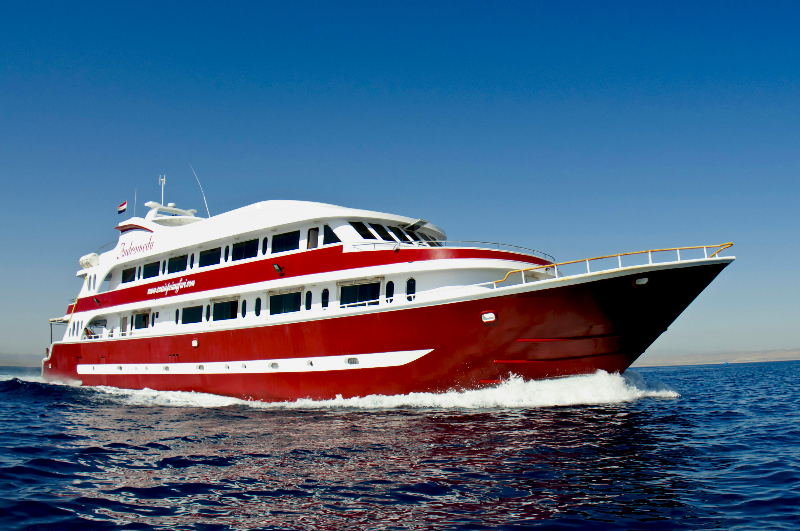
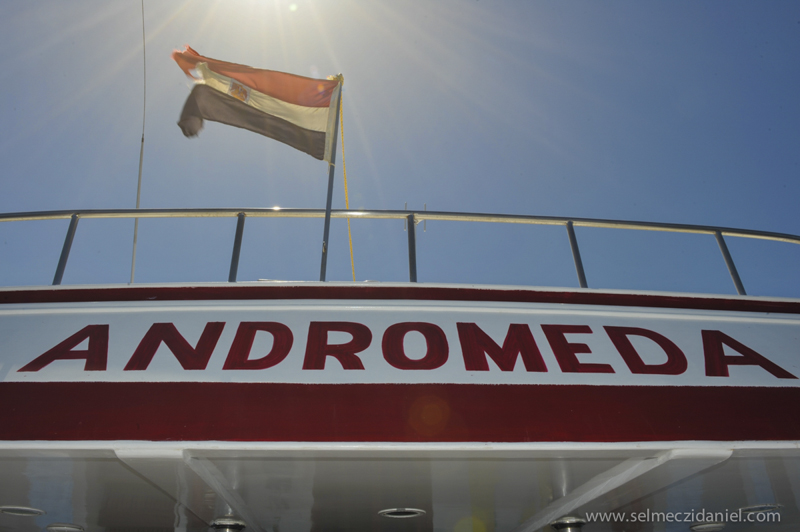
Andromeda

| Trip dates | Trip dates | Itinerary | Days/Nights | Start Place | End Place |
|---|---|---|---|---|---|
| 23 May 2026 | North - Tiran | 8D/7N | Hurghada | Hurghada | |
| 04 Jul 2026 | South | 8D/7N | Hurghada | Hurghada | |
| 19 Sep 2026 | North - Tiran | 8D/7N | Hurghada | Hurghada |
| Cabins | Preview | Name | Available Cabins | Price/Persons | |||||||||||||||||||||||||||||||||||||||||||||||||||||||||||||||||||||||||||||||||||||||||||||||||||||||||||||||||||||||||||||||||||||||||||||||||||||||||||||||||||||||||||||||||
|---|---|---|---|---|---|---|---|---|---|---|---|---|---|---|---|---|---|---|---|---|---|---|---|---|---|---|---|---|---|---|---|---|---|---|---|---|---|---|---|---|---|---|---|---|---|---|---|---|---|---|---|---|---|---|---|---|---|---|---|---|---|---|---|---|---|---|---|---|---|---|---|---|---|---|---|---|---|---|---|---|---|---|---|---|---|---|---|---|---|---|---|---|---|---|---|---|---|---|---|---|---|---|---|---|---|---|---|---|---|---|---|---|---|---|---|---|---|---|---|---|---|---|---|---|---|---|---|---|---|---|---|---|---|---|---|---|---|---|---|---|---|---|---|---|---|---|---|---|---|---|---|---|---|---|---|---|---|---|---|---|---|---|---|---|---|---|---|---|---|---|---|---|---|---|---|---|---|---|---|---|---|
 | Honeymoon Suite Upper Deck | Select Trip | FULL | FULL | FULL | FULL | 1 Cabins 2 Availability | 1 Cabins 2 Availability | 1 Cabins 2 Availability | 1 Cabins 2 Availability | FULL | 1 Cabins 2 Availability | FULL | 1 Cabins 2 Availability | FULL | FULL | FULL | FULL | 1 Cabins 2 Availability | 1 Cabins 2 Availability | FULL | FULL | FULL | FULL | 1 Cabins 2 Availability | FULL | 1 Cabins 2 Availability | 1 Cabins 2 Availability | 1 Cabins 2 Availability | 1 Cabins 2 Availability | FULL | FULL | FULL | 1 Cabins 2 Availability | FULL | FULL | FULL | FULL | FULL | FULL | FULL | 1 Cabins 2 Availability | FULL | FULL | FULL | FULL | FULL | FULL | FULL | 1 Cabins 2 Availability | FULL | 1 Cabins 2 Availability | FULL | 1 Cabins 2 Availability | FULL | 1 Cabins 2 Availability | FULL | 1 Cabins 2 Availability | 1 Cabins 2 Availability | 1 Cabins 2 Availability | FULL | 1 Cabins 2 Availability | FULL | 1 Cabins 2 Availability | 1 Cabins 2 Availability | 1 Cabins 2 Availability | FULL | FULL | FULL | 1 Cabins 2 Availability | FULL | 1 Cabins 2 Availability | 1 Cabins 2 Availability | 1 Cabins 2 Availability | 1 Cabins 2 Availability | 1 Cabins 2 Availability | 1 Cabins 2 Availability | FULL | 1 Cabins 2 Availability | FULL | FULL | 1 Cabins 2 Availability | FULL | 1 Cabins 2 Availability | FULL | 1 Cabins 2 Availability | 1 Cabins 2 Availability | FULL | FULL | FULL | 1 Cabins 2 Availability | Select Trip | $840.00 | $950.00 | $950.00 | $910.00 | $1,525.00 | $1,525.00 | $1,525.00 | $1,525.00 | $1,721.00 | $1,506.00 | $1,701.00 | $1,701.00 | $3,323.00 | $1,644.00 | $3,323.00 | $1,450.00 | $1,692.00 | $1,649.00 | $3,229.00 | $3,295.00 | $1,644.00 | $1,683.00 | $1,686.00 | $1,561.00 | $994.00 | $1,108.00 | $1,423.00 | $1,584.00 | $1,584.00 | $3,168.00 | $1,358.00 | $991.00 | $0.00 | $994.00 | $914.00 | $1,322.00 | $1,406.00 | $1,245.00 | $3,082.00 | $995.00 | $958.00 | $914.00 | $1,317.00 | $1,245.00 | $979.00 | $3,031.00 | $849.00 | $1,717.00 | $1,702.00 | $1,700.00 | $1,700.00 | $1,709.00 | $1,700.00 | $1,683.00 | $1,692.00 | $1,692.00 | $1,692.00 | $1,712.00 | $914.00 | $864.00 | $1,079.00 | $1,746.00 | $1,664.00 | $1,710.00 | $1,793.00 | $1,367.00 | $1,655.00 | $1,642.00 | $1,795.00 | $1,836.00 | $1,836.00 | $1,836.00 | $1,830.00 | $1,830.00 | $1,655.00 | $1,836.00 | $1,653.00 | $1,187.00 | $1,195.00 | $979.00 | $1,031.00 | $894.00 | $1,059.00 | $1,112.00 | $918.00 | $1,125.00 | $1,208.00 | $1,125.00 |
|
 | Queen-Bed Cabin Upper Deck | Select Trip | FULL | 1 Cabins 2 Availability | 1 Cabins 2 Availability | FULL | 2 Cabins 4 Availability | 2 Cabins 4 Availability | 2 Cabins 4 Availability | FULL | FULL | 1 Cabins 2 Availability | FULL | 1 Cabins 2 Availability | FULL | FULL | FULL | FULL | 2 Cabins 4 Availability | 2 Cabins 4 Availability | FULL | FULL | FULL | FULL | 1 Cabins 2 Availability | 1 Cabins 2 Availability | 2 Cabins 4 Availability | 1 Cabins 2 Availability | 1 Cabins 2 Availability | FULL | 1 Cabins 2 Availability | 1 Cabins 2 Availability | FULL | FULL | 1 Cabins 2 Availability | FULL | FULL | 1 Cabins 2 Availability | 1 Cabins 2 Availability | FULL | FULL | FULL | FULL | FULL | FULL | FULL | FULL | FULL | FULL | 1 Cabins 2 Availability | FULL | 1 Cabins 2 Availability | 1 Cabins 2 Availability | 1 Cabins 2 Availability | 1 Cabins 2 Availability | FULL | FULL | 1 Cabins 2 Availability | 1 Cabins 2 Availability | FULL | 1 Cabins 2 Availability | 1 Cabins 2 Availability | 1 Cabins 2 Availability | 1 Cabins 2 Availability | 2 Cabins 4 Availability | 2 Cabins 4 Availability | FULL | FULL | FULL | 2 Cabins 4 Availability | 1 Cabins 2 Availability | 1 Cabins 2 Availability | 2 Cabins 4 Availability | 2 Cabins 4 Availability | 2 Cabins 4 Availability | 2 Cabins 4 Availability | 2 Cabins 4 Availability | 2 Cabins 4 Availability | 1 Cabins 2 Availability | 1 Cabins 2 Availability | FULL | FULL | 1 Cabins 2 Availability | 2 Cabins 4 Availability | 2 Cabins 4 Availability | 1 Cabins 2 Availability | 1 Cabins 2 Availability | FULL | FULL | FULL | 1 Cabins 2 Availability | Select Trip | $840.00 | $950.00 | $950.00 | $910.00 | $1,525.00 | $1,525.00 | $1,525.00 | $1,525.00 | $1,721.00 | $1,506.00 | $1,701.00 | $1,701.00 | $3,323.00 | $1,644.00 | $3,323.00 | $1,450.00 | $1,692.00 | $1,649.00 | $3,229.00 | $3,295.00 | $1,644.00 | $1,683.00 | $1,686.00 | $1,561.00 | $994.00 | $1,108.00 | $1,423.00 | $1,584.00 | $1,584.00 | $3,168.00 | $1,358.00 | $991.00 | $0.00 | $994.00 | $914.00 | $1,322.00 | $1,406.00 | $1,245.00 | $3,082.00 | $995.00 | $958.00 | $914.00 | $1,317.00 | $1,245.00 | $979.00 | $3,031.00 | $849.00 | $1,717.00 | $1,702.00 | $1,700.00 | $1,700.00 | $1,709.00 | $1,700.00 | $1,683.00 | $1,692.00 | $1,692.00 | $1,692.00 | $1,712.00 | $914.00 | $864.00 | $1,079.00 | $1,746.00 | $1,664.00 | $1,710.00 | $1,793.00 | $1,367.00 | $1,655.00 | $1,642.00 | $1,795.00 | $1,836.00 | $1,836.00 | $1,836.00 | $1,830.00 | $1,830.00 | $1,655.00 | $1,836.00 | $1,653.00 | $1,187.00 | $1,195.00 | $979.00 | $1,031.00 | $894.00 | $1,059.00 | $1,112.00 | $918.00 | $1,125.00 | $1,208.00 | $1,125.00 |
|
 | Twin-Bed Cabin Lower Deck | Select Trip | 3 Cabins 6 Availability | 8 Cabins 16 Availability | 8 Cabins 16 Availability | 6 Cabins 12 Availability | 8 Cabins 16 Availability | 8 Cabins 16 Availability | 8 Cabins 16 Availability | 8 Cabins 16 Availability | 2 Cabins 4 Availability | 8 Cabins 16 Availability | 2 Cabins 4 Availability | 7 Cabins 13 Availability | 3 Cabins 6 Availability | 6 Cabins 11 Availability | 3 Cabins 6 Availability | 6 Cabins 12 Availability | 8 Cabins 16 Availability | 8 Cabins 16 Availability | 3 Cabins 6 Availability | 6 Cabins 11 Availability | FULL | 6 Cabins 11 Availability | 8 Cabins 16 Availability | 5 Cabins 10 Availability | 3 Cabins 6 Availability | 5 Cabins 9 Availability | 4 Cabins 7 Availability | 4 Cabins 8 Availability | 5 Cabins 10 Availability | 3 Cabins 6 Availability | 3 Cabins 6 Availability | 4 Cabins 8 Availability | 4 Cabins 8 Availability | FULL | 1 Cabins 2 Availability | 4 Cabins 8 Availability | 2 Cabins 4 Availability | 3 Cabins 6 Availability | 5 Cabins 9 Availability | 1 Cabins 2 Availability | 1 Cabins 1 Availability | 2 Cabins 3 Availability | 3 Cabins 5 Availability | 1 Cabins 1 Availability | 4 Cabins 8 Availability | 2 Cabins 4 Availability | 2 Cabins 4 Availability | 4 Cabins 8 Availability | 5 Cabins 9 Availability | 5 Cabins 9 Availability | 1 Cabins 1 Availability | 3 Cabins 5 Availability | 5 Cabins 10 Availability | 3 Cabins 5 Availability | 1 Cabins 2 Availability | 5 Cabins 9 Availability | 4 Cabins 8 Availability | 3 Cabins 5 Availability | 5 Cabins 9 Availability | 4 Cabins 7 Availability | 5 Cabins 10 Availability | 4 Cabins 7 Availability | 2 Cabins 4 Availability | 2 Cabins 4 Availability | 5 Cabins 10 Availability | 6 Cabins 11 Availability | 2 Cabins 4 Availability | 1 Cabins 2 Availability | 5 Cabins 10 Availability | 4 Cabins 8 Availability | 8 Cabins 16 Availability | 8 Cabins 16 Availability | 8 Cabins 16 Availability | 8 Cabins 16 Availability | 8 Cabins 16 Availability | 5 Cabins 9 Availability | 5 Cabins 10 Availability | 2 Cabins 3 Availability | 3 Cabins 6 Availability | 6 Cabins 12 Availability | 8 Cabins 16 Availability | 4 Cabins 8 Availability | 4 Cabins 8 Availability | 4 Cabins 8 Availability | 5 Cabins 9 Availability | FULL | 7 Cabins 13 Availability | 5 Cabins 10 Availability | 5 Cabins 9 Availability | Select Trip | $790.00 | $900.00 | $900.00 | $860.00 | $1,463.00 | $1,463.00 | $1,463.00 | $1,463.00 | $1,660.00 | $1,445.00 | $1,640.00 | $1,640.00 | $3,263.00 | $1,585.00 | $3,263.00 | $1,390.00 | $1,631.00 | $1,591.00 | $3,170.00 | $3,235.00 | $1,585.00 | $1,623.00 | $1,626.00 | $1,561.00 | $933.00 | $1,047.00 | $1,364.00 | $1,528.00 | $1,528.00 | $3,055.00 | $1,301.00 | $991.00 | $0.00 | $944.00 | $864.00 | $1,268.00 | $1,356.00 | $1,195.00 | $2,972.00 | $946.00 | $908.00 | $864.00 | $1,264.00 | $1,195.00 | $929.00 | $2,923.00 | $849.00 | $1,608.00 | $1,594.00 | $1,593.00 | $1,593.00 | $1,601.00 | $1,593.00 | $1,333.00 | $1,585.00 | $1,585.00 | $1,585.00 | $1,603.00 | $807.00 | $864.00 | $968.00 | $1,635.00 | $1,558.00 | $1,601.00 | $1,679.00 | $1,262.00 | $1,550.00 | $1,538.00 | $1,681.00 | $1,719.00 | $1,719.00 | $1,719.00 | $1,714.00 | $1,714.00 | $1,550.00 | $1,719.00 | $1,548.00 | $1,078.00 | $1,085.00 | $979.00 | $1,031.00 | $894.00 | $1,059.00 | $1,112.00 | $918.00 | $1,007.00 | $1,090.00 | $1,007.00 |
|
| Twin-Bed Cabin Upper Deck | Select Trip | FULL | 1 Cabins 2 Availability | 1 Cabins 2 Availability | FULL | 2 Cabins 4 Availability | 2 Cabins 4 Availability | 2 Cabins 4 Availability | 2 Cabins 4 Availability | FULL | 2 Cabins 3 Availability | FULL | 2 Cabins 3 Availability | FULL | FULL | FULL | FULL | 2 Cabins 4 Availability | 2 Cabins 4 Availability | FULL | FULL | FULL | FULL | FULL | FULL | FULL | FULL | 1 Cabins 2 Availability | 1 Cabins 2 Availability | 1 Cabins 2 Availability | 1 Cabins 2 Availability | FULL | FULL | FULL | FULL | FULL | FULL | FULL | FULL | FULL | FULL | FULL | FULL | FULL | FULL | FULL | FULL | FULL | 1 Cabins 2 Availability | FULL | FULL | FULL | 2 Cabins 4 Availability | FULL | 1 Cabins 2 Availability | FULL | FULL | 1 Cabins 2 Availability | 1 Cabins 2 Availability | 1 Cabins 2 Availability | 1 Cabins 2 Availability | FULL | 1 Cabins 2 Availability | 2 Cabins 4 Availability | 2 Cabins 4 Availability | FULL | FULL | FULL | 1 Cabins 2 Availability | FULL | 1 Cabins 2 Availability | 2 Cabins 4 Availability | 2 Cabins 4 Availability | 2 Cabins 4 Availability | 2 Cabins 4 Availability | 2 Cabins 4 Availability | FULL | 1 Cabins 2 Availability | FULL | FULL | FULL | 1 Cabins 2 Availability | 1 Cabins 2 Availability | FULL | FULL | 1 Cabins 2 Availability | 2 Cabins 4 Availability | FULL | FULL | FULL | Select Trip | $840.00 | $950.00 | $950.00 | $910.00 | $1,525.00 | $1,525.00 | $1,525.00 | $1,525.00 | $1,721.00 | $1,506.00 | $1,701.00 | $1,701.00 | $3,323.00 | $1,644.00 | $3,323.00 | $1,450.00 | $1,692.00 | $1,649.00 | $3,229.00 | $3,295.00 | $1,644.00 | $1,683.00 | $1,686.00 | $1,561.00 | $994.00 | $1,108.00 | $1,423.00 | $1,584.00 | $1,584.00 | $3,168.00 | $1,358.00 | $991.00 | $0.00 | $994.00 | $914.00 | $1,322.00 | $1,406.00 | $1,245.00 | $3,082.00 | $995.00 | $958.00 | $914.00 | $1,317.00 | $1,245.00 | $979.00 | $3,031.00 | $849.00 | $1,717.00 | $1,702.00 | $1,700.00 | $1,700.00 | $1,709.00 | $1,700.00 | $1,683.00 | $1,692.00 | $1,692.00 | $1,692.00 | $1,712.00 | $914.00 | $864.00 | $1,079.00 | $1,746.00 | $1,664.00 | $1,710.00 | $1,793.00 | $1,367.00 | $1,655.00 | $1,642.00 | $1,795.00 | $1,836.00 | $1,836.00 | $1,836.00 | $1,830.00 | $1,830.00 | $1,655.00 | $1,836.00 | $1,653.00 | $1,187.00 | $1,195.00 | $979.00 | $1,031.00 | $894.00 | $1,059.00 | $1,112.00 | $918.00 | $1,125.00 | $1,208.00 | $1,125.00 |
Message
×
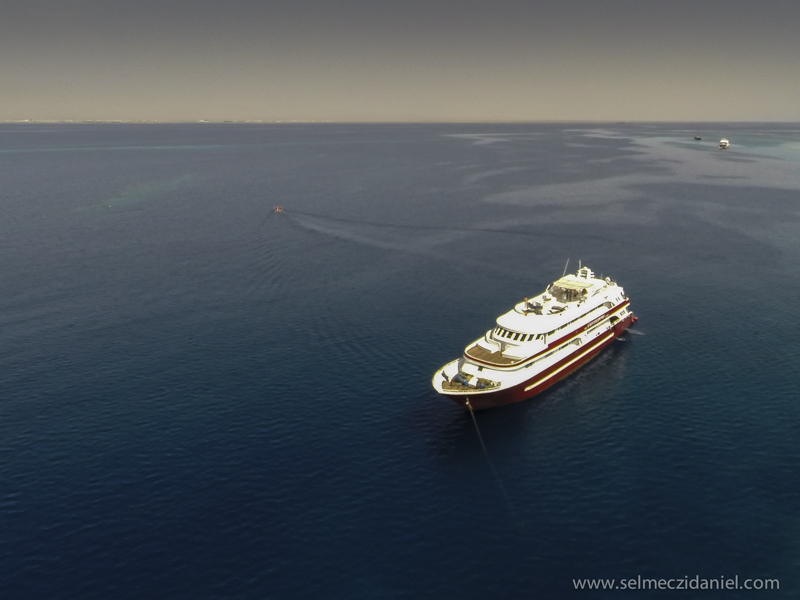
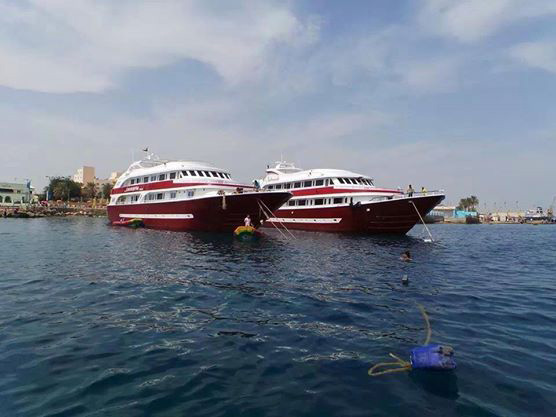
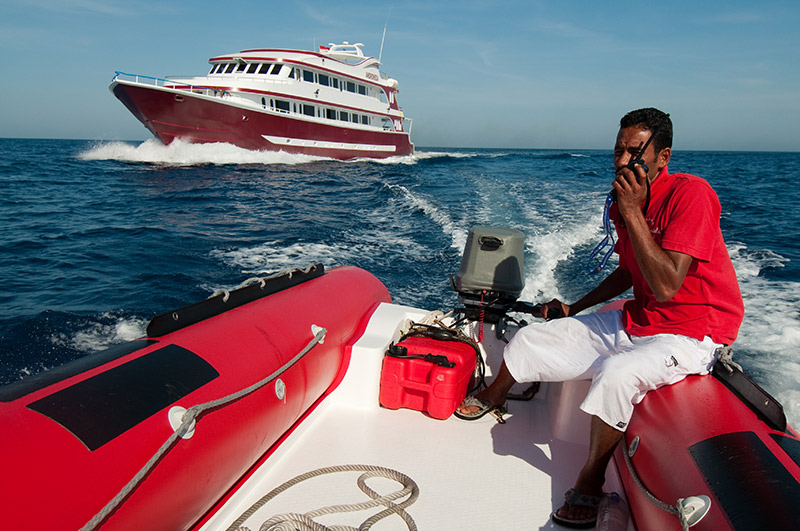
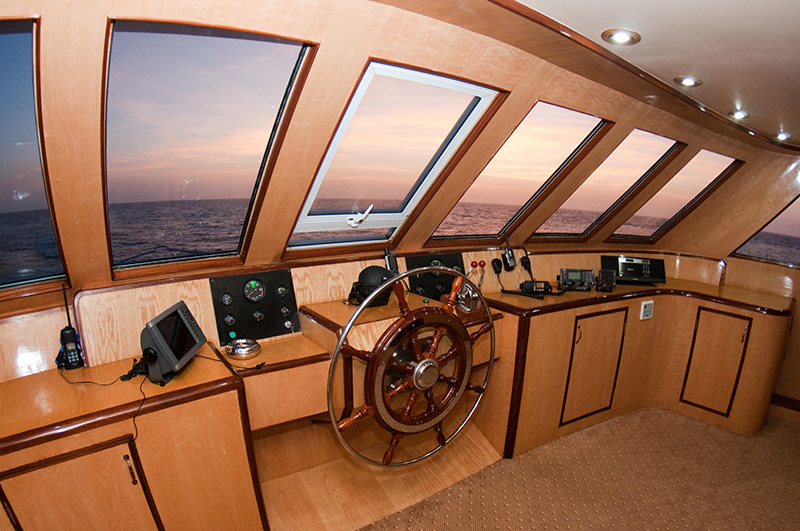
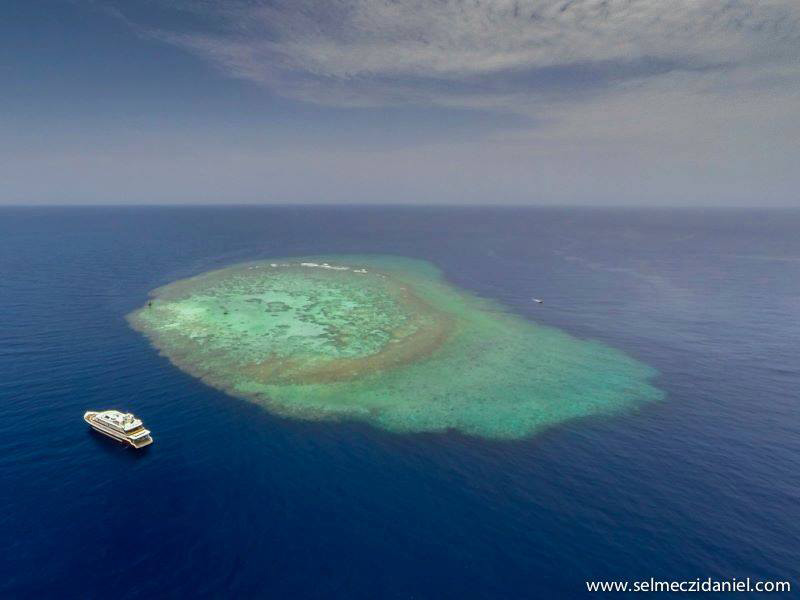
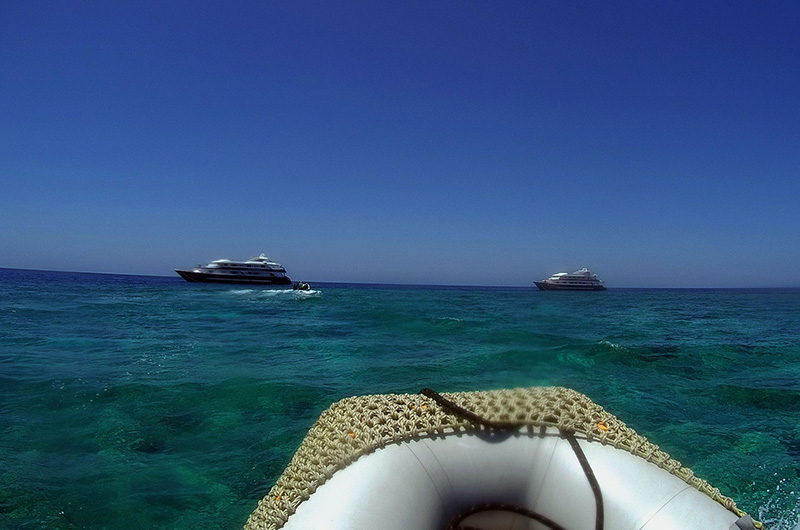
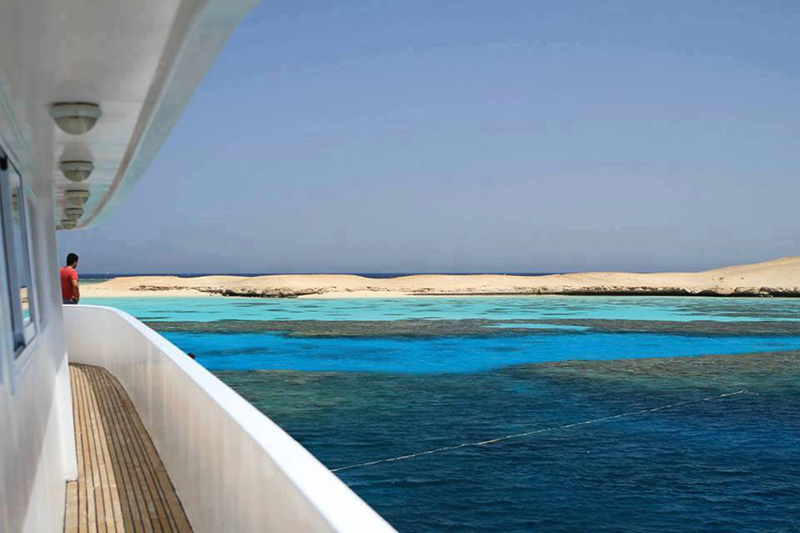
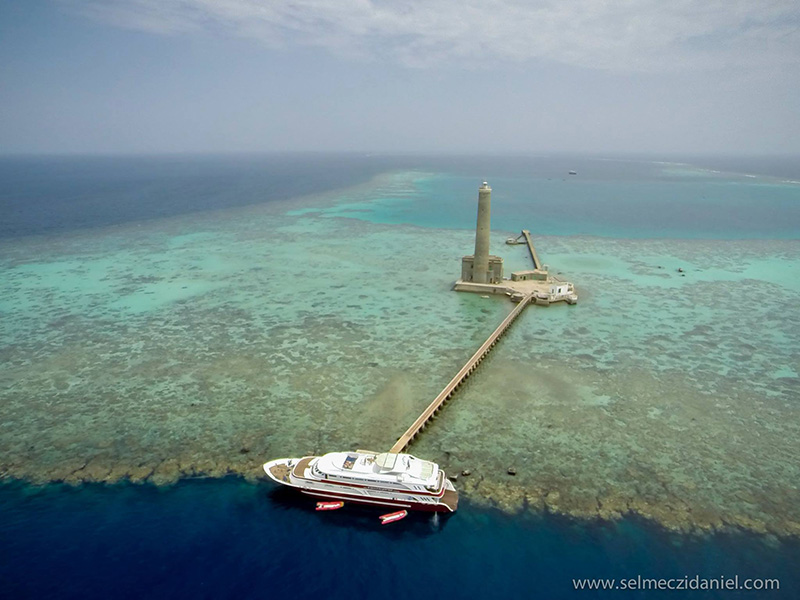
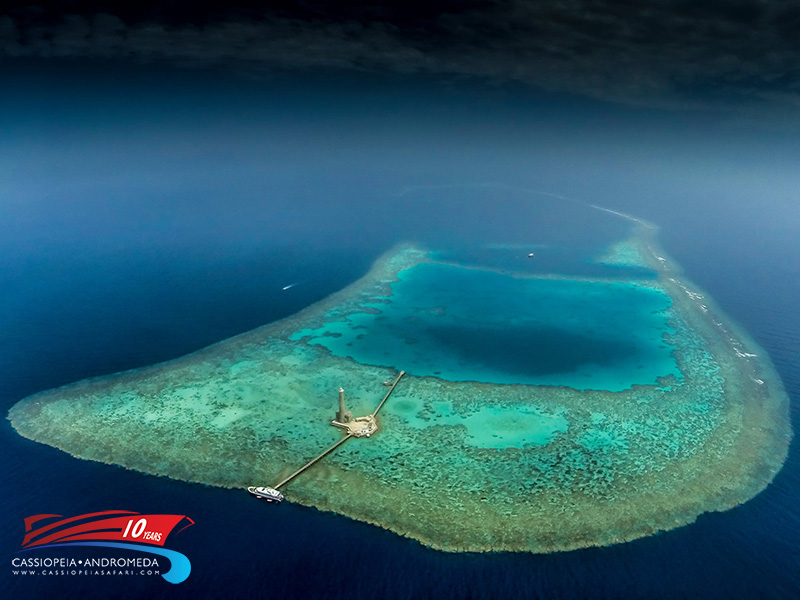
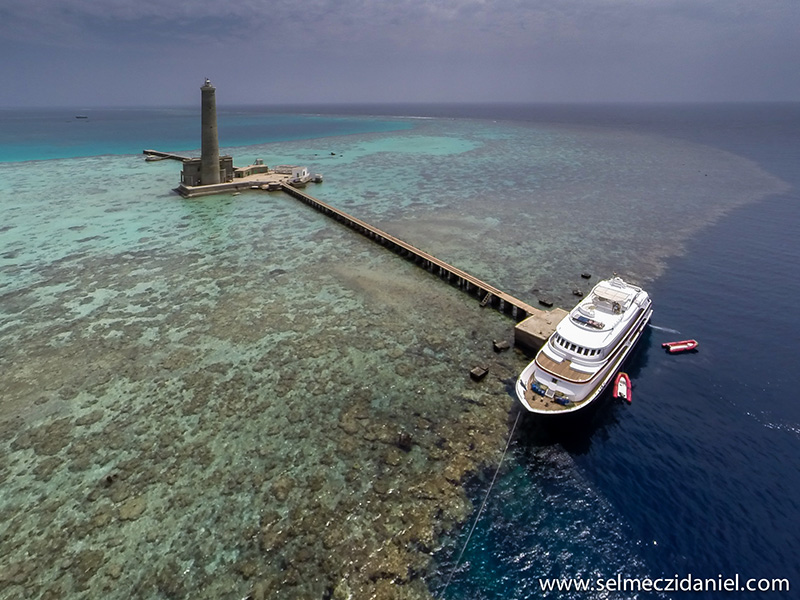
Andromeda, the 40 meters diving safari liveaboard, was built based on a unique design, meeting divers’ and guests’ needs. The vessel welcomes up to 26 guests in 13 spacious, tastefully decorated cabins with en-suite bathrooms.
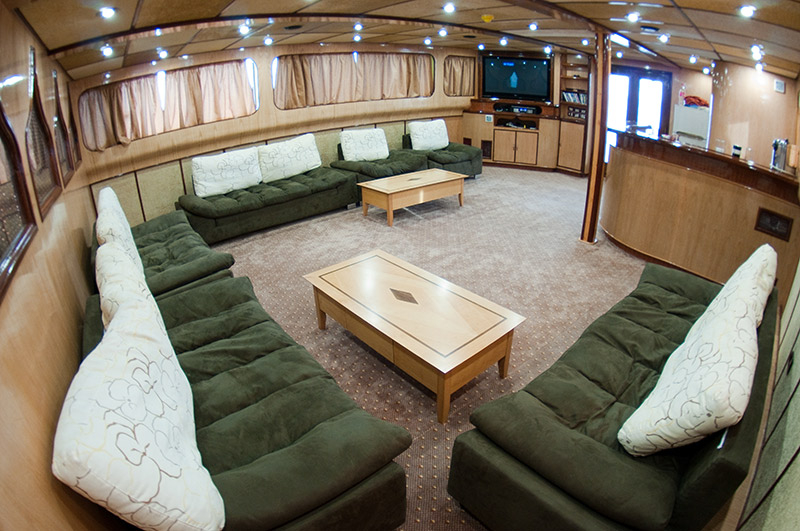
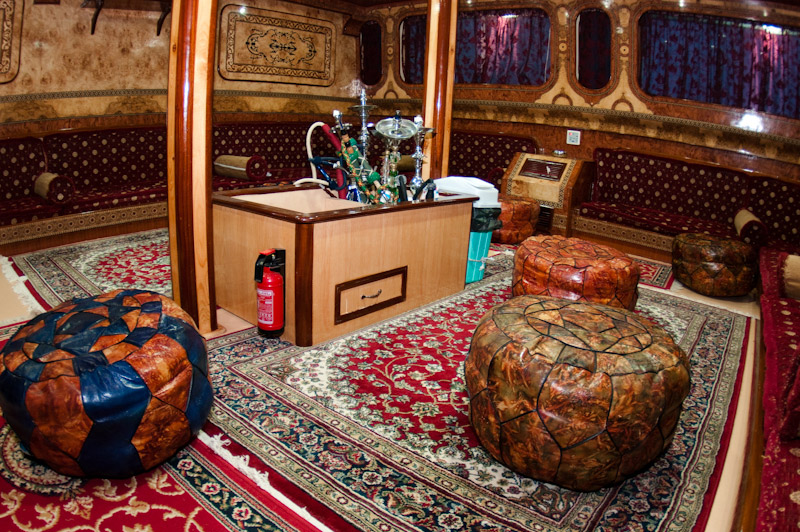
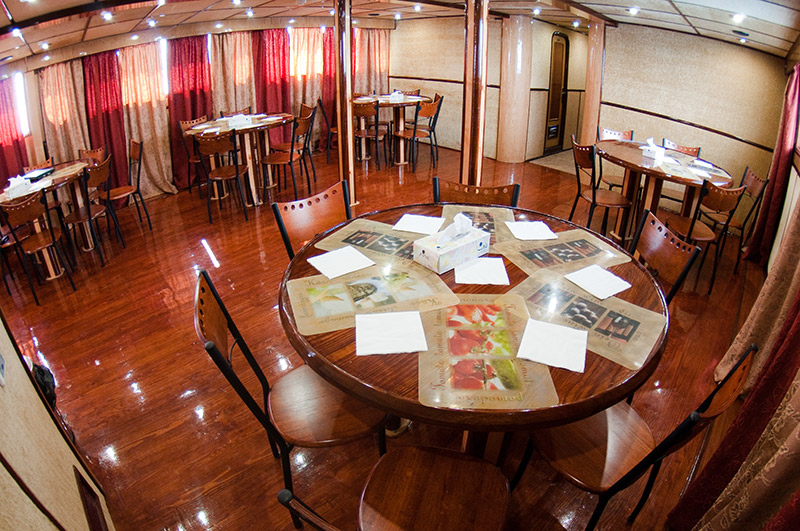
The spacious lounge area is air-conditioned and well equipped with an LCD TV, VCR, DVD and CD player and furnished according to European style. The Arabian cafe follows the original Oriental coffee shop design with shisha (waterpipe) smoking possibility, coffee, tea and original Arabic music.
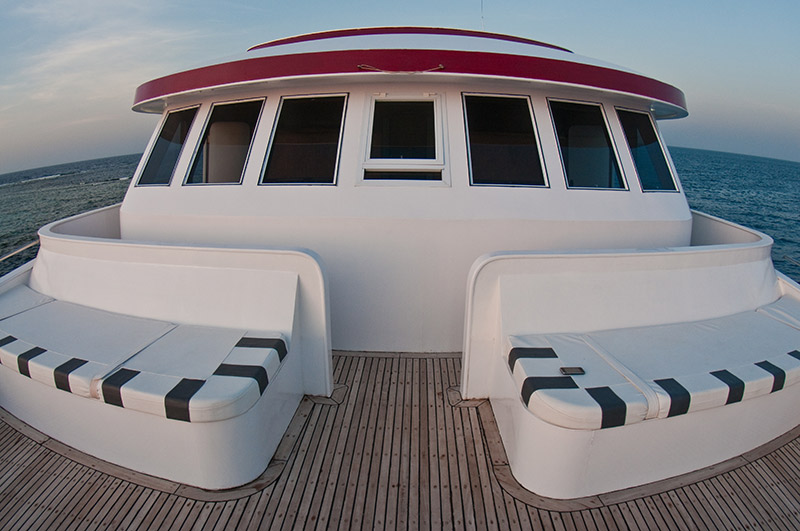
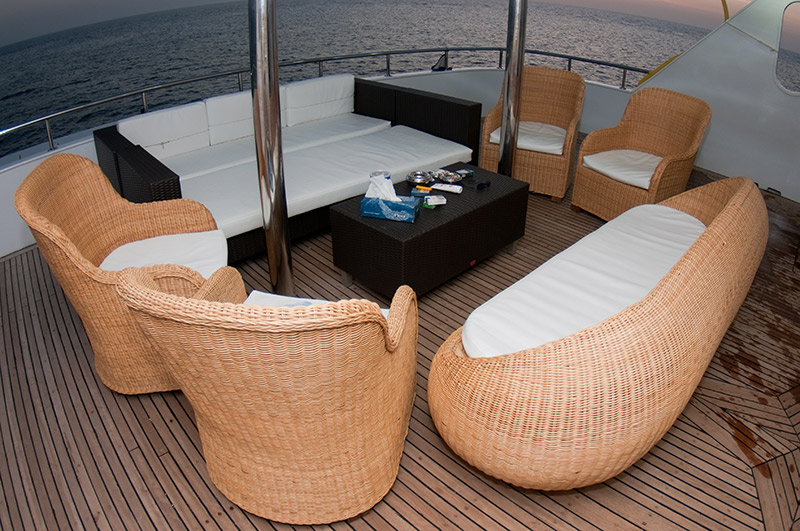
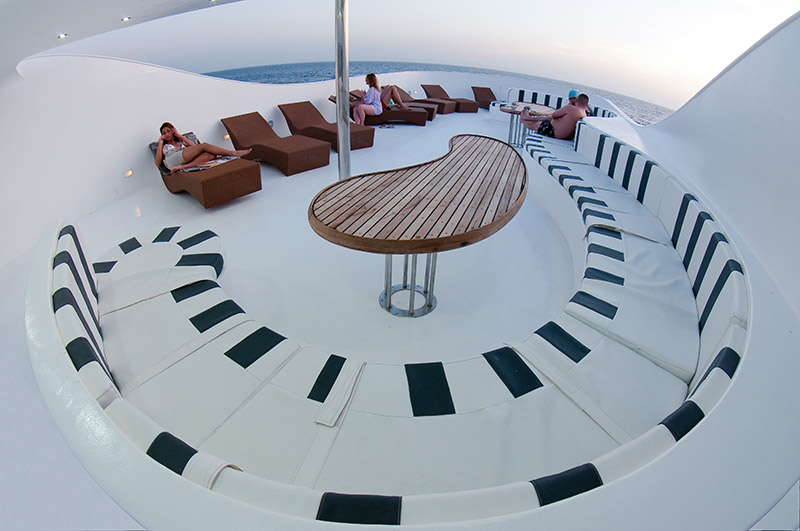
The comfortable 100-square-meter sun deck provides plenty of space for sun-seekers, as well as a shaded area. Comfortable deck chairs and cushioned seats make the time more pleasant. There is also a smaller sun deck in front of the captain’s bridge. A covered deck In front of the salon is a comfortable open but covered area for resting and chatting between dives in the evening.
The large dive deck and dive platform area ensure more-than-adequate space for divers preparing for their next plunge into the Red Sea. 2 hand-held showers on the platform allow for a rinse after diving or snorkeling. A bathroom with shower and marine head lead directly off the dive deck.
A well-traveled, cohesive crew, speaking various languages, awaits all the guests who wish to dive and relax. See you onboard! The Andromeda is the only liveaboard offering 1-week and 2-week diving safaris in the Deep South of Sudan.
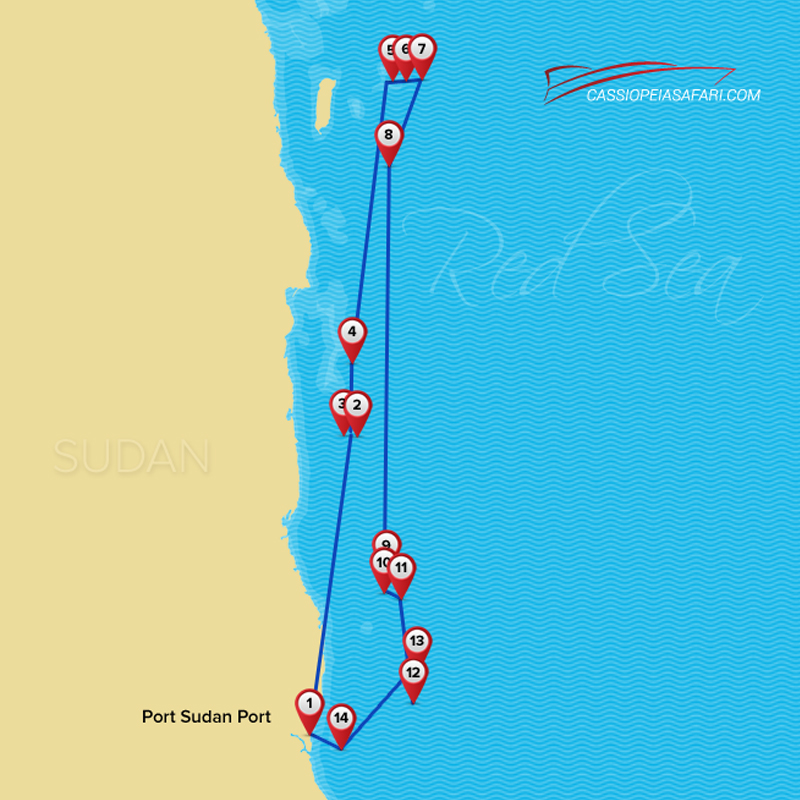
Sample Itinerary
Day 1: Check-In & Briefing
Day 2: Leaving the Marina to dive destination
Day 3: Angarosh, Gotta el Bana, Gurna
Day 4: Merlo East, Merlo South, Sanganeb North
Day 5: Sanganeb South, Shaab Rumi – Precontinent, Shaab Suedi Channel
Day 6: Shambaia Reef, Umbria
Day 7: Cruising back to harbor
Day 8: Check-Out
About the dive sites:
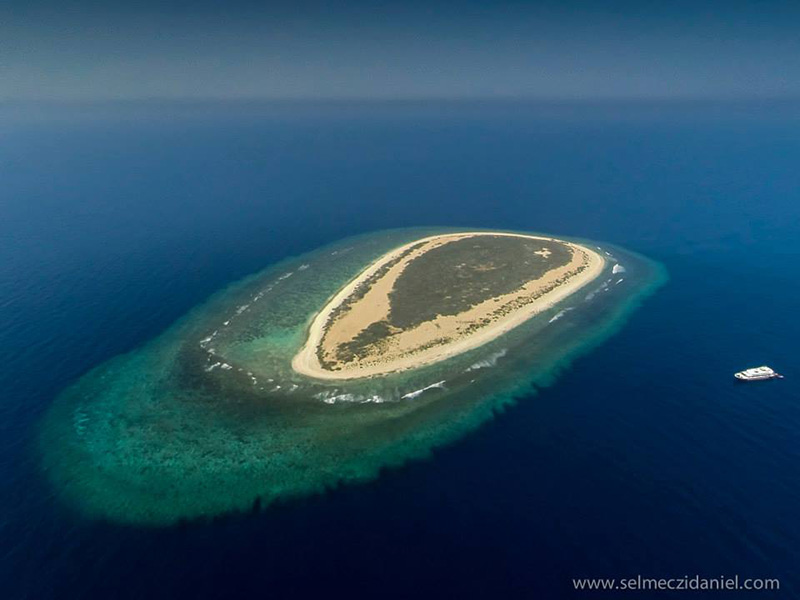
Our itineraries include dive sites all the way from Angarosh and Abington in the north to as far as the most southern Sudanese site of Dahrat Ebid near the Eritrean border.
Inclusions
Exclusions
- Fuel surcharge: 100.00 EUR
- Sudanese visa (non-US citizens): 145.00 USD
Central-European time zone + 1 hour. There is no summer/winter savings time since 2011.
Egypt has a desert climate with warm and dry weather conditions. In the summer months (April-October) the average temperature is between 27°C and 32°C but in the interior areas of the desert it can get even warmer. Summer temperatures along the Red Sea coast are between 27°C and 43°C with northerly winds and southward currents. In the north, winds from the Mediterranian Sea ease the heat. Winters are mild with average temperatures of 13°C – 21°C. Most precipitation is during the winter months; south of Cairo it is about 2 – 5 mm while in the north it can reach 410 mm. There are strong southerly winds in the end of October and the in the beginning of November and currents move in a northern direction. (Water temperatures in the area of Sharm el Sheikh and Hurghada may be 1 – 2°C cooler.)
Thanks to the warm weather, light clothes made of cotton, skirts, shorts, short-sleeve T-shirts and blouses, flip-flops and sandals are the best choice. Hats, sunglasses and tanning lotion (with minimum SPF30) are also important. It is recommended to stay indoors or in the shade during the noon hours. In winter during the day long pants and a light sweater are enough but in the evening a jacket or a light coat may come handy. In the resort towns like Hurghada and Sharm el Sheikh, there are no rules concerning clothing wear as long as it is in good taste however in larger cities like Cairo, it is recommended to wear clothing that is at least below the knees and covers the shoulders. The rules in religious or holy places are even stricter and girls and ladies must cover their heads. Onboard Cassiopeia and Andromeda light, comfortable clothing is acceptable. In the evening a light sweater or cardigan may come handy but during the day bathing suits, shorts and T-shirts are quite acceptable.
It is very versatile, delicious and rich in fresh vegetables. The main meals are made of beef, mutton, chicken, pigeon and duck and fresh fish is also often used. Traditional desserts are really sweet and at the markets, vendors’ stands are ladended with gorgeous fresh fruits. Egyptian chefs prepare the meals onboard Cassiopeia and Andromeda and their heritage is reflected in the delicious meals they prepare for the buffet-style servings three times a day. The menu includes soups, fresh salads, meats, side dishes and sweets which are also available during the day along with fresh fruits. (Pork is not widely available in Egypt because of religious reasons.)
There is 220v current with European-style plugs. There are electrical plugs in every cabin and in the common areas and also there is a separate charging station on the main deck where phones, laptops, cameras and batteries can be charged.
It is recommended but not mandatory for travellers to Egypt to get vaccination against: Hepatitis A (high risk of contagion), Hepatitis B (moderate risk of contagion), Typhus and rabies. However it is mandatory to get the vaccination against yellow fever when entering Egypt from countries or having travelled through countries with high risk of the disease (from example when travelling to Egypt from Sudan).
Haggling in Egypt is a must. Everyone bound for shopping should be prepared for a ”dispute” lasting anywhere from 1-2 minutes to half an hour but ultimately ending in a successful shopping experience. There are rules to haggling. One of them is to say the amount that is half of the actual amount you would be willing to spend. Onboard our vessels all prices are fixed and they are not subject to bargaining.
Look for an Egyptian Embassy of Consular Office in your country or nearest you.
Mobile phones can be used in Egypt. Contact your local mobile service provider for rates and details.
Most shops are open from 10 o’clock in the morning until as late as midnight sometimes. Banks are closed on Fridays and Saturdays. On Sundays and during Ramadan they are open between 10 o’clock in the morning and 13:30 in the afternoon. On all other days they are open between 8:30 in the morning and 13:30 in the afternoon.
Friday is the official day off and in some offices Saturday as well. One of the most important holidays are the last 2-3 days at the end of the Ramadan month and the feast 70 days later.
It is part of every-day life in the Middle-East and in the Arabic world.
Contact your dive guide onboard in case of any medical problems or emergencies. All medical costs must be paid in cash on site. Insurance companies will reimburse costs based only on valid hospital bills.
Taxi is the most comfortable way of transportation in the towns and cities. Despite the taximetre, it is wise to agree on the fare before the trip. Shuttle buses run between towns carrying locals and visitors alike. Local mini buses and coaches tend to be quite crowded.
It is forbidden to take photos or videos of military facilities, bridges and harbours. Please obey these rules! It is allowed to take photos of important and tourist sights but in certain places only for a fee.
Central-European time zone + 2 hours. There is no summer/winter savings time since 2011.
Sudan’s northern region has a dry, desert climate while in the south-western region the wet-dry tropical climate is more dominant. There are no big variations in the temperatures between regions but rather in the amount of precipitation and in the length of the dry season. Between January and March the dry north-eastern winds dominate. However the south-western winds arrive in the beginning of April, bringing heavy rains. In September the dry north-eastern winds pick up strength again, pushing southward, covering the entire country. The rainy season in Khartoum lasts from July to September with annual precipitation of 161mm. The warmest months are May and June when temperatures can reach 48°C. Port Sudan’s climate is dry where summers are very hot and winters are moderately warm. Temperatures in the winter can reach 30°C and 45°C in the summer. Ninety percent of the annual rain fall is between October and January, especially in November. Port Sudan enjoys 3200 sunny hours annually.
The Sudanese taxes are payable in advance along with the safari rates. The Sudanese visa fee is payable in USD in cash (the exact amount) onboard upon arrival. (Only cash payments are accepted.)
Thanks to the warm weather, light clothes made of cotton, skirts, shorts, short-sleeve T-shirts and blouses, flip-flops and sandals are the best choice. Hats, sunglasses and tanning lotion (with minimum SPF30) are also important. It is recommended to stay indoors or in the shade during the noon hours. Compared to Egypt, the ”regulations” concerning clothing in Sudan are stricter. In towns like Port Sudan or Suakin or in the harbour, it is recommended to wear clothing that is at least below the knees and covers the shoulders. The rules in religious or holy places are even stricter and girls and ladies must cover their heads. Onboard Cassiopeia and Andromeda light, comfortable clothing is acceptable. In the evening a light sweater or cardigan may come handy but during the day bathing suits, shorts and T-shirts are quite acceptable.
It is similar to Egyptian cuisine, very versatile, delicious and rich in fresh vegetables. The main meals are made of beef and mutton and fresh fish is often used in the coastal regions and soups are also an important part of daily meals. At the markets, vendors’ stands are ladended with gorgeous fresh fruits. Egyptian chefs prepare the meals onboard Cassiopeia and Andromeda and their heritage is reflected in the delicious meals they prepare for the buffet-style servings three times a day. The menu includes soups, fresh salads, meats, side dishes and sweets which are also available during the day along with fresh fruits. (Pork is not widely available in Sudan because of religious reasons.)
There is 220v current with European-style plugs. There are electrical plugs in every cabin and in the common areas and also there is a separate charging station on the main deck where phones, laptops, cameras and batteries can be charged.
It is recommended but not mandatory for travellers to Sudan to get vaccination against: Hepatitis A (high risk of contagion), Hepatitis B (moderate risk of contagion), Typhus and rabies. However it is mandatory to get the vaccination against yellow fever if you enter Egypt after your stay in Sudan.
Haggling in Sudan, just as in Egypt, is a must. Everyone bound for shopping should be prepared for a ”dispute” lasting anywhere from 1-2 minutes to half an hour but ultimately ending in a successful shopping experience. There are rules to haggling. One of them is to say the amount that is half of the actual amount you would be willing to spend. Onboard our vessels all prices are fixed and they are not subject to bargaining.
Look for a Sudanese Embassy of Consular Office in your country or nearest you.
Mobile phones can be used in Sudan. Contact your local mobile service provider for rates and details.
There are 13 double cabins onboard both our vessels. There are cabins with a queen bed and cabins with twin beds. Every cabin has its own en-suite bathroom with shower, sink and toilet. The air-conditioned cabins also have 220v sockets and plenty of storage space.
There is an LCD TV in the salon along with a DVD player and a variety of entertaining movies. Guests are welcome to play their own music and movies as well.
We can only accept cash payments onboard (EUR, USD, EGP). All purchases made onboard must be settled onboard before disembarking at the end of the tour. We are not able to provide credits or loans.
A safe can be found onboard both vessels where guests can place their valuables before the start of the trip. The dive guides should be asked for access to the safe. We can accept responsibility only for items placed in the safes. All other items, belongings and valuables are the responsibility of the guests.
Additional purchases and expenses made onboard may be the tip (bakshish) for the dive guides and crew (it is usually EUR30 / week in Egypt and EUR50 / person / week in Sudan if satisfied with the service), T-shirts, Nitrox use, 15l tank rental and Satellite phone use. There is a surcharge for lost towels and weights. Alcoholic beverages may be purchased at the duty-free shops before boarding the boat. (In Sudan alcoholic beverages are available onboard.)The Egyptian visa is USD25 / person or EUR20 / person (rates may change according to Government regulations). (If travelling to Sudan via Cairo, the Egyptian visa is 2 x USD25 / person.)
At least 2 local dive guides work onboard our vessels, speaking various languages.
In Egypt, depending on the size of the groups, we provide transfers in air-conditioned buses, coasters or taxis for individual guests. In Sudan all guests are transferred together by bus.
The best time for diving in Egypt is between March and November. However there are a lot of divers (especially from nations in the north) who continue on diving even between December and March when water temperatures are around 20 – 21 °C and the winds are stronger.
Most divers can do with a shorty in July and August. It is usually enough to wear a 3 – 5 mm long suit between March and November. In the remaining months a warmer or a doubled-up 5 mm suit is recommended.
It is highly recommended for every diver to bring his/her own full gear but it is possible to rent equipment. This request should be sent to us at least one week prior to departure. Twelve-litre compressed-air tanks and weights are provided for the guests onboard but weight belts should be brought along.
There are 2 fully equipped decompression chambers in Hurghada to treat diving-related injuries and accidents. There are also facilities in Sharm el Sheikh, El Gouna and Marsa Alam. All our divers must possess valid diving insurance that includes decompression chamber treatments as well.
The first diving day there are 2 day dives and 1 night dive. The 2nd – last diving days there are 3 day dives and 1 night dive per day (depending on the itinerary and weather conditions). The last diving day there are 2 day dives and then the boat returns to the harbour. Please note there is no night diving at the Marine Park islands such as Brothers, Daedalus, Rocky and Zabargad.
A minimum of OWD certification is necessary to be able to dive onboard our boats. There are dive sites that are only recommended for advanced and more experienced divers, for example at the islands of Brothers, Rocky and Zabargad or at wrecks lying in deeper waters in the north. It is best to check the itinerary before booking a tour to make sure it fits the diver’s certification level and experience.
Nitrox-certified divers can dive with Nitrox. There is a membrane Nitrox system onboard with a 32% mix.
A minimum of OWD certification is necessary to be able to dive onboard our boats. However we can provide certain courses onboard such as AOWD, Nitrox, specialty courses, etc. given appropriate itinerary and previous consultation.
Our diving safaris are mainly geared towards divers but non-divers are also welcome when accompanying their loved ones.
The first dive on every tour is a check dive during which the dive guides observe the divers’ diving techniques and any shortcomings and correct, remedy those. If it has been a while since the last dive, it should be brought to the dive guides’ attention.
All our divers must possess valid diving insurance and non-divers valid travel insurance. Diving is permitted only with valid diving insurance. Most important is diving and accidental insurance as well as luggage and travel insurance.
Diving is conditioned upon having a valid diving certificate and diving insurance.
Every diver must fill out a release form onboard before the start of the trip stating that he/she is medically fit to dive.
Life vests can be found in every cabin and the following equipment onboard: 2 life rafts, Oxygen, first-aid kit, fire extinguishers, life buoys and a diver search system.
Due to the movement of the boat, seasickness and/or nausa may be experienced. This can be well treated by the local medication Emetrx. Please turn to the dive guides for assistance.
The best time for diving in Sudan is between February and June. This is when the sea is the most alive and marine life is the richest. The fall months (September-November) are also favoured by divers, especially October when it is manta season in Sudan near Mesharifa reef.
There are no facilities in Sudan for the treatment of decompression sickness. The closest chamber is in Marsa Alam. (There are 2 fully equipped decompression chambers in Hurghada to treat diving-related injuries and accidents. There are also facilities in Sharm el Sheikh, El Gouna and Marsa Alam.) All our divers must possess valid diving insurance that includes decompression chamber treatments as well.
The first diving day there are 2 day dives and 1 night dive. The 2nd – last diving days there are 3 day dives and 1 night dive per day (depending on the itinerary and weather conditions). The last diving day there are 2 day dives and then the boat returns to the harbour.
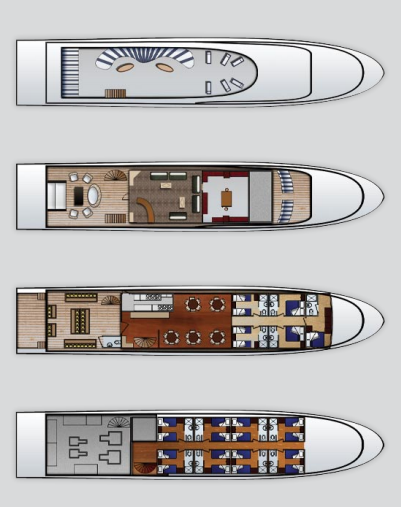
- Length: 40 m / 130 ft.
- Beam: 8 m
- Generator: 2x Mercedes 138 Kw silent generators
- Freshwater: 15 tons + desalination device (2 tons/day)
- Fuel: 70 tons
- Electricity: 220V in cabins and salon
- Cabins: 13
- Max. Guests: 26
Andromeda, the 40 meters diving safari liveaboard, was built based on a unique design, meeting divers’ and guests’ needs. The vessel welcomes up to 26 guests in 13 spacious, tastefully decorated cabins with en-suite bathrooms.
The spacious lounge area is air-conditioned and well equipped with an LCD TV, VCR, DVD and CD player and furnished according to European style. The Arabian cafe follows the original Oriental coffee shop design with shisha (waterpipe) smoking possibility, coffee, tea and original Arabic music.
The comfortable 100-square-meter sun deck provides plenty of space for sun-seekers, as well as a shaded area. Comfortable deck chairs and cushioned seats make the time more pleasant. There is also a smaller sun deck in front of the captain’s bridge. A covered deck In front of the salon is a comfortable open but covered area for resting and chatting between dives in the evening.
The large dive deck and dive platform area ensure more-than-adequate space for divers preparing for their next plunge into the Red Sea. 2 hand-held showers on the platform allow for a rinse after diving or snorkeling. A bathroom with shower and marine head lead directly off the dive deck.
A well-traveled, cohesive crew, speaking various languages, awaits all the guests who wish to dive and relax. See you onboard! The Andromeda is the only liveaboard offering 1-week and 2-week diving safaris in the Deep South of Sudan.
Sample Itinerary
Day 1: Check-In & Briefing
Day 2: Leaving the Marina to dive destination
Day 3: Angarosh, Gotta el Bana, Gurna
Day 4: Merlo East, Merlo South, Sanganeb North
Day 5: Sanganeb South, Shaab Rumi – Precontinent, Shaab Suedi Channel
Day 6: Shambaia Reef, Umbria
Day 7: Cruising back to harbor
Day 8: Check-Out
About the dive sites:
Our itineraries include dive sites all the way from Angarosh and Abington in the north to as far as the most southern Sudanese site of Dahrat Ebid near the Eritrean border.
Inclusions
Exclusions
- Fuel surcharge: 100.00 EUR
- Sudanese visa (non-US citizens): 145.00 USD
Central-European time zone + 1 hour. There is no summer/winter savings time since 2011.
Egypt has a desert climate with warm and dry weather conditions. In the summer months (April-October) the average temperature is between 27°C and 32°C but in the interior areas of the desert it can get even warmer. Summer temperatures along the Red Sea coast are between 27°C and 43°C with northerly winds and southward currents. In the north, winds from the Mediterranian Sea ease the heat. Winters are mild with average temperatures of 13°C – 21°C. Most precipitation is during the winter months; south of Cairo it is about 2 – 5 mm while in the north it can reach 410 mm. There are strong southerly winds in the end of October and the in the beginning of November and currents move in a northern direction. (Water temperatures in the area of Sharm el Sheikh and Hurghada may be 1 – 2°C cooler.)
Thanks to the warm weather, light clothes made of cotton, skirts, shorts, short-sleeve T-shirts and blouses, flip-flops and sandals are the best choice. Hats, sunglasses and tanning lotion (with minimum SPF30) are also important. It is recommended to stay indoors or in the shade during the noon hours. In winter during the day long pants and a light sweater are enough but in the evening a jacket or a light coat may come handy. In the resort towns like Hurghada and Sharm el Sheikh, there are no rules concerning clothing wear as long as it is in good taste however in larger cities like Cairo, it is recommended to wear clothing that is at least below the knees and covers the shoulders. The rules in religious or holy places are even stricter and girls and ladies must cover their heads. Onboard Cassiopeia and Andromeda light, comfortable clothing is acceptable. In the evening a light sweater or cardigan may come handy but during the day bathing suits, shorts and T-shirts are quite acceptable.
It is very versatile, delicious and rich in fresh vegetables. The main meals are made of beef, mutton, chicken, pigeon and duck and fresh fish is also often used. Traditional desserts are really sweet and at the markets, vendors’ stands are ladended with gorgeous fresh fruits. Egyptian chefs prepare the meals onboard Cassiopeia and Andromeda and their heritage is reflected in the delicious meals they prepare for the buffet-style servings three times a day. The menu includes soups, fresh salads, meats, side dishes and sweets which are also available during the day along with fresh fruits. (Pork is not widely available in Egypt because of religious reasons.)
There is 220v current with European-style plugs. There are electrical plugs in every cabin and in the common areas and also there is a separate charging station on the main deck where phones, laptops, cameras and batteries can be charged.
It is recommended but not mandatory for travellers to Egypt to get vaccination against: Hepatitis A (high risk of contagion), Hepatitis B (moderate risk of contagion), Typhus and rabies. However it is mandatory to get the vaccination against yellow fever when entering Egypt from countries or having travelled through countries with high risk of the disease (from example when travelling to Egypt from Sudan).
Haggling in Egypt is a must. Everyone bound for shopping should be prepared for a ”dispute” lasting anywhere from 1-2 minutes to half an hour but ultimately ending in a successful shopping experience. There are rules to haggling. One of them is to say the amount that is half of the actual amount you would be willing to spend. Onboard our vessels all prices are fixed and they are not subject to bargaining.
Look for an Egyptian Embassy of Consular Office in your country or nearest you.
Mobile phones can be used in Egypt. Contact your local mobile service provider for rates and details.
Most shops are open from 10 o’clock in the morning until as late as midnight sometimes. Banks are closed on Fridays and Saturdays. On Sundays and during Ramadan they are open between 10 o’clock in the morning and 13:30 in the afternoon. On all other days they are open between 8:30 in the morning and 13:30 in the afternoon.
Friday is the official day off and in some offices Saturday as well. One of the most important holidays are the last 2-3 days at the end of the Ramadan month and the feast 70 days later.
It is part of every-day life in the Middle-East and in the Arabic world.
Contact your dive guide onboard in case of any medical problems or emergencies. All medical costs must be paid in cash on site. Insurance companies will reimburse costs based only on valid hospital bills.
Taxi is the most comfortable way of transportation in the towns and cities. Despite the taximetre, it is wise to agree on the fare before the trip. Shuttle buses run between towns carrying locals and visitors alike. Local mini buses and coaches tend to be quite crowded.
It is forbidden to take photos or videos of military facilities, bridges and harbours. Please obey these rules! It is allowed to take photos of important and tourist sights but in certain places only for a fee.
Central-European time zone + 2 hours. There is no summer/winter savings time since 2011.
Sudan’s northern region has a dry, desert climate while in the south-western region the wet-dry tropical climate is more dominant. There are no big variations in the temperatures between regions but rather in the amount of precipitation and in the length of the dry season. Between January and March the dry north-eastern winds dominate. However the south-western winds arrive in the beginning of April, bringing heavy rains. In September the dry north-eastern winds pick up strength again, pushing southward, covering the entire country. The rainy season in Khartoum lasts from July to September with annual precipitation of 161mm. The warmest months are May and June when temperatures can reach 48°C. Port Sudan’s climate is dry where summers are very hot and winters are moderately warm. Temperatures in the winter can reach 30°C and 45°C in the summer. Ninety percent of the annual rain fall is between October and January, especially in November. Port Sudan enjoys 3200 sunny hours annually.
The Sudanese taxes are payable in advance along with the safari rates. The Sudanese visa fee is payable in USD in cash (the exact amount) onboard upon arrival. (Only cash payments are accepted.)
Thanks to the warm weather, light clothes made of cotton, skirts, shorts, short-sleeve T-shirts and blouses, flip-flops and sandals are the best choice. Hats, sunglasses and tanning lotion (with minimum SPF30) are also important. It is recommended to stay indoors or in the shade during the noon hours. Compared to Egypt, the ”regulations” concerning clothing in Sudan are stricter. In towns like Port Sudan or Suakin or in the harbour, it is recommended to wear clothing that is at least below the knees and covers the shoulders. The rules in religious or holy places are even stricter and girls and ladies must cover their heads. Onboard Cassiopeia and Andromeda light, comfortable clothing is acceptable. In the evening a light sweater or cardigan may come handy but during the day bathing suits, shorts and T-shirts are quite acceptable.
It is similar to Egyptian cuisine, very versatile, delicious and rich in fresh vegetables. The main meals are made of beef and mutton and fresh fish is often used in the coastal regions and soups are also an important part of daily meals. At the markets, vendors’ stands are ladended with gorgeous fresh fruits. Egyptian chefs prepare the meals onboard Cassiopeia and Andromeda and their heritage is reflected in the delicious meals they prepare for the buffet-style servings three times a day. The menu includes soups, fresh salads, meats, side dishes and sweets which are also available during the day along with fresh fruits. (Pork is not widely available in Sudan because of religious reasons.)
There is 220v current with European-style plugs. There are electrical plugs in every cabin and in the common areas and also there is a separate charging station on the main deck where phones, laptops, cameras and batteries can be charged.
It is recommended but not mandatory for travellers to Sudan to get vaccination against: Hepatitis A (high risk of contagion), Hepatitis B (moderate risk of contagion), Typhus and rabies. However it is mandatory to get the vaccination against yellow fever if you enter Egypt after your stay in Sudan.
Haggling in Sudan, just as in Egypt, is a must. Everyone bound for shopping should be prepared for a ”dispute” lasting anywhere from 1-2 minutes to half an hour but ultimately ending in a successful shopping experience. There are rules to haggling. One of them is to say the amount that is half of the actual amount you would be willing to spend. Onboard our vessels all prices are fixed and they are not subject to bargaining.
Look for a Sudanese Embassy of Consular Office in your country or nearest you.
Mobile phones can be used in Sudan. Contact your local mobile service provider for rates and details.
There are 13 double cabins onboard both our vessels. There are cabins with a queen bed and cabins with twin beds. Every cabin has its own en-suite bathroom with shower, sink and toilet. The air-conditioned cabins also have 220v sockets and plenty of storage space.
There is an LCD TV in the salon along with a DVD player and a variety of entertaining movies. Guests are welcome to play their own music and movies as well.
We can only accept cash payments onboard (EUR, USD, EGP). All purchases made onboard must be settled onboard before disembarking at the end of the tour. We are not able to provide credits or loans.
A safe can be found onboard both vessels where guests can place their valuables before the start of the trip. The dive guides should be asked for access to the safe. We can accept responsibility only for items placed in the safes. All other items, belongings and valuables are the responsibility of the guests.
Additional purchases and expenses made onboard may be the tip (bakshish) for the dive guides and crew (it is usually EUR30 / week in Egypt and EUR50 / person / week in Sudan if satisfied with the service), T-shirts, Nitrox use, 15l tank rental and Satellite phone use. There is a surcharge for lost towels and weights. Alcoholic beverages may be purchased at the duty-free shops before boarding the boat. (In Sudan alcoholic beverages are available onboard.)The Egyptian visa is USD25 / person or EUR20 / person (rates may change according to Government regulations). (If travelling to Sudan via Cairo, the Egyptian visa is 2 x USD25 / person.)
At least 2 local dive guides work onboard our vessels, speaking various languages.
In Egypt, depending on the size of the groups, we provide transfers in air-conditioned buses, coasters or taxis for individual guests. In Sudan all guests are transferred together by bus.
The best time for diving in Egypt is between March and November. However there are a lot of divers (especially from nations in the north) who continue on diving even between December and March when water temperatures are around 20 – 21 °C and the winds are stronger.
Most divers can do with a shorty in July and August. It is usually enough to wear a 3 – 5 mm long suit between March and November. In the remaining months a warmer or a doubled-up 5 mm suit is recommended.
It is highly recommended for every diver to bring his/her own full gear but it is possible to rent equipment. This request should be sent to us at least one week prior to departure. Twelve-litre compressed-air tanks and weights are provided for the guests onboard but weight belts should be brought along.
There are 2 fully equipped decompression chambers in Hurghada to treat diving-related injuries and accidents. There are also facilities in Sharm el Sheikh, El Gouna and Marsa Alam. All our divers must possess valid diving insurance that includes decompression chamber treatments as well.
The first diving day there are 2 day dives and 1 night dive. The 2nd – last diving days there are 3 day dives and 1 night dive per day (depending on the itinerary and weather conditions). The last diving day there are 2 day dives and then the boat returns to the harbour. Please note there is no night diving at the Marine Park islands such as Brothers, Daedalus, Rocky and Zabargad.
A minimum of OWD certification is necessary to be able to dive onboard our boats. There are dive sites that are only recommended for advanced and more experienced divers, for example at the islands of Brothers, Rocky and Zabargad or at wrecks lying in deeper waters in the north. It is best to check the itinerary before booking a tour to make sure it fits the diver’s certification level and experience.
Nitrox-certified divers can dive with Nitrox. There is a membrane Nitrox system onboard with a 32% mix.
A minimum of OWD certification is necessary to be able to dive onboard our boats. However we can provide certain courses onboard such as AOWD, Nitrox, specialty courses, etc. given appropriate itinerary and previous consultation.
Our diving safaris are mainly geared towards divers but non-divers are also welcome when accompanying their loved ones.
The first dive on every tour is a check dive during which the dive guides observe the divers’ diving techniques and any shortcomings and correct, remedy those. If it has been a while since the last dive, it should be brought to the dive guides’ attention.
All our divers must possess valid diving insurance and non-divers valid travel insurance. Diving is permitted only with valid diving insurance. Most important is diving and accidental insurance as well as luggage and travel insurance.
Diving is conditioned upon having a valid diving certificate and diving insurance.
Every diver must fill out a release form onboard before the start of the trip stating that he/she is medically fit to dive.
Life vests can be found in every cabin and the following equipment onboard: 2 life rafts, Oxygen, first-aid kit, fire extinguishers, life buoys and a diver search system.
Due to the movement of the boat, seasickness and/or nausa may be experienced. This can be well treated by the local medication Emetrx. Please turn to the dive guides for assistance.
The best time for diving in Sudan is between February and June. This is when the sea is the most alive and marine life is the richest. The fall months (September-November) are also favoured by divers, especially October when it is manta season in Sudan near Mesharifa reef.
There are no facilities in Sudan for the treatment of decompression sickness. The closest chamber is in Marsa Alam. (There are 2 fully equipped decompression chambers in Hurghada to treat diving-related injuries and accidents. There are also facilities in Sharm el Sheikh, El Gouna and Marsa Alam.) All our divers must possess valid diving insurance that includes decompression chamber treatments as well.
The first diving day there are 2 day dives and 1 night dive. The 2nd – last diving days there are 3 day dives and 1 night dive per day (depending on the itinerary and weather conditions). The last diving day there are 2 day dives and then the boat returns to the harbour.
- Length: 40 m / 130 ft.
- Beam: 8 m
- Generator: 2x Mercedes 138 Kw silent generators
- Freshwater: 15 tons + desalination device (2 tons/day)
- Fuel: 70 tons
- Electricity: 220V in cabins and salon
- Cabins: 13
- Max. Guests: 26
Andromeda, the 40 meters diving safari liveaboard, was built based on a unique design, meeting divers’ and guests’ needs. The vessel welcomes up to 26 guests in 13 spacious, tastefully decorated cabins with en-suite bathrooms.
The spacious lounge area is air-conditioned and well equipped with an LCD TV, VCR, DVD and CD player and furnished according to European style. The Arabian cafe follows the original Oriental coffee shop design with shisha (waterpipe) smoking possibility, coffee, tea and original Arabic music.
The comfortable 100-square-meter sun deck provides plenty of space for sun-seekers, as well as a shaded area. Comfortable deck chairs and cushioned seats make the time more pleasant. There is also a smaller sun deck in front of the captain’s bridge. A covered deck In front of the salon is a comfortable open but covered area for resting and chatting between dives in the evening.
The large dive deck and dive platform area ensure more-than-adequate space for divers preparing for their next plunge into the Red Sea. 2 hand-held showers on the platform allow for a rinse after diving or snorkeling. A bathroom with shower and marine head lead directly off the dive deck.
A well-traveled, cohesive crew, speaking various languages, awaits all the guests who wish to dive and relax. See you onboard! The Andromeda is the only liveaboard offering 1-week and 2-week diving safaris in the Deep South of Sudan.
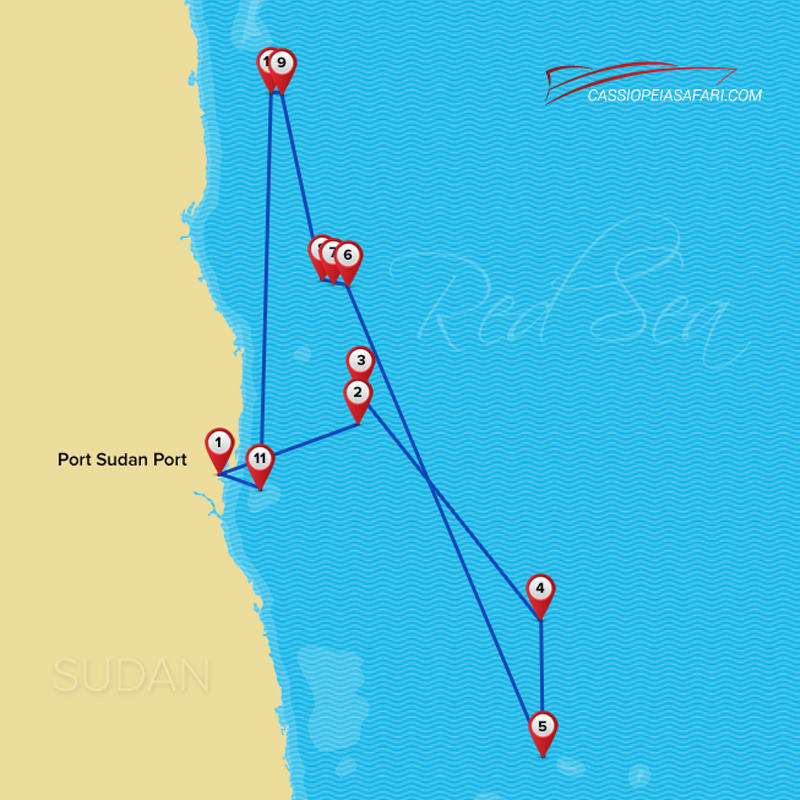
Sample Itinerary
Day 1: 1-week Deep South tour planned dive sites
Day 2: Dahrat Abid, Dahrat Qab, Darraka
Day 3: Habili Dahrat Qab, Karam Masamirit, Loka Island
Day 4: Masamirit, Miyum (Qab, Habili), Shaab Ambar South, Shaab Jibna
About the dive sites:
Our itineraries include dive sites all the way from Angarosh and Abington in the north to as far as the most southern Sudanese site of Dahrat Ebid near the Eritrean border.
Inclusions
Exclusions
- Fuel surcharge: 100.00 EUR
- Sudanese visa fee (non-US citizens): 145.00 USD
Central-European time zone + 1 hour. There is no summer/winter savings time since 2011.
Egypt has a desert climate with warm and dry weather conditions. In the summer months (April-October) the average temperature is between 27°C and 32°C but in the interior areas of the desert it can get even warmer. Summer temperatures along the Red Sea coast are between 27°C and 43°C with northerly winds and southward currents. In the north, winds from the Mediterranian Sea ease the heat. Winters are mild with average temperatures of 13°C – 21°C. Most precipitation is during the winter months; south of Cairo it is about 2 – 5 mm while in the north it can reach 410 mm. There are strong southerly winds in the end of October and the in the beginning of November and currents move in a northern direction. (Water temperatures in the area of Sharm el Sheikh and Hurghada may be 1 – 2°C cooler.)
Thanks to the warm weather, light clothes made of cotton, skirts, shorts, short-sleeve T-shirts and blouses, flip-flops and sandals are the best choice. Hats, sunglasses and tanning lotion (with minimum SPF30) are also important. It is recommended to stay indoors or in the shade during the noon hours. In winter during the day long pants and a light sweater are enough but in the evening a jacket or a light coat may come handy. In the resort towns like Hurghada and Sharm el Sheikh, there are no rules concerning clothing wear as long as it is in good taste however in larger cities like Cairo, it is recommended to wear clothing that is at least below the knees and covers the shoulders. The rules in religious or holy places are even stricter and girls and ladies must cover their heads. Onboard Cassiopeia and Andromeda light, comfortable clothing is acceptable. In the evening a light sweater or cardigan may come handy but during the day bathing suits, shorts and T-shirts are quite acceptable.
It is very versatile, delicious and rich in fresh vegetables. The main meals are made of beef, mutton, chicken, pigeon and duck and fresh fish is also often used. Traditional desserts are really sweet and at the markets, vendors’ stands are ladended with gorgeous fresh fruits. Egyptian chefs prepare the meals onboard Cassiopeia and Andromeda and their heritage is reflected in the delicious meals they prepare for the buffet-style servings three times a day. The menu includes soups, fresh salads, meats, side dishes and sweets which are also available during the day along with fresh fruits. (Pork is not widely available in Egypt because of religious reasons.)
There is 220v current with European-style plugs. There are electrical plugs in every cabin and in the common areas and also there is a separate charging station on the main deck where phones, laptops, cameras and batteries can be charged.
It is recommended but not mandatory for travellers to Egypt to get vaccination against: Hepatitis A (high risk of contagion), Hepatitis B (moderate risk of contagion), Typhus and rabies. However it is mandatory to get the vaccination against yellow fever when entering Egypt from countries or having travelled through countries with high risk of the disease (from example when travelling to Egypt from Sudan).
Haggling in Egypt is a must. Everyone bound for shopping should be prepared for a ”dispute” lasting anywhere from 1-2 minutes to half an hour but ultimately ending in a successful shopping experience. There are rules to haggling. One of them is to say the amount that is half of the actual amount you would be willing to spend. Onboard our vessels all prices are fixed and they are not subject to bargaining.
Look for an Egyptian Embassy of Consular Office in your country or nearest you.
Mobile phones can be used in Egypt. Contact your local mobile service provider for rates and details.
Most shops are open from 10 o’clock in the morning until as late as midnight sometimes. Banks are closed on Fridays and Saturdays. On Sundays and during Ramadan they are open between 10 o’clock in the morning and 13:30 in the afternoon. On all other days they are open between 8:30 in the morning and 13:30 in the afternoon.
Friday is the official day off and in some offices Saturday as well. One of the most important holidays are the last 2-3 days at the end of the Ramadan month and the feast 70 days later.
It is part of every-day life in the Middle-East and in the Arabic world.
Contact your dive guide onboard in case of any medical problems or emergencies. All medical costs must be paid in cash on site. Insurance companies will reimburse costs based only on valid hospital bills.
Taxi is the most comfortable way of transportation in the towns and cities. Despite the taximetre, it is wise to agree on the fare before the trip. Shuttle buses run between towns carrying locals and visitors alike. Local mini buses and coaches tend to be quite crowded.
It is forbidden to take photos or videos of military facilities, bridges and harbours. Please obey these rules! It is allowed to take photos of important and tourist sights but in certain places only for a fee.
Central-European time zone + 2 hours. There is no summer/winter savings time since 2011.
Sudan’s northern region has a dry, desert climate while in the south-western region the wet-dry tropical climate is more dominant. There are no big variations in the temperatures between regions but rather in the amount of precipitation and in the length of the dry season. Between January and March the dry north-eastern winds dominate. However the south-western winds arrive in the beginning of April, bringing heavy rains. In September the dry north-eastern winds pick up strength again, pushing southward, covering the entire country. The rainy season in Khartoum lasts from July to September with annual precipitation of 161mm. The warmest months are May and June when temperatures can reach 48°C. Port Sudan’s climate is dry where summers are very hot and winters are moderately warm. Temperatures in the winter can reach 30°C and 45°C in the summer. Ninety percent of the annual rain fall is between October and January, especially in November. Port Sudan enjoys 3200 sunny hours annually.
The Sudanese taxes are payable in advance along with the safari rates. The Sudanese visa fee is payable in USD in cash (the exact amount) onboard upon arrival. (Only cash payments are accepted.)
Thanks to the warm weather, light clothes made of cotton, skirts, shorts, short-sleeve T-shirts and blouses, flip-flops and sandals are the best choice. Hats, sunglasses and tanning lotion (with minimum SPF30) are also important. It is recommended to stay indoors or in the shade during the noon hours. Compared to Egypt, the ”regulations” concerning clothing in Sudan are stricter. In towns like Port Sudan or Suakin or in the harbour, it is recommended to wear clothing that is at least below the knees and covers the shoulders. The rules in religious or holy places are even stricter and girls and ladies must cover their heads. Onboard Cassiopeia and Andromeda light, comfortable clothing is acceptable. In the evening a light sweater or cardigan may come handy but during the day bathing suits, shorts and T-shirts are quite acceptable.
It is similar to Egyptian cuisine, very versatile, delicious and rich in fresh vegetables. The main meals are made of beef and mutton and fresh fish is often used in the coastal regions and soups are also an important part of daily meals. At the markets, vendors’ stands are ladended with gorgeous fresh fruits. Egyptian chefs prepare the meals onboard Cassiopeia and Andromeda and their heritage is reflected in the delicious meals they prepare for the buffet-style servings three times a day. The menu includes soups, fresh salads, meats, side dishes and sweets which are also available during the day along with fresh fruits. (Pork is not widely available in Sudan because of religious reasons.)
There is 220v current with European-style plugs. There are electrical plugs in every cabin and in the common areas and also there is a separate charging station on the main deck where phones, laptops, cameras and batteries can be charged.
It is recommended but not mandatory for travellers to Sudan to get vaccination against: Hepatitis A (high risk of contagion), Hepatitis B (moderate risk of contagion), Typhus and rabies. However it is mandatory to get the vaccination against yellow fever if you enter Egypt after your stay in Sudan.
Haggling in Sudan, just as in Egypt, is a must. Everyone bound for shopping should be prepared for a ”dispute” lasting anywhere from 1-2 minutes to half an hour but ultimately ending in a successful shopping experience. There are rules to haggling. One of them is to say the amount that is half of the actual amount you would be willing to spend. Onboard our vessels all prices are fixed and they are not subject to bargaining.
Look for a Sudanese Embassy of Consular Office in your country or nearest you.
Mobile phones can be used in Sudan. Contact your local mobile service provider for rates and details.
There are 13 double cabins onboard both our vessels. There are cabins with a queen bed and cabins with twin beds. Every cabin has its own en-suite bathroom with shower, sink and toilet. The air-conditioned cabins also have 220v sockets and plenty of storage space.
There is an LCD TV in the salon along with a DVD player and a variety of entertaining movies. Guests are welcome to play their own music and movies as well.
We can only accept cash payments onboard (EUR, USD, EGP). All purchases made onboard must be settled onboard before disembarking at the end of the tour. We are not able to provide credits or loans.
A safe can be found onboard both vessels where guests can place their valuables before the start of the trip. The dive guides should be asked for access to the safe. We can accept responsibility only for items placed in the safes. All other items, belongings and valuables are the responsibility of the guests.
Additional purchases and expenses made onboard may be the tip (bakshish) for the dive guides and crew (it is usually EUR30 / week in Egypt and EUR50 / person / week in Sudan if satisfied with the service), T-shirts, Nitrox use, 15l tank rental and Satellite phone use. There is a surcharge for lost towels and weights. Alcoholic beverages may be purchased at the duty-free shops before boarding the boat. (In Sudan alcoholic beverages are available onboard.)The Egyptian visa is USD25 / person or EUR20 / person (rates may change according to Government regulations). (If travelling to Sudan via Cairo, the Egyptian visa is 2 x USD25 / person.)
At least 2 local dive guides work onboard our vessels, speaking various languages.
In Egypt, depending on the size of the groups, we provide transfers in air-conditioned buses, coasters or taxis for individual guests. In Sudan all guests are transferred together by bus.
The best time for diving in Egypt is between March and November. However there are a lot of divers (especially from nations in the north) who continue on diving even between December and March when water temperatures are around 20 – 21 °C and the winds are stronger.
Most divers can do with a shorty in July and August. It is usually enough to wear a 3 – 5 mm long suit between March and November. In the remaining months a warmer or a doubled-up 5 mm suit is recommended.
It is highly recommended for every diver to bring his/her own full gear but it is possible to rent equipment. This request should be sent to us at least one week prior to departure. Twelve-litre compressed-air tanks and weights are provided for the guests onboard but weight belts should be brought along.
There are 2 fully equipped decompression chambers in Hurghada to treat diving-related injuries and accidents. There are also facilities in Sharm el Sheikh, El Gouna and Marsa Alam. All our divers must possess valid diving insurance that includes decompression chamber treatments as well.
The first diving day there are 2 day dives and 1 night dive. The 2nd – last diving days there are 3 day dives and 1 night dive per day (depending on the itinerary and weather conditions). The last diving day there are 2 day dives and then the boat returns to the harbour. Please note there is no night diving at the Marine Park islands such as Brothers, Daedalus, Rocky and Zabargad.
A minimum of OWD certification is necessary to be able to dive onboard our boats. There are dive sites that are only recommended for advanced and more experienced divers, for example at the islands of Brothers, Rocky and Zabargad or at wrecks lying in deeper waters in the north. It is best to check the itinerary before booking a tour to make sure it fits the diver’s certification level and experience.
Nitrox-certified divers can dive with Nitrox. There is a membrane Nitrox system onboard with a 32% mix.
A minimum of OWD certification is necessary to be able to dive onboard our boats. However we can provide certain courses onboard such as AOWD, Nitrox, specialty courses, etc. given appropriate itinerary and previous consultation.
Our diving safaris are mainly geared towards divers but non-divers are also welcome when accompanying their loved ones.
The first dive on every tour is a check dive during which the dive guides observe the divers’ diving techniques and any shortcomings and correct, remedy those. If it has been a while since the last dive, it should be brought to the dive guides’ attention.
All our divers must possess valid diving insurance and non-divers valid travel insurance. Diving is permitted only with valid diving insurance. Most important is diving and accidental insurance as well as luggage and travel insurance.
Diving is conditioned upon having a valid diving certificate and diving insurance.
Every diver must fill out a release form onboard before the start of the trip stating that he/she is medically fit to dive.
Life vests can be found in every cabin and the following equipment onboard: 2 life rafts, Oxygen, first-aid kit, fire extinguishers, life buoys and a diver search system.
Due to the movement of the boat, seasickness and/or nausa may be experienced. This can be well treated by the local medication Emetrx. Please turn to the dive guides for assistance.
The best time for diving in Sudan is between February and June. This is when the sea is the most alive and marine life is the richest. The fall months (September-November) are also favoured by divers, especially October when it is manta season in Sudan near Mesharifa reef.
There are no facilities in Sudan for the treatment of decompression sickness. The closest chamber is in Marsa Alam. (There are 2 fully equipped decompression chambers in Hurghada to treat diving-related injuries and accidents. There are also facilities in Sharm el Sheikh, El Gouna and Marsa Alam.) All our divers must possess valid diving insurance that includes decompression chamber treatments as well.
The first diving day there are 2 day dives and 1 night dive. The 2nd – last diving days there are 3 day dives and 1 night dive per day (depending on the itinerary and weather conditions). The last diving day there are 2 day dives and then the boat returns to the harbour.
- Length: 40 m / 130 ft.
- Beam: 8 m
- Generator: 2x Mercedes 138 Kw silent generators
- Freshwater: 15 tons + desalination device (2 tons/day)
- Fuel: 70 tons
- Electricity: 220V in cabins and salon
- Cabins: 13
- Max. Guests: 26
Andromeda, the 40 meters diving safari liveaboard, was built based on a unique design, meeting divers’ and guests’ needs. The vessel welcomes up to 26 guests in 13 spacious, tastefully decorated cabins with en-suite bathrooms.
The spacious lounge area is air-conditioned and well equipped with an LCD TV, VCR, DVD and CD player and furnished according to European style. The Arabian cafe follows the original Oriental coffee shop design with shisha (waterpipe) smoking possibility, coffee, tea and original Arabic music.
The comfortable 100-square-meter sun deck provides plenty of space for sun-seekers, as well as a shaded area. Comfortable deck chairs and cushioned seats make the time more pleasant. There is also a smaller sun deck in front of the captain’s bridge. A covered deck In front of the salon is a comfortable open but covered area for resting and chatting between dives in the evening.
The large dive deck and dive platform area ensure more-than-adequate space for divers preparing for their next plunge into the Red Sea. 2 hand-held showers on the platform allow for a rinse after diving or snorkeling. A bathroom with shower and marine head lead directly off the dive deck.
A well-traveled, cohesive crew, speaking various languages, awaits all the guests who wish to dive and relax. See you onboard! The Andromeda is the only liveaboard offering 1-week and 2-week diving safaris in the Deep South of Sudan.
Sample Itinerary
Day 1: 1-week Deep South tour planned dive sites
Day 2: Dahrat Abid, Dahrat Qab, Darraka
Day 3: Habili Dahrat Qab, Karam Masamirit, Loka Island
Day 4: Masamirit, Miyum (Qab, Habili), Shaab Ambar South, Shaab Jibna
About the dive sites:
Our itineraries include dive sites all the way from Angarosh and Abington in the north to as far as the most southern Sudanese site of Dahrat Ebid near the Eritrean border.
Inclusions
Exclusions
- Fuel surcharge: 100.00 EUR
- Sudanese visa fee (non-US citizens): 145.00 USD
Central-European time zone + 1 hour. There is no summer/winter savings time since 2011.
Egypt has a desert climate with warm and dry weather conditions. In the summer months (April-October) the average temperature is between 27°C and 32°C but in the interior areas of the desert it can get even warmer. Summer temperatures along the Red Sea coast are between 27°C and 43°C with northerly winds and southward currents. In the north, winds from the Mediterranian Sea ease the heat. Winters are mild with average temperatures of 13°C – 21°C. Most precipitation is during the winter months; south of Cairo it is about 2 – 5 mm while in the north it can reach 410 mm. There are strong southerly winds in the end of October and the in the beginning of November and currents move in a northern direction. (Water temperatures in the area of Sharm el Sheikh and Hurghada may be 1 – 2°C cooler.)
Thanks to the warm weather, light clothes made of cotton, skirts, shorts, short-sleeve T-shirts and blouses, flip-flops and sandals are the best choice. Hats, sunglasses and tanning lotion (with minimum SPF30) are also important. It is recommended to stay indoors or in the shade during the noon hours. In winter during the day long pants and a light sweater are enough but in the evening a jacket or a light coat may come handy. In the resort towns like Hurghada and Sharm el Sheikh, there are no rules concerning clothing wear as long as it is in good taste however in larger cities like Cairo, it is recommended to wear clothing that is at least below the knees and covers the shoulders. The rules in religious or holy places are even stricter and girls and ladies must cover their heads. Onboard Cassiopeia and Andromeda light, comfortable clothing is acceptable. In the evening a light sweater or cardigan may come handy but during the day bathing suits, shorts and T-shirts are quite acceptable.
It is very versatile, delicious and rich in fresh vegetables. The main meals are made of beef, mutton, chicken, pigeon and duck and fresh fish is also often used. Traditional desserts are really sweet and at the markets, vendors’ stands are ladended with gorgeous fresh fruits. Egyptian chefs prepare the meals onboard Cassiopeia and Andromeda and their heritage is reflected in the delicious meals they prepare for the buffet-style servings three times a day. The menu includes soups, fresh salads, meats, side dishes and sweets which are also available during the day along with fresh fruits. (Pork is not widely available in Egypt because of religious reasons.)
There is 220v current with European-style plugs. There are electrical plugs in every cabin and in the common areas and also there is a separate charging station on the main deck where phones, laptops, cameras and batteries can be charged.
It is recommended but not mandatory for travellers to Egypt to get vaccination against: Hepatitis A (high risk of contagion), Hepatitis B (moderate risk of contagion), Typhus and rabies. However it is mandatory to get the vaccination against yellow fever when entering Egypt from countries or having travelled through countries with high risk of the disease (from example when travelling to Egypt from Sudan).
Haggling in Egypt is a must. Everyone bound for shopping should be prepared for a ”dispute” lasting anywhere from 1-2 minutes to half an hour but ultimately ending in a successful shopping experience. There are rules to haggling. One of them is to say the amount that is half of the actual amount you would be willing to spend. Onboard our vessels all prices are fixed and they are not subject to bargaining.
Look for an Egyptian Embassy of Consular Office in your country or nearest you.
Mobile phones can be used in Egypt. Contact your local mobile service provider for rates and details.
Most shops are open from 10 o’clock in the morning until as late as midnight sometimes. Banks are closed on Fridays and Saturdays. On Sundays and during Ramadan they are open between 10 o’clock in the morning and 13:30 in the afternoon. On all other days they are open between 8:30 in the morning and 13:30 in the afternoon.
Friday is the official day off and in some offices Saturday as well. One of the most important holidays are the last 2-3 days at the end of the Ramadan month and the feast 70 days later.
It is part of every-day life in the Middle-East and in the Arabic world.
Contact your dive guide onboard in case of any medical problems or emergencies. All medical costs must be paid in cash on site. Insurance companies will reimburse costs based only on valid hospital bills.
Taxi is the most comfortable way of transportation in the towns and cities. Despite the taximetre, it is wise to agree on the fare before the trip. Shuttle buses run between towns carrying locals and visitors alike. Local mini buses and coaches tend to be quite crowded.
It is forbidden to take photos or videos of military facilities, bridges and harbours. Please obey these rules! It is allowed to take photos of important and tourist sights but in certain places only for a fee.
Central-European time zone + 2 hours. There is no summer/winter savings time since 2011.
Sudan’s northern region has a dry, desert climate while in the south-western region the wet-dry tropical climate is more dominant. There are no big variations in the temperatures between regions but rather in the amount of precipitation and in the length of the dry season. Between January and March the dry north-eastern winds dominate. However the south-western winds arrive in the beginning of April, bringing heavy rains. In September the dry north-eastern winds pick up strength again, pushing southward, covering the entire country. The rainy season in Khartoum lasts from July to September with annual precipitation of 161mm. The warmest months are May and June when temperatures can reach 48°C. Port Sudan’s climate is dry where summers are very hot and winters are moderately warm. Temperatures in the winter can reach 30°C and 45°C in the summer. Ninety percent of the annual rain fall is between October and January, especially in November. Port Sudan enjoys 3200 sunny hours annually.
The Sudanese taxes are payable in advance along with the safari rates. The Sudanese visa fee is payable in USD in cash (the exact amount) onboard upon arrival. (Only cash payments are accepted.)
Thanks to the warm weather, light clothes made of cotton, skirts, shorts, short-sleeve T-shirts and blouses, flip-flops and sandals are the best choice. Hats, sunglasses and tanning lotion (with minimum SPF30) are also important. It is recommended to stay indoors or in the shade during the noon hours. Compared to Egypt, the ”regulations” concerning clothing in Sudan are stricter. In towns like Port Sudan or Suakin or in the harbour, it is recommended to wear clothing that is at least below the knees and covers the shoulders. The rules in religious or holy places are even stricter and girls and ladies must cover their heads. Onboard Cassiopeia and Andromeda light, comfortable clothing is acceptable. In the evening a light sweater or cardigan may come handy but during the day bathing suits, shorts and T-shirts are quite acceptable.
It is similar to Egyptian cuisine, very versatile, delicious and rich in fresh vegetables. The main meals are made of beef and mutton and fresh fish is often used in the coastal regions and soups are also an important part of daily meals. At the markets, vendors’ stands are ladended with gorgeous fresh fruits. Egyptian chefs prepare the meals onboard Cassiopeia and Andromeda and their heritage is reflected in the delicious meals they prepare for the buffet-style servings three times a day. The menu includes soups, fresh salads, meats, side dishes and sweets which are also available during the day along with fresh fruits. (Pork is not widely available in Sudan because of religious reasons.)
There is 220v current with European-style plugs. There are electrical plugs in every cabin and in the common areas and also there is a separate charging station on the main deck where phones, laptops, cameras and batteries can be charged.
It is recommended but not mandatory for travellers to Sudan to get vaccination against: Hepatitis A (high risk of contagion), Hepatitis B (moderate risk of contagion), Typhus and rabies. However it is mandatory to get the vaccination against yellow fever if you enter Egypt after your stay in Sudan.
Haggling in Sudan, just as in Egypt, is a must. Everyone bound for shopping should be prepared for a ”dispute” lasting anywhere from 1-2 minutes to half an hour but ultimately ending in a successful shopping experience. There are rules to haggling. One of them is to say the amount that is half of the actual amount you would be willing to spend. Onboard our vessels all prices are fixed and they are not subject to bargaining.
Look for a Sudanese Embassy of Consular Office in your country or nearest you.
Mobile phones can be used in Sudan. Contact your local mobile service provider for rates and details.
There are 13 double cabins onboard both our vessels. There are cabins with a queen bed and cabins with twin beds. Every cabin has its own en-suite bathroom with shower, sink and toilet. The air-conditioned cabins also have 220v sockets and plenty of storage space.
There is an LCD TV in the salon along with a DVD player and a variety of entertaining movies. Guests are welcome to play their own music and movies as well.
We can only accept cash payments onboard (EUR, USD, EGP). All purchases made onboard must be settled onboard before disembarking at the end of the tour. We are not able to provide credits or loans.
A safe can be found onboard both vessels where guests can place their valuables before the start of the trip. The dive guides should be asked for access to the safe. We can accept responsibility only for items placed in the safes. All other items, belongings and valuables are the responsibility of the guests.
Additional purchases and expenses made onboard may be the tip (bakshish) for the dive guides and crew (it is usually EUR30 / week in Egypt and EUR50 / person / week in Sudan if satisfied with the service), T-shirts, Nitrox use, 15l tank rental and Satellite phone use. There is a surcharge for lost towels and weights. Alcoholic beverages may be purchased at the duty-free shops before boarding the boat. (In Sudan alcoholic beverages are available onboard.)The Egyptian visa is USD25 / person or EUR20 / person (rates may change according to Government regulations). (If travelling to Sudan via Cairo, the Egyptian visa is 2 x USD25 / person.)
At least 2 local dive guides work onboard our vessels, speaking various languages.
In Egypt, depending on the size of the groups, we provide transfers in air-conditioned buses, coasters or taxis for individual guests. In Sudan all guests are transferred together by bus.
The best time for diving in Egypt is between March and November. However there are a lot of divers (especially from nations in the north) who continue on diving even between December and March when water temperatures are around 20 – 21 °C and the winds are stronger.
Most divers can do with a shorty in July and August. It is usually enough to wear a 3 – 5 mm long suit between March and November. In the remaining months a warmer or a doubled-up 5 mm suit is recommended.
It is highly recommended for every diver to bring his/her own full gear but it is possible to rent equipment. This request should be sent to us at least one week prior to departure. Twelve-litre compressed-air tanks and weights are provided for the guests onboard but weight belts should be brought along.
There are 2 fully equipped decompression chambers in Hurghada to treat diving-related injuries and accidents. There are also facilities in Sharm el Sheikh, El Gouna and Marsa Alam. All our divers must possess valid diving insurance that includes decompression chamber treatments as well.
The first diving day there are 2 day dives and 1 night dive. The 2nd – last diving days there are 3 day dives and 1 night dive per day (depending on the itinerary and weather conditions). The last diving day there are 2 day dives and then the boat returns to the harbour. Please note there is no night diving at the Marine Park islands such as Brothers, Daedalus, Rocky and Zabargad.
A minimum of OWD certification is necessary to be able to dive onboard our boats. There are dive sites that are only recommended for advanced and more experienced divers, for example at the islands of Brothers, Rocky and Zabargad or at wrecks lying in deeper waters in the north. It is best to check the itinerary before booking a tour to make sure it fits the diver’s certification level and experience.
Nitrox-certified divers can dive with Nitrox. There is a membrane Nitrox system onboard with a 32% mix.
A minimum of OWD certification is necessary to be able to dive onboard our boats. However we can provide certain courses onboard such as AOWD, Nitrox, specialty courses, etc. given appropriate itinerary and previous consultation.
Our diving safaris are mainly geared towards divers but non-divers are also welcome when accompanying their loved ones.
The first dive on every tour is a check dive during which the dive guides observe the divers’ diving techniques and any shortcomings and correct, remedy those. If it has been a while since the last dive, it should be brought to the dive guides’ attention.
All our divers must possess valid diving insurance and non-divers valid travel insurance. Diving is permitted only with valid diving insurance. Most important is diving and accidental insurance as well as luggage and travel insurance.
Diving is conditioned upon having a valid diving certificate and diving insurance.
Every diver must fill out a release form onboard before the start of the trip stating that he/she is medically fit to dive.
Life vests can be found in every cabin and the following equipment onboard: 2 life rafts, Oxygen, first-aid kit, fire extinguishers, life buoys and a diver search system.
Due to the movement of the boat, seasickness and/or nausa may be experienced. This can be well treated by the local medication Emetrx. Please turn to the dive guides for assistance.
The best time for diving in Sudan is between February and June. This is when the sea is the most alive and marine life is the richest. The fall months (September-November) are also favoured by divers, especially October when it is manta season in Sudan near Mesharifa reef.
There are no facilities in Sudan for the treatment of decompression sickness. The closest chamber is in Marsa Alam. (There are 2 fully equipped decompression chambers in Hurghada to treat diving-related injuries and accidents. There are also facilities in Sharm el Sheikh, El Gouna and Marsa Alam.) All our divers must possess valid diving insurance that includes decompression chamber treatments as well.
The first diving day there are 2 day dives and 1 night dive. The 2nd – last diving days there are 3 day dives and 1 night dive per day (depending on the itinerary and weather conditions). The last diving day there are 2 day dives and then the boat returns to the harbour.
- Length: 40 m / 130 ft.
- Beam: 8 m
- Generator: 2x Mercedes 138 Kw silent generators
- Freshwater: 15 tons + desalination device (2 tons/day)
- Fuel: 70 tons
- Electricity: 220V in cabins and salon
- Cabins: 13
- Max. Guests: 26
Andromeda, the 40 meters diving safari liveaboard, was built based on a unique design, meeting divers’ and guests’ needs. The vessel welcomes up to 26 guests in 13 spacious, tastefully decorated cabins with en-suite bathrooms.
The spacious lounge area is air-conditioned and well equipped with an LCD TV, VCR, DVD and CD player and furnished according to European style. The Arabian cafe follows the original Oriental coffee shop design with shisha (waterpipe) smoking possibility, coffee, tea and original Arabic music.
The comfortable 100-square-meter sun deck provides plenty of space for sun-seekers, as well as a shaded area. Comfortable deck chairs and cushioned seats make the time more pleasant. There is also a smaller sun deck in front of the captain’s bridge. A covered deck In front of the salon is a comfortable open but covered area for resting and chatting between dives in the evening.
The large dive deck and dive platform area ensure more-than-adequate space for divers preparing for their next plunge into the Red Sea. 2 hand-held showers on the platform allow for a rinse after diving or snorkeling. A bathroom with shower and marine head lead directly off the dive deck.
A well-traveled, cohesive crew, speaking various languages, awaits all the guests who wish to dive and relax. See you onboard! The Andromeda is the only liveaboard offering 1-week and 2-week diving safaris in the Deep South of Sudan.
Inclusions
Exclusions
- Fuel surcharge: 100.00 EUR
- Sudanese visa fee (non-US citizens): 145.00 USD
Central-European time zone + 1 hour. There is no summer/winter savings time since 2011.
Egypt has a desert climate with warm and dry weather conditions. In the summer months (April-October) the average temperature is between 27°C and 32°C but in the interior areas of the desert it can get even warmer. Summer temperatures along the Red Sea coast are between 27°C and 43°C with northerly winds and southward currents. In the north, winds from the Mediterranian Sea ease the heat. Winters are mild with average temperatures of 13°C – 21°C. Most precipitation is during the winter months; south of Cairo it is about 2 – 5 mm while in the north it can reach 410 mm. There are strong southerly winds in the end of October and the in the beginning of November and currents move in a northern direction. (Water temperatures in the area of Sharm el Sheikh and Hurghada may be 1 – 2°C cooler.)
Thanks to the warm weather, light clothes made of cotton, skirts, shorts, short-sleeve T-shirts and blouses, flip-flops and sandals are the best choice. Hats, sunglasses and tanning lotion (with minimum SPF30) are also important. It is recommended to stay indoors or in the shade during the noon hours. In winter during the day long pants and a light sweater are enough but in the evening a jacket or a light coat may come handy. In the resort towns like Hurghada and Sharm el Sheikh, there are no rules concerning clothing wear as long as it is in good taste however in larger cities like Cairo, it is recommended to wear clothing that is at least below the knees and covers the shoulders. The rules in religious or holy places are even stricter and girls and ladies must cover their heads. Onboard Cassiopeia and Andromeda light, comfortable clothing is acceptable. In the evening a light sweater or cardigan may come handy but during the day bathing suits, shorts and T-shirts are quite acceptable.
It is very versatile, delicious and rich in fresh vegetables. The main meals are made of beef, mutton, chicken, pigeon and duck and fresh fish is also often used. Traditional desserts are really sweet and at the markets, vendors’ stands are ladended with gorgeous fresh fruits. Egyptian chefs prepare the meals onboard Cassiopeia and Andromeda and their heritage is reflected in the delicious meals they prepare for the buffet-style servings three times a day. The menu includes soups, fresh salads, meats, side dishes and sweets which are also available during the day along with fresh fruits. (Pork is not widely available in Egypt because of religious reasons.)
There is 220v current with European-style plugs. There are electrical plugs in every cabin and in the common areas and also there is a separate charging station on the main deck where phones, laptops, cameras and batteries can be charged.
It is recommended but not mandatory for travellers to Egypt to get vaccination against: Hepatitis A (high risk of contagion), Hepatitis B (moderate risk of contagion), Typhus and rabies. However it is mandatory to get the vaccination against yellow fever when entering Egypt from countries or having travelled through countries with high risk of the disease (from example when travelling to Egypt from Sudan).
Haggling in Egypt is a must. Everyone bound for shopping should be prepared for a ”dispute” lasting anywhere from 1-2 minutes to half an hour but ultimately ending in a successful shopping experience. There are rules to haggling. One of them is to say the amount that is half of the actual amount you would be willing to spend. Onboard our vessels all prices are fixed and they are not subject to bargaining.
Look for an Egyptian Embassy of Consular Office in your country or nearest you.
Mobile phones can be used in Egypt. Contact your local mobile service provider for rates and details.
Most shops are open from 10 o’clock in the morning until as late as midnight sometimes. Banks are closed on Fridays and Saturdays. On Sundays and during Ramadan they are open between 10 o’clock in the morning and 13:30 in the afternoon. On all other days they are open between 8:30 in the morning and 13:30 in the afternoon.
Friday is the official day off and in some offices Saturday as well. One of the most important holidays are the last 2-3 days at the end of the Ramadan month and the feast 70 days later.
It is part of every-day life in the Middle-East and in the Arabic world.
Contact your dive guide onboard in case of any medical problems or emergencies. All medical costs must be paid in cash on site. Insurance companies will reimburse costs based only on valid hospital bills.
Taxi is the most comfortable way of transportation in the towns and cities. Despite the taximetre, it is wise to agree on the fare before the trip. Shuttle buses run between towns carrying locals and visitors alike. Local mini buses and coaches tend to be quite crowded.
It is forbidden to take photos or videos of military facilities, bridges and harbours. Please obey these rules! It is allowed to take photos of important and tourist sights but in certain places only for a fee.
Central-European time zone + 2 hours. There is no summer/winter savings time since 2011.
Sudan’s northern region has a dry, desert climate while in the south-western region the wet-dry tropical climate is more dominant. There are no big variations in the temperatures between regions but rather in the amount of precipitation and in the length of the dry season. Between January and March the dry north-eastern winds dominate. However the south-western winds arrive in the beginning of April, bringing heavy rains. In September the dry north-eastern winds pick up strength again, pushing southward, covering the entire country. The rainy season in Khartoum lasts from July to September with annual precipitation of 161mm. The warmest months are May and June when temperatures can reach 48°C. Port Sudan’s climate is dry where summers are very hot and winters are moderately warm. Temperatures in the winter can reach 30°C and 45°C in the summer. Ninety percent of the annual rain fall is between October and January, especially in November. Port Sudan enjoys 3200 sunny hours annually.
The Sudanese taxes are payable in advance along with the safari rates. The Sudanese visa fee is payable in USD in cash (the exact amount) onboard upon arrival. (Only cash payments are accepted.)
Thanks to the warm weather, light clothes made of cotton, skirts, shorts, short-sleeve T-shirts and blouses, flip-flops and sandals are the best choice. Hats, sunglasses and tanning lotion (with minimum SPF30) are also important. It is recommended to stay indoors or in the shade during the noon hours. Compared to Egypt, the ”regulations” concerning clothing in Sudan are stricter. In towns like Port Sudan or Suakin or in the harbour, it is recommended to wear clothing that is at least below the knees and covers the shoulders. The rules in religious or holy places are even stricter and girls and ladies must cover their heads. Onboard Cassiopeia and Andromeda light, comfortable clothing is acceptable. In the evening a light sweater or cardigan may come handy but during the day bathing suits, shorts and T-shirts are quite acceptable.
It is similar to Egyptian cuisine, very versatile, delicious and rich in fresh vegetables. The main meals are made of beef and mutton and fresh fish is often used in the coastal regions and soups are also an important part of daily meals. At the markets, vendors’ stands are ladended with gorgeous fresh fruits. Egyptian chefs prepare the meals onboard Cassiopeia and Andromeda and their heritage is reflected in the delicious meals they prepare for the buffet-style servings three times a day. The menu includes soups, fresh salads, meats, side dishes and sweets which are also available during the day along with fresh fruits. (Pork is not widely available in Sudan because of religious reasons.)
There is 220v current with European-style plugs. There are electrical plugs in every cabin and in the common areas and also there is a separate charging station on the main deck where phones, laptops, cameras and batteries can be charged.
It is recommended but not mandatory for travellers to Sudan to get vaccination against: Hepatitis A (high risk of contagion), Hepatitis B (moderate risk of contagion), Typhus and rabies. However it is mandatory to get the vaccination against yellow fever if you enter Egypt after your stay in Sudan.
Haggling in Sudan, just as in Egypt, is a must. Everyone bound for shopping should be prepared for a ”dispute” lasting anywhere from 1-2 minutes to half an hour but ultimately ending in a successful shopping experience. There are rules to haggling. One of them is to say the amount that is half of the actual amount you would be willing to spend. Onboard our vessels all prices are fixed and they are not subject to bargaining.
Look for a Sudanese Embassy of Consular Office in your country or nearest you.
Mobile phones can be used in Sudan. Contact your local mobile service provider for rates and details.
There are 13 double cabins onboard both our vessels. There are cabins with a queen bed and cabins with twin beds. Every cabin has its own en-suite bathroom with shower, sink and toilet. The air-conditioned cabins also have 220v sockets and plenty of storage space.
There is an LCD TV in the salon along with a DVD player and a variety of entertaining movies. Guests are welcome to play their own music and movies as well.
We can only accept cash payments onboard (EUR, USD, EGP). All purchases made onboard must be settled onboard before disembarking at the end of the tour. We are not able to provide credits or loans.
A safe can be found onboard both vessels where guests can place their valuables before the start of the trip. The dive guides should be asked for access to the safe. We can accept responsibility only for items placed in the safes. All other items, belongings and valuables are the responsibility of the guests.
Additional purchases and expenses made onboard may be the tip (bakshish) for the dive guides and crew (it is usually EUR30 / week in Egypt and EUR50 / person / week in Sudan if satisfied with the service), T-shirts, Nitrox use, 15l tank rental and Satellite phone use. There is a surcharge for lost towels and weights. Alcoholic beverages may be purchased at the duty-free shops before boarding the boat. (In Sudan alcoholic beverages are available onboard.)The Egyptian visa is USD25 / person or EUR20 / person (rates may change according to Government regulations). (If travelling to Sudan via Cairo, the Egyptian visa is 2 x USD25 / person.)
At least 2 local dive guides work onboard our vessels, speaking various languages.
In Egypt, depending on the size of the groups, we provide transfers in air-conditioned buses, coasters or taxis for individual guests. In Sudan all guests are transferred together by bus.
The best time for diving in Egypt is between March and November. However there are a lot of divers (especially from nations in the north) who continue on diving even between December and March when water temperatures are around 20 – 21 °C and the winds are stronger.
Most divers can do with a shorty in July and August. It is usually enough to wear a 3 – 5 mm long suit between March and November. In the remaining months a warmer or a doubled-up 5 mm suit is recommended.
It is highly recommended for every diver to bring his/her own full gear but it is possible to rent equipment. This request should be sent to us at least one week prior to departure. Twelve-litre compressed-air tanks and weights are provided for the guests onboard but weight belts should be brought along.
There are 2 fully equipped decompression chambers in Hurghada to treat diving-related injuries and accidents. There are also facilities in Sharm el Sheikh, El Gouna and Marsa Alam. All our divers must possess valid diving insurance that includes decompression chamber treatments as well.
The first diving day there are 2 day dives and 1 night dive. The 2nd – last diving days there are 3 day dives and 1 night dive per day (depending on the itinerary and weather conditions). The last diving day there are 2 day dives and then the boat returns to the harbour. Please note there is no night diving at the Marine Park islands such as Brothers, Daedalus, Rocky and Zabargad.
A minimum of OWD certification is necessary to be able to dive onboard our boats. There are dive sites that are only recommended for advanced and more experienced divers, for example at the islands of Brothers, Rocky and Zabargad or at wrecks lying in deeper waters in the north. It is best to check the itinerary before booking a tour to make sure it fits the diver’s certification level and experience.
Nitrox-certified divers can dive with Nitrox. There is a membrane Nitrox system onboard with a 32% mix.
A minimum of OWD certification is necessary to be able to dive onboard our boats. However we can provide certain courses onboard such as AOWD, Nitrox, specialty courses, etc. given appropriate itinerary and previous consultation.
Our diving safaris are mainly geared towards divers but non-divers are also welcome when accompanying their loved ones.
The first dive on every tour is a check dive during which the dive guides observe the divers’ diving techniques and any shortcomings and correct, remedy those. If it has been a while since the last dive, it should be brought to the dive guides’ attention.
All our divers must possess valid diving insurance and non-divers valid travel insurance. Diving is permitted only with valid diving insurance. Most important is diving and accidental insurance as well as luggage and travel insurance.
Diving is conditioned upon having a valid diving certificate and diving insurance.
Every diver must fill out a release form onboard before the start of the trip stating that he/she is medically fit to dive.
Life vests can be found in every cabin and the following equipment onboard: 2 life rafts, Oxygen, first-aid kit, fire extinguishers, life buoys and a diver search system.
Due to the movement of the boat, seasickness and/or nausa may be experienced. This can be well treated by the local medication Emetrx. Please turn to the dive guides for assistance.
The best time for diving in Sudan is between February and June. This is when the sea is the most alive and marine life is the richest. The fall months (September-November) are also favoured by divers, especially October when it is manta season in Sudan near Mesharifa reef.
There are no facilities in Sudan for the treatment of decompression sickness. The closest chamber is in Marsa Alam. (There are 2 fully equipped decompression chambers in Hurghada to treat diving-related injuries and accidents. There are also facilities in Sharm el Sheikh, El Gouna and Marsa Alam.) All our divers must possess valid diving insurance that includes decompression chamber treatments as well.
The first diving day there are 2 day dives and 1 night dive. The 2nd – last diving days there are 3 day dives and 1 night dive per day (depending on the itinerary and weather conditions). The last diving day there are 2 day dives and then the boat returns to the harbour.
- Length: 40 m / 130 ft.
- Beam: 8 m
- Generator: 2x Mercedes 138 Kw silent generators
- Freshwater: 15 tons + desalination device (2 tons/day)
- Fuel: 70 tons
- Electricity: 220V in cabins and salon
- Cabins: 13
- Max. Guests: 26
Andromeda, the 40 meters diving safari liveaboard, was built based on a unique design, meeting divers’ and guests’ needs. The vessel welcomes up to 26 guests in 13 spacious, tastefully decorated cabins with en-suite bathrooms.
The spacious lounge area is air-conditioned and well equipped with an LCD TV, VCR, DVD and CD player and furnished according to European style. The Arabian cafe follows the original Oriental coffee shop design with shisha (waterpipe) smoking possibility, coffee, tea and original Arabic music.
The comfortable 100-square-meter sun deck provides plenty of space for sun-seekers, as well as a shaded area. Comfortable deck chairs and cushioned seats make the time more pleasant. There is also a smaller sun deck in front of the captain’s bridge. A covered deck In front of the salon is a comfortable open but covered area for resting and chatting between dives in the evening.
The large dive deck and dive platform area ensure more-than-adequate space for divers preparing for their next plunge into the Red Sea. 2 hand-held showers on the platform allow for a rinse after diving or snorkeling. A bathroom with shower and marine head lead directly off the dive deck.
A well-traveled, cohesive crew, speaking various languages, awaits all the guests who wish to dive and relax. See you onboard! The Andromeda is the only liveaboard offering 1-week and 2-week diving safaris in the Deep South of Sudan.
Inclusions
Exclusions
- Fuel surcharge: 100.00 EUR
- Sudanese visa fee (non-US citizens): 145.00 USD
Central-European time zone + 1 hour. There is no summer/winter savings time since 2011.
Egypt has a desert climate with warm and dry weather conditions. In the summer months (April-October) the average temperature is between 27°C and 32°C but in the interior areas of the desert it can get even warmer. Summer temperatures along the Red Sea coast are between 27°C and 43°C with northerly winds and southward currents. In the north, winds from the Mediterranian Sea ease the heat. Winters are mild with average temperatures of 13°C – 21°C. Most precipitation is during the winter months; south of Cairo it is about 2 – 5 mm while in the north it can reach 410 mm. There are strong southerly winds in the end of October and the in the beginning of November and currents move in a northern direction. (Water temperatures in the area of Sharm el Sheikh and Hurghada may be 1 – 2°C cooler.)
Thanks to the warm weather, light clothes made of cotton, skirts, shorts, short-sleeve T-shirts and blouses, flip-flops and sandals are the best choice. Hats, sunglasses and tanning lotion (with minimum SPF30) are also important. It is recommended to stay indoors or in the shade during the noon hours. In winter during the day long pants and a light sweater are enough but in the evening a jacket or a light coat may come handy. In the resort towns like Hurghada and Sharm el Sheikh, there are no rules concerning clothing wear as long as it is in good taste however in larger cities like Cairo, it is recommended to wear clothing that is at least below the knees and covers the shoulders. The rules in religious or holy places are even stricter and girls and ladies must cover their heads. Onboard Cassiopeia and Andromeda light, comfortable clothing is acceptable. In the evening a light sweater or cardigan may come handy but during the day bathing suits, shorts and T-shirts are quite acceptable.
It is very versatile, delicious and rich in fresh vegetables. The main meals are made of beef, mutton, chicken, pigeon and duck and fresh fish is also often used. Traditional desserts are really sweet and at the markets, vendors’ stands are ladended with gorgeous fresh fruits. Egyptian chefs prepare the meals onboard Cassiopeia and Andromeda and their heritage is reflected in the delicious meals they prepare for the buffet-style servings three times a day. The menu includes soups, fresh salads, meats, side dishes and sweets which are also available during the day along with fresh fruits. (Pork is not widely available in Egypt because of religious reasons.)
There is 220v current with European-style plugs. There are electrical plugs in every cabin and in the common areas and also there is a separate charging station on the main deck where phones, laptops, cameras and batteries can be charged.
It is recommended but not mandatory for travellers to Egypt to get vaccination against: Hepatitis A (high risk of contagion), Hepatitis B (moderate risk of contagion), Typhus and rabies. However it is mandatory to get the vaccination against yellow fever when entering Egypt from countries or having travelled through countries with high risk of the disease (from example when travelling to Egypt from Sudan).
Haggling in Egypt is a must. Everyone bound for shopping should be prepared for a ”dispute” lasting anywhere from 1-2 minutes to half an hour but ultimately ending in a successful shopping experience. There are rules to haggling. One of them is to say the amount that is half of the actual amount you would be willing to spend. Onboard our vessels all prices are fixed and they are not subject to bargaining.
Look for an Egyptian Embassy of Consular Office in your country or nearest you.
Mobile phones can be used in Egypt. Contact your local mobile service provider for rates and details.
Most shops are open from 10 o’clock in the morning until as late as midnight sometimes. Banks are closed on Fridays and Saturdays. On Sundays and during Ramadan they are open between 10 o’clock in the morning and 13:30 in the afternoon. On all other days they are open between 8:30 in the morning and 13:30 in the afternoon.
Friday is the official day off and in some offices Saturday as well. One of the most important holidays are the last 2-3 days at the end of the Ramadan month and the feast 70 days later.
It is part of every-day life in the Middle-East and in the Arabic world.
Contact your dive guide onboard in case of any medical problems or emergencies. All medical costs must be paid in cash on site. Insurance companies will reimburse costs based only on valid hospital bills.
Taxi is the most comfortable way of transportation in the towns and cities. Despite the taximetre, it is wise to agree on the fare before the trip. Shuttle buses run between towns carrying locals and visitors alike. Local mini buses and coaches tend to be quite crowded.
It is forbidden to take photos or videos of military facilities, bridges and harbours. Please obey these rules! It is allowed to take photos of important and tourist sights but in certain places only for a fee.
Central-European time zone + 2 hours. There is no summer/winter savings time since 2011.
Sudan’s northern region has a dry, desert climate while in the south-western region the wet-dry tropical climate is more dominant. There are no big variations in the temperatures between regions but rather in the amount of precipitation and in the length of the dry season. Between January and March the dry north-eastern winds dominate. However the south-western winds arrive in the beginning of April, bringing heavy rains. In September the dry north-eastern winds pick up strength again, pushing southward, covering the entire country. The rainy season in Khartoum lasts from July to September with annual precipitation of 161mm. The warmest months are May and June when temperatures can reach 48°C. Port Sudan’s climate is dry where summers are very hot and winters are moderately warm. Temperatures in the winter can reach 30°C and 45°C in the summer. Ninety percent of the annual rain fall is between October and January, especially in November. Port Sudan enjoys 3200 sunny hours annually.
The Sudanese taxes are payable in advance along with the safari rates. The Sudanese visa fee is payable in USD in cash (the exact amount) onboard upon arrival. (Only cash payments are accepted.)
Thanks to the warm weather, light clothes made of cotton, skirts, shorts, short-sleeve T-shirts and blouses, flip-flops and sandals are the best choice. Hats, sunglasses and tanning lotion (with minimum SPF30) are also important. It is recommended to stay indoors or in the shade during the noon hours. Compared to Egypt, the ”regulations” concerning clothing in Sudan are stricter. In towns like Port Sudan or Suakin or in the harbour, it is recommended to wear clothing that is at least below the knees and covers the shoulders. The rules in religious or holy places are even stricter and girls and ladies must cover their heads. Onboard Cassiopeia and Andromeda light, comfortable clothing is acceptable. In the evening a light sweater or cardigan may come handy but during the day bathing suits, shorts and T-shirts are quite acceptable.
It is similar to Egyptian cuisine, very versatile, delicious and rich in fresh vegetables. The main meals are made of beef and mutton and fresh fish is often used in the coastal regions and soups are also an important part of daily meals. At the markets, vendors’ stands are ladended with gorgeous fresh fruits. Egyptian chefs prepare the meals onboard Cassiopeia and Andromeda and their heritage is reflected in the delicious meals they prepare for the buffet-style servings three times a day. The menu includes soups, fresh salads, meats, side dishes and sweets which are also available during the day along with fresh fruits. (Pork is not widely available in Sudan because of religious reasons.)
There is 220v current with European-style plugs. There are electrical plugs in every cabin and in the common areas and also there is a separate charging station on the main deck where phones, laptops, cameras and batteries can be charged.
It is recommended but not mandatory for travellers to Sudan to get vaccination against: Hepatitis A (high risk of contagion), Hepatitis B (moderate risk of contagion), Typhus and rabies. However it is mandatory to get the vaccination against yellow fever if you enter Egypt after your stay in Sudan.
Haggling in Sudan, just as in Egypt, is a must. Everyone bound for shopping should be prepared for a ”dispute” lasting anywhere from 1-2 minutes to half an hour but ultimately ending in a successful shopping experience. There are rules to haggling. One of them is to say the amount that is half of the actual amount you would be willing to spend. Onboard our vessels all prices are fixed and they are not subject to bargaining.
Look for a Sudanese Embassy of Consular Office in your country or nearest you.
Mobile phones can be used in Sudan. Contact your local mobile service provider for rates and details.
There are 13 double cabins onboard both our vessels. There are cabins with a queen bed and cabins with twin beds. Every cabin has its own en-suite bathroom with shower, sink and toilet. The air-conditioned cabins also have 220v sockets and plenty of storage space.
There is an LCD TV in the salon along with a DVD player and a variety of entertaining movies. Guests are welcome to play their own music and movies as well.
We can only accept cash payments onboard (EUR, USD, EGP). All purchases made onboard must be settled onboard before disembarking at the end of the tour. We are not able to provide credits or loans.
A safe can be found onboard both vessels where guests can place their valuables before the start of the trip. The dive guides should be asked for access to the safe. We can accept responsibility only for items placed in the safes. All other items, belongings and valuables are the responsibility of the guests.
Additional purchases and expenses made onboard may be the tip (bakshish) for the dive guides and crew (it is usually EUR30 / week in Egypt and EUR50 / person / week in Sudan if satisfied with the service), T-shirts, Nitrox use, 15l tank rental and Satellite phone use. There is a surcharge for lost towels and weights. Alcoholic beverages may be purchased at the duty-free shops before boarding the boat. (In Sudan alcoholic beverages are available onboard.)The Egyptian visa is USD25 / person or EUR20 / person (rates may change according to Government regulations). (If travelling to Sudan via Cairo, the Egyptian visa is 2 x USD25 / person.)
At least 2 local dive guides work onboard our vessels, speaking various languages.
In Egypt, depending on the size of the groups, we provide transfers in air-conditioned buses, coasters or taxis for individual guests. In Sudan all guests are transferred together by bus.
The best time for diving in Egypt is between March and November. However there are a lot of divers (especially from nations in the north) who continue on diving even between December and March when water temperatures are around 20 – 21 °C and the winds are stronger.
Most divers can do with a shorty in July and August. It is usually enough to wear a 3 – 5 mm long suit between March and November. In the remaining months a warmer or a doubled-up 5 mm suit is recommended.
It is highly recommended for every diver to bring his/her own full gear but it is possible to rent equipment. This request should be sent to us at least one week prior to departure. Twelve-litre compressed-air tanks and weights are provided for the guests onboard but weight belts should be brought along.
There are 2 fully equipped decompression chambers in Hurghada to treat diving-related injuries and accidents. There are also facilities in Sharm el Sheikh, El Gouna and Marsa Alam. All our divers must possess valid diving insurance that includes decompression chamber treatments as well.
The first diving day there are 2 day dives and 1 night dive. The 2nd – last diving days there are 3 day dives and 1 night dive per day (depending on the itinerary and weather conditions). The last diving day there are 2 day dives and then the boat returns to the harbour. Please note there is no night diving at the Marine Park islands such as Brothers, Daedalus, Rocky and Zabargad.
A minimum of OWD certification is necessary to be able to dive onboard our boats. There are dive sites that are only recommended for advanced and more experienced divers, for example at the islands of Brothers, Rocky and Zabargad or at wrecks lying in deeper waters in the north. It is best to check the itinerary before booking a tour to make sure it fits the diver’s certification level and experience.
Nitrox-certified divers can dive with Nitrox. There is a membrane Nitrox system onboard with a 32% mix.
A minimum of OWD certification is necessary to be able to dive onboard our boats. However we can provide certain courses onboard such as AOWD, Nitrox, specialty courses, etc. given appropriate itinerary and previous consultation.
Our diving safaris are mainly geared towards divers but non-divers are also welcome when accompanying their loved ones.
The first dive on every tour is a check dive during which the dive guides observe the divers’ diving techniques and any shortcomings and correct, remedy those. If it has been a while since the last dive, it should be brought to the dive guides’ attention.
All our divers must possess valid diving insurance and non-divers valid travel insurance. Diving is permitted only with valid diving insurance. Most important is diving and accidental insurance as well as luggage and travel insurance.
Diving is conditioned upon having a valid diving certificate and diving insurance.
Every diver must fill out a release form onboard before the start of the trip stating that he/she is medically fit to dive.
Life vests can be found in every cabin and the following equipment onboard: 2 life rafts, Oxygen, first-aid kit, fire extinguishers, life buoys and a diver search system.
Due to the movement of the boat, seasickness and/or nausa may be experienced. This can be well treated by the local medication Emetrx. Please turn to the dive guides for assistance.
The best time for diving in Sudan is between February and June. This is when the sea is the most alive and marine life is the richest. The fall months (September-November) are also favoured by divers, especially October when it is manta season in Sudan near Mesharifa reef.
There are no facilities in Sudan for the treatment of decompression sickness. The closest chamber is in Marsa Alam. (There are 2 fully equipped decompression chambers in Hurghada to treat diving-related injuries and accidents. There are also facilities in Sharm el Sheikh, El Gouna and Marsa Alam.) All our divers must possess valid diving insurance that includes decompression chamber treatments as well.
The first diving day there are 2 day dives and 1 night dive. The 2nd – last diving days there are 3 day dives and 1 night dive per day (depending on the itinerary and weather conditions). The last diving day there are 2 day dives and then the boat returns to the harbour.
- Length: 40 m / 130 ft.
- Beam: 8 m
- Generator: 2x Mercedes 138 Kw silent generators
- Freshwater: 15 tons + desalination device (2 tons/day)
- Fuel: 70 tons
- Electricity: 220V in cabins and salon
- Cabins: 13
- Max. Guests: 26
Andromeda, the 40 meters diving safari liveaboard, was built based on a unique design, meeting divers’ and guests’ needs. The vessel welcomes up to 26 guests in 13 spacious, tastefully decorated cabins with en-suite bathrooms.
The spacious lounge area is air-conditioned and well equipped with an LCD TV, VCR, DVD and CD player and furnished according to European style. The Arabian cafe follows the original Oriental coffee shop design with shisha (waterpipe) smoking possibility, coffee, tea and original Arabic music.
The comfortable 100-square-meter sun deck provides plenty of space for sun-seekers, as well as a shaded area. Comfortable deck chairs and cushioned seats make the time more pleasant. There is also a smaller sun deck in front of the captain’s bridge. A covered deck In front of the salon is a comfortable open but covered area for resting and chatting between dives in the evening.
The large dive deck and dive platform area ensure more-than-adequate space for divers preparing for their next plunge into the Red Sea. 2 hand-held showers on the platform allow for a rinse after diving or snorkeling. A bathroom with shower and marine head lead directly off the dive deck.
A well-traveled, cohesive crew, speaking various languages, awaits all the guests who wish to dive and relax. See you onboard! The Andromeda is the only liveaboard offering 1-week and 2-week diving safaris in the Deep South of Sudan.
Sample Itinerary
Day 1: 1-week Deep South tour planned dive sites
Day 2: Dahrat Abid, Dahrat Qab, Darraka
Day 3: Habili Dahrat Qab, Karam Masamirit, Loka Island
Day 4: Masamirit, Miyum (Qab, Habili), Shaab Ambar South, Shaab Jibna
Day 5: 2-week Deep-South tour planned dive sites
Day 6: Bara Musa Kebir, Bara Musa Saghir, Dahrat Abid
Day 7: Dahrat Ed Dak Hilat, Dahrat Qab, Dahrat Qab Island
Day 8: Ed Domesh Shesh Island, Ghab Abi Island, Karam Masamirit
Day 9: Keary Reef, Logan Reef, Masamirit
Day 10: Day: Miyum, Nakhalat Pinnacle, Pender Reef
Day 11: Preserver Reef, Protector Reef, Qab Miyum
Day 12: Sanganeb South, Shaab Ambar, Shaab Ambar Lagoon
Day 13: Shaab Ambar South Plateau, Shaab Jibna, Shaab Loka
Day 14: Shaab Tawil, Umbria
About the dive sites:
Our itineraries include dive sites all the way from Angarosh and Abington in the north to as far as the most southern Sudanese site of Dahrat Ebid near the Eritrean border.
Inclusions
Exclusions
- Fuel surcharge: 200.00 EUR
- Sudanese visa fee (non-US citizens): 145.00 USD
Central-European time zone + 1 hour. There is no summer/winter savings time since 2011.
Egypt has a desert climate with warm and dry weather conditions. In the summer months (April-October) the average temperature is between 27°C and 32°C but in the interior areas of the desert it can get even warmer. Summer temperatures along the Red Sea coast are between 27°C and 43°C with northerly winds and southward currents. In the north, winds from the Mediterranian Sea ease the heat. Winters are mild with average temperatures of 13°C – 21°C. Most precipitation is during the winter months; south of Cairo it is about 2 – 5 mm while in the north it can reach 410 mm. There are strong southerly winds in the end of October and the in the beginning of November and currents move in a northern direction. (Water temperatures in the area of Sharm el Sheikh and Hurghada may be 1 – 2°C cooler.)
Thanks to the warm weather, light clothes made of cotton, skirts, shorts, short-sleeve T-shirts and blouses, flip-flops and sandals are the best choice. Hats, sunglasses and tanning lotion (with minimum SPF30) are also important. It is recommended to stay indoors or in the shade during the noon hours. In winter during the day long pants and a light sweater are enough but in the evening a jacket or a light coat may come handy. In the resort towns like Hurghada and Sharm el Sheikh, there are no rules concerning clothing wear as long as it is in good taste however in larger cities like Cairo, it is recommended to wear clothing that is at least below the knees and covers the shoulders. The rules in religious or holy places are even stricter and girls and ladies must cover their heads. Onboard Cassiopeia and Andromeda light, comfortable clothing is acceptable. In the evening a light sweater or cardigan may come handy but during the day bathing suits, shorts and T-shirts are quite acceptable.
It is very versatile, delicious and rich in fresh vegetables. The main meals are made of beef, mutton, chicken, pigeon and duck and fresh fish is also often used. Traditional desserts are really sweet and at the markets, vendors’ stands are ladended with gorgeous fresh fruits. Egyptian chefs prepare the meals onboard Cassiopeia and Andromeda and their heritage is reflected in the delicious meals they prepare for the buffet-style servings three times a day. The menu includes soups, fresh salads, meats, side dishes and sweets which are also available during the day along with fresh fruits. (Pork is not widely available in Egypt because of religious reasons.)
There is 220v current with European-style plugs. There are electrical plugs in every cabin and in the common areas and also there is a separate charging station on the main deck where phones, laptops, cameras and batteries can be charged.
It is recommended but not mandatory for travellers to Egypt to get vaccination against: Hepatitis A (high risk of contagion), Hepatitis B (moderate risk of contagion), Typhus and rabies. However it is mandatory to get the vaccination against yellow fever when entering Egypt from countries or having travelled through countries with high risk of the disease (from example when travelling to Egypt from Sudan).
Haggling in Egypt is a must. Everyone bound for shopping should be prepared for a ”dispute” lasting anywhere from 1-2 minutes to half an hour but ultimately ending in a successful shopping experience. There are rules to haggling. One of them is to say the amount that is half of the actual amount you would be willing to spend. Onboard our vessels all prices are fixed and they are not subject to bargaining.
Look for an Egyptian Embassy of Consular Office in your country or nearest you.
Mobile phones can be used in Egypt. Contact your local mobile service provider for rates and details.
Most shops are open from 10 o’clock in the morning until as late as midnight sometimes. Banks are closed on Fridays and Saturdays. On Sundays and during Ramadan they are open between 10 o’clock in the morning and 13:30 in the afternoon. On all other days they are open between 8:30 in the morning and 13:30 in the afternoon.
Friday is the official day off and in some offices Saturday as well. One of the most important holidays are the last 2-3 days at the end of the Ramadan month and the feast 70 days later.
It is part of every-day life in the Middle-East and in the Arabic world.
Contact your dive guide onboard in case of any medical problems or emergencies. All medical costs must be paid in cash on site. Insurance companies will reimburse costs based only on valid hospital bills.
Taxi is the most comfortable way of transportation in the towns and cities. Despite the taximetre, it is wise to agree on the fare before the trip. Shuttle buses run between towns carrying locals and visitors alike. Local mini buses and coaches tend to be quite crowded.
It is forbidden to take photos or videos of military facilities, bridges and harbours. Please obey these rules! It is allowed to take photos of important and tourist sights but in certain places only for a fee.
Central-European time zone + 2 hours. There is no summer/winter savings time since 2011.
Sudan’s northern region has a dry, desert climate while in the south-western region the wet-dry tropical climate is more dominant. There are no big variations in the temperatures between regions but rather in the amount of precipitation and in the length of the dry season. Between January and March the dry north-eastern winds dominate. However the south-western winds arrive in the beginning of April, bringing heavy rains. In September the dry north-eastern winds pick up strength again, pushing southward, covering the entire country. The rainy season in Khartoum lasts from July to September with annual precipitation of 161mm. The warmest months are May and June when temperatures can reach 48°C. Port Sudan’s climate is dry where summers are very hot and winters are moderately warm. Temperatures in the winter can reach 30°C and 45°C in the summer. Ninety percent of the annual rain fall is between October and January, especially in November. Port Sudan enjoys 3200 sunny hours annually.
The Sudanese taxes are payable in advance along with the safari rates. The Sudanese visa fee is payable in USD in cash (the exact amount) onboard upon arrival. (Only cash payments are accepted.)
Thanks to the warm weather, light clothes made of cotton, skirts, shorts, short-sleeve T-shirts and blouses, flip-flops and sandals are the best choice. Hats, sunglasses and tanning lotion (with minimum SPF30) are also important. It is recommended to stay indoors or in the shade during the noon hours. Compared to Egypt, the ”regulations” concerning clothing in Sudan are stricter. In towns like Port Sudan or Suakin or in the harbour, it is recommended to wear clothing that is at least below the knees and covers the shoulders. The rules in religious or holy places are even stricter and girls and ladies must cover their heads. Onboard Cassiopeia and Andromeda light, comfortable clothing is acceptable. In the evening a light sweater or cardigan may come handy but during the day bathing suits, shorts and T-shirts are quite acceptable.
It is similar to Egyptian cuisine, very versatile, delicious and rich in fresh vegetables. The main meals are made of beef and mutton and fresh fish is often used in the coastal regions and soups are also an important part of daily meals. At the markets, vendors’ stands are ladended with gorgeous fresh fruits. Egyptian chefs prepare the meals onboard Cassiopeia and Andromeda and their heritage is reflected in the delicious meals they prepare for the buffet-style servings three times a day. The menu includes soups, fresh salads, meats, side dishes and sweets which are also available during the day along with fresh fruits. (Pork is not widely available in Sudan because of religious reasons.)
There is 220v current with European-style plugs. There are electrical plugs in every cabin and in the common areas and also there is a separate charging station on the main deck where phones, laptops, cameras and batteries can be charged.
It is recommended but not mandatory for travellers to Sudan to get vaccination against: Hepatitis A (high risk of contagion), Hepatitis B (moderate risk of contagion), Typhus and rabies. However it is mandatory to get the vaccination against yellow fever if you enter Egypt after your stay in Sudan.
Haggling in Sudan, just as in Egypt, is a must. Everyone bound for shopping should be prepared for a ”dispute” lasting anywhere from 1-2 minutes to half an hour but ultimately ending in a successful shopping experience. There are rules to haggling. One of them is to say the amount that is half of the actual amount you would be willing to spend. Onboard our vessels all prices are fixed and they are not subject to bargaining.
Look for a Sudanese Embassy of Consular Office in your country or nearest you.
Mobile phones can be used in Sudan. Contact your local mobile service provider for rates and details.
There are 13 double cabins onboard both our vessels. There are cabins with a queen bed and cabins with twin beds. Every cabin has its own en-suite bathroom with shower, sink and toilet. The air-conditioned cabins also have 220v sockets and plenty of storage space.
There is an LCD TV in the salon along with a DVD player and a variety of entertaining movies. Guests are welcome to play their own music and movies as well.
We can only accept cash payments onboard (EUR, USD, EGP). All purchases made onboard must be settled onboard before disembarking at the end of the tour. We are not able to provide credits or loans.
A safe can be found onboard both vessels where guests can place their valuables before the start of the trip. The dive guides should be asked for access to the safe. We can accept responsibility only for items placed in the safes. All other items, belongings and valuables are the responsibility of the guests.
Additional purchases and expenses made onboard may be the tip (bakshish) for the dive guides and crew (it is usually EUR30 / week in Egypt and EUR50 / person / week in Sudan if satisfied with the service), T-shirts, Nitrox use, 15l tank rental and Satellite phone use. There is a surcharge for lost towels and weights. Alcoholic beverages may be purchased at the duty-free shops before boarding the boat. (In Sudan alcoholic beverages are available onboard.)The Egyptian visa is USD25 / person or EUR20 / person (rates may change according to Government regulations). (If travelling to Sudan via Cairo, the Egyptian visa is 2 x USD25 / person.)
At least 2 local dive guides work onboard our vessels, speaking various languages.
In Egypt, depending on the size of the groups, we provide transfers in air-conditioned buses, coasters or taxis for individual guests. In Sudan all guests are transferred together by bus.
The best time for diving in Egypt is between March and November. However there are a lot of divers (especially from nations in the north) who continue on diving even between December and March when water temperatures are around 20 – 21 °C and the winds are stronger.
Most divers can do with a shorty in July and August. It is usually enough to wear a 3 – 5 mm long suit between March and November. In the remaining months a warmer or a doubled-up 5 mm suit is recommended.
It is highly recommended for every diver to bring his/her own full gear but it is possible to rent equipment. This request should be sent to us at least one week prior to departure. Twelve-litre compressed-air tanks and weights are provided for the guests onboard but weight belts should be brought along.
There are 2 fully equipped decompression chambers in Hurghada to treat diving-related injuries and accidents. There are also facilities in Sharm el Sheikh, El Gouna and Marsa Alam. All our divers must possess valid diving insurance that includes decompression chamber treatments as well.
The first diving day there are 2 day dives and 1 night dive. The 2nd – last diving days there are 3 day dives and 1 night dive per day (depending on the itinerary and weather conditions). The last diving day there are 2 day dives and then the boat returns to the harbour. Please note there is no night diving at the Marine Park islands such as Brothers, Daedalus, Rocky and Zabargad.
A minimum of OWD certification is necessary to be able to dive onboard our boats. There are dive sites that are only recommended for advanced and more experienced divers, for example at the islands of Brothers, Rocky and Zabargad or at wrecks lying in deeper waters in the north. It is best to check the itinerary before booking a tour to make sure it fits the diver’s certification level and experience.
Nitrox-certified divers can dive with Nitrox. There is a membrane Nitrox system onboard with a 32% mix.
A minimum of OWD certification is necessary to be able to dive onboard our boats. However we can provide certain courses onboard such as AOWD, Nitrox, specialty courses, etc. given appropriate itinerary and previous consultation.
Our diving safaris are mainly geared towards divers but non-divers are also welcome when accompanying their loved ones.
The first dive on every tour is a check dive during which the dive guides observe the divers’ diving techniques and any shortcomings and correct, remedy those. If it has been a while since the last dive, it should be brought to the dive guides’ attention.
All our divers must possess valid diving insurance and non-divers valid travel insurance. Diving is permitted only with valid diving insurance. Most important is diving and accidental insurance as well as luggage and travel insurance.
Diving is conditioned upon having a valid diving certificate and diving insurance.
Every diver must fill out a release form onboard before the start of the trip stating that he/she is medically fit to dive.
Life vests can be found in every cabin and the following equipment onboard: 2 life rafts, Oxygen, first-aid kit, fire extinguishers, life buoys and a diver search system.
Due to the movement of the boat, seasickness and/or nausa may be experienced. This can be well treated by the local medication Emetrx. Please turn to the dive guides for assistance.
The best time for diving in Sudan is between February and June. This is when the sea is the most alive and marine life is the richest. The fall months (September-November) are also favoured by divers, especially October when it is manta season in Sudan near Mesharifa reef.
There are no facilities in Sudan for the treatment of decompression sickness. The closest chamber is in Marsa Alam. (There are 2 fully equipped decompression chambers in Hurghada to treat diving-related injuries and accidents. There are also facilities in Sharm el Sheikh, El Gouna and Marsa Alam.) All our divers must possess valid diving insurance that includes decompression chamber treatments as well.
The first diving day there are 2 day dives and 1 night dive. The 2nd – last diving days there are 3 day dives and 1 night dive per day (depending on the itinerary and weather conditions). The last diving day there are 2 day dives and then the boat returns to the harbour.
- Length: 40 m / 130 ft.
- Beam: 8 m
- Generator: 2x Mercedes 138 Kw silent generators
- Freshwater: 15 tons + desalination device (2 tons/day)
- Fuel: 70 tons
- Electricity: 220V in cabins and salon
- Cabins: 13
- Max. Guests: 26
Andromeda, the 40 meters diving safari liveaboard, was built based on a unique design, meeting divers’ and guests’ needs. The vessel welcomes up to 26 guests in 13 spacious, tastefully decorated cabins with en-suite bathrooms.
The spacious lounge area is air-conditioned and well equipped with an LCD TV, VCR, DVD and CD player and furnished according to European style. The Arabian cafe follows the original Oriental coffee shop design with shisha (waterpipe) smoking possibility, coffee, tea and original Arabic music.
The comfortable 100-square-meter sun deck provides plenty of space for sun-seekers, as well as a shaded area. Comfortable deck chairs and cushioned seats make the time more pleasant. There is also a smaller sun deck in front of the captain’s bridge. A covered deck In front of the salon is a comfortable open but covered area for resting and chatting between dives in the evening.
The large dive deck and dive platform area ensure more-than-adequate space for divers preparing for their next plunge into the Red Sea. 2 hand-held showers on the platform allow for a rinse after diving or snorkeling. A bathroom with shower and marine head lead directly off the dive deck.
A well-traveled, cohesive crew, speaking various languages, awaits all the guests who wish to dive and relax. See you onboard! The Andromeda is the only liveaboard offering 1-week and 2-week diving safaris in the Deep South of Sudan.
Inclusions
Exclusions
- Fuel surcharge: 100.00 EUR
- Sudanese visa fee (non-US citizens): 145.00 USD
Central-European time zone + 1 hour. There is no summer/winter savings time since 2011.
Egypt has a desert climate with warm and dry weather conditions. In the summer months (April-October) the average temperature is between 27°C and 32°C but in the interior areas of the desert it can get even warmer. Summer temperatures along the Red Sea coast are between 27°C and 43°C with northerly winds and southward currents. In the north, winds from the Mediterranian Sea ease the heat. Winters are mild with average temperatures of 13°C – 21°C. Most precipitation is during the winter months; south of Cairo it is about 2 – 5 mm while in the north it can reach 410 mm. There are strong southerly winds in the end of October and the in the beginning of November and currents move in a northern direction. (Water temperatures in the area of Sharm el Sheikh and Hurghada may be 1 – 2°C cooler.)
Thanks to the warm weather, light clothes made of cotton, skirts, shorts, short-sleeve T-shirts and blouses, flip-flops and sandals are the best choice. Hats, sunglasses and tanning lotion (with minimum SPF30) are also important. It is recommended to stay indoors or in the shade during the noon hours. In winter during the day long pants and a light sweater are enough but in the evening a jacket or a light coat may come handy. In the resort towns like Hurghada and Sharm el Sheikh, there are no rules concerning clothing wear as long as it is in good taste however in larger cities like Cairo, it is recommended to wear clothing that is at least below the knees and covers the shoulders. The rules in religious or holy places are even stricter and girls and ladies must cover their heads. Onboard Cassiopeia and Andromeda light, comfortable clothing is acceptable. In the evening a light sweater or cardigan may come handy but during the day bathing suits, shorts and T-shirts are quite acceptable.
It is very versatile, delicious and rich in fresh vegetables. The main meals are made of beef, mutton, chicken, pigeon and duck and fresh fish is also often used. Traditional desserts are really sweet and at the markets, vendors’ stands are ladended with gorgeous fresh fruits. Egyptian chefs prepare the meals onboard Cassiopeia and Andromeda and their heritage is reflected in the delicious meals they prepare for the buffet-style servings three times a day. The menu includes soups, fresh salads, meats, side dishes and sweets which are also available during the day along with fresh fruits. (Pork is not widely available in Egypt because of religious reasons.)
There is 220v current with European-style plugs. There are electrical plugs in every cabin and in the common areas and also there is a separate charging station on the main deck where phones, laptops, cameras and batteries can be charged.
It is recommended but not mandatory for travellers to Egypt to get vaccination against: Hepatitis A (high risk of contagion), Hepatitis B (moderate risk of contagion), Typhus and rabies. However it is mandatory to get the vaccination against yellow fever when entering Egypt from countries or having travelled through countries with high risk of the disease (from example when travelling to Egypt from Sudan).
Haggling in Egypt is a must. Everyone bound for shopping should be prepared for a ”dispute” lasting anywhere from 1-2 minutes to half an hour but ultimately ending in a successful shopping experience. There are rules to haggling. One of them is to say the amount that is half of the actual amount you would be willing to spend. Onboard our vessels all prices are fixed and they are not subject to bargaining.
Look for an Egyptian Embassy of Consular Office in your country or nearest you.
Mobile phones can be used in Egypt. Contact your local mobile service provider for rates and details.
Most shops are open from 10 o’clock in the morning until as late as midnight sometimes. Banks are closed on Fridays and Saturdays. On Sundays and during Ramadan they are open between 10 o’clock in the morning and 13:30 in the afternoon. On all other days they are open between 8:30 in the morning and 13:30 in the afternoon.
Friday is the official day off and in some offices Saturday as well. One of the most important holidays are the last 2-3 days at the end of the Ramadan month and the feast 70 days later.
It is part of every-day life in the Middle-East and in the Arabic world.
Contact your dive guide onboard in case of any medical problems or emergencies. All medical costs must be paid in cash on site. Insurance companies will reimburse costs based only on valid hospital bills.
Taxi is the most comfortable way of transportation in the towns and cities. Despite the taximetre, it is wise to agree on the fare before the trip. Shuttle buses run between towns carrying locals and visitors alike. Local mini buses and coaches tend to be quite crowded.
It is forbidden to take photos or videos of military facilities, bridges and harbours. Please obey these rules! It is allowed to take photos of important and tourist sights but in certain places only for a fee.
Central-European time zone + 2 hours. There is no summer/winter savings time since 2011.
Sudan’s northern region has a dry, desert climate while in the south-western region the wet-dry tropical climate is more dominant. There are no big variations in the temperatures between regions but rather in the amount of precipitation and in the length of the dry season. Between January and March the dry north-eastern winds dominate. However the south-western winds arrive in the beginning of April, bringing heavy rains. In September the dry north-eastern winds pick up strength again, pushing southward, covering the entire country. The rainy season in Khartoum lasts from July to September with annual precipitation of 161mm. The warmest months are May and June when temperatures can reach 48°C. Port Sudan’s climate is dry where summers are very hot and winters are moderately warm. Temperatures in the winter can reach 30°C and 45°C in the summer. Ninety percent of the annual rain fall is between October and January, especially in November. Port Sudan enjoys 3200 sunny hours annually.
The Sudanese taxes are payable in advance along with the safari rates. The Sudanese visa fee is payable in USD in cash (the exact amount) onboard upon arrival. (Only cash payments are accepted.)
Thanks to the warm weather, light clothes made of cotton, skirts, shorts, short-sleeve T-shirts and blouses, flip-flops and sandals are the best choice. Hats, sunglasses and tanning lotion (with minimum SPF30) are also important. It is recommended to stay indoors or in the shade during the noon hours. Compared to Egypt, the ”regulations” concerning clothing in Sudan are stricter. In towns like Port Sudan or Suakin or in the harbour, it is recommended to wear clothing that is at least below the knees and covers the shoulders. The rules in religious or holy places are even stricter and girls and ladies must cover their heads. Onboard Cassiopeia and Andromeda light, comfortable clothing is acceptable. In the evening a light sweater or cardigan may come handy but during the day bathing suits, shorts and T-shirts are quite acceptable.
It is similar to Egyptian cuisine, very versatile, delicious and rich in fresh vegetables. The main meals are made of beef and mutton and fresh fish is often used in the coastal regions and soups are also an important part of daily meals. At the markets, vendors’ stands are ladended with gorgeous fresh fruits. Egyptian chefs prepare the meals onboard Cassiopeia and Andromeda and their heritage is reflected in the delicious meals they prepare for the buffet-style servings three times a day. The menu includes soups, fresh salads, meats, side dishes and sweets which are also available during the day along with fresh fruits. (Pork is not widely available in Sudan because of religious reasons.)
There is 220v current with European-style plugs. There are electrical plugs in every cabin and in the common areas and also there is a separate charging station on the main deck where phones, laptops, cameras and batteries can be charged.
It is recommended but not mandatory for travellers to Sudan to get vaccination against: Hepatitis A (high risk of contagion), Hepatitis B (moderate risk of contagion), Typhus and rabies. However it is mandatory to get the vaccination against yellow fever if you enter Egypt after your stay in Sudan.
Haggling in Sudan, just as in Egypt, is a must. Everyone bound for shopping should be prepared for a ”dispute” lasting anywhere from 1-2 minutes to half an hour but ultimately ending in a successful shopping experience. There are rules to haggling. One of them is to say the amount that is half of the actual amount you would be willing to spend. Onboard our vessels all prices are fixed and they are not subject to bargaining.
Look for a Sudanese Embassy of Consular Office in your country or nearest you.
Mobile phones can be used in Sudan. Contact your local mobile service provider for rates and details.
There are 13 double cabins onboard both our vessels. There are cabins with a queen bed and cabins with twin beds. Every cabin has its own en-suite bathroom with shower, sink and toilet. The air-conditioned cabins also have 220v sockets and plenty of storage space.
There is an LCD TV in the salon along with a DVD player and a variety of entertaining movies. Guests are welcome to play their own music and movies as well.
We can only accept cash payments onboard (EUR, USD, EGP). All purchases made onboard must be settled onboard before disembarking at the end of the tour. We are not able to provide credits or loans.
A safe can be found onboard both vessels where guests can place their valuables before the start of the trip. The dive guides should be asked for access to the safe. We can accept responsibility only for items placed in the safes. All other items, belongings and valuables are the responsibility of the guests.
Additional purchases and expenses made onboard may be the tip (bakshish) for the dive guides and crew (it is usually EUR30 / week in Egypt and EUR50 / person / week in Sudan if satisfied with the service), T-shirts, Nitrox use, 15l tank rental and Satellite phone use. There is a surcharge for lost towels and weights. Alcoholic beverages may be purchased at the duty-free shops before boarding the boat. (In Sudan alcoholic beverages are available onboard.)The Egyptian visa is USD25 / person or EUR20 / person (rates may change according to Government regulations). (If travelling to Sudan via Cairo, the Egyptian visa is 2 x USD25 / person.)
At least 2 local dive guides work onboard our vessels, speaking various languages.
In Egypt, depending on the size of the groups, we provide transfers in air-conditioned buses, coasters or taxis for individual guests. In Sudan all guests are transferred together by bus.
The best time for diving in Egypt is between March and November. However there are a lot of divers (especially from nations in the north) who continue on diving even between December and March when water temperatures are around 20 – 21 °C and the winds are stronger.
Most divers can do with a shorty in July and August. It is usually enough to wear a 3 – 5 mm long suit between March and November. In the remaining months a warmer or a doubled-up 5 mm suit is recommended.
It is highly recommended for every diver to bring his/her own full gear but it is possible to rent equipment. This request should be sent to us at least one week prior to departure. Twelve-litre compressed-air tanks and weights are provided for the guests onboard but weight belts should be brought along.
There are 2 fully equipped decompression chambers in Hurghada to treat diving-related injuries and accidents. There are also facilities in Sharm el Sheikh, El Gouna and Marsa Alam. All our divers must possess valid diving insurance that includes decompression chamber treatments as well.
The first diving day there are 2 day dives and 1 night dive. The 2nd – last diving days there are 3 day dives and 1 night dive per day (depending on the itinerary and weather conditions). The last diving day there are 2 day dives and then the boat returns to the harbour. Please note there is no night diving at the Marine Park islands such as Brothers, Daedalus, Rocky and Zabargad.
A minimum of OWD certification is necessary to be able to dive onboard our boats. There are dive sites that are only recommended for advanced and more experienced divers, for example at the islands of Brothers, Rocky and Zabargad or at wrecks lying in deeper waters in the north. It is best to check the itinerary before booking a tour to make sure it fits the diver’s certification level and experience.
Nitrox-certified divers can dive with Nitrox. There is a membrane Nitrox system onboard with a 32% mix.
A minimum of OWD certification is necessary to be able to dive onboard our boats. However we can provide certain courses onboard such as AOWD, Nitrox, specialty courses, etc. given appropriate itinerary and previous consultation.
Our diving safaris are mainly geared towards divers but non-divers are also welcome when accompanying their loved ones.
The first dive on every tour is a check dive during which the dive guides observe the divers’ diving techniques and any shortcomings and correct, remedy those. If it has been a while since the last dive, it should be brought to the dive guides’ attention.
All our divers must possess valid diving insurance and non-divers valid travel insurance. Diving is permitted only with valid diving insurance. Most important is diving and accidental insurance as well as luggage and travel insurance.
Diving is conditioned upon having a valid diving certificate and diving insurance.
Every diver must fill out a release form onboard before the start of the trip stating that he/she is medically fit to dive.
Life vests can be found in every cabin and the following equipment onboard: 2 life rafts, Oxygen, first-aid kit, fire extinguishers, life buoys and a diver search system.
Due to the movement of the boat, seasickness and/or nausa may be experienced. This can be well treated by the local medication Emetrx. Please turn to the dive guides for assistance.
The best time for diving in Sudan is between February and June. This is when the sea is the most alive and marine life is the richest. The fall months (September-November) are also favoured by divers, especially October when it is manta season in Sudan near Mesharifa reef.
There are no facilities in Sudan for the treatment of decompression sickness. The closest chamber is in Marsa Alam. (There are 2 fully equipped decompression chambers in Hurghada to treat diving-related injuries and accidents. There are also facilities in Sharm el Sheikh, El Gouna and Marsa Alam.) All our divers must possess valid diving insurance that includes decompression chamber treatments as well.
The first diving day there are 2 day dives and 1 night dive. The 2nd – last diving days there are 3 day dives and 1 night dive per day (depending on the itinerary and weather conditions). The last diving day there are 2 day dives and then the boat returns to the harbour.
- Length: 40 m / 130 ft.
- Beam: 8 m
- Generator: 2x Mercedes 138 Kw silent generators
- Freshwater: 15 tons + desalination device (2 tons/day)
- Fuel: 70 tons
- Electricity: 220V in cabins and salon
- Cabins: 13
- Max. Guests: 26
Andromeda, the 40 meters diving safari liveaboard, was built based on a unique design, meeting divers’ and guests’ needs. The vessel welcomes up to 26 guests in 13 spacious, tastefully decorated cabins with en-suite bathrooms.
The spacious lounge area is air-conditioned and well equipped with an LCD TV, VCR, DVD and CD player and furnished according to European style. The Arabian cafe follows the original Oriental coffee shop design with shisha (waterpipe) smoking possibility, coffee, tea and original Arabic music.
The comfortable 100-square-meter sun deck provides plenty of space for sun-seekers, as well as a shaded area. Comfortable deck chairs and cushioned seats make the time more pleasant. There is also a smaller sun deck in front of the captain’s bridge. A covered deck In front of the salon is a comfortable open but covered area for resting and chatting between dives in the evening.
The large dive deck and dive platform area ensure more-than-adequate space for divers preparing for their next plunge into the Red Sea. 2 hand-held showers on the platform allow for a rinse after diving or snorkeling. A bathroom with shower and marine head lead directly off the dive deck.
A well-traveled, cohesive crew, speaking various languages, awaits all the guests who wish to dive and relax. See you onboard! The Andromeda is the only liveaboard offering 1-week and 2-week diving safaris in the Deep South of Sudan.
Sample Itinerary
Day 1: 1-week Deep South tour planned dive sites
Day 2: Dahrat Abid, Dahrat Qab, Darraka
Day 3: Habili Dahrat Qab, Karam Masamirit, Loka Island
Day 4: Masamirit, Miyum (Qab, Habili), Shaab Ambar South, Shaab Jibna
Day 5: 2-week Deep-South tour planned dive sites
Day 6: Bara Musa Kebir, Bara Musa Saghir, Dahrat Abid
Day 7: Dahrat Ed Dak Hilat, Dahrat Qab, Dahrat Qab Island
Day 8: Ed Domesh Shesh Island, Ghab Abi Island, Karam Masamirit
Day 9: Keary Reef, Logan Reef, Masamirit
Day 10: Day: Miyum, Nakhalat Pinnacle, Pender Reef
Day 11: Preserver Reef, Protector Reef, Qab Miyum
Day 12: Sanganeb South, Shaab Ambar, Shaab Ambar Lagoon
Day 13: Shaab Ambar South Plateau, Shaab Jibna, Shaab Loka
Day 14: Shaab Tawil, Umbria
About the dive sites:
Our itineraries include dive sites all the way from Angarosh and Abington in the north to as far as the most southern Sudanese site of Dahrat Ebid near the Eritrean border.
Inclusions
Exclusions
- Fuel surcharge: 200.00 EUR
- Sudanese visa fee (non-US citizens): 145.00 USD
Central-European time zone + 1 hour. There is no summer/winter savings time since 2011.
Egypt has a desert climate with warm and dry weather conditions. In the summer months (April-October) the average temperature is between 27°C and 32°C but in the interior areas of the desert it can get even warmer. Summer temperatures along the Red Sea coast are between 27°C and 43°C with northerly winds and southward currents. In the north, winds from the Mediterranian Sea ease the heat. Winters are mild with average temperatures of 13°C – 21°C. Most precipitation is during the winter months; south of Cairo it is about 2 – 5 mm while in the north it can reach 410 mm. There are strong southerly winds in the end of October and the in the beginning of November and currents move in a northern direction. (Water temperatures in the area of Sharm el Sheikh and Hurghada may be 1 – 2°C cooler.)
Thanks to the warm weather, light clothes made of cotton, skirts, shorts, short-sleeve T-shirts and blouses, flip-flops and sandals are the best choice. Hats, sunglasses and tanning lotion (with minimum SPF30) are also important. It is recommended to stay indoors or in the shade during the noon hours. In winter during the day long pants and a light sweater are enough but in the evening a jacket or a light coat may come handy. In the resort towns like Hurghada and Sharm el Sheikh, there are no rules concerning clothing wear as long as it is in good taste however in larger cities like Cairo, it is recommended to wear clothing that is at least below the knees and covers the shoulders. The rules in religious or holy places are even stricter and girls and ladies must cover their heads. Onboard Cassiopeia and Andromeda light, comfortable clothing is acceptable. In the evening a light sweater or cardigan may come handy but during the day bathing suits, shorts and T-shirts are quite acceptable.
It is very versatile, delicious and rich in fresh vegetables. The main meals are made of beef, mutton, chicken, pigeon and duck and fresh fish is also often used. Traditional desserts are really sweet and at the markets, vendors’ stands are ladended with gorgeous fresh fruits. Egyptian chefs prepare the meals onboard Cassiopeia and Andromeda and their heritage is reflected in the delicious meals they prepare for the buffet-style servings three times a day. The menu includes soups, fresh salads, meats, side dishes and sweets which are also available during the day along with fresh fruits. (Pork is not widely available in Egypt because of religious reasons.)
There is 220v current with European-style plugs. There are electrical plugs in every cabin and in the common areas and also there is a separate charging station on the main deck where phones, laptops, cameras and batteries can be charged.
It is recommended but not mandatory for travellers to Egypt to get vaccination against: Hepatitis A (high risk of contagion), Hepatitis B (moderate risk of contagion), Typhus and rabies. However it is mandatory to get the vaccination against yellow fever when entering Egypt from countries or having travelled through countries with high risk of the disease (from example when travelling to Egypt from Sudan).
Haggling in Egypt is a must. Everyone bound for shopping should be prepared for a ”dispute” lasting anywhere from 1-2 minutes to half an hour but ultimately ending in a successful shopping experience. There are rules to haggling. One of them is to say the amount that is half of the actual amount you would be willing to spend. Onboard our vessels all prices are fixed and they are not subject to bargaining.
Look for an Egyptian Embassy of Consular Office in your country or nearest you.
Mobile phones can be used in Egypt. Contact your local mobile service provider for rates and details.
Most shops are open from 10 o’clock in the morning until as late as midnight sometimes. Banks are closed on Fridays and Saturdays. On Sundays and during Ramadan they are open between 10 o’clock in the morning and 13:30 in the afternoon. On all other days they are open between 8:30 in the morning and 13:30 in the afternoon.
Friday is the official day off and in some offices Saturday as well. One of the most important holidays are the last 2-3 days at the end of the Ramadan month and the feast 70 days later.
It is part of every-day life in the Middle-East and in the Arabic world.
Contact your dive guide onboard in case of any medical problems or emergencies. All medical costs must be paid in cash on site. Insurance companies will reimburse costs based only on valid hospital bills.
Taxi is the most comfortable way of transportation in the towns and cities. Despite the taximetre, it is wise to agree on the fare before the trip. Shuttle buses run between towns carrying locals and visitors alike. Local mini buses and coaches tend to be quite crowded.
It is forbidden to take photos or videos of military facilities, bridges and harbours. Please obey these rules! It is allowed to take photos of important and tourist sights but in certain places only for a fee.
Central-European time zone + 2 hours. There is no summer/winter savings time since 2011.
Sudan’s northern region has a dry, desert climate while in the south-western region the wet-dry tropical climate is more dominant. There are no big variations in the temperatures between regions but rather in the amount of precipitation and in the length of the dry season. Between January and March the dry north-eastern winds dominate. However the south-western winds arrive in the beginning of April, bringing heavy rains. In September the dry north-eastern winds pick up strength again, pushing southward, covering the entire country. The rainy season in Khartoum lasts from July to September with annual precipitation of 161mm. The warmest months are May and June when temperatures can reach 48°C. Port Sudan’s climate is dry where summers are very hot and winters are moderately warm. Temperatures in the winter can reach 30°C and 45°C in the summer. Ninety percent of the annual rain fall is between October and January, especially in November. Port Sudan enjoys 3200 sunny hours annually.
The Sudanese taxes are payable in advance along with the safari rates. The Sudanese visa fee is payable in USD in cash (the exact amount) onboard upon arrival. (Only cash payments are accepted.)
Thanks to the warm weather, light clothes made of cotton, skirts, shorts, short-sleeve T-shirts and blouses, flip-flops and sandals are the best choice. Hats, sunglasses and tanning lotion (with minimum SPF30) are also important. It is recommended to stay indoors or in the shade during the noon hours. Compared to Egypt, the ”regulations” concerning clothing in Sudan are stricter. In towns like Port Sudan or Suakin or in the harbour, it is recommended to wear clothing that is at least below the knees and covers the shoulders. The rules in religious or holy places are even stricter and girls and ladies must cover their heads. Onboard Cassiopeia and Andromeda light, comfortable clothing is acceptable. In the evening a light sweater or cardigan may come handy but during the day bathing suits, shorts and T-shirts are quite acceptable.
It is similar to Egyptian cuisine, very versatile, delicious and rich in fresh vegetables. The main meals are made of beef and mutton and fresh fish is often used in the coastal regions and soups are also an important part of daily meals. At the markets, vendors’ stands are ladended with gorgeous fresh fruits. Egyptian chefs prepare the meals onboard Cassiopeia and Andromeda and their heritage is reflected in the delicious meals they prepare for the buffet-style servings three times a day. The menu includes soups, fresh salads, meats, side dishes and sweets which are also available during the day along with fresh fruits. (Pork is not widely available in Sudan because of religious reasons.)
There is 220v current with European-style plugs. There are electrical plugs in every cabin and in the common areas and also there is a separate charging station on the main deck where phones, laptops, cameras and batteries can be charged.
It is recommended but not mandatory for travellers to Sudan to get vaccination against: Hepatitis A (high risk of contagion), Hepatitis B (moderate risk of contagion), Typhus and rabies. However it is mandatory to get the vaccination against yellow fever if you enter Egypt after your stay in Sudan.
Haggling in Sudan, just as in Egypt, is a must. Everyone bound for shopping should be prepared for a ”dispute” lasting anywhere from 1-2 minutes to half an hour but ultimately ending in a successful shopping experience. There are rules to haggling. One of them is to say the amount that is half of the actual amount you would be willing to spend. Onboard our vessels all prices are fixed and they are not subject to bargaining.
Look for a Sudanese Embassy of Consular Office in your country or nearest you.
Mobile phones can be used in Sudan. Contact your local mobile service provider for rates and details.
There are 13 double cabins onboard both our vessels. There are cabins with a queen bed and cabins with twin beds. Every cabin has its own en-suite bathroom with shower, sink and toilet. The air-conditioned cabins also have 220v sockets and plenty of storage space.
There is an LCD TV in the salon along with a DVD player and a variety of entertaining movies. Guests are welcome to play their own music and movies as well.
We can only accept cash payments onboard (EUR, USD, EGP). All purchases made onboard must be settled onboard before disembarking at the end of the tour. We are not able to provide credits or loans.
A safe can be found onboard both vessels where guests can place their valuables before the start of the trip. The dive guides should be asked for access to the safe. We can accept responsibility only for items placed in the safes. All other items, belongings and valuables are the responsibility of the guests.
Additional purchases and expenses made onboard may be the tip (bakshish) for the dive guides and crew (it is usually EUR30 / week in Egypt and EUR50 / person / week in Sudan if satisfied with the service), T-shirts, Nitrox use, 15l tank rental and Satellite phone use. There is a surcharge for lost towels and weights. Alcoholic beverages may be purchased at the duty-free shops before boarding the boat. (In Sudan alcoholic beverages are available onboard.)The Egyptian visa is USD25 / person or EUR20 / person (rates may change according to Government regulations). (If travelling to Sudan via Cairo, the Egyptian visa is 2 x USD25 / person.)
At least 2 local dive guides work onboard our vessels, speaking various languages.
In Egypt, depending on the size of the groups, we provide transfers in air-conditioned buses, coasters or taxis for individual guests. In Sudan all guests are transferred together by bus.
The best time for diving in Egypt is between March and November. However there are a lot of divers (especially from nations in the north) who continue on diving even between December and March when water temperatures are around 20 – 21 °C and the winds are stronger.
Most divers can do with a shorty in July and August. It is usually enough to wear a 3 – 5 mm long suit between March and November. In the remaining months a warmer or a doubled-up 5 mm suit is recommended.
It is highly recommended for every diver to bring his/her own full gear but it is possible to rent equipment. This request should be sent to us at least one week prior to departure. Twelve-litre compressed-air tanks and weights are provided for the guests onboard but weight belts should be brought along.
There are 2 fully equipped decompression chambers in Hurghada to treat diving-related injuries and accidents. There are also facilities in Sharm el Sheikh, El Gouna and Marsa Alam. All our divers must possess valid diving insurance that includes decompression chamber treatments as well.
The first diving day there are 2 day dives and 1 night dive. The 2nd – last diving days there are 3 day dives and 1 night dive per day (depending on the itinerary and weather conditions). The last diving day there are 2 day dives and then the boat returns to the harbour. Please note there is no night diving at the Marine Park islands such as Brothers, Daedalus, Rocky and Zabargad.
A minimum of OWD certification is necessary to be able to dive onboard our boats. There are dive sites that are only recommended for advanced and more experienced divers, for example at the islands of Brothers, Rocky and Zabargad or at wrecks lying in deeper waters in the north. It is best to check the itinerary before booking a tour to make sure it fits the diver’s certification level and experience.
Nitrox-certified divers can dive with Nitrox. There is a membrane Nitrox system onboard with a 32% mix.
A minimum of OWD certification is necessary to be able to dive onboard our boats. However we can provide certain courses onboard such as AOWD, Nitrox, specialty courses, etc. given appropriate itinerary and previous consultation.
Our diving safaris are mainly geared towards divers but non-divers are also welcome when accompanying their loved ones.
The first dive on every tour is a check dive during which the dive guides observe the divers’ diving techniques and any shortcomings and correct, remedy those. If it has been a while since the last dive, it should be brought to the dive guides’ attention.
All our divers must possess valid diving insurance and non-divers valid travel insurance. Diving is permitted only with valid diving insurance. Most important is diving and accidental insurance as well as luggage and travel insurance.
Diving is conditioned upon having a valid diving certificate and diving insurance.
Every diver must fill out a release form onboard before the start of the trip stating that he/she is medically fit to dive.
Life vests can be found in every cabin and the following equipment onboard: 2 life rafts, Oxygen, first-aid kit, fire extinguishers, life buoys and a diver search system.
Due to the movement of the boat, seasickness and/or nausa may be experienced. This can be well treated by the local medication Emetrx. Please turn to the dive guides for assistance.
The best time for diving in Sudan is between February and June. This is when the sea is the most alive and marine life is the richest. The fall months (September-November) are also favoured by divers, especially October when it is manta season in Sudan near Mesharifa reef.
There are no facilities in Sudan for the treatment of decompression sickness. The closest chamber is in Marsa Alam. (There are 2 fully equipped decompression chambers in Hurghada to treat diving-related injuries and accidents. There are also facilities in Sharm el Sheikh, El Gouna and Marsa Alam.) All our divers must possess valid diving insurance that includes decompression chamber treatments as well.
The first diving day there are 2 day dives and 1 night dive. The 2nd – last diving days there are 3 day dives and 1 night dive per day (depending on the itinerary and weather conditions). The last diving day there are 2 day dives and then the boat returns to the harbour.
- Length: 40 m / 130 ft.
- Beam: 8 m
- Generator: 2x Mercedes 138 Kw silent generators
- Freshwater: 15 tons + desalination device (2 tons/day)
- Fuel: 70 tons
- Electricity: 220V in cabins and salon
- Cabins: 13
- Max. Guests: 26
Andromeda, the 40 meters diving safari liveaboard, was built based on a unique design, meeting divers’ and guests’ needs. The vessel welcomes up to 26 guests in 13 spacious, tastefully decorated cabins with en-suite bathrooms.
The spacious lounge area is air-conditioned and well equipped with an LCD TV, VCR, DVD and CD player and furnished according to European style. The Arabian cafe follows the original Oriental coffee shop design with shisha (waterpipe) smoking possibility, coffee, tea and original Arabic music.
The comfortable 100-square-meter sun deck provides plenty of space for sun-seekers, as well as a shaded area. Comfortable deck chairs and cushioned seats make the time more pleasant. There is also a smaller sun deck in front of the captain’s bridge. A covered deck In front of the salon is a comfortable open but covered area for resting and chatting between dives in the evening.
The large dive deck and dive platform area ensure more-than-adequate space for divers preparing for their next plunge into the Red Sea. 2 hand-held showers on the platform allow for a rinse after diving or snorkeling. A bathroom with shower and marine head lead directly off the dive deck.
A well-traveled, cohesive crew, speaking various languages, awaits all the guests who wish to dive and relax. See you onboard! The Andromeda is the only liveaboard offering 1-week and 2-week diving safaris in the Deep South of Sudan.
Sample Itinerary
Day 1: 1-week Deep South tour planned dive sites
Day 2: Dahrat Abid, Dahrat Qab, Darraka
Day 3: Habili Dahrat Qab, Karam Masamirit, Loka Island
Day 4: Masamirit, Miyum (Qab, Habili), Shaab Ambar South, Shaab Jibna
Day 5: 2-week Deep-South tour planned dive sites
Day 6: Bara Musa Kebir, Bara Musa Saghir, Dahrat Abid
Day 7: Dahrat Ed Dak Hilat, Dahrat Qab, Dahrat Qab Island
Day 8: Ed Domesh Shesh Island, Ghab Abi Island, Karam Masamirit
Day 9: Keary Reef, Logan Reef, Masamirit
Day 10: Day: Miyum, Nakhalat Pinnacle, Pender Reef
Day 11: Preserver Reef, Protector Reef, Qab Miyum
Day 12: Sanganeb South, Shaab Ambar, Shaab Ambar Lagoon
Day 13: Shaab Ambar South Plateau, Shaab Jibna, Shaab Loka
Day 14: Shaab Tawil, Umbria
About the dive sites:
Our itineraries include dive sites all the way from Angarosh and Abington in the north to as far as the most southern Sudanese site of Dahrat Ebid near the Eritrean border.
Inclusions
Exclusions
- Fuel surcharge: 200.00 EUR
- Sudanese visa fee (non-US citizens): 145.00 USD
Central-European time zone + 1 hour. There is no summer/winter savings time since 2011.
Egypt has a desert climate with warm and dry weather conditions. In the summer months (April-October) the average temperature is between 27°C and 32°C but in the interior areas of the desert it can get even warmer. Summer temperatures along the Red Sea coast are between 27°C and 43°C with northerly winds and southward currents. In the north, winds from the Mediterranian Sea ease the heat. Winters are mild with average temperatures of 13°C – 21°C. Most precipitation is during the winter months; south of Cairo it is about 2 – 5 mm while in the north it can reach 410 mm. There are strong southerly winds in the end of October and the in the beginning of November and currents move in a northern direction. (Water temperatures in the area of Sharm el Sheikh and Hurghada may be 1 – 2°C cooler.)
Thanks to the warm weather, light clothes made of cotton, skirts, shorts, short-sleeve T-shirts and blouses, flip-flops and sandals are the best choice. Hats, sunglasses and tanning lotion (with minimum SPF30) are also important. It is recommended to stay indoors or in the shade during the noon hours. In winter during the day long pants and a light sweater are enough but in the evening a jacket or a light coat may come handy. In the resort towns like Hurghada and Sharm el Sheikh, there are no rules concerning clothing wear as long as it is in good taste however in larger cities like Cairo, it is recommended to wear clothing that is at least below the knees and covers the shoulders. The rules in religious or holy places are even stricter and girls and ladies must cover their heads. Onboard Cassiopeia and Andromeda light, comfortable clothing is acceptable. In the evening a light sweater or cardigan may come handy but during the day bathing suits, shorts and T-shirts are quite acceptable.
It is very versatile, delicious and rich in fresh vegetables. The main meals are made of beef, mutton, chicken, pigeon and duck and fresh fish is also often used. Traditional desserts are really sweet and at the markets, vendors’ stands are ladended with gorgeous fresh fruits. Egyptian chefs prepare the meals onboard Cassiopeia and Andromeda and their heritage is reflected in the delicious meals they prepare for the buffet-style servings three times a day. The menu includes soups, fresh salads, meats, side dishes and sweets which are also available during the day along with fresh fruits. (Pork is not widely available in Egypt because of religious reasons.)
There is 220v current with European-style plugs. There are electrical plugs in every cabin and in the common areas and also there is a separate charging station on the main deck where phones, laptops, cameras and batteries can be charged.
It is recommended but not mandatory for travellers to Egypt to get vaccination against: Hepatitis A (high risk of contagion), Hepatitis B (moderate risk of contagion), Typhus and rabies. However it is mandatory to get the vaccination against yellow fever when entering Egypt from countries or having travelled through countries with high risk of the disease (from example when travelling to Egypt from Sudan).
Haggling in Egypt is a must. Everyone bound for shopping should be prepared for a ”dispute” lasting anywhere from 1-2 minutes to half an hour but ultimately ending in a successful shopping experience. There are rules to haggling. One of them is to say the amount that is half of the actual amount you would be willing to spend. Onboard our vessels all prices are fixed and they are not subject to bargaining.
Look for an Egyptian Embassy of Consular Office in your country or nearest you.
Mobile phones can be used in Egypt. Contact your local mobile service provider for rates and details.
Most shops are open from 10 o’clock in the morning until as late as midnight sometimes. Banks are closed on Fridays and Saturdays. On Sundays and during Ramadan they are open between 10 o’clock in the morning and 13:30 in the afternoon. On all other days they are open between 8:30 in the morning and 13:30 in the afternoon.
Friday is the official day off and in some offices Saturday as well. One of the most important holidays are the last 2-3 days at the end of the Ramadan month and the feast 70 days later.
It is part of every-day life in the Middle-East and in the Arabic world.
Contact your dive guide onboard in case of any medical problems or emergencies. All medical costs must be paid in cash on site. Insurance companies will reimburse costs based only on valid hospital bills.
Taxi is the most comfortable way of transportation in the towns and cities. Despite the taximetre, it is wise to agree on the fare before the trip. Shuttle buses run between towns carrying locals and visitors alike. Local mini buses and coaches tend to be quite crowded.
It is forbidden to take photos or videos of military facilities, bridges and harbours. Please obey these rules! It is allowed to take photos of important and tourist sights but in certain places only for a fee.
Central-European time zone + 2 hours. There is no summer/winter savings time since 2011.
Sudan’s northern region has a dry, desert climate while in the south-western region the wet-dry tropical climate is more dominant. There are no big variations in the temperatures between regions but rather in the amount of precipitation and in the length of the dry season. Between January and March the dry north-eastern winds dominate. However the south-western winds arrive in the beginning of April, bringing heavy rains. In September the dry north-eastern winds pick up strength again, pushing southward, covering the entire country. The rainy season in Khartoum lasts from July to September with annual precipitation of 161mm. The warmest months are May and June when temperatures can reach 48°C. Port Sudan’s climate is dry where summers are very hot and winters are moderately warm. Temperatures in the winter can reach 30°C and 45°C in the summer. Ninety percent of the annual rain fall is between October and January, especially in November. Port Sudan enjoys 3200 sunny hours annually.
The Sudanese taxes are payable in advance along with the safari rates. The Sudanese visa fee is payable in USD in cash (the exact amount) onboard upon arrival. (Only cash payments are accepted.)
Thanks to the warm weather, light clothes made of cotton, skirts, shorts, short-sleeve T-shirts and blouses, flip-flops and sandals are the best choice. Hats, sunglasses and tanning lotion (with minimum SPF30) are also important. It is recommended to stay indoors or in the shade during the noon hours. Compared to Egypt, the ”regulations” concerning clothing in Sudan are stricter. In towns like Port Sudan or Suakin or in the harbour, it is recommended to wear clothing that is at least below the knees and covers the shoulders. The rules in religious or holy places are even stricter and girls and ladies must cover their heads. Onboard Cassiopeia and Andromeda light, comfortable clothing is acceptable. In the evening a light sweater or cardigan may come handy but during the day bathing suits, shorts and T-shirts are quite acceptable.
It is similar to Egyptian cuisine, very versatile, delicious and rich in fresh vegetables. The main meals are made of beef and mutton and fresh fish is often used in the coastal regions and soups are also an important part of daily meals. At the markets, vendors’ stands are ladended with gorgeous fresh fruits. Egyptian chefs prepare the meals onboard Cassiopeia and Andromeda and their heritage is reflected in the delicious meals they prepare for the buffet-style servings three times a day. The menu includes soups, fresh salads, meats, side dishes and sweets which are also available during the day along with fresh fruits. (Pork is not widely available in Sudan because of religious reasons.)
There is 220v current with European-style plugs. There are electrical plugs in every cabin and in the common areas and also there is a separate charging station on the main deck where phones, laptops, cameras and batteries can be charged.
It is recommended but not mandatory for travellers to Sudan to get vaccination against: Hepatitis A (high risk of contagion), Hepatitis B (moderate risk of contagion), Typhus and rabies. However it is mandatory to get the vaccination against yellow fever if you enter Egypt after your stay in Sudan.
Haggling in Sudan, just as in Egypt, is a must. Everyone bound for shopping should be prepared for a ”dispute” lasting anywhere from 1-2 minutes to half an hour but ultimately ending in a successful shopping experience. There are rules to haggling. One of them is to say the amount that is half of the actual amount you would be willing to spend. Onboard our vessels all prices are fixed and they are not subject to bargaining.
Look for a Sudanese Embassy of Consular Office in your country or nearest you.
Mobile phones can be used in Sudan. Contact your local mobile service provider for rates and details.
There are 13 double cabins onboard both our vessels. There are cabins with a queen bed and cabins with twin beds. Every cabin has its own en-suite bathroom with shower, sink and toilet. The air-conditioned cabins also have 220v sockets and plenty of storage space.
There is an LCD TV in the salon along with a DVD player and a variety of entertaining movies. Guests are welcome to play their own music and movies as well.
We can only accept cash payments onboard (EUR, USD, EGP). All purchases made onboard must be settled onboard before disembarking at the end of the tour. We are not able to provide credits or loans.
A safe can be found onboard both vessels where guests can place their valuables before the start of the trip. The dive guides should be asked for access to the safe. We can accept responsibility only for items placed in the safes. All other items, belongings and valuables are the responsibility of the guests.
Additional purchases and expenses made onboard may be the tip (bakshish) for the dive guides and crew (it is usually EUR30 / week in Egypt and EUR50 / person / week in Sudan if satisfied with the service), T-shirts, Nitrox use, 15l tank rental and Satellite phone use. There is a surcharge for lost towels and weights. Alcoholic beverages may be purchased at the duty-free shops before boarding the boat. (In Sudan alcoholic beverages are available onboard.)The Egyptian visa is USD25 / person or EUR20 / person (rates may change according to Government regulations). (If travelling to Sudan via Cairo, the Egyptian visa is 2 x USD25 / person.)
At least 2 local dive guides work onboard our vessels, speaking various languages.
In Egypt, depending on the size of the groups, we provide transfers in air-conditioned buses, coasters or taxis for individual guests. In Sudan all guests are transferred together by bus.
The best time for diving in Egypt is between March and November. However there are a lot of divers (especially from nations in the north) who continue on diving even between December and March when water temperatures are around 20 – 21 °C and the winds are stronger.
Most divers can do with a shorty in July and August. It is usually enough to wear a 3 – 5 mm long suit between March and November. In the remaining months a warmer or a doubled-up 5 mm suit is recommended.
It is highly recommended for every diver to bring his/her own full gear but it is possible to rent equipment. This request should be sent to us at least one week prior to departure. Twelve-litre compressed-air tanks and weights are provided for the guests onboard but weight belts should be brought along.
There are 2 fully equipped decompression chambers in Hurghada to treat diving-related injuries and accidents. There are also facilities in Sharm el Sheikh, El Gouna and Marsa Alam. All our divers must possess valid diving insurance that includes decompression chamber treatments as well.
The first diving day there are 2 day dives and 1 night dive. The 2nd – last diving days there are 3 day dives and 1 night dive per day (depending on the itinerary and weather conditions). The last diving day there are 2 day dives and then the boat returns to the harbour. Please note there is no night diving at the Marine Park islands such as Brothers, Daedalus, Rocky and Zabargad.
A minimum of OWD certification is necessary to be able to dive onboard our boats. There are dive sites that are only recommended for advanced and more experienced divers, for example at the islands of Brothers, Rocky and Zabargad or at wrecks lying in deeper waters in the north. It is best to check the itinerary before booking a tour to make sure it fits the diver’s certification level and experience.
Nitrox-certified divers can dive with Nitrox. There is a membrane Nitrox system onboard with a 32% mix.
A minimum of OWD certification is necessary to be able to dive onboard our boats. However we can provide certain courses onboard such as AOWD, Nitrox, specialty courses, etc. given appropriate itinerary and previous consultation.
Our diving safaris are mainly geared towards divers but non-divers are also welcome when accompanying their loved ones.
The first dive on every tour is a check dive during which the dive guides observe the divers’ diving techniques and any shortcomings and correct, remedy those. If it has been a while since the last dive, it should be brought to the dive guides’ attention.
All our divers must possess valid diving insurance and non-divers valid travel insurance. Diving is permitted only with valid diving insurance. Most important is diving and accidental insurance as well as luggage and travel insurance.
Diving is conditioned upon having a valid diving certificate and diving insurance.
Every diver must fill out a release form onboard before the start of the trip stating that he/she is medically fit to dive.
Life vests can be found in every cabin and the following equipment onboard: 2 life rafts, Oxygen, first-aid kit, fire extinguishers, life buoys and a diver search system.
Due to the movement of the boat, seasickness and/or nausa may be experienced. This can be well treated by the local medication Emetrx. Please turn to the dive guides for assistance.
The best time for diving in Sudan is between February and June. This is when the sea is the most alive and marine life is the richest. The fall months (September-November) are also favoured by divers, especially October when it is manta season in Sudan near Mesharifa reef.
There are no facilities in Sudan for the treatment of decompression sickness. The closest chamber is in Marsa Alam. (There are 2 fully equipped decompression chambers in Hurghada to treat diving-related injuries and accidents. There are also facilities in Sharm el Sheikh, El Gouna and Marsa Alam.) All our divers must possess valid diving insurance that includes decompression chamber treatments as well.
The first diving day there are 2 day dives and 1 night dive. The 2nd – last diving days there are 3 day dives and 1 night dive per day (depending on the itinerary and weather conditions). The last diving day there are 2 day dives and then the boat returns to the harbour.
- Length: 40 m / 130 ft.
- Beam: 8 m
- Generator: 2x Mercedes 138 Kw silent generators
- Freshwater: 15 tons + desalination device (2 tons/day)
- Fuel: 70 tons
- Electricity: 220V in cabins and salon
- Cabins: 13
- Max. Guests: 26
Andromeda, the 40 meters diving safari liveaboard, was built based on a unique design, meeting divers’ and guests’ needs. The vessel welcomes up to 26 guests in 13 spacious, tastefully decorated cabins with en-suite bathrooms.
The spacious lounge area is air-conditioned and well equipped with an LCD TV, VCR, DVD and CD player and furnished according to European style. The Arabian cafe follows the original Oriental coffee shop design with shisha (waterpipe) smoking possibility, coffee, tea and original Arabic music.
The comfortable 100-square-meter sun deck provides plenty of space for sun-seekers, as well as a shaded area. Comfortable deck chairs and cushioned seats make the time more pleasant. There is also a smaller sun deck in front of the captain’s bridge. A covered deck In front of the salon is a comfortable open but covered area for resting and chatting between dives in the evening.
The large dive deck and dive platform area ensure more-than-adequate space for divers preparing for their next plunge into the Red Sea. 2 hand-held showers on the platform allow for a rinse after diving or snorkeling. A bathroom with shower and marine head lead directly off the dive deck.
A well-traveled, cohesive crew, speaking various languages, awaits all the guests who wish to dive and relax. See you onboard! The Andromeda is the only liveaboard offering 1-week and 2-week diving safaris in the Deep South of Sudan.
Sample Itinerary
Day 1: Check-In & Briefing
Day 2: Leaving the Marina to dive destination
Day 3: Angarosh, Gotta el Bana, Gurna
Day 4: Merlo East, Merlo South, Sanganeb North
Day 5: Sanganeb South, Shaab Rumi – Precontinent, Shaab Suedi Channel
Day 6: Shambaia Reef, Umbria
Day 7: Cruising back to harbor
Day 8: Check-Out
About the dive sites:
Our itineraries include dive sites all the way from Angarosh and Abington in the north to as far as the most southern Sudanese site of Dahrat Ebid near the Eritrean border.
Inclusions
Exclusions
- Fuel surcharge: 100.00 EUR
- Sudanese visa (non-US citizens): 145.00 USD
Central-European time zone + 1 hour. There is no summer/winter savings time since 2011.
Egypt has a desert climate with warm and dry weather conditions. In the summer months (April-October) the average temperature is between 27°C and 32°C but in the interior areas of the desert it can get even warmer. Summer temperatures along the Red Sea coast are between 27°C and 43°C with northerly winds and southward currents. In the north, winds from the Mediterranian Sea ease the heat. Winters are mild with average temperatures of 13°C – 21°C. Most precipitation is during the winter months; south of Cairo it is about 2 – 5 mm while in the north it can reach 410 mm. There are strong southerly winds in the end of October and the in the beginning of November and currents move in a northern direction. (Water temperatures in the area of Sharm el Sheikh and Hurghada may be 1 – 2°C cooler.)
Thanks to the warm weather, light clothes made of cotton, skirts, shorts, short-sleeve T-shirts and blouses, flip-flops and sandals are the best choice. Hats, sunglasses and tanning lotion (with minimum SPF30) are also important. It is recommended to stay indoors or in the shade during the noon hours. In winter during the day long pants and a light sweater are enough but in the evening a jacket or a light coat may come handy. In the resort towns like Hurghada and Sharm el Sheikh, there are no rules concerning clothing wear as long as it is in good taste however in larger cities like Cairo, it is recommended to wear clothing that is at least below the knees and covers the shoulders. The rules in religious or holy places are even stricter and girls and ladies must cover their heads. Onboard Cassiopeia and Andromeda light, comfortable clothing is acceptable. In the evening a light sweater or cardigan may come handy but during the day bathing suits, shorts and T-shirts are quite acceptable.
It is very versatile, delicious and rich in fresh vegetables. The main meals are made of beef, mutton, chicken, pigeon and duck and fresh fish is also often used. Traditional desserts are really sweet and at the markets, vendors’ stands are ladended with gorgeous fresh fruits. Egyptian chefs prepare the meals onboard Cassiopeia and Andromeda and their heritage is reflected in the delicious meals they prepare for the buffet-style servings three times a day. The menu includes soups, fresh salads, meats, side dishes and sweets which are also available during the day along with fresh fruits. (Pork is not widely available in Egypt because of religious reasons.)
There is 220v current with European-style plugs. There are electrical plugs in every cabin and in the common areas and also there is a separate charging station on the main deck where phones, laptops, cameras and batteries can be charged.
It is recommended but not mandatory for travellers to Egypt to get vaccination against: Hepatitis A (high risk of contagion), Hepatitis B (moderate risk of contagion), Typhus and rabies. However it is mandatory to get the vaccination against yellow fever when entering Egypt from countries or having travelled through countries with high risk of the disease (from example when travelling to Egypt from Sudan).
Haggling in Egypt is a must. Everyone bound for shopping should be prepared for a ”dispute” lasting anywhere from 1-2 minutes to half an hour but ultimately ending in a successful shopping experience. There are rules to haggling. One of them is to say the amount that is half of the actual amount you would be willing to spend. Onboard our vessels all prices are fixed and they are not subject to bargaining.
Look for an Egyptian Embassy of Consular Office in your country or nearest you.
Mobile phones can be used in Egypt. Contact your local mobile service provider for rates and details.
Most shops are open from 10 o’clock in the morning until as late as midnight sometimes. Banks are closed on Fridays and Saturdays. On Sundays and during Ramadan they are open between 10 o’clock in the morning and 13:30 in the afternoon. On all other days they are open between 8:30 in the morning and 13:30 in the afternoon.
Friday is the official day off and in some offices Saturday as well. One of the most important holidays are the last 2-3 days at the end of the Ramadan month and the feast 70 days later.
It is part of every-day life in the Middle-East and in the Arabic world.
Contact your dive guide onboard in case of any medical problems or emergencies. All medical costs must be paid in cash on site. Insurance companies will reimburse costs based only on valid hospital bills.
Taxi is the most comfortable way of transportation in the towns and cities. Despite the taximetre, it is wise to agree on the fare before the trip. Shuttle buses run between towns carrying locals and visitors alike. Local mini buses and coaches tend to be quite crowded.
It is forbidden to take photos or videos of military facilities, bridges and harbours. Please obey these rules! It is allowed to take photos of important and tourist sights but in certain places only for a fee.
Central-European time zone + 2 hours. There is no summer/winter savings time since 2011.
Sudan’s northern region has a dry, desert climate while in the south-western region the wet-dry tropical climate is more dominant. There are no big variations in the temperatures between regions but rather in the amount of precipitation and in the length of the dry season. Between January and March the dry north-eastern winds dominate. However the south-western winds arrive in the beginning of April, bringing heavy rains. In September the dry north-eastern winds pick up strength again, pushing southward, covering the entire country. The rainy season in Khartoum lasts from July to September with annual precipitation of 161mm. The warmest months are May and June when temperatures can reach 48°C. Port Sudan’s climate is dry where summers are very hot and winters are moderately warm. Temperatures in the winter can reach 30°C and 45°C in the summer. Ninety percent of the annual rain fall is between October and January, especially in November. Port Sudan enjoys 3200 sunny hours annually.
The Sudanese taxes are payable in advance along with the safari rates. The Sudanese visa fee is payable in USD in cash (the exact amount) onboard upon arrival. (Only cash payments are accepted.)
Thanks to the warm weather, light clothes made of cotton, skirts, shorts, short-sleeve T-shirts and blouses, flip-flops and sandals are the best choice. Hats, sunglasses and tanning lotion (with minimum SPF30) are also important. It is recommended to stay indoors or in the shade during the noon hours. Compared to Egypt, the ”regulations” concerning clothing in Sudan are stricter. In towns like Port Sudan or Suakin or in the harbour, it is recommended to wear clothing that is at least below the knees and covers the shoulders. The rules in religious or holy places are even stricter and girls and ladies must cover their heads. Onboard Cassiopeia and Andromeda light, comfortable clothing is acceptable. In the evening a light sweater or cardigan may come handy but during the day bathing suits, shorts and T-shirts are quite acceptable.
It is similar to Egyptian cuisine, very versatile, delicious and rich in fresh vegetables. The main meals are made of beef and mutton and fresh fish is often used in the coastal regions and soups are also an important part of daily meals. At the markets, vendors’ stands are ladended with gorgeous fresh fruits. Egyptian chefs prepare the meals onboard Cassiopeia and Andromeda and their heritage is reflected in the delicious meals they prepare for the buffet-style servings three times a day. The menu includes soups, fresh salads, meats, side dishes and sweets which are also available during the day along with fresh fruits. (Pork is not widely available in Sudan because of religious reasons.)
There is 220v current with European-style plugs. There are electrical plugs in every cabin and in the common areas and also there is a separate charging station on the main deck where phones, laptops, cameras and batteries can be charged.
It is recommended but not mandatory for travellers to Sudan to get vaccination against: Hepatitis A (high risk of contagion), Hepatitis B (moderate risk of contagion), Typhus and rabies. However it is mandatory to get the vaccination against yellow fever if you enter Egypt after your stay in Sudan.
Haggling in Sudan, just as in Egypt, is a must. Everyone bound for shopping should be prepared for a ”dispute” lasting anywhere from 1-2 minutes to half an hour but ultimately ending in a successful shopping experience. There are rules to haggling. One of them is to say the amount that is half of the actual amount you would be willing to spend. Onboard our vessels all prices are fixed and they are not subject to bargaining.
Look for a Sudanese Embassy of Consular Office in your country or nearest you.
Mobile phones can be used in Sudan. Contact your local mobile service provider for rates and details.
There are 13 double cabins onboard both our vessels. There are cabins with a queen bed and cabins with twin beds. Every cabin has its own en-suite bathroom with shower, sink and toilet. The air-conditioned cabins also have 220v sockets and plenty of storage space.
There is an LCD TV in the salon along with a DVD player and a variety of entertaining movies. Guests are welcome to play their own music and movies as well.
We can only accept cash payments onboard (EUR, USD, EGP). All purchases made onboard must be settled onboard before disembarking at the end of the tour. We are not able to provide credits or loans.
A safe can be found onboard both vessels where guests can place their valuables before the start of the trip. The dive guides should be asked for access to the safe. We can accept responsibility only for items placed in the safes. All other items, belongings and valuables are the responsibility of the guests.
Additional purchases and expenses made onboard may be the tip (bakshish) for the dive guides and crew (it is usually EUR30 / week in Egypt and EUR50 / person / week in Sudan if satisfied with the service), T-shirts, Nitrox use, 15l tank rental and Satellite phone use. There is a surcharge for lost towels and weights. Alcoholic beverages may be purchased at the duty-free shops before boarding the boat. (In Sudan alcoholic beverages are available onboard.)The Egyptian visa is USD25 / person or EUR20 / person (rates may change according to Government regulations). (If travelling to Sudan via Cairo, the Egyptian visa is 2 x USD25 / person.)
At least 2 local dive guides work onboard our vessels, speaking various languages.
In Egypt, depending on the size of the groups, we provide transfers in air-conditioned buses, coasters or taxis for individual guests. In Sudan all guests are transferred together by bus.
The best time for diving in Egypt is between March and November. However there are a lot of divers (especially from nations in the north) who continue on diving even between December and March when water temperatures are around 20 – 21 °C and the winds are stronger.
Most divers can do with a shorty in July and August. It is usually enough to wear a 3 – 5 mm long suit between March and November. In the remaining months a warmer or a doubled-up 5 mm suit is recommended.
It is highly recommended for every diver to bring his/her own full gear but it is possible to rent equipment. This request should be sent to us at least one week prior to departure. Twelve-litre compressed-air tanks and weights are provided for the guests onboard but weight belts should be brought along.
There are 2 fully equipped decompression chambers in Hurghada to treat diving-related injuries and accidents. There are also facilities in Sharm el Sheikh, El Gouna and Marsa Alam. All our divers must possess valid diving insurance that includes decompression chamber treatments as well.
The first diving day there are 2 day dives and 1 night dive. The 2nd – last diving days there are 3 day dives and 1 night dive per day (depending on the itinerary and weather conditions). The last diving day there are 2 day dives and then the boat returns to the harbour. Please note there is no night diving at the Marine Park islands such as Brothers, Daedalus, Rocky and Zabargad.
A minimum of OWD certification is necessary to be able to dive onboard our boats. There are dive sites that are only recommended for advanced and more experienced divers, for example at the islands of Brothers, Rocky and Zabargad or at wrecks lying in deeper waters in the north. It is best to check the itinerary before booking a tour to make sure it fits the diver’s certification level and experience.
Nitrox-certified divers can dive with Nitrox. There is a membrane Nitrox system onboard with a 32% mix.
A minimum of OWD certification is necessary to be able to dive onboard our boats. However we can provide certain courses onboard such as AOWD, Nitrox, specialty courses, etc. given appropriate itinerary and previous consultation.
Our diving safaris are mainly geared towards divers but non-divers are also welcome when accompanying their loved ones.
The first dive on every tour is a check dive during which the dive guides observe the divers’ diving techniques and any shortcomings and correct, remedy those. If it has been a while since the last dive, it should be brought to the dive guides’ attention.
All our divers must possess valid diving insurance and non-divers valid travel insurance. Diving is permitted only with valid diving insurance. Most important is diving and accidental insurance as well as luggage and travel insurance.
Diving is conditioned upon having a valid diving certificate and diving insurance.
Every diver must fill out a release form onboard before the start of the trip stating that he/she is medically fit to dive.
Life vests can be found in every cabin and the following equipment onboard: 2 life rafts, Oxygen, first-aid kit, fire extinguishers, life buoys and a diver search system.
Due to the movement of the boat, seasickness and/or nausa may be experienced. This can be well treated by the local medication Emetrx. Please turn to the dive guides for assistance.
The best time for diving in Sudan is between February and June. This is when the sea is the most alive and marine life is the richest. The fall months (September-November) are also favoured by divers, especially October when it is manta season in Sudan near Mesharifa reef.
There are no facilities in Sudan for the treatment of decompression sickness. The closest chamber is in Marsa Alam. (There are 2 fully equipped decompression chambers in Hurghada to treat diving-related injuries and accidents. There are also facilities in Sharm el Sheikh, El Gouna and Marsa Alam.) All our divers must possess valid diving insurance that includes decompression chamber treatments as well.
The first diving day there are 2 day dives and 1 night dive. The 2nd – last diving days there are 3 day dives and 1 night dive per day (depending on the itinerary and weather conditions). The last diving day there are 2 day dives and then the boat returns to the harbour.
- Length: 40 m / 130 ft.
- Beam: 8 m
- Generator: 2x Mercedes 138 Kw silent generators
- Freshwater: 15 tons + desalination device (2 tons/day)
- Fuel: 70 tons
- Electricity: 220V in cabins and salon
- Cabins: 13
- Max. Guests: 26
Andromeda, the 40 meters diving safari liveaboard, was built based on a unique design, meeting divers’ and guests’ needs. The vessel welcomes up to 26 guests in 13 spacious, tastefully decorated cabins with en-suite bathrooms.
The spacious lounge area is air-conditioned and well equipped with an LCD TV, VCR, DVD and CD player and furnished according to European style. The Arabian cafe follows the original Oriental coffee shop design with shisha (waterpipe) smoking possibility, coffee, tea and original Arabic music.
The comfortable 100-square-meter sun deck provides plenty of space for sun-seekers, as well as a shaded area. Comfortable deck chairs and cushioned seats make the time more pleasant. There is also a smaller sun deck in front of the captain’s bridge. A covered deck In front of the salon is a comfortable open but covered area for resting and chatting between dives in the evening.
The large dive deck and dive platform area ensure more-than-adequate space for divers preparing for their next plunge into the Red Sea. 2 hand-held showers on the platform allow for a rinse after diving or snorkeling. A bathroom with shower and marine head lead directly off the dive deck.
A well-traveled, cohesive crew, speaking various languages, awaits all the guests who wish to dive and relax. See you onboard! The Andromeda is the only liveaboard offering 1-week and 2-week diving safaris in the Deep South of Sudan.
Sample Itinerary
Day 1: 1-week Deep South tour planned dive sites
Day 2: Dahrat Abid, Dahrat Qab, Darraka
Day 3: Habili Dahrat Qab, Karam Masamirit, Loka Island
Day 4: Masamirit, Miyum (Qab, Habili), Shaab Ambar South, Shaab Jibna
About the dive sites:
Our itineraries include dive sites all the way from Angarosh and Abington in the north to as far as the most southern Sudanese site of Dahrat Ebid near the Eritrean border.
Inclusions
Exclusions
- Fuel surcharge: 100.00 EUR
- Sudanese visa fee (non-US citizens): 145.00 USD
Central-European time zone + 1 hour. There is no summer/winter savings time since 2011.
Egypt has a desert climate with warm and dry weather conditions. In the summer months (April-October) the average temperature is between 27°C and 32°C but in the interior areas of the desert it can get even warmer. Summer temperatures along the Red Sea coast are between 27°C and 43°C with northerly winds and southward currents. In the north, winds from the Mediterranian Sea ease the heat. Winters are mild with average temperatures of 13°C – 21°C. Most precipitation is during the winter months; south of Cairo it is about 2 – 5 mm while in the north it can reach 410 mm. There are strong southerly winds in the end of October and the in the beginning of November and currents move in a northern direction. (Water temperatures in the area of Sharm el Sheikh and Hurghada may be 1 – 2°C cooler.)
Thanks to the warm weather, light clothes made of cotton, skirts, shorts, short-sleeve T-shirts and blouses, flip-flops and sandals are the best choice. Hats, sunglasses and tanning lotion (with minimum SPF30) are also important. It is recommended to stay indoors or in the shade during the noon hours. In winter during the day long pants and a light sweater are enough but in the evening a jacket or a light coat may come handy. In the resort towns like Hurghada and Sharm el Sheikh, there are no rules concerning clothing wear as long as it is in good taste however in larger cities like Cairo, it is recommended to wear clothing that is at least below the knees and covers the shoulders. The rules in religious or holy places are even stricter and girls and ladies must cover their heads. Onboard Cassiopeia and Andromeda light, comfortable clothing is acceptable. In the evening a light sweater or cardigan may come handy but during the day bathing suits, shorts and T-shirts are quite acceptable.
It is very versatile, delicious and rich in fresh vegetables. The main meals are made of beef, mutton, chicken, pigeon and duck and fresh fish is also often used. Traditional desserts are really sweet and at the markets, vendors’ stands are ladended with gorgeous fresh fruits. Egyptian chefs prepare the meals onboard Cassiopeia and Andromeda and their heritage is reflected in the delicious meals they prepare for the buffet-style servings three times a day. The menu includes soups, fresh salads, meats, side dishes and sweets which are also available during the day along with fresh fruits. (Pork is not widely available in Egypt because of religious reasons.)
There is 220v current with European-style plugs. There are electrical plugs in every cabin and in the common areas and also there is a separate charging station on the main deck where phones, laptops, cameras and batteries can be charged.
It is recommended but not mandatory for travellers to Egypt to get vaccination against: Hepatitis A (high risk of contagion), Hepatitis B (moderate risk of contagion), Typhus and rabies. However it is mandatory to get the vaccination against yellow fever when entering Egypt from countries or having travelled through countries with high risk of the disease (from example when travelling to Egypt from Sudan).
Haggling in Egypt is a must. Everyone bound for shopping should be prepared for a ”dispute” lasting anywhere from 1-2 minutes to half an hour but ultimately ending in a successful shopping experience. There are rules to haggling. One of them is to say the amount that is half of the actual amount you would be willing to spend. Onboard our vessels all prices are fixed and they are not subject to bargaining.
Look for an Egyptian Embassy of Consular Office in your country or nearest you.
Mobile phones can be used in Egypt. Contact your local mobile service provider for rates and details.
Most shops are open from 10 o’clock in the morning until as late as midnight sometimes. Banks are closed on Fridays and Saturdays. On Sundays and during Ramadan they are open between 10 o’clock in the morning and 13:30 in the afternoon. On all other days they are open between 8:30 in the morning and 13:30 in the afternoon.
Friday is the official day off and in some offices Saturday as well. One of the most important holidays are the last 2-3 days at the end of the Ramadan month and the feast 70 days later.
It is part of every-day life in the Middle-East and in the Arabic world.
Contact your dive guide onboard in case of any medical problems or emergencies. All medical costs must be paid in cash on site. Insurance companies will reimburse costs based only on valid hospital bills.
Taxi is the most comfortable way of transportation in the towns and cities. Despite the taximetre, it is wise to agree on the fare before the trip. Shuttle buses run between towns carrying locals and visitors alike. Local mini buses and coaches tend to be quite crowded.
It is forbidden to take photos or videos of military facilities, bridges and harbours. Please obey these rules! It is allowed to take photos of important and tourist sights but in certain places only for a fee.
Central-European time zone + 2 hours. There is no summer/winter savings time since 2011.
Sudan’s northern region has a dry, desert climate while in the south-western region the wet-dry tropical climate is more dominant. There are no big variations in the temperatures between regions but rather in the amount of precipitation and in the length of the dry season. Between January and March the dry north-eastern winds dominate. However the south-western winds arrive in the beginning of April, bringing heavy rains. In September the dry north-eastern winds pick up strength again, pushing southward, covering the entire country. The rainy season in Khartoum lasts from July to September with annual precipitation of 161mm. The warmest months are May and June when temperatures can reach 48°C. Port Sudan’s climate is dry where summers are very hot and winters are moderately warm. Temperatures in the winter can reach 30°C and 45°C in the summer. Ninety percent of the annual rain fall is between October and January, especially in November. Port Sudan enjoys 3200 sunny hours annually.
The Sudanese taxes are payable in advance along with the safari rates. The Sudanese visa fee is payable in USD in cash (the exact amount) onboard upon arrival. (Only cash payments are accepted.)
Thanks to the warm weather, light clothes made of cotton, skirts, shorts, short-sleeve T-shirts and blouses, flip-flops and sandals are the best choice. Hats, sunglasses and tanning lotion (with minimum SPF30) are also important. It is recommended to stay indoors or in the shade during the noon hours. Compared to Egypt, the ”regulations” concerning clothing in Sudan are stricter. In towns like Port Sudan or Suakin or in the harbour, it is recommended to wear clothing that is at least below the knees and covers the shoulders. The rules in religious or holy places are even stricter and girls and ladies must cover their heads. Onboard Cassiopeia and Andromeda light, comfortable clothing is acceptable. In the evening a light sweater or cardigan may come handy but during the day bathing suits, shorts and T-shirts are quite acceptable.
It is similar to Egyptian cuisine, very versatile, delicious and rich in fresh vegetables. The main meals are made of beef and mutton and fresh fish is often used in the coastal regions and soups are also an important part of daily meals. At the markets, vendors’ stands are ladended with gorgeous fresh fruits. Egyptian chefs prepare the meals onboard Cassiopeia and Andromeda and their heritage is reflected in the delicious meals they prepare for the buffet-style servings three times a day. The menu includes soups, fresh salads, meats, side dishes and sweets which are also available during the day along with fresh fruits. (Pork is not widely available in Sudan because of religious reasons.)
There is 220v current with European-style plugs. There are electrical plugs in every cabin and in the common areas and also there is a separate charging station on the main deck where phones, laptops, cameras and batteries can be charged.
It is recommended but not mandatory for travellers to Sudan to get vaccination against: Hepatitis A (high risk of contagion), Hepatitis B (moderate risk of contagion), Typhus and rabies. However it is mandatory to get the vaccination against yellow fever if you enter Egypt after your stay in Sudan.
Haggling in Sudan, just as in Egypt, is a must. Everyone bound for shopping should be prepared for a ”dispute” lasting anywhere from 1-2 minutes to half an hour but ultimately ending in a successful shopping experience. There are rules to haggling. One of them is to say the amount that is half of the actual amount you would be willing to spend. Onboard our vessels all prices are fixed and they are not subject to bargaining.
Look for a Sudanese Embassy of Consular Office in your country or nearest you.
Mobile phones can be used in Sudan. Contact your local mobile service provider for rates and details.
There are 13 double cabins onboard both our vessels. There are cabins with a queen bed and cabins with twin beds. Every cabin has its own en-suite bathroom with shower, sink and toilet. The air-conditioned cabins also have 220v sockets and plenty of storage space.
There is an LCD TV in the salon along with a DVD player and a variety of entertaining movies. Guests are welcome to play their own music and movies as well.
We can only accept cash payments onboard (EUR, USD, EGP). All purchases made onboard must be settled onboard before disembarking at the end of the tour. We are not able to provide credits or loans.
A safe can be found onboard both vessels where guests can place their valuables before the start of the trip. The dive guides should be asked for access to the safe. We can accept responsibility only for items placed in the safes. All other items, belongings and valuables are the responsibility of the guests.
Additional purchases and expenses made onboard may be the tip (bakshish) for the dive guides and crew (it is usually EUR30 / week in Egypt and EUR50 / person / week in Sudan if satisfied with the service), T-shirts, Nitrox use, 15l tank rental and Satellite phone use. There is a surcharge for lost towels and weights. Alcoholic beverages may be purchased at the duty-free shops before boarding the boat. (In Sudan alcoholic beverages are available onboard.)The Egyptian visa is USD25 / person or EUR20 / person (rates may change according to Government regulations). (If travelling to Sudan via Cairo, the Egyptian visa is 2 x USD25 / person.)
At least 2 local dive guides work onboard our vessels, speaking various languages.
In Egypt, depending on the size of the groups, we provide transfers in air-conditioned buses, coasters or taxis for individual guests. In Sudan all guests are transferred together by bus.
The best time for diving in Egypt is between March and November. However there are a lot of divers (especially from nations in the north) who continue on diving even between December and March when water temperatures are around 20 – 21 °C and the winds are stronger.
Most divers can do with a shorty in July and August. It is usually enough to wear a 3 – 5 mm long suit between March and November. In the remaining months a warmer or a doubled-up 5 mm suit is recommended.
It is highly recommended for every diver to bring his/her own full gear but it is possible to rent equipment. This request should be sent to us at least one week prior to departure. Twelve-litre compressed-air tanks and weights are provided for the guests onboard but weight belts should be brought along.
There are 2 fully equipped decompression chambers in Hurghada to treat diving-related injuries and accidents. There are also facilities in Sharm el Sheikh, El Gouna and Marsa Alam. All our divers must possess valid diving insurance that includes decompression chamber treatments as well.
The first diving day there are 2 day dives and 1 night dive. The 2nd – last diving days there are 3 day dives and 1 night dive per day (depending on the itinerary and weather conditions). The last diving day there are 2 day dives and then the boat returns to the harbour. Please note there is no night diving at the Marine Park islands such as Brothers, Daedalus, Rocky and Zabargad.
A minimum of OWD certification is necessary to be able to dive onboard our boats. There are dive sites that are only recommended for advanced and more experienced divers, for example at the islands of Brothers, Rocky and Zabargad or at wrecks lying in deeper waters in the north. It is best to check the itinerary before booking a tour to make sure it fits the diver’s certification level and experience.
Nitrox-certified divers can dive with Nitrox. There is a membrane Nitrox system onboard with a 32% mix.
A minimum of OWD certification is necessary to be able to dive onboard our boats. However we can provide certain courses onboard such as AOWD, Nitrox, specialty courses, etc. given appropriate itinerary and previous consultation.
Our diving safaris are mainly geared towards divers but non-divers are also welcome when accompanying their loved ones.
The first dive on every tour is a check dive during which the dive guides observe the divers’ diving techniques and any shortcomings and correct, remedy those. If it has been a while since the last dive, it should be brought to the dive guides’ attention.
All our divers must possess valid diving insurance and non-divers valid travel insurance. Diving is permitted only with valid diving insurance. Most important is diving and accidental insurance as well as luggage and travel insurance.
Diving is conditioned upon having a valid diving certificate and diving insurance.
Every diver must fill out a release form onboard before the start of the trip stating that he/she is medically fit to dive.
Life vests can be found in every cabin and the following equipment onboard: 2 life rafts, Oxygen, first-aid kit, fire extinguishers, life buoys and a diver search system.
Due to the movement of the boat, seasickness and/or nausa may be experienced. This can be well treated by the local medication Emetrx. Please turn to the dive guides for assistance.
The best time for diving in Sudan is between February and June. This is when the sea is the most alive and marine life is the richest. The fall months (September-November) are also favoured by divers, especially October when it is manta season in Sudan near Mesharifa reef.
There are no facilities in Sudan for the treatment of decompression sickness. The closest chamber is in Marsa Alam. (There are 2 fully equipped decompression chambers in Hurghada to treat diving-related injuries and accidents. There are also facilities in Sharm el Sheikh, El Gouna and Marsa Alam.) All our divers must possess valid diving insurance that includes decompression chamber treatments as well.
The first diving day there are 2 day dives and 1 night dive. The 2nd – last diving days there are 3 day dives and 1 night dive per day (depending on the itinerary and weather conditions). The last diving day there are 2 day dives and then the boat returns to the harbour.
- Length: 40 m / 130 ft.
- Beam: 8 m
- Generator: 2x Mercedes 138 Kw silent generators
- Freshwater: 15 tons + desalination device (2 tons/day)
- Fuel: 70 tons
- Electricity: 220V in cabins and salon
- Cabins: 13
- Max. Guests: 26
Andromeda, the 40 meters diving safari liveaboard, was built based on a unique design, meeting divers’ and guests’ needs. The vessel welcomes up to 26 guests in 13 spacious, tastefully decorated cabins with en-suite bathrooms.
The spacious lounge area is air-conditioned and well equipped with an LCD TV, VCR, DVD and CD player and furnished according to European style. The Arabian cafe follows the original Oriental coffee shop design with shisha (waterpipe) smoking possibility, coffee, tea and original Arabic music.
The comfortable 100-square-meter sun deck provides plenty of space for sun-seekers, as well as a shaded area. Comfortable deck chairs and cushioned seats make the time more pleasant. There is also a smaller sun deck in front of the captain’s bridge. A covered deck In front of the salon is a comfortable open but covered area for resting and chatting between dives in the evening.
The large dive deck and dive platform area ensure more-than-adequate space for divers preparing for their next plunge into the Red Sea. 2 hand-held showers on the platform allow for a rinse after diving or snorkeling. A bathroom with shower and marine head lead directly off the dive deck.
A well-traveled, cohesive crew, speaking various languages, awaits all the guests who wish to dive and relax. See you onboard! The Andromeda is the only liveaboard offering 1-week and 2-week diving safaris in the Deep South of Sudan.
Sample Itinerary
Day 1: Check-In & Briefing
Day 2: Leaving the Marina to dive destination
Day 3: Angarosh, Gotta el Bana, Gurna
Day 4: Merlo East, Merlo South, Sanganeb North
Day 5: Sanganeb South, Shaab Rumi – Precontinent, Shaab Suedi Channel
Day 6: Shambaia Reef, Umbria
Day 7: Cruising back to harbor
Day 8: Check-Out
About the dive sites:
Our itineraries include dive sites all the way from Angarosh and Abington in the north to as far as the most southern Sudanese site of Dahrat Ebid near the Eritrean border.
Inclusions
Exclusions
- Fuel surcharge: 100.00 EUR
- Sudanese visa fee (non-US citizens): 145.00 USD
Central-European time zone + 1 hour. There is no summer/winter savings time since 2011.
Egypt has a desert climate with warm and dry weather conditions. In the summer months (April-October) the average temperature is between 27°C and 32°C but in the interior areas of the desert it can get even warmer. Summer temperatures along the Red Sea coast are between 27°C and 43°C with northerly winds and southward currents. In the north, winds from the Mediterranian Sea ease the heat. Winters are mild with average temperatures of 13°C – 21°C. Most precipitation is during the winter months; south of Cairo it is about 2 – 5 mm while in the north it can reach 410 mm. There are strong southerly winds in the end of October and the in the beginning of November and currents move in a northern direction. (Water temperatures in the area of Sharm el Sheikh and Hurghada may be 1 – 2°C cooler.)
Thanks to the warm weather, light clothes made of cotton, skirts, shorts, short-sleeve T-shirts and blouses, flip-flops and sandals are the best choice. Hats, sunglasses and tanning lotion (with minimum SPF30) are also important. It is recommended to stay indoors or in the shade during the noon hours. In winter during the day long pants and a light sweater are enough but in the evening a jacket or a light coat may come handy. In the resort towns like Hurghada and Sharm el Sheikh, there are no rules concerning clothing wear as long as it is in good taste however in larger cities like Cairo, it is recommended to wear clothing that is at least below the knees and covers the shoulders. The rules in religious or holy places are even stricter and girls and ladies must cover their heads. Onboard Cassiopeia and Andromeda light, comfortable clothing is acceptable. In the evening a light sweater or cardigan may come handy but during the day bathing suits, shorts and T-shirts are quite acceptable.
It is very versatile, delicious and rich in fresh vegetables. The main meals are made of beef, mutton, chicken, pigeon and duck and fresh fish is also often used. Traditional desserts are really sweet and at the markets, vendors’ stands are ladended with gorgeous fresh fruits. Egyptian chefs prepare the meals onboard Cassiopeia and Andromeda and their heritage is reflected in the delicious meals they prepare for the buffet-style servings three times a day. The menu includes soups, fresh salads, meats, side dishes and sweets which are also available during the day along with fresh fruits. (Pork is not widely available in Egypt because of religious reasons.)
There is 220v current with European-style plugs. There are electrical plugs in every cabin and in the common areas and also there is a separate charging station on the main deck where phones, laptops, cameras and batteries can be charged.
It is recommended but not mandatory for travellers to Egypt to get vaccination against: Hepatitis A (high risk of contagion), Hepatitis B (moderate risk of contagion), Typhus and rabies. However it is mandatory to get the vaccination against yellow fever when entering Egypt from countries or having travelled through countries with high risk of the disease (from example when travelling to Egypt from Sudan).
Haggling in Egypt is a must. Everyone bound for shopping should be prepared for a ”dispute” lasting anywhere from 1-2 minutes to half an hour but ultimately ending in a successful shopping experience. There are rules to haggling. One of them is to say the amount that is half of the actual amount you would be willing to spend. Onboard our vessels all prices are fixed and they are not subject to bargaining.
Look for an Egyptian Embassy of Consular Office in your country or nearest you.
Mobile phones can be used in Egypt. Contact your local mobile service provider for rates and details.
Most shops are open from 10 o’clock in the morning until as late as midnight sometimes. Banks are closed on Fridays and Saturdays. On Sundays and during Ramadan they are open between 10 o’clock in the morning and 13:30 in the afternoon. On all other days they are open between 8:30 in the morning and 13:30 in the afternoon.
Friday is the official day off and in some offices Saturday as well. One of the most important holidays are the last 2-3 days at the end of the Ramadan month and the feast 70 days later.
It is part of every-day life in the Middle-East and in the Arabic world.
Contact your dive guide onboard in case of any medical problems or emergencies. All medical costs must be paid in cash on site. Insurance companies will reimburse costs based only on valid hospital bills.
Taxi is the most comfortable way of transportation in the towns and cities. Despite the taximetre, it is wise to agree on the fare before the trip. Shuttle buses run between towns carrying locals and visitors alike. Local mini buses and coaches tend to be quite crowded.
It is forbidden to take photos or videos of military facilities, bridges and harbours. Please obey these rules! It is allowed to take photos of important and tourist sights but in certain places only for a fee.
Central-European time zone + 2 hours. There is no summer/winter savings time since 2011.
Sudan’s northern region has a dry, desert climate while in the south-western region the wet-dry tropical climate is more dominant. There are no big variations in the temperatures between regions but rather in the amount of precipitation and in the length of the dry season. Between January and March the dry north-eastern winds dominate. However the south-western winds arrive in the beginning of April, bringing heavy rains. In September the dry north-eastern winds pick up strength again, pushing southward, covering the entire country. The rainy season in Khartoum lasts from July to September with annual precipitation of 161mm. The warmest months are May and June when temperatures can reach 48°C. Port Sudan’s climate is dry where summers are very hot and winters are moderately warm. Temperatures in the winter can reach 30°C and 45°C in the summer. Ninety percent of the annual rain fall is between October and January, especially in November. Port Sudan enjoys 3200 sunny hours annually.
The Sudanese taxes are payable in advance along with the safari rates. The Sudanese visa fee is payable in USD in cash (the exact amount) onboard upon arrival. (Only cash payments are accepted.)
Thanks to the warm weather, light clothes made of cotton, skirts, shorts, short-sleeve T-shirts and blouses, flip-flops and sandals are the best choice. Hats, sunglasses and tanning lotion (with minimum SPF30) are also important. It is recommended to stay indoors or in the shade during the noon hours. Compared to Egypt, the ”regulations” concerning clothing in Sudan are stricter. In towns like Port Sudan or Suakin or in the harbour, it is recommended to wear clothing that is at least below the knees and covers the shoulders. The rules in religious or holy places are even stricter and girls and ladies must cover their heads. Onboard Cassiopeia and Andromeda light, comfortable clothing is acceptable. In the evening a light sweater or cardigan may come handy but during the day bathing suits, shorts and T-shirts are quite acceptable.
It is similar to Egyptian cuisine, very versatile, delicious and rich in fresh vegetables. The main meals are made of beef and mutton and fresh fish is often used in the coastal regions and soups are also an important part of daily meals. At the markets, vendors’ stands are ladended with gorgeous fresh fruits. Egyptian chefs prepare the meals onboard Cassiopeia and Andromeda and their heritage is reflected in the delicious meals they prepare for the buffet-style servings three times a day. The menu includes soups, fresh salads, meats, side dishes and sweets which are also available during the day along with fresh fruits. (Pork is not widely available in Sudan because of religious reasons.)
There is 220v current with European-style plugs. There are electrical plugs in every cabin and in the common areas and also there is a separate charging station on the main deck where phones, laptops, cameras and batteries can be charged.
It is recommended but not mandatory for travellers to Sudan to get vaccination against: Hepatitis A (high risk of contagion), Hepatitis B (moderate risk of contagion), Typhus and rabies. However it is mandatory to get the vaccination against yellow fever if you enter Egypt after your stay in Sudan.
Haggling in Sudan, just as in Egypt, is a must. Everyone bound for shopping should be prepared for a ”dispute” lasting anywhere from 1-2 minutes to half an hour but ultimately ending in a successful shopping experience. There are rules to haggling. One of them is to say the amount that is half of the actual amount you would be willing to spend. Onboard our vessels all prices are fixed and they are not subject to bargaining.
Look for a Sudanese Embassy of Consular Office in your country or nearest you.
Mobile phones can be used in Sudan. Contact your local mobile service provider for rates and details.
There are 13 double cabins onboard both our vessels. There are cabins with a queen bed and cabins with twin beds. Every cabin has its own en-suite bathroom with shower, sink and toilet. The air-conditioned cabins also have 220v sockets and plenty of storage space.
There is an LCD TV in the salon along with a DVD player and a variety of entertaining movies. Guests are welcome to play their own music and movies as well.
We can only accept cash payments onboard (EUR, USD, EGP). All purchases made onboard must be settled onboard before disembarking at the end of the tour. We are not able to provide credits or loans.
A safe can be found onboard both vessels where guests can place their valuables before the start of the trip. The dive guides should be asked for access to the safe. We can accept responsibility only for items placed in the safes. All other items, belongings and valuables are the responsibility of the guests.
Additional purchases and expenses made onboard may be the tip (bakshish) for the dive guides and crew (it is usually EUR30 / week in Egypt and EUR50 / person / week in Sudan if satisfied with the service), T-shirts, Nitrox use, 15l tank rental and Satellite phone use. There is a surcharge for lost towels and weights. Alcoholic beverages may be purchased at the duty-free shops before boarding the boat. (In Sudan alcoholic beverages are available onboard.)The Egyptian visa is USD25 / person or EUR20 / person (rates may change according to Government regulations). (If travelling to Sudan via Cairo, the Egyptian visa is 2 x USD25 / person.)
At least 2 local dive guides work onboard our vessels, speaking various languages.
In Egypt, depending on the size of the groups, we provide transfers in air-conditioned buses, coasters or taxis for individual guests. In Sudan all guests are transferred together by bus.
The best time for diving in Egypt is between March and November. However there are a lot of divers (especially from nations in the north) who continue on diving even between December and March when water temperatures are around 20 – 21 °C and the winds are stronger.
Most divers can do with a shorty in July and August. It is usually enough to wear a 3 – 5 mm long suit between March and November. In the remaining months a warmer or a doubled-up 5 mm suit is recommended.
It is highly recommended for every diver to bring his/her own full gear but it is possible to rent equipment. This request should be sent to us at least one week prior to departure. Twelve-litre compressed-air tanks and weights are provided for the guests onboard but weight belts should be brought along.
There are 2 fully equipped decompression chambers in Hurghada to treat diving-related injuries and accidents. There are also facilities in Sharm el Sheikh, El Gouna and Marsa Alam. All our divers must possess valid diving insurance that includes decompression chamber treatments as well.
The first diving day there are 2 day dives and 1 night dive. The 2nd – last diving days there are 3 day dives and 1 night dive per day (depending on the itinerary and weather conditions). The last diving day there are 2 day dives and then the boat returns to the harbour. Please note there is no night diving at the Marine Park islands such as Brothers, Daedalus, Rocky and Zabargad.
A minimum of OWD certification is necessary to be able to dive onboard our boats. There are dive sites that are only recommended for advanced and more experienced divers, for example at the islands of Brothers, Rocky and Zabargad or at wrecks lying in deeper waters in the north. It is best to check the itinerary before booking a tour to make sure it fits the diver’s certification level and experience.
Nitrox-certified divers can dive with Nitrox. There is a membrane Nitrox system onboard with a 32% mix.
A minimum of OWD certification is necessary to be able to dive onboard our boats. However we can provide certain courses onboard such as AOWD, Nitrox, specialty courses, etc. given appropriate itinerary and previous consultation.
Our diving safaris are mainly geared towards divers but non-divers are also welcome when accompanying their loved ones.
The first dive on every tour is a check dive during which the dive guides observe the divers’ diving techniques and any shortcomings and correct, remedy those. If it has been a while since the last dive, it should be brought to the dive guides’ attention.
All our divers must possess valid diving insurance and non-divers valid travel insurance. Diving is permitted only with valid diving insurance. Most important is diving and accidental insurance as well as luggage and travel insurance.
Diving is conditioned upon having a valid diving certificate and diving insurance.
Every diver must fill out a release form onboard before the start of the trip stating that he/she is medically fit to dive.
Life vests can be found in every cabin and the following equipment onboard: 2 life rafts, Oxygen, first-aid kit, fire extinguishers, life buoys and a diver search system.
Due to the movement of the boat, seasickness and/or nausa may be experienced. This can be well treated by the local medication Emetrx. Please turn to the dive guides for assistance.
The best time for diving in Sudan is between February and June. This is when the sea is the most alive and marine life is the richest. The fall months (September-November) are also favoured by divers, especially October when it is manta season in Sudan near Mesharifa reef.
There are no facilities in Sudan for the treatment of decompression sickness. The closest chamber is in Marsa Alam. (There are 2 fully equipped decompression chambers in Hurghada to treat diving-related injuries and accidents. There are also facilities in Sharm el Sheikh, El Gouna and Marsa Alam.) All our divers must possess valid diving insurance that includes decompression chamber treatments as well.
The first diving day there are 2 day dives and 1 night dive. The 2nd – last diving days there are 3 day dives and 1 night dive per day (depending on the itinerary and weather conditions). The last diving day there are 2 day dives and then the boat returns to the harbour.
- Length: 40 m / 130 ft.
- Beam: 8 m
- Generator: 2x Mercedes 138 Kw silent generators
- Freshwater: 15 tons + desalination device (2 tons/day)
- Fuel: 70 tons
- Electricity: 220V in cabins and salon
- Cabins: 13
- Max. Guests: 26
Andromeda, the 40 meters diving safari liveaboard, was built based on a unique design, meeting divers’ and guests’ needs. The vessel welcomes up to 26 guests in 13 spacious, tastefully decorated cabins with en-suite bathrooms.
The spacious lounge area is air-conditioned and well equipped with an LCD TV, VCR, DVD and CD player and furnished according to European style. The Arabian cafe follows the original Oriental coffee shop design with shisha (waterpipe) smoking possibility, coffee, tea and original Arabic music.
The comfortable 100-square-meter sun deck provides plenty of space for sun-seekers, as well as a shaded area. Comfortable deck chairs and cushioned seats make the time more pleasant. There is also a smaller sun deck in front of the captain’s bridge. A covered deck In front of the salon is a comfortable open but covered area for resting and chatting between dives in the evening.
The large dive deck and dive platform area ensure more-than-adequate space for divers preparing for their next plunge into the Red Sea. 2 hand-held showers on the platform allow for a rinse after diving or snorkeling. A bathroom with shower and marine head lead directly off the dive deck.
A well-traveled, cohesive crew, speaking various languages, awaits all the guests who wish to dive and relax. See you onboard! The Andromeda is the only liveaboard offering 1-week and 2-week diving safaris in the Deep South of Sudan.
Sample Itinerary
Day 1: 1-week Deep South tour planned dive sites
Day 2: Dahrat Abid, Dahrat Qab, Darraka
Day 3: Habili Dahrat Qab, Karam Masamirit, Loka Island
Day 4: Masamirit, Miyum (Qab, Habili), Shaab Ambar South, Shaab Jibna
Day 5: 2-week Deep-South tour planned dive sites
Day 6: Bara Musa Kebir, Bara Musa Saghir, Dahrat Abid
Day 7: Dahrat Ed Dak Hilat, Dahrat Qab, Dahrat Qab Island
Day 8: Ed Domesh Shesh Island, Ghab Abi Island, Karam Masamirit
Day 9: Keary Reef, Logan Reef, Masamirit
Day 10: Day: Miyum, Nakhalat Pinnacle, Pender Reef
Day 11: Preserver Reef, Protector Reef, Qab Miyum
Day 12: Sanganeb South, Shaab Ambar, Shaab Ambar Lagoon
Day 13: Shaab Ambar South Plateau, Shaab Jibna, Shaab Loka
Day 14: Shaab Tawil, Umbria
About the dive sites:
Our itineraries include dive sites all the way from Angarosh and Abington in the north to as far as the most southern Sudanese site of Dahrat Ebid near the Eritrean border.
Inclusions
Exclusions
- Fuel surcharge: 200.00 EUR
- Sudanese visa fee (non-US citizens): 145.00 USD
Central-European time zone + 1 hour. There is no summer/winter savings time since 2011.
Egypt has a desert climate with warm and dry weather conditions. In the summer months (April-October) the average temperature is between 27°C and 32°C but in the interior areas of the desert it can get even warmer. Summer temperatures along the Red Sea coast are between 27°C and 43°C with northerly winds and southward currents. In the north, winds from the Mediterranian Sea ease the heat. Winters are mild with average temperatures of 13°C – 21°C. Most precipitation is during the winter months; south of Cairo it is about 2 – 5 mm while in the north it can reach 410 mm. There are strong southerly winds in the end of October and the in the beginning of November and currents move in a northern direction. (Water temperatures in the area of Sharm el Sheikh and Hurghada may be 1 – 2°C cooler.)
Thanks to the warm weather, light clothes made of cotton, skirts, shorts, short-sleeve T-shirts and blouses, flip-flops and sandals are the best choice. Hats, sunglasses and tanning lotion (with minimum SPF30) are also important. It is recommended to stay indoors or in the shade during the noon hours. In winter during the day long pants and a light sweater are enough but in the evening a jacket or a light coat may come handy. In the resort towns like Hurghada and Sharm el Sheikh, there are no rules concerning clothing wear as long as it is in good taste however in larger cities like Cairo, it is recommended to wear clothing that is at least below the knees and covers the shoulders. The rules in religious or holy places are even stricter and girls and ladies must cover their heads. Onboard Cassiopeia and Andromeda light, comfortable clothing is acceptable. In the evening a light sweater or cardigan may come handy but during the day bathing suits, shorts and T-shirts are quite acceptable.
It is very versatile, delicious and rich in fresh vegetables. The main meals are made of beef, mutton, chicken, pigeon and duck and fresh fish is also often used. Traditional desserts are really sweet and at the markets, vendors’ stands are ladended with gorgeous fresh fruits. Egyptian chefs prepare the meals onboard Cassiopeia and Andromeda and their heritage is reflected in the delicious meals they prepare for the buffet-style servings three times a day. The menu includes soups, fresh salads, meats, side dishes and sweets which are also available during the day along with fresh fruits. (Pork is not widely available in Egypt because of religious reasons.)
There is 220v current with European-style plugs. There are electrical plugs in every cabin and in the common areas and also there is a separate charging station on the main deck where phones, laptops, cameras and batteries can be charged.
It is recommended but not mandatory for travellers to Egypt to get vaccination against: Hepatitis A (high risk of contagion), Hepatitis B (moderate risk of contagion), Typhus and rabies. However it is mandatory to get the vaccination against yellow fever when entering Egypt from countries or having travelled through countries with high risk of the disease (from example when travelling to Egypt from Sudan).
Haggling in Egypt is a must. Everyone bound for shopping should be prepared for a ”dispute” lasting anywhere from 1-2 minutes to half an hour but ultimately ending in a successful shopping experience. There are rules to haggling. One of them is to say the amount that is half of the actual amount you would be willing to spend. Onboard our vessels all prices are fixed and they are not subject to bargaining.
Look for an Egyptian Embassy of Consular Office in your country or nearest you.
Mobile phones can be used in Egypt. Contact your local mobile service provider for rates and details.
Most shops are open from 10 o’clock in the morning until as late as midnight sometimes. Banks are closed on Fridays and Saturdays. On Sundays and during Ramadan they are open between 10 o’clock in the morning and 13:30 in the afternoon. On all other days they are open between 8:30 in the morning and 13:30 in the afternoon.
Friday is the official day off and in some offices Saturday as well. One of the most important holidays are the last 2-3 days at the end of the Ramadan month and the feast 70 days later.
It is part of every-day life in the Middle-East and in the Arabic world.
Contact your dive guide onboard in case of any medical problems or emergencies. All medical costs must be paid in cash on site. Insurance companies will reimburse costs based only on valid hospital bills.
Taxi is the most comfortable way of transportation in the towns and cities. Despite the taximetre, it is wise to agree on the fare before the trip. Shuttle buses run between towns carrying locals and visitors alike. Local mini buses and coaches tend to be quite crowded.
It is forbidden to take photos or videos of military facilities, bridges and harbours. Please obey these rules! It is allowed to take photos of important and tourist sights but in certain places only for a fee.
Central-European time zone + 2 hours. There is no summer/winter savings time since 2011.
Sudan’s northern region has a dry, desert climate while in the south-western region the wet-dry tropical climate is more dominant. There are no big variations in the temperatures between regions but rather in the amount of precipitation and in the length of the dry season. Between January and March the dry north-eastern winds dominate. However the south-western winds arrive in the beginning of April, bringing heavy rains. In September the dry north-eastern winds pick up strength again, pushing southward, covering the entire country. The rainy season in Khartoum lasts from July to September with annual precipitation of 161mm. The warmest months are May and June when temperatures can reach 48°C. Port Sudan’s climate is dry where summers are very hot and winters are moderately warm. Temperatures in the winter can reach 30°C and 45°C in the summer. Ninety percent of the annual rain fall is between October and January, especially in November. Port Sudan enjoys 3200 sunny hours annually.
The Sudanese taxes are payable in advance along with the safari rates. The Sudanese visa fee is payable in USD in cash (the exact amount) onboard upon arrival. (Only cash payments are accepted.)
Thanks to the warm weather, light clothes made of cotton, skirts, shorts, short-sleeve T-shirts and blouses, flip-flops and sandals are the best choice. Hats, sunglasses and tanning lotion (with minimum SPF30) are also important. It is recommended to stay indoors or in the shade during the noon hours. Compared to Egypt, the ”regulations” concerning clothing in Sudan are stricter. In towns like Port Sudan or Suakin or in the harbour, it is recommended to wear clothing that is at least below the knees and covers the shoulders. The rules in religious or holy places are even stricter and girls and ladies must cover their heads. Onboard Cassiopeia and Andromeda light, comfortable clothing is acceptable. In the evening a light sweater or cardigan may come handy but during the day bathing suits, shorts and T-shirts are quite acceptable.
It is similar to Egyptian cuisine, very versatile, delicious and rich in fresh vegetables. The main meals are made of beef and mutton and fresh fish is often used in the coastal regions and soups are also an important part of daily meals. At the markets, vendors’ stands are ladended with gorgeous fresh fruits. Egyptian chefs prepare the meals onboard Cassiopeia and Andromeda and their heritage is reflected in the delicious meals they prepare for the buffet-style servings three times a day. The menu includes soups, fresh salads, meats, side dishes and sweets which are also available during the day along with fresh fruits. (Pork is not widely available in Sudan because of religious reasons.)
There is 220v current with European-style plugs. There are electrical plugs in every cabin and in the common areas and also there is a separate charging station on the main deck where phones, laptops, cameras and batteries can be charged.
It is recommended but not mandatory for travellers to Sudan to get vaccination against: Hepatitis A (high risk of contagion), Hepatitis B (moderate risk of contagion), Typhus and rabies. However it is mandatory to get the vaccination against yellow fever if you enter Egypt after your stay in Sudan.
Haggling in Sudan, just as in Egypt, is a must. Everyone bound for shopping should be prepared for a ”dispute” lasting anywhere from 1-2 minutes to half an hour but ultimately ending in a successful shopping experience. There are rules to haggling. One of them is to say the amount that is half of the actual amount you would be willing to spend. Onboard our vessels all prices are fixed and they are not subject to bargaining.
Look for a Sudanese Embassy of Consular Office in your country or nearest you.
Mobile phones can be used in Sudan. Contact your local mobile service provider for rates and details.
There are 13 double cabins onboard both our vessels. There are cabins with a queen bed and cabins with twin beds. Every cabin has its own en-suite bathroom with shower, sink and toilet. The air-conditioned cabins also have 220v sockets and plenty of storage space.
There is an LCD TV in the salon along with a DVD player and a variety of entertaining movies. Guests are welcome to play their own music and movies as well.
We can only accept cash payments onboard (EUR, USD, EGP). All purchases made onboard must be settled onboard before disembarking at the end of the tour. We are not able to provide credits or loans.
A safe can be found onboard both vessels where guests can place their valuables before the start of the trip. The dive guides should be asked for access to the safe. We can accept responsibility only for items placed in the safes. All other items, belongings and valuables are the responsibility of the guests.
Additional purchases and expenses made onboard may be the tip (bakshish) for the dive guides and crew (it is usually EUR30 / week in Egypt and EUR50 / person / week in Sudan if satisfied with the service), T-shirts, Nitrox use, 15l tank rental and Satellite phone use. There is a surcharge for lost towels and weights. Alcoholic beverages may be purchased at the duty-free shops before boarding the boat. (In Sudan alcoholic beverages are available onboard.)The Egyptian visa is USD25 / person or EUR20 / person (rates may change according to Government regulations). (If travelling to Sudan via Cairo, the Egyptian visa is 2 x USD25 / person.)
At least 2 local dive guides work onboard our vessels, speaking various languages.
In Egypt, depending on the size of the groups, we provide transfers in air-conditioned buses, coasters or taxis for individual guests. In Sudan all guests are transferred together by bus.
The best time for diving in Egypt is between March and November. However there are a lot of divers (especially from nations in the north) who continue on diving even between December and March when water temperatures are around 20 – 21 °C and the winds are stronger.
Most divers can do with a shorty in July and August. It is usually enough to wear a 3 – 5 mm long suit between March and November. In the remaining months a warmer or a doubled-up 5 mm suit is recommended.
It is highly recommended for every diver to bring his/her own full gear but it is possible to rent equipment. This request should be sent to us at least one week prior to departure. Twelve-litre compressed-air tanks and weights are provided for the guests onboard but weight belts should be brought along.
There are 2 fully equipped decompression chambers in Hurghada to treat diving-related injuries and accidents. There are also facilities in Sharm el Sheikh, El Gouna and Marsa Alam. All our divers must possess valid diving insurance that includes decompression chamber treatments as well.
The first diving day there are 2 day dives and 1 night dive. The 2nd – last diving days there are 3 day dives and 1 night dive per day (depending on the itinerary and weather conditions). The last diving day there are 2 day dives and then the boat returns to the harbour. Please note there is no night diving at the Marine Park islands such as Brothers, Daedalus, Rocky and Zabargad.
A minimum of OWD certification is necessary to be able to dive onboard our boats. There are dive sites that are only recommended for advanced and more experienced divers, for example at the islands of Brothers, Rocky and Zabargad or at wrecks lying in deeper waters in the north. It is best to check the itinerary before booking a tour to make sure it fits the diver’s certification level and experience.
Nitrox-certified divers can dive with Nitrox. There is a membrane Nitrox system onboard with a 32% mix.
A minimum of OWD certification is necessary to be able to dive onboard our boats. However we can provide certain courses onboard such as AOWD, Nitrox, specialty courses, etc. given appropriate itinerary and previous consultation.
Our diving safaris are mainly geared towards divers but non-divers are also welcome when accompanying their loved ones.
The first dive on every tour is a check dive during which the dive guides observe the divers’ diving techniques and any shortcomings and correct, remedy those. If it has been a while since the last dive, it should be brought to the dive guides’ attention.
All our divers must possess valid diving insurance and non-divers valid travel insurance. Diving is permitted only with valid diving insurance. Most important is diving and accidental insurance as well as luggage and travel insurance.
Diving is conditioned upon having a valid diving certificate and diving insurance.
Every diver must fill out a release form onboard before the start of the trip stating that he/she is medically fit to dive.
Life vests can be found in every cabin and the following equipment onboard: 2 life rafts, Oxygen, first-aid kit, fire extinguishers, life buoys and a diver search system.
Due to the movement of the boat, seasickness and/or nausa may be experienced. This can be well treated by the local medication Emetrx. Please turn to the dive guides for assistance.
The best time for diving in Sudan is between February and June. This is when the sea is the most alive and marine life is the richest. The fall months (September-November) are also favoured by divers, especially October when it is manta season in Sudan near Mesharifa reef.
There are no facilities in Sudan for the treatment of decompression sickness. The closest chamber is in Marsa Alam. (There are 2 fully equipped decompression chambers in Hurghada to treat diving-related injuries and accidents. There are also facilities in Sharm el Sheikh, El Gouna and Marsa Alam.) All our divers must possess valid diving insurance that includes decompression chamber treatments as well.
The first diving day there are 2 day dives and 1 night dive. The 2nd – last diving days there are 3 day dives and 1 night dive per day (depending on the itinerary and weather conditions). The last diving day there are 2 day dives and then the boat returns to the harbour.
- Length: 40 m / 130 ft.
- Beam: 8 m
- Generator: 2x Mercedes 138 Kw silent generators
- Freshwater: 15 tons + desalination device (2 tons/day)
- Fuel: 70 tons
- Electricity: 220V in cabins and salon
- Cabins: 13
- Max. Guests: 26
Andromeda, the 40 meters diving safari liveaboard, was built based on a unique design, meeting divers’ and guests’ needs. The vessel welcomes up to 26 guests in 13 spacious, tastefully decorated cabins with en-suite bathrooms.
The spacious lounge area is air-conditioned and well equipped with an LCD TV, VCR, DVD and CD player and furnished according to European style. The Arabian cafe follows the original Oriental coffee shop design with shisha (waterpipe) smoking possibility, coffee, tea and original Arabic music.
The comfortable 100-square-meter sun deck provides plenty of space for sun-seekers, as well as a shaded area. Comfortable deck chairs and cushioned seats make the time more pleasant. There is also a smaller sun deck in front of the captain’s bridge. A covered deck In front of the salon is a comfortable open but covered area for resting and chatting between dives in the evening.
The large dive deck and dive platform area ensure more-than-adequate space for divers preparing for their next plunge into the Red Sea. 2 hand-held showers on the platform allow for a rinse after diving or snorkeling. A bathroom with shower and marine head lead directly off the dive deck.
A well-traveled, cohesive crew, speaking various languages, awaits all the guests who wish to dive and relax. See you onboard! The Andromeda is the only liveaboard offering 1-week and 2-week diving safaris in the Deep South of Sudan.
Sample Itinerary
Day 1: 1-week Deep South tour planned dive sites
Day 2: Dahrat Abid, Dahrat Qab, Darraka
Day 3: Habili Dahrat Qab, Karam Masamirit, Loka Island
Day 4: Masamirit, Miyum (Qab, Habili), Shaab Ambar South, Shaab Jibna
Day 5: 2-week Deep-South tour planned dive sites
Day 6: Bara Musa Kebir, Bara Musa Saghir, Dahrat Abid
Day 7: Dahrat Ed Dak Hilat, Dahrat Qab, Dahrat Qab Island
Day 8: Ed Domesh Shesh Island, Ghab Abi Island, Karam Masamirit
Day 9: Keary Reef, Logan Reef, Masamirit
Day 10: Day: Miyum, Nakhalat Pinnacle, Pender Reef
Day 11: Preserver Reef, Protector Reef, Qab Miyum
Day 12: Sanganeb South, Shaab Ambar, Shaab Ambar Lagoon
Day 13: Shaab Ambar South Plateau, Shaab Jibna, Shaab Loka
Day 14: Shaab Tawil, Umbria
About the dive sites:
Our itineraries include dive sites all the way from Angarosh and Abington in the north to as far as the most southern Sudanese site of Dahrat Ebid near the Eritrean border.
Inclusions
Exclusions
- Fuel surcharge: 200.00 EUR
- Sudanese visa fee (non-US citizens): 145.00 USD
Central-European time zone + 1 hour. There is no summer/winter savings time since 2011.
Egypt has a desert climate with warm and dry weather conditions. In the summer months (April-October) the average temperature is between 27°C and 32°C but in the interior areas of the desert it can get even warmer. Summer temperatures along the Red Sea coast are between 27°C and 43°C with northerly winds and southward currents. In the north, winds from the Mediterranian Sea ease the heat. Winters are mild with average temperatures of 13°C – 21°C. Most precipitation is during the winter months; south of Cairo it is about 2 – 5 mm while in the north it can reach 410 mm. There are strong southerly winds in the end of October and the in the beginning of November and currents move in a northern direction. (Water temperatures in the area of Sharm el Sheikh and Hurghada may be 1 – 2°C cooler.)
Thanks to the warm weather, light clothes made of cotton, skirts, shorts, short-sleeve T-shirts and blouses, flip-flops and sandals are the best choice. Hats, sunglasses and tanning lotion (with minimum SPF30) are also important. It is recommended to stay indoors or in the shade during the noon hours. In winter during the day long pants and a light sweater are enough but in the evening a jacket or a light coat may come handy. In the resort towns like Hurghada and Sharm el Sheikh, there are no rules concerning clothing wear as long as it is in good taste however in larger cities like Cairo, it is recommended to wear clothing that is at least below the knees and covers the shoulders. The rules in religious or holy places are even stricter and girls and ladies must cover their heads. Onboard Cassiopeia and Andromeda light, comfortable clothing is acceptable. In the evening a light sweater or cardigan may come handy but during the day bathing suits, shorts and T-shirts are quite acceptable.
It is very versatile, delicious and rich in fresh vegetables. The main meals are made of beef, mutton, chicken, pigeon and duck and fresh fish is also often used. Traditional desserts are really sweet and at the markets, vendors’ stands are ladended with gorgeous fresh fruits. Egyptian chefs prepare the meals onboard Cassiopeia and Andromeda and their heritage is reflected in the delicious meals they prepare for the buffet-style servings three times a day. The menu includes soups, fresh salads, meats, side dishes and sweets which are also available during the day along with fresh fruits. (Pork is not widely available in Egypt because of religious reasons.)
There is 220v current with European-style plugs. There are electrical plugs in every cabin and in the common areas and also there is a separate charging station on the main deck where phones, laptops, cameras and batteries can be charged.
It is recommended but not mandatory for travellers to Egypt to get vaccination against: Hepatitis A (high risk of contagion), Hepatitis B (moderate risk of contagion), Typhus and rabies. However it is mandatory to get the vaccination against yellow fever when entering Egypt from countries or having travelled through countries with high risk of the disease (from example when travelling to Egypt from Sudan).
Haggling in Egypt is a must. Everyone bound for shopping should be prepared for a ”dispute” lasting anywhere from 1-2 minutes to half an hour but ultimately ending in a successful shopping experience. There are rules to haggling. One of them is to say the amount that is half of the actual amount you would be willing to spend. Onboard our vessels all prices are fixed and they are not subject to bargaining.
Look for an Egyptian Embassy of Consular Office in your country or nearest you.
Mobile phones can be used in Egypt. Contact your local mobile service provider for rates and details.
Most shops are open from 10 o’clock in the morning until as late as midnight sometimes. Banks are closed on Fridays and Saturdays. On Sundays and during Ramadan they are open between 10 o’clock in the morning and 13:30 in the afternoon. On all other days they are open between 8:30 in the morning and 13:30 in the afternoon.
Friday is the official day off and in some offices Saturday as well. One of the most important holidays are the last 2-3 days at the end of the Ramadan month and the feast 70 days later.
It is part of every-day life in the Middle-East and in the Arabic world.
Contact your dive guide onboard in case of any medical problems or emergencies. All medical costs must be paid in cash on site. Insurance companies will reimburse costs based only on valid hospital bills.
Taxi is the most comfortable way of transportation in the towns and cities. Despite the taximetre, it is wise to agree on the fare before the trip. Shuttle buses run between towns carrying locals and visitors alike. Local mini buses and coaches tend to be quite crowded.
It is forbidden to take photos or videos of military facilities, bridges and harbours. Please obey these rules! It is allowed to take photos of important and tourist sights but in certain places only for a fee.
Central-European time zone + 2 hours. There is no summer/winter savings time since 2011.
Sudan’s northern region has a dry, desert climate while in the south-western region the wet-dry tropical climate is more dominant. There are no big variations in the temperatures between regions but rather in the amount of precipitation and in the length of the dry season. Between January and March the dry north-eastern winds dominate. However the south-western winds arrive in the beginning of April, bringing heavy rains. In September the dry north-eastern winds pick up strength again, pushing southward, covering the entire country. The rainy season in Khartoum lasts from July to September with annual precipitation of 161mm. The warmest months are May and June when temperatures can reach 48°C. Port Sudan’s climate is dry where summers are very hot and winters are moderately warm. Temperatures in the winter can reach 30°C and 45°C in the summer. Ninety percent of the annual rain fall is between October and January, especially in November. Port Sudan enjoys 3200 sunny hours annually.
The Sudanese taxes are payable in advance along with the safari rates. The Sudanese visa fee is payable in USD in cash (the exact amount) onboard upon arrival. (Only cash payments are accepted.)
Thanks to the warm weather, light clothes made of cotton, skirts, shorts, short-sleeve T-shirts and blouses, flip-flops and sandals are the best choice. Hats, sunglasses and tanning lotion (with minimum SPF30) are also important. It is recommended to stay indoors or in the shade during the noon hours. Compared to Egypt, the ”regulations” concerning clothing in Sudan are stricter. In towns like Port Sudan or Suakin or in the harbour, it is recommended to wear clothing that is at least below the knees and covers the shoulders. The rules in religious or holy places are even stricter and girls and ladies must cover their heads. Onboard Cassiopeia and Andromeda light, comfortable clothing is acceptable. In the evening a light sweater or cardigan may come handy but during the day bathing suits, shorts and T-shirts are quite acceptable.
It is similar to Egyptian cuisine, very versatile, delicious and rich in fresh vegetables. The main meals are made of beef and mutton and fresh fish is often used in the coastal regions and soups are also an important part of daily meals. At the markets, vendors’ stands are ladended with gorgeous fresh fruits. Egyptian chefs prepare the meals onboard Cassiopeia and Andromeda and their heritage is reflected in the delicious meals they prepare for the buffet-style servings three times a day. The menu includes soups, fresh salads, meats, side dishes and sweets which are also available during the day along with fresh fruits. (Pork is not widely available in Sudan because of religious reasons.)
There is 220v current with European-style plugs. There are electrical plugs in every cabin and in the common areas and also there is a separate charging station on the main deck where phones, laptops, cameras and batteries can be charged.
It is recommended but not mandatory for travellers to Sudan to get vaccination against: Hepatitis A (high risk of contagion), Hepatitis B (moderate risk of contagion), Typhus and rabies. However it is mandatory to get the vaccination against yellow fever if you enter Egypt after your stay in Sudan.
Haggling in Sudan, just as in Egypt, is a must. Everyone bound for shopping should be prepared for a ”dispute” lasting anywhere from 1-2 minutes to half an hour but ultimately ending in a successful shopping experience. There are rules to haggling. One of them is to say the amount that is half of the actual amount you would be willing to spend. Onboard our vessels all prices are fixed and they are not subject to bargaining.
Look for a Sudanese Embassy of Consular Office in your country or nearest you.
Mobile phones can be used in Sudan. Contact your local mobile service provider for rates and details.
There are 13 double cabins onboard both our vessels. There are cabins with a queen bed and cabins with twin beds. Every cabin has its own en-suite bathroom with shower, sink and toilet. The air-conditioned cabins also have 220v sockets and plenty of storage space.
There is an LCD TV in the salon along with a DVD player and a variety of entertaining movies. Guests are welcome to play their own music and movies as well.
We can only accept cash payments onboard (EUR, USD, EGP). All purchases made onboard must be settled onboard before disembarking at the end of the tour. We are not able to provide credits or loans.
A safe can be found onboard both vessels where guests can place their valuables before the start of the trip. The dive guides should be asked for access to the safe. We can accept responsibility only for items placed in the safes. All other items, belongings and valuables are the responsibility of the guests.
Additional purchases and expenses made onboard may be the tip (bakshish) for the dive guides and crew (it is usually EUR30 / week in Egypt and EUR50 / person / week in Sudan if satisfied with the service), T-shirts, Nitrox use, 15l tank rental and Satellite phone use. There is a surcharge for lost towels and weights. Alcoholic beverages may be purchased at the duty-free shops before boarding the boat. (In Sudan alcoholic beverages are available onboard.)The Egyptian visa is USD25 / person or EUR20 / person (rates may change according to Government regulations). (If travelling to Sudan via Cairo, the Egyptian visa is 2 x USD25 / person.)
At least 2 local dive guides work onboard our vessels, speaking various languages.
In Egypt, depending on the size of the groups, we provide transfers in air-conditioned buses, coasters or taxis for individual guests. In Sudan all guests are transferred together by bus.
The best time for diving in Egypt is between March and November. However there are a lot of divers (especially from nations in the north) who continue on diving even between December and March when water temperatures are around 20 – 21 °C and the winds are stronger.
Most divers can do with a shorty in July and August. It is usually enough to wear a 3 – 5 mm long suit between March and November. In the remaining months a warmer or a doubled-up 5 mm suit is recommended.
It is highly recommended for every diver to bring his/her own full gear but it is possible to rent equipment. This request should be sent to us at least one week prior to departure. Twelve-litre compressed-air tanks and weights are provided for the guests onboard but weight belts should be brought along.
There are 2 fully equipped decompression chambers in Hurghada to treat diving-related injuries and accidents. There are also facilities in Sharm el Sheikh, El Gouna and Marsa Alam. All our divers must possess valid diving insurance that includes decompression chamber treatments as well.
The first diving day there are 2 day dives and 1 night dive. The 2nd – last diving days there are 3 day dives and 1 night dive per day (depending on the itinerary and weather conditions). The last diving day there are 2 day dives and then the boat returns to the harbour. Please note there is no night diving at the Marine Park islands such as Brothers, Daedalus, Rocky and Zabargad.
A minimum of OWD certification is necessary to be able to dive onboard our boats. There are dive sites that are only recommended for advanced and more experienced divers, for example at the islands of Brothers, Rocky and Zabargad or at wrecks lying in deeper waters in the north. It is best to check the itinerary before booking a tour to make sure it fits the diver’s certification level and experience.
Nitrox-certified divers can dive with Nitrox. There is a membrane Nitrox system onboard with a 32% mix.
A minimum of OWD certification is necessary to be able to dive onboard our boats. However we can provide certain courses onboard such as AOWD, Nitrox, specialty courses, etc. given appropriate itinerary and previous consultation.
Our diving safaris are mainly geared towards divers but non-divers are also welcome when accompanying their loved ones.
The first dive on every tour is a check dive during which the dive guides observe the divers’ diving techniques and any shortcomings and correct, remedy those. If it has been a while since the last dive, it should be brought to the dive guides’ attention.
All our divers must possess valid diving insurance and non-divers valid travel insurance. Diving is permitted only with valid diving insurance. Most important is diving and accidental insurance as well as luggage and travel insurance.
Diving is conditioned upon having a valid diving certificate and diving insurance.
Every diver must fill out a release form onboard before the start of the trip stating that he/she is medically fit to dive.
Life vests can be found in every cabin and the following equipment onboard: 2 life rafts, Oxygen, first-aid kit, fire extinguishers, life buoys and a diver search system.
Due to the movement of the boat, seasickness and/or nausa may be experienced. This can be well treated by the local medication Emetrx. Please turn to the dive guides for assistance.
The best time for diving in Sudan is between February and June. This is when the sea is the most alive and marine life is the richest. The fall months (September-November) are also favoured by divers, especially October when it is manta season in Sudan near Mesharifa reef.
There are no facilities in Sudan for the treatment of decompression sickness. The closest chamber is in Marsa Alam. (There are 2 fully equipped decompression chambers in Hurghada to treat diving-related injuries and accidents. There are also facilities in Sharm el Sheikh, El Gouna and Marsa Alam.) All our divers must possess valid diving insurance that includes decompression chamber treatments as well.
The first diving day there are 2 day dives and 1 night dive. The 2nd – last diving days there are 3 day dives and 1 night dive per day (depending on the itinerary and weather conditions). The last diving day there are 2 day dives and then the boat returns to the harbour.
- Length: 40 m / 130 ft.
- Beam: 8 m
- Generator: 2x Mercedes 138 Kw silent generators
- Freshwater: 15 tons + desalination device (2 tons/day)
- Fuel: 70 tons
- Electricity: 220V in cabins and salon
- Cabins: 13
- Max. Guests: 26
Andromeda, the 40 meters diving safari liveaboard, was built based on a unique design, meeting divers’ and guests’ needs. The vessel welcomes up to 26 guests in 13 spacious, tastefully decorated cabins with en-suite bathrooms.
The spacious lounge area is air-conditioned and well equipped with an LCD TV, VCR, DVD and CD player and furnished according to European style. The Arabian cafe follows the original Oriental coffee shop design with shisha (waterpipe) smoking possibility, coffee, tea and original Arabic music.
The comfortable 100-square-meter sun deck provides plenty of space for sun-seekers, as well as a shaded area. Comfortable deck chairs and cushioned seats make the time more pleasant. There is also a smaller sun deck in front of the captain’s bridge. A covered deck In front of the salon is a comfortable open but covered area for resting and chatting between dives in the evening.
The large dive deck and dive platform area ensure more-than-adequate space for divers preparing for their next plunge into the Red Sea. 2 hand-held showers on the platform allow for a rinse after diving or snorkeling. A bathroom with shower and marine head lead directly off the dive deck.
A well-traveled, cohesive crew, speaking various languages, awaits all the guests who wish to dive and relax. See you onboard! The Andromeda is the only liveaboard offering 1-week and 2-week diving safaris in the Deep South of Sudan.
Inclusions
Exclusions
- Fuel surcharge: 100.00 EUR
Central-European time zone + 1 hour. There is no summer/winter savings time since 2011.
Egypt has a desert climate with warm and dry weather conditions. In the summer months (April-October) the average temperature is between 27°C and 32°C but in the interior areas of the desert it can get even warmer. Summer temperatures along the Red Sea coast are between 27°C and 43°C with northerly winds and southward currents. In the north, winds from the Mediterranian Sea ease the heat. Winters are mild with average temperatures of 13°C – 21°C. Most precipitation is during the winter months; south of Cairo it is about 2 – 5 mm while in the north it can reach 410 mm. There are strong southerly winds in the end of October and the in the beginning of November and currents move in a northern direction. (Water temperatures in the area of Sharm el Sheikh and Hurghada may be 1 – 2°C cooler.)
Thanks to the warm weather, light clothes made of cotton, skirts, shorts, short-sleeve T-shirts and blouses, flip-flops and sandals are the best choice. Hats, sunglasses and tanning lotion (with minimum SPF30) are also important. It is recommended to stay indoors or in the shade during the noon hours. In winter during the day long pants and a light sweater are enough but in the evening a jacket or a light coat may come handy. In the resort towns like Hurghada and Sharm el Sheikh, there are no rules concerning clothing wear as long as it is in good taste however in larger cities like Cairo, it is recommended to wear clothing that is at least below the knees and covers the shoulders. The rules in religious or holy places are even stricter and girls and ladies must cover their heads. Onboard Cassiopeia and Andromeda light, comfortable clothing is acceptable. In the evening a light sweater or cardigan may come handy but during the day bathing suits, shorts and T-shirts are quite acceptable.
It is very versatile, delicious and rich in fresh vegetables. The main meals are made of beef, mutton, chicken, pigeon and duck and fresh fish is also often used. Traditional desserts are really sweet and at the markets, vendors’ stands are ladended with gorgeous fresh fruits. Egyptian chefs prepare the meals onboard Cassiopeia and Andromeda and their heritage is reflected in the delicious meals they prepare for the buffet-style servings three times a day. The menu includes soups, fresh salads, meats, side dishes and sweets which are also available during the day along with fresh fruits. (Pork is not widely available in Egypt because of religious reasons.)
There is 220v current with European-style plugs. There are electrical plugs in every cabin and in the common areas and also there is a separate charging station on the main deck where phones, laptops, cameras and batteries can be charged.
It is recommended but not mandatory for travellers to Egypt to get vaccination against: Hepatitis A (high risk of contagion), Hepatitis B (moderate risk of contagion), Typhus and rabies. However it is mandatory to get the vaccination against yellow fever when entering Egypt from countries or having travelled through countries with high risk of the disease (from example when travelling to Egypt from Sudan).
Haggling in Egypt is a must. Everyone bound for shopping should be prepared for a ”dispute” lasting anywhere from 1-2 minutes to half an hour but ultimately ending in a successful shopping experience. There are rules to haggling. One of them is to say the amount that is half of the actual amount you would be willing to spend. Onboard our vessels all prices are fixed and they are not subject to bargaining.
Look for an Egyptian Embassy of Consular Office in your country or nearest you.
Mobile phones can be used in Egypt. Contact your local mobile service provider for rates and details.
Most shops are open from 10 o’clock in the morning until as late as midnight sometimes. Banks are closed on Fridays and Saturdays. On Sundays and during Ramadan they are open between 10 o’clock in the morning and 13:30 in the afternoon. On all other days they are open between 8:30 in the morning and 13:30 in the afternoon.
Friday is the official day off and in some offices Saturday as well. One of the most important holidays are the last 2-3 days at the end of the Ramadan month and the feast 70 days later.
It is part of every-day life in the Middle-East and in the Arabic world.
Contact your dive guide onboard in case of any medical problems or emergencies. All medical costs must be paid in cash on site. Insurance companies will reimburse costs based only on valid hospital bills.
Taxi is the most comfortable way of transportation in the towns and cities. Despite the taximetre, it is wise to agree on the fare before the trip. Shuttle buses run between towns carrying locals and visitors alike. Local mini buses and coaches tend to be quite crowded.
It is forbidden to take photos or videos of military facilities, bridges and harbours. Please obey these rules! It is allowed to take photos of important and tourist sights but in certain places only for a fee.
Central-European time zone + 2 hours. There is no summer/winter savings time since 2011.
Sudan’s northern region has a dry, desert climate while in the south-western region the wet-dry tropical climate is more dominant. There are no big variations in the temperatures between regions but rather in the amount of precipitation and in the length of the dry season. Between January and March the dry north-eastern winds dominate. However the south-western winds arrive in the beginning of April, bringing heavy rains. In September the dry north-eastern winds pick up strength again, pushing southward, covering the entire country. The rainy season in Khartoum lasts from July to September with annual precipitation of 161mm. The warmest months are May and June when temperatures can reach 48°C. Port Sudan’s climate is dry where summers are very hot and winters are moderately warm. Temperatures in the winter can reach 30°C and 45°C in the summer. Ninety percent of the annual rain fall is between October and January, especially in November. Port Sudan enjoys 3200 sunny hours annually.
The Sudanese taxes are payable in advance along with the safari rates. The Sudanese visa fee is payable in USD in cash (the exact amount) onboard upon arrival. (Only cash payments are accepted.)
Thanks to the warm weather, light clothes made of cotton, skirts, shorts, short-sleeve T-shirts and blouses, flip-flops and sandals are the best choice. Hats, sunglasses and tanning lotion (with minimum SPF30) are also important. It is recommended to stay indoors or in the shade during the noon hours. Compared to Egypt, the ”regulations” concerning clothing in Sudan are stricter. In towns like Port Sudan or Suakin or in the harbour, it is recommended to wear clothing that is at least below the knees and covers the shoulders. The rules in religious or holy places are even stricter and girls and ladies must cover their heads. Onboard Cassiopeia and Andromeda light, comfortable clothing is acceptable. In the evening a light sweater or cardigan may come handy but during the day bathing suits, shorts and T-shirts are quite acceptable.
It is similar to Egyptian cuisine, very versatile, delicious and rich in fresh vegetables. The main meals are made of beef and mutton and fresh fish is often used in the coastal regions and soups are also an important part of daily meals. At the markets, vendors’ stands are ladended with gorgeous fresh fruits. Egyptian chefs prepare the meals onboard Cassiopeia and Andromeda and their heritage is reflected in the delicious meals they prepare for the buffet-style servings three times a day. The menu includes soups, fresh salads, meats, side dishes and sweets which are also available during the day along with fresh fruits. (Pork is not widely available in Sudan because of religious reasons.)
There is 220v current with European-style plugs. There are electrical plugs in every cabin and in the common areas and also there is a separate charging station on the main deck where phones, laptops, cameras and batteries can be charged.
It is recommended but not mandatory for travellers to Sudan to get vaccination against: Hepatitis A (high risk of contagion), Hepatitis B (moderate risk of contagion), Typhus and rabies. However it is mandatory to get the vaccination against yellow fever if you enter Egypt after your stay in Sudan.
Haggling in Sudan, just as in Egypt, is a must. Everyone bound for shopping should be prepared for a ”dispute” lasting anywhere from 1-2 minutes to half an hour but ultimately ending in a successful shopping experience. There are rules to haggling. One of them is to say the amount that is half of the actual amount you would be willing to spend. Onboard our vessels all prices are fixed and they are not subject to bargaining.
Look for a Sudanese Embassy of Consular Office in your country or nearest you.
Mobile phones can be used in Sudan. Contact your local mobile service provider for rates and details.
There are 13 double cabins onboard both our vessels. There are cabins with a queen bed and cabins with twin beds. Every cabin has its own en-suite bathroom with shower, sink and toilet. The air-conditioned cabins also have 220v sockets and plenty of storage space.
There is an LCD TV in the salon along with a DVD player and a variety of entertaining movies. Guests are welcome to play their own music and movies as well.
We can only accept cash payments onboard (EUR, USD, EGP). All purchases made onboard must be settled onboard before disembarking at the end of the tour. We are not able to provide credits or loans.
A safe can be found onboard both vessels where guests can place their valuables before the start of the trip. The dive guides should be asked for access to the safe. We can accept responsibility only for items placed in the safes. All other items, belongings and valuables are the responsibility of the guests.
Additional purchases and expenses made onboard may be the tip (bakshish) for the dive guides and crew (it is usually EUR30 / week in Egypt and EUR50 / person / week in Sudan if satisfied with the service), T-shirts, Nitrox use, 15l tank rental and Satellite phone use. There is a surcharge for lost towels and weights. Alcoholic beverages may be purchased at the duty-free shops before boarding the boat. (In Sudan alcoholic beverages are available onboard.)The Egyptian visa is USD25 / person or EUR20 / person (rates may change according to Government regulations). (If travelling to Sudan via Cairo, the Egyptian visa is 2 x USD25 / person.)
At least 2 local dive guides work onboard our vessels, speaking various languages.
In Egypt, depending on the size of the groups, we provide transfers in air-conditioned buses, coasters or taxis for individual guests. In Sudan all guests are transferred together by bus.
The best time for diving in Egypt is between March and November. However there are a lot of divers (especially from nations in the north) who continue on diving even between December and March when water temperatures are around 20 – 21 °C and the winds are stronger.
Most divers can do with a shorty in July and August. It is usually enough to wear a 3 – 5 mm long suit between March and November. In the remaining months a warmer or a doubled-up 5 mm suit is recommended.
It is highly recommended for every diver to bring his/her own full gear but it is possible to rent equipment. This request should be sent to us at least one week prior to departure. Twelve-litre compressed-air tanks and weights are provided for the guests onboard but weight belts should be brought along.
There are 2 fully equipped decompression chambers in Hurghada to treat diving-related injuries and accidents. There are also facilities in Sharm el Sheikh, El Gouna and Marsa Alam. All our divers must possess valid diving insurance that includes decompression chamber treatments as well.
The first diving day there are 2 day dives and 1 night dive. The 2nd – last diving days there are 3 day dives and 1 night dive per day (depending on the itinerary and weather conditions). The last diving day there are 2 day dives and then the boat returns to the harbour. Please note there is no night diving at the Marine Park islands such as Brothers, Daedalus, Rocky and Zabargad.
A minimum of OWD certification is necessary to be able to dive onboard our boats. There are dive sites that are only recommended for advanced and more experienced divers, for example at the islands of Brothers, Rocky and Zabargad or at wrecks lying in deeper waters in the north. It is best to check the itinerary before booking a tour to make sure it fits the diver’s certification level and experience.
Nitrox-certified divers can dive with Nitrox. There is a membrane Nitrox system onboard with a 32% mix.
A minimum of OWD certification is necessary to be able to dive onboard our boats. However we can provide certain courses onboard such as AOWD, Nitrox, specialty courses, etc. given appropriate itinerary and previous consultation.
Our diving safaris are mainly geared towards divers but non-divers are also welcome when accompanying their loved ones.
The first dive on every tour is a check dive during which the dive guides observe the divers’ diving techniques and any shortcomings and correct, remedy those. If it has been a while since the last dive, it should be brought to the dive guides’ attention.
All our divers must possess valid diving insurance and non-divers valid travel insurance. Diving is permitted only with valid diving insurance. Most important is diving and accidental insurance as well as luggage and travel insurance.
Diving is conditioned upon having a valid diving certificate and diving insurance.
Every diver must fill out a release form onboard before the start of the trip stating that he/she is medically fit to dive.
Life vests can be found in every cabin and the following equipment onboard: 2 life rafts, Oxygen, first-aid kit, fire extinguishers, life buoys and a diver search system.
Due to the movement of the boat, seasickness and/or nausa may be experienced. This can be well treated by the local medication Emetrx. Please turn to the dive guides for assistance.
The best time for diving in Sudan is between February and June. This is when the sea is the most alive and marine life is the richest. The fall months (September-November) are also favoured by divers, especially October when it is manta season in Sudan near Mesharifa reef.
There are no facilities in Sudan for the treatment of decompression sickness. The closest chamber is in Marsa Alam. (There are 2 fully equipped decompression chambers in Hurghada to treat diving-related injuries and accidents. There are also facilities in Sharm el Sheikh, El Gouna and Marsa Alam.) All our divers must possess valid diving insurance that includes decompression chamber treatments as well.
The first diving day there are 2 day dives and 1 night dive. The 2nd – last diving days there are 3 day dives and 1 night dive per day (depending on the itinerary and weather conditions). The last diving day there are 2 day dives and then the boat returns to the harbour.
- Length: 40 m / 130 ft.
- Beam: 8 m
- Generator: 2x Mercedes 138 Kw silent generators
- Freshwater: 15 tons + desalination device (2 tons/day)
- Fuel: 70 tons
- Electricity: 220V in cabins and salon
- Cabins: 13
- Max. Guests: 26
Andromeda, the 40 meters diving safari liveaboard, was built based on a unique design, meeting divers’ and guests’ needs. The vessel welcomes up to 26 guests in 13 spacious, tastefully decorated cabins with en-suite bathrooms.
The spacious lounge area is air-conditioned and well equipped with an LCD TV, VCR, DVD and CD player and furnished according to European style. The Arabian cafe follows the original Oriental coffee shop design with shisha (waterpipe) smoking possibility, coffee, tea and original Arabic music.
The comfortable 100-square-meter sun deck provides plenty of space for sun-seekers, as well as a shaded area. Comfortable deck chairs and cushioned seats make the time more pleasant. There is also a smaller sun deck in front of the captain’s bridge. A covered deck In front of the salon is a comfortable open but covered area for resting and chatting between dives in the evening.
The large dive deck and dive platform area ensure more-than-adequate space for divers preparing for their next plunge into the Red Sea. 2 hand-held showers on the platform allow for a rinse after diving or snorkeling. A bathroom with shower and marine head lead directly off the dive deck.
A well-traveled, cohesive crew, speaking various languages, awaits all the guests who wish to dive and relax. See you onboard! The Andromeda is the only liveaboard offering 1-week and 2-week diving safaris in the Deep South of Sudan.
Inclusions
Exclusions
- Fuel surcharge: 100.00 EUR
- Sudanese visa fee (non-US citizens): 145.00 USD
Central-European time zone + 1 hour. There is no summer/winter savings time since 2011.
Egypt has a desert climate with warm and dry weather conditions. In the summer months (April-October) the average temperature is between 27°C and 32°C but in the interior areas of the desert it can get even warmer. Summer temperatures along the Red Sea coast are between 27°C and 43°C with northerly winds and southward currents. In the north, winds from the Mediterranian Sea ease the heat. Winters are mild with average temperatures of 13°C – 21°C. Most precipitation is during the winter months; south of Cairo it is about 2 – 5 mm while in the north it can reach 410 mm. There are strong southerly winds in the end of October and the in the beginning of November and currents move in a northern direction. (Water temperatures in the area of Sharm el Sheikh and Hurghada may be 1 – 2°C cooler.)
Thanks to the warm weather, light clothes made of cotton, skirts, shorts, short-sleeve T-shirts and blouses, flip-flops and sandals are the best choice. Hats, sunglasses and tanning lotion (with minimum SPF30) are also important. It is recommended to stay indoors or in the shade during the noon hours. In winter during the day long pants and a light sweater are enough but in the evening a jacket or a light coat may come handy. In the resort towns like Hurghada and Sharm el Sheikh, there are no rules concerning clothing wear as long as it is in good taste however in larger cities like Cairo, it is recommended to wear clothing that is at least below the knees and covers the shoulders. The rules in religious or holy places are even stricter and girls and ladies must cover their heads. Onboard Cassiopeia and Andromeda light, comfortable clothing is acceptable. In the evening a light sweater or cardigan may come handy but during the day bathing suits, shorts and T-shirts are quite acceptable.
It is very versatile, delicious and rich in fresh vegetables. The main meals are made of beef, mutton, chicken, pigeon and duck and fresh fish is also often used. Traditional desserts are really sweet and at the markets, vendors’ stands are ladended with gorgeous fresh fruits. Egyptian chefs prepare the meals onboard Cassiopeia and Andromeda and their heritage is reflected in the delicious meals they prepare for the buffet-style servings three times a day. The menu includes soups, fresh salads, meats, side dishes and sweets which are also available during the day along with fresh fruits. (Pork is not widely available in Egypt because of religious reasons.)
There is 220v current with European-style plugs. There are electrical plugs in every cabin and in the common areas and also there is a separate charging station on the main deck where phones, laptops, cameras and batteries can be charged.
It is recommended but not mandatory for travellers to Egypt to get vaccination against: Hepatitis A (high risk of contagion), Hepatitis B (moderate risk of contagion), Typhus and rabies. However it is mandatory to get the vaccination against yellow fever when entering Egypt from countries or having travelled through countries with high risk of the disease (from example when travelling to Egypt from Sudan).
Haggling in Egypt is a must. Everyone bound for shopping should be prepared for a ”dispute” lasting anywhere from 1-2 minutes to half an hour but ultimately ending in a successful shopping experience. There are rules to haggling. One of them is to say the amount that is half of the actual amount you would be willing to spend. Onboard our vessels all prices are fixed and they are not subject to bargaining.
Look for an Egyptian Embassy of Consular Office in your country or nearest you.
Mobile phones can be used in Egypt. Contact your local mobile service provider for rates and details.
Most shops are open from 10 o’clock in the morning until as late as midnight sometimes. Banks are closed on Fridays and Saturdays. On Sundays and during Ramadan they are open between 10 o’clock in the morning and 13:30 in the afternoon. On all other days they are open between 8:30 in the morning and 13:30 in the afternoon.
Friday is the official day off and in some offices Saturday as well. One of the most important holidays are the last 2-3 days at the end of the Ramadan month and the feast 70 days later.
It is part of every-day life in the Middle-East and in the Arabic world.
Contact your dive guide onboard in case of any medical problems or emergencies. All medical costs must be paid in cash on site. Insurance companies will reimburse costs based only on valid hospital bills.
Taxi is the most comfortable way of transportation in the towns and cities. Despite the taximetre, it is wise to agree on the fare before the trip. Shuttle buses run between towns carrying locals and visitors alike. Local mini buses and coaches tend to be quite crowded.
It is forbidden to take photos or videos of military facilities, bridges and harbours. Please obey these rules! It is allowed to take photos of important and tourist sights but in certain places only for a fee.
Central-European time zone + 2 hours. There is no summer/winter savings time since 2011.
Sudan’s northern region has a dry, desert climate while in the south-western region the wet-dry tropical climate is more dominant. There are no big variations in the temperatures between regions but rather in the amount of precipitation and in the length of the dry season. Between January and March the dry north-eastern winds dominate. However the south-western winds arrive in the beginning of April, bringing heavy rains. In September the dry north-eastern winds pick up strength again, pushing southward, covering the entire country. The rainy season in Khartoum lasts from July to September with annual precipitation of 161mm. The warmest months are May and June when temperatures can reach 48°C. Port Sudan’s climate is dry where summers are very hot and winters are moderately warm. Temperatures in the winter can reach 30°C and 45°C in the summer. Ninety percent of the annual rain fall is between October and January, especially in November. Port Sudan enjoys 3200 sunny hours annually.
The Sudanese taxes are payable in advance along with the safari rates. The Sudanese visa fee is payable in USD in cash (the exact amount) onboard upon arrival. (Only cash payments are accepted.)
Thanks to the warm weather, light clothes made of cotton, skirts, shorts, short-sleeve T-shirts and blouses, flip-flops and sandals are the best choice. Hats, sunglasses and tanning lotion (with minimum SPF30) are also important. It is recommended to stay indoors or in the shade during the noon hours. Compared to Egypt, the ”regulations” concerning clothing in Sudan are stricter. In towns like Port Sudan or Suakin or in the harbour, it is recommended to wear clothing that is at least below the knees and covers the shoulders. The rules in religious or holy places are even stricter and girls and ladies must cover their heads. Onboard Cassiopeia and Andromeda light, comfortable clothing is acceptable. In the evening a light sweater or cardigan may come handy but during the day bathing suits, shorts and T-shirts are quite acceptable.
It is similar to Egyptian cuisine, very versatile, delicious and rich in fresh vegetables. The main meals are made of beef and mutton and fresh fish is often used in the coastal regions and soups are also an important part of daily meals. At the markets, vendors’ stands are ladended with gorgeous fresh fruits. Egyptian chefs prepare the meals onboard Cassiopeia and Andromeda and their heritage is reflected in the delicious meals they prepare for the buffet-style servings three times a day. The menu includes soups, fresh salads, meats, side dishes and sweets which are also available during the day along with fresh fruits. (Pork is not widely available in Sudan because of religious reasons.)
There is 220v current with European-style plugs. There are electrical plugs in every cabin and in the common areas and also there is a separate charging station on the main deck where phones, laptops, cameras and batteries can be charged.
It is recommended but not mandatory for travellers to Sudan to get vaccination against: Hepatitis A (high risk of contagion), Hepatitis B (moderate risk of contagion), Typhus and rabies. However it is mandatory to get the vaccination against yellow fever if you enter Egypt after your stay in Sudan.
Haggling in Sudan, just as in Egypt, is a must. Everyone bound for shopping should be prepared for a ”dispute” lasting anywhere from 1-2 minutes to half an hour but ultimately ending in a successful shopping experience. There are rules to haggling. One of them is to say the amount that is half of the actual amount you would be willing to spend. Onboard our vessels all prices are fixed and they are not subject to bargaining.
Look for a Sudanese Embassy of Consular Office in your country or nearest you.
Mobile phones can be used in Sudan. Contact your local mobile service provider for rates and details.
There are 13 double cabins onboard both our vessels. There are cabins with a queen bed and cabins with twin beds. Every cabin has its own en-suite bathroom with shower, sink and toilet. The air-conditioned cabins also have 220v sockets and plenty of storage space.
There is an LCD TV in the salon along with a DVD player and a variety of entertaining movies. Guests are welcome to play their own music and movies as well.
We can only accept cash payments onboard (EUR, USD, EGP). All purchases made onboard must be settled onboard before disembarking at the end of the tour. We are not able to provide credits or loans.
A safe can be found onboard both vessels where guests can place their valuables before the start of the trip. The dive guides should be asked for access to the safe. We can accept responsibility only for items placed in the safes. All other items, belongings and valuables are the responsibility of the guests.
Additional purchases and expenses made onboard may be the tip (bakshish) for the dive guides and crew (it is usually EUR30 / week in Egypt and EUR50 / person / week in Sudan if satisfied with the service), T-shirts, Nitrox use, 15l tank rental and Satellite phone use. There is a surcharge for lost towels and weights. Alcoholic beverages may be purchased at the duty-free shops before boarding the boat. (In Sudan alcoholic beverages are available onboard.)The Egyptian visa is USD25 / person or EUR20 / person (rates may change according to Government regulations). (If travelling to Sudan via Cairo, the Egyptian visa is 2 x USD25 / person.)
At least 2 local dive guides work onboard our vessels, speaking various languages.
In Egypt, depending on the size of the groups, we provide transfers in air-conditioned buses, coasters or taxis for individual guests. In Sudan all guests are transferred together by bus.
The best time for diving in Egypt is between March and November. However there are a lot of divers (especially from nations in the north) who continue on diving even between December and March when water temperatures are around 20 – 21 °C and the winds are stronger.
Most divers can do with a shorty in July and August. It is usually enough to wear a 3 – 5 mm long suit between March and November. In the remaining months a warmer or a doubled-up 5 mm suit is recommended.
It is highly recommended for every diver to bring his/her own full gear but it is possible to rent equipment. This request should be sent to us at least one week prior to departure. Twelve-litre compressed-air tanks and weights are provided for the guests onboard but weight belts should be brought along.
There are 2 fully equipped decompression chambers in Hurghada to treat diving-related injuries and accidents. There are also facilities in Sharm el Sheikh, El Gouna and Marsa Alam. All our divers must possess valid diving insurance that includes decompression chamber treatments as well.
The first diving day there are 2 day dives and 1 night dive. The 2nd – last diving days there are 3 day dives and 1 night dive per day (depending on the itinerary and weather conditions). The last diving day there are 2 day dives and then the boat returns to the harbour. Please note there is no night diving at the Marine Park islands such as Brothers, Daedalus, Rocky and Zabargad.
A minimum of OWD certification is necessary to be able to dive onboard our boats. There are dive sites that are only recommended for advanced and more experienced divers, for example at the islands of Brothers, Rocky and Zabargad or at wrecks lying in deeper waters in the north. It is best to check the itinerary before booking a tour to make sure it fits the diver’s certification level and experience.
Nitrox-certified divers can dive with Nitrox. There is a membrane Nitrox system onboard with a 32% mix.
A minimum of OWD certification is necessary to be able to dive onboard our boats. However we can provide certain courses onboard such as AOWD, Nitrox, specialty courses, etc. given appropriate itinerary and previous consultation.
Our diving safaris are mainly geared towards divers but non-divers are also welcome when accompanying their loved ones.
The first dive on every tour is a check dive during which the dive guides observe the divers’ diving techniques and any shortcomings and correct, remedy those. If it has been a while since the last dive, it should be brought to the dive guides’ attention.
All our divers must possess valid diving insurance and non-divers valid travel insurance. Diving is permitted only with valid diving insurance. Most important is diving and accidental insurance as well as luggage and travel insurance.
Diving is conditioned upon having a valid diving certificate and diving insurance.
Every diver must fill out a release form onboard before the start of the trip stating that he/she is medically fit to dive.
Life vests can be found in every cabin and the following equipment onboard: 2 life rafts, Oxygen, first-aid kit, fire extinguishers, life buoys and a diver search system.
Due to the movement of the boat, seasickness and/or nausa may be experienced. This can be well treated by the local medication Emetrx. Please turn to the dive guides for assistance.
The best time for diving in Sudan is between February and June. This is when the sea is the most alive and marine life is the richest. The fall months (September-November) are also favoured by divers, especially October when it is manta season in Sudan near Mesharifa reef.
There are no facilities in Sudan for the treatment of decompression sickness. The closest chamber is in Marsa Alam. (There are 2 fully equipped decompression chambers in Hurghada to treat diving-related injuries and accidents. There are also facilities in Sharm el Sheikh, El Gouna and Marsa Alam.) All our divers must possess valid diving insurance that includes decompression chamber treatments as well.
The first diving day there are 2 day dives and 1 night dive. The 2nd – last diving days there are 3 day dives and 1 night dive per day (depending on the itinerary and weather conditions). The last diving day there are 2 day dives and then the boat returns to the harbour.
- Length: 40 m / 130 ft.
- Beam: 8 m
- Generator: 2x Mercedes 138 Kw silent generators
- Freshwater: 15 tons + desalination device (2 tons/day)
- Fuel: 70 tons
- Electricity: 220V in cabins and salon
- Cabins: 13
- Max. Guests: 26
Andromeda, the 40 meters diving safari liveaboard, was built based on a unique design, meeting divers’ and guests’ needs. The vessel welcomes up to 26 guests in 13 spacious, tastefully decorated cabins with en-suite bathrooms.
The spacious lounge area is air-conditioned and well equipped with an LCD TV, VCR, DVD and CD player and furnished according to European style. The Arabian cafe follows the original Oriental coffee shop design with shisha (waterpipe) smoking possibility, coffee, tea and original Arabic music.
The comfortable 100-square-meter sun deck provides plenty of space for sun-seekers, as well as a shaded area. Comfortable deck chairs and cushioned seats make the time more pleasant. There is also a smaller sun deck in front of the captain’s bridge. A covered deck In front of the salon is a comfortable open but covered area for resting and chatting between dives in the evening.
The large dive deck and dive platform area ensure more-than-adequate space for divers preparing for their next plunge into the Red Sea. 2 hand-held showers on the platform allow for a rinse after diving or snorkeling. A bathroom with shower and marine head lead directly off the dive deck.
A well-traveled, cohesive crew, speaking various languages, awaits all the guests who wish to dive and relax. See you onboard! The Andromeda is the only liveaboard offering 1-week and 2-week diving safaris in the Deep South of Sudan.
Inclusions
Exclusions
- Fuel surcharge: 100.00 EUR
Central-European time zone + 1 hour. There is no summer/winter savings time since 2011.
Egypt has a desert climate with warm and dry weather conditions. In the summer months (April-October) the average temperature is between 27°C and 32°C but in the interior areas of the desert it can get even warmer. Summer temperatures along the Red Sea coast are between 27°C and 43°C with northerly winds and southward currents. In the north, winds from the Mediterranian Sea ease the heat. Winters are mild with average temperatures of 13°C – 21°C. Most precipitation is during the winter months; south of Cairo it is about 2 – 5 mm while in the north it can reach 410 mm. There are strong southerly winds in the end of October and the in the beginning of November and currents move in a northern direction. (Water temperatures in the area of Sharm el Sheikh and Hurghada may be 1 – 2°C cooler.)
Thanks to the warm weather, light clothes made of cotton, skirts, shorts, short-sleeve T-shirts and blouses, flip-flops and sandals are the best choice. Hats, sunglasses and tanning lotion (with minimum SPF30) are also important. It is recommended to stay indoors or in the shade during the noon hours. In winter during the day long pants and a light sweater are enough but in the evening a jacket or a light coat may come handy. In the resort towns like Hurghada and Sharm el Sheikh, there are no rules concerning clothing wear as long as it is in good taste however in larger cities like Cairo, it is recommended to wear clothing that is at least below the knees and covers the shoulders. The rules in religious or holy places are even stricter and girls and ladies must cover their heads. Onboard Cassiopeia and Andromeda light, comfortable clothing is acceptable. In the evening a light sweater or cardigan may come handy but during the day bathing suits, shorts and T-shirts are quite acceptable.
It is very versatile, delicious and rich in fresh vegetables. The main meals are made of beef, mutton, chicken, pigeon and duck and fresh fish is also often used. Traditional desserts are really sweet and at the markets, vendors’ stands are ladended with gorgeous fresh fruits. Egyptian chefs prepare the meals onboard Cassiopeia and Andromeda and their heritage is reflected in the delicious meals they prepare for the buffet-style servings three times a day. The menu includes soups, fresh salads, meats, side dishes and sweets which are also available during the day along with fresh fruits. (Pork is not widely available in Egypt because of religious reasons.)
There is 220v current with European-style plugs. There are electrical plugs in every cabin and in the common areas and also there is a separate charging station on the main deck where phones, laptops, cameras and batteries can be charged.
It is recommended but not mandatory for travellers to Egypt to get vaccination against: Hepatitis A (high risk of contagion), Hepatitis B (moderate risk of contagion), Typhus and rabies. However it is mandatory to get the vaccination against yellow fever when entering Egypt from countries or having travelled through countries with high risk of the disease (from example when travelling to Egypt from Sudan).
Haggling in Egypt is a must. Everyone bound for shopping should be prepared for a ”dispute” lasting anywhere from 1-2 minutes to half an hour but ultimately ending in a successful shopping experience. There are rules to haggling. One of them is to say the amount that is half of the actual amount you would be willing to spend. Onboard our vessels all prices are fixed and they are not subject to bargaining.
Look for an Egyptian Embassy of Consular Office in your country or nearest you.
Mobile phones can be used in Egypt. Contact your local mobile service provider for rates and details.
Most shops are open from 10 o’clock in the morning until as late as midnight sometimes. Banks are closed on Fridays and Saturdays. On Sundays and during Ramadan they are open between 10 o’clock in the morning and 13:30 in the afternoon. On all other days they are open between 8:30 in the morning and 13:30 in the afternoon.
Friday is the official day off and in some offices Saturday as well. One of the most important holidays are the last 2-3 days at the end of the Ramadan month and the feast 70 days later.
It is part of every-day life in the Middle-East and in the Arabic world.
Contact your dive guide onboard in case of any medical problems or emergencies. All medical costs must be paid in cash on site. Insurance companies will reimburse costs based only on valid hospital bills.
Taxi is the most comfortable way of transportation in the towns and cities. Despite the taximetre, it is wise to agree on the fare before the trip. Shuttle buses run between towns carrying locals and visitors alike. Local mini buses and coaches tend to be quite crowded.
It is forbidden to take photos or videos of military facilities, bridges and harbours. Please obey these rules! It is allowed to take photos of important and tourist sights but in certain places only for a fee.
Central-European time zone + 2 hours. There is no summer/winter savings time since 2011.
Sudan’s northern region has a dry, desert climate while in the south-western region the wet-dry tropical climate is more dominant. There are no big variations in the temperatures between regions but rather in the amount of precipitation and in the length of the dry season. Between January and March the dry north-eastern winds dominate. However the south-western winds arrive in the beginning of April, bringing heavy rains. In September the dry north-eastern winds pick up strength again, pushing southward, covering the entire country. The rainy season in Khartoum lasts from July to September with annual precipitation of 161mm. The warmest months are May and June when temperatures can reach 48°C. Port Sudan’s climate is dry where summers are very hot and winters are moderately warm. Temperatures in the winter can reach 30°C and 45°C in the summer. Ninety percent of the annual rain fall is between October and January, especially in November. Port Sudan enjoys 3200 sunny hours annually.
The Sudanese taxes are payable in advance along with the safari rates. The Sudanese visa fee is payable in USD in cash (the exact amount) onboard upon arrival. (Only cash payments are accepted.)
Thanks to the warm weather, light clothes made of cotton, skirts, shorts, short-sleeve T-shirts and blouses, flip-flops and sandals are the best choice. Hats, sunglasses and tanning lotion (with minimum SPF30) are also important. It is recommended to stay indoors or in the shade during the noon hours. Compared to Egypt, the ”regulations” concerning clothing in Sudan are stricter. In towns like Port Sudan or Suakin or in the harbour, it is recommended to wear clothing that is at least below the knees and covers the shoulders. The rules in religious or holy places are even stricter and girls and ladies must cover their heads. Onboard Cassiopeia and Andromeda light, comfortable clothing is acceptable. In the evening a light sweater or cardigan may come handy but during the day bathing suits, shorts and T-shirts are quite acceptable.
It is similar to Egyptian cuisine, very versatile, delicious and rich in fresh vegetables. The main meals are made of beef and mutton and fresh fish is often used in the coastal regions and soups are also an important part of daily meals. At the markets, vendors’ stands are ladended with gorgeous fresh fruits. Egyptian chefs prepare the meals onboard Cassiopeia and Andromeda and their heritage is reflected in the delicious meals they prepare for the buffet-style servings three times a day. The menu includes soups, fresh salads, meats, side dishes and sweets which are also available during the day along with fresh fruits. (Pork is not widely available in Sudan because of religious reasons.)
There is 220v current with European-style plugs. There are electrical plugs in every cabin and in the common areas and also there is a separate charging station on the main deck where phones, laptops, cameras and batteries can be charged.
It is recommended but not mandatory for travellers to Sudan to get vaccination against: Hepatitis A (high risk of contagion), Hepatitis B (moderate risk of contagion), Typhus and rabies. However it is mandatory to get the vaccination against yellow fever if you enter Egypt after your stay in Sudan.
Haggling in Sudan, just as in Egypt, is a must. Everyone bound for shopping should be prepared for a ”dispute” lasting anywhere from 1-2 minutes to half an hour but ultimately ending in a successful shopping experience. There are rules to haggling. One of them is to say the amount that is half of the actual amount you would be willing to spend. Onboard our vessels all prices are fixed and they are not subject to bargaining.
Look for a Sudanese Embassy of Consular Office in your country or nearest you.
Mobile phones can be used in Sudan. Contact your local mobile service provider for rates and details.
There are 13 double cabins onboard both our vessels. There are cabins with a queen bed and cabins with twin beds. Every cabin has its own en-suite bathroom with shower, sink and toilet. The air-conditioned cabins also have 220v sockets and plenty of storage space.
There is an LCD TV in the salon along with a DVD player and a variety of entertaining movies. Guests are welcome to play their own music and movies as well.
We can only accept cash payments onboard (EUR, USD, EGP). All purchases made onboard must be settled onboard before disembarking at the end of the tour. We are not able to provide credits or loans.
A safe can be found onboard both vessels where guests can place their valuables before the start of the trip. The dive guides should be asked for access to the safe. We can accept responsibility only for items placed in the safes. All other items, belongings and valuables are the responsibility of the guests.
Additional purchases and expenses made onboard may be the tip (bakshish) for the dive guides and crew (it is usually EUR30 / week in Egypt and EUR50 / person / week in Sudan if satisfied with the service), T-shirts, Nitrox use, 15l tank rental and Satellite phone use. There is a surcharge for lost towels and weights. Alcoholic beverages may be purchased at the duty-free shops before boarding the boat. (In Sudan alcoholic beverages are available onboard.)The Egyptian visa is USD25 / person or EUR20 / person (rates may change according to Government regulations). (If travelling to Sudan via Cairo, the Egyptian visa is 2 x USD25 / person.)
At least 2 local dive guides work onboard our vessels, speaking various languages.
In Egypt, depending on the size of the groups, we provide transfers in air-conditioned buses, coasters or taxis for individual guests. In Sudan all guests are transferred together by bus.
The best time for diving in Egypt is between March and November. However there are a lot of divers (especially from nations in the north) who continue on diving even between December and March when water temperatures are around 20 – 21 °C and the winds are stronger.
Most divers can do with a shorty in July and August. It is usually enough to wear a 3 – 5 mm long suit between March and November. In the remaining months a warmer or a doubled-up 5 mm suit is recommended.
It is highly recommended for every diver to bring his/her own full gear but it is possible to rent equipment. This request should be sent to us at least one week prior to departure. Twelve-litre compressed-air tanks and weights are provided for the guests onboard but weight belts should be brought along.
There are 2 fully equipped decompression chambers in Hurghada to treat diving-related injuries and accidents. There are also facilities in Sharm el Sheikh, El Gouna and Marsa Alam. All our divers must possess valid diving insurance that includes decompression chamber treatments as well.
The first diving day there are 2 day dives and 1 night dive. The 2nd – last diving days there are 3 day dives and 1 night dive per day (depending on the itinerary and weather conditions). The last diving day there are 2 day dives and then the boat returns to the harbour. Please note there is no night diving at the Marine Park islands such as Brothers, Daedalus, Rocky and Zabargad.
A minimum of OWD certification is necessary to be able to dive onboard our boats. There are dive sites that are only recommended for advanced and more experienced divers, for example at the islands of Brothers, Rocky and Zabargad or at wrecks lying in deeper waters in the north. It is best to check the itinerary before booking a tour to make sure it fits the diver’s certification level and experience.
Nitrox-certified divers can dive with Nitrox. There is a membrane Nitrox system onboard with a 32% mix.
A minimum of OWD certification is necessary to be able to dive onboard our boats. However we can provide certain courses onboard such as AOWD, Nitrox, specialty courses, etc. given appropriate itinerary and previous consultation.
Our diving safaris are mainly geared towards divers but non-divers are also welcome when accompanying their loved ones.
The first dive on every tour is a check dive during which the dive guides observe the divers’ diving techniques and any shortcomings and correct, remedy those. If it has been a while since the last dive, it should be brought to the dive guides’ attention.
All our divers must possess valid diving insurance and non-divers valid travel insurance. Diving is permitted only with valid diving insurance. Most important is diving and accidental insurance as well as luggage and travel insurance.
Diving is conditioned upon having a valid diving certificate and diving insurance.
Every diver must fill out a release form onboard before the start of the trip stating that he/she is medically fit to dive.
Life vests can be found in every cabin and the following equipment onboard: 2 life rafts, Oxygen, first-aid kit, fire extinguishers, life buoys and a diver search system.
Due to the movement of the boat, seasickness and/or nausa may be experienced. This can be well treated by the local medication Emetrx. Please turn to the dive guides for assistance.
The best time for diving in Sudan is between February and June. This is when the sea is the most alive and marine life is the richest. The fall months (September-November) are also favoured by divers, especially October when it is manta season in Sudan near Mesharifa reef.
There are no facilities in Sudan for the treatment of decompression sickness. The closest chamber is in Marsa Alam. (There are 2 fully equipped decompression chambers in Hurghada to treat diving-related injuries and accidents. There are also facilities in Sharm el Sheikh, El Gouna and Marsa Alam.) All our divers must possess valid diving insurance that includes decompression chamber treatments as well.
The first diving day there are 2 day dives and 1 night dive. The 2nd – last diving days there are 3 day dives and 1 night dive per day (depending on the itinerary and weather conditions). The last diving day there are 2 day dives and then the boat returns to the harbour.
- Length: 40 m / 130 ft.
- Beam: 8 m
- Generator: 2x Mercedes 138 Kw silent generators
- Freshwater: 15 tons + desalination device (2 tons/day)
- Fuel: 70 tons
- Electricity: 220V in cabins and salon
- Cabins: 13
- Max. Guests: 26
Andromeda, the 40 meters diving safari liveaboard, was built based on a unique design, meeting divers’ and guests’ needs. The vessel welcomes up to 26 guests in 13 spacious, tastefully decorated cabins with en-suite bathrooms.
The spacious lounge area is air-conditioned and well equipped with an LCD TV, VCR, DVD and CD player and furnished according to European style. The Arabian cafe follows the original Oriental coffee shop design with shisha (waterpipe) smoking possibility, coffee, tea and original Arabic music.
The comfortable 100-square-meter sun deck provides plenty of space for sun-seekers, as well as a shaded area. Comfortable deck chairs and cushioned seats make the time more pleasant. There is also a smaller sun deck in front of the captain’s bridge. A covered deck In front of the salon is a comfortable open but covered area for resting and chatting between dives in the evening.
The large dive deck and dive platform area ensure more-than-adequate space for divers preparing for their next plunge into the Red Sea. 2 hand-held showers on the platform allow for a rinse after diving or snorkeling. A bathroom with shower and marine head lead directly off the dive deck.
A well-traveled, cohesive crew, speaking various languages, awaits all the guests who wish to dive and relax. See you onboard! The Andromeda is the only liveaboard offering 1-week and 2-week diving safaris in the Deep South of Sudan.
Sample Itinerary
Day 1: 1-week Deep South tour planned dive sites
Day 2: Dahrat Abid, Dahrat Qab, Darraka
Day 3: Habili Dahrat Qab, Karam Masamirit, Loka Island
Day 4: Masamirit, Miyum (Qab, Habili), Shaab Ambar South, Shaab Jibna
About the dive sites:
Our itineraries include dive sites all the way from Angarosh and Abington in the north to as far as the most southern Sudanese site of Dahrat Ebid near the Eritrean border.
Inclusions
Exclusions
- Fuel surcharge: 100.00 EUR
Central-European time zone + 1 hour. There is no summer/winter savings time since 2011.
Egypt has a desert climate with warm and dry weather conditions. In the summer months (April-October) the average temperature is between 27°C and 32°C but in the interior areas of the desert it can get even warmer. Summer temperatures along the Red Sea coast are between 27°C and 43°C with northerly winds and southward currents. In the north, winds from the Mediterranian Sea ease the heat. Winters are mild with average temperatures of 13°C – 21°C. Most precipitation is during the winter months; south of Cairo it is about 2 – 5 mm while in the north it can reach 410 mm. There are strong southerly winds in the end of October and the in the beginning of November and currents move in a northern direction. (Water temperatures in the area of Sharm el Sheikh and Hurghada may be 1 – 2°C cooler.)
Thanks to the warm weather, light clothes made of cotton, skirts, shorts, short-sleeve T-shirts and blouses, flip-flops and sandals are the best choice. Hats, sunglasses and tanning lotion (with minimum SPF30) are also important. It is recommended to stay indoors or in the shade during the noon hours. In winter during the day long pants and a light sweater are enough but in the evening a jacket or a light coat may come handy. In the resort towns like Hurghada and Sharm el Sheikh, there are no rules concerning clothing wear as long as it is in good taste however in larger cities like Cairo, it is recommended to wear clothing that is at least below the knees and covers the shoulders. The rules in religious or holy places are even stricter and girls and ladies must cover their heads. Onboard Cassiopeia and Andromeda light, comfortable clothing is acceptable. In the evening a light sweater or cardigan may come handy but during the day bathing suits, shorts and T-shirts are quite acceptable.
It is very versatile, delicious and rich in fresh vegetables. The main meals are made of beef, mutton, chicken, pigeon and duck and fresh fish is also often used. Traditional desserts are really sweet and at the markets, vendors’ stands are ladended with gorgeous fresh fruits. Egyptian chefs prepare the meals onboard Cassiopeia and Andromeda and their heritage is reflected in the delicious meals they prepare for the buffet-style servings three times a day. The menu includes soups, fresh salads, meats, side dishes and sweets which are also available during the day along with fresh fruits. (Pork is not widely available in Egypt because of religious reasons.)
There is 220v current with European-style plugs. There are electrical plugs in every cabin and in the common areas and also there is a separate charging station on the main deck where phones, laptops, cameras and batteries can be charged.
It is recommended but not mandatory for travellers to Egypt to get vaccination against: Hepatitis A (high risk of contagion), Hepatitis B (moderate risk of contagion), Typhus and rabies. However it is mandatory to get the vaccination against yellow fever when entering Egypt from countries or having travelled through countries with high risk of the disease (from example when travelling to Egypt from Sudan).
Haggling in Egypt is a must. Everyone bound for shopping should be prepared for a ”dispute” lasting anywhere from 1-2 minutes to half an hour but ultimately ending in a successful shopping experience. There are rules to haggling. One of them is to say the amount that is half of the actual amount you would be willing to spend. Onboard our vessels all prices are fixed and they are not subject to bargaining.
Look for an Egyptian Embassy of Consular Office in your country or nearest you.
Mobile phones can be used in Egypt. Contact your local mobile service provider for rates and details.
Most shops are open from 10 o’clock in the morning until as late as midnight sometimes. Banks are closed on Fridays and Saturdays. On Sundays and during Ramadan they are open between 10 o’clock in the morning and 13:30 in the afternoon. On all other days they are open between 8:30 in the morning and 13:30 in the afternoon.
Friday is the official day off and in some offices Saturday as well. One of the most important holidays are the last 2-3 days at the end of the Ramadan month and the feast 70 days later.
It is part of every-day life in the Middle-East and in the Arabic world.
Contact your dive guide onboard in case of any medical problems or emergencies. All medical costs must be paid in cash on site. Insurance companies will reimburse costs based only on valid hospital bills.
Taxi is the most comfortable way of transportation in the towns and cities. Despite the taximetre, it is wise to agree on the fare before the trip. Shuttle buses run between towns carrying locals and visitors alike. Local mini buses and coaches tend to be quite crowded.
It is forbidden to take photos or videos of military facilities, bridges and harbours. Please obey these rules! It is allowed to take photos of important and tourist sights but in certain places only for a fee.
Central-European time zone + 2 hours. There is no summer/winter savings time since 2011.
Sudan’s northern region has a dry, desert climate while in the south-western region the wet-dry tropical climate is more dominant. There are no big variations in the temperatures between regions but rather in the amount of precipitation and in the length of the dry season. Between January and March the dry north-eastern winds dominate. However the south-western winds arrive in the beginning of April, bringing heavy rains. In September the dry north-eastern winds pick up strength again, pushing southward, covering the entire country. The rainy season in Khartoum lasts from July to September with annual precipitation of 161mm. The warmest months are May and June when temperatures can reach 48°C. Port Sudan’s climate is dry where summers are very hot and winters are moderately warm. Temperatures in the winter can reach 30°C and 45°C in the summer. Ninety percent of the annual rain fall is between October and January, especially in November. Port Sudan enjoys 3200 sunny hours annually.
The Sudanese taxes are payable in advance along with the safari rates. The Sudanese visa fee is payable in USD in cash (the exact amount) onboard upon arrival. (Only cash payments are accepted.)
Thanks to the warm weather, light clothes made of cotton, skirts, shorts, short-sleeve T-shirts and blouses, flip-flops and sandals are the best choice. Hats, sunglasses and tanning lotion (with minimum SPF30) are also important. It is recommended to stay indoors or in the shade during the noon hours. Compared to Egypt, the ”regulations” concerning clothing in Sudan are stricter. In towns like Port Sudan or Suakin or in the harbour, it is recommended to wear clothing that is at least below the knees and covers the shoulders. The rules in religious or holy places are even stricter and girls and ladies must cover their heads. Onboard Cassiopeia and Andromeda light, comfortable clothing is acceptable. In the evening a light sweater or cardigan may come handy but during the day bathing suits, shorts and T-shirts are quite acceptable.
It is similar to Egyptian cuisine, very versatile, delicious and rich in fresh vegetables. The main meals are made of beef and mutton and fresh fish is often used in the coastal regions and soups are also an important part of daily meals. At the markets, vendors’ stands are ladended with gorgeous fresh fruits. Egyptian chefs prepare the meals onboard Cassiopeia and Andromeda and their heritage is reflected in the delicious meals they prepare for the buffet-style servings three times a day. The menu includes soups, fresh salads, meats, side dishes and sweets which are also available during the day along with fresh fruits. (Pork is not widely available in Sudan because of religious reasons.)
There is 220v current with European-style plugs. There are electrical plugs in every cabin and in the common areas and also there is a separate charging station on the main deck where phones, laptops, cameras and batteries can be charged.
It is recommended but not mandatory for travellers to Sudan to get vaccination against: Hepatitis A (high risk of contagion), Hepatitis B (moderate risk of contagion), Typhus and rabies. However it is mandatory to get the vaccination against yellow fever if you enter Egypt after your stay in Sudan.
Haggling in Sudan, just as in Egypt, is a must. Everyone bound for shopping should be prepared for a ”dispute” lasting anywhere from 1-2 minutes to half an hour but ultimately ending in a successful shopping experience. There are rules to haggling. One of them is to say the amount that is half of the actual amount you would be willing to spend. Onboard our vessels all prices are fixed and they are not subject to bargaining.
Look for a Sudanese Embassy of Consular Office in your country or nearest you.
Mobile phones can be used in Sudan. Contact your local mobile service provider for rates and details.
There are 13 double cabins onboard both our vessels. There are cabins with a queen bed and cabins with twin beds. Every cabin has its own en-suite bathroom with shower, sink and toilet. The air-conditioned cabins also have 220v sockets and plenty of storage space.
There is an LCD TV in the salon along with a DVD player and a variety of entertaining movies. Guests are welcome to play their own music and movies as well.
We can only accept cash payments onboard (EUR, USD, EGP). All purchases made onboard must be settled onboard before disembarking at the end of the tour. We are not able to provide credits or loans.
A safe can be found onboard both vessels where guests can place their valuables before the start of the trip. The dive guides should be asked for access to the safe. We can accept responsibility only for items placed in the safes. All other items, belongings and valuables are the responsibility of the guests.
Additional purchases and expenses made onboard may be the tip (bakshish) for the dive guides and crew (it is usually EUR30 / week in Egypt and EUR50 / person / week in Sudan if satisfied with the service), T-shirts, Nitrox use, 15l tank rental and Satellite phone use. There is a surcharge for lost towels and weights. Alcoholic beverages may be purchased at the duty-free shops before boarding the boat. (In Sudan alcoholic beverages are available onboard.)The Egyptian visa is USD25 / person or EUR20 / person (rates may change according to Government regulations). (If travelling to Sudan via Cairo, the Egyptian visa is 2 x USD25 / person.)
At least 2 local dive guides work onboard our vessels, speaking various languages.
In Egypt, depending on the size of the groups, we provide transfers in air-conditioned buses, coasters or taxis for individual guests. In Sudan all guests are transferred together by bus.
The best time for diving in Egypt is between March and November. However there are a lot of divers (especially from nations in the north) who continue on diving even between December and March when water temperatures are around 20 – 21 °C and the winds are stronger.
Most divers can do with a shorty in July and August. It is usually enough to wear a 3 – 5 mm long suit between March and November. In the remaining months a warmer or a doubled-up 5 mm suit is recommended.
It is highly recommended for every diver to bring his/her own full gear but it is possible to rent equipment. This request should be sent to us at least one week prior to departure. Twelve-litre compressed-air tanks and weights are provided for the guests onboard but weight belts should be brought along.
There are 2 fully equipped decompression chambers in Hurghada to treat diving-related injuries and accidents. There are also facilities in Sharm el Sheikh, El Gouna and Marsa Alam. All our divers must possess valid diving insurance that includes decompression chamber treatments as well.
The first diving day there are 2 day dives and 1 night dive. The 2nd – last diving days there are 3 day dives and 1 night dive per day (depending on the itinerary and weather conditions). The last diving day there are 2 day dives and then the boat returns to the harbour. Please note there is no night diving at the Marine Park islands such as Brothers, Daedalus, Rocky and Zabargad.
A minimum of OWD certification is necessary to be able to dive onboard our boats. There are dive sites that are only recommended for advanced and more experienced divers, for example at the islands of Brothers, Rocky and Zabargad or at wrecks lying in deeper waters in the north. It is best to check the itinerary before booking a tour to make sure it fits the diver’s certification level and experience.
Nitrox-certified divers can dive with Nitrox. There is a membrane Nitrox system onboard with a 32% mix.
A minimum of OWD certification is necessary to be able to dive onboard our boats. However we can provide certain courses onboard such as AOWD, Nitrox, specialty courses, etc. given appropriate itinerary and previous consultation.
Our diving safaris are mainly geared towards divers but non-divers are also welcome when accompanying their loved ones.
The first dive on every tour is a check dive during which the dive guides observe the divers’ diving techniques and any shortcomings and correct, remedy those. If it has been a while since the last dive, it should be brought to the dive guides’ attention.
All our divers must possess valid diving insurance and non-divers valid travel insurance. Diving is permitted only with valid diving insurance. Most important is diving and accidental insurance as well as luggage and travel insurance.
Diving is conditioned upon having a valid diving certificate and diving insurance.
Every diver must fill out a release form onboard before the start of the trip stating that he/she is medically fit to dive.
Life vests can be found in every cabin and the following equipment onboard: 2 life rafts, Oxygen, first-aid kit, fire extinguishers, life buoys and a diver search system.
Due to the movement of the boat, seasickness and/or nausa may be experienced. This can be well treated by the local medication Emetrx. Please turn to the dive guides for assistance.
The best time for diving in Sudan is between February and June. This is when the sea is the most alive and marine life is the richest. The fall months (September-November) are also favoured by divers, especially October when it is manta season in Sudan near Mesharifa reef.
There are no facilities in Sudan for the treatment of decompression sickness. The closest chamber is in Marsa Alam. (There are 2 fully equipped decompression chambers in Hurghada to treat diving-related injuries and accidents. There are also facilities in Sharm el Sheikh, El Gouna and Marsa Alam.) All our divers must possess valid diving insurance that includes decompression chamber treatments as well.
The first diving day there are 2 day dives and 1 night dive. The 2nd – last diving days there are 3 day dives and 1 night dive per day (depending on the itinerary and weather conditions). The last diving day there are 2 day dives and then the boat returns to the harbour.
- Length: 40 m / 130 ft.
- Beam: 8 m
- Generator: 2x Mercedes 138 Kw silent generators
- Freshwater: 15 tons + desalination device (2 tons/day)
- Fuel: 70 tons
- Electricity: 220V in cabins and salon
- Cabins: 13
- Max. Guests: 26
Andromeda, the 40 meters diving safari liveaboard, was built based on a unique design, meeting divers’ and guests’ needs. The vessel welcomes up to 26 guests in 13 spacious, tastefully decorated cabins with en-suite bathrooms.
The spacious lounge area is air-conditioned and well equipped with an LCD TV, VCR, DVD and CD player and furnished according to European style. The Arabian cafe follows the original Oriental coffee shop design with shisha (waterpipe) smoking possibility, coffee, tea and original Arabic music.
The comfortable 100-square-meter sun deck provides plenty of space for sun-seekers, as well as a shaded area. Comfortable deck chairs and cushioned seats make the time more pleasant. There is also a smaller sun deck in front of the captain’s bridge. A covered deck In front of the salon is a comfortable open but covered area for resting and chatting between dives in the evening.
The large dive deck and dive platform area ensure more-than-adequate space for divers preparing for their next plunge into the Red Sea. 2 hand-held showers on the platform allow for a rinse after diving or snorkeling. A bathroom with shower and marine head lead directly off the dive deck.
A well-traveled, cohesive crew, speaking various languages, awaits all the guests who wish to dive and relax. See you onboard! The Andromeda is the only liveaboard offering 1-week and 2-week diving safaris in the Deep South of Sudan.
Inclusions
Exclusions
- 14% VAT: 107.00 EUR
Central-European time zone + 1 hour. There is no summer/winter savings time since 2011.
Egypt has a desert climate with warm and dry weather conditions. In the summer months (April-October) the average temperature is between 27°C and 32°C but in the interior areas of the desert it can get even warmer. Summer temperatures along the Red Sea coast are between 27°C and 43°C with northerly winds and southward currents. In the north, winds from the Mediterranian Sea ease the heat. Winters are mild with average temperatures of 13°C – 21°C. Most precipitation is during the winter months; south of Cairo it is about 2 – 5 mm while in the north it can reach 410 mm. There are strong southerly winds in the end of October and the in the beginning of November and currents move in a northern direction. (Water temperatures in the area of Sharm el Sheikh and Hurghada may be 1 – 2°C cooler.)
Thanks to the warm weather, light clothes made of cotton, skirts, shorts, short-sleeve T-shirts and blouses, flip-flops and sandals are the best choice. Hats, sunglasses and tanning lotion (with minimum SPF30) are also important. It is recommended to stay indoors or in the shade during the noon hours. In winter during the day long pants and a light sweater are enough but in the evening a jacket or a light coat may come handy. In the resort towns like Hurghada and Sharm el Sheikh, there are no rules concerning clothing wear as long as it is in good taste however in larger cities like Cairo, it is recommended to wear clothing that is at least below the knees and covers the shoulders. The rules in religious or holy places are even stricter and girls and ladies must cover their heads. Onboard Cassiopeia and Andromeda light, comfortable clothing is acceptable. In the evening a light sweater or cardigan may come handy but during the day bathing suits, shorts and T-shirts are quite acceptable.
It is very versatile, delicious and rich in fresh vegetables. The main meals are made of beef, mutton, chicken, pigeon and duck and fresh fish is also often used. Traditional desserts are really sweet and at the markets, vendors’ stands are ladended with gorgeous fresh fruits. Egyptian chefs prepare the meals onboard Cassiopeia and Andromeda and their heritage is reflected in the delicious meals they prepare for the buffet-style servings three times a day. The menu includes soups, fresh salads, meats, side dishes and sweets which are also available during the day along with fresh fruits. (Pork is not widely available in Egypt because of religious reasons.)
There is 220v current with European-style plugs. There are electrical plugs in every cabin and in the common areas and also there is a separate charging station on the main deck where phones, laptops, cameras and batteries can be charged.
It is recommended but not mandatory for travellers to Egypt to get vaccination against: Hepatitis A (high risk of contagion), Hepatitis B (moderate risk of contagion), Typhus and rabies. However it is mandatory to get the vaccination against yellow fever when entering Egypt from countries or having travelled through countries with high risk of the disease (from example when travelling to Egypt from Sudan).
Haggling in Egypt is a must. Everyone bound for shopping should be prepared for a ”dispute” lasting anywhere from 1-2 minutes to half an hour but ultimately ending in a successful shopping experience. There are rules to haggling. One of them is to say the amount that is half of the actual amount you would be willing to spend. Onboard our vessels all prices are fixed and they are not subject to bargaining.
Look for an Egyptian Embassy of Consular Office in your country or nearest you.
Mobile phones can be used in Egypt. Contact your local mobile service provider for rates and details.
Most shops are open from 10 o’clock in the morning until as late as midnight sometimes. Banks are closed on Fridays and Saturdays. On Sundays and during Ramadan they are open between 10 o’clock in the morning and 13:30 in the afternoon. On all other days they are open between 8:30 in the morning and 13:30 in the afternoon.
Friday is the official day off and in some offices Saturday as well. One of the most important holidays are the last 2-3 days at the end of the Ramadan month and the feast 70 days later.
It is part of every-day life in the Middle-East and in the Arabic world.
Contact your dive guide onboard in case of any medical problems or emergencies. All medical costs must be paid in cash on site. Insurance companies will reimburse costs based only on valid hospital bills.
Taxi is the most comfortable way of transportation in the towns and cities. Despite the taximetre, it is wise to agree on the fare before the trip. Shuttle buses run between towns carrying locals and visitors alike. Local mini buses and coaches tend to be quite crowded.
It is forbidden to take photos or videos of military facilities, bridges and harbours. Please obey these rules! It is allowed to take photos of important and tourist sights but in certain places only for a fee.
Central-European time zone + 2 hours. There is no summer/winter savings time since 2011.
Sudan’s northern region has a dry, desert climate while in the south-western region the wet-dry tropical climate is more dominant. There are no big variations in the temperatures between regions but rather in the amount of precipitation and in the length of the dry season. Between January and March the dry north-eastern winds dominate. However the south-western winds arrive in the beginning of April, bringing heavy rains. In September the dry north-eastern winds pick up strength again, pushing southward, covering the entire country. The rainy season in Khartoum lasts from July to September with annual precipitation of 161mm. The warmest months are May and June when temperatures can reach 48°C. Port Sudan’s climate is dry where summers are very hot and winters are moderately warm. Temperatures in the winter can reach 30°C and 45°C in the summer. Ninety percent of the annual rain fall is between October and January, especially in November. Port Sudan enjoys 3200 sunny hours annually.
The Sudanese taxes are payable in advance along with the safari rates. The Sudanese visa fee is payable in USD in cash (the exact amount) onboard upon arrival. (Only cash payments are accepted.)
Thanks to the warm weather, light clothes made of cotton, skirts, shorts, short-sleeve T-shirts and blouses, flip-flops and sandals are the best choice. Hats, sunglasses and tanning lotion (with minimum SPF30) are also important. It is recommended to stay indoors or in the shade during the noon hours. Compared to Egypt, the ”regulations” concerning clothing in Sudan are stricter. In towns like Port Sudan or Suakin or in the harbour, it is recommended to wear clothing that is at least below the knees and covers the shoulders. The rules in religious or holy places are even stricter and girls and ladies must cover their heads. Onboard Cassiopeia and Andromeda light, comfortable clothing is acceptable. In the evening a light sweater or cardigan may come handy but during the day bathing suits, shorts and T-shirts are quite acceptable.
It is similar to Egyptian cuisine, very versatile, delicious and rich in fresh vegetables. The main meals are made of beef and mutton and fresh fish is often used in the coastal regions and soups are also an important part of daily meals. At the markets, vendors’ stands are ladended with gorgeous fresh fruits. Egyptian chefs prepare the meals onboard Cassiopeia and Andromeda and their heritage is reflected in the delicious meals they prepare for the buffet-style servings three times a day. The menu includes soups, fresh salads, meats, side dishes and sweets which are also available during the day along with fresh fruits. (Pork is not widely available in Sudan because of religious reasons.)
There is 220v current with European-style plugs. There are electrical plugs in every cabin and in the common areas and also there is a separate charging station on the main deck where phones, laptops, cameras and batteries can be charged.
It is recommended but not mandatory for travellers to Sudan to get vaccination against: Hepatitis A (high risk of contagion), Hepatitis B (moderate risk of contagion), Typhus and rabies. However it is mandatory to get the vaccination against yellow fever if you enter Egypt after your stay in Sudan.
Haggling in Sudan, just as in Egypt, is a must. Everyone bound for shopping should be prepared for a ”dispute” lasting anywhere from 1-2 minutes to half an hour but ultimately ending in a successful shopping experience. There are rules to haggling. One of them is to say the amount that is half of the actual amount you would be willing to spend. Onboard our vessels all prices are fixed and they are not subject to bargaining.
Look for a Sudanese Embassy of Consular Office in your country or nearest you.
Mobile phones can be used in Sudan. Contact your local mobile service provider for rates and details.
There are 13 double cabins onboard both our vessels. There are cabins with a queen bed and cabins with twin beds. Every cabin has its own en-suite bathroom with shower, sink and toilet. The air-conditioned cabins also have 220v sockets and plenty of storage space.
There is an LCD TV in the salon along with a DVD player and a variety of entertaining movies. Guests are welcome to play their own music and movies as well.
We can only accept cash payments onboard (EUR, USD, EGP). All purchases made onboard must be settled onboard before disembarking at the end of the tour. We are not able to provide credits or loans.
A safe can be found onboard both vessels where guests can place their valuables before the start of the trip. The dive guides should be asked for access to the safe. We can accept responsibility only for items placed in the safes. All other items, belongings and valuables are the responsibility of the guests.
Additional purchases and expenses made onboard may be the tip (bakshish) for the dive guides and crew (it is usually EUR30 / week in Egypt and EUR50 / person / week in Sudan if satisfied with the service), T-shirts, Nitrox use, 15l tank rental and Satellite phone use. There is a surcharge for lost towels and weights. Alcoholic beverages may be purchased at the duty-free shops before boarding the boat. (In Sudan alcoholic beverages are available onboard.)The Egyptian visa is USD25 / person or EUR20 / person (rates may change according to Government regulations). (If travelling to Sudan via Cairo, the Egyptian visa is 2 x USD25 / person.)
At least 2 local dive guides work onboard our vessels, speaking various languages.
In Egypt, depending on the size of the groups, we provide transfers in air-conditioned buses, coasters or taxis for individual guests. In Sudan all guests are transferred together by bus.
The best time for diving in Egypt is between March and November. However there are a lot of divers (especially from nations in the north) who continue on diving even between December and March when water temperatures are around 20 – 21 °C and the winds are stronger.
Most divers can do with a shorty in July and August. It is usually enough to wear a 3 – 5 mm long suit between March and November. In the remaining months a warmer or a doubled-up 5 mm suit is recommended.
It is highly recommended for every diver to bring his/her own full gear but it is possible to rent equipment. This request should be sent to us at least one week prior to departure. Twelve-litre compressed-air tanks and weights are provided for the guests onboard but weight belts should be brought along.
There are 2 fully equipped decompression chambers in Hurghada to treat diving-related injuries and accidents. There are also facilities in Sharm el Sheikh, El Gouna and Marsa Alam. All our divers must possess valid diving insurance that includes decompression chamber treatments as well.
The first diving day there are 2 day dives and 1 night dive. The 2nd – last diving days there are 3 day dives and 1 night dive per day (depending on the itinerary and weather conditions). The last diving day there are 2 day dives and then the boat returns to the harbour. Please note there is no night diving at the Marine Park islands such as Brothers, Daedalus, Rocky and Zabargad.
A minimum of OWD certification is necessary to be able to dive onboard our boats. There are dive sites that are only recommended for advanced and more experienced divers, for example at the islands of Brothers, Rocky and Zabargad or at wrecks lying in deeper waters in the north. It is best to check the itinerary before booking a tour to make sure it fits the diver’s certification level and experience.
Nitrox-certified divers can dive with Nitrox. There is a membrane Nitrox system onboard with a 32% mix.
A minimum of OWD certification is necessary to be able to dive onboard our boats. However we can provide certain courses onboard such as AOWD, Nitrox, specialty courses, etc. given appropriate itinerary and previous consultation.
Our diving safaris are mainly geared towards divers but non-divers are also welcome when accompanying their loved ones.
The first dive on every tour is a check dive during which the dive guides observe the divers’ diving techniques and any shortcomings and correct, remedy those. If it has been a while since the last dive, it should be brought to the dive guides’ attention.
All our divers must possess valid diving insurance and non-divers valid travel insurance. Diving is permitted only with valid diving insurance. Most important is diving and accidental insurance as well as luggage and travel insurance.
Diving is conditioned upon having a valid diving certificate and diving insurance.
Every diver must fill out a release form onboard before the start of the trip stating that he/she is medically fit to dive.
Life vests can be found in every cabin and the following equipment onboard: 2 life rafts, Oxygen, first-aid kit, fire extinguishers, life buoys and a diver search system.
Due to the movement of the boat, seasickness and/or nausa may be experienced. This can be well treated by the local medication Emetrx. Please turn to the dive guides for assistance.
The best time for diving in Sudan is between February and June. This is when the sea is the most alive and marine life is the richest. The fall months (September-November) are also favoured by divers, especially October when it is manta season in Sudan near Mesharifa reef.
There are no facilities in Sudan for the treatment of decompression sickness. The closest chamber is in Marsa Alam. (There are 2 fully equipped decompression chambers in Hurghada to treat diving-related injuries and accidents. There are also facilities in Sharm el Sheikh, El Gouna and Marsa Alam.) All our divers must possess valid diving insurance that includes decompression chamber treatments as well.
The first diving day there are 2 day dives and 1 night dive. The 2nd – last diving days there are 3 day dives and 1 night dive per day (depending on the itinerary and weather conditions). The last diving day there are 2 day dives and then the boat returns to the harbour.
- Length: 40 m / 130 ft.
- Beam: 8 m
- Generator: 2x Mercedes 138 Kw silent generators
- Freshwater: 15 tons + desalination device (2 tons/day)
- Fuel: 70 tons
- Electricity: 220V in cabins and salon
- Cabins: 13
- Max. Guests: 26
Andromeda, the 40 meters diving safari liveaboard, was built based on a unique design, meeting divers’ and guests’ needs. The vessel welcomes up to 26 guests in 13 spacious, tastefully decorated cabins with en-suite bathrooms.
The spacious lounge area is air-conditioned and well equipped with an LCD TV, VCR, DVD and CD player and furnished according to European style. The Arabian cafe follows the original Oriental coffee shop design with shisha (waterpipe) smoking possibility, coffee, tea and original Arabic music.
The comfortable 100-square-meter sun deck provides plenty of space for sun-seekers, as well as a shaded area. Comfortable deck chairs and cushioned seats make the time more pleasant. There is also a smaller sun deck in front of the captain’s bridge. A covered deck In front of the salon is a comfortable open but covered area for resting and chatting between dives in the evening.
The large dive deck and dive platform area ensure more-than-adequate space for divers preparing for their next plunge into the Red Sea. 2 hand-held showers on the platform allow for a rinse after diving or snorkeling. A bathroom with shower and marine head lead directly off the dive deck.
A well-traveled, cohesive crew, speaking various languages, awaits all the guests who wish to dive and relax. See you onboard! The Andromeda is the only liveaboard offering 1-week and 2-week diving safaris in the Deep South of Sudan.
Inclusions
Exclusions
- 14% VAT: 121.00 EUR
Central-European time zone + 1 hour. There is no summer/winter savings time since 2011.
Egypt has a desert climate with warm and dry weather conditions. In the summer months (April-October) the average temperature is between 27°C and 32°C but in the interior areas of the desert it can get even warmer. Summer temperatures along the Red Sea coast are between 27°C and 43°C with northerly winds and southward currents. In the north, winds from the Mediterranian Sea ease the heat. Winters are mild with average temperatures of 13°C – 21°C. Most precipitation is during the winter months; south of Cairo it is about 2 – 5 mm while in the north it can reach 410 mm. There are strong southerly winds in the end of October and the in the beginning of November and currents move in a northern direction. (Water temperatures in the area of Sharm el Sheikh and Hurghada may be 1 – 2°C cooler.)
Thanks to the warm weather, light clothes made of cotton, skirts, shorts, short-sleeve T-shirts and blouses, flip-flops and sandals are the best choice. Hats, sunglasses and tanning lotion (with minimum SPF30) are also important. It is recommended to stay indoors or in the shade during the noon hours. In winter during the day long pants and a light sweater are enough but in the evening a jacket or a light coat may come handy. In the resort towns like Hurghada and Sharm el Sheikh, there are no rules concerning clothing wear as long as it is in good taste however in larger cities like Cairo, it is recommended to wear clothing that is at least below the knees and covers the shoulders. The rules in religious or holy places are even stricter and girls and ladies must cover their heads. Onboard Cassiopeia and Andromeda light, comfortable clothing is acceptable. In the evening a light sweater or cardigan may come handy but during the day bathing suits, shorts and T-shirts are quite acceptable.
It is very versatile, delicious and rich in fresh vegetables. The main meals are made of beef, mutton, chicken, pigeon and duck and fresh fish is also often used. Traditional desserts are really sweet and at the markets, vendors’ stands are ladended with gorgeous fresh fruits. Egyptian chefs prepare the meals onboard Cassiopeia and Andromeda and their heritage is reflected in the delicious meals they prepare for the buffet-style servings three times a day. The menu includes soups, fresh salads, meats, side dishes and sweets which are also available during the day along with fresh fruits. (Pork is not widely available in Egypt because of religious reasons.)
There is 220v current with European-style plugs. There are electrical plugs in every cabin and in the common areas and also there is a separate charging station on the main deck where phones, laptops, cameras and batteries can be charged.
It is recommended but not mandatory for travellers to Egypt to get vaccination against: Hepatitis A (high risk of contagion), Hepatitis B (moderate risk of contagion), Typhus and rabies. However it is mandatory to get the vaccination against yellow fever when entering Egypt from countries or having travelled through countries with high risk of the disease (from example when travelling to Egypt from Sudan).
Haggling in Egypt is a must. Everyone bound for shopping should be prepared for a ”dispute” lasting anywhere from 1-2 minutes to half an hour but ultimately ending in a successful shopping experience. There are rules to haggling. One of them is to say the amount that is half of the actual amount you would be willing to spend. Onboard our vessels all prices are fixed and they are not subject to bargaining.
Look for an Egyptian Embassy of Consular Office in your country or nearest you.
Mobile phones can be used in Egypt. Contact your local mobile service provider for rates and details.
Most shops are open from 10 o’clock in the morning until as late as midnight sometimes. Banks are closed on Fridays and Saturdays. On Sundays and during Ramadan they are open between 10 o’clock in the morning and 13:30 in the afternoon. On all other days they are open between 8:30 in the morning and 13:30 in the afternoon.
Friday is the official day off and in some offices Saturday as well. One of the most important holidays are the last 2-3 days at the end of the Ramadan month and the feast 70 days later.
It is part of every-day life in the Middle-East and in the Arabic world.
Contact your dive guide onboard in case of any medical problems or emergencies. All medical costs must be paid in cash on site. Insurance companies will reimburse costs based only on valid hospital bills.
Taxi is the most comfortable way of transportation in the towns and cities. Despite the taximetre, it is wise to agree on the fare before the trip. Shuttle buses run between towns carrying locals and visitors alike. Local mini buses and coaches tend to be quite crowded.
It is forbidden to take photos or videos of military facilities, bridges and harbours. Please obey these rules! It is allowed to take photos of important and tourist sights but in certain places only for a fee.
Central-European time zone + 2 hours. There is no summer/winter savings time since 2011.
Sudan’s northern region has a dry, desert climate while in the south-western region the wet-dry tropical climate is more dominant. There are no big variations in the temperatures between regions but rather in the amount of precipitation and in the length of the dry season. Between January and March the dry north-eastern winds dominate. However the south-western winds arrive in the beginning of April, bringing heavy rains. In September the dry north-eastern winds pick up strength again, pushing southward, covering the entire country. The rainy season in Khartoum lasts from July to September with annual precipitation of 161mm. The warmest months are May and June when temperatures can reach 48°C. Port Sudan’s climate is dry where summers are very hot and winters are moderately warm. Temperatures in the winter can reach 30°C and 45°C in the summer. Ninety percent of the annual rain fall is between October and January, especially in November. Port Sudan enjoys 3200 sunny hours annually.
The Sudanese taxes are payable in advance along with the safari rates. The Sudanese visa fee is payable in USD in cash (the exact amount) onboard upon arrival. (Only cash payments are accepted.)
Thanks to the warm weather, light clothes made of cotton, skirts, shorts, short-sleeve T-shirts and blouses, flip-flops and sandals are the best choice. Hats, sunglasses and tanning lotion (with minimum SPF30) are also important. It is recommended to stay indoors or in the shade during the noon hours. Compared to Egypt, the ”regulations” concerning clothing in Sudan are stricter. In towns like Port Sudan or Suakin or in the harbour, it is recommended to wear clothing that is at least below the knees and covers the shoulders. The rules in religious or holy places are even stricter and girls and ladies must cover their heads. Onboard Cassiopeia and Andromeda light, comfortable clothing is acceptable. In the evening a light sweater or cardigan may come handy but during the day bathing suits, shorts and T-shirts are quite acceptable.
It is similar to Egyptian cuisine, very versatile, delicious and rich in fresh vegetables. The main meals are made of beef and mutton and fresh fish is often used in the coastal regions and soups are also an important part of daily meals. At the markets, vendors’ stands are ladended with gorgeous fresh fruits. Egyptian chefs prepare the meals onboard Cassiopeia and Andromeda and their heritage is reflected in the delicious meals they prepare for the buffet-style servings three times a day. The menu includes soups, fresh salads, meats, side dishes and sweets which are also available during the day along with fresh fruits. (Pork is not widely available in Sudan because of religious reasons.)
There is 220v current with European-style plugs. There are electrical plugs in every cabin and in the common areas and also there is a separate charging station on the main deck where phones, laptops, cameras and batteries can be charged.
It is recommended but not mandatory for travellers to Sudan to get vaccination against: Hepatitis A (high risk of contagion), Hepatitis B (moderate risk of contagion), Typhus and rabies. However it is mandatory to get the vaccination against yellow fever if you enter Egypt after your stay in Sudan.
Haggling in Sudan, just as in Egypt, is a must. Everyone bound for shopping should be prepared for a ”dispute” lasting anywhere from 1-2 minutes to half an hour but ultimately ending in a successful shopping experience. There are rules to haggling. One of them is to say the amount that is half of the actual amount you would be willing to spend. Onboard our vessels all prices are fixed and they are not subject to bargaining.
Look for a Sudanese Embassy of Consular Office in your country or nearest you.
Mobile phones can be used in Sudan. Contact your local mobile service provider for rates and details.
There are 13 double cabins onboard both our vessels. There are cabins with a queen bed and cabins with twin beds. Every cabin has its own en-suite bathroom with shower, sink and toilet. The air-conditioned cabins also have 220v sockets and plenty of storage space.
There is an LCD TV in the salon along with a DVD player and a variety of entertaining movies. Guests are welcome to play their own music and movies as well.
We can only accept cash payments onboard (EUR, USD, EGP). All purchases made onboard must be settled onboard before disembarking at the end of the tour. We are not able to provide credits or loans.
A safe can be found onboard both vessels where guests can place their valuables before the start of the trip. The dive guides should be asked for access to the safe. We can accept responsibility only for items placed in the safes. All other items, belongings and valuables are the responsibility of the guests.
Additional purchases and expenses made onboard may be the tip (bakshish) for the dive guides and crew (it is usually EUR30 / week in Egypt and EUR50 / person / week in Sudan if satisfied with the service), T-shirts, Nitrox use, 15l tank rental and Satellite phone use. There is a surcharge for lost towels and weights. Alcoholic beverages may be purchased at the duty-free shops before boarding the boat. (In Sudan alcoholic beverages are available onboard.)The Egyptian visa is USD25 / person or EUR20 / person (rates may change according to Government regulations). (If travelling to Sudan via Cairo, the Egyptian visa is 2 x USD25 / person.)
At least 2 local dive guides work onboard our vessels, speaking various languages.
In Egypt, depending on the size of the groups, we provide transfers in air-conditioned buses, coasters or taxis for individual guests. In Sudan all guests are transferred together by bus.
The best time for diving in Egypt is between March and November. However there are a lot of divers (especially from nations in the north) who continue on diving even between December and March when water temperatures are around 20 – 21 °C and the winds are stronger.
Most divers can do with a shorty in July and August. It is usually enough to wear a 3 – 5 mm long suit between March and November. In the remaining months a warmer or a doubled-up 5 mm suit is recommended.
It is highly recommended for every diver to bring his/her own full gear but it is possible to rent equipment. This request should be sent to us at least one week prior to departure. Twelve-litre compressed-air tanks and weights are provided for the guests onboard but weight belts should be brought along.
There are 2 fully equipped decompression chambers in Hurghada to treat diving-related injuries and accidents. There are also facilities in Sharm el Sheikh, El Gouna and Marsa Alam. All our divers must possess valid diving insurance that includes decompression chamber treatments as well.
The first diving day there are 2 day dives and 1 night dive. The 2nd – last diving days there are 3 day dives and 1 night dive per day (depending on the itinerary and weather conditions). The last diving day there are 2 day dives and then the boat returns to the harbour. Please note there is no night diving at the Marine Park islands such as Brothers, Daedalus, Rocky and Zabargad.
A minimum of OWD certification is necessary to be able to dive onboard our boats. There are dive sites that are only recommended for advanced and more experienced divers, for example at the islands of Brothers, Rocky and Zabargad or at wrecks lying in deeper waters in the north. It is best to check the itinerary before booking a tour to make sure it fits the diver’s certification level and experience.
Nitrox-certified divers can dive with Nitrox. There is a membrane Nitrox system onboard with a 32% mix.
A minimum of OWD certification is necessary to be able to dive onboard our boats. However we can provide certain courses onboard such as AOWD, Nitrox, specialty courses, etc. given appropriate itinerary and previous consultation.
Our diving safaris are mainly geared towards divers but non-divers are also welcome when accompanying their loved ones.
The first dive on every tour is a check dive during which the dive guides observe the divers’ diving techniques and any shortcomings and correct, remedy those. If it has been a while since the last dive, it should be brought to the dive guides’ attention.
All our divers must possess valid diving insurance and non-divers valid travel insurance. Diving is permitted only with valid diving insurance. Most important is diving and accidental insurance as well as luggage and travel insurance.
Diving is conditioned upon having a valid diving certificate and diving insurance.
Every diver must fill out a release form onboard before the start of the trip stating that he/she is medically fit to dive.
Life vests can be found in every cabin and the following equipment onboard: 2 life rafts, Oxygen, first-aid kit, fire extinguishers, life buoys and a diver search system.
Due to the movement of the boat, seasickness and/or nausa may be experienced. This can be well treated by the local medication Emetrx. Please turn to the dive guides for assistance.
The best time for diving in Sudan is between February and June. This is when the sea is the most alive and marine life is the richest. The fall months (September-November) are also favoured by divers, especially October when it is manta season in Sudan near Mesharifa reef.
There are no facilities in Sudan for the treatment of decompression sickness. The closest chamber is in Marsa Alam. (There are 2 fully equipped decompression chambers in Hurghada to treat diving-related injuries and accidents. There are also facilities in Sharm el Sheikh, El Gouna and Marsa Alam.) All our divers must possess valid diving insurance that includes decompression chamber treatments as well.
The first diving day there are 2 day dives and 1 night dive. The 2nd – last diving days there are 3 day dives and 1 night dive per day (depending on the itinerary and weather conditions). The last diving day there are 2 day dives and then the boat returns to the harbour.
- Length: 40 m / 130 ft.
- Beam: 8 m
- Generator: 2x Mercedes 138 Kw silent generators
- Freshwater: 15 tons + desalination device (2 tons/day)
- Fuel: 70 tons
- Electricity: 220V in cabins and salon
- Cabins: 13
- Max. Guests: 26
Andromeda, the 40 meters diving safari liveaboard, was built based on a unique design, meeting divers’ and guests’ needs. The vessel welcomes up to 26 guests in 13 spacious, tastefully decorated cabins with en-suite bathrooms.
The spacious lounge area is air-conditioned and well equipped with an LCD TV, VCR, DVD and CD player and furnished according to European style. The Arabian cafe follows the original Oriental coffee shop design with shisha (waterpipe) smoking possibility, coffee, tea and original Arabic music.
The comfortable 100-square-meter sun deck provides plenty of space for sun-seekers, as well as a shaded area. Comfortable deck chairs and cushioned seats make the time more pleasant. There is also a smaller sun deck in front of the captain’s bridge. A covered deck In front of the salon is a comfortable open but covered area for resting and chatting between dives in the evening.
The large dive deck and dive platform area ensure more-than-adequate space for divers preparing for their next plunge into the Red Sea. 2 hand-held showers on the platform allow for a rinse after diving or snorkeling. A bathroom with shower and marine head lead directly off the dive deck.
A well-traveled, cohesive crew, speaking various languages, awaits all the guests who wish to dive and relax. See you onboard! The Andromeda is the only liveaboard offering 1-week and 2-week diving safaris in the Deep South of Sudan.
Sample Itinerary
Day 1: Check-In & Briefing
Day 2: Leaving the Marina to dive destination
Day 3: Angarosh, Gotta el Bana, Gurna
Day 4: Merlo East, Merlo South, Sanganeb North
Day 5: Sanganeb South, Shaab Rumi – Precontinent, Shaab Suedi Channel
Day 6: Shambaia Reef, Umbria
Day 7: Cruising back to harbor
Day 8: Check-Out
About the dive sites:
Our itineraries include dive sites all the way from Angarosh and Abington in the north to as far as the most southern Sudanese site of Dahrat Ebid near the Eritrean border.
Inclusions
Exclusions
- Fuel surcharge: 100.00 EUR
- Sudanese visa fee, non-US citizens: 145.00 USD
Central-European time zone + 1 hour. There is no summer/winter savings time since 2011.
Egypt has a desert climate with warm and dry weather conditions. In the summer months (April-October) the average temperature is between 27°C and 32°C but in the interior areas of the desert it can get even warmer. Summer temperatures along the Red Sea coast are between 27°C and 43°C with northerly winds and southward currents. In the north, winds from the Mediterranian Sea ease the heat. Winters are mild with average temperatures of 13°C – 21°C. Most precipitation is during the winter months; south of Cairo it is about 2 – 5 mm while in the north it can reach 410 mm. There are strong southerly winds in the end of October and the in the beginning of November and currents move in a northern direction. (Water temperatures in the area of Sharm el Sheikh and Hurghada may be 1 – 2°C cooler.)
Thanks to the warm weather, light clothes made of cotton, skirts, shorts, short-sleeve T-shirts and blouses, flip-flops and sandals are the best choice. Hats, sunglasses and tanning lotion (with minimum SPF30) are also important. It is recommended to stay indoors or in the shade during the noon hours. In winter during the day long pants and a light sweater are enough but in the evening a jacket or a light coat may come handy. In the resort towns like Hurghada and Sharm el Sheikh, there are no rules concerning clothing wear as long as it is in good taste however in larger cities like Cairo, it is recommended to wear clothing that is at least below the knees and covers the shoulders. The rules in religious or holy places are even stricter and girls and ladies must cover their heads. Onboard Cassiopeia and Andromeda light, comfortable clothing is acceptable. In the evening a light sweater or cardigan may come handy but during the day bathing suits, shorts and T-shirts are quite acceptable.
It is very versatile, delicious and rich in fresh vegetables. The main meals are made of beef, mutton, chicken, pigeon and duck and fresh fish is also often used. Traditional desserts are really sweet and at the markets, vendors’ stands are ladended with gorgeous fresh fruits. Egyptian chefs prepare the meals onboard Cassiopeia and Andromeda and their heritage is reflected in the delicious meals they prepare for the buffet-style servings three times a day. The menu includes soups, fresh salads, meats, side dishes and sweets which are also available during the day along with fresh fruits. (Pork is not widely available in Egypt because of religious reasons.)
There is 220v current with European-style plugs. There are electrical plugs in every cabin and in the common areas and also there is a separate charging station on the main deck where phones, laptops, cameras and batteries can be charged.
It is recommended but not mandatory for travellers to Egypt to get vaccination against: Hepatitis A (high risk of contagion), Hepatitis B (moderate risk of contagion), Typhus and rabies. However it is mandatory to get the vaccination against yellow fever when entering Egypt from countries or having travelled through countries with high risk of the disease (from example when travelling to Egypt from Sudan).
Haggling in Egypt is a must. Everyone bound for shopping should be prepared for a ”dispute” lasting anywhere from 1-2 minutes to half an hour but ultimately ending in a successful shopping experience. There are rules to haggling. One of them is to say the amount that is half of the actual amount you would be willing to spend. Onboard our vessels all prices are fixed and they are not subject to bargaining.
Look for an Egyptian Embassy of Consular Office in your country or nearest you.
Mobile phones can be used in Egypt. Contact your local mobile service provider for rates and details.
Most shops are open from 10 o’clock in the morning until as late as midnight sometimes. Banks are closed on Fridays and Saturdays. On Sundays and during Ramadan they are open between 10 o’clock in the morning and 13:30 in the afternoon. On all other days they are open between 8:30 in the morning and 13:30 in the afternoon.
Friday is the official day off and in some offices Saturday as well. One of the most important holidays are the last 2-3 days at the end of the Ramadan month and the feast 70 days later.
It is part of every-day life in the Middle-East and in the Arabic world.
Contact your dive guide onboard in case of any medical problems or emergencies. All medical costs must be paid in cash on site. Insurance companies will reimburse costs based only on valid hospital bills.
Taxi is the most comfortable way of transportation in the towns and cities. Despite the taximetre, it is wise to agree on the fare before the trip. Shuttle buses run between towns carrying locals and visitors alike. Local mini buses and coaches tend to be quite crowded.
It is forbidden to take photos or videos of military facilities, bridges and harbours. Please obey these rules! It is allowed to take photos of important and tourist sights but in certain places only for a fee.
Central-European time zone + 2 hours. There is no summer/winter savings time since 2011.
Sudan’s northern region has a dry, desert climate while in the south-western region the wet-dry tropical climate is more dominant. There are no big variations in the temperatures between regions but rather in the amount of precipitation and in the length of the dry season. Between January and March the dry north-eastern winds dominate. However the south-western winds arrive in the beginning of April, bringing heavy rains. In September the dry north-eastern winds pick up strength again, pushing southward, covering the entire country. The rainy season in Khartoum lasts from July to September with annual precipitation of 161mm. The warmest months are May and June when temperatures can reach 48°C. Port Sudan’s climate is dry where summers are very hot and winters are moderately warm. Temperatures in the winter can reach 30°C and 45°C in the summer. Ninety percent of the annual rain fall is between October and January, especially in November. Port Sudan enjoys 3200 sunny hours annually.
The Sudanese taxes are payable in advance along with the safari rates. The Sudanese visa fee is payable in USD in cash (the exact amount) onboard upon arrival. (Only cash payments are accepted.)
Thanks to the warm weather, light clothes made of cotton, skirts, shorts, short-sleeve T-shirts and blouses, flip-flops and sandals are the best choice. Hats, sunglasses and tanning lotion (with minimum SPF30) are also important. It is recommended to stay indoors or in the shade during the noon hours. Compared to Egypt, the ”regulations” concerning clothing in Sudan are stricter. In towns like Port Sudan or Suakin or in the harbour, it is recommended to wear clothing that is at least below the knees and covers the shoulders. The rules in religious or holy places are even stricter and girls and ladies must cover their heads. Onboard Cassiopeia and Andromeda light, comfortable clothing is acceptable. In the evening a light sweater or cardigan may come handy but during the day bathing suits, shorts and T-shirts are quite acceptable.
It is similar to Egyptian cuisine, very versatile, delicious and rich in fresh vegetables. The main meals are made of beef and mutton and fresh fish is often used in the coastal regions and soups are also an important part of daily meals. At the markets, vendors’ stands are ladended with gorgeous fresh fruits. Egyptian chefs prepare the meals onboard Cassiopeia and Andromeda and their heritage is reflected in the delicious meals they prepare for the buffet-style servings three times a day. The menu includes soups, fresh salads, meats, side dishes and sweets which are also available during the day along with fresh fruits. (Pork is not widely available in Sudan because of religious reasons.)
There is 220v current with European-style plugs. There are electrical plugs in every cabin and in the common areas and also there is a separate charging station on the main deck where phones, laptops, cameras and batteries can be charged.
It is recommended but not mandatory for travellers to Sudan to get vaccination against: Hepatitis A (high risk of contagion), Hepatitis B (moderate risk of contagion), Typhus and rabies. However it is mandatory to get the vaccination against yellow fever if you enter Egypt after your stay in Sudan.
Haggling in Sudan, just as in Egypt, is a must. Everyone bound for shopping should be prepared for a ”dispute” lasting anywhere from 1-2 minutes to half an hour but ultimately ending in a successful shopping experience. There are rules to haggling. One of them is to say the amount that is half of the actual amount you would be willing to spend. Onboard our vessels all prices are fixed and they are not subject to bargaining.
Look for a Sudanese Embassy of Consular Office in your country or nearest you.
Mobile phones can be used in Sudan. Contact your local mobile service provider for rates and details.
There are 13 double cabins onboard both our vessels. There are cabins with a queen bed and cabins with twin beds. Every cabin has its own en-suite bathroom with shower, sink and toilet. The air-conditioned cabins also have 220v sockets and plenty of storage space.
There is an LCD TV in the salon along with a DVD player and a variety of entertaining movies. Guests are welcome to play their own music and movies as well.
We can only accept cash payments onboard (EUR, USD, EGP). All purchases made onboard must be settled onboard before disembarking at the end of the tour. We are not able to provide credits or loans.
A safe can be found onboard both vessels where guests can place their valuables before the start of the trip. The dive guides should be asked for access to the safe. We can accept responsibility only for items placed in the safes. All other items, belongings and valuables are the responsibility of the guests.
Additional purchases and expenses made onboard may be the tip (bakshish) for the dive guides and crew (it is usually EUR30 / week in Egypt and EUR50 / person / week in Sudan if satisfied with the service), T-shirts, Nitrox use, 15l tank rental and Satellite phone use. There is a surcharge for lost towels and weights. Alcoholic beverages may be purchased at the duty-free shops before boarding the boat. (In Sudan alcoholic beverages are available onboard.)The Egyptian visa is USD25 / person or EUR20 / person (rates may change according to Government regulations). (If travelling to Sudan via Cairo, the Egyptian visa is 2 x USD25 / person.)
At least 2 local dive guides work onboard our vessels, speaking various languages.
In Egypt, depending on the size of the groups, we provide transfers in air-conditioned buses, coasters or taxis for individual guests. In Sudan all guests are transferred together by bus.
The best time for diving in Egypt is between March and November. However there are a lot of divers (especially from nations in the north) who continue on diving even between December and March when water temperatures are around 20 – 21 °C and the winds are stronger.
Most divers can do with a shorty in July and August. It is usually enough to wear a 3 – 5 mm long suit between March and November. In the remaining months a warmer or a doubled-up 5 mm suit is recommended.
It is highly recommended for every diver to bring his/her own full gear but it is possible to rent equipment. This request should be sent to us at least one week prior to departure. Twelve-litre compressed-air tanks and weights are provided for the guests onboard but weight belts should be brought along.
There are 2 fully equipped decompression chambers in Hurghada to treat diving-related injuries and accidents. There are also facilities in Sharm el Sheikh, El Gouna and Marsa Alam. All our divers must possess valid diving insurance that includes decompression chamber treatments as well.
The first diving day there are 2 day dives and 1 night dive. The 2nd – last diving days there are 3 day dives and 1 night dive per day (depending on the itinerary and weather conditions). The last diving day there are 2 day dives and then the boat returns to the harbour. Please note there is no night diving at the Marine Park islands such as Brothers, Daedalus, Rocky and Zabargad.
A minimum of OWD certification is necessary to be able to dive onboard our boats. There are dive sites that are only recommended for advanced and more experienced divers, for example at the islands of Brothers, Rocky and Zabargad or at wrecks lying in deeper waters in the north. It is best to check the itinerary before booking a tour to make sure it fits the diver’s certification level and experience.
Nitrox-certified divers can dive with Nitrox. There is a membrane Nitrox system onboard with a 32% mix.
A minimum of OWD certification is necessary to be able to dive onboard our boats. However we can provide certain courses onboard such as AOWD, Nitrox, specialty courses, etc. given appropriate itinerary and previous consultation.
Our diving safaris are mainly geared towards divers but non-divers are also welcome when accompanying their loved ones.
The first dive on every tour is a check dive during which the dive guides observe the divers’ diving techniques and any shortcomings and correct, remedy those. If it has been a while since the last dive, it should be brought to the dive guides’ attention.
All our divers must possess valid diving insurance and non-divers valid travel insurance. Diving is permitted only with valid diving insurance. Most important is diving and accidental insurance as well as luggage and travel insurance.
Diving is conditioned upon having a valid diving certificate and diving insurance.
Every diver must fill out a release form onboard before the start of the trip stating that he/she is medically fit to dive.
Life vests can be found in every cabin and the following equipment onboard: 2 life rafts, Oxygen, first-aid kit, fire extinguishers, life buoys and a diver search system.
Due to the movement of the boat, seasickness and/or nausa may be experienced. This can be well treated by the local medication Emetrx. Please turn to the dive guides for assistance.
The best time for diving in Sudan is between February and June. This is when the sea is the most alive and marine life is the richest. The fall months (September-November) are also favoured by divers, especially October when it is manta season in Sudan near Mesharifa reef.
There are no facilities in Sudan for the treatment of decompression sickness. The closest chamber is in Marsa Alam. (There are 2 fully equipped decompression chambers in Hurghada to treat diving-related injuries and accidents. There are also facilities in Sharm el Sheikh, El Gouna and Marsa Alam.) All our divers must possess valid diving insurance that includes decompression chamber treatments as well.
The first diving day there are 2 day dives and 1 night dive. The 2nd – last diving days there are 3 day dives and 1 night dive per day (depending on the itinerary and weather conditions). The last diving day there are 2 day dives and then the boat returns to the harbour.
- Length: 40 m / 130 ft.
- Beam: 8 m
- Generator: 2x Mercedes 138 Kw silent generators
- Freshwater: 15 tons + desalination device (2 tons/day)
- Fuel: 70 tons
- Electricity: 220V in cabins and salon
- Cabins: 13
- Max. Guests: 26
Andromeda, the 40 meters diving safari liveaboard, was built based on a unique design, meeting divers’ and guests’ needs. The vessel welcomes up to 26 guests in 13 spacious, tastefully decorated cabins with en-suite bathrooms.
The spacious lounge area is air-conditioned and well equipped with an LCD TV, VCR, DVD and CD player and furnished according to European style. The Arabian cafe follows the original Oriental coffee shop design with shisha (waterpipe) smoking possibility, coffee, tea and original Arabic music.
The comfortable 100-square-meter sun deck provides plenty of space for sun-seekers, as well as a shaded area. Comfortable deck chairs and cushioned seats make the time more pleasant. There is also a smaller sun deck in front of the captain’s bridge. A covered deck In front of the salon is a comfortable open but covered area for resting and chatting between dives in the evening.
The large dive deck and dive platform area ensure more-than-adequate space for divers preparing for their next plunge into the Red Sea. 2 hand-held showers on the platform allow for a rinse after diving or snorkeling. A bathroom with shower and marine head lead directly off the dive deck.
A well-traveled, cohesive crew, speaking various languages, awaits all the guests who wish to dive and relax. See you onboard! The Andromeda is the only liveaboard offering 1-week and 2-week diving safaris in the Deep South of Sudan.
Sample Itinerary
Day 1: 1-week Deep South tour planned dive sites
Day 2: Dahrat Abid, Dahrat Qab, Darraka
Day 3: Habili Dahrat Qab, Karam Masamirit, Loka Island
Day 4: Masamirit, Miyum (Qab, Habili), Shaab Ambar South, Shaab Jibna
About the dive sites:
Our itineraries include dive sites all the way from Angarosh and Abington in the north to as far as the most southern Sudanese site of Dahrat Ebid near the Eritrean border.
Inclusions
Exclusions
- Fuel surcharge: 100.00 EUR
- Sudanese visa fee, non-US citizens: 145.00 USD
Central-European time zone + 1 hour. There is no summer/winter savings time since 2011.
Egypt has a desert climate with warm and dry weather conditions. In the summer months (April-October) the average temperature is between 27°C and 32°C but in the interior areas of the desert it can get even warmer. Summer temperatures along the Red Sea coast are between 27°C and 43°C with northerly winds and southward currents. In the north, winds from the Mediterranian Sea ease the heat. Winters are mild with average temperatures of 13°C – 21°C. Most precipitation is during the winter months; south of Cairo it is about 2 – 5 mm while in the north it can reach 410 mm. There are strong southerly winds in the end of October and the in the beginning of November and currents move in a northern direction. (Water temperatures in the area of Sharm el Sheikh and Hurghada may be 1 – 2°C cooler.)
Thanks to the warm weather, light clothes made of cotton, skirts, shorts, short-sleeve T-shirts and blouses, flip-flops and sandals are the best choice. Hats, sunglasses and tanning lotion (with minimum SPF30) are also important. It is recommended to stay indoors or in the shade during the noon hours. In winter during the day long pants and a light sweater are enough but in the evening a jacket or a light coat may come handy. In the resort towns like Hurghada and Sharm el Sheikh, there are no rules concerning clothing wear as long as it is in good taste however in larger cities like Cairo, it is recommended to wear clothing that is at least below the knees and covers the shoulders. The rules in religious or holy places are even stricter and girls and ladies must cover their heads. Onboard Cassiopeia and Andromeda light, comfortable clothing is acceptable. In the evening a light sweater or cardigan may come handy but during the day bathing suits, shorts and T-shirts are quite acceptable.
It is very versatile, delicious and rich in fresh vegetables. The main meals are made of beef, mutton, chicken, pigeon and duck and fresh fish is also often used. Traditional desserts are really sweet and at the markets, vendors’ stands are ladended with gorgeous fresh fruits. Egyptian chefs prepare the meals onboard Cassiopeia and Andromeda and their heritage is reflected in the delicious meals they prepare for the buffet-style servings three times a day. The menu includes soups, fresh salads, meats, side dishes and sweets which are also available during the day along with fresh fruits. (Pork is not widely available in Egypt because of religious reasons.)
There is 220v current with European-style plugs. There are electrical plugs in every cabin and in the common areas and also there is a separate charging station on the main deck where phones, laptops, cameras and batteries can be charged.
It is recommended but not mandatory for travellers to Egypt to get vaccination against: Hepatitis A (high risk of contagion), Hepatitis B (moderate risk of contagion), Typhus and rabies. However it is mandatory to get the vaccination against yellow fever when entering Egypt from countries or having travelled through countries with high risk of the disease (from example when travelling to Egypt from Sudan).
Haggling in Egypt is a must. Everyone bound for shopping should be prepared for a ”dispute” lasting anywhere from 1-2 minutes to half an hour but ultimately ending in a successful shopping experience. There are rules to haggling. One of them is to say the amount that is half of the actual amount you would be willing to spend. Onboard our vessels all prices are fixed and they are not subject to bargaining.
Look for an Egyptian Embassy of Consular Office in your country or nearest you.
Mobile phones can be used in Egypt. Contact your local mobile service provider for rates and details.
Most shops are open from 10 o’clock in the morning until as late as midnight sometimes. Banks are closed on Fridays and Saturdays. On Sundays and during Ramadan they are open between 10 o’clock in the morning and 13:30 in the afternoon. On all other days they are open between 8:30 in the morning and 13:30 in the afternoon.
Friday is the official day off and in some offices Saturday as well. One of the most important holidays are the last 2-3 days at the end of the Ramadan month and the feast 70 days later.
It is part of every-day life in the Middle-East and in the Arabic world.
Contact your dive guide onboard in case of any medical problems or emergencies. All medical costs must be paid in cash on site. Insurance companies will reimburse costs based only on valid hospital bills.
Taxi is the most comfortable way of transportation in the towns and cities. Despite the taximetre, it is wise to agree on the fare before the trip. Shuttle buses run between towns carrying locals and visitors alike. Local mini buses and coaches tend to be quite crowded.
It is forbidden to take photos or videos of military facilities, bridges and harbours. Please obey these rules! It is allowed to take photos of important and tourist sights but in certain places only for a fee.
Central-European time zone + 2 hours. There is no summer/winter savings time since 2011.
Sudan’s northern region has a dry, desert climate while in the south-western region the wet-dry tropical climate is more dominant. There are no big variations in the temperatures between regions but rather in the amount of precipitation and in the length of the dry season. Between January and March the dry north-eastern winds dominate. However the south-western winds arrive in the beginning of April, bringing heavy rains. In September the dry north-eastern winds pick up strength again, pushing southward, covering the entire country. The rainy season in Khartoum lasts from July to September with annual precipitation of 161mm. The warmest months are May and June when temperatures can reach 48°C. Port Sudan’s climate is dry where summers are very hot and winters are moderately warm. Temperatures in the winter can reach 30°C and 45°C in the summer. Ninety percent of the annual rain fall is between October and January, especially in November. Port Sudan enjoys 3200 sunny hours annually.
The Sudanese taxes are payable in advance along with the safari rates. The Sudanese visa fee is payable in USD in cash (the exact amount) onboard upon arrival. (Only cash payments are accepted.)
Thanks to the warm weather, light clothes made of cotton, skirts, shorts, short-sleeve T-shirts and blouses, flip-flops and sandals are the best choice. Hats, sunglasses and tanning lotion (with minimum SPF30) are also important. It is recommended to stay indoors or in the shade during the noon hours. Compared to Egypt, the ”regulations” concerning clothing in Sudan are stricter. In towns like Port Sudan or Suakin or in the harbour, it is recommended to wear clothing that is at least below the knees and covers the shoulders. The rules in religious or holy places are even stricter and girls and ladies must cover their heads. Onboard Cassiopeia and Andromeda light, comfortable clothing is acceptable. In the evening a light sweater or cardigan may come handy but during the day bathing suits, shorts and T-shirts are quite acceptable.
It is similar to Egyptian cuisine, very versatile, delicious and rich in fresh vegetables. The main meals are made of beef and mutton and fresh fish is often used in the coastal regions and soups are also an important part of daily meals. At the markets, vendors’ stands are ladended with gorgeous fresh fruits. Egyptian chefs prepare the meals onboard Cassiopeia and Andromeda and their heritage is reflected in the delicious meals they prepare for the buffet-style servings three times a day. The menu includes soups, fresh salads, meats, side dishes and sweets which are also available during the day along with fresh fruits. (Pork is not widely available in Sudan because of religious reasons.)
There is 220v current with European-style plugs. There are electrical plugs in every cabin and in the common areas and also there is a separate charging station on the main deck where phones, laptops, cameras and batteries can be charged.
It is recommended but not mandatory for travellers to Sudan to get vaccination against: Hepatitis A (high risk of contagion), Hepatitis B (moderate risk of contagion), Typhus and rabies. However it is mandatory to get the vaccination against yellow fever if you enter Egypt after your stay in Sudan.
Haggling in Sudan, just as in Egypt, is a must. Everyone bound for shopping should be prepared for a ”dispute” lasting anywhere from 1-2 minutes to half an hour but ultimately ending in a successful shopping experience. There are rules to haggling. One of them is to say the amount that is half of the actual amount you would be willing to spend. Onboard our vessels all prices are fixed and they are not subject to bargaining.
Look for a Sudanese Embassy of Consular Office in your country or nearest you.
Mobile phones can be used in Sudan. Contact your local mobile service provider for rates and details.
There are 13 double cabins onboard both our vessels. There are cabins with a queen bed and cabins with twin beds. Every cabin has its own en-suite bathroom with shower, sink and toilet. The air-conditioned cabins also have 220v sockets and plenty of storage space.
There is an LCD TV in the salon along with a DVD player and a variety of entertaining movies. Guests are welcome to play their own music and movies as well.
We can only accept cash payments onboard (EUR, USD, EGP). All purchases made onboard must be settled onboard before disembarking at the end of the tour. We are not able to provide credits or loans.
A safe can be found onboard both vessels where guests can place their valuables before the start of the trip. The dive guides should be asked for access to the safe. We can accept responsibility only for items placed in the safes. All other items, belongings and valuables are the responsibility of the guests.
Additional purchases and expenses made onboard may be the tip (bakshish) for the dive guides and crew (it is usually EUR30 / week in Egypt and EUR50 / person / week in Sudan if satisfied with the service), T-shirts, Nitrox use, 15l tank rental and Satellite phone use. There is a surcharge for lost towels and weights. Alcoholic beverages may be purchased at the duty-free shops before boarding the boat. (In Sudan alcoholic beverages are available onboard.)The Egyptian visa is USD25 / person or EUR20 / person (rates may change according to Government regulations). (If travelling to Sudan via Cairo, the Egyptian visa is 2 x USD25 / person.)
At least 2 local dive guides work onboard our vessels, speaking various languages.
In Egypt, depending on the size of the groups, we provide transfers in air-conditioned buses, coasters or taxis for individual guests. In Sudan all guests are transferred together by bus.
The best time for diving in Egypt is between March and November. However there are a lot of divers (especially from nations in the north) who continue on diving even between December and March when water temperatures are around 20 – 21 °C and the winds are stronger.
Most divers can do with a shorty in July and August. It is usually enough to wear a 3 – 5 mm long suit between March and November. In the remaining months a warmer or a doubled-up 5 mm suit is recommended.
It is highly recommended for every diver to bring his/her own full gear but it is possible to rent equipment. This request should be sent to us at least one week prior to departure. Twelve-litre compressed-air tanks and weights are provided for the guests onboard but weight belts should be brought along.
There are 2 fully equipped decompression chambers in Hurghada to treat diving-related injuries and accidents. There are also facilities in Sharm el Sheikh, El Gouna and Marsa Alam. All our divers must possess valid diving insurance that includes decompression chamber treatments as well.
The first diving day there are 2 day dives and 1 night dive. The 2nd – last diving days there are 3 day dives and 1 night dive per day (depending on the itinerary and weather conditions). The last diving day there are 2 day dives and then the boat returns to the harbour. Please note there is no night diving at the Marine Park islands such as Brothers, Daedalus, Rocky and Zabargad.
A minimum of OWD certification is necessary to be able to dive onboard our boats. There are dive sites that are only recommended for advanced and more experienced divers, for example at the islands of Brothers, Rocky and Zabargad or at wrecks lying in deeper waters in the north. It is best to check the itinerary before booking a tour to make sure it fits the diver’s certification level and experience.
Nitrox-certified divers can dive with Nitrox. There is a membrane Nitrox system onboard with a 32% mix.
A minimum of OWD certification is necessary to be able to dive onboard our boats. However we can provide certain courses onboard such as AOWD, Nitrox, specialty courses, etc. given appropriate itinerary and previous consultation.
Our diving safaris are mainly geared towards divers but non-divers are also welcome when accompanying their loved ones.
The first dive on every tour is a check dive during which the dive guides observe the divers’ diving techniques and any shortcomings and correct, remedy those. If it has been a while since the last dive, it should be brought to the dive guides’ attention.
All our divers must possess valid diving insurance and non-divers valid travel insurance. Diving is permitted only with valid diving insurance. Most important is diving and accidental insurance as well as luggage and travel insurance.
Diving is conditioned upon having a valid diving certificate and diving insurance.
Every diver must fill out a release form onboard before the start of the trip stating that he/she is medically fit to dive.
Life vests can be found in every cabin and the following equipment onboard: 2 life rafts, Oxygen, first-aid kit, fire extinguishers, life buoys and a diver search system.
Due to the movement of the boat, seasickness and/or nausa may be experienced. This can be well treated by the local medication Emetrx. Please turn to the dive guides for assistance.
The best time for diving in Sudan is between February and June. This is when the sea is the most alive and marine life is the richest. The fall months (September-November) are also favoured by divers, especially October when it is manta season in Sudan near Mesharifa reef.
There are no facilities in Sudan for the treatment of decompression sickness. The closest chamber is in Marsa Alam. (There are 2 fully equipped decompression chambers in Hurghada to treat diving-related injuries and accidents. There are also facilities in Sharm el Sheikh, El Gouna and Marsa Alam.) All our divers must possess valid diving insurance that includes decompression chamber treatments as well.
The first diving day there are 2 day dives and 1 night dive. The 2nd – last diving days there are 3 day dives and 1 night dive per day (depending on the itinerary and weather conditions). The last diving day there are 2 day dives and then the boat returns to the harbour.
- Length: 40 m / 130 ft.
- Beam: 8 m
- Generator: 2x Mercedes 138 Kw silent generators
- Freshwater: 15 tons + desalination device (2 tons/day)
- Fuel: 70 tons
- Electricity: 220V in cabins and salon
- Cabins: 13
- Max. Guests: 26
Andromeda, the 40 meters diving safari liveaboard, was built based on a unique design, meeting divers’ and guests’ needs. The vessel welcomes up to 26 guests in 13 spacious, tastefully decorated cabins with en-suite bathrooms.
The spacious lounge area is air-conditioned and well equipped with an LCD TV, VCR, DVD and CD player and furnished according to European style. The Arabian cafe follows the original Oriental coffee shop design with shisha (waterpipe) smoking possibility, coffee, tea and original Arabic music.
The comfortable 100-square-meter sun deck provides plenty of space for sun-seekers, as well as a shaded area. Comfortable deck chairs and cushioned seats make the time more pleasant. There is also a smaller sun deck in front of the captain’s bridge. A covered deck In front of the salon is a comfortable open but covered area for resting and chatting between dives in the evening.
The large dive deck and dive platform area ensure more-than-adequate space for divers preparing for their next plunge into the Red Sea. 2 hand-held showers on the platform allow for a rinse after diving or snorkeling. A bathroom with shower and marine head lead directly off the dive deck.
A well-traveled, cohesive crew, speaking various languages, awaits all the guests who wish to dive and relax. See you onboard! The Andromeda is the only liveaboard offering 1-week and 2-week diving safaris in the Deep South of Sudan.
Inclusions
Exclusions
- Fuel surcharge: 100.00 EUR
- Sudanese visa fee, non-US citizens: 145.00 USD
Central-European time zone + 1 hour. There is no summer/winter savings time since 2011.
Egypt has a desert climate with warm and dry weather conditions. In the summer months (April-October) the average temperature is between 27°C and 32°C but in the interior areas of the desert it can get even warmer. Summer temperatures along the Red Sea coast are between 27°C and 43°C with northerly winds and southward currents. In the north, winds from the Mediterranian Sea ease the heat. Winters are mild with average temperatures of 13°C – 21°C. Most precipitation is during the winter months; south of Cairo it is about 2 – 5 mm while in the north it can reach 410 mm. There are strong southerly winds in the end of October and the in the beginning of November and currents move in a northern direction. (Water temperatures in the area of Sharm el Sheikh and Hurghada may be 1 – 2°C cooler.)
Thanks to the warm weather, light clothes made of cotton, skirts, shorts, short-sleeve T-shirts and blouses, flip-flops and sandals are the best choice. Hats, sunglasses and tanning lotion (with minimum SPF30) are also important. It is recommended to stay indoors or in the shade during the noon hours. In winter during the day long pants and a light sweater are enough but in the evening a jacket or a light coat may come handy. In the resort towns like Hurghada and Sharm el Sheikh, there are no rules concerning clothing wear as long as it is in good taste however in larger cities like Cairo, it is recommended to wear clothing that is at least below the knees and covers the shoulders. The rules in religious or holy places are even stricter and girls and ladies must cover their heads. Onboard Cassiopeia and Andromeda light, comfortable clothing is acceptable. In the evening a light sweater or cardigan may come handy but during the day bathing suits, shorts and T-shirts are quite acceptable.
It is very versatile, delicious and rich in fresh vegetables. The main meals are made of beef, mutton, chicken, pigeon and duck and fresh fish is also often used. Traditional desserts are really sweet and at the markets, vendors’ stands are ladended with gorgeous fresh fruits. Egyptian chefs prepare the meals onboard Cassiopeia and Andromeda and their heritage is reflected in the delicious meals they prepare for the buffet-style servings three times a day. The menu includes soups, fresh salads, meats, side dishes and sweets which are also available during the day along with fresh fruits. (Pork is not widely available in Egypt because of religious reasons.)
There is 220v current with European-style plugs. There are electrical plugs in every cabin and in the common areas and also there is a separate charging station on the main deck where phones, laptops, cameras and batteries can be charged.
It is recommended but not mandatory for travellers to Egypt to get vaccination against: Hepatitis A (high risk of contagion), Hepatitis B (moderate risk of contagion), Typhus and rabies. However it is mandatory to get the vaccination against yellow fever when entering Egypt from countries or having travelled through countries with high risk of the disease (from example when travelling to Egypt from Sudan).
Haggling in Egypt is a must. Everyone bound for shopping should be prepared for a ”dispute” lasting anywhere from 1-2 minutes to half an hour but ultimately ending in a successful shopping experience. There are rules to haggling. One of them is to say the amount that is half of the actual amount you would be willing to spend. Onboard our vessels all prices are fixed and they are not subject to bargaining.
Look for an Egyptian Embassy of Consular Office in your country or nearest you.
Mobile phones can be used in Egypt. Contact your local mobile service provider for rates and details.
Most shops are open from 10 o’clock in the morning until as late as midnight sometimes. Banks are closed on Fridays and Saturdays. On Sundays and during Ramadan they are open between 10 o’clock in the morning and 13:30 in the afternoon. On all other days they are open between 8:30 in the morning and 13:30 in the afternoon.
Friday is the official day off and in some offices Saturday as well. One of the most important holidays are the last 2-3 days at the end of the Ramadan month and the feast 70 days later.
It is part of every-day life in the Middle-East and in the Arabic world.
Contact your dive guide onboard in case of any medical problems or emergencies. All medical costs must be paid in cash on site. Insurance companies will reimburse costs based only on valid hospital bills.
Taxi is the most comfortable way of transportation in the towns and cities. Despite the taximetre, it is wise to agree on the fare before the trip. Shuttle buses run between towns carrying locals and visitors alike. Local mini buses and coaches tend to be quite crowded.
It is forbidden to take photos or videos of military facilities, bridges and harbours. Please obey these rules! It is allowed to take photos of important and tourist sights but in certain places only for a fee.
Central-European time zone + 2 hours. There is no summer/winter savings time since 2011.
Sudan’s northern region has a dry, desert climate while in the south-western region the wet-dry tropical climate is more dominant. There are no big variations in the temperatures between regions but rather in the amount of precipitation and in the length of the dry season. Between January and March the dry north-eastern winds dominate. However the south-western winds arrive in the beginning of April, bringing heavy rains. In September the dry north-eastern winds pick up strength again, pushing southward, covering the entire country. The rainy season in Khartoum lasts from July to September with annual precipitation of 161mm. The warmest months are May and June when temperatures can reach 48°C. Port Sudan’s climate is dry where summers are very hot and winters are moderately warm. Temperatures in the winter can reach 30°C and 45°C in the summer. Ninety percent of the annual rain fall is between October and January, especially in November. Port Sudan enjoys 3200 sunny hours annually.
The Sudanese taxes are payable in advance along with the safari rates. The Sudanese visa fee is payable in USD in cash (the exact amount) onboard upon arrival. (Only cash payments are accepted.)
Thanks to the warm weather, light clothes made of cotton, skirts, shorts, short-sleeve T-shirts and blouses, flip-flops and sandals are the best choice. Hats, sunglasses and tanning lotion (with minimum SPF30) are also important. It is recommended to stay indoors or in the shade during the noon hours. Compared to Egypt, the ”regulations” concerning clothing in Sudan are stricter. In towns like Port Sudan or Suakin or in the harbour, it is recommended to wear clothing that is at least below the knees and covers the shoulders. The rules in religious or holy places are even stricter and girls and ladies must cover their heads. Onboard Cassiopeia and Andromeda light, comfortable clothing is acceptable. In the evening a light sweater or cardigan may come handy but during the day bathing suits, shorts and T-shirts are quite acceptable.
It is similar to Egyptian cuisine, very versatile, delicious and rich in fresh vegetables. The main meals are made of beef and mutton and fresh fish is often used in the coastal regions and soups are also an important part of daily meals. At the markets, vendors’ stands are ladended with gorgeous fresh fruits. Egyptian chefs prepare the meals onboard Cassiopeia and Andromeda and their heritage is reflected in the delicious meals they prepare for the buffet-style servings three times a day. The menu includes soups, fresh salads, meats, side dishes and sweets which are also available during the day along with fresh fruits. (Pork is not widely available in Sudan because of religious reasons.)
There is 220v current with European-style plugs. There are electrical plugs in every cabin and in the common areas and also there is a separate charging station on the main deck where phones, laptops, cameras and batteries can be charged.
It is recommended but not mandatory for travellers to Sudan to get vaccination against: Hepatitis A (high risk of contagion), Hepatitis B (moderate risk of contagion), Typhus and rabies. However it is mandatory to get the vaccination against yellow fever if you enter Egypt after your stay in Sudan.
Haggling in Sudan, just as in Egypt, is a must. Everyone bound for shopping should be prepared for a ”dispute” lasting anywhere from 1-2 minutes to half an hour but ultimately ending in a successful shopping experience. There are rules to haggling. One of them is to say the amount that is half of the actual amount you would be willing to spend. Onboard our vessels all prices are fixed and they are not subject to bargaining.
Look for a Sudanese Embassy of Consular Office in your country or nearest you.
Mobile phones can be used in Sudan. Contact your local mobile service provider for rates and details.
There are 13 double cabins onboard both our vessels. There are cabins with a queen bed and cabins with twin beds. Every cabin has its own en-suite bathroom with shower, sink and toilet. The air-conditioned cabins also have 220v sockets and plenty of storage space.
There is an LCD TV in the salon along with a DVD player and a variety of entertaining movies. Guests are welcome to play their own music and movies as well.
We can only accept cash payments onboard (EUR, USD, EGP). All purchases made onboard must be settled onboard before disembarking at the end of the tour. We are not able to provide credits or loans.
A safe can be found onboard both vessels where guests can place their valuables before the start of the trip. The dive guides should be asked for access to the safe. We can accept responsibility only for items placed in the safes. All other items, belongings and valuables are the responsibility of the guests.
Additional purchases and expenses made onboard may be the tip (bakshish) for the dive guides and crew (it is usually EUR30 / week in Egypt and EUR50 / person / week in Sudan if satisfied with the service), T-shirts, Nitrox use, 15l tank rental and Satellite phone use. There is a surcharge for lost towels and weights. Alcoholic beverages may be purchased at the duty-free shops before boarding the boat. (In Sudan alcoholic beverages are available onboard.)The Egyptian visa is USD25 / person or EUR20 / person (rates may change according to Government regulations). (If travelling to Sudan via Cairo, the Egyptian visa is 2 x USD25 / person.)
At least 2 local dive guides work onboard our vessels, speaking various languages.
In Egypt, depending on the size of the groups, we provide transfers in air-conditioned buses, coasters or taxis for individual guests. In Sudan all guests are transferred together by bus.
The best time for diving in Egypt is between March and November. However there are a lot of divers (especially from nations in the north) who continue on diving even between December and March when water temperatures are around 20 – 21 °C and the winds are stronger.
Most divers can do with a shorty in July and August. It is usually enough to wear a 3 – 5 mm long suit between March and November. In the remaining months a warmer or a doubled-up 5 mm suit is recommended.
It is highly recommended for every diver to bring his/her own full gear but it is possible to rent equipment. This request should be sent to us at least one week prior to departure. Twelve-litre compressed-air tanks and weights are provided for the guests onboard but weight belts should be brought along.
There are 2 fully equipped decompression chambers in Hurghada to treat diving-related injuries and accidents. There are also facilities in Sharm el Sheikh, El Gouna and Marsa Alam. All our divers must possess valid diving insurance that includes decompression chamber treatments as well.
The first diving day there are 2 day dives and 1 night dive. The 2nd – last diving days there are 3 day dives and 1 night dive per day (depending on the itinerary and weather conditions). The last diving day there are 2 day dives and then the boat returns to the harbour. Please note there is no night diving at the Marine Park islands such as Brothers, Daedalus, Rocky and Zabargad.
A minimum of OWD certification is necessary to be able to dive onboard our boats. There are dive sites that are only recommended for advanced and more experienced divers, for example at the islands of Brothers, Rocky and Zabargad or at wrecks lying in deeper waters in the north. It is best to check the itinerary before booking a tour to make sure it fits the diver’s certification level and experience.
Nitrox-certified divers can dive with Nitrox. There is a membrane Nitrox system onboard with a 32% mix.
A minimum of OWD certification is necessary to be able to dive onboard our boats. However we can provide certain courses onboard such as AOWD, Nitrox, specialty courses, etc. given appropriate itinerary and previous consultation.
Our diving safaris are mainly geared towards divers but non-divers are also welcome when accompanying their loved ones.
The first dive on every tour is a check dive during which the dive guides observe the divers’ diving techniques and any shortcomings and correct, remedy those. If it has been a while since the last dive, it should be brought to the dive guides’ attention.
All our divers must possess valid diving insurance and non-divers valid travel insurance. Diving is permitted only with valid diving insurance. Most important is diving and accidental insurance as well as luggage and travel insurance.
Diving is conditioned upon having a valid diving certificate and diving insurance.
Every diver must fill out a release form onboard before the start of the trip stating that he/she is medically fit to dive.
Life vests can be found in every cabin and the following equipment onboard: 2 life rafts, Oxygen, first-aid kit, fire extinguishers, life buoys and a diver search system.
Due to the movement of the boat, seasickness and/or nausa may be experienced. This can be well treated by the local medication Emetrx. Please turn to the dive guides for assistance.
The best time for diving in Sudan is between February and June. This is when the sea is the most alive and marine life is the richest. The fall months (September-November) are also favoured by divers, especially October when it is manta season in Sudan near Mesharifa reef.
There are no facilities in Sudan for the treatment of decompression sickness. The closest chamber is in Marsa Alam. (There are 2 fully equipped decompression chambers in Hurghada to treat diving-related injuries and accidents. There are also facilities in Sharm el Sheikh, El Gouna and Marsa Alam.) All our divers must possess valid diving insurance that includes decompression chamber treatments as well.
The first diving day there are 2 day dives and 1 night dive. The 2nd – last diving days there are 3 day dives and 1 night dive per day (depending on the itinerary and weather conditions). The last diving day there are 2 day dives and then the boat returns to the harbour.
- Length: 40 m / 130 ft.
- Beam: 8 m
- Generator: 2x Mercedes 138 Kw silent generators
- Freshwater: 15 tons + desalination device (2 tons/day)
- Fuel: 70 tons
- Electricity: 220V in cabins and salon
- Cabins: 13
- Max. Guests: 26
Andromeda, the 40 meters diving safari liveaboard, was built based on a unique design, meeting divers’ and guests’ needs. The vessel welcomes up to 26 guests in 13 spacious, tastefully decorated cabins with en-suite bathrooms.
The spacious lounge area is air-conditioned and well equipped with an LCD TV, VCR, DVD and CD player and furnished according to European style. The Arabian cafe follows the original Oriental coffee shop design with shisha (waterpipe) smoking possibility, coffee, tea and original Arabic music.
The comfortable 100-square-meter sun deck provides plenty of space for sun-seekers, as well as a shaded area. Comfortable deck chairs and cushioned seats make the time more pleasant. There is also a smaller sun deck in front of the captain’s bridge. A covered deck In front of the salon is a comfortable open but covered area for resting and chatting between dives in the evening.
The large dive deck and dive platform area ensure more-than-adequate space for divers preparing for their next plunge into the Red Sea. 2 hand-held showers on the platform allow for a rinse after diving or snorkeling. A bathroom with shower and marine head lead directly off the dive deck.
A well-traveled, cohesive crew, speaking various languages, awaits all the guests who wish to dive and relax. See you onboard! The Andromeda is the only liveaboard offering 1-week and 2-week diving safaris in the Deep South of Sudan.
Sample Itinerary
Day 1: 1-week Deep South tour planned dive sites
Day 2: Dahrat Abid, Dahrat Qab, Darraka
Day 3: Habili Dahrat Qab, Karam Masamirit, Loka Island
Day 4: Masamirit, Miyum (Qab, Habili), Shaab Ambar South, Shaab Jibna
Day 5: 2-week Deep-South tour planned dive sites
Day 6: Bara Musa Kebir, Bara Musa Saghir, Dahrat Abid
Day 7: Dahrat Ed Dak Hilat, Dahrat Qab, Dahrat Qab Island
Day 8: Ed Domesh Shesh Island, Ghab Abi Island, Karam Masamirit
Day 9: Keary Reef, Logan Reef, Masamirit
Day 10: Day: Miyum, Nakhalat Pinnacle, Pender Reef
Day 11: Preserver Reef, Protector Reef, Qab Miyum
Day 12: Sanganeb South, Shaab Ambar, Shaab Ambar Lagoon
Day 13: Shaab Ambar South Plateau, Shaab Jibna, Shaab Loka
Day 14: Shaab Tawil, Umbria
About the dive sites:
Our itineraries include dive sites all the way from Angarosh and Abington in the north to as far as the most southern Sudanese site of Dahrat Ebid near the Eritrean border.
Inclusions
Exclusions
- Fuel surcharge: 200.00 EUR
- Sudanese visa fee, non-US citizens: 145.00 USD
Central-European time zone + 1 hour. There is no summer/winter savings time since 2011.
Egypt has a desert climate with warm and dry weather conditions. In the summer months (April-October) the average temperature is between 27°C and 32°C but in the interior areas of the desert it can get even warmer. Summer temperatures along the Red Sea coast are between 27°C and 43°C with northerly winds and southward currents. In the north, winds from the Mediterranian Sea ease the heat. Winters are mild with average temperatures of 13°C – 21°C. Most precipitation is during the winter months; south of Cairo it is about 2 – 5 mm while in the north it can reach 410 mm. There are strong southerly winds in the end of October and the in the beginning of November and currents move in a northern direction. (Water temperatures in the area of Sharm el Sheikh and Hurghada may be 1 – 2°C cooler.)
Thanks to the warm weather, light clothes made of cotton, skirts, shorts, short-sleeve T-shirts and blouses, flip-flops and sandals are the best choice. Hats, sunglasses and tanning lotion (with minimum SPF30) are also important. It is recommended to stay indoors or in the shade during the noon hours. In winter during the day long pants and a light sweater are enough but in the evening a jacket or a light coat may come handy. In the resort towns like Hurghada and Sharm el Sheikh, there are no rules concerning clothing wear as long as it is in good taste however in larger cities like Cairo, it is recommended to wear clothing that is at least below the knees and covers the shoulders. The rules in religious or holy places are even stricter and girls and ladies must cover their heads. Onboard Cassiopeia and Andromeda light, comfortable clothing is acceptable. In the evening a light sweater or cardigan may come handy but during the day bathing suits, shorts and T-shirts are quite acceptable.
It is very versatile, delicious and rich in fresh vegetables. The main meals are made of beef, mutton, chicken, pigeon and duck and fresh fish is also often used. Traditional desserts are really sweet and at the markets, vendors’ stands are ladended with gorgeous fresh fruits. Egyptian chefs prepare the meals onboard Cassiopeia and Andromeda and their heritage is reflected in the delicious meals they prepare for the buffet-style servings three times a day. The menu includes soups, fresh salads, meats, side dishes and sweets which are also available during the day along with fresh fruits. (Pork is not widely available in Egypt because of religious reasons.)
There is 220v current with European-style plugs. There are electrical plugs in every cabin and in the common areas and also there is a separate charging station on the main deck where phones, laptops, cameras and batteries can be charged.
It is recommended but not mandatory for travellers to Egypt to get vaccination against: Hepatitis A (high risk of contagion), Hepatitis B (moderate risk of contagion), Typhus and rabies. However it is mandatory to get the vaccination against yellow fever when entering Egypt from countries or having travelled through countries with high risk of the disease (from example when travelling to Egypt from Sudan).
Haggling in Egypt is a must. Everyone bound for shopping should be prepared for a ”dispute” lasting anywhere from 1-2 minutes to half an hour but ultimately ending in a successful shopping experience. There are rules to haggling. One of them is to say the amount that is half of the actual amount you would be willing to spend. Onboard our vessels all prices are fixed and they are not subject to bargaining.
Look for an Egyptian Embassy of Consular Office in your country or nearest you.
Mobile phones can be used in Egypt. Contact your local mobile service provider for rates and details.
Most shops are open from 10 o’clock in the morning until as late as midnight sometimes. Banks are closed on Fridays and Saturdays. On Sundays and during Ramadan they are open between 10 o’clock in the morning and 13:30 in the afternoon. On all other days they are open between 8:30 in the morning and 13:30 in the afternoon.
Friday is the official day off and in some offices Saturday as well. One of the most important holidays are the last 2-3 days at the end of the Ramadan month and the feast 70 days later.
It is part of every-day life in the Middle-East and in the Arabic world.
Contact your dive guide onboard in case of any medical problems or emergencies. All medical costs must be paid in cash on site. Insurance companies will reimburse costs based only on valid hospital bills.
Taxi is the most comfortable way of transportation in the towns and cities. Despite the taximetre, it is wise to agree on the fare before the trip. Shuttle buses run between towns carrying locals and visitors alike. Local mini buses and coaches tend to be quite crowded.
It is forbidden to take photos or videos of military facilities, bridges and harbours. Please obey these rules! It is allowed to take photos of important and tourist sights but in certain places only for a fee.
Central-European time zone + 2 hours. There is no summer/winter savings time since 2011.
Sudan’s northern region has a dry, desert climate while in the south-western region the wet-dry tropical climate is more dominant. There are no big variations in the temperatures between regions but rather in the amount of precipitation and in the length of the dry season. Between January and March the dry north-eastern winds dominate. However the south-western winds arrive in the beginning of April, bringing heavy rains. In September the dry north-eastern winds pick up strength again, pushing southward, covering the entire country. The rainy season in Khartoum lasts from July to September with annual precipitation of 161mm. The warmest months are May and June when temperatures can reach 48°C. Port Sudan’s climate is dry where summers are very hot and winters are moderately warm. Temperatures in the winter can reach 30°C and 45°C in the summer. Ninety percent of the annual rain fall is between October and January, especially in November. Port Sudan enjoys 3200 sunny hours annually.
The Sudanese taxes are payable in advance along with the safari rates. The Sudanese visa fee is payable in USD in cash (the exact amount) onboard upon arrival. (Only cash payments are accepted.)
Thanks to the warm weather, light clothes made of cotton, skirts, shorts, short-sleeve T-shirts and blouses, flip-flops and sandals are the best choice. Hats, sunglasses and tanning lotion (with minimum SPF30) are also important. It is recommended to stay indoors or in the shade during the noon hours. Compared to Egypt, the ”regulations” concerning clothing in Sudan are stricter. In towns like Port Sudan or Suakin or in the harbour, it is recommended to wear clothing that is at least below the knees and covers the shoulders. The rules in religious or holy places are even stricter and girls and ladies must cover their heads. Onboard Cassiopeia and Andromeda light, comfortable clothing is acceptable. In the evening a light sweater or cardigan may come handy but during the day bathing suits, shorts and T-shirts are quite acceptable.
It is similar to Egyptian cuisine, very versatile, delicious and rich in fresh vegetables. The main meals are made of beef and mutton and fresh fish is often used in the coastal regions and soups are also an important part of daily meals. At the markets, vendors’ stands are ladended with gorgeous fresh fruits. Egyptian chefs prepare the meals onboard Cassiopeia and Andromeda and their heritage is reflected in the delicious meals they prepare for the buffet-style servings three times a day. The menu includes soups, fresh salads, meats, side dishes and sweets which are also available during the day along with fresh fruits. (Pork is not widely available in Sudan because of religious reasons.)
There is 220v current with European-style plugs. There are electrical plugs in every cabin and in the common areas and also there is a separate charging station on the main deck where phones, laptops, cameras and batteries can be charged.
It is recommended but not mandatory for travellers to Sudan to get vaccination against: Hepatitis A (high risk of contagion), Hepatitis B (moderate risk of contagion), Typhus and rabies. However it is mandatory to get the vaccination against yellow fever if you enter Egypt after your stay in Sudan.
Haggling in Sudan, just as in Egypt, is a must. Everyone bound for shopping should be prepared for a ”dispute” lasting anywhere from 1-2 minutes to half an hour but ultimately ending in a successful shopping experience. There are rules to haggling. One of them is to say the amount that is half of the actual amount you would be willing to spend. Onboard our vessels all prices are fixed and they are not subject to bargaining.
Look for a Sudanese Embassy of Consular Office in your country or nearest you.
Mobile phones can be used in Sudan. Contact your local mobile service provider for rates and details.
There are 13 double cabins onboard both our vessels. There are cabins with a queen bed and cabins with twin beds. Every cabin has its own en-suite bathroom with shower, sink and toilet. The air-conditioned cabins also have 220v sockets and plenty of storage space.
There is an LCD TV in the salon along with a DVD player and a variety of entertaining movies. Guests are welcome to play their own music and movies as well.
We can only accept cash payments onboard (EUR, USD, EGP). All purchases made onboard must be settled onboard before disembarking at the end of the tour. We are not able to provide credits or loans.
A safe can be found onboard both vessels where guests can place their valuables before the start of the trip. The dive guides should be asked for access to the safe. We can accept responsibility only for items placed in the safes. All other items, belongings and valuables are the responsibility of the guests.
Additional purchases and expenses made onboard may be the tip (bakshish) for the dive guides and crew (it is usually EUR30 / week in Egypt and EUR50 / person / week in Sudan if satisfied with the service), T-shirts, Nitrox use, 15l tank rental and Satellite phone use. There is a surcharge for lost towels and weights. Alcoholic beverages may be purchased at the duty-free shops before boarding the boat. (In Sudan alcoholic beverages are available onboard.)The Egyptian visa is USD25 / person or EUR20 / person (rates may change according to Government regulations). (If travelling to Sudan via Cairo, the Egyptian visa is 2 x USD25 / person.)
At least 2 local dive guides work onboard our vessels, speaking various languages.
In Egypt, depending on the size of the groups, we provide transfers in air-conditioned buses, coasters or taxis for individual guests. In Sudan all guests are transferred together by bus.
The best time for diving in Egypt is between March and November. However there are a lot of divers (especially from nations in the north) who continue on diving even between December and March when water temperatures are around 20 – 21 °C and the winds are stronger.
Most divers can do with a shorty in July and August. It is usually enough to wear a 3 – 5 mm long suit between March and November. In the remaining months a warmer or a doubled-up 5 mm suit is recommended.
It is highly recommended for every diver to bring his/her own full gear but it is possible to rent equipment. This request should be sent to us at least one week prior to departure. Twelve-litre compressed-air tanks and weights are provided for the guests onboard but weight belts should be brought along.
There are 2 fully equipped decompression chambers in Hurghada to treat diving-related injuries and accidents. There are also facilities in Sharm el Sheikh, El Gouna and Marsa Alam. All our divers must possess valid diving insurance that includes decompression chamber treatments as well.
The first diving day there are 2 day dives and 1 night dive. The 2nd – last diving days there are 3 day dives and 1 night dive per day (depending on the itinerary and weather conditions). The last diving day there are 2 day dives and then the boat returns to the harbour. Please note there is no night diving at the Marine Park islands such as Brothers, Daedalus, Rocky and Zabargad.
A minimum of OWD certification is necessary to be able to dive onboard our boats. There are dive sites that are only recommended for advanced and more experienced divers, for example at the islands of Brothers, Rocky and Zabargad or at wrecks lying in deeper waters in the north. It is best to check the itinerary before booking a tour to make sure it fits the diver’s certification level and experience.
Nitrox-certified divers can dive with Nitrox. There is a membrane Nitrox system onboard with a 32% mix.
A minimum of OWD certification is necessary to be able to dive onboard our boats. However we can provide certain courses onboard such as AOWD, Nitrox, specialty courses, etc. given appropriate itinerary and previous consultation.
Our diving safaris are mainly geared towards divers but non-divers are also welcome when accompanying their loved ones.
The first dive on every tour is a check dive during which the dive guides observe the divers’ diving techniques and any shortcomings and correct, remedy those. If it has been a while since the last dive, it should be brought to the dive guides’ attention.
All our divers must possess valid diving insurance and non-divers valid travel insurance. Diving is permitted only with valid diving insurance. Most important is diving and accidental insurance as well as luggage and travel insurance.
Diving is conditioned upon having a valid diving certificate and diving insurance.
Every diver must fill out a release form onboard before the start of the trip stating that he/she is medically fit to dive.
Life vests can be found in every cabin and the following equipment onboard: 2 life rafts, Oxygen, first-aid kit, fire extinguishers, life buoys and a diver search system.
Due to the movement of the boat, seasickness and/or nausa may be experienced. This can be well treated by the local medication Emetrx. Please turn to the dive guides for assistance.
The best time for diving in Sudan is between February and June. This is when the sea is the most alive and marine life is the richest. The fall months (September-November) are also favoured by divers, especially October when it is manta season in Sudan near Mesharifa reef.
There are no facilities in Sudan for the treatment of decompression sickness. The closest chamber is in Marsa Alam. (There are 2 fully equipped decompression chambers in Hurghada to treat diving-related injuries and accidents. There are also facilities in Sharm el Sheikh, El Gouna and Marsa Alam.) All our divers must possess valid diving insurance that includes decompression chamber treatments as well.
The first diving day there are 2 day dives and 1 night dive. The 2nd – last diving days there are 3 day dives and 1 night dive per day (depending on the itinerary and weather conditions). The last diving day there are 2 day dives and then the boat returns to the harbour.
- Length: 40 m / 130 ft.
- Beam: 8 m
- Generator: 2x Mercedes 138 Kw silent generators
- Freshwater: 15 tons + desalination device (2 tons/day)
- Fuel: 70 tons
- Electricity: 220V in cabins and salon
- Cabins: 13
- Max. Guests: 26
Andromeda, the 40 meters diving safari liveaboard, was built based on a unique design, meeting divers’ and guests’ needs. The vessel welcomes up to 26 guests in 13 spacious, tastefully decorated cabins with en-suite bathrooms.
The spacious lounge area is air-conditioned and well equipped with an LCD TV, VCR, DVD and CD player and furnished according to European style. The Arabian cafe follows the original Oriental coffee shop design with shisha (waterpipe) smoking possibility, coffee, tea and original Arabic music.
The comfortable 100-square-meter sun deck provides plenty of space for sun-seekers, as well as a shaded area. Comfortable deck chairs and cushioned seats make the time more pleasant. There is also a smaller sun deck in front of the captain’s bridge. A covered deck In front of the salon is a comfortable open but covered area for resting and chatting between dives in the evening.
The large dive deck and dive platform area ensure more-than-adequate space for divers preparing for their next plunge into the Red Sea. 2 hand-held showers on the platform allow for a rinse after diving or snorkeling. A bathroom with shower and marine head lead directly off the dive deck.
A well-traveled, cohesive crew, speaking various languages, awaits all the guests who wish to dive and relax. See you onboard! The Andromeda is the only liveaboard offering 1-week and 2-week diving safaris in the Deep South of Sudan.
Sample Itinerary
Day 1: Check-In & Briefing
Day 2: Leaving the Marina to dive destination
Day 3: Angarosh, Gotta el Bana, Gurna
Day 4: Merlo East, Merlo South, Sanganeb North
Day 5: Sanganeb South, Shaab Rumi – Precontinent, Shaab Suedi Channel
Day 6: Shambaia Reef, Umbria
Day 7: Cruising back to harbor
Day 8: Check-Out
About the dive sites:
Our itineraries include dive sites all the way from Angarosh and Abington in the north to as far as the most southern Sudanese site of Dahrat Ebid near the Eritrean border.
Inclusions
Exclusions
- Fuel surcharge: 100.00 EUR
- Sudanese visa fee, non-US citizens: 145.00 USD
Central-European time zone + 1 hour. There is no summer/winter savings time since 2011.
Egypt has a desert climate with warm and dry weather conditions. In the summer months (April-October) the average temperature is between 27°C and 32°C but in the interior areas of the desert it can get even warmer. Summer temperatures along the Red Sea coast are between 27°C and 43°C with northerly winds and southward currents. In the north, winds from the Mediterranian Sea ease the heat. Winters are mild with average temperatures of 13°C – 21°C. Most precipitation is during the winter months; south of Cairo it is about 2 – 5 mm while in the north it can reach 410 mm. There are strong southerly winds in the end of October and the in the beginning of November and currents move in a northern direction. (Water temperatures in the area of Sharm el Sheikh and Hurghada may be 1 – 2°C cooler.)
Thanks to the warm weather, light clothes made of cotton, skirts, shorts, short-sleeve T-shirts and blouses, flip-flops and sandals are the best choice. Hats, sunglasses and tanning lotion (with minimum SPF30) are also important. It is recommended to stay indoors or in the shade during the noon hours. In winter during the day long pants and a light sweater are enough but in the evening a jacket or a light coat may come handy. In the resort towns like Hurghada and Sharm el Sheikh, there are no rules concerning clothing wear as long as it is in good taste however in larger cities like Cairo, it is recommended to wear clothing that is at least below the knees and covers the shoulders. The rules in religious or holy places are even stricter and girls and ladies must cover their heads. Onboard Cassiopeia and Andromeda light, comfortable clothing is acceptable. In the evening a light sweater or cardigan may come handy but during the day bathing suits, shorts and T-shirts are quite acceptable.
It is very versatile, delicious and rich in fresh vegetables. The main meals are made of beef, mutton, chicken, pigeon and duck and fresh fish is also often used. Traditional desserts are really sweet and at the markets, vendors’ stands are ladended with gorgeous fresh fruits. Egyptian chefs prepare the meals onboard Cassiopeia and Andromeda and their heritage is reflected in the delicious meals they prepare for the buffet-style servings three times a day. The menu includes soups, fresh salads, meats, side dishes and sweets which are also available during the day along with fresh fruits. (Pork is not widely available in Egypt because of religious reasons.)
There is 220v current with European-style plugs. There are electrical plugs in every cabin and in the common areas and also there is a separate charging station on the main deck where phones, laptops, cameras and batteries can be charged.
It is recommended but not mandatory for travellers to Egypt to get vaccination against: Hepatitis A (high risk of contagion), Hepatitis B (moderate risk of contagion), Typhus and rabies. However it is mandatory to get the vaccination against yellow fever when entering Egypt from countries or having travelled through countries with high risk of the disease (from example when travelling to Egypt from Sudan).
Haggling in Egypt is a must. Everyone bound for shopping should be prepared for a ”dispute” lasting anywhere from 1-2 minutes to half an hour but ultimately ending in a successful shopping experience. There are rules to haggling. One of them is to say the amount that is half of the actual amount you would be willing to spend. Onboard our vessels all prices are fixed and they are not subject to bargaining.
Look for an Egyptian Embassy of Consular Office in your country or nearest you.
Mobile phones can be used in Egypt. Contact your local mobile service provider for rates and details.
Most shops are open from 10 o’clock in the morning until as late as midnight sometimes. Banks are closed on Fridays and Saturdays. On Sundays and during Ramadan they are open between 10 o’clock in the morning and 13:30 in the afternoon. On all other days they are open between 8:30 in the morning and 13:30 in the afternoon.
Friday is the official day off and in some offices Saturday as well. One of the most important holidays are the last 2-3 days at the end of the Ramadan month and the feast 70 days later.
It is part of every-day life in the Middle-East and in the Arabic world.
Contact your dive guide onboard in case of any medical problems or emergencies. All medical costs must be paid in cash on site. Insurance companies will reimburse costs based only on valid hospital bills.
Taxi is the most comfortable way of transportation in the towns and cities. Despite the taximetre, it is wise to agree on the fare before the trip. Shuttle buses run between towns carrying locals and visitors alike. Local mini buses and coaches tend to be quite crowded.
It is forbidden to take photos or videos of military facilities, bridges and harbours. Please obey these rules! It is allowed to take photos of important and tourist sights but in certain places only for a fee.
Central-European time zone + 2 hours. There is no summer/winter savings time since 2011.
Sudan’s northern region has a dry, desert climate while in the south-western region the wet-dry tropical climate is more dominant. There are no big variations in the temperatures between regions but rather in the amount of precipitation and in the length of the dry season. Between January and March the dry north-eastern winds dominate. However the south-western winds arrive in the beginning of April, bringing heavy rains. In September the dry north-eastern winds pick up strength again, pushing southward, covering the entire country. The rainy season in Khartoum lasts from July to September with annual precipitation of 161mm. The warmest months are May and June when temperatures can reach 48°C. Port Sudan’s climate is dry where summers are very hot and winters are moderately warm. Temperatures in the winter can reach 30°C and 45°C in the summer. Ninety percent of the annual rain fall is between October and January, especially in November. Port Sudan enjoys 3200 sunny hours annually.
The Sudanese taxes are payable in advance along with the safari rates. The Sudanese visa fee is payable in USD in cash (the exact amount) onboard upon arrival. (Only cash payments are accepted.)
Thanks to the warm weather, light clothes made of cotton, skirts, shorts, short-sleeve T-shirts and blouses, flip-flops and sandals are the best choice. Hats, sunglasses and tanning lotion (with minimum SPF30) are also important. It is recommended to stay indoors or in the shade during the noon hours. Compared to Egypt, the ”regulations” concerning clothing in Sudan are stricter. In towns like Port Sudan or Suakin or in the harbour, it is recommended to wear clothing that is at least below the knees and covers the shoulders. The rules in religious or holy places are even stricter and girls and ladies must cover their heads. Onboard Cassiopeia and Andromeda light, comfortable clothing is acceptable. In the evening a light sweater or cardigan may come handy but during the day bathing suits, shorts and T-shirts are quite acceptable.
It is similar to Egyptian cuisine, very versatile, delicious and rich in fresh vegetables. The main meals are made of beef and mutton and fresh fish is often used in the coastal regions and soups are also an important part of daily meals. At the markets, vendors’ stands are ladended with gorgeous fresh fruits. Egyptian chefs prepare the meals onboard Cassiopeia and Andromeda and their heritage is reflected in the delicious meals they prepare for the buffet-style servings three times a day. The menu includes soups, fresh salads, meats, side dishes and sweets which are also available during the day along with fresh fruits. (Pork is not widely available in Sudan because of religious reasons.)
There is 220v current with European-style plugs. There are electrical plugs in every cabin and in the common areas and also there is a separate charging station on the main deck where phones, laptops, cameras and batteries can be charged.
It is recommended but not mandatory for travellers to Sudan to get vaccination against: Hepatitis A (high risk of contagion), Hepatitis B (moderate risk of contagion), Typhus and rabies. However it is mandatory to get the vaccination against yellow fever if you enter Egypt after your stay in Sudan.
Haggling in Sudan, just as in Egypt, is a must. Everyone bound for shopping should be prepared for a ”dispute” lasting anywhere from 1-2 minutes to half an hour but ultimately ending in a successful shopping experience. There are rules to haggling. One of them is to say the amount that is half of the actual amount you would be willing to spend. Onboard our vessels all prices are fixed and they are not subject to bargaining.
Look for a Sudanese Embassy of Consular Office in your country or nearest you.
Mobile phones can be used in Sudan. Contact your local mobile service provider for rates and details.
There are 13 double cabins onboard both our vessels. There are cabins with a queen bed and cabins with twin beds. Every cabin has its own en-suite bathroom with shower, sink and toilet. The air-conditioned cabins also have 220v sockets and plenty of storage space.
There is an LCD TV in the salon along with a DVD player and a variety of entertaining movies. Guests are welcome to play their own music and movies as well.
We can only accept cash payments onboard (EUR, USD, EGP). All purchases made onboard must be settled onboard before disembarking at the end of the tour. We are not able to provide credits or loans.
A safe can be found onboard both vessels where guests can place their valuables before the start of the trip. The dive guides should be asked for access to the safe. We can accept responsibility only for items placed in the safes. All other items, belongings and valuables are the responsibility of the guests.
Additional purchases and expenses made onboard may be the tip (bakshish) for the dive guides and crew (it is usually EUR30 / week in Egypt and EUR50 / person / week in Sudan if satisfied with the service), T-shirts, Nitrox use, 15l tank rental and Satellite phone use. There is a surcharge for lost towels and weights. Alcoholic beverages may be purchased at the duty-free shops before boarding the boat. (In Sudan alcoholic beverages are available onboard.)The Egyptian visa is USD25 / person or EUR20 / person (rates may change according to Government regulations). (If travelling to Sudan via Cairo, the Egyptian visa is 2 x USD25 / person.)
At least 2 local dive guides work onboard our vessels, speaking various languages.
In Egypt, depending on the size of the groups, we provide transfers in air-conditioned buses, coasters or taxis for individual guests. In Sudan all guests are transferred together by bus.
The best time for diving in Egypt is between March and November. However there are a lot of divers (especially from nations in the north) who continue on diving even between December and March when water temperatures are around 20 – 21 °C and the winds are stronger.
Most divers can do with a shorty in July and August. It is usually enough to wear a 3 – 5 mm long suit between March and November. In the remaining months a warmer or a doubled-up 5 mm suit is recommended.
It is highly recommended for every diver to bring his/her own full gear but it is possible to rent equipment. This request should be sent to us at least one week prior to departure. Twelve-litre compressed-air tanks and weights are provided for the guests onboard but weight belts should be brought along.
There are 2 fully equipped decompression chambers in Hurghada to treat diving-related injuries and accidents. There are also facilities in Sharm el Sheikh, El Gouna and Marsa Alam. All our divers must possess valid diving insurance that includes decompression chamber treatments as well.
The first diving day there are 2 day dives and 1 night dive. The 2nd – last diving days there are 3 day dives and 1 night dive per day (depending on the itinerary and weather conditions). The last diving day there are 2 day dives and then the boat returns to the harbour. Please note there is no night diving at the Marine Park islands such as Brothers, Daedalus, Rocky and Zabargad.
A minimum of OWD certification is necessary to be able to dive onboard our boats. There are dive sites that are only recommended for advanced and more experienced divers, for example at the islands of Brothers, Rocky and Zabargad or at wrecks lying in deeper waters in the north. It is best to check the itinerary before booking a tour to make sure it fits the diver’s certification level and experience.
Nitrox-certified divers can dive with Nitrox. There is a membrane Nitrox system onboard with a 32% mix.
A minimum of OWD certification is necessary to be able to dive onboard our boats. However we can provide certain courses onboard such as AOWD, Nitrox, specialty courses, etc. given appropriate itinerary and previous consultation.
Our diving safaris are mainly geared towards divers but non-divers are also welcome when accompanying their loved ones.
The first dive on every tour is a check dive during which the dive guides observe the divers’ diving techniques and any shortcomings and correct, remedy those. If it has been a while since the last dive, it should be brought to the dive guides’ attention.
All our divers must possess valid diving insurance and non-divers valid travel insurance. Diving is permitted only with valid diving insurance. Most important is diving and accidental insurance as well as luggage and travel insurance.
Diving is conditioned upon having a valid diving certificate and diving insurance.
Every diver must fill out a release form onboard before the start of the trip stating that he/she is medically fit to dive.
Life vests can be found in every cabin and the following equipment onboard: 2 life rafts, Oxygen, first-aid kit, fire extinguishers, life buoys and a diver search system.
Due to the movement of the boat, seasickness and/or nausa may be experienced. This can be well treated by the local medication Emetrx. Please turn to the dive guides for assistance.
The best time for diving in Sudan is between February and June. This is when the sea is the most alive and marine life is the richest. The fall months (September-November) are also favoured by divers, especially October when it is manta season in Sudan near Mesharifa reef.
There are no facilities in Sudan for the treatment of decompression sickness. The closest chamber is in Marsa Alam. (There are 2 fully equipped decompression chambers in Hurghada to treat diving-related injuries and accidents. There are also facilities in Sharm el Sheikh, El Gouna and Marsa Alam.) All our divers must possess valid diving insurance that includes decompression chamber treatments as well.
The first diving day there are 2 day dives and 1 night dive. The 2nd – last diving days there are 3 day dives and 1 night dive per day (depending on the itinerary and weather conditions). The last diving day there are 2 day dives and then the boat returns to the harbour.
- Length: 40 m / 130 ft.
- Beam: 8 m
- Generator: 2x Mercedes 138 Kw silent generators
- Freshwater: 15 tons + desalination device (2 tons/day)
- Fuel: 70 tons
- Electricity: 220V in cabins and salon
- Cabins: 13
- Max. Guests: 26
Andromeda, the 40 meters diving safari liveaboard, was built based on a unique design, meeting divers’ and guests’ needs. The vessel welcomes up to 26 guests in 13 spacious, tastefully decorated cabins with en-suite bathrooms.
The spacious lounge area is air-conditioned and well equipped with an LCD TV, VCR, DVD and CD player and furnished according to European style. The Arabian cafe follows the original Oriental coffee shop design with shisha (waterpipe) smoking possibility, coffee, tea and original Arabic music.
The comfortable 100-square-meter sun deck provides plenty of space for sun-seekers, as well as a shaded area. Comfortable deck chairs and cushioned seats make the time more pleasant. There is also a smaller sun deck in front of the captain’s bridge. A covered deck In front of the salon is a comfortable open but covered area for resting and chatting between dives in the evening.
The large dive deck and dive platform area ensure more-than-adequate space for divers preparing for their next plunge into the Red Sea. 2 hand-held showers on the platform allow for a rinse after diving or snorkeling. A bathroom with shower and marine head lead directly off the dive deck.
A well-traveled, cohesive crew, speaking various languages, awaits all the guests who wish to dive and relax. See you onboard! The Andromeda is the only liveaboard offering 1-week and 2-week diving safaris in the Deep South of Sudan.
Inclusions
Exclusions
- 14% VAT: 126.00 EUR
Central-European time zone + 1 hour. There is no summer/winter savings time since 2011.
Egypt has a desert climate with warm and dry weather conditions. In the summer months (April-October) the average temperature is between 27°C and 32°C but in the interior areas of the desert it can get even warmer. Summer temperatures along the Red Sea coast are between 27°C and 43°C with northerly winds and southward currents. In the north, winds from the Mediterranian Sea ease the heat. Winters are mild with average temperatures of 13°C – 21°C. Most precipitation is during the winter months; south of Cairo it is about 2 – 5 mm while in the north it can reach 410 mm. There are strong southerly winds in the end of October and the in the beginning of November and currents move in a northern direction. (Water temperatures in the area of Sharm el Sheikh and Hurghada may be 1 – 2°C cooler.)
Thanks to the warm weather, light clothes made of cotton, skirts, shorts, short-sleeve T-shirts and blouses, flip-flops and sandals are the best choice. Hats, sunglasses and tanning lotion (with minimum SPF30) are also important. It is recommended to stay indoors or in the shade during the noon hours. In winter during the day long pants and a light sweater are enough but in the evening a jacket or a light coat may come handy. In the resort towns like Hurghada and Sharm el Sheikh, there are no rules concerning clothing wear as long as it is in good taste however in larger cities like Cairo, it is recommended to wear clothing that is at least below the knees and covers the shoulders. The rules in religious or holy places are even stricter and girls and ladies must cover their heads. Onboard Cassiopeia and Andromeda light, comfortable clothing is acceptable. In the evening a light sweater or cardigan may come handy but during the day bathing suits, shorts and T-shirts are quite acceptable.
It is very versatile, delicious and rich in fresh vegetables. The main meals are made of beef, mutton, chicken, pigeon and duck and fresh fish is also often used. Traditional desserts are really sweet and at the markets, vendors’ stands are ladended with gorgeous fresh fruits. Egyptian chefs prepare the meals onboard Cassiopeia and Andromeda and their heritage is reflected in the delicious meals they prepare for the buffet-style servings three times a day. The menu includes soups, fresh salads, meats, side dishes and sweets which are also available during the day along with fresh fruits. (Pork is not widely available in Egypt because of religious reasons.)
There is 220v current with European-style plugs. There are electrical plugs in every cabin and in the common areas and also there is a separate charging station on the main deck where phones, laptops, cameras and batteries can be charged.
It is recommended but not mandatory for travellers to Egypt to get vaccination against: Hepatitis A (high risk of contagion), Hepatitis B (moderate risk of contagion), Typhus and rabies. However it is mandatory to get the vaccination against yellow fever when entering Egypt from countries or having travelled through countries with high risk of the disease (from example when travelling to Egypt from Sudan).
Haggling in Egypt is a must. Everyone bound for shopping should be prepared for a ”dispute” lasting anywhere from 1-2 minutes to half an hour but ultimately ending in a successful shopping experience. There are rules to haggling. One of them is to say the amount that is half of the actual amount you would be willing to spend. Onboard our vessels all prices are fixed and they are not subject to bargaining.
Look for an Egyptian Embassy of Consular Office in your country or nearest you.
Mobile phones can be used in Egypt. Contact your local mobile service provider for rates and details.
Most shops are open from 10 o’clock in the morning until as late as midnight sometimes. Banks are closed on Fridays and Saturdays. On Sundays and during Ramadan they are open between 10 o’clock in the morning and 13:30 in the afternoon. On all other days they are open between 8:30 in the morning and 13:30 in the afternoon.
Friday is the official day off and in some offices Saturday as well. One of the most important holidays are the last 2-3 days at the end of the Ramadan month and the feast 70 days later.
It is part of every-day life in the Middle-East and in the Arabic world.
Contact your dive guide onboard in case of any medical problems or emergencies. All medical costs must be paid in cash on site. Insurance companies will reimburse costs based only on valid hospital bills.
Taxi is the most comfortable way of transportation in the towns and cities. Despite the taximetre, it is wise to agree on the fare before the trip. Shuttle buses run between towns carrying locals and visitors alike. Local mini buses and coaches tend to be quite crowded.
It is forbidden to take photos or videos of military facilities, bridges and harbours. Please obey these rules! It is allowed to take photos of important and tourist sights but in certain places only for a fee.
Central-European time zone + 2 hours. There is no summer/winter savings time since 2011.
Sudan’s northern region has a dry, desert climate while in the south-western region the wet-dry tropical climate is more dominant. There are no big variations in the temperatures between regions but rather in the amount of precipitation and in the length of the dry season. Between January and March the dry north-eastern winds dominate. However the south-western winds arrive in the beginning of April, bringing heavy rains. In September the dry north-eastern winds pick up strength again, pushing southward, covering the entire country. The rainy season in Khartoum lasts from July to September with annual precipitation of 161mm. The warmest months are May and June when temperatures can reach 48°C. Port Sudan’s climate is dry where summers are very hot and winters are moderately warm. Temperatures in the winter can reach 30°C and 45°C in the summer. Ninety percent of the annual rain fall is between October and January, especially in November. Port Sudan enjoys 3200 sunny hours annually.
The Sudanese taxes are payable in advance along with the safari rates. The Sudanese visa fee is payable in USD in cash (the exact amount) onboard upon arrival. (Only cash payments are accepted.)
Thanks to the warm weather, light clothes made of cotton, skirts, shorts, short-sleeve T-shirts and blouses, flip-flops and sandals are the best choice. Hats, sunglasses and tanning lotion (with minimum SPF30) are also important. It is recommended to stay indoors or in the shade during the noon hours. Compared to Egypt, the ”regulations” concerning clothing in Sudan are stricter. In towns like Port Sudan or Suakin or in the harbour, it is recommended to wear clothing that is at least below the knees and covers the shoulders. The rules in religious or holy places are even stricter and girls and ladies must cover their heads. Onboard Cassiopeia and Andromeda light, comfortable clothing is acceptable. In the evening a light sweater or cardigan may come handy but during the day bathing suits, shorts and T-shirts are quite acceptable.
It is similar to Egyptian cuisine, very versatile, delicious and rich in fresh vegetables. The main meals are made of beef and mutton and fresh fish is often used in the coastal regions and soups are also an important part of daily meals. At the markets, vendors’ stands are ladended with gorgeous fresh fruits. Egyptian chefs prepare the meals onboard Cassiopeia and Andromeda and their heritage is reflected in the delicious meals they prepare for the buffet-style servings three times a day. The menu includes soups, fresh salads, meats, side dishes and sweets which are also available during the day along with fresh fruits. (Pork is not widely available in Sudan because of religious reasons.)
There is 220v current with European-style plugs. There are electrical plugs in every cabin and in the common areas and also there is a separate charging station on the main deck where phones, laptops, cameras and batteries can be charged.
It is recommended but not mandatory for travellers to Sudan to get vaccination against: Hepatitis A (high risk of contagion), Hepatitis B (moderate risk of contagion), Typhus and rabies. However it is mandatory to get the vaccination against yellow fever if you enter Egypt after your stay in Sudan.
Haggling in Sudan, just as in Egypt, is a must. Everyone bound for shopping should be prepared for a ”dispute” lasting anywhere from 1-2 minutes to half an hour but ultimately ending in a successful shopping experience. There are rules to haggling. One of them is to say the amount that is half of the actual amount you would be willing to spend. Onboard our vessels all prices are fixed and they are not subject to bargaining.
Look for a Sudanese Embassy of Consular Office in your country or nearest you.
Mobile phones can be used in Sudan. Contact your local mobile service provider for rates and details.
There are 13 double cabins onboard both our vessels. There are cabins with a queen bed and cabins with twin beds. Every cabin has its own en-suite bathroom with shower, sink and toilet. The air-conditioned cabins also have 220v sockets and plenty of storage space.
There is an LCD TV in the salon along with a DVD player and a variety of entertaining movies. Guests are welcome to play their own music and movies as well.
We can only accept cash payments onboard (EUR, USD, EGP). All purchases made onboard must be settled onboard before disembarking at the end of the tour. We are not able to provide credits or loans.
A safe can be found onboard both vessels where guests can place their valuables before the start of the trip. The dive guides should be asked for access to the safe. We can accept responsibility only for items placed in the safes. All other items, belongings and valuables are the responsibility of the guests.
Additional purchases and expenses made onboard may be the tip (bakshish) for the dive guides and crew (it is usually EUR30 / week in Egypt and EUR50 / person / week in Sudan if satisfied with the service), T-shirts, Nitrox use, 15l tank rental and Satellite phone use. There is a surcharge for lost towels and weights. Alcoholic beverages may be purchased at the duty-free shops before boarding the boat. (In Sudan alcoholic beverages are available onboard.)The Egyptian visa is USD25 / person or EUR20 / person (rates may change according to Government regulations). (If travelling to Sudan via Cairo, the Egyptian visa is 2 x USD25 / person.)
At least 2 local dive guides work onboard our vessels, speaking various languages.
In Egypt, depending on the size of the groups, we provide transfers in air-conditioned buses, coasters or taxis for individual guests. In Sudan all guests are transferred together by bus.
The best time for diving in Egypt is between March and November. However there are a lot of divers (especially from nations in the north) who continue on diving even between December and March when water temperatures are around 20 – 21 °C and the winds are stronger.
Most divers can do with a shorty in July and August. It is usually enough to wear a 3 – 5 mm long suit between March and November. In the remaining months a warmer or a doubled-up 5 mm suit is recommended.
It is highly recommended for every diver to bring his/her own full gear but it is possible to rent equipment. This request should be sent to us at least one week prior to departure. Twelve-litre compressed-air tanks and weights are provided for the guests onboard but weight belts should be brought along.
There are 2 fully equipped decompression chambers in Hurghada to treat diving-related injuries and accidents. There are also facilities in Sharm el Sheikh, El Gouna and Marsa Alam. All our divers must possess valid diving insurance that includes decompression chamber treatments as well.
The first diving day there are 2 day dives and 1 night dive. The 2nd – last diving days there are 3 day dives and 1 night dive per day (depending on the itinerary and weather conditions). The last diving day there are 2 day dives and then the boat returns to the harbour. Please note there is no night diving at the Marine Park islands such as Brothers, Daedalus, Rocky and Zabargad.
A minimum of OWD certification is necessary to be able to dive onboard our boats. There are dive sites that are only recommended for advanced and more experienced divers, for example at the islands of Brothers, Rocky and Zabargad or at wrecks lying in deeper waters in the north. It is best to check the itinerary before booking a tour to make sure it fits the diver’s certification level and experience.
Nitrox-certified divers can dive with Nitrox. There is a membrane Nitrox system onboard with a 32% mix.
A minimum of OWD certification is necessary to be able to dive onboard our boats. However we can provide certain courses onboard such as AOWD, Nitrox, specialty courses, etc. given appropriate itinerary and previous consultation.
Our diving safaris are mainly geared towards divers but non-divers are also welcome when accompanying their loved ones.
The first dive on every tour is a check dive during which the dive guides observe the divers’ diving techniques and any shortcomings and correct, remedy those. If it has been a while since the last dive, it should be brought to the dive guides’ attention.
All our divers must possess valid diving insurance and non-divers valid travel insurance. Diving is permitted only with valid diving insurance. Most important is diving and accidental insurance as well as luggage and travel insurance.
Diving is conditioned upon having a valid diving certificate and diving insurance.
Every diver must fill out a release form onboard before the start of the trip stating that he/she is medically fit to dive.
Life vests can be found in every cabin and the following equipment onboard: 2 life rafts, Oxygen, first-aid kit, fire extinguishers, life buoys and a diver search system.
Due to the movement of the boat, seasickness and/or nausa may be experienced. This can be well treated by the local medication Emetrx. Please turn to the dive guides for assistance.
The best time for diving in Sudan is between February and June. This is when the sea is the most alive and marine life is the richest. The fall months (September-November) are also favoured by divers, especially October when it is manta season in Sudan near Mesharifa reef.
There are no facilities in Sudan for the treatment of decompression sickness. The closest chamber is in Marsa Alam. (There are 2 fully equipped decompression chambers in Hurghada to treat diving-related injuries and accidents. There are also facilities in Sharm el Sheikh, El Gouna and Marsa Alam.) All our divers must possess valid diving insurance that includes decompression chamber treatments as well.
The first diving day there are 2 day dives and 1 night dive. The 2nd – last diving days there are 3 day dives and 1 night dive per day (depending on the itinerary and weather conditions). The last diving day there are 2 day dives and then the boat returns to the harbour.
- Length: 40 m / 130 ft.
- Beam: 8 m
- Generator: 2x Mercedes 138 Kw silent generators
- Freshwater: 15 tons + desalination device (2 tons/day)
- Fuel: 70 tons
- Electricity: 220V in cabins and salon
- Cabins: 13
- Max. Guests: 26
Andromeda, the 40 meters diving safari liveaboard, was built based on a unique design, meeting divers’ and guests’ needs. The vessel welcomes up to 26 guests in 13 spacious, tastefully decorated cabins with en-suite bathrooms.
The spacious lounge area is air-conditioned and well equipped with an LCD TV, VCR, DVD and CD player and furnished according to European style. The Arabian cafe follows the original Oriental coffee shop design with shisha (waterpipe) smoking possibility, coffee, tea and original Arabic music.
The comfortable 100-square-meter sun deck provides plenty of space for sun-seekers, as well as a shaded area. Comfortable deck chairs and cushioned seats make the time more pleasant. There is also a smaller sun deck in front of the captain’s bridge. A covered deck In front of the salon is a comfortable open but covered area for resting and chatting between dives in the evening.
The large dive deck and dive platform area ensure more-than-adequate space for divers preparing for their next plunge into the Red Sea. 2 hand-held showers on the platform allow for a rinse after diving or snorkeling. A bathroom with shower and marine head lead directly off the dive deck.
A well-traveled, cohesive crew, speaking various languages, awaits all the guests who wish to dive and relax. See you onboard! The Andromeda is the only liveaboard offering 1-week and 2-week diving safaris in the Deep South of Sudan.
Inclusions
Exclusions
- 14% VAT: 76.00 EUR
Central-European time zone + 1 hour. There is no summer/winter savings time since 2011.
Egypt has a desert climate with warm and dry weather conditions. In the summer months (April-October) the average temperature is between 27°C and 32°C but in the interior areas of the desert it can get even warmer. Summer temperatures along the Red Sea coast are between 27°C and 43°C with northerly winds and southward currents. In the north, winds from the Mediterranian Sea ease the heat. Winters are mild with average temperatures of 13°C – 21°C. Most precipitation is during the winter months; south of Cairo it is about 2 – 5 mm while in the north it can reach 410 mm. There are strong southerly winds in the end of October and the in the beginning of November and currents move in a northern direction. (Water temperatures in the area of Sharm el Sheikh and Hurghada may be 1 – 2°C cooler.)
Thanks to the warm weather, light clothes made of cotton, skirts, shorts, short-sleeve T-shirts and blouses, flip-flops and sandals are the best choice. Hats, sunglasses and tanning lotion (with minimum SPF30) are also important. It is recommended to stay indoors or in the shade during the noon hours. In winter during the day long pants and a light sweater are enough but in the evening a jacket or a light coat may come handy. In the resort towns like Hurghada and Sharm el Sheikh, there are no rules concerning clothing wear as long as it is in good taste however in larger cities like Cairo, it is recommended to wear clothing that is at least below the knees and covers the shoulders. The rules in religious or holy places are even stricter and girls and ladies must cover their heads. Onboard Cassiopeia and Andromeda light, comfortable clothing is acceptable. In the evening a light sweater or cardigan may come handy but during the day bathing suits, shorts and T-shirts are quite acceptable.
It is very versatile, delicious and rich in fresh vegetables. The main meals are made of beef, mutton, chicken, pigeon and duck and fresh fish is also often used. Traditional desserts are really sweet and at the markets, vendors’ stands are ladended with gorgeous fresh fruits. Egyptian chefs prepare the meals onboard Cassiopeia and Andromeda and their heritage is reflected in the delicious meals they prepare for the buffet-style servings three times a day. The menu includes soups, fresh salads, meats, side dishes and sweets which are also available during the day along with fresh fruits. (Pork is not widely available in Egypt because of religious reasons.)
There is 220v current with European-style plugs. There are electrical plugs in every cabin and in the common areas and also there is a separate charging station on the main deck where phones, laptops, cameras and batteries can be charged.
It is recommended but not mandatory for travellers to Egypt to get vaccination against: Hepatitis A (high risk of contagion), Hepatitis B (moderate risk of contagion), Typhus and rabies. However it is mandatory to get the vaccination against yellow fever when entering Egypt from countries or having travelled through countries with high risk of the disease (from example when travelling to Egypt from Sudan).
Haggling in Egypt is a must. Everyone bound for shopping should be prepared for a ”dispute” lasting anywhere from 1-2 minutes to half an hour but ultimately ending in a successful shopping experience. There are rules to haggling. One of them is to say the amount that is half of the actual amount you would be willing to spend. Onboard our vessels all prices are fixed and they are not subject to bargaining.
Look for an Egyptian Embassy of Consular Office in your country or nearest you.
Mobile phones can be used in Egypt. Contact your local mobile service provider for rates and details.
Most shops are open from 10 o’clock in the morning until as late as midnight sometimes. Banks are closed on Fridays and Saturdays. On Sundays and during Ramadan they are open between 10 o’clock in the morning and 13:30 in the afternoon. On all other days they are open between 8:30 in the morning and 13:30 in the afternoon.
Friday is the official day off and in some offices Saturday as well. One of the most important holidays are the last 2-3 days at the end of the Ramadan month and the feast 70 days later.
It is part of every-day life in the Middle-East and in the Arabic world.
Contact your dive guide onboard in case of any medical problems or emergencies. All medical costs must be paid in cash on site. Insurance companies will reimburse costs based only on valid hospital bills.
Taxi is the most comfortable way of transportation in the towns and cities. Despite the taximetre, it is wise to agree on the fare before the trip. Shuttle buses run between towns carrying locals and visitors alike. Local mini buses and coaches tend to be quite crowded.
It is forbidden to take photos or videos of military facilities, bridges and harbours. Please obey these rules! It is allowed to take photos of important and tourist sights but in certain places only for a fee.
Central-European time zone + 2 hours. There is no summer/winter savings time since 2011.
Sudan’s northern region has a dry, desert climate while in the south-western region the wet-dry tropical climate is more dominant. There are no big variations in the temperatures between regions but rather in the amount of precipitation and in the length of the dry season. Between January and March the dry north-eastern winds dominate. However the south-western winds arrive in the beginning of April, bringing heavy rains. In September the dry north-eastern winds pick up strength again, pushing southward, covering the entire country. The rainy season in Khartoum lasts from July to September with annual precipitation of 161mm. The warmest months are May and June when temperatures can reach 48°C. Port Sudan’s climate is dry where summers are very hot and winters are moderately warm. Temperatures in the winter can reach 30°C and 45°C in the summer. Ninety percent of the annual rain fall is between October and January, especially in November. Port Sudan enjoys 3200 sunny hours annually.
The Sudanese taxes are payable in advance along with the safari rates. The Sudanese visa fee is payable in USD in cash (the exact amount) onboard upon arrival. (Only cash payments are accepted.)
Thanks to the warm weather, light clothes made of cotton, skirts, shorts, short-sleeve T-shirts and blouses, flip-flops and sandals are the best choice. Hats, sunglasses and tanning lotion (with minimum SPF30) are also important. It is recommended to stay indoors or in the shade during the noon hours. Compared to Egypt, the ”regulations” concerning clothing in Sudan are stricter. In towns like Port Sudan or Suakin or in the harbour, it is recommended to wear clothing that is at least below the knees and covers the shoulders. The rules in religious or holy places are even stricter and girls and ladies must cover their heads. Onboard Cassiopeia and Andromeda light, comfortable clothing is acceptable. In the evening a light sweater or cardigan may come handy but during the day bathing suits, shorts and T-shirts are quite acceptable.
It is similar to Egyptian cuisine, very versatile, delicious and rich in fresh vegetables. The main meals are made of beef and mutton and fresh fish is often used in the coastal regions and soups are also an important part of daily meals. At the markets, vendors’ stands are ladended with gorgeous fresh fruits. Egyptian chefs prepare the meals onboard Cassiopeia and Andromeda and their heritage is reflected in the delicious meals they prepare for the buffet-style servings three times a day. The menu includes soups, fresh salads, meats, side dishes and sweets which are also available during the day along with fresh fruits. (Pork is not widely available in Sudan because of religious reasons.)
There is 220v current with European-style plugs. There are electrical plugs in every cabin and in the common areas and also there is a separate charging station on the main deck where phones, laptops, cameras and batteries can be charged.
It is recommended but not mandatory for travellers to Sudan to get vaccination against: Hepatitis A (high risk of contagion), Hepatitis B (moderate risk of contagion), Typhus and rabies. However it is mandatory to get the vaccination against yellow fever if you enter Egypt after your stay in Sudan.
Haggling in Sudan, just as in Egypt, is a must. Everyone bound for shopping should be prepared for a ”dispute” lasting anywhere from 1-2 minutes to half an hour but ultimately ending in a successful shopping experience. There are rules to haggling. One of them is to say the amount that is half of the actual amount you would be willing to spend. Onboard our vessels all prices are fixed and they are not subject to bargaining.
Look for a Sudanese Embassy of Consular Office in your country or nearest you.
Mobile phones can be used in Sudan. Contact your local mobile service provider for rates and details.
There are 13 double cabins onboard both our vessels. There are cabins with a queen bed and cabins with twin beds. Every cabin has its own en-suite bathroom with shower, sink and toilet. The air-conditioned cabins also have 220v sockets and plenty of storage space.
There is an LCD TV in the salon along with a DVD player and a variety of entertaining movies. Guests are welcome to play their own music and movies as well.
We can only accept cash payments onboard (EUR, USD, EGP). All purchases made onboard must be settled onboard before disembarking at the end of the tour. We are not able to provide credits or loans.
A safe can be found onboard both vessels where guests can place their valuables before the start of the trip. The dive guides should be asked for access to the safe. We can accept responsibility only for items placed in the safes. All other items, belongings and valuables are the responsibility of the guests.
Additional purchases and expenses made onboard may be the tip (bakshish) for the dive guides and crew (it is usually EUR30 / week in Egypt and EUR50 / person / week in Sudan if satisfied with the service), T-shirts, Nitrox use, 15l tank rental and Satellite phone use. There is a surcharge for lost towels and weights. Alcoholic beverages may be purchased at the duty-free shops before boarding the boat. (In Sudan alcoholic beverages are available onboard.)The Egyptian visa is USD25 / person or EUR20 / person (rates may change according to Government regulations). (If travelling to Sudan via Cairo, the Egyptian visa is 2 x USD25 / person.)
At least 2 local dive guides work onboard our vessels, speaking various languages.
In Egypt, depending on the size of the groups, we provide transfers in air-conditioned buses, coasters or taxis for individual guests. In Sudan all guests are transferred together by bus.
The best time for diving in Egypt is between March and November. However there are a lot of divers (especially from nations in the north) who continue on diving even between December and March when water temperatures are around 20 – 21 °C and the winds are stronger.
Most divers can do with a shorty in July and August. It is usually enough to wear a 3 – 5 mm long suit between March and November. In the remaining months a warmer or a doubled-up 5 mm suit is recommended.
It is highly recommended for every diver to bring his/her own full gear but it is possible to rent equipment. This request should be sent to us at least one week prior to departure. Twelve-litre compressed-air tanks and weights are provided for the guests onboard but weight belts should be brought along.
There are 2 fully equipped decompression chambers in Hurghada to treat diving-related injuries and accidents. There are also facilities in Sharm el Sheikh, El Gouna and Marsa Alam. All our divers must possess valid diving insurance that includes decompression chamber treatments as well.
The first diving day there are 2 day dives and 1 night dive. The 2nd – last diving days there are 3 day dives and 1 night dive per day (depending on the itinerary and weather conditions). The last diving day there are 2 day dives and then the boat returns to the harbour. Please note there is no night diving at the Marine Park islands such as Brothers, Daedalus, Rocky and Zabargad.
A minimum of OWD certification is necessary to be able to dive onboard our boats. There are dive sites that are only recommended for advanced and more experienced divers, for example at the islands of Brothers, Rocky and Zabargad or at wrecks lying in deeper waters in the north. It is best to check the itinerary before booking a tour to make sure it fits the diver’s certification level and experience.
Nitrox-certified divers can dive with Nitrox. There is a membrane Nitrox system onboard with a 32% mix.
A minimum of OWD certification is necessary to be able to dive onboard our boats. However we can provide certain courses onboard such as AOWD, Nitrox, specialty courses, etc. given appropriate itinerary and previous consultation.
Our diving safaris are mainly geared towards divers but non-divers are also welcome when accompanying their loved ones.
The first dive on every tour is a check dive during which the dive guides observe the divers’ diving techniques and any shortcomings and correct, remedy those. If it has been a while since the last dive, it should be brought to the dive guides’ attention.
All our divers must possess valid diving insurance and non-divers valid travel insurance. Diving is permitted only with valid diving insurance. Most important is diving and accidental insurance as well as luggage and travel insurance.
Diving is conditioned upon having a valid diving certificate and diving insurance.
Every diver must fill out a release form onboard before the start of the trip stating that he/she is medically fit to dive.
Life vests can be found in every cabin and the following equipment onboard: 2 life rafts, Oxygen, first-aid kit, fire extinguishers, life buoys and a diver search system.
Due to the movement of the boat, seasickness and/or nausa may be experienced. This can be well treated by the local medication Emetrx. Please turn to the dive guides for assistance.
The best time for diving in Sudan is between February and June. This is when the sea is the most alive and marine life is the richest. The fall months (September-November) are also favoured by divers, especially October when it is manta season in Sudan near Mesharifa reef.
There are no facilities in Sudan for the treatment of decompression sickness. The closest chamber is in Marsa Alam. (There are 2 fully equipped decompression chambers in Hurghada to treat diving-related injuries and accidents. There are also facilities in Sharm el Sheikh, El Gouna and Marsa Alam.) All our divers must possess valid diving insurance that includes decompression chamber treatments as well.
The first diving day there are 2 day dives and 1 night dive. The 2nd – last diving days there are 3 day dives and 1 night dive per day (depending on the itinerary and weather conditions). The last diving day there are 2 day dives and then the boat returns to the harbour.
- Length: 40 m / 130 ft.
- Beam: 8 m
- Generator: 2x Mercedes 138 Kw silent generators
- Freshwater: 15 tons + desalination device (2 tons/day)
- Fuel: 70 tons
- Electricity: 220V in cabins and salon
- Cabins: 13
- Max. Guests: 26
Andromeda, the 40 meters diving safari liveaboard, was built based on a unique design, meeting divers’ and guests’ needs. The vessel welcomes up to 26 guests in 13 spacious, tastefully decorated cabins with en-suite bathrooms.
The spacious lounge area is air-conditioned and well equipped with an LCD TV, VCR, DVD and CD player and furnished according to European style. The Arabian cafe follows the original Oriental coffee shop design with shisha (waterpipe) smoking possibility, coffee, tea and original Arabic music.
The comfortable 100-square-meter sun deck provides plenty of space for sun-seekers, as well as a shaded area. Comfortable deck chairs and cushioned seats make the time more pleasant. There is also a smaller sun deck in front of the captain’s bridge. A covered deck In front of the salon is a comfortable open but covered area for resting and chatting between dives in the evening.
The large dive deck and dive platform area ensure more-than-adequate space for divers preparing for their next plunge into the Red Sea. 2 hand-held showers on the platform allow for a rinse after diving or snorkeling. A bathroom with shower and marine head lead directly off the dive deck.
A well-traveled, cohesive crew, speaking various languages, awaits all the guests who wish to dive and relax. See you onboard! The Andromeda is the only liveaboard offering 1-week and 2-week diving safaris in the Deep South of Sudan.
Inclusions
Exclusions
- 14% VAT: 121.00 EUR
Central-European time zone + 1 hour. There is no summer/winter savings time since 2011.
Egypt has a desert climate with warm and dry weather conditions. In the summer months (April-October) the average temperature is between 27°C and 32°C but in the interior areas of the desert it can get even warmer. Summer temperatures along the Red Sea coast are between 27°C and 43°C with northerly winds and southward currents. In the north, winds from the Mediterranian Sea ease the heat. Winters are mild with average temperatures of 13°C – 21°C. Most precipitation is during the winter months; south of Cairo it is about 2 – 5 mm while in the north it can reach 410 mm. There are strong southerly winds in the end of October and the in the beginning of November and currents move in a northern direction. (Water temperatures in the area of Sharm el Sheikh and Hurghada may be 1 – 2°C cooler.)
Thanks to the warm weather, light clothes made of cotton, skirts, shorts, short-sleeve T-shirts and blouses, flip-flops and sandals are the best choice. Hats, sunglasses and tanning lotion (with minimum SPF30) are also important. It is recommended to stay indoors or in the shade during the noon hours. In winter during the day long pants and a light sweater are enough but in the evening a jacket or a light coat may come handy. In the resort towns like Hurghada and Sharm el Sheikh, there are no rules concerning clothing wear as long as it is in good taste however in larger cities like Cairo, it is recommended to wear clothing that is at least below the knees and covers the shoulders. The rules in religious or holy places are even stricter and girls and ladies must cover their heads. Onboard Cassiopeia and Andromeda light, comfortable clothing is acceptable. In the evening a light sweater or cardigan may come handy but during the day bathing suits, shorts and T-shirts are quite acceptable.
It is very versatile, delicious and rich in fresh vegetables. The main meals are made of beef, mutton, chicken, pigeon and duck and fresh fish is also often used. Traditional desserts are really sweet and at the markets, vendors’ stands are ladended with gorgeous fresh fruits. Egyptian chefs prepare the meals onboard Cassiopeia and Andromeda and their heritage is reflected in the delicious meals they prepare for the buffet-style servings three times a day. The menu includes soups, fresh salads, meats, side dishes and sweets which are also available during the day along with fresh fruits. (Pork is not widely available in Egypt because of religious reasons.)
There is 220v current with European-style plugs. There are electrical plugs in every cabin and in the common areas and also there is a separate charging station on the main deck where phones, laptops, cameras and batteries can be charged.
It is recommended but not mandatory for travellers to Egypt to get vaccination against: Hepatitis A (high risk of contagion), Hepatitis B (moderate risk of contagion), Typhus and rabies. However it is mandatory to get the vaccination against yellow fever when entering Egypt from countries or having travelled through countries with high risk of the disease (from example when travelling to Egypt from Sudan).
Haggling in Egypt is a must. Everyone bound for shopping should be prepared for a ”dispute” lasting anywhere from 1-2 minutes to half an hour but ultimately ending in a successful shopping experience. There are rules to haggling. One of them is to say the amount that is half of the actual amount you would be willing to spend. Onboard our vessels all prices are fixed and they are not subject to bargaining.
Look for an Egyptian Embassy of Consular Office in your country or nearest you.
Mobile phones can be used in Egypt. Contact your local mobile service provider for rates and details.
Most shops are open from 10 o’clock in the morning until as late as midnight sometimes. Banks are closed on Fridays and Saturdays. On Sundays and during Ramadan they are open between 10 o’clock in the morning and 13:30 in the afternoon. On all other days they are open between 8:30 in the morning and 13:30 in the afternoon.
Friday is the official day off and in some offices Saturday as well. One of the most important holidays are the last 2-3 days at the end of the Ramadan month and the feast 70 days later.
It is part of every-day life in the Middle-East and in the Arabic world.
Contact your dive guide onboard in case of any medical problems or emergencies. All medical costs must be paid in cash on site. Insurance companies will reimburse costs based only on valid hospital bills.
Taxi is the most comfortable way of transportation in the towns and cities. Despite the taximetre, it is wise to agree on the fare before the trip. Shuttle buses run between towns carrying locals and visitors alike. Local mini buses and coaches tend to be quite crowded.
It is forbidden to take photos or videos of military facilities, bridges and harbours. Please obey these rules! It is allowed to take photos of important and tourist sights but in certain places only for a fee.
Central-European time zone + 2 hours. There is no summer/winter savings time since 2011.
Sudan’s northern region has a dry, desert climate while in the south-western region the wet-dry tropical climate is more dominant. There are no big variations in the temperatures between regions but rather in the amount of precipitation and in the length of the dry season. Between January and March the dry north-eastern winds dominate. However the south-western winds arrive in the beginning of April, bringing heavy rains. In September the dry north-eastern winds pick up strength again, pushing southward, covering the entire country. The rainy season in Khartoum lasts from July to September with annual precipitation of 161mm. The warmest months are May and June when temperatures can reach 48°C. Port Sudan’s climate is dry where summers are very hot and winters are moderately warm. Temperatures in the winter can reach 30°C and 45°C in the summer. Ninety percent of the annual rain fall is between October and January, especially in November. Port Sudan enjoys 3200 sunny hours annually.
The Sudanese taxes are payable in advance along with the safari rates. The Sudanese visa fee is payable in USD in cash (the exact amount) onboard upon arrival. (Only cash payments are accepted.)
Thanks to the warm weather, light clothes made of cotton, skirts, shorts, short-sleeve T-shirts and blouses, flip-flops and sandals are the best choice. Hats, sunglasses and tanning lotion (with minimum SPF30) are also important. It is recommended to stay indoors or in the shade during the noon hours. Compared to Egypt, the ”regulations” concerning clothing in Sudan are stricter. In towns like Port Sudan or Suakin or in the harbour, it is recommended to wear clothing that is at least below the knees and covers the shoulders. The rules in religious or holy places are even stricter and girls and ladies must cover their heads. Onboard Cassiopeia and Andromeda light, comfortable clothing is acceptable. In the evening a light sweater or cardigan may come handy but during the day bathing suits, shorts and T-shirts are quite acceptable.
It is similar to Egyptian cuisine, very versatile, delicious and rich in fresh vegetables. The main meals are made of beef and mutton and fresh fish is often used in the coastal regions and soups are also an important part of daily meals. At the markets, vendors’ stands are ladended with gorgeous fresh fruits. Egyptian chefs prepare the meals onboard Cassiopeia and Andromeda and their heritage is reflected in the delicious meals they prepare for the buffet-style servings three times a day. The menu includes soups, fresh salads, meats, side dishes and sweets which are also available during the day along with fresh fruits. (Pork is not widely available in Sudan because of religious reasons.)
There is 220v current with European-style plugs. There are electrical plugs in every cabin and in the common areas and also there is a separate charging station on the main deck where phones, laptops, cameras and batteries can be charged.
It is recommended but not mandatory for travellers to Sudan to get vaccination against: Hepatitis A (high risk of contagion), Hepatitis B (moderate risk of contagion), Typhus and rabies. However it is mandatory to get the vaccination against yellow fever if you enter Egypt after your stay in Sudan.
Haggling in Sudan, just as in Egypt, is a must. Everyone bound for shopping should be prepared for a ”dispute” lasting anywhere from 1-2 minutes to half an hour but ultimately ending in a successful shopping experience. There are rules to haggling. One of them is to say the amount that is half of the actual amount you would be willing to spend. Onboard our vessels all prices are fixed and they are not subject to bargaining.
Look for a Sudanese Embassy of Consular Office in your country or nearest you.
Mobile phones can be used in Sudan. Contact your local mobile service provider for rates and details.
There are 13 double cabins onboard both our vessels. There are cabins with a queen bed and cabins with twin beds. Every cabin has its own en-suite bathroom with shower, sink and toilet. The air-conditioned cabins also have 220v sockets and plenty of storage space.
There is an LCD TV in the salon along with a DVD player and a variety of entertaining movies. Guests are welcome to play their own music and movies as well.
We can only accept cash payments onboard (EUR, USD, EGP). All purchases made onboard must be settled onboard before disembarking at the end of the tour. We are not able to provide credits or loans.
A safe can be found onboard both vessels where guests can place their valuables before the start of the trip. The dive guides should be asked for access to the safe. We can accept responsibility only for items placed in the safes. All other items, belongings and valuables are the responsibility of the guests.
Additional purchases and expenses made onboard may be the tip (bakshish) for the dive guides and crew (it is usually EUR30 / week in Egypt and EUR50 / person / week in Sudan if satisfied with the service), T-shirts, Nitrox use, 15l tank rental and Satellite phone use. There is a surcharge for lost towels and weights. Alcoholic beverages may be purchased at the duty-free shops before boarding the boat. (In Sudan alcoholic beverages are available onboard.)The Egyptian visa is USD25 / person or EUR20 / person (rates may change according to Government regulations). (If travelling to Sudan via Cairo, the Egyptian visa is 2 x USD25 / person.)
At least 2 local dive guides work onboard our vessels, speaking various languages.
In Egypt, depending on the size of the groups, we provide transfers in air-conditioned buses, coasters or taxis for individual guests. In Sudan all guests are transferred together by bus.
The best time for diving in Egypt is between March and November. However there are a lot of divers (especially from nations in the north) who continue on diving even between December and March when water temperatures are around 20 – 21 °C and the winds are stronger.
Most divers can do with a shorty in July and August. It is usually enough to wear a 3 – 5 mm long suit between March and November. In the remaining months a warmer or a doubled-up 5 mm suit is recommended.
It is highly recommended for every diver to bring his/her own full gear but it is possible to rent equipment. This request should be sent to us at least one week prior to departure. Twelve-litre compressed-air tanks and weights are provided for the guests onboard but weight belts should be brought along.
There are 2 fully equipped decompression chambers in Hurghada to treat diving-related injuries and accidents. There are also facilities in Sharm el Sheikh, El Gouna and Marsa Alam. All our divers must possess valid diving insurance that includes decompression chamber treatments as well.
The first diving day there are 2 day dives and 1 night dive. The 2nd – last diving days there are 3 day dives and 1 night dive per day (depending on the itinerary and weather conditions). The last diving day there are 2 day dives and then the boat returns to the harbour. Please note there is no night diving at the Marine Park islands such as Brothers, Daedalus, Rocky and Zabargad.
A minimum of OWD certification is necessary to be able to dive onboard our boats. There are dive sites that are only recommended for advanced and more experienced divers, for example at the islands of Brothers, Rocky and Zabargad or at wrecks lying in deeper waters in the north. It is best to check the itinerary before booking a tour to make sure it fits the diver’s certification level and experience.
Nitrox-certified divers can dive with Nitrox. There is a membrane Nitrox system onboard with a 32% mix.
A minimum of OWD certification is necessary to be able to dive onboard our boats. However we can provide certain courses onboard such as AOWD, Nitrox, specialty courses, etc. given appropriate itinerary and previous consultation.
Our diving safaris are mainly geared towards divers but non-divers are also welcome when accompanying their loved ones.
The first dive on every tour is a check dive during which the dive guides observe the divers’ diving techniques and any shortcomings and correct, remedy those. If it has been a while since the last dive, it should be brought to the dive guides’ attention.
All our divers must possess valid diving insurance and non-divers valid travel insurance. Diving is permitted only with valid diving insurance. Most important is diving and accidental insurance as well as luggage and travel insurance.
Diving is conditioned upon having a valid diving certificate and diving insurance.
Every diver must fill out a release form onboard before the start of the trip stating that he/she is medically fit to dive.
Life vests can be found in every cabin and the following equipment onboard: 2 life rafts, Oxygen, first-aid kit, fire extinguishers, life buoys and a diver search system.
Due to the movement of the boat, seasickness and/or nausa may be experienced. This can be well treated by the local medication Emetrx. Please turn to the dive guides for assistance.
The best time for diving in Sudan is between February and June. This is when the sea is the most alive and marine life is the richest. The fall months (September-November) are also favoured by divers, especially October when it is manta season in Sudan near Mesharifa reef.
There are no facilities in Sudan for the treatment of decompression sickness. The closest chamber is in Marsa Alam. (There are 2 fully equipped decompression chambers in Hurghada to treat diving-related injuries and accidents. There are also facilities in Sharm el Sheikh, El Gouna and Marsa Alam.) All our divers must possess valid diving insurance that includes decompression chamber treatments as well.
The first diving day there are 2 day dives and 1 night dive. The 2nd – last diving days there are 3 day dives and 1 night dive per day (depending on the itinerary and weather conditions). The last diving day there are 2 day dives and then the boat returns to the harbour.
- Length: 40 m / 130 ft.
- Beam: 8 m
- Generator: 2x Mercedes 138 Kw silent generators
- Freshwater: 15 tons + desalination device (2 tons/day)
- Fuel: 70 tons
- Electricity: 220V in cabins and salon
- Cabins: 13
- Max. Guests: 26
Andromeda, the 40 meters diving safari liveaboard, was built based on a unique design, meeting divers’ and guests’ needs. The vessel welcomes up to 26 guests in 13 spacious, tastefully decorated cabins with en-suite bathrooms.
The spacious lounge area is air-conditioned and well equipped with an LCD TV, VCR, DVD and CD player and furnished according to European style. The Arabian cafe follows the original Oriental coffee shop design with shisha (waterpipe) smoking possibility, coffee, tea and original Arabic music.
The comfortable 100-square-meter sun deck provides plenty of space for sun-seekers, as well as a shaded area. Comfortable deck chairs and cushioned seats make the time more pleasant. There is also a smaller sun deck in front of the captain’s bridge. A covered deck In front of the salon is a comfortable open but covered area for resting and chatting between dives in the evening.
The large dive deck and dive platform area ensure more-than-adequate space for divers preparing for their next plunge into the Red Sea. 2 hand-held showers on the platform allow for a rinse after diving or snorkeling. A bathroom with shower and marine head lead directly off the dive deck.
A well-traveled, cohesive crew, speaking various languages, awaits all the guests who wish to dive and relax. See you onboard! The Andromeda is the only liveaboard offering 1-week and 2-week diving safaris in the Deep South of Sudan.
Sample Itinerary
Day 1: Check-In & Briefing
Day 2: Shaab el Gadir, Shaab Sharm, Shaab Sharm (night dive)
Day 3: Satayah (Dolphin house), Satayah (night dive)
Day 4: Shaab Maksour, El Malahy, Claudia or Heaven, Claudia or Heaven (night dive)
Day 5: Abu Galawa, Selenyat, Selenyat, El Dahra (night dive)
Day 6: Gota el Sharm, El Ghadír or Habili el Ghadir, Habili Marsa Alam, Marsa Alam (night dive)
Day 7: Elphinstone
Day 8: Check-Out
Total dives: approx. 21
About the diving
National Parks – Brother Islands
The Brother Islands are two small islands in the middle of the Red Sea. The Big Brother can be easily identified by its lighthouse that was built by the British in 1880. A big military shipwreck, the Aida II, rests on the Northern side of the island. She sank in 1957. The western side of the island provides a home to large schools of barracudas, surgeonfish, mackerels, snapper fish and of course sharks, sometimes even tiger sharks.
One of the best – Elphinstone
Sharks rest around the oval-shaped reef that lies 3-4 meters under the water surface. By the Northern plateau at the depths of 20-25 meters hammerhead sharks cruise and white-tip oceanic sharks are frequent visitors under the boats in 5-15 meter deep-waters. Steep walls decorated with magnificent gorgonians drop into the deep on all sides pulsing with vibrant marine life. This site is recommended for advanced divers because of the strong currents.
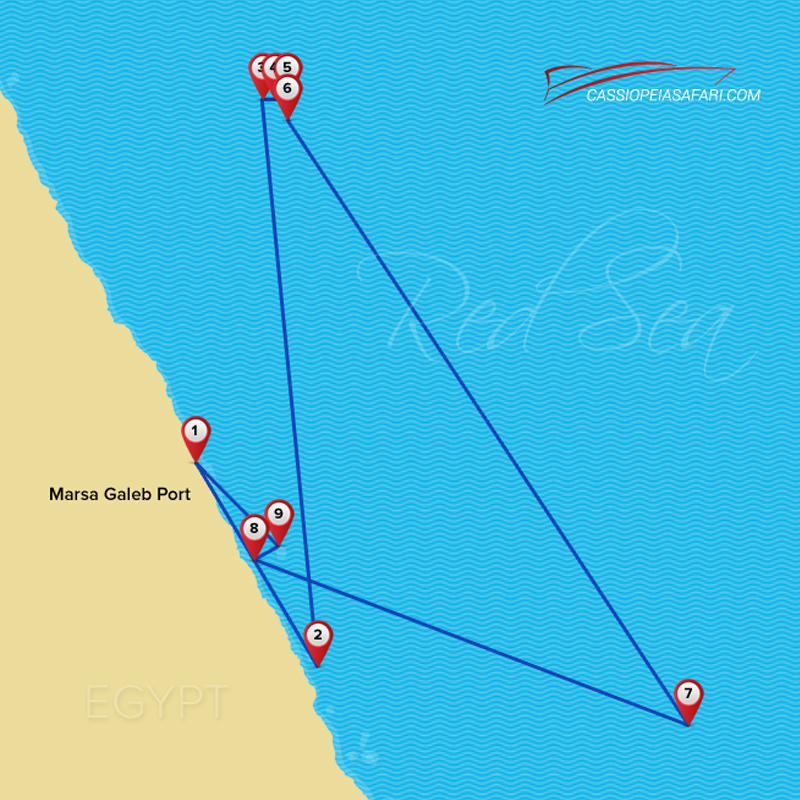
Inclusions
Exclusions
- 14% VAT: 133.00 EUR
Central-European time zone + 1 hour. There is no summer/winter savings time since 2011.
Egypt has a desert climate with warm and dry weather conditions. In the summer months (April-October) the average temperature is between 27°C and 32°C but in the interior areas of the desert it can get even warmer. Summer temperatures along the Red Sea coast are between 27°C and 43°C with northerly winds and southward currents. In the north, winds from the Mediterranian Sea ease the heat. Winters are mild with average temperatures of 13°C – 21°C. Most precipitation is during the winter months; south of Cairo it is about 2 – 5 mm while in the north it can reach 410 mm. There are strong southerly winds in the end of October and the in the beginning of November and currents move in a northern direction. (Water temperatures in the area of Sharm el Sheikh and Hurghada may be 1 – 2°C cooler.)
Thanks to the warm weather, light clothes made of cotton, skirts, shorts, short-sleeve T-shirts and blouses, flip-flops and sandals are the best choice. Hats, sunglasses and tanning lotion (with minimum SPF30) are also important. It is recommended to stay indoors or in the shade during the noon hours. In winter during the day long pants and a light sweater are enough but in the evening a jacket or a light coat may come handy. In the resort towns like Hurghada and Sharm el Sheikh, there are no rules concerning clothing wear as long as it is in good taste however in larger cities like Cairo, it is recommended to wear clothing that is at least below the knees and covers the shoulders. The rules in religious or holy places are even stricter and girls and ladies must cover their heads. Onboard Cassiopeia and Andromeda light, comfortable clothing is acceptable. In the evening a light sweater or cardigan may come handy but during the day bathing suits, shorts and T-shirts are quite acceptable.
It is very versatile, delicious and rich in fresh vegetables. The main meals are made of beef, mutton, chicken, pigeon and duck and fresh fish is also often used. Traditional desserts are really sweet and at the markets, vendors’ stands are ladended with gorgeous fresh fruits. Egyptian chefs prepare the meals onboard Cassiopeia and Andromeda and their heritage is reflected in the delicious meals they prepare for the buffet-style servings three times a day. The menu includes soups, fresh salads, meats, side dishes and sweets which are also available during the day along with fresh fruits. (Pork is not widely available in Egypt because of religious reasons.)
There is 220v current with European-style plugs. There are electrical plugs in every cabin and in the common areas and also there is a separate charging station on the main deck where phones, laptops, cameras and batteries can be charged.
It is recommended but not mandatory for travellers to Egypt to get vaccination against: Hepatitis A (high risk of contagion), Hepatitis B (moderate risk of contagion), Typhus and rabies. However it is mandatory to get the vaccination against yellow fever when entering Egypt from countries or having travelled through countries with high risk of the disease (from example when travelling to Egypt from Sudan).
Haggling in Egypt is a must. Everyone bound for shopping should be prepared for a ”dispute” lasting anywhere from 1-2 minutes to half an hour but ultimately ending in a successful shopping experience. There are rules to haggling. One of them is to say the amount that is half of the actual amount you would be willing to spend. Onboard our vessels all prices are fixed and they are not subject to bargaining.
Look for an Egyptian Embassy of Consular Office in your country or nearest you.
Mobile phones can be used in Egypt. Contact your local mobile service provider for rates and details.
Most shops are open from 10 o’clock in the morning until as late as midnight sometimes. Banks are closed on Fridays and Saturdays. On Sundays and during Ramadan they are open between 10 o’clock in the morning and 13:30 in the afternoon. On all other days they are open between 8:30 in the morning and 13:30 in the afternoon.
Friday is the official day off and in some offices Saturday as well. One of the most important holidays are the last 2-3 days at the end of the Ramadan month and the feast 70 days later.
It is part of every-day life in the Middle-East and in the Arabic world.
Contact your dive guide onboard in case of any medical problems or emergencies. All medical costs must be paid in cash on site. Insurance companies will reimburse costs based only on valid hospital bills.
Taxi is the most comfortable way of transportation in the towns and cities. Despite the taximetre, it is wise to agree on the fare before the trip. Shuttle buses run between towns carrying locals and visitors alike. Local mini buses and coaches tend to be quite crowded.
It is forbidden to take photos or videos of military facilities, bridges and harbours. Please obey these rules! It is allowed to take photos of important and tourist sights but in certain places only for a fee.
Central-European time zone + 2 hours. There is no summer/winter savings time since 2011.
Sudan’s northern region has a dry, desert climate while in the south-western region the wet-dry tropical climate is more dominant. There are no big variations in the temperatures between regions but rather in the amount of precipitation and in the length of the dry season. Between January and March the dry north-eastern winds dominate. However the south-western winds arrive in the beginning of April, bringing heavy rains. In September the dry north-eastern winds pick up strength again, pushing southward, covering the entire country. The rainy season in Khartoum lasts from July to September with annual precipitation of 161mm. The warmest months are May and June when temperatures can reach 48°C. Port Sudan’s climate is dry where summers are very hot and winters are moderately warm. Temperatures in the winter can reach 30°C and 45°C in the summer. Ninety percent of the annual rain fall is between October and January, especially in November. Port Sudan enjoys 3200 sunny hours annually.
The Sudanese taxes are payable in advance along with the safari rates. The Sudanese visa fee is payable in USD in cash (the exact amount) onboard upon arrival. (Only cash payments are accepted.)
Thanks to the warm weather, light clothes made of cotton, skirts, shorts, short-sleeve T-shirts and blouses, flip-flops and sandals are the best choice. Hats, sunglasses and tanning lotion (with minimum SPF30) are also important. It is recommended to stay indoors or in the shade during the noon hours. Compared to Egypt, the ”regulations” concerning clothing in Sudan are stricter. In towns like Port Sudan or Suakin or in the harbour, it is recommended to wear clothing that is at least below the knees and covers the shoulders. The rules in religious or holy places are even stricter and girls and ladies must cover their heads. Onboard Cassiopeia and Andromeda light, comfortable clothing is acceptable. In the evening a light sweater or cardigan may come handy but during the day bathing suits, shorts and T-shirts are quite acceptable.
It is similar to Egyptian cuisine, very versatile, delicious and rich in fresh vegetables. The main meals are made of beef and mutton and fresh fish is often used in the coastal regions and soups are also an important part of daily meals. At the markets, vendors’ stands are ladended with gorgeous fresh fruits. Egyptian chefs prepare the meals onboard Cassiopeia and Andromeda and their heritage is reflected in the delicious meals they prepare for the buffet-style servings three times a day. The menu includes soups, fresh salads, meats, side dishes and sweets which are also available during the day along with fresh fruits. (Pork is not widely available in Sudan because of religious reasons.)
There is 220v current with European-style plugs. There are electrical plugs in every cabin and in the common areas and also there is a separate charging station on the main deck where phones, laptops, cameras and batteries can be charged.
It is recommended but not mandatory for travellers to Sudan to get vaccination against: Hepatitis A (high risk of contagion), Hepatitis B (moderate risk of contagion), Typhus and rabies. However it is mandatory to get the vaccination against yellow fever if you enter Egypt after your stay in Sudan.
Haggling in Sudan, just as in Egypt, is a must. Everyone bound for shopping should be prepared for a ”dispute” lasting anywhere from 1-2 minutes to half an hour but ultimately ending in a successful shopping experience. There are rules to haggling. One of them is to say the amount that is half of the actual amount you would be willing to spend. Onboard our vessels all prices are fixed and they are not subject to bargaining.
Look for a Sudanese Embassy of Consular Office in your country or nearest you.
Mobile phones can be used in Sudan. Contact your local mobile service provider for rates and details.
There are 13 double cabins onboard both our vessels. There are cabins with a queen bed and cabins with twin beds. Every cabin has its own en-suite bathroom with shower, sink and toilet. The air-conditioned cabins also have 220v sockets and plenty of storage space.
There is an LCD TV in the salon along with a DVD player and a variety of entertaining movies. Guests are welcome to play their own music and movies as well.
We can only accept cash payments onboard (EUR, USD, EGP). All purchases made onboard must be settled onboard before disembarking at the end of the tour. We are not able to provide credits or loans.
A safe can be found onboard both vessels where guests can place their valuables before the start of the trip. The dive guides should be asked for access to the safe. We can accept responsibility only for items placed in the safes. All other items, belongings and valuables are the responsibility of the guests.
Additional purchases and expenses made onboard may be the tip (bakshish) for the dive guides and crew (it is usually EUR30 / week in Egypt and EUR50 / person / week in Sudan if satisfied with the service), T-shirts, Nitrox use, 15l tank rental and Satellite phone use. There is a surcharge for lost towels and weights. Alcoholic beverages may be purchased at the duty-free shops before boarding the boat. (In Sudan alcoholic beverages are available onboard.)The Egyptian visa is USD25 / person or EUR20 / person (rates may change according to Government regulations). (If travelling to Sudan via Cairo, the Egyptian visa is 2 x USD25 / person.)
At least 2 local dive guides work onboard our vessels, speaking various languages.
In Egypt, depending on the size of the groups, we provide transfers in air-conditioned buses, coasters or taxis for individual guests. In Sudan all guests are transferred together by bus.
The best time for diving in Egypt is between March and November. However there are a lot of divers (especially from nations in the north) who continue on diving even between December and March when water temperatures are around 20 – 21 °C and the winds are stronger.
Most divers can do with a shorty in July and August. It is usually enough to wear a 3 – 5 mm long suit between March and November. In the remaining months a warmer or a doubled-up 5 mm suit is recommended.
It is highly recommended for every diver to bring his/her own full gear but it is possible to rent equipment. This request should be sent to us at least one week prior to departure. Twelve-litre compressed-air tanks and weights are provided for the guests onboard but weight belts should be brought along.
There are 2 fully equipped decompression chambers in Hurghada to treat diving-related injuries and accidents. There are also facilities in Sharm el Sheikh, El Gouna and Marsa Alam. All our divers must possess valid diving insurance that includes decompression chamber treatments as well.
The first diving day there are 2 day dives and 1 night dive. The 2nd – last diving days there are 3 day dives and 1 night dive per day (depending on the itinerary and weather conditions). The last diving day there are 2 day dives and then the boat returns to the harbour. Please note there is no night diving at the Marine Park islands such as Brothers, Daedalus, Rocky and Zabargad.
A minimum of OWD certification is necessary to be able to dive onboard our boats. There are dive sites that are only recommended for advanced and more experienced divers, for example at the islands of Brothers, Rocky and Zabargad or at wrecks lying in deeper waters in the north. It is best to check the itinerary before booking a tour to make sure it fits the diver’s certification level and experience.
Nitrox-certified divers can dive with Nitrox. There is a membrane Nitrox system onboard with a 32% mix.
A minimum of OWD certification is necessary to be able to dive onboard our boats. However we can provide certain courses onboard such as AOWD, Nitrox, specialty courses, etc. given appropriate itinerary and previous consultation.
Our diving safaris are mainly geared towards divers but non-divers are also welcome when accompanying their loved ones.
The first dive on every tour is a check dive during which the dive guides observe the divers’ diving techniques and any shortcomings and correct, remedy those. If it has been a while since the last dive, it should be brought to the dive guides’ attention.
All our divers must possess valid diving insurance and non-divers valid travel insurance. Diving is permitted only with valid diving insurance. Most important is diving and accidental insurance as well as luggage and travel insurance.
Diving is conditioned upon having a valid diving certificate and diving insurance.
Every diver must fill out a release form onboard before the start of the trip stating that he/she is medically fit to dive.
Life vests can be found in every cabin and the following equipment onboard: 2 life rafts, Oxygen, first-aid kit, fire extinguishers, life buoys and a diver search system.
Due to the movement of the boat, seasickness and/or nausa may be experienced. This can be well treated by the local medication Emetrx. Please turn to the dive guides for assistance.
The best time for diving in Sudan is between February and June. This is when the sea is the most alive and marine life is the richest. The fall months (September-November) are also favoured by divers, especially October when it is manta season in Sudan near Mesharifa reef.
There are no facilities in Sudan for the treatment of decompression sickness. The closest chamber is in Marsa Alam. (There are 2 fully equipped decompression chambers in Hurghada to treat diving-related injuries and accidents. There are also facilities in Sharm el Sheikh, El Gouna and Marsa Alam.) All our divers must possess valid diving insurance that includes decompression chamber treatments as well.
The first diving day there are 2 day dives and 1 night dive. The 2nd – last diving days there are 3 day dives and 1 night dive per day (depending on the itinerary and weather conditions). The last diving day there are 2 day dives and then the boat returns to the harbour.
- Length: 40 m / 130 ft.
- Beam: 8 m
- Generator: 2x Mercedes 138 Kw silent generators
- Freshwater: 15 tons + desalination device (2 tons/day)
- Fuel: 70 tons
- Electricity: 220V in cabins and salon
- Cabins: 13
- Max. Guests: 26
Andromeda, the 40 meters diving safari liveaboard, was built based on a unique design, meeting divers’ and guests’ needs. The vessel welcomes up to 26 guests in 13 spacious, tastefully decorated cabins with en-suite bathrooms.
The spacious lounge area is air-conditioned and well equipped with an LCD TV, VCR, DVD and CD player and furnished according to European style. The Arabian cafe follows the original Oriental coffee shop design with shisha (waterpipe) smoking possibility, coffee, tea and original Arabic music.
The comfortable 100-square-meter sun deck provides plenty of space for sun-seekers, as well as a shaded area. Comfortable deck chairs and cushioned seats make the time more pleasant. There is also a smaller sun deck in front of the captain’s bridge. A covered deck In front of the salon is a comfortable open but covered area for resting and chatting between dives in the evening.
The large dive deck and dive platform area ensure more-than-adequate space for divers preparing for their next plunge into the Red Sea. 2 hand-held showers on the platform allow for a rinse after diving or snorkeling. A bathroom with shower and marine head lead directly off the dive deck.
A well-traveled, cohesive crew, speaking various languages, awaits all the guests who wish to dive and relax. See you onboard! The Andromeda is the only liveaboard offering 1-week and 2-week diving safaris in the Deep South of Sudan.
Inclusions
Exclusions
- 14% VAT: 120.00 EUR
Central-European time zone + 1 hour. There is no summer/winter savings time since 2011.
Egypt has a desert climate with warm and dry weather conditions. In the summer months (April-October) the average temperature is between 27°C and 32°C but in the interior areas of the desert it can get even warmer. Summer temperatures along the Red Sea coast are between 27°C and 43°C with northerly winds and southward currents. In the north, winds from the Mediterranian Sea ease the heat. Winters are mild with average temperatures of 13°C – 21°C. Most precipitation is during the winter months; south of Cairo it is about 2 – 5 mm while in the north it can reach 410 mm. There are strong southerly winds in the end of October and the in the beginning of November and currents move in a northern direction. (Water temperatures in the area of Sharm el Sheikh and Hurghada may be 1 – 2°C cooler.)
Thanks to the warm weather, light clothes made of cotton, skirts, shorts, short-sleeve T-shirts and blouses, flip-flops and sandals are the best choice. Hats, sunglasses and tanning lotion (with minimum SPF30) are also important. It is recommended to stay indoors or in the shade during the noon hours. In winter during the day long pants and a light sweater are enough but in the evening a jacket or a light coat may come handy. In the resort towns like Hurghada and Sharm el Sheikh, there are no rules concerning clothing wear as long as it is in good taste however in larger cities like Cairo, it is recommended to wear clothing that is at least below the knees and covers the shoulders. The rules in religious or holy places are even stricter and girls and ladies must cover their heads. Onboard Cassiopeia and Andromeda light, comfortable clothing is acceptable. In the evening a light sweater or cardigan may come handy but during the day bathing suits, shorts and T-shirts are quite acceptable.
It is very versatile, delicious and rich in fresh vegetables. The main meals are made of beef, mutton, chicken, pigeon and duck and fresh fish is also often used. Traditional desserts are really sweet and at the markets, vendors’ stands are ladended with gorgeous fresh fruits. Egyptian chefs prepare the meals onboard Cassiopeia and Andromeda and their heritage is reflected in the delicious meals they prepare for the buffet-style servings three times a day. The menu includes soups, fresh salads, meats, side dishes and sweets which are also available during the day along with fresh fruits. (Pork is not widely available in Egypt because of religious reasons.)
There is 220v current with European-style plugs. There are electrical plugs in every cabin and in the common areas and also there is a separate charging station on the main deck where phones, laptops, cameras and batteries can be charged.
It is recommended but not mandatory for travellers to Egypt to get vaccination against: Hepatitis A (high risk of contagion), Hepatitis B (moderate risk of contagion), Typhus and rabies. However it is mandatory to get the vaccination against yellow fever when entering Egypt from countries or having travelled through countries with high risk of the disease (from example when travelling to Egypt from Sudan).
Haggling in Egypt is a must. Everyone bound for shopping should be prepared for a ”dispute” lasting anywhere from 1-2 minutes to half an hour but ultimately ending in a successful shopping experience. There are rules to haggling. One of them is to say the amount that is half of the actual amount you would be willing to spend. Onboard our vessels all prices are fixed and they are not subject to bargaining.
Look for an Egyptian Embassy of Consular Office in your country or nearest you.
Mobile phones can be used in Egypt. Contact your local mobile service provider for rates and details.
Most shops are open from 10 o’clock in the morning until as late as midnight sometimes. Banks are closed on Fridays and Saturdays. On Sundays and during Ramadan they are open between 10 o’clock in the morning and 13:30 in the afternoon. On all other days they are open between 8:30 in the morning and 13:30 in the afternoon.
Friday is the official day off and in some offices Saturday as well. One of the most important holidays are the last 2-3 days at the end of the Ramadan month and the feast 70 days later.
It is part of every-day life in the Middle-East and in the Arabic world.
Contact your dive guide onboard in case of any medical problems or emergencies. All medical costs must be paid in cash on site. Insurance companies will reimburse costs based only on valid hospital bills.
Taxi is the most comfortable way of transportation in the towns and cities. Despite the taximetre, it is wise to agree on the fare before the trip. Shuttle buses run between towns carrying locals and visitors alike. Local mini buses and coaches tend to be quite crowded.
It is forbidden to take photos or videos of military facilities, bridges and harbours. Please obey these rules! It is allowed to take photos of important and tourist sights but in certain places only for a fee.
Central-European time zone + 2 hours. There is no summer/winter savings time since 2011.
Sudan’s northern region has a dry, desert climate while in the south-western region the wet-dry tropical climate is more dominant. There are no big variations in the temperatures between regions but rather in the amount of precipitation and in the length of the dry season. Between January and March the dry north-eastern winds dominate. However the south-western winds arrive in the beginning of April, bringing heavy rains. In September the dry north-eastern winds pick up strength again, pushing southward, covering the entire country. The rainy season in Khartoum lasts from July to September with annual precipitation of 161mm. The warmest months are May and June when temperatures can reach 48°C. Port Sudan’s climate is dry where summers are very hot and winters are moderately warm. Temperatures in the winter can reach 30°C and 45°C in the summer. Ninety percent of the annual rain fall is between October and January, especially in November. Port Sudan enjoys 3200 sunny hours annually.
The Sudanese taxes are payable in advance along with the safari rates. The Sudanese visa fee is payable in USD in cash (the exact amount) onboard upon arrival. (Only cash payments are accepted.)
Thanks to the warm weather, light clothes made of cotton, skirts, shorts, short-sleeve T-shirts and blouses, flip-flops and sandals are the best choice. Hats, sunglasses and tanning lotion (with minimum SPF30) are also important. It is recommended to stay indoors or in the shade during the noon hours. Compared to Egypt, the ”regulations” concerning clothing in Sudan are stricter. In towns like Port Sudan or Suakin or in the harbour, it is recommended to wear clothing that is at least below the knees and covers the shoulders. The rules in religious or holy places are even stricter and girls and ladies must cover their heads. Onboard Cassiopeia and Andromeda light, comfortable clothing is acceptable. In the evening a light sweater or cardigan may come handy but during the day bathing suits, shorts and T-shirts are quite acceptable.
It is similar to Egyptian cuisine, very versatile, delicious and rich in fresh vegetables. The main meals are made of beef and mutton and fresh fish is often used in the coastal regions and soups are also an important part of daily meals. At the markets, vendors’ stands are ladended with gorgeous fresh fruits. Egyptian chefs prepare the meals onboard Cassiopeia and Andromeda and their heritage is reflected in the delicious meals they prepare for the buffet-style servings three times a day. The menu includes soups, fresh salads, meats, side dishes and sweets which are also available during the day along with fresh fruits. (Pork is not widely available in Sudan because of religious reasons.)
There is 220v current with European-style plugs. There are electrical plugs in every cabin and in the common areas and also there is a separate charging station on the main deck where phones, laptops, cameras and batteries can be charged.
It is recommended but not mandatory for travellers to Sudan to get vaccination against: Hepatitis A (high risk of contagion), Hepatitis B (moderate risk of contagion), Typhus and rabies. However it is mandatory to get the vaccination against yellow fever if you enter Egypt after your stay in Sudan.
Haggling in Sudan, just as in Egypt, is a must. Everyone bound for shopping should be prepared for a ”dispute” lasting anywhere from 1-2 minutes to half an hour but ultimately ending in a successful shopping experience. There are rules to haggling. One of them is to say the amount that is half of the actual amount you would be willing to spend. Onboard our vessels all prices are fixed and they are not subject to bargaining.
Look for a Sudanese Embassy of Consular Office in your country or nearest you.
Mobile phones can be used in Sudan. Contact your local mobile service provider for rates and details.
There are 13 double cabins onboard both our vessels. There are cabins with a queen bed and cabins with twin beds. Every cabin has its own en-suite bathroom with shower, sink and toilet. The air-conditioned cabins also have 220v sockets and plenty of storage space.
There is an LCD TV in the salon along with a DVD player and a variety of entertaining movies. Guests are welcome to play their own music and movies as well.
We can only accept cash payments onboard (EUR, USD, EGP). All purchases made onboard must be settled onboard before disembarking at the end of the tour. We are not able to provide credits or loans.
A safe can be found onboard both vessels where guests can place their valuables before the start of the trip. The dive guides should be asked for access to the safe. We can accept responsibility only for items placed in the safes. All other items, belongings and valuables are the responsibility of the guests.
Additional purchases and expenses made onboard may be the tip (bakshish) for the dive guides and crew (it is usually EUR30 / week in Egypt and EUR50 / person / week in Sudan if satisfied with the service), T-shirts, Nitrox use, 15l tank rental and Satellite phone use. There is a surcharge for lost towels and weights. Alcoholic beverages may be purchased at the duty-free shops before boarding the boat. (In Sudan alcoholic beverages are available onboard.)The Egyptian visa is USD25 / person or EUR20 / person (rates may change according to Government regulations). (If travelling to Sudan via Cairo, the Egyptian visa is 2 x USD25 / person.)
At least 2 local dive guides work onboard our vessels, speaking various languages.
In Egypt, depending on the size of the groups, we provide transfers in air-conditioned buses, coasters or taxis for individual guests. In Sudan all guests are transferred together by bus.
The best time for diving in Egypt is between March and November. However there are a lot of divers (especially from nations in the north) who continue on diving even between December and March when water temperatures are around 20 – 21 °C and the winds are stronger.
Most divers can do with a shorty in July and August. It is usually enough to wear a 3 – 5 mm long suit between March and November. In the remaining months a warmer or a doubled-up 5 mm suit is recommended.
It is highly recommended for every diver to bring his/her own full gear but it is possible to rent equipment. This request should be sent to us at least one week prior to departure. Twelve-litre compressed-air tanks and weights are provided for the guests onboard but weight belts should be brought along.
There are 2 fully equipped decompression chambers in Hurghada to treat diving-related injuries and accidents. There are also facilities in Sharm el Sheikh, El Gouna and Marsa Alam. All our divers must possess valid diving insurance that includes decompression chamber treatments as well.
The first diving day there are 2 day dives and 1 night dive. The 2nd – last diving days there are 3 day dives and 1 night dive per day (depending on the itinerary and weather conditions). The last diving day there are 2 day dives and then the boat returns to the harbour. Please note there is no night diving at the Marine Park islands such as Brothers, Daedalus, Rocky and Zabargad.
A minimum of OWD certification is necessary to be able to dive onboard our boats. There are dive sites that are only recommended for advanced and more experienced divers, for example at the islands of Brothers, Rocky and Zabargad or at wrecks lying in deeper waters in the north. It is best to check the itinerary before booking a tour to make sure it fits the diver’s certification level and experience.
Nitrox-certified divers can dive with Nitrox. There is a membrane Nitrox system onboard with a 32% mix.
A minimum of OWD certification is necessary to be able to dive onboard our boats. However we can provide certain courses onboard such as AOWD, Nitrox, specialty courses, etc. given appropriate itinerary and previous consultation.
Our diving safaris are mainly geared towards divers but non-divers are also welcome when accompanying their loved ones.
The first dive on every tour is a check dive during which the dive guides observe the divers’ diving techniques and any shortcomings and correct, remedy those. If it has been a while since the last dive, it should be brought to the dive guides’ attention.
All our divers must possess valid diving insurance and non-divers valid travel insurance. Diving is permitted only with valid diving insurance. Most important is diving and accidental insurance as well as luggage and travel insurance.
Diving is conditioned upon having a valid diving certificate and diving insurance.
Every diver must fill out a release form onboard before the start of the trip stating that he/she is medically fit to dive.
Life vests can be found in every cabin and the following equipment onboard: 2 life rafts, Oxygen, first-aid kit, fire extinguishers, life buoys and a diver search system.
Due to the movement of the boat, seasickness and/or nausa may be experienced. This can be well treated by the local medication Emetrx. Please turn to the dive guides for assistance.
The best time for diving in Sudan is between February and June. This is when the sea is the most alive and marine life is the richest. The fall months (September-November) are also favoured by divers, especially October when it is manta season in Sudan near Mesharifa reef.
There are no facilities in Sudan for the treatment of decompression sickness. The closest chamber is in Marsa Alam. (There are 2 fully equipped decompression chambers in Hurghada to treat diving-related injuries and accidents. There are also facilities in Sharm el Sheikh, El Gouna and Marsa Alam.) All our divers must possess valid diving insurance that includes decompression chamber treatments as well.
The first diving day there are 2 day dives and 1 night dive. The 2nd – last diving days there are 3 day dives and 1 night dive per day (depending on the itinerary and weather conditions). The last diving day there are 2 day dives and then the boat returns to the harbour.
- Length: 40 m / 130 ft.
- Beam: 8 m
- Generator: 2x Mercedes 138 Kw silent generators
- Freshwater: 15 tons + desalination device (2 tons/day)
- Fuel: 70 tons
- Electricity: 220V in cabins and salon
- Cabins: 13
- Max. Guests: 26
Andromeda, the 40 meters diving safari liveaboard, was built based on a unique design, meeting divers’ and guests’ needs. The vessel welcomes up to 26 guests in 13 spacious, tastefully decorated cabins with en-suite bathrooms.
The spacious lounge area is air-conditioned and well equipped with an LCD TV, VCR, DVD and CD player and furnished according to European style. The Arabian cafe follows the original Oriental coffee shop design with shisha (waterpipe) smoking possibility, coffee, tea and original Arabic music.
The comfortable 100-square-meter sun deck provides plenty of space for sun-seekers, as well as a shaded area. Comfortable deck chairs and cushioned seats make the time more pleasant. There is also a smaller sun deck in front of the captain’s bridge. A covered deck In front of the salon is a comfortable open but covered area for resting and chatting between dives in the evening.
The large dive deck and dive platform area ensure more-than-adequate space for divers preparing for their next plunge into the Red Sea. 2 hand-held showers on the platform allow for a rinse after diving or snorkeling. A bathroom with shower and marine head lead directly off the dive deck.
A well-traveled, cohesive crew, speaking various languages, awaits all the guests who wish to dive and relax. See you onboard! The Andromeda is the only liveaboard offering 1-week and 2-week diving safaris in the Deep South of Sudan.
Inclusions
Exclusions
- Fuel surcharge: 150.00 EUR
Central-European time zone + 1 hour. There is no summer/winter savings time since 2011.
Egypt has a desert climate with warm and dry weather conditions. In the summer months (April-October) the average temperature is between 27°C and 32°C but in the interior areas of the desert it can get even warmer. Summer temperatures along the Red Sea coast are between 27°C and 43°C with northerly winds and southward currents. In the north, winds from the Mediterranian Sea ease the heat. Winters are mild with average temperatures of 13°C – 21°C. Most precipitation is during the winter months; south of Cairo it is about 2 – 5 mm while in the north it can reach 410 mm. There are strong southerly winds in the end of October and the in the beginning of November and currents move in a northern direction. (Water temperatures in the area of Sharm el Sheikh and Hurghada may be 1 – 2°C cooler.)
Thanks to the warm weather, light clothes made of cotton, skirts, shorts, short-sleeve T-shirts and blouses, flip-flops and sandals are the best choice. Hats, sunglasses and tanning lotion (with minimum SPF30) are also important. It is recommended to stay indoors or in the shade during the noon hours. In winter during the day long pants and a light sweater are enough but in the evening a jacket or a light coat may come handy. In the resort towns like Hurghada and Sharm el Sheikh, there are no rules concerning clothing wear as long as it is in good taste however in larger cities like Cairo, it is recommended to wear clothing that is at least below the knees and covers the shoulders. The rules in religious or holy places are even stricter and girls and ladies must cover their heads. Onboard Cassiopeia and Andromeda light, comfortable clothing is acceptable. In the evening a light sweater or cardigan may come handy but during the day bathing suits, shorts and T-shirts are quite acceptable.
It is very versatile, delicious and rich in fresh vegetables. The main meals are made of beef, mutton, chicken, pigeon and duck and fresh fish is also often used. Traditional desserts are really sweet and at the markets, vendors’ stands are ladended with gorgeous fresh fruits. Egyptian chefs prepare the meals onboard Cassiopeia and Andromeda and their heritage is reflected in the delicious meals they prepare for the buffet-style servings three times a day. The menu includes soups, fresh salads, meats, side dishes and sweets which are also available during the day along with fresh fruits. (Pork is not widely available in Egypt because of religious reasons.)
There is 220v current with European-style plugs. There are electrical plugs in every cabin and in the common areas and also there is a separate charging station on the main deck where phones, laptops, cameras and batteries can be charged.
It is recommended but not mandatory for travellers to Egypt to get vaccination against: Hepatitis A (high risk of contagion), Hepatitis B (moderate risk of contagion), Typhus and rabies. However it is mandatory to get the vaccination against yellow fever when entering Egypt from countries or having travelled through countries with high risk of the disease (from example when travelling to Egypt from Sudan).
Haggling in Egypt is a must. Everyone bound for shopping should be prepared for a ”dispute” lasting anywhere from 1-2 minutes to half an hour but ultimately ending in a successful shopping experience. There are rules to haggling. One of them is to say the amount that is half of the actual amount you would be willing to spend. Onboard our vessels all prices are fixed and they are not subject to bargaining.
Look for an Egyptian Embassy of Consular Office in your country or nearest you.
Mobile phones can be used in Egypt. Contact your local mobile service provider for rates and details.
Most shops are open from 10 o’clock in the morning until as late as midnight sometimes. Banks are closed on Fridays and Saturdays. On Sundays and during Ramadan they are open between 10 o’clock in the morning and 13:30 in the afternoon. On all other days they are open between 8:30 in the morning and 13:30 in the afternoon.
Friday is the official day off and in some offices Saturday as well. One of the most important holidays are the last 2-3 days at the end of the Ramadan month and the feast 70 days later.
It is part of every-day life in the Middle-East and in the Arabic world.
Contact your dive guide onboard in case of any medical problems or emergencies. All medical costs must be paid in cash on site. Insurance companies will reimburse costs based only on valid hospital bills.
Taxi is the most comfortable way of transportation in the towns and cities. Despite the taximetre, it is wise to agree on the fare before the trip. Shuttle buses run between towns carrying locals and visitors alike. Local mini buses and coaches tend to be quite crowded.
It is forbidden to take photos or videos of military facilities, bridges and harbours. Please obey these rules! It is allowed to take photos of important and tourist sights but in certain places only for a fee.
Central-European time zone + 2 hours. There is no summer/winter savings time since 2011.
Sudan’s northern region has a dry, desert climate while in the south-western region the wet-dry tropical climate is more dominant. There are no big variations in the temperatures between regions but rather in the amount of precipitation and in the length of the dry season. Between January and March the dry north-eastern winds dominate. However the south-western winds arrive in the beginning of April, bringing heavy rains. In September the dry north-eastern winds pick up strength again, pushing southward, covering the entire country. The rainy season in Khartoum lasts from July to September with annual precipitation of 161mm. The warmest months are May and June when temperatures can reach 48°C. Port Sudan’s climate is dry where summers are very hot and winters are moderately warm. Temperatures in the winter can reach 30°C and 45°C in the summer. Ninety percent of the annual rain fall is between October and January, especially in November. Port Sudan enjoys 3200 sunny hours annually.
The Sudanese taxes are payable in advance along with the safari rates. The Sudanese visa fee is payable in USD in cash (the exact amount) onboard upon arrival. (Only cash payments are accepted.)
Thanks to the warm weather, light clothes made of cotton, skirts, shorts, short-sleeve T-shirts and blouses, flip-flops and sandals are the best choice. Hats, sunglasses and tanning lotion (with minimum SPF30) are also important. It is recommended to stay indoors or in the shade during the noon hours. Compared to Egypt, the ”regulations” concerning clothing in Sudan are stricter. In towns like Port Sudan or Suakin or in the harbour, it is recommended to wear clothing that is at least below the knees and covers the shoulders. The rules in religious or holy places are even stricter and girls and ladies must cover their heads. Onboard Cassiopeia and Andromeda light, comfortable clothing is acceptable. In the evening a light sweater or cardigan may come handy but during the day bathing suits, shorts and T-shirts are quite acceptable.
It is similar to Egyptian cuisine, very versatile, delicious and rich in fresh vegetables. The main meals are made of beef and mutton and fresh fish is often used in the coastal regions and soups are also an important part of daily meals. At the markets, vendors’ stands are ladended with gorgeous fresh fruits. Egyptian chefs prepare the meals onboard Cassiopeia and Andromeda and their heritage is reflected in the delicious meals they prepare for the buffet-style servings three times a day. The menu includes soups, fresh salads, meats, side dishes and sweets which are also available during the day along with fresh fruits. (Pork is not widely available in Sudan because of religious reasons.)
There is 220v current with European-style plugs. There are electrical plugs in every cabin and in the common areas and also there is a separate charging station on the main deck where phones, laptops, cameras and batteries can be charged.
It is recommended but not mandatory for travellers to Sudan to get vaccination against: Hepatitis A (high risk of contagion), Hepatitis B (moderate risk of contagion), Typhus and rabies. However it is mandatory to get the vaccination against yellow fever if you enter Egypt after your stay in Sudan.
Haggling in Sudan, just as in Egypt, is a must. Everyone bound for shopping should be prepared for a ”dispute” lasting anywhere from 1-2 minutes to half an hour but ultimately ending in a successful shopping experience. There are rules to haggling. One of them is to say the amount that is half of the actual amount you would be willing to spend. Onboard our vessels all prices are fixed and they are not subject to bargaining.
Look for a Sudanese Embassy of Consular Office in your country or nearest you.
Mobile phones can be used in Sudan. Contact your local mobile service provider for rates and details.
There are 13 double cabins onboard both our vessels. There are cabins with a queen bed and cabins with twin beds. Every cabin has its own en-suite bathroom with shower, sink and toilet. The air-conditioned cabins also have 220v sockets and plenty of storage space.
There is an LCD TV in the salon along with a DVD player and a variety of entertaining movies. Guests are welcome to play their own music and movies as well.
We can only accept cash payments onboard (EUR, USD, EGP). All purchases made onboard must be settled onboard before disembarking at the end of the tour. We are not able to provide credits or loans.
A safe can be found onboard both vessels where guests can place their valuables before the start of the trip. The dive guides should be asked for access to the safe. We can accept responsibility only for items placed in the safes. All other items, belongings and valuables are the responsibility of the guests.
Additional purchases and expenses made onboard may be the tip (bakshish) for the dive guides and crew (it is usually EUR30 / week in Egypt and EUR50 / person / week in Sudan if satisfied with the service), T-shirts, Nitrox use, 15l tank rental and Satellite phone use. There is a surcharge for lost towels and weights. Alcoholic beverages may be purchased at the duty-free shops before boarding the boat. (In Sudan alcoholic beverages are available onboard.)The Egyptian visa is USD25 / person or EUR20 / person (rates may change according to Government regulations). (If travelling to Sudan via Cairo, the Egyptian visa is 2 x USD25 / person.)
At least 2 local dive guides work onboard our vessels, speaking various languages.
In Egypt, depending on the size of the groups, we provide transfers in air-conditioned buses, coasters or taxis for individual guests. In Sudan all guests are transferred together by bus.
The best time for diving in Egypt is between March and November. However there are a lot of divers (especially from nations in the north) who continue on diving even between December and March when water temperatures are around 20 – 21 °C and the winds are stronger.
Most divers can do with a shorty in July and August. It is usually enough to wear a 3 – 5 mm long suit between March and November. In the remaining months a warmer or a doubled-up 5 mm suit is recommended.
It is highly recommended for every diver to bring his/her own full gear but it is possible to rent equipment. This request should be sent to us at least one week prior to departure. Twelve-litre compressed-air tanks and weights are provided for the guests onboard but weight belts should be brought along.
There are 2 fully equipped decompression chambers in Hurghada to treat diving-related injuries and accidents. There are also facilities in Sharm el Sheikh, El Gouna and Marsa Alam. All our divers must possess valid diving insurance that includes decompression chamber treatments as well.
The first diving day there are 2 day dives and 1 night dive. The 2nd – last diving days there are 3 day dives and 1 night dive per day (depending on the itinerary and weather conditions). The last diving day there are 2 day dives and then the boat returns to the harbour. Please note there is no night diving at the Marine Park islands such as Brothers, Daedalus, Rocky and Zabargad.
A minimum of OWD certification is necessary to be able to dive onboard our boats. There are dive sites that are only recommended for advanced and more experienced divers, for example at the islands of Brothers, Rocky and Zabargad or at wrecks lying in deeper waters in the north. It is best to check the itinerary before booking a tour to make sure it fits the diver’s certification level and experience.
Nitrox-certified divers can dive with Nitrox. There is a membrane Nitrox system onboard with a 32% mix.
A minimum of OWD certification is necessary to be able to dive onboard our boats. However we can provide certain courses onboard such as AOWD, Nitrox, specialty courses, etc. given appropriate itinerary and previous consultation.
Our diving safaris are mainly geared towards divers but non-divers are also welcome when accompanying their loved ones.
The first dive on every tour is a check dive during which the dive guides observe the divers’ diving techniques and any shortcomings and correct, remedy those. If it has been a while since the last dive, it should be brought to the dive guides’ attention.
All our divers must possess valid diving insurance and non-divers valid travel insurance. Diving is permitted only with valid diving insurance. Most important is diving and accidental insurance as well as luggage and travel insurance.
Diving is conditioned upon having a valid diving certificate and diving insurance.
Every diver must fill out a release form onboard before the start of the trip stating that he/she is medically fit to dive.
Life vests can be found in every cabin and the following equipment onboard: 2 life rafts, Oxygen, first-aid kit, fire extinguishers, life buoys and a diver search system.
Due to the movement of the boat, seasickness and/or nausa may be experienced. This can be well treated by the local medication Emetrx. Please turn to the dive guides for assistance.
The best time for diving in Sudan is between February and June. This is when the sea is the most alive and marine life is the richest. The fall months (September-November) are also favoured by divers, especially October when it is manta season in Sudan near Mesharifa reef.
There are no facilities in Sudan for the treatment of decompression sickness. The closest chamber is in Marsa Alam. (There are 2 fully equipped decompression chambers in Hurghada to treat diving-related injuries and accidents. There are also facilities in Sharm el Sheikh, El Gouna and Marsa Alam.) All our divers must possess valid diving insurance that includes decompression chamber treatments as well.
The first diving day there are 2 day dives and 1 night dive. The 2nd – last diving days there are 3 day dives and 1 night dive per day (depending on the itinerary and weather conditions). The last diving day there are 2 day dives and then the boat returns to the harbour.
- Length: 40 m / 130 ft.
- Beam: 8 m
- Generator: 2x Mercedes 138 Kw silent generators
- Freshwater: 15 tons + desalination device (2 tons/day)
- Fuel: 70 tons
- Electricity: 220V in cabins and salon
- Cabins: 13
- Max. Guests: 26
Andromeda, the 40 meters diving safari liveaboard, was built based on a unique design, meeting divers’ and guests’ needs. The vessel welcomes up to 26 guests in 13 spacious, tastefully decorated cabins with en-suite bathrooms.
The spacious lounge area is air-conditioned and well equipped with an LCD TV, VCR, DVD and CD player and furnished according to European style. The Arabian cafe follows the original Oriental coffee shop design with shisha (waterpipe) smoking possibility, coffee, tea and original Arabic music.
The comfortable 100-square-meter sun deck provides plenty of space for sun-seekers, as well as a shaded area. Comfortable deck chairs and cushioned seats make the time more pleasant. There is also a smaller sun deck in front of the captain’s bridge. A covered deck In front of the salon is a comfortable open but covered area for resting and chatting between dives in the evening.
The large dive deck and dive platform area ensure more-than-adequate space for divers preparing for their next plunge into the Red Sea. 2 hand-held showers on the platform allow for a rinse after diving or snorkeling. A bathroom with shower and marine head lead directly off the dive deck.
A well-traveled, cohesive crew, speaking various languages, awaits all the guests who wish to dive and relax. See you onboard! The Andromeda is the only liveaboard offering 1-week and 2-week diving safaris in the Deep South of Sudan.
Inclusions
Exclusions
- Fuel surcharge: 150.00 EUR
Central-European time zone + 1 hour. There is no summer/winter savings time since 2011.
Egypt has a desert climate with warm and dry weather conditions. In the summer months (April-October) the average temperature is between 27°C and 32°C but in the interior areas of the desert it can get even warmer. Summer temperatures along the Red Sea coast are between 27°C and 43°C with northerly winds and southward currents. In the north, winds from the Mediterranian Sea ease the heat. Winters are mild with average temperatures of 13°C – 21°C. Most precipitation is during the winter months; south of Cairo it is about 2 – 5 mm while in the north it can reach 410 mm. There are strong southerly winds in the end of October and the in the beginning of November and currents move in a northern direction. (Water temperatures in the area of Sharm el Sheikh and Hurghada may be 1 – 2°C cooler.)
Thanks to the warm weather, light clothes made of cotton, skirts, shorts, short-sleeve T-shirts and blouses, flip-flops and sandals are the best choice. Hats, sunglasses and tanning lotion (with minimum SPF30) are also important. It is recommended to stay indoors or in the shade during the noon hours. In winter during the day long pants and a light sweater are enough but in the evening a jacket or a light coat may come handy. In the resort towns like Hurghada and Sharm el Sheikh, there are no rules concerning clothing wear as long as it is in good taste however in larger cities like Cairo, it is recommended to wear clothing that is at least below the knees and covers the shoulders. The rules in religious or holy places are even stricter and girls and ladies must cover their heads. Onboard Cassiopeia and Andromeda light, comfortable clothing is acceptable. In the evening a light sweater or cardigan may come handy but during the day bathing suits, shorts and T-shirts are quite acceptable.
It is very versatile, delicious and rich in fresh vegetables. The main meals are made of beef, mutton, chicken, pigeon and duck and fresh fish is also often used. Traditional desserts are really sweet and at the markets, vendors’ stands are ladended with gorgeous fresh fruits. Egyptian chefs prepare the meals onboard Cassiopeia and Andromeda and their heritage is reflected in the delicious meals they prepare for the buffet-style servings three times a day. The menu includes soups, fresh salads, meats, side dishes and sweets which are also available during the day along with fresh fruits. (Pork is not widely available in Egypt because of religious reasons.)
There is 220v current with European-style plugs. There are electrical plugs in every cabin and in the common areas and also there is a separate charging station on the main deck where phones, laptops, cameras and batteries can be charged.
It is recommended but not mandatory for travellers to Egypt to get vaccination against: Hepatitis A (high risk of contagion), Hepatitis B (moderate risk of contagion), Typhus and rabies. However it is mandatory to get the vaccination against yellow fever when entering Egypt from countries or having travelled through countries with high risk of the disease (from example when travelling to Egypt from Sudan).
Haggling in Egypt is a must. Everyone bound for shopping should be prepared for a ”dispute” lasting anywhere from 1-2 minutes to half an hour but ultimately ending in a successful shopping experience. There are rules to haggling. One of them is to say the amount that is half of the actual amount you would be willing to spend. Onboard our vessels all prices are fixed and they are not subject to bargaining.
Look for an Egyptian Embassy of Consular Office in your country or nearest you.
Mobile phones can be used in Egypt. Contact your local mobile service provider for rates and details.
Most shops are open from 10 o’clock in the morning until as late as midnight sometimes. Banks are closed on Fridays and Saturdays. On Sundays and during Ramadan they are open between 10 o’clock in the morning and 13:30 in the afternoon. On all other days they are open between 8:30 in the morning and 13:30 in the afternoon.
Friday is the official day off and in some offices Saturday as well. One of the most important holidays are the last 2-3 days at the end of the Ramadan month and the feast 70 days later.
It is part of every-day life in the Middle-East and in the Arabic world.
Contact your dive guide onboard in case of any medical problems or emergencies. All medical costs must be paid in cash on site. Insurance companies will reimburse costs based only on valid hospital bills.
Taxi is the most comfortable way of transportation in the towns and cities. Despite the taximetre, it is wise to agree on the fare before the trip. Shuttle buses run between towns carrying locals and visitors alike. Local mini buses and coaches tend to be quite crowded.
It is forbidden to take photos or videos of military facilities, bridges and harbours. Please obey these rules! It is allowed to take photos of important and tourist sights but in certain places only for a fee.
Central-European time zone + 2 hours. There is no summer/winter savings time since 2011.
Sudan’s northern region has a dry, desert climate while in the south-western region the wet-dry tropical climate is more dominant. There are no big variations in the temperatures between regions but rather in the amount of precipitation and in the length of the dry season. Between January and March the dry north-eastern winds dominate. However the south-western winds arrive in the beginning of April, bringing heavy rains. In September the dry north-eastern winds pick up strength again, pushing southward, covering the entire country. The rainy season in Khartoum lasts from July to September with annual precipitation of 161mm. The warmest months are May and June when temperatures can reach 48°C. Port Sudan’s climate is dry where summers are very hot and winters are moderately warm. Temperatures in the winter can reach 30°C and 45°C in the summer. Ninety percent of the annual rain fall is between October and January, especially in November. Port Sudan enjoys 3200 sunny hours annually.
The Sudanese taxes are payable in advance along with the safari rates. The Sudanese visa fee is payable in USD in cash (the exact amount) onboard upon arrival. (Only cash payments are accepted.)
Thanks to the warm weather, light clothes made of cotton, skirts, shorts, short-sleeve T-shirts and blouses, flip-flops and sandals are the best choice. Hats, sunglasses and tanning lotion (with minimum SPF30) are also important. It is recommended to stay indoors or in the shade during the noon hours. Compared to Egypt, the ”regulations” concerning clothing in Sudan are stricter. In towns like Port Sudan or Suakin or in the harbour, it is recommended to wear clothing that is at least below the knees and covers the shoulders. The rules in religious or holy places are even stricter and girls and ladies must cover their heads. Onboard Cassiopeia and Andromeda light, comfortable clothing is acceptable. In the evening a light sweater or cardigan may come handy but during the day bathing suits, shorts and T-shirts are quite acceptable.
It is similar to Egyptian cuisine, very versatile, delicious and rich in fresh vegetables. The main meals are made of beef and mutton and fresh fish is often used in the coastal regions and soups are also an important part of daily meals. At the markets, vendors’ stands are ladended with gorgeous fresh fruits. Egyptian chefs prepare the meals onboard Cassiopeia and Andromeda and their heritage is reflected in the delicious meals they prepare for the buffet-style servings three times a day. The menu includes soups, fresh salads, meats, side dishes and sweets which are also available during the day along with fresh fruits. (Pork is not widely available in Sudan because of religious reasons.)
There is 220v current with European-style plugs. There are electrical plugs in every cabin and in the common areas and also there is a separate charging station on the main deck where phones, laptops, cameras and batteries can be charged.
It is recommended but not mandatory for travellers to Sudan to get vaccination against: Hepatitis A (high risk of contagion), Hepatitis B (moderate risk of contagion), Typhus and rabies. However it is mandatory to get the vaccination against yellow fever if you enter Egypt after your stay in Sudan.
Haggling in Sudan, just as in Egypt, is a must. Everyone bound for shopping should be prepared for a ”dispute” lasting anywhere from 1-2 minutes to half an hour but ultimately ending in a successful shopping experience. There are rules to haggling. One of them is to say the amount that is half of the actual amount you would be willing to spend. Onboard our vessels all prices are fixed and they are not subject to bargaining.
Look for a Sudanese Embassy of Consular Office in your country or nearest you.
Mobile phones can be used in Sudan. Contact your local mobile service provider for rates and details.
There are 13 double cabins onboard both our vessels. There are cabins with a queen bed and cabins with twin beds. Every cabin has its own en-suite bathroom with shower, sink and toilet. The air-conditioned cabins also have 220v sockets and plenty of storage space.
There is an LCD TV in the salon along with a DVD player and a variety of entertaining movies. Guests are welcome to play their own music and movies as well.
We can only accept cash payments onboard (EUR, USD, EGP). All purchases made onboard must be settled onboard before disembarking at the end of the tour. We are not able to provide credits or loans.
A safe can be found onboard both vessels where guests can place their valuables before the start of the trip. The dive guides should be asked for access to the safe. We can accept responsibility only for items placed in the safes. All other items, belongings and valuables are the responsibility of the guests.
Additional purchases and expenses made onboard may be the tip (bakshish) for the dive guides and crew (it is usually EUR30 / week in Egypt and EUR50 / person / week in Sudan if satisfied with the service), T-shirts, Nitrox use, 15l tank rental and Satellite phone use. There is a surcharge for lost towels and weights. Alcoholic beverages may be purchased at the duty-free shops before boarding the boat. (In Sudan alcoholic beverages are available onboard.)The Egyptian visa is USD25 / person or EUR20 / person (rates may change according to Government regulations). (If travelling to Sudan via Cairo, the Egyptian visa is 2 x USD25 / person.)
At least 2 local dive guides work onboard our vessels, speaking various languages.
In Egypt, depending on the size of the groups, we provide transfers in air-conditioned buses, coasters or taxis for individual guests. In Sudan all guests are transferred together by bus.
The best time for diving in Egypt is between March and November. However there are a lot of divers (especially from nations in the north) who continue on diving even between December and March when water temperatures are around 20 – 21 °C and the winds are stronger.
Most divers can do with a shorty in July and August. It is usually enough to wear a 3 – 5 mm long suit between March and November. In the remaining months a warmer or a doubled-up 5 mm suit is recommended.
It is highly recommended for every diver to bring his/her own full gear but it is possible to rent equipment. This request should be sent to us at least one week prior to departure. Twelve-litre compressed-air tanks and weights are provided for the guests onboard but weight belts should be brought along.
There are 2 fully equipped decompression chambers in Hurghada to treat diving-related injuries and accidents. There are also facilities in Sharm el Sheikh, El Gouna and Marsa Alam. All our divers must possess valid diving insurance that includes decompression chamber treatments as well.
The first diving day there are 2 day dives and 1 night dive. The 2nd – last diving days there are 3 day dives and 1 night dive per day (depending on the itinerary and weather conditions). The last diving day there are 2 day dives and then the boat returns to the harbour. Please note there is no night diving at the Marine Park islands such as Brothers, Daedalus, Rocky and Zabargad.
A minimum of OWD certification is necessary to be able to dive onboard our boats. There are dive sites that are only recommended for advanced and more experienced divers, for example at the islands of Brothers, Rocky and Zabargad or at wrecks lying in deeper waters in the north. It is best to check the itinerary before booking a tour to make sure it fits the diver’s certification level and experience.
Nitrox-certified divers can dive with Nitrox. There is a membrane Nitrox system onboard with a 32% mix.
A minimum of OWD certification is necessary to be able to dive onboard our boats. However we can provide certain courses onboard such as AOWD, Nitrox, specialty courses, etc. given appropriate itinerary and previous consultation.
Our diving safaris are mainly geared towards divers but non-divers are also welcome when accompanying their loved ones.
The first dive on every tour is a check dive during which the dive guides observe the divers’ diving techniques and any shortcomings and correct, remedy those. If it has been a while since the last dive, it should be brought to the dive guides’ attention.
All our divers must possess valid diving insurance and non-divers valid travel insurance. Diving is permitted only with valid diving insurance. Most important is diving and accidental insurance as well as luggage and travel insurance.
Diving is conditioned upon having a valid diving certificate and diving insurance.
Every diver must fill out a release form onboard before the start of the trip stating that he/she is medically fit to dive.
Life vests can be found in every cabin and the following equipment onboard: 2 life rafts, Oxygen, first-aid kit, fire extinguishers, life buoys and a diver search system.
Due to the movement of the boat, seasickness and/or nausa may be experienced. This can be well treated by the local medication Emetrx. Please turn to the dive guides for assistance.
The best time for diving in Sudan is between February and June. This is when the sea is the most alive and marine life is the richest. The fall months (September-November) are also favoured by divers, especially October when it is manta season in Sudan near Mesharifa reef.
There are no facilities in Sudan for the treatment of decompression sickness. The closest chamber is in Marsa Alam. (There are 2 fully equipped decompression chambers in Hurghada to treat diving-related injuries and accidents. There are also facilities in Sharm el Sheikh, El Gouna and Marsa Alam.) All our divers must possess valid diving insurance that includes decompression chamber treatments as well.
The first diving day there are 2 day dives and 1 night dive. The 2nd – last diving days there are 3 day dives and 1 night dive per day (depending on the itinerary and weather conditions). The last diving day there are 2 day dives and then the boat returns to the harbour.
- Length: 40 m / 130 ft.
- Beam: 8 m
- Generator: 2x Mercedes 138 Kw silent generators
- Freshwater: 15 tons + desalination device (2 tons/day)
- Fuel: 70 tons
- Electricity: 220V in cabins and salon
- Cabins: 13
- Max. Guests: 26
Andromeda, the 40 meters diving safari liveaboard, was built based on a unique design, meeting divers’ and guests’ needs. The vessel welcomes up to 26 guests in 13 spacious, tastefully decorated cabins with en-suite bathrooms.
The spacious lounge area is air-conditioned and well equipped with an LCD TV, VCR, DVD and CD player and furnished according to European style. The Arabian cafe follows the original Oriental coffee shop design with shisha (waterpipe) smoking possibility, coffee, tea and original Arabic music.
The comfortable 100-square-meter sun deck provides plenty of space for sun-seekers, as well as a shaded area. Comfortable deck chairs and cushioned seats make the time more pleasant. There is also a smaller sun deck in front of the captain’s bridge. A covered deck In front of the salon is a comfortable open but covered area for resting and chatting between dives in the evening.
The large dive deck and dive platform area ensure more-than-adequate space for divers preparing for their next plunge into the Red Sea. 2 hand-held showers on the platform allow for a rinse after diving or snorkeling. A bathroom with shower and marine head lead directly off the dive deck.
A well-traveled, cohesive crew, speaking various languages, awaits all the guests who wish to dive and relax. See you onboard! The Andromeda is the only liveaboard offering 1-week and 2-week diving safaris in the Deep South of Sudan.
Inclusions
Exclusions
- Fuel surcharge: 150.00 EUR
Central-European time zone + 1 hour. There is no summer/winter savings time since 2011.
Egypt has a desert climate with warm and dry weather conditions. In the summer months (April-October) the average temperature is between 27°C and 32°C but in the interior areas of the desert it can get even warmer. Summer temperatures along the Red Sea coast are between 27°C and 43°C with northerly winds and southward currents. In the north, winds from the Mediterranian Sea ease the heat. Winters are mild with average temperatures of 13°C – 21°C. Most precipitation is during the winter months; south of Cairo it is about 2 – 5 mm while in the north it can reach 410 mm. There are strong southerly winds in the end of October and the in the beginning of November and currents move in a northern direction. (Water temperatures in the area of Sharm el Sheikh and Hurghada may be 1 – 2°C cooler.)
Thanks to the warm weather, light clothes made of cotton, skirts, shorts, short-sleeve T-shirts and blouses, flip-flops and sandals are the best choice. Hats, sunglasses and tanning lotion (with minimum SPF30) are also important. It is recommended to stay indoors or in the shade during the noon hours. In winter during the day long pants and a light sweater are enough but in the evening a jacket or a light coat may come handy. In the resort towns like Hurghada and Sharm el Sheikh, there are no rules concerning clothing wear as long as it is in good taste however in larger cities like Cairo, it is recommended to wear clothing that is at least below the knees and covers the shoulders. The rules in religious or holy places are even stricter and girls and ladies must cover their heads. Onboard Cassiopeia and Andromeda light, comfortable clothing is acceptable. In the evening a light sweater or cardigan may come handy but during the day bathing suits, shorts and T-shirts are quite acceptable.
It is very versatile, delicious and rich in fresh vegetables. The main meals are made of beef, mutton, chicken, pigeon and duck and fresh fish is also often used. Traditional desserts are really sweet and at the markets, vendors’ stands are ladended with gorgeous fresh fruits. Egyptian chefs prepare the meals onboard Cassiopeia and Andromeda and their heritage is reflected in the delicious meals they prepare for the buffet-style servings three times a day. The menu includes soups, fresh salads, meats, side dishes and sweets which are also available during the day along with fresh fruits. (Pork is not widely available in Egypt because of religious reasons.)
There is 220v current with European-style plugs. There are electrical plugs in every cabin and in the common areas and also there is a separate charging station on the main deck where phones, laptops, cameras and batteries can be charged.
It is recommended but not mandatory for travellers to Egypt to get vaccination against: Hepatitis A (high risk of contagion), Hepatitis B (moderate risk of contagion), Typhus and rabies. However it is mandatory to get the vaccination against yellow fever when entering Egypt from countries or having travelled through countries with high risk of the disease (from example when travelling to Egypt from Sudan).
Haggling in Egypt is a must. Everyone bound for shopping should be prepared for a ”dispute” lasting anywhere from 1-2 minutes to half an hour but ultimately ending in a successful shopping experience. There are rules to haggling. One of them is to say the amount that is half of the actual amount you would be willing to spend. Onboard our vessels all prices are fixed and they are not subject to bargaining.
Look for an Egyptian Embassy of Consular Office in your country or nearest you.
Mobile phones can be used in Egypt. Contact your local mobile service provider for rates and details.
Most shops are open from 10 o’clock in the morning until as late as midnight sometimes. Banks are closed on Fridays and Saturdays. On Sundays and during Ramadan they are open between 10 o’clock in the morning and 13:30 in the afternoon. On all other days they are open between 8:30 in the morning and 13:30 in the afternoon.
Friday is the official day off and in some offices Saturday as well. One of the most important holidays are the last 2-3 days at the end of the Ramadan month and the feast 70 days later.
It is part of every-day life in the Middle-East and in the Arabic world.
Contact your dive guide onboard in case of any medical problems or emergencies. All medical costs must be paid in cash on site. Insurance companies will reimburse costs based only on valid hospital bills.
Taxi is the most comfortable way of transportation in the towns and cities. Despite the taximetre, it is wise to agree on the fare before the trip. Shuttle buses run between towns carrying locals and visitors alike. Local mini buses and coaches tend to be quite crowded.
It is forbidden to take photos or videos of military facilities, bridges and harbours. Please obey these rules! It is allowed to take photos of important and tourist sights but in certain places only for a fee.
Central-European time zone + 2 hours. There is no summer/winter savings time since 2011.
Sudan’s northern region has a dry, desert climate while in the south-western region the wet-dry tropical climate is more dominant. There are no big variations in the temperatures between regions but rather in the amount of precipitation and in the length of the dry season. Between January and March the dry north-eastern winds dominate. However the south-western winds arrive in the beginning of April, bringing heavy rains. In September the dry north-eastern winds pick up strength again, pushing southward, covering the entire country. The rainy season in Khartoum lasts from July to September with annual precipitation of 161mm. The warmest months are May and June when temperatures can reach 48°C. Port Sudan’s climate is dry where summers are very hot and winters are moderately warm. Temperatures in the winter can reach 30°C and 45°C in the summer. Ninety percent of the annual rain fall is between October and January, especially in November. Port Sudan enjoys 3200 sunny hours annually.
The Sudanese taxes are payable in advance along with the safari rates. The Sudanese visa fee is payable in USD in cash (the exact amount) onboard upon arrival. (Only cash payments are accepted.)
Thanks to the warm weather, light clothes made of cotton, skirts, shorts, short-sleeve T-shirts and blouses, flip-flops and sandals are the best choice. Hats, sunglasses and tanning lotion (with minimum SPF30) are also important. It is recommended to stay indoors or in the shade during the noon hours. Compared to Egypt, the ”regulations” concerning clothing in Sudan are stricter. In towns like Port Sudan or Suakin or in the harbour, it is recommended to wear clothing that is at least below the knees and covers the shoulders. The rules in religious or holy places are even stricter and girls and ladies must cover their heads. Onboard Cassiopeia and Andromeda light, comfortable clothing is acceptable. In the evening a light sweater or cardigan may come handy but during the day bathing suits, shorts and T-shirts are quite acceptable.
It is similar to Egyptian cuisine, very versatile, delicious and rich in fresh vegetables. The main meals are made of beef and mutton and fresh fish is often used in the coastal regions and soups are also an important part of daily meals. At the markets, vendors’ stands are ladended with gorgeous fresh fruits. Egyptian chefs prepare the meals onboard Cassiopeia and Andromeda and their heritage is reflected in the delicious meals they prepare for the buffet-style servings three times a day. The menu includes soups, fresh salads, meats, side dishes and sweets which are also available during the day along with fresh fruits. (Pork is not widely available in Sudan because of religious reasons.)
There is 220v current with European-style plugs. There are electrical plugs in every cabin and in the common areas and also there is a separate charging station on the main deck where phones, laptops, cameras and batteries can be charged.
It is recommended but not mandatory for travellers to Sudan to get vaccination against: Hepatitis A (high risk of contagion), Hepatitis B (moderate risk of contagion), Typhus and rabies. However it is mandatory to get the vaccination against yellow fever if you enter Egypt after your stay in Sudan.
Haggling in Sudan, just as in Egypt, is a must. Everyone bound for shopping should be prepared for a ”dispute” lasting anywhere from 1-2 minutes to half an hour but ultimately ending in a successful shopping experience. There are rules to haggling. One of them is to say the amount that is half of the actual amount you would be willing to spend. Onboard our vessels all prices are fixed and they are not subject to bargaining.
Look for a Sudanese Embassy of Consular Office in your country or nearest you.
Mobile phones can be used in Sudan. Contact your local mobile service provider for rates and details.
There are 13 double cabins onboard both our vessels. There are cabins with a queen bed and cabins with twin beds. Every cabin has its own en-suite bathroom with shower, sink and toilet. The air-conditioned cabins also have 220v sockets and plenty of storage space.
There is an LCD TV in the salon along with a DVD player and a variety of entertaining movies. Guests are welcome to play their own music and movies as well.
We can only accept cash payments onboard (EUR, USD, EGP). All purchases made onboard must be settled onboard before disembarking at the end of the tour. We are not able to provide credits or loans.
A safe can be found onboard both vessels where guests can place their valuables before the start of the trip. The dive guides should be asked for access to the safe. We can accept responsibility only for items placed in the safes. All other items, belongings and valuables are the responsibility of the guests.
Additional purchases and expenses made onboard may be the tip (bakshish) for the dive guides and crew (it is usually EUR30 / week in Egypt and EUR50 / person / week in Sudan if satisfied with the service), T-shirts, Nitrox use, 15l tank rental and Satellite phone use. There is a surcharge for lost towels and weights. Alcoholic beverages may be purchased at the duty-free shops before boarding the boat. (In Sudan alcoholic beverages are available onboard.)The Egyptian visa is USD25 / person or EUR20 / person (rates may change according to Government regulations). (If travelling to Sudan via Cairo, the Egyptian visa is 2 x USD25 / person.)
At least 2 local dive guides work onboard our vessels, speaking various languages.
In Egypt, depending on the size of the groups, we provide transfers in air-conditioned buses, coasters or taxis for individual guests. In Sudan all guests are transferred together by bus.
The best time for diving in Egypt is between March and November. However there are a lot of divers (especially from nations in the north) who continue on diving even between December and March when water temperatures are around 20 – 21 °C and the winds are stronger.
Most divers can do with a shorty in July and August. It is usually enough to wear a 3 – 5 mm long suit between March and November. In the remaining months a warmer or a doubled-up 5 mm suit is recommended.
It is highly recommended for every diver to bring his/her own full gear but it is possible to rent equipment. This request should be sent to us at least one week prior to departure. Twelve-litre compressed-air tanks and weights are provided for the guests onboard but weight belts should be brought along.
There are 2 fully equipped decompression chambers in Hurghada to treat diving-related injuries and accidents. There are also facilities in Sharm el Sheikh, El Gouna and Marsa Alam. All our divers must possess valid diving insurance that includes decompression chamber treatments as well.
The first diving day there are 2 day dives and 1 night dive. The 2nd – last diving days there are 3 day dives and 1 night dive per day (depending on the itinerary and weather conditions). The last diving day there are 2 day dives and then the boat returns to the harbour. Please note there is no night diving at the Marine Park islands such as Brothers, Daedalus, Rocky and Zabargad.
A minimum of OWD certification is necessary to be able to dive onboard our boats. There are dive sites that are only recommended for advanced and more experienced divers, for example at the islands of Brothers, Rocky and Zabargad or at wrecks lying in deeper waters in the north. It is best to check the itinerary before booking a tour to make sure it fits the diver’s certification level and experience.
Nitrox-certified divers can dive with Nitrox. There is a membrane Nitrox system onboard with a 32% mix.
A minimum of OWD certification is necessary to be able to dive onboard our boats. However we can provide certain courses onboard such as AOWD, Nitrox, specialty courses, etc. given appropriate itinerary and previous consultation.
Our diving safaris are mainly geared towards divers but non-divers are also welcome when accompanying their loved ones.
The first dive on every tour is a check dive during which the dive guides observe the divers’ diving techniques and any shortcomings and correct, remedy those. If it has been a while since the last dive, it should be brought to the dive guides’ attention.
All our divers must possess valid diving insurance and non-divers valid travel insurance. Diving is permitted only with valid diving insurance. Most important is diving and accidental insurance as well as luggage and travel insurance.
Diving is conditioned upon having a valid diving certificate and diving insurance.
Every diver must fill out a release form onboard before the start of the trip stating that he/she is medically fit to dive.
Life vests can be found in every cabin and the following equipment onboard: 2 life rafts, Oxygen, first-aid kit, fire extinguishers, life buoys and a diver search system.
Due to the movement of the boat, seasickness and/or nausa may be experienced. This can be well treated by the local medication Emetrx. Please turn to the dive guides for assistance.
The best time for diving in Sudan is between February and June. This is when the sea is the most alive and marine life is the richest. The fall months (September-November) are also favoured by divers, especially October when it is manta season in Sudan near Mesharifa reef.
There are no facilities in Sudan for the treatment of decompression sickness. The closest chamber is in Marsa Alam. (There are 2 fully equipped decompression chambers in Hurghada to treat diving-related injuries and accidents. There are also facilities in Sharm el Sheikh, El Gouna and Marsa Alam.) All our divers must possess valid diving insurance that includes decompression chamber treatments as well.
The first diving day there are 2 day dives and 1 night dive. The 2nd – last diving days there are 3 day dives and 1 night dive per day (depending on the itinerary and weather conditions). The last diving day there are 2 day dives and then the boat returns to the harbour.
- Length: 40 m / 130 ft.
- Beam: 8 m
- Generator: 2x Mercedes 138 Kw silent generators
- Freshwater: 15 tons + desalination device (2 tons/day)
- Fuel: 70 tons
- Electricity: 220V in cabins and salon
- Cabins: 13
- Max. Guests: 26
Andromeda, the 40 meters diving safari liveaboard, was built based on a unique design, meeting divers’ and guests’ needs. The vessel welcomes up to 26 guests in 13 spacious, tastefully decorated cabins with en-suite bathrooms.
The spacious lounge area is air-conditioned and well equipped with an LCD TV, VCR, DVD and CD player and furnished according to European style. The Arabian cafe follows the original Oriental coffee shop design with shisha (waterpipe) smoking possibility, coffee, tea and original Arabic music.
The comfortable 100-square-meter sun deck provides plenty of space for sun-seekers, as well as a shaded area. Comfortable deck chairs and cushioned seats make the time more pleasant. There is also a smaller sun deck in front of the captain’s bridge. A covered deck In front of the salon is a comfortable open but covered area for resting and chatting between dives in the evening.
The large dive deck and dive platform area ensure more-than-adequate space for divers preparing for their next plunge into the Red Sea. 2 hand-held showers on the platform allow for a rinse after diving or snorkeling. A bathroom with shower and marine head lead directly off the dive deck.
A well-traveled, cohesive crew, speaking various languages, awaits all the guests who wish to dive and relax. See you onboard! The Andromeda is the only liveaboard offering 1-week and 2-week diving safaris in the Deep South of Sudan.
Inclusions
Exclusions
- Fuel surcharge: 300.00 EUR
Central-European time zone + 1 hour. There is no summer/winter savings time since 2011.
Egypt has a desert climate with warm and dry weather conditions. In the summer months (April-October) the average temperature is between 27°C and 32°C but in the interior areas of the desert it can get even warmer. Summer temperatures along the Red Sea coast are between 27°C and 43°C with northerly winds and southward currents. In the north, winds from the Mediterranian Sea ease the heat. Winters are mild with average temperatures of 13°C – 21°C. Most precipitation is during the winter months; south of Cairo it is about 2 – 5 mm while in the north it can reach 410 mm. There are strong southerly winds in the end of October and the in the beginning of November and currents move in a northern direction. (Water temperatures in the area of Sharm el Sheikh and Hurghada may be 1 – 2°C cooler.)
Thanks to the warm weather, light clothes made of cotton, skirts, shorts, short-sleeve T-shirts and blouses, flip-flops and sandals are the best choice. Hats, sunglasses and tanning lotion (with minimum SPF30) are also important. It is recommended to stay indoors or in the shade during the noon hours. In winter during the day long pants and a light sweater are enough but in the evening a jacket or a light coat may come handy. In the resort towns like Hurghada and Sharm el Sheikh, there are no rules concerning clothing wear as long as it is in good taste however in larger cities like Cairo, it is recommended to wear clothing that is at least below the knees and covers the shoulders. The rules in religious or holy places are even stricter and girls and ladies must cover their heads. Onboard Cassiopeia and Andromeda light, comfortable clothing is acceptable. In the evening a light sweater or cardigan may come handy but during the day bathing suits, shorts and T-shirts are quite acceptable.
It is very versatile, delicious and rich in fresh vegetables. The main meals are made of beef, mutton, chicken, pigeon and duck and fresh fish is also often used. Traditional desserts are really sweet and at the markets, vendors’ stands are ladended with gorgeous fresh fruits. Egyptian chefs prepare the meals onboard Cassiopeia and Andromeda and their heritage is reflected in the delicious meals they prepare for the buffet-style servings three times a day. The menu includes soups, fresh salads, meats, side dishes and sweets which are also available during the day along with fresh fruits. (Pork is not widely available in Egypt because of religious reasons.)
There is 220v current with European-style plugs. There are electrical plugs in every cabin and in the common areas and also there is a separate charging station on the main deck where phones, laptops, cameras and batteries can be charged.
It is recommended but not mandatory for travellers to Egypt to get vaccination against: Hepatitis A (high risk of contagion), Hepatitis B (moderate risk of contagion), Typhus and rabies. However it is mandatory to get the vaccination against yellow fever when entering Egypt from countries or having travelled through countries with high risk of the disease (from example when travelling to Egypt from Sudan).
Haggling in Egypt is a must. Everyone bound for shopping should be prepared for a ”dispute” lasting anywhere from 1-2 minutes to half an hour but ultimately ending in a successful shopping experience. There are rules to haggling. One of them is to say the amount that is half of the actual amount you would be willing to spend. Onboard our vessels all prices are fixed and they are not subject to bargaining.
Look for an Egyptian Embassy of Consular Office in your country or nearest you.
Mobile phones can be used in Egypt. Contact your local mobile service provider for rates and details.
Most shops are open from 10 o’clock in the morning until as late as midnight sometimes. Banks are closed on Fridays and Saturdays. On Sundays and during Ramadan they are open between 10 o’clock in the morning and 13:30 in the afternoon. On all other days they are open between 8:30 in the morning and 13:30 in the afternoon.
Friday is the official day off and in some offices Saturday as well. One of the most important holidays are the last 2-3 days at the end of the Ramadan month and the feast 70 days later.
It is part of every-day life in the Middle-East and in the Arabic world.
Contact your dive guide onboard in case of any medical problems or emergencies. All medical costs must be paid in cash on site. Insurance companies will reimburse costs based only on valid hospital bills.
Taxi is the most comfortable way of transportation in the towns and cities. Despite the taximetre, it is wise to agree on the fare before the trip. Shuttle buses run between towns carrying locals and visitors alike. Local mini buses and coaches tend to be quite crowded.
It is forbidden to take photos or videos of military facilities, bridges and harbours. Please obey these rules! It is allowed to take photos of important and tourist sights but in certain places only for a fee.
Central-European time zone + 2 hours. There is no summer/winter savings time since 2011.
Sudan’s northern region has a dry, desert climate while in the south-western region the wet-dry tropical climate is more dominant. There are no big variations in the temperatures between regions but rather in the amount of precipitation and in the length of the dry season. Between January and March the dry north-eastern winds dominate. However the south-western winds arrive in the beginning of April, bringing heavy rains. In September the dry north-eastern winds pick up strength again, pushing southward, covering the entire country. The rainy season in Khartoum lasts from July to September with annual precipitation of 161mm. The warmest months are May and June when temperatures can reach 48°C. Port Sudan’s climate is dry where summers are very hot and winters are moderately warm. Temperatures in the winter can reach 30°C and 45°C in the summer. Ninety percent of the annual rain fall is between October and January, especially in November. Port Sudan enjoys 3200 sunny hours annually.
The Sudanese taxes are payable in advance along with the safari rates. The Sudanese visa fee is payable in USD in cash (the exact amount) onboard upon arrival. (Only cash payments are accepted.)
Thanks to the warm weather, light clothes made of cotton, skirts, shorts, short-sleeve T-shirts and blouses, flip-flops and sandals are the best choice. Hats, sunglasses and tanning lotion (with minimum SPF30) are also important. It is recommended to stay indoors or in the shade during the noon hours. Compared to Egypt, the ”regulations” concerning clothing in Sudan are stricter. In towns like Port Sudan or Suakin or in the harbour, it is recommended to wear clothing that is at least below the knees and covers the shoulders. The rules in religious or holy places are even stricter and girls and ladies must cover their heads. Onboard Cassiopeia and Andromeda light, comfortable clothing is acceptable. In the evening a light sweater or cardigan may come handy but during the day bathing suits, shorts and T-shirts are quite acceptable.
It is similar to Egyptian cuisine, very versatile, delicious and rich in fresh vegetables. The main meals are made of beef and mutton and fresh fish is often used in the coastal regions and soups are also an important part of daily meals. At the markets, vendors’ stands are ladended with gorgeous fresh fruits. Egyptian chefs prepare the meals onboard Cassiopeia and Andromeda and their heritage is reflected in the delicious meals they prepare for the buffet-style servings three times a day. The menu includes soups, fresh salads, meats, side dishes and sweets which are also available during the day along with fresh fruits. (Pork is not widely available in Sudan because of religious reasons.)
There is 220v current with European-style plugs. There are electrical plugs in every cabin and in the common areas and also there is a separate charging station on the main deck where phones, laptops, cameras and batteries can be charged.
It is recommended but not mandatory for travellers to Sudan to get vaccination against: Hepatitis A (high risk of contagion), Hepatitis B (moderate risk of contagion), Typhus and rabies. However it is mandatory to get the vaccination against yellow fever if you enter Egypt after your stay in Sudan.
Haggling in Sudan, just as in Egypt, is a must. Everyone bound for shopping should be prepared for a ”dispute” lasting anywhere from 1-2 minutes to half an hour but ultimately ending in a successful shopping experience. There are rules to haggling. One of them is to say the amount that is half of the actual amount you would be willing to spend. Onboard our vessels all prices are fixed and they are not subject to bargaining.
Look for a Sudanese Embassy of Consular Office in your country or nearest you.
Mobile phones can be used in Sudan. Contact your local mobile service provider for rates and details.
There are 13 double cabins onboard both our vessels. There are cabins with a queen bed and cabins with twin beds. Every cabin has its own en-suite bathroom with shower, sink and toilet. The air-conditioned cabins also have 220v sockets and plenty of storage space.
There is an LCD TV in the salon along with a DVD player and a variety of entertaining movies. Guests are welcome to play their own music and movies as well.
We can only accept cash payments onboard (EUR, USD, EGP). All purchases made onboard must be settled onboard before disembarking at the end of the tour. We are not able to provide credits or loans.
A safe can be found onboard both vessels where guests can place their valuables before the start of the trip. The dive guides should be asked for access to the safe. We can accept responsibility only for items placed in the safes. All other items, belongings and valuables are the responsibility of the guests.
Additional purchases and expenses made onboard may be the tip (bakshish) for the dive guides and crew (it is usually EUR30 / week in Egypt and EUR50 / person / week in Sudan if satisfied with the service), T-shirts, Nitrox use, 15l tank rental and Satellite phone use. There is a surcharge for lost towels and weights. Alcoholic beverages may be purchased at the duty-free shops before boarding the boat. (In Sudan alcoholic beverages are available onboard.)The Egyptian visa is USD25 / person or EUR20 / person (rates may change according to Government regulations). (If travelling to Sudan via Cairo, the Egyptian visa is 2 x USD25 / person.)
At least 2 local dive guides work onboard our vessels, speaking various languages.
In Egypt, depending on the size of the groups, we provide transfers in air-conditioned buses, coasters or taxis for individual guests. In Sudan all guests are transferred together by bus.
The best time for diving in Egypt is between March and November. However there are a lot of divers (especially from nations in the north) who continue on diving even between December and March when water temperatures are around 20 – 21 °C and the winds are stronger.
Most divers can do with a shorty in July and August. It is usually enough to wear a 3 – 5 mm long suit between March and November. In the remaining months a warmer or a doubled-up 5 mm suit is recommended.
It is highly recommended for every diver to bring his/her own full gear but it is possible to rent equipment. This request should be sent to us at least one week prior to departure. Twelve-litre compressed-air tanks and weights are provided for the guests onboard but weight belts should be brought along.
There are 2 fully equipped decompression chambers in Hurghada to treat diving-related injuries and accidents. There are also facilities in Sharm el Sheikh, El Gouna and Marsa Alam. All our divers must possess valid diving insurance that includes decompression chamber treatments as well.
The first diving day there are 2 day dives and 1 night dive. The 2nd – last diving days there are 3 day dives and 1 night dive per day (depending on the itinerary and weather conditions). The last diving day there are 2 day dives and then the boat returns to the harbour. Please note there is no night diving at the Marine Park islands such as Brothers, Daedalus, Rocky and Zabargad.
A minimum of OWD certification is necessary to be able to dive onboard our boats. There are dive sites that are only recommended for advanced and more experienced divers, for example at the islands of Brothers, Rocky and Zabargad or at wrecks lying in deeper waters in the north. It is best to check the itinerary before booking a tour to make sure it fits the diver’s certification level and experience.
Nitrox-certified divers can dive with Nitrox. There is a membrane Nitrox system onboard with a 32% mix.
A minimum of OWD certification is necessary to be able to dive onboard our boats. However we can provide certain courses onboard such as AOWD, Nitrox, specialty courses, etc. given appropriate itinerary and previous consultation.
Our diving safaris are mainly geared towards divers but non-divers are also welcome when accompanying their loved ones.
The first dive on every tour is a check dive during which the dive guides observe the divers’ diving techniques and any shortcomings and correct, remedy those. If it has been a while since the last dive, it should be brought to the dive guides’ attention.
All our divers must possess valid diving insurance and non-divers valid travel insurance. Diving is permitted only with valid diving insurance. Most important is diving and accidental insurance as well as luggage and travel insurance.
Diving is conditioned upon having a valid diving certificate and diving insurance.
Every diver must fill out a release form onboard before the start of the trip stating that he/she is medically fit to dive.
Life vests can be found in every cabin and the following equipment onboard: 2 life rafts, Oxygen, first-aid kit, fire extinguishers, life buoys and a diver search system.
Due to the movement of the boat, seasickness and/or nausa may be experienced. This can be well treated by the local medication Emetrx. Please turn to the dive guides for assistance.
The best time for diving in Sudan is between February and June. This is when the sea is the most alive and marine life is the richest. The fall months (September-November) are also favoured by divers, especially October when it is manta season in Sudan near Mesharifa reef.
There are no facilities in Sudan for the treatment of decompression sickness. The closest chamber is in Marsa Alam. (There are 2 fully equipped decompression chambers in Hurghada to treat diving-related injuries and accidents. There are also facilities in Sharm el Sheikh, El Gouna and Marsa Alam.) All our divers must possess valid diving insurance that includes decompression chamber treatments as well.
The first diving day there are 2 day dives and 1 night dive. The 2nd – last diving days there are 3 day dives and 1 night dive per day (depending on the itinerary and weather conditions). The last diving day there are 2 day dives and then the boat returns to the harbour.
- Length: 40 m / 130 ft.
- Beam: 8 m
- Generator: 2x Mercedes 138 Kw silent generators
- Freshwater: 15 tons + desalination device (2 tons/day)
- Fuel: 70 tons
- Electricity: 220V in cabins and salon
- Cabins: 13
- Max. Guests: 26
Andromeda, the 40 meters diving safari liveaboard, was built based on a unique design, meeting divers’ and guests’ needs. The vessel welcomes up to 26 guests in 13 spacious, tastefully decorated cabins with en-suite bathrooms.
The spacious lounge area is air-conditioned and well equipped with an LCD TV, VCR, DVD and CD player and furnished according to European style. The Arabian cafe follows the original Oriental coffee shop design with shisha (waterpipe) smoking possibility, coffee, tea and original Arabic music.
The comfortable 100-square-meter sun deck provides plenty of space for sun-seekers, as well as a shaded area. Comfortable deck chairs and cushioned seats make the time more pleasant. There is also a smaller sun deck in front of the captain’s bridge. A covered deck In front of the salon is a comfortable open but covered area for resting and chatting between dives in the evening.
The large dive deck and dive platform area ensure more-than-adequate space for divers preparing for their next plunge into the Red Sea. 2 hand-held showers on the platform allow for a rinse after diving or snorkeling. A bathroom with shower and marine head lead directly off the dive deck.
A well-traveled, cohesive crew, speaking various languages, awaits all the guests who wish to dive and relax. See you onboard! The Andromeda is the only liveaboard offering 1-week and 2-week diving safaris in the Deep South of Sudan.
Inclusions
Exclusions
- 14% VAT: 133.00 EUR
Central-European time zone + 1 hour. There is no summer/winter savings time since 2011.
Egypt has a desert climate with warm and dry weather conditions. In the summer months (April-October) the average temperature is between 27°C and 32°C but in the interior areas of the desert it can get even warmer. Summer temperatures along the Red Sea coast are between 27°C and 43°C with northerly winds and southward currents. In the north, winds from the Mediterranian Sea ease the heat. Winters are mild with average temperatures of 13°C – 21°C. Most precipitation is during the winter months; south of Cairo it is about 2 – 5 mm while in the north it can reach 410 mm. There are strong southerly winds in the end of October and the in the beginning of November and currents move in a northern direction. (Water temperatures in the area of Sharm el Sheikh and Hurghada may be 1 – 2°C cooler.)
Thanks to the warm weather, light clothes made of cotton, skirts, shorts, short-sleeve T-shirts and blouses, flip-flops and sandals are the best choice. Hats, sunglasses and tanning lotion (with minimum SPF30) are also important. It is recommended to stay indoors or in the shade during the noon hours. In winter during the day long pants and a light sweater are enough but in the evening a jacket or a light coat may come handy. In the resort towns like Hurghada and Sharm el Sheikh, there are no rules concerning clothing wear as long as it is in good taste however in larger cities like Cairo, it is recommended to wear clothing that is at least below the knees and covers the shoulders. The rules in religious or holy places are even stricter and girls and ladies must cover their heads. Onboard Cassiopeia and Andromeda light, comfortable clothing is acceptable. In the evening a light sweater or cardigan may come handy but during the day bathing suits, shorts and T-shirts are quite acceptable.
It is very versatile, delicious and rich in fresh vegetables. The main meals are made of beef, mutton, chicken, pigeon and duck and fresh fish is also often used. Traditional desserts are really sweet and at the markets, vendors’ stands are ladended with gorgeous fresh fruits. Egyptian chefs prepare the meals onboard Cassiopeia and Andromeda and their heritage is reflected in the delicious meals they prepare for the buffet-style servings three times a day. The menu includes soups, fresh salads, meats, side dishes and sweets which are also available during the day along with fresh fruits. (Pork is not widely available in Egypt because of religious reasons.)
There is 220v current with European-style plugs. There are electrical plugs in every cabin and in the common areas and also there is a separate charging station on the main deck where phones, laptops, cameras and batteries can be charged.
It is recommended but not mandatory for travellers to Egypt to get vaccination against: Hepatitis A (high risk of contagion), Hepatitis B (moderate risk of contagion), Typhus and rabies. However it is mandatory to get the vaccination against yellow fever when entering Egypt from countries or having travelled through countries with high risk of the disease (from example when travelling to Egypt from Sudan).
Haggling in Egypt is a must. Everyone bound for shopping should be prepared for a ”dispute” lasting anywhere from 1-2 minutes to half an hour but ultimately ending in a successful shopping experience. There are rules to haggling. One of them is to say the amount that is half of the actual amount you would be willing to spend. Onboard our vessels all prices are fixed and they are not subject to bargaining.
Look for an Egyptian Embassy of Consular Office in your country or nearest you.
Mobile phones can be used in Egypt. Contact your local mobile service provider for rates and details.
Most shops are open from 10 o’clock in the morning until as late as midnight sometimes. Banks are closed on Fridays and Saturdays. On Sundays and during Ramadan they are open between 10 o’clock in the morning and 13:30 in the afternoon. On all other days they are open between 8:30 in the morning and 13:30 in the afternoon.
Friday is the official day off and in some offices Saturday as well. One of the most important holidays are the last 2-3 days at the end of the Ramadan month and the feast 70 days later.
It is part of every-day life in the Middle-East and in the Arabic world.
Contact your dive guide onboard in case of any medical problems or emergencies. All medical costs must be paid in cash on site. Insurance companies will reimburse costs based only on valid hospital bills.
Taxi is the most comfortable way of transportation in the towns and cities. Despite the taximetre, it is wise to agree on the fare before the trip. Shuttle buses run between towns carrying locals and visitors alike. Local mini buses and coaches tend to be quite crowded.
It is forbidden to take photos or videos of military facilities, bridges and harbours. Please obey these rules! It is allowed to take photos of important and tourist sights but in certain places only for a fee.
Central-European time zone + 2 hours. There is no summer/winter savings time since 2011.
Sudan’s northern region has a dry, desert climate while in the south-western region the wet-dry tropical climate is more dominant. There are no big variations in the temperatures between regions but rather in the amount of precipitation and in the length of the dry season. Between January and March the dry north-eastern winds dominate. However the south-western winds arrive in the beginning of April, bringing heavy rains. In September the dry north-eastern winds pick up strength again, pushing southward, covering the entire country. The rainy season in Khartoum lasts from July to September with annual precipitation of 161mm. The warmest months are May and June when temperatures can reach 48°C. Port Sudan’s climate is dry where summers are very hot and winters are moderately warm. Temperatures in the winter can reach 30°C and 45°C in the summer. Ninety percent of the annual rain fall is between October and January, especially in November. Port Sudan enjoys 3200 sunny hours annually.
The Sudanese taxes are payable in advance along with the safari rates. The Sudanese visa fee is payable in USD in cash (the exact amount) onboard upon arrival. (Only cash payments are accepted.)
Thanks to the warm weather, light clothes made of cotton, skirts, shorts, short-sleeve T-shirts and blouses, flip-flops and sandals are the best choice. Hats, sunglasses and tanning lotion (with minimum SPF30) are also important. It is recommended to stay indoors or in the shade during the noon hours. Compared to Egypt, the ”regulations” concerning clothing in Sudan are stricter. In towns like Port Sudan or Suakin or in the harbour, it is recommended to wear clothing that is at least below the knees and covers the shoulders. The rules in religious or holy places are even stricter and girls and ladies must cover their heads. Onboard Cassiopeia and Andromeda light, comfortable clothing is acceptable. In the evening a light sweater or cardigan may come handy but during the day bathing suits, shorts and T-shirts are quite acceptable.
It is similar to Egyptian cuisine, very versatile, delicious and rich in fresh vegetables. The main meals are made of beef and mutton and fresh fish is often used in the coastal regions and soups are also an important part of daily meals. At the markets, vendors’ stands are ladended with gorgeous fresh fruits. Egyptian chefs prepare the meals onboard Cassiopeia and Andromeda and their heritage is reflected in the delicious meals they prepare for the buffet-style servings three times a day. The menu includes soups, fresh salads, meats, side dishes and sweets which are also available during the day along with fresh fruits. (Pork is not widely available in Sudan because of religious reasons.)
There is 220v current with European-style plugs. There are electrical plugs in every cabin and in the common areas and also there is a separate charging station on the main deck where phones, laptops, cameras and batteries can be charged.
It is recommended but not mandatory for travellers to Sudan to get vaccination against: Hepatitis A (high risk of contagion), Hepatitis B (moderate risk of contagion), Typhus and rabies. However it is mandatory to get the vaccination against yellow fever if you enter Egypt after your stay in Sudan.
Haggling in Sudan, just as in Egypt, is a must. Everyone bound for shopping should be prepared for a ”dispute” lasting anywhere from 1-2 minutes to half an hour but ultimately ending in a successful shopping experience. There are rules to haggling. One of them is to say the amount that is half of the actual amount you would be willing to spend. Onboard our vessels all prices are fixed and they are not subject to bargaining.
Look for a Sudanese Embassy of Consular Office in your country or nearest you.
Mobile phones can be used in Sudan. Contact your local mobile service provider for rates and details.
There are 13 double cabins onboard both our vessels. There are cabins with a queen bed and cabins with twin beds. Every cabin has its own en-suite bathroom with shower, sink and toilet. The air-conditioned cabins also have 220v sockets and plenty of storage space.
There is an LCD TV in the salon along with a DVD player and a variety of entertaining movies. Guests are welcome to play their own music and movies as well.
We can only accept cash payments onboard (EUR, USD, EGP). All purchases made onboard must be settled onboard before disembarking at the end of the tour. We are not able to provide credits or loans.
A safe can be found onboard both vessels where guests can place their valuables before the start of the trip. The dive guides should be asked for access to the safe. We can accept responsibility only for items placed in the safes. All other items, belongings and valuables are the responsibility of the guests.
Additional purchases and expenses made onboard may be the tip (bakshish) for the dive guides and crew (it is usually EUR30 / week in Egypt and EUR50 / person / week in Sudan if satisfied with the service), T-shirts, Nitrox use, 15l tank rental and Satellite phone use. There is a surcharge for lost towels and weights. Alcoholic beverages may be purchased at the duty-free shops before boarding the boat. (In Sudan alcoholic beverages are available onboard.)The Egyptian visa is USD25 / person or EUR20 / person (rates may change according to Government regulations). (If travelling to Sudan via Cairo, the Egyptian visa is 2 x USD25 / person.)
At least 2 local dive guides work onboard our vessels, speaking various languages.
In Egypt, depending on the size of the groups, we provide transfers in air-conditioned buses, coasters or taxis for individual guests. In Sudan all guests are transferred together by bus.
The best time for diving in Egypt is between March and November. However there are a lot of divers (especially from nations in the north) who continue on diving even between December and March when water temperatures are around 20 – 21 °C and the winds are stronger.
Most divers can do with a shorty in July and August. It is usually enough to wear a 3 – 5 mm long suit between March and November. In the remaining months a warmer or a doubled-up 5 mm suit is recommended.
It is highly recommended for every diver to bring his/her own full gear but it is possible to rent equipment. This request should be sent to us at least one week prior to departure. Twelve-litre compressed-air tanks and weights are provided for the guests onboard but weight belts should be brought along.
There are 2 fully equipped decompression chambers in Hurghada to treat diving-related injuries and accidents. There are also facilities in Sharm el Sheikh, El Gouna and Marsa Alam. All our divers must possess valid diving insurance that includes decompression chamber treatments as well.
The first diving day there are 2 day dives and 1 night dive. The 2nd – last diving days there are 3 day dives and 1 night dive per day (depending on the itinerary and weather conditions). The last diving day there are 2 day dives and then the boat returns to the harbour. Please note there is no night diving at the Marine Park islands such as Brothers, Daedalus, Rocky and Zabargad.
A minimum of OWD certification is necessary to be able to dive onboard our boats. There are dive sites that are only recommended for advanced and more experienced divers, for example at the islands of Brothers, Rocky and Zabargad or at wrecks lying in deeper waters in the north. It is best to check the itinerary before booking a tour to make sure it fits the diver’s certification level and experience.
Nitrox-certified divers can dive with Nitrox. There is a membrane Nitrox system onboard with a 32% mix.
A minimum of OWD certification is necessary to be able to dive onboard our boats. However we can provide certain courses onboard such as AOWD, Nitrox, specialty courses, etc. given appropriate itinerary and previous consultation.
Our diving safaris are mainly geared towards divers but non-divers are also welcome when accompanying their loved ones.
The first dive on every tour is a check dive during which the dive guides observe the divers’ diving techniques and any shortcomings and correct, remedy those. If it has been a while since the last dive, it should be brought to the dive guides’ attention.
All our divers must possess valid diving insurance and non-divers valid travel insurance. Diving is permitted only with valid diving insurance. Most important is diving and accidental insurance as well as luggage and travel insurance.
Diving is conditioned upon having a valid diving certificate and diving insurance.
Every diver must fill out a release form onboard before the start of the trip stating that he/she is medically fit to dive.
Life vests can be found in every cabin and the following equipment onboard: 2 life rafts, Oxygen, first-aid kit, fire extinguishers, life buoys and a diver search system.
Due to the movement of the boat, seasickness and/or nausa may be experienced. This can be well treated by the local medication Emetrx. Please turn to the dive guides for assistance.
The best time for diving in Sudan is between February and June. This is when the sea is the most alive and marine life is the richest. The fall months (September-November) are also favoured by divers, especially October when it is manta season in Sudan near Mesharifa reef.
There are no facilities in Sudan for the treatment of decompression sickness. The closest chamber is in Marsa Alam. (There are 2 fully equipped decompression chambers in Hurghada to treat diving-related injuries and accidents. There are also facilities in Sharm el Sheikh, El Gouna and Marsa Alam.) All our divers must possess valid diving insurance that includes decompression chamber treatments as well.
The first diving day there are 2 day dives and 1 night dive. The 2nd – last diving days there are 3 day dives and 1 night dive per day (depending on the itinerary and weather conditions). The last diving day there are 2 day dives and then the boat returns to the harbour.
- Length: 40 m / 130 ft.
- Beam: 8 m
- Generator: 2x Mercedes 138 Kw silent generators
- Freshwater: 15 tons + desalination device (2 tons/day)
- Fuel: 70 tons
- Electricity: 220V in cabins and salon
- Cabins: 13
- Max. Guests: 26
Andromeda, the 40 meters diving safari liveaboard, was built based on a unique design, meeting divers’ and guests’ needs. The vessel welcomes up to 26 guests in 13 spacious, tastefully decorated cabins with en-suite bathrooms.
The spacious lounge area is air-conditioned and well equipped with an LCD TV, VCR, DVD and CD player and furnished according to European style. The Arabian cafe follows the original Oriental coffee shop design with shisha (waterpipe) smoking possibility, coffee, tea and original Arabic music.
The comfortable 100-square-meter sun deck provides plenty of space for sun-seekers, as well as a shaded area. Comfortable deck chairs and cushioned seats make the time more pleasant. There is also a smaller sun deck in front of the captain’s bridge. A covered deck In front of the salon is a comfortable open but covered area for resting and chatting between dives in the evening.
The large dive deck and dive platform area ensure more-than-adequate space for divers preparing for their next plunge into the Red Sea. 2 hand-held showers on the platform allow for a rinse after diving or snorkeling. A bathroom with shower and marine head lead directly off the dive deck.
A well-traveled, cohesive crew, speaking various languages, awaits all the guests who wish to dive and relax. See you onboard! The Andromeda is the only liveaboard offering 1-week and 2-week diving safaris in the Deep South of Sudan.
Sample Itinerary
Day 1: Check-In & Briefing
Day 2: Shaab el Ghadir, Shaab Sharm, Shaab Sharm (night dive)
Day 3: Big Habili, Habili Ali, St. John’s cave (Abu Basala) / Dangerous reef (night dive)
Day 4: Small Gota, Small Gota, St John’s woods (Um Arouk), Dangerous reef / St John’s woods (Um Arouk) (night dive)
Day 5: Habili Gefahr, Big Gota, Um el Hararim, Sirnaka (night dive)
Day 6: Shaab Maksour, Claudia, Malahi, Sattayah (night dive)
Day 7: Gota el Sharm (2)
Day 8: Check-Out
Total dives: approx. 21
About the diving
Abu Fandira
St Johns and Abu Fandira is a place where there are hardly any liveaboards or hoards of divers insight. The 6km-long line of reefs lies south of St Johns in an east-west direction. The varied topography of the 6 long reefs offers wonderful views onto brilliant coral blocks at about 15-20m. Besides the reef sharks that cruise in the area, you will also find large schools of fish and many species of crustaceans. Gorgeous Napoleon fish and the rare humphead parrotfish are residents here in large numbers.
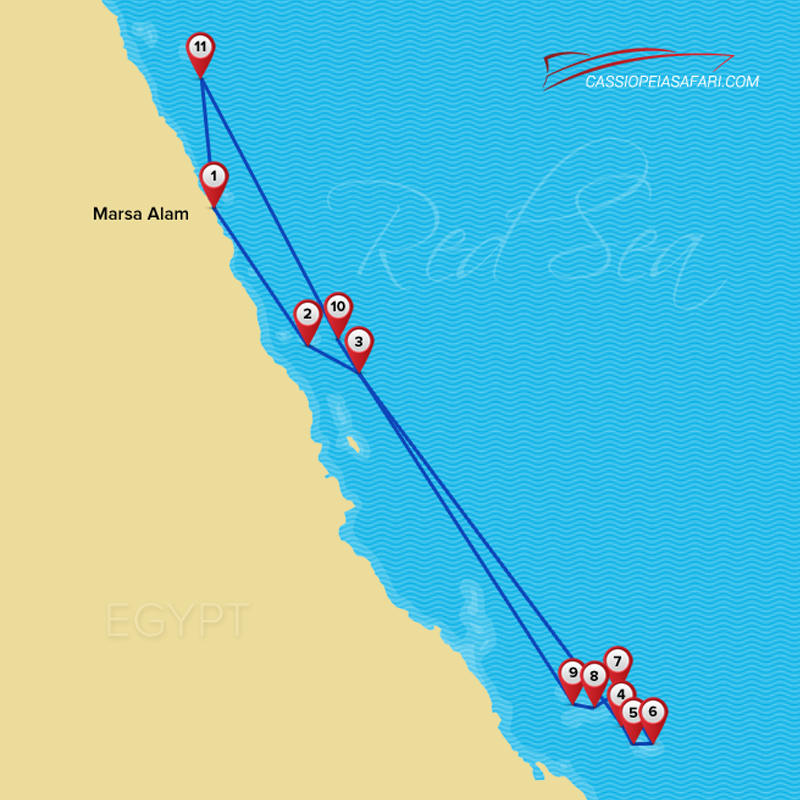
Inclusions
Exclusions
- 14% VAT: 128.00 EUR
Central-European time zone + 1 hour. There is no summer/winter savings time since 2011.
Egypt has a desert climate with warm and dry weather conditions. In the summer months (April-October) the average temperature is between 27°C and 32°C but in the interior areas of the desert it can get even warmer. Summer temperatures along the Red Sea coast are between 27°C and 43°C with northerly winds and southward currents. In the north, winds from the Mediterranian Sea ease the heat. Winters are mild with average temperatures of 13°C – 21°C. Most precipitation is during the winter months; south of Cairo it is about 2 – 5 mm while in the north it can reach 410 mm. There are strong southerly winds in the end of October and the in the beginning of November and currents move in a northern direction. (Water temperatures in the area of Sharm el Sheikh and Hurghada may be 1 – 2°C cooler.)
Thanks to the warm weather, light clothes made of cotton, skirts, shorts, short-sleeve T-shirts and blouses, flip-flops and sandals are the best choice. Hats, sunglasses and tanning lotion (with minimum SPF30) are also important. It is recommended to stay indoors or in the shade during the noon hours. In winter during the day long pants and a light sweater are enough but in the evening a jacket or a light coat may come handy. In the resort towns like Hurghada and Sharm el Sheikh, there are no rules concerning clothing wear as long as it is in good taste however in larger cities like Cairo, it is recommended to wear clothing that is at least below the knees and covers the shoulders. The rules in religious or holy places are even stricter and girls and ladies must cover their heads. Onboard Cassiopeia and Andromeda light, comfortable clothing is acceptable. In the evening a light sweater or cardigan may come handy but during the day bathing suits, shorts and T-shirts are quite acceptable.
It is very versatile, delicious and rich in fresh vegetables. The main meals are made of beef, mutton, chicken, pigeon and duck and fresh fish is also often used. Traditional desserts are really sweet and at the markets, vendors’ stands are ladended with gorgeous fresh fruits. Egyptian chefs prepare the meals onboard Cassiopeia and Andromeda and their heritage is reflected in the delicious meals they prepare for the buffet-style servings three times a day. The menu includes soups, fresh salads, meats, side dishes and sweets which are also available during the day along with fresh fruits. (Pork is not widely available in Egypt because of religious reasons.)
There is 220v current with European-style plugs. There are electrical plugs in every cabin and in the common areas and also there is a separate charging station on the main deck where phones, laptops, cameras and batteries can be charged.
It is recommended but not mandatory for travellers to Egypt to get vaccination against: Hepatitis A (high risk of contagion), Hepatitis B (moderate risk of contagion), Typhus and rabies. However it is mandatory to get the vaccination against yellow fever when entering Egypt from countries or having travelled through countries with high risk of the disease (from example when travelling to Egypt from Sudan).
Haggling in Egypt is a must. Everyone bound for shopping should be prepared for a ”dispute” lasting anywhere from 1-2 minutes to half an hour but ultimately ending in a successful shopping experience. There are rules to haggling. One of them is to say the amount that is half of the actual amount you would be willing to spend. Onboard our vessels all prices are fixed and they are not subject to bargaining.
Look for an Egyptian Embassy of Consular Office in your country or nearest you.
Mobile phones can be used in Egypt. Contact your local mobile service provider for rates and details.
Most shops are open from 10 o’clock in the morning until as late as midnight sometimes. Banks are closed on Fridays and Saturdays. On Sundays and during Ramadan they are open between 10 o’clock in the morning and 13:30 in the afternoon. On all other days they are open between 8:30 in the morning and 13:30 in the afternoon.
Friday is the official day off and in some offices Saturday as well. One of the most important holidays are the last 2-3 days at the end of the Ramadan month and the feast 70 days later.
It is part of every-day life in the Middle-East and in the Arabic world.
Contact your dive guide onboard in case of any medical problems or emergencies. All medical costs must be paid in cash on site. Insurance companies will reimburse costs based only on valid hospital bills.
Taxi is the most comfortable way of transportation in the towns and cities. Despite the taximetre, it is wise to agree on the fare before the trip. Shuttle buses run between towns carrying locals and visitors alike. Local mini buses and coaches tend to be quite crowded.
It is forbidden to take photos or videos of military facilities, bridges and harbours. Please obey these rules! It is allowed to take photos of important and tourist sights but in certain places only for a fee.
Central-European time zone + 2 hours. There is no summer/winter savings time since 2011.
Sudan’s northern region has a dry, desert climate while in the south-western region the wet-dry tropical climate is more dominant. There are no big variations in the temperatures between regions but rather in the amount of precipitation and in the length of the dry season. Between January and March the dry north-eastern winds dominate. However the south-western winds arrive in the beginning of April, bringing heavy rains. In September the dry north-eastern winds pick up strength again, pushing southward, covering the entire country. The rainy season in Khartoum lasts from July to September with annual precipitation of 161mm. The warmest months are May and June when temperatures can reach 48°C. Port Sudan’s climate is dry where summers are very hot and winters are moderately warm. Temperatures in the winter can reach 30°C and 45°C in the summer. Ninety percent of the annual rain fall is between October and January, especially in November. Port Sudan enjoys 3200 sunny hours annually.
The Sudanese taxes are payable in advance along with the safari rates. The Sudanese visa fee is payable in USD in cash (the exact amount) onboard upon arrival. (Only cash payments are accepted.)
Thanks to the warm weather, light clothes made of cotton, skirts, shorts, short-sleeve T-shirts and blouses, flip-flops and sandals are the best choice. Hats, sunglasses and tanning lotion (with minimum SPF30) are also important. It is recommended to stay indoors or in the shade during the noon hours. Compared to Egypt, the ”regulations” concerning clothing in Sudan are stricter. In towns like Port Sudan or Suakin or in the harbour, it is recommended to wear clothing that is at least below the knees and covers the shoulders. The rules in religious or holy places are even stricter and girls and ladies must cover their heads. Onboard Cassiopeia and Andromeda light, comfortable clothing is acceptable. In the evening a light sweater or cardigan may come handy but during the day bathing suits, shorts and T-shirts are quite acceptable.
It is similar to Egyptian cuisine, very versatile, delicious and rich in fresh vegetables. The main meals are made of beef and mutton and fresh fish is often used in the coastal regions and soups are also an important part of daily meals. At the markets, vendors’ stands are ladended with gorgeous fresh fruits. Egyptian chefs prepare the meals onboard Cassiopeia and Andromeda and their heritage is reflected in the delicious meals they prepare for the buffet-style servings three times a day. The menu includes soups, fresh salads, meats, side dishes and sweets which are also available during the day along with fresh fruits. (Pork is not widely available in Sudan because of religious reasons.)
There is 220v current with European-style plugs. There are electrical plugs in every cabin and in the common areas and also there is a separate charging station on the main deck where phones, laptops, cameras and batteries can be charged.
It is recommended but not mandatory for travellers to Sudan to get vaccination against: Hepatitis A (high risk of contagion), Hepatitis B (moderate risk of contagion), Typhus and rabies. However it is mandatory to get the vaccination against yellow fever if you enter Egypt after your stay in Sudan.
Haggling in Sudan, just as in Egypt, is a must. Everyone bound for shopping should be prepared for a ”dispute” lasting anywhere from 1-2 minutes to half an hour but ultimately ending in a successful shopping experience. There are rules to haggling. One of them is to say the amount that is half of the actual amount you would be willing to spend. Onboard our vessels all prices are fixed and they are not subject to bargaining.
Look for a Sudanese Embassy of Consular Office in your country or nearest you.
Mobile phones can be used in Sudan. Contact your local mobile service provider for rates and details.
There are 13 double cabins onboard both our vessels. There are cabins with a queen bed and cabins with twin beds. Every cabin has its own en-suite bathroom with shower, sink and toilet. The air-conditioned cabins also have 220v sockets and plenty of storage space.
There is an LCD TV in the salon along with a DVD player and a variety of entertaining movies. Guests are welcome to play their own music and movies as well.
We can only accept cash payments onboard (EUR, USD, EGP). All purchases made onboard must be settled onboard before disembarking at the end of the tour. We are not able to provide credits or loans.
A safe can be found onboard both vessels where guests can place their valuables before the start of the trip. The dive guides should be asked for access to the safe. We can accept responsibility only for items placed in the safes. All other items, belongings and valuables are the responsibility of the guests.
Additional purchases and expenses made onboard may be the tip (bakshish) for the dive guides and crew (it is usually EUR30 / week in Egypt and EUR50 / person / week in Sudan if satisfied with the service), T-shirts, Nitrox use, 15l tank rental and Satellite phone use. There is a surcharge for lost towels and weights. Alcoholic beverages may be purchased at the duty-free shops before boarding the boat. (In Sudan alcoholic beverages are available onboard.)The Egyptian visa is USD25 / person or EUR20 / person (rates may change according to Government regulations). (If travelling to Sudan via Cairo, the Egyptian visa is 2 x USD25 / person.)
At least 2 local dive guides work onboard our vessels, speaking various languages.
In Egypt, depending on the size of the groups, we provide transfers in air-conditioned buses, coasters or taxis for individual guests. In Sudan all guests are transferred together by bus.
The best time for diving in Egypt is between March and November. However there are a lot of divers (especially from nations in the north) who continue on diving even between December and March when water temperatures are around 20 – 21 °C and the winds are stronger.
Most divers can do with a shorty in July and August. It is usually enough to wear a 3 – 5 mm long suit between March and November. In the remaining months a warmer or a doubled-up 5 mm suit is recommended.
It is highly recommended for every diver to bring his/her own full gear but it is possible to rent equipment. This request should be sent to us at least one week prior to departure. Twelve-litre compressed-air tanks and weights are provided for the guests onboard but weight belts should be brought along.
There are 2 fully equipped decompression chambers in Hurghada to treat diving-related injuries and accidents. There are also facilities in Sharm el Sheikh, El Gouna and Marsa Alam. All our divers must possess valid diving insurance that includes decompression chamber treatments as well.
The first diving day there are 2 day dives and 1 night dive. The 2nd – last diving days there are 3 day dives and 1 night dive per day (depending on the itinerary and weather conditions). The last diving day there are 2 day dives and then the boat returns to the harbour. Please note there is no night diving at the Marine Park islands such as Brothers, Daedalus, Rocky and Zabargad.
A minimum of OWD certification is necessary to be able to dive onboard our boats. There are dive sites that are only recommended for advanced and more experienced divers, for example at the islands of Brothers, Rocky and Zabargad or at wrecks lying in deeper waters in the north. It is best to check the itinerary before booking a tour to make sure it fits the diver’s certification level and experience.
Nitrox-certified divers can dive with Nitrox. There is a membrane Nitrox system onboard with a 32% mix.
A minimum of OWD certification is necessary to be able to dive onboard our boats. However we can provide certain courses onboard such as AOWD, Nitrox, specialty courses, etc. given appropriate itinerary and previous consultation.
Our diving safaris are mainly geared towards divers but non-divers are also welcome when accompanying their loved ones.
The first dive on every tour is a check dive during which the dive guides observe the divers’ diving techniques and any shortcomings and correct, remedy those. If it has been a while since the last dive, it should be brought to the dive guides’ attention.
All our divers must possess valid diving insurance and non-divers valid travel insurance. Diving is permitted only with valid diving insurance. Most important is diving and accidental insurance as well as luggage and travel insurance.
Diving is conditioned upon having a valid diving certificate and diving insurance.
Every diver must fill out a release form onboard before the start of the trip stating that he/she is medically fit to dive.
Life vests can be found in every cabin and the following equipment onboard: 2 life rafts, Oxygen, first-aid kit, fire extinguishers, life buoys and a diver search system.
Due to the movement of the boat, seasickness and/or nausa may be experienced. This can be well treated by the local medication Emetrx. Please turn to the dive guides for assistance.
The best time for diving in Sudan is between February and June. This is when the sea is the most alive and marine life is the richest. The fall months (September-November) are also favoured by divers, especially October when it is manta season in Sudan near Mesharifa reef.
There are no facilities in Sudan for the treatment of decompression sickness. The closest chamber is in Marsa Alam. (There are 2 fully equipped decompression chambers in Hurghada to treat diving-related injuries and accidents. There are also facilities in Sharm el Sheikh, El Gouna and Marsa Alam.) All our divers must possess valid diving insurance that includes decompression chamber treatments as well.
The first diving day there are 2 day dives and 1 night dive. The 2nd – last diving days there are 3 day dives and 1 night dive per day (depending on the itinerary and weather conditions). The last diving day there are 2 day dives and then the boat returns to the harbour.
- Length: 40 m / 130 ft.
- Beam: 8 m
- Generator: 2x Mercedes 138 Kw silent generators
- Freshwater: 15 tons + desalination device (2 tons/day)
- Fuel: 70 tons
- Electricity: 220V in cabins and salon
- Cabins: 13
- Max. Guests: 26
Andromeda, the 40 meters diving safari liveaboard, was built based on a unique design, meeting divers’ and guests’ needs. The vessel welcomes up to 26 guests in 13 spacious, tastefully decorated cabins with en-suite bathrooms.
The spacious lounge area is air-conditioned and well equipped with an LCD TV, VCR, DVD and CD player and furnished according to European style. The Arabian cafe follows the original Oriental coffee shop design with shisha (waterpipe) smoking possibility, coffee, tea and original Arabic music.
The comfortable 100-square-meter sun deck provides plenty of space for sun-seekers, as well as a shaded area. Comfortable deck chairs and cushioned seats make the time more pleasant. There is also a smaller sun deck in front of the captain’s bridge. A covered deck In front of the salon is a comfortable open but covered area for resting and chatting between dives in the evening.
The large dive deck and dive platform area ensure more-than-adequate space for divers preparing for their next plunge into the Red Sea. 2 hand-held showers on the platform allow for a rinse after diving or snorkeling. A bathroom with shower and marine head lead directly off the dive deck.
A well-traveled, cohesive crew, speaking various languages, awaits all the guests who wish to dive and relax. See you onboard! The Andromeda is the only liveaboard offering 1-week and 2-week diving safaris in the Deep South of Sudan.
Inclusions
Exclusions
- 14% VAT: 120.00 EUR
Central-European time zone + 1 hour. There is no summer/winter savings time since 2011.
Egypt has a desert climate with warm and dry weather conditions. In the summer months (April-October) the average temperature is between 27°C and 32°C but in the interior areas of the desert it can get even warmer. Summer temperatures along the Red Sea coast are between 27°C and 43°C with northerly winds and southward currents. In the north, winds from the Mediterranian Sea ease the heat. Winters are mild with average temperatures of 13°C – 21°C. Most precipitation is during the winter months; south of Cairo it is about 2 – 5 mm while in the north it can reach 410 mm. There are strong southerly winds in the end of October and the in the beginning of November and currents move in a northern direction. (Water temperatures in the area of Sharm el Sheikh and Hurghada may be 1 – 2°C cooler.)
Thanks to the warm weather, light clothes made of cotton, skirts, shorts, short-sleeve T-shirts and blouses, flip-flops and sandals are the best choice. Hats, sunglasses and tanning lotion (with minimum SPF30) are also important. It is recommended to stay indoors or in the shade during the noon hours. In winter during the day long pants and a light sweater are enough but in the evening a jacket or a light coat may come handy. In the resort towns like Hurghada and Sharm el Sheikh, there are no rules concerning clothing wear as long as it is in good taste however in larger cities like Cairo, it is recommended to wear clothing that is at least below the knees and covers the shoulders. The rules in religious or holy places are even stricter and girls and ladies must cover their heads. Onboard Cassiopeia and Andromeda light, comfortable clothing is acceptable. In the evening a light sweater or cardigan may come handy but during the day bathing suits, shorts and T-shirts are quite acceptable.
It is very versatile, delicious and rich in fresh vegetables. The main meals are made of beef, mutton, chicken, pigeon and duck and fresh fish is also often used. Traditional desserts are really sweet and at the markets, vendors’ stands are ladended with gorgeous fresh fruits. Egyptian chefs prepare the meals onboard Cassiopeia and Andromeda and their heritage is reflected in the delicious meals they prepare for the buffet-style servings three times a day. The menu includes soups, fresh salads, meats, side dishes and sweets which are also available during the day along with fresh fruits. (Pork is not widely available in Egypt because of religious reasons.)
There is 220v current with European-style plugs. There are electrical plugs in every cabin and in the common areas and also there is a separate charging station on the main deck where phones, laptops, cameras and batteries can be charged.
It is recommended but not mandatory for travellers to Egypt to get vaccination against: Hepatitis A (high risk of contagion), Hepatitis B (moderate risk of contagion), Typhus and rabies. However it is mandatory to get the vaccination against yellow fever when entering Egypt from countries or having travelled through countries with high risk of the disease (from example when travelling to Egypt from Sudan).
Haggling in Egypt is a must. Everyone bound for shopping should be prepared for a ”dispute” lasting anywhere from 1-2 minutes to half an hour but ultimately ending in a successful shopping experience. There are rules to haggling. One of them is to say the amount that is half of the actual amount you would be willing to spend. Onboard our vessels all prices are fixed and they are not subject to bargaining.
Look for an Egyptian Embassy of Consular Office in your country or nearest you.
Mobile phones can be used in Egypt. Contact your local mobile service provider for rates and details.
Most shops are open from 10 o’clock in the morning until as late as midnight sometimes. Banks are closed on Fridays and Saturdays. On Sundays and during Ramadan they are open between 10 o’clock in the morning and 13:30 in the afternoon. On all other days they are open between 8:30 in the morning and 13:30 in the afternoon.
Friday is the official day off and in some offices Saturday as well. One of the most important holidays are the last 2-3 days at the end of the Ramadan month and the feast 70 days later.
It is part of every-day life in the Middle-East and in the Arabic world.
Contact your dive guide onboard in case of any medical problems or emergencies. All medical costs must be paid in cash on site. Insurance companies will reimburse costs based only on valid hospital bills.
Taxi is the most comfortable way of transportation in the towns and cities. Despite the taximetre, it is wise to agree on the fare before the trip. Shuttle buses run between towns carrying locals and visitors alike. Local mini buses and coaches tend to be quite crowded.
It is forbidden to take photos or videos of military facilities, bridges and harbours. Please obey these rules! It is allowed to take photos of important and tourist sights but in certain places only for a fee.
Central-European time zone + 2 hours. There is no summer/winter savings time since 2011.
Sudan’s northern region has a dry, desert climate while in the south-western region the wet-dry tropical climate is more dominant. There are no big variations in the temperatures between regions but rather in the amount of precipitation and in the length of the dry season. Between January and March the dry north-eastern winds dominate. However the south-western winds arrive in the beginning of April, bringing heavy rains. In September the dry north-eastern winds pick up strength again, pushing southward, covering the entire country. The rainy season in Khartoum lasts from July to September with annual precipitation of 161mm. The warmest months are May and June when temperatures can reach 48°C. Port Sudan’s climate is dry where summers are very hot and winters are moderately warm. Temperatures in the winter can reach 30°C and 45°C in the summer. Ninety percent of the annual rain fall is between October and January, especially in November. Port Sudan enjoys 3200 sunny hours annually.
The Sudanese taxes are payable in advance along with the safari rates. The Sudanese visa fee is payable in USD in cash (the exact amount) onboard upon arrival. (Only cash payments are accepted.)
Thanks to the warm weather, light clothes made of cotton, skirts, shorts, short-sleeve T-shirts and blouses, flip-flops and sandals are the best choice. Hats, sunglasses and tanning lotion (with minimum SPF30) are also important. It is recommended to stay indoors or in the shade during the noon hours. Compared to Egypt, the ”regulations” concerning clothing in Sudan are stricter. In towns like Port Sudan or Suakin or in the harbour, it is recommended to wear clothing that is at least below the knees and covers the shoulders. The rules in religious or holy places are even stricter and girls and ladies must cover their heads. Onboard Cassiopeia and Andromeda light, comfortable clothing is acceptable. In the evening a light sweater or cardigan may come handy but during the day bathing suits, shorts and T-shirts are quite acceptable.
It is similar to Egyptian cuisine, very versatile, delicious and rich in fresh vegetables. The main meals are made of beef and mutton and fresh fish is often used in the coastal regions and soups are also an important part of daily meals. At the markets, vendors’ stands are ladended with gorgeous fresh fruits. Egyptian chefs prepare the meals onboard Cassiopeia and Andromeda and their heritage is reflected in the delicious meals they prepare for the buffet-style servings three times a day. The menu includes soups, fresh salads, meats, side dishes and sweets which are also available during the day along with fresh fruits. (Pork is not widely available in Sudan because of religious reasons.)
There is 220v current with European-style plugs. There are electrical plugs in every cabin and in the common areas and also there is a separate charging station on the main deck where phones, laptops, cameras and batteries can be charged.
It is recommended but not mandatory for travellers to Sudan to get vaccination against: Hepatitis A (high risk of contagion), Hepatitis B (moderate risk of contagion), Typhus and rabies. However it is mandatory to get the vaccination against yellow fever if you enter Egypt after your stay in Sudan.
Haggling in Sudan, just as in Egypt, is a must. Everyone bound for shopping should be prepared for a ”dispute” lasting anywhere from 1-2 minutes to half an hour but ultimately ending in a successful shopping experience. There are rules to haggling. One of them is to say the amount that is half of the actual amount you would be willing to spend. Onboard our vessels all prices are fixed and they are not subject to bargaining.
Look for a Sudanese Embassy of Consular Office in your country or nearest you.
Mobile phones can be used in Sudan. Contact your local mobile service provider for rates and details.
There are 13 double cabins onboard both our vessels. There are cabins with a queen bed and cabins with twin beds. Every cabin has its own en-suite bathroom with shower, sink and toilet. The air-conditioned cabins also have 220v sockets and plenty of storage space.
There is an LCD TV in the salon along with a DVD player and a variety of entertaining movies. Guests are welcome to play their own music and movies as well.
We can only accept cash payments onboard (EUR, USD, EGP). All purchases made onboard must be settled onboard before disembarking at the end of the tour. We are not able to provide credits or loans.
A safe can be found onboard both vessels where guests can place their valuables before the start of the trip. The dive guides should be asked for access to the safe. We can accept responsibility only for items placed in the safes. All other items, belongings and valuables are the responsibility of the guests.
Additional purchases and expenses made onboard may be the tip (bakshish) for the dive guides and crew (it is usually EUR30 / week in Egypt and EUR50 / person / week in Sudan if satisfied with the service), T-shirts, Nitrox use, 15l tank rental and Satellite phone use. There is a surcharge for lost towels and weights. Alcoholic beverages may be purchased at the duty-free shops before boarding the boat. (In Sudan alcoholic beverages are available onboard.)The Egyptian visa is USD25 / person or EUR20 / person (rates may change according to Government regulations). (If travelling to Sudan via Cairo, the Egyptian visa is 2 x USD25 / person.)
At least 2 local dive guides work onboard our vessels, speaking various languages.
In Egypt, depending on the size of the groups, we provide transfers in air-conditioned buses, coasters or taxis for individual guests. In Sudan all guests are transferred together by bus.
The best time for diving in Egypt is between March and November. However there are a lot of divers (especially from nations in the north) who continue on diving even between December and March when water temperatures are around 20 – 21 °C and the winds are stronger.
Most divers can do with a shorty in July and August. It is usually enough to wear a 3 – 5 mm long suit between March and November. In the remaining months a warmer or a doubled-up 5 mm suit is recommended.
It is highly recommended for every diver to bring his/her own full gear but it is possible to rent equipment. This request should be sent to us at least one week prior to departure. Twelve-litre compressed-air tanks and weights are provided for the guests onboard but weight belts should be brought along.
There are 2 fully equipped decompression chambers in Hurghada to treat diving-related injuries and accidents. There are also facilities in Sharm el Sheikh, El Gouna and Marsa Alam. All our divers must possess valid diving insurance that includes decompression chamber treatments as well.
The first diving day there are 2 day dives and 1 night dive. The 2nd – last diving days there are 3 day dives and 1 night dive per day (depending on the itinerary and weather conditions). The last diving day there are 2 day dives and then the boat returns to the harbour. Please note there is no night diving at the Marine Park islands such as Brothers, Daedalus, Rocky and Zabargad.
A minimum of OWD certification is necessary to be able to dive onboard our boats. There are dive sites that are only recommended for advanced and more experienced divers, for example at the islands of Brothers, Rocky and Zabargad or at wrecks lying in deeper waters in the north. It is best to check the itinerary before booking a tour to make sure it fits the diver’s certification level and experience.
Nitrox-certified divers can dive with Nitrox. There is a membrane Nitrox system onboard with a 32% mix.
A minimum of OWD certification is necessary to be able to dive onboard our boats. However we can provide certain courses onboard such as AOWD, Nitrox, specialty courses, etc. given appropriate itinerary and previous consultation.
Our diving safaris are mainly geared towards divers but non-divers are also welcome when accompanying their loved ones.
The first dive on every tour is a check dive during which the dive guides observe the divers’ diving techniques and any shortcomings and correct, remedy those. If it has been a while since the last dive, it should be brought to the dive guides’ attention.
All our divers must possess valid diving insurance and non-divers valid travel insurance. Diving is permitted only with valid diving insurance. Most important is diving and accidental insurance as well as luggage and travel insurance.
Diving is conditioned upon having a valid diving certificate and diving insurance.
Every diver must fill out a release form onboard before the start of the trip stating that he/she is medically fit to dive.
Life vests can be found in every cabin and the following equipment onboard: 2 life rafts, Oxygen, first-aid kit, fire extinguishers, life buoys and a diver search system.
Due to the movement of the boat, seasickness and/or nausa may be experienced. This can be well treated by the local medication Emetrx. Please turn to the dive guides for assistance.
The best time for diving in Sudan is between February and June. This is when the sea is the most alive and marine life is the richest. The fall months (September-November) are also favoured by divers, especially October when it is manta season in Sudan near Mesharifa reef.
There are no facilities in Sudan for the treatment of decompression sickness. The closest chamber is in Marsa Alam. (There are 2 fully equipped decompression chambers in Hurghada to treat diving-related injuries and accidents. There are also facilities in Sharm el Sheikh, El Gouna and Marsa Alam.) All our divers must possess valid diving insurance that includes decompression chamber treatments as well.
The first diving day there are 2 day dives and 1 night dive. The 2nd – last diving days there are 3 day dives and 1 night dive per day (depending on the itinerary and weather conditions). The last diving day there are 2 day dives and then the boat returns to the harbour.
- Length: 40 m / 130 ft.
- Beam: 8 m
- Generator: 2x Mercedes 138 Kw silent generators
- Freshwater: 15 tons + desalination device (2 tons/day)
- Fuel: 70 tons
- Electricity: 220V in cabins and salon
- Cabins: 13
- Max. Guests: 26
Andromeda, the 40 meters diving safari liveaboard, was built based on a unique design, meeting divers’ and guests’ needs. The vessel welcomes up to 26 guests in 13 spacious, tastefully decorated cabins with en-suite bathrooms.
The spacious lounge area is air-conditioned and well equipped with an LCD TV, VCR, DVD and CD player and furnished according to European style. The Arabian cafe follows the original Oriental coffee shop design with shisha (waterpipe) smoking possibility, coffee, tea and original Arabic music.
The comfortable 100-square-meter sun deck provides plenty of space for sun-seekers, as well as a shaded area. Comfortable deck chairs and cushioned seats make the time more pleasant. There is also a smaller sun deck in front of the captain’s bridge. A covered deck In front of the salon is a comfortable open but covered area for resting and chatting between dives in the evening.
The large dive deck and dive platform area ensure more-than-adequate space for divers preparing for their next plunge into the Red Sea. 2 hand-held showers on the platform allow for a rinse after diving or snorkeling. A bathroom with shower and marine head lead directly off the dive deck.
A well-traveled, cohesive crew, speaking various languages, awaits all the guests who wish to dive and relax. See you onboard! The Andromeda is the only liveaboard offering 1-week and 2-week diving safaris in the Deep South of Sudan.
Inclusions
Exclusions
- Fuel surcharge: 150.00 EUR
Central-European time zone + 1 hour. There is no summer/winter savings time since 2011.
Egypt has a desert climate with warm and dry weather conditions. In the summer months (April-October) the average temperature is between 27°C and 32°C but in the interior areas of the desert it can get even warmer. Summer temperatures along the Red Sea coast are between 27°C and 43°C with northerly winds and southward currents. In the north, winds from the Mediterranian Sea ease the heat. Winters are mild with average temperatures of 13°C – 21°C. Most precipitation is during the winter months; south of Cairo it is about 2 – 5 mm while in the north it can reach 410 mm. There are strong southerly winds in the end of October and the in the beginning of November and currents move in a northern direction. (Water temperatures in the area of Sharm el Sheikh and Hurghada may be 1 – 2°C cooler.)
Thanks to the warm weather, light clothes made of cotton, skirts, shorts, short-sleeve T-shirts and blouses, flip-flops and sandals are the best choice. Hats, sunglasses and tanning lotion (with minimum SPF30) are also important. It is recommended to stay indoors or in the shade during the noon hours. In winter during the day long pants and a light sweater are enough but in the evening a jacket or a light coat may come handy. In the resort towns like Hurghada and Sharm el Sheikh, there are no rules concerning clothing wear as long as it is in good taste however in larger cities like Cairo, it is recommended to wear clothing that is at least below the knees and covers the shoulders. The rules in religious or holy places are even stricter and girls and ladies must cover their heads. Onboard Cassiopeia and Andromeda light, comfortable clothing is acceptable. In the evening a light sweater or cardigan may come handy but during the day bathing suits, shorts and T-shirts are quite acceptable.
It is very versatile, delicious and rich in fresh vegetables. The main meals are made of beef, mutton, chicken, pigeon and duck and fresh fish is also often used. Traditional desserts are really sweet and at the markets, vendors’ stands are ladended with gorgeous fresh fruits. Egyptian chefs prepare the meals onboard Cassiopeia and Andromeda and their heritage is reflected in the delicious meals they prepare for the buffet-style servings three times a day. The menu includes soups, fresh salads, meats, side dishes and sweets which are also available during the day along with fresh fruits. (Pork is not widely available in Egypt because of religious reasons.)
There is 220v current with European-style plugs. There are electrical plugs in every cabin and in the common areas and also there is a separate charging station on the main deck where phones, laptops, cameras and batteries can be charged.
It is recommended but not mandatory for travellers to Egypt to get vaccination against: Hepatitis A (high risk of contagion), Hepatitis B (moderate risk of contagion), Typhus and rabies. However it is mandatory to get the vaccination against yellow fever when entering Egypt from countries or having travelled through countries with high risk of the disease (from example when travelling to Egypt from Sudan).
Haggling in Egypt is a must. Everyone bound for shopping should be prepared for a ”dispute” lasting anywhere from 1-2 minutes to half an hour but ultimately ending in a successful shopping experience. There are rules to haggling. One of them is to say the amount that is half of the actual amount you would be willing to spend. Onboard our vessels all prices are fixed and they are not subject to bargaining.
Look for an Egyptian Embassy of Consular Office in your country or nearest you.
Mobile phones can be used in Egypt. Contact your local mobile service provider for rates and details.
Most shops are open from 10 o’clock in the morning until as late as midnight sometimes. Banks are closed on Fridays and Saturdays. On Sundays and during Ramadan they are open between 10 o’clock in the morning and 13:30 in the afternoon. On all other days they are open between 8:30 in the morning and 13:30 in the afternoon.
Friday is the official day off and in some offices Saturday as well. One of the most important holidays are the last 2-3 days at the end of the Ramadan month and the feast 70 days later.
It is part of every-day life in the Middle-East and in the Arabic world.
Contact your dive guide onboard in case of any medical problems or emergencies. All medical costs must be paid in cash on site. Insurance companies will reimburse costs based only on valid hospital bills.
Taxi is the most comfortable way of transportation in the towns and cities. Despite the taximetre, it is wise to agree on the fare before the trip. Shuttle buses run between towns carrying locals and visitors alike. Local mini buses and coaches tend to be quite crowded.
It is forbidden to take photos or videos of military facilities, bridges and harbours. Please obey these rules! It is allowed to take photos of important and tourist sights but in certain places only for a fee.
Central-European time zone + 2 hours. There is no summer/winter savings time since 2011.
Sudan’s northern region has a dry, desert climate while in the south-western region the wet-dry tropical climate is more dominant. There are no big variations in the temperatures between regions but rather in the amount of precipitation and in the length of the dry season. Between January and March the dry north-eastern winds dominate. However the south-western winds arrive in the beginning of April, bringing heavy rains. In September the dry north-eastern winds pick up strength again, pushing southward, covering the entire country. The rainy season in Khartoum lasts from July to September with annual precipitation of 161mm. The warmest months are May and June when temperatures can reach 48°C. Port Sudan’s climate is dry where summers are very hot and winters are moderately warm. Temperatures in the winter can reach 30°C and 45°C in the summer. Ninety percent of the annual rain fall is between October and January, especially in November. Port Sudan enjoys 3200 sunny hours annually.
The Sudanese taxes are payable in advance along with the safari rates. The Sudanese visa fee is payable in USD in cash (the exact amount) onboard upon arrival. (Only cash payments are accepted.)
Thanks to the warm weather, light clothes made of cotton, skirts, shorts, short-sleeve T-shirts and blouses, flip-flops and sandals are the best choice. Hats, sunglasses and tanning lotion (with minimum SPF30) are also important. It is recommended to stay indoors or in the shade during the noon hours. Compared to Egypt, the ”regulations” concerning clothing in Sudan are stricter. In towns like Port Sudan or Suakin or in the harbour, it is recommended to wear clothing that is at least below the knees and covers the shoulders. The rules in religious or holy places are even stricter and girls and ladies must cover their heads. Onboard Cassiopeia and Andromeda light, comfortable clothing is acceptable. In the evening a light sweater or cardigan may come handy but during the day bathing suits, shorts and T-shirts are quite acceptable.
It is similar to Egyptian cuisine, very versatile, delicious and rich in fresh vegetables. The main meals are made of beef and mutton and fresh fish is often used in the coastal regions and soups are also an important part of daily meals. At the markets, vendors’ stands are ladended with gorgeous fresh fruits. Egyptian chefs prepare the meals onboard Cassiopeia and Andromeda and their heritage is reflected in the delicious meals they prepare for the buffet-style servings three times a day. The menu includes soups, fresh salads, meats, side dishes and sweets which are also available during the day along with fresh fruits. (Pork is not widely available in Sudan because of religious reasons.)
There is 220v current with European-style plugs. There are electrical plugs in every cabin and in the common areas and also there is a separate charging station on the main deck where phones, laptops, cameras and batteries can be charged.
It is recommended but not mandatory for travellers to Sudan to get vaccination against: Hepatitis A (high risk of contagion), Hepatitis B (moderate risk of contagion), Typhus and rabies. However it is mandatory to get the vaccination against yellow fever if you enter Egypt after your stay in Sudan.
Haggling in Sudan, just as in Egypt, is a must. Everyone bound for shopping should be prepared for a ”dispute” lasting anywhere from 1-2 minutes to half an hour but ultimately ending in a successful shopping experience. There are rules to haggling. One of them is to say the amount that is half of the actual amount you would be willing to spend. Onboard our vessels all prices are fixed and they are not subject to bargaining.
Look for a Sudanese Embassy of Consular Office in your country or nearest you.
Mobile phones can be used in Sudan. Contact your local mobile service provider for rates and details.
There are 13 double cabins onboard both our vessels. There are cabins with a queen bed and cabins with twin beds. Every cabin has its own en-suite bathroom with shower, sink and toilet. The air-conditioned cabins also have 220v sockets and plenty of storage space.
There is an LCD TV in the salon along with a DVD player and a variety of entertaining movies. Guests are welcome to play their own music and movies as well.
We can only accept cash payments onboard (EUR, USD, EGP). All purchases made onboard must be settled onboard before disembarking at the end of the tour. We are not able to provide credits or loans.
A safe can be found onboard both vessels where guests can place their valuables before the start of the trip. The dive guides should be asked for access to the safe. We can accept responsibility only for items placed in the safes. All other items, belongings and valuables are the responsibility of the guests.
Additional purchases and expenses made onboard may be the tip (bakshish) for the dive guides and crew (it is usually EUR30 / week in Egypt and EUR50 / person / week in Sudan if satisfied with the service), T-shirts, Nitrox use, 15l tank rental and Satellite phone use. There is a surcharge for lost towels and weights. Alcoholic beverages may be purchased at the duty-free shops before boarding the boat. (In Sudan alcoholic beverages are available onboard.)The Egyptian visa is USD25 / person or EUR20 / person (rates may change according to Government regulations). (If travelling to Sudan via Cairo, the Egyptian visa is 2 x USD25 / person.)
At least 2 local dive guides work onboard our vessels, speaking various languages.
In Egypt, depending on the size of the groups, we provide transfers in air-conditioned buses, coasters or taxis for individual guests. In Sudan all guests are transferred together by bus.
The best time for diving in Egypt is between March and November. However there are a lot of divers (especially from nations in the north) who continue on diving even between December and March when water temperatures are around 20 – 21 °C and the winds are stronger.
Most divers can do with a shorty in July and August. It is usually enough to wear a 3 – 5 mm long suit between March and November. In the remaining months a warmer or a doubled-up 5 mm suit is recommended.
It is highly recommended for every diver to bring his/her own full gear but it is possible to rent equipment. This request should be sent to us at least one week prior to departure. Twelve-litre compressed-air tanks and weights are provided for the guests onboard but weight belts should be brought along.
There are 2 fully equipped decompression chambers in Hurghada to treat diving-related injuries and accidents. There are also facilities in Sharm el Sheikh, El Gouna and Marsa Alam. All our divers must possess valid diving insurance that includes decompression chamber treatments as well.
The first diving day there are 2 day dives and 1 night dive. The 2nd – last diving days there are 3 day dives and 1 night dive per day (depending on the itinerary and weather conditions). The last diving day there are 2 day dives and then the boat returns to the harbour. Please note there is no night diving at the Marine Park islands such as Brothers, Daedalus, Rocky and Zabargad.
A minimum of OWD certification is necessary to be able to dive onboard our boats. There are dive sites that are only recommended for advanced and more experienced divers, for example at the islands of Brothers, Rocky and Zabargad or at wrecks lying in deeper waters in the north. It is best to check the itinerary before booking a tour to make sure it fits the diver’s certification level and experience.
Nitrox-certified divers can dive with Nitrox. There is a membrane Nitrox system onboard with a 32% mix.
A minimum of OWD certification is necessary to be able to dive onboard our boats. However we can provide certain courses onboard such as AOWD, Nitrox, specialty courses, etc. given appropriate itinerary and previous consultation.
Our diving safaris are mainly geared towards divers but non-divers are also welcome when accompanying their loved ones.
The first dive on every tour is a check dive during which the dive guides observe the divers’ diving techniques and any shortcomings and correct, remedy those. If it has been a while since the last dive, it should be brought to the dive guides’ attention.
All our divers must possess valid diving insurance and non-divers valid travel insurance. Diving is permitted only with valid diving insurance. Most important is diving and accidental insurance as well as luggage and travel insurance.
Diving is conditioned upon having a valid diving certificate and diving insurance.
Every diver must fill out a release form onboard before the start of the trip stating that he/she is medically fit to dive.
Life vests can be found in every cabin and the following equipment onboard: 2 life rafts, Oxygen, first-aid kit, fire extinguishers, life buoys and a diver search system.
Due to the movement of the boat, seasickness and/or nausa may be experienced. This can be well treated by the local medication Emetrx. Please turn to the dive guides for assistance.
The best time for diving in Sudan is between February and June. This is when the sea is the most alive and marine life is the richest. The fall months (September-November) are also favoured by divers, especially October when it is manta season in Sudan near Mesharifa reef.
There are no facilities in Sudan for the treatment of decompression sickness. The closest chamber is in Marsa Alam. (There are 2 fully equipped decompression chambers in Hurghada to treat diving-related injuries and accidents. There are also facilities in Sharm el Sheikh, El Gouna and Marsa Alam.) All our divers must possess valid diving insurance that includes decompression chamber treatments as well.
The first diving day there are 2 day dives and 1 night dive. The 2nd – last diving days there are 3 day dives and 1 night dive per day (depending on the itinerary and weather conditions). The last diving day there are 2 day dives and then the boat returns to the harbour.
- Length: 40 m / 130 ft.
- Beam: 8 m
- Generator: 2x Mercedes 138 Kw silent generators
- Freshwater: 15 tons + desalination device (2 tons/day)
- Fuel: 70 tons
- Electricity: 220V in cabins and salon
- Cabins: 13
- Max. Guests: 26
Andromeda, the 40 meters diving safari liveaboard, was built based on a unique design, meeting divers’ and guests’ needs. The vessel welcomes up to 26 guests in 13 spacious, tastefully decorated cabins with en-suite bathrooms.
The spacious lounge area is air-conditioned and well equipped with an LCD TV, VCR, DVD and CD player and furnished according to European style. The Arabian cafe follows the original Oriental coffee shop design with shisha (waterpipe) smoking possibility, coffee, tea and original Arabic music.
The comfortable 100-square-meter sun deck provides plenty of space for sun-seekers, as well as a shaded area. Comfortable deck chairs and cushioned seats make the time more pleasant. There is also a smaller sun deck in front of the captain’s bridge. A covered deck In front of the salon is a comfortable open but covered area for resting and chatting between dives in the evening.
The large dive deck and dive platform area ensure more-than-adequate space for divers preparing for their next plunge into the Red Sea. 2 hand-held showers on the platform allow for a rinse after diving or snorkeling. A bathroom with shower and marine head lead directly off the dive deck.
A well-traveled, cohesive crew, speaking various languages, awaits all the guests who wish to dive and relax. See you onboard! The Andromeda is the only liveaboard offering 1-week and 2-week diving safaris in the Deep South of Sudan.
Inclusions
Exclusions
- Fuel surcharge: 150.00 EUR
Central-European time zone + 1 hour. There is no summer/winter savings time since 2011.
Egypt has a desert climate with warm and dry weather conditions. In the summer months (April-October) the average temperature is between 27°C and 32°C but in the interior areas of the desert it can get even warmer. Summer temperatures along the Red Sea coast are between 27°C and 43°C with northerly winds and southward currents. In the north, winds from the Mediterranian Sea ease the heat. Winters are mild with average temperatures of 13°C – 21°C. Most precipitation is during the winter months; south of Cairo it is about 2 – 5 mm while in the north it can reach 410 mm. There are strong southerly winds in the end of October and the in the beginning of November and currents move in a northern direction. (Water temperatures in the area of Sharm el Sheikh and Hurghada may be 1 – 2°C cooler.)
Thanks to the warm weather, light clothes made of cotton, skirts, shorts, short-sleeve T-shirts and blouses, flip-flops and sandals are the best choice. Hats, sunglasses and tanning lotion (with minimum SPF30) are also important. It is recommended to stay indoors or in the shade during the noon hours. In winter during the day long pants and a light sweater are enough but in the evening a jacket or a light coat may come handy. In the resort towns like Hurghada and Sharm el Sheikh, there are no rules concerning clothing wear as long as it is in good taste however in larger cities like Cairo, it is recommended to wear clothing that is at least below the knees and covers the shoulders. The rules in religious or holy places are even stricter and girls and ladies must cover their heads. Onboard Cassiopeia and Andromeda light, comfortable clothing is acceptable. In the evening a light sweater or cardigan may come handy but during the day bathing suits, shorts and T-shirts are quite acceptable.
It is very versatile, delicious and rich in fresh vegetables. The main meals are made of beef, mutton, chicken, pigeon and duck and fresh fish is also often used. Traditional desserts are really sweet and at the markets, vendors’ stands are ladended with gorgeous fresh fruits. Egyptian chefs prepare the meals onboard Cassiopeia and Andromeda and their heritage is reflected in the delicious meals they prepare for the buffet-style servings three times a day. The menu includes soups, fresh salads, meats, side dishes and sweets which are also available during the day along with fresh fruits. (Pork is not widely available in Egypt because of religious reasons.)
There is 220v current with European-style plugs. There are electrical plugs in every cabin and in the common areas and also there is a separate charging station on the main deck where phones, laptops, cameras and batteries can be charged.
It is recommended but not mandatory for travellers to Egypt to get vaccination against: Hepatitis A (high risk of contagion), Hepatitis B (moderate risk of contagion), Typhus and rabies. However it is mandatory to get the vaccination against yellow fever when entering Egypt from countries or having travelled through countries with high risk of the disease (from example when travelling to Egypt from Sudan).
Haggling in Egypt is a must. Everyone bound for shopping should be prepared for a ”dispute” lasting anywhere from 1-2 minutes to half an hour but ultimately ending in a successful shopping experience. There are rules to haggling. One of them is to say the amount that is half of the actual amount you would be willing to spend. Onboard our vessels all prices are fixed and they are not subject to bargaining.
Look for an Egyptian Embassy of Consular Office in your country or nearest you.
Mobile phones can be used in Egypt. Contact your local mobile service provider for rates and details.
Most shops are open from 10 o’clock in the morning until as late as midnight sometimes. Banks are closed on Fridays and Saturdays. On Sundays and during Ramadan they are open between 10 o’clock in the morning and 13:30 in the afternoon. On all other days they are open between 8:30 in the morning and 13:30 in the afternoon.
Friday is the official day off and in some offices Saturday as well. One of the most important holidays are the last 2-3 days at the end of the Ramadan month and the feast 70 days later.
It is part of every-day life in the Middle-East and in the Arabic world.
Contact your dive guide onboard in case of any medical problems or emergencies. All medical costs must be paid in cash on site. Insurance companies will reimburse costs based only on valid hospital bills.
Taxi is the most comfortable way of transportation in the towns and cities. Despite the taximetre, it is wise to agree on the fare before the trip. Shuttle buses run between towns carrying locals and visitors alike. Local mini buses and coaches tend to be quite crowded.
It is forbidden to take photos or videos of military facilities, bridges and harbours. Please obey these rules! It is allowed to take photos of important and tourist sights but in certain places only for a fee.
Central-European time zone + 2 hours. There is no summer/winter savings time since 2011.
Sudan’s northern region has a dry, desert climate while in the south-western region the wet-dry tropical climate is more dominant. There are no big variations in the temperatures between regions but rather in the amount of precipitation and in the length of the dry season. Between January and March the dry north-eastern winds dominate. However the south-western winds arrive in the beginning of April, bringing heavy rains. In September the dry north-eastern winds pick up strength again, pushing southward, covering the entire country. The rainy season in Khartoum lasts from July to September with annual precipitation of 161mm. The warmest months are May and June when temperatures can reach 48°C. Port Sudan’s climate is dry where summers are very hot and winters are moderately warm. Temperatures in the winter can reach 30°C and 45°C in the summer. Ninety percent of the annual rain fall is between October and January, especially in November. Port Sudan enjoys 3200 sunny hours annually.
The Sudanese taxes are payable in advance along with the safari rates. The Sudanese visa fee is payable in USD in cash (the exact amount) onboard upon arrival. (Only cash payments are accepted.)
Thanks to the warm weather, light clothes made of cotton, skirts, shorts, short-sleeve T-shirts and blouses, flip-flops and sandals are the best choice. Hats, sunglasses and tanning lotion (with minimum SPF30) are also important. It is recommended to stay indoors or in the shade during the noon hours. Compared to Egypt, the ”regulations” concerning clothing in Sudan are stricter. In towns like Port Sudan or Suakin or in the harbour, it is recommended to wear clothing that is at least below the knees and covers the shoulders. The rules in religious or holy places are even stricter and girls and ladies must cover their heads. Onboard Cassiopeia and Andromeda light, comfortable clothing is acceptable. In the evening a light sweater or cardigan may come handy but during the day bathing suits, shorts and T-shirts are quite acceptable.
It is similar to Egyptian cuisine, very versatile, delicious and rich in fresh vegetables. The main meals are made of beef and mutton and fresh fish is often used in the coastal regions and soups are also an important part of daily meals. At the markets, vendors’ stands are ladended with gorgeous fresh fruits. Egyptian chefs prepare the meals onboard Cassiopeia and Andromeda and their heritage is reflected in the delicious meals they prepare for the buffet-style servings three times a day. The menu includes soups, fresh salads, meats, side dishes and sweets which are also available during the day along with fresh fruits. (Pork is not widely available in Sudan because of religious reasons.)
There is 220v current with European-style plugs. There are electrical plugs in every cabin and in the common areas and also there is a separate charging station on the main deck where phones, laptops, cameras and batteries can be charged.
It is recommended but not mandatory for travellers to Sudan to get vaccination against: Hepatitis A (high risk of contagion), Hepatitis B (moderate risk of contagion), Typhus and rabies. However it is mandatory to get the vaccination against yellow fever if you enter Egypt after your stay in Sudan.
Haggling in Sudan, just as in Egypt, is a must. Everyone bound for shopping should be prepared for a ”dispute” lasting anywhere from 1-2 minutes to half an hour but ultimately ending in a successful shopping experience. There are rules to haggling. One of them is to say the amount that is half of the actual amount you would be willing to spend. Onboard our vessels all prices are fixed and they are not subject to bargaining.
Look for a Sudanese Embassy of Consular Office in your country or nearest you.
Mobile phones can be used in Sudan. Contact your local mobile service provider for rates and details.
There are 13 double cabins onboard both our vessels. There are cabins with a queen bed and cabins with twin beds. Every cabin has its own en-suite bathroom with shower, sink and toilet. The air-conditioned cabins also have 220v sockets and plenty of storage space.
There is an LCD TV in the salon along with a DVD player and a variety of entertaining movies. Guests are welcome to play their own music and movies as well.
We can only accept cash payments onboard (EUR, USD, EGP). All purchases made onboard must be settled onboard before disembarking at the end of the tour. We are not able to provide credits or loans.
A safe can be found onboard both vessels where guests can place their valuables before the start of the trip. The dive guides should be asked for access to the safe. We can accept responsibility only for items placed in the safes. All other items, belongings and valuables are the responsibility of the guests.
Additional purchases and expenses made onboard may be the tip (bakshish) for the dive guides and crew (it is usually EUR30 / week in Egypt and EUR50 / person / week in Sudan if satisfied with the service), T-shirts, Nitrox use, 15l tank rental and Satellite phone use. There is a surcharge for lost towels and weights. Alcoholic beverages may be purchased at the duty-free shops before boarding the boat. (In Sudan alcoholic beverages are available onboard.)The Egyptian visa is USD25 / person or EUR20 / person (rates may change according to Government regulations). (If travelling to Sudan via Cairo, the Egyptian visa is 2 x USD25 / person.)
At least 2 local dive guides work onboard our vessels, speaking various languages.
In Egypt, depending on the size of the groups, we provide transfers in air-conditioned buses, coasters or taxis for individual guests. In Sudan all guests are transferred together by bus.
The best time for diving in Egypt is between March and November. However there are a lot of divers (especially from nations in the north) who continue on diving even between December and March when water temperatures are around 20 – 21 °C and the winds are stronger.
Most divers can do with a shorty in July and August. It is usually enough to wear a 3 – 5 mm long suit between March and November. In the remaining months a warmer or a doubled-up 5 mm suit is recommended.
It is highly recommended for every diver to bring his/her own full gear but it is possible to rent equipment. This request should be sent to us at least one week prior to departure. Twelve-litre compressed-air tanks and weights are provided for the guests onboard but weight belts should be brought along.
There are 2 fully equipped decompression chambers in Hurghada to treat diving-related injuries and accidents. There are also facilities in Sharm el Sheikh, El Gouna and Marsa Alam. All our divers must possess valid diving insurance that includes decompression chamber treatments as well.
The first diving day there are 2 day dives and 1 night dive. The 2nd – last diving days there are 3 day dives and 1 night dive per day (depending on the itinerary and weather conditions). The last diving day there are 2 day dives and then the boat returns to the harbour. Please note there is no night diving at the Marine Park islands such as Brothers, Daedalus, Rocky and Zabargad.
A minimum of OWD certification is necessary to be able to dive onboard our boats. There are dive sites that are only recommended for advanced and more experienced divers, for example at the islands of Brothers, Rocky and Zabargad or at wrecks lying in deeper waters in the north. It is best to check the itinerary before booking a tour to make sure it fits the diver’s certification level and experience.
Nitrox-certified divers can dive with Nitrox. There is a membrane Nitrox system onboard with a 32% mix.
A minimum of OWD certification is necessary to be able to dive onboard our boats. However we can provide certain courses onboard such as AOWD, Nitrox, specialty courses, etc. given appropriate itinerary and previous consultation.
Our diving safaris are mainly geared towards divers but non-divers are also welcome when accompanying their loved ones.
The first dive on every tour is a check dive during which the dive guides observe the divers’ diving techniques and any shortcomings and correct, remedy those. If it has been a while since the last dive, it should be brought to the dive guides’ attention.
All our divers must possess valid diving insurance and non-divers valid travel insurance. Diving is permitted only with valid diving insurance. Most important is diving and accidental insurance as well as luggage and travel insurance.
Diving is conditioned upon having a valid diving certificate and diving insurance.
Every diver must fill out a release form onboard before the start of the trip stating that he/she is medically fit to dive.
Life vests can be found in every cabin and the following equipment onboard: 2 life rafts, Oxygen, first-aid kit, fire extinguishers, life buoys and a diver search system.
Due to the movement of the boat, seasickness and/or nausa may be experienced. This can be well treated by the local medication Emetrx. Please turn to the dive guides for assistance.
The best time for diving in Sudan is between February and June. This is when the sea is the most alive and marine life is the richest. The fall months (September-November) are also favoured by divers, especially October when it is manta season in Sudan near Mesharifa reef.
There are no facilities in Sudan for the treatment of decompression sickness. The closest chamber is in Marsa Alam. (There are 2 fully equipped decompression chambers in Hurghada to treat diving-related injuries and accidents. There are also facilities in Sharm el Sheikh, El Gouna and Marsa Alam.) All our divers must possess valid diving insurance that includes decompression chamber treatments as well.
The first diving day there are 2 day dives and 1 night dive. The 2nd – last diving days there are 3 day dives and 1 night dive per day (depending on the itinerary and weather conditions). The last diving day there are 2 day dives and then the boat returns to the harbour.
- Length: 40 m / 130 ft.
- Beam: 8 m
- Generator: 2x Mercedes 138 Kw silent generators
- Freshwater: 15 tons + desalination device (2 tons/day)
- Fuel: 70 tons
- Electricity: 220V in cabins and salon
- Cabins: 13
- Max. Guests: 26
Andromeda, the 40 meters diving safari liveaboard, was built based on a unique design, meeting divers’ and guests’ needs. The vessel welcomes up to 26 guests in 13 spacious, tastefully decorated cabins with en-suite bathrooms.
The spacious lounge area is air-conditioned and well equipped with an LCD TV, VCR, DVD and CD player and furnished according to European style. The Arabian cafe follows the original Oriental coffee shop design with shisha (waterpipe) smoking possibility, coffee, tea and original Arabic music.
The comfortable 100-square-meter sun deck provides plenty of space for sun-seekers, as well as a shaded area. Comfortable deck chairs and cushioned seats make the time more pleasant. There is also a smaller sun deck in front of the captain’s bridge. A covered deck In front of the salon is a comfortable open but covered area for resting and chatting between dives in the evening.
The large dive deck and dive platform area ensure more-than-adequate space for divers preparing for their next plunge into the Red Sea. 2 hand-held showers on the platform allow for a rinse after diving or snorkeling. A bathroom with shower and marine head lead directly off the dive deck.
A well-traveled, cohesive crew, speaking various languages, awaits all the guests who wish to dive and relax. See you onboard! The Andromeda is the only liveaboard offering 1-week and 2-week diving safaris in the Deep South of Sudan.
Inclusions
Exclusions
- 14% VAT: 132.00 EUR
Central-European time zone + 1 hour. There is no summer/winter savings time since 2011.
Egypt has a desert climate with warm and dry weather conditions. In the summer months (April-October) the average temperature is between 27°C and 32°C but in the interior areas of the desert it can get even warmer. Summer temperatures along the Red Sea coast are between 27°C and 43°C with northerly winds and southward currents. In the north, winds from the Mediterranian Sea ease the heat. Winters are mild with average temperatures of 13°C – 21°C. Most precipitation is during the winter months; south of Cairo it is about 2 – 5 mm while in the north it can reach 410 mm. There are strong southerly winds in the end of October and the in the beginning of November and currents move in a northern direction. (Water temperatures in the area of Sharm el Sheikh and Hurghada may be 1 – 2°C cooler.)
Thanks to the warm weather, light clothes made of cotton, skirts, shorts, short-sleeve T-shirts and blouses, flip-flops and sandals are the best choice. Hats, sunglasses and tanning lotion (with minimum SPF30) are also important. It is recommended to stay indoors or in the shade during the noon hours. In winter during the day long pants and a light sweater are enough but in the evening a jacket or a light coat may come handy. In the resort towns like Hurghada and Sharm el Sheikh, there are no rules concerning clothing wear as long as it is in good taste however in larger cities like Cairo, it is recommended to wear clothing that is at least below the knees and covers the shoulders. The rules in religious or holy places are even stricter and girls and ladies must cover their heads. Onboard Cassiopeia and Andromeda light, comfortable clothing is acceptable. In the evening a light sweater or cardigan may come handy but during the day bathing suits, shorts and T-shirts are quite acceptable.
It is very versatile, delicious and rich in fresh vegetables. The main meals are made of beef, mutton, chicken, pigeon and duck and fresh fish is also often used. Traditional desserts are really sweet and at the markets, vendors’ stands are ladended with gorgeous fresh fruits. Egyptian chefs prepare the meals onboard Cassiopeia and Andromeda and their heritage is reflected in the delicious meals they prepare for the buffet-style servings three times a day. The menu includes soups, fresh salads, meats, side dishes and sweets which are also available during the day along with fresh fruits. (Pork is not widely available in Egypt because of religious reasons.)
There is 220v current with European-style plugs. There are electrical plugs in every cabin and in the common areas and also there is a separate charging station on the main deck where phones, laptops, cameras and batteries can be charged.
It is recommended but not mandatory for travellers to Egypt to get vaccination against: Hepatitis A (high risk of contagion), Hepatitis B (moderate risk of contagion), Typhus and rabies. However it is mandatory to get the vaccination against yellow fever when entering Egypt from countries or having travelled through countries with high risk of the disease (from example when travelling to Egypt from Sudan).
Haggling in Egypt is a must. Everyone bound for shopping should be prepared for a ”dispute” lasting anywhere from 1-2 minutes to half an hour but ultimately ending in a successful shopping experience. There are rules to haggling. One of them is to say the amount that is half of the actual amount you would be willing to spend. Onboard our vessels all prices are fixed and they are not subject to bargaining.
Look for an Egyptian Embassy of Consular Office in your country or nearest you.
Mobile phones can be used in Egypt. Contact your local mobile service provider for rates and details.
Most shops are open from 10 o’clock in the morning until as late as midnight sometimes. Banks are closed on Fridays and Saturdays. On Sundays and during Ramadan they are open between 10 o’clock in the morning and 13:30 in the afternoon. On all other days they are open between 8:30 in the morning and 13:30 in the afternoon.
Friday is the official day off and in some offices Saturday as well. One of the most important holidays are the last 2-3 days at the end of the Ramadan month and the feast 70 days later.
It is part of every-day life in the Middle-East and in the Arabic world.
Contact your dive guide onboard in case of any medical problems or emergencies. All medical costs must be paid in cash on site. Insurance companies will reimburse costs based only on valid hospital bills.
Taxi is the most comfortable way of transportation in the towns and cities. Despite the taximetre, it is wise to agree on the fare before the trip. Shuttle buses run between towns carrying locals and visitors alike. Local mini buses and coaches tend to be quite crowded.
It is forbidden to take photos or videos of military facilities, bridges and harbours. Please obey these rules! It is allowed to take photos of important and tourist sights but in certain places only for a fee.
Central-European time zone + 2 hours. There is no summer/winter savings time since 2011.
Sudan’s northern region has a dry, desert climate while in the south-western region the wet-dry tropical climate is more dominant. There are no big variations in the temperatures between regions but rather in the amount of precipitation and in the length of the dry season. Between January and March the dry north-eastern winds dominate. However the south-western winds arrive in the beginning of April, bringing heavy rains. In September the dry north-eastern winds pick up strength again, pushing southward, covering the entire country. The rainy season in Khartoum lasts from July to September with annual precipitation of 161mm. The warmest months are May and June when temperatures can reach 48°C. Port Sudan’s climate is dry where summers are very hot and winters are moderately warm. Temperatures in the winter can reach 30°C and 45°C in the summer. Ninety percent of the annual rain fall is between October and January, especially in November. Port Sudan enjoys 3200 sunny hours annually.
The Sudanese taxes are payable in advance along with the safari rates. The Sudanese visa fee is payable in USD in cash (the exact amount) onboard upon arrival. (Only cash payments are accepted.)
Thanks to the warm weather, light clothes made of cotton, skirts, shorts, short-sleeve T-shirts and blouses, flip-flops and sandals are the best choice. Hats, sunglasses and tanning lotion (with minimum SPF30) are also important. It is recommended to stay indoors or in the shade during the noon hours. Compared to Egypt, the ”regulations” concerning clothing in Sudan are stricter. In towns like Port Sudan or Suakin or in the harbour, it is recommended to wear clothing that is at least below the knees and covers the shoulders. The rules in religious or holy places are even stricter and girls and ladies must cover their heads. Onboard Cassiopeia and Andromeda light, comfortable clothing is acceptable. In the evening a light sweater or cardigan may come handy but during the day bathing suits, shorts and T-shirts are quite acceptable.
It is similar to Egyptian cuisine, very versatile, delicious and rich in fresh vegetables. The main meals are made of beef and mutton and fresh fish is often used in the coastal regions and soups are also an important part of daily meals. At the markets, vendors’ stands are ladended with gorgeous fresh fruits. Egyptian chefs prepare the meals onboard Cassiopeia and Andromeda and their heritage is reflected in the delicious meals they prepare for the buffet-style servings three times a day. The menu includes soups, fresh salads, meats, side dishes and sweets which are also available during the day along with fresh fruits. (Pork is not widely available in Sudan because of religious reasons.)
There is 220v current with European-style plugs. There are electrical plugs in every cabin and in the common areas and also there is a separate charging station on the main deck where phones, laptops, cameras and batteries can be charged.
It is recommended but not mandatory for travellers to Sudan to get vaccination against: Hepatitis A (high risk of contagion), Hepatitis B (moderate risk of contagion), Typhus and rabies. However it is mandatory to get the vaccination against yellow fever if you enter Egypt after your stay in Sudan.
Haggling in Sudan, just as in Egypt, is a must. Everyone bound for shopping should be prepared for a ”dispute” lasting anywhere from 1-2 minutes to half an hour but ultimately ending in a successful shopping experience. There are rules to haggling. One of them is to say the amount that is half of the actual amount you would be willing to spend. Onboard our vessels all prices are fixed and they are not subject to bargaining.
Look for a Sudanese Embassy of Consular Office in your country or nearest you.
Mobile phones can be used in Sudan. Contact your local mobile service provider for rates and details.
There are 13 double cabins onboard both our vessels. There are cabins with a queen bed and cabins with twin beds. Every cabin has its own en-suite bathroom with shower, sink and toilet. The air-conditioned cabins also have 220v sockets and plenty of storage space.
There is an LCD TV in the salon along with a DVD player and a variety of entertaining movies. Guests are welcome to play their own music and movies as well.
We can only accept cash payments onboard (EUR, USD, EGP). All purchases made onboard must be settled onboard before disembarking at the end of the tour. We are not able to provide credits or loans.
A safe can be found onboard both vessels where guests can place their valuables before the start of the trip. The dive guides should be asked for access to the safe. We can accept responsibility only for items placed in the safes. All other items, belongings and valuables are the responsibility of the guests.
Additional purchases and expenses made onboard may be the tip (bakshish) for the dive guides and crew (it is usually EUR30 / week in Egypt and EUR50 / person / week in Sudan if satisfied with the service), T-shirts, Nitrox use, 15l tank rental and Satellite phone use. There is a surcharge for lost towels and weights. Alcoholic beverages may be purchased at the duty-free shops before boarding the boat. (In Sudan alcoholic beverages are available onboard.)The Egyptian visa is USD25 / person or EUR20 / person (rates may change according to Government regulations). (If travelling to Sudan via Cairo, the Egyptian visa is 2 x USD25 / person.)
At least 2 local dive guides work onboard our vessels, speaking various languages.
In Egypt, depending on the size of the groups, we provide transfers in air-conditioned buses, coasters or taxis for individual guests. In Sudan all guests are transferred together by bus.
The best time for diving in Egypt is between March and November. However there are a lot of divers (especially from nations in the north) who continue on diving even between December and March when water temperatures are around 20 – 21 °C and the winds are stronger.
Most divers can do with a shorty in July and August. It is usually enough to wear a 3 – 5 mm long suit between March and November. In the remaining months a warmer or a doubled-up 5 mm suit is recommended.
It is highly recommended for every diver to bring his/her own full gear but it is possible to rent equipment. This request should be sent to us at least one week prior to departure. Twelve-litre compressed-air tanks and weights are provided for the guests onboard but weight belts should be brought along.
There are 2 fully equipped decompression chambers in Hurghada to treat diving-related injuries and accidents. There are also facilities in Sharm el Sheikh, El Gouna and Marsa Alam. All our divers must possess valid diving insurance that includes decompression chamber treatments as well.
The first diving day there are 2 day dives and 1 night dive. The 2nd – last diving days there are 3 day dives and 1 night dive per day (depending on the itinerary and weather conditions). The last diving day there are 2 day dives and then the boat returns to the harbour. Please note there is no night diving at the Marine Park islands such as Brothers, Daedalus, Rocky and Zabargad.
A minimum of OWD certification is necessary to be able to dive onboard our boats. There are dive sites that are only recommended for advanced and more experienced divers, for example at the islands of Brothers, Rocky and Zabargad or at wrecks lying in deeper waters in the north. It is best to check the itinerary before booking a tour to make sure it fits the diver’s certification level and experience.
Nitrox-certified divers can dive with Nitrox. There is a membrane Nitrox system onboard with a 32% mix.
A minimum of OWD certification is necessary to be able to dive onboard our boats. However we can provide certain courses onboard such as AOWD, Nitrox, specialty courses, etc. given appropriate itinerary and previous consultation.
Our diving safaris are mainly geared towards divers but non-divers are also welcome when accompanying their loved ones.
The first dive on every tour is a check dive during which the dive guides observe the divers’ diving techniques and any shortcomings and correct, remedy those. If it has been a while since the last dive, it should be brought to the dive guides’ attention.
All our divers must possess valid diving insurance and non-divers valid travel insurance. Diving is permitted only with valid diving insurance. Most important is diving and accidental insurance as well as luggage and travel insurance.
Diving is conditioned upon having a valid diving certificate and diving insurance.
Every diver must fill out a release form onboard before the start of the trip stating that he/she is medically fit to dive.
Life vests can be found in every cabin and the following equipment onboard: 2 life rafts, Oxygen, first-aid kit, fire extinguishers, life buoys and a diver search system.
Due to the movement of the boat, seasickness and/or nausa may be experienced. This can be well treated by the local medication Emetrx. Please turn to the dive guides for assistance.
The best time for diving in Sudan is between February and June. This is when the sea is the most alive and marine life is the richest. The fall months (September-November) are also favoured by divers, especially October when it is manta season in Sudan near Mesharifa reef.
There are no facilities in Sudan for the treatment of decompression sickness. The closest chamber is in Marsa Alam. (There are 2 fully equipped decompression chambers in Hurghada to treat diving-related injuries and accidents. There are also facilities in Sharm el Sheikh, El Gouna and Marsa Alam.) All our divers must possess valid diving insurance that includes decompression chamber treatments as well.
The first diving day there are 2 day dives and 1 night dive. The 2nd – last diving days there are 3 day dives and 1 night dive per day (depending on the itinerary and weather conditions). The last diving day there are 2 day dives and then the boat returns to the harbour.
- Length: 40 m / 130 ft.
- Beam: 8 m
- Generator: 2x Mercedes 138 Kw silent generators
- Freshwater: 15 tons + desalination device (2 tons/day)
- Fuel: 70 tons
- Electricity: 220V in cabins and salon
- Cabins: 13
- Max. Guests: 26
Andromeda, the 40 meters diving safari liveaboard, was built based on a unique design, meeting divers’ and guests’ needs. The vessel welcomes up to 26 guests in 13 spacious, tastefully decorated cabins with en-suite bathrooms.
The spacious lounge area is air-conditioned and well equipped with an LCD TV, VCR, DVD and CD player and furnished according to European style. The Arabian cafe follows the original Oriental coffee shop design with shisha (waterpipe) smoking possibility, coffee, tea and original Arabic music.
The comfortable 100-square-meter sun deck provides plenty of space for sun-seekers, as well as a shaded area. Comfortable deck chairs and cushioned seats make the time more pleasant. There is also a smaller sun deck in front of the captain’s bridge. A covered deck In front of the salon is a comfortable open but covered area for resting and chatting between dives in the evening.
The large dive deck and dive platform area ensure more-than-adequate space for divers preparing for their next plunge into the Red Sea. 2 hand-held showers on the platform allow for a rinse after diving or snorkeling. A bathroom with shower and marine head lead directly off the dive deck.
A well-traveled, cohesive crew, speaking various languages, awaits all the guests who wish to dive and relax. See you onboard! The Andromeda is the only liveaboard offering 1-week and 2-week diving safaris in the Deep South of Sudan.
Inclusions
Exclusions
- Fuel surcharge: 300.00 EUR
Central-European time zone + 1 hour. There is no summer/winter savings time since 2011.
Egypt has a desert climate with warm and dry weather conditions. In the summer months (April-October) the average temperature is between 27°C and 32°C but in the interior areas of the desert it can get even warmer. Summer temperatures along the Red Sea coast are between 27°C and 43°C with northerly winds and southward currents. In the north, winds from the Mediterranian Sea ease the heat. Winters are mild with average temperatures of 13°C – 21°C. Most precipitation is during the winter months; south of Cairo it is about 2 – 5 mm while in the north it can reach 410 mm. There are strong southerly winds in the end of October and the in the beginning of November and currents move in a northern direction. (Water temperatures in the area of Sharm el Sheikh and Hurghada may be 1 – 2°C cooler.)
Thanks to the warm weather, light clothes made of cotton, skirts, shorts, short-sleeve T-shirts and blouses, flip-flops and sandals are the best choice. Hats, sunglasses and tanning lotion (with minimum SPF30) are also important. It is recommended to stay indoors or in the shade during the noon hours. In winter during the day long pants and a light sweater are enough but in the evening a jacket or a light coat may come handy. In the resort towns like Hurghada and Sharm el Sheikh, there are no rules concerning clothing wear as long as it is in good taste however in larger cities like Cairo, it is recommended to wear clothing that is at least below the knees and covers the shoulders. The rules in religious or holy places are even stricter and girls and ladies must cover their heads. Onboard Cassiopeia and Andromeda light, comfortable clothing is acceptable. In the evening a light sweater or cardigan may come handy but during the day bathing suits, shorts and T-shirts are quite acceptable.
It is very versatile, delicious and rich in fresh vegetables. The main meals are made of beef, mutton, chicken, pigeon and duck and fresh fish is also often used. Traditional desserts are really sweet and at the markets, vendors’ stands are ladended with gorgeous fresh fruits. Egyptian chefs prepare the meals onboard Cassiopeia and Andromeda and their heritage is reflected in the delicious meals they prepare for the buffet-style servings three times a day. The menu includes soups, fresh salads, meats, side dishes and sweets which are also available during the day along with fresh fruits. (Pork is not widely available in Egypt because of religious reasons.)
There is 220v current with European-style plugs. There are electrical plugs in every cabin and in the common areas and also there is a separate charging station on the main deck where phones, laptops, cameras and batteries can be charged.
It is recommended but not mandatory for travellers to Egypt to get vaccination against: Hepatitis A (high risk of contagion), Hepatitis B (moderate risk of contagion), Typhus and rabies. However it is mandatory to get the vaccination against yellow fever when entering Egypt from countries or having travelled through countries with high risk of the disease (from example when travelling to Egypt from Sudan).
Haggling in Egypt is a must. Everyone bound for shopping should be prepared for a ”dispute” lasting anywhere from 1-2 minutes to half an hour but ultimately ending in a successful shopping experience. There are rules to haggling. One of them is to say the amount that is half of the actual amount you would be willing to spend. Onboard our vessels all prices are fixed and they are not subject to bargaining.
Look for an Egyptian Embassy of Consular Office in your country or nearest you.
Mobile phones can be used in Egypt. Contact your local mobile service provider for rates and details.
Most shops are open from 10 o’clock in the morning until as late as midnight sometimes. Banks are closed on Fridays and Saturdays. On Sundays and during Ramadan they are open between 10 o’clock in the morning and 13:30 in the afternoon. On all other days they are open between 8:30 in the morning and 13:30 in the afternoon.
Friday is the official day off and in some offices Saturday as well. One of the most important holidays are the last 2-3 days at the end of the Ramadan month and the feast 70 days later.
It is part of every-day life in the Middle-East and in the Arabic world.
Contact your dive guide onboard in case of any medical problems or emergencies. All medical costs must be paid in cash on site. Insurance companies will reimburse costs based only on valid hospital bills.
Taxi is the most comfortable way of transportation in the towns and cities. Despite the taximetre, it is wise to agree on the fare before the trip. Shuttle buses run between towns carrying locals and visitors alike. Local mini buses and coaches tend to be quite crowded.
It is forbidden to take photos or videos of military facilities, bridges and harbours. Please obey these rules! It is allowed to take photos of important and tourist sights but in certain places only for a fee.
Central-European time zone + 2 hours. There is no summer/winter savings time since 2011.
Sudan’s northern region has a dry, desert climate while in the south-western region the wet-dry tropical climate is more dominant. There are no big variations in the temperatures between regions but rather in the amount of precipitation and in the length of the dry season. Between January and March the dry north-eastern winds dominate. However the south-western winds arrive in the beginning of April, bringing heavy rains. In September the dry north-eastern winds pick up strength again, pushing southward, covering the entire country. The rainy season in Khartoum lasts from July to September with annual precipitation of 161mm. The warmest months are May and June when temperatures can reach 48°C. Port Sudan’s climate is dry where summers are very hot and winters are moderately warm. Temperatures in the winter can reach 30°C and 45°C in the summer. Ninety percent of the annual rain fall is between October and January, especially in November. Port Sudan enjoys 3200 sunny hours annually.
The Sudanese taxes are payable in advance along with the safari rates. The Sudanese visa fee is payable in USD in cash (the exact amount) onboard upon arrival. (Only cash payments are accepted.)
Thanks to the warm weather, light clothes made of cotton, skirts, shorts, short-sleeve T-shirts and blouses, flip-flops and sandals are the best choice. Hats, sunglasses and tanning lotion (with minimum SPF30) are also important. It is recommended to stay indoors or in the shade during the noon hours. Compared to Egypt, the ”regulations” concerning clothing in Sudan are stricter. In towns like Port Sudan or Suakin or in the harbour, it is recommended to wear clothing that is at least below the knees and covers the shoulders. The rules in religious or holy places are even stricter and girls and ladies must cover their heads. Onboard Cassiopeia and Andromeda light, comfortable clothing is acceptable. In the evening a light sweater or cardigan may come handy but during the day bathing suits, shorts and T-shirts are quite acceptable.
It is similar to Egyptian cuisine, very versatile, delicious and rich in fresh vegetables. The main meals are made of beef and mutton and fresh fish is often used in the coastal regions and soups are also an important part of daily meals. At the markets, vendors’ stands are ladended with gorgeous fresh fruits. Egyptian chefs prepare the meals onboard Cassiopeia and Andromeda and their heritage is reflected in the delicious meals they prepare for the buffet-style servings three times a day. The menu includes soups, fresh salads, meats, side dishes and sweets which are also available during the day along with fresh fruits. (Pork is not widely available in Sudan because of religious reasons.)
There is 220v current with European-style plugs. There are electrical plugs in every cabin and in the common areas and also there is a separate charging station on the main deck where phones, laptops, cameras and batteries can be charged.
It is recommended but not mandatory for travellers to Sudan to get vaccination against: Hepatitis A (high risk of contagion), Hepatitis B (moderate risk of contagion), Typhus and rabies. However it is mandatory to get the vaccination against yellow fever if you enter Egypt after your stay in Sudan.
Haggling in Sudan, just as in Egypt, is a must. Everyone bound for shopping should be prepared for a ”dispute” lasting anywhere from 1-2 minutes to half an hour but ultimately ending in a successful shopping experience. There are rules to haggling. One of them is to say the amount that is half of the actual amount you would be willing to spend. Onboard our vessels all prices are fixed and they are not subject to bargaining.
Look for a Sudanese Embassy of Consular Office in your country or nearest you.
Mobile phones can be used in Sudan. Contact your local mobile service provider for rates and details.
There are 13 double cabins onboard both our vessels. There are cabins with a queen bed and cabins with twin beds. Every cabin has its own en-suite bathroom with shower, sink and toilet. The air-conditioned cabins also have 220v sockets and plenty of storage space.
There is an LCD TV in the salon along with a DVD player and a variety of entertaining movies. Guests are welcome to play their own music and movies as well.
We can only accept cash payments onboard (EUR, USD, EGP). All purchases made onboard must be settled onboard before disembarking at the end of the tour. We are not able to provide credits or loans.
A safe can be found onboard both vessels where guests can place their valuables before the start of the trip. The dive guides should be asked for access to the safe. We can accept responsibility only for items placed in the safes. All other items, belongings and valuables are the responsibility of the guests.
Additional purchases and expenses made onboard may be the tip (bakshish) for the dive guides and crew (it is usually EUR30 / week in Egypt and EUR50 / person / week in Sudan if satisfied with the service), T-shirts, Nitrox use, 15l tank rental and Satellite phone use. There is a surcharge for lost towels and weights. Alcoholic beverages may be purchased at the duty-free shops before boarding the boat. (In Sudan alcoholic beverages are available onboard.)The Egyptian visa is USD25 / person or EUR20 / person (rates may change according to Government regulations). (If travelling to Sudan via Cairo, the Egyptian visa is 2 x USD25 / person.)
At least 2 local dive guides work onboard our vessels, speaking various languages.
In Egypt, depending on the size of the groups, we provide transfers in air-conditioned buses, coasters or taxis for individual guests. In Sudan all guests are transferred together by bus.
The best time for diving in Egypt is between March and November. However there are a lot of divers (especially from nations in the north) who continue on diving even between December and March when water temperatures are around 20 – 21 °C and the winds are stronger.
Most divers can do with a shorty in July and August. It is usually enough to wear a 3 – 5 mm long suit between March and November. In the remaining months a warmer or a doubled-up 5 mm suit is recommended.
It is highly recommended for every diver to bring his/her own full gear but it is possible to rent equipment. This request should be sent to us at least one week prior to departure. Twelve-litre compressed-air tanks and weights are provided for the guests onboard but weight belts should be brought along.
There are 2 fully equipped decompression chambers in Hurghada to treat diving-related injuries and accidents. There are also facilities in Sharm el Sheikh, El Gouna and Marsa Alam. All our divers must possess valid diving insurance that includes decompression chamber treatments as well.
The first diving day there are 2 day dives and 1 night dive. The 2nd – last diving days there are 3 day dives and 1 night dive per day (depending on the itinerary and weather conditions). The last diving day there are 2 day dives and then the boat returns to the harbour. Please note there is no night diving at the Marine Park islands such as Brothers, Daedalus, Rocky and Zabargad.
A minimum of OWD certification is necessary to be able to dive onboard our boats. There are dive sites that are only recommended for advanced and more experienced divers, for example at the islands of Brothers, Rocky and Zabargad or at wrecks lying in deeper waters in the north. It is best to check the itinerary before booking a tour to make sure it fits the diver’s certification level and experience.
Nitrox-certified divers can dive with Nitrox. There is a membrane Nitrox system onboard with a 32% mix.
A minimum of OWD certification is necessary to be able to dive onboard our boats. However we can provide certain courses onboard such as AOWD, Nitrox, specialty courses, etc. given appropriate itinerary and previous consultation.
Our diving safaris are mainly geared towards divers but non-divers are also welcome when accompanying their loved ones.
The first dive on every tour is a check dive during which the dive guides observe the divers’ diving techniques and any shortcomings and correct, remedy those. If it has been a while since the last dive, it should be brought to the dive guides’ attention.
All our divers must possess valid diving insurance and non-divers valid travel insurance. Diving is permitted only with valid diving insurance. Most important is diving and accidental insurance as well as luggage and travel insurance.
Diving is conditioned upon having a valid diving certificate and diving insurance.
Every diver must fill out a release form onboard before the start of the trip stating that he/she is medically fit to dive.
Life vests can be found in every cabin and the following equipment onboard: 2 life rafts, Oxygen, first-aid kit, fire extinguishers, life buoys and a diver search system.
Due to the movement of the boat, seasickness and/or nausa may be experienced. This can be well treated by the local medication Emetrx. Please turn to the dive guides for assistance.
The best time for diving in Sudan is between February and June. This is when the sea is the most alive and marine life is the richest. The fall months (September-November) are also favoured by divers, especially October when it is manta season in Sudan near Mesharifa reef.
There are no facilities in Sudan for the treatment of decompression sickness. The closest chamber is in Marsa Alam. (There are 2 fully equipped decompression chambers in Hurghada to treat diving-related injuries and accidents. There are also facilities in Sharm el Sheikh, El Gouna and Marsa Alam.) All our divers must possess valid diving insurance that includes decompression chamber treatments as well.
The first diving day there are 2 day dives and 1 night dive. The 2nd – last diving days there are 3 day dives and 1 night dive per day (depending on the itinerary and weather conditions). The last diving day there are 2 day dives and then the boat returns to the harbour.
- Length: 40 m / 130 ft.
- Beam: 8 m
- Generator: 2x Mercedes 138 Kw silent generators
- Freshwater: 15 tons + desalination device (2 tons/day)
- Fuel: 70 tons
- Electricity: 220V in cabins and salon
- Cabins: 13
- Max. Guests: 26
Andromeda, the 40 meters diving safari liveaboard, was built based on a unique design, meeting divers’ and guests’ needs. The vessel welcomes up to 26 guests in 13 spacious, tastefully decorated cabins with en-suite bathrooms.
The spacious lounge area is air-conditioned and well equipped with an LCD TV, VCR, DVD and CD player and furnished according to European style. The Arabian cafe follows the original Oriental coffee shop design with shisha (waterpipe) smoking possibility, coffee, tea and original Arabic music.
The comfortable 100-square-meter sun deck provides plenty of space for sun-seekers, as well as a shaded area. Comfortable deck chairs and cushioned seats make the time more pleasant. There is also a smaller sun deck in front of the captain’s bridge. A covered deck In front of the salon is a comfortable open but covered area for resting and chatting between dives in the evening.
The large dive deck and dive platform area ensure more-than-adequate space for divers preparing for their next plunge into the Red Sea. 2 hand-held showers on the platform allow for a rinse after diving or snorkeling. A bathroom with shower and marine head lead directly off the dive deck.
A well-traveled, cohesive crew, speaking various languages, awaits all the guests who wish to dive and relax. See you onboard! The Andromeda is the only liveaboard offering 1-week and 2-week diving safaris in the Deep South of Sudan.
Inclusions
Exclusions
- 14% VAT: 109.00 EUR
Central-European time zone + 1 hour. There is no summer/winter savings time since 2011.
Egypt has a desert climate with warm and dry weather conditions. In the summer months (April-October) the average temperature is between 27°C and 32°C but in the interior areas of the desert it can get even warmer. Summer temperatures along the Red Sea coast are between 27°C and 43°C with northerly winds and southward currents. In the north, winds from the Mediterranian Sea ease the heat. Winters are mild with average temperatures of 13°C – 21°C. Most precipitation is during the winter months; south of Cairo it is about 2 – 5 mm while in the north it can reach 410 mm. There are strong southerly winds in the end of October and the in the beginning of November and currents move in a northern direction. (Water temperatures in the area of Sharm el Sheikh and Hurghada may be 1 – 2°C cooler.)
Thanks to the warm weather, light clothes made of cotton, skirts, shorts, short-sleeve T-shirts and blouses, flip-flops and sandals are the best choice. Hats, sunglasses and tanning lotion (with minimum SPF30) are also important. It is recommended to stay indoors or in the shade during the noon hours. In winter during the day long pants and a light sweater are enough but in the evening a jacket or a light coat may come handy. In the resort towns like Hurghada and Sharm el Sheikh, there are no rules concerning clothing wear as long as it is in good taste however in larger cities like Cairo, it is recommended to wear clothing that is at least below the knees and covers the shoulders. The rules in religious or holy places are even stricter and girls and ladies must cover their heads. Onboard Cassiopeia and Andromeda light, comfortable clothing is acceptable. In the evening a light sweater or cardigan may come handy but during the day bathing suits, shorts and T-shirts are quite acceptable.
It is very versatile, delicious and rich in fresh vegetables. The main meals are made of beef, mutton, chicken, pigeon and duck and fresh fish is also often used. Traditional desserts are really sweet and at the markets, vendors’ stands are ladended with gorgeous fresh fruits. Egyptian chefs prepare the meals onboard Cassiopeia and Andromeda and their heritage is reflected in the delicious meals they prepare for the buffet-style servings three times a day. The menu includes soups, fresh salads, meats, side dishes and sweets which are also available during the day along with fresh fruits. (Pork is not widely available in Egypt because of religious reasons.)
There is 220v current with European-style plugs. There are electrical plugs in every cabin and in the common areas and also there is a separate charging station on the main deck where phones, laptops, cameras and batteries can be charged.
It is recommended but not mandatory for travellers to Egypt to get vaccination against: Hepatitis A (high risk of contagion), Hepatitis B (moderate risk of contagion), Typhus and rabies. However it is mandatory to get the vaccination against yellow fever when entering Egypt from countries or having travelled through countries with high risk of the disease (from example when travelling to Egypt from Sudan).
Haggling in Egypt is a must. Everyone bound for shopping should be prepared for a ”dispute” lasting anywhere from 1-2 minutes to half an hour but ultimately ending in a successful shopping experience. There are rules to haggling. One of them is to say the amount that is half of the actual amount you would be willing to spend. Onboard our vessels all prices are fixed and they are not subject to bargaining.
Look for an Egyptian Embassy of Consular Office in your country or nearest you.
Mobile phones can be used in Egypt. Contact your local mobile service provider for rates and details.
Most shops are open from 10 o’clock in the morning until as late as midnight sometimes. Banks are closed on Fridays and Saturdays. On Sundays and during Ramadan they are open between 10 o’clock in the morning and 13:30 in the afternoon. On all other days they are open between 8:30 in the morning and 13:30 in the afternoon.
Friday is the official day off and in some offices Saturday as well. One of the most important holidays are the last 2-3 days at the end of the Ramadan month and the feast 70 days later.
It is part of every-day life in the Middle-East and in the Arabic world.
Contact your dive guide onboard in case of any medical problems or emergencies. All medical costs must be paid in cash on site. Insurance companies will reimburse costs based only on valid hospital bills.
Taxi is the most comfortable way of transportation in the towns and cities. Despite the taximetre, it is wise to agree on the fare before the trip. Shuttle buses run between towns carrying locals and visitors alike. Local mini buses and coaches tend to be quite crowded.
It is forbidden to take photos or videos of military facilities, bridges and harbours. Please obey these rules! It is allowed to take photos of important and tourist sights but in certain places only for a fee.
Central-European time zone + 2 hours. There is no summer/winter savings time since 2011.
Sudan’s northern region has a dry, desert climate while in the south-western region the wet-dry tropical climate is more dominant. There are no big variations in the temperatures between regions but rather in the amount of precipitation and in the length of the dry season. Between January and March the dry north-eastern winds dominate. However the south-western winds arrive in the beginning of April, bringing heavy rains. In September the dry north-eastern winds pick up strength again, pushing southward, covering the entire country. The rainy season in Khartoum lasts from July to September with annual precipitation of 161mm. The warmest months are May and June when temperatures can reach 48°C. Port Sudan’s climate is dry where summers are very hot and winters are moderately warm. Temperatures in the winter can reach 30°C and 45°C in the summer. Ninety percent of the annual rain fall is between October and January, especially in November. Port Sudan enjoys 3200 sunny hours annually.
The Sudanese taxes are payable in advance along with the safari rates. The Sudanese visa fee is payable in USD in cash (the exact amount) onboard upon arrival. (Only cash payments are accepted.)
Thanks to the warm weather, light clothes made of cotton, skirts, shorts, short-sleeve T-shirts and blouses, flip-flops and sandals are the best choice. Hats, sunglasses and tanning lotion (with minimum SPF30) are also important. It is recommended to stay indoors or in the shade during the noon hours. Compared to Egypt, the ”regulations” concerning clothing in Sudan are stricter. In towns like Port Sudan or Suakin or in the harbour, it is recommended to wear clothing that is at least below the knees and covers the shoulders. The rules in religious or holy places are even stricter and girls and ladies must cover their heads. Onboard Cassiopeia and Andromeda light, comfortable clothing is acceptable. In the evening a light sweater or cardigan may come handy but during the day bathing suits, shorts and T-shirts are quite acceptable.
It is similar to Egyptian cuisine, very versatile, delicious and rich in fresh vegetables. The main meals are made of beef and mutton and fresh fish is often used in the coastal regions and soups are also an important part of daily meals. At the markets, vendors’ stands are ladended with gorgeous fresh fruits. Egyptian chefs prepare the meals onboard Cassiopeia and Andromeda and their heritage is reflected in the delicious meals they prepare for the buffet-style servings three times a day. The menu includes soups, fresh salads, meats, side dishes and sweets which are also available during the day along with fresh fruits. (Pork is not widely available in Sudan because of religious reasons.)
There is 220v current with European-style plugs. There are electrical plugs in every cabin and in the common areas and also there is a separate charging station on the main deck where phones, laptops, cameras and batteries can be charged.
It is recommended but not mandatory for travellers to Sudan to get vaccination against: Hepatitis A (high risk of contagion), Hepatitis B (moderate risk of contagion), Typhus and rabies. However it is mandatory to get the vaccination against yellow fever if you enter Egypt after your stay in Sudan.
Haggling in Sudan, just as in Egypt, is a must. Everyone bound for shopping should be prepared for a ”dispute” lasting anywhere from 1-2 minutes to half an hour but ultimately ending in a successful shopping experience. There are rules to haggling. One of them is to say the amount that is half of the actual amount you would be willing to spend. Onboard our vessels all prices are fixed and they are not subject to bargaining.
Look for a Sudanese Embassy of Consular Office in your country or nearest you.
Mobile phones can be used in Sudan. Contact your local mobile service provider for rates and details.
There are 13 double cabins onboard both our vessels. There are cabins with a queen bed and cabins with twin beds. Every cabin has its own en-suite bathroom with shower, sink and toilet. The air-conditioned cabins also have 220v sockets and plenty of storage space.
There is an LCD TV in the salon along with a DVD player and a variety of entertaining movies. Guests are welcome to play their own music and movies as well.
We can only accept cash payments onboard (EUR, USD, EGP). All purchases made onboard must be settled onboard before disembarking at the end of the tour. We are not able to provide credits or loans.
A safe can be found onboard both vessels where guests can place their valuables before the start of the trip. The dive guides should be asked for access to the safe. We can accept responsibility only for items placed in the safes. All other items, belongings and valuables are the responsibility of the guests.
Additional purchases and expenses made onboard may be the tip (bakshish) for the dive guides and crew (it is usually EUR30 / week in Egypt and EUR50 / person / week in Sudan if satisfied with the service), T-shirts, Nitrox use, 15l tank rental and Satellite phone use. There is a surcharge for lost towels and weights. Alcoholic beverages may be purchased at the duty-free shops before boarding the boat. (In Sudan alcoholic beverages are available onboard.)The Egyptian visa is USD25 / person or EUR20 / person (rates may change according to Government regulations). (If travelling to Sudan via Cairo, the Egyptian visa is 2 x USD25 / person.)
At least 2 local dive guides work onboard our vessels, speaking various languages.
In Egypt, depending on the size of the groups, we provide transfers in air-conditioned buses, coasters or taxis for individual guests. In Sudan all guests are transferred together by bus.
The best time for diving in Egypt is between March and November. However there are a lot of divers (especially from nations in the north) who continue on diving even between December and March when water temperatures are around 20 – 21 °C and the winds are stronger.
Most divers can do with a shorty in July and August. It is usually enough to wear a 3 – 5 mm long suit between March and November. In the remaining months a warmer or a doubled-up 5 mm suit is recommended.
It is highly recommended for every diver to bring his/her own full gear but it is possible to rent equipment. This request should be sent to us at least one week prior to departure. Twelve-litre compressed-air tanks and weights are provided for the guests onboard but weight belts should be brought along.
There are 2 fully equipped decompression chambers in Hurghada to treat diving-related injuries and accidents. There are also facilities in Sharm el Sheikh, El Gouna and Marsa Alam. All our divers must possess valid diving insurance that includes decompression chamber treatments as well.
The first diving day there are 2 day dives and 1 night dive. The 2nd – last diving days there are 3 day dives and 1 night dive per day (depending on the itinerary and weather conditions). The last diving day there are 2 day dives and then the boat returns to the harbour. Please note there is no night diving at the Marine Park islands such as Brothers, Daedalus, Rocky and Zabargad.
A minimum of OWD certification is necessary to be able to dive onboard our boats. There are dive sites that are only recommended for advanced and more experienced divers, for example at the islands of Brothers, Rocky and Zabargad or at wrecks lying in deeper waters in the north. It is best to check the itinerary before booking a tour to make sure it fits the diver’s certification level and experience.
Nitrox-certified divers can dive with Nitrox. There is a membrane Nitrox system onboard with a 32% mix.
A minimum of OWD certification is necessary to be able to dive onboard our boats. However we can provide certain courses onboard such as AOWD, Nitrox, specialty courses, etc. given appropriate itinerary and previous consultation.
Our diving safaris are mainly geared towards divers but non-divers are also welcome when accompanying their loved ones.
The first dive on every tour is a check dive during which the dive guides observe the divers’ diving techniques and any shortcomings and correct, remedy those. If it has been a while since the last dive, it should be brought to the dive guides’ attention.
All our divers must possess valid diving insurance and non-divers valid travel insurance. Diving is permitted only with valid diving insurance. Most important is diving and accidental insurance as well as luggage and travel insurance.
Diving is conditioned upon having a valid diving certificate and diving insurance.
Every diver must fill out a release form onboard before the start of the trip stating that he/she is medically fit to dive.
Life vests can be found in every cabin and the following equipment onboard: 2 life rafts, Oxygen, first-aid kit, fire extinguishers, life buoys and a diver search system.
Due to the movement of the boat, seasickness and/or nausa may be experienced. This can be well treated by the local medication Emetrx. Please turn to the dive guides for assistance.
The best time for diving in Sudan is between February and June. This is when the sea is the most alive and marine life is the richest. The fall months (September-November) are also favoured by divers, especially October when it is manta season in Sudan near Mesharifa reef.
There are no facilities in Sudan for the treatment of decompression sickness. The closest chamber is in Marsa Alam. (There are 2 fully equipped decompression chambers in Hurghada to treat diving-related injuries and accidents. There are also facilities in Sharm el Sheikh, El Gouna and Marsa Alam.) All our divers must possess valid diving insurance that includes decompression chamber treatments as well.
The first diving day there are 2 day dives and 1 night dive. The 2nd – last diving days there are 3 day dives and 1 night dive per day (depending on the itinerary and weather conditions). The last diving day there are 2 day dives and then the boat returns to the harbour.
- Length: 40 m / 130 ft.
- Beam: 8 m
- Generator: 2x Mercedes 138 Kw silent generators
- Freshwater: 15 tons + desalination device (2 tons/day)
- Fuel: 70 tons
- Electricity: 220V in cabins and salon
- Cabins: 13
- Max. Guests: 26
Andromeda, the 40 meters diving safari liveaboard, was built based on a unique design, meeting divers’ and guests’ needs. The vessel welcomes up to 26 guests in 13 spacious, tastefully decorated cabins with en-suite bathrooms.
The spacious lounge area is air-conditioned and well equipped with an LCD TV, VCR, DVD and CD player and furnished according to European style. The Arabian cafe follows the original Oriental coffee shop design with shisha (waterpipe) smoking possibility, coffee, tea and original Arabic music.
The comfortable 100-square-meter sun deck provides plenty of space for sun-seekers, as well as a shaded area. Comfortable deck chairs and cushioned seats make the time more pleasant. There is also a smaller sun deck in front of the captain’s bridge. A covered deck In front of the salon is a comfortable open but covered area for resting and chatting between dives in the evening.
The large dive deck and dive platform area ensure more-than-adequate space for divers preparing for their next plunge into the Red Sea. 2 hand-held showers on the platform allow for a rinse after diving or snorkeling. A bathroom with shower and marine head lead directly off the dive deck.
A well-traveled, cohesive crew, speaking various languages, awaits all the guests who wish to dive and relax. See you onboard! The Andromeda is the only liveaboard offering 1-week and 2-week diving safaris in the Deep South of Sudan.
Inclusions
Exclusions
- 15% VAT: 222.00 EUR
Central-European time zone + 1 hour. There is no summer/winter savings time since 2011.
Egypt has a desert climate with warm and dry weather conditions. In the summer months (April-October) the average temperature is between 27°C and 32°C but in the interior areas of the desert it can get even warmer. Summer temperatures along the Red Sea coast are between 27°C and 43°C with northerly winds and southward currents. In the north, winds from the Mediterranian Sea ease the heat. Winters are mild with average temperatures of 13°C – 21°C. Most precipitation is during the winter months; south of Cairo it is about 2 – 5 mm while in the north it can reach 410 mm. There are strong southerly winds in the end of October and the in the beginning of November and currents move in a northern direction. (Water temperatures in the area of Sharm el Sheikh and Hurghada may be 1 – 2°C cooler.)
Thanks to the warm weather, light clothes made of cotton, skirts, shorts, short-sleeve T-shirts and blouses, flip-flops and sandals are the best choice. Hats, sunglasses and tanning lotion (with minimum SPF30) are also important. It is recommended to stay indoors or in the shade during the noon hours. In winter during the day long pants and a light sweater are enough but in the evening a jacket or a light coat may come handy. In the resort towns like Hurghada and Sharm el Sheikh, there are no rules concerning clothing wear as long as it is in good taste however in larger cities like Cairo, it is recommended to wear clothing that is at least below the knees and covers the shoulders. The rules in religious or holy places are even stricter and girls and ladies must cover their heads. Onboard Cassiopeia and Andromeda light, comfortable clothing is acceptable. In the evening a light sweater or cardigan may come handy but during the day bathing suits, shorts and T-shirts are quite acceptable.
It is very versatile, delicious and rich in fresh vegetables. The main meals are made of beef, mutton, chicken, pigeon and duck and fresh fish is also often used. Traditional desserts are really sweet and at the markets, vendors’ stands are ladended with gorgeous fresh fruits. Egyptian chefs prepare the meals onboard Cassiopeia and Andromeda and their heritage is reflected in the delicious meals they prepare for the buffet-style servings three times a day. The menu includes soups, fresh salads, meats, side dishes and sweets which are also available during the day along with fresh fruits. (Pork is not widely available in Egypt because of religious reasons.)
There is 220v current with European-style plugs. There are electrical plugs in every cabin and in the common areas and also there is a separate charging station on the main deck where phones, laptops, cameras and batteries can be charged.
It is recommended but not mandatory for travellers to Egypt to get vaccination against: Hepatitis A (high risk of contagion), Hepatitis B (moderate risk of contagion), Typhus and rabies. However it is mandatory to get the vaccination against yellow fever when entering Egypt from countries or having travelled through countries with high risk of the disease (from example when travelling to Egypt from Sudan).
Haggling in Egypt is a must. Everyone bound for shopping should be prepared for a ”dispute” lasting anywhere from 1-2 minutes to half an hour but ultimately ending in a successful shopping experience. There are rules to haggling. One of them is to say the amount that is half of the actual amount you would be willing to spend. Onboard our vessels all prices are fixed and they are not subject to bargaining.
Look for an Egyptian Embassy of Consular Office in your country or nearest you.
Mobile phones can be used in Egypt. Contact your local mobile service provider for rates and details.
Most shops are open from 10 o’clock in the morning until as late as midnight sometimes. Banks are closed on Fridays and Saturdays. On Sundays and during Ramadan they are open between 10 o’clock in the morning and 13:30 in the afternoon. On all other days they are open between 8:30 in the morning and 13:30 in the afternoon.
Friday is the official day off and in some offices Saturday as well. One of the most important holidays are the last 2-3 days at the end of the Ramadan month and the feast 70 days later.
It is part of every-day life in the Middle-East and in the Arabic world.
Contact your dive guide onboard in case of any medical problems or emergencies. All medical costs must be paid in cash on site. Insurance companies will reimburse costs based only on valid hospital bills.
Taxi is the most comfortable way of transportation in the towns and cities. Despite the taximetre, it is wise to agree on the fare before the trip. Shuttle buses run between towns carrying locals and visitors alike. Local mini buses and coaches tend to be quite crowded.
It is forbidden to take photos or videos of military facilities, bridges and harbours. Please obey these rules! It is allowed to take photos of important and tourist sights but in certain places only for a fee.
Central-European time zone + 2 hours. There is no summer/winter savings time since 2011.
Sudan’s northern region has a dry, desert climate while in the south-western region the wet-dry tropical climate is more dominant. There are no big variations in the temperatures between regions but rather in the amount of precipitation and in the length of the dry season. Between January and March the dry north-eastern winds dominate. However the south-western winds arrive in the beginning of April, bringing heavy rains. In September the dry north-eastern winds pick up strength again, pushing southward, covering the entire country. The rainy season in Khartoum lasts from July to September with annual precipitation of 161mm. The warmest months are May and June when temperatures can reach 48°C. Port Sudan’s climate is dry where summers are very hot and winters are moderately warm. Temperatures in the winter can reach 30°C and 45°C in the summer. Ninety percent of the annual rain fall is between October and January, especially in November. Port Sudan enjoys 3200 sunny hours annually.
The Sudanese taxes are payable in advance along with the safari rates. The Sudanese visa fee is payable in USD in cash (the exact amount) onboard upon arrival. (Only cash payments are accepted.)
Thanks to the warm weather, light clothes made of cotton, skirts, shorts, short-sleeve T-shirts and blouses, flip-flops and sandals are the best choice. Hats, sunglasses and tanning lotion (with minimum SPF30) are also important. It is recommended to stay indoors or in the shade during the noon hours. Compared to Egypt, the ”regulations” concerning clothing in Sudan are stricter. In towns like Port Sudan or Suakin or in the harbour, it is recommended to wear clothing that is at least below the knees and covers the shoulders. The rules in religious or holy places are even stricter and girls and ladies must cover their heads. Onboard Cassiopeia and Andromeda light, comfortable clothing is acceptable. In the evening a light sweater or cardigan may come handy but during the day bathing suits, shorts and T-shirts are quite acceptable.
It is similar to Egyptian cuisine, very versatile, delicious and rich in fresh vegetables. The main meals are made of beef and mutton and fresh fish is often used in the coastal regions and soups are also an important part of daily meals. At the markets, vendors’ stands are ladended with gorgeous fresh fruits. Egyptian chefs prepare the meals onboard Cassiopeia and Andromeda and their heritage is reflected in the delicious meals they prepare for the buffet-style servings three times a day. The menu includes soups, fresh salads, meats, side dishes and sweets which are also available during the day along with fresh fruits. (Pork is not widely available in Sudan because of religious reasons.)
There is 220v current with European-style plugs. There are electrical plugs in every cabin and in the common areas and also there is a separate charging station on the main deck where phones, laptops, cameras and batteries can be charged.
It is recommended but not mandatory for travellers to Sudan to get vaccination against: Hepatitis A (high risk of contagion), Hepatitis B (moderate risk of contagion), Typhus and rabies. However it is mandatory to get the vaccination against yellow fever if you enter Egypt after your stay in Sudan.
Haggling in Sudan, just as in Egypt, is a must. Everyone bound for shopping should be prepared for a ”dispute” lasting anywhere from 1-2 minutes to half an hour but ultimately ending in a successful shopping experience. There are rules to haggling. One of them is to say the amount that is half of the actual amount you would be willing to spend. Onboard our vessels all prices are fixed and they are not subject to bargaining.
Look for a Sudanese Embassy of Consular Office in your country or nearest you.
Mobile phones can be used in Sudan. Contact your local mobile service provider for rates and details.
There are 13 double cabins onboard both our vessels. There are cabins with a queen bed and cabins with twin beds. Every cabin has its own en-suite bathroom with shower, sink and toilet. The air-conditioned cabins also have 220v sockets and plenty of storage space.
There is an LCD TV in the salon along with a DVD player and a variety of entertaining movies. Guests are welcome to play their own music and movies as well.
We can only accept cash payments onboard (EUR, USD, EGP). All purchases made onboard must be settled onboard before disembarking at the end of the tour. We are not able to provide credits or loans.
A safe can be found onboard both vessels where guests can place their valuables before the start of the trip. The dive guides should be asked for access to the safe. We can accept responsibility only for items placed in the safes. All other items, belongings and valuables are the responsibility of the guests.
Additional purchases and expenses made onboard may be the tip (bakshish) for the dive guides and crew (it is usually EUR30 / week in Egypt and EUR50 / person / week in Sudan if satisfied with the service), T-shirts, Nitrox use, 15l tank rental and Satellite phone use. There is a surcharge for lost towels and weights. Alcoholic beverages may be purchased at the duty-free shops before boarding the boat. (In Sudan alcoholic beverages are available onboard.)The Egyptian visa is USD25 / person or EUR20 / person (rates may change according to Government regulations). (If travelling to Sudan via Cairo, the Egyptian visa is 2 x USD25 / person.)
At least 2 local dive guides work onboard our vessels, speaking various languages.
In Egypt, depending on the size of the groups, we provide transfers in air-conditioned buses, coasters or taxis for individual guests. In Sudan all guests are transferred together by bus.
The best time for diving in Egypt is between March and November. However there are a lot of divers (especially from nations in the north) who continue on diving even between December and March when water temperatures are around 20 – 21 °C and the winds are stronger.
Most divers can do with a shorty in July and August. It is usually enough to wear a 3 – 5 mm long suit between March and November. In the remaining months a warmer or a doubled-up 5 mm suit is recommended.
It is highly recommended for every diver to bring his/her own full gear but it is possible to rent equipment. This request should be sent to us at least one week prior to departure. Twelve-litre compressed-air tanks and weights are provided for the guests onboard but weight belts should be brought along.
There are 2 fully equipped decompression chambers in Hurghada to treat diving-related injuries and accidents. There are also facilities in Sharm el Sheikh, El Gouna and Marsa Alam. All our divers must possess valid diving insurance that includes decompression chamber treatments as well.
The first diving day there are 2 day dives and 1 night dive. The 2nd – last diving days there are 3 day dives and 1 night dive per day (depending on the itinerary and weather conditions). The last diving day there are 2 day dives and then the boat returns to the harbour. Please note there is no night diving at the Marine Park islands such as Brothers, Daedalus, Rocky and Zabargad.
A minimum of OWD certification is necessary to be able to dive onboard our boats. There are dive sites that are only recommended for advanced and more experienced divers, for example at the islands of Brothers, Rocky and Zabargad or at wrecks lying in deeper waters in the north. It is best to check the itinerary before booking a tour to make sure it fits the diver’s certification level and experience.
Nitrox-certified divers can dive with Nitrox. There is a membrane Nitrox system onboard with a 32% mix.
A minimum of OWD certification is necessary to be able to dive onboard our boats. However we can provide certain courses onboard such as AOWD, Nitrox, specialty courses, etc. given appropriate itinerary and previous consultation.
Our diving safaris are mainly geared towards divers but non-divers are also welcome when accompanying their loved ones.
The first dive on every tour is a check dive during which the dive guides observe the divers’ diving techniques and any shortcomings and correct, remedy those. If it has been a while since the last dive, it should be brought to the dive guides’ attention.
All our divers must possess valid diving insurance and non-divers valid travel insurance. Diving is permitted only with valid diving insurance. Most important is diving and accidental insurance as well as luggage and travel insurance.
Diving is conditioned upon having a valid diving certificate and diving insurance.
Every diver must fill out a release form onboard before the start of the trip stating that he/she is medically fit to dive.
Life vests can be found in every cabin and the following equipment onboard: 2 life rafts, Oxygen, first-aid kit, fire extinguishers, life buoys and a diver search system.
Due to the movement of the boat, seasickness and/or nausa may be experienced. This can be well treated by the local medication Emetrx. Please turn to the dive guides for assistance.
The best time for diving in Sudan is between February and June. This is when the sea is the most alive and marine life is the richest. The fall months (September-November) are also favoured by divers, especially October when it is manta season in Sudan near Mesharifa reef.
There are no facilities in Sudan for the treatment of decompression sickness. The closest chamber is in Marsa Alam. (There are 2 fully equipped decompression chambers in Hurghada to treat diving-related injuries and accidents. There are also facilities in Sharm el Sheikh, El Gouna and Marsa Alam.) All our divers must possess valid diving insurance that includes decompression chamber treatments as well.
The first diving day there are 2 day dives and 1 night dive. The 2nd – last diving days there are 3 day dives and 1 night dive per day (depending on the itinerary and weather conditions). The last diving day there are 2 day dives and then the boat returns to the harbour.
- Length: 40 m / 130 ft.
- Beam: 8 m
- Generator: 2x Mercedes 138 Kw silent generators
- Freshwater: 15 tons + desalination device (2 tons/day)
- Fuel: 70 tons
- Electricity: 220V in cabins and salon
- Cabins: 13
- Max. Guests: 26
Andromeda, the 40 meters diving safari liveaboard, was built based on a unique design, meeting divers’ and guests’ needs. The vessel welcomes up to 26 guests in 13 spacious, tastefully decorated cabins with en-suite bathrooms.
The spacious lounge area is air-conditioned and well equipped with an LCD TV, VCR, DVD and CD player and furnished according to European style. The Arabian cafe follows the original Oriental coffee shop design with shisha (waterpipe) smoking possibility, coffee, tea and original Arabic music.
The comfortable 100-square-meter sun deck provides plenty of space for sun-seekers, as well as a shaded area. Comfortable deck chairs and cushioned seats make the time more pleasant. There is also a smaller sun deck in front of the captain’s bridge. A covered deck In front of the salon is a comfortable open but covered area for resting and chatting between dives in the evening.
The large dive deck and dive platform area ensure more-than-adequate space for divers preparing for their next plunge into the Red Sea. 2 hand-held showers on the platform allow for a rinse after diving or snorkeling. A bathroom with shower and marine head lead directly off the dive deck.
A well-traveled, cohesive crew, speaking various languages, awaits all the guests who wish to dive and relax. See you onboard! The Andromeda is the only liveaboard offering 1-week and 2-week diving safaris in the Deep South of Sudan.
Sample Itinerary
Day 1: Check-In & Briefing
Day 2: Leaving the Marina to dive destination
Day 3: Angarosh, Gotta el Bana, Gurna
Day 4: Merlo East, Merlo South, Sanganeb North
Day 5: Sanganeb South, Shaab Rumi – Precontinent, Shaab Suedi Channel
Day 6: Shambaia Reef, Umbria
Day 7: Cruising back to harbor
Day 8: Check-Out
About the dive sites:
Our itineraries include dive sites all the way from Angarosh and Abington in the north to as far as the most southern Sudanese site of Dahrat Ebid near the Eritrean border.
Inclusions
Exclusions
- Fuel surcharge: 100.00 EUR
- Sudanese visa fee (non-US citizens): 145.00 USD
Central-European time zone + 1 hour. There is no summer/winter savings time since 2011.
Egypt has a desert climate with warm and dry weather conditions. In the summer months (April-October) the average temperature is between 27°C and 32°C but in the interior areas of the desert it can get even warmer. Summer temperatures along the Red Sea coast are between 27°C and 43°C with northerly winds and southward currents. In the north, winds from the Mediterranian Sea ease the heat. Winters are mild with average temperatures of 13°C – 21°C. Most precipitation is during the winter months; south of Cairo it is about 2 – 5 mm while in the north it can reach 410 mm. There are strong southerly winds in the end of October and the in the beginning of November and currents move in a northern direction. (Water temperatures in the area of Sharm el Sheikh and Hurghada may be 1 – 2°C cooler.)
Thanks to the warm weather, light clothes made of cotton, skirts, shorts, short-sleeve T-shirts and blouses, flip-flops and sandals are the best choice. Hats, sunglasses and tanning lotion (with minimum SPF30) are also important. It is recommended to stay indoors or in the shade during the noon hours. In winter during the day long pants and a light sweater are enough but in the evening a jacket or a light coat may come handy. In the resort towns like Hurghada and Sharm el Sheikh, there are no rules concerning clothing wear as long as it is in good taste however in larger cities like Cairo, it is recommended to wear clothing that is at least below the knees and covers the shoulders. The rules in religious or holy places are even stricter and girls and ladies must cover their heads. Onboard Cassiopeia and Andromeda light, comfortable clothing is acceptable. In the evening a light sweater or cardigan may come handy but during the day bathing suits, shorts and T-shirts are quite acceptable.
It is very versatile, delicious and rich in fresh vegetables. The main meals are made of beef, mutton, chicken, pigeon and duck and fresh fish is also often used. Traditional desserts are really sweet and at the markets, vendors’ stands are ladended with gorgeous fresh fruits. Egyptian chefs prepare the meals onboard Cassiopeia and Andromeda and their heritage is reflected in the delicious meals they prepare for the buffet-style servings three times a day. The menu includes soups, fresh salads, meats, side dishes and sweets which are also available during the day along with fresh fruits. (Pork is not widely available in Egypt because of religious reasons.)
There is 220v current with European-style plugs. There are electrical plugs in every cabin and in the common areas and also there is a separate charging station on the main deck where phones, laptops, cameras and batteries can be charged.
It is recommended but not mandatory for travellers to Egypt to get vaccination against: Hepatitis A (high risk of contagion), Hepatitis B (moderate risk of contagion), Typhus and rabies. However it is mandatory to get the vaccination against yellow fever when entering Egypt from countries or having travelled through countries with high risk of the disease (from example when travelling to Egypt from Sudan).
Haggling in Egypt is a must. Everyone bound for shopping should be prepared for a ”dispute” lasting anywhere from 1-2 minutes to half an hour but ultimately ending in a successful shopping experience. There are rules to haggling. One of them is to say the amount that is half of the actual amount you would be willing to spend. Onboard our vessels all prices are fixed and they are not subject to bargaining.
Look for an Egyptian Embassy of Consular Office in your country or nearest you.
Mobile phones can be used in Egypt. Contact your local mobile service provider for rates and details.
Most shops are open from 10 o’clock in the morning until as late as midnight sometimes. Banks are closed on Fridays and Saturdays. On Sundays and during Ramadan they are open between 10 o’clock in the morning and 13:30 in the afternoon. On all other days they are open between 8:30 in the morning and 13:30 in the afternoon.
Friday is the official day off and in some offices Saturday as well. One of the most important holidays are the last 2-3 days at the end of the Ramadan month and the feast 70 days later.
It is part of every-day life in the Middle-East and in the Arabic world.
Contact your dive guide onboard in case of any medical problems or emergencies. All medical costs must be paid in cash on site. Insurance companies will reimburse costs based only on valid hospital bills.
Taxi is the most comfortable way of transportation in the towns and cities. Despite the taximetre, it is wise to agree on the fare before the trip. Shuttle buses run between towns carrying locals and visitors alike. Local mini buses and coaches tend to be quite crowded.
It is forbidden to take photos or videos of military facilities, bridges and harbours. Please obey these rules! It is allowed to take photos of important and tourist sights but in certain places only for a fee.
Central-European time zone + 2 hours. There is no summer/winter savings time since 2011.
Sudan’s northern region has a dry, desert climate while in the south-western region the wet-dry tropical climate is more dominant. There are no big variations in the temperatures between regions but rather in the amount of precipitation and in the length of the dry season. Between January and March the dry north-eastern winds dominate. However the south-western winds arrive in the beginning of April, bringing heavy rains. In September the dry north-eastern winds pick up strength again, pushing southward, covering the entire country. The rainy season in Khartoum lasts from July to September with annual precipitation of 161mm. The warmest months are May and June when temperatures can reach 48°C. Port Sudan’s climate is dry where summers are very hot and winters are moderately warm. Temperatures in the winter can reach 30°C and 45°C in the summer. Ninety percent of the annual rain fall is between October and January, especially in November. Port Sudan enjoys 3200 sunny hours annually.
The Sudanese taxes are payable in advance along with the safari rates. The Sudanese visa fee is payable in USD in cash (the exact amount) onboard upon arrival. (Only cash payments are accepted.)
Thanks to the warm weather, light clothes made of cotton, skirts, shorts, short-sleeve T-shirts and blouses, flip-flops and sandals are the best choice. Hats, sunglasses and tanning lotion (with minimum SPF30) are also important. It is recommended to stay indoors or in the shade during the noon hours. Compared to Egypt, the ”regulations” concerning clothing in Sudan are stricter. In towns like Port Sudan or Suakin or in the harbour, it is recommended to wear clothing that is at least below the knees and covers the shoulders. The rules in religious or holy places are even stricter and girls and ladies must cover their heads. Onboard Cassiopeia and Andromeda light, comfortable clothing is acceptable. In the evening a light sweater or cardigan may come handy but during the day bathing suits, shorts and T-shirts are quite acceptable.
It is similar to Egyptian cuisine, very versatile, delicious and rich in fresh vegetables. The main meals are made of beef and mutton and fresh fish is often used in the coastal regions and soups are also an important part of daily meals. At the markets, vendors’ stands are ladended with gorgeous fresh fruits. Egyptian chefs prepare the meals onboard Cassiopeia and Andromeda and their heritage is reflected in the delicious meals they prepare for the buffet-style servings three times a day. The menu includes soups, fresh salads, meats, side dishes and sweets which are also available during the day along with fresh fruits. (Pork is not widely available in Sudan because of religious reasons.)
There is 220v current with European-style plugs. There are electrical plugs in every cabin and in the common areas and also there is a separate charging station on the main deck where phones, laptops, cameras and batteries can be charged.
It is recommended but not mandatory for travellers to Sudan to get vaccination against: Hepatitis A (high risk of contagion), Hepatitis B (moderate risk of contagion), Typhus and rabies. However it is mandatory to get the vaccination against yellow fever if you enter Egypt after your stay in Sudan.
Haggling in Sudan, just as in Egypt, is a must. Everyone bound for shopping should be prepared for a ”dispute” lasting anywhere from 1-2 minutes to half an hour but ultimately ending in a successful shopping experience. There are rules to haggling. One of them is to say the amount that is half of the actual amount you would be willing to spend. Onboard our vessels all prices are fixed and they are not subject to bargaining.
Look for a Sudanese Embassy of Consular Office in your country or nearest you.
Mobile phones can be used in Sudan. Contact your local mobile service provider for rates and details.
There are 13 double cabins onboard both our vessels. There are cabins with a queen bed and cabins with twin beds. Every cabin has its own en-suite bathroom with shower, sink and toilet. The air-conditioned cabins also have 220v sockets and plenty of storage space.
There is an LCD TV in the salon along with a DVD player and a variety of entertaining movies. Guests are welcome to play their own music and movies as well.
We can only accept cash payments onboard (EUR, USD, EGP). All purchases made onboard must be settled onboard before disembarking at the end of the tour. We are not able to provide credits or loans.
A safe can be found onboard both vessels where guests can place their valuables before the start of the trip. The dive guides should be asked for access to the safe. We can accept responsibility only for items placed in the safes. All other items, belongings and valuables are the responsibility of the guests.
Additional purchases and expenses made onboard may be the tip (bakshish) for the dive guides and crew (it is usually EUR30 / week in Egypt and EUR50 / person / week in Sudan if satisfied with the service), T-shirts, Nitrox use, 15l tank rental and Satellite phone use. There is a surcharge for lost towels and weights. Alcoholic beverages may be purchased at the duty-free shops before boarding the boat. (In Sudan alcoholic beverages are available onboard.)The Egyptian visa is USD25 / person or EUR20 / person (rates may change according to Government regulations). (If travelling to Sudan via Cairo, the Egyptian visa is 2 x USD25 / person.)
At least 2 local dive guides work onboard our vessels, speaking various languages.
In Egypt, depending on the size of the groups, we provide transfers in air-conditioned buses, coasters or taxis for individual guests. In Sudan all guests are transferred together by bus.
The best time for diving in Egypt is between March and November. However there are a lot of divers (especially from nations in the north) who continue on diving even between December and March when water temperatures are around 20 – 21 °C and the winds are stronger.
Most divers can do with a shorty in July and August. It is usually enough to wear a 3 – 5 mm long suit between March and November. In the remaining months a warmer or a doubled-up 5 mm suit is recommended.
It is highly recommended for every diver to bring his/her own full gear but it is possible to rent equipment. This request should be sent to us at least one week prior to departure. Twelve-litre compressed-air tanks and weights are provided for the guests onboard but weight belts should be brought along.
There are 2 fully equipped decompression chambers in Hurghada to treat diving-related injuries and accidents. There are also facilities in Sharm el Sheikh, El Gouna and Marsa Alam. All our divers must possess valid diving insurance that includes decompression chamber treatments as well.
The first diving day there are 2 day dives and 1 night dive. The 2nd – last diving days there are 3 day dives and 1 night dive per day (depending on the itinerary and weather conditions). The last diving day there are 2 day dives and then the boat returns to the harbour. Please note there is no night diving at the Marine Park islands such as Brothers, Daedalus, Rocky and Zabargad.
A minimum of OWD certification is necessary to be able to dive onboard our boats. There are dive sites that are only recommended for advanced and more experienced divers, for example at the islands of Brothers, Rocky and Zabargad or at wrecks lying in deeper waters in the north. It is best to check the itinerary before booking a tour to make sure it fits the diver’s certification level and experience.
Nitrox-certified divers can dive with Nitrox. There is a membrane Nitrox system onboard with a 32% mix.
A minimum of OWD certification is necessary to be able to dive onboard our boats. However we can provide certain courses onboard such as AOWD, Nitrox, specialty courses, etc. given appropriate itinerary and previous consultation.
Our diving safaris are mainly geared towards divers but non-divers are also welcome when accompanying their loved ones.
The first dive on every tour is a check dive during which the dive guides observe the divers’ diving techniques and any shortcomings and correct, remedy those. If it has been a while since the last dive, it should be brought to the dive guides’ attention.
All our divers must possess valid diving insurance and non-divers valid travel insurance. Diving is permitted only with valid diving insurance. Most important is diving and accidental insurance as well as luggage and travel insurance.
Diving is conditioned upon having a valid diving certificate and diving insurance.
Every diver must fill out a release form onboard before the start of the trip stating that he/she is medically fit to dive.
Life vests can be found in every cabin and the following equipment onboard: 2 life rafts, Oxygen, first-aid kit, fire extinguishers, life buoys and a diver search system.
Due to the movement of the boat, seasickness and/or nausa may be experienced. This can be well treated by the local medication Emetrx. Please turn to the dive guides for assistance.
The best time for diving in Sudan is between February and June. This is when the sea is the most alive and marine life is the richest. The fall months (September-November) are also favoured by divers, especially October when it is manta season in Sudan near Mesharifa reef.
There are no facilities in Sudan for the treatment of decompression sickness. The closest chamber is in Marsa Alam. (There are 2 fully equipped decompression chambers in Hurghada to treat diving-related injuries and accidents. There are also facilities in Sharm el Sheikh, El Gouna and Marsa Alam.) All our divers must possess valid diving insurance that includes decompression chamber treatments as well.
The first diving day there are 2 day dives and 1 night dive. The 2nd – last diving days there are 3 day dives and 1 night dive per day (depending on the itinerary and weather conditions). The last diving day there are 2 day dives and then the boat returns to the harbour.
- Length: 40 m / 130 ft.
- Beam: 8 m
- Generator: 2x Mercedes 138 Kw silent generators
- Freshwater: 15 tons + desalination device (2 tons/day)
- Fuel: 70 tons
- Electricity: 220V in cabins and salon
- Cabins: 13
- Max. Guests: 26
Andromeda, the 40 meters diving safari liveaboard, was built based on a unique design, meeting divers’ and guests’ needs. The vessel welcomes up to 26 guests in 13 spacious, tastefully decorated cabins with en-suite bathrooms.
The spacious lounge area is air-conditioned and well equipped with an LCD TV, VCR, DVD and CD player and furnished according to European style. The Arabian cafe follows the original Oriental coffee shop design with shisha (waterpipe) smoking possibility, coffee, tea and original Arabic music.
The comfortable 100-square-meter sun deck provides plenty of space for sun-seekers, as well as a shaded area. Comfortable deck chairs and cushioned seats make the time more pleasant. There is also a smaller sun deck in front of the captain’s bridge. A covered deck In front of the salon is a comfortable open but covered area for resting and chatting between dives in the evening.
The large dive deck and dive platform area ensure more-than-adequate space for divers preparing for their next plunge into the Red Sea. 2 hand-held showers on the platform allow for a rinse after diving or snorkeling. A bathroom with shower and marine head lead directly off the dive deck.
A well-traveled, cohesive crew, speaking various languages, awaits all the guests who wish to dive and relax. See you onboard! The Andromeda is the only liveaboard offering 1-week and 2-week diving safaris in the Deep South of Sudan.
Inclusions
Exclusions
- 15% VAT: 222.00 EUR
Central-European time zone + 1 hour. There is no summer/winter savings time since 2011.
Egypt has a desert climate with warm and dry weather conditions. In the summer months (April-October) the average temperature is between 27°C and 32°C but in the interior areas of the desert it can get even warmer. Summer temperatures along the Red Sea coast are between 27°C and 43°C with northerly winds and southward currents. In the north, winds from the Mediterranian Sea ease the heat. Winters are mild with average temperatures of 13°C – 21°C. Most precipitation is during the winter months; south of Cairo it is about 2 – 5 mm while in the north it can reach 410 mm. There are strong southerly winds in the end of October and the in the beginning of November and currents move in a northern direction. (Water temperatures in the area of Sharm el Sheikh and Hurghada may be 1 – 2°C cooler.)
Thanks to the warm weather, light clothes made of cotton, skirts, shorts, short-sleeve T-shirts and blouses, flip-flops and sandals are the best choice. Hats, sunglasses and tanning lotion (with minimum SPF30) are also important. It is recommended to stay indoors or in the shade during the noon hours. In winter during the day long pants and a light sweater are enough but in the evening a jacket or a light coat may come handy. In the resort towns like Hurghada and Sharm el Sheikh, there are no rules concerning clothing wear as long as it is in good taste however in larger cities like Cairo, it is recommended to wear clothing that is at least below the knees and covers the shoulders. The rules in religious or holy places are even stricter and girls and ladies must cover their heads. Onboard Cassiopeia and Andromeda light, comfortable clothing is acceptable. In the evening a light sweater or cardigan may come handy but during the day bathing suits, shorts and T-shirts are quite acceptable.
It is very versatile, delicious and rich in fresh vegetables. The main meals are made of beef, mutton, chicken, pigeon and duck and fresh fish is also often used. Traditional desserts are really sweet and at the markets, vendors’ stands are ladended with gorgeous fresh fruits. Egyptian chefs prepare the meals onboard Cassiopeia and Andromeda and their heritage is reflected in the delicious meals they prepare for the buffet-style servings three times a day. The menu includes soups, fresh salads, meats, side dishes and sweets which are also available during the day along with fresh fruits. (Pork is not widely available in Egypt because of religious reasons.)
There is 220v current with European-style plugs. There are electrical plugs in every cabin and in the common areas and also there is a separate charging station on the main deck where phones, laptops, cameras and batteries can be charged.
It is recommended but not mandatory for travellers to Egypt to get vaccination against: Hepatitis A (high risk of contagion), Hepatitis B (moderate risk of contagion), Typhus and rabies. However it is mandatory to get the vaccination against yellow fever when entering Egypt from countries or having travelled through countries with high risk of the disease (from example when travelling to Egypt from Sudan).
Haggling in Egypt is a must. Everyone bound for shopping should be prepared for a ”dispute” lasting anywhere from 1-2 minutes to half an hour but ultimately ending in a successful shopping experience. There are rules to haggling. One of them is to say the amount that is half of the actual amount you would be willing to spend. Onboard our vessels all prices are fixed and they are not subject to bargaining.
Look for an Egyptian Embassy of Consular Office in your country or nearest you.
Mobile phones can be used in Egypt. Contact your local mobile service provider for rates and details.
Most shops are open from 10 o’clock in the morning until as late as midnight sometimes. Banks are closed on Fridays and Saturdays. On Sundays and during Ramadan they are open between 10 o’clock in the morning and 13:30 in the afternoon. On all other days they are open between 8:30 in the morning and 13:30 in the afternoon.
Friday is the official day off and in some offices Saturday as well. One of the most important holidays are the last 2-3 days at the end of the Ramadan month and the feast 70 days later.
It is part of every-day life in the Middle-East and in the Arabic world.
Contact your dive guide onboard in case of any medical problems or emergencies. All medical costs must be paid in cash on site. Insurance companies will reimburse costs based only on valid hospital bills.
Taxi is the most comfortable way of transportation in the towns and cities. Despite the taximetre, it is wise to agree on the fare before the trip. Shuttle buses run between towns carrying locals and visitors alike. Local mini buses and coaches tend to be quite crowded.
It is forbidden to take photos or videos of military facilities, bridges and harbours. Please obey these rules! It is allowed to take photos of important and tourist sights but in certain places only for a fee.
Central-European time zone + 2 hours. There is no summer/winter savings time since 2011.
Sudan’s northern region has a dry, desert climate while in the south-western region the wet-dry tropical climate is more dominant. There are no big variations in the temperatures between regions but rather in the amount of precipitation and in the length of the dry season. Between January and March the dry north-eastern winds dominate. However the south-western winds arrive in the beginning of April, bringing heavy rains. In September the dry north-eastern winds pick up strength again, pushing southward, covering the entire country. The rainy season in Khartoum lasts from July to September with annual precipitation of 161mm. The warmest months are May and June when temperatures can reach 48°C. Port Sudan’s climate is dry where summers are very hot and winters are moderately warm. Temperatures in the winter can reach 30°C and 45°C in the summer. Ninety percent of the annual rain fall is between October and January, especially in November. Port Sudan enjoys 3200 sunny hours annually.
The Sudanese taxes are payable in advance along with the safari rates. The Sudanese visa fee is payable in USD in cash (the exact amount) onboard upon arrival. (Only cash payments are accepted.)
Thanks to the warm weather, light clothes made of cotton, skirts, shorts, short-sleeve T-shirts and blouses, flip-flops and sandals are the best choice. Hats, sunglasses and tanning lotion (with minimum SPF30) are also important. It is recommended to stay indoors or in the shade during the noon hours. Compared to Egypt, the ”regulations” concerning clothing in Sudan are stricter. In towns like Port Sudan or Suakin or in the harbour, it is recommended to wear clothing that is at least below the knees and covers the shoulders. The rules in religious or holy places are even stricter and girls and ladies must cover their heads. Onboard Cassiopeia and Andromeda light, comfortable clothing is acceptable. In the evening a light sweater or cardigan may come handy but during the day bathing suits, shorts and T-shirts are quite acceptable.
It is similar to Egyptian cuisine, very versatile, delicious and rich in fresh vegetables. The main meals are made of beef and mutton and fresh fish is often used in the coastal regions and soups are also an important part of daily meals. At the markets, vendors’ stands are ladended with gorgeous fresh fruits. Egyptian chefs prepare the meals onboard Cassiopeia and Andromeda and their heritage is reflected in the delicious meals they prepare for the buffet-style servings three times a day. The menu includes soups, fresh salads, meats, side dishes and sweets which are also available during the day along with fresh fruits. (Pork is not widely available in Sudan because of religious reasons.)
There is 220v current with European-style plugs. There are electrical plugs in every cabin and in the common areas and also there is a separate charging station on the main deck where phones, laptops, cameras and batteries can be charged.
It is recommended but not mandatory for travellers to Sudan to get vaccination against: Hepatitis A (high risk of contagion), Hepatitis B (moderate risk of contagion), Typhus and rabies. However it is mandatory to get the vaccination against yellow fever if you enter Egypt after your stay in Sudan.
Haggling in Sudan, just as in Egypt, is a must. Everyone bound for shopping should be prepared for a ”dispute” lasting anywhere from 1-2 minutes to half an hour but ultimately ending in a successful shopping experience. There are rules to haggling. One of them is to say the amount that is half of the actual amount you would be willing to spend. Onboard our vessels all prices are fixed and they are not subject to bargaining.
Look for a Sudanese Embassy of Consular Office in your country or nearest you.
Mobile phones can be used in Sudan. Contact your local mobile service provider for rates and details.
There are 13 double cabins onboard both our vessels. There are cabins with a queen bed and cabins with twin beds. Every cabin has its own en-suite bathroom with shower, sink and toilet. The air-conditioned cabins also have 220v sockets and plenty of storage space.
There is an LCD TV in the salon along with a DVD player and a variety of entertaining movies. Guests are welcome to play their own music and movies as well.
We can only accept cash payments onboard (EUR, USD, EGP). All purchases made onboard must be settled onboard before disembarking at the end of the tour. We are not able to provide credits or loans.
A safe can be found onboard both vessels where guests can place their valuables before the start of the trip. The dive guides should be asked for access to the safe. We can accept responsibility only for items placed in the safes. All other items, belongings and valuables are the responsibility of the guests.
Additional purchases and expenses made onboard may be the tip (bakshish) for the dive guides and crew (it is usually EUR30 / week in Egypt and EUR50 / person / week in Sudan if satisfied with the service), T-shirts, Nitrox use, 15l tank rental and Satellite phone use. There is a surcharge for lost towels and weights. Alcoholic beverages may be purchased at the duty-free shops before boarding the boat. (In Sudan alcoholic beverages are available onboard.)The Egyptian visa is USD25 / person or EUR20 / person (rates may change according to Government regulations). (If travelling to Sudan via Cairo, the Egyptian visa is 2 x USD25 / person.)
At least 2 local dive guides work onboard our vessels, speaking various languages.
In Egypt, depending on the size of the groups, we provide transfers in air-conditioned buses, coasters or taxis for individual guests. In Sudan all guests are transferred together by bus.
The best time for diving in Egypt is between March and November. However there are a lot of divers (especially from nations in the north) who continue on diving even between December and March when water temperatures are around 20 – 21 °C and the winds are stronger.
Most divers can do with a shorty in July and August. It is usually enough to wear a 3 – 5 mm long suit between March and November. In the remaining months a warmer or a doubled-up 5 mm suit is recommended.
It is highly recommended for every diver to bring his/her own full gear but it is possible to rent equipment. This request should be sent to us at least one week prior to departure. Twelve-litre compressed-air tanks and weights are provided for the guests onboard but weight belts should be brought along.
There are 2 fully equipped decompression chambers in Hurghada to treat diving-related injuries and accidents. There are also facilities in Sharm el Sheikh, El Gouna and Marsa Alam. All our divers must possess valid diving insurance that includes decompression chamber treatments as well.
The first diving day there are 2 day dives and 1 night dive. The 2nd – last diving days there are 3 day dives and 1 night dive per day (depending on the itinerary and weather conditions). The last diving day there are 2 day dives and then the boat returns to the harbour. Please note there is no night diving at the Marine Park islands such as Brothers, Daedalus, Rocky and Zabargad.
A minimum of OWD certification is necessary to be able to dive onboard our boats. There are dive sites that are only recommended for advanced and more experienced divers, for example at the islands of Brothers, Rocky and Zabargad or at wrecks lying in deeper waters in the north. It is best to check the itinerary before booking a tour to make sure it fits the diver’s certification level and experience.
Nitrox-certified divers can dive with Nitrox. There is a membrane Nitrox system onboard with a 32% mix.
A minimum of OWD certification is necessary to be able to dive onboard our boats. However we can provide certain courses onboard such as AOWD, Nitrox, specialty courses, etc. given appropriate itinerary and previous consultation.
Our diving safaris are mainly geared towards divers but non-divers are also welcome when accompanying their loved ones.
The first dive on every tour is a check dive during which the dive guides observe the divers’ diving techniques and any shortcomings and correct, remedy those. If it has been a while since the last dive, it should be brought to the dive guides’ attention.
All our divers must possess valid diving insurance and non-divers valid travel insurance. Diving is permitted only with valid diving insurance. Most important is diving and accidental insurance as well as luggage and travel insurance.
Diving is conditioned upon having a valid diving certificate and diving insurance.
Every diver must fill out a release form onboard before the start of the trip stating that he/she is medically fit to dive.
Life vests can be found in every cabin and the following equipment onboard: 2 life rafts, Oxygen, first-aid kit, fire extinguishers, life buoys and a diver search system.
Due to the movement of the boat, seasickness and/or nausa may be experienced. This can be well treated by the local medication Emetrx. Please turn to the dive guides for assistance.
The best time for diving in Sudan is between February and June. This is when the sea is the most alive and marine life is the richest. The fall months (September-November) are also favoured by divers, especially October when it is manta season in Sudan near Mesharifa reef.
There are no facilities in Sudan for the treatment of decompression sickness. The closest chamber is in Marsa Alam. (There are 2 fully equipped decompression chambers in Hurghada to treat diving-related injuries and accidents. There are also facilities in Sharm el Sheikh, El Gouna and Marsa Alam.) All our divers must possess valid diving insurance that includes decompression chamber treatments as well.
The first diving day there are 2 day dives and 1 night dive. The 2nd – last diving days there are 3 day dives and 1 night dive per day (depending on the itinerary and weather conditions). The last diving day there are 2 day dives and then the boat returns to the harbour.
- Length: 40 m / 130 ft.
- Beam: 8 m
- Generator: 2x Mercedes 138 Kw silent generators
- Freshwater: 15 tons + desalination device (2 tons/day)
- Fuel: 70 tons
- Electricity: 220V in cabins and salon
- Cabins: 13
- Max. Guests: 26
Andromeda, the 40 meters diving safari liveaboard, was built based on a unique design, meeting divers’ and guests’ needs. The vessel welcomes up to 26 guests in 13 spacious, tastefully decorated cabins with en-suite bathrooms.
The spacious lounge area is air-conditioned and well equipped with an LCD TV, VCR, DVD and CD player and furnished according to European style. The Arabian cafe follows the original Oriental coffee shop design with shisha (waterpipe) smoking possibility, coffee, tea and original Arabic music.
The comfortable 100-square-meter sun deck provides plenty of space for sun-seekers, as well as a shaded area. Comfortable deck chairs and cushioned seats make the time more pleasant. There is also a smaller sun deck in front of the captain’s bridge. A covered deck In front of the salon is a comfortable open but covered area for resting and chatting between dives in the evening.
The large dive deck and dive platform area ensure more-than-adequate space for divers preparing for their next plunge into the Red Sea. 2 hand-held showers on the platform allow for a rinse after diving or snorkeling. A bathroom with shower and marine head lead directly off the dive deck.
A well-traveled, cohesive crew, speaking various languages, awaits all the guests who wish to dive and relax. See you onboard! The Andromeda is the only liveaboard offering 1-week and 2-week diving safaris in the Deep South of Sudan.
Inclusions
Exclusions
- 15% VAT: 222.00 EUR
Central-European time zone + 1 hour. There is no summer/winter savings time since 2011.
Egypt has a desert climate with warm and dry weather conditions. In the summer months (April-October) the average temperature is between 27°C and 32°C but in the interior areas of the desert it can get even warmer. Summer temperatures along the Red Sea coast are between 27°C and 43°C with northerly winds and southward currents. In the north, winds from the Mediterranian Sea ease the heat. Winters are mild with average temperatures of 13°C – 21°C. Most precipitation is during the winter months; south of Cairo it is about 2 – 5 mm while in the north it can reach 410 mm. There are strong southerly winds in the end of October and the in the beginning of November and currents move in a northern direction. (Water temperatures in the area of Sharm el Sheikh and Hurghada may be 1 – 2°C cooler.)
Thanks to the warm weather, light clothes made of cotton, skirts, shorts, short-sleeve T-shirts and blouses, flip-flops and sandals are the best choice. Hats, sunglasses and tanning lotion (with minimum SPF30) are also important. It is recommended to stay indoors or in the shade during the noon hours. In winter during the day long pants and a light sweater are enough but in the evening a jacket or a light coat may come handy. In the resort towns like Hurghada and Sharm el Sheikh, there are no rules concerning clothing wear as long as it is in good taste however in larger cities like Cairo, it is recommended to wear clothing that is at least below the knees and covers the shoulders. The rules in religious or holy places are even stricter and girls and ladies must cover their heads. Onboard Cassiopeia and Andromeda light, comfortable clothing is acceptable. In the evening a light sweater or cardigan may come handy but during the day bathing suits, shorts and T-shirts are quite acceptable.
It is very versatile, delicious and rich in fresh vegetables. The main meals are made of beef, mutton, chicken, pigeon and duck and fresh fish is also often used. Traditional desserts are really sweet and at the markets, vendors’ stands are ladended with gorgeous fresh fruits. Egyptian chefs prepare the meals onboard Cassiopeia and Andromeda and their heritage is reflected in the delicious meals they prepare for the buffet-style servings three times a day. The menu includes soups, fresh salads, meats, side dishes and sweets which are also available during the day along with fresh fruits. (Pork is not widely available in Egypt because of religious reasons.)
There is 220v current with European-style plugs. There are electrical plugs in every cabin and in the common areas and also there is a separate charging station on the main deck where phones, laptops, cameras and batteries can be charged.
It is recommended but not mandatory for travellers to Egypt to get vaccination against: Hepatitis A (high risk of contagion), Hepatitis B (moderate risk of contagion), Typhus and rabies. However it is mandatory to get the vaccination against yellow fever when entering Egypt from countries or having travelled through countries with high risk of the disease (from example when travelling to Egypt from Sudan).
Haggling in Egypt is a must. Everyone bound for shopping should be prepared for a ”dispute” lasting anywhere from 1-2 minutes to half an hour but ultimately ending in a successful shopping experience. There are rules to haggling. One of them is to say the amount that is half of the actual amount you would be willing to spend. Onboard our vessels all prices are fixed and they are not subject to bargaining.
Look for an Egyptian Embassy of Consular Office in your country or nearest you.
Mobile phones can be used in Egypt. Contact your local mobile service provider for rates and details.
Most shops are open from 10 o’clock in the morning until as late as midnight sometimes. Banks are closed on Fridays and Saturdays. On Sundays and during Ramadan they are open between 10 o’clock in the morning and 13:30 in the afternoon. On all other days they are open between 8:30 in the morning and 13:30 in the afternoon.
Friday is the official day off and in some offices Saturday as well. One of the most important holidays are the last 2-3 days at the end of the Ramadan month and the feast 70 days later.
It is part of every-day life in the Middle-East and in the Arabic world.
Contact your dive guide onboard in case of any medical problems or emergencies. All medical costs must be paid in cash on site. Insurance companies will reimburse costs based only on valid hospital bills.
Taxi is the most comfortable way of transportation in the towns and cities. Despite the taximetre, it is wise to agree on the fare before the trip. Shuttle buses run between towns carrying locals and visitors alike. Local mini buses and coaches tend to be quite crowded.
It is forbidden to take photos or videos of military facilities, bridges and harbours. Please obey these rules! It is allowed to take photos of important and tourist sights but in certain places only for a fee.
Central-European time zone + 2 hours. There is no summer/winter savings time since 2011.
Sudan’s northern region has a dry, desert climate while in the south-western region the wet-dry tropical climate is more dominant. There are no big variations in the temperatures between regions but rather in the amount of precipitation and in the length of the dry season. Between January and March the dry north-eastern winds dominate. However the south-western winds arrive in the beginning of April, bringing heavy rains. In September the dry north-eastern winds pick up strength again, pushing southward, covering the entire country. The rainy season in Khartoum lasts from July to September with annual precipitation of 161mm. The warmest months are May and June when temperatures can reach 48°C. Port Sudan’s climate is dry where summers are very hot and winters are moderately warm. Temperatures in the winter can reach 30°C and 45°C in the summer. Ninety percent of the annual rain fall is between October and January, especially in November. Port Sudan enjoys 3200 sunny hours annually.
The Sudanese taxes are payable in advance along with the safari rates. The Sudanese visa fee is payable in USD in cash (the exact amount) onboard upon arrival. (Only cash payments are accepted.)
Thanks to the warm weather, light clothes made of cotton, skirts, shorts, short-sleeve T-shirts and blouses, flip-flops and sandals are the best choice. Hats, sunglasses and tanning lotion (with minimum SPF30) are also important. It is recommended to stay indoors or in the shade during the noon hours. Compared to Egypt, the ”regulations” concerning clothing in Sudan are stricter. In towns like Port Sudan or Suakin or in the harbour, it is recommended to wear clothing that is at least below the knees and covers the shoulders. The rules in religious or holy places are even stricter and girls and ladies must cover their heads. Onboard Cassiopeia and Andromeda light, comfortable clothing is acceptable. In the evening a light sweater or cardigan may come handy but during the day bathing suits, shorts and T-shirts are quite acceptable.
It is similar to Egyptian cuisine, very versatile, delicious and rich in fresh vegetables. The main meals are made of beef and mutton and fresh fish is often used in the coastal regions and soups are also an important part of daily meals. At the markets, vendors’ stands are ladended with gorgeous fresh fruits. Egyptian chefs prepare the meals onboard Cassiopeia and Andromeda and their heritage is reflected in the delicious meals they prepare for the buffet-style servings three times a day. The menu includes soups, fresh salads, meats, side dishes and sweets which are also available during the day along with fresh fruits. (Pork is not widely available in Sudan because of religious reasons.)
There is 220v current with European-style plugs. There are electrical plugs in every cabin and in the common areas and also there is a separate charging station on the main deck where phones, laptops, cameras and batteries can be charged.
It is recommended but not mandatory for travellers to Sudan to get vaccination against: Hepatitis A (high risk of contagion), Hepatitis B (moderate risk of contagion), Typhus and rabies. However it is mandatory to get the vaccination against yellow fever if you enter Egypt after your stay in Sudan.
Haggling in Sudan, just as in Egypt, is a must. Everyone bound for shopping should be prepared for a ”dispute” lasting anywhere from 1-2 minutes to half an hour but ultimately ending in a successful shopping experience. There are rules to haggling. One of them is to say the amount that is half of the actual amount you would be willing to spend. Onboard our vessels all prices are fixed and they are not subject to bargaining.
Look for a Sudanese Embassy of Consular Office in your country or nearest you.
Mobile phones can be used in Sudan. Contact your local mobile service provider for rates and details.
There are 13 double cabins onboard both our vessels. There are cabins with a queen bed and cabins with twin beds. Every cabin has its own en-suite bathroom with shower, sink and toilet. The air-conditioned cabins also have 220v sockets and plenty of storage space.
There is an LCD TV in the salon along with a DVD player and a variety of entertaining movies. Guests are welcome to play their own music and movies as well.
We can only accept cash payments onboard (EUR, USD, EGP). All purchases made onboard must be settled onboard before disembarking at the end of the tour. We are not able to provide credits or loans.
A safe can be found onboard both vessels where guests can place their valuables before the start of the trip. The dive guides should be asked for access to the safe. We can accept responsibility only for items placed in the safes. All other items, belongings and valuables are the responsibility of the guests.
Additional purchases and expenses made onboard may be the tip (bakshish) for the dive guides and crew (it is usually EUR30 / week in Egypt and EUR50 / person / week in Sudan if satisfied with the service), T-shirts, Nitrox use, 15l tank rental and Satellite phone use. There is a surcharge for lost towels and weights. Alcoholic beverages may be purchased at the duty-free shops before boarding the boat. (In Sudan alcoholic beverages are available onboard.)The Egyptian visa is USD25 / person or EUR20 / person (rates may change according to Government regulations). (If travelling to Sudan via Cairo, the Egyptian visa is 2 x USD25 / person.)
At least 2 local dive guides work onboard our vessels, speaking various languages.
In Egypt, depending on the size of the groups, we provide transfers in air-conditioned buses, coasters or taxis for individual guests. In Sudan all guests are transferred together by bus.
The best time for diving in Egypt is between March and November. However there are a lot of divers (especially from nations in the north) who continue on diving even between December and March when water temperatures are around 20 – 21 °C and the winds are stronger.
Most divers can do with a shorty in July and August. It is usually enough to wear a 3 – 5 mm long suit between March and November. In the remaining months a warmer or a doubled-up 5 mm suit is recommended.
It is highly recommended for every diver to bring his/her own full gear but it is possible to rent equipment. This request should be sent to us at least one week prior to departure. Twelve-litre compressed-air tanks and weights are provided for the guests onboard but weight belts should be brought along.
There are 2 fully equipped decompression chambers in Hurghada to treat diving-related injuries and accidents. There are also facilities in Sharm el Sheikh, El Gouna and Marsa Alam. All our divers must possess valid diving insurance that includes decompression chamber treatments as well.
The first diving day there are 2 day dives and 1 night dive. The 2nd – last diving days there are 3 day dives and 1 night dive per day (depending on the itinerary and weather conditions). The last diving day there are 2 day dives and then the boat returns to the harbour. Please note there is no night diving at the Marine Park islands such as Brothers, Daedalus, Rocky and Zabargad.
A minimum of OWD certification is necessary to be able to dive onboard our boats. There are dive sites that are only recommended for advanced and more experienced divers, for example at the islands of Brothers, Rocky and Zabargad or at wrecks lying in deeper waters in the north. It is best to check the itinerary before booking a tour to make sure it fits the diver’s certification level and experience.
Nitrox-certified divers can dive with Nitrox. There is a membrane Nitrox system onboard with a 32% mix.
A minimum of OWD certification is necessary to be able to dive onboard our boats. However we can provide certain courses onboard such as AOWD, Nitrox, specialty courses, etc. given appropriate itinerary and previous consultation.
Our diving safaris are mainly geared towards divers but non-divers are also welcome when accompanying their loved ones.
The first dive on every tour is a check dive during which the dive guides observe the divers’ diving techniques and any shortcomings and correct, remedy those. If it has been a while since the last dive, it should be brought to the dive guides’ attention.
All our divers must possess valid diving insurance and non-divers valid travel insurance. Diving is permitted only with valid diving insurance. Most important is diving and accidental insurance as well as luggage and travel insurance.
Diving is conditioned upon having a valid diving certificate and diving insurance.
Every diver must fill out a release form onboard before the start of the trip stating that he/she is medically fit to dive.
Life vests can be found in every cabin and the following equipment onboard: 2 life rafts, Oxygen, first-aid kit, fire extinguishers, life buoys and a diver search system.
Due to the movement of the boat, seasickness and/or nausa may be experienced. This can be well treated by the local medication Emetrx. Please turn to the dive guides for assistance.
The best time for diving in Sudan is between February and June. This is when the sea is the most alive and marine life is the richest. The fall months (September-November) are also favoured by divers, especially October when it is manta season in Sudan near Mesharifa reef.
There are no facilities in Sudan for the treatment of decompression sickness. The closest chamber is in Marsa Alam. (There are 2 fully equipped decompression chambers in Hurghada to treat diving-related injuries and accidents. There are also facilities in Sharm el Sheikh, El Gouna and Marsa Alam.) All our divers must possess valid diving insurance that includes decompression chamber treatments as well.
The first diving day there are 2 day dives and 1 night dive. The 2nd – last diving days there are 3 day dives and 1 night dive per day (depending on the itinerary and weather conditions). The last diving day there are 2 day dives and then the boat returns to the harbour.
- Length: 40 m / 130 ft.
- Beam: 8 m
- Generator: 2x Mercedes 138 Kw silent generators
- Freshwater: 15 tons + desalination device (2 tons/day)
- Fuel: 70 tons
- Electricity: 220V in cabins and salon
- Cabins: 13
- Max. Guests: 26
Andromeda, the 40 meters diving safari liveaboard, was built based on a unique design, meeting divers’ and guests’ needs. The vessel welcomes up to 26 guests in 13 spacious, tastefully decorated cabins with en-suite bathrooms.
The spacious lounge area is air-conditioned and well equipped with an LCD TV, VCR, DVD and CD player and furnished according to European style. The Arabian cafe follows the original Oriental coffee shop design with shisha (waterpipe) smoking possibility, coffee, tea and original Arabic music.
The comfortable 100-square-meter sun deck provides plenty of space for sun-seekers, as well as a shaded area. Comfortable deck chairs and cushioned seats make the time more pleasant. There is also a smaller sun deck in front of the captain’s bridge. A covered deck In front of the salon is a comfortable open but covered area for resting and chatting between dives in the evening.
The large dive deck and dive platform area ensure more-than-adequate space for divers preparing for their next plunge into the Red Sea. 2 hand-held showers on the platform allow for a rinse after diving or snorkeling. A bathroom with shower and marine head lead directly off the dive deck.
A well-traveled, cohesive crew, speaking various languages, awaits all the guests who wish to dive and relax. See you onboard! The Andromeda is the only liveaboard offering 1-week and 2-week diving safaris in the Deep South of Sudan.
Inclusions
Exclusions
- 15% VAT: 222.00 EUR
Central-European time zone + 1 hour. There is no summer/winter savings time since 2011.
Egypt has a desert climate with warm and dry weather conditions. In the summer months (April-October) the average temperature is between 27°C and 32°C but in the interior areas of the desert it can get even warmer. Summer temperatures along the Red Sea coast are between 27°C and 43°C with northerly winds and southward currents. In the north, winds from the Mediterranian Sea ease the heat. Winters are mild with average temperatures of 13°C – 21°C. Most precipitation is during the winter months; south of Cairo it is about 2 – 5 mm while in the north it can reach 410 mm. There are strong southerly winds in the end of October and the in the beginning of November and currents move in a northern direction. (Water temperatures in the area of Sharm el Sheikh and Hurghada may be 1 – 2°C cooler.)
Thanks to the warm weather, light clothes made of cotton, skirts, shorts, short-sleeve T-shirts and blouses, flip-flops and sandals are the best choice. Hats, sunglasses and tanning lotion (with minimum SPF30) are also important. It is recommended to stay indoors or in the shade during the noon hours. In winter during the day long pants and a light sweater are enough but in the evening a jacket or a light coat may come handy. In the resort towns like Hurghada and Sharm el Sheikh, there are no rules concerning clothing wear as long as it is in good taste however in larger cities like Cairo, it is recommended to wear clothing that is at least below the knees and covers the shoulders. The rules in religious or holy places are even stricter and girls and ladies must cover their heads. Onboard Cassiopeia and Andromeda light, comfortable clothing is acceptable. In the evening a light sweater or cardigan may come handy but during the day bathing suits, shorts and T-shirts are quite acceptable.
It is very versatile, delicious and rich in fresh vegetables. The main meals are made of beef, mutton, chicken, pigeon and duck and fresh fish is also often used. Traditional desserts are really sweet and at the markets, vendors’ stands are ladended with gorgeous fresh fruits. Egyptian chefs prepare the meals onboard Cassiopeia and Andromeda and their heritage is reflected in the delicious meals they prepare for the buffet-style servings three times a day. The menu includes soups, fresh salads, meats, side dishes and sweets which are also available during the day along with fresh fruits. (Pork is not widely available in Egypt because of religious reasons.)
There is 220v current with European-style plugs. There are electrical plugs in every cabin and in the common areas and also there is a separate charging station on the main deck where phones, laptops, cameras and batteries can be charged.
It is recommended but not mandatory for travellers to Egypt to get vaccination against: Hepatitis A (high risk of contagion), Hepatitis B (moderate risk of contagion), Typhus and rabies. However it is mandatory to get the vaccination against yellow fever when entering Egypt from countries or having travelled through countries with high risk of the disease (from example when travelling to Egypt from Sudan).
Haggling in Egypt is a must. Everyone bound for shopping should be prepared for a ”dispute” lasting anywhere from 1-2 minutes to half an hour but ultimately ending in a successful shopping experience. There are rules to haggling. One of them is to say the amount that is half of the actual amount you would be willing to spend. Onboard our vessels all prices are fixed and they are not subject to bargaining.
Look for an Egyptian Embassy of Consular Office in your country or nearest you.
Mobile phones can be used in Egypt. Contact your local mobile service provider for rates and details.
Most shops are open from 10 o’clock in the morning until as late as midnight sometimes. Banks are closed on Fridays and Saturdays. On Sundays and during Ramadan they are open between 10 o’clock in the morning and 13:30 in the afternoon. On all other days they are open between 8:30 in the morning and 13:30 in the afternoon.
Friday is the official day off and in some offices Saturday as well. One of the most important holidays are the last 2-3 days at the end of the Ramadan month and the feast 70 days later.
It is part of every-day life in the Middle-East and in the Arabic world.
Contact your dive guide onboard in case of any medical problems or emergencies. All medical costs must be paid in cash on site. Insurance companies will reimburse costs based only on valid hospital bills.
Taxi is the most comfortable way of transportation in the towns and cities. Despite the taximetre, it is wise to agree on the fare before the trip. Shuttle buses run between towns carrying locals and visitors alike. Local mini buses and coaches tend to be quite crowded.
It is forbidden to take photos or videos of military facilities, bridges and harbours. Please obey these rules! It is allowed to take photos of important and tourist sights but in certain places only for a fee.
Central-European time zone + 2 hours. There is no summer/winter savings time since 2011.
Sudan’s northern region has a dry, desert climate while in the south-western region the wet-dry tropical climate is more dominant. There are no big variations in the temperatures between regions but rather in the amount of precipitation and in the length of the dry season. Between January and March the dry north-eastern winds dominate. However the south-western winds arrive in the beginning of April, bringing heavy rains. In September the dry north-eastern winds pick up strength again, pushing southward, covering the entire country. The rainy season in Khartoum lasts from July to September with annual precipitation of 161mm. The warmest months are May and June when temperatures can reach 48°C. Port Sudan’s climate is dry where summers are very hot and winters are moderately warm. Temperatures in the winter can reach 30°C and 45°C in the summer. Ninety percent of the annual rain fall is between October and January, especially in November. Port Sudan enjoys 3200 sunny hours annually.
The Sudanese taxes are payable in advance along with the safari rates. The Sudanese visa fee is payable in USD in cash (the exact amount) onboard upon arrival. (Only cash payments are accepted.)
Thanks to the warm weather, light clothes made of cotton, skirts, shorts, short-sleeve T-shirts and blouses, flip-flops and sandals are the best choice. Hats, sunglasses and tanning lotion (with minimum SPF30) are also important. It is recommended to stay indoors or in the shade during the noon hours. Compared to Egypt, the ”regulations” concerning clothing in Sudan are stricter. In towns like Port Sudan or Suakin or in the harbour, it is recommended to wear clothing that is at least below the knees and covers the shoulders. The rules in religious or holy places are even stricter and girls and ladies must cover their heads. Onboard Cassiopeia and Andromeda light, comfortable clothing is acceptable. In the evening a light sweater or cardigan may come handy but during the day bathing suits, shorts and T-shirts are quite acceptable.
It is similar to Egyptian cuisine, very versatile, delicious and rich in fresh vegetables. The main meals are made of beef and mutton and fresh fish is often used in the coastal regions and soups are also an important part of daily meals. At the markets, vendors’ stands are ladended with gorgeous fresh fruits. Egyptian chefs prepare the meals onboard Cassiopeia and Andromeda and their heritage is reflected in the delicious meals they prepare for the buffet-style servings three times a day. The menu includes soups, fresh salads, meats, side dishes and sweets which are also available during the day along with fresh fruits. (Pork is not widely available in Sudan because of religious reasons.)
There is 220v current with European-style plugs. There are electrical plugs in every cabin and in the common areas and also there is a separate charging station on the main deck where phones, laptops, cameras and batteries can be charged.
It is recommended but not mandatory for travellers to Sudan to get vaccination against: Hepatitis A (high risk of contagion), Hepatitis B (moderate risk of contagion), Typhus and rabies. However it is mandatory to get the vaccination against yellow fever if you enter Egypt after your stay in Sudan.
Haggling in Sudan, just as in Egypt, is a must. Everyone bound for shopping should be prepared for a ”dispute” lasting anywhere from 1-2 minutes to half an hour but ultimately ending in a successful shopping experience. There are rules to haggling. One of them is to say the amount that is half of the actual amount you would be willing to spend. Onboard our vessels all prices are fixed and they are not subject to bargaining.
Look for a Sudanese Embassy of Consular Office in your country or nearest you.
Mobile phones can be used in Sudan. Contact your local mobile service provider for rates and details.
There are 13 double cabins onboard both our vessels. There are cabins with a queen bed and cabins with twin beds. Every cabin has its own en-suite bathroom with shower, sink and toilet. The air-conditioned cabins also have 220v sockets and plenty of storage space.
There is an LCD TV in the salon along with a DVD player and a variety of entertaining movies. Guests are welcome to play their own music and movies as well.
We can only accept cash payments onboard (EUR, USD, EGP). All purchases made onboard must be settled onboard before disembarking at the end of the tour. We are not able to provide credits or loans.
A safe can be found onboard both vessels where guests can place their valuables before the start of the trip. The dive guides should be asked for access to the safe. We can accept responsibility only for items placed in the safes. All other items, belongings and valuables are the responsibility of the guests.
Additional purchases and expenses made onboard may be the tip (bakshish) for the dive guides and crew (it is usually EUR30 / week in Egypt and EUR50 / person / week in Sudan if satisfied with the service), T-shirts, Nitrox use, 15l tank rental and Satellite phone use. There is a surcharge for lost towels and weights. Alcoholic beverages may be purchased at the duty-free shops before boarding the boat. (In Sudan alcoholic beverages are available onboard.)The Egyptian visa is USD25 / person or EUR20 / person (rates may change according to Government regulations). (If travelling to Sudan via Cairo, the Egyptian visa is 2 x USD25 / person.)
At least 2 local dive guides work onboard our vessels, speaking various languages.
In Egypt, depending on the size of the groups, we provide transfers in air-conditioned buses, coasters or taxis for individual guests. In Sudan all guests are transferred together by bus.
The best time for diving in Egypt is between March and November. However there are a lot of divers (especially from nations in the north) who continue on diving even between December and March when water temperatures are around 20 – 21 °C and the winds are stronger.
Most divers can do with a shorty in July and August. It is usually enough to wear a 3 – 5 mm long suit between March and November. In the remaining months a warmer or a doubled-up 5 mm suit is recommended.
It is highly recommended for every diver to bring his/her own full gear but it is possible to rent equipment. This request should be sent to us at least one week prior to departure. Twelve-litre compressed-air tanks and weights are provided for the guests onboard but weight belts should be brought along.
There are 2 fully equipped decompression chambers in Hurghada to treat diving-related injuries and accidents. There are also facilities in Sharm el Sheikh, El Gouna and Marsa Alam. All our divers must possess valid diving insurance that includes decompression chamber treatments as well.
The first diving day there are 2 day dives and 1 night dive. The 2nd – last diving days there are 3 day dives and 1 night dive per day (depending on the itinerary and weather conditions). The last diving day there are 2 day dives and then the boat returns to the harbour. Please note there is no night diving at the Marine Park islands such as Brothers, Daedalus, Rocky and Zabargad.
A minimum of OWD certification is necessary to be able to dive onboard our boats. There are dive sites that are only recommended for advanced and more experienced divers, for example at the islands of Brothers, Rocky and Zabargad or at wrecks lying in deeper waters in the north. It is best to check the itinerary before booking a tour to make sure it fits the diver’s certification level and experience.
Nitrox-certified divers can dive with Nitrox. There is a membrane Nitrox system onboard with a 32% mix.
A minimum of OWD certification is necessary to be able to dive onboard our boats. However we can provide certain courses onboard such as AOWD, Nitrox, specialty courses, etc. given appropriate itinerary and previous consultation.
Our diving safaris are mainly geared towards divers but non-divers are also welcome when accompanying their loved ones.
The first dive on every tour is a check dive during which the dive guides observe the divers’ diving techniques and any shortcomings and correct, remedy those. If it has been a while since the last dive, it should be brought to the dive guides’ attention.
All our divers must possess valid diving insurance and non-divers valid travel insurance. Diving is permitted only with valid diving insurance. Most important is diving and accidental insurance as well as luggage and travel insurance.
Diving is conditioned upon having a valid diving certificate and diving insurance.
Every diver must fill out a release form onboard before the start of the trip stating that he/she is medically fit to dive.
Life vests can be found in every cabin and the following equipment onboard: 2 life rafts, Oxygen, first-aid kit, fire extinguishers, life buoys and a diver search system.
Due to the movement of the boat, seasickness and/or nausa may be experienced. This can be well treated by the local medication Emetrx. Please turn to the dive guides for assistance.
The best time for diving in Sudan is between February and June. This is when the sea is the most alive and marine life is the richest. The fall months (September-November) are also favoured by divers, especially October when it is manta season in Sudan near Mesharifa reef.
There are no facilities in Sudan for the treatment of decompression sickness. The closest chamber is in Marsa Alam. (There are 2 fully equipped decompression chambers in Hurghada to treat diving-related injuries and accidents. There are also facilities in Sharm el Sheikh, El Gouna and Marsa Alam.) All our divers must possess valid diving insurance that includes decompression chamber treatments as well.
The first diving day there are 2 day dives and 1 night dive. The 2nd – last diving days there are 3 day dives and 1 night dive per day (depending on the itinerary and weather conditions). The last diving day there are 2 day dives and then the boat returns to the harbour.
- Length: 40 m / 130 ft.
- Beam: 8 m
- Generator: 2x Mercedes 138 Kw silent generators
- Freshwater: 15 tons + desalination device (2 tons/day)
- Fuel: 70 tons
- Electricity: 220V in cabins and salon
- Cabins: 13
- Max. Guests: 26
Andromeda, the 40 meters diving safari liveaboard, was built based on a unique design, meeting divers’ and guests’ needs. The vessel welcomes up to 26 guests in 13 spacious, tastefully decorated cabins with en-suite bathrooms.
The spacious lounge area is air-conditioned and well equipped with an LCD TV, VCR, DVD and CD player and furnished according to European style. The Arabian cafe follows the original Oriental coffee shop design with shisha (waterpipe) smoking possibility, coffee, tea and original Arabic music.
The comfortable 100-square-meter sun deck provides plenty of space for sun-seekers, as well as a shaded area. Comfortable deck chairs and cushioned seats make the time more pleasant. There is also a smaller sun deck in front of the captain’s bridge. A covered deck In front of the salon is a comfortable open but covered area for resting and chatting between dives in the evening.
The large dive deck and dive platform area ensure more-than-adequate space for divers preparing for their next plunge into the Red Sea. 2 hand-held showers on the platform allow for a rinse after diving or snorkeling. A bathroom with shower and marine head lead directly off the dive deck.
A well-traveled, cohesive crew, speaking various languages, awaits all the guests who wish to dive and relax. See you onboard! The Andromeda is the only liveaboard offering 1-week and 2-week diving safaris in the Deep South of Sudan.
Inclusions
Exclusions
- 15% VAT: 222.00 EUR
Central-European time zone + 1 hour. There is no summer/winter savings time since 2011.
Egypt has a desert climate with warm and dry weather conditions. In the summer months (April-October) the average temperature is between 27°C and 32°C but in the interior areas of the desert it can get even warmer. Summer temperatures along the Red Sea coast are between 27°C and 43°C with northerly winds and southward currents. In the north, winds from the Mediterranian Sea ease the heat. Winters are mild with average temperatures of 13°C – 21°C. Most precipitation is during the winter months; south of Cairo it is about 2 – 5 mm while in the north it can reach 410 mm. There are strong southerly winds in the end of October and the in the beginning of November and currents move in a northern direction. (Water temperatures in the area of Sharm el Sheikh and Hurghada may be 1 – 2°C cooler.)
Thanks to the warm weather, light clothes made of cotton, skirts, shorts, short-sleeve T-shirts and blouses, flip-flops and sandals are the best choice. Hats, sunglasses and tanning lotion (with minimum SPF30) are also important. It is recommended to stay indoors or in the shade during the noon hours. In winter during the day long pants and a light sweater are enough but in the evening a jacket or a light coat may come handy. In the resort towns like Hurghada and Sharm el Sheikh, there are no rules concerning clothing wear as long as it is in good taste however in larger cities like Cairo, it is recommended to wear clothing that is at least below the knees and covers the shoulders. The rules in religious or holy places are even stricter and girls and ladies must cover their heads. Onboard Cassiopeia and Andromeda light, comfortable clothing is acceptable. In the evening a light sweater or cardigan may come handy but during the day bathing suits, shorts and T-shirts are quite acceptable.
It is very versatile, delicious and rich in fresh vegetables. The main meals are made of beef, mutton, chicken, pigeon and duck and fresh fish is also often used. Traditional desserts are really sweet and at the markets, vendors’ stands are ladended with gorgeous fresh fruits. Egyptian chefs prepare the meals onboard Cassiopeia and Andromeda and their heritage is reflected in the delicious meals they prepare for the buffet-style servings three times a day. The menu includes soups, fresh salads, meats, side dishes and sweets which are also available during the day along with fresh fruits. (Pork is not widely available in Egypt because of religious reasons.)
There is 220v current with European-style plugs. There are electrical plugs in every cabin and in the common areas and also there is a separate charging station on the main deck where phones, laptops, cameras and batteries can be charged.
It is recommended but not mandatory for travellers to Egypt to get vaccination against: Hepatitis A (high risk of contagion), Hepatitis B (moderate risk of contagion), Typhus and rabies. However it is mandatory to get the vaccination against yellow fever when entering Egypt from countries or having travelled through countries with high risk of the disease (from example when travelling to Egypt from Sudan).
Haggling in Egypt is a must. Everyone bound for shopping should be prepared for a ”dispute” lasting anywhere from 1-2 minutes to half an hour but ultimately ending in a successful shopping experience. There are rules to haggling. One of them is to say the amount that is half of the actual amount you would be willing to spend. Onboard our vessels all prices are fixed and they are not subject to bargaining.
Look for an Egyptian Embassy of Consular Office in your country or nearest you.
Mobile phones can be used in Egypt. Contact your local mobile service provider for rates and details.
Most shops are open from 10 o’clock in the morning until as late as midnight sometimes. Banks are closed on Fridays and Saturdays. On Sundays and during Ramadan they are open between 10 o’clock in the morning and 13:30 in the afternoon. On all other days they are open between 8:30 in the morning and 13:30 in the afternoon.
Friday is the official day off and in some offices Saturday as well. One of the most important holidays are the last 2-3 days at the end of the Ramadan month and the feast 70 days later.
It is part of every-day life in the Middle-East and in the Arabic world.
Contact your dive guide onboard in case of any medical problems or emergencies. All medical costs must be paid in cash on site. Insurance companies will reimburse costs based only on valid hospital bills.
Taxi is the most comfortable way of transportation in the towns and cities. Despite the taximetre, it is wise to agree on the fare before the trip. Shuttle buses run between towns carrying locals and visitors alike. Local mini buses and coaches tend to be quite crowded.
It is forbidden to take photos or videos of military facilities, bridges and harbours. Please obey these rules! It is allowed to take photos of important and tourist sights but in certain places only for a fee.
Central-European time zone + 2 hours. There is no summer/winter savings time since 2011.
Sudan’s northern region has a dry, desert climate while in the south-western region the wet-dry tropical climate is more dominant. There are no big variations in the temperatures between regions but rather in the amount of precipitation and in the length of the dry season. Between January and March the dry north-eastern winds dominate. However the south-western winds arrive in the beginning of April, bringing heavy rains. In September the dry north-eastern winds pick up strength again, pushing southward, covering the entire country. The rainy season in Khartoum lasts from July to September with annual precipitation of 161mm. The warmest months are May and June when temperatures can reach 48°C. Port Sudan’s climate is dry where summers are very hot and winters are moderately warm. Temperatures in the winter can reach 30°C and 45°C in the summer. Ninety percent of the annual rain fall is between October and January, especially in November. Port Sudan enjoys 3200 sunny hours annually.
The Sudanese taxes are payable in advance along with the safari rates. The Sudanese visa fee is payable in USD in cash (the exact amount) onboard upon arrival. (Only cash payments are accepted.)
Thanks to the warm weather, light clothes made of cotton, skirts, shorts, short-sleeve T-shirts and blouses, flip-flops and sandals are the best choice. Hats, sunglasses and tanning lotion (with minimum SPF30) are also important. It is recommended to stay indoors or in the shade during the noon hours. Compared to Egypt, the ”regulations” concerning clothing in Sudan are stricter. In towns like Port Sudan or Suakin or in the harbour, it is recommended to wear clothing that is at least below the knees and covers the shoulders. The rules in religious or holy places are even stricter and girls and ladies must cover their heads. Onboard Cassiopeia and Andromeda light, comfortable clothing is acceptable. In the evening a light sweater or cardigan may come handy but during the day bathing suits, shorts and T-shirts are quite acceptable.
It is similar to Egyptian cuisine, very versatile, delicious and rich in fresh vegetables. The main meals are made of beef and mutton and fresh fish is often used in the coastal regions and soups are also an important part of daily meals. At the markets, vendors’ stands are ladended with gorgeous fresh fruits. Egyptian chefs prepare the meals onboard Cassiopeia and Andromeda and their heritage is reflected in the delicious meals they prepare for the buffet-style servings three times a day. The menu includes soups, fresh salads, meats, side dishes and sweets which are also available during the day along with fresh fruits. (Pork is not widely available in Sudan because of religious reasons.)
There is 220v current with European-style plugs. There are electrical plugs in every cabin and in the common areas and also there is a separate charging station on the main deck where phones, laptops, cameras and batteries can be charged.
It is recommended but not mandatory for travellers to Sudan to get vaccination against: Hepatitis A (high risk of contagion), Hepatitis B (moderate risk of contagion), Typhus and rabies. However it is mandatory to get the vaccination against yellow fever if you enter Egypt after your stay in Sudan.
Haggling in Sudan, just as in Egypt, is a must. Everyone bound for shopping should be prepared for a ”dispute” lasting anywhere from 1-2 minutes to half an hour but ultimately ending in a successful shopping experience. There are rules to haggling. One of them is to say the amount that is half of the actual amount you would be willing to spend. Onboard our vessels all prices are fixed and they are not subject to bargaining.
Look for a Sudanese Embassy of Consular Office in your country or nearest you.
Mobile phones can be used in Sudan. Contact your local mobile service provider for rates and details.
There are 13 double cabins onboard both our vessels. There are cabins with a queen bed and cabins with twin beds. Every cabin has its own en-suite bathroom with shower, sink and toilet. The air-conditioned cabins also have 220v sockets and plenty of storage space.
There is an LCD TV in the salon along with a DVD player and a variety of entertaining movies. Guests are welcome to play their own music and movies as well.
We can only accept cash payments onboard (EUR, USD, EGP). All purchases made onboard must be settled onboard before disembarking at the end of the tour. We are not able to provide credits or loans.
A safe can be found onboard both vessels where guests can place their valuables before the start of the trip. The dive guides should be asked for access to the safe. We can accept responsibility only for items placed in the safes. All other items, belongings and valuables are the responsibility of the guests.
Additional purchases and expenses made onboard may be the tip (bakshish) for the dive guides and crew (it is usually EUR30 / week in Egypt and EUR50 / person / week in Sudan if satisfied with the service), T-shirts, Nitrox use, 15l tank rental and Satellite phone use. There is a surcharge for lost towels and weights. Alcoholic beverages may be purchased at the duty-free shops before boarding the boat. (In Sudan alcoholic beverages are available onboard.)The Egyptian visa is USD25 / person or EUR20 / person (rates may change according to Government regulations). (If travelling to Sudan via Cairo, the Egyptian visa is 2 x USD25 / person.)
At least 2 local dive guides work onboard our vessels, speaking various languages.
In Egypt, depending on the size of the groups, we provide transfers in air-conditioned buses, coasters or taxis for individual guests. In Sudan all guests are transferred together by bus.
The best time for diving in Egypt is between March and November. However there are a lot of divers (especially from nations in the north) who continue on diving even between December and March when water temperatures are around 20 – 21 °C and the winds are stronger.
Most divers can do with a shorty in July and August. It is usually enough to wear a 3 – 5 mm long suit between March and November. In the remaining months a warmer or a doubled-up 5 mm suit is recommended.
It is highly recommended for every diver to bring his/her own full gear but it is possible to rent equipment. This request should be sent to us at least one week prior to departure. Twelve-litre compressed-air tanks and weights are provided for the guests onboard but weight belts should be brought along.
There are 2 fully equipped decompression chambers in Hurghada to treat diving-related injuries and accidents. There are also facilities in Sharm el Sheikh, El Gouna and Marsa Alam. All our divers must possess valid diving insurance that includes decompression chamber treatments as well.
The first diving day there are 2 day dives and 1 night dive. The 2nd – last diving days there are 3 day dives and 1 night dive per day (depending on the itinerary and weather conditions). The last diving day there are 2 day dives and then the boat returns to the harbour. Please note there is no night diving at the Marine Park islands such as Brothers, Daedalus, Rocky and Zabargad.
A minimum of OWD certification is necessary to be able to dive onboard our boats. There are dive sites that are only recommended for advanced and more experienced divers, for example at the islands of Brothers, Rocky and Zabargad or at wrecks lying in deeper waters in the north. It is best to check the itinerary before booking a tour to make sure it fits the diver’s certification level and experience.
Nitrox-certified divers can dive with Nitrox. There is a membrane Nitrox system onboard with a 32% mix.
A minimum of OWD certification is necessary to be able to dive onboard our boats. However we can provide certain courses onboard such as AOWD, Nitrox, specialty courses, etc. given appropriate itinerary and previous consultation.
Our diving safaris are mainly geared towards divers but non-divers are also welcome when accompanying their loved ones.
The first dive on every tour is a check dive during which the dive guides observe the divers’ diving techniques and any shortcomings and correct, remedy those. If it has been a while since the last dive, it should be brought to the dive guides’ attention.
All our divers must possess valid diving insurance and non-divers valid travel insurance. Diving is permitted only with valid diving insurance. Most important is diving and accidental insurance as well as luggage and travel insurance.
Diving is conditioned upon having a valid diving certificate and diving insurance.
Every diver must fill out a release form onboard before the start of the trip stating that he/she is medically fit to dive.
Life vests can be found in every cabin and the following equipment onboard: 2 life rafts, Oxygen, first-aid kit, fire extinguishers, life buoys and a diver search system.
Due to the movement of the boat, seasickness and/or nausa may be experienced. This can be well treated by the local medication Emetrx. Please turn to the dive guides for assistance.
The best time for diving in Sudan is between February and June. This is when the sea is the most alive and marine life is the richest. The fall months (September-November) are also favoured by divers, especially October when it is manta season in Sudan near Mesharifa reef.
There are no facilities in Sudan for the treatment of decompression sickness. The closest chamber is in Marsa Alam. (There are 2 fully equipped decompression chambers in Hurghada to treat diving-related injuries and accidents. There are also facilities in Sharm el Sheikh, El Gouna and Marsa Alam.) All our divers must possess valid diving insurance that includes decompression chamber treatments as well.
The first diving day there are 2 day dives and 1 night dive. The 2nd – last diving days there are 3 day dives and 1 night dive per day (depending on the itinerary and weather conditions). The last diving day there are 2 day dives and then the boat returns to the harbour.
- Length: 40 m / 130 ft.
- Beam: 8 m
- Generator: 2x Mercedes 138 Kw silent generators
- Freshwater: 15 tons + desalination device (2 tons/day)
- Fuel: 70 tons
- Electricity: 220V in cabins and salon
- Cabins: 13
- Max. Guests: 26
Andromeda, the 40 meters diving safari liveaboard, was built based on a unique design, meeting divers’ and guests’ needs. The vessel welcomes up to 26 guests in 13 spacious, tastefully decorated cabins with en-suite bathrooms.
The spacious lounge area is air-conditioned and well equipped with an LCD TV, VCR, DVD and CD player and furnished according to European style. The Arabian cafe follows the original Oriental coffee shop design with shisha (waterpipe) smoking possibility, coffee, tea and original Arabic music.
The comfortable 100-square-meter sun deck provides plenty of space for sun-seekers, as well as a shaded area. Comfortable deck chairs and cushioned seats make the time more pleasant. There is also a smaller sun deck in front of the captain’s bridge. A covered deck In front of the salon is a comfortable open but covered area for resting and chatting between dives in the evening.
The large dive deck and dive platform area ensure more-than-adequate space for divers preparing for their next plunge into the Red Sea. 2 hand-held showers on the platform allow for a rinse after diving or snorkeling. A bathroom with shower and marine head lead directly off the dive deck.
A well-traveled, cohesive crew, speaking various languages, awaits all the guests who wish to dive and relax. See you onboard! The Andromeda is the only liveaboard offering 1-week and 2-week diving safaris in the Deep South of Sudan.
Inclusions
Exclusions
- 15% VAT: 222.00 EUR
Central-European time zone + 1 hour. There is no summer/winter savings time since 2011.
Egypt has a desert climate with warm and dry weather conditions. In the summer months (April-October) the average temperature is between 27°C and 32°C but in the interior areas of the desert it can get even warmer. Summer temperatures along the Red Sea coast are between 27°C and 43°C with northerly winds and southward currents. In the north, winds from the Mediterranian Sea ease the heat. Winters are mild with average temperatures of 13°C – 21°C. Most precipitation is during the winter months; south of Cairo it is about 2 – 5 mm while in the north it can reach 410 mm. There are strong southerly winds in the end of October and the in the beginning of November and currents move in a northern direction. (Water temperatures in the area of Sharm el Sheikh and Hurghada may be 1 – 2°C cooler.)
Thanks to the warm weather, light clothes made of cotton, skirts, shorts, short-sleeve T-shirts and blouses, flip-flops and sandals are the best choice. Hats, sunglasses and tanning lotion (with minimum SPF30) are also important. It is recommended to stay indoors or in the shade during the noon hours. In winter during the day long pants and a light sweater are enough but in the evening a jacket or a light coat may come handy. In the resort towns like Hurghada and Sharm el Sheikh, there are no rules concerning clothing wear as long as it is in good taste however in larger cities like Cairo, it is recommended to wear clothing that is at least below the knees and covers the shoulders. The rules in religious or holy places are even stricter and girls and ladies must cover their heads. Onboard Cassiopeia and Andromeda light, comfortable clothing is acceptable. In the evening a light sweater or cardigan may come handy but during the day bathing suits, shorts and T-shirts are quite acceptable.
It is very versatile, delicious and rich in fresh vegetables. The main meals are made of beef, mutton, chicken, pigeon and duck and fresh fish is also often used. Traditional desserts are really sweet and at the markets, vendors’ stands are ladended with gorgeous fresh fruits. Egyptian chefs prepare the meals onboard Cassiopeia and Andromeda and their heritage is reflected in the delicious meals they prepare for the buffet-style servings three times a day. The menu includes soups, fresh salads, meats, side dishes and sweets which are also available during the day along with fresh fruits. (Pork is not widely available in Egypt because of religious reasons.)
There is 220v current with European-style plugs. There are electrical plugs in every cabin and in the common areas and also there is a separate charging station on the main deck where phones, laptops, cameras and batteries can be charged.
It is recommended but not mandatory for travellers to Egypt to get vaccination against: Hepatitis A (high risk of contagion), Hepatitis B (moderate risk of contagion), Typhus and rabies. However it is mandatory to get the vaccination against yellow fever when entering Egypt from countries or having travelled through countries with high risk of the disease (from example when travelling to Egypt from Sudan).
Haggling in Egypt is a must. Everyone bound for shopping should be prepared for a ”dispute” lasting anywhere from 1-2 minutes to half an hour but ultimately ending in a successful shopping experience. There are rules to haggling. One of them is to say the amount that is half of the actual amount you would be willing to spend. Onboard our vessels all prices are fixed and they are not subject to bargaining.
Look for an Egyptian Embassy of Consular Office in your country or nearest you.
Mobile phones can be used in Egypt. Contact your local mobile service provider for rates and details.
Most shops are open from 10 o’clock in the morning until as late as midnight sometimes. Banks are closed on Fridays and Saturdays. On Sundays and during Ramadan they are open between 10 o’clock in the morning and 13:30 in the afternoon. On all other days they are open between 8:30 in the morning and 13:30 in the afternoon.
Friday is the official day off and in some offices Saturday as well. One of the most important holidays are the last 2-3 days at the end of the Ramadan month and the feast 70 days later.
It is part of every-day life in the Middle-East and in the Arabic world.
Contact your dive guide onboard in case of any medical problems or emergencies. All medical costs must be paid in cash on site. Insurance companies will reimburse costs based only on valid hospital bills.
Taxi is the most comfortable way of transportation in the towns and cities. Despite the taximetre, it is wise to agree on the fare before the trip. Shuttle buses run between towns carrying locals and visitors alike. Local mini buses and coaches tend to be quite crowded.
It is forbidden to take photos or videos of military facilities, bridges and harbours. Please obey these rules! It is allowed to take photos of important and tourist sights but in certain places only for a fee.
Central-European time zone + 2 hours. There is no summer/winter savings time since 2011.
Sudan’s northern region has a dry, desert climate while in the south-western region the wet-dry tropical climate is more dominant. There are no big variations in the temperatures between regions but rather in the amount of precipitation and in the length of the dry season. Between January and March the dry north-eastern winds dominate. However the south-western winds arrive in the beginning of April, bringing heavy rains. In September the dry north-eastern winds pick up strength again, pushing southward, covering the entire country. The rainy season in Khartoum lasts from July to September with annual precipitation of 161mm. The warmest months are May and June when temperatures can reach 48°C. Port Sudan’s climate is dry where summers are very hot and winters are moderately warm. Temperatures in the winter can reach 30°C and 45°C in the summer. Ninety percent of the annual rain fall is between October and January, especially in November. Port Sudan enjoys 3200 sunny hours annually.
The Sudanese taxes are payable in advance along with the safari rates. The Sudanese visa fee is payable in USD in cash (the exact amount) onboard upon arrival. (Only cash payments are accepted.)
Thanks to the warm weather, light clothes made of cotton, skirts, shorts, short-sleeve T-shirts and blouses, flip-flops and sandals are the best choice. Hats, sunglasses and tanning lotion (with minimum SPF30) are also important. It is recommended to stay indoors or in the shade during the noon hours. Compared to Egypt, the ”regulations” concerning clothing in Sudan are stricter. In towns like Port Sudan or Suakin or in the harbour, it is recommended to wear clothing that is at least below the knees and covers the shoulders. The rules in religious or holy places are even stricter and girls and ladies must cover their heads. Onboard Cassiopeia and Andromeda light, comfortable clothing is acceptable. In the evening a light sweater or cardigan may come handy but during the day bathing suits, shorts and T-shirts are quite acceptable.
It is similar to Egyptian cuisine, very versatile, delicious and rich in fresh vegetables. The main meals are made of beef and mutton and fresh fish is often used in the coastal regions and soups are also an important part of daily meals. At the markets, vendors’ stands are ladended with gorgeous fresh fruits. Egyptian chefs prepare the meals onboard Cassiopeia and Andromeda and their heritage is reflected in the delicious meals they prepare for the buffet-style servings three times a day. The menu includes soups, fresh salads, meats, side dishes and sweets which are also available during the day along with fresh fruits. (Pork is not widely available in Sudan because of religious reasons.)
There is 220v current with European-style plugs. There are electrical plugs in every cabin and in the common areas and also there is a separate charging station on the main deck where phones, laptops, cameras and batteries can be charged.
It is recommended but not mandatory for travellers to Sudan to get vaccination against: Hepatitis A (high risk of contagion), Hepatitis B (moderate risk of contagion), Typhus and rabies. However it is mandatory to get the vaccination against yellow fever if you enter Egypt after your stay in Sudan.
Haggling in Sudan, just as in Egypt, is a must. Everyone bound for shopping should be prepared for a ”dispute” lasting anywhere from 1-2 minutes to half an hour but ultimately ending in a successful shopping experience. There are rules to haggling. One of them is to say the amount that is half of the actual amount you would be willing to spend. Onboard our vessels all prices are fixed and they are not subject to bargaining.
Look for a Sudanese Embassy of Consular Office in your country or nearest you.
Mobile phones can be used in Sudan. Contact your local mobile service provider for rates and details.
There are 13 double cabins onboard both our vessels. There are cabins with a queen bed and cabins with twin beds. Every cabin has its own en-suite bathroom with shower, sink and toilet. The air-conditioned cabins also have 220v sockets and plenty of storage space.
There is an LCD TV in the salon along with a DVD player and a variety of entertaining movies. Guests are welcome to play their own music and movies as well.
We can only accept cash payments onboard (EUR, USD, EGP). All purchases made onboard must be settled onboard before disembarking at the end of the tour. We are not able to provide credits or loans.
A safe can be found onboard both vessels where guests can place their valuables before the start of the trip. The dive guides should be asked for access to the safe. We can accept responsibility only for items placed in the safes. All other items, belongings and valuables are the responsibility of the guests.
Additional purchases and expenses made onboard may be the tip (bakshish) for the dive guides and crew (it is usually EUR30 / week in Egypt and EUR50 / person / week in Sudan if satisfied with the service), T-shirts, Nitrox use, 15l tank rental and Satellite phone use. There is a surcharge for lost towels and weights. Alcoholic beverages may be purchased at the duty-free shops before boarding the boat. (In Sudan alcoholic beverages are available onboard.)The Egyptian visa is USD25 / person or EUR20 / person (rates may change according to Government regulations). (If travelling to Sudan via Cairo, the Egyptian visa is 2 x USD25 / person.)
At least 2 local dive guides work onboard our vessels, speaking various languages.
In Egypt, depending on the size of the groups, we provide transfers in air-conditioned buses, coasters or taxis for individual guests. In Sudan all guests are transferred together by bus.
The best time for diving in Egypt is between March and November. However there are a lot of divers (especially from nations in the north) who continue on diving even between December and March when water temperatures are around 20 – 21 °C and the winds are stronger.
Most divers can do with a shorty in July and August. It is usually enough to wear a 3 – 5 mm long suit between March and November. In the remaining months a warmer or a doubled-up 5 mm suit is recommended.
It is highly recommended for every diver to bring his/her own full gear but it is possible to rent equipment. This request should be sent to us at least one week prior to departure. Twelve-litre compressed-air tanks and weights are provided for the guests onboard but weight belts should be brought along.
There are 2 fully equipped decompression chambers in Hurghada to treat diving-related injuries and accidents. There are also facilities in Sharm el Sheikh, El Gouna and Marsa Alam. All our divers must possess valid diving insurance that includes decompression chamber treatments as well.
The first diving day there are 2 day dives and 1 night dive. The 2nd – last diving days there are 3 day dives and 1 night dive per day (depending on the itinerary and weather conditions). The last diving day there are 2 day dives and then the boat returns to the harbour. Please note there is no night diving at the Marine Park islands such as Brothers, Daedalus, Rocky and Zabargad.
A minimum of OWD certification is necessary to be able to dive onboard our boats. There are dive sites that are only recommended for advanced and more experienced divers, for example at the islands of Brothers, Rocky and Zabargad or at wrecks lying in deeper waters in the north. It is best to check the itinerary before booking a tour to make sure it fits the diver’s certification level and experience.
Nitrox-certified divers can dive with Nitrox. There is a membrane Nitrox system onboard with a 32% mix.
A minimum of OWD certification is necessary to be able to dive onboard our boats. However we can provide certain courses onboard such as AOWD, Nitrox, specialty courses, etc. given appropriate itinerary and previous consultation.
Our diving safaris are mainly geared towards divers but non-divers are also welcome when accompanying their loved ones.
The first dive on every tour is a check dive during which the dive guides observe the divers’ diving techniques and any shortcomings and correct, remedy those. If it has been a while since the last dive, it should be brought to the dive guides’ attention.
All our divers must possess valid diving insurance and non-divers valid travel insurance. Diving is permitted only with valid diving insurance. Most important is diving and accidental insurance as well as luggage and travel insurance.
Diving is conditioned upon having a valid diving certificate and diving insurance.
Every diver must fill out a release form onboard before the start of the trip stating that he/she is medically fit to dive.
Life vests can be found in every cabin and the following equipment onboard: 2 life rafts, Oxygen, first-aid kit, fire extinguishers, life buoys and a diver search system.
Due to the movement of the boat, seasickness and/or nausa may be experienced. This can be well treated by the local medication Emetrx. Please turn to the dive guides for assistance.
The best time for diving in Sudan is between February and June. This is when the sea is the most alive and marine life is the richest. The fall months (September-November) are also favoured by divers, especially October when it is manta season in Sudan near Mesharifa reef.
There are no facilities in Sudan for the treatment of decompression sickness. The closest chamber is in Marsa Alam. (There are 2 fully equipped decompression chambers in Hurghada to treat diving-related injuries and accidents. There are also facilities in Sharm el Sheikh, El Gouna and Marsa Alam.) All our divers must possess valid diving insurance that includes decompression chamber treatments as well.
The first diving day there are 2 day dives and 1 night dive. The 2nd – last diving days there are 3 day dives and 1 night dive per day (depending on the itinerary and weather conditions). The last diving day there are 2 day dives and then the boat returns to the harbour.
- Length: 40 m / 130 ft.
- Beam: 8 m
- Generator: 2x Mercedes 138 Kw silent generators
- Freshwater: 15 tons + desalination device (2 tons/day)
- Fuel: 70 tons
- Electricity: 220V in cabins and salon
- Cabins: 13
- Max. Guests: 26
Andromeda, the 40 meters diving safari liveaboard, was built based on a unique design, meeting divers’ and guests’ needs. The vessel welcomes up to 26 guests in 13 spacious, tastefully decorated cabins with en-suite bathrooms.
The spacious lounge area is air-conditioned and well equipped with an LCD TV, VCR, DVD and CD player and furnished according to European style. The Arabian cafe follows the original Oriental coffee shop design with shisha (waterpipe) smoking possibility, coffee, tea and original Arabic music.
The comfortable 100-square-meter sun deck provides plenty of space for sun-seekers, as well as a shaded area. Comfortable deck chairs and cushioned seats make the time more pleasant. There is also a smaller sun deck in front of the captain’s bridge. A covered deck In front of the salon is a comfortable open but covered area for resting and chatting between dives in the evening.
The large dive deck and dive platform area ensure more-than-adequate space for divers preparing for their next plunge into the Red Sea. 2 hand-held showers on the platform allow for a rinse after diving or snorkeling. A bathroom with shower and marine head lead directly off the dive deck.
A well-traveled, cohesive crew, speaking various languages, awaits all the guests who wish to dive and relax. See you onboard! The Andromeda is the only liveaboard offering 1-week and 2-week diving safaris in the Deep South of Sudan.
Inclusions
Exclusions
- 15% VAT: 188.00 EUR
Central-European time zone + 1 hour. There is no summer/winter savings time since 2011.
Egypt has a desert climate with warm and dry weather conditions. In the summer months (April-October) the average temperature is between 27°C and 32°C but in the interior areas of the desert it can get even warmer. Summer temperatures along the Red Sea coast are between 27°C and 43°C with northerly winds and southward currents. In the north, winds from the Mediterranian Sea ease the heat. Winters are mild with average temperatures of 13°C – 21°C. Most precipitation is during the winter months; south of Cairo it is about 2 – 5 mm while in the north it can reach 410 mm. There are strong southerly winds in the end of October and the in the beginning of November and currents move in a northern direction. (Water temperatures in the area of Sharm el Sheikh and Hurghada may be 1 – 2°C cooler.)
Thanks to the warm weather, light clothes made of cotton, skirts, shorts, short-sleeve T-shirts and blouses, flip-flops and sandals are the best choice. Hats, sunglasses and tanning lotion (with minimum SPF30) are also important. It is recommended to stay indoors or in the shade during the noon hours. In winter during the day long pants and a light sweater are enough but in the evening a jacket or a light coat may come handy. In the resort towns like Hurghada and Sharm el Sheikh, there are no rules concerning clothing wear as long as it is in good taste however in larger cities like Cairo, it is recommended to wear clothing that is at least below the knees and covers the shoulders. The rules in religious or holy places are even stricter and girls and ladies must cover their heads. Onboard Cassiopeia and Andromeda light, comfortable clothing is acceptable. In the evening a light sweater or cardigan may come handy but during the day bathing suits, shorts and T-shirts are quite acceptable.
It is very versatile, delicious and rich in fresh vegetables. The main meals are made of beef, mutton, chicken, pigeon and duck and fresh fish is also often used. Traditional desserts are really sweet and at the markets, vendors’ stands are ladended with gorgeous fresh fruits. Egyptian chefs prepare the meals onboard Cassiopeia and Andromeda and their heritage is reflected in the delicious meals they prepare for the buffet-style servings three times a day. The menu includes soups, fresh salads, meats, side dishes and sweets which are also available during the day along with fresh fruits. (Pork is not widely available in Egypt because of religious reasons.)
There is 220v current with European-style plugs. There are electrical plugs in every cabin and in the common areas and also there is a separate charging station on the main deck where phones, laptops, cameras and batteries can be charged.
It is recommended but not mandatory for travellers to Egypt to get vaccination against: Hepatitis A (high risk of contagion), Hepatitis B (moderate risk of contagion), Typhus and rabies. However it is mandatory to get the vaccination against yellow fever when entering Egypt from countries or having travelled through countries with high risk of the disease (from example when travelling to Egypt from Sudan).
Haggling in Egypt is a must. Everyone bound for shopping should be prepared for a ”dispute” lasting anywhere from 1-2 minutes to half an hour but ultimately ending in a successful shopping experience. There are rules to haggling. One of them is to say the amount that is half of the actual amount you would be willing to spend. Onboard our vessels all prices are fixed and they are not subject to bargaining.
Look for an Egyptian Embassy of Consular Office in your country or nearest you.
Mobile phones can be used in Egypt. Contact your local mobile service provider for rates and details.
Most shops are open from 10 o’clock in the morning until as late as midnight sometimes. Banks are closed on Fridays and Saturdays. On Sundays and during Ramadan they are open between 10 o’clock in the morning and 13:30 in the afternoon. On all other days they are open between 8:30 in the morning and 13:30 in the afternoon.
Friday is the official day off and in some offices Saturday as well. One of the most important holidays are the last 2-3 days at the end of the Ramadan month and the feast 70 days later.
It is part of every-day life in the Middle-East and in the Arabic world.
Contact your dive guide onboard in case of any medical problems or emergencies. All medical costs must be paid in cash on site. Insurance companies will reimburse costs based only on valid hospital bills.
Taxi is the most comfortable way of transportation in the towns and cities. Despite the taximetre, it is wise to agree on the fare before the trip. Shuttle buses run between towns carrying locals and visitors alike. Local mini buses and coaches tend to be quite crowded.
It is forbidden to take photos or videos of military facilities, bridges and harbours. Please obey these rules! It is allowed to take photos of important and tourist sights but in certain places only for a fee.
Central-European time zone + 2 hours. There is no summer/winter savings time since 2011.
Sudan’s northern region has a dry, desert climate while in the south-western region the wet-dry tropical climate is more dominant. There are no big variations in the temperatures between regions but rather in the amount of precipitation and in the length of the dry season. Between January and March the dry north-eastern winds dominate. However the south-western winds arrive in the beginning of April, bringing heavy rains. In September the dry north-eastern winds pick up strength again, pushing southward, covering the entire country. The rainy season in Khartoum lasts from July to September with annual precipitation of 161mm. The warmest months are May and June when temperatures can reach 48°C. Port Sudan’s climate is dry where summers are very hot and winters are moderately warm. Temperatures in the winter can reach 30°C and 45°C in the summer. Ninety percent of the annual rain fall is between October and January, especially in November. Port Sudan enjoys 3200 sunny hours annually.
The Sudanese taxes are payable in advance along with the safari rates. The Sudanese visa fee is payable in USD in cash (the exact amount) onboard upon arrival. (Only cash payments are accepted.)
Thanks to the warm weather, light clothes made of cotton, skirts, shorts, short-sleeve T-shirts and blouses, flip-flops and sandals are the best choice. Hats, sunglasses and tanning lotion (with minimum SPF30) are also important. It is recommended to stay indoors or in the shade during the noon hours. Compared to Egypt, the ”regulations” concerning clothing in Sudan are stricter. In towns like Port Sudan or Suakin or in the harbour, it is recommended to wear clothing that is at least below the knees and covers the shoulders. The rules in religious or holy places are even stricter and girls and ladies must cover their heads. Onboard Cassiopeia and Andromeda light, comfortable clothing is acceptable. In the evening a light sweater or cardigan may come handy but during the day bathing suits, shorts and T-shirts are quite acceptable.
It is similar to Egyptian cuisine, very versatile, delicious and rich in fresh vegetables. The main meals are made of beef and mutton and fresh fish is often used in the coastal regions and soups are also an important part of daily meals. At the markets, vendors’ stands are ladended with gorgeous fresh fruits. Egyptian chefs prepare the meals onboard Cassiopeia and Andromeda and their heritage is reflected in the delicious meals they prepare for the buffet-style servings three times a day. The menu includes soups, fresh salads, meats, side dishes and sweets which are also available during the day along with fresh fruits. (Pork is not widely available in Sudan because of religious reasons.)
There is 220v current with European-style plugs. There are electrical plugs in every cabin and in the common areas and also there is a separate charging station on the main deck where phones, laptops, cameras and batteries can be charged.
It is recommended but not mandatory for travellers to Sudan to get vaccination against: Hepatitis A (high risk of contagion), Hepatitis B (moderate risk of contagion), Typhus and rabies. However it is mandatory to get the vaccination against yellow fever if you enter Egypt after your stay in Sudan.
Haggling in Sudan, just as in Egypt, is a must. Everyone bound for shopping should be prepared for a ”dispute” lasting anywhere from 1-2 minutes to half an hour but ultimately ending in a successful shopping experience. There are rules to haggling. One of them is to say the amount that is half of the actual amount you would be willing to spend. Onboard our vessels all prices are fixed and they are not subject to bargaining.
Look for a Sudanese Embassy of Consular Office in your country or nearest you.
Mobile phones can be used in Sudan. Contact your local mobile service provider for rates and details.
There are 13 double cabins onboard both our vessels. There are cabins with a queen bed and cabins with twin beds. Every cabin has its own en-suite bathroom with shower, sink and toilet. The air-conditioned cabins also have 220v sockets and plenty of storage space.
There is an LCD TV in the salon along with a DVD player and a variety of entertaining movies. Guests are welcome to play their own music and movies as well.
We can only accept cash payments onboard (EUR, USD, EGP). All purchases made onboard must be settled onboard before disembarking at the end of the tour. We are not able to provide credits or loans.
A safe can be found onboard both vessels where guests can place their valuables before the start of the trip. The dive guides should be asked for access to the safe. We can accept responsibility only for items placed in the safes. All other items, belongings and valuables are the responsibility of the guests.
Additional purchases and expenses made onboard may be the tip (bakshish) for the dive guides and crew (it is usually EUR30 / week in Egypt and EUR50 / person / week in Sudan if satisfied with the service), T-shirts, Nitrox use, 15l tank rental and Satellite phone use. There is a surcharge for lost towels and weights. Alcoholic beverages may be purchased at the duty-free shops before boarding the boat. (In Sudan alcoholic beverages are available onboard.)The Egyptian visa is USD25 / person or EUR20 / person (rates may change according to Government regulations). (If travelling to Sudan via Cairo, the Egyptian visa is 2 x USD25 / person.)
At least 2 local dive guides work onboard our vessels, speaking various languages.
In Egypt, depending on the size of the groups, we provide transfers in air-conditioned buses, coasters or taxis for individual guests. In Sudan all guests are transferred together by bus.
The best time for diving in Egypt is between March and November. However there are a lot of divers (especially from nations in the north) who continue on diving even between December and March when water temperatures are around 20 – 21 °C and the winds are stronger.
Most divers can do with a shorty in July and August. It is usually enough to wear a 3 – 5 mm long suit between March and November. In the remaining months a warmer or a doubled-up 5 mm suit is recommended.
It is highly recommended for every diver to bring his/her own full gear but it is possible to rent equipment. This request should be sent to us at least one week prior to departure. Twelve-litre compressed-air tanks and weights are provided for the guests onboard but weight belts should be brought along.
There are 2 fully equipped decompression chambers in Hurghada to treat diving-related injuries and accidents. There are also facilities in Sharm el Sheikh, El Gouna and Marsa Alam. All our divers must possess valid diving insurance that includes decompression chamber treatments as well.
The first diving day there are 2 day dives and 1 night dive. The 2nd – last diving days there are 3 day dives and 1 night dive per day (depending on the itinerary and weather conditions). The last diving day there are 2 day dives and then the boat returns to the harbour. Please note there is no night diving at the Marine Park islands such as Brothers, Daedalus, Rocky and Zabargad.
A minimum of OWD certification is necessary to be able to dive onboard our boats. There are dive sites that are only recommended for advanced and more experienced divers, for example at the islands of Brothers, Rocky and Zabargad or at wrecks lying in deeper waters in the north. It is best to check the itinerary before booking a tour to make sure it fits the diver’s certification level and experience.
Nitrox-certified divers can dive with Nitrox. There is a membrane Nitrox system onboard with a 32% mix.
A minimum of OWD certification is necessary to be able to dive onboard our boats. However we can provide certain courses onboard such as AOWD, Nitrox, specialty courses, etc. given appropriate itinerary and previous consultation.
Our diving safaris are mainly geared towards divers but non-divers are also welcome when accompanying their loved ones.
The first dive on every tour is a check dive during which the dive guides observe the divers’ diving techniques and any shortcomings and correct, remedy those. If it has been a while since the last dive, it should be brought to the dive guides’ attention.
All our divers must possess valid diving insurance and non-divers valid travel insurance. Diving is permitted only with valid diving insurance. Most important is diving and accidental insurance as well as luggage and travel insurance.
Diving is conditioned upon having a valid diving certificate and diving insurance.
Every diver must fill out a release form onboard before the start of the trip stating that he/she is medically fit to dive.
Life vests can be found in every cabin and the following equipment onboard: 2 life rafts, Oxygen, first-aid kit, fire extinguishers, life buoys and a diver search system.
Due to the movement of the boat, seasickness and/or nausa may be experienced. This can be well treated by the local medication Emetrx. Please turn to the dive guides for assistance.
The best time for diving in Sudan is between February and June. This is when the sea is the most alive and marine life is the richest. The fall months (September-November) are also favoured by divers, especially October when it is manta season in Sudan near Mesharifa reef.
There are no facilities in Sudan for the treatment of decompression sickness. The closest chamber is in Marsa Alam. (There are 2 fully equipped decompression chambers in Hurghada to treat diving-related injuries and accidents. There are also facilities in Sharm el Sheikh, El Gouna and Marsa Alam.) All our divers must possess valid diving insurance that includes decompression chamber treatments as well.
The first diving day there are 2 day dives and 1 night dive. The 2nd – last diving days there are 3 day dives and 1 night dive per day (depending on the itinerary and weather conditions). The last diving day there are 2 day dives and then the boat returns to the harbour.
- Length: 40 m / 130 ft.
- Beam: 8 m
- Generator: 2x Mercedes 138 Kw silent generators
- Freshwater: 15 tons + desalination device (2 tons/day)
- Fuel: 70 tons
- Electricity: 220V in cabins and salon
- Cabins: 13
- Max. Guests: 26
Andromeda, the 40 meters diving safari liveaboard, was built based on a unique design, meeting divers’ and guests’ needs. The vessel welcomes up to 26 guests in 13 spacious, tastefully decorated cabins with en-suite bathrooms.
The spacious lounge area is air-conditioned and well equipped with an LCD TV, VCR, DVD and CD player and furnished according to European style. The Arabian cafe follows the original Oriental coffee shop design with shisha (waterpipe) smoking possibility, coffee, tea and original Arabic music.
The comfortable 100-square-meter sun deck provides plenty of space for sun-seekers, as well as a shaded area. Comfortable deck chairs and cushioned seats make the time more pleasant. There is also a smaller sun deck in front of the captain’s bridge. A covered deck In front of the salon is a comfortable open but covered area for resting and chatting between dives in the evening.
The large dive deck and dive platform area ensure more-than-adequate space for divers preparing for their next plunge into the Red Sea. 2 hand-held showers on the platform allow for a rinse after diving or snorkeling. A bathroom with shower and marine head lead directly off the dive deck.
A well-traveled, cohesive crew, speaking various languages, awaits all the guests who wish to dive and relax. See you onboard! The Andromeda is the only liveaboard offering 1-week and 2-week diving safaris in the Deep South of Sudan.
Inclusions
Exclusions
- 15% VAT: 222.00 EUR
Central-European time zone + 1 hour. There is no summer/winter savings time since 2011.
Egypt has a desert climate with warm and dry weather conditions. In the summer months (April-October) the average temperature is between 27°C and 32°C but in the interior areas of the desert it can get even warmer. Summer temperatures along the Red Sea coast are between 27°C and 43°C with northerly winds and southward currents. In the north, winds from the Mediterranian Sea ease the heat. Winters are mild with average temperatures of 13°C – 21°C. Most precipitation is during the winter months; south of Cairo it is about 2 – 5 mm while in the north it can reach 410 mm. There are strong southerly winds in the end of October and the in the beginning of November and currents move in a northern direction. (Water temperatures in the area of Sharm el Sheikh and Hurghada may be 1 – 2°C cooler.)
Thanks to the warm weather, light clothes made of cotton, skirts, shorts, short-sleeve T-shirts and blouses, flip-flops and sandals are the best choice. Hats, sunglasses and tanning lotion (with minimum SPF30) are also important. It is recommended to stay indoors or in the shade during the noon hours. In winter during the day long pants and a light sweater are enough but in the evening a jacket or a light coat may come handy. In the resort towns like Hurghada and Sharm el Sheikh, there are no rules concerning clothing wear as long as it is in good taste however in larger cities like Cairo, it is recommended to wear clothing that is at least below the knees and covers the shoulders. The rules in religious or holy places are even stricter and girls and ladies must cover their heads. Onboard Cassiopeia and Andromeda light, comfortable clothing is acceptable. In the evening a light sweater or cardigan may come handy but during the day bathing suits, shorts and T-shirts are quite acceptable.
It is very versatile, delicious and rich in fresh vegetables. The main meals are made of beef, mutton, chicken, pigeon and duck and fresh fish is also often used. Traditional desserts are really sweet and at the markets, vendors’ stands are ladended with gorgeous fresh fruits. Egyptian chefs prepare the meals onboard Cassiopeia and Andromeda and their heritage is reflected in the delicious meals they prepare for the buffet-style servings three times a day. The menu includes soups, fresh salads, meats, side dishes and sweets which are also available during the day along with fresh fruits. (Pork is not widely available in Egypt because of religious reasons.)
There is 220v current with European-style plugs. There are electrical plugs in every cabin and in the common areas and also there is a separate charging station on the main deck where phones, laptops, cameras and batteries can be charged.
It is recommended but not mandatory for travellers to Egypt to get vaccination against: Hepatitis A (high risk of contagion), Hepatitis B (moderate risk of contagion), Typhus and rabies. However it is mandatory to get the vaccination against yellow fever when entering Egypt from countries or having travelled through countries with high risk of the disease (from example when travelling to Egypt from Sudan).
Haggling in Egypt is a must. Everyone bound for shopping should be prepared for a ”dispute” lasting anywhere from 1-2 minutes to half an hour but ultimately ending in a successful shopping experience. There are rules to haggling. One of them is to say the amount that is half of the actual amount you would be willing to spend. Onboard our vessels all prices are fixed and they are not subject to bargaining.
Look for an Egyptian Embassy of Consular Office in your country or nearest you.
Mobile phones can be used in Egypt. Contact your local mobile service provider for rates and details.
Most shops are open from 10 o’clock in the morning until as late as midnight sometimes. Banks are closed on Fridays and Saturdays. On Sundays and during Ramadan they are open between 10 o’clock in the morning and 13:30 in the afternoon. On all other days they are open between 8:30 in the morning and 13:30 in the afternoon.
Friday is the official day off and in some offices Saturday as well. One of the most important holidays are the last 2-3 days at the end of the Ramadan month and the feast 70 days later.
It is part of every-day life in the Middle-East and in the Arabic world.
Contact your dive guide onboard in case of any medical problems or emergencies. All medical costs must be paid in cash on site. Insurance companies will reimburse costs based only on valid hospital bills.
Taxi is the most comfortable way of transportation in the towns and cities. Despite the taximetre, it is wise to agree on the fare before the trip. Shuttle buses run between towns carrying locals and visitors alike. Local mini buses and coaches tend to be quite crowded.
It is forbidden to take photos or videos of military facilities, bridges and harbours. Please obey these rules! It is allowed to take photos of important and tourist sights but in certain places only for a fee.
Central-European time zone + 2 hours. There is no summer/winter savings time since 2011.
Sudan’s northern region has a dry, desert climate while in the south-western region the wet-dry tropical climate is more dominant. There are no big variations in the temperatures between regions but rather in the amount of precipitation and in the length of the dry season. Between January and March the dry north-eastern winds dominate. However the south-western winds arrive in the beginning of April, bringing heavy rains. In September the dry north-eastern winds pick up strength again, pushing southward, covering the entire country. The rainy season in Khartoum lasts from July to September with annual precipitation of 161mm. The warmest months are May and June when temperatures can reach 48°C. Port Sudan’s climate is dry where summers are very hot and winters are moderately warm. Temperatures in the winter can reach 30°C and 45°C in the summer. Ninety percent of the annual rain fall is between October and January, especially in November. Port Sudan enjoys 3200 sunny hours annually.
The Sudanese taxes are payable in advance along with the safari rates. The Sudanese visa fee is payable in USD in cash (the exact amount) onboard upon arrival. (Only cash payments are accepted.)
Thanks to the warm weather, light clothes made of cotton, skirts, shorts, short-sleeve T-shirts and blouses, flip-flops and sandals are the best choice. Hats, sunglasses and tanning lotion (with minimum SPF30) are also important. It is recommended to stay indoors or in the shade during the noon hours. Compared to Egypt, the ”regulations” concerning clothing in Sudan are stricter. In towns like Port Sudan or Suakin or in the harbour, it is recommended to wear clothing that is at least below the knees and covers the shoulders. The rules in religious or holy places are even stricter and girls and ladies must cover their heads. Onboard Cassiopeia and Andromeda light, comfortable clothing is acceptable. In the evening a light sweater or cardigan may come handy but during the day bathing suits, shorts and T-shirts are quite acceptable.
It is similar to Egyptian cuisine, very versatile, delicious and rich in fresh vegetables. The main meals are made of beef and mutton and fresh fish is often used in the coastal regions and soups are also an important part of daily meals. At the markets, vendors’ stands are ladended with gorgeous fresh fruits. Egyptian chefs prepare the meals onboard Cassiopeia and Andromeda and their heritage is reflected in the delicious meals they prepare for the buffet-style servings three times a day. The menu includes soups, fresh salads, meats, side dishes and sweets which are also available during the day along with fresh fruits. (Pork is not widely available in Sudan because of religious reasons.)
There is 220v current with European-style plugs. There are electrical plugs in every cabin and in the common areas and also there is a separate charging station on the main deck where phones, laptops, cameras and batteries can be charged.
It is recommended but not mandatory for travellers to Sudan to get vaccination against: Hepatitis A (high risk of contagion), Hepatitis B (moderate risk of contagion), Typhus and rabies. However it is mandatory to get the vaccination against yellow fever if you enter Egypt after your stay in Sudan.
Haggling in Sudan, just as in Egypt, is a must. Everyone bound for shopping should be prepared for a ”dispute” lasting anywhere from 1-2 minutes to half an hour but ultimately ending in a successful shopping experience. There are rules to haggling. One of them is to say the amount that is half of the actual amount you would be willing to spend. Onboard our vessels all prices are fixed and they are not subject to bargaining.
Look for a Sudanese Embassy of Consular Office in your country or nearest you.
Mobile phones can be used in Sudan. Contact your local mobile service provider for rates and details.
There are 13 double cabins onboard both our vessels. There are cabins with a queen bed and cabins with twin beds. Every cabin has its own en-suite bathroom with shower, sink and toilet. The air-conditioned cabins also have 220v sockets and plenty of storage space.
There is an LCD TV in the salon along with a DVD player and a variety of entertaining movies. Guests are welcome to play their own music and movies as well.
We can only accept cash payments onboard (EUR, USD, EGP). All purchases made onboard must be settled onboard before disembarking at the end of the tour. We are not able to provide credits or loans.
A safe can be found onboard both vessels where guests can place their valuables before the start of the trip. The dive guides should be asked for access to the safe. We can accept responsibility only for items placed in the safes. All other items, belongings and valuables are the responsibility of the guests.
Additional purchases and expenses made onboard may be the tip (bakshish) for the dive guides and crew (it is usually EUR30 / week in Egypt and EUR50 / person / week in Sudan if satisfied with the service), T-shirts, Nitrox use, 15l tank rental and Satellite phone use. There is a surcharge for lost towels and weights. Alcoholic beverages may be purchased at the duty-free shops before boarding the boat. (In Sudan alcoholic beverages are available onboard.)The Egyptian visa is USD25 / person or EUR20 / person (rates may change according to Government regulations). (If travelling to Sudan via Cairo, the Egyptian visa is 2 x USD25 / person.)
At least 2 local dive guides work onboard our vessels, speaking various languages.
In Egypt, depending on the size of the groups, we provide transfers in air-conditioned buses, coasters or taxis for individual guests. In Sudan all guests are transferred together by bus.
The best time for diving in Egypt is between March and November. However there are a lot of divers (especially from nations in the north) who continue on diving even between December and March when water temperatures are around 20 – 21 °C and the winds are stronger.
Most divers can do with a shorty in July and August. It is usually enough to wear a 3 – 5 mm long suit between March and November. In the remaining months a warmer or a doubled-up 5 mm suit is recommended.
It is highly recommended for every diver to bring his/her own full gear but it is possible to rent equipment. This request should be sent to us at least one week prior to departure. Twelve-litre compressed-air tanks and weights are provided for the guests onboard but weight belts should be brought along.
There are 2 fully equipped decompression chambers in Hurghada to treat diving-related injuries and accidents. There are also facilities in Sharm el Sheikh, El Gouna and Marsa Alam. All our divers must possess valid diving insurance that includes decompression chamber treatments as well.
The first diving day there are 2 day dives and 1 night dive. The 2nd – last diving days there are 3 day dives and 1 night dive per day (depending on the itinerary and weather conditions). The last diving day there are 2 day dives and then the boat returns to the harbour. Please note there is no night diving at the Marine Park islands such as Brothers, Daedalus, Rocky and Zabargad.
A minimum of OWD certification is necessary to be able to dive onboard our boats. There are dive sites that are only recommended for advanced and more experienced divers, for example at the islands of Brothers, Rocky and Zabargad or at wrecks lying in deeper waters in the north. It is best to check the itinerary before booking a tour to make sure it fits the diver’s certification level and experience.
Nitrox-certified divers can dive with Nitrox. There is a membrane Nitrox system onboard with a 32% mix.
A minimum of OWD certification is necessary to be able to dive onboard our boats. However we can provide certain courses onboard such as AOWD, Nitrox, specialty courses, etc. given appropriate itinerary and previous consultation.
Our diving safaris are mainly geared towards divers but non-divers are also welcome when accompanying their loved ones.
The first dive on every tour is a check dive during which the dive guides observe the divers’ diving techniques and any shortcomings and correct, remedy those. If it has been a while since the last dive, it should be brought to the dive guides’ attention.
All our divers must possess valid diving insurance and non-divers valid travel insurance. Diving is permitted only with valid diving insurance. Most important is diving and accidental insurance as well as luggage and travel insurance.
Diving is conditioned upon having a valid diving certificate and diving insurance.
Every diver must fill out a release form onboard before the start of the trip stating that he/she is medically fit to dive.
Life vests can be found in every cabin and the following equipment onboard: 2 life rafts, Oxygen, first-aid kit, fire extinguishers, life buoys and a diver search system.
Due to the movement of the boat, seasickness and/or nausa may be experienced. This can be well treated by the local medication Emetrx. Please turn to the dive guides for assistance.
The best time for diving in Sudan is between February and June. This is when the sea is the most alive and marine life is the richest. The fall months (September-November) are also favoured by divers, especially October when it is manta season in Sudan near Mesharifa reef.
There are no facilities in Sudan for the treatment of decompression sickness. The closest chamber is in Marsa Alam. (There are 2 fully equipped decompression chambers in Hurghada to treat diving-related injuries and accidents. There are also facilities in Sharm el Sheikh, El Gouna and Marsa Alam.) All our divers must possess valid diving insurance that includes decompression chamber treatments as well.
The first diving day there are 2 day dives and 1 night dive. The 2nd – last diving days there are 3 day dives and 1 night dive per day (depending on the itinerary and weather conditions). The last diving day there are 2 day dives and then the boat returns to the harbour.
- Length: 40 m / 130 ft.
- Beam: 8 m
- Generator: 2x Mercedes 138 Kw silent generators
- Freshwater: 15 tons + desalination device (2 tons/day)
- Fuel: 70 tons
- Electricity: 220V in cabins and salon
- Cabins: 13
- Max. Guests: 26
Andromeda, the 40 meters diving safari liveaboard, was built based on a unique design, meeting divers’ and guests’ needs. The vessel welcomes up to 26 guests in 13 spacious, tastefully decorated cabins with en-suite bathrooms.
The spacious lounge area is air-conditioned and well equipped with an LCD TV, VCR, DVD and CD player and furnished according to European style. The Arabian cafe follows the original Oriental coffee shop design with shisha (waterpipe) smoking possibility, coffee, tea and original Arabic music.
The comfortable 100-square-meter sun deck provides plenty of space for sun-seekers, as well as a shaded area. Comfortable deck chairs and cushioned seats make the time more pleasant. There is also a smaller sun deck in front of the captain’s bridge. A covered deck In front of the salon is a comfortable open but covered area for resting and chatting between dives in the evening.
The large dive deck and dive platform area ensure more-than-adequate space for divers preparing for their next plunge into the Red Sea. 2 hand-held showers on the platform allow for a rinse after diving or snorkeling. A bathroom with shower and marine head lead directly off the dive deck.
A well-traveled, cohesive crew, speaking various languages, awaits all the guests who wish to dive and relax. See you onboard! The Andromeda is the only liveaboard offering 1-week and 2-week diving safaris in the Deep South of Sudan.
Inclusions
Exclusions
- 15% VAT: 222.00 EUR
Central-European time zone + 1 hour. There is no summer/winter savings time since 2011.
Egypt has a desert climate with warm and dry weather conditions. In the summer months (April-October) the average temperature is between 27°C and 32°C but in the interior areas of the desert it can get even warmer. Summer temperatures along the Red Sea coast are between 27°C and 43°C with northerly winds and southward currents. In the north, winds from the Mediterranian Sea ease the heat. Winters are mild with average temperatures of 13°C – 21°C. Most precipitation is during the winter months; south of Cairo it is about 2 – 5 mm while in the north it can reach 410 mm. There are strong southerly winds in the end of October and the in the beginning of November and currents move in a northern direction. (Water temperatures in the area of Sharm el Sheikh and Hurghada may be 1 – 2°C cooler.)
Thanks to the warm weather, light clothes made of cotton, skirts, shorts, short-sleeve T-shirts and blouses, flip-flops and sandals are the best choice. Hats, sunglasses and tanning lotion (with minimum SPF30) are also important. It is recommended to stay indoors or in the shade during the noon hours. In winter during the day long pants and a light sweater are enough but in the evening a jacket or a light coat may come handy. In the resort towns like Hurghada and Sharm el Sheikh, there are no rules concerning clothing wear as long as it is in good taste however in larger cities like Cairo, it is recommended to wear clothing that is at least below the knees and covers the shoulders. The rules in religious or holy places are even stricter and girls and ladies must cover their heads. Onboard Cassiopeia and Andromeda light, comfortable clothing is acceptable. In the evening a light sweater or cardigan may come handy but during the day bathing suits, shorts and T-shirts are quite acceptable.
It is very versatile, delicious and rich in fresh vegetables. The main meals are made of beef, mutton, chicken, pigeon and duck and fresh fish is also often used. Traditional desserts are really sweet and at the markets, vendors’ stands are ladended with gorgeous fresh fruits. Egyptian chefs prepare the meals onboard Cassiopeia and Andromeda and their heritage is reflected in the delicious meals they prepare for the buffet-style servings three times a day. The menu includes soups, fresh salads, meats, side dishes and sweets which are also available during the day along with fresh fruits. (Pork is not widely available in Egypt because of religious reasons.)
There is 220v current with European-style plugs. There are electrical plugs in every cabin and in the common areas and also there is a separate charging station on the main deck where phones, laptops, cameras and batteries can be charged.
It is recommended but not mandatory for travellers to Egypt to get vaccination against: Hepatitis A (high risk of contagion), Hepatitis B (moderate risk of contagion), Typhus and rabies. However it is mandatory to get the vaccination against yellow fever when entering Egypt from countries or having travelled through countries with high risk of the disease (from example when travelling to Egypt from Sudan).
Haggling in Egypt is a must. Everyone bound for shopping should be prepared for a ”dispute” lasting anywhere from 1-2 minutes to half an hour but ultimately ending in a successful shopping experience. There are rules to haggling. One of them is to say the amount that is half of the actual amount you would be willing to spend. Onboard our vessels all prices are fixed and they are not subject to bargaining.
Look for an Egyptian Embassy of Consular Office in your country or nearest you.
Mobile phones can be used in Egypt. Contact your local mobile service provider for rates and details.
Most shops are open from 10 o’clock in the morning until as late as midnight sometimes. Banks are closed on Fridays and Saturdays. On Sundays and during Ramadan they are open between 10 o’clock in the morning and 13:30 in the afternoon. On all other days they are open between 8:30 in the morning and 13:30 in the afternoon.
Friday is the official day off and in some offices Saturday as well. One of the most important holidays are the last 2-3 days at the end of the Ramadan month and the feast 70 days later.
It is part of every-day life in the Middle-East and in the Arabic world.
Contact your dive guide onboard in case of any medical problems or emergencies. All medical costs must be paid in cash on site. Insurance companies will reimburse costs based only on valid hospital bills.
Taxi is the most comfortable way of transportation in the towns and cities. Despite the taximetre, it is wise to agree on the fare before the trip. Shuttle buses run between towns carrying locals and visitors alike. Local mini buses and coaches tend to be quite crowded.
It is forbidden to take photos or videos of military facilities, bridges and harbours. Please obey these rules! It is allowed to take photos of important and tourist sights but in certain places only for a fee.
Central-European time zone + 2 hours. There is no summer/winter savings time since 2011.
Sudan’s northern region has a dry, desert climate while in the south-western region the wet-dry tropical climate is more dominant. There are no big variations in the temperatures between regions but rather in the amount of precipitation and in the length of the dry season. Between January and March the dry north-eastern winds dominate. However the south-western winds arrive in the beginning of April, bringing heavy rains. In September the dry north-eastern winds pick up strength again, pushing southward, covering the entire country. The rainy season in Khartoum lasts from July to September with annual precipitation of 161mm. The warmest months are May and June when temperatures can reach 48°C. Port Sudan’s climate is dry where summers are very hot and winters are moderately warm. Temperatures in the winter can reach 30°C and 45°C in the summer. Ninety percent of the annual rain fall is between October and January, especially in November. Port Sudan enjoys 3200 sunny hours annually.
The Sudanese taxes are payable in advance along with the safari rates. The Sudanese visa fee is payable in USD in cash (the exact amount) onboard upon arrival. (Only cash payments are accepted.)
Thanks to the warm weather, light clothes made of cotton, skirts, shorts, short-sleeve T-shirts and blouses, flip-flops and sandals are the best choice. Hats, sunglasses and tanning lotion (with minimum SPF30) are also important. It is recommended to stay indoors or in the shade during the noon hours. Compared to Egypt, the ”regulations” concerning clothing in Sudan are stricter. In towns like Port Sudan or Suakin or in the harbour, it is recommended to wear clothing that is at least below the knees and covers the shoulders. The rules in religious or holy places are even stricter and girls and ladies must cover their heads. Onboard Cassiopeia and Andromeda light, comfortable clothing is acceptable. In the evening a light sweater or cardigan may come handy but during the day bathing suits, shorts and T-shirts are quite acceptable.
It is similar to Egyptian cuisine, very versatile, delicious and rich in fresh vegetables. The main meals are made of beef and mutton and fresh fish is often used in the coastal regions and soups are also an important part of daily meals. At the markets, vendors’ stands are ladended with gorgeous fresh fruits. Egyptian chefs prepare the meals onboard Cassiopeia and Andromeda and their heritage is reflected in the delicious meals they prepare for the buffet-style servings three times a day. The menu includes soups, fresh salads, meats, side dishes and sweets which are also available during the day along with fresh fruits. (Pork is not widely available in Sudan because of religious reasons.)
There is 220v current with European-style plugs. There are electrical plugs in every cabin and in the common areas and also there is a separate charging station on the main deck where phones, laptops, cameras and batteries can be charged.
It is recommended but not mandatory for travellers to Sudan to get vaccination against: Hepatitis A (high risk of contagion), Hepatitis B (moderate risk of contagion), Typhus and rabies. However it is mandatory to get the vaccination against yellow fever if you enter Egypt after your stay in Sudan.
Haggling in Sudan, just as in Egypt, is a must. Everyone bound for shopping should be prepared for a ”dispute” lasting anywhere from 1-2 minutes to half an hour but ultimately ending in a successful shopping experience. There are rules to haggling. One of them is to say the amount that is half of the actual amount you would be willing to spend. Onboard our vessels all prices are fixed and they are not subject to bargaining.
Look for a Sudanese Embassy of Consular Office in your country or nearest you.
Mobile phones can be used in Sudan. Contact your local mobile service provider for rates and details.
There are 13 double cabins onboard both our vessels. There are cabins with a queen bed and cabins with twin beds. Every cabin has its own en-suite bathroom with shower, sink and toilet. The air-conditioned cabins also have 220v sockets and plenty of storage space.
There is an LCD TV in the salon along with a DVD player and a variety of entertaining movies. Guests are welcome to play their own music and movies as well.
We can only accept cash payments onboard (EUR, USD, EGP). All purchases made onboard must be settled onboard before disembarking at the end of the tour. We are not able to provide credits or loans.
A safe can be found onboard both vessels where guests can place their valuables before the start of the trip. The dive guides should be asked for access to the safe. We can accept responsibility only for items placed in the safes. All other items, belongings and valuables are the responsibility of the guests.
Additional purchases and expenses made onboard may be the tip (bakshish) for the dive guides and crew (it is usually EUR30 / week in Egypt and EUR50 / person / week in Sudan if satisfied with the service), T-shirts, Nitrox use, 15l tank rental and Satellite phone use. There is a surcharge for lost towels and weights. Alcoholic beverages may be purchased at the duty-free shops before boarding the boat. (In Sudan alcoholic beverages are available onboard.)The Egyptian visa is USD25 / person or EUR20 / person (rates may change according to Government regulations). (If travelling to Sudan via Cairo, the Egyptian visa is 2 x USD25 / person.)
At least 2 local dive guides work onboard our vessels, speaking various languages.
In Egypt, depending on the size of the groups, we provide transfers in air-conditioned buses, coasters or taxis for individual guests. In Sudan all guests are transferred together by bus.
The best time for diving in Egypt is between March and November. However there are a lot of divers (especially from nations in the north) who continue on diving even between December and March when water temperatures are around 20 – 21 °C and the winds are stronger.
Most divers can do with a shorty in July and August. It is usually enough to wear a 3 – 5 mm long suit between March and November. In the remaining months a warmer or a doubled-up 5 mm suit is recommended.
It is highly recommended for every diver to bring his/her own full gear but it is possible to rent equipment. This request should be sent to us at least one week prior to departure. Twelve-litre compressed-air tanks and weights are provided for the guests onboard but weight belts should be brought along.
There are 2 fully equipped decompression chambers in Hurghada to treat diving-related injuries and accidents. There are also facilities in Sharm el Sheikh, El Gouna and Marsa Alam. All our divers must possess valid diving insurance that includes decompression chamber treatments as well.
The first diving day there are 2 day dives and 1 night dive. The 2nd – last diving days there are 3 day dives and 1 night dive per day (depending on the itinerary and weather conditions). The last diving day there are 2 day dives and then the boat returns to the harbour. Please note there is no night diving at the Marine Park islands such as Brothers, Daedalus, Rocky and Zabargad.
A minimum of OWD certification is necessary to be able to dive onboard our boats. There are dive sites that are only recommended for advanced and more experienced divers, for example at the islands of Brothers, Rocky and Zabargad or at wrecks lying in deeper waters in the north. It is best to check the itinerary before booking a tour to make sure it fits the diver’s certification level and experience.
Nitrox-certified divers can dive with Nitrox. There is a membrane Nitrox system onboard with a 32% mix.
A minimum of OWD certification is necessary to be able to dive onboard our boats. However we can provide certain courses onboard such as AOWD, Nitrox, specialty courses, etc. given appropriate itinerary and previous consultation.
Our diving safaris are mainly geared towards divers but non-divers are also welcome when accompanying their loved ones.
The first dive on every tour is a check dive during which the dive guides observe the divers’ diving techniques and any shortcomings and correct, remedy those. If it has been a while since the last dive, it should be brought to the dive guides’ attention.
All our divers must possess valid diving insurance and non-divers valid travel insurance. Diving is permitted only with valid diving insurance. Most important is diving and accidental insurance as well as luggage and travel insurance.
Diving is conditioned upon having a valid diving certificate and diving insurance.
Every diver must fill out a release form onboard before the start of the trip stating that he/she is medically fit to dive.
Life vests can be found in every cabin and the following equipment onboard: 2 life rafts, Oxygen, first-aid kit, fire extinguishers, life buoys and a diver search system.
Due to the movement of the boat, seasickness and/or nausa may be experienced. This can be well treated by the local medication Emetrx. Please turn to the dive guides for assistance.
The best time for diving in Sudan is between February and June. This is when the sea is the most alive and marine life is the richest. The fall months (September-November) are also favoured by divers, especially October when it is manta season in Sudan near Mesharifa reef.
There are no facilities in Sudan for the treatment of decompression sickness. The closest chamber is in Marsa Alam. (There are 2 fully equipped decompression chambers in Hurghada to treat diving-related injuries and accidents. There are also facilities in Sharm el Sheikh, El Gouna and Marsa Alam.) All our divers must possess valid diving insurance that includes decompression chamber treatments as well.
The first diving day there are 2 day dives and 1 night dive. The 2nd – last diving days there are 3 day dives and 1 night dive per day (depending on the itinerary and weather conditions). The last diving day there are 2 day dives and then the boat returns to the harbour.
- Length: 40 m / 130 ft.
- Beam: 8 m
- Generator: 2x Mercedes 138 Kw silent generators
- Freshwater: 15 tons + desalination device (2 tons/day)
- Fuel: 70 tons
- Electricity: 220V in cabins and salon
- Cabins: 13
- Max. Guests: 26
Andromeda, the 40 meters diving safari liveaboard, was built based on a unique design, meeting divers’ and guests’ needs. The vessel welcomes up to 26 guests in 13 spacious, tastefully decorated cabins with en-suite bathrooms.
The spacious lounge area is air-conditioned and well equipped with an LCD TV, VCR, DVD and CD player and furnished according to European style. The Arabian cafe follows the original Oriental coffee shop design with shisha (waterpipe) smoking possibility, coffee, tea and original Arabic music.
The comfortable 100-square-meter sun deck provides plenty of space for sun-seekers, as well as a shaded area. Comfortable deck chairs and cushioned seats make the time more pleasant. There is also a smaller sun deck in front of the captain’s bridge. A covered deck In front of the salon is a comfortable open but covered area for resting and chatting between dives in the evening.
The large dive deck and dive platform area ensure more-than-adequate space for divers preparing for their next plunge into the Red Sea. 2 hand-held showers on the platform allow for a rinse after diving or snorkeling. A bathroom with shower and marine head lead directly off the dive deck.
A well-traveled, cohesive crew, speaking various languages, awaits all the guests who wish to dive and relax. See you onboard! The Andromeda is the only liveaboard offering 1-week and 2-week diving safaris in the Deep South of Sudan.
Inclusions
Exclusions
- 15% VAT: 222.00 EUR
Central-European time zone + 1 hour. There is no summer/winter savings time since 2011.
Egypt has a desert climate with warm and dry weather conditions. In the summer months (April-October) the average temperature is between 27°C and 32°C but in the interior areas of the desert it can get even warmer. Summer temperatures along the Red Sea coast are between 27°C and 43°C with northerly winds and southward currents. In the north, winds from the Mediterranian Sea ease the heat. Winters are mild with average temperatures of 13°C – 21°C. Most precipitation is during the winter months; south of Cairo it is about 2 – 5 mm while in the north it can reach 410 mm. There are strong southerly winds in the end of October and the in the beginning of November and currents move in a northern direction. (Water temperatures in the area of Sharm el Sheikh and Hurghada may be 1 – 2°C cooler.)
Thanks to the warm weather, light clothes made of cotton, skirts, shorts, short-sleeve T-shirts and blouses, flip-flops and sandals are the best choice. Hats, sunglasses and tanning lotion (with minimum SPF30) are also important. It is recommended to stay indoors or in the shade during the noon hours. In winter during the day long pants and a light sweater are enough but in the evening a jacket or a light coat may come handy. In the resort towns like Hurghada and Sharm el Sheikh, there are no rules concerning clothing wear as long as it is in good taste however in larger cities like Cairo, it is recommended to wear clothing that is at least below the knees and covers the shoulders. The rules in religious or holy places are even stricter and girls and ladies must cover their heads. Onboard Cassiopeia and Andromeda light, comfortable clothing is acceptable. In the evening a light sweater or cardigan may come handy but during the day bathing suits, shorts and T-shirts are quite acceptable.
It is very versatile, delicious and rich in fresh vegetables. The main meals are made of beef, mutton, chicken, pigeon and duck and fresh fish is also often used. Traditional desserts are really sweet and at the markets, vendors’ stands are ladended with gorgeous fresh fruits. Egyptian chefs prepare the meals onboard Cassiopeia and Andromeda and their heritage is reflected in the delicious meals they prepare for the buffet-style servings three times a day. The menu includes soups, fresh salads, meats, side dishes and sweets which are also available during the day along with fresh fruits. (Pork is not widely available in Egypt because of religious reasons.)
There is 220v current with European-style plugs. There are electrical plugs in every cabin and in the common areas and also there is a separate charging station on the main deck where phones, laptops, cameras and batteries can be charged.
It is recommended but not mandatory for travellers to Egypt to get vaccination against: Hepatitis A (high risk of contagion), Hepatitis B (moderate risk of contagion), Typhus and rabies. However it is mandatory to get the vaccination against yellow fever when entering Egypt from countries or having travelled through countries with high risk of the disease (from example when travelling to Egypt from Sudan).
Haggling in Egypt is a must. Everyone bound for shopping should be prepared for a ”dispute” lasting anywhere from 1-2 minutes to half an hour but ultimately ending in a successful shopping experience. There are rules to haggling. One of them is to say the amount that is half of the actual amount you would be willing to spend. Onboard our vessels all prices are fixed and they are not subject to bargaining.
Look for an Egyptian Embassy of Consular Office in your country or nearest you.
Mobile phones can be used in Egypt. Contact your local mobile service provider for rates and details.
Most shops are open from 10 o’clock in the morning until as late as midnight sometimes. Banks are closed on Fridays and Saturdays. On Sundays and during Ramadan they are open between 10 o’clock in the morning and 13:30 in the afternoon. On all other days they are open between 8:30 in the morning and 13:30 in the afternoon.
Friday is the official day off and in some offices Saturday as well. One of the most important holidays are the last 2-3 days at the end of the Ramadan month and the feast 70 days later.
It is part of every-day life in the Middle-East and in the Arabic world.
Contact your dive guide onboard in case of any medical problems or emergencies. All medical costs must be paid in cash on site. Insurance companies will reimburse costs based only on valid hospital bills.
Taxi is the most comfortable way of transportation in the towns and cities. Despite the taximetre, it is wise to agree on the fare before the trip. Shuttle buses run between towns carrying locals and visitors alike. Local mini buses and coaches tend to be quite crowded.
It is forbidden to take photos or videos of military facilities, bridges and harbours. Please obey these rules! It is allowed to take photos of important and tourist sights but in certain places only for a fee.
Central-European time zone + 2 hours. There is no summer/winter savings time since 2011.
Sudan’s northern region has a dry, desert climate while in the south-western region the wet-dry tropical climate is more dominant. There are no big variations in the temperatures between regions but rather in the amount of precipitation and in the length of the dry season. Between January and March the dry north-eastern winds dominate. However the south-western winds arrive in the beginning of April, bringing heavy rains. In September the dry north-eastern winds pick up strength again, pushing southward, covering the entire country. The rainy season in Khartoum lasts from July to September with annual precipitation of 161mm. The warmest months are May and June when temperatures can reach 48°C. Port Sudan’s climate is dry where summers are very hot and winters are moderately warm. Temperatures in the winter can reach 30°C and 45°C in the summer. Ninety percent of the annual rain fall is between October and January, especially in November. Port Sudan enjoys 3200 sunny hours annually.
The Sudanese taxes are payable in advance along with the safari rates. The Sudanese visa fee is payable in USD in cash (the exact amount) onboard upon arrival. (Only cash payments are accepted.)
Thanks to the warm weather, light clothes made of cotton, skirts, shorts, short-sleeve T-shirts and blouses, flip-flops and sandals are the best choice. Hats, sunglasses and tanning lotion (with minimum SPF30) are also important. It is recommended to stay indoors or in the shade during the noon hours. Compared to Egypt, the ”regulations” concerning clothing in Sudan are stricter. In towns like Port Sudan or Suakin or in the harbour, it is recommended to wear clothing that is at least below the knees and covers the shoulders. The rules in religious or holy places are even stricter and girls and ladies must cover their heads. Onboard Cassiopeia and Andromeda light, comfortable clothing is acceptable. In the evening a light sweater or cardigan may come handy but during the day bathing suits, shorts and T-shirts are quite acceptable.
It is similar to Egyptian cuisine, very versatile, delicious and rich in fresh vegetables. The main meals are made of beef and mutton and fresh fish is often used in the coastal regions and soups are also an important part of daily meals. At the markets, vendors’ stands are ladended with gorgeous fresh fruits. Egyptian chefs prepare the meals onboard Cassiopeia and Andromeda and their heritage is reflected in the delicious meals they prepare for the buffet-style servings three times a day. The menu includes soups, fresh salads, meats, side dishes and sweets which are also available during the day along with fresh fruits. (Pork is not widely available in Sudan because of religious reasons.)
There is 220v current with European-style plugs. There are electrical plugs in every cabin and in the common areas and also there is a separate charging station on the main deck where phones, laptops, cameras and batteries can be charged.
It is recommended but not mandatory for travellers to Sudan to get vaccination against: Hepatitis A (high risk of contagion), Hepatitis B (moderate risk of contagion), Typhus and rabies. However it is mandatory to get the vaccination against yellow fever if you enter Egypt after your stay in Sudan.
Haggling in Sudan, just as in Egypt, is a must. Everyone bound for shopping should be prepared for a ”dispute” lasting anywhere from 1-2 minutes to half an hour but ultimately ending in a successful shopping experience. There are rules to haggling. One of them is to say the amount that is half of the actual amount you would be willing to spend. Onboard our vessels all prices are fixed and they are not subject to bargaining.
Look for a Sudanese Embassy of Consular Office in your country or nearest you.
Mobile phones can be used in Sudan. Contact your local mobile service provider for rates and details.
There are 13 double cabins onboard both our vessels. There are cabins with a queen bed and cabins with twin beds. Every cabin has its own en-suite bathroom with shower, sink and toilet. The air-conditioned cabins also have 220v sockets and plenty of storage space.
There is an LCD TV in the salon along with a DVD player and a variety of entertaining movies. Guests are welcome to play their own music and movies as well.
We can only accept cash payments onboard (EUR, USD, EGP). All purchases made onboard must be settled onboard before disembarking at the end of the tour. We are not able to provide credits or loans.
A safe can be found onboard both vessels where guests can place their valuables before the start of the trip. The dive guides should be asked for access to the safe. We can accept responsibility only for items placed in the safes. All other items, belongings and valuables are the responsibility of the guests.
Additional purchases and expenses made onboard may be the tip (bakshish) for the dive guides and crew (it is usually EUR30 / week in Egypt and EUR50 / person / week in Sudan if satisfied with the service), T-shirts, Nitrox use, 15l tank rental and Satellite phone use. There is a surcharge for lost towels and weights. Alcoholic beverages may be purchased at the duty-free shops before boarding the boat. (In Sudan alcoholic beverages are available onboard.)The Egyptian visa is USD25 / person or EUR20 / person (rates may change according to Government regulations). (If travelling to Sudan via Cairo, the Egyptian visa is 2 x USD25 / person.)
At least 2 local dive guides work onboard our vessels, speaking various languages.
In Egypt, depending on the size of the groups, we provide transfers in air-conditioned buses, coasters or taxis for individual guests. In Sudan all guests are transferred together by bus.
The best time for diving in Egypt is between March and November. However there are a lot of divers (especially from nations in the north) who continue on diving even between December and March when water temperatures are around 20 – 21 °C and the winds are stronger.
Most divers can do with a shorty in July and August. It is usually enough to wear a 3 – 5 mm long suit between March and November. In the remaining months a warmer or a doubled-up 5 mm suit is recommended.
It is highly recommended for every diver to bring his/her own full gear but it is possible to rent equipment. This request should be sent to us at least one week prior to departure. Twelve-litre compressed-air tanks and weights are provided for the guests onboard but weight belts should be brought along.
There are 2 fully equipped decompression chambers in Hurghada to treat diving-related injuries and accidents. There are also facilities in Sharm el Sheikh, El Gouna and Marsa Alam. All our divers must possess valid diving insurance that includes decompression chamber treatments as well.
The first diving day there are 2 day dives and 1 night dive. The 2nd – last diving days there are 3 day dives and 1 night dive per day (depending on the itinerary and weather conditions). The last diving day there are 2 day dives and then the boat returns to the harbour. Please note there is no night diving at the Marine Park islands such as Brothers, Daedalus, Rocky and Zabargad.
A minimum of OWD certification is necessary to be able to dive onboard our boats. There are dive sites that are only recommended for advanced and more experienced divers, for example at the islands of Brothers, Rocky and Zabargad or at wrecks lying in deeper waters in the north. It is best to check the itinerary before booking a tour to make sure it fits the diver’s certification level and experience.
Nitrox-certified divers can dive with Nitrox. There is a membrane Nitrox system onboard with a 32% mix.
A minimum of OWD certification is necessary to be able to dive onboard our boats. However we can provide certain courses onboard such as AOWD, Nitrox, specialty courses, etc. given appropriate itinerary and previous consultation.
Our diving safaris are mainly geared towards divers but non-divers are also welcome when accompanying their loved ones.
The first dive on every tour is a check dive during which the dive guides observe the divers’ diving techniques and any shortcomings and correct, remedy those. If it has been a while since the last dive, it should be brought to the dive guides’ attention.
All our divers must possess valid diving insurance and non-divers valid travel insurance. Diving is permitted only with valid diving insurance. Most important is diving and accidental insurance as well as luggage and travel insurance.
Diving is conditioned upon having a valid diving certificate and diving insurance.
Every diver must fill out a release form onboard before the start of the trip stating that he/she is medically fit to dive.
Life vests can be found in every cabin and the following equipment onboard: 2 life rafts, Oxygen, first-aid kit, fire extinguishers, life buoys and a diver search system.
Due to the movement of the boat, seasickness and/or nausa may be experienced. This can be well treated by the local medication Emetrx. Please turn to the dive guides for assistance.
The best time for diving in Sudan is between February and June. This is when the sea is the most alive and marine life is the richest. The fall months (September-November) are also favoured by divers, especially October when it is manta season in Sudan near Mesharifa reef.
There are no facilities in Sudan for the treatment of decompression sickness. The closest chamber is in Marsa Alam. (There are 2 fully equipped decompression chambers in Hurghada to treat diving-related injuries and accidents. There are also facilities in Sharm el Sheikh, El Gouna and Marsa Alam.) All our divers must possess valid diving insurance that includes decompression chamber treatments as well.
The first diving day there are 2 day dives and 1 night dive. The 2nd – last diving days there are 3 day dives and 1 night dive per day (depending on the itinerary and weather conditions). The last diving day there are 2 day dives and then the boat returns to the harbour.
- Length: 40 m / 130 ft.
- Beam: 8 m
- Generator: 2x Mercedes 138 Kw silent generators
- Freshwater: 15 tons + desalination device (2 tons/day)
- Fuel: 70 tons
- Electricity: 220V in cabins and salon
- Cabins: 13
- Max. Guests: 26
Andromeda, the 40 meters diving safari liveaboard, was built based on a unique design, meeting divers’ and guests’ needs. The vessel welcomes up to 26 guests in 13 spacious, tastefully decorated cabins with en-suite bathrooms.
The spacious lounge area is air-conditioned and well equipped with an LCD TV, VCR, DVD and CD player and furnished according to European style. The Arabian cafe follows the original Oriental coffee shop design with shisha (waterpipe) smoking possibility, coffee, tea and original Arabic music.
The comfortable 100-square-meter sun deck provides plenty of space for sun-seekers, as well as a shaded area. Comfortable deck chairs and cushioned seats make the time more pleasant. There is also a smaller sun deck in front of the captain’s bridge. A covered deck In front of the salon is a comfortable open but covered area for resting and chatting between dives in the evening.
The large dive deck and dive platform area ensure more-than-adequate space for divers preparing for their next plunge into the Red Sea. 2 hand-held showers on the platform allow for a rinse after diving or snorkeling. A bathroom with shower and marine head lead directly off the dive deck.
A well-traveled, cohesive crew, speaking various languages, awaits all the guests who wish to dive and relax. See you onboard! The Andromeda is the only liveaboard offering 1-week and 2-week diving safaris in the Deep South of Sudan.
Inclusions
Exclusions
- 15% VAT: 222.00 EUR
Central-European time zone + 1 hour. There is no summer/winter savings time since 2011.
Egypt has a desert climate with warm and dry weather conditions. In the summer months (April-October) the average temperature is between 27°C and 32°C but in the interior areas of the desert it can get even warmer. Summer temperatures along the Red Sea coast are between 27°C and 43°C with northerly winds and southward currents. In the north, winds from the Mediterranian Sea ease the heat. Winters are mild with average temperatures of 13°C – 21°C. Most precipitation is during the winter months; south of Cairo it is about 2 – 5 mm while in the north it can reach 410 mm. There are strong southerly winds in the end of October and the in the beginning of November and currents move in a northern direction. (Water temperatures in the area of Sharm el Sheikh and Hurghada may be 1 – 2°C cooler.)
Thanks to the warm weather, light clothes made of cotton, skirts, shorts, short-sleeve T-shirts and blouses, flip-flops and sandals are the best choice. Hats, sunglasses and tanning lotion (with minimum SPF30) are also important. It is recommended to stay indoors or in the shade during the noon hours. In winter during the day long pants and a light sweater are enough but in the evening a jacket or a light coat may come handy. In the resort towns like Hurghada and Sharm el Sheikh, there are no rules concerning clothing wear as long as it is in good taste however in larger cities like Cairo, it is recommended to wear clothing that is at least below the knees and covers the shoulders. The rules in religious or holy places are even stricter and girls and ladies must cover their heads. Onboard Cassiopeia and Andromeda light, comfortable clothing is acceptable. In the evening a light sweater or cardigan may come handy but during the day bathing suits, shorts and T-shirts are quite acceptable.
It is very versatile, delicious and rich in fresh vegetables. The main meals are made of beef, mutton, chicken, pigeon and duck and fresh fish is also often used. Traditional desserts are really sweet and at the markets, vendors’ stands are ladended with gorgeous fresh fruits. Egyptian chefs prepare the meals onboard Cassiopeia and Andromeda and their heritage is reflected in the delicious meals they prepare for the buffet-style servings three times a day. The menu includes soups, fresh salads, meats, side dishes and sweets which are also available during the day along with fresh fruits. (Pork is not widely available in Egypt because of religious reasons.)
There is 220v current with European-style plugs. There are electrical plugs in every cabin and in the common areas and also there is a separate charging station on the main deck where phones, laptops, cameras and batteries can be charged.
It is recommended but not mandatory for travellers to Egypt to get vaccination against: Hepatitis A (high risk of contagion), Hepatitis B (moderate risk of contagion), Typhus and rabies. However it is mandatory to get the vaccination against yellow fever when entering Egypt from countries or having travelled through countries with high risk of the disease (from example when travelling to Egypt from Sudan).
Haggling in Egypt is a must. Everyone bound for shopping should be prepared for a ”dispute” lasting anywhere from 1-2 minutes to half an hour but ultimately ending in a successful shopping experience. There are rules to haggling. One of them is to say the amount that is half of the actual amount you would be willing to spend. Onboard our vessels all prices are fixed and they are not subject to bargaining.
Look for an Egyptian Embassy of Consular Office in your country or nearest you.
Mobile phones can be used in Egypt. Contact your local mobile service provider for rates and details.
Most shops are open from 10 o’clock in the morning until as late as midnight sometimes. Banks are closed on Fridays and Saturdays. On Sundays and during Ramadan they are open between 10 o’clock in the morning and 13:30 in the afternoon. On all other days they are open between 8:30 in the morning and 13:30 in the afternoon.
Friday is the official day off and in some offices Saturday as well. One of the most important holidays are the last 2-3 days at the end of the Ramadan month and the feast 70 days later.
It is part of every-day life in the Middle-East and in the Arabic world.
Contact your dive guide onboard in case of any medical problems or emergencies. All medical costs must be paid in cash on site. Insurance companies will reimburse costs based only on valid hospital bills.
Taxi is the most comfortable way of transportation in the towns and cities. Despite the taximetre, it is wise to agree on the fare before the trip. Shuttle buses run between towns carrying locals and visitors alike. Local mini buses and coaches tend to be quite crowded.
It is forbidden to take photos or videos of military facilities, bridges and harbours. Please obey these rules! It is allowed to take photos of important and tourist sights but in certain places only for a fee.
Central-European time zone + 2 hours. There is no summer/winter savings time since 2011.
Sudan’s northern region has a dry, desert climate while in the south-western region the wet-dry tropical climate is more dominant. There are no big variations in the temperatures between regions but rather in the amount of precipitation and in the length of the dry season. Between January and March the dry north-eastern winds dominate. However the south-western winds arrive in the beginning of April, bringing heavy rains. In September the dry north-eastern winds pick up strength again, pushing southward, covering the entire country. The rainy season in Khartoum lasts from July to September with annual precipitation of 161mm. The warmest months are May and June when temperatures can reach 48°C. Port Sudan’s climate is dry where summers are very hot and winters are moderately warm. Temperatures in the winter can reach 30°C and 45°C in the summer. Ninety percent of the annual rain fall is between October and January, especially in November. Port Sudan enjoys 3200 sunny hours annually.
The Sudanese taxes are payable in advance along with the safari rates. The Sudanese visa fee is payable in USD in cash (the exact amount) onboard upon arrival. (Only cash payments are accepted.)
Thanks to the warm weather, light clothes made of cotton, skirts, shorts, short-sleeve T-shirts and blouses, flip-flops and sandals are the best choice. Hats, sunglasses and tanning lotion (with minimum SPF30) are also important. It is recommended to stay indoors or in the shade during the noon hours. Compared to Egypt, the ”regulations” concerning clothing in Sudan are stricter. In towns like Port Sudan or Suakin or in the harbour, it is recommended to wear clothing that is at least below the knees and covers the shoulders. The rules in religious or holy places are even stricter and girls and ladies must cover their heads. Onboard Cassiopeia and Andromeda light, comfortable clothing is acceptable. In the evening a light sweater or cardigan may come handy but during the day bathing suits, shorts and T-shirts are quite acceptable.
It is similar to Egyptian cuisine, very versatile, delicious and rich in fresh vegetables. The main meals are made of beef and mutton and fresh fish is often used in the coastal regions and soups are also an important part of daily meals. At the markets, vendors’ stands are ladended with gorgeous fresh fruits. Egyptian chefs prepare the meals onboard Cassiopeia and Andromeda and their heritage is reflected in the delicious meals they prepare for the buffet-style servings three times a day. The menu includes soups, fresh salads, meats, side dishes and sweets which are also available during the day along with fresh fruits. (Pork is not widely available in Sudan because of religious reasons.)
There is 220v current with European-style plugs. There are electrical plugs in every cabin and in the common areas and also there is a separate charging station on the main deck where phones, laptops, cameras and batteries can be charged.
It is recommended but not mandatory for travellers to Sudan to get vaccination against: Hepatitis A (high risk of contagion), Hepatitis B (moderate risk of contagion), Typhus and rabies. However it is mandatory to get the vaccination against yellow fever if you enter Egypt after your stay in Sudan.
Haggling in Sudan, just as in Egypt, is a must. Everyone bound for shopping should be prepared for a ”dispute” lasting anywhere from 1-2 minutes to half an hour but ultimately ending in a successful shopping experience. There are rules to haggling. One of them is to say the amount that is half of the actual amount you would be willing to spend. Onboard our vessels all prices are fixed and they are not subject to bargaining.
Look for a Sudanese Embassy of Consular Office in your country or nearest you.
Mobile phones can be used in Sudan. Contact your local mobile service provider for rates and details.
There are 13 double cabins onboard both our vessels. There are cabins with a queen bed and cabins with twin beds. Every cabin has its own en-suite bathroom with shower, sink and toilet. The air-conditioned cabins also have 220v sockets and plenty of storage space.
There is an LCD TV in the salon along with a DVD player and a variety of entertaining movies. Guests are welcome to play their own music and movies as well.
We can only accept cash payments onboard (EUR, USD, EGP). All purchases made onboard must be settled onboard before disembarking at the end of the tour. We are not able to provide credits or loans.
A safe can be found onboard both vessels where guests can place their valuables before the start of the trip. The dive guides should be asked for access to the safe. We can accept responsibility only for items placed in the safes. All other items, belongings and valuables are the responsibility of the guests.
Additional purchases and expenses made onboard may be the tip (bakshish) for the dive guides and crew (it is usually EUR30 / week in Egypt and EUR50 / person / week in Sudan if satisfied with the service), T-shirts, Nitrox use, 15l tank rental and Satellite phone use. There is a surcharge for lost towels and weights. Alcoholic beverages may be purchased at the duty-free shops before boarding the boat. (In Sudan alcoholic beverages are available onboard.)The Egyptian visa is USD25 / person or EUR20 / person (rates may change according to Government regulations). (If travelling to Sudan via Cairo, the Egyptian visa is 2 x USD25 / person.)
At least 2 local dive guides work onboard our vessels, speaking various languages.
In Egypt, depending on the size of the groups, we provide transfers in air-conditioned buses, coasters or taxis for individual guests. In Sudan all guests are transferred together by bus.
The best time for diving in Egypt is between March and November. However there are a lot of divers (especially from nations in the north) who continue on diving even between December and March when water temperatures are around 20 – 21 °C and the winds are stronger.
Most divers can do with a shorty in July and August. It is usually enough to wear a 3 – 5 mm long suit between March and November. In the remaining months a warmer or a doubled-up 5 mm suit is recommended.
It is highly recommended for every diver to bring his/her own full gear but it is possible to rent equipment. This request should be sent to us at least one week prior to departure. Twelve-litre compressed-air tanks and weights are provided for the guests onboard but weight belts should be brought along.
There are 2 fully equipped decompression chambers in Hurghada to treat diving-related injuries and accidents. There are also facilities in Sharm el Sheikh, El Gouna and Marsa Alam. All our divers must possess valid diving insurance that includes decompression chamber treatments as well.
The first diving day there are 2 day dives and 1 night dive. The 2nd – last diving days there are 3 day dives and 1 night dive per day (depending on the itinerary and weather conditions). The last diving day there are 2 day dives and then the boat returns to the harbour. Please note there is no night diving at the Marine Park islands such as Brothers, Daedalus, Rocky and Zabargad.
A minimum of OWD certification is necessary to be able to dive onboard our boats. There are dive sites that are only recommended for advanced and more experienced divers, for example at the islands of Brothers, Rocky and Zabargad or at wrecks lying in deeper waters in the north. It is best to check the itinerary before booking a tour to make sure it fits the diver’s certification level and experience.
Nitrox-certified divers can dive with Nitrox. There is a membrane Nitrox system onboard with a 32% mix.
A minimum of OWD certification is necessary to be able to dive onboard our boats. However we can provide certain courses onboard such as AOWD, Nitrox, specialty courses, etc. given appropriate itinerary and previous consultation.
Our diving safaris are mainly geared towards divers but non-divers are also welcome when accompanying their loved ones.
The first dive on every tour is a check dive during which the dive guides observe the divers’ diving techniques and any shortcomings and correct, remedy those. If it has been a while since the last dive, it should be brought to the dive guides’ attention.
All our divers must possess valid diving insurance and non-divers valid travel insurance. Diving is permitted only with valid diving insurance. Most important is diving and accidental insurance as well as luggage and travel insurance.
Diving is conditioned upon having a valid diving certificate and diving insurance.
Every diver must fill out a release form onboard before the start of the trip stating that he/she is medically fit to dive.
Life vests can be found in every cabin and the following equipment onboard: 2 life rafts, Oxygen, first-aid kit, fire extinguishers, life buoys and a diver search system.
Due to the movement of the boat, seasickness and/or nausa may be experienced. This can be well treated by the local medication Emetrx. Please turn to the dive guides for assistance.
The best time for diving in Sudan is between February and June. This is when the sea is the most alive and marine life is the richest. The fall months (September-November) are also favoured by divers, especially October when it is manta season in Sudan near Mesharifa reef.
There are no facilities in Sudan for the treatment of decompression sickness. The closest chamber is in Marsa Alam. (There are 2 fully equipped decompression chambers in Hurghada to treat diving-related injuries and accidents. There are also facilities in Sharm el Sheikh, El Gouna and Marsa Alam.) All our divers must possess valid diving insurance that includes decompression chamber treatments as well.
The first diving day there are 2 day dives and 1 night dive. The 2nd – last diving days there are 3 day dives and 1 night dive per day (depending on the itinerary and weather conditions). The last diving day there are 2 day dives and then the boat returns to the harbour.
- Length: 40 m / 130 ft.
- Beam: 8 m
- Generator: 2x Mercedes 138 Kw silent generators
- Freshwater: 15 tons + desalination device (2 tons/day)
- Fuel: 70 tons
- Electricity: 220V in cabins and salon
- Cabins: 13
- Max. Guests: 26
Andromeda, the 40 meters diving safari liveaboard, was built based on a unique design, meeting divers’ and guests’ needs. The vessel welcomes up to 26 guests in 13 spacious, tastefully decorated cabins with en-suite bathrooms.
The spacious lounge area is air-conditioned and well equipped with an LCD TV, VCR, DVD and CD player and furnished according to European style. The Arabian cafe follows the original Oriental coffee shop design with shisha (waterpipe) smoking possibility, coffee, tea and original Arabic music.
The comfortable 100-square-meter sun deck provides plenty of space for sun-seekers, as well as a shaded area. Comfortable deck chairs and cushioned seats make the time more pleasant. There is also a smaller sun deck in front of the captain’s bridge. A covered deck In front of the salon is a comfortable open but covered area for resting and chatting between dives in the evening.
The large dive deck and dive platform area ensure more-than-adequate space for divers preparing for their next plunge into the Red Sea. 2 hand-held showers on the platform allow for a rinse after diving or snorkeling. A bathroom with shower and marine head lead directly off the dive deck.
A well-traveled, cohesive crew, speaking various languages, awaits all the guests who wish to dive and relax. See you onboard! The Andromeda is the only liveaboard offering 1-week and 2-week diving safaris in the Deep South of Sudan.
Sample Itinerary
Day 1: Check-In & Briefing
Day 2: Leaving the Marina to dive destination
Day 3: Angarosh, Gotta el Bana, Gurna
Day 4: Merlo East, Merlo South, Sanganeb North
Day 5: Sanganeb South, Shaab Rumi – Precontinent, Shaab Suedi Channel
Day 6: Shambaia Reef, Umbria
Day 7: Cruising back to harbor
Day 8: Check-Out
About the dive sites:
Our itineraries include dive sites all the way from Angarosh and Abington in the north to as far as the most southern Sudanese site of Dahrat Ebid near the Eritrean border.
Inclusions
Exclusions
- Fuel surcharge: 100.00 EUR
- Sudanese visa fee (non-US citizens): 145.00 USD
Central-European time zone + 1 hour. There is no summer/winter savings time since 2011.
Egypt has a desert climate with warm and dry weather conditions. In the summer months (April-October) the average temperature is between 27°C and 32°C but in the interior areas of the desert it can get even warmer. Summer temperatures along the Red Sea coast are between 27°C and 43°C with northerly winds and southward currents. In the north, winds from the Mediterranian Sea ease the heat. Winters are mild with average temperatures of 13°C – 21°C. Most precipitation is during the winter months; south of Cairo it is about 2 – 5 mm while in the north it can reach 410 mm. There are strong southerly winds in the end of October and the in the beginning of November and currents move in a northern direction. (Water temperatures in the area of Sharm el Sheikh and Hurghada may be 1 – 2°C cooler.)
Thanks to the warm weather, light clothes made of cotton, skirts, shorts, short-sleeve T-shirts and blouses, flip-flops and sandals are the best choice. Hats, sunglasses and tanning lotion (with minimum SPF30) are also important. It is recommended to stay indoors or in the shade during the noon hours. In winter during the day long pants and a light sweater are enough but in the evening a jacket or a light coat may come handy. In the resort towns like Hurghada and Sharm el Sheikh, there are no rules concerning clothing wear as long as it is in good taste however in larger cities like Cairo, it is recommended to wear clothing that is at least below the knees and covers the shoulders. The rules in religious or holy places are even stricter and girls and ladies must cover their heads. Onboard Cassiopeia and Andromeda light, comfortable clothing is acceptable. In the evening a light sweater or cardigan may come handy but during the day bathing suits, shorts and T-shirts are quite acceptable.
It is very versatile, delicious and rich in fresh vegetables. The main meals are made of beef, mutton, chicken, pigeon and duck and fresh fish is also often used. Traditional desserts are really sweet and at the markets, vendors’ stands are ladended with gorgeous fresh fruits. Egyptian chefs prepare the meals onboard Cassiopeia and Andromeda and their heritage is reflected in the delicious meals they prepare for the buffet-style servings three times a day. The menu includes soups, fresh salads, meats, side dishes and sweets which are also available during the day along with fresh fruits. (Pork is not widely available in Egypt because of religious reasons.)
There is 220v current with European-style plugs. There are electrical plugs in every cabin and in the common areas and also there is a separate charging station on the main deck where phones, laptops, cameras and batteries can be charged.
It is recommended but not mandatory for travellers to Egypt to get vaccination against: Hepatitis A (high risk of contagion), Hepatitis B (moderate risk of contagion), Typhus and rabies. However it is mandatory to get the vaccination against yellow fever when entering Egypt from countries or having travelled through countries with high risk of the disease (from example when travelling to Egypt from Sudan).
Haggling in Egypt is a must. Everyone bound for shopping should be prepared for a ”dispute” lasting anywhere from 1-2 minutes to half an hour but ultimately ending in a successful shopping experience. There are rules to haggling. One of them is to say the amount that is half of the actual amount you would be willing to spend. Onboard our vessels all prices are fixed and they are not subject to bargaining.
Look for an Egyptian Embassy of Consular Office in your country or nearest you.
Mobile phones can be used in Egypt. Contact your local mobile service provider for rates and details.
Most shops are open from 10 o’clock in the morning until as late as midnight sometimes. Banks are closed on Fridays and Saturdays. On Sundays and during Ramadan they are open between 10 o’clock in the morning and 13:30 in the afternoon. On all other days they are open between 8:30 in the morning and 13:30 in the afternoon.
Friday is the official day off and in some offices Saturday as well. One of the most important holidays are the last 2-3 days at the end of the Ramadan month and the feast 70 days later.
It is part of every-day life in the Middle-East and in the Arabic world.
Contact your dive guide onboard in case of any medical problems or emergencies. All medical costs must be paid in cash on site. Insurance companies will reimburse costs based only on valid hospital bills.
Taxi is the most comfortable way of transportation in the towns and cities. Despite the taximetre, it is wise to agree on the fare before the trip. Shuttle buses run between towns carrying locals and visitors alike. Local mini buses and coaches tend to be quite crowded.
It is forbidden to take photos or videos of military facilities, bridges and harbours. Please obey these rules! It is allowed to take photos of important and tourist sights but in certain places only for a fee.
Central-European time zone + 2 hours. There is no summer/winter savings time since 2011.
Sudan’s northern region has a dry, desert climate while in the south-western region the wet-dry tropical climate is more dominant. There are no big variations in the temperatures between regions but rather in the amount of precipitation and in the length of the dry season. Between January and March the dry north-eastern winds dominate. However the south-western winds arrive in the beginning of April, bringing heavy rains. In September the dry north-eastern winds pick up strength again, pushing southward, covering the entire country. The rainy season in Khartoum lasts from July to September with annual precipitation of 161mm. The warmest months are May and June when temperatures can reach 48°C. Port Sudan’s climate is dry where summers are very hot and winters are moderately warm. Temperatures in the winter can reach 30°C and 45°C in the summer. Ninety percent of the annual rain fall is between October and January, especially in November. Port Sudan enjoys 3200 sunny hours annually.
The Sudanese taxes are payable in advance along with the safari rates. The Sudanese visa fee is payable in USD in cash (the exact amount) onboard upon arrival. (Only cash payments are accepted.)
Thanks to the warm weather, light clothes made of cotton, skirts, shorts, short-sleeve T-shirts and blouses, flip-flops and sandals are the best choice. Hats, sunglasses and tanning lotion (with minimum SPF30) are also important. It is recommended to stay indoors or in the shade during the noon hours. Compared to Egypt, the ”regulations” concerning clothing in Sudan are stricter. In towns like Port Sudan or Suakin or in the harbour, it is recommended to wear clothing that is at least below the knees and covers the shoulders. The rules in religious or holy places are even stricter and girls and ladies must cover their heads. Onboard Cassiopeia and Andromeda light, comfortable clothing is acceptable. In the evening a light sweater or cardigan may come handy but during the day bathing suits, shorts and T-shirts are quite acceptable.
It is similar to Egyptian cuisine, very versatile, delicious and rich in fresh vegetables. The main meals are made of beef and mutton and fresh fish is often used in the coastal regions and soups are also an important part of daily meals. At the markets, vendors’ stands are ladended with gorgeous fresh fruits. Egyptian chefs prepare the meals onboard Cassiopeia and Andromeda and their heritage is reflected in the delicious meals they prepare for the buffet-style servings three times a day. The menu includes soups, fresh salads, meats, side dishes and sweets which are also available during the day along with fresh fruits. (Pork is not widely available in Sudan because of religious reasons.)
There is 220v current with European-style plugs. There are electrical plugs in every cabin and in the common areas and also there is a separate charging station on the main deck where phones, laptops, cameras and batteries can be charged.
It is recommended but not mandatory for travellers to Sudan to get vaccination against: Hepatitis A (high risk of contagion), Hepatitis B (moderate risk of contagion), Typhus and rabies. However it is mandatory to get the vaccination against yellow fever if you enter Egypt after your stay in Sudan.
Haggling in Sudan, just as in Egypt, is a must. Everyone bound for shopping should be prepared for a ”dispute” lasting anywhere from 1-2 minutes to half an hour but ultimately ending in a successful shopping experience. There are rules to haggling. One of them is to say the amount that is half of the actual amount you would be willing to spend. Onboard our vessels all prices are fixed and they are not subject to bargaining.
Look for a Sudanese Embassy of Consular Office in your country or nearest you.
Mobile phones can be used in Sudan. Contact your local mobile service provider for rates and details.
There are 13 double cabins onboard both our vessels. There are cabins with a queen bed and cabins with twin beds. Every cabin has its own en-suite bathroom with shower, sink and toilet. The air-conditioned cabins also have 220v sockets and plenty of storage space.
There is an LCD TV in the salon along with a DVD player and a variety of entertaining movies. Guests are welcome to play their own music and movies as well.
We can only accept cash payments onboard (EUR, USD, EGP). All purchases made onboard must be settled onboard before disembarking at the end of the tour. We are not able to provide credits or loans.
A safe can be found onboard both vessels where guests can place their valuables before the start of the trip. The dive guides should be asked for access to the safe. We can accept responsibility only for items placed in the safes. All other items, belongings and valuables are the responsibility of the guests.
Additional purchases and expenses made onboard may be the tip (bakshish) for the dive guides and crew (it is usually EUR30 / week in Egypt and EUR50 / person / week in Sudan if satisfied with the service), T-shirts, Nitrox use, 15l tank rental and Satellite phone use. There is a surcharge for lost towels and weights. Alcoholic beverages may be purchased at the duty-free shops before boarding the boat. (In Sudan alcoholic beverages are available onboard.)The Egyptian visa is USD25 / person or EUR20 / person (rates may change according to Government regulations). (If travelling to Sudan via Cairo, the Egyptian visa is 2 x USD25 / person.)
At least 2 local dive guides work onboard our vessels, speaking various languages.
In Egypt, depending on the size of the groups, we provide transfers in air-conditioned buses, coasters or taxis for individual guests. In Sudan all guests are transferred together by bus.
The best time for diving in Egypt is between March and November. However there are a lot of divers (especially from nations in the north) who continue on diving even between December and March when water temperatures are around 20 – 21 °C and the winds are stronger.
Most divers can do with a shorty in July and August. It is usually enough to wear a 3 – 5 mm long suit between March and November. In the remaining months a warmer or a doubled-up 5 mm suit is recommended.
It is highly recommended for every diver to bring his/her own full gear but it is possible to rent equipment. This request should be sent to us at least one week prior to departure. Twelve-litre compressed-air tanks and weights are provided for the guests onboard but weight belts should be brought along.
There are 2 fully equipped decompression chambers in Hurghada to treat diving-related injuries and accidents. There are also facilities in Sharm el Sheikh, El Gouna and Marsa Alam. All our divers must possess valid diving insurance that includes decompression chamber treatments as well.
The first diving day there are 2 day dives and 1 night dive. The 2nd – last diving days there are 3 day dives and 1 night dive per day (depending on the itinerary and weather conditions). The last diving day there are 2 day dives and then the boat returns to the harbour. Please note there is no night diving at the Marine Park islands such as Brothers, Daedalus, Rocky and Zabargad.
A minimum of OWD certification is necessary to be able to dive onboard our boats. There are dive sites that are only recommended for advanced and more experienced divers, for example at the islands of Brothers, Rocky and Zabargad or at wrecks lying in deeper waters in the north. It is best to check the itinerary before booking a tour to make sure it fits the diver’s certification level and experience.
Nitrox-certified divers can dive with Nitrox. There is a membrane Nitrox system onboard with a 32% mix.
A minimum of OWD certification is necessary to be able to dive onboard our boats. However we can provide certain courses onboard such as AOWD, Nitrox, specialty courses, etc. given appropriate itinerary and previous consultation.
Our diving safaris are mainly geared towards divers but non-divers are also welcome when accompanying their loved ones.
The first dive on every tour is a check dive during which the dive guides observe the divers’ diving techniques and any shortcomings and correct, remedy those. If it has been a while since the last dive, it should be brought to the dive guides’ attention.
All our divers must possess valid diving insurance and non-divers valid travel insurance. Diving is permitted only with valid diving insurance. Most important is diving and accidental insurance as well as luggage and travel insurance.
Diving is conditioned upon having a valid diving certificate and diving insurance.
Every diver must fill out a release form onboard before the start of the trip stating that he/she is medically fit to dive.
Life vests can be found in every cabin and the following equipment onboard: 2 life rafts, Oxygen, first-aid kit, fire extinguishers, life buoys and a diver search system.
Due to the movement of the boat, seasickness and/or nausa may be experienced. This can be well treated by the local medication Emetrx. Please turn to the dive guides for assistance.
The best time for diving in Sudan is between February and June. This is when the sea is the most alive and marine life is the richest. The fall months (September-November) are also favoured by divers, especially October when it is manta season in Sudan near Mesharifa reef.
There are no facilities in Sudan for the treatment of decompression sickness. The closest chamber is in Marsa Alam. (There are 2 fully equipped decompression chambers in Hurghada to treat diving-related injuries and accidents. There are also facilities in Sharm el Sheikh, El Gouna and Marsa Alam.) All our divers must possess valid diving insurance that includes decompression chamber treatments as well.
The first diving day there are 2 day dives and 1 night dive. The 2nd – last diving days there are 3 day dives and 1 night dive per day (depending on the itinerary and weather conditions). The last diving day there are 2 day dives and then the boat returns to the harbour.
- Length: 40 m / 130 ft.
- Beam: 8 m
- Generator: 2x Mercedes 138 Kw silent generators
- Freshwater: 15 tons + desalination device (2 tons/day)
- Fuel: 70 tons
- Electricity: 220V in cabins and salon
- Cabins: 13
- Max. Guests: 26
Andromeda, the 40 meters diving safari liveaboard, was built based on a unique design, meeting divers’ and guests’ needs. The vessel welcomes up to 26 guests in 13 spacious, tastefully decorated cabins with en-suite bathrooms.
The spacious lounge area is air-conditioned and well equipped with an LCD TV, VCR, DVD and CD player and furnished according to European style. The Arabian cafe follows the original Oriental coffee shop design with shisha (waterpipe) smoking possibility, coffee, tea and original Arabic music.
The comfortable 100-square-meter sun deck provides plenty of space for sun-seekers, as well as a shaded area. Comfortable deck chairs and cushioned seats make the time more pleasant. There is also a smaller sun deck in front of the captain’s bridge. A covered deck In front of the salon is a comfortable open but covered area for resting and chatting between dives in the evening.
The large dive deck and dive platform area ensure more-than-adequate space for divers preparing for their next plunge into the Red Sea. 2 hand-held showers on the platform allow for a rinse after diving or snorkeling. A bathroom with shower and marine head lead directly off the dive deck.
A well-traveled, cohesive crew, speaking various languages, awaits all the guests who wish to dive and relax. See you onboard! The Andromeda is the only liveaboard offering 1-week and 2-week diving safaris in the Deep South of Sudan.
Inclusions
Exclusions
- 14% VAT: 105.00 EUR
Central-European time zone + 1 hour. There is no summer/winter savings time since 2011.
Egypt has a desert climate with warm and dry weather conditions. In the summer months (April-October) the average temperature is between 27°C and 32°C but in the interior areas of the desert it can get even warmer. Summer temperatures along the Red Sea coast are between 27°C and 43°C with northerly winds and southward currents. In the north, winds from the Mediterranian Sea ease the heat. Winters are mild with average temperatures of 13°C – 21°C. Most precipitation is during the winter months; south of Cairo it is about 2 – 5 mm while in the north it can reach 410 mm. There are strong southerly winds in the end of October and the in the beginning of November and currents move in a northern direction. (Water temperatures in the area of Sharm el Sheikh and Hurghada may be 1 – 2°C cooler.)
Thanks to the warm weather, light clothes made of cotton, skirts, shorts, short-sleeve T-shirts and blouses, flip-flops and sandals are the best choice. Hats, sunglasses and tanning lotion (with minimum SPF30) are also important. It is recommended to stay indoors or in the shade during the noon hours. In winter during the day long pants and a light sweater are enough but in the evening a jacket or a light coat may come handy. In the resort towns like Hurghada and Sharm el Sheikh, there are no rules concerning clothing wear as long as it is in good taste however in larger cities like Cairo, it is recommended to wear clothing that is at least below the knees and covers the shoulders. The rules in religious or holy places are even stricter and girls and ladies must cover their heads. Onboard Cassiopeia and Andromeda light, comfortable clothing is acceptable. In the evening a light sweater or cardigan may come handy but during the day bathing suits, shorts and T-shirts are quite acceptable.
It is very versatile, delicious and rich in fresh vegetables. The main meals are made of beef, mutton, chicken, pigeon and duck and fresh fish is also often used. Traditional desserts are really sweet and at the markets, vendors’ stands are ladended with gorgeous fresh fruits. Egyptian chefs prepare the meals onboard Cassiopeia and Andromeda and their heritage is reflected in the delicious meals they prepare for the buffet-style servings three times a day. The menu includes soups, fresh salads, meats, side dishes and sweets which are also available during the day along with fresh fruits. (Pork is not widely available in Egypt because of religious reasons.)
There is 220v current with European-style plugs. There are electrical plugs in every cabin and in the common areas and also there is a separate charging station on the main deck where phones, laptops, cameras and batteries can be charged.
It is recommended but not mandatory for travellers to Egypt to get vaccination against: Hepatitis A (high risk of contagion), Hepatitis B (moderate risk of contagion), Typhus and rabies. However it is mandatory to get the vaccination against yellow fever when entering Egypt from countries or having travelled through countries with high risk of the disease (from example when travelling to Egypt from Sudan).
Haggling in Egypt is a must. Everyone bound for shopping should be prepared for a ”dispute” lasting anywhere from 1-2 minutes to half an hour but ultimately ending in a successful shopping experience. There are rules to haggling. One of them is to say the amount that is half of the actual amount you would be willing to spend. Onboard our vessels all prices are fixed and they are not subject to bargaining.
Look for an Egyptian Embassy of Consular Office in your country or nearest you.
Mobile phones can be used in Egypt. Contact your local mobile service provider for rates and details.
Most shops are open from 10 o’clock in the morning until as late as midnight sometimes. Banks are closed on Fridays and Saturdays. On Sundays and during Ramadan they are open between 10 o’clock in the morning and 13:30 in the afternoon. On all other days they are open between 8:30 in the morning and 13:30 in the afternoon.
Friday is the official day off and in some offices Saturday as well. One of the most important holidays are the last 2-3 days at the end of the Ramadan month and the feast 70 days later.
It is part of every-day life in the Middle-East and in the Arabic world.
Contact your dive guide onboard in case of any medical problems or emergencies. All medical costs must be paid in cash on site. Insurance companies will reimburse costs based only on valid hospital bills.
Taxi is the most comfortable way of transportation in the towns and cities. Despite the taximetre, it is wise to agree on the fare before the trip. Shuttle buses run between towns carrying locals and visitors alike. Local mini buses and coaches tend to be quite crowded.
It is forbidden to take photos or videos of military facilities, bridges and harbours. Please obey these rules! It is allowed to take photos of important and tourist sights but in certain places only for a fee.
Central-European time zone + 2 hours. There is no summer/winter savings time since 2011.
Sudan’s northern region has a dry, desert climate while in the south-western region the wet-dry tropical climate is more dominant. There are no big variations in the temperatures between regions but rather in the amount of precipitation and in the length of the dry season. Between January and March the dry north-eastern winds dominate. However the south-western winds arrive in the beginning of April, bringing heavy rains. In September the dry north-eastern winds pick up strength again, pushing southward, covering the entire country. The rainy season in Khartoum lasts from July to September with annual precipitation of 161mm. The warmest months are May and June when temperatures can reach 48°C. Port Sudan’s climate is dry where summers are very hot and winters are moderately warm. Temperatures in the winter can reach 30°C and 45°C in the summer. Ninety percent of the annual rain fall is between October and January, especially in November. Port Sudan enjoys 3200 sunny hours annually.
The Sudanese taxes are payable in advance along with the safari rates. The Sudanese visa fee is payable in USD in cash (the exact amount) onboard upon arrival. (Only cash payments are accepted.)
Thanks to the warm weather, light clothes made of cotton, skirts, shorts, short-sleeve T-shirts and blouses, flip-flops and sandals are the best choice. Hats, sunglasses and tanning lotion (with minimum SPF30) are also important. It is recommended to stay indoors or in the shade during the noon hours. Compared to Egypt, the ”regulations” concerning clothing in Sudan are stricter. In towns like Port Sudan or Suakin or in the harbour, it is recommended to wear clothing that is at least below the knees and covers the shoulders. The rules in religious or holy places are even stricter and girls and ladies must cover their heads. Onboard Cassiopeia and Andromeda light, comfortable clothing is acceptable. In the evening a light sweater or cardigan may come handy but during the day bathing suits, shorts and T-shirts are quite acceptable.
It is similar to Egyptian cuisine, very versatile, delicious and rich in fresh vegetables. The main meals are made of beef and mutton and fresh fish is often used in the coastal regions and soups are also an important part of daily meals. At the markets, vendors’ stands are ladended with gorgeous fresh fruits. Egyptian chefs prepare the meals onboard Cassiopeia and Andromeda and their heritage is reflected in the delicious meals they prepare for the buffet-style servings three times a day. The menu includes soups, fresh salads, meats, side dishes and sweets which are also available during the day along with fresh fruits. (Pork is not widely available in Sudan because of religious reasons.)
There is 220v current with European-style plugs. There are electrical plugs in every cabin and in the common areas and also there is a separate charging station on the main deck where phones, laptops, cameras and batteries can be charged.
It is recommended but not mandatory for travellers to Sudan to get vaccination against: Hepatitis A (high risk of contagion), Hepatitis B (moderate risk of contagion), Typhus and rabies. However it is mandatory to get the vaccination against yellow fever if you enter Egypt after your stay in Sudan.
Haggling in Sudan, just as in Egypt, is a must. Everyone bound for shopping should be prepared for a ”dispute” lasting anywhere from 1-2 minutes to half an hour but ultimately ending in a successful shopping experience. There are rules to haggling. One of them is to say the amount that is half of the actual amount you would be willing to spend. Onboard our vessels all prices are fixed and they are not subject to bargaining.
Look for a Sudanese Embassy of Consular Office in your country or nearest you.
Mobile phones can be used in Sudan. Contact your local mobile service provider for rates and details.
There are 13 double cabins onboard both our vessels. There are cabins with a queen bed and cabins with twin beds. Every cabin has its own en-suite bathroom with shower, sink and toilet. The air-conditioned cabins also have 220v sockets and plenty of storage space.
There is an LCD TV in the salon along with a DVD player and a variety of entertaining movies. Guests are welcome to play their own music and movies as well.
We can only accept cash payments onboard (EUR, USD, EGP). All purchases made onboard must be settled onboard before disembarking at the end of the tour. We are not able to provide credits or loans.
A safe can be found onboard both vessels where guests can place their valuables before the start of the trip. The dive guides should be asked for access to the safe. We can accept responsibility only for items placed in the safes. All other items, belongings and valuables are the responsibility of the guests.
Additional purchases and expenses made onboard may be the tip (bakshish) for the dive guides and crew (it is usually EUR30 / week in Egypt and EUR50 / person / week in Sudan if satisfied with the service), T-shirts, Nitrox use, 15l tank rental and Satellite phone use. There is a surcharge for lost towels and weights. Alcoholic beverages may be purchased at the duty-free shops before boarding the boat. (In Sudan alcoholic beverages are available onboard.)The Egyptian visa is USD25 / person or EUR20 / person (rates may change according to Government regulations). (If travelling to Sudan via Cairo, the Egyptian visa is 2 x USD25 / person.)
At least 2 local dive guides work onboard our vessels, speaking various languages.
In Egypt, depending on the size of the groups, we provide transfers in air-conditioned buses, coasters or taxis for individual guests. In Sudan all guests are transferred together by bus.
The best time for diving in Egypt is between March and November. However there are a lot of divers (especially from nations in the north) who continue on diving even between December and March when water temperatures are around 20 – 21 °C and the winds are stronger.
Most divers can do with a shorty in July and August. It is usually enough to wear a 3 – 5 mm long suit between March and November. In the remaining months a warmer or a doubled-up 5 mm suit is recommended.
It is highly recommended for every diver to bring his/her own full gear but it is possible to rent equipment. This request should be sent to us at least one week prior to departure. Twelve-litre compressed-air tanks and weights are provided for the guests onboard but weight belts should be brought along.
There are 2 fully equipped decompression chambers in Hurghada to treat diving-related injuries and accidents. There are also facilities in Sharm el Sheikh, El Gouna and Marsa Alam. All our divers must possess valid diving insurance that includes decompression chamber treatments as well.
The first diving day there are 2 day dives and 1 night dive. The 2nd – last diving days there are 3 day dives and 1 night dive per day (depending on the itinerary and weather conditions). The last diving day there are 2 day dives and then the boat returns to the harbour. Please note there is no night diving at the Marine Park islands such as Brothers, Daedalus, Rocky and Zabargad.
A minimum of OWD certification is necessary to be able to dive onboard our boats. There are dive sites that are only recommended for advanced and more experienced divers, for example at the islands of Brothers, Rocky and Zabargad or at wrecks lying in deeper waters in the north. It is best to check the itinerary before booking a tour to make sure it fits the diver’s certification level and experience.
Nitrox-certified divers can dive with Nitrox. There is a membrane Nitrox system onboard with a 32% mix.
A minimum of OWD certification is necessary to be able to dive onboard our boats. However we can provide certain courses onboard such as AOWD, Nitrox, specialty courses, etc. given appropriate itinerary and previous consultation.
Our diving safaris are mainly geared towards divers but non-divers are also welcome when accompanying their loved ones.
The first dive on every tour is a check dive during which the dive guides observe the divers’ diving techniques and any shortcomings and correct, remedy those. If it has been a while since the last dive, it should be brought to the dive guides’ attention.
All our divers must possess valid diving insurance and non-divers valid travel insurance. Diving is permitted only with valid diving insurance. Most important is diving and accidental insurance as well as luggage and travel insurance.
Diving is conditioned upon having a valid diving certificate and diving insurance.
Every diver must fill out a release form onboard before the start of the trip stating that he/she is medically fit to dive.
Life vests can be found in every cabin and the following equipment onboard: 2 life rafts, Oxygen, first-aid kit, fire extinguishers, life buoys and a diver search system.
Due to the movement of the boat, seasickness and/or nausa may be experienced. This can be well treated by the local medication Emetrx. Please turn to the dive guides for assistance.
The best time for diving in Sudan is between February and June. This is when the sea is the most alive and marine life is the richest. The fall months (September-November) are also favoured by divers, especially October when it is manta season in Sudan near Mesharifa reef.
There are no facilities in Sudan for the treatment of decompression sickness. The closest chamber is in Marsa Alam. (There are 2 fully equipped decompression chambers in Hurghada to treat diving-related injuries and accidents. There are also facilities in Sharm el Sheikh, El Gouna and Marsa Alam.) All our divers must possess valid diving insurance that includes decompression chamber treatments as well.
The first diving day there are 2 day dives and 1 night dive. The 2nd – last diving days there are 3 day dives and 1 night dive per day (depending on the itinerary and weather conditions). The last diving day there are 2 day dives and then the boat returns to the harbour.
- Length: 40 m / 130 ft.
- Beam: 8 m
- Generator: 2x Mercedes 138 Kw silent generators
- Freshwater: 15 tons + desalination device (2 tons/day)
- Fuel: 70 tons
- Electricity: 220V in cabins and salon
- Cabins: 13
- Max. Guests: 26
Andromeda, the 40 meters diving safari liveaboard, was built based on a unique design, meeting divers’ and guests’ needs. The vessel welcomes up to 26 guests in 13 spacious, tastefully decorated cabins with en-suite bathrooms.
The spacious lounge area is air-conditioned and well equipped with an LCD TV, VCR, DVD and CD player and furnished according to European style. The Arabian cafe follows the original Oriental coffee shop design with shisha (waterpipe) smoking possibility, coffee, tea and original Arabic music.
The comfortable 100-square-meter sun deck provides plenty of space for sun-seekers, as well as a shaded area. Comfortable deck chairs and cushioned seats make the time more pleasant. There is also a smaller sun deck in front of the captain’s bridge. A covered deck In front of the salon is a comfortable open but covered area for resting and chatting between dives in the evening.
The large dive deck and dive platform area ensure more-than-adequate space for divers preparing for their next plunge into the Red Sea. 2 hand-held showers on the platform allow for a rinse after diving or snorkeling. A bathroom with shower and marine head lead directly off the dive deck.
A well-traveled, cohesive crew, speaking various languages, awaits all the guests who wish to dive and relax. See you onboard! The Andromeda is the only liveaboard offering 1-week and 2-week diving safaris in the Deep South of Sudan.
Inclusions
Exclusions
- 14% VAT: 109.00 EUR
Central-European time zone + 1 hour. There is no summer/winter savings time since 2011.
Egypt has a desert climate with warm and dry weather conditions. In the summer months (April-October) the average temperature is between 27°C and 32°C but in the interior areas of the desert it can get even warmer. Summer temperatures along the Red Sea coast are between 27°C and 43°C with northerly winds and southward currents. In the north, winds from the Mediterranian Sea ease the heat. Winters are mild with average temperatures of 13°C – 21°C. Most precipitation is during the winter months; south of Cairo it is about 2 – 5 mm while in the north it can reach 410 mm. There are strong southerly winds in the end of October and the in the beginning of November and currents move in a northern direction. (Water temperatures in the area of Sharm el Sheikh and Hurghada may be 1 – 2°C cooler.)
Thanks to the warm weather, light clothes made of cotton, skirts, shorts, short-sleeve T-shirts and blouses, flip-flops and sandals are the best choice. Hats, sunglasses and tanning lotion (with minimum SPF30) are also important. It is recommended to stay indoors or in the shade during the noon hours. In winter during the day long pants and a light sweater are enough but in the evening a jacket or a light coat may come handy. In the resort towns like Hurghada and Sharm el Sheikh, there are no rules concerning clothing wear as long as it is in good taste however in larger cities like Cairo, it is recommended to wear clothing that is at least below the knees and covers the shoulders. The rules in religious or holy places are even stricter and girls and ladies must cover their heads. Onboard Cassiopeia and Andromeda light, comfortable clothing is acceptable. In the evening a light sweater or cardigan may come handy but during the day bathing suits, shorts and T-shirts are quite acceptable.
It is very versatile, delicious and rich in fresh vegetables. The main meals are made of beef, mutton, chicken, pigeon and duck and fresh fish is also often used. Traditional desserts are really sweet and at the markets, vendors’ stands are ladended with gorgeous fresh fruits. Egyptian chefs prepare the meals onboard Cassiopeia and Andromeda and their heritage is reflected in the delicious meals they prepare for the buffet-style servings three times a day. The menu includes soups, fresh salads, meats, side dishes and sweets which are also available during the day along with fresh fruits. (Pork is not widely available in Egypt because of religious reasons.)
There is 220v current with European-style plugs. There are electrical plugs in every cabin and in the common areas and also there is a separate charging station on the main deck where phones, laptops, cameras and batteries can be charged.
It is recommended but not mandatory for travellers to Egypt to get vaccination against: Hepatitis A (high risk of contagion), Hepatitis B (moderate risk of contagion), Typhus and rabies. However it is mandatory to get the vaccination against yellow fever when entering Egypt from countries or having travelled through countries with high risk of the disease (from example when travelling to Egypt from Sudan).
Haggling in Egypt is a must. Everyone bound for shopping should be prepared for a ”dispute” lasting anywhere from 1-2 minutes to half an hour but ultimately ending in a successful shopping experience. There are rules to haggling. One of them is to say the amount that is half of the actual amount you would be willing to spend. Onboard our vessels all prices are fixed and they are not subject to bargaining.
Look for an Egyptian Embassy of Consular Office in your country or nearest you.
Mobile phones can be used in Egypt. Contact your local mobile service provider for rates and details.
Most shops are open from 10 o’clock in the morning until as late as midnight sometimes. Banks are closed on Fridays and Saturdays. On Sundays and during Ramadan they are open between 10 o’clock in the morning and 13:30 in the afternoon. On all other days they are open between 8:30 in the morning and 13:30 in the afternoon.
Friday is the official day off and in some offices Saturday as well. One of the most important holidays are the last 2-3 days at the end of the Ramadan month and the feast 70 days later.
It is part of every-day life in the Middle-East and in the Arabic world.
Contact your dive guide onboard in case of any medical problems or emergencies. All medical costs must be paid in cash on site. Insurance companies will reimburse costs based only on valid hospital bills.
Taxi is the most comfortable way of transportation in the towns and cities. Despite the taximetre, it is wise to agree on the fare before the trip. Shuttle buses run between towns carrying locals and visitors alike. Local mini buses and coaches tend to be quite crowded.
It is forbidden to take photos or videos of military facilities, bridges and harbours. Please obey these rules! It is allowed to take photos of important and tourist sights but in certain places only for a fee.
Central-European time zone + 2 hours. There is no summer/winter savings time since 2011.
Sudan’s northern region has a dry, desert climate while in the south-western region the wet-dry tropical climate is more dominant. There are no big variations in the temperatures between regions but rather in the amount of precipitation and in the length of the dry season. Between January and March the dry north-eastern winds dominate. However the south-western winds arrive in the beginning of April, bringing heavy rains. In September the dry north-eastern winds pick up strength again, pushing southward, covering the entire country. The rainy season in Khartoum lasts from July to September with annual precipitation of 161mm. The warmest months are May and June when temperatures can reach 48°C. Port Sudan’s climate is dry where summers are very hot and winters are moderately warm. Temperatures in the winter can reach 30°C and 45°C in the summer. Ninety percent of the annual rain fall is between October and January, especially in November. Port Sudan enjoys 3200 sunny hours annually.
The Sudanese taxes are payable in advance along with the safari rates. The Sudanese visa fee is payable in USD in cash (the exact amount) onboard upon arrival. (Only cash payments are accepted.)
Thanks to the warm weather, light clothes made of cotton, skirts, shorts, short-sleeve T-shirts and blouses, flip-flops and sandals are the best choice. Hats, sunglasses and tanning lotion (with minimum SPF30) are also important. It is recommended to stay indoors or in the shade during the noon hours. Compared to Egypt, the ”regulations” concerning clothing in Sudan are stricter. In towns like Port Sudan or Suakin or in the harbour, it is recommended to wear clothing that is at least below the knees and covers the shoulders. The rules in religious or holy places are even stricter and girls and ladies must cover their heads. Onboard Cassiopeia and Andromeda light, comfortable clothing is acceptable. In the evening a light sweater or cardigan may come handy but during the day bathing suits, shorts and T-shirts are quite acceptable.
It is similar to Egyptian cuisine, very versatile, delicious and rich in fresh vegetables. The main meals are made of beef and mutton and fresh fish is often used in the coastal regions and soups are also an important part of daily meals. At the markets, vendors’ stands are ladended with gorgeous fresh fruits. Egyptian chefs prepare the meals onboard Cassiopeia and Andromeda and their heritage is reflected in the delicious meals they prepare for the buffet-style servings three times a day. The menu includes soups, fresh salads, meats, side dishes and sweets which are also available during the day along with fresh fruits. (Pork is not widely available in Sudan because of religious reasons.)
There is 220v current with European-style plugs. There are electrical plugs in every cabin and in the common areas and also there is a separate charging station on the main deck where phones, laptops, cameras and batteries can be charged.
It is recommended but not mandatory for travellers to Sudan to get vaccination against: Hepatitis A (high risk of contagion), Hepatitis B (moderate risk of contagion), Typhus and rabies. However it is mandatory to get the vaccination against yellow fever if you enter Egypt after your stay in Sudan.
Haggling in Sudan, just as in Egypt, is a must. Everyone bound for shopping should be prepared for a ”dispute” lasting anywhere from 1-2 minutes to half an hour but ultimately ending in a successful shopping experience. There are rules to haggling. One of them is to say the amount that is half of the actual amount you would be willing to spend. Onboard our vessels all prices are fixed and they are not subject to bargaining.
Look for a Sudanese Embassy of Consular Office in your country or nearest you.
Mobile phones can be used in Sudan. Contact your local mobile service provider for rates and details.
There are 13 double cabins onboard both our vessels. There are cabins with a queen bed and cabins with twin beds. Every cabin has its own en-suite bathroom with shower, sink and toilet. The air-conditioned cabins also have 220v sockets and plenty of storage space.
There is an LCD TV in the salon along with a DVD player and a variety of entertaining movies. Guests are welcome to play their own music and movies as well.
We can only accept cash payments onboard (EUR, USD, EGP). All purchases made onboard must be settled onboard before disembarking at the end of the tour. We are not able to provide credits or loans.
A safe can be found onboard both vessels where guests can place their valuables before the start of the trip. The dive guides should be asked for access to the safe. We can accept responsibility only for items placed in the safes. All other items, belongings and valuables are the responsibility of the guests.
Additional purchases and expenses made onboard may be the tip (bakshish) for the dive guides and crew (it is usually EUR30 / week in Egypt and EUR50 / person / week in Sudan if satisfied with the service), T-shirts, Nitrox use, 15l tank rental and Satellite phone use. There is a surcharge for lost towels and weights. Alcoholic beverages may be purchased at the duty-free shops before boarding the boat. (In Sudan alcoholic beverages are available onboard.)The Egyptian visa is USD25 / person or EUR20 / person (rates may change according to Government regulations). (If travelling to Sudan via Cairo, the Egyptian visa is 2 x USD25 / person.)
At least 2 local dive guides work onboard our vessels, speaking various languages.
In Egypt, depending on the size of the groups, we provide transfers in air-conditioned buses, coasters or taxis for individual guests. In Sudan all guests are transferred together by bus.
The best time for diving in Egypt is between March and November. However there are a lot of divers (especially from nations in the north) who continue on diving even between December and March when water temperatures are around 20 – 21 °C and the winds are stronger.
Most divers can do with a shorty in July and August. It is usually enough to wear a 3 – 5 mm long suit between March and November. In the remaining months a warmer or a doubled-up 5 mm suit is recommended.
It is highly recommended for every diver to bring his/her own full gear but it is possible to rent equipment. This request should be sent to us at least one week prior to departure. Twelve-litre compressed-air tanks and weights are provided for the guests onboard but weight belts should be brought along.
There are 2 fully equipped decompression chambers in Hurghada to treat diving-related injuries and accidents. There are also facilities in Sharm el Sheikh, El Gouna and Marsa Alam. All our divers must possess valid diving insurance that includes decompression chamber treatments as well.
The first diving day there are 2 day dives and 1 night dive. The 2nd – last diving days there are 3 day dives and 1 night dive per day (depending on the itinerary and weather conditions). The last diving day there are 2 day dives and then the boat returns to the harbour. Please note there is no night diving at the Marine Park islands such as Brothers, Daedalus, Rocky and Zabargad.
A minimum of OWD certification is necessary to be able to dive onboard our boats. There are dive sites that are only recommended for advanced and more experienced divers, for example at the islands of Brothers, Rocky and Zabargad or at wrecks lying in deeper waters in the north. It is best to check the itinerary before booking a tour to make sure it fits the diver’s certification level and experience.
Nitrox-certified divers can dive with Nitrox. There is a membrane Nitrox system onboard with a 32% mix.
A minimum of OWD certification is necessary to be able to dive onboard our boats. However we can provide certain courses onboard such as AOWD, Nitrox, specialty courses, etc. given appropriate itinerary and previous consultation.
Our diving safaris are mainly geared towards divers but non-divers are also welcome when accompanying their loved ones.
The first dive on every tour is a check dive during which the dive guides observe the divers’ diving techniques and any shortcomings and correct, remedy those. If it has been a while since the last dive, it should be brought to the dive guides’ attention.
All our divers must possess valid diving insurance and non-divers valid travel insurance. Diving is permitted only with valid diving insurance. Most important is diving and accidental insurance as well as luggage and travel insurance.
Diving is conditioned upon having a valid diving certificate and diving insurance.
Every diver must fill out a release form onboard before the start of the trip stating that he/she is medically fit to dive.
Life vests can be found in every cabin and the following equipment onboard: 2 life rafts, Oxygen, first-aid kit, fire extinguishers, life buoys and a diver search system.
Due to the movement of the boat, seasickness and/or nausa may be experienced. This can be well treated by the local medication Emetrx. Please turn to the dive guides for assistance.
The best time for diving in Sudan is between February and June. This is when the sea is the most alive and marine life is the richest. The fall months (September-November) are also favoured by divers, especially October when it is manta season in Sudan near Mesharifa reef.
There are no facilities in Sudan for the treatment of decompression sickness. The closest chamber is in Marsa Alam. (There are 2 fully equipped decompression chambers in Hurghada to treat diving-related injuries and accidents. There are also facilities in Sharm el Sheikh, El Gouna and Marsa Alam.) All our divers must possess valid diving insurance that includes decompression chamber treatments as well.
The first diving day there are 2 day dives and 1 night dive. The 2nd – last diving days there are 3 day dives and 1 night dive per day (depending on the itinerary and weather conditions). The last diving day there are 2 day dives and then the boat returns to the harbour.
- Length: 40 m / 130 ft.
- Beam: 8 m
- Generator: 2x Mercedes 138 Kw silent generators
- Freshwater: 15 tons + desalination device (2 tons/day)
- Fuel: 70 tons
- Electricity: 220V in cabins and salon
- Cabins: 13
- Max. Guests: 26
Andromeda, the 40 meters diving safari liveaboard, was built based on a unique design, meeting divers’ and guests’ needs. The vessel welcomes up to 26 guests in 13 spacious, tastefully decorated cabins with en-suite bathrooms.
The spacious lounge area is air-conditioned and well equipped with an LCD TV, VCR, DVD and CD player and furnished according to European style. The Arabian cafe follows the original Oriental coffee shop design with shisha (waterpipe) smoking possibility, coffee, tea and original Arabic music.
The comfortable 100-square-meter sun deck provides plenty of space for sun-seekers, as well as a shaded area. Comfortable deck chairs and cushioned seats make the time more pleasant. There is also a smaller sun deck in front of the captain’s bridge. A covered deck In front of the salon is a comfortable open but covered area for resting and chatting between dives in the evening.
The large dive deck and dive platform area ensure more-than-adequate space for divers preparing for their next plunge into the Red Sea. 2 hand-held showers on the platform allow for a rinse after diving or snorkeling. A bathroom with shower and marine head lead directly off the dive deck.
A well-traveled, cohesive crew, speaking various languages, awaits all the guests who wish to dive and relax. See you onboard! The Andromeda is the only liveaboard offering 1-week and 2-week diving safaris in the Deep South of Sudan.
Inclusions
Exclusions
- 14% VAT: 123.00 EUR
Central-European time zone + 1 hour. There is no summer/winter savings time since 2011.
Egypt has a desert climate with warm and dry weather conditions. In the summer months (April-October) the average temperature is between 27°C and 32°C but in the interior areas of the desert it can get even warmer. Summer temperatures along the Red Sea coast are between 27°C and 43°C with northerly winds and southward currents. In the north, winds from the Mediterranian Sea ease the heat. Winters are mild with average temperatures of 13°C – 21°C. Most precipitation is during the winter months; south of Cairo it is about 2 – 5 mm while in the north it can reach 410 mm. There are strong southerly winds in the end of October and the in the beginning of November and currents move in a northern direction. (Water temperatures in the area of Sharm el Sheikh and Hurghada may be 1 – 2°C cooler.)
Thanks to the warm weather, light clothes made of cotton, skirts, shorts, short-sleeve T-shirts and blouses, flip-flops and sandals are the best choice. Hats, sunglasses and tanning lotion (with minimum SPF30) are also important. It is recommended to stay indoors or in the shade during the noon hours. In winter during the day long pants and a light sweater are enough but in the evening a jacket or a light coat may come handy. In the resort towns like Hurghada and Sharm el Sheikh, there are no rules concerning clothing wear as long as it is in good taste however in larger cities like Cairo, it is recommended to wear clothing that is at least below the knees and covers the shoulders. The rules in religious or holy places are even stricter and girls and ladies must cover their heads. Onboard Cassiopeia and Andromeda light, comfortable clothing is acceptable. In the evening a light sweater or cardigan may come handy but during the day bathing suits, shorts and T-shirts are quite acceptable.
It is very versatile, delicious and rich in fresh vegetables. The main meals are made of beef, mutton, chicken, pigeon and duck and fresh fish is also often used. Traditional desserts are really sweet and at the markets, vendors’ stands are ladended with gorgeous fresh fruits. Egyptian chefs prepare the meals onboard Cassiopeia and Andromeda and their heritage is reflected in the delicious meals they prepare for the buffet-style servings three times a day. The menu includes soups, fresh salads, meats, side dishes and sweets which are also available during the day along with fresh fruits. (Pork is not widely available in Egypt because of religious reasons.)
There is 220v current with European-style plugs. There are electrical plugs in every cabin and in the common areas and also there is a separate charging station on the main deck where phones, laptops, cameras and batteries can be charged.
It is recommended but not mandatory for travellers to Egypt to get vaccination against: Hepatitis A (high risk of contagion), Hepatitis B (moderate risk of contagion), Typhus and rabies. However it is mandatory to get the vaccination against yellow fever when entering Egypt from countries or having travelled through countries with high risk of the disease (from example when travelling to Egypt from Sudan).
Haggling in Egypt is a must. Everyone bound for shopping should be prepared for a ”dispute” lasting anywhere from 1-2 minutes to half an hour but ultimately ending in a successful shopping experience. There are rules to haggling. One of them is to say the amount that is half of the actual amount you would be willing to spend. Onboard our vessels all prices are fixed and they are not subject to bargaining.
Look for an Egyptian Embassy of Consular Office in your country or nearest you.
Mobile phones can be used in Egypt. Contact your local mobile service provider for rates and details.
Most shops are open from 10 o’clock in the morning until as late as midnight sometimes. Banks are closed on Fridays and Saturdays. On Sundays and during Ramadan they are open between 10 o’clock in the morning and 13:30 in the afternoon. On all other days they are open between 8:30 in the morning and 13:30 in the afternoon.
Friday is the official day off and in some offices Saturday as well. One of the most important holidays are the last 2-3 days at the end of the Ramadan month and the feast 70 days later.
It is part of every-day life in the Middle-East and in the Arabic world.
Contact your dive guide onboard in case of any medical problems or emergencies. All medical costs must be paid in cash on site. Insurance companies will reimburse costs based only on valid hospital bills.
Taxi is the most comfortable way of transportation in the towns and cities. Despite the taximetre, it is wise to agree on the fare before the trip. Shuttle buses run between towns carrying locals and visitors alike. Local mini buses and coaches tend to be quite crowded.
It is forbidden to take photos or videos of military facilities, bridges and harbours. Please obey these rules! It is allowed to take photos of important and tourist sights but in certain places only for a fee.
Central-European time zone + 2 hours. There is no summer/winter savings time since 2011.
Sudan’s northern region has a dry, desert climate while in the south-western region the wet-dry tropical climate is more dominant. There are no big variations in the temperatures between regions but rather in the amount of precipitation and in the length of the dry season. Between January and March the dry north-eastern winds dominate. However the south-western winds arrive in the beginning of April, bringing heavy rains. In September the dry north-eastern winds pick up strength again, pushing southward, covering the entire country. The rainy season in Khartoum lasts from July to September with annual precipitation of 161mm. The warmest months are May and June when temperatures can reach 48°C. Port Sudan’s climate is dry where summers are very hot and winters are moderately warm. Temperatures in the winter can reach 30°C and 45°C in the summer. Ninety percent of the annual rain fall is between October and January, especially in November. Port Sudan enjoys 3200 sunny hours annually.
The Sudanese taxes are payable in advance along with the safari rates. The Sudanese visa fee is payable in USD in cash (the exact amount) onboard upon arrival. (Only cash payments are accepted.)
Thanks to the warm weather, light clothes made of cotton, skirts, shorts, short-sleeve T-shirts and blouses, flip-flops and sandals are the best choice. Hats, sunglasses and tanning lotion (with minimum SPF30) are also important. It is recommended to stay indoors or in the shade during the noon hours. Compared to Egypt, the ”regulations” concerning clothing in Sudan are stricter. In towns like Port Sudan or Suakin or in the harbour, it is recommended to wear clothing that is at least below the knees and covers the shoulders. The rules in religious or holy places are even stricter and girls and ladies must cover their heads. Onboard Cassiopeia and Andromeda light, comfortable clothing is acceptable. In the evening a light sweater or cardigan may come handy but during the day bathing suits, shorts and T-shirts are quite acceptable.
It is similar to Egyptian cuisine, very versatile, delicious and rich in fresh vegetables. The main meals are made of beef and mutton and fresh fish is often used in the coastal regions and soups are also an important part of daily meals. At the markets, vendors’ stands are ladended with gorgeous fresh fruits. Egyptian chefs prepare the meals onboard Cassiopeia and Andromeda and their heritage is reflected in the delicious meals they prepare for the buffet-style servings three times a day. The menu includes soups, fresh salads, meats, side dishes and sweets which are also available during the day along with fresh fruits. (Pork is not widely available in Sudan because of religious reasons.)
There is 220v current with European-style plugs. There are electrical plugs in every cabin and in the common areas and also there is a separate charging station on the main deck where phones, laptops, cameras and batteries can be charged.
It is recommended but not mandatory for travellers to Sudan to get vaccination against: Hepatitis A (high risk of contagion), Hepatitis B (moderate risk of contagion), Typhus and rabies. However it is mandatory to get the vaccination against yellow fever if you enter Egypt after your stay in Sudan.
Haggling in Sudan, just as in Egypt, is a must. Everyone bound for shopping should be prepared for a ”dispute” lasting anywhere from 1-2 minutes to half an hour but ultimately ending in a successful shopping experience. There are rules to haggling. One of them is to say the amount that is half of the actual amount you would be willing to spend. Onboard our vessels all prices are fixed and they are not subject to bargaining.
Look for a Sudanese Embassy of Consular Office in your country or nearest you.
Mobile phones can be used in Sudan. Contact your local mobile service provider for rates and details.
There are 13 double cabins onboard both our vessels. There are cabins with a queen bed and cabins with twin beds. Every cabin has its own en-suite bathroom with shower, sink and toilet. The air-conditioned cabins also have 220v sockets and plenty of storage space.
There is an LCD TV in the salon along with a DVD player and a variety of entertaining movies. Guests are welcome to play their own music and movies as well.
We can only accept cash payments onboard (EUR, USD, EGP). All purchases made onboard must be settled onboard before disembarking at the end of the tour. We are not able to provide credits or loans.
A safe can be found onboard both vessels where guests can place their valuables before the start of the trip. The dive guides should be asked for access to the safe. We can accept responsibility only for items placed in the safes. All other items, belongings and valuables are the responsibility of the guests.
Additional purchases and expenses made onboard may be the tip (bakshish) for the dive guides and crew (it is usually EUR30 / week in Egypt and EUR50 / person / week in Sudan if satisfied with the service), T-shirts, Nitrox use, 15l tank rental and Satellite phone use. There is a surcharge for lost towels and weights. Alcoholic beverages may be purchased at the duty-free shops before boarding the boat. (In Sudan alcoholic beverages are available onboard.)The Egyptian visa is USD25 / person or EUR20 / person (rates may change according to Government regulations). (If travelling to Sudan via Cairo, the Egyptian visa is 2 x USD25 / person.)
At least 2 local dive guides work onboard our vessels, speaking various languages.
In Egypt, depending on the size of the groups, we provide transfers in air-conditioned buses, coasters or taxis for individual guests. In Sudan all guests are transferred together by bus.
The best time for diving in Egypt is between March and November. However there are a lot of divers (especially from nations in the north) who continue on diving even between December and March when water temperatures are around 20 – 21 °C and the winds are stronger.
Most divers can do with a shorty in July and August. It is usually enough to wear a 3 – 5 mm long suit between March and November. In the remaining months a warmer or a doubled-up 5 mm suit is recommended.
It is highly recommended for every diver to bring his/her own full gear but it is possible to rent equipment. This request should be sent to us at least one week prior to departure. Twelve-litre compressed-air tanks and weights are provided for the guests onboard but weight belts should be brought along.
There are 2 fully equipped decompression chambers in Hurghada to treat diving-related injuries and accidents. There are also facilities in Sharm el Sheikh, El Gouna and Marsa Alam. All our divers must possess valid diving insurance that includes decompression chamber treatments as well.
The first diving day there are 2 day dives and 1 night dive. The 2nd – last diving days there are 3 day dives and 1 night dive per day (depending on the itinerary and weather conditions). The last diving day there are 2 day dives and then the boat returns to the harbour. Please note there is no night diving at the Marine Park islands such as Brothers, Daedalus, Rocky and Zabargad.
A minimum of OWD certification is necessary to be able to dive onboard our boats. There are dive sites that are only recommended for advanced and more experienced divers, for example at the islands of Brothers, Rocky and Zabargad or at wrecks lying in deeper waters in the north. It is best to check the itinerary before booking a tour to make sure it fits the diver’s certification level and experience.
Nitrox-certified divers can dive with Nitrox. There is a membrane Nitrox system onboard with a 32% mix.
A minimum of OWD certification is necessary to be able to dive onboard our boats. However we can provide certain courses onboard such as AOWD, Nitrox, specialty courses, etc. given appropriate itinerary and previous consultation.
Our diving safaris are mainly geared towards divers but non-divers are also welcome when accompanying their loved ones.
The first dive on every tour is a check dive during which the dive guides observe the divers’ diving techniques and any shortcomings and correct, remedy those. If it has been a while since the last dive, it should be brought to the dive guides’ attention.
All our divers must possess valid diving insurance and non-divers valid travel insurance. Diving is permitted only with valid diving insurance. Most important is diving and accidental insurance as well as luggage and travel insurance.
Diving is conditioned upon having a valid diving certificate and diving insurance.
Every diver must fill out a release form onboard before the start of the trip stating that he/she is medically fit to dive.
Life vests can be found in every cabin and the following equipment onboard: 2 life rafts, Oxygen, first-aid kit, fire extinguishers, life buoys and a diver search system.
Due to the movement of the boat, seasickness and/or nausa may be experienced. This can be well treated by the local medication Emetrx. Please turn to the dive guides for assistance.
The best time for diving in Sudan is between February and June. This is when the sea is the most alive and marine life is the richest. The fall months (September-November) are also favoured by divers, especially October when it is manta season in Sudan near Mesharifa reef.
There are no facilities in Sudan for the treatment of decompression sickness. The closest chamber is in Marsa Alam. (There are 2 fully equipped decompression chambers in Hurghada to treat diving-related injuries and accidents. There are also facilities in Sharm el Sheikh, El Gouna and Marsa Alam.) All our divers must possess valid diving insurance that includes decompression chamber treatments as well.
The first diving day there are 2 day dives and 1 night dive. The 2nd – last diving days there are 3 day dives and 1 night dive per day (depending on the itinerary and weather conditions). The last diving day there are 2 day dives and then the boat returns to the harbour.
- Length: 40 m / 130 ft.
- Beam: 8 m
- Generator: 2x Mercedes 138 Kw silent generators
- Freshwater: 15 tons + desalination device (2 tons/day)
- Fuel: 70 tons
- Electricity: 220V in cabins and salon
- Cabins: 13
- Max. Guests: 26
Andromeda, the 40 meters diving safari liveaboard, was built based on a unique design, meeting divers’ and guests’ needs. The vessel welcomes up to 26 guests in 13 spacious, tastefully decorated cabins with en-suite bathrooms.
The spacious lounge area is air-conditioned and well equipped with an LCD TV, VCR, DVD and CD player and furnished according to European style. The Arabian cafe follows the original Oriental coffee shop design with shisha (waterpipe) smoking possibility, coffee, tea and original Arabic music.
The comfortable 100-square-meter sun deck provides plenty of space for sun-seekers, as well as a shaded area. Comfortable deck chairs and cushioned seats make the time more pleasant. There is also a smaller sun deck in front of the captain’s bridge. A covered deck In front of the salon is a comfortable open but covered area for resting and chatting between dives in the evening.
The large dive deck and dive platform area ensure more-than-adequate space for divers preparing for their next plunge into the Red Sea. 2 hand-held showers on the platform allow for a rinse after diving or snorkeling. A bathroom with shower and marine head lead directly off the dive deck.
A well-traveled, cohesive crew, speaking various languages, awaits all the guests who wish to dive and relax. See you onboard! The Andromeda is the only liveaboard offering 1-week and 2-week diving safaris in the Deep South of Sudan.
Inclusions
Exclusions
- 15% VAT: 222.00 EUR
Central-European time zone + 1 hour. There is no summer/winter savings time since 2011.
Egypt has a desert climate with warm and dry weather conditions. In the summer months (April-October) the average temperature is between 27°C and 32°C but in the interior areas of the desert it can get even warmer. Summer temperatures along the Red Sea coast are between 27°C and 43°C with northerly winds and southward currents. In the north, winds from the Mediterranian Sea ease the heat. Winters are mild with average temperatures of 13°C – 21°C. Most precipitation is during the winter months; south of Cairo it is about 2 – 5 mm while in the north it can reach 410 mm. There are strong southerly winds in the end of October and the in the beginning of November and currents move in a northern direction. (Water temperatures in the area of Sharm el Sheikh and Hurghada may be 1 – 2°C cooler.)
Thanks to the warm weather, light clothes made of cotton, skirts, shorts, short-sleeve T-shirts and blouses, flip-flops and sandals are the best choice. Hats, sunglasses and tanning lotion (with minimum SPF30) are also important. It is recommended to stay indoors or in the shade during the noon hours. In winter during the day long pants and a light sweater are enough but in the evening a jacket or a light coat may come handy. In the resort towns like Hurghada and Sharm el Sheikh, there are no rules concerning clothing wear as long as it is in good taste however in larger cities like Cairo, it is recommended to wear clothing that is at least below the knees and covers the shoulders. The rules in religious or holy places are even stricter and girls and ladies must cover their heads. Onboard Cassiopeia and Andromeda light, comfortable clothing is acceptable. In the evening a light sweater or cardigan may come handy but during the day bathing suits, shorts and T-shirts are quite acceptable.
It is very versatile, delicious and rich in fresh vegetables. The main meals are made of beef, mutton, chicken, pigeon and duck and fresh fish is also often used. Traditional desserts are really sweet and at the markets, vendors’ stands are ladended with gorgeous fresh fruits. Egyptian chefs prepare the meals onboard Cassiopeia and Andromeda and their heritage is reflected in the delicious meals they prepare for the buffet-style servings three times a day. The menu includes soups, fresh salads, meats, side dishes and sweets which are also available during the day along with fresh fruits. (Pork is not widely available in Egypt because of religious reasons.)
There is 220v current with European-style plugs. There are electrical plugs in every cabin and in the common areas and also there is a separate charging station on the main deck where phones, laptops, cameras and batteries can be charged.
It is recommended but not mandatory for travellers to Egypt to get vaccination against: Hepatitis A (high risk of contagion), Hepatitis B (moderate risk of contagion), Typhus and rabies. However it is mandatory to get the vaccination against yellow fever when entering Egypt from countries or having travelled through countries with high risk of the disease (from example when travelling to Egypt from Sudan).
Haggling in Egypt is a must. Everyone bound for shopping should be prepared for a ”dispute” lasting anywhere from 1-2 minutes to half an hour but ultimately ending in a successful shopping experience. There are rules to haggling. One of them is to say the amount that is half of the actual amount you would be willing to spend. Onboard our vessels all prices are fixed and they are not subject to bargaining.
Look for an Egyptian Embassy of Consular Office in your country or nearest you.
Mobile phones can be used in Egypt. Contact your local mobile service provider for rates and details.
Most shops are open from 10 o’clock in the morning until as late as midnight sometimes. Banks are closed on Fridays and Saturdays. On Sundays and during Ramadan they are open between 10 o’clock in the morning and 13:30 in the afternoon. On all other days they are open between 8:30 in the morning and 13:30 in the afternoon.
Friday is the official day off and in some offices Saturday as well. One of the most important holidays are the last 2-3 days at the end of the Ramadan month and the feast 70 days later.
It is part of every-day life in the Middle-East and in the Arabic world.
Contact your dive guide onboard in case of any medical problems or emergencies. All medical costs must be paid in cash on site. Insurance companies will reimburse costs based only on valid hospital bills.
Taxi is the most comfortable way of transportation in the towns and cities. Despite the taximetre, it is wise to agree on the fare before the trip. Shuttle buses run between towns carrying locals and visitors alike. Local mini buses and coaches tend to be quite crowded.
It is forbidden to take photos or videos of military facilities, bridges and harbours. Please obey these rules! It is allowed to take photos of important and tourist sights but in certain places only for a fee.
Central-European time zone + 2 hours. There is no summer/winter savings time since 2011.
Sudan’s northern region has a dry, desert climate while in the south-western region the wet-dry tropical climate is more dominant. There are no big variations in the temperatures between regions but rather in the amount of precipitation and in the length of the dry season. Between January and March the dry north-eastern winds dominate. However the south-western winds arrive in the beginning of April, bringing heavy rains. In September the dry north-eastern winds pick up strength again, pushing southward, covering the entire country. The rainy season in Khartoum lasts from July to September with annual precipitation of 161mm. The warmest months are May and June when temperatures can reach 48°C. Port Sudan’s climate is dry where summers are very hot and winters are moderately warm. Temperatures in the winter can reach 30°C and 45°C in the summer. Ninety percent of the annual rain fall is between October and January, especially in November. Port Sudan enjoys 3200 sunny hours annually.
The Sudanese taxes are payable in advance along with the safari rates. The Sudanese visa fee is payable in USD in cash (the exact amount) onboard upon arrival. (Only cash payments are accepted.)
Thanks to the warm weather, light clothes made of cotton, skirts, shorts, short-sleeve T-shirts and blouses, flip-flops and sandals are the best choice. Hats, sunglasses and tanning lotion (with minimum SPF30) are also important. It is recommended to stay indoors or in the shade during the noon hours. Compared to Egypt, the ”regulations” concerning clothing in Sudan are stricter. In towns like Port Sudan or Suakin or in the harbour, it is recommended to wear clothing that is at least below the knees and covers the shoulders. The rules in religious or holy places are even stricter and girls and ladies must cover their heads. Onboard Cassiopeia and Andromeda light, comfortable clothing is acceptable. In the evening a light sweater or cardigan may come handy but during the day bathing suits, shorts and T-shirts are quite acceptable.
It is similar to Egyptian cuisine, very versatile, delicious and rich in fresh vegetables. The main meals are made of beef and mutton and fresh fish is often used in the coastal regions and soups are also an important part of daily meals. At the markets, vendors’ stands are ladended with gorgeous fresh fruits. Egyptian chefs prepare the meals onboard Cassiopeia and Andromeda and their heritage is reflected in the delicious meals they prepare for the buffet-style servings three times a day. The menu includes soups, fresh salads, meats, side dishes and sweets which are also available during the day along with fresh fruits. (Pork is not widely available in Sudan because of religious reasons.)
There is 220v current with European-style plugs. There are electrical plugs in every cabin and in the common areas and also there is a separate charging station on the main deck where phones, laptops, cameras and batteries can be charged.
It is recommended but not mandatory for travellers to Sudan to get vaccination against: Hepatitis A (high risk of contagion), Hepatitis B (moderate risk of contagion), Typhus and rabies. However it is mandatory to get the vaccination against yellow fever if you enter Egypt after your stay in Sudan.
Haggling in Sudan, just as in Egypt, is a must. Everyone bound for shopping should be prepared for a ”dispute” lasting anywhere from 1-2 minutes to half an hour but ultimately ending in a successful shopping experience. There are rules to haggling. One of them is to say the amount that is half of the actual amount you would be willing to spend. Onboard our vessels all prices are fixed and they are not subject to bargaining.
Look for a Sudanese Embassy of Consular Office in your country or nearest you.
Mobile phones can be used in Sudan. Contact your local mobile service provider for rates and details.
There are 13 double cabins onboard both our vessels. There are cabins with a queen bed and cabins with twin beds. Every cabin has its own en-suite bathroom with shower, sink and toilet. The air-conditioned cabins also have 220v sockets and plenty of storage space.
There is an LCD TV in the salon along with a DVD player and a variety of entertaining movies. Guests are welcome to play their own music and movies as well.
We can only accept cash payments onboard (EUR, USD, EGP). All purchases made onboard must be settled onboard before disembarking at the end of the tour. We are not able to provide credits or loans.
A safe can be found onboard both vessels where guests can place their valuables before the start of the trip. The dive guides should be asked for access to the safe. We can accept responsibility only for items placed in the safes. All other items, belongings and valuables are the responsibility of the guests.
Additional purchases and expenses made onboard may be the tip (bakshish) for the dive guides and crew (it is usually EUR30 / week in Egypt and EUR50 / person / week in Sudan if satisfied with the service), T-shirts, Nitrox use, 15l tank rental and Satellite phone use. There is a surcharge for lost towels and weights. Alcoholic beverages may be purchased at the duty-free shops before boarding the boat. (In Sudan alcoholic beverages are available onboard.)The Egyptian visa is USD25 / person or EUR20 / person (rates may change according to Government regulations). (If travelling to Sudan via Cairo, the Egyptian visa is 2 x USD25 / person.)
At least 2 local dive guides work onboard our vessels, speaking various languages.
In Egypt, depending on the size of the groups, we provide transfers in air-conditioned buses, coasters or taxis for individual guests. In Sudan all guests are transferred together by bus.
The best time for diving in Egypt is between March and November. However there are a lot of divers (especially from nations in the north) who continue on diving even between December and March when water temperatures are around 20 – 21 °C and the winds are stronger.
Most divers can do with a shorty in July and August. It is usually enough to wear a 3 – 5 mm long suit between March and November. In the remaining months a warmer or a doubled-up 5 mm suit is recommended.
It is highly recommended for every diver to bring his/her own full gear but it is possible to rent equipment. This request should be sent to us at least one week prior to departure. Twelve-litre compressed-air tanks and weights are provided for the guests onboard but weight belts should be brought along.
There are 2 fully equipped decompression chambers in Hurghada to treat diving-related injuries and accidents. There are also facilities in Sharm el Sheikh, El Gouna and Marsa Alam. All our divers must possess valid diving insurance that includes decompression chamber treatments as well.
The first diving day there are 2 day dives and 1 night dive. The 2nd – last diving days there are 3 day dives and 1 night dive per day (depending on the itinerary and weather conditions). The last diving day there are 2 day dives and then the boat returns to the harbour. Please note there is no night diving at the Marine Park islands such as Brothers, Daedalus, Rocky and Zabargad.
A minimum of OWD certification is necessary to be able to dive onboard our boats. There are dive sites that are only recommended for advanced and more experienced divers, for example at the islands of Brothers, Rocky and Zabargad or at wrecks lying in deeper waters in the north. It is best to check the itinerary before booking a tour to make sure it fits the diver’s certification level and experience.
Nitrox-certified divers can dive with Nitrox. There is a membrane Nitrox system onboard with a 32% mix.
A minimum of OWD certification is necessary to be able to dive onboard our boats. However we can provide certain courses onboard such as AOWD, Nitrox, specialty courses, etc. given appropriate itinerary and previous consultation.
Our diving safaris are mainly geared towards divers but non-divers are also welcome when accompanying their loved ones.
The first dive on every tour is a check dive during which the dive guides observe the divers’ diving techniques and any shortcomings and correct, remedy those. If it has been a while since the last dive, it should be brought to the dive guides’ attention.
All our divers must possess valid diving insurance and non-divers valid travel insurance. Diving is permitted only with valid diving insurance. Most important is diving and accidental insurance as well as luggage and travel insurance.
Diving is conditioned upon having a valid diving certificate and diving insurance.
Every diver must fill out a release form onboard before the start of the trip stating that he/she is medically fit to dive.
Life vests can be found in every cabin and the following equipment onboard: 2 life rafts, Oxygen, first-aid kit, fire extinguishers, life buoys and a diver search system.
Due to the movement of the boat, seasickness and/or nausa may be experienced. This can be well treated by the local medication Emetrx. Please turn to the dive guides for assistance.
The best time for diving in Sudan is between February and June. This is when the sea is the most alive and marine life is the richest. The fall months (September-November) are also favoured by divers, especially October when it is manta season in Sudan near Mesharifa reef.
There are no facilities in Sudan for the treatment of decompression sickness. The closest chamber is in Marsa Alam. (There are 2 fully equipped decompression chambers in Hurghada to treat diving-related injuries and accidents. There are also facilities in Sharm el Sheikh, El Gouna and Marsa Alam.) All our divers must possess valid diving insurance that includes decompression chamber treatments as well.
The first diving day there are 2 day dives and 1 night dive. The 2nd – last diving days there are 3 day dives and 1 night dive per day (depending on the itinerary and weather conditions). The last diving day there are 2 day dives and then the boat returns to the harbour.
- Length: 40 m / 130 ft.
- Beam: 8 m
- Generator: 2x Mercedes 138 Kw silent generators
- Freshwater: 15 tons + desalination device (2 tons/day)
- Fuel: 70 tons
- Electricity: 220V in cabins and salon
- Cabins: 13
- Max. Guests: 26
Andromeda, the 40 meters diving safari liveaboard, was built based on a unique design, meeting divers’ and guests’ needs. The vessel welcomes up to 26 guests in 13 spacious, tastefully decorated cabins with en-suite bathrooms.
The spacious lounge area is air-conditioned and well equipped with an LCD TV, VCR, DVD and CD player and furnished according to European style. The Arabian cafe follows the original Oriental coffee shop design with shisha (waterpipe) smoking possibility, coffee, tea and original Arabic music.
The comfortable 100-square-meter sun deck provides plenty of space for sun-seekers, as well as a shaded area. Comfortable deck chairs and cushioned seats make the time more pleasant. There is also a smaller sun deck in front of the captain’s bridge. A covered deck In front of the salon is a comfortable open but covered area for resting and chatting between dives in the evening.
The large dive deck and dive platform area ensure more-than-adequate space for divers preparing for their next plunge into the Red Sea. 2 hand-held showers on the platform allow for a rinse after diving or snorkeling. A bathroom with shower and marine head lead directly off the dive deck.
A well-traveled, cohesive crew, speaking various languages, awaits all the guests who wish to dive and relax. See you onboard! The Andromeda is the only liveaboard offering 1-week and 2-week diving safaris in the Deep South of Sudan.
Inclusions
Exclusions
- 15% VAT: 222.00 EUR
Central-European time zone + 1 hour. There is no summer/winter savings time since 2011.
Egypt has a desert climate with warm and dry weather conditions. In the summer months (April-October) the average temperature is between 27°C and 32°C but in the interior areas of the desert it can get even warmer. Summer temperatures along the Red Sea coast are between 27°C and 43°C with northerly winds and southward currents. In the north, winds from the Mediterranian Sea ease the heat. Winters are mild with average temperatures of 13°C – 21°C. Most precipitation is during the winter months; south of Cairo it is about 2 – 5 mm while in the north it can reach 410 mm. There are strong southerly winds in the end of October and the in the beginning of November and currents move in a northern direction. (Water temperatures in the area of Sharm el Sheikh and Hurghada may be 1 – 2°C cooler.)
Thanks to the warm weather, light clothes made of cotton, skirts, shorts, short-sleeve T-shirts and blouses, flip-flops and sandals are the best choice. Hats, sunglasses and tanning lotion (with minimum SPF30) are also important. It is recommended to stay indoors or in the shade during the noon hours. In winter during the day long pants and a light sweater are enough but in the evening a jacket or a light coat may come handy. In the resort towns like Hurghada and Sharm el Sheikh, there are no rules concerning clothing wear as long as it is in good taste however in larger cities like Cairo, it is recommended to wear clothing that is at least below the knees and covers the shoulders. The rules in religious or holy places are even stricter and girls and ladies must cover their heads. Onboard Cassiopeia and Andromeda light, comfortable clothing is acceptable. In the evening a light sweater or cardigan may come handy but during the day bathing suits, shorts and T-shirts are quite acceptable.
It is very versatile, delicious and rich in fresh vegetables. The main meals are made of beef, mutton, chicken, pigeon and duck and fresh fish is also often used. Traditional desserts are really sweet and at the markets, vendors’ stands are ladended with gorgeous fresh fruits. Egyptian chefs prepare the meals onboard Cassiopeia and Andromeda and their heritage is reflected in the delicious meals they prepare for the buffet-style servings three times a day. The menu includes soups, fresh salads, meats, side dishes and sweets which are also available during the day along with fresh fruits. (Pork is not widely available in Egypt because of religious reasons.)
There is 220v current with European-style plugs. There are electrical plugs in every cabin and in the common areas and also there is a separate charging station on the main deck where phones, laptops, cameras and batteries can be charged.
It is recommended but not mandatory for travellers to Egypt to get vaccination against: Hepatitis A (high risk of contagion), Hepatitis B (moderate risk of contagion), Typhus and rabies. However it is mandatory to get the vaccination against yellow fever when entering Egypt from countries or having travelled through countries with high risk of the disease (from example when travelling to Egypt from Sudan).
Haggling in Egypt is a must. Everyone bound for shopping should be prepared for a ”dispute” lasting anywhere from 1-2 minutes to half an hour but ultimately ending in a successful shopping experience. There are rules to haggling. One of them is to say the amount that is half of the actual amount you would be willing to spend. Onboard our vessels all prices are fixed and they are not subject to bargaining.
Look for an Egyptian Embassy of Consular Office in your country or nearest you.
Mobile phones can be used in Egypt. Contact your local mobile service provider for rates and details.
Most shops are open from 10 o’clock in the morning until as late as midnight sometimes. Banks are closed on Fridays and Saturdays. On Sundays and during Ramadan they are open between 10 o’clock in the morning and 13:30 in the afternoon. On all other days they are open between 8:30 in the morning and 13:30 in the afternoon.
Friday is the official day off and in some offices Saturday as well. One of the most important holidays are the last 2-3 days at the end of the Ramadan month and the feast 70 days later.
It is part of every-day life in the Middle-East and in the Arabic world.
Contact your dive guide onboard in case of any medical problems or emergencies. All medical costs must be paid in cash on site. Insurance companies will reimburse costs based only on valid hospital bills.
Taxi is the most comfortable way of transportation in the towns and cities. Despite the taximetre, it is wise to agree on the fare before the trip. Shuttle buses run between towns carrying locals and visitors alike. Local mini buses and coaches tend to be quite crowded.
It is forbidden to take photos or videos of military facilities, bridges and harbours. Please obey these rules! It is allowed to take photos of important and tourist sights but in certain places only for a fee.
Central-European time zone + 2 hours. There is no summer/winter savings time since 2011.
Sudan’s northern region has a dry, desert climate while in the south-western region the wet-dry tropical climate is more dominant. There are no big variations in the temperatures between regions but rather in the amount of precipitation and in the length of the dry season. Between January and March the dry north-eastern winds dominate. However the south-western winds arrive in the beginning of April, bringing heavy rains. In September the dry north-eastern winds pick up strength again, pushing southward, covering the entire country. The rainy season in Khartoum lasts from July to September with annual precipitation of 161mm. The warmest months are May and June when temperatures can reach 48°C. Port Sudan’s climate is dry where summers are very hot and winters are moderately warm. Temperatures in the winter can reach 30°C and 45°C in the summer. Ninety percent of the annual rain fall is between October and January, especially in November. Port Sudan enjoys 3200 sunny hours annually.
The Sudanese taxes are payable in advance along with the safari rates. The Sudanese visa fee is payable in USD in cash (the exact amount) onboard upon arrival. (Only cash payments are accepted.)
Thanks to the warm weather, light clothes made of cotton, skirts, shorts, short-sleeve T-shirts and blouses, flip-flops and sandals are the best choice. Hats, sunglasses and tanning lotion (with minimum SPF30) are also important. It is recommended to stay indoors or in the shade during the noon hours. Compared to Egypt, the ”regulations” concerning clothing in Sudan are stricter. In towns like Port Sudan or Suakin or in the harbour, it is recommended to wear clothing that is at least below the knees and covers the shoulders. The rules in religious or holy places are even stricter and girls and ladies must cover their heads. Onboard Cassiopeia and Andromeda light, comfortable clothing is acceptable. In the evening a light sweater or cardigan may come handy but during the day bathing suits, shorts and T-shirts are quite acceptable.
It is similar to Egyptian cuisine, very versatile, delicious and rich in fresh vegetables. The main meals are made of beef and mutton and fresh fish is often used in the coastal regions and soups are also an important part of daily meals. At the markets, vendors’ stands are ladended with gorgeous fresh fruits. Egyptian chefs prepare the meals onboard Cassiopeia and Andromeda and their heritage is reflected in the delicious meals they prepare for the buffet-style servings three times a day. The menu includes soups, fresh salads, meats, side dishes and sweets which are also available during the day along with fresh fruits. (Pork is not widely available in Sudan because of religious reasons.)
There is 220v current with European-style plugs. There are electrical plugs in every cabin and in the common areas and also there is a separate charging station on the main deck where phones, laptops, cameras and batteries can be charged.
It is recommended but not mandatory for travellers to Sudan to get vaccination against: Hepatitis A (high risk of contagion), Hepatitis B (moderate risk of contagion), Typhus and rabies. However it is mandatory to get the vaccination against yellow fever if you enter Egypt after your stay in Sudan.
Haggling in Sudan, just as in Egypt, is a must. Everyone bound for shopping should be prepared for a ”dispute” lasting anywhere from 1-2 minutes to half an hour but ultimately ending in a successful shopping experience. There are rules to haggling. One of them is to say the amount that is half of the actual amount you would be willing to spend. Onboard our vessels all prices are fixed and they are not subject to bargaining.
Look for a Sudanese Embassy of Consular Office in your country or nearest you.
Mobile phones can be used in Sudan. Contact your local mobile service provider for rates and details.
There are 13 double cabins onboard both our vessels. There are cabins with a queen bed and cabins with twin beds. Every cabin has its own en-suite bathroom with shower, sink and toilet. The air-conditioned cabins also have 220v sockets and plenty of storage space.
There is an LCD TV in the salon along with a DVD player and a variety of entertaining movies. Guests are welcome to play their own music and movies as well.
We can only accept cash payments onboard (EUR, USD, EGP). All purchases made onboard must be settled onboard before disembarking at the end of the tour. We are not able to provide credits or loans.
A safe can be found onboard both vessels where guests can place their valuables before the start of the trip. The dive guides should be asked for access to the safe. We can accept responsibility only for items placed in the safes. All other items, belongings and valuables are the responsibility of the guests.
Additional purchases and expenses made onboard may be the tip (bakshish) for the dive guides and crew (it is usually EUR30 / week in Egypt and EUR50 / person / week in Sudan if satisfied with the service), T-shirts, Nitrox use, 15l tank rental and Satellite phone use. There is a surcharge for lost towels and weights. Alcoholic beverages may be purchased at the duty-free shops before boarding the boat. (In Sudan alcoholic beverages are available onboard.)The Egyptian visa is USD25 / person or EUR20 / person (rates may change according to Government regulations). (If travelling to Sudan via Cairo, the Egyptian visa is 2 x USD25 / person.)
At least 2 local dive guides work onboard our vessels, speaking various languages.
In Egypt, depending on the size of the groups, we provide transfers in air-conditioned buses, coasters or taxis for individual guests. In Sudan all guests are transferred together by bus.
The best time for diving in Egypt is between March and November. However there are a lot of divers (especially from nations in the north) who continue on diving even between December and March when water temperatures are around 20 – 21 °C and the winds are stronger.
Most divers can do with a shorty in July and August. It is usually enough to wear a 3 – 5 mm long suit between March and November. In the remaining months a warmer or a doubled-up 5 mm suit is recommended.
It is highly recommended for every diver to bring his/her own full gear but it is possible to rent equipment. This request should be sent to us at least one week prior to departure. Twelve-litre compressed-air tanks and weights are provided for the guests onboard but weight belts should be brought along.
There are 2 fully equipped decompression chambers in Hurghada to treat diving-related injuries and accidents. There are also facilities in Sharm el Sheikh, El Gouna and Marsa Alam. All our divers must possess valid diving insurance that includes decompression chamber treatments as well.
The first diving day there are 2 day dives and 1 night dive. The 2nd – last diving days there are 3 day dives and 1 night dive per day (depending on the itinerary and weather conditions). The last diving day there are 2 day dives and then the boat returns to the harbour. Please note there is no night diving at the Marine Park islands such as Brothers, Daedalus, Rocky and Zabargad.
A minimum of OWD certification is necessary to be able to dive onboard our boats. There are dive sites that are only recommended for advanced and more experienced divers, for example at the islands of Brothers, Rocky and Zabargad or at wrecks lying in deeper waters in the north. It is best to check the itinerary before booking a tour to make sure it fits the diver’s certification level and experience.
Nitrox-certified divers can dive with Nitrox. There is a membrane Nitrox system onboard with a 32% mix.
A minimum of OWD certification is necessary to be able to dive onboard our boats. However we can provide certain courses onboard such as AOWD, Nitrox, specialty courses, etc. given appropriate itinerary and previous consultation.
Our diving safaris are mainly geared towards divers but non-divers are also welcome when accompanying their loved ones.
The first dive on every tour is a check dive during which the dive guides observe the divers’ diving techniques and any shortcomings and correct, remedy those. If it has been a while since the last dive, it should be brought to the dive guides’ attention.
All our divers must possess valid diving insurance and non-divers valid travel insurance. Diving is permitted only with valid diving insurance. Most important is diving and accidental insurance as well as luggage and travel insurance.
Diving is conditioned upon having a valid diving certificate and diving insurance.
Every diver must fill out a release form onboard before the start of the trip stating that he/she is medically fit to dive.
Life vests can be found in every cabin and the following equipment onboard: 2 life rafts, Oxygen, first-aid kit, fire extinguishers, life buoys and a diver search system.
Due to the movement of the boat, seasickness and/or nausa may be experienced. This can be well treated by the local medication Emetrx. Please turn to the dive guides for assistance.
The best time for diving in Sudan is between February and June. This is when the sea is the most alive and marine life is the richest. The fall months (September-November) are also favoured by divers, especially October when it is manta season in Sudan near Mesharifa reef.
There are no facilities in Sudan for the treatment of decompression sickness. The closest chamber is in Marsa Alam. (There are 2 fully equipped decompression chambers in Hurghada to treat diving-related injuries and accidents. There are also facilities in Sharm el Sheikh, El Gouna and Marsa Alam.) All our divers must possess valid diving insurance that includes decompression chamber treatments as well.
The first diving day there are 2 day dives and 1 night dive. The 2nd – last diving days there are 3 day dives and 1 night dive per day (depending on the itinerary and weather conditions). The last diving day there are 2 day dives and then the boat returns to the harbour.
- Length: 40 m / 130 ft.
- Beam: 8 m
- Generator: 2x Mercedes 138 Kw silent generators
- Freshwater: 15 tons + desalination device (2 tons/day)
- Fuel: 70 tons
- Electricity: 220V in cabins and salon
- Cabins: 13
- Max. Guests: 26
Andromeda, the 40 meters diving safari liveaboard, was built based on a unique design, meeting divers’ and guests’ needs. The vessel welcomes up to 26 guests in 13 spacious, tastefully decorated cabins with en-suite bathrooms.
The spacious lounge area is air-conditioned and well equipped with an LCD TV, VCR, DVD and CD player and furnished according to European style. The Arabian cafe follows the original Oriental coffee shop design with shisha (waterpipe) smoking possibility, coffee, tea and original Arabic music.
The comfortable 100-square-meter sun deck provides plenty of space for sun-seekers, as well as a shaded area. Comfortable deck chairs and cushioned seats make the time more pleasant. There is also a smaller sun deck in front of the captain’s bridge. A covered deck In front of the salon is a comfortable open but covered area for resting and chatting between dives in the evening.
The large dive deck and dive platform area ensure more-than-adequate space for divers preparing for their next plunge into the Red Sea. 2 hand-held showers on the platform allow for a rinse after diving or snorkeling. A bathroom with shower and marine head lead directly off the dive deck.
A well-traveled, cohesive crew, speaking various languages, awaits all the guests who wish to dive and relax. See you onboard! The Andromeda is the only liveaboard offering 1-week and 2-week diving safaris in the Deep South of Sudan.
Inclusions
Exclusions
- 15% VAT: 222.00 EUR
Central-European time zone + 1 hour. There is no summer/winter savings time since 2011.
Egypt has a desert climate with warm and dry weather conditions. In the summer months (April-October) the average temperature is between 27°C and 32°C but in the interior areas of the desert it can get even warmer. Summer temperatures along the Red Sea coast are between 27°C and 43°C with northerly winds and southward currents. In the north, winds from the Mediterranian Sea ease the heat. Winters are mild with average temperatures of 13°C – 21°C. Most precipitation is during the winter months; south of Cairo it is about 2 – 5 mm while in the north it can reach 410 mm. There are strong southerly winds in the end of October and the in the beginning of November and currents move in a northern direction. (Water temperatures in the area of Sharm el Sheikh and Hurghada may be 1 – 2°C cooler.)
Thanks to the warm weather, light clothes made of cotton, skirts, shorts, short-sleeve T-shirts and blouses, flip-flops and sandals are the best choice. Hats, sunglasses and tanning lotion (with minimum SPF30) are also important. It is recommended to stay indoors or in the shade during the noon hours. In winter during the day long pants and a light sweater are enough but in the evening a jacket or a light coat may come handy. In the resort towns like Hurghada and Sharm el Sheikh, there are no rules concerning clothing wear as long as it is in good taste however in larger cities like Cairo, it is recommended to wear clothing that is at least below the knees and covers the shoulders. The rules in religious or holy places are even stricter and girls and ladies must cover their heads. Onboard Cassiopeia and Andromeda light, comfortable clothing is acceptable. In the evening a light sweater or cardigan may come handy but during the day bathing suits, shorts and T-shirts are quite acceptable.
It is very versatile, delicious and rich in fresh vegetables. The main meals are made of beef, mutton, chicken, pigeon and duck and fresh fish is also often used. Traditional desserts are really sweet and at the markets, vendors’ stands are ladended with gorgeous fresh fruits. Egyptian chefs prepare the meals onboard Cassiopeia and Andromeda and their heritage is reflected in the delicious meals they prepare for the buffet-style servings three times a day. The menu includes soups, fresh salads, meats, side dishes and sweets which are also available during the day along with fresh fruits. (Pork is not widely available in Egypt because of religious reasons.)
There is 220v current with European-style plugs. There are electrical plugs in every cabin and in the common areas and also there is a separate charging station on the main deck where phones, laptops, cameras and batteries can be charged.
It is recommended but not mandatory for travellers to Egypt to get vaccination against: Hepatitis A (high risk of contagion), Hepatitis B (moderate risk of contagion), Typhus and rabies. However it is mandatory to get the vaccination against yellow fever when entering Egypt from countries or having travelled through countries with high risk of the disease (from example when travelling to Egypt from Sudan).
Haggling in Egypt is a must. Everyone bound for shopping should be prepared for a ”dispute” lasting anywhere from 1-2 minutes to half an hour but ultimately ending in a successful shopping experience. There are rules to haggling. One of them is to say the amount that is half of the actual amount you would be willing to spend. Onboard our vessels all prices are fixed and they are not subject to bargaining.
Look for an Egyptian Embassy of Consular Office in your country or nearest you.
Mobile phones can be used in Egypt. Contact your local mobile service provider for rates and details.
Most shops are open from 10 o’clock in the morning until as late as midnight sometimes. Banks are closed on Fridays and Saturdays. On Sundays and during Ramadan they are open between 10 o’clock in the morning and 13:30 in the afternoon. On all other days they are open between 8:30 in the morning and 13:30 in the afternoon.
Friday is the official day off and in some offices Saturday as well. One of the most important holidays are the last 2-3 days at the end of the Ramadan month and the feast 70 days later.
It is part of every-day life in the Middle-East and in the Arabic world.
Contact your dive guide onboard in case of any medical problems or emergencies. All medical costs must be paid in cash on site. Insurance companies will reimburse costs based only on valid hospital bills.
Taxi is the most comfortable way of transportation in the towns and cities. Despite the taximetre, it is wise to agree on the fare before the trip. Shuttle buses run between towns carrying locals and visitors alike. Local mini buses and coaches tend to be quite crowded.
It is forbidden to take photos or videos of military facilities, bridges and harbours. Please obey these rules! It is allowed to take photos of important and tourist sights but in certain places only for a fee.
Central-European time zone + 2 hours. There is no summer/winter savings time since 2011.
Sudan’s northern region has a dry, desert climate while in the south-western region the wet-dry tropical climate is more dominant. There are no big variations in the temperatures between regions but rather in the amount of precipitation and in the length of the dry season. Between January and March the dry north-eastern winds dominate. However the south-western winds arrive in the beginning of April, bringing heavy rains. In September the dry north-eastern winds pick up strength again, pushing southward, covering the entire country. The rainy season in Khartoum lasts from July to September with annual precipitation of 161mm. The warmest months are May and June when temperatures can reach 48°C. Port Sudan’s climate is dry where summers are very hot and winters are moderately warm. Temperatures in the winter can reach 30°C and 45°C in the summer. Ninety percent of the annual rain fall is between October and January, especially in November. Port Sudan enjoys 3200 sunny hours annually.
The Sudanese taxes are payable in advance along with the safari rates. The Sudanese visa fee is payable in USD in cash (the exact amount) onboard upon arrival. (Only cash payments are accepted.)
Thanks to the warm weather, light clothes made of cotton, skirts, shorts, short-sleeve T-shirts and blouses, flip-flops and sandals are the best choice. Hats, sunglasses and tanning lotion (with minimum SPF30) are also important. It is recommended to stay indoors or in the shade during the noon hours. Compared to Egypt, the ”regulations” concerning clothing in Sudan are stricter. In towns like Port Sudan or Suakin or in the harbour, it is recommended to wear clothing that is at least below the knees and covers the shoulders. The rules in religious or holy places are even stricter and girls and ladies must cover their heads. Onboard Cassiopeia and Andromeda light, comfortable clothing is acceptable. In the evening a light sweater or cardigan may come handy but during the day bathing suits, shorts and T-shirts are quite acceptable.
It is similar to Egyptian cuisine, very versatile, delicious and rich in fresh vegetables. The main meals are made of beef and mutton and fresh fish is often used in the coastal regions and soups are also an important part of daily meals. At the markets, vendors’ stands are ladended with gorgeous fresh fruits. Egyptian chefs prepare the meals onboard Cassiopeia and Andromeda and their heritage is reflected in the delicious meals they prepare for the buffet-style servings three times a day. The menu includes soups, fresh salads, meats, side dishes and sweets which are also available during the day along with fresh fruits. (Pork is not widely available in Sudan because of religious reasons.)
There is 220v current with European-style plugs. There are electrical plugs in every cabin and in the common areas and also there is a separate charging station on the main deck where phones, laptops, cameras and batteries can be charged.
It is recommended but not mandatory for travellers to Sudan to get vaccination against: Hepatitis A (high risk of contagion), Hepatitis B (moderate risk of contagion), Typhus and rabies. However it is mandatory to get the vaccination against yellow fever if you enter Egypt after your stay in Sudan.
Haggling in Sudan, just as in Egypt, is a must. Everyone bound for shopping should be prepared for a ”dispute” lasting anywhere from 1-2 minutes to half an hour but ultimately ending in a successful shopping experience. There are rules to haggling. One of them is to say the amount that is half of the actual amount you would be willing to spend. Onboard our vessels all prices are fixed and they are not subject to bargaining.
Look for a Sudanese Embassy of Consular Office in your country or nearest you.
Mobile phones can be used in Sudan. Contact your local mobile service provider for rates and details.
There are 13 double cabins onboard both our vessels. There are cabins with a queen bed and cabins with twin beds. Every cabin has its own en-suite bathroom with shower, sink and toilet. The air-conditioned cabins also have 220v sockets and plenty of storage space.
There is an LCD TV in the salon along with a DVD player and a variety of entertaining movies. Guests are welcome to play their own music and movies as well.
We can only accept cash payments onboard (EUR, USD, EGP). All purchases made onboard must be settled onboard before disembarking at the end of the tour. We are not able to provide credits or loans.
A safe can be found onboard both vessels where guests can place their valuables before the start of the trip. The dive guides should be asked for access to the safe. We can accept responsibility only for items placed in the safes. All other items, belongings and valuables are the responsibility of the guests.
Additional purchases and expenses made onboard may be the tip (bakshish) for the dive guides and crew (it is usually EUR30 / week in Egypt and EUR50 / person / week in Sudan if satisfied with the service), T-shirts, Nitrox use, 15l tank rental and Satellite phone use. There is a surcharge for lost towels and weights. Alcoholic beverages may be purchased at the duty-free shops before boarding the boat. (In Sudan alcoholic beverages are available onboard.)The Egyptian visa is USD25 / person or EUR20 / person (rates may change according to Government regulations). (If travelling to Sudan via Cairo, the Egyptian visa is 2 x USD25 / person.)
At least 2 local dive guides work onboard our vessels, speaking various languages.
In Egypt, depending on the size of the groups, we provide transfers in air-conditioned buses, coasters or taxis for individual guests. In Sudan all guests are transferred together by bus.
The best time for diving in Egypt is between March and November. However there are a lot of divers (especially from nations in the north) who continue on diving even between December and March when water temperatures are around 20 – 21 °C and the winds are stronger.
Most divers can do with a shorty in July and August. It is usually enough to wear a 3 – 5 mm long suit between March and November. In the remaining months a warmer or a doubled-up 5 mm suit is recommended.
It is highly recommended for every diver to bring his/her own full gear but it is possible to rent equipment. This request should be sent to us at least one week prior to departure. Twelve-litre compressed-air tanks and weights are provided for the guests onboard but weight belts should be brought along.
There are 2 fully equipped decompression chambers in Hurghada to treat diving-related injuries and accidents. There are also facilities in Sharm el Sheikh, El Gouna and Marsa Alam. All our divers must possess valid diving insurance that includes decompression chamber treatments as well.
The first diving day there are 2 day dives and 1 night dive. The 2nd – last diving days there are 3 day dives and 1 night dive per day (depending on the itinerary and weather conditions). The last diving day there are 2 day dives and then the boat returns to the harbour. Please note there is no night diving at the Marine Park islands such as Brothers, Daedalus, Rocky and Zabargad.
A minimum of OWD certification is necessary to be able to dive onboard our boats. There are dive sites that are only recommended for advanced and more experienced divers, for example at the islands of Brothers, Rocky and Zabargad or at wrecks lying in deeper waters in the north. It is best to check the itinerary before booking a tour to make sure it fits the diver’s certification level and experience.
Nitrox-certified divers can dive with Nitrox. There is a membrane Nitrox system onboard with a 32% mix.
A minimum of OWD certification is necessary to be able to dive onboard our boats. However we can provide certain courses onboard such as AOWD, Nitrox, specialty courses, etc. given appropriate itinerary and previous consultation.
Our diving safaris are mainly geared towards divers but non-divers are also welcome when accompanying their loved ones.
The first dive on every tour is a check dive during which the dive guides observe the divers’ diving techniques and any shortcomings and correct, remedy those. If it has been a while since the last dive, it should be brought to the dive guides’ attention.
All our divers must possess valid diving insurance and non-divers valid travel insurance. Diving is permitted only with valid diving insurance. Most important is diving and accidental insurance as well as luggage and travel insurance.
Diving is conditioned upon having a valid diving certificate and diving insurance.
Every diver must fill out a release form onboard before the start of the trip stating that he/she is medically fit to dive.
Life vests can be found in every cabin and the following equipment onboard: 2 life rafts, Oxygen, first-aid kit, fire extinguishers, life buoys and a diver search system.
Due to the movement of the boat, seasickness and/or nausa may be experienced. This can be well treated by the local medication Emetrx. Please turn to the dive guides for assistance.
The best time for diving in Sudan is between February and June. This is when the sea is the most alive and marine life is the richest. The fall months (September-November) are also favoured by divers, especially October when it is manta season in Sudan near Mesharifa reef.
There are no facilities in Sudan for the treatment of decompression sickness. The closest chamber is in Marsa Alam. (There are 2 fully equipped decompression chambers in Hurghada to treat diving-related injuries and accidents. There are also facilities in Sharm el Sheikh, El Gouna and Marsa Alam.) All our divers must possess valid diving insurance that includes decompression chamber treatments as well.
The first diving day there are 2 day dives and 1 night dive. The 2nd – last diving days there are 3 day dives and 1 night dive per day (depending on the itinerary and weather conditions). The last diving day there are 2 day dives and then the boat returns to the harbour.
- Length: 40 m / 130 ft.
- Beam: 8 m
- Generator: 2x Mercedes 138 Kw silent generators
- Freshwater: 15 tons + desalination device (2 tons/day)
- Fuel: 70 tons
- Electricity: 220V in cabins and salon
- Cabins: 13
- Max. Guests: 26
Andromeda, the 40 meters diving safari liveaboard, was built based on a unique design, meeting divers’ and guests’ needs. The vessel welcomes up to 26 guests in 13 spacious, tastefully decorated cabins with en-suite bathrooms.
The spacious lounge area is air-conditioned and well equipped with an LCD TV, VCR, DVD and CD player and furnished according to European style. The Arabian cafe follows the original Oriental coffee shop design with shisha (waterpipe) smoking possibility, coffee, tea and original Arabic music.
The comfortable 100-square-meter sun deck provides plenty of space for sun-seekers, as well as a shaded area. Comfortable deck chairs and cushioned seats make the time more pleasant. There is also a smaller sun deck in front of the captain’s bridge. A covered deck In front of the salon is a comfortable open but covered area for resting and chatting between dives in the evening.
The large dive deck and dive platform area ensure more-than-adequate space for divers preparing for their next plunge into the Red Sea. 2 hand-held showers on the platform allow for a rinse after diving or snorkeling. A bathroom with shower and marine head lead directly off the dive deck.
A well-traveled, cohesive crew, speaking various languages, awaits all the guests who wish to dive and relax. See you onboard! The Andromeda is the only liveaboard offering 1-week and 2-week diving safaris in the Deep South of Sudan.
Inclusions
Exclusions
- 15% VAT: 222.00 EUR
Central-European time zone + 1 hour. There is no summer/winter savings time since 2011.
Egypt has a desert climate with warm and dry weather conditions. In the summer months (April-October) the average temperature is between 27°C and 32°C but in the interior areas of the desert it can get even warmer. Summer temperatures along the Red Sea coast are between 27°C and 43°C with northerly winds and southward currents. In the north, winds from the Mediterranian Sea ease the heat. Winters are mild with average temperatures of 13°C – 21°C. Most precipitation is during the winter months; south of Cairo it is about 2 – 5 mm while in the north it can reach 410 mm. There are strong southerly winds in the end of October and the in the beginning of November and currents move in a northern direction. (Water temperatures in the area of Sharm el Sheikh and Hurghada may be 1 – 2°C cooler.)
Thanks to the warm weather, light clothes made of cotton, skirts, shorts, short-sleeve T-shirts and blouses, flip-flops and sandals are the best choice. Hats, sunglasses and tanning lotion (with minimum SPF30) are also important. It is recommended to stay indoors or in the shade during the noon hours. In winter during the day long pants and a light sweater are enough but in the evening a jacket or a light coat may come handy. In the resort towns like Hurghada and Sharm el Sheikh, there are no rules concerning clothing wear as long as it is in good taste however in larger cities like Cairo, it is recommended to wear clothing that is at least below the knees and covers the shoulders. The rules in religious or holy places are even stricter and girls and ladies must cover their heads. Onboard Cassiopeia and Andromeda light, comfortable clothing is acceptable. In the evening a light sweater or cardigan may come handy but during the day bathing suits, shorts and T-shirts are quite acceptable.
It is very versatile, delicious and rich in fresh vegetables. The main meals are made of beef, mutton, chicken, pigeon and duck and fresh fish is also often used. Traditional desserts are really sweet and at the markets, vendors’ stands are ladended with gorgeous fresh fruits. Egyptian chefs prepare the meals onboard Cassiopeia and Andromeda and their heritage is reflected in the delicious meals they prepare for the buffet-style servings three times a day. The menu includes soups, fresh salads, meats, side dishes and sweets which are also available during the day along with fresh fruits. (Pork is not widely available in Egypt because of religious reasons.)
There is 220v current with European-style plugs. There are electrical plugs in every cabin and in the common areas and also there is a separate charging station on the main deck where phones, laptops, cameras and batteries can be charged.
It is recommended but not mandatory for travellers to Egypt to get vaccination against: Hepatitis A (high risk of contagion), Hepatitis B (moderate risk of contagion), Typhus and rabies. However it is mandatory to get the vaccination against yellow fever when entering Egypt from countries or having travelled through countries with high risk of the disease (from example when travelling to Egypt from Sudan).
Haggling in Egypt is a must. Everyone bound for shopping should be prepared for a ”dispute” lasting anywhere from 1-2 minutes to half an hour but ultimately ending in a successful shopping experience. There are rules to haggling. One of them is to say the amount that is half of the actual amount you would be willing to spend. Onboard our vessels all prices are fixed and they are not subject to bargaining.
Look for an Egyptian Embassy of Consular Office in your country or nearest you.
Mobile phones can be used in Egypt. Contact your local mobile service provider for rates and details.
Most shops are open from 10 o’clock in the morning until as late as midnight sometimes. Banks are closed on Fridays and Saturdays. On Sundays and during Ramadan they are open between 10 o’clock in the morning and 13:30 in the afternoon. On all other days they are open between 8:30 in the morning and 13:30 in the afternoon.
Friday is the official day off and in some offices Saturday as well. One of the most important holidays are the last 2-3 days at the end of the Ramadan month and the feast 70 days later.
It is part of every-day life in the Middle-East and in the Arabic world.
Contact your dive guide onboard in case of any medical problems or emergencies. All medical costs must be paid in cash on site. Insurance companies will reimburse costs based only on valid hospital bills.
Taxi is the most comfortable way of transportation in the towns and cities. Despite the taximetre, it is wise to agree on the fare before the trip. Shuttle buses run between towns carrying locals and visitors alike. Local mini buses and coaches tend to be quite crowded.
It is forbidden to take photos or videos of military facilities, bridges and harbours. Please obey these rules! It is allowed to take photos of important and tourist sights but in certain places only for a fee.
Central-European time zone + 2 hours. There is no summer/winter savings time since 2011.
Sudan’s northern region has a dry, desert climate while in the south-western region the wet-dry tropical climate is more dominant. There are no big variations in the temperatures between regions but rather in the amount of precipitation and in the length of the dry season. Between January and March the dry north-eastern winds dominate. However the south-western winds arrive in the beginning of April, bringing heavy rains. In September the dry north-eastern winds pick up strength again, pushing southward, covering the entire country. The rainy season in Khartoum lasts from July to September with annual precipitation of 161mm. The warmest months are May and June when temperatures can reach 48°C. Port Sudan’s climate is dry where summers are very hot and winters are moderately warm. Temperatures in the winter can reach 30°C and 45°C in the summer. Ninety percent of the annual rain fall is between October and January, especially in November. Port Sudan enjoys 3200 sunny hours annually.
The Sudanese taxes are payable in advance along with the safari rates. The Sudanese visa fee is payable in USD in cash (the exact amount) onboard upon arrival. (Only cash payments are accepted.)
Thanks to the warm weather, light clothes made of cotton, skirts, shorts, short-sleeve T-shirts and blouses, flip-flops and sandals are the best choice. Hats, sunglasses and tanning lotion (with minimum SPF30) are also important. It is recommended to stay indoors or in the shade during the noon hours. Compared to Egypt, the ”regulations” concerning clothing in Sudan are stricter. In towns like Port Sudan or Suakin or in the harbour, it is recommended to wear clothing that is at least below the knees and covers the shoulders. The rules in religious or holy places are even stricter and girls and ladies must cover their heads. Onboard Cassiopeia and Andromeda light, comfortable clothing is acceptable. In the evening a light sweater or cardigan may come handy but during the day bathing suits, shorts and T-shirts are quite acceptable.
It is similar to Egyptian cuisine, very versatile, delicious and rich in fresh vegetables. The main meals are made of beef and mutton and fresh fish is often used in the coastal regions and soups are also an important part of daily meals. At the markets, vendors’ stands are ladended with gorgeous fresh fruits. Egyptian chefs prepare the meals onboard Cassiopeia and Andromeda and their heritage is reflected in the delicious meals they prepare for the buffet-style servings three times a day. The menu includes soups, fresh salads, meats, side dishes and sweets which are also available during the day along with fresh fruits. (Pork is not widely available in Sudan because of religious reasons.)
There is 220v current with European-style plugs. There are electrical plugs in every cabin and in the common areas and also there is a separate charging station on the main deck where phones, laptops, cameras and batteries can be charged.
It is recommended but not mandatory for travellers to Sudan to get vaccination against: Hepatitis A (high risk of contagion), Hepatitis B (moderate risk of contagion), Typhus and rabies. However it is mandatory to get the vaccination against yellow fever if you enter Egypt after your stay in Sudan.
Haggling in Sudan, just as in Egypt, is a must. Everyone bound for shopping should be prepared for a ”dispute” lasting anywhere from 1-2 minutes to half an hour but ultimately ending in a successful shopping experience. There are rules to haggling. One of them is to say the amount that is half of the actual amount you would be willing to spend. Onboard our vessels all prices are fixed and they are not subject to bargaining.
Look for a Sudanese Embassy of Consular Office in your country or nearest you.
Mobile phones can be used in Sudan. Contact your local mobile service provider for rates and details.
There are 13 double cabins onboard both our vessels. There are cabins with a queen bed and cabins with twin beds. Every cabin has its own en-suite bathroom with shower, sink and toilet. The air-conditioned cabins also have 220v sockets and plenty of storage space.
There is an LCD TV in the salon along with a DVD player and a variety of entertaining movies. Guests are welcome to play their own music and movies as well.
We can only accept cash payments onboard (EUR, USD, EGP). All purchases made onboard must be settled onboard before disembarking at the end of the tour. We are not able to provide credits or loans.
A safe can be found onboard both vessels where guests can place their valuables before the start of the trip. The dive guides should be asked for access to the safe. We can accept responsibility only for items placed in the safes. All other items, belongings and valuables are the responsibility of the guests.
Additional purchases and expenses made onboard may be the tip (bakshish) for the dive guides and crew (it is usually EUR30 / week in Egypt and EUR50 / person / week in Sudan if satisfied with the service), T-shirts, Nitrox use, 15l tank rental and Satellite phone use. There is a surcharge for lost towels and weights. Alcoholic beverages may be purchased at the duty-free shops before boarding the boat. (In Sudan alcoholic beverages are available onboard.)The Egyptian visa is USD25 / person or EUR20 / person (rates may change according to Government regulations). (If travelling to Sudan via Cairo, the Egyptian visa is 2 x USD25 / person.)
At least 2 local dive guides work onboard our vessels, speaking various languages.
In Egypt, depending on the size of the groups, we provide transfers in air-conditioned buses, coasters or taxis for individual guests. In Sudan all guests are transferred together by bus.
The best time for diving in Egypt is between March and November. However there are a lot of divers (especially from nations in the north) who continue on diving even between December and March when water temperatures are around 20 – 21 °C and the winds are stronger.
Most divers can do with a shorty in July and August. It is usually enough to wear a 3 – 5 mm long suit between March and November. In the remaining months a warmer or a doubled-up 5 mm suit is recommended.
It is highly recommended for every diver to bring his/her own full gear but it is possible to rent equipment. This request should be sent to us at least one week prior to departure. Twelve-litre compressed-air tanks and weights are provided for the guests onboard but weight belts should be brought along.
There are 2 fully equipped decompression chambers in Hurghada to treat diving-related injuries and accidents. There are also facilities in Sharm el Sheikh, El Gouna and Marsa Alam. All our divers must possess valid diving insurance that includes decompression chamber treatments as well.
The first diving day there are 2 day dives and 1 night dive. The 2nd – last diving days there are 3 day dives and 1 night dive per day (depending on the itinerary and weather conditions). The last diving day there are 2 day dives and then the boat returns to the harbour. Please note there is no night diving at the Marine Park islands such as Brothers, Daedalus, Rocky and Zabargad.
A minimum of OWD certification is necessary to be able to dive onboard our boats. There are dive sites that are only recommended for advanced and more experienced divers, for example at the islands of Brothers, Rocky and Zabargad or at wrecks lying in deeper waters in the north. It is best to check the itinerary before booking a tour to make sure it fits the diver’s certification level and experience.
Nitrox-certified divers can dive with Nitrox. There is a membrane Nitrox system onboard with a 32% mix.
A minimum of OWD certification is necessary to be able to dive onboard our boats. However we can provide certain courses onboard such as AOWD, Nitrox, specialty courses, etc. given appropriate itinerary and previous consultation.
Our diving safaris are mainly geared towards divers but non-divers are also welcome when accompanying their loved ones.
The first dive on every tour is a check dive during which the dive guides observe the divers’ diving techniques and any shortcomings and correct, remedy those. If it has been a while since the last dive, it should be brought to the dive guides’ attention.
All our divers must possess valid diving insurance and non-divers valid travel insurance. Diving is permitted only with valid diving insurance. Most important is diving and accidental insurance as well as luggage and travel insurance.
Diving is conditioned upon having a valid diving certificate and diving insurance.
Every diver must fill out a release form onboard before the start of the trip stating that he/she is medically fit to dive.
Life vests can be found in every cabin and the following equipment onboard: 2 life rafts, Oxygen, first-aid kit, fire extinguishers, life buoys and a diver search system.
Due to the movement of the boat, seasickness and/or nausa may be experienced. This can be well treated by the local medication Emetrx. Please turn to the dive guides for assistance.
The best time for diving in Sudan is between February and June. This is when the sea is the most alive and marine life is the richest. The fall months (September-November) are also favoured by divers, especially October when it is manta season in Sudan near Mesharifa reef.
There are no facilities in Sudan for the treatment of decompression sickness. The closest chamber is in Marsa Alam. (There are 2 fully equipped decompression chambers in Hurghada to treat diving-related injuries and accidents. There are also facilities in Sharm el Sheikh, El Gouna and Marsa Alam.) All our divers must possess valid diving insurance that includes decompression chamber treatments as well.
The first diving day there are 2 day dives and 1 night dive. The 2nd – last diving days there are 3 day dives and 1 night dive per day (depending on the itinerary and weather conditions). The last diving day there are 2 day dives and then the boat returns to the harbour.
- Length: 40 m / 130 ft.
- Beam: 8 m
- Generator: 2x Mercedes 138 Kw silent generators
- Freshwater: 15 tons + desalination device (2 tons/day)
- Fuel: 70 tons
- Electricity: 220V in cabins and salon
- Cabins: 13
- Max. Guests: 26
Andromeda, the 40 meters diving safari liveaboard, was built based on a unique design, meeting divers’ and guests’ needs. The vessel welcomes up to 26 guests in 13 spacious, tastefully decorated cabins with en-suite bathrooms.
The spacious lounge area is air-conditioned and well equipped with an LCD TV, VCR, DVD and CD player and furnished according to European style. The Arabian cafe follows the original Oriental coffee shop design with shisha (waterpipe) smoking possibility, coffee, tea and original Arabic music.
The comfortable 100-square-meter sun deck provides plenty of space for sun-seekers, as well as a shaded area. Comfortable deck chairs and cushioned seats make the time more pleasant. There is also a smaller sun deck in front of the captain’s bridge. A covered deck In front of the salon is a comfortable open but covered area for resting and chatting between dives in the evening.
The large dive deck and dive platform area ensure more-than-adequate space for divers preparing for their next plunge into the Red Sea. 2 hand-held showers on the platform allow for a rinse after diving or snorkeling. A bathroom with shower and marine head lead directly off the dive deck.
A well-traveled, cohesive crew, speaking various languages, awaits all the guests who wish to dive and relax. See you onboard! The Andromeda is the only liveaboard offering 1-week and 2-week diving safaris in the Deep South of Sudan.
Inclusions
Exclusions
- 15% VAT: 180.00 EUR
Central-European time zone + 1 hour. There is no summer/winter savings time since 2011.
Egypt has a desert climate with warm and dry weather conditions. In the summer months (April-October) the average temperature is between 27°C and 32°C but in the interior areas of the desert it can get even warmer. Summer temperatures along the Red Sea coast are between 27°C and 43°C with northerly winds and southward currents. In the north, winds from the Mediterranian Sea ease the heat. Winters are mild with average temperatures of 13°C – 21°C. Most precipitation is during the winter months; south of Cairo it is about 2 – 5 mm while in the north it can reach 410 mm. There are strong southerly winds in the end of October and the in the beginning of November and currents move in a northern direction. (Water temperatures in the area of Sharm el Sheikh and Hurghada may be 1 – 2°C cooler.)
Thanks to the warm weather, light clothes made of cotton, skirts, shorts, short-sleeve T-shirts and blouses, flip-flops and sandals are the best choice. Hats, sunglasses and tanning lotion (with minimum SPF30) are also important. It is recommended to stay indoors or in the shade during the noon hours. In winter during the day long pants and a light sweater are enough but in the evening a jacket or a light coat may come handy. In the resort towns like Hurghada and Sharm el Sheikh, there are no rules concerning clothing wear as long as it is in good taste however in larger cities like Cairo, it is recommended to wear clothing that is at least below the knees and covers the shoulders. The rules in religious or holy places are even stricter and girls and ladies must cover their heads. Onboard Cassiopeia and Andromeda light, comfortable clothing is acceptable. In the evening a light sweater or cardigan may come handy but during the day bathing suits, shorts and T-shirts are quite acceptable.
It is very versatile, delicious and rich in fresh vegetables. The main meals are made of beef, mutton, chicken, pigeon and duck and fresh fish is also often used. Traditional desserts are really sweet and at the markets, vendors’ stands are ladended with gorgeous fresh fruits. Egyptian chefs prepare the meals onboard Cassiopeia and Andromeda and their heritage is reflected in the delicious meals they prepare for the buffet-style servings three times a day. The menu includes soups, fresh salads, meats, side dishes and sweets which are also available during the day along with fresh fruits. (Pork is not widely available in Egypt because of religious reasons.)
There is 220v current with European-style plugs. There are electrical plugs in every cabin and in the common areas and also there is a separate charging station on the main deck where phones, laptops, cameras and batteries can be charged.
It is recommended but not mandatory for travellers to Egypt to get vaccination against: Hepatitis A (high risk of contagion), Hepatitis B (moderate risk of contagion), Typhus and rabies. However it is mandatory to get the vaccination against yellow fever when entering Egypt from countries or having travelled through countries with high risk of the disease (from example when travelling to Egypt from Sudan).
Haggling in Egypt is a must. Everyone bound for shopping should be prepared for a ”dispute” lasting anywhere from 1-2 minutes to half an hour but ultimately ending in a successful shopping experience. There are rules to haggling. One of them is to say the amount that is half of the actual amount you would be willing to spend. Onboard our vessels all prices are fixed and they are not subject to bargaining.
Look for an Egyptian Embassy of Consular Office in your country or nearest you.
Mobile phones can be used in Egypt. Contact your local mobile service provider for rates and details.
Most shops are open from 10 o’clock in the morning until as late as midnight sometimes. Banks are closed on Fridays and Saturdays. On Sundays and during Ramadan they are open between 10 o’clock in the morning and 13:30 in the afternoon. On all other days they are open between 8:30 in the morning and 13:30 in the afternoon.
Friday is the official day off and in some offices Saturday as well. One of the most important holidays are the last 2-3 days at the end of the Ramadan month and the feast 70 days later.
It is part of every-day life in the Middle-East and in the Arabic world.
Contact your dive guide onboard in case of any medical problems or emergencies. All medical costs must be paid in cash on site. Insurance companies will reimburse costs based only on valid hospital bills.
Taxi is the most comfortable way of transportation in the towns and cities. Despite the taximetre, it is wise to agree on the fare before the trip. Shuttle buses run between towns carrying locals and visitors alike. Local mini buses and coaches tend to be quite crowded.
It is forbidden to take photos or videos of military facilities, bridges and harbours. Please obey these rules! It is allowed to take photos of important and tourist sights but in certain places only for a fee.
Central-European time zone + 2 hours. There is no summer/winter savings time since 2011.
Sudan’s northern region has a dry, desert climate while in the south-western region the wet-dry tropical climate is more dominant. There are no big variations in the temperatures between regions but rather in the amount of precipitation and in the length of the dry season. Between January and March the dry north-eastern winds dominate. However the south-western winds arrive in the beginning of April, bringing heavy rains. In September the dry north-eastern winds pick up strength again, pushing southward, covering the entire country. The rainy season in Khartoum lasts from July to September with annual precipitation of 161mm. The warmest months are May and June when temperatures can reach 48°C. Port Sudan’s climate is dry where summers are very hot and winters are moderately warm. Temperatures in the winter can reach 30°C and 45°C in the summer. Ninety percent of the annual rain fall is between October and January, especially in November. Port Sudan enjoys 3200 sunny hours annually.
The Sudanese taxes are payable in advance along with the safari rates. The Sudanese visa fee is payable in USD in cash (the exact amount) onboard upon arrival. (Only cash payments are accepted.)
Thanks to the warm weather, light clothes made of cotton, skirts, shorts, short-sleeve T-shirts and blouses, flip-flops and sandals are the best choice. Hats, sunglasses and tanning lotion (with minimum SPF30) are also important. It is recommended to stay indoors or in the shade during the noon hours. Compared to Egypt, the ”regulations” concerning clothing in Sudan are stricter. In towns like Port Sudan or Suakin or in the harbour, it is recommended to wear clothing that is at least below the knees and covers the shoulders. The rules in religious or holy places are even stricter and girls and ladies must cover their heads. Onboard Cassiopeia and Andromeda light, comfortable clothing is acceptable. In the evening a light sweater or cardigan may come handy but during the day bathing suits, shorts and T-shirts are quite acceptable.
It is similar to Egyptian cuisine, very versatile, delicious and rich in fresh vegetables. The main meals are made of beef and mutton and fresh fish is often used in the coastal regions and soups are also an important part of daily meals. At the markets, vendors’ stands are ladended with gorgeous fresh fruits. Egyptian chefs prepare the meals onboard Cassiopeia and Andromeda and their heritage is reflected in the delicious meals they prepare for the buffet-style servings three times a day. The menu includes soups, fresh salads, meats, side dishes and sweets which are also available during the day along with fresh fruits. (Pork is not widely available in Sudan because of religious reasons.)
There is 220v current with European-style plugs. There are electrical plugs in every cabin and in the common areas and also there is a separate charging station on the main deck where phones, laptops, cameras and batteries can be charged.
It is recommended but not mandatory for travellers to Sudan to get vaccination against: Hepatitis A (high risk of contagion), Hepatitis B (moderate risk of contagion), Typhus and rabies. However it is mandatory to get the vaccination against yellow fever if you enter Egypt after your stay in Sudan.
Haggling in Sudan, just as in Egypt, is a must. Everyone bound for shopping should be prepared for a ”dispute” lasting anywhere from 1-2 minutes to half an hour but ultimately ending in a successful shopping experience. There are rules to haggling. One of them is to say the amount that is half of the actual amount you would be willing to spend. Onboard our vessels all prices are fixed and they are not subject to bargaining.
Look for a Sudanese Embassy of Consular Office in your country or nearest you.
Mobile phones can be used in Sudan. Contact your local mobile service provider for rates and details.
There are 13 double cabins onboard both our vessels. There are cabins with a queen bed and cabins with twin beds. Every cabin has its own en-suite bathroom with shower, sink and toilet. The air-conditioned cabins also have 220v sockets and plenty of storage space.
There is an LCD TV in the salon along with a DVD player and a variety of entertaining movies. Guests are welcome to play their own music and movies as well.
We can only accept cash payments onboard (EUR, USD, EGP). All purchases made onboard must be settled onboard before disembarking at the end of the tour. We are not able to provide credits or loans.
A safe can be found onboard both vessels where guests can place their valuables before the start of the trip. The dive guides should be asked for access to the safe. We can accept responsibility only for items placed in the safes. All other items, belongings and valuables are the responsibility of the guests.
Additional purchases and expenses made onboard may be the tip (bakshish) for the dive guides and crew (it is usually EUR30 / week in Egypt and EUR50 / person / week in Sudan if satisfied with the service), T-shirts, Nitrox use, 15l tank rental and Satellite phone use. There is a surcharge for lost towels and weights. Alcoholic beverages may be purchased at the duty-free shops before boarding the boat. (In Sudan alcoholic beverages are available onboard.)The Egyptian visa is USD25 / person or EUR20 / person (rates may change according to Government regulations). (If travelling to Sudan via Cairo, the Egyptian visa is 2 x USD25 / person.)
At least 2 local dive guides work onboard our vessels, speaking various languages.
In Egypt, depending on the size of the groups, we provide transfers in air-conditioned buses, coasters or taxis for individual guests. In Sudan all guests are transferred together by bus.
The best time for diving in Egypt is between March and November. However there are a lot of divers (especially from nations in the north) who continue on diving even between December and March when water temperatures are around 20 – 21 °C and the winds are stronger.
Most divers can do with a shorty in July and August. It is usually enough to wear a 3 – 5 mm long suit between March and November. In the remaining months a warmer or a doubled-up 5 mm suit is recommended.
It is highly recommended for every diver to bring his/her own full gear but it is possible to rent equipment. This request should be sent to us at least one week prior to departure. Twelve-litre compressed-air tanks and weights are provided for the guests onboard but weight belts should be brought along.
There are 2 fully equipped decompression chambers in Hurghada to treat diving-related injuries and accidents. There are also facilities in Sharm el Sheikh, El Gouna and Marsa Alam. All our divers must possess valid diving insurance that includes decompression chamber treatments as well.
The first diving day there are 2 day dives and 1 night dive. The 2nd – last diving days there are 3 day dives and 1 night dive per day (depending on the itinerary and weather conditions). The last diving day there are 2 day dives and then the boat returns to the harbour. Please note there is no night diving at the Marine Park islands such as Brothers, Daedalus, Rocky and Zabargad.
A minimum of OWD certification is necessary to be able to dive onboard our boats. There are dive sites that are only recommended for advanced and more experienced divers, for example at the islands of Brothers, Rocky and Zabargad or at wrecks lying in deeper waters in the north. It is best to check the itinerary before booking a tour to make sure it fits the diver’s certification level and experience.
Nitrox-certified divers can dive with Nitrox. There is a membrane Nitrox system onboard with a 32% mix.
A minimum of OWD certification is necessary to be able to dive onboard our boats. However we can provide certain courses onboard such as AOWD, Nitrox, specialty courses, etc. given appropriate itinerary and previous consultation.
Our diving safaris are mainly geared towards divers but non-divers are also welcome when accompanying their loved ones.
The first dive on every tour is a check dive during which the dive guides observe the divers’ diving techniques and any shortcomings and correct, remedy those. If it has been a while since the last dive, it should be brought to the dive guides’ attention.
All our divers must possess valid diving insurance and non-divers valid travel insurance. Diving is permitted only with valid diving insurance. Most important is diving and accidental insurance as well as luggage and travel insurance.
Diving is conditioned upon having a valid diving certificate and diving insurance.
Every diver must fill out a release form onboard before the start of the trip stating that he/she is medically fit to dive.
Life vests can be found in every cabin and the following equipment onboard: 2 life rafts, Oxygen, first-aid kit, fire extinguishers, life buoys and a diver search system.
Due to the movement of the boat, seasickness and/or nausa may be experienced. This can be well treated by the local medication Emetrx. Please turn to the dive guides for assistance.
The best time for diving in Sudan is between February and June. This is when the sea is the most alive and marine life is the richest. The fall months (September-November) are also favoured by divers, especially October when it is manta season in Sudan near Mesharifa reef.
There are no facilities in Sudan for the treatment of decompression sickness. The closest chamber is in Marsa Alam. (There are 2 fully equipped decompression chambers in Hurghada to treat diving-related injuries and accidents. There are also facilities in Sharm el Sheikh, El Gouna and Marsa Alam.) All our divers must possess valid diving insurance that includes decompression chamber treatments as well.
The first diving day there are 2 day dives and 1 night dive. The 2nd – last diving days there are 3 day dives and 1 night dive per day (depending on the itinerary and weather conditions). The last diving day there are 2 day dives and then the boat returns to the harbour.
- Length: 40 m / 130 ft.
- Beam: 8 m
- Generator: 2x Mercedes 138 Kw silent generators
- Freshwater: 15 tons + desalination device (2 tons/day)
- Fuel: 70 tons
- Electricity: 220V in cabins and salon
- Cabins: 13
- Max. Guests: 26
Andromeda, the 40 meters diving safari liveaboard, was built based on a unique design, meeting divers’ and guests’ needs. The vessel welcomes up to 26 guests in 13 spacious, tastefully decorated cabins with en-suite bathrooms.
The spacious lounge area is air-conditioned and well equipped with an LCD TV, VCR, DVD and CD player and furnished according to European style. The Arabian cafe follows the original Oriental coffee shop design with shisha (waterpipe) smoking possibility, coffee, tea and original Arabic music.
The comfortable 100-square-meter sun deck provides plenty of space for sun-seekers, as well as a shaded area. Comfortable deck chairs and cushioned seats make the time more pleasant. There is also a smaller sun deck in front of the captain’s bridge. A covered deck In front of the salon is a comfortable open but covered area for resting and chatting between dives in the evening.
The large dive deck and dive platform area ensure more-than-adequate space for divers preparing for their next plunge into the Red Sea. 2 hand-held showers on the platform allow for a rinse after diving or snorkeling. A bathroom with shower and marine head lead directly off the dive deck.
A well-traveled, cohesive crew, speaking various languages, awaits all the guests who wish to dive and relax. See you onboard! The Andromeda is the only liveaboard offering 1-week and 2-week diving safaris in the Deep South of Sudan.
Inclusions
Exclusions
- 15% VAT: 222.00 EUR
Central-European time zone + 1 hour. There is no summer/winter savings time since 2011.
Egypt has a desert climate with warm and dry weather conditions. In the summer months (April-October) the average temperature is between 27°C and 32°C but in the interior areas of the desert it can get even warmer. Summer temperatures along the Red Sea coast are between 27°C and 43°C with northerly winds and southward currents. In the north, winds from the Mediterranian Sea ease the heat. Winters are mild with average temperatures of 13°C – 21°C. Most precipitation is during the winter months; south of Cairo it is about 2 – 5 mm while in the north it can reach 410 mm. There are strong southerly winds in the end of October and the in the beginning of November and currents move in a northern direction. (Water temperatures in the area of Sharm el Sheikh and Hurghada may be 1 – 2°C cooler.)
Thanks to the warm weather, light clothes made of cotton, skirts, shorts, short-sleeve T-shirts and blouses, flip-flops and sandals are the best choice. Hats, sunglasses and tanning lotion (with minimum SPF30) are also important. It is recommended to stay indoors or in the shade during the noon hours. In winter during the day long pants and a light sweater are enough but in the evening a jacket or a light coat may come handy. In the resort towns like Hurghada and Sharm el Sheikh, there are no rules concerning clothing wear as long as it is in good taste however in larger cities like Cairo, it is recommended to wear clothing that is at least below the knees and covers the shoulders. The rules in religious or holy places are even stricter and girls and ladies must cover their heads. Onboard Cassiopeia and Andromeda light, comfortable clothing is acceptable. In the evening a light sweater or cardigan may come handy but during the day bathing suits, shorts and T-shirts are quite acceptable.
It is very versatile, delicious and rich in fresh vegetables. The main meals are made of beef, mutton, chicken, pigeon and duck and fresh fish is also often used. Traditional desserts are really sweet and at the markets, vendors’ stands are ladended with gorgeous fresh fruits. Egyptian chefs prepare the meals onboard Cassiopeia and Andromeda and their heritage is reflected in the delicious meals they prepare for the buffet-style servings three times a day. The menu includes soups, fresh salads, meats, side dishes and sweets which are also available during the day along with fresh fruits. (Pork is not widely available in Egypt because of religious reasons.)
There is 220v current with European-style plugs. There are electrical plugs in every cabin and in the common areas and also there is a separate charging station on the main deck where phones, laptops, cameras and batteries can be charged.
It is recommended but not mandatory for travellers to Egypt to get vaccination against: Hepatitis A (high risk of contagion), Hepatitis B (moderate risk of contagion), Typhus and rabies. However it is mandatory to get the vaccination against yellow fever when entering Egypt from countries or having travelled through countries with high risk of the disease (from example when travelling to Egypt from Sudan).
Haggling in Egypt is a must. Everyone bound for shopping should be prepared for a ”dispute” lasting anywhere from 1-2 minutes to half an hour but ultimately ending in a successful shopping experience. There are rules to haggling. One of them is to say the amount that is half of the actual amount you would be willing to spend. Onboard our vessels all prices are fixed and they are not subject to bargaining.
Look for an Egyptian Embassy of Consular Office in your country or nearest you.
Mobile phones can be used in Egypt. Contact your local mobile service provider for rates and details.
Most shops are open from 10 o’clock in the morning until as late as midnight sometimes. Banks are closed on Fridays and Saturdays. On Sundays and during Ramadan they are open between 10 o’clock in the morning and 13:30 in the afternoon. On all other days they are open between 8:30 in the morning and 13:30 in the afternoon.
Friday is the official day off and in some offices Saturday as well. One of the most important holidays are the last 2-3 days at the end of the Ramadan month and the feast 70 days later.
It is part of every-day life in the Middle-East and in the Arabic world.
Contact your dive guide onboard in case of any medical problems or emergencies. All medical costs must be paid in cash on site. Insurance companies will reimburse costs based only on valid hospital bills.
Taxi is the most comfortable way of transportation in the towns and cities. Despite the taximetre, it is wise to agree on the fare before the trip. Shuttle buses run between towns carrying locals and visitors alike. Local mini buses and coaches tend to be quite crowded.
It is forbidden to take photos or videos of military facilities, bridges and harbours. Please obey these rules! It is allowed to take photos of important and tourist sights but in certain places only for a fee.
Central-European time zone + 2 hours. There is no summer/winter savings time since 2011.
Sudan’s northern region has a dry, desert climate while in the south-western region the wet-dry tropical climate is more dominant. There are no big variations in the temperatures between regions but rather in the amount of precipitation and in the length of the dry season. Between January and March the dry north-eastern winds dominate. However the south-western winds arrive in the beginning of April, bringing heavy rains. In September the dry north-eastern winds pick up strength again, pushing southward, covering the entire country. The rainy season in Khartoum lasts from July to September with annual precipitation of 161mm. The warmest months are May and June when temperatures can reach 48°C. Port Sudan’s climate is dry where summers are very hot and winters are moderately warm. Temperatures in the winter can reach 30°C and 45°C in the summer. Ninety percent of the annual rain fall is between October and January, especially in November. Port Sudan enjoys 3200 sunny hours annually.
The Sudanese taxes are payable in advance along with the safari rates. The Sudanese visa fee is payable in USD in cash (the exact amount) onboard upon arrival. (Only cash payments are accepted.)
Thanks to the warm weather, light clothes made of cotton, skirts, shorts, short-sleeve T-shirts and blouses, flip-flops and sandals are the best choice. Hats, sunglasses and tanning lotion (with minimum SPF30) are also important. It is recommended to stay indoors or in the shade during the noon hours. Compared to Egypt, the ”regulations” concerning clothing in Sudan are stricter. In towns like Port Sudan or Suakin or in the harbour, it is recommended to wear clothing that is at least below the knees and covers the shoulders. The rules in religious or holy places are even stricter and girls and ladies must cover their heads. Onboard Cassiopeia and Andromeda light, comfortable clothing is acceptable. In the evening a light sweater or cardigan may come handy but during the day bathing suits, shorts and T-shirts are quite acceptable.
It is similar to Egyptian cuisine, very versatile, delicious and rich in fresh vegetables. The main meals are made of beef and mutton and fresh fish is often used in the coastal regions and soups are also an important part of daily meals. At the markets, vendors’ stands are ladended with gorgeous fresh fruits. Egyptian chefs prepare the meals onboard Cassiopeia and Andromeda and their heritage is reflected in the delicious meals they prepare for the buffet-style servings three times a day. The menu includes soups, fresh salads, meats, side dishes and sweets which are also available during the day along with fresh fruits. (Pork is not widely available in Sudan because of religious reasons.)
There is 220v current with European-style plugs. There are electrical plugs in every cabin and in the common areas and also there is a separate charging station on the main deck where phones, laptops, cameras and batteries can be charged.
It is recommended but not mandatory for travellers to Sudan to get vaccination against: Hepatitis A (high risk of contagion), Hepatitis B (moderate risk of contagion), Typhus and rabies. However it is mandatory to get the vaccination against yellow fever if you enter Egypt after your stay in Sudan.
Haggling in Sudan, just as in Egypt, is a must. Everyone bound for shopping should be prepared for a ”dispute” lasting anywhere from 1-2 minutes to half an hour but ultimately ending in a successful shopping experience. There are rules to haggling. One of them is to say the amount that is half of the actual amount you would be willing to spend. Onboard our vessels all prices are fixed and they are not subject to bargaining.
Look for a Sudanese Embassy of Consular Office in your country or nearest you.
Mobile phones can be used in Sudan. Contact your local mobile service provider for rates and details.
There are 13 double cabins onboard both our vessels. There are cabins with a queen bed and cabins with twin beds. Every cabin has its own en-suite bathroom with shower, sink and toilet. The air-conditioned cabins also have 220v sockets and plenty of storage space.
There is an LCD TV in the salon along with a DVD player and a variety of entertaining movies. Guests are welcome to play their own music and movies as well.
We can only accept cash payments onboard (EUR, USD, EGP). All purchases made onboard must be settled onboard before disembarking at the end of the tour. We are not able to provide credits or loans.
A safe can be found onboard both vessels where guests can place their valuables before the start of the trip. The dive guides should be asked for access to the safe. We can accept responsibility only for items placed in the safes. All other items, belongings and valuables are the responsibility of the guests.
Additional purchases and expenses made onboard may be the tip (bakshish) for the dive guides and crew (it is usually EUR30 / week in Egypt and EUR50 / person / week in Sudan if satisfied with the service), T-shirts, Nitrox use, 15l tank rental and Satellite phone use. There is a surcharge for lost towels and weights. Alcoholic beverages may be purchased at the duty-free shops before boarding the boat. (In Sudan alcoholic beverages are available onboard.)The Egyptian visa is USD25 / person or EUR20 / person (rates may change according to Government regulations). (If travelling to Sudan via Cairo, the Egyptian visa is 2 x USD25 / person.)
At least 2 local dive guides work onboard our vessels, speaking various languages.
In Egypt, depending on the size of the groups, we provide transfers in air-conditioned buses, coasters or taxis for individual guests. In Sudan all guests are transferred together by bus.
The best time for diving in Egypt is between March and November. However there are a lot of divers (especially from nations in the north) who continue on diving even between December and March when water temperatures are around 20 – 21 °C and the winds are stronger.
Most divers can do with a shorty in July and August. It is usually enough to wear a 3 – 5 mm long suit between March and November. In the remaining months a warmer or a doubled-up 5 mm suit is recommended.
It is highly recommended for every diver to bring his/her own full gear but it is possible to rent equipment. This request should be sent to us at least one week prior to departure. Twelve-litre compressed-air tanks and weights are provided for the guests onboard but weight belts should be brought along.
There are 2 fully equipped decompression chambers in Hurghada to treat diving-related injuries and accidents. There are also facilities in Sharm el Sheikh, El Gouna and Marsa Alam. All our divers must possess valid diving insurance that includes decompression chamber treatments as well.
The first diving day there are 2 day dives and 1 night dive. The 2nd – last diving days there are 3 day dives and 1 night dive per day (depending on the itinerary and weather conditions). The last diving day there are 2 day dives and then the boat returns to the harbour. Please note there is no night diving at the Marine Park islands such as Brothers, Daedalus, Rocky and Zabargad.
A minimum of OWD certification is necessary to be able to dive onboard our boats. There are dive sites that are only recommended for advanced and more experienced divers, for example at the islands of Brothers, Rocky and Zabargad or at wrecks lying in deeper waters in the north. It is best to check the itinerary before booking a tour to make sure it fits the diver’s certification level and experience.
Nitrox-certified divers can dive with Nitrox. There is a membrane Nitrox system onboard with a 32% mix.
A minimum of OWD certification is necessary to be able to dive onboard our boats. However we can provide certain courses onboard such as AOWD, Nitrox, specialty courses, etc. given appropriate itinerary and previous consultation.
Our diving safaris are mainly geared towards divers but non-divers are also welcome when accompanying their loved ones.
The first dive on every tour is a check dive during which the dive guides observe the divers’ diving techniques and any shortcomings and correct, remedy those. If it has been a while since the last dive, it should be brought to the dive guides’ attention.
All our divers must possess valid diving insurance and non-divers valid travel insurance. Diving is permitted only with valid diving insurance. Most important is diving and accidental insurance as well as luggage and travel insurance.
Diving is conditioned upon having a valid diving certificate and diving insurance.
Every diver must fill out a release form onboard before the start of the trip stating that he/she is medically fit to dive.
Life vests can be found in every cabin and the following equipment onboard: 2 life rafts, Oxygen, first-aid kit, fire extinguishers, life buoys and a diver search system.
Due to the movement of the boat, seasickness and/or nausa may be experienced. This can be well treated by the local medication Emetrx. Please turn to the dive guides for assistance.
The best time for diving in Sudan is between February and June. This is when the sea is the most alive and marine life is the richest. The fall months (September-November) are also favoured by divers, especially October when it is manta season in Sudan near Mesharifa reef.
There are no facilities in Sudan for the treatment of decompression sickness. The closest chamber is in Marsa Alam. (There are 2 fully equipped decompression chambers in Hurghada to treat diving-related injuries and accidents. There are also facilities in Sharm el Sheikh, El Gouna and Marsa Alam.) All our divers must possess valid diving insurance that includes decompression chamber treatments as well.
The first diving day there are 2 day dives and 1 night dive. The 2nd – last diving days there are 3 day dives and 1 night dive per day (depending on the itinerary and weather conditions). The last diving day there are 2 day dives and then the boat returns to the harbour.
- Length: 40 m / 130 ft.
- Beam: 8 m
- Generator: 2x Mercedes 138 Kw silent generators
- Freshwater: 15 tons + desalination device (2 tons/day)
- Fuel: 70 tons
- Electricity: 220V in cabins and salon
- Cabins: 13
- Max. Guests: 26
Andromeda, the 40 meters diving safari liveaboard, was built based on a unique design, meeting divers’ and guests’ needs. The vessel welcomes up to 26 guests in 13 spacious, tastefully decorated cabins with en-suite bathrooms.
The spacious lounge area is air-conditioned and well equipped with an LCD TV, VCR, DVD and CD player and furnished according to European style. The Arabian cafe follows the original Oriental coffee shop design with shisha (waterpipe) smoking possibility, coffee, tea and original Arabic music.
The comfortable 100-square-meter sun deck provides plenty of space for sun-seekers, as well as a shaded area. Comfortable deck chairs and cushioned seats make the time more pleasant. There is also a smaller sun deck in front of the captain’s bridge. A covered deck In front of the salon is a comfortable open but covered area for resting and chatting between dives in the evening.
The large dive deck and dive platform area ensure more-than-adequate space for divers preparing for their next plunge into the Red Sea. 2 hand-held showers on the platform allow for a rinse after diving or snorkeling. A bathroom with shower and marine head lead directly off the dive deck.
A well-traveled, cohesive crew, speaking various languages, awaits all the guests who wish to dive and relax. See you onboard! The Andromeda is the only liveaboard offering 1-week and 2-week diving safaris in the Deep South of Sudan.
Inclusions
Exclusions
- 15% VAT: 222.00 EUR
Central-European time zone + 1 hour. There is no summer/winter savings time since 2011.
Egypt has a desert climate with warm and dry weather conditions. In the summer months (April-October) the average temperature is between 27°C and 32°C but in the interior areas of the desert it can get even warmer. Summer temperatures along the Red Sea coast are between 27°C and 43°C with northerly winds and southward currents. In the north, winds from the Mediterranian Sea ease the heat. Winters are mild with average temperatures of 13°C – 21°C. Most precipitation is during the winter months; south of Cairo it is about 2 – 5 mm while in the north it can reach 410 mm. There are strong southerly winds in the end of October and the in the beginning of November and currents move in a northern direction. (Water temperatures in the area of Sharm el Sheikh and Hurghada may be 1 – 2°C cooler.)
Thanks to the warm weather, light clothes made of cotton, skirts, shorts, short-sleeve T-shirts and blouses, flip-flops and sandals are the best choice. Hats, sunglasses and tanning lotion (with minimum SPF30) are also important. It is recommended to stay indoors or in the shade during the noon hours. In winter during the day long pants and a light sweater are enough but in the evening a jacket or a light coat may come handy. In the resort towns like Hurghada and Sharm el Sheikh, there are no rules concerning clothing wear as long as it is in good taste however in larger cities like Cairo, it is recommended to wear clothing that is at least below the knees and covers the shoulders. The rules in religious or holy places are even stricter and girls and ladies must cover their heads. Onboard Cassiopeia and Andromeda light, comfortable clothing is acceptable. In the evening a light sweater or cardigan may come handy but during the day bathing suits, shorts and T-shirts are quite acceptable.
It is very versatile, delicious and rich in fresh vegetables. The main meals are made of beef, mutton, chicken, pigeon and duck and fresh fish is also often used. Traditional desserts are really sweet and at the markets, vendors’ stands are ladended with gorgeous fresh fruits. Egyptian chefs prepare the meals onboard Cassiopeia and Andromeda and their heritage is reflected in the delicious meals they prepare for the buffet-style servings three times a day. The menu includes soups, fresh salads, meats, side dishes and sweets which are also available during the day along with fresh fruits. (Pork is not widely available in Egypt because of religious reasons.)
There is 220v current with European-style plugs. There are electrical plugs in every cabin and in the common areas and also there is a separate charging station on the main deck where phones, laptops, cameras and batteries can be charged.
It is recommended but not mandatory for travellers to Egypt to get vaccination against: Hepatitis A (high risk of contagion), Hepatitis B (moderate risk of contagion), Typhus and rabies. However it is mandatory to get the vaccination against yellow fever when entering Egypt from countries or having travelled through countries with high risk of the disease (from example when travelling to Egypt from Sudan).
Haggling in Egypt is a must. Everyone bound for shopping should be prepared for a ”dispute” lasting anywhere from 1-2 minutes to half an hour but ultimately ending in a successful shopping experience. There are rules to haggling. One of them is to say the amount that is half of the actual amount you would be willing to spend. Onboard our vessels all prices are fixed and they are not subject to bargaining.
Look for an Egyptian Embassy of Consular Office in your country or nearest you.
Mobile phones can be used in Egypt. Contact your local mobile service provider for rates and details.
Most shops are open from 10 o’clock in the morning until as late as midnight sometimes. Banks are closed on Fridays and Saturdays. On Sundays and during Ramadan they are open between 10 o’clock in the morning and 13:30 in the afternoon. On all other days they are open between 8:30 in the morning and 13:30 in the afternoon.
Friday is the official day off and in some offices Saturday as well. One of the most important holidays are the last 2-3 days at the end of the Ramadan month and the feast 70 days later.
It is part of every-day life in the Middle-East and in the Arabic world.
Contact your dive guide onboard in case of any medical problems or emergencies. All medical costs must be paid in cash on site. Insurance companies will reimburse costs based only on valid hospital bills.
Taxi is the most comfortable way of transportation in the towns and cities. Despite the taximetre, it is wise to agree on the fare before the trip. Shuttle buses run between towns carrying locals and visitors alike. Local mini buses and coaches tend to be quite crowded.
It is forbidden to take photos or videos of military facilities, bridges and harbours. Please obey these rules! It is allowed to take photos of important and tourist sights but in certain places only for a fee.
Central-European time zone + 2 hours. There is no summer/winter savings time since 2011.
Sudan’s northern region has a dry, desert climate while in the south-western region the wet-dry tropical climate is more dominant. There are no big variations in the temperatures between regions but rather in the amount of precipitation and in the length of the dry season. Between January and March the dry north-eastern winds dominate. However the south-western winds arrive in the beginning of April, bringing heavy rains. In September the dry north-eastern winds pick up strength again, pushing southward, covering the entire country. The rainy season in Khartoum lasts from July to September with annual precipitation of 161mm. The warmest months are May and June when temperatures can reach 48°C. Port Sudan’s climate is dry where summers are very hot and winters are moderately warm. Temperatures in the winter can reach 30°C and 45°C in the summer. Ninety percent of the annual rain fall is between October and January, especially in November. Port Sudan enjoys 3200 sunny hours annually.
The Sudanese taxes are payable in advance along with the safari rates. The Sudanese visa fee is payable in USD in cash (the exact amount) onboard upon arrival. (Only cash payments are accepted.)
Thanks to the warm weather, light clothes made of cotton, skirts, shorts, short-sleeve T-shirts and blouses, flip-flops and sandals are the best choice. Hats, sunglasses and tanning lotion (with minimum SPF30) are also important. It is recommended to stay indoors or in the shade during the noon hours. Compared to Egypt, the ”regulations” concerning clothing in Sudan are stricter. In towns like Port Sudan or Suakin or in the harbour, it is recommended to wear clothing that is at least below the knees and covers the shoulders. The rules in religious or holy places are even stricter and girls and ladies must cover their heads. Onboard Cassiopeia and Andromeda light, comfortable clothing is acceptable. In the evening a light sweater or cardigan may come handy but during the day bathing suits, shorts and T-shirts are quite acceptable.
It is similar to Egyptian cuisine, very versatile, delicious and rich in fresh vegetables. The main meals are made of beef and mutton and fresh fish is often used in the coastal regions and soups are also an important part of daily meals. At the markets, vendors’ stands are ladended with gorgeous fresh fruits. Egyptian chefs prepare the meals onboard Cassiopeia and Andromeda and their heritage is reflected in the delicious meals they prepare for the buffet-style servings three times a day. The menu includes soups, fresh salads, meats, side dishes and sweets which are also available during the day along with fresh fruits. (Pork is not widely available in Sudan because of religious reasons.)
There is 220v current with European-style plugs. There are electrical plugs in every cabin and in the common areas and also there is a separate charging station on the main deck where phones, laptops, cameras and batteries can be charged.
It is recommended but not mandatory for travellers to Sudan to get vaccination against: Hepatitis A (high risk of contagion), Hepatitis B (moderate risk of contagion), Typhus and rabies. However it is mandatory to get the vaccination against yellow fever if you enter Egypt after your stay in Sudan.
Haggling in Sudan, just as in Egypt, is a must. Everyone bound for shopping should be prepared for a ”dispute” lasting anywhere from 1-2 minutes to half an hour but ultimately ending in a successful shopping experience. There are rules to haggling. One of them is to say the amount that is half of the actual amount you would be willing to spend. Onboard our vessels all prices are fixed and they are not subject to bargaining.
Look for a Sudanese Embassy of Consular Office in your country or nearest you.
Mobile phones can be used in Sudan. Contact your local mobile service provider for rates and details.
There are 13 double cabins onboard both our vessels. There are cabins with a queen bed and cabins with twin beds. Every cabin has its own en-suite bathroom with shower, sink and toilet. The air-conditioned cabins also have 220v sockets and plenty of storage space.
There is an LCD TV in the salon along with a DVD player and a variety of entertaining movies. Guests are welcome to play their own music and movies as well.
We can only accept cash payments onboard (EUR, USD, EGP). All purchases made onboard must be settled onboard before disembarking at the end of the tour. We are not able to provide credits or loans.
A safe can be found onboard both vessels where guests can place their valuables before the start of the trip. The dive guides should be asked for access to the safe. We can accept responsibility only for items placed in the safes. All other items, belongings and valuables are the responsibility of the guests.
Additional purchases and expenses made onboard may be the tip (bakshish) for the dive guides and crew (it is usually EUR30 / week in Egypt and EUR50 / person / week in Sudan if satisfied with the service), T-shirts, Nitrox use, 15l tank rental and Satellite phone use. There is a surcharge for lost towels and weights. Alcoholic beverages may be purchased at the duty-free shops before boarding the boat. (In Sudan alcoholic beverages are available onboard.)The Egyptian visa is USD25 / person or EUR20 / person (rates may change according to Government regulations). (If travelling to Sudan via Cairo, the Egyptian visa is 2 x USD25 / person.)
At least 2 local dive guides work onboard our vessels, speaking various languages.
In Egypt, depending on the size of the groups, we provide transfers in air-conditioned buses, coasters or taxis for individual guests. In Sudan all guests are transferred together by bus.
The best time for diving in Egypt is between March and November. However there are a lot of divers (especially from nations in the north) who continue on diving even between December and March when water temperatures are around 20 – 21 °C and the winds are stronger.
Most divers can do with a shorty in July and August. It is usually enough to wear a 3 – 5 mm long suit between March and November. In the remaining months a warmer or a doubled-up 5 mm suit is recommended.
It is highly recommended for every diver to bring his/her own full gear but it is possible to rent equipment. This request should be sent to us at least one week prior to departure. Twelve-litre compressed-air tanks and weights are provided for the guests onboard but weight belts should be brought along.
There are 2 fully equipped decompression chambers in Hurghada to treat diving-related injuries and accidents. There are also facilities in Sharm el Sheikh, El Gouna and Marsa Alam. All our divers must possess valid diving insurance that includes decompression chamber treatments as well.
The first diving day there are 2 day dives and 1 night dive. The 2nd – last diving days there are 3 day dives and 1 night dive per day (depending on the itinerary and weather conditions). The last diving day there are 2 day dives and then the boat returns to the harbour. Please note there is no night diving at the Marine Park islands such as Brothers, Daedalus, Rocky and Zabargad.
A minimum of OWD certification is necessary to be able to dive onboard our boats. There are dive sites that are only recommended for advanced and more experienced divers, for example at the islands of Brothers, Rocky and Zabargad or at wrecks lying in deeper waters in the north. It is best to check the itinerary before booking a tour to make sure it fits the diver’s certification level and experience.
Nitrox-certified divers can dive with Nitrox. There is a membrane Nitrox system onboard with a 32% mix.
A minimum of OWD certification is necessary to be able to dive onboard our boats. However we can provide certain courses onboard such as AOWD, Nitrox, specialty courses, etc. given appropriate itinerary and previous consultation.
Our diving safaris are mainly geared towards divers but non-divers are also welcome when accompanying their loved ones.
The first dive on every tour is a check dive during which the dive guides observe the divers’ diving techniques and any shortcomings and correct, remedy those. If it has been a while since the last dive, it should be brought to the dive guides’ attention.
All our divers must possess valid diving insurance and non-divers valid travel insurance. Diving is permitted only with valid diving insurance. Most important is diving and accidental insurance as well as luggage and travel insurance.
Diving is conditioned upon having a valid diving certificate and diving insurance.
Every diver must fill out a release form onboard before the start of the trip stating that he/she is medically fit to dive.
Life vests can be found in every cabin and the following equipment onboard: 2 life rafts, Oxygen, first-aid kit, fire extinguishers, life buoys and a diver search system.
Due to the movement of the boat, seasickness and/or nausa may be experienced. This can be well treated by the local medication Emetrx. Please turn to the dive guides for assistance.
The best time for diving in Sudan is between February and June. This is when the sea is the most alive and marine life is the richest. The fall months (September-November) are also favoured by divers, especially October when it is manta season in Sudan near Mesharifa reef.
There are no facilities in Sudan for the treatment of decompression sickness. The closest chamber is in Marsa Alam. (There are 2 fully equipped decompression chambers in Hurghada to treat diving-related injuries and accidents. There are also facilities in Sharm el Sheikh, El Gouna and Marsa Alam.) All our divers must possess valid diving insurance that includes decompression chamber treatments as well.
The first diving day there are 2 day dives and 1 night dive. The 2nd – last diving days there are 3 day dives and 1 night dive per day (depending on the itinerary and weather conditions). The last diving day there are 2 day dives and then the boat returns to the harbour.
- Length: 40 m / 130 ft.
- Beam: 8 m
- Generator: 2x Mercedes 138 Kw silent generators
- Freshwater: 15 tons + desalination device (2 tons/day)
- Fuel: 70 tons
- Electricity: 220V in cabins and salon
- Cabins: 13
- Max. Guests: 26
Andromeda, the 40 meters diving safari liveaboard, was built based on a unique design, meeting divers’ and guests’ needs. The vessel welcomes up to 26 guests in 13 spacious, tastefully decorated cabins with en-suite bathrooms.
The spacious lounge area is air-conditioned and well equipped with an LCD TV, VCR, DVD and CD player and furnished according to European style. The Arabian cafe follows the original Oriental coffee shop design with shisha (waterpipe) smoking possibility, coffee, tea and original Arabic music.
The comfortable 100-square-meter sun deck provides plenty of space for sun-seekers, as well as a shaded area. Comfortable deck chairs and cushioned seats make the time more pleasant. There is also a smaller sun deck in front of the captain’s bridge. A covered deck In front of the salon is a comfortable open but covered area for resting and chatting between dives in the evening.
The large dive deck and dive platform area ensure more-than-adequate space for divers preparing for their next plunge into the Red Sea. 2 hand-held showers on the platform allow for a rinse after diving or snorkeling. A bathroom with shower and marine head lead directly off the dive deck.
A well-traveled, cohesive crew, speaking various languages, awaits all the guests who wish to dive and relax. See you onboard! The Andromeda is the only liveaboard offering 1-week and 2-week diving safaris in the Deep South of Sudan.
Sample Itinerary
Day 1: Check-In & Briefing
Day 2: Leaving the Marina to dive destination
Day 3: Angarosh, Gotta el Bana, Gurna
Day 4: Merlo East, Merlo South, Sanganeb North
Day 5: Sanganeb South, Shaab Rumi – Precontinent, Shaab Suedi Channel
Day 6: Shambaia Reef, Umbria
Day 7: Cruising back to the harbor
Day 8: Check-Out
Total dives: approx. 21
About the diving
Shaab Rumi
This reef lies 48km from Port Sudan and surrounds a gorgeous lagoon which can be accessed through a narrow strait having been blasted by Cousteau himself. Outside of the lagoon, just 100m from its entrance is where in 1963, Cousteau built Precontinent II – his futuristic world. Here he conducted his underwater experiments and today the Precontinent provides an insight into the lives of those who had lived under the water in futuristic-looking buildings and conducted research on marine life. The cages used for shark feedings still lie where they used to in Cousteau’s time. Sharks still come here as they did decades ago.
The wreck of Umbria
Since Port Sudan used to be one of the most important ports in the world, there are numerous exciting wrecks waiting to be discovered. One of them is Umbria, a large Italian vessel that lies on the sea bottom about 1 ½km from Port Sudan. She lies at 25m at about a 45-degree angle and in low tide the tips of her two masts even peek out of the water for an easy dive. About 18 tons of ammunition and explosives lie still in her cargo holdings along with half a million of Maria Teresa coins. Originally she was on her way to Eritrea with her cargo but she happened to set anchor in Sudan when Italy proclaimed war with the country. So the Sudanese occupied the boat and they were about to order the Italians off Umbria when they got the news that she was sinking.
It is exciting to discover all the rooms and cargo spaces, some of which have remained completely intact like the bakery and the engine room. Fiat Lagunas, bottled wine and ammunition are lined up in the cargo hulls. Lots of snapper fish and sea lilies found a home under the giant rudder by the stern. Lots of tiny comical cleaning crabs live near the collapsed funnel on one of the gangways which start to clean our hands if we put them on the bridge. Around the wreck, we can run into barracudas, butterflyfish, spiny fish and schools of tiny redfish. On the right side of the boat, corals bloom like bunches of rosehip bushes.
Sanganeb
The Sanganeb National Park is made up of 124 coral reefs. Its lighthouse, resembling a smaller version of the Eiffel Tower, emerges in the middle of the sea. A few Sudanese soldiers are always on duty here for 3-4 months at a time, welcoming every visitor with joy. Upon descending, as if an Asian temple city had sunken to the bottom of the sea with sprawling vines in a multitude of colors over its ruins. Vertical gorges slice through the rocks and lush colt corals spread out like blooming plants in the rainforest. Scores of fish swim among the rocks and grooves as schools of sharks glide by peacefully.
Angarosh
The name means ”Mother of Sharks” in the local language and it is deserving as grey reef sharks regularly turn up along the outer walls. The tip of the reef lies 10m beneath the water surface and it is made up of 2 plateaus, one at 25m and the other at 45m where mantas swim in the deep and barracudas swirl above the plateaus.
Inclusions
Exclusions
- Fuel surcharge: 100.00 EUR
- Sudanese visa fee (non-US citizens): 145.00 USD
Central-European time zone + 1 hour. There is no summer/winter savings time since 2011.
Egypt has a desert climate with warm and dry weather conditions. In the summer months (April-October) the average temperature is between 27°C and 32°C but in the interior areas of the desert it can get even warmer. Summer temperatures along the Red Sea coast are between 27°C and 43°C with northerly winds and southward currents. In the north, winds from the Mediterranian Sea ease the heat. Winters are mild with average temperatures of 13°C – 21°C. Most precipitation is during the winter months; south of Cairo it is about 2 – 5 mm while in the north it can reach 410 mm. There are strong southerly winds in the end of October and the in the beginning of November and currents move in a northern direction. (Water temperatures in the area of Sharm el Sheikh and Hurghada may be 1 – 2°C cooler.)
Thanks to the warm weather, light clothes made of cotton, skirts, shorts, short-sleeve T-shirts and blouses, flip-flops and sandals are the best choice. Hats, sunglasses and tanning lotion (with minimum SPF30) are also important. It is recommended to stay indoors or in the shade during the noon hours. In winter during the day long pants and a light sweater are enough but in the evening a jacket or a light coat may come handy. In the resort towns like Hurghada and Sharm el Sheikh, there are no rules concerning clothing wear as long as it is in good taste however in larger cities like Cairo, it is recommended to wear clothing that is at least below the knees and covers the shoulders. The rules in religious or holy places are even stricter and girls and ladies must cover their heads. Onboard Cassiopeia and Andromeda light, comfortable clothing is acceptable. In the evening a light sweater or cardigan may come handy but during the day bathing suits, shorts and T-shirts are quite acceptable.
It is very versatile, delicious and rich in fresh vegetables. The main meals are made of beef, mutton, chicken, pigeon and duck and fresh fish is also often used. Traditional desserts are really sweet and at the markets, vendors’ stands are ladended with gorgeous fresh fruits. Egyptian chefs prepare the meals onboard Cassiopeia and Andromeda and their heritage is reflected in the delicious meals they prepare for the buffet-style servings three times a day. The menu includes soups, fresh salads, meats, side dishes and sweets which are also available during the day along with fresh fruits. (Pork is not widely available in Egypt because of religious reasons.)
There is 220v current with European-style plugs. There are electrical plugs in every cabin and in the common areas and also there is a separate charging station on the main deck where phones, laptops, cameras and batteries can be charged.
It is recommended but not mandatory for travellers to Egypt to get vaccination against: Hepatitis A (high risk of contagion), Hepatitis B (moderate risk of contagion), Typhus and rabies. However it is mandatory to get the vaccination against yellow fever when entering Egypt from countries or having travelled through countries with high risk of the disease (from example when travelling to Egypt from Sudan).
Haggling in Egypt is a must. Everyone bound for shopping should be prepared for a ”dispute” lasting anywhere from 1-2 minutes to half an hour but ultimately ending in a successful shopping experience. There are rules to haggling. One of them is to say the amount that is half of the actual amount you would be willing to spend. Onboard our vessels all prices are fixed and they are not subject to bargaining.
Look for an Egyptian Embassy of Consular Office in your country or nearest you.
Mobile phones can be used in Egypt. Contact your local mobile service provider for rates and details.
Most shops are open from 10 o’clock in the morning until as late as midnight sometimes. Banks are closed on Fridays and Saturdays. On Sundays and during Ramadan they are open between 10 o’clock in the morning and 13:30 in the afternoon. On all other days they are open between 8:30 in the morning and 13:30 in the afternoon.
Friday is the official day off and in some offices Saturday as well. One of the most important holidays are the last 2-3 days at the end of the Ramadan month and the feast 70 days later.
It is part of every-day life in the Middle-East and in the Arabic world.
Contact your dive guide onboard in case of any medical problems or emergencies. All medical costs must be paid in cash on site. Insurance companies will reimburse costs based only on valid hospital bills.
Taxi is the most comfortable way of transportation in the towns and cities. Despite the taximetre, it is wise to agree on the fare before the trip. Shuttle buses run between towns carrying locals and visitors alike. Local mini buses and coaches tend to be quite crowded.
It is forbidden to take photos or videos of military facilities, bridges and harbours. Please obey these rules! It is allowed to take photos of important and tourist sights but in certain places only for a fee.
Central-European time zone + 2 hours. There is no summer/winter savings time since 2011.
Sudan’s northern region has a dry, desert climate while in the south-western region the wet-dry tropical climate is more dominant. There are no big variations in the temperatures between regions but rather in the amount of precipitation and in the length of the dry season. Between January and March the dry north-eastern winds dominate. However the south-western winds arrive in the beginning of April, bringing heavy rains. In September the dry north-eastern winds pick up strength again, pushing southward, covering the entire country. The rainy season in Khartoum lasts from July to September with annual precipitation of 161mm. The warmest months are May and June when temperatures can reach 48°C. Port Sudan’s climate is dry where summers are very hot and winters are moderately warm. Temperatures in the winter can reach 30°C and 45°C in the summer. Ninety percent of the annual rain fall is between October and January, especially in November. Port Sudan enjoys 3200 sunny hours annually.
The Sudanese taxes are payable in advance along with the safari rates. The Sudanese visa fee is payable in USD in cash (the exact amount) onboard upon arrival. (Only cash payments are accepted.)
Thanks to the warm weather, light clothes made of cotton, skirts, shorts, short-sleeve T-shirts and blouses, flip-flops and sandals are the best choice. Hats, sunglasses and tanning lotion (with minimum SPF30) are also important. It is recommended to stay indoors or in the shade during the noon hours. Compared to Egypt, the ”regulations” concerning clothing in Sudan are stricter. In towns like Port Sudan or Suakin or in the harbour, it is recommended to wear clothing that is at least below the knees and covers the shoulders. The rules in religious or holy places are even stricter and girls and ladies must cover their heads. Onboard Cassiopeia and Andromeda light, comfortable clothing is acceptable. In the evening a light sweater or cardigan may come handy but during the day bathing suits, shorts and T-shirts are quite acceptable.
It is similar to Egyptian cuisine, very versatile, delicious and rich in fresh vegetables. The main meals are made of beef and mutton and fresh fish is often used in the coastal regions and soups are also an important part of daily meals. At the markets, vendors’ stands are ladended with gorgeous fresh fruits. Egyptian chefs prepare the meals onboard Cassiopeia and Andromeda and their heritage is reflected in the delicious meals they prepare for the buffet-style servings three times a day. The menu includes soups, fresh salads, meats, side dishes and sweets which are also available during the day along with fresh fruits. (Pork is not widely available in Sudan because of religious reasons.)
There is 220v current with European-style plugs. There are electrical plugs in every cabin and in the common areas and also there is a separate charging station on the main deck where phones, laptops, cameras and batteries can be charged.
It is recommended but not mandatory for travellers to Sudan to get vaccination against: Hepatitis A (high risk of contagion), Hepatitis B (moderate risk of contagion), Typhus and rabies. However it is mandatory to get the vaccination against yellow fever if you enter Egypt after your stay in Sudan.
Haggling in Sudan, just as in Egypt, is a must. Everyone bound for shopping should be prepared for a ”dispute” lasting anywhere from 1-2 minutes to half an hour but ultimately ending in a successful shopping experience. There are rules to haggling. One of them is to say the amount that is half of the actual amount you would be willing to spend. Onboard our vessels all prices are fixed and they are not subject to bargaining.
Look for a Sudanese Embassy of Consular Office in your country or nearest you.
Mobile phones can be used in Sudan. Contact your local mobile service provider for rates and details.
There are 13 double cabins onboard both our vessels. There are cabins with a queen bed and cabins with twin beds. Every cabin has its own en-suite bathroom with shower, sink and toilet. The air-conditioned cabins also have 220v sockets and plenty of storage space.
There is an LCD TV in the salon along with a DVD player and a variety of entertaining movies. Guests are welcome to play their own music and movies as well.
We can only accept cash payments onboard (EUR, USD, EGP). All purchases made onboard must be settled onboard before disembarking at the end of the tour. We are not able to provide credits or loans.
A safe can be found onboard both vessels where guests can place their valuables before the start of the trip. The dive guides should be asked for access to the safe. We can accept responsibility only for items placed in the safes. All other items, belongings and valuables are the responsibility of the guests.
Additional purchases and expenses made onboard may be the tip (bakshish) for the dive guides and crew (it is usually EUR30 / week in Egypt and EUR50 / person / week in Sudan if satisfied with the service), T-shirts, Nitrox use, 15l tank rental and Satellite phone use. There is a surcharge for lost towels and weights. Alcoholic beverages may be purchased at the duty-free shops before boarding the boat. (In Sudan alcoholic beverages are available onboard.)The Egyptian visa is USD25 / person or EUR20 / person (rates may change according to Government regulations). (If travelling to Sudan via Cairo, the Egyptian visa is 2 x USD25 / person.)
At least 2 local dive guides work onboard our vessels, speaking various languages.
In Egypt, depending on the size of the groups, we provide transfers in air-conditioned buses, coasters or taxis for individual guests. In Sudan all guests are transferred together by bus.
The best time for diving in Egypt is between March and November. However there are a lot of divers (especially from nations in the north) who continue on diving even between December and March when water temperatures are around 20 – 21 °C and the winds are stronger.
Most divers can do with a shorty in July and August. It is usually enough to wear a 3 – 5 mm long suit between March and November. In the remaining months a warmer or a doubled-up 5 mm suit is recommended.
It is highly recommended for every diver to bring his/her own full gear but it is possible to rent equipment. This request should be sent to us at least one week prior to departure. Twelve-litre compressed-air tanks and weights are provided for the guests onboard but weight belts should be brought along.
There are 2 fully equipped decompression chambers in Hurghada to treat diving-related injuries and accidents. There are also facilities in Sharm el Sheikh, El Gouna and Marsa Alam. All our divers must possess valid diving insurance that includes decompression chamber treatments as well.
The first diving day there are 2 day dives and 1 night dive. The 2nd – last diving days there are 3 day dives and 1 night dive per day (depending on the itinerary and weather conditions). The last diving day there are 2 day dives and then the boat returns to the harbour. Please note there is no night diving at the Marine Park islands such as Brothers, Daedalus, Rocky and Zabargad.
A minimum of OWD certification is necessary to be able to dive onboard our boats. There are dive sites that are only recommended for advanced and more experienced divers, for example at the islands of Brothers, Rocky and Zabargad or at wrecks lying in deeper waters in the north. It is best to check the itinerary before booking a tour to make sure it fits the diver’s certification level and experience.
Nitrox-certified divers can dive with Nitrox. There is a membrane Nitrox system onboard with a 32% mix.
A minimum of OWD certification is necessary to be able to dive onboard our boats. However we can provide certain courses onboard such as AOWD, Nitrox, specialty courses, etc. given appropriate itinerary and previous consultation.
Our diving safaris are mainly geared towards divers but non-divers are also welcome when accompanying their loved ones.
The first dive on every tour is a check dive during which the dive guides observe the divers’ diving techniques and any shortcomings and correct, remedy those. If it has been a while since the last dive, it should be brought to the dive guides’ attention.
All our divers must possess valid diving insurance and non-divers valid travel insurance. Diving is permitted only with valid diving insurance. Most important is diving and accidental insurance as well as luggage and travel insurance.
Diving is conditioned upon having a valid diving certificate and diving insurance.
Every diver must fill out a release form onboard before the start of the trip stating that he/she is medically fit to dive.
Life vests can be found in every cabin and the following equipment onboard: 2 life rafts, Oxygen, first-aid kit, fire extinguishers, life buoys and a diver search system.
Due to the movement of the boat, seasickness and/or nausa may be experienced. This can be well treated by the local medication Emetrx. Please turn to the dive guides for assistance.
The best time for diving in Sudan is between February and June. This is when the sea is the most alive and marine life is the richest. The fall months (September-November) are also favoured by divers, especially October when it is manta season in Sudan near Mesharifa reef.
There are no facilities in Sudan for the treatment of decompression sickness. The closest chamber is in Marsa Alam. (There are 2 fully equipped decompression chambers in Hurghada to treat diving-related injuries and accidents. There are also facilities in Sharm el Sheikh, El Gouna and Marsa Alam.) All our divers must possess valid diving insurance that includes decompression chamber treatments as well.
The first diving day there are 2 day dives and 1 night dive. The 2nd – last diving days there are 3 day dives and 1 night dive per day (depending on the itinerary and weather conditions). The last diving day there are 2 day dives and then the boat returns to the harbour.
- Length: 40 m / 130 ft.
- Beam: 8 m
- Generator: 2x Mercedes 138 Kw silent generators
- Freshwater: 15 tons + desalination device (2 tons/day)
- Fuel: 70 tons
- Electricity: 220V in cabins and salon
- Cabins: 13
- Max. Guests: 26
Andromeda, the 40 meters diving safari liveaboard, was built based on a unique design, meeting divers’ and guests’ needs. The vessel welcomes up to 26 guests in 13 spacious, tastefully decorated cabins with en-suite bathrooms.
The spacious lounge area is air-conditioned and well equipped with an LCD TV, VCR, DVD and CD player and furnished according to European style. The Arabian cafe follows the original Oriental coffee shop design with shisha (waterpipe) smoking possibility, coffee, tea and original Arabic music.
The comfortable 100-square-meter sun deck provides plenty of space for sun-seekers, as well as a shaded area. Comfortable deck chairs and cushioned seats make the time more pleasant. There is also a smaller sun deck in front of the captain’s bridge. A covered deck In front of the salon is a comfortable open but covered area for resting and chatting between dives in the evening.
The large dive deck and dive platform area ensure more-than-adequate space for divers preparing for their next plunge into the Red Sea. 2 hand-held showers on the platform allow for a rinse after diving or snorkeling. A bathroom with shower and marine head lead directly off the dive deck.
A well-traveled, cohesive crew, speaking various languages, awaits all the guests who wish to dive and relax. See you onboard! The Andromeda is the only liveaboard offering 1-week and 2-week diving safaris in the Deep South of Sudan.
Inclusions
Exclusions
- 15% VAT: 222.00 EUR
Central-European time zone + 1 hour. There is no summer/winter savings time since 2011.
Egypt has a desert climate with warm and dry weather conditions. In the summer months (April-October) the average temperature is between 27°C and 32°C but in the interior areas of the desert it can get even warmer. Summer temperatures along the Red Sea coast are between 27°C and 43°C with northerly winds and southward currents. In the north, winds from the Mediterranian Sea ease the heat. Winters are mild with average temperatures of 13°C – 21°C. Most precipitation is during the winter months; south of Cairo it is about 2 – 5 mm while in the north it can reach 410 mm. There are strong southerly winds in the end of October and the in the beginning of November and currents move in a northern direction. (Water temperatures in the area of Sharm el Sheikh and Hurghada may be 1 – 2°C cooler.)
Thanks to the warm weather, light clothes made of cotton, skirts, shorts, short-sleeve T-shirts and blouses, flip-flops and sandals are the best choice. Hats, sunglasses and tanning lotion (with minimum SPF30) are also important. It is recommended to stay indoors or in the shade during the noon hours. In winter during the day long pants and a light sweater are enough but in the evening a jacket or a light coat may come handy. In the resort towns like Hurghada and Sharm el Sheikh, there are no rules concerning clothing wear as long as it is in good taste however in larger cities like Cairo, it is recommended to wear clothing that is at least below the knees and covers the shoulders. The rules in religious or holy places are even stricter and girls and ladies must cover their heads. Onboard Cassiopeia and Andromeda light, comfortable clothing is acceptable. In the evening a light sweater or cardigan may come handy but during the day bathing suits, shorts and T-shirts are quite acceptable.
It is very versatile, delicious and rich in fresh vegetables. The main meals are made of beef, mutton, chicken, pigeon and duck and fresh fish is also often used. Traditional desserts are really sweet and at the markets, vendors’ stands are ladended with gorgeous fresh fruits. Egyptian chefs prepare the meals onboard Cassiopeia and Andromeda and their heritage is reflected in the delicious meals they prepare for the buffet-style servings three times a day. The menu includes soups, fresh salads, meats, side dishes and sweets which are also available during the day along with fresh fruits. (Pork is not widely available in Egypt because of religious reasons.)
There is 220v current with European-style plugs. There are electrical plugs in every cabin and in the common areas and also there is a separate charging station on the main deck where phones, laptops, cameras and batteries can be charged.
It is recommended but not mandatory for travellers to Egypt to get vaccination against: Hepatitis A (high risk of contagion), Hepatitis B (moderate risk of contagion), Typhus and rabies. However it is mandatory to get the vaccination against yellow fever when entering Egypt from countries or having travelled through countries with high risk of the disease (from example when travelling to Egypt from Sudan).
Haggling in Egypt is a must. Everyone bound for shopping should be prepared for a ”dispute” lasting anywhere from 1-2 minutes to half an hour but ultimately ending in a successful shopping experience. There are rules to haggling. One of them is to say the amount that is half of the actual amount you would be willing to spend. Onboard our vessels all prices are fixed and they are not subject to bargaining.
Look for an Egyptian Embassy of Consular Office in your country or nearest you.
Mobile phones can be used in Egypt. Contact your local mobile service provider for rates and details.
Most shops are open from 10 o’clock in the morning until as late as midnight sometimes. Banks are closed on Fridays and Saturdays. On Sundays and during Ramadan they are open between 10 o’clock in the morning and 13:30 in the afternoon. On all other days they are open between 8:30 in the morning and 13:30 in the afternoon.
Friday is the official day off and in some offices Saturday as well. One of the most important holidays are the last 2-3 days at the end of the Ramadan month and the feast 70 days later.
It is part of every-day life in the Middle-East and in the Arabic world.
Contact your dive guide onboard in case of any medical problems or emergencies. All medical costs must be paid in cash on site. Insurance companies will reimburse costs based only on valid hospital bills.
Taxi is the most comfortable way of transportation in the towns and cities. Despite the taximetre, it is wise to agree on the fare before the trip. Shuttle buses run between towns carrying locals and visitors alike. Local mini buses and coaches tend to be quite crowded.
It is forbidden to take photos or videos of military facilities, bridges and harbours. Please obey these rules! It is allowed to take photos of important and tourist sights but in certain places only for a fee.
Central-European time zone + 2 hours. There is no summer/winter savings time since 2011.
Sudan’s northern region has a dry, desert climate while in the south-western region the wet-dry tropical climate is more dominant. There are no big variations in the temperatures between regions but rather in the amount of precipitation and in the length of the dry season. Between January and March the dry north-eastern winds dominate. However the south-western winds arrive in the beginning of April, bringing heavy rains. In September the dry north-eastern winds pick up strength again, pushing southward, covering the entire country. The rainy season in Khartoum lasts from July to September with annual precipitation of 161mm. The warmest months are May and June when temperatures can reach 48°C. Port Sudan’s climate is dry where summers are very hot and winters are moderately warm. Temperatures in the winter can reach 30°C and 45°C in the summer. Ninety percent of the annual rain fall is between October and January, especially in November. Port Sudan enjoys 3200 sunny hours annually.
The Sudanese taxes are payable in advance along with the safari rates. The Sudanese visa fee is payable in USD in cash (the exact amount) onboard upon arrival. (Only cash payments are accepted.)
Thanks to the warm weather, light clothes made of cotton, skirts, shorts, short-sleeve T-shirts and blouses, flip-flops and sandals are the best choice. Hats, sunglasses and tanning lotion (with minimum SPF30) are also important. It is recommended to stay indoors or in the shade during the noon hours. Compared to Egypt, the ”regulations” concerning clothing in Sudan are stricter. In towns like Port Sudan or Suakin or in the harbour, it is recommended to wear clothing that is at least below the knees and covers the shoulders. The rules in religious or holy places are even stricter and girls and ladies must cover their heads. Onboard Cassiopeia and Andromeda light, comfortable clothing is acceptable. In the evening a light sweater or cardigan may come handy but during the day bathing suits, shorts and T-shirts are quite acceptable.
It is similar to Egyptian cuisine, very versatile, delicious and rich in fresh vegetables. The main meals are made of beef and mutton and fresh fish is often used in the coastal regions and soups are also an important part of daily meals. At the markets, vendors’ stands are ladended with gorgeous fresh fruits. Egyptian chefs prepare the meals onboard Cassiopeia and Andromeda and their heritage is reflected in the delicious meals they prepare for the buffet-style servings three times a day. The menu includes soups, fresh salads, meats, side dishes and sweets which are also available during the day along with fresh fruits. (Pork is not widely available in Sudan because of religious reasons.)
There is 220v current with European-style plugs. There are electrical plugs in every cabin and in the common areas and also there is a separate charging station on the main deck where phones, laptops, cameras and batteries can be charged.
It is recommended but not mandatory for travellers to Sudan to get vaccination against: Hepatitis A (high risk of contagion), Hepatitis B (moderate risk of contagion), Typhus and rabies. However it is mandatory to get the vaccination against yellow fever if you enter Egypt after your stay in Sudan.
Haggling in Sudan, just as in Egypt, is a must. Everyone bound for shopping should be prepared for a ”dispute” lasting anywhere from 1-2 minutes to half an hour but ultimately ending in a successful shopping experience. There are rules to haggling. One of them is to say the amount that is half of the actual amount you would be willing to spend. Onboard our vessels all prices are fixed and they are not subject to bargaining.
Look for a Sudanese Embassy of Consular Office in your country or nearest you.
Mobile phones can be used in Sudan. Contact your local mobile service provider for rates and details.
There are 13 double cabins onboard both our vessels. There are cabins with a queen bed and cabins with twin beds. Every cabin has its own en-suite bathroom with shower, sink and toilet. The air-conditioned cabins also have 220v sockets and plenty of storage space.
There is an LCD TV in the salon along with a DVD player and a variety of entertaining movies. Guests are welcome to play their own music and movies as well.
We can only accept cash payments onboard (EUR, USD, EGP). All purchases made onboard must be settled onboard before disembarking at the end of the tour. We are not able to provide credits or loans.
A safe can be found onboard both vessels where guests can place their valuables before the start of the trip. The dive guides should be asked for access to the safe. We can accept responsibility only for items placed in the safes. All other items, belongings and valuables are the responsibility of the guests.
Additional purchases and expenses made onboard may be the tip (bakshish) for the dive guides and crew (it is usually EUR30 / week in Egypt and EUR50 / person / week in Sudan if satisfied with the service), T-shirts, Nitrox use, 15l tank rental and Satellite phone use. There is a surcharge for lost towels and weights. Alcoholic beverages may be purchased at the duty-free shops before boarding the boat. (In Sudan alcoholic beverages are available onboard.)The Egyptian visa is USD25 / person or EUR20 / person (rates may change according to Government regulations). (If travelling to Sudan via Cairo, the Egyptian visa is 2 x USD25 / person.)
At least 2 local dive guides work onboard our vessels, speaking various languages.
In Egypt, depending on the size of the groups, we provide transfers in air-conditioned buses, coasters or taxis for individual guests. In Sudan all guests are transferred together by bus.
The best time for diving in Egypt is between March and November. However there are a lot of divers (especially from nations in the north) who continue on diving even between December and March when water temperatures are around 20 – 21 °C and the winds are stronger.
Most divers can do with a shorty in July and August. It is usually enough to wear a 3 – 5 mm long suit between March and November. In the remaining months a warmer or a doubled-up 5 mm suit is recommended.
It is highly recommended for every diver to bring his/her own full gear but it is possible to rent equipment. This request should be sent to us at least one week prior to departure. Twelve-litre compressed-air tanks and weights are provided for the guests onboard but weight belts should be brought along.
There are 2 fully equipped decompression chambers in Hurghada to treat diving-related injuries and accidents. There are also facilities in Sharm el Sheikh, El Gouna and Marsa Alam. All our divers must possess valid diving insurance that includes decompression chamber treatments as well.
The first diving day there are 2 day dives and 1 night dive. The 2nd – last diving days there are 3 day dives and 1 night dive per day (depending on the itinerary and weather conditions). The last diving day there are 2 day dives and then the boat returns to the harbour. Please note there is no night diving at the Marine Park islands such as Brothers, Daedalus, Rocky and Zabargad.
A minimum of OWD certification is necessary to be able to dive onboard our boats. There are dive sites that are only recommended for advanced and more experienced divers, for example at the islands of Brothers, Rocky and Zabargad or at wrecks lying in deeper waters in the north. It is best to check the itinerary before booking a tour to make sure it fits the diver’s certification level and experience.
Nitrox-certified divers can dive with Nitrox. There is a membrane Nitrox system onboard with a 32% mix.
A minimum of OWD certification is necessary to be able to dive onboard our boats. However we can provide certain courses onboard such as AOWD, Nitrox, specialty courses, etc. given appropriate itinerary and previous consultation.
Our diving safaris are mainly geared towards divers but non-divers are also welcome when accompanying their loved ones.
The first dive on every tour is a check dive during which the dive guides observe the divers’ diving techniques and any shortcomings and correct, remedy those. If it has been a while since the last dive, it should be brought to the dive guides’ attention.
All our divers must possess valid diving insurance and non-divers valid travel insurance. Diving is permitted only with valid diving insurance. Most important is diving and accidental insurance as well as luggage and travel insurance.
Diving is conditioned upon having a valid diving certificate and diving insurance.
Every diver must fill out a release form onboard before the start of the trip stating that he/she is medically fit to dive.
Life vests can be found in every cabin and the following equipment onboard: 2 life rafts, Oxygen, first-aid kit, fire extinguishers, life buoys and a diver search system.
Due to the movement of the boat, seasickness and/or nausa may be experienced. This can be well treated by the local medication Emetrx. Please turn to the dive guides for assistance.
The best time for diving in Sudan is between February and June. This is when the sea is the most alive and marine life is the richest. The fall months (September-November) are also favoured by divers, especially October when it is manta season in Sudan near Mesharifa reef.
There are no facilities in Sudan for the treatment of decompression sickness. The closest chamber is in Marsa Alam. (There are 2 fully equipped decompression chambers in Hurghada to treat diving-related injuries and accidents. There are also facilities in Sharm el Sheikh, El Gouna and Marsa Alam.) All our divers must possess valid diving insurance that includes decompression chamber treatments as well.
The first diving day there are 2 day dives and 1 night dive. The 2nd – last diving days there are 3 day dives and 1 night dive per day (depending on the itinerary and weather conditions). The last diving day there are 2 day dives and then the boat returns to the harbour.
- Length: 40 m / 130 ft.
- Beam: 8 m
- Generator: 2x Mercedes 138 Kw silent generators
- Freshwater: 15 tons + desalination device (2 tons/day)
- Fuel: 70 tons
- Electricity: 220V in cabins and salon
- Cabins: 13
- Max. Guests: 26
Andromeda, the 40 meters diving safari liveaboard, was built based on a unique design, meeting divers’ and guests’ needs. The vessel welcomes up to 26 guests in 13 spacious, tastefully decorated cabins with en-suite bathrooms.
The spacious lounge area is air-conditioned and well equipped with an LCD TV, VCR, DVD and CD player and furnished according to European style. The Arabian cafe follows the original Oriental coffee shop design with shisha (waterpipe) smoking possibility, coffee, tea and original Arabic music.
The comfortable 100-square-meter sun deck provides plenty of space for sun-seekers, as well as a shaded area. Comfortable deck chairs and cushioned seats make the time more pleasant. There is also a smaller sun deck in front of the captain’s bridge. A covered deck In front of the salon is a comfortable open but covered area for resting and chatting between dives in the evening.
The large dive deck and dive platform area ensure more-than-adequate space for divers preparing for their next plunge into the Red Sea. 2 hand-held showers on the platform allow for a rinse after diving or snorkeling. A bathroom with shower and marine head lead directly off the dive deck.
A well-traveled, cohesive crew, speaking various languages, awaits all the guests who wish to dive and relax. See you onboard! The Andromeda is the only liveaboard offering 1-week and 2-week diving safaris in the Deep South of Sudan.
Inclusions
Exclusions
- 15% VAT: 222.00 EUR
Central-European time zone + 1 hour. There is no summer/winter savings time since 2011.
Egypt has a desert climate with warm and dry weather conditions. In the summer months (April-October) the average temperature is between 27°C and 32°C but in the interior areas of the desert it can get even warmer. Summer temperatures along the Red Sea coast are between 27°C and 43°C with northerly winds and southward currents. In the north, winds from the Mediterranian Sea ease the heat. Winters are mild with average temperatures of 13°C – 21°C. Most precipitation is during the winter months; south of Cairo it is about 2 – 5 mm while in the north it can reach 410 mm. There are strong southerly winds in the end of October and the in the beginning of November and currents move in a northern direction. (Water temperatures in the area of Sharm el Sheikh and Hurghada may be 1 – 2°C cooler.)
Thanks to the warm weather, light clothes made of cotton, skirts, shorts, short-sleeve T-shirts and blouses, flip-flops and sandals are the best choice. Hats, sunglasses and tanning lotion (with minimum SPF30) are also important. It is recommended to stay indoors or in the shade during the noon hours. In winter during the day long pants and a light sweater are enough but in the evening a jacket or a light coat may come handy. In the resort towns like Hurghada and Sharm el Sheikh, there are no rules concerning clothing wear as long as it is in good taste however in larger cities like Cairo, it is recommended to wear clothing that is at least below the knees and covers the shoulders. The rules in religious or holy places are even stricter and girls and ladies must cover their heads. Onboard Cassiopeia and Andromeda light, comfortable clothing is acceptable. In the evening a light sweater or cardigan may come handy but during the day bathing suits, shorts and T-shirts are quite acceptable.
It is very versatile, delicious and rich in fresh vegetables. The main meals are made of beef, mutton, chicken, pigeon and duck and fresh fish is also often used. Traditional desserts are really sweet and at the markets, vendors’ stands are ladended with gorgeous fresh fruits. Egyptian chefs prepare the meals onboard Cassiopeia and Andromeda and their heritage is reflected in the delicious meals they prepare for the buffet-style servings three times a day. The menu includes soups, fresh salads, meats, side dishes and sweets which are also available during the day along with fresh fruits. (Pork is not widely available in Egypt because of religious reasons.)
There is 220v current with European-style plugs. There are electrical plugs in every cabin and in the common areas and also there is a separate charging station on the main deck where phones, laptops, cameras and batteries can be charged.
It is recommended but not mandatory for travellers to Egypt to get vaccination against: Hepatitis A (high risk of contagion), Hepatitis B (moderate risk of contagion), Typhus and rabies. However it is mandatory to get the vaccination against yellow fever when entering Egypt from countries or having travelled through countries with high risk of the disease (from example when travelling to Egypt from Sudan).
Haggling in Egypt is a must. Everyone bound for shopping should be prepared for a ”dispute” lasting anywhere from 1-2 minutes to half an hour but ultimately ending in a successful shopping experience. There are rules to haggling. One of them is to say the amount that is half of the actual amount you would be willing to spend. Onboard our vessels all prices are fixed and they are not subject to bargaining.
Look for an Egyptian Embassy of Consular Office in your country or nearest you.
Mobile phones can be used in Egypt. Contact your local mobile service provider for rates and details.
Most shops are open from 10 o’clock in the morning until as late as midnight sometimes. Banks are closed on Fridays and Saturdays. On Sundays and during Ramadan they are open between 10 o’clock in the morning and 13:30 in the afternoon. On all other days they are open between 8:30 in the morning and 13:30 in the afternoon.
Friday is the official day off and in some offices Saturday as well. One of the most important holidays are the last 2-3 days at the end of the Ramadan month and the feast 70 days later.
It is part of every-day life in the Middle-East and in the Arabic world.
Contact your dive guide onboard in case of any medical problems or emergencies. All medical costs must be paid in cash on site. Insurance companies will reimburse costs based only on valid hospital bills.
Taxi is the most comfortable way of transportation in the towns and cities. Despite the taximetre, it is wise to agree on the fare before the trip. Shuttle buses run between towns carrying locals and visitors alike. Local mini buses and coaches tend to be quite crowded.
It is forbidden to take photos or videos of military facilities, bridges and harbours. Please obey these rules! It is allowed to take photos of important and tourist sights but in certain places only for a fee.
Central-European time zone + 2 hours. There is no summer/winter savings time since 2011.
Sudan’s northern region has a dry, desert climate while in the south-western region the wet-dry tropical climate is more dominant. There are no big variations in the temperatures between regions but rather in the amount of precipitation and in the length of the dry season. Between January and March the dry north-eastern winds dominate. However the south-western winds arrive in the beginning of April, bringing heavy rains. In September the dry north-eastern winds pick up strength again, pushing southward, covering the entire country. The rainy season in Khartoum lasts from July to September with annual precipitation of 161mm. The warmest months are May and June when temperatures can reach 48°C. Port Sudan’s climate is dry where summers are very hot and winters are moderately warm. Temperatures in the winter can reach 30°C and 45°C in the summer. Ninety percent of the annual rain fall is between October and January, especially in November. Port Sudan enjoys 3200 sunny hours annually.
The Sudanese taxes are payable in advance along with the safari rates. The Sudanese visa fee is payable in USD in cash (the exact amount) onboard upon arrival. (Only cash payments are accepted.)
Thanks to the warm weather, light clothes made of cotton, skirts, shorts, short-sleeve T-shirts and blouses, flip-flops and sandals are the best choice. Hats, sunglasses and tanning lotion (with minimum SPF30) are also important. It is recommended to stay indoors or in the shade during the noon hours. Compared to Egypt, the ”regulations” concerning clothing in Sudan are stricter. In towns like Port Sudan or Suakin or in the harbour, it is recommended to wear clothing that is at least below the knees and covers the shoulders. The rules in religious or holy places are even stricter and girls and ladies must cover their heads. Onboard Cassiopeia and Andromeda light, comfortable clothing is acceptable. In the evening a light sweater or cardigan may come handy but during the day bathing suits, shorts and T-shirts are quite acceptable.
It is similar to Egyptian cuisine, very versatile, delicious and rich in fresh vegetables. The main meals are made of beef and mutton and fresh fish is often used in the coastal regions and soups are also an important part of daily meals. At the markets, vendors’ stands are ladended with gorgeous fresh fruits. Egyptian chefs prepare the meals onboard Cassiopeia and Andromeda and their heritage is reflected in the delicious meals they prepare for the buffet-style servings three times a day. The menu includes soups, fresh salads, meats, side dishes and sweets which are also available during the day along with fresh fruits. (Pork is not widely available in Sudan because of religious reasons.)
There is 220v current with European-style plugs. There are electrical plugs in every cabin and in the common areas and also there is a separate charging station on the main deck where phones, laptops, cameras and batteries can be charged.
It is recommended but not mandatory for travellers to Sudan to get vaccination against: Hepatitis A (high risk of contagion), Hepatitis B (moderate risk of contagion), Typhus and rabies. However it is mandatory to get the vaccination against yellow fever if you enter Egypt after your stay in Sudan.
Haggling in Sudan, just as in Egypt, is a must. Everyone bound for shopping should be prepared for a ”dispute” lasting anywhere from 1-2 minutes to half an hour but ultimately ending in a successful shopping experience. There are rules to haggling. One of them is to say the amount that is half of the actual amount you would be willing to spend. Onboard our vessels all prices are fixed and they are not subject to bargaining.
Look for a Sudanese Embassy of Consular Office in your country or nearest you.
Mobile phones can be used in Sudan. Contact your local mobile service provider for rates and details.
There are 13 double cabins onboard both our vessels. There are cabins with a queen bed and cabins with twin beds. Every cabin has its own en-suite bathroom with shower, sink and toilet. The air-conditioned cabins also have 220v sockets and plenty of storage space.
There is an LCD TV in the salon along with a DVD player and a variety of entertaining movies. Guests are welcome to play their own music and movies as well.
We can only accept cash payments onboard (EUR, USD, EGP). All purchases made onboard must be settled onboard before disembarking at the end of the tour. We are not able to provide credits or loans.
A safe can be found onboard both vessels where guests can place their valuables before the start of the trip. The dive guides should be asked for access to the safe. We can accept responsibility only for items placed in the safes. All other items, belongings and valuables are the responsibility of the guests.
Additional purchases and expenses made onboard may be the tip (bakshish) for the dive guides and crew (it is usually EUR30 / week in Egypt and EUR50 / person / week in Sudan if satisfied with the service), T-shirts, Nitrox use, 15l tank rental and Satellite phone use. There is a surcharge for lost towels and weights. Alcoholic beverages may be purchased at the duty-free shops before boarding the boat. (In Sudan alcoholic beverages are available onboard.)The Egyptian visa is USD25 / person or EUR20 / person (rates may change according to Government regulations). (If travelling to Sudan via Cairo, the Egyptian visa is 2 x USD25 / person.)
At least 2 local dive guides work onboard our vessels, speaking various languages.
In Egypt, depending on the size of the groups, we provide transfers in air-conditioned buses, coasters or taxis for individual guests. In Sudan all guests are transferred together by bus.
The best time for diving in Egypt is between March and November. However there are a lot of divers (especially from nations in the north) who continue on diving even between December and March when water temperatures are around 20 – 21 °C and the winds are stronger.
Most divers can do with a shorty in July and August. It is usually enough to wear a 3 – 5 mm long suit between March and November. In the remaining months a warmer or a doubled-up 5 mm suit is recommended.
It is highly recommended for every diver to bring his/her own full gear but it is possible to rent equipment. This request should be sent to us at least one week prior to departure. Twelve-litre compressed-air tanks and weights are provided for the guests onboard but weight belts should be brought along.
There are 2 fully equipped decompression chambers in Hurghada to treat diving-related injuries and accidents. There are also facilities in Sharm el Sheikh, El Gouna and Marsa Alam. All our divers must possess valid diving insurance that includes decompression chamber treatments as well.
The first diving day there are 2 day dives and 1 night dive. The 2nd – last diving days there are 3 day dives and 1 night dive per day (depending on the itinerary and weather conditions). The last diving day there are 2 day dives and then the boat returns to the harbour. Please note there is no night diving at the Marine Park islands such as Brothers, Daedalus, Rocky and Zabargad.
A minimum of OWD certification is necessary to be able to dive onboard our boats. There are dive sites that are only recommended for advanced and more experienced divers, for example at the islands of Brothers, Rocky and Zabargad or at wrecks lying in deeper waters in the north. It is best to check the itinerary before booking a tour to make sure it fits the diver’s certification level and experience.
Nitrox-certified divers can dive with Nitrox. There is a membrane Nitrox system onboard with a 32% mix.
A minimum of OWD certification is necessary to be able to dive onboard our boats. However we can provide certain courses onboard such as AOWD, Nitrox, specialty courses, etc. given appropriate itinerary and previous consultation.
Our diving safaris are mainly geared towards divers but non-divers are also welcome when accompanying their loved ones.
The first dive on every tour is a check dive during which the dive guides observe the divers’ diving techniques and any shortcomings and correct, remedy those. If it has been a while since the last dive, it should be brought to the dive guides’ attention.
All our divers must possess valid diving insurance and non-divers valid travel insurance. Diving is permitted only with valid diving insurance. Most important is diving and accidental insurance as well as luggage and travel insurance.
Diving is conditioned upon having a valid diving certificate and diving insurance.
Every diver must fill out a release form onboard before the start of the trip stating that he/she is medically fit to dive.
Life vests can be found in every cabin and the following equipment onboard: 2 life rafts, Oxygen, first-aid kit, fire extinguishers, life buoys and a diver search system.
Due to the movement of the boat, seasickness and/or nausa may be experienced. This can be well treated by the local medication Emetrx. Please turn to the dive guides for assistance.
The best time for diving in Sudan is between February and June. This is when the sea is the most alive and marine life is the richest. The fall months (September-November) are also favoured by divers, especially October when it is manta season in Sudan near Mesharifa reef.
There are no facilities in Sudan for the treatment of decompression sickness. The closest chamber is in Marsa Alam. (There are 2 fully equipped decompression chambers in Hurghada to treat diving-related injuries and accidents. There are also facilities in Sharm el Sheikh, El Gouna and Marsa Alam.) All our divers must possess valid diving insurance that includes decompression chamber treatments as well.
The first diving day there are 2 day dives and 1 night dive. The 2nd – last diving days there are 3 day dives and 1 night dive per day (depending on the itinerary and weather conditions). The last diving day there are 2 day dives and then the boat returns to the harbour.
- Length: 40 m / 130 ft.
- Beam: 8 m
- Generator: 2x Mercedes 138 Kw silent generators
- Freshwater: 15 tons + desalination device (2 tons/day)
- Fuel: 70 tons
- Electricity: 220V in cabins and salon
- Cabins: 13
- Max. Guests: 26
Andromeda, the 40 meters diving safari liveaboard, was built based on a unique design, meeting divers’ and guests’ needs. The vessel welcomes up to 26 guests in 13 spacious, tastefully decorated cabins with en-suite bathrooms.
The spacious lounge area is air-conditioned and well equipped with an LCD TV, VCR, DVD and CD player and furnished according to European style. The Arabian cafe follows the original Oriental coffee shop design with shisha (waterpipe) smoking possibility, coffee, tea and original Arabic music.
The comfortable 100-square-meter sun deck provides plenty of space for sun-seekers, as well as a shaded area. Comfortable deck chairs and cushioned seats make the time more pleasant. There is also a smaller sun deck in front of the captain’s bridge. A covered deck In front of the salon is a comfortable open but covered area for resting and chatting between dives in the evening.
The large dive deck and dive platform area ensure more-than-adequate space for divers preparing for their next plunge into the Red Sea. 2 hand-held showers on the platform allow for a rinse after diving or snorkeling. A bathroom with shower and marine head lead directly off the dive deck.
A well-traveled, cohesive crew, speaking various languages, awaits all the guests who wish to dive and relax. See you onboard! The Andromeda is the only liveaboard offering 1-week and 2-week diving safaris in the Deep South of Sudan.
Inclusions
Exclusions
- 15% VAT: 222.00 EUR
Central-European time zone + 1 hour. There is no summer/winter savings time since 2011.
Egypt has a desert climate with warm and dry weather conditions. In the summer months (April-October) the average temperature is between 27°C and 32°C but in the interior areas of the desert it can get even warmer. Summer temperatures along the Red Sea coast are between 27°C and 43°C with northerly winds and southward currents. In the north, winds from the Mediterranian Sea ease the heat. Winters are mild with average temperatures of 13°C – 21°C. Most precipitation is during the winter months; south of Cairo it is about 2 – 5 mm while in the north it can reach 410 mm. There are strong southerly winds in the end of October and the in the beginning of November and currents move in a northern direction. (Water temperatures in the area of Sharm el Sheikh and Hurghada may be 1 – 2°C cooler.)
Thanks to the warm weather, light clothes made of cotton, skirts, shorts, short-sleeve T-shirts and blouses, flip-flops and sandals are the best choice. Hats, sunglasses and tanning lotion (with minimum SPF30) are also important. It is recommended to stay indoors or in the shade during the noon hours. In winter during the day long pants and a light sweater are enough but in the evening a jacket or a light coat may come handy. In the resort towns like Hurghada and Sharm el Sheikh, there are no rules concerning clothing wear as long as it is in good taste however in larger cities like Cairo, it is recommended to wear clothing that is at least below the knees and covers the shoulders. The rules in religious or holy places are even stricter and girls and ladies must cover their heads. Onboard Cassiopeia and Andromeda light, comfortable clothing is acceptable. In the evening a light sweater or cardigan may come handy but during the day bathing suits, shorts and T-shirts are quite acceptable.
It is very versatile, delicious and rich in fresh vegetables. The main meals are made of beef, mutton, chicken, pigeon and duck and fresh fish is also often used. Traditional desserts are really sweet and at the markets, vendors’ stands are ladended with gorgeous fresh fruits. Egyptian chefs prepare the meals onboard Cassiopeia and Andromeda and their heritage is reflected in the delicious meals they prepare for the buffet-style servings three times a day. The menu includes soups, fresh salads, meats, side dishes and sweets which are also available during the day along with fresh fruits. (Pork is not widely available in Egypt because of religious reasons.)
There is 220v current with European-style plugs. There are electrical plugs in every cabin and in the common areas and also there is a separate charging station on the main deck where phones, laptops, cameras and batteries can be charged.
It is recommended but not mandatory for travellers to Egypt to get vaccination against: Hepatitis A (high risk of contagion), Hepatitis B (moderate risk of contagion), Typhus and rabies. However it is mandatory to get the vaccination against yellow fever when entering Egypt from countries or having travelled through countries with high risk of the disease (from example when travelling to Egypt from Sudan).
Haggling in Egypt is a must. Everyone bound for shopping should be prepared for a ”dispute” lasting anywhere from 1-2 minutes to half an hour but ultimately ending in a successful shopping experience. There are rules to haggling. One of them is to say the amount that is half of the actual amount you would be willing to spend. Onboard our vessels all prices are fixed and they are not subject to bargaining.
Look for an Egyptian Embassy of Consular Office in your country or nearest you.
Mobile phones can be used in Egypt. Contact your local mobile service provider for rates and details.
Most shops are open from 10 o’clock in the morning until as late as midnight sometimes. Banks are closed on Fridays and Saturdays. On Sundays and during Ramadan they are open between 10 o’clock in the morning and 13:30 in the afternoon. On all other days they are open between 8:30 in the morning and 13:30 in the afternoon.
Friday is the official day off and in some offices Saturday as well. One of the most important holidays are the last 2-3 days at the end of the Ramadan month and the feast 70 days later.
It is part of every-day life in the Middle-East and in the Arabic world.
Contact your dive guide onboard in case of any medical problems or emergencies. All medical costs must be paid in cash on site. Insurance companies will reimburse costs based only on valid hospital bills.
Taxi is the most comfortable way of transportation in the towns and cities. Despite the taximetre, it is wise to agree on the fare before the trip. Shuttle buses run between towns carrying locals and visitors alike. Local mini buses and coaches tend to be quite crowded.
It is forbidden to take photos or videos of military facilities, bridges and harbours. Please obey these rules! It is allowed to take photos of important and tourist sights but in certain places only for a fee.
Central-European time zone + 2 hours. There is no summer/winter savings time since 2011.
Sudan’s northern region has a dry, desert climate while in the south-western region the wet-dry tropical climate is more dominant. There are no big variations in the temperatures between regions but rather in the amount of precipitation and in the length of the dry season. Between January and March the dry north-eastern winds dominate. However the south-western winds arrive in the beginning of April, bringing heavy rains. In September the dry north-eastern winds pick up strength again, pushing southward, covering the entire country. The rainy season in Khartoum lasts from July to September with annual precipitation of 161mm. The warmest months are May and June when temperatures can reach 48°C. Port Sudan’s climate is dry where summers are very hot and winters are moderately warm. Temperatures in the winter can reach 30°C and 45°C in the summer. Ninety percent of the annual rain fall is between October and January, especially in November. Port Sudan enjoys 3200 sunny hours annually.
The Sudanese taxes are payable in advance along with the safari rates. The Sudanese visa fee is payable in USD in cash (the exact amount) onboard upon arrival. (Only cash payments are accepted.)
Thanks to the warm weather, light clothes made of cotton, skirts, shorts, short-sleeve T-shirts and blouses, flip-flops and sandals are the best choice. Hats, sunglasses and tanning lotion (with minimum SPF30) are also important. It is recommended to stay indoors or in the shade during the noon hours. Compared to Egypt, the ”regulations” concerning clothing in Sudan are stricter. In towns like Port Sudan or Suakin or in the harbour, it is recommended to wear clothing that is at least below the knees and covers the shoulders. The rules in religious or holy places are even stricter and girls and ladies must cover their heads. Onboard Cassiopeia and Andromeda light, comfortable clothing is acceptable. In the evening a light sweater or cardigan may come handy but during the day bathing suits, shorts and T-shirts are quite acceptable.
It is similar to Egyptian cuisine, very versatile, delicious and rich in fresh vegetables. The main meals are made of beef and mutton and fresh fish is often used in the coastal regions and soups are also an important part of daily meals. At the markets, vendors’ stands are ladended with gorgeous fresh fruits. Egyptian chefs prepare the meals onboard Cassiopeia and Andromeda and their heritage is reflected in the delicious meals they prepare for the buffet-style servings three times a day. The menu includes soups, fresh salads, meats, side dishes and sweets which are also available during the day along with fresh fruits. (Pork is not widely available in Sudan because of religious reasons.)
There is 220v current with European-style plugs. There are electrical plugs in every cabin and in the common areas and also there is a separate charging station on the main deck where phones, laptops, cameras and batteries can be charged.
It is recommended but not mandatory for travellers to Sudan to get vaccination against: Hepatitis A (high risk of contagion), Hepatitis B (moderate risk of contagion), Typhus and rabies. However it is mandatory to get the vaccination against yellow fever if you enter Egypt after your stay in Sudan.
Haggling in Sudan, just as in Egypt, is a must. Everyone bound for shopping should be prepared for a ”dispute” lasting anywhere from 1-2 minutes to half an hour but ultimately ending in a successful shopping experience. There are rules to haggling. One of them is to say the amount that is half of the actual amount you would be willing to spend. Onboard our vessels all prices are fixed and they are not subject to bargaining.
Look for a Sudanese Embassy of Consular Office in your country or nearest you.
Mobile phones can be used in Sudan. Contact your local mobile service provider for rates and details.
There are 13 double cabins onboard both our vessels. There are cabins with a queen bed and cabins with twin beds. Every cabin has its own en-suite bathroom with shower, sink and toilet. The air-conditioned cabins also have 220v sockets and plenty of storage space.
There is an LCD TV in the salon along with a DVD player and a variety of entertaining movies. Guests are welcome to play their own music and movies as well.
We can only accept cash payments onboard (EUR, USD, EGP). All purchases made onboard must be settled onboard before disembarking at the end of the tour. We are not able to provide credits or loans.
A safe can be found onboard both vessels where guests can place their valuables before the start of the trip. The dive guides should be asked for access to the safe. We can accept responsibility only for items placed in the safes. All other items, belongings and valuables are the responsibility of the guests.
Additional purchases and expenses made onboard may be the tip (bakshish) for the dive guides and crew (it is usually EUR30 / week in Egypt and EUR50 / person / week in Sudan if satisfied with the service), T-shirts, Nitrox use, 15l tank rental and Satellite phone use. There is a surcharge for lost towels and weights. Alcoholic beverages may be purchased at the duty-free shops before boarding the boat. (In Sudan alcoholic beverages are available onboard.)The Egyptian visa is USD25 / person or EUR20 / person (rates may change according to Government regulations). (If travelling to Sudan via Cairo, the Egyptian visa is 2 x USD25 / person.)
At least 2 local dive guides work onboard our vessels, speaking various languages.
In Egypt, depending on the size of the groups, we provide transfers in air-conditioned buses, coasters or taxis for individual guests. In Sudan all guests are transferred together by bus.
The best time for diving in Egypt is between March and November. However there are a lot of divers (especially from nations in the north) who continue on diving even between December and March when water temperatures are around 20 – 21 °C and the winds are stronger.
Most divers can do with a shorty in July and August. It is usually enough to wear a 3 – 5 mm long suit between March and November. In the remaining months a warmer or a doubled-up 5 mm suit is recommended.
It is highly recommended for every diver to bring his/her own full gear but it is possible to rent equipment. This request should be sent to us at least one week prior to departure. Twelve-litre compressed-air tanks and weights are provided for the guests onboard but weight belts should be brought along.
There are 2 fully equipped decompression chambers in Hurghada to treat diving-related injuries and accidents. There are also facilities in Sharm el Sheikh, El Gouna and Marsa Alam. All our divers must possess valid diving insurance that includes decompression chamber treatments as well.
The first diving day there are 2 day dives and 1 night dive. The 2nd – last diving days there are 3 day dives and 1 night dive per day (depending on the itinerary and weather conditions). The last diving day there are 2 day dives and then the boat returns to the harbour. Please note there is no night diving at the Marine Park islands such as Brothers, Daedalus, Rocky and Zabargad.
A minimum of OWD certification is necessary to be able to dive onboard our boats. There are dive sites that are only recommended for advanced and more experienced divers, for example at the islands of Brothers, Rocky and Zabargad or at wrecks lying in deeper waters in the north. It is best to check the itinerary before booking a tour to make sure it fits the diver’s certification level and experience.
Nitrox-certified divers can dive with Nitrox. There is a membrane Nitrox system onboard with a 32% mix.
A minimum of OWD certification is necessary to be able to dive onboard our boats. However we can provide certain courses onboard such as AOWD, Nitrox, specialty courses, etc. given appropriate itinerary and previous consultation.
Our diving safaris are mainly geared towards divers but non-divers are also welcome when accompanying their loved ones.
The first dive on every tour is a check dive during which the dive guides observe the divers’ diving techniques and any shortcomings and correct, remedy those. If it has been a while since the last dive, it should be brought to the dive guides’ attention.
All our divers must possess valid diving insurance and non-divers valid travel insurance. Diving is permitted only with valid diving insurance. Most important is diving and accidental insurance as well as luggage and travel insurance.
Diving is conditioned upon having a valid diving certificate and diving insurance.
Every diver must fill out a release form onboard before the start of the trip stating that he/she is medically fit to dive.
Life vests can be found in every cabin and the following equipment onboard: 2 life rafts, Oxygen, first-aid kit, fire extinguishers, life buoys and a diver search system.
Due to the movement of the boat, seasickness and/or nausa may be experienced. This can be well treated by the local medication Emetrx. Please turn to the dive guides for assistance.
The best time for diving in Sudan is between February and June. This is when the sea is the most alive and marine life is the richest. The fall months (September-November) are also favoured by divers, especially October when it is manta season in Sudan near Mesharifa reef.
There are no facilities in Sudan for the treatment of decompression sickness. The closest chamber is in Marsa Alam. (There are 2 fully equipped decompression chambers in Hurghada to treat diving-related injuries and accidents. There are also facilities in Sharm el Sheikh, El Gouna and Marsa Alam.) All our divers must possess valid diving insurance that includes decompression chamber treatments as well.
The first diving day there are 2 day dives and 1 night dive. The 2nd – last diving days there are 3 day dives and 1 night dive per day (depending on the itinerary and weather conditions). The last diving day there are 2 day dives and then the boat returns to the harbour.
- Length: 40 m / 130 ft.
- Beam: 8 m
- Generator: 2x Mercedes 138 Kw silent generators
- Freshwater: 15 tons + desalination device (2 tons/day)
- Fuel: 70 tons
- Electricity: 220V in cabins and salon
- Cabins: 13
- Max. Guests: 26
Andromeda, the 40 meters diving safari liveaboard, was built based on a unique design, meeting divers’ and guests’ needs. The vessel welcomes up to 26 guests in 13 spacious, tastefully decorated cabins with en-suite bathrooms.
The spacious lounge area is air-conditioned and well equipped with an LCD TV, VCR, DVD and CD player and furnished according to European style. The Arabian cafe follows the original Oriental coffee shop design with shisha (waterpipe) smoking possibility, coffee, tea and original Arabic music.
The comfortable 100-square-meter sun deck provides plenty of space for sun-seekers, as well as a shaded area. Comfortable deck chairs and cushioned seats make the time more pleasant. There is also a smaller sun deck in front of the captain’s bridge. A covered deck In front of the salon is a comfortable open but covered area for resting and chatting between dives in the evening.
The large dive deck and dive platform area ensure more-than-adequate space for divers preparing for their next plunge into the Red Sea. 2 hand-held showers on the platform allow for a rinse after diving or snorkeling. A bathroom with shower and marine head lead directly off the dive deck.
A well-traveled, cohesive crew, speaking various languages, awaits all the guests who wish to dive and relax. See you onboard! The Andromeda is the only liveaboard offering 1-week and 2-week diving safaris in the Deep South of Sudan.
Inclusions
Exclusions
- 15% VAT: 222.00 EUR
Central-European time zone + 1 hour. There is no summer/winter savings time since 2011.
Egypt has a desert climate with warm and dry weather conditions. In the summer months (April-October) the average temperature is between 27°C and 32°C but in the interior areas of the desert it can get even warmer. Summer temperatures along the Red Sea coast are between 27°C and 43°C with northerly winds and southward currents. In the north, winds from the Mediterranian Sea ease the heat. Winters are mild with average temperatures of 13°C – 21°C. Most precipitation is during the winter months; south of Cairo it is about 2 – 5 mm while in the north it can reach 410 mm. There are strong southerly winds in the end of October and the in the beginning of November and currents move in a northern direction. (Water temperatures in the area of Sharm el Sheikh and Hurghada may be 1 – 2°C cooler.)
Thanks to the warm weather, light clothes made of cotton, skirts, shorts, short-sleeve T-shirts and blouses, flip-flops and sandals are the best choice. Hats, sunglasses and tanning lotion (with minimum SPF30) are also important. It is recommended to stay indoors or in the shade during the noon hours. In winter during the day long pants and a light sweater are enough but in the evening a jacket or a light coat may come handy. In the resort towns like Hurghada and Sharm el Sheikh, there are no rules concerning clothing wear as long as it is in good taste however in larger cities like Cairo, it is recommended to wear clothing that is at least below the knees and covers the shoulders. The rules in religious or holy places are even stricter and girls and ladies must cover their heads. Onboard Cassiopeia and Andromeda light, comfortable clothing is acceptable. In the evening a light sweater or cardigan may come handy but during the day bathing suits, shorts and T-shirts are quite acceptable.
It is very versatile, delicious and rich in fresh vegetables. The main meals are made of beef, mutton, chicken, pigeon and duck and fresh fish is also often used. Traditional desserts are really sweet and at the markets, vendors’ stands are ladended with gorgeous fresh fruits. Egyptian chefs prepare the meals onboard Cassiopeia and Andromeda and their heritage is reflected in the delicious meals they prepare for the buffet-style servings three times a day. The menu includes soups, fresh salads, meats, side dishes and sweets which are also available during the day along with fresh fruits. (Pork is not widely available in Egypt because of religious reasons.)
There is 220v current with European-style plugs. There are electrical plugs in every cabin and in the common areas and also there is a separate charging station on the main deck where phones, laptops, cameras and batteries can be charged.
It is recommended but not mandatory for travellers to Egypt to get vaccination against: Hepatitis A (high risk of contagion), Hepatitis B (moderate risk of contagion), Typhus and rabies. However it is mandatory to get the vaccination against yellow fever when entering Egypt from countries or having travelled through countries with high risk of the disease (from example when travelling to Egypt from Sudan).
Haggling in Egypt is a must. Everyone bound for shopping should be prepared for a ”dispute” lasting anywhere from 1-2 minutes to half an hour but ultimately ending in a successful shopping experience. There are rules to haggling. One of them is to say the amount that is half of the actual amount you would be willing to spend. Onboard our vessels all prices are fixed and they are not subject to bargaining.
Look for an Egyptian Embassy of Consular Office in your country or nearest you.
Mobile phones can be used in Egypt. Contact your local mobile service provider for rates and details.
Most shops are open from 10 o’clock in the morning until as late as midnight sometimes. Banks are closed on Fridays and Saturdays. On Sundays and during Ramadan they are open between 10 o’clock in the morning and 13:30 in the afternoon. On all other days they are open between 8:30 in the morning and 13:30 in the afternoon.
Friday is the official day off and in some offices Saturday as well. One of the most important holidays are the last 2-3 days at the end of the Ramadan month and the feast 70 days later.
It is part of every-day life in the Middle-East and in the Arabic world.
Contact your dive guide onboard in case of any medical problems or emergencies. All medical costs must be paid in cash on site. Insurance companies will reimburse costs based only on valid hospital bills.
Taxi is the most comfortable way of transportation in the towns and cities. Despite the taximetre, it is wise to agree on the fare before the trip. Shuttle buses run between towns carrying locals and visitors alike. Local mini buses and coaches tend to be quite crowded.
It is forbidden to take photos or videos of military facilities, bridges and harbours. Please obey these rules! It is allowed to take photos of important and tourist sights but in certain places only for a fee.
Central-European time zone + 2 hours. There is no summer/winter savings time since 2011.
Sudan’s northern region has a dry, desert climate while in the south-western region the wet-dry tropical climate is more dominant. There are no big variations in the temperatures between regions but rather in the amount of precipitation and in the length of the dry season. Between January and March the dry north-eastern winds dominate. However the south-western winds arrive in the beginning of April, bringing heavy rains. In September the dry north-eastern winds pick up strength again, pushing southward, covering the entire country. The rainy season in Khartoum lasts from July to September with annual precipitation of 161mm. The warmest months are May and June when temperatures can reach 48°C. Port Sudan’s climate is dry where summers are very hot and winters are moderately warm. Temperatures in the winter can reach 30°C and 45°C in the summer. Ninety percent of the annual rain fall is between October and January, especially in November. Port Sudan enjoys 3200 sunny hours annually.
The Sudanese taxes are payable in advance along with the safari rates. The Sudanese visa fee is payable in USD in cash (the exact amount) onboard upon arrival. (Only cash payments are accepted.)
Thanks to the warm weather, light clothes made of cotton, skirts, shorts, short-sleeve T-shirts and blouses, flip-flops and sandals are the best choice. Hats, sunglasses and tanning lotion (with minimum SPF30) are also important. It is recommended to stay indoors or in the shade during the noon hours. Compared to Egypt, the ”regulations” concerning clothing in Sudan are stricter. In towns like Port Sudan or Suakin or in the harbour, it is recommended to wear clothing that is at least below the knees and covers the shoulders. The rules in religious or holy places are even stricter and girls and ladies must cover their heads. Onboard Cassiopeia and Andromeda light, comfortable clothing is acceptable. In the evening a light sweater or cardigan may come handy but during the day bathing suits, shorts and T-shirts are quite acceptable.
It is similar to Egyptian cuisine, very versatile, delicious and rich in fresh vegetables. The main meals are made of beef and mutton and fresh fish is often used in the coastal regions and soups are also an important part of daily meals. At the markets, vendors’ stands are ladended with gorgeous fresh fruits. Egyptian chefs prepare the meals onboard Cassiopeia and Andromeda and their heritage is reflected in the delicious meals they prepare for the buffet-style servings three times a day. The menu includes soups, fresh salads, meats, side dishes and sweets which are also available during the day along with fresh fruits. (Pork is not widely available in Sudan because of religious reasons.)
There is 220v current with European-style plugs. There are electrical plugs in every cabin and in the common areas and also there is a separate charging station on the main deck where phones, laptops, cameras and batteries can be charged.
It is recommended but not mandatory for travellers to Sudan to get vaccination against: Hepatitis A (high risk of contagion), Hepatitis B (moderate risk of contagion), Typhus and rabies. However it is mandatory to get the vaccination against yellow fever if you enter Egypt after your stay in Sudan.
Haggling in Sudan, just as in Egypt, is a must. Everyone bound for shopping should be prepared for a ”dispute” lasting anywhere from 1-2 minutes to half an hour but ultimately ending in a successful shopping experience. There are rules to haggling. One of them is to say the amount that is half of the actual amount you would be willing to spend. Onboard our vessels all prices are fixed and they are not subject to bargaining.
Look for a Sudanese Embassy of Consular Office in your country or nearest you.
Mobile phones can be used in Sudan. Contact your local mobile service provider for rates and details.
There are 13 double cabins onboard both our vessels. There are cabins with a queen bed and cabins with twin beds. Every cabin has its own en-suite bathroom with shower, sink and toilet. The air-conditioned cabins also have 220v sockets and plenty of storage space.
There is an LCD TV in the salon along with a DVD player and a variety of entertaining movies. Guests are welcome to play their own music and movies as well.
We can only accept cash payments onboard (EUR, USD, EGP). All purchases made onboard must be settled onboard before disembarking at the end of the tour. We are not able to provide credits or loans.
A safe can be found onboard both vessels where guests can place their valuables before the start of the trip. The dive guides should be asked for access to the safe. We can accept responsibility only for items placed in the safes. All other items, belongings and valuables are the responsibility of the guests.
Additional purchases and expenses made onboard may be the tip (bakshish) for the dive guides and crew (it is usually EUR30 / week in Egypt and EUR50 / person / week in Sudan if satisfied with the service), T-shirts, Nitrox use, 15l tank rental and Satellite phone use. There is a surcharge for lost towels and weights. Alcoholic beverages may be purchased at the duty-free shops before boarding the boat. (In Sudan alcoholic beverages are available onboard.)The Egyptian visa is USD25 / person or EUR20 / person (rates may change according to Government regulations). (If travelling to Sudan via Cairo, the Egyptian visa is 2 x USD25 / person.)
At least 2 local dive guides work onboard our vessels, speaking various languages.
In Egypt, depending on the size of the groups, we provide transfers in air-conditioned buses, coasters or taxis for individual guests. In Sudan all guests are transferred together by bus.
The best time for diving in Egypt is between March and November. However there are a lot of divers (especially from nations in the north) who continue on diving even between December and March when water temperatures are around 20 – 21 °C and the winds are stronger.
Most divers can do with a shorty in July and August. It is usually enough to wear a 3 – 5 mm long suit between March and November. In the remaining months a warmer or a doubled-up 5 mm suit is recommended.
It is highly recommended for every diver to bring his/her own full gear but it is possible to rent equipment. This request should be sent to us at least one week prior to departure. Twelve-litre compressed-air tanks and weights are provided for the guests onboard but weight belts should be brought along.
There are 2 fully equipped decompression chambers in Hurghada to treat diving-related injuries and accidents. There are also facilities in Sharm el Sheikh, El Gouna and Marsa Alam. All our divers must possess valid diving insurance that includes decompression chamber treatments as well.
The first diving day there are 2 day dives and 1 night dive. The 2nd – last diving days there are 3 day dives and 1 night dive per day (depending on the itinerary and weather conditions). The last diving day there are 2 day dives and then the boat returns to the harbour. Please note there is no night diving at the Marine Park islands such as Brothers, Daedalus, Rocky and Zabargad.
A minimum of OWD certification is necessary to be able to dive onboard our boats. There are dive sites that are only recommended for advanced and more experienced divers, for example at the islands of Brothers, Rocky and Zabargad or at wrecks lying in deeper waters in the north. It is best to check the itinerary before booking a tour to make sure it fits the diver’s certification level and experience.
Nitrox-certified divers can dive with Nitrox. There is a membrane Nitrox system onboard with a 32% mix.
A minimum of OWD certification is necessary to be able to dive onboard our boats. However we can provide certain courses onboard such as AOWD, Nitrox, specialty courses, etc. given appropriate itinerary and previous consultation.
Our diving safaris are mainly geared towards divers but non-divers are also welcome when accompanying their loved ones.
The first dive on every tour is a check dive during which the dive guides observe the divers’ diving techniques and any shortcomings and correct, remedy those. If it has been a while since the last dive, it should be brought to the dive guides’ attention.
All our divers must possess valid diving insurance and non-divers valid travel insurance. Diving is permitted only with valid diving insurance. Most important is diving and accidental insurance as well as luggage and travel insurance.
Diving is conditioned upon having a valid diving certificate and diving insurance.
Every diver must fill out a release form onboard before the start of the trip stating that he/she is medically fit to dive.
Life vests can be found in every cabin and the following equipment onboard: 2 life rafts, Oxygen, first-aid kit, fire extinguishers, life buoys and a diver search system.
Due to the movement of the boat, seasickness and/or nausa may be experienced. This can be well treated by the local medication Emetrx. Please turn to the dive guides for assistance.
The best time for diving in Sudan is between February and June. This is when the sea is the most alive and marine life is the richest. The fall months (September-November) are also favoured by divers, especially October when it is manta season in Sudan near Mesharifa reef.
There are no facilities in Sudan for the treatment of decompression sickness. The closest chamber is in Marsa Alam. (There are 2 fully equipped decompression chambers in Hurghada to treat diving-related injuries and accidents. There are also facilities in Sharm el Sheikh, El Gouna and Marsa Alam.) All our divers must possess valid diving insurance that includes decompression chamber treatments as well.
The first diving day there are 2 day dives and 1 night dive. The 2nd – last diving days there are 3 day dives and 1 night dive per day (depending on the itinerary and weather conditions). The last diving day there are 2 day dives and then the boat returns to the harbour.
- Length: 40 m / 130 ft.
- Beam: 8 m
- Generator: 2x Mercedes 138 Kw silent generators
- Freshwater: 15 tons + desalination device (2 tons/day)
- Fuel: 70 tons
- Electricity: 220V in cabins and salon
- Cabins: 13
- Max. Guests: 26
Andromeda, the 40 meters diving safari liveaboard, was built based on a unique design, meeting divers’ and guests’ needs. The vessel welcomes up to 26 guests in 13 spacious, tastefully decorated cabins with en-suite bathrooms.
The spacious lounge area is air-conditioned and well equipped with an LCD TV, VCR, DVD and CD player and furnished according to European style. The Arabian cafe follows the original Oriental coffee shop design with shisha (waterpipe) smoking possibility, coffee, tea and original Arabic music.
The comfortable 100-square-meter sun deck provides plenty of space for sun-seekers, as well as a shaded area. Comfortable deck chairs and cushioned seats make the time more pleasant. There is also a smaller sun deck in front of the captain’s bridge. A covered deck In front of the salon is a comfortable open but covered area for resting and chatting between dives in the evening.
The large dive deck and dive platform area ensure more-than-adequate space for divers preparing for their next plunge into the Red Sea. 2 hand-held showers on the platform allow for a rinse after diving or snorkeling. A bathroom with shower and marine head lead directly off the dive deck.
A well-traveled, cohesive crew, speaking various languages, awaits all the guests who wish to dive and relax. See you onboard! The Andromeda is the only liveaboard offering 1-week and 2-week diving safaris in the Deep South of Sudan.
Inclusions
Exclusions
- 15% VAT: 222.00 EUR
Central-European time zone + 1 hour. There is no summer/winter savings time since 2011.
Egypt has a desert climate with warm and dry weather conditions. In the summer months (April-October) the average temperature is between 27°C and 32°C but in the interior areas of the desert it can get even warmer. Summer temperatures along the Red Sea coast are between 27°C and 43°C with northerly winds and southward currents. In the north, winds from the Mediterranian Sea ease the heat. Winters are mild with average temperatures of 13°C – 21°C. Most precipitation is during the winter months; south of Cairo it is about 2 – 5 mm while in the north it can reach 410 mm. There are strong southerly winds in the end of October and the in the beginning of November and currents move in a northern direction. (Water temperatures in the area of Sharm el Sheikh and Hurghada may be 1 – 2°C cooler.)
Thanks to the warm weather, light clothes made of cotton, skirts, shorts, short-sleeve T-shirts and blouses, flip-flops and sandals are the best choice. Hats, sunglasses and tanning lotion (with minimum SPF30) are also important. It is recommended to stay indoors or in the shade during the noon hours. In winter during the day long pants and a light sweater are enough but in the evening a jacket or a light coat may come handy. In the resort towns like Hurghada and Sharm el Sheikh, there are no rules concerning clothing wear as long as it is in good taste however in larger cities like Cairo, it is recommended to wear clothing that is at least below the knees and covers the shoulders. The rules in religious or holy places are even stricter and girls and ladies must cover their heads. Onboard Cassiopeia and Andromeda light, comfortable clothing is acceptable. In the evening a light sweater or cardigan may come handy but during the day bathing suits, shorts and T-shirts are quite acceptable.
It is very versatile, delicious and rich in fresh vegetables. The main meals are made of beef, mutton, chicken, pigeon and duck and fresh fish is also often used. Traditional desserts are really sweet and at the markets, vendors’ stands are ladended with gorgeous fresh fruits. Egyptian chefs prepare the meals onboard Cassiopeia and Andromeda and their heritage is reflected in the delicious meals they prepare for the buffet-style servings three times a day. The menu includes soups, fresh salads, meats, side dishes and sweets which are also available during the day along with fresh fruits. (Pork is not widely available in Egypt because of religious reasons.)
There is 220v current with European-style plugs. There are electrical plugs in every cabin and in the common areas and also there is a separate charging station on the main deck where phones, laptops, cameras and batteries can be charged.
It is recommended but not mandatory for travellers to Egypt to get vaccination against: Hepatitis A (high risk of contagion), Hepatitis B (moderate risk of contagion), Typhus and rabies. However it is mandatory to get the vaccination against yellow fever when entering Egypt from countries or having travelled through countries with high risk of the disease (from example when travelling to Egypt from Sudan).
Haggling in Egypt is a must. Everyone bound for shopping should be prepared for a ”dispute” lasting anywhere from 1-2 minutes to half an hour but ultimately ending in a successful shopping experience. There are rules to haggling. One of them is to say the amount that is half of the actual amount you would be willing to spend. Onboard our vessels all prices are fixed and they are not subject to bargaining.
Look for an Egyptian Embassy of Consular Office in your country or nearest you.
Mobile phones can be used in Egypt. Contact your local mobile service provider for rates and details.
Most shops are open from 10 o’clock in the morning until as late as midnight sometimes. Banks are closed on Fridays and Saturdays. On Sundays and during Ramadan they are open between 10 o’clock in the morning and 13:30 in the afternoon. On all other days they are open between 8:30 in the morning and 13:30 in the afternoon.
Friday is the official day off and in some offices Saturday as well. One of the most important holidays are the last 2-3 days at the end of the Ramadan month and the feast 70 days later.
It is part of every-day life in the Middle-East and in the Arabic world.
Contact your dive guide onboard in case of any medical problems or emergencies. All medical costs must be paid in cash on site. Insurance companies will reimburse costs based only on valid hospital bills.
Taxi is the most comfortable way of transportation in the towns and cities. Despite the taximetre, it is wise to agree on the fare before the trip. Shuttle buses run between towns carrying locals and visitors alike. Local mini buses and coaches tend to be quite crowded.
It is forbidden to take photos or videos of military facilities, bridges and harbours. Please obey these rules! It is allowed to take photos of important and tourist sights but in certain places only for a fee.
Central-European time zone + 2 hours. There is no summer/winter savings time since 2011.
Sudan’s northern region has a dry, desert climate while in the south-western region the wet-dry tropical climate is more dominant. There are no big variations in the temperatures between regions but rather in the amount of precipitation and in the length of the dry season. Between January and March the dry north-eastern winds dominate. However the south-western winds arrive in the beginning of April, bringing heavy rains. In September the dry north-eastern winds pick up strength again, pushing southward, covering the entire country. The rainy season in Khartoum lasts from July to September with annual precipitation of 161mm. The warmest months are May and June when temperatures can reach 48°C. Port Sudan’s climate is dry where summers are very hot and winters are moderately warm. Temperatures in the winter can reach 30°C and 45°C in the summer. Ninety percent of the annual rain fall is between October and January, especially in November. Port Sudan enjoys 3200 sunny hours annually.
The Sudanese taxes are payable in advance along with the safari rates. The Sudanese visa fee is payable in USD in cash (the exact amount) onboard upon arrival. (Only cash payments are accepted.)
Thanks to the warm weather, light clothes made of cotton, skirts, shorts, short-sleeve T-shirts and blouses, flip-flops and sandals are the best choice. Hats, sunglasses and tanning lotion (with minimum SPF30) are also important. It is recommended to stay indoors or in the shade during the noon hours. Compared to Egypt, the ”regulations” concerning clothing in Sudan are stricter. In towns like Port Sudan or Suakin or in the harbour, it is recommended to wear clothing that is at least below the knees and covers the shoulders. The rules in religious or holy places are even stricter and girls and ladies must cover their heads. Onboard Cassiopeia and Andromeda light, comfortable clothing is acceptable. In the evening a light sweater or cardigan may come handy but during the day bathing suits, shorts and T-shirts are quite acceptable.
It is similar to Egyptian cuisine, very versatile, delicious and rich in fresh vegetables. The main meals are made of beef and mutton and fresh fish is often used in the coastal regions and soups are also an important part of daily meals. At the markets, vendors’ stands are ladended with gorgeous fresh fruits. Egyptian chefs prepare the meals onboard Cassiopeia and Andromeda and their heritage is reflected in the delicious meals they prepare for the buffet-style servings three times a day. The menu includes soups, fresh salads, meats, side dishes and sweets which are also available during the day along with fresh fruits. (Pork is not widely available in Sudan because of religious reasons.)
There is 220v current with European-style plugs. There are electrical plugs in every cabin and in the common areas and also there is a separate charging station on the main deck where phones, laptops, cameras and batteries can be charged.
It is recommended but not mandatory for travellers to Sudan to get vaccination against: Hepatitis A (high risk of contagion), Hepatitis B (moderate risk of contagion), Typhus and rabies. However it is mandatory to get the vaccination against yellow fever if you enter Egypt after your stay in Sudan.
Haggling in Sudan, just as in Egypt, is a must. Everyone bound for shopping should be prepared for a ”dispute” lasting anywhere from 1-2 minutes to half an hour but ultimately ending in a successful shopping experience. There are rules to haggling. One of them is to say the amount that is half of the actual amount you would be willing to spend. Onboard our vessels all prices are fixed and they are not subject to bargaining.
Look for a Sudanese Embassy of Consular Office in your country or nearest you.
Mobile phones can be used in Sudan. Contact your local mobile service provider for rates and details.
There are 13 double cabins onboard both our vessels. There are cabins with a queen bed and cabins with twin beds. Every cabin has its own en-suite bathroom with shower, sink and toilet. The air-conditioned cabins also have 220v sockets and plenty of storage space.
There is an LCD TV in the salon along with a DVD player and a variety of entertaining movies. Guests are welcome to play their own music and movies as well.
We can only accept cash payments onboard (EUR, USD, EGP). All purchases made onboard must be settled onboard before disembarking at the end of the tour. We are not able to provide credits or loans.
A safe can be found onboard both vessels where guests can place their valuables before the start of the trip. The dive guides should be asked for access to the safe. We can accept responsibility only for items placed in the safes. All other items, belongings and valuables are the responsibility of the guests.
Additional purchases and expenses made onboard may be the tip (bakshish) for the dive guides and crew (it is usually EUR30 / week in Egypt and EUR50 / person / week in Sudan if satisfied with the service), T-shirts, Nitrox use, 15l tank rental and Satellite phone use. There is a surcharge for lost towels and weights. Alcoholic beverages may be purchased at the duty-free shops before boarding the boat. (In Sudan alcoholic beverages are available onboard.)The Egyptian visa is USD25 / person or EUR20 / person (rates may change according to Government regulations). (If travelling to Sudan via Cairo, the Egyptian visa is 2 x USD25 / person.)
At least 2 local dive guides work onboard our vessels, speaking various languages.
In Egypt, depending on the size of the groups, we provide transfers in air-conditioned buses, coasters or taxis for individual guests. In Sudan all guests are transferred together by bus.
The best time for diving in Egypt is between March and November. However there are a lot of divers (especially from nations in the north) who continue on diving even between December and March when water temperatures are around 20 – 21 °C and the winds are stronger.
Most divers can do with a shorty in July and August. It is usually enough to wear a 3 – 5 mm long suit between March and November. In the remaining months a warmer or a doubled-up 5 mm suit is recommended.
It is highly recommended for every diver to bring his/her own full gear but it is possible to rent equipment. This request should be sent to us at least one week prior to departure. Twelve-litre compressed-air tanks and weights are provided for the guests onboard but weight belts should be brought along.
There are 2 fully equipped decompression chambers in Hurghada to treat diving-related injuries and accidents. There are also facilities in Sharm el Sheikh, El Gouna and Marsa Alam. All our divers must possess valid diving insurance that includes decompression chamber treatments as well.
The first diving day there are 2 day dives and 1 night dive. The 2nd – last diving days there are 3 day dives and 1 night dive per day (depending on the itinerary and weather conditions). The last diving day there are 2 day dives and then the boat returns to the harbour. Please note there is no night diving at the Marine Park islands such as Brothers, Daedalus, Rocky and Zabargad.
A minimum of OWD certification is necessary to be able to dive onboard our boats. There are dive sites that are only recommended for advanced and more experienced divers, for example at the islands of Brothers, Rocky and Zabargad or at wrecks lying in deeper waters in the north. It is best to check the itinerary before booking a tour to make sure it fits the diver’s certification level and experience.
Nitrox-certified divers can dive with Nitrox. There is a membrane Nitrox system onboard with a 32% mix.
A minimum of OWD certification is necessary to be able to dive onboard our boats. However we can provide certain courses onboard such as AOWD, Nitrox, specialty courses, etc. given appropriate itinerary and previous consultation.
Our diving safaris are mainly geared towards divers but non-divers are also welcome when accompanying their loved ones.
The first dive on every tour is a check dive during which the dive guides observe the divers’ diving techniques and any shortcomings and correct, remedy those. If it has been a while since the last dive, it should be brought to the dive guides’ attention.
All our divers must possess valid diving insurance and non-divers valid travel insurance. Diving is permitted only with valid diving insurance. Most important is diving and accidental insurance as well as luggage and travel insurance.
Diving is conditioned upon having a valid diving certificate and diving insurance.
Every diver must fill out a release form onboard before the start of the trip stating that he/she is medically fit to dive.
Life vests can be found in every cabin and the following equipment onboard: 2 life rafts, Oxygen, first-aid kit, fire extinguishers, life buoys and a diver search system.
Due to the movement of the boat, seasickness and/or nausa may be experienced. This can be well treated by the local medication Emetrx. Please turn to the dive guides for assistance.
The best time for diving in Sudan is between February and June. This is when the sea is the most alive and marine life is the richest. The fall months (September-November) are also favoured by divers, especially October when it is manta season in Sudan near Mesharifa reef.
There are no facilities in Sudan for the treatment of decompression sickness. The closest chamber is in Marsa Alam. (There are 2 fully equipped decompression chambers in Hurghada to treat diving-related injuries and accidents. There are also facilities in Sharm el Sheikh, El Gouna and Marsa Alam.) All our divers must possess valid diving insurance that includes decompression chamber treatments as well.
The first diving day there are 2 day dives and 1 night dive. The 2nd – last diving days there are 3 day dives and 1 night dive per day (depending on the itinerary and weather conditions). The last diving day there are 2 day dives and then the boat returns to the harbour.
- Length: 40 m / 130 ft.
- Beam: 8 m
- Generator: 2x Mercedes 138 Kw silent generators
- Freshwater: 15 tons + desalination device (2 tons/day)
- Fuel: 70 tons
- Electricity: 220V in cabins and salon
- Cabins: 13
- Max. Guests: 26
Andromeda, the 40 meters diving safari liveaboard, was built based on a unique design, meeting divers’ and guests’ needs. The vessel welcomes up to 26 guests in 13 spacious, tastefully decorated cabins with en-suite bathrooms.
The spacious lounge area is air-conditioned and well equipped with an LCD TV, VCR, DVD and CD player and furnished according to European style. The Arabian cafe follows the original Oriental coffee shop design with shisha (waterpipe) smoking possibility, coffee, tea and original Arabic music.
The comfortable 100-square-meter sun deck provides plenty of space for sun-seekers, as well as a shaded area. Comfortable deck chairs and cushioned seats make the time more pleasant. There is also a smaller sun deck in front of the captain’s bridge. A covered deck In front of the salon is a comfortable open but covered area for resting and chatting between dives in the evening.
The large dive deck and dive platform area ensure more-than-adequate space for divers preparing for their next plunge into the Red Sea. 2 hand-held showers on the platform allow for a rinse after diving or snorkeling. A bathroom with shower and marine head lead directly off the dive deck.
A well-traveled, cohesive crew, speaking various languages, awaits all the guests who wish to dive and relax. See you onboard! The Andromeda is the only liveaboard offering 1-week and 2-week diving safaris in the Deep South of Sudan.
Inclusions
Exclusions
- 15% VAT: 222.00 EUR
Central-European time zone + 1 hour. There is no summer/winter savings time since 2011.
Egypt has a desert climate with warm and dry weather conditions. In the summer months (April-October) the average temperature is between 27°C and 32°C but in the interior areas of the desert it can get even warmer. Summer temperatures along the Red Sea coast are between 27°C and 43°C with northerly winds and southward currents. In the north, winds from the Mediterranian Sea ease the heat. Winters are mild with average temperatures of 13°C – 21°C. Most precipitation is during the winter months; south of Cairo it is about 2 – 5 mm while in the north it can reach 410 mm. There are strong southerly winds in the end of October and the in the beginning of November and currents move in a northern direction. (Water temperatures in the area of Sharm el Sheikh and Hurghada may be 1 – 2°C cooler.)
Thanks to the warm weather, light clothes made of cotton, skirts, shorts, short-sleeve T-shirts and blouses, flip-flops and sandals are the best choice. Hats, sunglasses and tanning lotion (with minimum SPF30) are also important. It is recommended to stay indoors or in the shade during the noon hours. In winter during the day long pants and a light sweater are enough but in the evening a jacket or a light coat may come handy. In the resort towns like Hurghada and Sharm el Sheikh, there are no rules concerning clothing wear as long as it is in good taste however in larger cities like Cairo, it is recommended to wear clothing that is at least below the knees and covers the shoulders. The rules in religious or holy places are even stricter and girls and ladies must cover their heads. Onboard Cassiopeia and Andromeda light, comfortable clothing is acceptable. In the evening a light sweater or cardigan may come handy but during the day bathing suits, shorts and T-shirts are quite acceptable.
It is very versatile, delicious and rich in fresh vegetables. The main meals are made of beef, mutton, chicken, pigeon and duck and fresh fish is also often used. Traditional desserts are really sweet and at the markets, vendors’ stands are ladended with gorgeous fresh fruits. Egyptian chefs prepare the meals onboard Cassiopeia and Andromeda and their heritage is reflected in the delicious meals they prepare for the buffet-style servings three times a day. The menu includes soups, fresh salads, meats, side dishes and sweets which are also available during the day along with fresh fruits. (Pork is not widely available in Egypt because of religious reasons.)
There is 220v current with European-style plugs. There are electrical plugs in every cabin and in the common areas and also there is a separate charging station on the main deck where phones, laptops, cameras and batteries can be charged.
It is recommended but not mandatory for travellers to Egypt to get vaccination against: Hepatitis A (high risk of contagion), Hepatitis B (moderate risk of contagion), Typhus and rabies. However it is mandatory to get the vaccination against yellow fever when entering Egypt from countries or having travelled through countries with high risk of the disease (from example when travelling to Egypt from Sudan).
Haggling in Egypt is a must. Everyone bound for shopping should be prepared for a ”dispute” lasting anywhere from 1-2 minutes to half an hour but ultimately ending in a successful shopping experience. There are rules to haggling. One of them is to say the amount that is half of the actual amount you would be willing to spend. Onboard our vessels all prices are fixed and they are not subject to bargaining.
Look for an Egyptian Embassy of Consular Office in your country or nearest you.
Mobile phones can be used in Egypt. Contact your local mobile service provider for rates and details.
Most shops are open from 10 o’clock in the morning until as late as midnight sometimes. Banks are closed on Fridays and Saturdays. On Sundays and during Ramadan they are open between 10 o’clock in the morning and 13:30 in the afternoon. On all other days they are open between 8:30 in the morning and 13:30 in the afternoon.
Friday is the official day off and in some offices Saturday as well. One of the most important holidays are the last 2-3 days at the end of the Ramadan month and the feast 70 days later.
It is part of every-day life in the Middle-East and in the Arabic world.
Contact your dive guide onboard in case of any medical problems or emergencies. All medical costs must be paid in cash on site. Insurance companies will reimburse costs based only on valid hospital bills.
Taxi is the most comfortable way of transportation in the towns and cities. Despite the taximetre, it is wise to agree on the fare before the trip. Shuttle buses run between towns carrying locals and visitors alike. Local mini buses and coaches tend to be quite crowded.
It is forbidden to take photos or videos of military facilities, bridges and harbours. Please obey these rules! It is allowed to take photos of important and tourist sights but in certain places only for a fee.
Central-European time zone + 2 hours. There is no summer/winter savings time since 2011.
Sudan’s northern region has a dry, desert climate while in the south-western region the wet-dry tropical climate is more dominant. There are no big variations in the temperatures between regions but rather in the amount of precipitation and in the length of the dry season. Between January and March the dry north-eastern winds dominate. However the south-western winds arrive in the beginning of April, bringing heavy rains. In September the dry north-eastern winds pick up strength again, pushing southward, covering the entire country. The rainy season in Khartoum lasts from July to September with annual precipitation of 161mm. The warmest months are May and June when temperatures can reach 48°C. Port Sudan’s climate is dry where summers are very hot and winters are moderately warm. Temperatures in the winter can reach 30°C and 45°C in the summer. Ninety percent of the annual rain fall is between October and January, especially in November. Port Sudan enjoys 3200 sunny hours annually.
The Sudanese taxes are payable in advance along with the safari rates. The Sudanese visa fee is payable in USD in cash (the exact amount) onboard upon arrival. (Only cash payments are accepted.)
Thanks to the warm weather, light clothes made of cotton, skirts, shorts, short-sleeve T-shirts and blouses, flip-flops and sandals are the best choice. Hats, sunglasses and tanning lotion (with minimum SPF30) are also important. It is recommended to stay indoors or in the shade during the noon hours. Compared to Egypt, the ”regulations” concerning clothing in Sudan are stricter. In towns like Port Sudan or Suakin or in the harbour, it is recommended to wear clothing that is at least below the knees and covers the shoulders. The rules in religious or holy places are even stricter and girls and ladies must cover their heads. Onboard Cassiopeia and Andromeda light, comfortable clothing is acceptable. In the evening a light sweater or cardigan may come handy but during the day bathing suits, shorts and T-shirts are quite acceptable.
It is similar to Egyptian cuisine, very versatile, delicious and rich in fresh vegetables. The main meals are made of beef and mutton and fresh fish is often used in the coastal regions and soups are also an important part of daily meals. At the markets, vendors’ stands are ladended with gorgeous fresh fruits. Egyptian chefs prepare the meals onboard Cassiopeia and Andromeda and their heritage is reflected in the delicious meals they prepare for the buffet-style servings three times a day. The menu includes soups, fresh salads, meats, side dishes and sweets which are also available during the day along with fresh fruits. (Pork is not widely available in Sudan because of religious reasons.)
There is 220v current with European-style plugs. There are electrical plugs in every cabin and in the common areas and also there is a separate charging station on the main deck where phones, laptops, cameras and batteries can be charged.
It is recommended but not mandatory for travellers to Sudan to get vaccination against: Hepatitis A (high risk of contagion), Hepatitis B (moderate risk of contagion), Typhus and rabies. However it is mandatory to get the vaccination against yellow fever if you enter Egypt after your stay in Sudan.
Haggling in Sudan, just as in Egypt, is a must. Everyone bound for shopping should be prepared for a ”dispute” lasting anywhere from 1-2 minutes to half an hour but ultimately ending in a successful shopping experience. There are rules to haggling. One of them is to say the amount that is half of the actual amount you would be willing to spend. Onboard our vessels all prices are fixed and they are not subject to bargaining.
Look for a Sudanese Embassy of Consular Office in your country or nearest you.
Mobile phones can be used in Sudan. Contact your local mobile service provider for rates and details.
There are 13 double cabins onboard both our vessels. There are cabins with a queen bed and cabins with twin beds. Every cabin has its own en-suite bathroom with shower, sink and toilet. The air-conditioned cabins also have 220v sockets and plenty of storage space.
There is an LCD TV in the salon along with a DVD player and a variety of entertaining movies. Guests are welcome to play their own music and movies as well.
We can only accept cash payments onboard (EUR, USD, EGP). All purchases made onboard must be settled onboard before disembarking at the end of the tour. We are not able to provide credits or loans.
A safe can be found onboard both vessels where guests can place their valuables before the start of the trip. The dive guides should be asked for access to the safe. We can accept responsibility only for items placed in the safes. All other items, belongings and valuables are the responsibility of the guests.
Additional purchases and expenses made onboard may be the tip (bakshish) for the dive guides and crew (it is usually EUR30 / week in Egypt and EUR50 / person / week in Sudan if satisfied with the service), T-shirts, Nitrox use, 15l tank rental and Satellite phone use. There is a surcharge for lost towels and weights. Alcoholic beverages may be purchased at the duty-free shops before boarding the boat. (In Sudan alcoholic beverages are available onboard.)The Egyptian visa is USD25 / person or EUR20 / person (rates may change according to Government regulations). (If travelling to Sudan via Cairo, the Egyptian visa is 2 x USD25 / person.)
At least 2 local dive guides work onboard our vessels, speaking various languages.
In Egypt, depending on the size of the groups, we provide transfers in air-conditioned buses, coasters or taxis for individual guests. In Sudan all guests are transferred together by bus.
The best time for diving in Egypt is between March and November. However there are a lot of divers (especially from nations in the north) who continue on diving even between December and March when water temperatures are around 20 – 21 °C and the winds are stronger.
Most divers can do with a shorty in July and August. It is usually enough to wear a 3 – 5 mm long suit between March and November. In the remaining months a warmer or a doubled-up 5 mm suit is recommended.
It is highly recommended for every diver to bring his/her own full gear but it is possible to rent equipment. This request should be sent to us at least one week prior to departure. Twelve-litre compressed-air tanks and weights are provided for the guests onboard but weight belts should be brought along.
There are 2 fully equipped decompression chambers in Hurghada to treat diving-related injuries and accidents. There are also facilities in Sharm el Sheikh, El Gouna and Marsa Alam. All our divers must possess valid diving insurance that includes decompression chamber treatments as well.
The first diving day there are 2 day dives and 1 night dive. The 2nd – last diving days there are 3 day dives and 1 night dive per day (depending on the itinerary and weather conditions). The last diving day there are 2 day dives and then the boat returns to the harbour. Please note there is no night diving at the Marine Park islands such as Brothers, Daedalus, Rocky and Zabargad.
A minimum of OWD certification is necessary to be able to dive onboard our boats. There are dive sites that are only recommended for advanced and more experienced divers, for example at the islands of Brothers, Rocky and Zabargad or at wrecks lying in deeper waters in the north. It is best to check the itinerary before booking a tour to make sure it fits the diver’s certification level and experience.
Nitrox-certified divers can dive with Nitrox. There is a membrane Nitrox system onboard with a 32% mix.
A minimum of OWD certification is necessary to be able to dive onboard our boats. However we can provide certain courses onboard such as AOWD, Nitrox, specialty courses, etc. given appropriate itinerary and previous consultation.
Our diving safaris are mainly geared towards divers but non-divers are also welcome when accompanying their loved ones.
The first dive on every tour is a check dive during which the dive guides observe the divers’ diving techniques and any shortcomings and correct, remedy those. If it has been a while since the last dive, it should be brought to the dive guides’ attention.
All our divers must possess valid diving insurance and non-divers valid travel insurance. Diving is permitted only with valid diving insurance. Most important is diving and accidental insurance as well as luggage and travel insurance.
Diving is conditioned upon having a valid diving certificate and diving insurance.
Every diver must fill out a release form onboard before the start of the trip stating that he/she is medically fit to dive.
Life vests can be found in every cabin and the following equipment onboard: 2 life rafts, Oxygen, first-aid kit, fire extinguishers, life buoys and a diver search system.
Due to the movement of the boat, seasickness and/or nausa may be experienced. This can be well treated by the local medication Emetrx. Please turn to the dive guides for assistance.
The best time for diving in Sudan is between February and June. This is when the sea is the most alive and marine life is the richest. The fall months (September-November) are also favoured by divers, especially October when it is manta season in Sudan near Mesharifa reef.
There are no facilities in Sudan for the treatment of decompression sickness. The closest chamber is in Marsa Alam. (There are 2 fully equipped decompression chambers in Hurghada to treat diving-related injuries and accidents. There are also facilities in Sharm el Sheikh, El Gouna and Marsa Alam.) All our divers must possess valid diving insurance that includes decompression chamber treatments as well.
The first diving day there are 2 day dives and 1 night dive. The 2nd – last diving days there are 3 day dives and 1 night dive per day (depending on the itinerary and weather conditions). The last diving day there are 2 day dives and then the boat returns to the harbour.
- Length: 40 m / 130 ft.
- Beam: 8 m
- Generator: 2x Mercedes 138 Kw silent generators
- Freshwater: 15 tons + desalination device (2 tons/day)
- Fuel: 70 tons
- Electricity: 220V in cabins and salon
- Cabins: 13
- Max. Guests: 26
Andromeda, the 40 meters diving safari liveaboard, was built based on a unique design, meeting divers’ and guests’ needs. The vessel welcomes up to 26 guests in 13 spacious, tastefully decorated cabins with en-suite bathrooms.
The spacious lounge area is air-conditioned and well equipped with an LCD TV, VCR, DVD and CD player and furnished according to European style. The Arabian cafe follows the original Oriental coffee shop design with shisha (waterpipe) smoking possibility, coffee, tea and original Arabic music.
The comfortable 100-square-meter sun deck provides plenty of space for sun-seekers, as well as a shaded area. Comfortable deck chairs and cushioned seats make the time more pleasant. There is also a smaller sun deck in front of the captain’s bridge. A covered deck In front of the salon is a comfortable open but covered area for resting and chatting between dives in the evening.
The large dive deck and dive platform area ensure more-than-adequate space for divers preparing for their next plunge into the Red Sea. 2 hand-held showers on the platform allow for a rinse after diving or snorkeling. A bathroom with shower and marine head lead directly off the dive deck.
A well-traveled, cohesive crew, speaking various languages, awaits all the guests who wish to dive and relax. See you onboard! The Andromeda is the only liveaboard offering 1-week and 2-week diving safaris in the Deep South of Sudan.
Inclusions
Exclusions
- 15% VAT: 222.00 EUR
Central-European time zone + 1 hour. There is no summer/winter savings time since 2011.
Egypt has a desert climate with warm and dry weather conditions. In the summer months (April-October) the average temperature is between 27°C and 32°C but in the interior areas of the desert it can get even warmer. Summer temperatures along the Red Sea coast are between 27°C and 43°C with northerly winds and southward currents. In the north, winds from the Mediterranian Sea ease the heat. Winters are mild with average temperatures of 13°C – 21°C. Most precipitation is during the winter months; south of Cairo it is about 2 – 5 mm while in the north it can reach 410 mm. There are strong southerly winds in the end of October and the in the beginning of November and currents move in a northern direction. (Water temperatures in the area of Sharm el Sheikh and Hurghada may be 1 – 2°C cooler.)
Thanks to the warm weather, light clothes made of cotton, skirts, shorts, short-sleeve T-shirts and blouses, flip-flops and sandals are the best choice. Hats, sunglasses and tanning lotion (with minimum SPF30) are also important. It is recommended to stay indoors or in the shade during the noon hours. In winter during the day long pants and a light sweater are enough but in the evening a jacket or a light coat may come handy. In the resort towns like Hurghada and Sharm el Sheikh, there are no rules concerning clothing wear as long as it is in good taste however in larger cities like Cairo, it is recommended to wear clothing that is at least below the knees and covers the shoulders. The rules in religious or holy places are even stricter and girls and ladies must cover their heads. Onboard Cassiopeia and Andromeda light, comfortable clothing is acceptable. In the evening a light sweater or cardigan may come handy but during the day bathing suits, shorts and T-shirts are quite acceptable.
It is very versatile, delicious and rich in fresh vegetables. The main meals are made of beef, mutton, chicken, pigeon and duck and fresh fish is also often used. Traditional desserts are really sweet and at the markets, vendors’ stands are ladended with gorgeous fresh fruits. Egyptian chefs prepare the meals onboard Cassiopeia and Andromeda and their heritage is reflected in the delicious meals they prepare for the buffet-style servings three times a day. The menu includes soups, fresh salads, meats, side dishes and sweets which are also available during the day along with fresh fruits. (Pork is not widely available in Egypt because of religious reasons.)
There is 220v current with European-style plugs. There are electrical plugs in every cabin and in the common areas and also there is a separate charging station on the main deck where phones, laptops, cameras and batteries can be charged.
It is recommended but not mandatory for travellers to Egypt to get vaccination against: Hepatitis A (high risk of contagion), Hepatitis B (moderate risk of contagion), Typhus and rabies. However it is mandatory to get the vaccination against yellow fever when entering Egypt from countries or having travelled through countries with high risk of the disease (from example when travelling to Egypt from Sudan).
Haggling in Egypt is a must. Everyone bound for shopping should be prepared for a ”dispute” lasting anywhere from 1-2 minutes to half an hour but ultimately ending in a successful shopping experience. There are rules to haggling. One of them is to say the amount that is half of the actual amount you would be willing to spend. Onboard our vessels all prices are fixed and they are not subject to bargaining.
Look for an Egyptian Embassy of Consular Office in your country or nearest you.
Mobile phones can be used in Egypt. Contact your local mobile service provider for rates and details.
Most shops are open from 10 o’clock in the morning until as late as midnight sometimes. Banks are closed on Fridays and Saturdays. On Sundays and during Ramadan they are open between 10 o’clock in the morning and 13:30 in the afternoon. On all other days they are open between 8:30 in the morning and 13:30 in the afternoon.
Friday is the official day off and in some offices Saturday as well. One of the most important holidays are the last 2-3 days at the end of the Ramadan month and the feast 70 days later.
It is part of every-day life in the Middle-East and in the Arabic world.
Contact your dive guide onboard in case of any medical problems or emergencies. All medical costs must be paid in cash on site. Insurance companies will reimburse costs based only on valid hospital bills.
Taxi is the most comfortable way of transportation in the towns and cities. Despite the taximetre, it is wise to agree on the fare before the trip. Shuttle buses run between towns carrying locals and visitors alike. Local mini buses and coaches tend to be quite crowded.
It is forbidden to take photos or videos of military facilities, bridges and harbours. Please obey these rules! It is allowed to take photos of important and tourist sights but in certain places only for a fee.
Central-European time zone + 2 hours. There is no summer/winter savings time since 2011.
Sudan’s northern region has a dry, desert climate while in the south-western region the wet-dry tropical climate is more dominant. There are no big variations in the temperatures between regions but rather in the amount of precipitation and in the length of the dry season. Between January and March the dry north-eastern winds dominate. However the south-western winds arrive in the beginning of April, bringing heavy rains. In September the dry north-eastern winds pick up strength again, pushing southward, covering the entire country. The rainy season in Khartoum lasts from July to September with annual precipitation of 161mm. The warmest months are May and June when temperatures can reach 48°C. Port Sudan’s climate is dry where summers are very hot and winters are moderately warm. Temperatures in the winter can reach 30°C and 45°C in the summer. Ninety percent of the annual rain fall is between October and January, especially in November. Port Sudan enjoys 3200 sunny hours annually.
The Sudanese taxes are payable in advance along with the safari rates. The Sudanese visa fee is payable in USD in cash (the exact amount) onboard upon arrival. (Only cash payments are accepted.)
Thanks to the warm weather, light clothes made of cotton, skirts, shorts, short-sleeve T-shirts and blouses, flip-flops and sandals are the best choice. Hats, sunglasses and tanning lotion (with minimum SPF30) are also important. It is recommended to stay indoors or in the shade during the noon hours. Compared to Egypt, the ”regulations” concerning clothing in Sudan are stricter. In towns like Port Sudan or Suakin or in the harbour, it is recommended to wear clothing that is at least below the knees and covers the shoulders. The rules in religious or holy places are even stricter and girls and ladies must cover their heads. Onboard Cassiopeia and Andromeda light, comfortable clothing is acceptable. In the evening a light sweater or cardigan may come handy but during the day bathing suits, shorts and T-shirts are quite acceptable.
It is similar to Egyptian cuisine, very versatile, delicious and rich in fresh vegetables. The main meals are made of beef and mutton and fresh fish is often used in the coastal regions and soups are also an important part of daily meals. At the markets, vendors’ stands are ladended with gorgeous fresh fruits. Egyptian chefs prepare the meals onboard Cassiopeia and Andromeda and their heritage is reflected in the delicious meals they prepare for the buffet-style servings three times a day. The menu includes soups, fresh salads, meats, side dishes and sweets which are also available during the day along with fresh fruits. (Pork is not widely available in Sudan because of religious reasons.)
There is 220v current with European-style plugs. There are electrical plugs in every cabin and in the common areas and also there is a separate charging station on the main deck where phones, laptops, cameras and batteries can be charged.
It is recommended but not mandatory for travellers to Sudan to get vaccination against: Hepatitis A (high risk of contagion), Hepatitis B (moderate risk of contagion), Typhus and rabies. However it is mandatory to get the vaccination against yellow fever if you enter Egypt after your stay in Sudan.
Haggling in Sudan, just as in Egypt, is a must. Everyone bound for shopping should be prepared for a ”dispute” lasting anywhere from 1-2 minutes to half an hour but ultimately ending in a successful shopping experience. There are rules to haggling. One of them is to say the amount that is half of the actual amount you would be willing to spend. Onboard our vessels all prices are fixed and they are not subject to bargaining.
Look for a Sudanese Embassy of Consular Office in your country or nearest you.
Mobile phones can be used in Sudan. Contact your local mobile service provider for rates and details.
There are 13 double cabins onboard both our vessels. There are cabins with a queen bed and cabins with twin beds. Every cabin has its own en-suite bathroom with shower, sink and toilet. The air-conditioned cabins also have 220v sockets and plenty of storage space.
There is an LCD TV in the salon along with a DVD player and a variety of entertaining movies. Guests are welcome to play their own music and movies as well.
We can only accept cash payments onboard (EUR, USD, EGP). All purchases made onboard must be settled onboard before disembarking at the end of the tour. We are not able to provide credits or loans.
A safe can be found onboard both vessels where guests can place their valuables before the start of the trip. The dive guides should be asked for access to the safe. We can accept responsibility only for items placed in the safes. All other items, belongings and valuables are the responsibility of the guests.
Additional purchases and expenses made onboard may be the tip (bakshish) for the dive guides and crew (it is usually EUR30 / week in Egypt and EUR50 / person / week in Sudan if satisfied with the service), T-shirts, Nitrox use, 15l tank rental and Satellite phone use. There is a surcharge for lost towels and weights. Alcoholic beverages may be purchased at the duty-free shops before boarding the boat. (In Sudan alcoholic beverages are available onboard.)The Egyptian visa is USD25 / person or EUR20 / person (rates may change according to Government regulations). (If travelling to Sudan via Cairo, the Egyptian visa is 2 x USD25 / person.)
At least 2 local dive guides work onboard our vessels, speaking various languages.
In Egypt, depending on the size of the groups, we provide transfers in air-conditioned buses, coasters or taxis for individual guests. In Sudan all guests are transferred together by bus.
The best time for diving in Egypt is between March and November. However there are a lot of divers (especially from nations in the north) who continue on diving even between December and March when water temperatures are around 20 – 21 °C and the winds are stronger.
Most divers can do with a shorty in July and August. It is usually enough to wear a 3 – 5 mm long suit between March and November. In the remaining months a warmer or a doubled-up 5 mm suit is recommended.
It is highly recommended for every diver to bring his/her own full gear but it is possible to rent equipment. This request should be sent to us at least one week prior to departure. Twelve-litre compressed-air tanks and weights are provided for the guests onboard but weight belts should be brought along.
There are 2 fully equipped decompression chambers in Hurghada to treat diving-related injuries and accidents. There are also facilities in Sharm el Sheikh, El Gouna and Marsa Alam. All our divers must possess valid diving insurance that includes decompression chamber treatments as well.
The first diving day there are 2 day dives and 1 night dive. The 2nd – last diving days there are 3 day dives and 1 night dive per day (depending on the itinerary and weather conditions). The last diving day there are 2 day dives and then the boat returns to the harbour. Please note there is no night diving at the Marine Park islands such as Brothers, Daedalus, Rocky and Zabargad.
A minimum of OWD certification is necessary to be able to dive onboard our boats. There are dive sites that are only recommended for advanced and more experienced divers, for example at the islands of Brothers, Rocky and Zabargad or at wrecks lying in deeper waters in the north. It is best to check the itinerary before booking a tour to make sure it fits the diver’s certification level and experience.
Nitrox-certified divers can dive with Nitrox. There is a membrane Nitrox system onboard with a 32% mix.
A minimum of OWD certification is necessary to be able to dive onboard our boats. However we can provide certain courses onboard such as AOWD, Nitrox, specialty courses, etc. given appropriate itinerary and previous consultation.
Our diving safaris are mainly geared towards divers but non-divers are also welcome when accompanying their loved ones.
The first dive on every tour is a check dive during which the dive guides observe the divers’ diving techniques and any shortcomings and correct, remedy those. If it has been a while since the last dive, it should be brought to the dive guides’ attention.
All our divers must possess valid diving insurance and non-divers valid travel insurance. Diving is permitted only with valid diving insurance. Most important is diving and accidental insurance as well as luggage and travel insurance.
Diving is conditioned upon having a valid diving certificate and diving insurance.
Every diver must fill out a release form onboard before the start of the trip stating that he/she is medically fit to dive.
Life vests can be found in every cabin and the following equipment onboard: 2 life rafts, Oxygen, first-aid kit, fire extinguishers, life buoys and a diver search system.
Due to the movement of the boat, seasickness and/or nausa may be experienced. This can be well treated by the local medication Emetrx. Please turn to the dive guides for assistance.
The best time for diving in Sudan is between February and June. This is when the sea is the most alive and marine life is the richest. The fall months (September-November) are also favoured by divers, especially October when it is manta season in Sudan near Mesharifa reef.
There are no facilities in Sudan for the treatment of decompression sickness. The closest chamber is in Marsa Alam. (There are 2 fully equipped decompression chambers in Hurghada to treat diving-related injuries and accidents. There are also facilities in Sharm el Sheikh, El Gouna and Marsa Alam.) All our divers must possess valid diving insurance that includes decompression chamber treatments as well.
The first diving day there are 2 day dives and 1 night dive. The 2nd – last diving days there are 3 day dives and 1 night dive per day (depending on the itinerary and weather conditions). The last diving day there are 2 day dives and then the boat returns to the harbour.
- Length: 40 m / 130 ft.
- Beam: 8 m
- Generator: 2x Mercedes 138 Kw silent generators
- Freshwater: 15 tons + desalination device (2 tons/day)
- Fuel: 70 tons
- Electricity: 220V in cabins and salon
- Cabins: 13
- Max. Guests: 26
Andromeda, the 40 meters diving safari liveaboard, was built based on a unique design, meeting divers’ and guests’ needs. The vessel welcomes up to 26 guests in 13 spacious, tastefully decorated cabins with en-suite bathrooms.
The spacious lounge area is air-conditioned and well equipped with an LCD TV, VCR, DVD and CD player and furnished according to European style. The Arabian cafe follows the original Oriental coffee shop design with shisha (waterpipe) smoking possibility, coffee, tea and original Arabic music.
The comfortable 100-square-meter sun deck provides plenty of space for sun-seekers, as well as a shaded area. Comfortable deck chairs and cushioned seats make the time more pleasant. There is also a smaller sun deck in front of the captain’s bridge. A covered deck In front of the salon is a comfortable open but covered area for resting and chatting between dives in the evening.
The large dive deck and dive platform area ensure more-than-adequate space for divers preparing for their next plunge into the Red Sea. 2 hand-held showers on the platform allow for a rinse after diving or snorkeling. A bathroom with shower and marine head lead directly off the dive deck.
A well-traveled, cohesive crew, speaking various languages, awaits all the guests who wish to dive and relax. See you onboard! The Andromeda is the only liveaboard offering 1-week and 2-week diving safaris in the Deep South of Sudan.
Inclusions
Exclusions
- 15% VAT: 222.00 EUR
Central-European time zone + 1 hour. There is no summer/winter savings time since 2011.
Egypt has a desert climate with warm and dry weather conditions. In the summer months (April-October) the average temperature is between 27°C and 32°C but in the interior areas of the desert it can get even warmer. Summer temperatures along the Red Sea coast are between 27°C and 43°C with northerly winds and southward currents. In the north, winds from the Mediterranian Sea ease the heat. Winters are mild with average temperatures of 13°C – 21°C. Most precipitation is during the winter months; south of Cairo it is about 2 – 5 mm while in the north it can reach 410 mm. There are strong southerly winds in the end of October and the in the beginning of November and currents move in a northern direction. (Water temperatures in the area of Sharm el Sheikh and Hurghada may be 1 – 2°C cooler.)
Thanks to the warm weather, light clothes made of cotton, skirts, shorts, short-sleeve T-shirts and blouses, flip-flops and sandals are the best choice. Hats, sunglasses and tanning lotion (with minimum SPF30) are also important. It is recommended to stay indoors or in the shade during the noon hours. In winter during the day long pants and a light sweater are enough but in the evening a jacket or a light coat may come handy. In the resort towns like Hurghada and Sharm el Sheikh, there are no rules concerning clothing wear as long as it is in good taste however in larger cities like Cairo, it is recommended to wear clothing that is at least below the knees and covers the shoulders. The rules in religious or holy places are even stricter and girls and ladies must cover their heads. Onboard Cassiopeia and Andromeda light, comfortable clothing is acceptable. In the evening a light sweater or cardigan may come handy but during the day bathing suits, shorts and T-shirts are quite acceptable.
It is very versatile, delicious and rich in fresh vegetables. The main meals are made of beef, mutton, chicken, pigeon and duck and fresh fish is also often used. Traditional desserts are really sweet and at the markets, vendors’ stands are ladended with gorgeous fresh fruits. Egyptian chefs prepare the meals onboard Cassiopeia and Andromeda and their heritage is reflected in the delicious meals they prepare for the buffet-style servings three times a day. The menu includes soups, fresh salads, meats, side dishes and sweets which are also available during the day along with fresh fruits. (Pork is not widely available in Egypt because of religious reasons.)
There is 220v current with European-style plugs. There are electrical plugs in every cabin and in the common areas and also there is a separate charging station on the main deck where phones, laptops, cameras and batteries can be charged.
It is recommended but not mandatory for travellers to Egypt to get vaccination against: Hepatitis A (high risk of contagion), Hepatitis B (moderate risk of contagion), Typhus and rabies. However it is mandatory to get the vaccination against yellow fever when entering Egypt from countries or having travelled through countries with high risk of the disease (from example when travelling to Egypt from Sudan).
Haggling in Egypt is a must. Everyone bound for shopping should be prepared for a ”dispute” lasting anywhere from 1-2 minutes to half an hour but ultimately ending in a successful shopping experience. There are rules to haggling. One of them is to say the amount that is half of the actual amount you would be willing to spend. Onboard our vessels all prices are fixed and they are not subject to bargaining.
Look for an Egyptian Embassy of Consular Office in your country or nearest you.
Mobile phones can be used in Egypt. Contact your local mobile service provider for rates and details.
Most shops are open from 10 o’clock in the morning until as late as midnight sometimes. Banks are closed on Fridays and Saturdays. On Sundays and during Ramadan they are open between 10 o’clock in the morning and 13:30 in the afternoon. On all other days they are open between 8:30 in the morning and 13:30 in the afternoon.
Friday is the official day off and in some offices Saturday as well. One of the most important holidays are the last 2-3 days at the end of the Ramadan month and the feast 70 days later.
It is part of every-day life in the Middle-East and in the Arabic world.
Contact your dive guide onboard in case of any medical problems or emergencies. All medical costs must be paid in cash on site. Insurance companies will reimburse costs based only on valid hospital bills.
Taxi is the most comfortable way of transportation in the towns and cities. Despite the taximetre, it is wise to agree on the fare before the trip. Shuttle buses run between towns carrying locals and visitors alike. Local mini buses and coaches tend to be quite crowded.
It is forbidden to take photos or videos of military facilities, bridges and harbours. Please obey these rules! It is allowed to take photos of important and tourist sights but in certain places only for a fee.
Central-European time zone + 2 hours. There is no summer/winter savings time since 2011.
Sudan’s northern region has a dry, desert climate while in the south-western region the wet-dry tropical climate is more dominant. There are no big variations in the temperatures between regions but rather in the amount of precipitation and in the length of the dry season. Between January and March the dry north-eastern winds dominate. However the south-western winds arrive in the beginning of April, bringing heavy rains. In September the dry north-eastern winds pick up strength again, pushing southward, covering the entire country. The rainy season in Khartoum lasts from July to September with annual precipitation of 161mm. The warmest months are May and June when temperatures can reach 48°C. Port Sudan’s climate is dry where summers are very hot and winters are moderately warm. Temperatures in the winter can reach 30°C and 45°C in the summer. Ninety percent of the annual rain fall is between October and January, especially in November. Port Sudan enjoys 3200 sunny hours annually.
The Sudanese taxes are payable in advance along with the safari rates. The Sudanese visa fee is payable in USD in cash (the exact amount) onboard upon arrival. (Only cash payments are accepted.)
Thanks to the warm weather, light clothes made of cotton, skirts, shorts, short-sleeve T-shirts and blouses, flip-flops and sandals are the best choice. Hats, sunglasses and tanning lotion (with minimum SPF30) are also important. It is recommended to stay indoors or in the shade during the noon hours. Compared to Egypt, the ”regulations” concerning clothing in Sudan are stricter. In towns like Port Sudan or Suakin or in the harbour, it is recommended to wear clothing that is at least below the knees and covers the shoulders. The rules in religious or holy places are even stricter and girls and ladies must cover their heads. Onboard Cassiopeia and Andromeda light, comfortable clothing is acceptable. In the evening a light sweater or cardigan may come handy but during the day bathing suits, shorts and T-shirts are quite acceptable.
It is similar to Egyptian cuisine, very versatile, delicious and rich in fresh vegetables. The main meals are made of beef and mutton and fresh fish is often used in the coastal regions and soups are also an important part of daily meals. At the markets, vendors’ stands are ladended with gorgeous fresh fruits. Egyptian chefs prepare the meals onboard Cassiopeia and Andromeda and their heritage is reflected in the delicious meals they prepare for the buffet-style servings three times a day. The menu includes soups, fresh salads, meats, side dishes and sweets which are also available during the day along with fresh fruits. (Pork is not widely available in Sudan because of religious reasons.)
There is 220v current with European-style plugs. There are electrical plugs in every cabin and in the common areas and also there is a separate charging station on the main deck where phones, laptops, cameras and batteries can be charged.
It is recommended but not mandatory for travellers to Sudan to get vaccination against: Hepatitis A (high risk of contagion), Hepatitis B (moderate risk of contagion), Typhus and rabies. However it is mandatory to get the vaccination against yellow fever if you enter Egypt after your stay in Sudan.
Haggling in Sudan, just as in Egypt, is a must. Everyone bound for shopping should be prepared for a ”dispute” lasting anywhere from 1-2 minutes to half an hour but ultimately ending in a successful shopping experience. There are rules to haggling. One of them is to say the amount that is half of the actual amount you would be willing to spend. Onboard our vessels all prices are fixed and they are not subject to bargaining.
Look for a Sudanese Embassy of Consular Office in your country or nearest you.
Mobile phones can be used in Sudan. Contact your local mobile service provider for rates and details.
There are 13 double cabins onboard both our vessels. There are cabins with a queen bed and cabins with twin beds. Every cabin has its own en-suite bathroom with shower, sink and toilet. The air-conditioned cabins also have 220v sockets and plenty of storage space.
There is an LCD TV in the salon along with a DVD player and a variety of entertaining movies. Guests are welcome to play their own music and movies as well.
We can only accept cash payments onboard (EUR, USD, EGP). All purchases made onboard must be settled onboard before disembarking at the end of the tour. We are not able to provide credits or loans.
A safe can be found onboard both vessels where guests can place their valuables before the start of the trip. The dive guides should be asked for access to the safe. We can accept responsibility only for items placed in the safes. All other items, belongings and valuables are the responsibility of the guests.
Additional purchases and expenses made onboard may be the tip (bakshish) for the dive guides and crew (it is usually EUR30 / week in Egypt and EUR50 / person / week in Sudan if satisfied with the service), T-shirts, Nitrox use, 15l tank rental and Satellite phone use. There is a surcharge for lost towels and weights. Alcoholic beverages may be purchased at the duty-free shops before boarding the boat. (In Sudan alcoholic beverages are available onboard.)The Egyptian visa is USD25 / person or EUR20 / person (rates may change according to Government regulations). (If travelling to Sudan via Cairo, the Egyptian visa is 2 x USD25 / person.)
At least 2 local dive guides work onboard our vessels, speaking various languages.
In Egypt, depending on the size of the groups, we provide transfers in air-conditioned buses, coasters or taxis for individual guests. In Sudan all guests are transferred together by bus.
The best time for diving in Egypt is between March and November. However there are a lot of divers (especially from nations in the north) who continue on diving even between December and March when water temperatures are around 20 – 21 °C and the winds are stronger.
Most divers can do with a shorty in July and August. It is usually enough to wear a 3 – 5 mm long suit between March and November. In the remaining months a warmer or a doubled-up 5 mm suit is recommended.
It is highly recommended for every diver to bring his/her own full gear but it is possible to rent equipment. This request should be sent to us at least one week prior to departure. Twelve-litre compressed-air tanks and weights are provided for the guests onboard but weight belts should be brought along.
There are 2 fully equipped decompression chambers in Hurghada to treat diving-related injuries and accidents. There are also facilities in Sharm el Sheikh, El Gouna and Marsa Alam. All our divers must possess valid diving insurance that includes decompression chamber treatments as well.
The first diving day there are 2 day dives and 1 night dive. The 2nd – last diving days there are 3 day dives and 1 night dive per day (depending on the itinerary and weather conditions). The last diving day there are 2 day dives and then the boat returns to the harbour. Please note there is no night diving at the Marine Park islands such as Brothers, Daedalus, Rocky and Zabargad.
A minimum of OWD certification is necessary to be able to dive onboard our boats. There are dive sites that are only recommended for advanced and more experienced divers, for example at the islands of Brothers, Rocky and Zabargad or at wrecks lying in deeper waters in the north. It is best to check the itinerary before booking a tour to make sure it fits the diver’s certification level and experience.
Nitrox-certified divers can dive with Nitrox. There is a membrane Nitrox system onboard with a 32% mix.
A minimum of OWD certification is necessary to be able to dive onboard our boats. However we can provide certain courses onboard such as AOWD, Nitrox, specialty courses, etc. given appropriate itinerary and previous consultation.
Our diving safaris are mainly geared towards divers but non-divers are also welcome when accompanying their loved ones.
The first dive on every tour is a check dive during which the dive guides observe the divers’ diving techniques and any shortcomings and correct, remedy those. If it has been a while since the last dive, it should be brought to the dive guides’ attention.
All our divers must possess valid diving insurance and non-divers valid travel insurance. Diving is permitted only with valid diving insurance. Most important is diving and accidental insurance as well as luggage and travel insurance.
Diving is conditioned upon having a valid diving certificate and diving insurance.
Every diver must fill out a release form onboard before the start of the trip stating that he/she is medically fit to dive.
Life vests can be found in every cabin and the following equipment onboard: 2 life rafts, Oxygen, first-aid kit, fire extinguishers, life buoys and a diver search system.
Due to the movement of the boat, seasickness and/or nausa may be experienced. This can be well treated by the local medication Emetrx. Please turn to the dive guides for assistance.
The best time for diving in Sudan is between February and June. This is when the sea is the most alive and marine life is the richest. The fall months (September-November) are also favoured by divers, especially October when it is manta season in Sudan near Mesharifa reef.
There are no facilities in Sudan for the treatment of decompression sickness. The closest chamber is in Marsa Alam. (There are 2 fully equipped decompression chambers in Hurghada to treat diving-related injuries and accidents. There are also facilities in Sharm el Sheikh, El Gouna and Marsa Alam.) All our divers must possess valid diving insurance that includes decompression chamber treatments as well.
The first diving day there are 2 day dives and 1 night dive. The 2nd – last diving days there are 3 day dives and 1 night dive per day (depending on the itinerary and weather conditions). The last diving day there are 2 day dives and then the boat returns to the harbour.
- Length: 40 m / 130 ft.
- Beam: 8 m
- Generator: 2x Mercedes 138 Kw silent generators
- Freshwater: 15 tons + desalination device (2 tons/day)
- Fuel: 70 tons
- Electricity: 220V in cabins and salon
- Cabins: 13
- Max. Guests: 26
Andromeda, the 40 meters diving safari liveaboard, was built based on a unique design, meeting divers’ and guests’ needs. The vessel welcomes up to 26 guests in 13 spacious, tastefully decorated cabins with en-suite bathrooms.
The spacious lounge area is air-conditioned and well equipped with an LCD TV, VCR, DVD and CD player and furnished according to European style. The Arabian cafe follows the original Oriental coffee shop design with shisha (waterpipe) smoking possibility, coffee, tea and original Arabic music.
The comfortable 100-square-meter sun deck provides plenty of space for sun-seekers, as well as a shaded area. Comfortable deck chairs and cushioned seats make the time more pleasant. There is also a smaller sun deck in front of the captain’s bridge. A covered deck In front of the salon is a comfortable open but covered area for resting and chatting between dives in the evening.
The large dive deck and dive platform area ensure more-than-adequate space for divers preparing for their next plunge into the Red Sea. 2 hand-held showers on the platform allow for a rinse after diving or snorkeling. A bathroom with shower and marine head lead directly off the dive deck.
A well-traveled, cohesive crew, speaking various languages, awaits all the guests who wish to dive and relax. See you onboard! The Andromeda is the only liveaboard offering 1-week and 2-week diving safaris in the Deep South of Sudan.
Inclusions
Exclusions
- 15% VAT: 222.00 EUR
Central-European time zone + 1 hour. There is no summer/winter savings time since 2011.
Egypt has a desert climate with warm and dry weather conditions. In the summer months (April-October) the average temperature is between 27°C and 32°C but in the interior areas of the desert it can get even warmer. Summer temperatures along the Red Sea coast are between 27°C and 43°C with northerly winds and southward currents. In the north, winds from the Mediterranian Sea ease the heat. Winters are mild with average temperatures of 13°C – 21°C. Most precipitation is during the winter months; south of Cairo it is about 2 – 5 mm while in the north it can reach 410 mm. There are strong southerly winds in the end of October and the in the beginning of November and currents move in a northern direction. (Water temperatures in the area of Sharm el Sheikh and Hurghada may be 1 – 2°C cooler.)
Thanks to the warm weather, light clothes made of cotton, skirts, shorts, short-sleeve T-shirts and blouses, flip-flops and sandals are the best choice. Hats, sunglasses and tanning lotion (with minimum SPF30) are also important. It is recommended to stay indoors or in the shade during the noon hours. In winter during the day long pants and a light sweater are enough but in the evening a jacket or a light coat may come handy. In the resort towns like Hurghada and Sharm el Sheikh, there are no rules concerning clothing wear as long as it is in good taste however in larger cities like Cairo, it is recommended to wear clothing that is at least below the knees and covers the shoulders. The rules in religious or holy places are even stricter and girls and ladies must cover their heads. Onboard Cassiopeia and Andromeda light, comfortable clothing is acceptable. In the evening a light sweater or cardigan may come handy but during the day bathing suits, shorts and T-shirts are quite acceptable.
It is very versatile, delicious and rich in fresh vegetables. The main meals are made of beef, mutton, chicken, pigeon and duck and fresh fish is also often used. Traditional desserts are really sweet and at the markets, vendors’ stands are ladended with gorgeous fresh fruits. Egyptian chefs prepare the meals onboard Cassiopeia and Andromeda and their heritage is reflected in the delicious meals they prepare for the buffet-style servings three times a day. The menu includes soups, fresh salads, meats, side dishes and sweets which are also available during the day along with fresh fruits. (Pork is not widely available in Egypt because of religious reasons.)
There is 220v current with European-style plugs. There are electrical plugs in every cabin and in the common areas and also there is a separate charging station on the main deck where phones, laptops, cameras and batteries can be charged.
It is recommended but not mandatory for travellers to Egypt to get vaccination against: Hepatitis A (high risk of contagion), Hepatitis B (moderate risk of contagion), Typhus and rabies. However it is mandatory to get the vaccination against yellow fever when entering Egypt from countries or having travelled through countries with high risk of the disease (from example when travelling to Egypt from Sudan).
Haggling in Egypt is a must. Everyone bound for shopping should be prepared for a ”dispute” lasting anywhere from 1-2 minutes to half an hour but ultimately ending in a successful shopping experience. There are rules to haggling. One of them is to say the amount that is half of the actual amount you would be willing to spend. Onboard our vessels all prices are fixed and they are not subject to bargaining.
Look for an Egyptian Embassy of Consular Office in your country or nearest you.
Mobile phones can be used in Egypt. Contact your local mobile service provider for rates and details.
Most shops are open from 10 o’clock in the morning until as late as midnight sometimes. Banks are closed on Fridays and Saturdays. On Sundays and during Ramadan they are open between 10 o’clock in the morning and 13:30 in the afternoon. On all other days they are open between 8:30 in the morning and 13:30 in the afternoon.
Friday is the official day off and in some offices Saturday as well. One of the most important holidays are the last 2-3 days at the end of the Ramadan month and the feast 70 days later.
It is part of every-day life in the Middle-East and in the Arabic world.
Contact your dive guide onboard in case of any medical problems or emergencies. All medical costs must be paid in cash on site. Insurance companies will reimburse costs based only on valid hospital bills.
Taxi is the most comfortable way of transportation in the towns and cities. Despite the taximetre, it is wise to agree on the fare before the trip. Shuttle buses run between towns carrying locals and visitors alike. Local mini buses and coaches tend to be quite crowded.
It is forbidden to take photos or videos of military facilities, bridges and harbours. Please obey these rules! It is allowed to take photos of important and tourist sights but in certain places only for a fee.
Central-European time zone + 2 hours. There is no summer/winter savings time since 2011.
Sudan’s northern region has a dry, desert climate while in the south-western region the wet-dry tropical climate is more dominant. There are no big variations in the temperatures between regions but rather in the amount of precipitation and in the length of the dry season. Between January and March the dry north-eastern winds dominate. However the south-western winds arrive in the beginning of April, bringing heavy rains. In September the dry north-eastern winds pick up strength again, pushing southward, covering the entire country. The rainy season in Khartoum lasts from July to September with annual precipitation of 161mm. The warmest months are May and June when temperatures can reach 48°C. Port Sudan’s climate is dry where summers are very hot and winters are moderately warm. Temperatures in the winter can reach 30°C and 45°C in the summer. Ninety percent of the annual rain fall is between October and January, especially in November. Port Sudan enjoys 3200 sunny hours annually.
The Sudanese taxes are payable in advance along with the safari rates. The Sudanese visa fee is payable in USD in cash (the exact amount) onboard upon arrival. (Only cash payments are accepted.)
Thanks to the warm weather, light clothes made of cotton, skirts, shorts, short-sleeve T-shirts and blouses, flip-flops and sandals are the best choice. Hats, sunglasses and tanning lotion (with minimum SPF30) are also important. It is recommended to stay indoors or in the shade during the noon hours. Compared to Egypt, the ”regulations” concerning clothing in Sudan are stricter. In towns like Port Sudan or Suakin or in the harbour, it is recommended to wear clothing that is at least below the knees and covers the shoulders. The rules in religious or holy places are even stricter and girls and ladies must cover their heads. Onboard Cassiopeia and Andromeda light, comfortable clothing is acceptable. In the evening a light sweater or cardigan may come handy but during the day bathing suits, shorts and T-shirts are quite acceptable.
It is similar to Egyptian cuisine, very versatile, delicious and rich in fresh vegetables. The main meals are made of beef and mutton and fresh fish is often used in the coastal regions and soups are also an important part of daily meals. At the markets, vendors’ stands are ladended with gorgeous fresh fruits. Egyptian chefs prepare the meals onboard Cassiopeia and Andromeda and their heritage is reflected in the delicious meals they prepare for the buffet-style servings three times a day. The menu includes soups, fresh salads, meats, side dishes and sweets which are also available during the day along with fresh fruits. (Pork is not widely available in Sudan because of religious reasons.)
There is 220v current with European-style plugs. There are electrical plugs in every cabin and in the common areas and also there is a separate charging station on the main deck where phones, laptops, cameras and batteries can be charged.
It is recommended but not mandatory for travellers to Sudan to get vaccination against: Hepatitis A (high risk of contagion), Hepatitis B (moderate risk of contagion), Typhus and rabies. However it is mandatory to get the vaccination against yellow fever if you enter Egypt after your stay in Sudan.
Haggling in Sudan, just as in Egypt, is a must. Everyone bound for shopping should be prepared for a ”dispute” lasting anywhere from 1-2 minutes to half an hour but ultimately ending in a successful shopping experience. There are rules to haggling. One of them is to say the amount that is half of the actual amount you would be willing to spend. Onboard our vessels all prices are fixed and they are not subject to bargaining.
Look for a Sudanese Embassy of Consular Office in your country or nearest you.
Mobile phones can be used in Sudan. Contact your local mobile service provider for rates and details.
There are 13 double cabins onboard both our vessels. There are cabins with a queen bed and cabins with twin beds. Every cabin has its own en-suite bathroom with shower, sink and toilet. The air-conditioned cabins also have 220v sockets and plenty of storage space.
There is an LCD TV in the salon along with a DVD player and a variety of entertaining movies. Guests are welcome to play their own music and movies as well.
We can only accept cash payments onboard (EUR, USD, EGP). All purchases made onboard must be settled onboard before disembarking at the end of the tour. We are not able to provide credits or loans.
A safe can be found onboard both vessels where guests can place their valuables before the start of the trip. The dive guides should be asked for access to the safe. We can accept responsibility only for items placed in the safes. All other items, belongings and valuables are the responsibility of the guests.
Additional purchases and expenses made onboard may be the tip (bakshish) for the dive guides and crew (it is usually EUR30 / week in Egypt and EUR50 / person / week in Sudan if satisfied with the service), T-shirts, Nitrox use, 15l tank rental and Satellite phone use. There is a surcharge for lost towels and weights. Alcoholic beverages may be purchased at the duty-free shops before boarding the boat. (In Sudan alcoholic beverages are available onboard.)The Egyptian visa is USD25 / person or EUR20 / person (rates may change according to Government regulations). (If travelling to Sudan via Cairo, the Egyptian visa is 2 x USD25 / person.)
At least 2 local dive guides work onboard our vessels, speaking various languages.
In Egypt, depending on the size of the groups, we provide transfers in air-conditioned buses, coasters or taxis for individual guests. In Sudan all guests are transferred together by bus.
The best time for diving in Egypt is between March and November. However there are a lot of divers (especially from nations in the north) who continue on diving even between December and March when water temperatures are around 20 – 21 °C and the winds are stronger.
Most divers can do with a shorty in July and August. It is usually enough to wear a 3 – 5 mm long suit between March and November. In the remaining months a warmer or a doubled-up 5 mm suit is recommended.
It is highly recommended for every diver to bring his/her own full gear but it is possible to rent equipment. This request should be sent to us at least one week prior to departure. Twelve-litre compressed-air tanks and weights are provided for the guests onboard but weight belts should be brought along.
There are 2 fully equipped decompression chambers in Hurghada to treat diving-related injuries and accidents. There are also facilities in Sharm el Sheikh, El Gouna and Marsa Alam. All our divers must possess valid diving insurance that includes decompression chamber treatments as well.
The first diving day there are 2 day dives and 1 night dive. The 2nd – last diving days there are 3 day dives and 1 night dive per day (depending on the itinerary and weather conditions). The last diving day there are 2 day dives and then the boat returns to the harbour. Please note there is no night diving at the Marine Park islands such as Brothers, Daedalus, Rocky and Zabargad.
A minimum of OWD certification is necessary to be able to dive onboard our boats. There are dive sites that are only recommended for advanced and more experienced divers, for example at the islands of Brothers, Rocky and Zabargad or at wrecks lying in deeper waters in the north. It is best to check the itinerary before booking a tour to make sure it fits the diver’s certification level and experience.
Nitrox-certified divers can dive with Nitrox. There is a membrane Nitrox system onboard with a 32% mix.
A minimum of OWD certification is necessary to be able to dive onboard our boats. However we can provide certain courses onboard such as AOWD, Nitrox, specialty courses, etc. given appropriate itinerary and previous consultation.
Our diving safaris are mainly geared towards divers but non-divers are also welcome when accompanying their loved ones.
The first dive on every tour is a check dive during which the dive guides observe the divers’ diving techniques and any shortcomings and correct, remedy those. If it has been a while since the last dive, it should be brought to the dive guides’ attention.
All our divers must possess valid diving insurance and non-divers valid travel insurance. Diving is permitted only with valid diving insurance. Most important is diving and accidental insurance as well as luggage and travel insurance.
Diving is conditioned upon having a valid diving certificate and diving insurance.
Every diver must fill out a release form onboard before the start of the trip stating that he/she is medically fit to dive.
Life vests can be found in every cabin and the following equipment onboard: 2 life rafts, Oxygen, first-aid kit, fire extinguishers, life buoys and a diver search system.
Due to the movement of the boat, seasickness and/or nausa may be experienced. This can be well treated by the local medication Emetrx. Please turn to the dive guides for assistance.
The best time for diving in Sudan is between February and June. This is when the sea is the most alive and marine life is the richest. The fall months (September-November) are also favoured by divers, especially October when it is manta season in Sudan near Mesharifa reef.
There are no facilities in Sudan for the treatment of decompression sickness. The closest chamber is in Marsa Alam. (There are 2 fully equipped decompression chambers in Hurghada to treat diving-related injuries and accidents. There are also facilities in Sharm el Sheikh, El Gouna and Marsa Alam.) All our divers must possess valid diving insurance that includes decompression chamber treatments as well.
The first diving day there are 2 day dives and 1 night dive. The 2nd – last diving days there are 3 day dives and 1 night dive per day (depending on the itinerary and weather conditions). The last diving day there are 2 day dives and then the boat returns to the harbour.
- Length: 40 m / 130 ft.
- Beam: 8 m
- Generator: 2x Mercedes 138 Kw silent generators
- Freshwater: 15 tons + desalination device (2 tons/day)
- Fuel: 70 tons
- Electricity: 220V in cabins and salon
- Cabins: 13
- Max. Guests: 26
Andromeda, the 40 meters diving safari liveaboard, was built based on a unique design, meeting divers’ and guests’ needs. The vessel welcomes up to 26 guests in 13 spacious, tastefully decorated cabins with en-suite bathrooms.
The spacious lounge area is air-conditioned and well equipped with an LCD TV, VCR, DVD and CD player and furnished according to European style. The Arabian cafe follows the original Oriental coffee shop design with shisha (waterpipe) smoking possibility, coffee, tea and original Arabic music.
The comfortable 100-square-meter sun deck provides plenty of space for sun-seekers, as well as a shaded area. Comfortable deck chairs and cushioned seats make the time more pleasant. There is also a smaller sun deck in front of the captain’s bridge. A covered deck In front of the salon is a comfortable open but covered area for resting and chatting between dives in the evening.
The large dive deck and dive platform area ensure more-than-adequate space for divers preparing for their next plunge into the Red Sea. 2 hand-held showers on the platform allow for a rinse after diving or snorkeling. A bathroom with shower and marine head lead directly off the dive deck.
A well-traveled, cohesive crew, speaking various languages, awaits all the guests who wish to dive and relax. See you onboard! The Andromeda is the only liveaboard offering 1-week and 2-week diving safaris in the Deep South of Sudan.
Inclusions
Exclusions
- 14% VAT: 139.00 EUR
Central-European time zone + 1 hour. There is no summer/winter savings time since 2011.
Egypt has a desert climate with warm and dry weather conditions. In the summer months (April-October) the average temperature is between 27°C and 32°C but in the interior areas of the desert it can get even warmer. Summer temperatures along the Red Sea coast are between 27°C and 43°C with northerly winds and southward currents. In the north, winds from the Mediterranian Sea ease the heat. Winters are mild with average temperatures of 13°C – 21°C. Most precipitation is during the winter months; south of Cairo it is about 2 – 5 mm while in the north it can reach 410 mm. There are strong southerly winds in the end of October and the in the beginning of November and currents move in a northern direction. (Water temperatures in the area of Sharm el Sheikh and Hurghada may be 1 – 2°C cooler.)
Thanks to the warm weather, light clothes made of cotton, skirts, shorts, short-sleeve T-shirts and blouses, flip-flops and sandals are the best choice. Hats, sunglasses and tanning lotion (with minimum SPF30) are also important. It is recommended to stay indoors or in the shade during the noon hours. In winter during the day long pants and a light sweater are enough but in the evening a jacket or a light coat may come handy. In the resort towns like Hurghada and Sharm el Sheikh, there are no rules concerning clothing wear as long as it is in good taste however in larger cities like Cairo, it is recommended to wear clothing that is at least below the knees and covers the shoulders. The rules in religious or holy places are even stricter and girls and ladies must cover their heads. Onboard Cassiopeia and Andromeda light, comfortable clothing is acceptable. In the evening a light sweater or cardigan may come handy but during the day bathing suits, shorts and T-shirts are quite acceptable.
It is very versatile, delicious and rich in fresh vegetables. The main meals are made of beef, mutton, chicken, pigeon and duck and fresh fish is also often used. Traditional desserts are really sweet and at the markets, vendors’ stands are ladended with gorgeous fresh fruits. Egyptian chefs prepare the meals onboard Cassiopeia and Andromeda and their heritage is reflected in the delicious meals they prepare for the buffet-style servings three times a day. The menu includes soups, fresh salads, meats, side dishes and sweets which are also available during the day along with fresh fruits. (Pork is not widely available in Egypt because of religious reasons.)
There is 220v current with European-style plugs. There are electrical plugs in every cabin and in the common areas and also there is a separate charging station on the main deck where phones, laptops, cameras and batteries can be charged.
It is recommended but not mandatory for travellers to Egypt to get vaccination against: Hepatitis A (high risk of contagion), Hepatitis B (moderate risk of contagion), Typhus and rabies. However it is mandatory to get the vaccination against yellow fever when entering Egypt from countries or having travelled through countries with high risk of the disease (from example when travelling to Egypt from Sudan).
Haggling in Egypt is a must. Everyone bound for shopping should be prepared for a ”dispute” lasting anywhere from 1-2 minutes to half an hour but ultimately ending in a successful shopping experience. There are rules to haggling. One of them is to say the amount that is half of the actual amount you would be willing to spend. Onboard our vessels all prices are fixed and they are not subject to bargaining.
Look for an Egyptian Embassy of Consular Office in your country or nearest you.
Mobile phones can be used in Egypt. Contact your local mobile service provider for rates and details.
Most shops are open from 10 o’clock in the morning until as late as midnight sometimes. Banks are closed on Fridays and Saturdays. On Sundays and during Ramadan they are open between 10 o’clock in the morning and 13:30 in the afternoon. On all other days they are open between 8:30 in the morning and 13:30 in the afternoon.
Friday is the official day off and in some offices Saturday as well. One of the most important holidays are the last 2-3 days at the end of the Ramadan month and the feast 70 days later.
It is part of every-day life in the Middle-East and in the Arabic world.
Contact your dive guide onboard in case of any medical problems or emergencies. All medical costs must be paid in cash on site. Insurance companies will reimburse costs based only on valid hospital bills.
Taxi is the most comfortable way of transportation in the towns and cities. Despite the taximetre, it is wise to agree on the fare before the trip. Shuttle buses run between towns carrying locals and visitors alike. Local mini buses and coaches tend to be quite crowded.
It is forbidden to take photos or videos of military facilities, bridges and harbours. Please obey these rules! It is allowed to take photos of important and tourist sights but in certain places only for a fee.
Central-European time zone + 2 hours. There is no summer/winter savings time since 2011.
Sudan’s northern region has a dry, desert climate while in the south-western region the wet-dry tropical climate is more dominant. There are no big variations in the temperatures between regions but rather in the amount of precipitation and in the length of the dry season. Between January and March the dry north-eastern winds dominate. However the south-western winds arrive in the beginning of April, bringing heavy rains. In September the dry north-eastern winds pick up strength again, pushing southward, covering the entire country. The rainy season in Khartoum lasts from July to September with annual precipitation of 161mm. The warmest months are May and June when temperatures can reach 48°C. Port Sudan’s climate is dry where summers are very hot and winters are moderately warm. Temperatures in the winter can reach 30°C and 45°C in the summer. Ninety percent of the annual rain fall is between October and January, especially in November. Port Sudan enjoys 3200 sunny hours annually.
The Sudanese taxes are payable in advance along with the safari rates. The Sudanese visa fee is payable in USD in cash (the exact amount) onboard upon arrival. (Only cash payments are accepted.)
Thanks to the warm weather, light clothes made of cotton, skirts, shorts, short-sleeve T-shirts and blouses, flip-flops and sandals are the best choice. Hats, sunglasses and tanning lotion (with minimum SPF30) are also important. It is recommended to stay indoors or in the shade during the noon hours. Compared to Egypt, the ”regulations” concerning clothing in Sudan are stricter. In towns like Port Sudan or Suakin or in the harbour, it is recommended to wear clothing that is at least below the knees and covers the shoulders. The rules in religious or holy places are even stricter and girls and ladies must cover their heads. Onboard Cassiopeia and Andromeda light, comfortable clothing is acceptable. In the evening a light sweater or cardigan may come handy but during the day bathing suits, shorts and T-shirts are quite acceptable.
It is similar to Egyptian cuisine, very versatile, delicious and rich in fresh vegetables. The main meals are made of beef and mutton and fresh fish is often used in the coastal regions and soups are also an important part of daily meals. At the markets, vendors’ stands are ladended with gorgeous fresh fruits. Egyptian chefs prepare the meals onboard Cassiopeia and Andromeda and their heritage is reflected in the delicious meals they prepare for the buffet-style servings three times a day. The menu includes soups, fresh salads, meats, side dishes and sweets which are also available during the day along with fresh fruits. (Pork is not widely available in Sudan because of religious reasons.)
There is 220v current with European-style plugs. There are electrical plugs in every cabin and in the common areas and also there is a separate charging station on the main deck where phones, laptops, cameras and batteries can be charged.
It is recommended but not mandatory for travellers to Sudan to get vaccination against: Hepatitis A (high risk of contagion), Hepatitis B (moderate risk of contagion), Typhus and rabies. However it is mandatory to get the vaccination against yellow fever if you enter Egypt after your stay in Sudan.
Haggling in Sudan, just as in Egypt, is a must. Everyone bound for shopping should be prepared for a ”dispute” lasting anywhere from 1-2 minutes to half an hour but ultimately ending in a successful shopping experience. There are rules to haggling. One of them is to say the amount that is half of the actual amount you would be willing to spend. Onboard our vessels all prices are fixed and they are not subject to bargaining.
Look for a Sudanese Embassy of Consular Office in your country or nearest you.
Mobile phones can be used in Sudan. Contact your local mobile service provider for rates and details.
There are 13 double cabins onboard both our vessels. There are cabins with a queen bed and cabins with twin beds. Every cabin has its own en-suite bathroom with shower, sink and toilet. The air-conditioned cabins also have 220v sockets and plenty of storage space.
There is an LCD TV in the salon along with a DVD player and a variety of entertaining movies. Guests are welcome to play their own music and movies as well.
We can only accept cash payments onboard (EUR, USD, EGP). All purchases made onboard must be settled onboard before disembarking at the end of the tour. We are not able to provide credits or loans.
A safe can be found onboard both vessels where guests can place their valuables before the start of the trip. The dive guides should be asked for access to the safe. We can accept responsibility only for items placed in the safes. All other items, belongings and valuables are the responsibility of the guests.
Additional purchases and expenses made onboard may be the tip (bakshish) for the dive guides and crew (it is usually EUR30 / week in Egypt and EUR50 / person / week in Sudan if satisfied with the service), T-shirts, Nitrox use, 15l tank rental and Satellite phone use. There is a surcharge for lost towels and weights. Alcoholic beverages may be purchased at the duty-free shops before boarding the boat. (In Sudan alcoholic beverages are available onboard.)The Egyptian visa is USD25 / person or EUR20 / person (rates may change according to Government regulations). (If travelling to Sudan via Cairo, the Egyptian visa is 2 x USD25 / person.)
At least 2 local dive guides work onboard our vessels, speaking various languages.
In Egypt, depending on the size of the groups, we provide transfers in air-conditioned buses, coasters or taxis for individual guests. In Sudan all guests are transferred together by bus.
The best time for diving in Egypt is between March and November. However there are a lot of divers (especially from nations in the north) who continue on diving even between December and March when water temperatures are around 20 – 21 °C and the winds are stronger.
Most divers can do with a shorty in July and August. It is usually enough to wear a 3 – 5 mm long suit between March and November. In the remaining months a warmer or a doubled-up 5 mm suit is recommended.
It is highly recommended for every diver to bring his/her own full gear but it is possible to rent equipment. This request should be sent to us at least one week prior to departure. Twelve-litre compressed-air tanks and weights are provided for the guests onboard but weight belts should be brought along.
There are 2 fully equipped decompression chambers in Hurghada to treat diving-related injuries and accidents. There are also facilities in Sharm el Sheikh, El Gouna and Marsa Alam. All our divers must possess valid diving insurance that includes decompression chamber treatments as well.
The first diving day there are 2 day dives and 1 night dive. The 2nd – last diving days there are 3 day dives and 1 night dive per day (depending on the itinerary and weather conditions). The last diving day there are 2 day dives and then the boat returns to the harbour. Please note there is no night diving at the Marine Park islands such as Brothers, Daedalus, Rocky and Zabargad.
A minimum of OWD certification is necessary to be able to dive onboard our boats. There are dive sites that are only recommended for advanced and more experienced divers, for example at the islands of Brothers, Rocky and Zabargad or at wrecks lying in deeper waters in the north. It is best to check the itinerary before booking a tour to make sure it fits the diver’s certification level and experience.
Nitrox-certified divers can dive with Nitrox. There is a membrane Nitrox system onboard with a 32% mix.
A minimum of OWD certification is necessary to be able to dive onboard our boats. However we can provide certain courses onboard such as AOWD, Nitrox, specialty courses, etc. given appropriate itinerary and previous consultation.
Our diving safaris are mainly geared towards divers but non-divers are also welcome when accompanying their loved ones.
The first dive on every tour is a check dive during which the dive guides observe the divers’ diving techniques and any shortcomings and correct, remedy those. If it has been a while since the last dive, it should be brought to the dive guides’ attention.
All our divers must possess valid diving insurance and non-divers valid travel insurance. Diving is permitted only with valid diving insurance. Most important is diving and accidental insurance as well as luggage and travel insurance.
Diving is conditioned upon having a valid diving certificate and diving insurance.
Every diver must fill out a release form onboard before the start of the trip stating that he/she is medically fit to dive.
Life vests can be found in every cabin and the following equipment onboard: 2 life rafts, Oxygen, first-aid kit, fire extinguishers, life buoys and a diver search system.
Due to the movement of the boat, seasickness and/or nausa may be experienced. This can be well treated by the local medication Emetrx. Please turn to the dive guides for assistance.
The best time for diving in Sudan is between February and June. This is when the sea is the most alive and marine life is the richest. The fall months (September-November) are also favoured by divers, especially October when it is manta season in Sudan near Mesharifa reef.
There are no facilities in Sudan for the treatment of decompression sickness. The closest chamber is in Marsa Alam. (There are 2 fully equipped decompression chambers in Hurghada to treat diving-related injuries and accidents. There are also facilities in Sharm el Sheikh, El Gouna and Marsa Alam.) All our divers must possess valid diving insurance that includes decompression chamber treatments as well.
The first diving day there are 2 day dives and 1 night dive. The 2nd – last diving days there are 3 day dives and 1 night dive per day (depending on the itinerary and weather conditions). The last diving day there are 2 day dives and then the boat returns to the harbour.
- Length: 40 m / 130 ft.
- Beam: 8 m
- Generator: 2x Mercedes 138 Kw silent generators
- Freshwater: 15 tons + desalination device (2 tons/day)
- Fuel: 70 tons
- Electricity: 220V in cabins and salon
- Cabins: 13
- Max. Guests: 26
Andromeda, the 40 meters diving safari liveaboard, was built based on a unique design, meeting divers’ and guests’ needs. The vessel welcomes up to 26 guests in 13 spacious, tastefully decorated cabins with en-suite bathrooms.
The spacious lounge area is air-conditioned and well equipped with an LCD TV, VCR, DVD and CD player and furnished according to European style. The Arabian cafe follows the original Oriental coffee shop design with shisha (waterpipe) smoking possibility, coffee, tea and original Arabic music.
The comfortable 100-square-meter sun deck provides plenty of space for sun-seekers, as well as a shaded area. Comfortable deck chairs and cushioned seats make the time more pleasant. There is also a smaller sun deck in front of the captain’s bridge. A covered deck In front of the salon is a comfortable open but covered area for resting and chatting between dives in the evening.
The large dive deck and dive platform area ensure more-than-adequate space for divers preparing for their next plunge into the Red Sea. 2 hand-held showers on the platform allow for a rinse after diving or snorkeling. A bathroom with shower and marine head lead directly off the dive deck.
A well-traveled, cohesive crew, speaking various languages, awaits all the guests who wish to dive and relax. See you onboard! The Andromeda is the only liveaboard offering 1-week and 2-week diving safaris in the Deep South of Sudan.
Sample Itinerary
Day 1: Check-In & Briefing
Day 2: Leaving the Marina to dive destination
Day 3: Angarosh, Gotta el Bana, Gurna
Day 4: Merlo East, Merlo South, Sanganeb North
Day 5: Sanganeb South, Shaab Rumi – Precontinent, Shaab Suedi Channel
Day 6: Shambaia Reef, Umbria
Day 7: Cruising back to harbor
Day 8: Check-Out
About the dive sites:
Our itineraries include dive sites all the way from Angarosh and Abington in the north to as far as the most southern Sudanese site of Dahrat Ebid near the Eritrean border.
Inclusions
Exclusions
- Fuel surcharge: 100.00 EUR
- Sudanese visa fee (non-US citizens): 145.00 USD
Central-European time zone + 1 hour. There is no summer/winter savings time since 2011.
Egypt has a desert climate with warm and dry weather conditions. In the summer months (April-October) the average temperature is between 27°C and 32°C but in the interior areas of the desert it can get even warmer. Summer temperatures along the Red Sea coast are between 27°C and 43°C with northerly winds and southward currents. In the north, winds from the Mediterranian Sea ease the heat. Winters are mild with average temperatures of 13°C – 21°C. Most precipitation is during the winter months; south of Cairo it is about 2 – 5 mm while in the north it can reach 410 mm. There are strong southerly winds in the end of October and the in the beginning of November and currents move in a northern direction. (Water temperatures in the area of Sharm el Sheikh and Hurghada may be 1 – 2°C cooler.)
Thanks to the warm weather, light clothes made of cotton, skirts, shorts, short-sleeve T-shirts and blouses, flip-flops and sandals are the best choice. Hats, sunglasses and tanning lotion (with minimum SPF30) are also important. It is recommended to stay indoors or in the shade during the noon hours. In winter during the day long pants and a light sweater are enough but in the evening a jacket or a light coat may come handy. In the resort towns like Hurghada and Sharm el Sheikh, there are no rules concerning clothing wear as long as it is in good taste however in larger cities like Cairo, it is recommended to wear clothing that is at least below the knees and covers the shoulders. The rules in religious or holy places are even stricter and girls and ladies must cover their heads. Onboard Cassiopeia and Andromeda light, comfortable clothing is acceptable. In the evening a light sweater or cardigan may come handy but during the day bathing suits, shorts and T-shirts are quite acceptable.
It is very versatile, delicious and rich in fresh vegetables. The main meals are made of beef, mutton, chicken, pigeon and duck and fresh fish is also often used. Traditional desserts are really sweet and at the markets, vendors’ stands are ladended with gorgeous fresh fruits. Egyptian chefs prepare the meals onboard Cassiopeia and Andromeda and their heritage is reflected in the delicious meals they prepare for the buffet-style servings three times a day. The menu includes soups, fresh salads, meats, side dishes and sweets which are also available during the day along with fresh fruits. (Pork is not widely available in Egypt because of religious reasons.)
There is 220v current with European-style plugs. There are electrical plugs in every cabin and in the common areas and also there is a separate charging station on the main deck where phones, laptops, cameras and batteries can be charged.
It is recommended but not mandatory for travellers to Egypt to get vaccination against: Hepatitis A (high risk of contagion), Hepatitis B (moderate risk of contagion), Typhus and rabies. However it is mandatory to get the vaccination against yellow fever when entering Egypt from countries or having travelled through countries with high risk of the disease (from example when travelling to Egypt from Sudan).
Haggling in Egypt is a must. Everyone bound for shopping should be prepared for a ”dispute” lasting anywhere from 1-2 minutes to half an hour but ultimately ending in a successful shopping experience. There are rules to haggling. One of them is to say the amount that is half of the actual amount you would be willing to spend. Onboard our vessels all prices are fixed and they are not subject to bargaining.
Look for an Egyptian Embassy of Consular Office in your country or nearest you.
Mobile phones can be used in Egypt. Contact your local mobile service provider for rates and details.
Most shops are open from 10 o’clock in the morning until as late as midnight sometimes. Banks are closed on Fridays and Saturdays. On Sundays and during Ramadan they are open between 10 o’clock in the morning and 13:30 in the afternoon. On all other days they are open between 8:30 in the morning and 13:30 in the afternoon.
Friday is the official day off and in some offices Saturday as well. One of the most important holidays are the last 2-3 days at the end of the Ramadan month and the feast 70 days later.
It is part of every-day life in the Middle-East and in the Arabic world.
Contact your dive guide onboard in case of any medical problems or emergencies. All medical costs must be paid in cash on site. Insurance companies will reimburse costs based only on valid hospital bills.
Taxi is the most comfortable way of transportation in the towns and cities. Despite the taximetre, it is wise to agree on the fare before the trip. Shuttle buses run between towns carrying locals and visitors alike. Local mini buses and coaches tend to be quite crowded.
It is forbidden to take photos or videos of military facilities, bridges and harbours. Please obey these rules! It is allowed to take photos of important and tourist sights but in certain places only for a fee.
Central-European time zone + 2 hours. There is no summer/winter savings time since 2011.
Sudan’s northern region has a dry, desert climate while in the south-western region the wet-dry tropical climate is more dominant. There are no big variations in the temperatures between regions but rather in the amount of precipitation and in the length of the dry season. Between January and March the dry north-eastern winds dominate. However the south-western winds arrive in the beginning of April, bringing heavy rains. In September the dry north-eastern winds pick up strength again, pushing southward, covering the entire country. The rainy season in Khartoum lasts from July to September with annual precipitation of 161mm. The warmest months are May and June when temperatures can reach 48°C. Port Sudan’s climate is dry where summers are very hot and winters are moderately warm. Temperatures in the winter can reach 30°C and 45°C in the summer. Ninety percent of the annual rain fall is between October and January, especially in November. Port Sudan enjoys 3200 sunny hours annually.
The Sudanese taxes are payable in advance along with the safari rates. The Sudanese visa fee is payable in USD in cash (the exact amount) onboard upon arrival. (Only cash payments are accepted.)
Thanks to the warm weather, light clothes made of cotton, skirts, shorts, short-sleeve T-shirts and blouses, flip-flops and sandals are the best choice. Hats, sunglasses and tanning lotion (with minimum SPF30) are also important. It is recommended to stay indoors or in the shade during the noon hours. Compared to Egypt, the ”regulations” concerning clothing in Sudan are stricter. In towns like Port Sudan or Suakin or in the harbour, it is recommended to wear clothing that is at least below the knees and covers the shoulders. The rules in religious or holy places are even stricter and girls and ladies must cover their heads. Onboard Cassiopeia and Andromeda light, comfortable clothing is acceptable. In the evening a light sweater or cardigan may come handy but during the day bathing suits, shorts and T-shirts are quite acceptable.
It is similar to Egyptian cuisine, very versatile, delicious and rich in fresh vegetables. The main meals are made of beef and mutton and fresh fish is often used in the coastal regions and soups are also an important part of daily meals. At the markets, vendors’ stands are ladended with gorgeous fresh fruits. Egyptian chefs prepare the meals onboard Cassiopeia and Andromeda and their heritage is reflected in the delicious meals they prepare for the buffet-style servings three times a day. The menu includes soups, fresh salads, meats, side dishes and sweets which are also available during the day along with fresh fruits. (Pork is not widely available in Sudan because of religious reasons.)
There is 220v current with European-style plugs. There are electrical plugs in every cabin and in the common areas and also there is a separate charging station on the main deck where phones, laptops, cameras and batteries can be charged.
It is recommended but not mandatory for travellers to Sudan to get vaccination against: Hepatitis A (high risk of contagion), Hepatitis B (moderate risk of contagion), Typhus and rabies. However it is mandatory to get the vaccination against yellow fever if you enter Egypt after your stay in Sudan.
Haggling in Sudan, just as in Egypt, is a must. Everyone bound for shopping should be prepared for a ”dispute” lasting anywhere from 1-2 minutes to half an hour but ultimately ending in a successful shopping experience. There are rules to haggling. One of them is to say the amount that is half of the actual amount you would be willing to spend. Onboard our vessels all prices are fixed and they are not subject to bargaining.
Look for a Sudanese Embassy of Consular Office in your country or nearest you.
Mobile phones can be used in Sudan. Contact your local mobile service provider for rates and details.
There are 13 double cabins onboard both our vessels. There are cabins with a queen bed and cabins with twin beds. Every cabin has its own en-suite bathroom with shower, sink and toilet. The air-conditioned cabins also have 220v sockets and plenty of storage space.
There is an LCD TV in the salon along with a DVD player and a variety of entertaining movies. Guests are welcome to play their own music and movies as well.
We can only accept cash payments onboard (EUR, USD, EGP). All purchases made onboard must be settled onboard before disembarking at the end of the tour. We are not able to provide credits or loans.
A safe can be found onboard both vessels where guests can place their valuables before the start of the trip. The dive guides should be asked for access to the safe. We can accept responsibility only for items placed in the safes. All other items, belongings and valuables are the responsibility of the guests.
Additional purchases and expenses made onboard may be the tip (bakshish) for the dive guides and crew (it is usually EUR30 / week in Egypt and EUR50 / person / week in Sudan if satisfied with the service), T-shirts, Nitrox use, 15l tank rental and Satellite phone use. There is a surcharge for lost towels and weights. Alcoholic beverages may be purchased at the duty-free shops before boarding the boat. (In Sudan alcoholic beverages are available onboard.)The Egyptian visa is USD25 / person or EUR20 / person (rates may change according to Government regulations). (If travelling to Sudan via Cairo, the Egyptian visa is 2 x USD25 / person.)
At least 2 local dive guides work onboard our vessels, speaking various languages.
In Egypt, depending on the size of the groups, we provide transfers in air-conditioned buses, coasters or taxis for individual guests. In Sudan all guests are transferred together by bus.
The best time for diving in Egypt is between March and November. However there are a lot of divers (especially from nations in the north) who continue on diving even between December and March when water temperatures are around 20 – 21 °C and the winds are stronger.
Most divers can do with a shorty in July and August. It is usually enough to wear a 3 – 5 mm long suit between March and November. In the remaining months a warmer or a doubled-up 5 mm suit is recommended.
It is highly recommended for every diver to bring his/her own full gear but it is possible to rent equipment. This request should be sent to us at least one week prior to departure. Twelve-litre compressed-air tanks and weights are provided for the guests onboard but weight belts should be brought along.
There are 2 fully equipped decompression chambers in Hurghada to treat diving-related injuries and accidents. There are also facilities in Sharm el Sheikh, El Gouna and Marsa Alam. All our divers must possess valid diving insurance that includes decompression chamber treatments as well.
The first diving day there are 2 day dives and 1 night dive. The 2nd – last diving days there are 3 day dives and 1 night dive per day (depending on the itinerary and weather conditions). The last diving day there are 2 day dives and then the boat returns to the harbour. Please note there is no night diving at the Marine Park islands such as Brothers, Daedalus, Rocky and Zabargad.
A minimum of OWD certification is necessary to be able to dive onboard our boats. There are dive sites that are only recommended for advanced and more experienced divers, for example at the islands of Brothers, Rocky and Zabargad or at wrecks lying in deeper waters in the north. It is best to check the itinerary before booking a tour to make sure it fits the diver’s certification level and experience.
Nitrox-certified divers can dive with Nitrox. There is a membrane Nitrox system onboard with a 32% mix.
A minimum of OWD certification is necessary to be able to dive onboard our boats. However we can provide certain courses onboard such as AOWD, Nitrox, specialty courses, etc. given appropriate itinerary and previous consultation.
Our diving safaris are mainly geared towards divers but non-divers are also welcome when accompanying their loved ones.
The first dive on every tour is a check dive during which the dive guides observe the divers’ diving techniques and any shortcomings and correct, remedy those. If it has been a while since the last dive, it should be brought to the dive guides’ attention.
All our divers must possess valid diving insurance and non-divers valid travel insurance. Diving is permitted only with valid diving insurance. Most important is diving and accidental insurance as well as luggage and travel insurance.
Diving is conditioned upon having a valid diving certificate and diving insurance.
Every diver must fill out a release form onboard before the start of the trip stating that he/she is medically fit to dive.
Life vests can be found in every cabin and the following equipment onboard: 2 life rafts, Oxygen, first-aid kit, fire extinguishers, life buoys and a diver search system.
Due to the movement of the boat, seasickness and/or nausa may be experienced. This can be well treated by the local medication Emetrx. Please turn to the dive guides for assistance.
The best time for diving in Sudan is between February and June. This is when the sea is the most alive and marine life is the richest. The fall months (September-November) are also favoured by divers, especially October when it is manta season in Sudan near Mesharifa reef.
There are no facilities in Sudan for the treatment of decompression sickness. The closest chamber is in Marsa Alam. (There are 2 fully equipped decompression chambers in Hurghada to treat diving-related injuries and accidents. There are also facilities in Sharm el Sheikh, El Gouna and Marsa Alam.) All our divers must possess valid diving insurance that includes decompression chamber treatments as well.
The first diving day there are 2 day dives and 1 night dive. The 2nd – last diving days there are 3 day dives and 1 night dive per day (depending on the itinerary and weather conditions). The last diving day there are 2 day dives and then the boat returns to the harbour.
- Length: 40 m / 130 ft.
- Beam: 8 m
- Generator: 2x Mercedes 138 Kw silent generators
- Freshwater: 15 tons + desalination device (2 tons/day)
- Fuel: 70 tons
- Electricity: 220V in cabins and salon
- Cabins: 13
- Max. Guests: 26
Andromeda, the 40 meters diving safari liveaboard, was built based on a unique design, meeting divers’ and guests’ needs. The vessel welcomes up to 26 guests in 13 spacious, tastefully decorated cabins with en-suite bathrooms.
The spacious lounge area is air-conditioned and well equipped with an LCD TV, VCR, DVD and CD player and furnished according to European style. The Arabian cafe follows the original Oriental coffee shop design with shisha (waterpipe) smoking possibility, coffee, tea and original Arabic music.
The comfortable 100-square-meter sun deck provides plenty of space for sun-seekers, as well as a shaded area. Comfortable deck chairs and cushioned seats make the time more pleasant. There is also a smaller sun deck in front of the captain’s bridge. A covered deck In front of the salon is a comfortable open but covered area for resting and chatting between dives in the evening.
The large dive deck and dive platform area ensure more-than-adequate space for divers preparing for their next plunge into the Red Sea. 2 hand-held showers on the platform allow for a rinse after diving or snorkeling. A bathroom with shower and marine head lead directly off the dive deck.
A well-traveled, cohesive crew, speaking various languages, awaits all the guests who wish to dive and relax. See you onboard! The Andromeda is the only liveaboard offering 1-week and 2-week diving safaris in the Deep South of Sudan.
Inclusions
Exclusions
- 14% VAT: 139.00 EUR
Central-European time zone + 1 hour. There is no summer/winter savings time since 2011.
Egypt has a desert climate with warm and dry weather conditions. In the summer months (April-October) the average temperature is between 27°C and 32°C but in the interior areas of the desert it can get even warmer. Summer temperatures along the Red Sea coast are between 27°C and 43°C with northerly winds and southward currents. In the north, winds from the Mediterranian Sea ease the heat. Winters are mild with average temperatures of 13°C – 21°C. Most precipitation is during the winter months; south of Cairo it is about 2 – 5 mm while in the north it can reach 410 mm. There are strong southerly winds in the end of October and the in the beginning of November and currents move in a northern direction. (Water temperatures in the area of Sharm el Sheikh and Hurghada may be 1 – 2°C cooler.)
Thanks to the warm weather, light clothes made of cotton, skirts, shorts, short-sleeve T-shirts and blouses, flip-flops and sandals are the best choice. Hats, sunglasses and tanning lotion (with minimum SPF30) are also important. It is recommended to stay indoors or in the shade during the noon hours. In winter during the day long pants and a light sweater are enough but in the evening a jacket or a light coat may come handy. In the resort towns like Hurghada and Sharm el Sheikh, there are no rules concerning clothing wear as long as it is in good taste however in larger cities like Cairo, it is recommended to wear clothing that is at least below the knees and covers the shoulders. The rules in religious or holy places are even stricter and girls and ladies must cover their heads. Onboard Cassiopeia and Andromeda light, comfortable clothing is acceptable. In the evening a light sweater or cardigan may come handy but during the day bathing suits, shorts and T-shirts are quite acceptable.
It is very versatile, delicious and rich in fresh vegetables. The main meals are made of beef, mutton, chicken, pigeon and duck and fresh fish is also often used. Traditional desserts are really sweet and at the markets, vendors’ stands are ladended with gorgeous fresh fruits. Egyptian chefs prepare the meals onboard Cassiopeia and Andromeda and their heritage is reflected in the delicious meals they prepare for the buffet-style servings three times a day. The menu includes soups, fresh salads, meats, side dishes and sweets which are also available during the day along with fresh fruits. (Pork is not widely available in Egypt because of religious reasons.)
There is 220v current with European-style plugs. There are electrical plugs in every cabin and in the common areas and also there is a separate charging station on the main deck where phones, laptops, cameras and batteries can be charged.
It is recommended but not mandatory for travellers to Egypt to get vaccination against: Hepatitis A (high risk of contagion), Hepatitis B (moderate risk of contagion), Typhus and rabies. However it is mandatory to get the vaccination against yellow fever when entering Egypt from countries or having travelled through countries with high risk of the disease (from example when travelling to Egypt from Sudan).
Haggling in Egypt is a must. Everyone bound for shopping should be prepared for a ”dispute” lasting anywhere from 1-2 minutes to half an hour but ultimately ending in a successful shopping experience. There are rules to haggling. One of them is to say the amount that is half of the actual amount you would be willing to spend. Onboard our vessels all prices are fixed and they are not subject to bargaining.
Look for an Egyptian Embassy of Consular Office in your country or nearest you.
Mobile phones can be used in Egypt. Contact your local mobile service provider for rates and details.
Most shops are open from 10 o’clock in the morning until as late as midnight sometimes. Banks are closed on Fridays and Saturdays. On Sundays and during Ramadan they are open between 10 o’clock in the morning and 13:30 in the afternoon. On all other days they are open between 8:30 in the morning and 13:30 in the afternoon.
Friday is the official day off and in some offices Saturday as well. One of the most important holidays are the last 2-3 days at the end of the Ramadan month and the feast 70 days later.
It is part of every-day life in the Middle-East and in the Arabic world.
Contact your dive guide onboard in case of any medical problems or emergencies. All medical costs must be paid in cash on site. Insurance companies will reimburse costs based only on valid hospital bills.
Taxi is the most comfortable way of transportation in the towns and cities. Despite the taximetre, it is wise to agree on the fare before the trip. Shuttle buses run between towns carrying locals and visitors alike. Local mini buses and coaches tend to be quite crowded.
It is forbidden to take photos or videos of military facilities, bridges and harbours. Please obey these rules! It is allowed to take photos of important and tourist sights but in certain places only for a fee.
Central-European time zone + 2 hours. There is no summer/winter savings time since 2011.
Sudan’s northern region has a dry, desert climate while in the south-western region the wet-dry tropical climate is more dominant. There are no big variations in the temperatures between regions but rather in the amount of precipitation and in the length of the dry season. Between January and March the dry north-eastern winds dominate. However the south-western winds arrive in the beginning of April, bringing heavy rains. In September the dry north-eastern winds pick up strength again, pushing southward, covering the entire country. The rainy season in Khartoum lasts from July to September with annual precipitation of 161mm. The warmest months are May and June when temperatures can reach 48°C. Port Sudan’s climate is dry where summers are very hot and winters are moderately warm. Temperatures in the winter can reach 30°C and 45°C in the summer. Ninety percent of the annual rain fall is between October and January, especially in November. Port Sudan enjoys 3200 sunny hours annually.
The Sudanese taxes are payable in advance along with the safari rates. The Sudanese visa fee is payable in USD in cash (the exact amount) onboard upon arrival. (Only cash payments are accepted.)
Thanks to the warm weather, light clothes made of cotton, skirts, shorts, short-sleeve T-shirts and blouses, flip-flops and sandals are the best choice. Hats, sunglasses and tanning lotion (with minimum SPF30) are also important. It is recommended to stay indoors or in the shade during the noon hours. Compared to Egypt, the ”regulations” concerning clothing in Sudan are stricter. In towns like Port Sudan or Suakin or in the harbour, it is recommended to wear clothing that is at least below the knees and covers the shoulders. The rules in religious or holy places are even stricter and girls and ladies must cover their heads. Onboard Cassiopeia and Andromeda light, comfortable clothing is acceptable. In the evening a light sweater or cardigan may come handy but during the day bathing suits, shorts and T-shirts are quite acceptable.
It is similar to Egyptian cuisine, very versatile, delicious and rich in fresh vegetables. The main meals are made of beef and mutton and fresh fish is often used in the coastal regions and soups are also an important part of daily meals. At the markets, vendors’ stands are ladended with gorgeous fresh fruits. Egyptian chefs prepare the meals onboard Cassiopeia and Andromeda and their heritage is reflected in the delicious meals they prepare for the buffet-style servings three times a day. The menu includes soups, fresh salads, meats, side dishes and sweets which are also available during the day along with fresh fruits. (Pork is not widely available in Sudan because of religious reasons.)
There is 220v current with European-style plugs. There are electrical plugs in every cabin and in the common areas and also there is a separate charging station on the main deck where phones, laptops, cameras and batteries can be charged.
It is recommended but not mandatory for travellers to Sudan to get vaccination against: Hepatitis A (high risk of contagion), Hepatitis B (moderate risk of contagion), Typhus and rabies. However it is mandatory to get the vaccination against yellow fever if you enter Egypt after your stay in Sudan.
Haggling in Sudan, just as in Egypt, is a must. Everyone bound for shopping should be prepared for a ”dispute” lasting anywhere from 1-2 minutes to half an hour but ultimately ending in a successful shopping experience. There are rules to haggling. One of them is to say the amount that is half of the actual amount you would be willing to spend. Onboard our vessels all prices are fixed and they are not subject to bargaining.
Look for a Sudanese Embassy of Consular Office in your country or nearest you.
Mobile phones can be used in Sudan. Contact your local mobile service provider for rates and details.
There are 13 double cabins onboard both our vessels. There are cabins with a queen bed and cabins with twin beds. Every cabin has its own en-suite bathroom with shower, sink and toilet. The air-conditioned cabins also have 220v sockets and plenty of storage space.
There is an LCD TV in the salon along with a DVD player and a variety of entertaining movies. Guests are welcome to play their own music and movies as well.
We can only accept cash payments onboard (EUR, USD, EGP). All purchases made onboard must be settled onboard before disembarking at the end of the tour. We are not able to provide credits or loans.
A safe can be found onboard both vessels where guests can place their valuables before the start of the trip. The dive guides should be asked for access to the safe. We can accept responsibility only for items placed in the safes. All other items, belongings and valuables are the responsibility of the guests.
Additional purchases and expenses made onboard may be the tip (bakshish) for the dive guides and crew (it is usually EUR30 / week in Egypt and EUR50 / person / week in Sudan if satisfied with the service), T-shirts, Nitrox use, 15l tank rental and Satellite phone use. There is a surcharge for lost towels and weights. Alcoholic beverages may be purchased at the duty-free shops before boarding the boat. (In Sudan alcoholic beverages are available onboard.)The Egyptian visa is USD25 / person or EUR20 / person (rates may change according to Government regulations). (If travelling to Sudan via Cairo, the Egyptian visa is 2 x USD25 / person.)
At least 2 local dive guides work onboard our vessels, speaking various languages.
In Egypt, depending on the size of the groups, we provide transfers in air-conditioned buses, coasters or taxis for individual guests. In Sudan all guests are transferred together by bus.
The best time for diving in Egypt is between March and November. However there are a lot of divers (especially from nations in the north) who continue on diving even between December and March when water temperatures are around 20 – 21 °C and the winds are stronger.
Most divers can do with a shorty in July and August. It is usually enough to wear a 3 – 5 mm long suit between March and November. In the remaining months a warmer or a doubled-up 5 mm suit is recommended.
It is highly recommended for every diver to bring his/her own full gear but it is possible to rent equipment. This request should be sent to us at least one week prior to departure. Twelve-litre compressed-air tanks and weights are provided for the guests onboard but weight belts should be brought along.
There are 2 fully equipped decompression chambers in Hurghada to treat diving-related injuries and accidents. There are also facilities in Sharm el Sheikh, El Gouna and Marsa Alam. All our divers must possess valid diving insurance that includes decompression chamber treatments as well.
The first diving day there are 2 day dives and 1 night dive. The 2nd – last diving days there are 3 day dives and 1 night dive per day (depending on the itinerary and weather conditions). The last diving day there are 2 day dives and then the boat returns to the harbour. Please note there is no night diving at the Marine Park islands such as Brothers, Daedalus, Rocky and Zabargad.
A minimum of OWD certification is necessary to be able to dive onboard our boats. There are dive sites that are only recommended for advanced and more experienced divers, for example at the islands of Brothers, Rocky and Zabargad or at wrecks lying in deeper waters in the north. It is best to check the itinerary before booking a tour to make sure it fits the diver’s certification level and experience.
Nitrox-certified divers can dive with Nitrox. There is a membrane Nitrox system onboard with a 32% mix.
A minimum of OWD certification is necessary to be able to dive onboard our boats. However we can provide certain courses onboard such as AOWD, Nitrox, specialty courses, etc. given appropriate itinerary and previous consultation.
Our diving safaris are mainly geared towards divers but non-divers are also welcome when accompanying their loved ones.
The first dive on every tour is a check dive during which the dive guides observe the divers’ diving techniques and any shortcomings and correct, remedy those. If it has been a while since the last dive, it should be brought to the dive guides’ attention.
All our divers must possess valid diving insurance and non-divers valid travel insurance. Diving is permitted only with valid diving insurance. Most important is diving and accidental insurance as well as luggage and travel insurance.
Diving is conditioned upon having a valid diving certificate and diving insurance.
Every diver must fill out a release form onboard before the start of the trip stating that he/she is medically fit to dive.
Life vests can be found in every cabin and the following equipment onboard: 2 life rafts, Oxygen, first-aid kit, fire extinguishers, life buoys and a diver search system.
Due to the movement of the boat, seasickness and/or nausa may be experienced. This can be well treated by the local medication Emetrx. Please turn to the dive guides for assistance.
The best time for diving in Sudan is between February and June. This is when the sea is the most alive and marine life is the richest. The fall months (September-November) are also favoured by divers, especially October when it is manta season in Sudan near Mesharifa reef.
There are no facilities in Sudan for the treatment of decompression sickness. The closest chamber is in Marsa Alam. (There are 2 fully equipped decompression chambers in Hurghada to treat diving-related injuries and accidents. There are also facilities in Sharm el Sheikh, El Gouna and Marsa Alam.) All our divers must possess valid diving insurance that includes decompression chamber treatments as well.
The first diving day there are 2 day dives and 1 night dive. The 2nd – last diving days there are 3 day dives and 1 night dive per day (depending on the itinerary and weather conditions). The last diving day there are 2 day dives and then the boat returns to the harbour.
- Length: 40 m / 130 ft.
- Beam: 8 m
- Generator: 2x Mercedes 138 Kw silent generators
- Freshwater: 15 tons + desalination device (2 tons/day)
- Fuel: 70 tons
- Electricity: 220V in cabins and salon
- Cabins: 13
- Max. Guests: 26
Andromeda, the 40 meters diving safari liveaboard, was built based on a unique design, meeting divers’ and guests’ needs. The vessel welcomes up to 26 guests in 13 spacious, tastefully decorated cabins with en-suite bathrooms.
The spacious lounge area is air-conditioned and well equipped with an LCD TV, VCR, DVD and CD player and furnished according to European style. The Arabian cafe follows the original Oriental coffee shop design with shisha (waterpipe) smoking possibility, coffee, tea and original Arabic music.
The comfortable 100-square-meter sun deck provides plenty of space for sun-seekers, as well as a shaded area. Comfortable deck chairs and cushioned seats make the time more pleasant. There is also a smaller sun deck in front of the captain’s bridge. A covered deck In front of the salon is a comfortable open but covered area for resting and chatting between dives in the evening.
The large dive deck and dive platform area ensure more-than-adequate space for divers preparing for their next plunge into the Red Sea. 2 hand-held showers on the platform allow for a rinse after diving or snorkeling. A bathroom with shower and marine head lead directly off the dive deck.
A well-traveled, cohesive crew, speaking various languages, awaits all the guests who wish to dive and relax. See you onboard! The Andromeda is the only liveaboard offering 1-week and 2-week diving safaris in the Deep South of Sudan.
Inclusions
Exclusions
- 14% VAT: 119.00 EUR
- Navy fee: 5.00 USD
Central-European time zone + 1 hour. There is no summer/winter savings time since 2011.
Egypt has a desert climate with warm and dry weather conditions. In the summer months (April-October) the average temperature is between 27°C and 32°C but in the interior areas of the desert it can get even warmer. Summer temperatures along the Red Sea coast are between 27°C and 43°C with northerly winds and southward currents. In the north, winds from the Mediterranian Sea ease the heat. Winters are mild with average temperatures of 13°C – 21°C. Most precipitation is during the winter months; south of Cairo it is about 2 – 5 mm while in the north it can reach 410 mm. There are strong southerly winds in the end of October and the in the beginning of November and currents move in a northern direction. (Water temperatures in the area of Sharm el Sheikh and Hurghada may be 1 – 2°C cooler.)
Thanks to the warm weather, light clothes made of cotton, skirts, shorts, short-sleeve T-shirts and blouses, flip-flops and sandals are the best choice. Hats, sunglasses and tanning lotion (with minimum SPF30) are also important. It is recommended to stay indoors or in the shade during the noon hours. In winter during the day long pants and a light sweater are enough but in the evening a jacket or a light coat may come handy. In the resort towns like Hurghada and Sharm el Sheikh, there are no rules concerning clothing wear as long as it is in good taste however in larger cities like Cairo, it is recommended to wear clothing that is at least below the knees and covers the shoulders. The rules in religious or holy places are even stricter and girls and ladies must cover their heads. Onboard Cassiopeia and Andromeda light, comfortable clothing is acceptable. In the evening a light sweater or cardigan may come handy but during the day bathing suits, shorts and T-shirts are quite acceptable.
It is very versatile, delicious and rich in fresh vegetables. The main meals are made of beef, mutton, chicken, pigeon and duck and fresh fish is also often used. Traditional desserts are really sweet and at the markets, vendors’ stands are ladended with gorgeous fresh fruits. Egyptian chefs prepare the meals onboard Cassiopeia and Andromeda and their heritage is reflected in the delicious meals they prepare for the buffet-style servings three times a day. The menu includes soups, fresh salads, meats, side dishes and sweets which are also available during the day along with fresh fruits. (Pork is not widely available in Egypt because of religious reasons.)
There is 220v current with European-style plugs. There are electrical plugs in every cabin and in the common areas and also there is a separate charging station on the main deck where phones, laptops, cameras and batteries can be charged.
It is recommended but not mandatory for travellers to Egypt to get vaccination against: Hepatitis A (high risk of contagion), Hepatitis B (moderate risk of contagion), Typhus and rabies. However it is mandatory to get the vaccination against yellow fever when entering Egypt from countries or having travelled through countries with high risk of the disease (from example when travelling to Egypt from Sudan).
Haggling in Egypt is a must. Everyone bound for shopping should be prepared for a ”dispute” lasting anywhere from 1-2 minutes to half an hour but ultimately ending in a successful shopping experience. There are rules to haggling. One of them is to say the amount that is half of the actual amount you would be willing to spend. Onboard our vessels all prices are fixed and they are not subject to bargaining.
Look for an Egyptian Embassy of Consular Office in your country or nearest you.
Mobile phones can be used in Egypt. Contact your local mobile service provider for rates and details.
Most shops are open from 10 o’clock in the morning until as late as midnight sometimes. Banks are closed on Fridays and Saturdays. On Sundays and during Ramadan they are open between 10 o’clock in the morning and 13:30 in the afternoon. On all other days they are open between 8:30 in the morning and 13:30 in the afternoon.
Friday is the official day off and in some offices Saturday as well. One of the most important holidays are the last 2-3 days at the end of the Ramadan month and the feast 70 days later.
It is part of every-day life in the Middle-East and in the Arabic world.
Contact your dive guide onboard in case of any medical problems or emergencies. All medical costs must be paid in cash on site. Insurance companies will reimburse costs based only on valid hospital bills.
Taxi is the most comfortable way of transportation in the towns and cities. Despite the taximetre, it is wise to agree on the fare before the trip. Shuttle buses run between towns carrying locals and visitors alike. Local mini buses and coaches tend to be quite crowded.
It is forbidden to take photos or videos of military facilities, bridges and harbours. Please obey these rules! It is allowed to take photos of important and tourist sights but in certain places only for a fee.
Central-European time zone + 2 hours. There is no summer/winter savings time since 2011.
Sudan’s northern region has a dry, desert climate while in the south-western region the wet-dry tropical climate is more dominant. There are no big variations in the temperatures between regions but rather in the amount of precipitation and in the length of the dry season. Between January and March the dry north-eastern winds dominate. However the south-western winds arrive in the beginning of April, bringing heavy rains. In September the dry north-eastern winds pick up strength again, pushing southward, covering the entire country. The rainy season in Khartoum lasts from July to September with annual precipitation of 161mm. The warmest months are May and June when temperatures can reach 48°C. Port Sudan’s climate is dry where summers are very hot and winters are moderately warm. Temperatures in the winter can reach 30°C and 45°C in the summer. Ninety percent of the annual rain fall is between October and January, especially in November. Port Sudan enjoys 3200 sunny hours annually.
The Sudanese taxes are payable in advance along with the safari rates. The Sudanese visa fee is payable in USD in cash (the exact amount) onboard upon arrival. (Only cash payments are accepted.)
Thanks to the warm weather, light clothes made of cotton, skirts, shorts, short-sleeve T-shirts and blouses, flip-flops and sandals are the best choice. Hats, sunglasses and tanning lotion (with minimum SPF30) are also important. It is recommended to stay indoors or in the shade during the noon hours. Compared to Egypt, the ”regulations” concerning clothing in Sudan are stricter. In towns like Port Sudan or Suakin or in the harbour, it is recommended to wear clothing that is at least below the knees and covers the shoulders. The rules in religious or holy places are even stricter and girls and ladies must cover their heads. Onboard Cassiopeia and Andromeda light, comfortable clothing is acceptable. In the evening a light sweater or cardigan may come handy but during the day bathing suits, shorts and T-shirts are quite acceptable.
It is similar to Egyptian cuisine, very versatile, delicious and rich in fresh vegetables. The main meals are made of beef and mutton and fresh fish is often used in the coastal regions and soups are also an important part of daily meals. At the markets, vendors’ stands are ladended with gorgeous fresh fruits. Egyptian chefs prepare the meals onboard Cassiopeia and Andromeda and their heritage is reflected in the delicious meals they prepare for the buffet-style servings three times a day. The menu includes soups, fresh salads, meats, side dishes and sweets which are also available during the day along with fresh fruits. (Pork is not widely available in Sudan because of religious reasons.)
There is 220v current with European-style plugs. There are electrical plugs in every cabin and in the common areas and also there is a separate charging station on the main deck where phones, laptops, cameras and batteries can be charged.
It is recommended but not mandatory for travellers to Sudan to get vaccination against: Hepatitis A (high risk of contagion), Hepatitis B (moderate risk of contagion), Typhus and rabies. However it is mandatory to get the vaccination against yellow fever if you enter Egypt after your stay in Sudan.
Haggling in Sudan, just as in Egypt, is a must. Everyone bound for shopping should be prepared for a ”dispute” lasting anywhere from 1-2 minutes to half an hour but ultimately ending in a successful shopping experience. There are rules to haggling. One of them is to say the amount that is half of the actual amount you would be willing to spend. Onboard our vessels all prices are fixed and they are not subject to bargaining.
Look for a Sudanese Embassy of Consular Office in your country or nearest you.
Mobile phones can be used in Sudan. Contact your local mobile service provider for rates and details.
There are 13 double cabins onboard both our vessels. There are cabins with a queen bed and cabins with twin beds. Every cabin has its own en-suite bathroom with shower, sink and toilet. The air-conditioned cabins also have 220v sockets and plenty of storage space.
There is an LCD TV in the salon along with a DVD player and a variety of entertaining movies. Guests are welcome to play their own music and movies as well.
We can only accept cash payments onboard (EUR, USD, EGP). All purchases made onboard must be settled onboard before disembarking at the end of the tour. We are not able to provide credits or loans.
A safe can be found onboard both vessels where guests can place their valuables before the start of the trip. The dive guides should be asked for access to the safe. We can accept responsibility only for items placed in the safes. All other items, belongings and valuables are the responsibility of the guests.
Additional purchases and expenses made onboard may be the tip (bakshish) for the dive guides and crew (it is usually EUR30 / week in Egypt and EUR50 / person / week in Sudan if satisfied with the service), T-shirts, Nitrox use, 15l tank rental and Satellite phone use. There is a surcharge for lost towels and weights. Alcoholic beverages may be purchased at the duty-free shops before boarding the boat. (In Sudan alcoholic beverages are available onboard.)The Egyptian visa is USD25 / person or EUR20 / person (rates may change according to Government regulations). (If travelling to Sudan via Cairo, the Egyptian visa is 2 x USD25 / person.)
At least 2 local dive guides work onboard our vessels, speaking various languages.
In Egypt, depending on the size of the groups, we provide transfers in air-conditioned buses, coasters or taxis for individual guests. In Sudan all guests are transferred together by bus.
The best time for diving in Egypt is between March and November. However there are a lot of divers (especially from nations in the north) who continue on diving even between December and March when water temperatures are around 20 – 21 °C and the winds are stronger.
Most divers can do with a shorty in July and August. It is usually enough to wear a 3 – 5 mm long suit between March and November. In the remaining months a warmer or a doubled-up 5 mm suit is recommended.
It is highly recommended for every diver to bring his/her own full gear but it is possible to rent equipment. This request should be sent to us at least one week prior to departure. Twelve-litre compressed-air tanks and weights are provided for the guests onboard but weight belts should be brought along.
There are 2 fully equipped decompression chambers in Hurghada to treat diving-related injuries and accidents. There are also facilities in Sharm el Sheikh, El Gouna and Marsa Alam. All our divers must possess valid diving insurance that includes decompression chamber treatments as well.
The first diving day there are 2 day dives and 1 night dive. The 2nd – last diving days there are 3 day dives and 1 night dive per day (depending on the itinerary and weather conditions). The last diving day there are 2 day dives and then the boat returns to the harbour. Please note there is no night diving at the Marine Park islands such as Brothers, Daedalus, Rocky and Zabargad.
A minimum of OWD certification is necessary to be able to dive onboard our boats. There are dive sites that are only recommended for advanced and more experienced divers, for example at the islands of Brothers, Rocky and Zabargad or at wrecks lying in deeper waters in the north. It is best to check the itinerary before booking a tour to make sure it fits the diver’s certification level and experience.
Nitrox-certified divers can dive with Nitrox. There is a membrane Nitrox system onboard with a 32% mix.
A minimum of OWD certification is necessary to be able to dive onboard our boats. However we can provide certain courses onboard such as AOWD, Nitrox, specialty courses, etc. given appropriate itinerary and previous consultation.
Our diving safaris are mainly geared towards divers but non-divers are also welcome when accompanying their loved ones.
The first dive on every tour is a check dive during which the dive guides observe the divers’ diving techniques and any shortcomings and correct, remedy those. If it has been a while since the last dive, it should be brought to the dive guides’ attention.
All our divers must possess valid diving insurance and non-divers valid travel insurance. Diving is permitted only with valid diving insurance. Most important is diving and accidental insurance as well as luggage and travel insurance.
Diving is conditioned upon having a valid diving certificate and diving insurance.
Every diver must fill out a release form onboard before the start of the trip stating that he/she is medically fit to dive.
Life vests can be found in every cabin and the following equipment onboard: 2 life rafts, Oxygen, first-aid kit, fire extinguishers, life buoys and a diver search system.
Due to the movement of the boat, seasickness and/or nausa may be experienced. This can be well treated by the local medication Emetrx. Please turn to the dive guides for assistance.
The best time for diving in Sudan is between February and June. This is when the sea is the most alive and marine life is the richest. The fall months (September-November) are also favoured by divers, especially October when it is manta season in Sudan near Mesharifa reef.
There are no facilities in Sudan for the treatment of decompression sickness. The closest chamber is in Marsa Alam. (There are 2 fully equipped decompression chambers in Hurghada to treat diving-related injuries and accidents. There are also facilities in Sharm el Sheikh, El Gouna and Marsa Alam.) All our divers must possess valid diving insurance that includes decompression chamber treatments as well.
The first diving day there are 2 day dives and 1 night dive. The 2nd – last diving days there are 3 day dives and 1 night dive per day (depending on the itinerary and weather conditions). The last diving day there are 2 day dives and then the boat returns to the harbour.
- Length: 40 m / 130 ft.
- Beam: 8 m
- Generator: 2x Mercedes 138 Kw silent generators
- Freshwater: 15 tons + desalination device (2 tons/day)
- Fuel: 70 tons
- Electricity: 220V in cabins and salon
- Cabins: 13
- Max. Guests: 26
Andromeda, the 40 meters diving safari liveaboard, was built based on a unique design, meeting divers’ and guests’ needs. The vessel welcomes up to 26 guests in 13 spacious, tastefully decorated cabins with en-suite bathrooms.
The spacious lounge area is air-conditioned and well equipped with an LCD TV, VCR, DVD and CD player and furnished according to European style. The Arabian cafe follows the original Oriental coffee shop design with shisha (waterpipe) smoking possibility, coffee, tea and original Arabic music.
The comfortable 100-square-meter sun deck provides plenty of space for sun-seekers, as well as a shaded area. Comfortable deck chairs and cushioned seats make the time more pleasant. There is also a smaller sun deck in front of the captain’s bridge. A covered deck In front of the salon is a comfortable open but covered area for resting and chatting between dives in the evening.
The large dive deck and dive platform area ensure more-than-adequate space for divers preparing for their next plunge into the Red Sea. 2 hand-held showers on the platform allow for a rinse after diving or snorkeling. A bathroom with shower and marine head lead directly off the dive deck.
A well-traveled, cohesive crew, speaking various languages, awaits all the guests who wish to dive and relax. See you onboard! The Andromeda is the only liveaboard offering 1-week and 2-week diving safaris in the Deep South of Sudan.
Sample Itinerary
Day 1: Check-In & Briefing
Day 2: Shaab el Erg, Abu Nuhas, (Giannis D), Abu Nuhas reef (night dive)
Day 3: Abu Nuhas (Carnatic), Abu Nuhas (Sea Star), Dunraven, Shaab Mahmoud (night dive)
Day 4: Rash Mouhamed or Thistelgorm, Thistelgorm or Small Gubal (night dive)
Day 5: Rosalie Moller or Bluff Point, Small Gubal, Small Gubal (night dive)
Day 6: Big Gubal, Siyul Kebihr, Siyul Shagir, Shaab el Erg (night dive)
Day 7: Umm Gamar, Shaab Ruhr Umm Gamar
Day 8: Check-Out
About the Diving
Tiran Islands
A popular northern destination that continues on past Ras Mohammed towards the Tiran. The coral reefs we visit from South to North are Gordon, Thomas, Woodhouse and Jackson. The reefs got their names from 19th-century British map-makers who were the first to make maps of this area. The Tiran Islands, hiding a virtual coral reef forrest on the sea bottom, lie at the entrance of the Akaba Bay and almost block the way to the Red Sea. There are only two narrow strips allowing entry through the Enterprise on the West and the Grafton on the East, where the depth is 360 meters, quite shallow compared to the depth of 1,800 meters to the North and South from here. This creates strong currents rich in nutrients, providing an excellent habitat for fish and large whale species. Diving at the Tiran Islands is recommended for advanced divers.
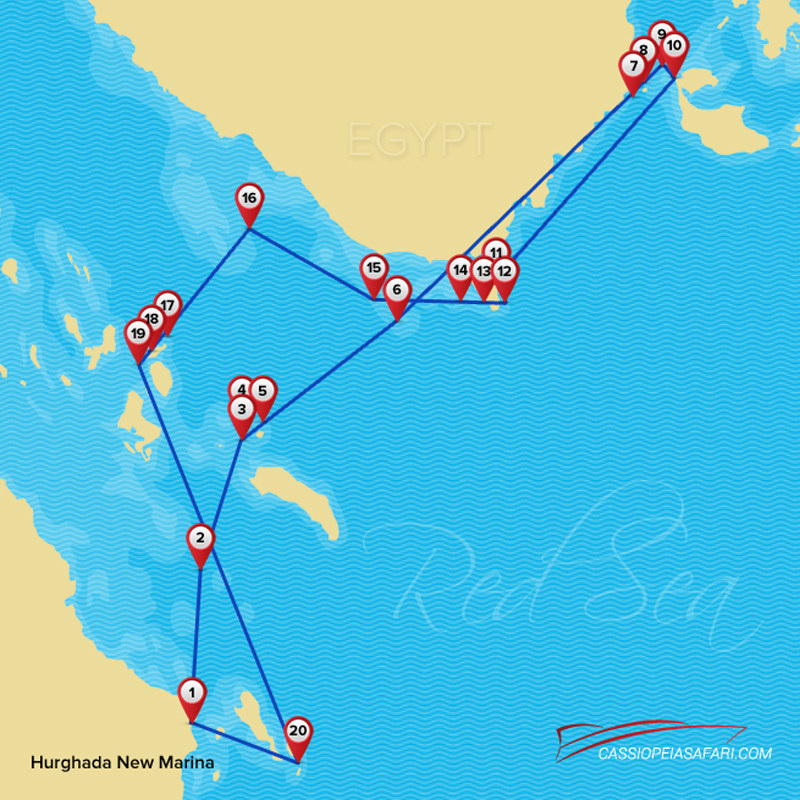
Inclusions
Exclusions
- 14% VAT: 122.00 EUR
- Navy fee: 5.00 USD
Central-European time zone + 1 hour. There is no summer/winter savings time since 2011.
Egypt has a desert climate with warm and dry weather conditions. In the summer months (April-October) the average temperature is between 27°C and 32°C but in the interior areas of the desert it can get even warmer. Summer temperatures along the Red Sea coast are between 27°C and 43°C with northerly winds and southward currents. In the north, winds from the Mediterranian Sea ease the heat. Winters are mild with average temperatures of 13°C – 21°C. Most precipitation is during the winter months; south of Cairo it is about 2 – 5 mm while in the north it can reach 410 mm. There are strong southerly winds in the end of October and the in the beginning of November and currents move in a northern direction. (Water temperatures in the area of Sharm el Sheikh and Hurghada may be 1 – 2°C cooler.)
Thanks to the warm weather, light clothes made of cotton, skirts, shorts, short-sleeve T-shirts and blouses, flip-flops and sandals are the best choice. Hats, sunglasses and tanning lotion (with minimum SPF30) are also important. It is recommended to stay indoors or in the shade during the noon hours. In winter during the day long pants and a light sweater are enough but in the evening a jacket or a light coat may come handy. In the resort towns like Hurghada and Sharm el Sheikh, there are no rules concerning clothing wear as long as it is in good taste however in larger cities like Cairo, it is recommended to wear clothing that is at least below the knees and covers the shoulders. The rules in religious or holy places are even stricter and girls and ladies must cover their heads. Onboard Cassiopeia and Andromeda light, comfortable clothing is acceptable. In the evening a light sweater or cardigan may come handy but during the day bathing suits, shorts and T-shirts are quite acceptable.
It is very versatile, delicious and rich in fresh vegetables. The main meals are made of beef, mutton, chicken, pigeon and duck and fresh fish is also often used. Traditional desserts are really sweet and at the markets, vendors’ stands are ladended with gorgeous fresh fruits. Egyptian chefs prepare the meals onboard Cassiopeia and Andromeda and their heritage is reflected in the delicious meals they prepare for the buffet-style servings three times a day. The menu includes soups, fresh salads, meats, side dishes and sweets which are also available during the day along with fresh fruits. (Pork is not widely available in Egypt because of religious reasons.)
There is 220v current with European-style plugs. There are electrical plugs in every cabin and in the common areas and also there is a separate charging station on the main deck where phones, laptops, cameras and batteries can be charged.
It is recommended but not mandatory for travellers to Egypt to get vaccination against: Hepatitis A (high risk of contagion), Hepatitis B (moderate risk of contagion), Typhus and rabies. However it is mandatory to get the vaccination against yellow fever when entering Egypt from countries or having travelled through countries with high risk of the disease (from example when travelling to Egypt from Sudan).
Haggling in Egypt is a must. Everyone bound for shopping should be prepared for a ”dispute” lasting anywhere from 1-2 minutes to half an hour but ultimately ending in a successful shopping experience. There are rules to haggling. One of them is to say the amount that is half of the actual amount you would be willing to spend. Onboard our vessels all prices are fixed and they are not subject to bargaining.
Look for an Egyptian Embassy of Consular Office in your country or nearest you.
Mobile phones can be used in Egypt. Contact your local mobile service provider for rates and details.
Most shops are open from 10 o’clock in the morning until as late as midnight sometimes. Banks are closed on Fridays and Saturdays. On Sundays and during Ramadan they are open between 10 o’clock in the morning and 13:30 in the afternoon. On all other days they are open between 8:30 in the morning and 13:30 in the afternoon.
Friday is the official day off and in some offices Saturday as well. One of the most important holidays are the last 2-3 days at the end of the Ramadan month and the feast 70 days later.
It is part of every-day life in the Middle-East and in the Arabic world.
Contact your dive guide onboard in case of any medical problems or emergencies. All medical costs must be paid in cash on site. Insurance companies will reimburse costs based only on valid hospital bills.
Taxi is the most comfortable way of transportation in the towns and cities. Despite the taximetre, it is wise to agree on the fare before the trip. Shuttle buses run between towns carrying locals and visitors alike. Local mini buses and coaches tend to be quite crowded.
It is forbidden to take photos or videos of military facilities, bridges and harbours. Please obey these rules! It is allowed to take photos of important and tourist sights but in certain places only for a fee.
Central-European time zone + 2 hours. There is no summer/winter savings time since 2011.
Sudan’s northern region has a dry, desert climate while in the south-western region the wet-dry tropical climate is more dominant. There are no big variations in the temperatures between regions but rather in the amount of precipitation and in the length of the dry season. Between January and March the dry north-eastern winds dominate. However the south-western winds arrive in the beginning of April, bringing heavy rains. In September the dry north-eastern winds pick up strength again, pushing southward, covering the entire country. The rainy season in Khartoum lasts from July to September with annual precipitation of 161mm. The warmest months are May and June when temperatures can reach 48°C. Port Sudan’s climate is dry where summers are very hot and winters are moderately warm. Temperatures in the winter can reach 30°C and 45°C in the summer. Ninety percent of the annual rain fall is between October and January, especially in November. Port Sudan enjoys 3200 sunny hours annually.
The Sudanese taxes are payable in advance along with the safari rates. The Sudanese visa fee is payable in USD in cash (the exact amount) onboard upon arrival. (Only cash payments are accepted.)
Thanks to the warm weather, light clothes made of cotton, skirts, shorts, short-sleeve T-shirts and blouses, flip-flops and sandals are the best choice. Hats, sunglasses and tanning lotion (with minimum SPF30) are also important. It is recommended to stay indoors or in the shade during the noon hours. Compared to Egypt, the ”regulations” concerning clothing in Sudan are stricter. In towns like Port Sudan or Suakin or in the harbour, it is recommended to wear clothing that is at least below the knees and covers the shoulders. The rules in religious or holy places are even stricter and girls and ladies must cover their heads. Onboard Cassiopeia and Andromeda light, comfortable clothing is acceptable. In the evening a light sweater or cardigan may come handy but during the day bathing suits, shorts and T-shirts are quite acceptable.
It is similar to Egyptian cuisine, very versatile, delicious and rich in fresh vegetables. The main meals are made of beef and mutton and fresh fish is often used in the coastal regions and soups are also an important part of daily meals. At the markets, vendors’ stands are ladended with gorgeous fresh fruits. Egyptian chefs prepare the meals onboard Cassiopeia and Andromeda and their heritage is reflected in the delicious meals they prepare for the buffet-style servings three times a day. The menu includes soups, fresh salads, meats, side dishes and sweets which are also available during the day along with fresh fruits. (Pork is not widely available in Sudan because of religious reasons.)
There is 220v current with European-style plugs. There are electrical plugs in every cabin and in the common areas and also there is a separate charging station on the main deck where phones, laptops, cameras and batteries can be charged.
It is recommended but not mandatory for travellers to Sudan to get vaccination against: Hepatitis A (high risk of contagion), Hepatitis B (moderate risk of contagion), Typhus and rabies. However it is mandatory to get the vaccination against yellow fever if you enter Egypt after your stay in Sudan.
Haggling in Sudan, just as in Egypt, is a must. Everyone bound for shopping should be prepared for a ”dispute” lasting anywhere from 1-2 minutes to half an hour but ultimately ending in a successful shopping experience. There are rules to haggling. One of them is to say the amount that is half of the actual amount you would be willing to spend. Onboard our vessels all prices are fixed and they are not subject to bargaining.
Look for a Sudanese Embassy of Consular Office in your country or nearest you.
Mobile phones can be used in Sudan. Contact your local mobile service provider for rates and details.
There are 13 double cabins onboard both our vessels. There are cabins with a queen bed and cabins with twin beds. Every cabin has its own en-suite bathroom with shower, sink and toilet. The air-conditioned cabins also have 220v sockets and plenty of storage space.
There is an LCD TV in the salon along with a DVD player and a variety of entertaining movies. Guests are welcome to play their own music and movies as well.
We can only accept cash payments onboard (EUR, USD, EGP). All purchases made onboard must be settled onboard before disembarking at the end of the tour. We are not able to provide credits or loans.
A safe can be found onboard both vessels where guests can place their valuables before the start of the trip. The dive guides should be asked for access to the safe. We can accept responsibility only for items placed in the safes. All other items, belongings and valuables are the responsibility of the guests.
Additional purchases and expenses made onboard may be the tip (bakshish) for the dive guides and crew (it is usually EUR30 / week in Egypt and EUR50 / person / week in Sudan if satisfied with the service), T-shirts, Nitrox use, 15l tank rental and Satellite phone use. There is a surcharge for lost towels and weights. Alcoholic beverages may be purchased at the duty-free shops before boarding the boat. (In Sudan alcoholic beverages are available onboard.)The Egyptian visa is USD25 / person or EUR20 / person (rates may change according to Government regulations). (If travelling to Sudan via Cairo, the Egyptian visa is 2 x USD25 / person.)
At least 2 local dive guides work onboard our vessels, speaking various languages.
In Egypt, depending on the size of the groups, we provide transfers in air-conditioned buses, coasters or taxis for individual guests. In Sudan all guests are transferred together by bus.
The best time for diving in Egypt is between March and November. However there are a lot of divers (especially from nations in the north) who continue on diving even between December and March when water temperatures are around 20 – 21 °C and the winds are stronger.
Most divers can do with a shorty in July and August. It is usually enough to wear a 3 – 5 mm long suit between March and November. In the remaining months a warmer or a doubled-up 5 mm suit is recommended.
It is highly recommended for every diver to bring his/her own full gear but it is possible to rent equipment. This request should be sent to us at least one week prior to departure. Twelve-litre compressed-air tanks and weights are provided for the guests onboard but weight belts should be brought along.
There are 2 fully equipped decompression chambers in Hurghada to treat diving-related injuries and accidents. There are also facilities in Sharm el Sheikh, El Gouna and Marsa Alam. All our divers must possess valid diving insurance that includes decompression chamber treatments as well.
The first diving day there are 2 day dives and 1 night dive. The 2nd – last diving days there are 3 day dives and 1 night dive per day (depending on the itinerary and weather conditions). The last diving day there are 2 day dives and then the boat returns to the harbour. Please note there is no night diving at the Marine Park islands such as Brothers, Daedalus, Rocky and Zabargad.
A minimum of OWD certification is necessary to be able to dive onboard our boats. There are dive sites that are only recommended for advanced and more experienced divers, for example at the islands of Brothers, Rocky and Zabargad or at wrecks lying in deeper waters in the north. It is best to check the itinerary before booking a tour to make sure it fits the diver’s certification level and experience.
Nitrox-certified divers can dive with Nitrox. There is a membrane Nitrox system onboard with a 32% mix.
A minimum of OWD certification is necessary to be able to dive onboard our boats. However we can provide certain courses onboard such as AOWD, Nitrox, specialty courses, etc. given appropriate itinerary and previous consultation.
Our diving safaris are mainly geared towards divers but non-divers are also welcome when accompanying their loved ones.
The first dive on every tour is a check dive during which the dive guides observe the divers’ diving techniques and any shortcomings and correct, remedy those. If it has been a while since the last dive, it should be brought to the dive guides’ attention.
All our divers must possess valid diving insurance and non-divers valid travel insurance. Diving is permitted only with valid diving insurance. Most important is diving and accidental insurance as well as luggage and travel insurance.
Diving is conditioned upon having a valid diving certificate and diving insurance.
Every diver must fill out a release form onboard before the start of the trip stating that he/she is medically fit to dive.
Life vests can be found in every cabin and the following equipment onboard: 2 life rafts, Oxygen, first-aid kit, fire extinguishers, life buoys and a diver search system.
Due to the movement of the boat, seasickness and/or nausa may be experienced. This can be well treated by the local medication Emetrx. Please turn to the dive guides for assistance.
The best time for diving in Sudan is between February and June. This is when the sea is the most alive and marine life is the richest. The fall months (September-November) are also favoured by divers, especially October when it is manta season in Sudan near Mesharifa reef.
There are no facilities in Sudan for the treatment of decompression sickness. The closest chamber is in Marsa Alam. (There are 2 fully equipped decompression chambers in Hurghada to treat diving-related injuries and accidents. There are also facilities in Sharm el Sheikh, El Gouna and Marsa Alam.) All our divers must possess valid diving insurance that includes decompression chamber treatments as well.
The first diving day there are 2 day dives and 1 night dive. The 2nd – last diving days there are 3 day dives and 1 night dive per day (depending on the itinerary and weather conditions). The last diving day there are 2 day dives and then the boat returns to the harbour.
- Length: 40 m / 130 ft.
- Beam: 8 m
- Generator: 2x Mercedes 138 Kw silent generators
- Freshwater: 15 tons + desalination device (2 tons/day)
- Fuel: 70 tons
- Electricity: 220V in cabins and salon
- Cabins: 13
- Max. Guests: 26
Andromeda, the 40 meters diving safari liveaboard, was built based on a unique design, meeting divers’ and guests’ needs. The vessel welcomes up to 26 guests in 13 spacious, tastefully decorated cabins with en-suite bathrooms.
The spacious lounge area is air-conditioned and well equipped with an LCD TV, VCR, DVD and CD player and furnished according to European style. The Arabian cafe follows the original Oriental coffee shop design with shisha (waterpipe) smoking possibility, coffee, tea and original Arabic music.
The comfortable 100-square-meter sun deck provides plenty of space for sun-seekers, as well as a shaded area. Comfortable deck chairs and cushioned seats make the time more pleasant. There is also a smaller sun deck in front of the captain’s bridge. A covered deck In front of the salon is a comfortable open but covered area for resting and chatting between dives in the evening.
The large dive deck and dive platform area ensure more-than-adequate space for divers preparing for their next plunge into the Red Sea. 2 hand-held showers on the platform allow for a rinse after diving or snorkeling. A bathroom with shower and marine head lead directly off the dive deck.
A well-traveled, cohesive crew, speaking various languages, awaits all the guests who wish to dive and relax. See you onboard! The Andromeda is the only liveaboard offering 1-week and 2-week diving safaris in the Deep South of Sudan.
Inclusions
Exclusions
- 14% VAT: 106.00 EUR
- Navy fee: 5.00 USD
Central-European time zone + 1 hour. There is no summer/winter savings time since 2011.
Egypt has a desert climate with warm and dry weather conditions. In the summer months (April-October) the average temperature is between 27°C and 32°C but in the interior areas of the desert it can get even warmer. Summer temperatures along the Red Sea coast are between 27°C and 43°C with northerly winds and southward currents. In the north, winds from the Mediterranian Sea ease the heat. Winters are mild with average temperatures of 13°C – 21°C. Most precipitation is during the winter months; south of Cairo it is about 2 – 5 mm while in the north it can reach 410 mm. There are strong southerly winds in the end of October and the in the beginning of November and currents move in a northern direction. (Water temperatures in the area of Sharm el Sheikh and Hurghada may be 1 – 2°C cooler.)
Thanks to the warm weather, light clothes made of cotton, skirts, shorts, short-sleeve T-shirts and blouses, flip-flops and sandals are the best choice. Hats, sunglasses and tanning lotion (with minimum SPF30) are also important. It is recommended to stay indoors or in the shade during the noon hours. In winter during the day long pants and a light sweater are enough but in the evening a jacket or a light coat may come handy. In the resort towns like Hurghada and Sharm el Sheikh, there are no rules concerning clothing wear as long as it is in good taste however in larger cities like Cairo, it is recommended to wear clothing that is at least below the knees and covers the shoulders. The rules in religious or holy places are even stricter and girls and ladies must cover their heads. Onboard Cassiopeia and Andromeda light, comfortable clothing is acceptable. In the evening a light sweater or cardigan may come handy but during the day bathing suits, shorts and T-shirts are quite acceptable.
It is very versatile, delicious and rich in fresh vegetables. The main meals are made of beef, mutton, chicken, pigeon and duck and fresh fish is also often used. Traditional desserts are really sweet and at the markets, vendors’ stands are ladended with gorgeous fresh fruits. Egyptian chefs prepare the meals onboard Cassiopeia and Andromeda and their heritage is reflected in the delicious meals they prepare for the buffet-style servings three times a day. The menu includes soups, fresh salads, meats, side dishes and sweets which are also available during the day along with fresh fruits. (Pork is not widely available in Egypt because of religious reasons.)
There is 220v current with European-style plugs. There are electrical plugs in every cabin and in the common areas and also there is a separate charging station on the main deck where phones, laptops, cameras and batteries can be charged.
It is recommended but not mandatory for travellers to Egypt to get vaccination against: Hepatitis A (high risk of contagion), Hepatitis B (moderate risk of contagion), Typhus and rabies. However it is mandatory to get the vaccination against yellow fever when entering Egypt from countries or having travelled through countries with high risk of the disease (from example when travelling to Egypt from Sudan).
Haggling in Egypt is a must. Everyone bound for shopping should be prepared for a ”dispute” lasting anywhere from 1-2 minutes to half an hour but ultimately ending in a successful shopping experience. There are rules to haggling. One of them is to say the amount that is half of the actual amount you would be willing to spend. Onboard our vessels all prices are fixed and they are not subject to bargaining.
Look for an Egyptian Embassy of Consular Office in your country or nearest you.
Mobile phones can be used in Egypt. Contact your local mobile service provider for rates and details.
Most shops are open from 10 o’clock in the morning until as late as midnight sometimes. Banks are closed on Fridays and Saturdays. On Sundays and during Ramadan they are open between 10 o’clock in the morning and 13:30 in the afternoon. On all other days they are open between 8:30 in the morning and 13:30 in the afternoon.
Friday is the official day off and in some offices Saturday as well. One of the most important holidays are the last 2-3 days at the end of the Ramadan month and the feast 70 days later.
It is part of every-day life in the Middle-East and in the Arabic world.
Contact your dive guide onboard in case of any medical problems or emergencies. All medical costs must be paid in cash on site. Insurance companies will reimburse costs based only on valid hospital bills.
Taxi is the most comfortable way of transportation in the towns and cities. Despite the taximetre, it is wise to agree on the fare before the trip. Shuttle buses run between towns carrying locals and visitors alike. Local mini buses and coaches tend to be quite crowded.
It is forbidden to take photos or videos of military facilities, bridges and harbours. Please obey these rules! It is allowed to take photos of important and tourist sights but in certain places only for a fee.
Central-European time zone + 2 hours. There is no summer/winter savings time since 2011.
Sudan’s northern region has a dry, desert climate while in the south-western region the wet-dry tropical climate is more dominant. There are no big variations in the temperatures between regions but rather in the amount of precipitation and in the length of the dry season. Between January and March the dry north-eastern winds dominate. However the south-western winds arrive in the beginning of April, bringing heavy rains. In September the dry north-eastern winds pick up strength again, pushing southward, covering the entire country. The rainy season in Khartoum lasts from July to September with annual precipitation of 161mm. The warmest months are May and June when temperatures can reach 48°C. Port Sudan’s climate is dry where summers are very hot and winters are moderately warm. Temperatures in the winter can reach 30°C and 45°C in the summer. Ninety percent of the annual rain fall is between October and January, especially in November. Port Sudan enjoys 3200 sunny hours annually.
The Sudanese taxes are payable in advance along with the safari rates. The Sudanese visa fee is payable in USD in cash (the exact amount) onboard upon arrival. (Only cash payments are accepted.)
Thanks to the warm weather, light clothes made of cotton, skirts, shorts, short-sleeve T-shirts and blouses, flip-flops and sandals are the best choice. Hats, sunglasses and tanning lotion (with minimum SPF30) are also important. It is recommended to stay indoors or in the shade during the noon hours. Compared to Egypt, the ”regulations” concerning clothing in Sudan are stricter. In towns like Port Sudan or Suakin or in the harbour, it is recommended to wear clothing that is at least below the knees and covers the shoulders. The rules in religious or holy places are even stricter and girls and ladies must cover their heads. Onboard Cassiopeia and Andromeda light, comfortable clothing is acceptable. In the evening a light sweater or cardigan may come handy but during the day bathing suits, shorts and T-shirts are quite acceptable.
It is similar to Egyptian cuisine, very versatile, delicious and rich in fresh vegetables. The main meals are made of beef and mutton and fresh fish is often used in the coastal regions and soups are also an important part of daily meals. At the markets, vendors’ stands are ladended with gorgeous fresh fruits. Egyptian chefs prepare the meals onboard Cassiopeia and Andromeda and their heritage is reflected in the delicious meals they prepare for the buffet-style servings three times a day. The menu includes soups, fresh salads, meats, side dishes and sweets which are also available during the day along with fresh fruits. (Pork is not widely available in Sudan because of religious reasons.)
There is 220v current with European-style plugs. There are electrical plugs in every cabin and in the common areas and also there is a separate charging station on the main deck where phones, laptops, cameras and batteries can be charged.
It is recommended but not mandatory for travellers to Sudan to get vaccination against: Hepatitis A (high risk of contagion), Hepatitis B (moderate risk of contagion), Typhus and rabies. However it is mandatory to get the vaccination against yellow fever if you enter Egypt after your stay in Sudan.
Haggling in Sudan, just as in Egypt, is a must. Everyone bound for shopping should be prepared for a ”dispute” lasting anywhere from 1-2 minutes to half an hour but ultimately ending in a successful shopping experience. There are rules to haggling. One of them is to say the amount that is half of the actual amount you would be willing to spend. Onboard our vessels all prices are fixed and they are not subject to bargaining.
Look for a Sudanese Embassy of Consular Office in your country or nearest you.
Mobile phones can be used in Sudan. Contact your local mobile service provider for rates and details.
There are 13 double cabins onboard both our vessels. There are cabins with a queen bed and cabins with twin beds. Every cabin has its own en-suite bathroom with shower, sink and toilet. The air-conditioned cabins also have 220v sockets and plenty of storage space.
There is an LCD TV in the salon along with a DVD player and a variety of entertaining movies. Guests are welcome to play their own music and movies as well.
We can only accept cash payments onboard (EUR, USD, EGP). All purchases made onboard must be settled onboard before disembarking at the end of the tour. We are not able to provide credits or loans.
A safe can be found onboard both vessels where guests can place their valuables before the start of the trip. The dive guides should be asked for access to the safe. We can accept responsibility only for items placed in the safes. All other items, belongings and valuables are the responsibility of the guests.
Additional purchases and expenses made onboard may be the tip (bakshish) for the dive guides and crew (it is usually EUR30 / week in Egypt and EUR50 / person / week in Sudan if satisfied with the service), T-shirts, Nitrox use, 15l tank rental and Satellite phone use. There is a surcharge for lost towels and weights. Alcoholic beverages may be purchased at the duty-free shops before boarding the boat. (In Sudan alcoholic beverages are available onboard.)The Egyptian visa is USD25 / person or EUR20 / person (rates may change according to Government regulations). (If travelling to Sudan via Cairo, the Egyptian visa is 2 x USD25 / person.)
At least 2 local dive guides work onboard our vessels, speaking various languages.
In Egypt, depending on the size of the groups, we provide transfers in air-conditioned buses, coasters or taxis for individual guests. In Sudan all guests are transferred together by bus.
The best time for diving in Egypt is between March and November. However there are a lot of divers (especially from nations in the north) who continue on diving even between December and March when water temperatures are around 20 – 21 °C and the winds are stronger.
Most divers can do with a shorty in July and August. It is usually enough to wear a 3 – 5 mm long suit between March and November. In the remaining months a warmer or a doubled-up 5 mm suit is recommended.
It is highly recommended for every diver to bring his/her own full gear but it is possible to rent equipment. This request should be sent to us at least one week prior to departure. Twelve-litre compressed-air tanks and weights are provided for the guests onboard but weight belts should be brought along.
There are 2 fully equipped decompression chambers in Hurghada to treat diving-related injuries and accidents. There are also facilities in Sharm el Sheikh, El Gouna and Marsa Alam. All our divers must possess valid diving insurance that includes decompression chamber treatments as well.
The first diving day there are 2 day dives and 1 night dive. The 2nd – last diving days there are 3 day dives and 1 night dive per day (depending on the itinerary and weather conditions). The last diving day there are 2 day dives and then the boat returns to the harbour. Please note there is no night diving at the Marine Park islands such as Brothers, Daedalus, Rocky and Zabargad.
A minimum of OWD certification is necessary to be able to dive onboard our boats. There are dive sites that are only recommended for advanced and more experienced divers, for example at the islands of Brothers, Rocky and Zabargad or at wrecks lying in deeper waters in the north. It is best to check the itinerary before booking a tour to make sure it fits the diver’s certification level and experience.
Nitrox-certified divers can dive with Nitrox. There is a membrane Nitrox system onboard with a 32% mix.
A minimum of OWD certification is necessary to be able to dive onboard our boats. However we can provide certain courses onboard such as AOWD, Nitrox, specialty courses, etc. given appropriate itinerary and previous consultation.
Our diving safaris are mainly geared towards divers but non-divers are also welcome when accompanying their loved ones.
The first dive on every tour is a check dive during which the dive guides observe the divers’ diving techniques and any shortcomings and correct, remedy those. If it has been a while since the last dive, it should be brought to the dive guides’ attention.
All our divers must possess valid diving insurance and non-divers valid travel insurance. Diving is permitted only with valid diving insurance. Most important is diving and accidental insurance as well as luggage and travel insurance.
Diving is conditioned upon having a valid diving certificate and diving insurance.
Every diver must fill out a release form onboard before the start of the trip stating that he/she is medically fit to dive.
Life vests can be found in every cabin and the following equipment onboard: 2 life rafts, Oxygen, first-aid kit, fire extinguishers, life buoys and a diver search system.
Due to the movement of the boat, seasickness and/or nausa may be experienced. This can be well treated by the local medication Emetrx. Please turn to the dive guides for assistance.
The best time for diving in Sudan is between February and June. This is when the sea is the most alive and marine life is the richest. The fall months (September-November) are also favoured by divers, especially October when it is manta season in Sudan near Mesharifa reef.
There are no facilities in Sudan for the treatment of decompression sickness. The closest chamber is in Marsa Alam. (There are 2 fully equipped decompression chambers in Hurghada to treat diving-related injuries and accidents. There are also facilities in Sharm el Sheikh, El Gouna and Marsa Alam.) All our divers must possess valid diving insurance that includes decompression chamber treatments as well.
The first diving day there are 2 day dives and 1 night dive. The 2nd – last diving days there are 3 day dives and 1 night dive per day (depending on the itinerary and weather conditions). The last diving day there are 2 day dives and then the boat returns to the harbour.
- Length: 40 m / 130 ft.
- Beam: 8 m
- Generator: 2x Mercedes 138 Kw silent generators
- Freshwater: 15 tons + desalination device (2 tons/day)
- Fuel: 70 tons
- Electricity: 220V in cabins and salon
- Cabins: 13
- Max. Guests: 26
Andromeda, the 40 meters diving safari liveaboard, was built based on a unique design, meeting divers’ and guests’ needs. The vessel welcomes up to 26 guests in 13 spacious, tastefully decorated cabins with en-suite bathrooms.
The spacious lounge area is air-conditioned and well equipped with an LCD TV, VCR, DVD and CD player and furnished according to European style. The Arabian cafe follows the original Oriental coffee shop design with shisha (waterpipe) smoking possibility, coffee, tea and original Arabic music.
The comfortable 100-square-meter sun deck provides plenty of space for sun-seekers, as well as a shaded area. Comfortable deck chairs and cushioned seats make the time more pleasant. There is also a smaller sun deck in front of the captain’s bridge. A covered deck In front of the salon is a comfortable open but covered area for resting and chatting between dives in the evening.
The large dive deck and dive platform area ensure more-than-adequate space for divers preparing for their next plunge into the Red Sea. 2 hand-held showers on the platform allow for a rinse after diving or snorkeling. A bathroom with shower and marine head lead directly off the dive deck.
A well-traveled, cohesive crew, speaking various languages, awaits all the guests who wish to dive and relax. See you onboard! The Andromeda is the only liveaboard offering 1-week and 2-week diving safaris in the Deep South of Sudan.
Inclusions
Exclusions
- 14% VAT: 127.00 EUR
- Navy fee: 5.00 USD
Central-European time zone + 1 hour. There is no summer/winter savings time since 2011.
Egypt has a desert climate with warm and dry weather conditions. In the summer months (April-October) the average temperature is between 27°C and 32°C but in the interior areas of the desert it can get even warmer. Summer temperatures along the Red Sea coast are between 27°C and 43°C with northerly winds and southward currents. In the north, winds from the Mediterranian Sea ease the heat. Winters are mild with average temperatures of 13°C – 21°C. Most precipitation is during the winter months; south of Cairo it is about 2 – 5 mm while in the north it can reach 410 mm. There are strong southerly winds in the end of October and the in the beginning of November and currents move in a northern direction. (Water temperatures in the area of Sharm el Sheikh and Hurghada may be 1 – 2°C cooler.)
Thanks to the warm weather, light clothes made of cotton, skirts, shorts, short-sleeve T-shirts and blouses, flip-flops and sandals are the best choice. Hats, sunglasses and tanning lotion (with minimum SPF30) are also important. It is recommended to stay indoors or in the shade during the noon hours. In winter during the day long pants and a light sweater are enough but in the evening a jacket or a light coat may come handy. In the resort towns like Hurghada and Sharm el Sheikh, there are no rules concerning clothing wear as long as it is in good taste however in larger cities like Cairo, it is recommended to wear clothing that is at least below the knees and covers the shoulders. The rules in religious or holy places are even stricter and girls and ladies must cover their heads. Onboard Cassiopeia and Andromeda light, comfortable clothing is acceptable. In the evening a light sweater or cardigan may come handy but during the day bathing suits, shorts and T-shirts are quite acceptable.
It is very versatile, delicious and rich in fresh vegetables. The main meals are made of beef, mutton, chicken, pigeon and duck and fresh fish is also often used. Traditional desserts are really sweet and at the markets, vendors’ stands are ladended with gorgeous fresh fruits. Egyptian chefs prepare the meals onboard Cassiopeia and Andromeda and their heritage is reflected in the delicious meals they prepare for the buffet-style servings three times a day. The menu includes soups, fresh salads, meats, side dishes and sweets which are also available during the day along with fresh fruits. (Pork is not widely available in Egypt because of religious reasons.)
There is 220v current with European-style plugs. There are electrical plugs in every cabin and in the common areas and also there is a separate charging station on the main deck where phones, laptops, cameras and batteries can be charged.
It is recommended but not mandatory for travellers to Egypt to get vaccination against: Hepatitis A (high risk of contagion), Hepatitis B (moderate risk of contagion), Typhus and rabies. However it is mandatory to get the vaccination against yellow fever when entering Egypt from countries or having travelled through countries with high risk of the disease (from example when travelling to Egypt from Sudan).
Haggling in Egypt is a must. Everyone bound for shopping should be prepared for a ”dispute” lasting anywhere from 1-2 minutes to half an hour but ultimately ending in a successful shopping experience. There are rules to haggling. One of them is to say the amount that is half of the actual amount you would be willing to spend. Onboard our vessels all prices are fixed and they are not subject to bargaining.
Look for an Egyptian Embassy of Consular Office in your country or nearest you.
Mobile phones can be used in Egypt. Contact your local mobile service provider for rates and details.
Most shops are open from 10 o’clock in the morning until as late as midnight sometimes. Banks are closed on Fridays and Saturdays. On Sundays and during Ramadan they are open between 10 o’clock in the morning and 13:30 in the afternoon. On all other days they are open between 8:30 in the morning and 13:30 in the afternoon.
Friday is the official day off and in some offices Saturday as well. One of the most important holidays are the last 2-3 days at the end of the Ramadan month and the feast 70 days later.
It is part of every-day life in the Middle-East and in the Arabic world.
Contact your dive guide onboard in case of any medical problems or emergencies. All medical costs must be paid in cash on site. Insurance companies will reimburse costs based only on valid hospital bills.
Taxi is the most comfortable way of transportation in the towns and cities. Despite the taximetre, it is wise to agree on the fare before the trip. Shuttle buses run between towns carrying locals and visitors alike. Local mini buses and coaches tend to be quite crowded.
It is forbidden to take photos or videos of military facilities, bridges and harbours. Please obey these rules! It is allowed to take photos of important and tourist sights but in certain places only for a fee.
Central-European time zone + 2 hours. There is no summer/winter savings time since 2011.
Sudan’s northern region has a dry, desert climate while in the south-western region the wet-dry tropical climate is more dominant. There are no big variations in the temperatures between regions but rather in the amount of precipitation and in the length of the dry season. Between January and March the dry north-eastern winds dominate. However the south-western winds arrive in the beginning of April, bringing heavy rains. In September the dry north-eastern winds pick up strength again, pushing southward, covering the entire country. The rainy season in Khartoum lasts from July to September with annual precipitation of 161mm. The warmest months are May and June when temperatures can reach 48°C. Port Sudan’s climate is dry where summers are very hot and winters are moderately warm. Temperatures in the winter can reach 30°C and 45°C in the summer. Ninety percent of the annual rain fall is between October and January, especially in November. Port Sudan enjoys 3200 sunny hours annually.
The Sudanese taxes are payable in advance along with the safari rates. The Sudanese visa fee is payable in USD in cash (the exact amount) onboard upon arrival. (Only cash payments are accepted.)
Thanks to the warm weather, light clothes made of cotton, skirts, shorts, short-sleeve T-shirts and blouses, flip-flops and sandals are the best choice. Hats, sunglasses and tanning lotion (with minimum SPF30) are also important. It is recommended to stay indoors or in the shade during the noon hours. Compared to Egypt, the ”regulations” concerning clothing in Sudan are stricter. In towns like Port Sudan or Suakin or in the harbour, it is recommended to wear clothing that is at least below the knees and covers the shoulders. The rules in religious or holy places are even stricter and girls and ladies must cover their heads. Onboard Cassiopeia and Andromeda light, comfortable clothing is acceptable. In the evening a light sweater or cardigan may come handy but during the day bathing suits, shorts and T-shirts are quite acceptable.
It is similar to Egyptian cuisine, very versatile, delicious and rich in fresh vegetables. The main meals are made of beef and mutton and fresh fish is often used in the coastal regions and soups are also an important part of daily meals. At the markets, vendors’ stands are ladended with gorgeous fresh fruits. Egyptian chefs prepare the meals onboard Cassiopeia and Andromeda and their heritage is reflected in the delicious meals they prepare for the buffet-style servings three times a day. The menu includes soups, fresh salads, meats, side dishes and sweets which are also available during the day along with fresh fruits. (Pork is not widely available in Sudan because of religious reasons.)
There is 220v current with European-style plugs. There are electrical plugs in every cabin and in the common areas and also there is a separate charging station on the main deck where phones, laptops, cameras and batteries can be charged.
It is recommended but not mandatory for travellers to Sudan to get vaccination against: Hepatitis A (high risk of contagion), Hepatitis B (moderate risk of contagion), Typhus and rabies. However it is mandatory to get the vaccination against yellow fever if you enter Egypt after your stay in Sudan.
Haggling in Sudan, just as in Egypt, is a must. Everyone bound for shopping should be prepared for a ”dispute” lasting anywhere from 1-2 minutes to half an hour but ultimately ending in a successful shopping experience. There are rules to haggling. One of them is to say the amount that is half of the actual amount you would be willing to spend. Onboard our vessels all prices are fixed and they are not subject to bargaining.
Look for a Sudanese Embassy of Consular Office in your country or nearest you.
Mobile phones can be used in Sudan. Contact your local mobile service provider for rates and details.
There are 13 double cabins onboard both our vessels. There are cabins with a queen bed and cabins with twin beds. Every cabin has its own en-suite bathroom with shower, sink and toilet. The air-conditioned cabins also have 220v sockets and plenty of storage space.
There is an LCD TV in the salon along with a DVD player and a variety of entertaining movies. Guests are welcome to play their own music and movies as well.
We can only accept cash payments onboard (EUR, USD, EGP). All purchases made onboard must be settled onboard before disembarking at the end of the tour. We are not able to provide credits or loans.
A safe can be found onboard both vessels where guests can place their valuables before the start of the trip. The dive guides should be asked for access to the safe. We can accept responsibility only for items placed in the safes. All other items, belongings and valuables are the responsibility of the guests.
Additional purchases and expenses made onboard may be the tip (bakshish) for the dive guides and crew (it is usually EUR30 / week in Egypt and EUR50 / person / week in Sudan if satisfied with the service), T-shirts, Nitrox use, 15l tank rental and Satellite phone use. There is a surcharge for lost towels and weights. Alcoholic beverages may be purchased at the duty-free shops before boarding the boat. (In Sudan alcoholic beverages are available onboard.)The Egyptian visa is USD25 / person or EUR20 / person (rates may change according to Government regulations). (If travelling to Sudan via Cairo, the Egyptian visa is 2 x USD25 / person.)
At least 2 local dive guides work onboard our vessels, speaking various languages.
In Egypt, depending on the size of the groups, we provide transfers in air-conditioned buses, coasters or taxis for individual guests. In Sudan all guests are transferred together by bus.
The best time for diving in Egypt is between March and November. However there are a lot of divers (especially from nations in the north) who continue on diving even between December and March when water temperatures are around 20 – 21 °C and the winds are stronger.
Most divers can do with a shorty in July and August. It is usually enough to wear a 3 – 5 mm long suit between March and November. In the remaining months a warmer or a doubled-up 5 mm suit is recommended.
It is highly recommended for every diver to bring his/her own full gear but it is possible to rent equipment. This request should be sent to us at least one week prior to departure. Twelve-litre compressed-air tanks and weights are provided for the guests onboard but weight belts should be brought along.
There are 2 fully equipped decompression chambers in Hurghada to treat diving-related injuries and accidents. There are also facilities in Sharm el Sheikh, El Gouna and Marsa Alam. All our divers must possess valid diving insurance that includes decompression chamber treatments as well.
The first diving day there are 2 day dives and 1 night dive. The 2nd – last diving days there are 3 day dives and 1 night dive per day (depending on the itinerary and weather conditions). The last diving day there are 2 day dives and then the boat returns to the harbour. Please note there is no night diving at the Marine Park islands such as Brothers, Daedalus, Rocky and Zabargad.
A minimum of OWD certification is necessary to be able to dive onboard our boats. There are dive sites that are only recommended for advanced and more experienced divers, for example at the islands of Brothers, Rocky and Zabargad or at wrecks lying in deeper waters in the north. It is best to check the itinerary before booking a tour to make sure it fits the diver’s certification level and experience.
Nitrox-certified divers can dive with Nitrox. There is a membrane Nitrox system onboard with a 32% mix.
A minimum of OWD certification is necessary to be able to dive onboard our boats. However we can provide certain courses onboard such as AOWD, Nitrox, specialty courses, etc. given appropriate itinerary and previous consultation.
Our diving safaris are mainly geared towards divers but non-divers are also welcome when accompanying their loved ones.
The first dive on every tour is a check dive during which the dive guides observe the divers’ diving techniques and any shortcomings and correct, remedy those. If it has been a while since the last dive, it should be brought to the dive guides’ attention.
All our divers must possess valid diving insurance and non-divers valid travel insurance. Diving is permitted only with valid diving insurance. Most important is diving and accidental insurance as well as luggage and travel insurance.
Diving is conditioned upon having a valid diving certificate and diving insurance.
Every diver must fill out a release form onboard before the start of the trip stating that he/she is medically fit to dive.
Life vests can be found in every cabin and the following equipment onboard: 2 life rafts, Oxygen, first-aid kit, fire extinguishers, life buoys and a diver search system.
Due to the movement of the boat, seasickness and/or nausa may be experienced. This can be well treated by the local medication Emetrx. Please turn to the dive guides for assistance.
The best time for diving in Sudan is between February and June. This is when the sea is the most alive and marine life is the richest. The fall months (September-November) are also favoured by divers, especially October when it is manta season in Sudan near Mesharifa reef.
There are no facilities in Sudan for the treatment of decompression sickness. The closest chamber is in Marsa Alam. (There are 2 fully equipped decompression chambers in Hurghada to treat diving-related injuries and accidents. There are also facilities in Sharm el Sheikh, El Gouna and Marsa Alam.) All our divers must possess valid diving insurance that includes decompression chamber treatments as well.
The first diving day there are 2 day dives and 1 night dive. The 2nd – last diving days there are 3 day dives and 1 night dive per day (depending on the itinerary and weather conditions). The last diving day there are 2 day dives and then the boat returns to the harbour.
- Length: 40 m / 130 ft.
- Beam: 8 m
- Generator: 2x Mercedes 138 Kw silent generators
- Freshwater: 15 tons + desalination device (2 tons/day)
- Fuel: 70 tons
- Electricity: 220V in cabins and salon
- Cabins: 13
- Max. Guests: 26
Andromeda, the 40 meters diving safari liveaboard, was built based on a unique design, meeting divers’ and guests’ needs. The vessel welcomes up to 26 guests in 13 spacious, tastefully decorated cabins with en-suite bathrooms.
The spacious lounge area is air-conditioned and well equipped with an LCD TV, VCR, DVD and CD player and furnished according to European style. The Arabian cafe follows the original Oriental coffee shop design with shisha (waterpipe) smoking possibility, coffee, tea and original Arabic music.
The comfortable 100-square-meter sun deck provides plenty of space for sun-seekers, as well as a shaded area. Comfortable deck chairs and cushioned seats make the time more pleasant. There is also a smaller sun deck in front of the captain’s bridge. A covered deck In front of the salon is a comfortable open but covered area for resting and chatting between dives in the evening.
The large dive deck and dive platform area ensure more-than-adequate space for divers preparing for their next plunge into the Red Sea. 2 hand-held showers on the platform allow for a rinse after diving or snorkeling. A bathroom with shower and marine head lead directly off the dive deck.
A well-traveled, cohesive crew, speaking various languages, awaits all the guests who wish to dive and relax. See you onboard! The Andromeda is the only liveaboard offering 1-week and 2-week diving safaris in the Deep South of Sudan.
Sample Itinerary
Day 1: Check-In & Briefing
Day 2: Shaab el Ghadir, Shaab Sharm, Shaab Sharm (night dive)
Day 3: Big Habili, Habili Ali, St. John’s cave (Abu Basala) / Dangerous reef (night dive)
Day 4: Small Gota, Small Gota, St John’s woods (Um Arouk), Dangerous reef / St John’s woods (Um Arouk) (night dive)
Day 5: Habili Gefahr, Big Gota, Um el Hararim, Sirnaka (night dive)
Day 6: Shaab Maksour, Claudia, Malahi, Sattayah (night dive)
Day 7: Gota el Sharm (2)
Day 8: Check-Out
Total dives: approx. 21
About the diving
Abu Fandira
St Johns and Abu Fandira is a place where there are hardly any liveaboards or hoards of divers insight. The 6km-long line of reefs lies south of St Johns in an east-west direction. The varied topography of the 6 long reefs offers wonderful views onto brilliant coral blocks at about 15-20m. Besides the reef sharks that cruise in the area, you will also find large schools of fish and many species of crustaceans. Gorgeous Napoleon fish and the rare humphead parrotfish are residents here in large numbers.
Inclusions
Exclusions
- 14% VAT: 133.00 EUR
- Navy fee: 5.00 USD
Central-European time zone + 1 hour. There is no summer/winter savings time since 2011.
Egypt has a desert climate with warm and dry weather conditions. In the summer months (April-October) the average temperature is between 27°C and 32°C but in the interior areas of the desert it can get even warmer. Summer temperatures along the Red Sea coast are between 27°C and 43°C with northerly winds and southward currents. In the north, winds from the Mediterranian Sea ease the heat. Winters are mild with average temperatures of 13°C – 21°C. Most precipitation is during the winter months; south of Cairo it is about 2 – 5 mm while in the north it can reach 410 mm. There are strong southerly winds in the end of October and the in the beginning of November and currents move in a northern direction. (Water temperatures in the area of Sharm el Sheikh and Hurghada may be 1 – 2°C cooler.)
Thanks to the warm weather, light clothes made of cotton, skirts, shorts, short-sleeve T-shirts and blouses, flip-flops and sandals are the best choice. Hats, sunglasses and tanning lotion (with minimum SPF30) are also important. It is recommended to stay indoors or in the shade during the noon hours. In winter during the day long pants and a light sweater are enough but in the evening a jacket or a light coat may come handy. In the resort towns like Hurghada and Sharm el Sheikh, there are no rules concerning clothing wear as long as it is in good taste however in larger cities like Cairo, it is recommended to wear clothing that is at least below the knees and covers the shoulders. The rules in religious or holy places are even stricter and girls and ladies must cover their heads. Onboard Cassiopeia and Andromeda light, comfortable clothing is acceptable. In the evening a light sweater or cardigan may come handy but during the day bathing suits, shorts and T-shirts are quite acceptable.
It is very versatile, delicious and rich in fresh vegetables. The main meals are made of beef, mutton, chicken, pigeon and duck and fresh fish is also often used. Traditional desserts are really sweet and at the markets, vendors’ stands are ladended with gorgeous fresh fruits. Egyptian chefs prepare the meals onboard Cassiopeia and Andromeda and their heritage is reflected in the delicious meals they prepare for the buffet-style servings three times a day. The menu includes soups, fresh salads, meats, side dishes and sweets which are also available during the day along with fresh fruits. (Pork is not widely available in Egypt because of religious reasons.)
There is 220v current with European-style plugs. There are electrical plugs in every cabin and in the common areas and also there is a separate charging station on the main deck where phones, laptops, cameras and batteries can be charged.
It is recommended but not mandatory for travellers to Egypt to get vaccination against: Hepatitis A (high risk of contagion), Hepatitis B (moderate risk of contagion), Typhus and rabies. However it is mandatory to get the vaccination against yellow fever when entering Egypt from countries or having travelled through countries with high risk of the disease (from example when travelling to Egypt from Sudan).
Haggling in Egypt is a must. Everyone bound for shopping should be prepared for a ”dispute” lasting anywhere from 1-2 minutes to half an hour but ultimately ending in a successful shopping experience. There are rules to haggling. One of them is to say the amount that is half of the actual amount you would be willing to spend. Onboard our vessels all prices are fixed and they are not subject to bargaining.
Look for an Egyptian Embassy of Consular Office in your country or nearest you.
Mobile phones can be used in Egypt. Contact your local mobile service provider for rates and details.
Most shops are open from 10 o’clock in the morning until as late as midnight sometimes. Banks are closed on Fridays and Saturdays. On Sundays and during Ramadan they are open between 10 o’clock in the morning and 13:30 in the afternoon. On all other days they are open between 8:30 in the morning and 13:30 in the afternoon.
Friday is the official day off and in some offices Saturday as well. One of the most important holidays are the last 2-3 days at the end of the Ramadan month and the feast 70 days later.
It is part of every-day life in the Middle-East and in the Arabic world.
Contact your dive guide onboard in case of any medical problems or emergencies. All medical costs must be paid in cash on site. Insurance companies will reimburse costs based only on valid hospital bills.
Taxi is the most comfortable way of transportation in the towns and cities. Despite the taximetre, it is wise to agree on the fare before the trip. Shuttle buses run between towns carrying locals and visitors alike. Local mini buses and coaches tend to be quite crowded.
It is forbidden to take photos or videos of military facilities, bridges and harbours. Please obey these rules! It is allowed to take photos of important and tourist sights but in certain places only for a fee.
Central-European time zone + 2 hours. There is no summer/winter savings time since 2011.
Sudan’s northern region has a dry, desert climate while in the south-western region the wet-dry tropical climate is more dominant. There are no big variations in the temperatures between regions but rather in the amount of precipitation and in the length of the dry season. Between January and March the dry north-eastern winds dominate. However the south-western winds arrive in the beginning of April, bringing heavy rains. In September the dry north-eastern winds pick up strength again, pushing southward, covering the entire country. The rainy season in Khartoum lasts from July to September with annual precipitation of 161mm. The warmest months are May and June when temperatures can reach 48°C. Port Sudan’s climate is dry where summers are very hot and winters are moderately warm. Temperatures in the winter can reach 30°C and 45°C in the summer. Ninety percent of the annual rain fall is between October and January, especially in November. Port Sudan enjoys 3200 sunny hours annually.
The Sudanese taxes are payable in advance along with the safari rates. The Sudanese visa fee is payable in USD in cash (the exact amount) onboard upon arrival. (Only cash payments are accepted.)
Thanks to the warm weather, light clothes made of cotton, skirts, shorts, short-sleeve T-shirts and blouses, flip-flops and sandals are the best choice. Hats, sunglasses and tanning lotion (with minimum SPF30) are also important. It is recommended to stay indoors or in the shade during the noon hours. Compared to Egypt, the ”regulations” concerning clothing in Sudan are stricter. In towns like Port Sudan or Suakin or in the harbour, it is recommended to wear clothing that is at least below the knees and covers the shoulders. The rules in religious or holy places are even stricter and girls and ladies must cover their heads. Onboard Cassiopeia and Andromeda light, comfortable clothing is acceptable. In the evening a light sweater or cardigan may come handy but during the day bathing suits, shorts and T-shirts are quite acceptable.
It is similar to Egyptian cuisine, very versatile, delicious and rich in fresh vegetables. The main meals are made of beef and mutton and fresh fish is often used in the coastal regions and soups are also an important part of daily meals. At the markets, vendors’ stands are ladended with gorgeous fresh fruits. Egyptian chefs prepare the meals onboard Cassiopeia and Andromeda and their heritage is reflected in the delicious meals they prepare for the buffet-style servings three times a day. The menu includes soups, fresh salads, meats, side dishes and sweets which are also available during the day along with fresh fruits. (Pork is not widely available in Sudan because of religious reasons.)
There is 220v current with European-style plugs. There are electrical plugs in every cabin and in the common areas and also there is a separate charging station on the main deck where phones, laptops, cameras and batteries can be charged.
It is recommended but not mandatory for travellers to Sudan to get vaccination against: Hepatitis A (high risk of contagion), Hepatitis B (moderate risk of contagion), Typhus and rabies. However it is mandatory to get the vaccination against yellow fever if you enter Egypt after your stay in Sudan.
Haggling in Sudan, just as in Egypt, is a must. Everyone bound for shopping should be prepared for a ”dispute” lasting anywhere from 1-2 minutes to half an hour but ultimately ending in a successful shopping experience. There are rules to haggling. One of them is to say the amount that is half of the actual amount you would be willing to spend. Onboard our vessels all prices are fixed and they are not subject to bargaining.
Look for a Sudanese Embassy of Consular Office in your country or nearest you.
Mobile phones can be used in Sudan. Contact your local mobile service provider for rates and details.
There are 13 double cabins onboard both our vessels. There are cabins with a queen bed and cabins with twin beds. Every cabin has its own en-suite bathroom with shower, sink and toilet. The air-conditioned cabins also have 220v sockets and plenty of storage space.
There is an LCD TV in the salon along with a DVD player and a variety of entertaining movies. Guests are welcome to play their own music and movies as well.
We can only accept cash payments onboard (EUR, USD, EGP). All purchases made onboard must be settled onboard before disembarking at the end of the tour. We are not able to provide credits or loans.
A safe can be found onboard both vessels where guests can place their valuables before the start of the trip. The dive guides should be asked for access to the safe. We can accept responsibility only for items placed in the safes. All other items, belongings and valuables are the responsibility of the guests.
Additional purchases and expenses made onboard may be the tip (bakshish) for the dive guides and crew (it is usually EUR30 / week in Egypt and EUR50 / person / week in Sudan if satisfied with the service), T-shirts, Nitrox use, 15l tank rental and Satellite phone use. There is a surcharge for lost towels and weights. Alcoholic beverages may be purchased at the duty-free shops before boarding the boat. (In Sudan alcoholic beverages are available onboard.)The Egyptian visa is USD25 / person or EUR20 / person (rates may change according to Government regulations). (If travelling to Sudan via Cairo, the Egyptian visa is 2 x USD25 / person.)
At least 2 local dive guides work onboard our vessels, speaking various languages.
In Egypt, depending on the size of the groups, we provide transfers in air-conditioned buses, coasters or taxis for individual guests. In Sudan all guests are transferred together by bus.
The best time for diving in Egypt is between March and November. However there are a lot of divers (especially from nations in the north) who continue on diving even between December and March when water temperatures are around 20 – 21 °C and the winds are stronger.
Most divers can do with a shorty in July and August. It is usually enough to wear a 3 – 5 mm long suit between March and November. In the remaining months a warmer or a doubled-up 5 mm suit is recommended.
It is highly recommended for every diver to bring his/her own full gear but it is possible to rent equipment. This request should be sent to us at least one week prior to departure. Twelve-litre compressed-air tanks and weights are provided for the guests onboard but weight belts should be brought along.
There are 2 fully equipped decompression chambers in Hurghada to treat diving-related injuries and accidents. There are also facilities in Sharm el Sheikh, El Gouna and Marsa Alam. All our divers must possess valid diving insurance that includes decompression chamber treatments as well.
The first diving day there are 2 day dives and 1 night dive. The 2nd – last diving days there are 3 day dives and 1 night dive per day (depending on the itinerary and weather conditions). The last diving day there are 2 day dives and then the boat returns to the harbour. Please note there is no night diving at the Marine Park islands such as Brothers, Daedalus, Rocky and Zabargad.
A minimum of OWD certification is necessary to be able to dive onboard our boats. There are dive sites that are only recommended for advanced and more experienced divers, for example at the islands of Brothers, Rocky and Zabargad or at wrecks lying in deeper waters in the north. It is best to check the itinerary before booking a tour to make sure it fits the diver’s certification level and experience.
Nitrox-certified divers can dive with Nitrox. There is a membrane Nitrox system onboard with a 32% mix.
A minimum of OWD certification is necessary to be able to dive onboard our boats. However we can provide certain courses onboard such as AOWD, Nitrox, specialty courses, etc. given appropriate itinerary and previous consultation.
Our diving safaris are mainly geared towards divers but non-divers are also welcome when accompanying their loved ones.
The first dive on every tour is a check dive during which the dive guides observe the divers’ diving techniques and any shortcomings and correct, remedy those. If it has been a while since the last dive, it should be brought to the dive guides’ attention.
All our divers must possess valid diving insurance and non-divers valid travel insurance. Diving is permitted only with valid diving insurance. Most important is diving and accidental insurance as well as luggage and travel insurance.
Diving is conditioned upon having a valid diving certificate and diving insurance.
Every diver must fill out a release form onboard before the start of the trip stating that he/she is medically fit to dive.
Life vests can be found in every cabin and the following equipment onboard: 2 life rafts, Oxygen, first-aid kit, fire extinguishers, life buoys and a diver search system.
Due to the movement of the boat, seasickness and/or nausa may be experienced. This can be well treated by the local medication Emetrx. Please turn to the dive guides for assistance.
The best time for diving in Sudan is between February and June. This is when the sea is the most alive and marine life is the richest. The fall months (September-November) are also favoured by divers, especially October when it is manta season in Sudan near Mesharifa reef.
There are no facilities in Sudan for the treatment of decompression sickness. The closest chamber is in Marsa Alam. (There are 2 fully equipped decompression chambers in Hurghada to treat diving-related injuries and accidents. There are also facilities in Sharm el Sheikh, El Gouna and Marsa Alam.) All our divers must possess valid diving insurance that includes decompression chamber treatments as well.
The first diving day there are 2 day dives and 1 night dive. The 2nd – last diving days there are 3 day dives and 1 night dive per day (depending on the itinerary and weather conditions). The last diving day there are 2 day dives and then the boat returns to the harbour.
- Length: 40 m / 130 ft.
- Beam: 8 m
- Generator: 2x Mercedes 138 Kw silent generators
- Freshwater: 15 tons + desalination device (2 tons/day)
- Fuel: 70 tons
- Electricity: 220V in cabins and salon
- Cabins: 13
- Max. Guests: 26
Andromeda, the 40 meters diving safari liveaboard, was built based on a unique design, meeting divers’ and guests’ needs. The vessel welcomes up to 26 guests in 13 spacious, tastefully decorated cabins with en-suite bathrooms.
The spacious lounge area is air-conditioned and well equipped with an LCD TV, VCR, DVD and CD player and furnished according to European style. The Arabian cafe follows the original Oriental coffee shop design with shisha (waterpipe) smoking possibility, coffee, tea and original Arabic music.
The comfortable 100-square-meter sun deck provides plenty of space for sun-seekers, as well as a shaded area. Comfortable deck chairs and cushioned seats make the time more pleasant. There is also a smaller sun deck in front of the captain’s bridge. A covered deck In front of the salon is a comfortable open but covered area for resting and chatting between dives in the evening.
The large dive deck and dive platform area ensure more-than-adequate space for divers preparing for their next plunge into the Red Sea. 2 hand-held showers on the platform allow for a rinse after diving or snorkeling. A bathroom with shower and marine head lead directly off the dive deck.
A well-traveled, cohesive crew, speaking various languages, awaits all the guests who wish to dive and relax. See you onboard! The Andromeda is the only liveaboard offering 1-week and 2-week diving safaris in the Deep South of Sudan.
Inclusions
Exclusions
- 14% VAT: 110.00 EUR
- Navy fee: 5.00 USD
Central-European time zone + 1 hour. There is no summer/winter savings time since 2011.
Egypt has a desert climate with warm and dry weather conditions. In the summer months (April-October) the average temperature is between 27°C and 32°C but in the interior areas of the desert it can get even warmer. Summer temperatures along the Red Sea coast are between 27°C and 43°C with northerly winds and southward currents. In the north, winds from the Mediterranian Sea ease the heat. Winters are mild with average temperatures of 13°C – 21°C. Most precipitation is during the winter months; south of Cairo it is about 2 – 5 mm while in the north it can reach 410 mm. There are strong southerly winds in the end of October and the in the beginning of November and currents move in a northern direction. (Water temperatures in the area of Sharm el Sheikh and Hurghada may be 1 – 2°C cooler.)
Thanks to the warm weather, light clothes made of cotton, skirts, shorts, short-sleeve T-shirts and blouses, flip-flops and sandals are the best choice. Hats, sunglasses and tanning lotion (with minimum SPF30) are also important. It is recommended to stay indoors or in the shade during the noon hours. In winter during the day long pants and a light sweater are enough but in the evening a jacket or a light coat may come handy. In the resort towns like Hurghada and Sharm el Sheikh, there are no rules concerning clothing wear as long as it is in good taste however in larger cities like Cairo, it is recommended to wear clothing that is at least below the knees and covers the shoulders. The rules in religious or holy places are even stricter and girls and ladies must cover their heads. Onboard Cassiopeia and Andromeda light, comfortable clothing is acceptable. In the evening a light sweater or cardigan may come handy but during the day bathing suits, shorts and T-shirts are quite acceptable.
It is very versatile, delicious and rich in fresh vegetables. The main meals are made of beef, mutton, chicken, pigeon and duck and fresh fish is also often used. Traditional desserts are really sweet and at the markets, vendors’ stands are ladended with gorgeous fresh fruits. Egyptian chefs prepare the meals onboard Cassiopeia and Andromeda and their heritage is reflected in the delicious meals they prepare for the buffet-style servings three times a day. The menu includes soups, fresh salads, meats, side dishes and sweets which are also available during the day along with fresh fruits. (Pork is not widely available in Egypt because of religious reasons.)
There is 220v current with European-style plugs. There are electrical plugs in every cabin and in the common areas and also there is a separate charging station on the main deck where phones, laptops, cameras and batteries can be charged.
It is recommended but not mandatory for travellers to Egypt to get vaccination against: Hepatitis A (high risk of contagion), Hepatitis B (moderate risk of contagion), Typhus and rabies. However it is mandatory to get the vaccination against yellow fever when entering Egypt from countries or having travelled through countries with high risk of the disease (from example when travelling to Egypt from Sudan).
Haggling in Egypt is a must. Everyone bound for shopping should be prepared for a ”dispute” lasting anywhere from 1-2 minutes to half an hour but ultimately ending in a successful shopping experience. There are rules to haggling. One of them is to say the amount that is half of the actual amount you would be willing to spend. Onboard our vessels all prices are fixed and they are not subject to bargaining.
Look for an Egyptian Embassy of Consular Office in your country or nearest you.
Mobile phones can be used in Egypt. Contact your local mobile service provider for rates and details.
Most shops are open from 10 o’clock in the morning until as late as midnight sometimes. Banks are closed on Fridays and Saturdays. On Sundays and during Ramadan they are open between 10 o’clock in the morning and 13:30 in the afternoon. On all other days they are open between 8:30 in the morning and 13:30 in the afternoon.
Friday is the official day off and in some offices Saturday as well. One of the most important holidays are the last 2-3 days at the end of the Ramadan month and the feast 70 days later.
It is part of every-day life in the Middle-East and in the Arabic world.
Contact your dive guide onboard in case of any medical problems or emergencies. All medical costs must be paid in cash on site. Insurance companies will reimburse costs based only on valid hospital bills.
Taxi is the most comfortable way of transportation in the towns and cities. Despite the taximetre, it is wise to agree on the fare before the trip. Shuttle buses run between towns carrying locals and visitors alike. Local mini buses and coaches tend to be quite crowded.
It is forbidden to take photos or videos of military facilities, bridges and harbours. Please obey these rules! It is allowed to take photos of important and tourist sights but in certain places only for a fee.
Central-European time zone + 2 hours. There is no summer/winter savings time since 2011.
Sudan’s northern region has a dry, desert climate while in the south-western region the wet-dry tropical climate is more dominant. There are no big variations in the temperatures between regions but rather in the amount of precipitation and in the length of the dry season. Between January and March the dry north-eastern winds dominate. However the south-western winds arrive in the beginning of April, bringing heavy rains. In September the dry north-eastern winds pick up strength again, pushing southward, covering the entire country. The rainy season in Khartoum lasts from July to September with annual precipitation of 161mm. The warmest months are May and June when temperatures can reach 48°C. Port Sudan’s climate is dry where summers are very hot and winters are moderately warm. Temperatures in the winter can reach 30°C and 45°C in the summer. Ninety percent of the annual rain fall is between October and January, especially in November. Port Sudan enjoys 3200 sunny hours annually.
The Sudanese taxes are payable in advance along with the safari rates. The Sudanese visa fee is payable in USD in cash (the exact amount) onboard upon arrival. (Only cash payments are accepted.)
Thanks to the warm weather, light clothes made of cotton, skirts, shorts, short-sleeve T-shirts and blouses, flip-flops and sandals are the best choice. Hats, sunglasses and tanning lotion (with minimum SPF30) are also important. It is recommended to stay indoors or in the shade during the noon hours. Compared to Egypt, the ”regulations” concerning clothing in Sudan are stricter. In towns like Port Sudan or Suakin or in the harbour, it is recommended to wear clothing that is at least below the knees and covers the shoulders. The rules in religious or holy places are even stricter and girls and ladies must cover their heads. Onboard Cassiopeia and Andromeda light, comfortable clothing is acceptable. In the evening a light sweater or cardigan may come handy but during the day bathing suits, shorts and T-shirts are quite acceptable.
It is similar to Egyptian cuisine, very versatile, delicious and rich in fresh vegetables. The main meals are made of beef and mutton and fresh fish is often used in the coastal regions and soups are also an important part of daily meals. At the markets, vendors’ stands are ladended with gorgeous fresh fruits. Egyptian chefs prepare the meals onboard Cassiopeia and Andromeda and their heritage is reflected in the delicious meals they prepare for the buffet-style servings three times a day. The menu includes soups, fresh salads, meats, side dishes and sweets which are also available during the day along with fresh fruits. (Pork is not widely available in Sudan because of religious reasons.)
There is 220v current with European-style plugs. There are electrical plugs in every cabin and in the common areas and also there is a separate charging station on the main deck where phones, laptops, cameras and batteries can be charged.
It is recommended but not mandatory for travellers to Sudan to get vaccination against: Hepatitis A (high risk of contagion), Hepatitis B (moderate risk of contagion), Typhus and rabies. However it is mandatory to get the vaccination against yellow fever if you enter Egypt after your stay in Sudan.
Haggling in Sudan, just as in Egypt, is a must. Everyone bound for shopping should be prepared for a ”dispute” lasting anywhere from 1-2 minutes to half an hour but ultimately ending in a successful shopping experience. There are rules to haggling. One of them is to say the amount that is half of the actual amount you would be willing to spend. Onboard our vessels all prices are fixed and they are not subject to bargaining.
Look for a Sudanese Embassy of Consular Office in your country or nearest you.
Mobile phones can be used in Sudan. Contact your local mobile service provider for rates and details.
There are 13 double cabins onboard both our vessels. There are cabins with a queen bed and cabins with twin beds. Every cabin has its own en-suite bathroom with shower, sink and toilet. The air-conditioned cabins also have 220v sockets and plenty of storage space.
There is an LCD TV in the salon along with a DVD player and a variety of entertaining movies. Guests are welcome to play their own music and movies as well.
We can only accept cash payments onboard (EUR, USD, EGP). All purchases made onboard must be settled onboard before disembarking at the end of the tour. We are not able to provide credits or loans.
A safe can be found onboard both vessels where guests can place their valuables before the start of the trip. The dive guides should be asked for access to the safe. We can accept responsibility only for items placed in the safes. All other items, belongings and valuables are the responsibility of the guests.
Additional purchases and expenses made onboard may be the tip (bakshish) for the dive guides and crew (it is usually EUR30 / week in Egypt and EUR50 / person / week in Sudan if satisfied with the service), T-shirts, Nitrox use, 15l tank rental and Satellite phone use. There is a surcharge for lost towels and weights. Alcoholic beverages may be purchased at the duty-free shops before boarding the boat. (In Sudan alcoholic beverages are available onboard.)The Egyptian visa is USD25 / person or EUR20 / person (rates may change according to Government regulations). (If travelling to Sudan via Cairo, the Egyptian visa is 2 x USD25 / person.)
At least 2 local dive guides work onboard our vessels, speaking various languages.
In Egypt, depending on the size of the groups, we provide transfers in air-conditioned buses, coasters or taxis for individual guests. In Sudan all guests are transferred together by bus.
The best time for diving in Egypt is between March and November. However there are a lot of divers (especially from nations in the north) who continue on diving even between December and March when water temperatures are around 20 – 21 °C and the winds are stronger.
Most divers can do with a shorty in July and August. It is usually enough to wear a 3 – 5 mm long suit between March and November. In the remaining months a warmer or a doubled-up 5 mm suit is recommended.
It is highly recommended for every diver to bring his/her own full gear but it is possible to rent equipment. This request should be sent to us at least one week prior to departure. Twelve-litre compressed-air tanks and weights are provided for the guests onboard but weight belts should be brought along.
There are 2 fully equipped decompression chambers in Hurghada to treat diving-related injuries and accidents. There are also facilities in Sharm el Sheikh, El Gouna and Marsa Alam. All our divers must possess valid diving insurance that includes decompression chamber treatments as well.
The first diving day there are 2 day dives and 1 night dive. The 2nd – last diving days there are 3 day dives and 1 night dive per day (depending on the itinerary and weather conditions). The last diving day there are 2 day dives and then the boat returns to the harbour. Please note there is no night diving at the Marine Park islands such as Brothers, Daedalus, Rocky and Zabargad.
A minimum of OWD certification is necessary to be able to dive onboard our boats. There are dive sites that are only recommended for advanced and more experienced divers, for example at the islands of Brothers, Rocky and Zabargad or at wrecks lying in deeper waters in the north. It is best to check the itinerary before booking a tour to make sure it fits the diver’s certification level and experience.
Nitrox-certified divers can dive with Nitrox. There is a membrane Nitrox system onboard with a 32% mix.
A minimum of OWD certification is necessary to be able to dive onboard our boats. However we can provide certain courses onboard such as AOWD, Nitrox, specialty courses, etc. given appropriate itinerary and previous consultation.
Our diving safaris are mainly geared towards divers but non-divers are also welcome when accompanying their loved ones.
The first dive on every tour is a check dive during which the dive guides observe the divers’ diving techniques and any shortcomings and correct, remedy those. If it has been a while since the last dive, it should be brought to the dive guides’ attention.
All our divers must possess valid diving insurance and non-divers valid travel insurance. Diving is permitted only with valid diving insurance. Most important is diving and accidental insurance as well as luggage and travel insurance.
Diving is conditioned upon having a valid diving certificate and diving insurance.
Every diver must fill out a release form onboard before the start of the trip stating that he/she is medically fit to dive.
Life vests can be found in every cabin and the following equipment onboard: 2 life rafts, Oxygen, first-aid kit, fire extinguishers, life buoys and a diver search system.
Due to the movement of the boat, seasickness and/or nausa may be experienced. This can be well treated by the local medication Emetrx. Please turn to the dive guides for assistance.
The best time for diving in Sudan is between February and June. This is when the sea is the most alive and marine life is the richest. The fall months (September-November) are also favoured by divers, especially October when it is manta season in Sudan near Mesharifa reef.
There are no facilities in Sudan for the treatment of decompression sickness. The closest chamber is in Marsa Alam. (There are 2 fully equipped decompression chambers in Hurghada to treat diving-related injuries and accidents. There are also facilities in Sharm el Sheikh, El Gouna and Marsa Alam.) All our divers must possess valid diving insurance that includes decompression chamber treatments as well.
The first diving day there are 2 day dives and 1 night dive. The 2nd – last diving days there are 3 day dives and 1 night dive per day (depending on the itinerary and weather conditions). The last diving day there are 2 day dives and then the boat returns to the harbour.
- Length: 40 m / 130 ft.
- Beam: 8 m
- Generator: 2x Mercedes 138 Kw silent generators
- Freshwater: 15 tons + desalination device (2 tons/day)
- Fuel: 70 tons
- Electricity: 220V in cabins and salon
- Cabins: 13
- Max. Guests: 26
Andromeda, the 40 meters diving safari liveaboard, was built based on a unique design, meeting divers’ and guests’ needs. The vessel welcomes up to 26 guests in 13 spacious, tastefully decorated cabins with en-suite bathrooms.
The spacious lounge area is air-conditioned and well equipped with an LCD TV, VCR, DVD and CD player and furnished according to European style. The Arabian cafe follows the original Oriental coffee shop design with shisha (waterpipe) smoking possibility, coffee, tea and original Arabic music.
The comfortable 100-square-meter sun deck provides plenty of space for sun-seekers, as well as a shaded area. Comfortable deck chairs and cushioned seats make the time more pleasant. There is also a smaller sun deck in front of the captain’s bridge. A covered deck In front of the salon is a comfortable open but covered area for resting and chatting between dives in the evening.
The large dive deck and dive platform area ensure more-than-adequate space for divers preparing for their next plunge into the Red Sea. 2 hand-held showers on the platform allow for a rinse after diving or snorkeling. A bathroom with shower and marine head lead directly off the dive deck.
A well-traveled, cohesive crew, speaking various languages, awaits all the guests who wish to dive and relax. See you onboard! The Andromeda is the only liveaboard offering 1-week and 2-week diving safaris in the Deep South of Sudan.
Sample Itinerary
Day 1: Check-In & Briefing
Day 2: Shaab el Erg, Abu Nuhas, (Giannis D), Abu Nuhas reef (night dive)
Day 3: Abu Nuhas (Carnatic), Abu Nuhas (Sea Star), Dunraven, Shaab Mahmoud (night dive)
Day 4: Rash Mouhamed or Thistelgorm, Thistelgorm or Small Gubal (night dive)
Day 5: Rosalie Moller or Bluff Point, Small Gubal, Small Gubal (night dive)
Day 6: Big Gubal, Siyul Kebihr, Siyul Shagir, Shaab el Erg (night dive)
Day 7: Umm Gamar, Shaab Ruhr Umm Gamar
Day 8: Check-Out
About the Diving
Tiran Islands
A popular northern destination that continues on past Ras Mohammed towards the Tiran. The coral reefs we visit from South to North are Gordon, Thomas, Woodhouse and Jackson. The reefs got their names from 19th-century British map-makers who were the first to make maps of this area. The Tiran Islands, hiding a virtual coral reef forrest on the sea bottom, lie at the entrance of the Akaba Bay and almost block the way to the Red Sea. There are only two narrow strips allowing entry through the Enterprise on the West and the Grafton on the East, where the depth is 360 meters, quite shallow compared to the depth of 1,800 meters to the North and South from here. This creates strong currents rich in nutrients, providing an excellent habitat for fish and large whale species. Diving at the Tiran Islands is recommended for advanced divers.
Inclusions
Exclusions
- 14% VAT: 119.00 EUR
- Navy fee: 5.00 USD
Central-European time zone + 1 hour. There is no summer/winter savings time since 2011.
Egypt has a desert climate with warm and dry weather conditions. In the summer months (April-October) the average temperature is between 27°C and 32°C but in the interior areas of the desert it can get even warmer. Summer temperatures along the Red Sea coast are between 27°C and 43°C with northerly winds and southward currents. In the north, winds from the Mediterranian Sea ease the heat. Winters are mild with average temperatures of 13°C – 21°C. Most precipitation is during the winter months; south of Cairo it is about 2 – 5 mm while in the north it can reach 410 mm. There are strong southerly winds in the end of October and the in the beginning of November and currents move in a northern direction. (Water temperatures in the area of Sharm el Sheikh and Hurghada may be 1 – 2°C cooler.)
Thanks to the warm weather, light clothes made of cotton, skirts, shorts, short-sleeve T-shirts and blouses, flip-flops and sandals are the best choice. Hats, sunglasses and tanning lotion (with minimum SPF30) are also important. It is recommended to stay indoors or in the shade during the noon hours. In winter during the day long pants and a light sweater are enough but in the evening a jacket or a light coat may come handy. In the resort towns like Hurghada and Sharm el Sheikh, there are no rules concerning clothing wear as long as it is in good taste however in larger cities like Cairo, it is recommended to wear clothing that is at least below the knees and covers the shoulders. The rules in religious or holy places are even stricter and girls and ladies must cover their heads. Onboard Cassiopeia and Andromeda light, comfortable clothing is acceptable. In the evening a light sweater or cardigan may come handy but during the day bathing suits, shorts and T-shirts are quite acceptable.
It is very versatile, delicious and rich in fresh vegetables. The main meals are made of beef, mutton, chicken, pigeon and duck and fresh fish is also often used. Traditional desserts are really sweet and at the markets, vendors’ stands are ladended with gorgeous fresh fruits. Egyptian chefs prepare the meals onboard Cassiopeia and Andromeda and their heritage is reflected in the delicious meals they prepare for the buffet-style servings three times a day. The menu includes soups, fresh salads, meats, side dishes and sweets which are also available during the day along with fresh fruits. (Pork is not widely available in Egypt because of religious reasons.)
There is 220v current with European-style plugs. There are electrical plugs in every cabin and in the common areas and also there is a separate charging station on the main deck where phones, laptops, cameras and batteries can be charged.
It is recommended but not mandatory for travellers to Egypt to get vaccination against: Hepatitis A (high risk of contagion), Hepatitis B (moderate risk of contagion), Typhus and rabies. However it is mandatory to get the vaccination against yellow fever when entering Egypt from countries or having travelled through countries with high risk of the disease (from example when travelling to Egypt from Sudan).
Haggling in Egypt is a must. Everyone bound for shopping should be prepared for a ”dispute” lasting anywhere from 1-2 minutes to half an hour but ultimately ending in a successful shopping experience. There are rules to haggling. One of them is to say the amount that is half of the actual amount you would be willing to spend. Onboard our vessels all prices are fixed and they are not subject to bargaining.
Look for an Egyptian Embassy of Consular Office in your country or nearest you.
Mobile phones can be used in Egypt. Contact your local mobile service provider for rates and details.
Most shops are open from 10 o’clock in the morning until as late as midnight sometimes. Banks are closed on Fridays and Saturdays. On Sundays and during Ramadan they are open between 10 o’clock in the morning and 13:30 in the afternoon. On all other days they are open between 8:30 in the morning and 13:30 in the afternoon.
Friday is the official day off and in some offices Saturday as well. One of the most important holidays are the last 2-3 days at the end of the Ramadan month and the feast 70 days later.
It is part of every-day life in the Middle-East and in the Arabic world.
Contact your dive guide onboard in case of any medical problems or emergencies. All medical costs must be paid in cash on site. Insurance companies will reimburse costs based only on valid hospital bills.
Taxi is the most comfortable way of transportation in the towns and cities. Despite the taximetre, it is wise to agree on the fare before the trip. Shuttle buses run between towns carrying locals and visitors alike. Local mini buses and coaches tend to be quite crowded.
It is forbidden to take photos or videos of military facilities, bridges and harbours. Please obey these rules! It is allowed to take photos of important and tourist sights but in certain places only for a fee.
Central-European time zone + 2 hours. There is no summer/winter savings time since 2011.
Sudan’s northern region has a dry, desert climate while in the south-western region the wet-dry tropical climate is more dominant. There are no big variations in the temperatures between regions but rather in the amount of precipitation and in the length of the dry season. Between January and March the dry north-eastern winds dominate. However the south-western winds arrive in the beginning of April, bringing heavy rains. In September the dry north-eastern winds pick up strength again, pushing southward, covering the entire country. The rainy season in Khartoum lasts from July to September with annual precipitation of 161mm. The warmest months are May and June when temperatures can reach 48°C. Port Sudan’s climate is dry where summers are very hot and winters are moderately warm. Temperatures in the winter can reach 30°C and 45°C in the summer. Ninety percent of the annual rain fall is between October and January, especially in November. Port Sudan enjoys 3200 sunny hours annually.
The Sudanese taxes are payable in advance along with the safari rates. The Sudanese visa fee is payable in USD in cash (the exact amount) onboard upon arrival. (Only cash payments are accepted.)
Thanks to the warm weather, light clothes made of cotton, skirts, shorts, short-sleeve T-shirts and blouses, flip-flops and sandals are the best choice. Hats, sunglasses and tanning lotion (with minimum SPF30) are also important. It is recommended to stay indoors or in the shade during the noon hours. Compared to Egypt, the ”regulations” concerning clothing in Sudan are stricter. In towns like Port Sudan or Suakin or in the harbour, it is recommended to wear clothing that is at least below the knees and covers the shoulders. The rules in religious or holy places are even stricter and girls and ladies must cover their heads. Onboard Cassiopeia and Andromeda light, comfortable clothing is acceptable. In the evening a light sweater or cardigan may come handy but during the day bathing suits, shorts and T-shirts are quite acceptable.
It is similar to Egyptian cuisine, very versatile, delicious and rich in fresh vegetables. The main meals are made of beef and mutton and fresh fish is often used in the coastal regions and soups are also an important part of daily meals. At the markets, vendors’ stands are ladended with gorgeous fresh fruits. Egyptian chefs prepare the meals onboard Cassiopeia and Andromeda and their heritage is reflected in the delicious meals they prepare for the buffet-style servings three times a day. The menu includes soups, fresh salads, meats, side dishes and sweets which are also available during the day along with fresh fruits. (Pork is not widely available in Sudan because of religious reasons.)
There is 220v current with European-style plugs. There are electrical plugs in every cabin and in the common areas and also there is a separate charging station on the main deck where phones, laptops, cameras and batteries can be charged.
It is recommended but not mandatory for travellers to Sudan to get vaccination against: Hepatitis A (high risk of contagion), Hepatitis B (moderate risk of contagion), Typhus and rabies. However it is mandatory to get the vaccination against yellow fever if you enter Egypt after your stay in Sudan.
Haggling in Sudan, just as in Egypt, is a must. Everyone bound for shopping should be prepared for a ”dispute” lasting anywhere from 1-2 minutes to half an hour but ultimately ending in a successful shopping experience. There are rules to haggling. One of them is to say the amount that is half of the actual amount you would be willing to spend. Onboard our vessels all prices are fixed and they are not subject to bargaining.
Look for a Sudanese Embassy of Consular Office in your country or nearest you.
Mobile phones can be used in Sudan. Contact your local mobile service provider for rates and details.
There are 13 double cabins onboard both our vessels. There are cabins with a queen bed and cabins with twin beds. Every cabin has its own en-suite bathroom with shower, sink and toilet. The air-conditioned cabins also have 220v sockets and plenty of storage space.
There is an LCD TV in the salon along with a DVD player and a variety of entertaining movies. Guests are welcome to play their own music and movies as well.
We can only accept cash payments onboard (EUR, USD, EGP). All purchases made onboard must be settled onboard before disembarking at the end of the tour. We are not able to provide credits or loans.
A safe can be found onboard both vessels where guests can place their valuables before the start of the trip. The dive guides should be asked for access to the safe. We can accept responsibility only for items placed in the safes. All other items, belongings and valuables are the responsibility of the guests.
Additional purchases and expenses made onboard may be the tip (bakshish) for the dive guides and crew (it is usually EUR30 / week in Egypt and EUR50 / person / week in Sudan if satisfied with the service), T-shirts, Nitrox use, 15l tank rental and Satellite phone use. There is a surcharge for lost towels and weights. Alcoholic beverages may be purchased at the duty-free shops before boarding the boat. (In Sudan alcoholic beverages are available onboard.)The Egyptian visa is USD25 / person or EUR20 / person (rates may change according to Government regulations). (If travelling to Sudan via Cairo, the Egyptian visa is 2 x USD25 / person.)
At least 2 local dive guides work onboard our vessels, speaking various languages.
In Egypt, depending on the size of the groups, we provide transfers in air-conditioned buses, coasters or taxis for individual guests. In Sudan all guests are transferred together by bus.
The best time for diving in Egypt is between March and November. However there are a lot of divers (especially from nations in the north) who continue on diving even between December and March when water temperatures are around 20 – 21 °C and the winds are stronger.
Most divers can do with a shorty in July and August. It is usually enough to wear a 3 – 5 mm long suit between March and November. In the remaining months a warmer or a doubled-up 5 mm suit is recommended.
It is highly recommended for every diver to bring his/her own full gear but it is possible to rent equipment. This request should be sent to us at least one week prior to departure. Twelve-litre compressed-air tanks and weights are provided for the guests onboard but weight belts should be brought along.
There are 2 fully equipped decompression chambers in Hurghada to treat diving-related injuries and accidents. There are also facilities in Sharm el Sheikh, El Gouna and Marsa Alam. All our divers must possess valid diving insurance that includes decompression chamber treatments as well.
The first diving day there are 2 day dives and 1 night dive. The 2nd – last diving days there are 3 day dives and 1 night dive per day (depending on the itinerary and weather conditions). The last diving day there are 2 day dives and then the boat returns to the harbour. Please note there is no night diving at the Marine Park islands such as Brothers, Daedalus, Rocky and Zabargad.
A minimum of OWD certification is necessary to be able to dive onboard our boats. There are dive sites that are only recommended for advanced and more experienced divers, for example at the islands of Brothers, Rocky and Zabargad or at wrecks lying in deeper waters in the north. It is best to check the itinerary before booking a tour to make sure it fits the diver’s certification level and experience.
Nitrox-certified divers can dive with Nitrox. There is a membrane Nitrox system onboard with a 32% mix.
A minimum of OWD certification is necessary to be able to dive onboard our boats. However we can provide certain courses onboard such as AOWD, Nitrox, specialty courses, etc. given appropriate itinerary and previous consultation.
Our diving safaris are mainly geared towards divers but non-divers are also welcome when accompanying their loved ones.
The first dive on every tour is a check dive during which the dive guides observe the divers’ diving techniques and any shortcomings and correct, remedy those. If it has been a while since the last dive, it should be brought to the dive guides’ attention.
All our divers must possess valid diving insurance and non-divers valid travel insurance. Diving is permitted only with valid diving insurance. Most important is diving and accidental insurance as well as luggage and travel insurance.
Diving is conditioned upon having a valid diving certificate and diving insurance.
Every diver must fill out a release form onboard before the start of the trip stating that he/she is medically fit to dive.
Life vests can be found in every cabin and the following equipment onboard: 2 life rafts, Oxygen, first-aid kit, fire extinguishers, life buoys and a diver search system.
Due to the movement of the boat, seasickness and/or nausa may be experienced. This can be well treated by the local medication Emetrx. Please turn to the dive guides for assistance.
The best time for diving in Sudan is between February and June. This is when the sea is the most alive and marine life is the richest. The fall months (September-November) are also favoured by divers, especially October when it is manta season in Sudan near Mesharifa reef.
There are no facilities in Sudan for the treatment of decompression sickness. The closest chamber is in Marsa Alam. (There are 2 fully equipped decompression chambers in Hurghada to treat diving-related injuries and accidents. There are also facilities in Sharm el Sheikh, El Gouna and Marsa Alam.) All our divers must possess valid diving insurance that includes decompression chamber treatments as well.
The first diving day there are 2 day dives and 1 night dive. The 2nd – last diving days there are 3 day dives and 1 night dive per day (depending on the itinerary and weather conditions). The last diving day there are 2 day dives and then the boat returns to the harbour.
- Length: 40 m / 130 ft.
- Beam: 8 m
- Generator: 2x Mercedes 138 Kw silent generators
- Freshwater: 15 tons + desalination device (2 tons/day)
- Fuel: 70 tons
- Electricity: 220V in cabins and salon
- Cabins: 13
- Max. Guests: 26
Andromeda, the 40 meters diving safari liveaboard, was built based on a unique design, meeting divers’ and guests’ needs. The vessel welcomes up to 26 guests in 13 spacious, tastefully decorated cabins with en-suite bathrooms.
The spacious lounge area is air-conditioned and well equipped with an LCD TV, VCR, DVD and CD player and furnished according to European style. The Arabian cafe follows the original Oriental coffee shop design with shisha (waterpipe) smoking possibility, coffee, tea and original Arabic music.
The comfortable 100-square-meter sun deck provides plenty of space for sun-seekers, as well as a shaded area. Comfortable deck chairs and cushioned seats make the time more pleasant. There is also a smaller sun deck in front of the captain’s bridge. A covered deck In front of the salon is a comfortable open but covered area for resting and chatting between dives in the evening.
The large dive deck and dive platform area ensure more-than-adequate space for divers preparing for their next plunge into the Red Sea. 2 hand-held showers on the platform allow for a rinse after diving or snorkeling. A bathroom with shower and marine head lead directly off the dive deck.
A well-traveled, cohesive crew, speaking various languages, awaits all the guests who wish to dive and relax. See you onboard! The Andromeda is the only liveaboard offering 1-week and 2-week diving safaris in the Deep South of Sudan.
Inclusions
Exclusions
- 14% VAT: 129.00 EUR
- Navy fee: 5.00 USD
Central-European time zone + 1 hour. There is no summer/winter savings time since 2011.
Egypt has a desert climate with warm and dry weather conditions. In the summer months (April-October) the average temperature is between 27°C and 32°C but in the interior areas of the desert it can get even warmer. Summer temperatures along the Red Sea coast are between 27°C and 43°C with northerly winds and southward currents. In the north, winds from the Mediterranian Sea ease the heat. Winters are mild with average temperatures of 13°C – 21°C. Most precipitation is during the winter months; south of Cairo it is about 2 – 5 mm while in the north it can reach 410 mm. There are strong southerly winds in the end of October and the in the beginning of November and currents move in a northern direction. (Water temperatures in the area of Sharm el Sheikh and Hurghada may be 1 – 2°C cooler.)
Thanks to the warm weather, light clothes made of cotton, skirts, shorts, short-sleeve T-shirts and blouses, flip-flops and sandals are the best choice. Hats, sunglasses and tanning lotion (with minimum SPF30) are also important. It is recommended to stay indoors or in the shade during the noon hours. In winter during the day long pants and a light sweater are enough but in the evening a jacket or a light coat may come handy. In the resort towns like Hurghada and Sharm el Sheikh, there are no rules concerning clothing wear as long as it is in good taste however in larger cities like Cairo, it is recommended to wear clothing that is at least below the knees and covers the shoulders. The rules in religious or holy places are even stricter and girls and ladies must cover their heads. Onboard Cassiopeia and Andromeda light, comfortable clothing is acceptable. In the evening a light sweater or cardigan may come handy but during the day bathing suits, shorts and T-shirts are quite acceptable.
It is very versatile, delicious and rich in fresh vegetables. The main meals are made of beef, mutton, chicken, pigeon and duck and fresh fish is also often used. Traditional desserts are really sweet and at the markets, vendors’ stands are ladended with gorgeous fresh fruits. Egyptian chefs prepare the meals onboard Cassiopeia and Andromeda and their heritage is reflected in the delicious meals they prepare for the buffet-style servings three times a day. The menu includes soups, fresh salads, meats, side dishes and sweets which are also available during the day along with fresh fruits. (Pork is not widely available in Egypt because of religious reasons.)
There is 220v current with European-style plugs. There are electrical plugs in every cabin and in the common areas and also there is a separate charging station on the main deck where phones, laptops, cameras and batteries can be charged.
It is recommended but not mandatory for travellers to Egypt to get vaccination against: Hepatitis A (high risk of contagion), Hepatitis B (moderate risk of contagion), Typhus and rabies. However it is mandatory to get the vaccination against yellow fever when entering Egypt from countries or having travelled through countries with high risk of the disease (from example when travelling to Egypt from Sudan).
Haggling in Egypt is a must. Everyone bound for shopping should be prepared for a ”dispute” lasting anywhere from 1-2 minutes to half an hour but ultimately ending in a successful shopping experience. There are rules to haggling. One of them is to say the amount that is half of the actual amount you would be willing to spend. Onboard our vessels all prices are fixed and they are not subject to bargaining.
Look for an Egyptian Embassy of Consular Office in your country or nearest you.
Mobile phones can be used in Egypt. Contact your local mobile service provider for rates and details.
Most shops are open from 10 o’clock in the morning until as late as midnight sometimes. Banks are closed on Fridays and Saturdays. On Sundays and during Ramadan they are open between 10 o’clock in the morning and 13:30 in the afternoon. On all other days they are open between 8:30 in the morning and 13:30 in the afternoon.
Friday is the official day off and in some offices Saturday as well. One of the most important holidays are the last 2-3 days at the end of the Ramadan month and the feast 70 days later.
It is part of every-day life in the Middle-East and in the Arabic world.
Contact your dive guide onboard in case of any medical problems or emergencies. All medical costs must be paid in cash on site. Insurance companies will reimburse costs based only on valid hospital bills.
Taxi is the most comfortable way of transportation in the towns and cities. Despite the taximetre, it is wise to agree on the fare before the trip. Shuttle buses run between towns carrying locals and visitors alike. Local mini buses and coaches tend to be quite crowded.
It is forbidden to take photos or videos of military facilities, bridges and harbours. Please obey these rules! It is allowed to take photos of important and tourist sights but in certain places only for a fee.
Central-European time zone + 2 hours. There is no summer/winter savings time since 2011.
Sudan’s northern region has a dry, desert climate while in the south-western region the wet-dry tropical climate is more dominant. There are no big variations in the temperatures between regions but rather in the amount of precipitation and in the length of the dry season. Between January and March the dry north-eastern winds dominate. However the south-western winds arrive in the beginning of April, bringing heavy rains. In September the dry north-eastern winds pick up strength again, pushing southward, covering the entire country. The rainy season in Khartoum lasts from July to September with annual precipitation of 161mm. The warmest months are May and June when temperatures can reach 48°C. Port Sudan’s climate is dry where summers are very hot and winters are moderately warm. Temperatures in the winter can reach 30°C and 45°C in the summer. Ninety percent of the annual rain fall is between October and January, especially in November. Port Sudan enjoys 3200 sunny hours annually.
The Sudanese taxes are payable in advance along with the safari rates. The Sudanese visa fee is payable in USD in cash (the exact amount) onboard upon arrival. (Only cash payments are accepted.)
Thanks to the warm weather, light clothes made of cotton, skirts, shorts, short-sleeve T-shirts and blouses, flip-flops and sandals are the best choice. Hats, sunglasses and tanning lotion (with minimum SPF30) are also important. It is recommended to stay indoors or in the shade during the noon hours. Compared to Egypt, the ”regulations” concerning clothing in Sudan are stricter. In towns like Port Sudan or Suakin or in the harbour, it is recommended to wear clothing that is at least below the knees and covers the shoulders. The rules in religious or holy places are even stricter and girls and ladies must cover their heads. Onboard Cassiopeia and Andromeda light, comfortable clothing is acceptable. In the evening a light sweater or cardigan may come handy but during the day bathing suits, shorts and T-shirts are quite acceptable.
It is similar to Egyptian cuisine, very versatile, delicious and rich in fresh vegetables. The main meals are made of beef and mutton and fresh fish is often used in the coastal regions and soups are also an important part of daily meals. At the markets, vendors’ stands are ladended with gorgeous fresh fruits. Egyptian chefs prepare the meals onboard Cassiopeia and Andromeda and their heritage is reflected in the delicious meals they prepare for the buffet-style servings three times a day. The menu includes soups, fresh salads, meats, side dishes and sweets which are also available during the day along with fresh fruits. (Pork is not widely available in Sudan because of religious reasons.)
There is 220v current with European-style plugs. There are electrical plugs in every cabin and in the common areas and also there is a separate charging station on the main deck where phones, laptops, cameras and batteries can be charged.
It is recommended but not mandatory for travellers to Sudan to get vaccination against: Hepatitis A (high risk of contagion), Hepatitis B (moderate risk of contagion), Typhus and rabies. However it is mandatory to get the vaccination against yellow fever if you enter Egypt after your stay in Sudan.
Haggling in Sudan, just as in Egypt, is a must. Everyone bound for shopping should be prepared for a ”dispute” lasting anywhere from 1-2 minutes to half an hour but ultimately ending in a successful shopping experience. There are rules to haggling. One of them is to say the amount that is half of the actual amount you would be willing to spend. Onboard our vessels all prices are fixed and they are not subject to bargaining.
Look for a Sudanese Embassy of Consular Office in your country or nearest you.
Mobile phones can be used in Sudan. Contact your local mobile service provider for rates and details.
There are 13 double cabins onboard both our vessels. There are cabins with a queen bed and cabins with twin beds. Every cabin has its own en-suite bathroom with shower, sink and toilet. The air-conditioned cabins also have 220v sockets and plenty of storage space.
There is an LCD TV in the salon along with a DVD player and a variety of entertaining movies. Guests are welcome to play their own music and movies as well.
We can only accept cash payments onboard (EUR, USD, EGP). All purchases made onboard must be settled onboard before disembarking at the end of the tour. We are not able to provide credits or loans.
A safe can be found onboard both vessels where guests can place their valuables before the start of the trip. The dive guides should be asked for access to the safe. We can accept responsibility only for items placed in the safes. All other items, belongings and valuables are the responsibility of the guests.
Additional purchases and expenses made onboard may be the tip (bakshish) for the dive guides and crew (it is usually EUR30 / week in Egypt and EUR50 / person / week in Sudan if satisfied with the service), T-shirts, Nitrox use, 15l tank rental and Satellite phone use. There is a surcharge for lost towels and weights. Alcoholic beverages may be purchased at the duty-free shops before boarding the boat. (In Sudan alcoholic beverages are available onboard.)The Egyptian visa is USD25 / person or EUR20 / person (rates may change according to Government regulations). (If travelling to Sudan via Cairo, the Egyptian visa is 2 x USD25 / person.)
At least 2 local dive guides work onboard our vessels, speaking various languages.
In Egypt, depending on the size of the groups, we provide transfers in air-conditioned buses, coasters or taxis for individual guests. In Sudan all guests are transferred together by bus.
The best time for diving in Egypt is between March and November. However there are a lot of divers (especially from nations in the north) who continue on diving even between December and March when water temperatures are around 20 – 21 °C and the winds are stronger.
Most divers can do with a shorty in July and August. It is usually enough to wear a 3 – 5 mm long suit between March and November. In the remaining months a warmer or a doubled-up 5 mm suit is recommended.
It is highly recommended for every diver to bring his/her own full gear but it is possible to rent equipment. This request should be sent to us at least one week prior to departure. Twelve-litre compressed-air tanks and weights are provided for the guests onboard but weight belts should be brought along.
There are 2 fully equipped decompression chambers in Hurghada to treat diving-related injuries and accidents. There are also facilities in Sharm el Sheikh, El Gouna and Marsa Alam. All our divers must possess valid diving insurance that includes decompression chamber treatments as well.
The first diving day there are 2 day dives and 1 night dive. The 2nd – last diving days there are 3 day dives and 1 night dive per day (depending on the itinerary and weather conditions). The last diving day there are 2 day dives and then the boat returns to the harbour. Please note there is no night diving at the Marine Park islands such as Brothers, Daedalus, Rocky and Zabargad.
A minimum of OWD certification is necessary to be able to dive onboard our boats. There are dive sites that are only recommended for advanced and more experienced divers, for example at the islands of Brothers, Rocky and Zabargad or at wrecks lying in deeper waters in the north. It is best to check the itinerary before booking a tour to make sure it fits the diver’s certification level and experience.
Nitrox-certified divers can dive with Nitrox. There is a membrane Nitrox system onboard with a 32% mix.
A minimum of OWD certification is necessary to be able to dive onboard our boats. However we can provide certain courses onboard such as AOWD, Nitrox, specialty courses, etc. given appropriate itinerary and previous consultation.
Our diving safaris are mainly geared towards divers but non-divers are also welcome when accompanying their loved ones.
The first dive on every tour is a check dive during which the dive guides observe the divers’ diving techniques and any shortcomings and correct, remedy those. If it has been a while since the last dive, it should be brought to the dive guides’ attention.
All our divers must possess valid diving insurance and non-divers valid travel insurance. Diving is permitted only with valid diving insurance. Most important is diving and accidental insurance as well as luggage and travel insurance.
Diving is conditioned upon having a valid diving certificate and diving insurance.
Every diver must fill out a release form onboard before the start of the trip stating that he/she is medically fit to dive.
Life vests can be found in every cabin and the following equipment onboard: 2 life rafts, Oxygen, first-aid kit, fire extinguishers, life buoys and a diver search system.
Due to the movement of the boat, seasickness and/or nausa may be experienced. This can be well treated by the local medication Emetrx. Please turn to the dive guides for assistance.
The best time for diving in Sudan is between February and June. This is when the sea is the most alive and marine life is the richest. The fall months (September-November) are also favoured by divers, especially October when it is manta season in Sudan near Mesharifa reef.
There are no facilities in Sudan for the treatment of decompression sickness. The closest chamber is in Marsa Alam. (There are 2 fully equipped decompression chambers in Hurghada to treat diving-related injuries and accidents. There are also facilities in Sharm el Sheikh, El Gouna and Marsa Alam.) All our divers must possess valid diving insurance that includes decompression chamber treatments as well.
The first diving day there are 2 day dives and 1 night dive. The 2nd – last diving days there are 3 day dives and 1 night dive per day (depending on the itinerary and weather conditions). The last diving day there are 2 day dives and then the boat returns to the harbour.
- Length: 40 m / 130 ft.
- Beam: 8 m
- Generator: 2x Mercedes 138 Kw silent generators
- Freshwater: 15 tons + desalination device (2 tons/day)
- Fuel: 70 tons
- Electricity: 220V in cabins and salon
- Cabins: 13
- Max. Guests: 26
Andromeda, the 40 meters diving safari liveaboard, was built based on a unique design, meeting divers’ and guests’ needs. The vessel welcomes up to 26 guests in 13 spacious, tastefully decorated cabins with en-suite bathrooms.
The spacious lounge area is air-conditioned and well equipped with an LCD TV, VCR, DVD and CD player and furnished according to European style. The Arabian cafe follows the original Oriental coffee shop design with shisha (waterpipe) smoking possibility, coffee, tea and original Arabic music.
The comfortable 100-square-meter sun deck provides plenty of space for sun-seekers, as well as a shaded area. Comfortable deck chairs and cushioned seats make the time more pleasant. There is also a smaller sun deck in front of the captain’s bridge. A covered deck In front of the salon is a comfortable open but covered area for resting and chatting between dives in the evening.
The large dive deck and dive platform area ensure more-than-adequate space for divers preparing for their next plunge into the Red Sea. 2 hand-held showers on the platform allow for a rinse after diving or snorkeling. A bathroom with shower and marine head lead directly off the dive deck.
A well-traveled, cohesive crew, speaking various languages, awaits all the guests who wish to dive and relax. See you onboard! The Andromeda is the only liveaboard offering 1-week and 2-week diving safaris in the Deep South of Sudan.
Sample Itinerary
Day 1: Check-In & Briefing
Day 2: Shaab el Erg, Abu Nuhas, (Giannis D), Abu Nuhas reef (night dive)
Day 3: Abu Nuhas (Carnatic), Abu Nuhas (Sea Star), Dunraven, Shaab Mahmoud (night dive)
Day 4: Rash Mouhamed or Thistelgorm, Thistelgorm or Small Gubal (night dive)
Day 5: Rosalie Moller or Bluff Point, Small Gubal, Small Gubal (night dive)
Day 6: Big Gubal, Siyul Kebihr, Siyul Shagir, Shaab el Erg (night dive)
Day 7: Umm Gamar, Shaab Ruhr Umm Gamar
Day 8: Check-Out
About the Diving
Tiran Islands
A popular northern destination that continues on past Ras Mohammed towards the Tiran. The coral reefs we visit from South to North are Gordon, Thomas, Woodhouse and Jackson. The reefs got their names from 19th-century British map-makers who were the first to make maps of this area. The Tiran Islands, hiding a virtual coral reef forrest on the sea bottom, lie at the entrance of the Akaba Bay and almost block the way to the Red Sea. There are only two narrow strips allowing entry through the Enterprise on the West and the Grafton on the East, where the depth is 360 meters, quite shallow compared to the depth of 1,800 meters to the North and South from here. This creates strong currents rich in nutrients, providing an excellent habitat for fish and large whale species. Diving at the Tiran Islands is recommended for advanced divers.
Inclusions
Exclusions
- 14% VAT: 119.00 EUR
- Navy fee: 5.00 USD
Central-European time zone + 1 hour. There is no summer/winter savings time since 2011.
Egypt has a desert climate with warm and dry weather conditions. In the summer months (April-October) the average temperature is between 27°C and 32°C but in the interior areas of the desert it can get even warmer. Summer temperatures along the Red Sea coast are between 27°C and 43°C with northerly winds and southward currents. In the north, winds from the Mediterranian Sea ease the heat. Winters are mild with average temperatures of 13°C – 21°C. Most precipitation is during the winter months; south of Cairo it is about 2 – 5 mm while in the north it can reach 410 mm. There are strong southerly winds in the end of October and the in the beginning of November and currents move in a northern direction. (Water temperatures in the area of Sharm el Sheikh and Hurghada may be 1 – 2°C cooler.)
Thanks to the warm weather, light clothes made of cotton, skirts, shorts, short-sleeve T-shirts and blouses, flip-flops and sandals are the best choice. Hats, sunglasses and tanning lotion (with minimum SPF30) are also important. It is recommended to stay indoors or in the shade during the noon hours. In winter during the day long pants and a light sweater are enough but in the evening a jacket or a light coat may come handy. In the resort towns like Hurghada and Sharm el Sheikh, there are no rules concerning clothing wear as long as it is in good taste however in larger cities like Cairo, it is recommended to wear clothing that is at least below the knees and covers the shoulders. The rules in religious or holy places are even stricter and girls and ladies must cover their heads. Onboard Cassiopeia and Andromeda light, comfortable clothing is acceptable. In the evening a light sweater or cardigan may come handy but during the day bathing suits, shorts and T-shirts are quite acceptable.
It is very versatile, delicious and rich in fresh vegetables. The main meals are made of beef, mutton, chicken, pigeon and duck and fresh fish is also often used. Traditional desserts are really sweet and at the markets, vendors’ stands are ladended with gorgeous fresh fruits. Egyptian chefs prepare the meals onboard Cassiopeia and Andromeda and their heritage is reflected in the delicious meals they prepare for the buffet-style servings three times a day. The menu includes soups, fresh salads, meats, side dishes and sweets which are also available during the day along with fresh fruits. (Pork is not widely available in Egypt because of religious reasons.)
There is 220v current with European-style plugs. There are electrical plugs in every cabin and in the common areas and also there is a separate charging station on the main deck where phones, laptops, cameras and batteries can be charged.
It is recommended but not mandatory for travellers to Egypt to get vaccination against: Hepatitis A (high risk of contagion), Hepatitis B (moderate risk of contagion), Typhus and rabies. However it is mandatory to get the vaccination against yellow fever when entering Egypt from countries or having travelled through countries with high risk of the disease (from example when travelling to Egypt from Sudan).
Haggling in Egypt is a must. Everyone bound for shopping should be prepared for a ”dispute” lasting anywhere from 1-2 minutes to half an hour but ultimately ending in a successful shopping experience. There are rules to haggling. One of them is to say the amount that is half of the actual amount you would be willing to spend. Onboard our vessels all prices are fixed and they are not subject to bargaining.
Look for an Egyptian Embassy of Consular Office in your country or nearest you.
Mobile phones can be used in Egypt. Contact your local mobile service provider for rates and details.
Most shops are open from 10 o’clock in the morning until as late as midnight sometimes. Banks are closed on Fridays and Saturdays. On Sundays and during Ramadan they are open between 10 o’clock in the morning and 13:30 in the afternoon. On all other days they are open between 8:30 in the morning and 13:30 in the afternoon.
Friday is the official day off and in some offices Saturday as well. One of the most important holidays are the last 2-3 days at the end of the Ramadan month and the feast 70 days later.
It is part of every-day life in the Middle-East and in the Arabic world.
Contact your dive guide onboard in case of any medical problems or emergencies. All medical costs must be paid in cash on site. Insurance companies will reimburse costs based only on valid hospital bills.
Taxi is the most comfortable way of transportation in the towns and cities. Despite the taximetre, it is wise to agree on the fare before the trip. Shuttle buses run between towns carrying locals and visitors alike. Local mini buses and coaches tend to be quite crowded.
It is forbidden to take photos or videos of military facilities, bridges and harbours. Please obey these rules! It is allowed to take photos of important and tourist sights but in certain places only for a fee.
Central-European time zone + 2 hours. There is no summer/winter savings time since 2011.
Sudan’s northern region has a dry, desert climate while in the south-western region the wet-dry tropical climate is more dominant. There are no big variations in the temperatures between regions but rather in the amount of precipitation and in the length of the dry season. Between January and March the dry north-eastern winds dominate. However the south-western winds arrive in the beginning of April, bringing heavy rains. In September the dry north-eastern winds pick up strength again, pushing southward, covering the entire country. The rainy season in Khartoum lasts from July to September with annual precipitation of 161mm. The warmest months are May and June when temperatures can reach 48°C. Port Sudan’s climate is dry where summers are very hot and winters are moderately warm. Temperatures in the winter can reach 30°C and 45°C in the summer. Ninety percent of the annual rain fall is between October and January, especially in November. Port Sudan enjoys 3200 sunny hours annually.
The Sudanese taxes are payable in advance along with the safari rates. The Sudanese visa fee is payable in USD in cash (the exact amount) onboard upon arrival. (Only cash payments are accepted.)
Thanks to the warm weather, light clothes made of cotton, skirts, shorts, short-sleeve T-shirts and blouses, flip-flops and sandals are the best choice. Hats, sunglasses and tanning lotion (with minimum SPF30) are also important. It is recommended to stay indoors or in the shade during the noon hours. Compared to Egypt, the ”regulations” concerning clothing in Sudan are stricter. In towns like Port Sudan or Suakin or in the harbour, it is recommended to wear clothing that is at least below the knees and covers the shoulders. The rules in religious or holy places are even stricter and girls and ladies must cover their heads. Onboard Cassiopeia and Andromeda light, comfortable clothing is acceptable. In the evening a light sweater or cardigan may come handy but during the day bathing suits, shorts and T-shirts are quite acceptable.
It is similar to Egyptian cuisine, very versatile, delicious and rich in fresh vegetables. The main meals are made of beef and mutton and fresh fish is often used in the coastal regions and soups are also an important part of daily meals. At the markets, vendors’ stands are ladended with gorgeous fresh fruits. Egyptian chefs prepare the meals onboard Cassiopeia and Andromeda and their heritage is reflected in the delicious meals they prepare for the buffet-style servings three times a day. The menu includes soups, fresh salads, meats, side dishes and sweets which are also available during the day along with fresh fruits. (Pork is not widely available in Sudan because of religious reasons.)
There is 220v current with European-style plugs. There are electrical plugs in every cabin and in the common areas and also there is a separate charging station on the main deck where phones, laptops, cameras and batteries can be charged.
It is recommended but not mandatory for travellers to Sudan to get vaccination against: Hepatitis A (high risk of contagion), Hepatitis B (moderate risk of contagion), Typhus and rabies. However it is mandatory to get the vaccination against yellow fever if you enter Egypt after your stay in Sudan.
Haggling in Sudan, just as in Egypt, is a must. Everyone bound for shopping should be prepared for a ”dispute” lasting anywhere from 1-2 minutes to half an hour but ultimately ending in a successful shopping experience. There are rules to haggling. One of them is to say the amount that is half of the actual amount you would be willing to spend. Onboard our vessels all prices are fixed and they are not subject to bargaining.
Look for a Sudanese Embassy of Consular Office in your country or nearest you.
Mobile phones can be used in Sudan. Contact your local mobile service provider for rates and details.
There are 13 double cabins onboard both our vessels. There are cabins with a queen bed and cabins with twin beds. Every cabin has its own en-suite bathroom with shower, sink and toilet. The air-conditioned cabins also have 220v sockets and plenty of storage space.
There is an LCD TV in the salon along with a DVD player and a variety of entertaining movies. Guests are welcome to play their own music and movies as well.
We can only accept cash payments onboard (EUR, USD, EGP). All purchases made onboard must be settled onboard before disembarking at the end of the tour. We are not able to provide credits or loans.
A safe can be found onboard both vessels where guests can place their valuables before the start of the trip. The dive guides should be asked for access to the safe. We can accept responsibility only for items placed in the safes. All other items, belongings and valuables are the responsibility of the guests.
Additional purchases and expenses made onboard may be the tip (bakshish) for the dive guides and crew (it is usually EUR30 / week in Egypt and EUR50 / person / week in Sudan if satisfied with the service), T-shirts, Nitrox use, 15l tank rental and Satellite phone use. There is a surcharge for lost towels and weights. Alcoholic beverages may be purchased at the duty-free shops before boarding the boat. (In Sudan alcoholic beverages are available onboard.)The Egyptian visa is USD25 / person or EUR20 / person (rates may change according to Government regulations). (If travelling to Sudan via Cairo, the Egyptian visa is 2 x USD25 / person.)
At least 2 local dive guides work onboard our vessels, speaking various languages.
In Egypt, depending on the size of the groups, we provide transfers in air-conditioned buses, coasters or taxis for individual guests. In Sudan all guests are transferred together by bus.
The best time for diving in Egypt is between March and November. However there are a lot of divers (especially from nations in the north) who continue on diving even between December and March when water temperatures are around 20 – 21 °C and the winds are stronger.
Most divers can do with a shorty in July and August. It is usually enough to wear a 3 – 5 mm long suit between March and November. In the remaining months a warmer or a doubled-up 5 mm suit is recommended.
It is highly recommended for every diver to bring his/her own full gear but it is possible to rent equipment. This request should be sent to us at least one week prior to departure. Twelve-litre compressed-air tanks and weights are provided for the guests onboard but weight belts should be brought along.
There are 2 fully equipped decompression chambers in Hurghada to treat diving-related injuries and accidents. There are also facilities in Sharm el Sheikh, El Gouna and Marsa Alam. All our divers must possess valid diving insurance that includes decompression chamber treatments as well.
The first diving day there are 2 day dives and 1 night dive. The 2nd – last diving days there are 3 day dives and 1 night dive per day (depending on the itinerary and weather conditions). The last diving day there are 2 day dives and then the boat returns to the harbour. Please note there is no night diving at the Marine Park islands such as Brothers, Daedalus, Rocky and Zabargad.
A minimum of OWD certification is necessary to be able to dive onboard our boats. There are dive sites that are only recommended for advanced and more experienced divers, for example at the islands of Brothers, Rocky and Zabargad or at wrecks lying in deeper waters in the north. It is best to check the itinerary before booking a tour to make sure it fits the diver’s certification level and experience.
Nitrox-certified divers can dive with Nitrox. There is a membrane Nitrox system onboard with a 32% mix.
A minimum of OWD certification is necessary to be able to dive onboard our boats. However we can provide certain courses onboard such as AOWD, Nitrox, specialty courses, etc. given appropriate itinerary and previous consultation.
Our diving safaris are mainly geared towards divers but non-divers are also welcome when accompanying their loved ones.
The first dive on every tour is a check dive during which the dive guides observe the divers’ diving techniques and any shortcomings and correct, remedy those. If it has been a while since the last dive, it should be brought to the dive guides’ attention.
All our divers must possess valid diving insurance and non-divers valid travel insurance. Diving is permitted only with valid diving insurance. Most important is diving and accidental insurance as well as luggage and travel insurance.
Diving is conditioned upon having a valid diving certificate and diving insurance.
Every diver must fill out a release form onboard before the start of the trip stating that he/she is medically fit to dive.
Life vests can be found in every cabin and the following equipment onboard: 2 life rafts, Oxygen, first-aid kit, fire extinguishers, life buoys and a diver search system.
Due to the movement of the boat, seasickness and/or nausa may be experienced. This can be well treated by the local medication Emetrx. Please turn to the dive guides for assistance.
The best time for diving in Sudan is between February and June. This is when the sea is the most alive and marine life is the richest. The fall months (September-November) are also favoured by divers, especially October when it is manta season in Sudan near Mesharifa reef.
There are no facilities in Sudan for the treatment of decompression sickness. The closest chamber is in Marsa Alam. (There are 2 fully equipped decompression chambers in Hurghada to treat diving-related injuries and accidents. There are also facilities in Sharm el Sheikh, El Gouna and Marsa Alam.) All our divers must possess valid diving insurance that includes decompression chamber treatments as well.
The first diving day there are 2 day dives and 1 night dive. The 2nd – last diving days there are 3 day dives and 1 night dive per day (depending on the itinerary and weather conditions). The last diving day there are 2 day dives and then the boat returns to the harbour.
- Length: 40 m / 130 ft.
- Beam: 8 m
- Generator: 2x Mercedes 138 Kw silent generators
- Freshwater: 15 tons + desalination device (2 tons/day)
- Fuel: 70 tons
- Electricity: 220V in cabins and salon
- Cabins: 13
- Max. Guests: 26
Andromeda, the 40 meters diving safari liveaboard, was built based on a unique design, meeting divers’ and guests’ needs. The vessel welcomes up to 26 guests in 13 spacious, tastefully decorated cabins with en-suite bathrooms.
The spacious lounge area is air-conditioned and well equipped with an LCD TV, VCR, DVD and CD player and furnished according to European style. The Arabian cafe follows the original Oriental coffee shop design with shisha (waterpipe) smoking possibility, coffee, tea and original Arabic music.
The comfortable 100-square-meter sun deck provides plenty of space for sun-seekers, as well as a shaded area. Comfortable deck chairs and cushioned seats make the time more pleasant. There is also a smaller sun deck in front of the captain’s bridge. A covered deck In front of the salon is a comfortable open but covered area for resting and chatting between dives in the evening.
The large dive deck and dive platform area ensure more-than-adequate space for divers preparing for their next plunge into the Red Sea. 2 hand-held showers on the platform allow for a rinse after diving or snorkeling. A bathroom with shower and marine head lead directly off the dive deck.
A well-traveled, cohesive crew, speaking various languages, awaits all the guests who wish to dive and relax. See you onboard! The Andromeda is the only liveaboard offering 1-week and 2-week diving safaris in the Deep South of Sudan.
Sample Itinerary
Day 1: 1-week Deep South tour planned dive sites
Day 2: Dahrat Abid, Dahrat Qab, Darraka
Day 3: Habili Dahrat Qab, Karam Masamirit, Loka Island
Day 4: Masamirit, Miyum (Qab, Habili), Shaab Ambar South, Shaab Jibna
About the dive sites:
Our itineraries include dive sites all the way from Angarosh and Abington in the north to as far as the most southern Sudanese site of Dahrat Ebid near the Eritrean border.
Inclusions
Exclusions
- Fuel surcharge: 100.00 EUR
- Sudanese visa fee (non-US citizens): 145.00 USD
Central-European time zone + 1 hour. There is no summer/winter savings time since 2011.
Egypt has a desert climate with warm and dry weather conditions. In the summer months (April-October) the average temperature is between 27°C and 32°C but in the interior areas of the desert it can get even warmer. Summer temperatures along the Red Sea coast are between 27°C and 43°C with northerly winds and southward currents. In the north, winds from the Mediterranian Sea ease the heat. Winters are mild with average temperatures of 13°C – 21°C. Most precipitation is during the winter months; south of Cairo it is about 2 – 5 mm while in the north it can reach 410 mm. There are strong southerly winds in the end of October and the in the beginning of November and currents move in a northern direction. (Water temperatures in the area of Sharm el Sheikh and Hurghada may be 1 – 2°C cooler.)
Thanks to the warm weather, light clothes made of cotton, skirts, shorts, short-sleeve T-shirts and blouses, flip-flops and sandals are the best choice. Hats, sunglasses and tanning lotion (with minimum SPF30) are also important. It is recommended to stay indoors or in the shade during the noon hours. In winter during the day long pants and a light sweater are enough but in the evening a jacket or a light coat may come handy. In the resort towns like Hurghada and Sharm el Sheikh, there are no rules concerning clothing wear as long as it is in good taste however in larger cities like Cairo, it is recommended to wear clothing that is at least below the knees and covers the shoulders. The rules in religious or holy places are even stricter and girls and ladies must cover their heads. Onboard Cassiopeia and Andromeda light, comfortable clothing is acceptable. In the evening a light sweater or cardigan may come handy but during the day bathing suits, shorts and T-shirts are quite acceptable.
It is very versatile, delicious and rich in fresh vegetables. The main meals are made of beef, mutton, chicken, pigeon and duck and fresh fish is also often used. Traditional desserts are really sweet and at the markets, vendors’ stands are ladended with gorgeous fresh fruits. Egyptian chefs prepare the meals onboard Cassiopeia and Andromeda and their heritage is reflected in the delicious meals they prepare for the buffet-style servings three times a day. The menu includes soups, fresh salads, meats, side dishes and sweets which are also available during the day along with fresh fruits. (Pork is not widely available in Egypt because of religious reasons.)
There is 220v current with European-style plugs. There are electrical plugs in every cabin and in the common areas and also there is a separate charging station on the main deck where phones, laptops, cameras and batteries can be charged.
It is recommended but not mandatory for travellers to Egypt to get vaccination against: Hepatitis A (high risk of contagion), Hepatitis B (moderate risk of contagion), Typhus and rabies. However it is mandatory to get the vaccination against yellow fever when entering Egypt from countries or having travelled through countries with high risk of the disease (from example when travelling to Egypt from Sudan).
Haggling in Egypt is a must. Everyone bound for shopping should be prepared for a ”dispute” lasting anywhere from 1-2 minutes to half an hour but ultimately ending in a successful shopping experience. There are rules to haggling. One of them is to say the amount that is half of the actual amount you would be willing to spend. Onboard our vessels all prices are fixed and they are not subject to bargaining.
Look for an Egyptian Embassy of Consular Office in your country or nearest you.
Mobile phones can be used in Egypt. Contact your local mobile service provider for rates and details.
Most shops are open from 10 o’clock in the morning until as late as midnight sometimes. Banks are closed on Fridays and Saturdays. On Sundays and during Ramadan they are open between 10 o’clock in the morning and 13:30 in the afternoon. On all other days they are open between 8:30 in the morning and 13:30 in the afternoon.
Friday is the official day off and in some offices Saturday as well. One of the most important holidays are the last 2-3 days at the end of the Ramadan month and the feast 70 days later.
It is part of every-day life in the Middle-East and in the Arabic world.
Contact your dive guide onboard in case of any medical problems or emergencies. All medical costs must be paid in cash on site. Insurance companies will reimburse costs based only on valid hospital bills.
Taxi is the most comfortable way of transportation in the towns and cities. Despite the taximetre, it is wise to agree on the fare before the trip. Shuttle buses run between towns carrying locals and visitors alike. Local mini buses and coaches tend to be quite crowded.
It is forbidden to take photos or videos of military facilities, bridges and harbours. Please obey these rules! It is allowed to take photos of important and tourist sights but in certain places only for a fee.
Central-European time zone + 2 hours. There is no summer/winter savings time since 2011.
Sudan’s northern region has a dry, desert climate while in the south-western region the wet-dry tropical climate is more dominant. There are no big variations in the temperatures between regions but rather in the amount of precipitation and in the length of the dry season. Between January and March the dry north-eastern winds dominate. However the south-western winds arrive in the beginning of April, bringing heavy rains. In September the dry north-eastern winds pick up strength again, pushing southward, covering the entire country. The rainy season in Khartoum lasts from July to September with annual precipitation of 161mm. The warmest months are May and June when temperatures can reach 48°C. Port Sudan’s climate is dry where summers are very hot and winters are moderately warm. Temperatures in the winter can reach 30°C and 45°C in the summer. Ninety percent of the annual rain fall is between October and January, especially in November. Port Sudan enjoys 3200 sunny hours annually.
The Sudanese taxes are payable in advance along with the safari rates. The Sudanese visa fee is payable in USD in cash (the exact amount) onboard upon arrival. (Only cash payments are accepted.)
Thanks to the warm weather, light clothes made of cotton, skirts, shorts, short-sleeve T-shirts and blouses, flip-flops and sandals are the best choice. Hats, sunglasses and tanning lotion (with minimum SPF30) are also important. It is recommended to stay indoors or in the shade during the noon hours. Compared to Egypt, the ”regulations” concerning clothing in Sudan are stricter. In towns like Port Sudan or Suakin or in the harbour, it is recommended to wear clothing that is at least below the knees and covers the shoulders. The rules in religious or holy places are even stricter and girls and ladies must cover their heads. Onboard Cassiopeia and Andromeda light, comfortable clothing is acceptable. In the evening a light sweater or cardigan may come handy but during the day bathing suits, shorts and T-shirts are quite acceptable.
It is similar to Egyptian cuisine, very versatile, delicious and rich in fresh vegetables. The main meals are made of beef and mutton and fresh fish is often used in the coastal regions and soups are also an important part of daily meals. At the markets, vendors’ stands are ladended with gorgeous fresh fruits. Egyptian chefs prepare the meals onboard Cassiopeia and Andromeda and their heritage is reflected in the delicious meals they prepare for the buffet-style servings three times a day. The menu includes soups, fresh salads, meats, side dishes and sweets which are also available during the day along with fresh fruits. (Pork is not widely available in Sudan because of religious reasons.)
There is 220v current with European-style plugs. There are electrical plugs in every cabin and in the common areas and also there is a separate charging station on the main deck where phones, laptops, cameras and batteries can be charged.
It is recommended but not mandatory for travellers to Sudan to get vaccination against: Hepatitis A (high risk of contagion), Hepatitis B (moderate risk of contagion), Typhus and rabies. However it is mandatory to get the vaccination against yellow fever if you enter Egypt after your stay in Sudan.
Haggling in Sudan, just as in Egypt, is a must. Everyone bound for shopping should be prepared for a ”dispute” lasting anywhere from 1-2 minutes to half an hour but ultimately ending in a successful shopping experience. There are rules to haggling. One of them is to say the amount that is half of the actual amount you would be willing to spend. Onboard our vessels all prices are fixed and they are not subject to bargaining.
Look for a Sudanese Embassy of Consular Office in your country or nearest you.
Mobile phones can be used in Sudan. Contact your local mobile service provider for rates and details.
There are 13 double cabins onboard both our vessels. There are cabins with a queen bed and cabins with twin beds. Every cabin has its own en-suite bathroom with shower, sink and toilet. The air-conditioned cabins also have 220v sockets and plenty of storage space.
There is an LCD TV in the salon along with a DVD player and a variety of entertaining movies. Guests are welcome to play their own music and movies as well.
We can only accept cash payments onboard (EUR, USD, EGP). All purchases made onboard must be settled onboard before disembarking at the end of the tour. We are not able to provide credits or loans.
A safe can be found onboard both vessels where guests can place their valuables before the start of the trip. The dive guides should be asked for access to the safe. We can accept responsibility only for items placed in the safes. All other items, belongings and valuables are the responsibility of the guests.
Additional purchases and expenses made onboard may be the tip (bakshish) for the dive guides and crew (it is usually EUR30 / week in Egypt and EUR50 / person / week in Sudan if satisfied with the service), T-shirts, Nitrox use, 15l tank rental and Satellite phone use. There is a surcharge for lost towels and weights. Alcoholic beverages may be purchased at the duty-free shops before boarding the boat. (In Sudan alcoholic beverages are available onboard.)The Egyptian visa is USD25 / person or EUR20 / person (rates may change according to Government regulations). (If travelling to Sudan via Cairo, the Egyptian visa is 2 x USD25 / person.)
At least 2 local dive guides work onboard our vessels, speaking various languages.
In Egypt, depending on the size of the groups, we provide transfers in air-conditioned buses, coasters or taxis for individual guests. In Sudan all guests are transferred together by bus.
The best time for diving in Egypt is between March and November. However there are a lot of divers (especially from nations in the north) who continue on diving even between December and March when water temperatures are around 20 – 21 °C and the winds are stronger.
Most divers can do with a shorty in July and August. It is usually enough to wear a 3 – 5 mm long suit between March and November. In the remaining months a warmer or a doubled-up 5 mm suit is recommended.
It is highly recommended for every diver to bring his/her own full gear but it is possible to rent equipment. This request should be sent to us at least one week prior to departure. Twelve-litre compressed-air tanks and weights are provided for the guests onboard but weight belts should be brought along.
There are 2 fully equipped decompression chambers in Hurghada to treat diving-related injuries and accidents. There are also facilities in Sharm el Sheikh, El Gouna and Marsa Alam. All our divers must possess valid diving insurance that includes decompression chamber treatments as well.
The first diving day there are 2 day dives and 1 night dive. The 2nd – last diving days there are 3 day dives and 1 night dive per day (depending on the itinerary and weather conditions). The last diving day there are 2 day dives and then the boat returns to the harbour. Please note there is no night diving at the Marine Park islands such as Brothers, Daedalus, Rocky and Zabargad.
A minimum of OWD certification is necessary to be able to dive onboard our boats. There are dive sites that are only recommended for advanced and more experienced divers, for example at the islands of Brothers, Rocky and Zabargad or at wrecks lying in deeper waters in the north. It is best to check the itinerary before booking a tour to make sure it fits the diver’s certification level and experience.
Nitrox-certified divers can dive with Nitrox. There is a membrane Nitrox system onboard with a 32% mix.
A minimum of OWD certification is necessary to be able to dive onboard our boats. However we can provide certain courses onboard such as AOWD, Nitrox, specialty courses, etc. given appropriate itinerary and previous consultation.
Our diving safaris are mainly geared towards divers but non-divers are also welcome when accompanying their loved ones.
The first dive on every tour is a check dive during which the dive guides observe the divers’ diving techniques and any shortcomings and correct, remedy those. If it has been a while since the last dive, it should be brought to the dive guides’ attention.
All our divers must possess valid diving insurance and non-divers valid travel insurance. Diving is permitted only with valid diving insurance. Most important is diving and accidental insurance as well as luggage and travel insurance.
Diving is conditioned upon having a valid diving certificate and diving insurance.
Every diver must fill out a release form onboard before the start of the trip stating that he/she is medically fit to dive.
Life vests can be found in every cabin and the following equipment onboard: 2 life rafts, Oxygen, first-aid kit, fire extinguishers, life buoys and a diver search system.
Due to the movement of the boat, seasickness and/or nausa may be experienced. This can be well treated by the local medication Emetrx. Please turn to the dive guides for assistance.
The best time for diving in Sudan is between February and June. This is when the sea is the most alive and marine life is the richest. The fall months (September-November) are also favoured by divers, especially October when it is manta season in Sudan near Mesharifa reef.
There are no facilities in Sudan for the treatment of decompression sickness. The closest chamber is in Marsa Alam. (There are 2 fully equipped decompression chambers in Hurghada to treat diving-related injuries and accidents. There are also facilities in Sharm el Sheikh, El Gouna and Marsa Alam.) All our divers must possess valid diving insurance that includes decompression chamber treatments as well.
The first diving day there are 2 day dives and 1 night dive. The 2nd – last diving days there are 3 day dives and 1 night dive per day (depending on the itinerary and weather conditions). The last diving day there are 2 day dives and then the boat returns to the harbour.
- Length: 40 m / 130 ft.
- Beam: 8 m
- Generator: 2x Mercedes 138 Kw silent generators
- Freshwater: 15 tons + desalination device (2 tons/day)
- Fuel: 70 tons
- Electricity: 220V in cabins and salon
- Cabins: 13
- Max. Guests: 26
-
- VAT
- Airport transfer
- Water, soft drinks, tea & coffee
- All meals
- Snacks
- Diving package
- Weights, weight belt, tanks
- Dive guide / snorkel guide
- Towels & toiletries
- Wifi
Includes
Excludes
- Visa fees
- Marine park fees
- Dive insurance
- Travel insurance
- Gratuities
- Alcoholic beverages
- Nitrox
- Rental gear
- Scuba diving courses
- Private guide
-
- Charging stations
- Housekeeping
- Entertainment system
- Air-Conditioned rooms
- Shisha lounge
- Sun deck
- Snorkeler friendly
- Hot showers
- En-Suite bathrooms
- Free Wifi
- Available for charter
-
- Nitrox available
- DIN adaptors
- Sidemount diving
- Dive deck
- RIB for diving
Rental Equipment
- 15L tanks 40 - 55€ per week
- BCD 30 € per week
- Fins 24 € per week
- Full equipment 114 € per week
- Mask 24 € per week
- Regulator 30 € per week
- Wetsuit 30 € per week
-
- Western food
- Local food
- Buffet
- Beer available
- Fruits & snacks
- Vegetarian options
- Vegan options
-
- Radar
- EPIRB
- GPS
- Radio VHF/DSC/SSB
- Satellite phones
- Life rafts
- Life vests
- Fire alarm & fire extinguishers
- Oxygen
- First aid kits
-
- Timezone Egypt/Sudan: UTC +2 h
- Local currency: Egyptian Pounds (EGP), Sudanese Pound (SDG)
- Language: English
- Electricity: 220V power
- Payment onboard: Cash in EGP, Euro, US Dollar
USD
$ 1,007.00




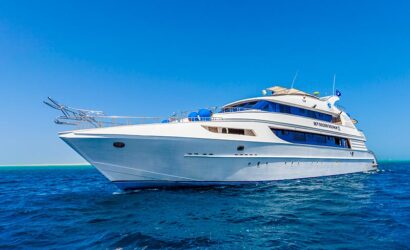
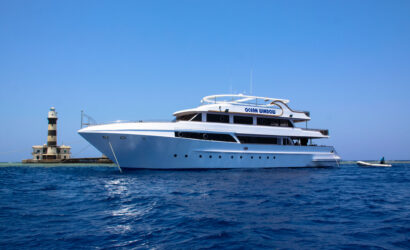
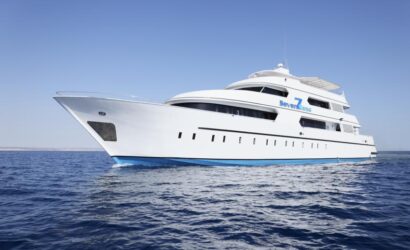
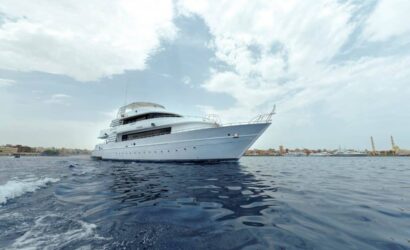
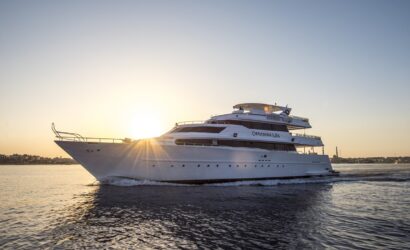
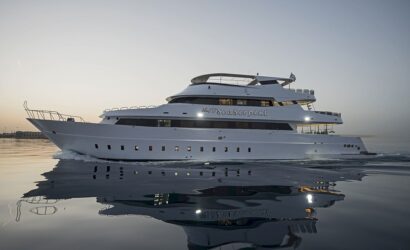

Recent Comments